

 Back
Back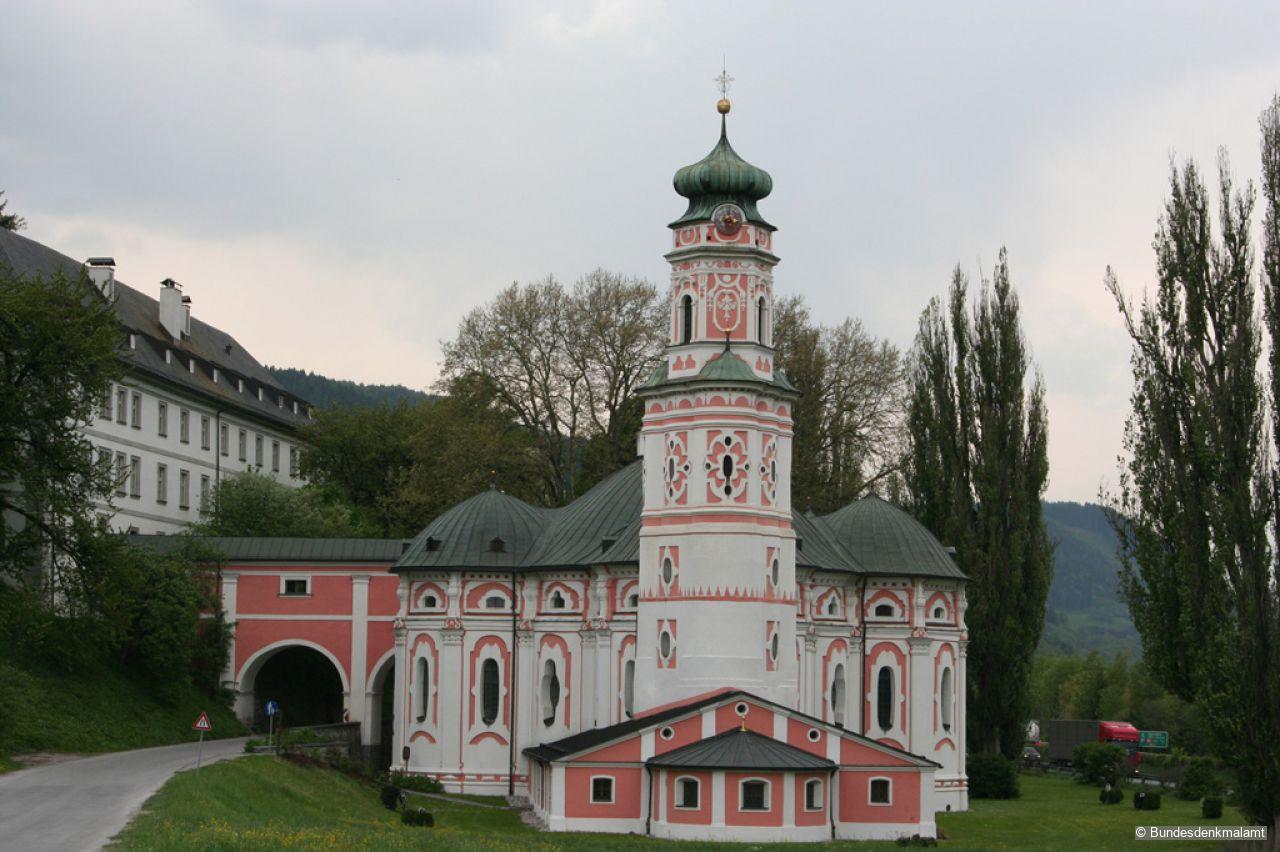
 Add to My Collection
Name of Monument:
The Servite Monastery Church of St. Charles Borromeo
Also known as:
St. Charles Church
Location:
Volders, Tyrol, Austria
Vorderwaldstr. 3
A-6111 Volders
T : +43 522 346 084
F : +43 522 346 084
E : info@serviten.at
Date:
1620–1654; c. 1760–1766: interior redesign
Artists:
Architect: Hippolytus Guarinonius (1571–1654); stuccowork: Johann Georg Gigl (1710–1765); frescos: Kaspar Waldmann (1657–1720), Martin Knoller (1725–1804)
Denomination / Type of monument:
Ecclesiastical architecture (monastery church)
Patron(s):
Hippolytus Guarinonius (benefactor and master builder)
History:
The church and monastery were designed and donated by the municipal physician of the city of Halle, Hippolytus Guarinonius, on the occasion of the plague year of 1611. The foundation stone was laid in 1620, the consecration was held in 1654 (St. Charles Borromeo and the Holy Trinity). Further chapels were built in 1670 and 1710. The redesign of the interior with Knoller’s ceiling frescos was completed in 1765/66. Last restored in 1977-88.
Description:
The central space of the St. Charles Church is a domed square with a round chapel adjoining to the east, south and north respectively. The design is based on the idea of the unity of the Trinity, which is also repeated in the chancel tower with its trefoil ground plan. To the west a transverse vestibule connects to the two later chapels. While the exterior is in the style of the Early Baroque, the interior is dominated by that of the Late Rococo.
View Short DescriptionThe St. Charles Church in Volders is one of the most interesting buildings of its time and the first Baroque centralised building in north Tyrol. It was built by a dilettante architect who venerated the Holy Trinity, symbolically incorporating it into the building design. While the exterior still displays the exotic looking ornamental forms of the period of its construction, the interior has been redesigned in the style of the late Rococo with monumental ceiling paintings from Martin Knoller.
How Monument was dated:
Archives
Special features
Façade
Exterior, west side
1620–1654 and 1697–1710
Hippolytus Guarinonius (1571–1654)
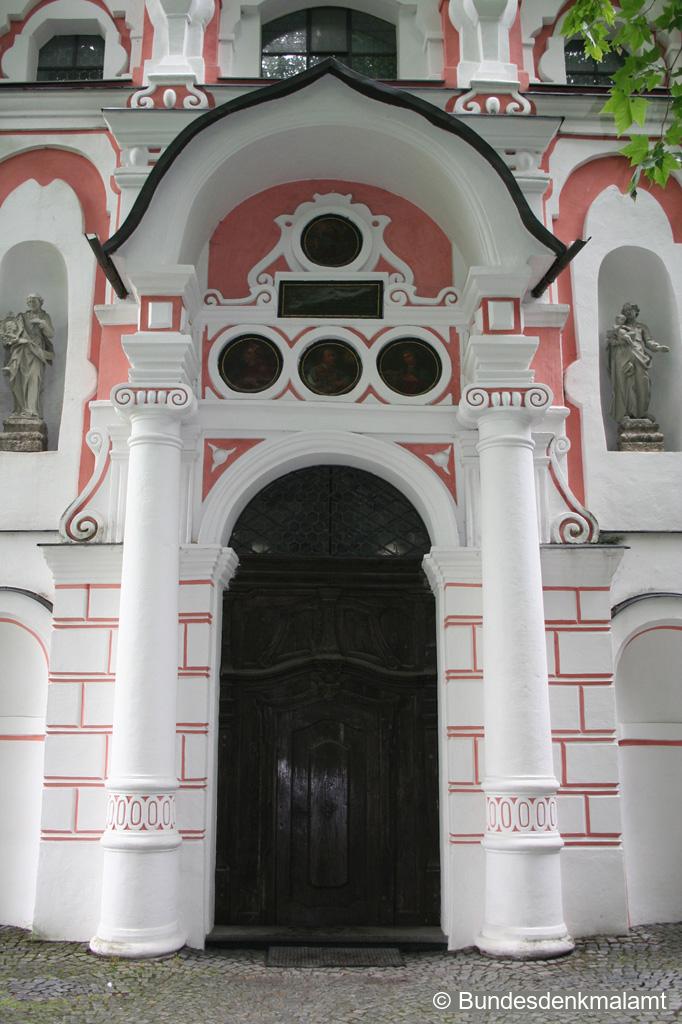
The entire idiosyncrasy and fancy of the Early Baroque building can be best seen on the façade which appears as if it was pieced together from a construction kit composed of the most bizarre forms. The departure from the classical theory of form shows that the dilettante architect (= enthusiast) was still an adherent of Mannerism, drawing his vocabulary of forms from religious tracts. Little of the often classical austerity of German Early Baroque is in evidence here. The chapels at the sides of the façade were added later in accordance with the existing design.
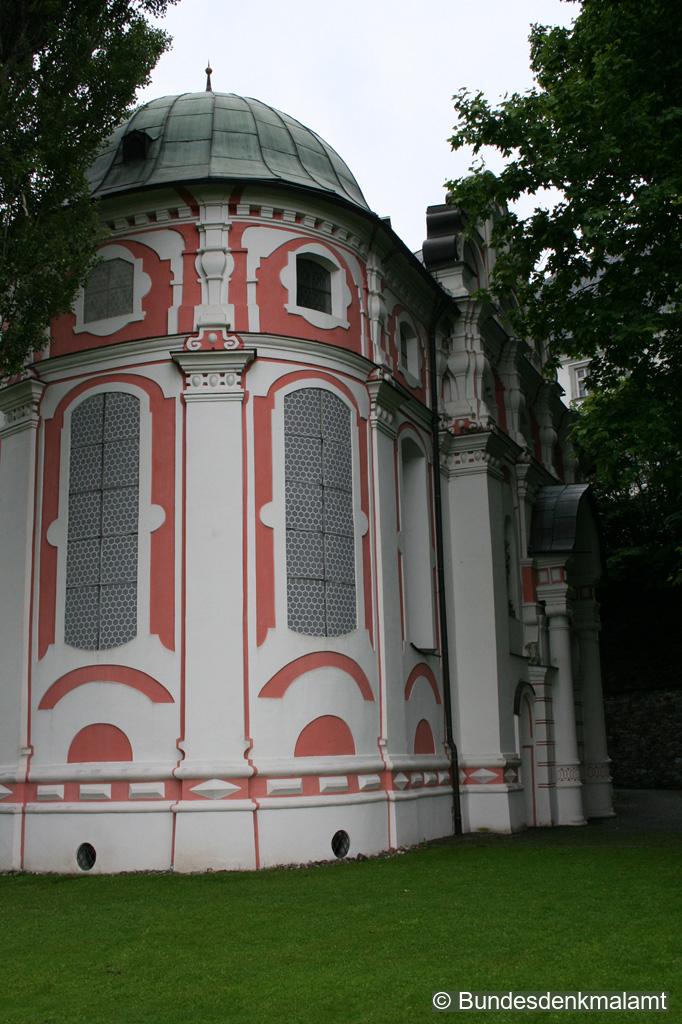
View from the east
Exterior
1620–1654
Hippolytus Guarinonius (1571–1654)
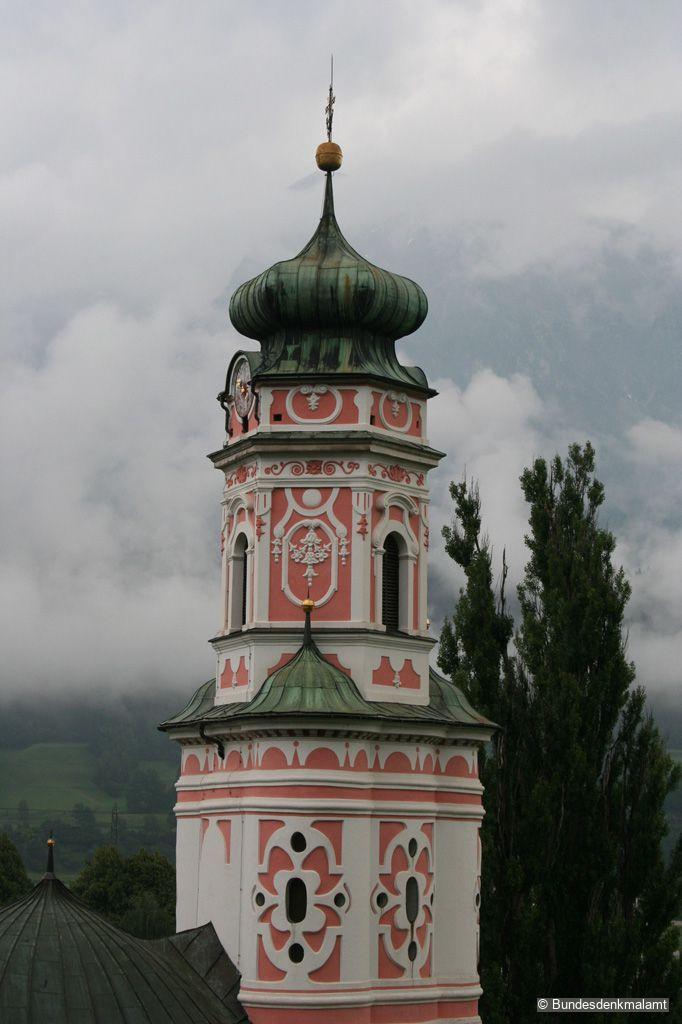
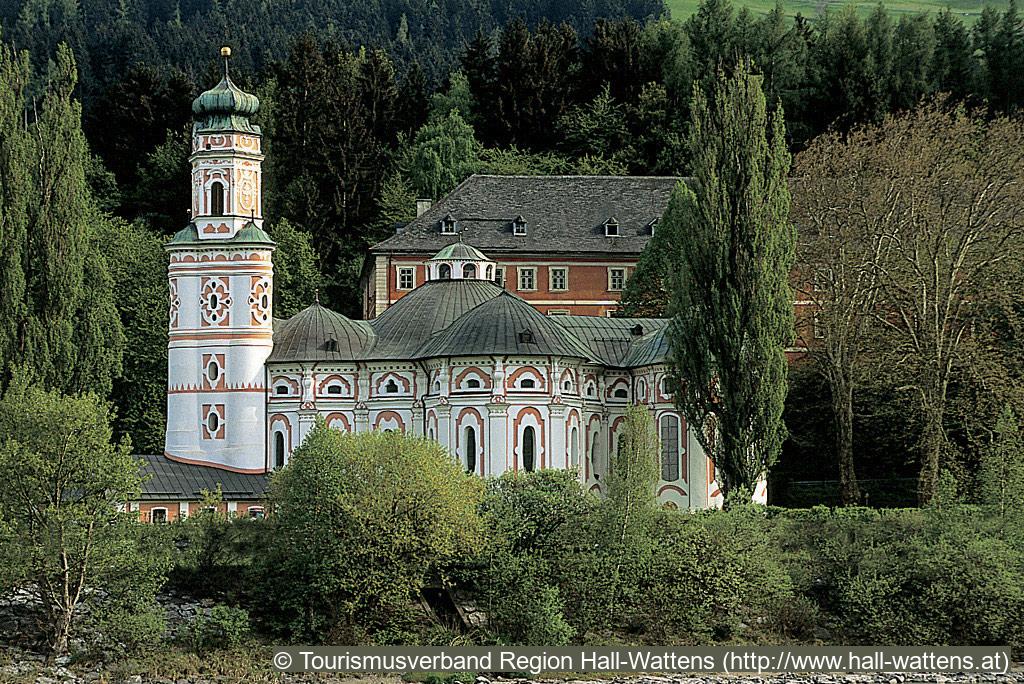
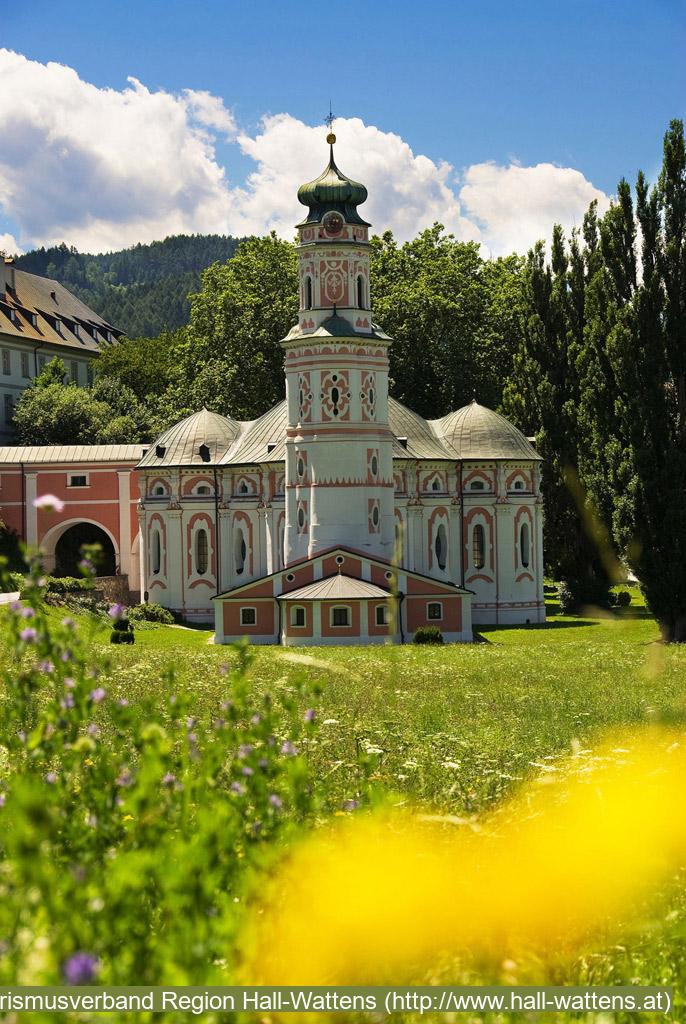
Although the arrangement of the rest of the building is not as closely crowded as the façade, the walls are still un-classical in their configuration. The superstructure with perimeter pilasters throughout and an attic zone is modelled on St. Peter’s in Rome, as is the building’s basic design with domed tri-conch. The tower, expressing the motif of the Trinity, was originally designed with a spiral-shaped pinnacle.
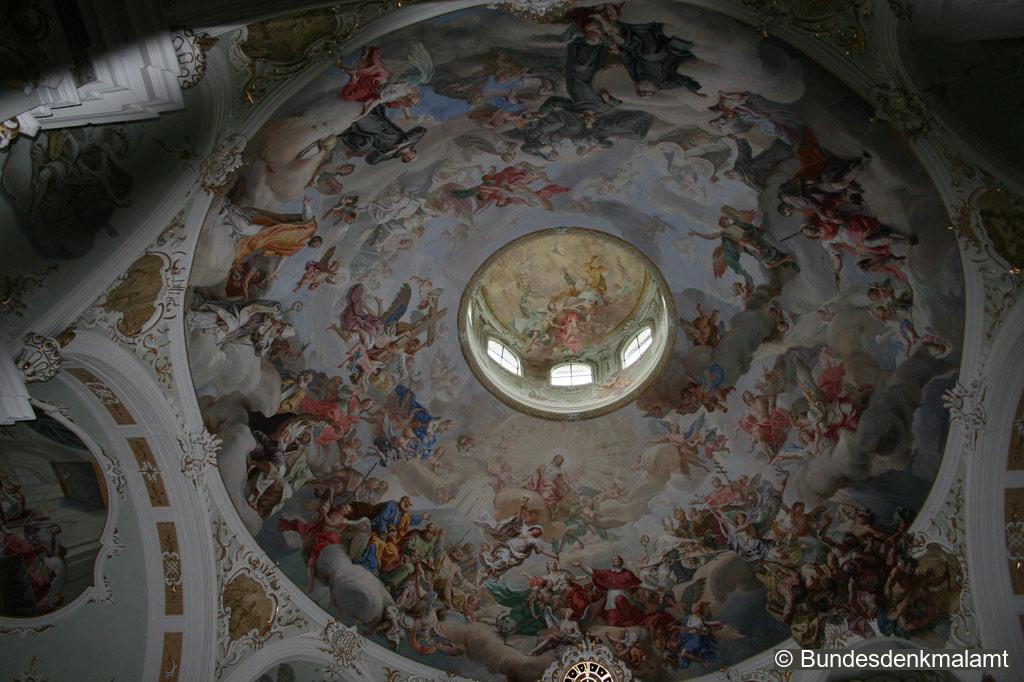
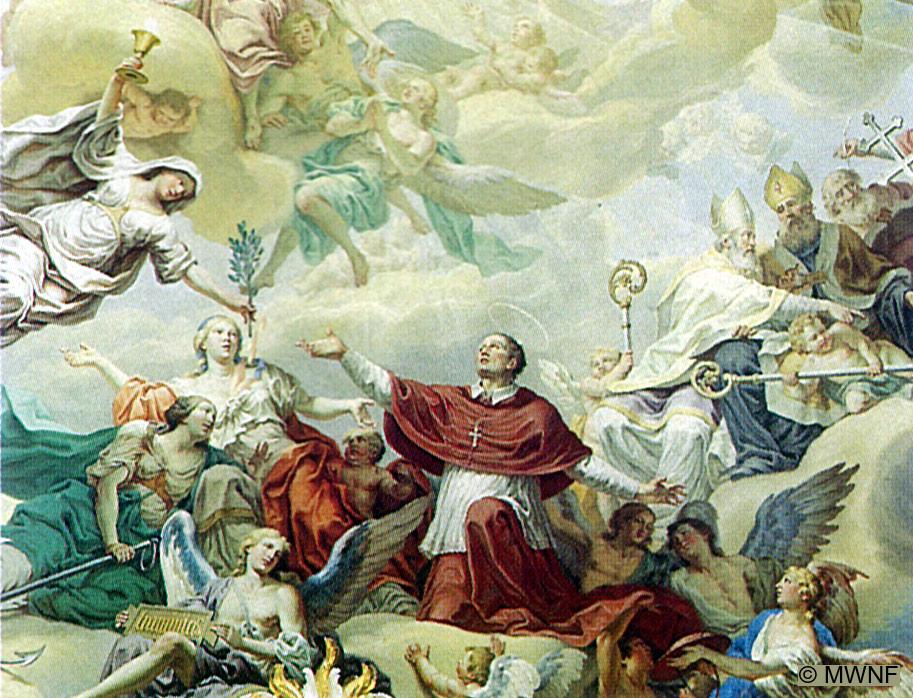
Ceiling fresco: The Veneration of St. Charles Borromeo
Main cupola, The Servite Monastery Church of St. Charles Borromeo
1765/66
Martin Knoller (1725–1804)
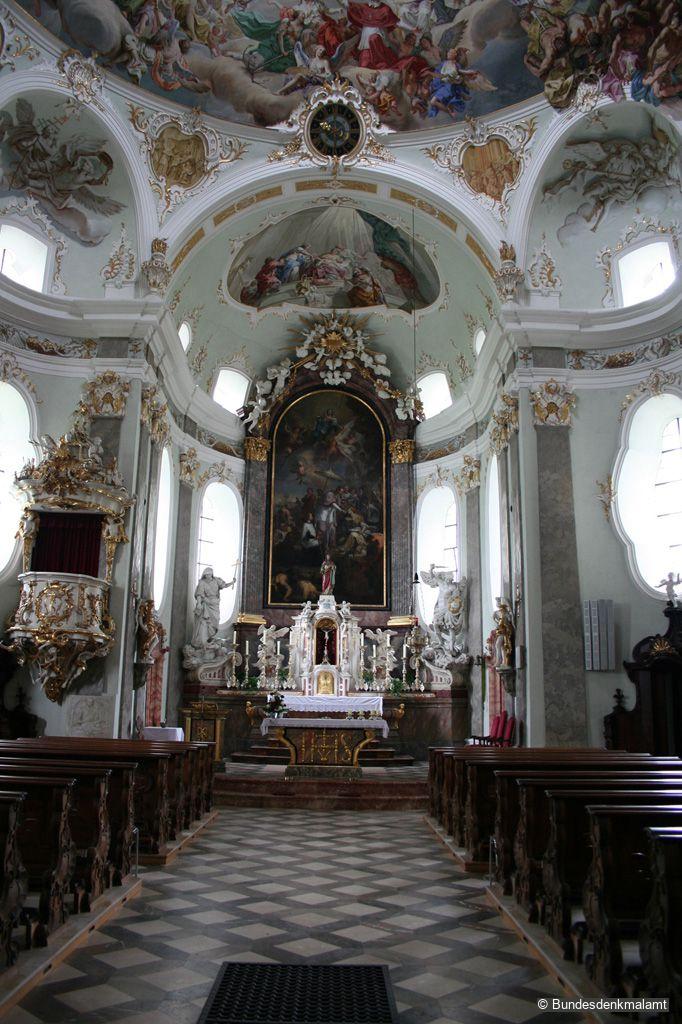
The frescos in Volders are among the most important of Knoller’s works. The apotheosis of the church patron in the main cupola is the high point of the programme, surrounded by scenes from his life. As an important representative of the Counter Reformation his veneration goes hand in hand with the victory of Catholicism. Knoller’s clear composition with monumental figures already contains elements of Classicism.
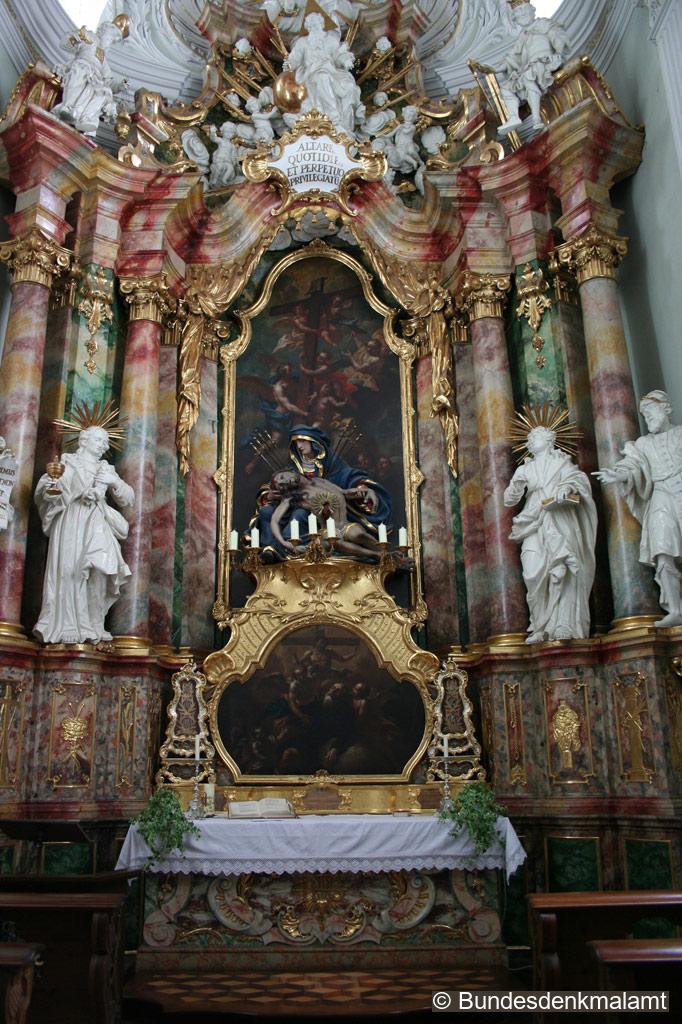
Chapel of the Sorrowful Mother (Fieger Chapel)
Northern vestibule, The Servite Monastery Church of St. Charles Borromeo
1697/98
Kaspar Waldmann (1657–1720)
Built as an extension to the vestibule, it was donated Johann Karl Graf Fieger. Together with the magnificent column altar, the most significant feature is the ceiling frescos from Kaspar Waldmann, a glorification of Mary with the seven founders of the Servite Order and scenes from the life of Mary.
Selected bibliography:
Frodl-Kraft, E., Tiroler Barockkirchen, Innsbruck 1955, p. 33f.
Bodner, R. M., Die Karlskirche in Volders, Volders 1988.
Petersohn, S., “Die Karlskirche in Volders. Die Herkunft der Bauformen und ihre Bedeutung für den frühbarocken Kirchenbau nördlich der Alpen”, in: Veröffentlichungen des Tiroler Landesmuseums Ferdinandeum, 79, 1999, pp. 33–54.
Citation of this web page:
Frank Purrmann "The Servite Monastery Church of St. Charles Borromeo" in "Discover Baroque Art", Museum With No Frontiers, 2026.
https://baroqueart.museumwnf.org/database_item.php?id=monument;BAR;at;Mon11;20;en
MWNF Working Number: AT 20
RELATED CONTENT
On display in
Exhibition(s)
Discover Baroque Art
Travelling and Exoticism | Trade and cultural interaction The Age of Enlightenment | Toward a rational art: reshaping rhetoric and splendour Reformation and Counter-Reformation | Religious orders and their function in transmitting the language of the Counter-Reformation The Ascension of the Bourgeoisie | For Eternal RemembranceDownload
As PDF (including images) As Word (text only)