

 Back
Back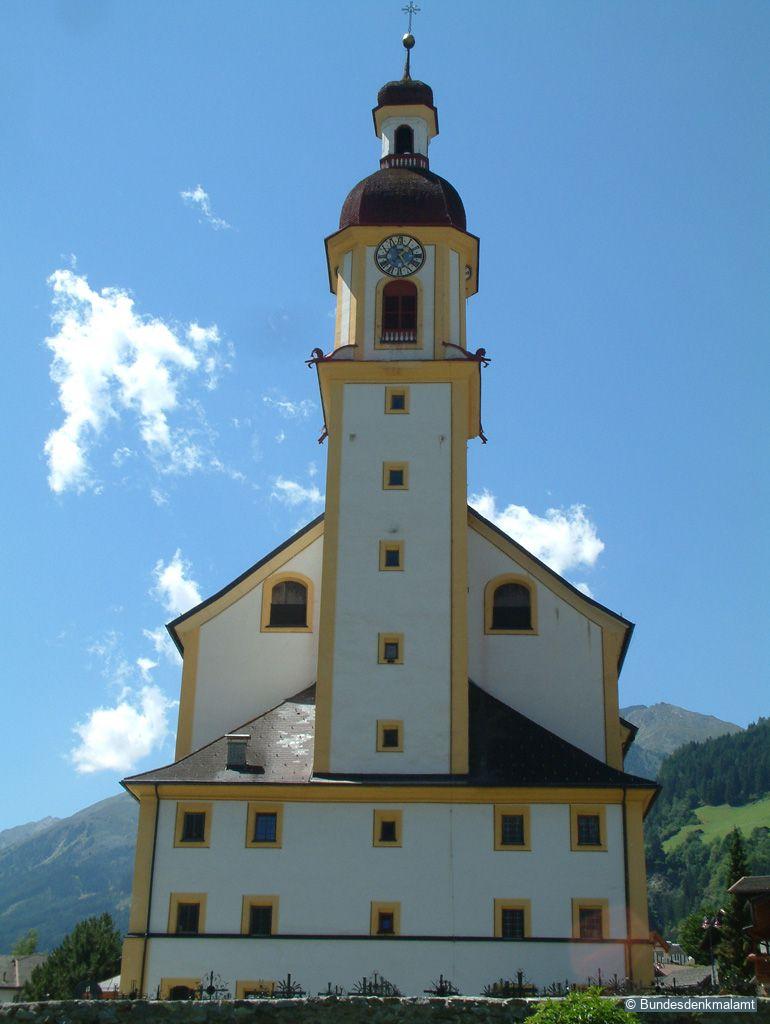
 Add to My Collection
Name of Monument:
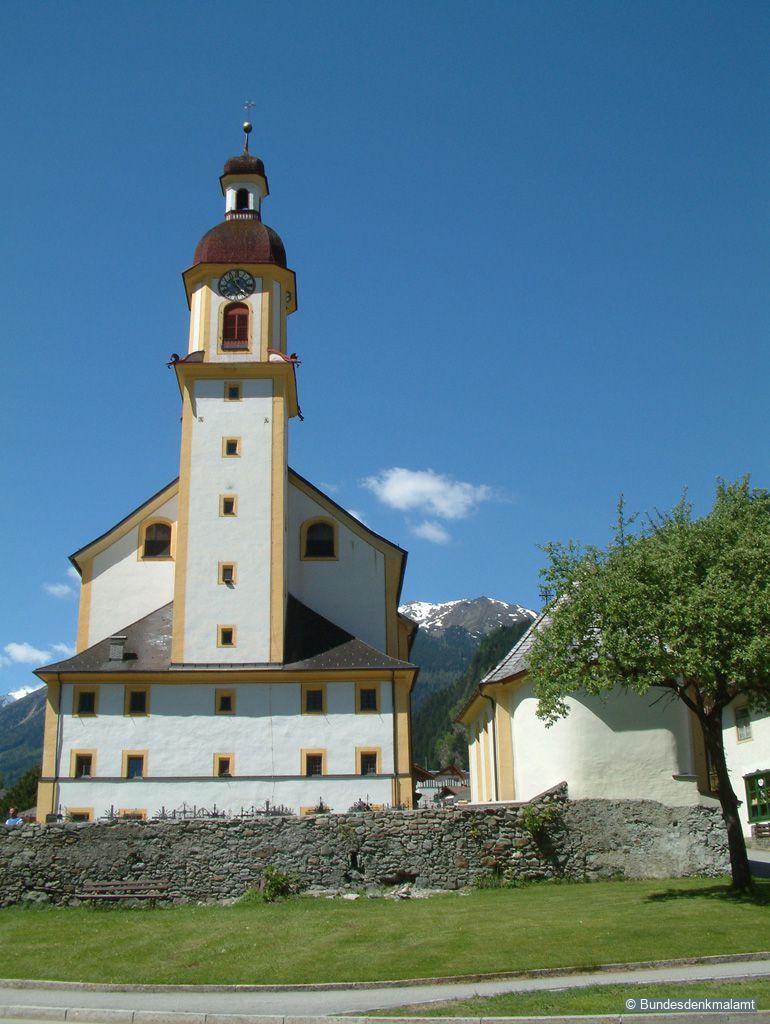
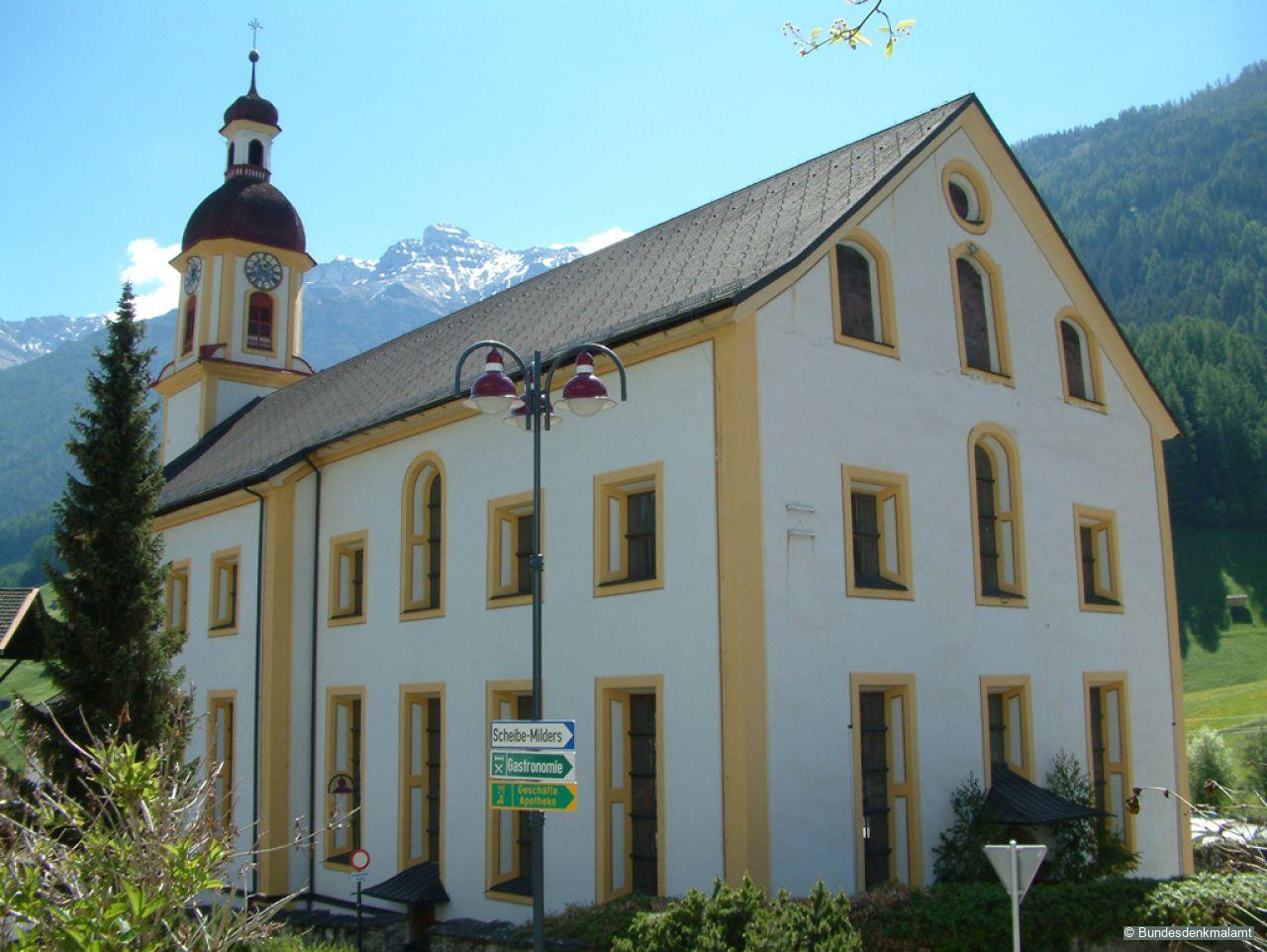
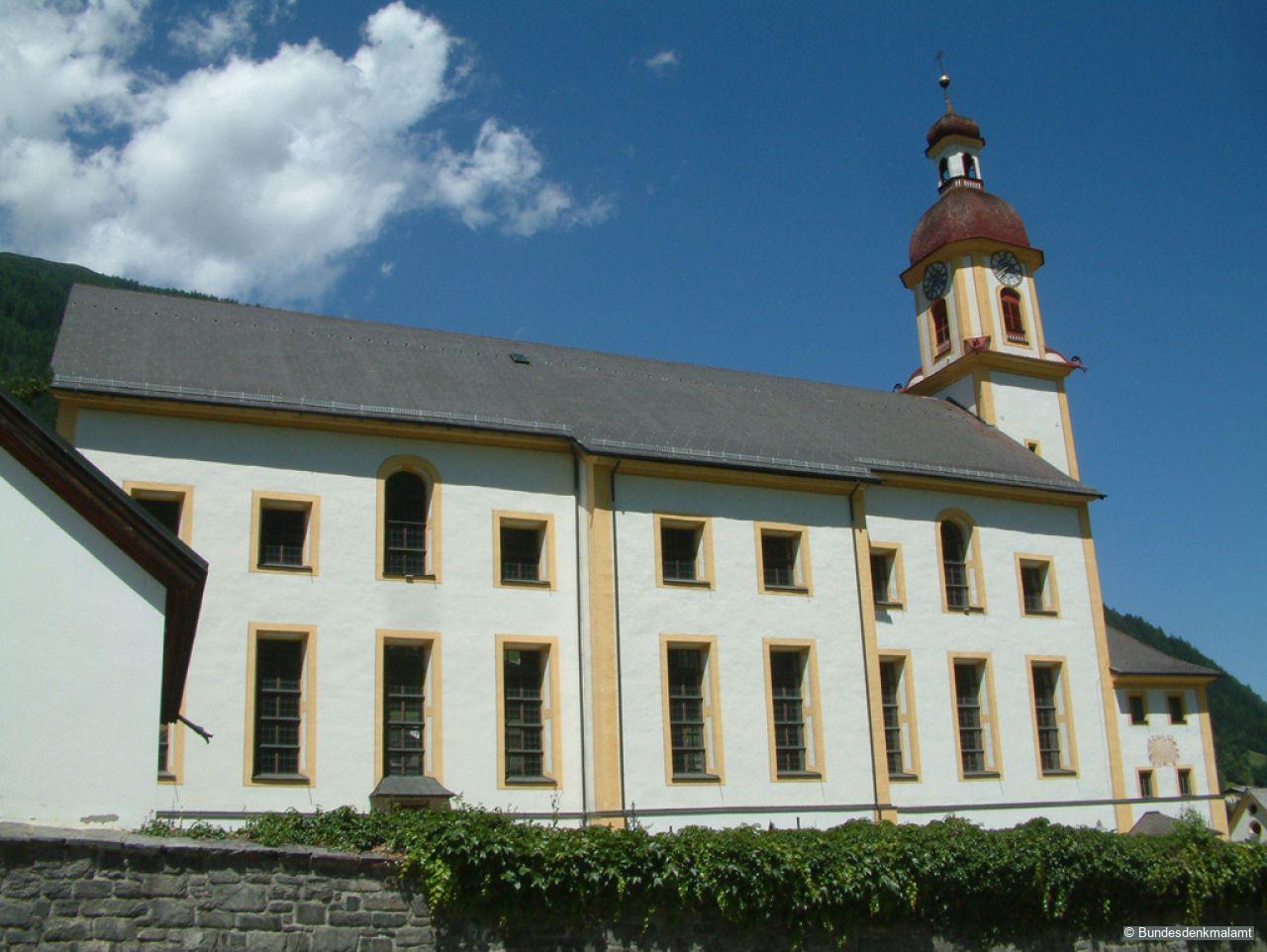
Catholic Parish Church of St. George
Location:
Neustift im Stubaital, Tyrol, Austria
T : +43 522 622 23
F : +43 522 637 00
E : pfarramtneustift@aon.at; kirche@stubai.org
Catholic Parish Office, Dorf 20, A-6167 Neustift im Stubaital (Responsible Institution)
Date:
1768–1774; consecration 1780
Artists:
Architecture: Franz de Paula Penz (1702–1772); sculpture: Johann Perger (1729–1774); ceiling frescos: Josef Anton Zoller (1730–1791), Joseph Keller (1740–1823), Franz Joseph Haller (1737–1773); altarpieces: Johann Josef Karl Henrici (1737–1823)
Denomination / Type of monument:
Ecclesiastical architecture (parish church)
Patron(s):
Parish of Telfes
History:
The first church of St. George was consecrated in Neustift, part of the parish of Telfes, in 1516. In 1686 a curacy was established. As work on the construction of the new building was begun in 1768, largely at the instigation of the master builder Penz, the old church was still standing. However, in 1772, it was the victim of a major fire. The consecration of the new building took place in 1780. Neustift was elevated to the status of an independent parish in 1891.
Description:
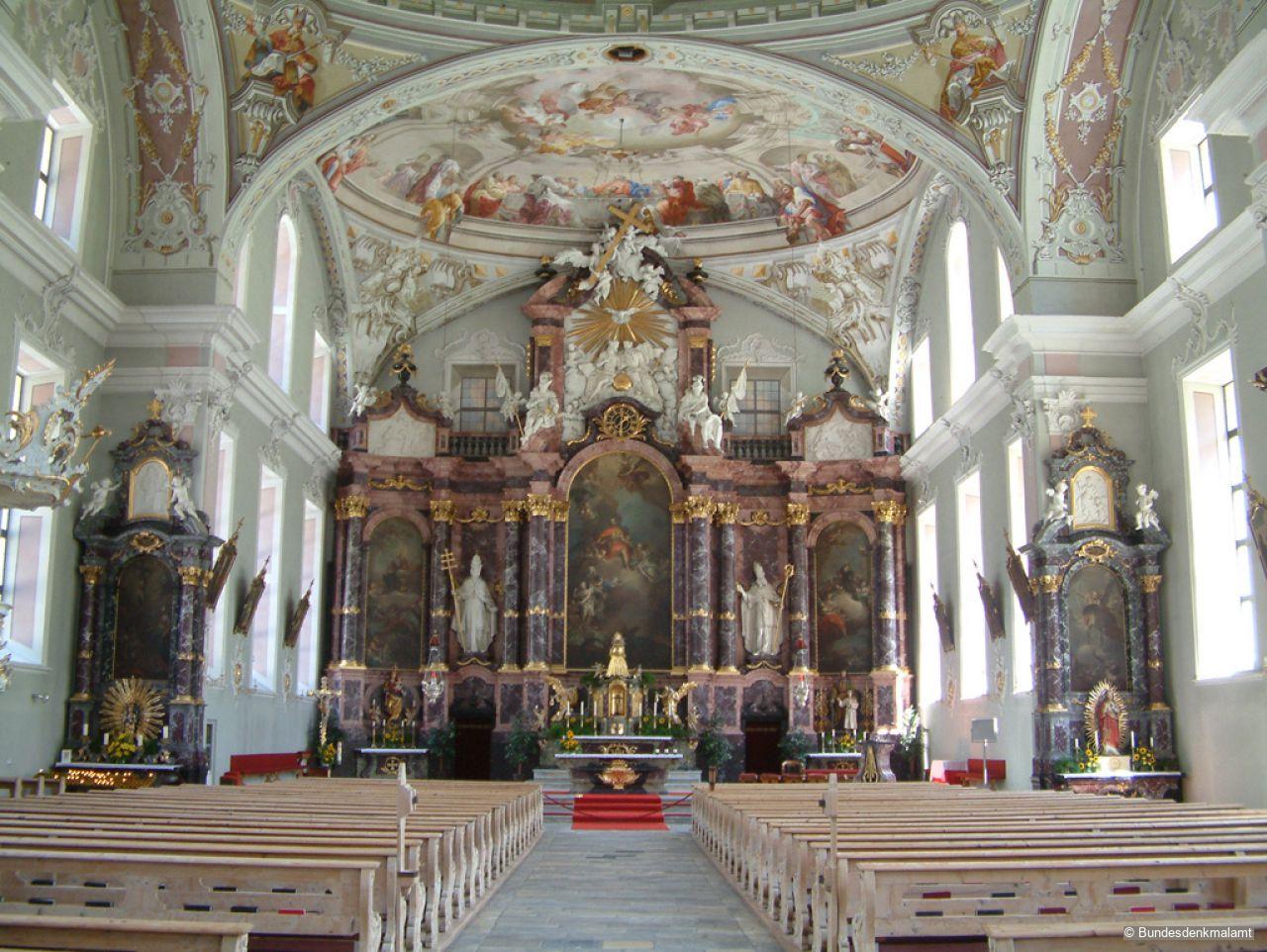
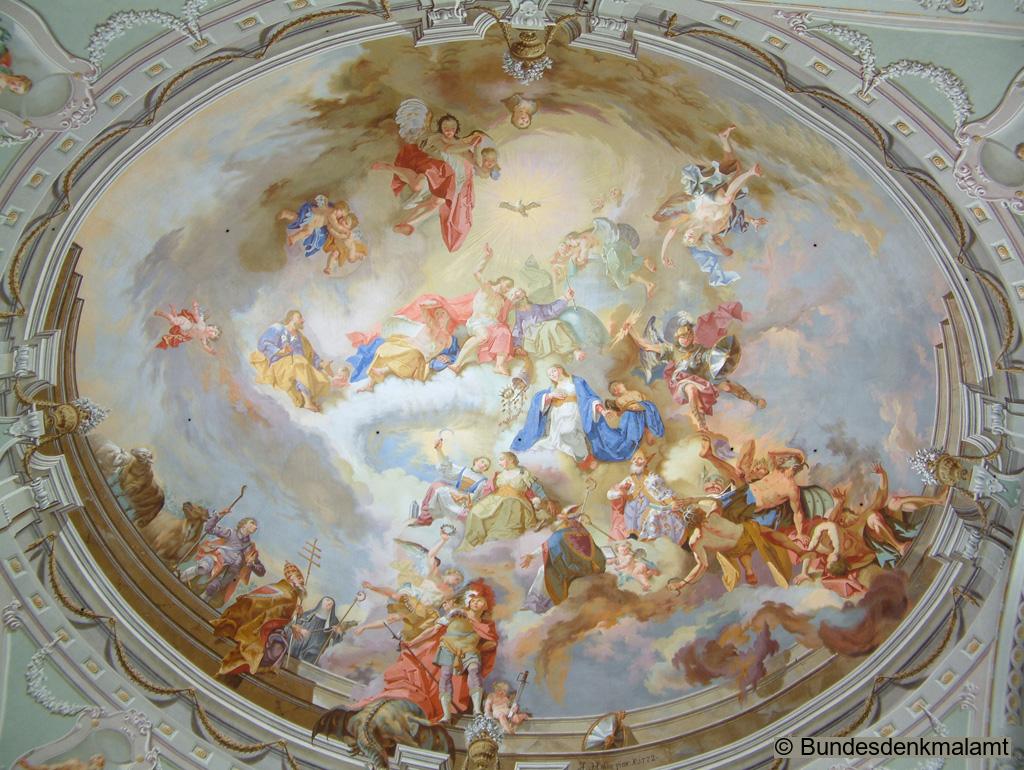
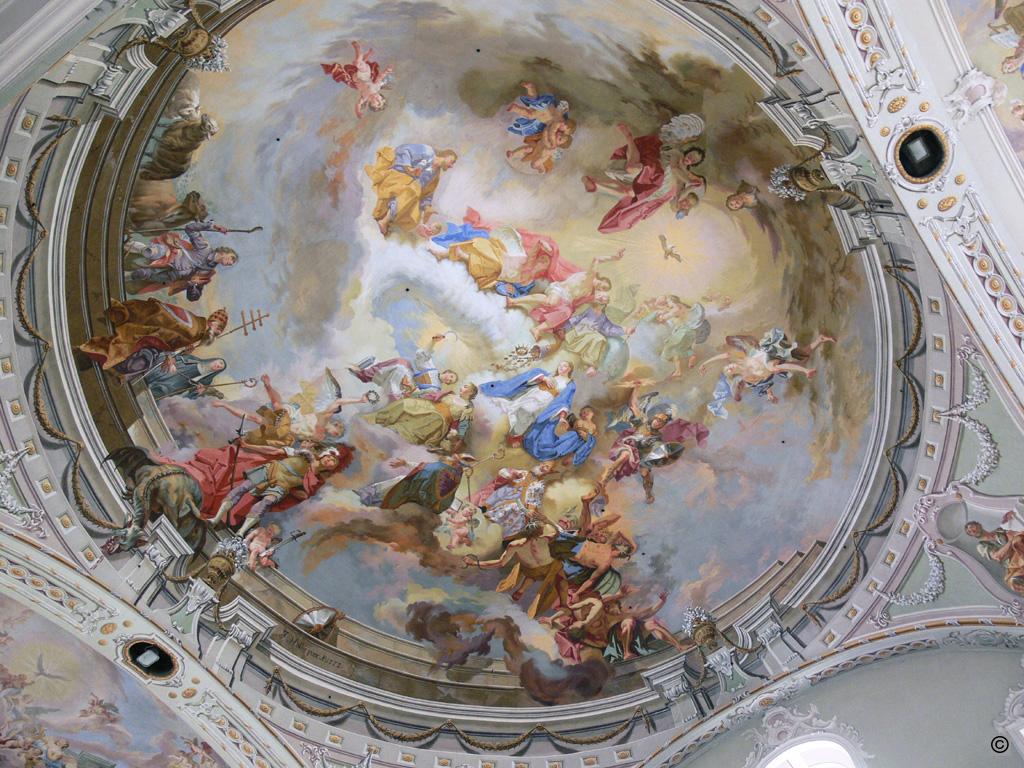
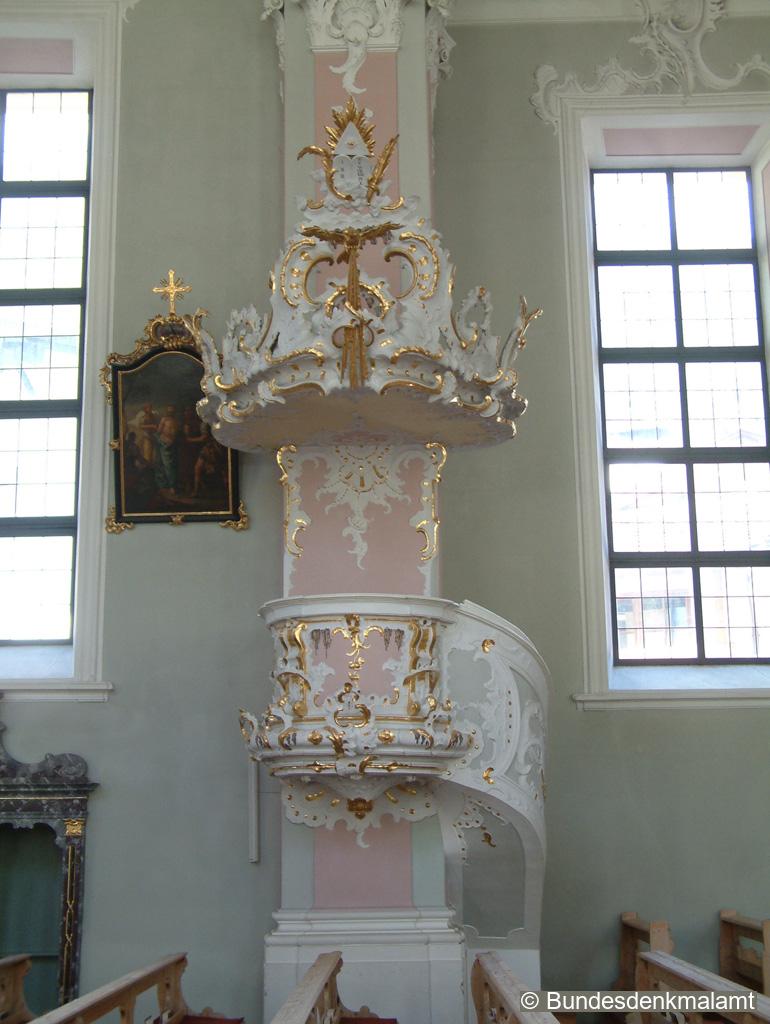
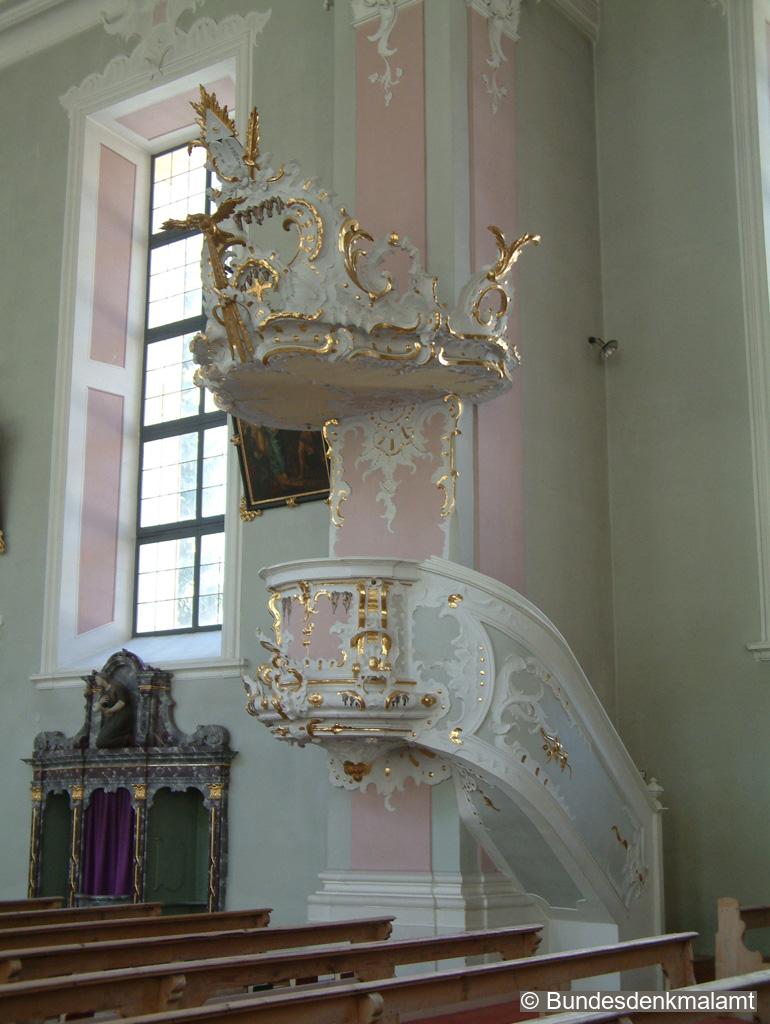
The ground plan of the three-bayed building is a simple rectangle with a broader, transept-like section in the centre. Each spatial unit has shallow dome vaulting and displays double-storey window axes. Continuous mouldings separate the wall zones. The interior design displays all the stylistic tendencies of the period. The spectrum of styles is most clearly evidenced by three ceiling pictures which move between Late Baroque, Rococo and the first intimations of Early Classicism. The coulisse-like high altar still employs the stylistic devices and effects of the Baroque, while the delicacy of the Late Rococo style is expressed in the stucco and pulpit. Overall, these contrasts are united to form a Late Baroque spatial impression.
View Short DescriptionThe second largest village church in the Tyrol, built in the remotest parish of the Stubaital, is the most impressive example of the so-called “farmer’s cathedral”. This is the name given to those parish churches whose size and grandeur greatly exceed the norm. The church, which lacks any great architectural sophistication, stands out primarily due to the width of the interior and the interplay of its high quality fittings and furnishings.
How Monument was dated:
Archives
Special features
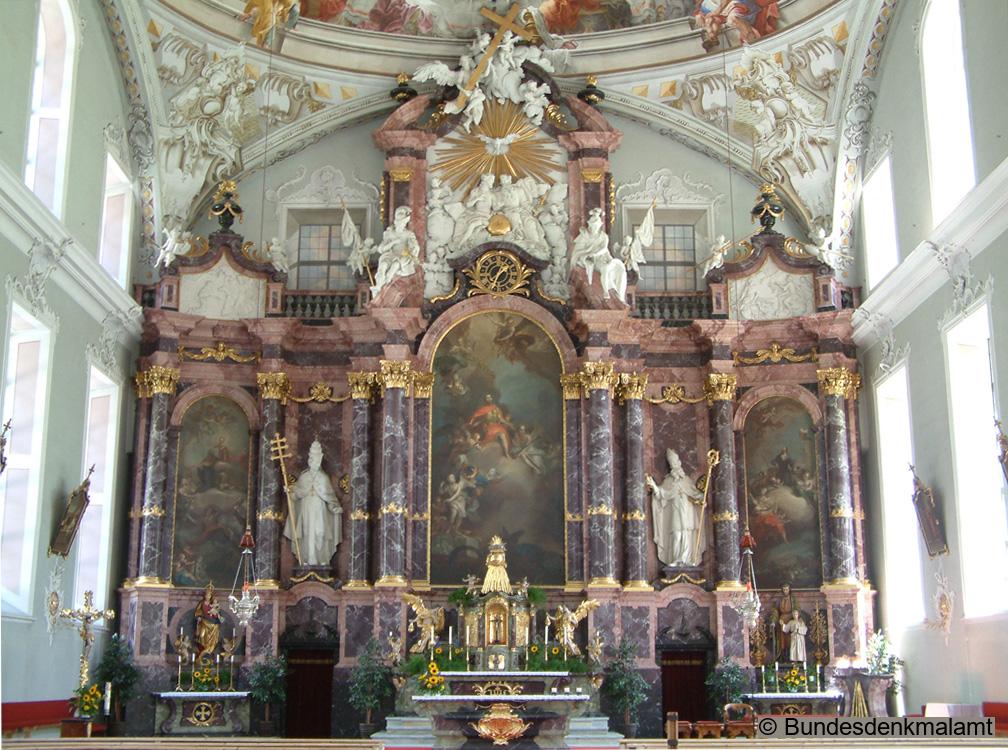
High altar and eastern side altars
Eastern choir wall
1772/73
Johann Perger (1729–1774); Johann Joseph Karl Henrici (1737–1823)
The high altar together with the two side altars, are arranged as a coulisse-like ornamental screen extending across the whole width of the flat choir termination, thus forming a magnificent concluding prospect. The ornamental screen, structured by columns, includes three altarpieces as well as two large statues and is surmounted by a protruding altar crown above the high altar with a stucco glory of the Holy Trinity.
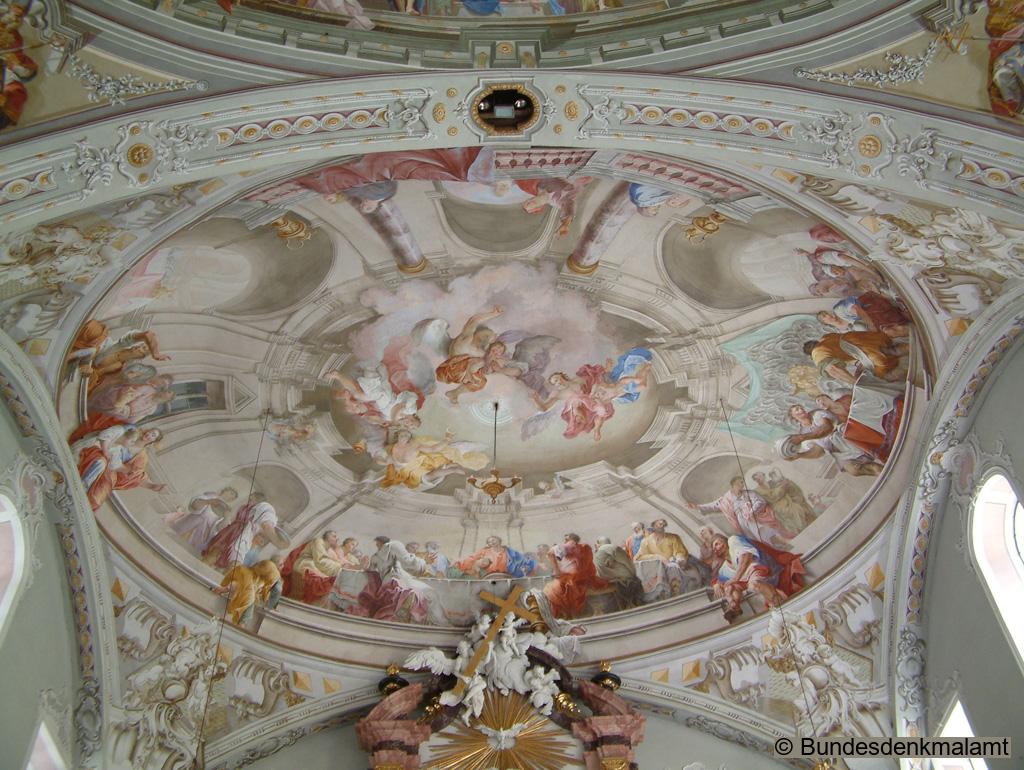
Ceiling painting Last Supper
Eastern cupola
1772
Joseph Keller (1740–1823)
The cupola above the choir depicts the last supper as the origin of the Eucharist sacrament. Illusionistic architecture, open at the top, in the form of an oval building with arcades, provides the setting for the scene which is presented on a narrow stage at the top of steep stairs. The scene of the Last Supper has genre-like additions. The cool colours, the relatively sober depiction of the scene and the austere architecture are clear features of the Early Classicism which Keller, drawing on Martin Knoller, was far more indebted to than the other two fresco artists.
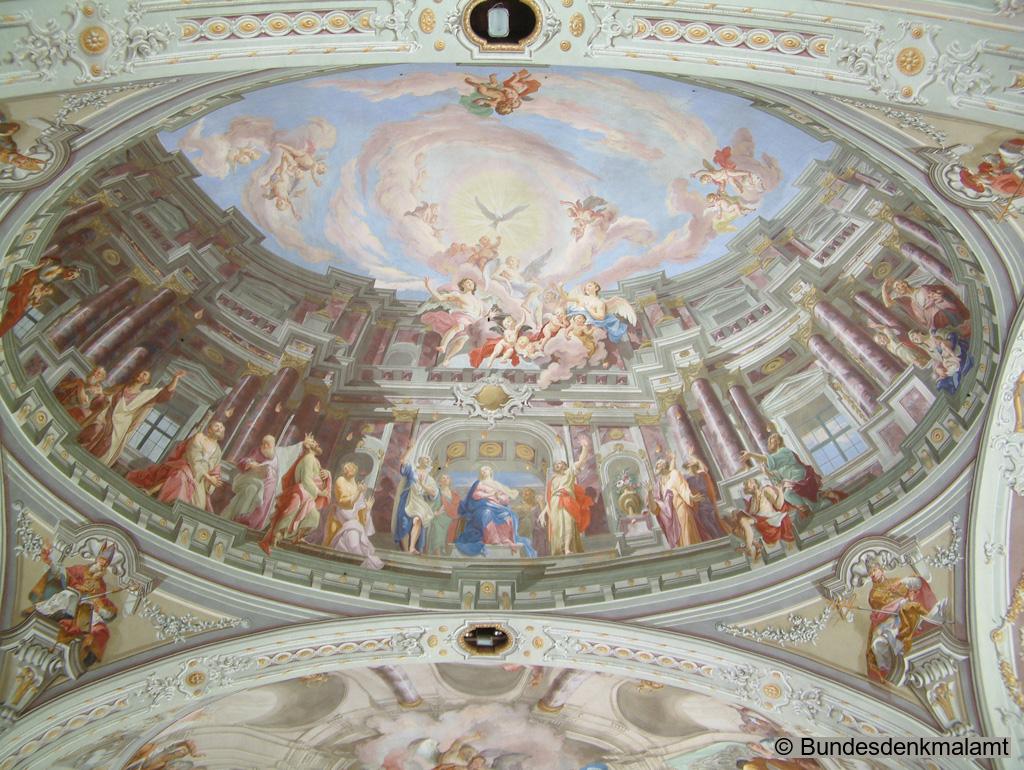
Ceiling painting Miracle of Pentecost
Central cupola
1772
Josef Anton Zoller (1730–1791)
In great contrast to the choir cupola is Joseph Anton Zoller’s composition for the central cupola employing the entire range of High Baroque devices. Here the Pentecost scene takes place against the background of a huge architectural backdrop which is calculated for viewers in the rear congregation room and signifies the gate to the city of God. The apostle and Mary function as mediators between heaven and earth and thus connect the vision to the real space of the church.
Ceiling painting Veneration of the Holy Trinity
Western cupola
1772
Franz Joseph Haller (1737–1773)
In his rendering of a heaven of the saints in the western cupola, the otherwise little known fresco artist Franz Joseph Haller has largely dispensed with painted architecture, with the exception of a few transitionary steps at the bottom edge. Instead, its effect is achieved through the luminous colours used to depict clouds suffused with light, against which the magnificent robes of the saints stand out dramatically. The composition is designed less with reference to the circular form than staggered from the eastern edge to the centre, thus oriented towards the entering visitor.
Pulpit
Left nave pier
c. 1772
Unknown
The pulpit forms a contrast to the remaining interior work in ponderous Late Baroque style with its intimations of austere Early Classicism. The baldachin’s filigree, freely soaring rocaille stucco, similar to that in Götzen, lends a certain accent to the space’s remaining stuccowork, also executed in the forms of the Late Rococo, which contributes little in the way of expressiveness.
Selected bibliography:
Frodl-Kraft, E., Tiroler Barockkirchen, Innsbruck 1955, p. 45.
Krall, G., A. and J. A., Zoller, Ein Beitrag zur Barockmalerei in Tirol, Innsbruck 1978.
Ammann, G., Kath. Pfarrkirche St. Georg Neustift im Stubaital, Munich, Zurich 1986.
Bayer, K., Franz de Paula Penz, Vienna 1991, p. 25, p. 67.
Pechloff, U., Pfeffer, Ch., Neustift im Stubaital, Pfarrkirche St. Georg, 2nd edition, Passau 2005.
Tacke, A. (ed.), Herbst des Barock. Studien zum Stilwandel. Die Malerfamilie Keller (1740 bis 1904). Munich, Berlin 1998, pp. 371–4.
Citation of this web page:
Frank Purrmann "Catholic Parish Church of St. George" in "Discover Baroque Art", Museum With No Frontiers, 2026.
https://baroqueart.museumwnf.org/database_item.php?id=monument;BAR;at;Mon11;12;en
MWNF Working Number: AT 12