

 Back
Back

 Add to My Collection
Name of Monument:
Benedictine Abbey and Parish Church of St. Joseph
Also known as:
Collegiate Church of St. Georgenberg
Location:
Vomp-Fiecht, district of Schwaz, Tyrol, Austria
St. Georgenberg-Fiecht
A-6134 Vomp-Fiecht
T : +43 524 263 276 0
E : info@st-georgenberg.at
Benedictine Abbey of St. Georgenberg-Fiecht (Responsible Institution)
Date:
1741–1743: first building phase; 1749/50: second building phase following collapse of the vault; 1778–1781: construction of the tower; 1743- c. 1775: interior
Artists:
Architecture: Jakob Singer (1685–1760); stuccowork: Franz Xaver Feichtmayr (1698–1763), Johann Michael Feichtmayr (1696–1772); frames and stucco sculptures: Johann Georg Üblhör (1700–1763); figures and tabernacle: Johann Michael Fischer (1692–1766); frescos: Matthäus Günther (1705–1788); pews: Franz Xaver Nißl (1731–1804)
Denomination / Type of monument:
Ecclesiastical architecture (monastery church)
Patron(s):
St. Georgenberg Abbey, Abbot Lambert Höllerer (in office: 1732–1772)
History:
The origins of the monastery can be traced back to Blessed Rathold in the 10th century. St. Georgenberg was elevated to the status of a Benedictine Abbey in 1138. Following a fire in 1705 the monastery was transferred from Georgenberg, which remained a site of pilgrimage, to Inntal. The simple, four-winged monastery complex was followed by the construction of the abbey church beginning in 1741 and which was consecrated in 1750. The stuccowork was carried out between 1743 and 1751; the frescos were painted by Matthäus Günther between 1744 and 1755. Work on the interior continued until 1775, the church tower was completed in 1781. Comprehensive restoration work carried out in stages since 1948 has restored the original spatial impression which was significantly altered in the 19th century.
Description:
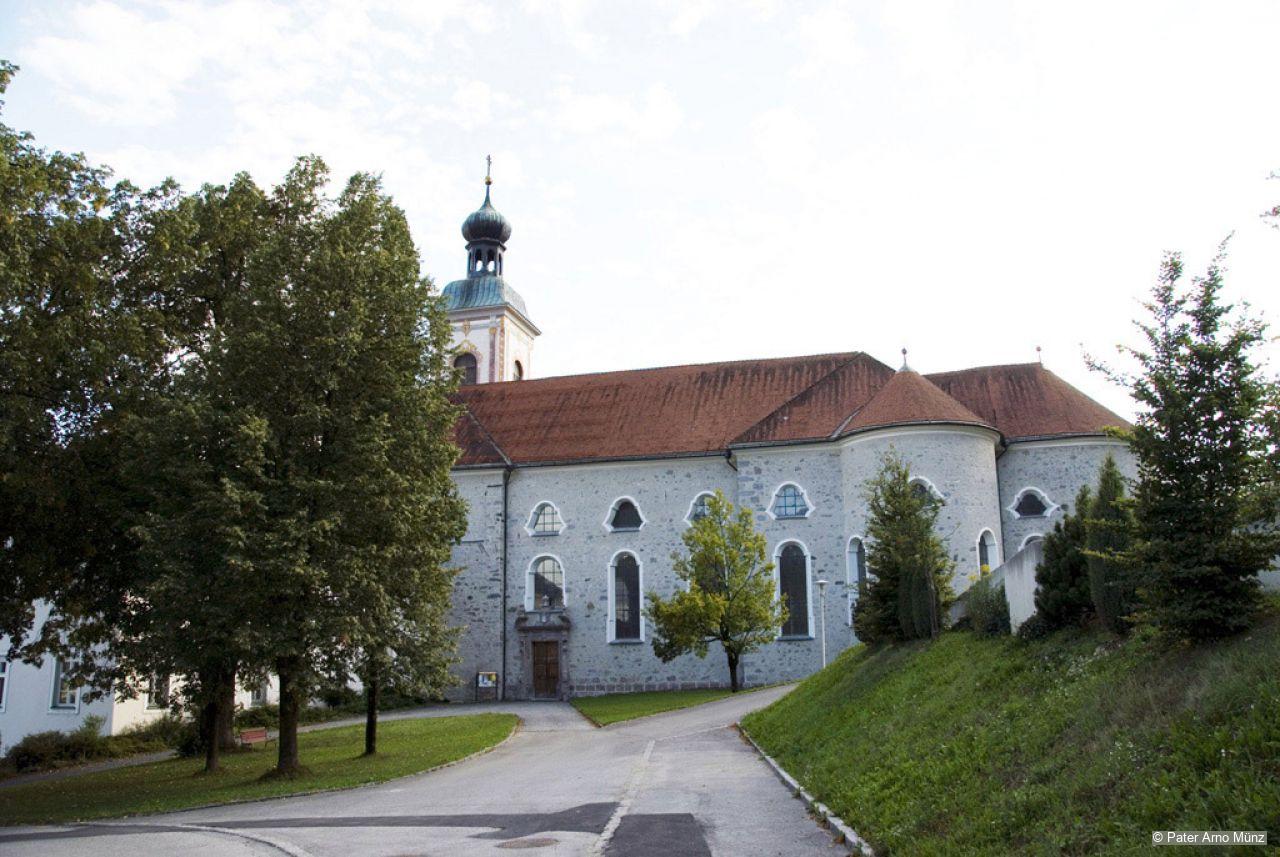
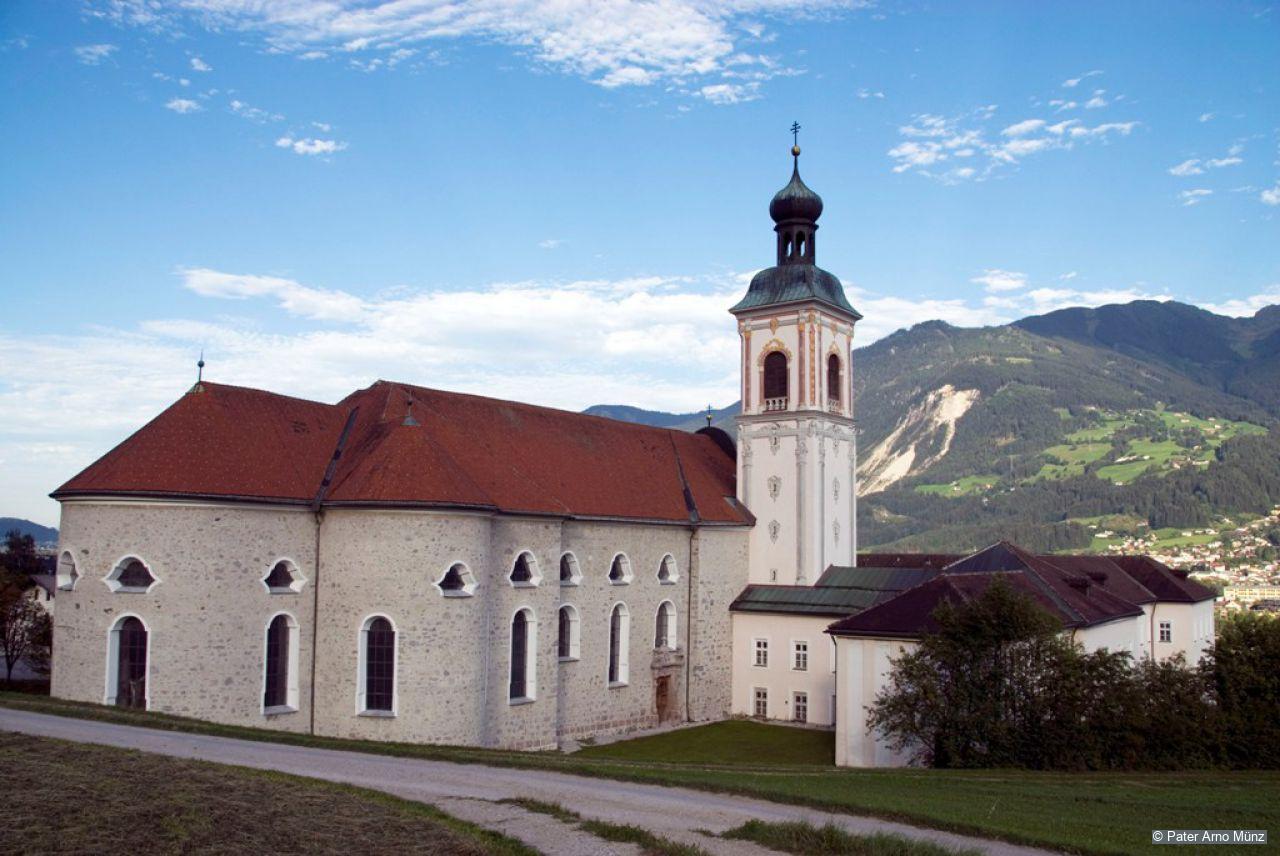
The monastery church is one of the earliest buildings in the Tyrol exhibiting the style of the early Rococo. The architecture is derived from that of St. Jacob’s in Innsbruck. The domed choir crossing, as the centre of the building, is adjoined by three apses and the tri-axial nave with shallow pilasters and lunette windows. A rudimentary transept has been inserted between the choir and the nave. The overall spatial impression is strongly influenced by the large-format ceiling pictures and the filigree rocaille stucco.
View Short DescriptionTogether with Stams and Wilten, St. Georgenberg is one of Tyrol’s three large monasteries. Construction of the new church for the monastery, which was destroyed by fire in 1705, was conducted under Abbot Lambert Höllerer from Wessobrunn who attracted important southern German artists responsible for the exquisite Rococo interior work. The clearly structured architecture, with its distant echoes of Innsbruck Cathedral, is the work of Jakob Singer, a member of the most famous family of Tyrolian master builders of the mid-18th century.
How Monument was dated:
Archives
Special features
Interior
View in the direction of the choir
1741–1743
Jakob Singer (1685–1760)
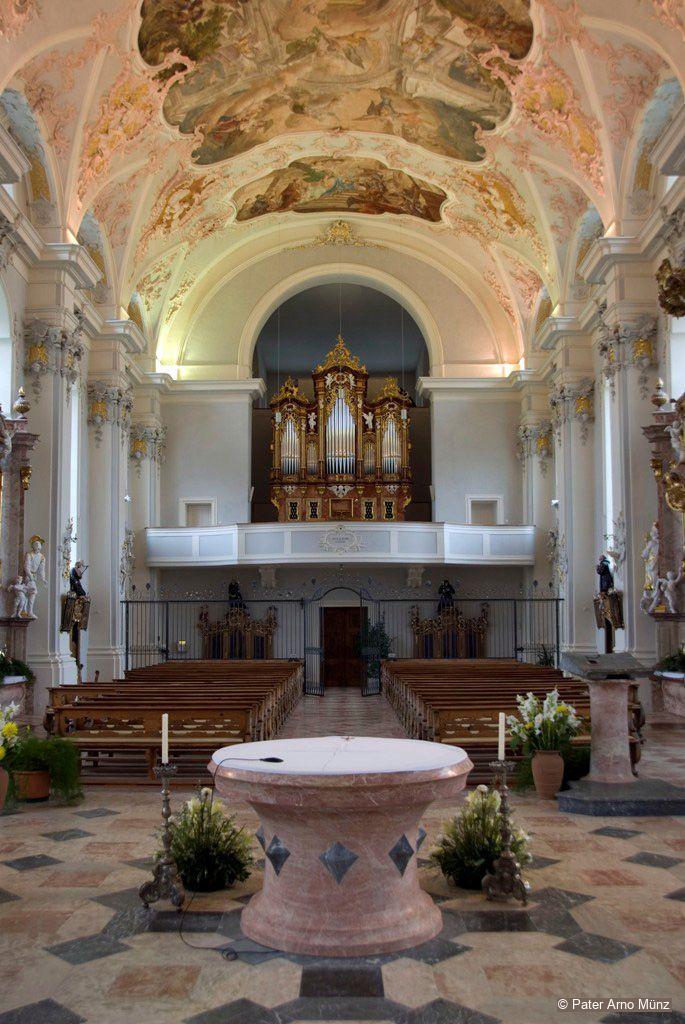
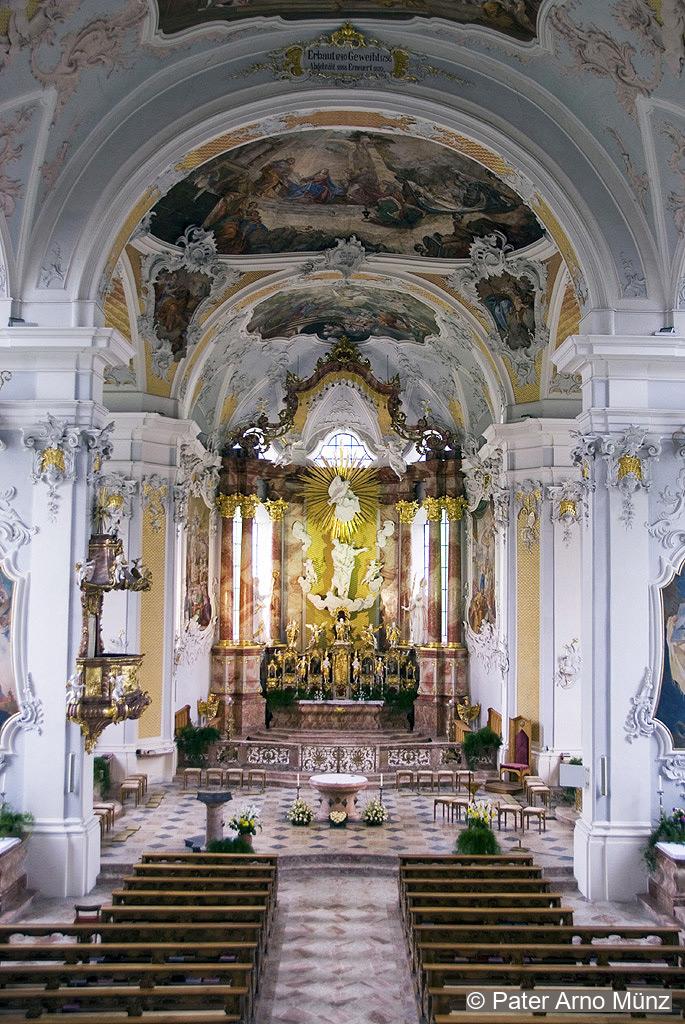
Following a number of restorations during the 20th century, the overall impression of the interior has largely been restored to that of the mid-18th century. The choir prospect is dominated by the crossing as the focus of the spatial sequence: four bevelled pilaster piers support a shallow cupola above pendentives. The perspectively graduated prospect is introduced by a massive arcade with semi-circular arches above pilaster piers at the transition to the nave and crossing. The focus is the high altar, which fills the whole width of the apse.
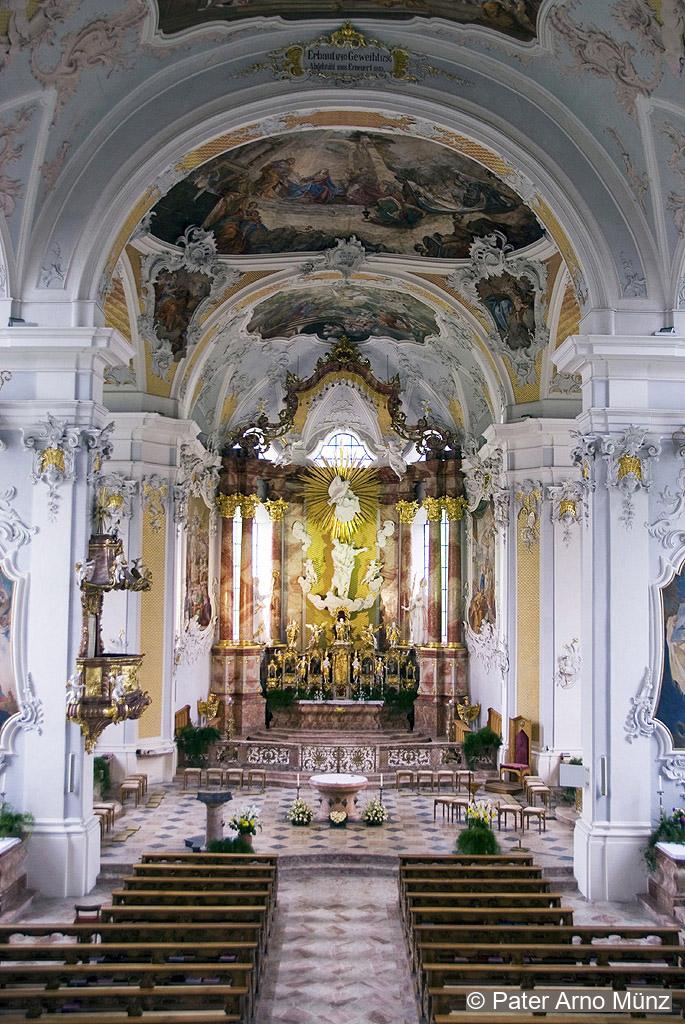
High altar
East wall of the choir
1743/44 (later modified several times)
Franz Xaver (1698–1763); Johann Michael Fischer (1692–1766)
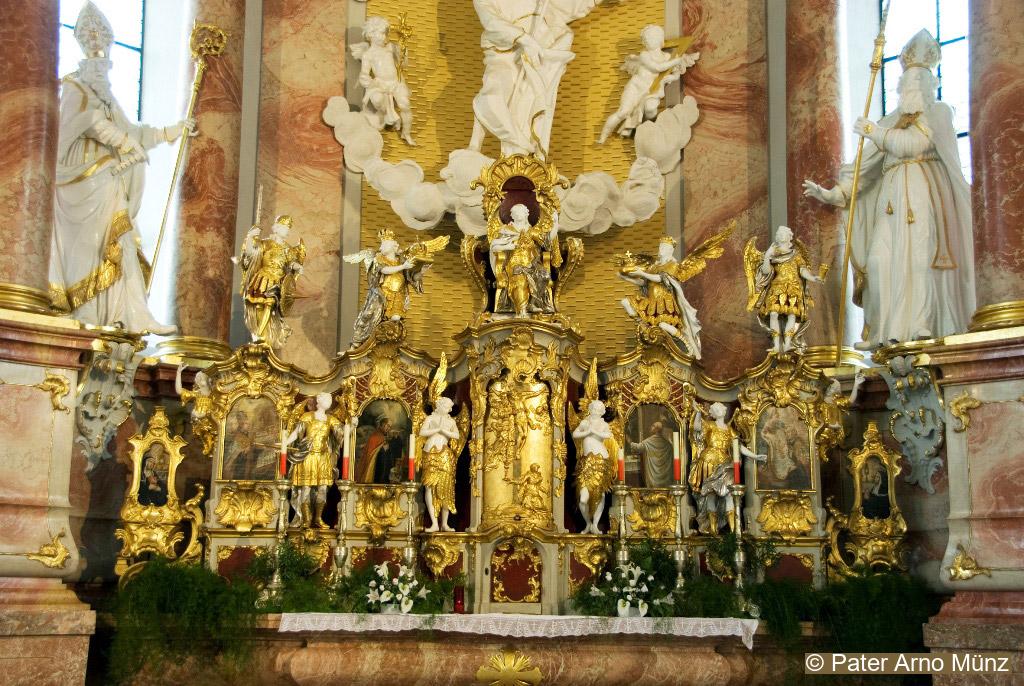
The superstructure of the high altar, which, with its loose, light-flooded rows of columns is integrated into the semi-circular choir apse, is based on the design of the stucco sculptor Franz Xaver Feichtmayr. It is composed of a total of six columns above a high pedestal which are united by an entablature bent at right angles and curved in places. The crowning baldachin and the stucco figure of St. Joseph in the centre are modern additions in the style of the period.
Cupola fresco
Crossing vault
1743/44
Matthäus Günther (1705–1788)
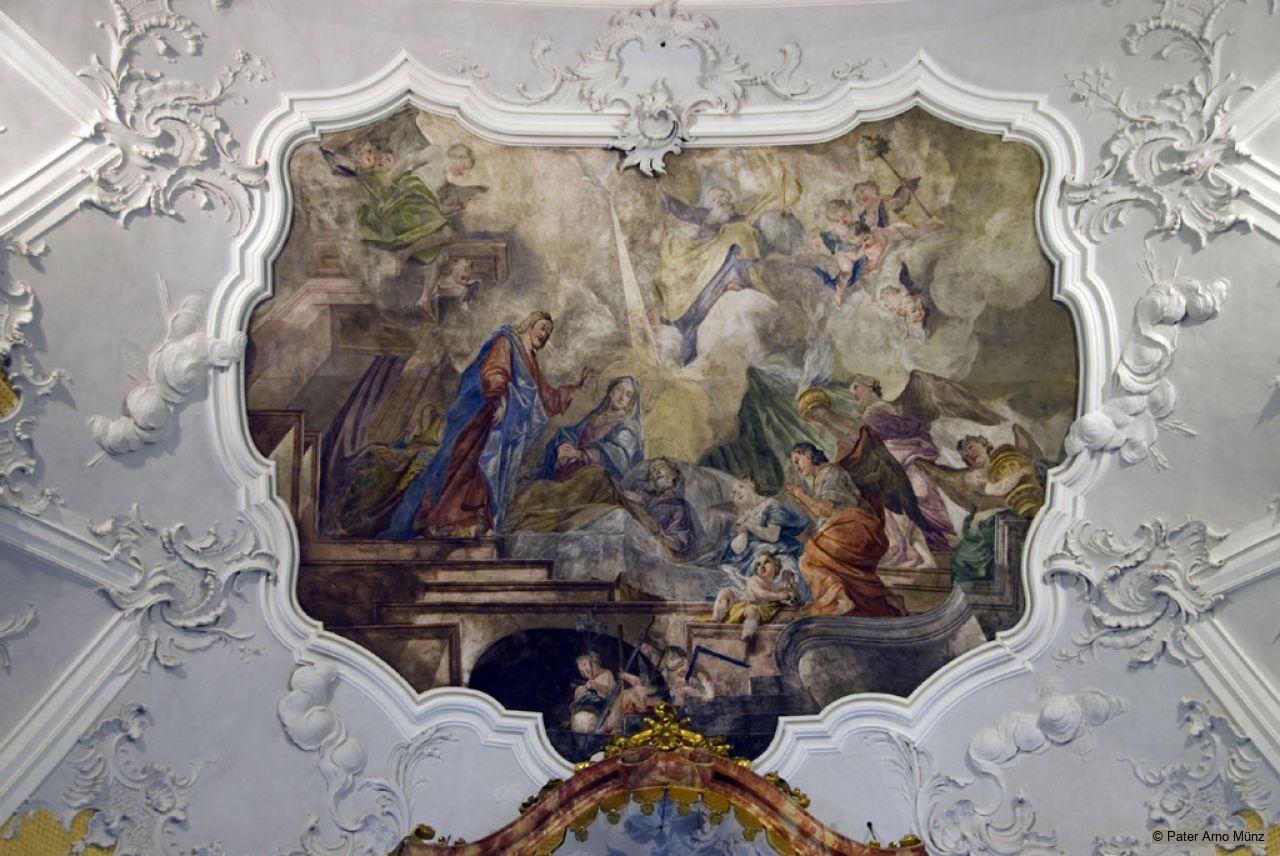
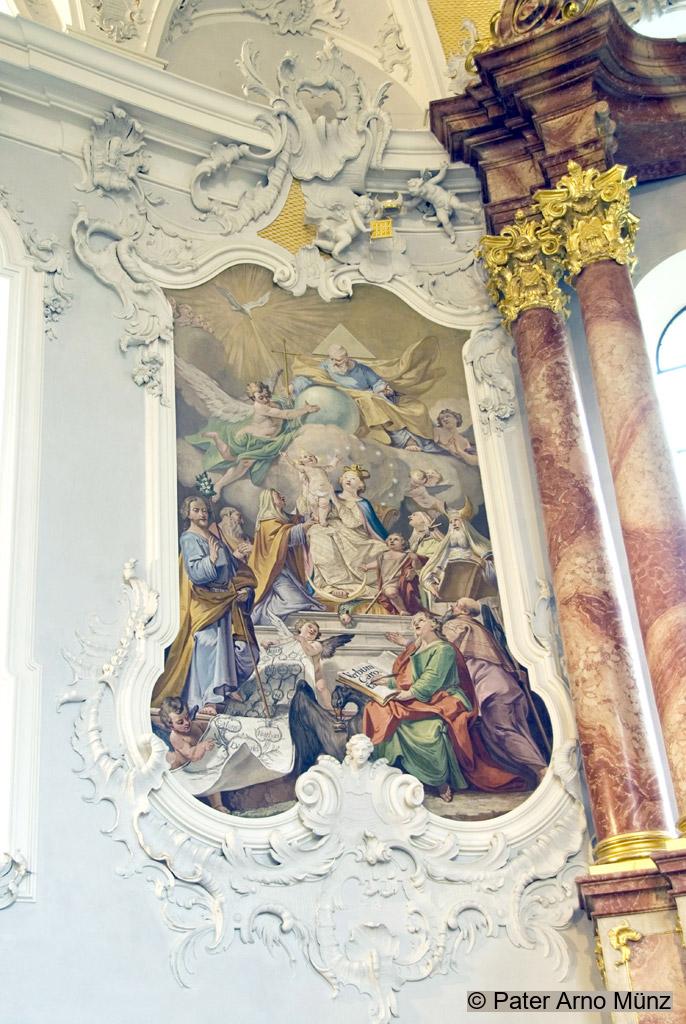
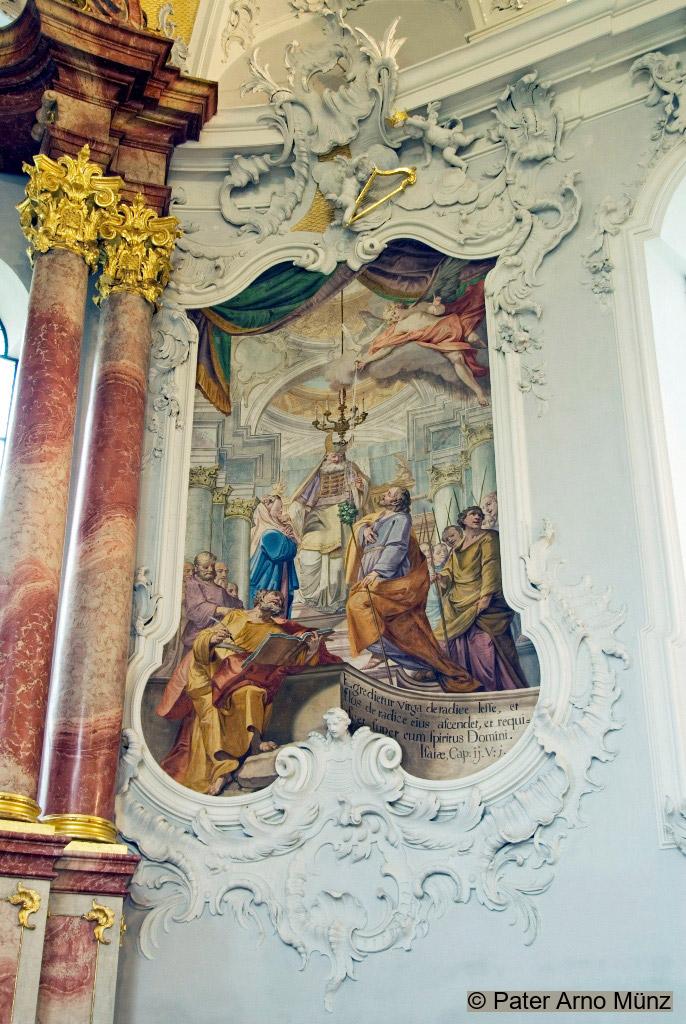
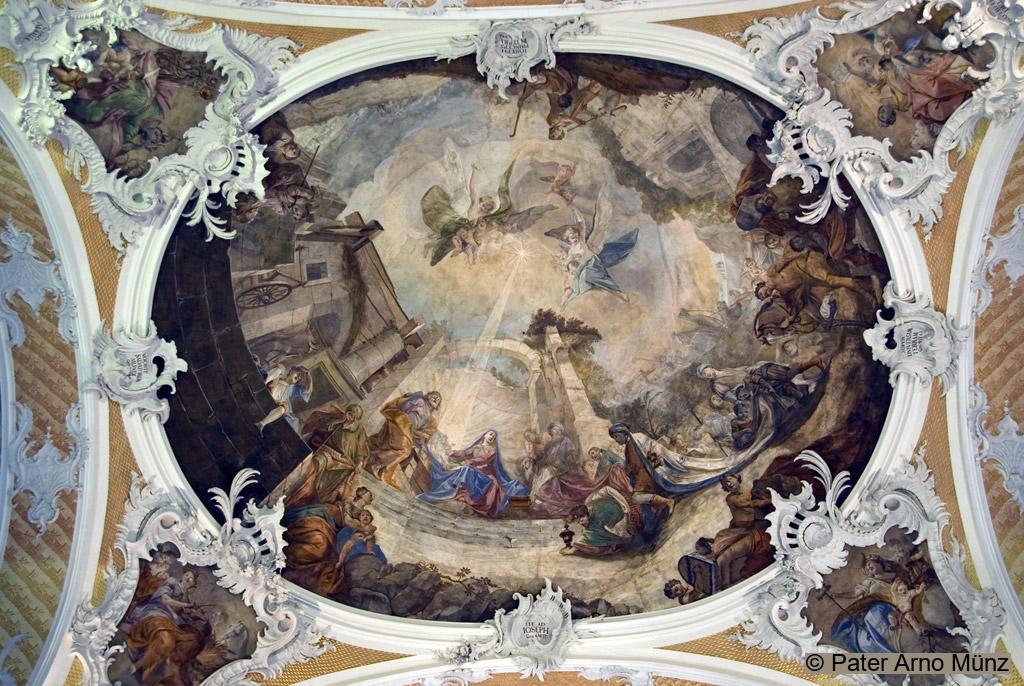
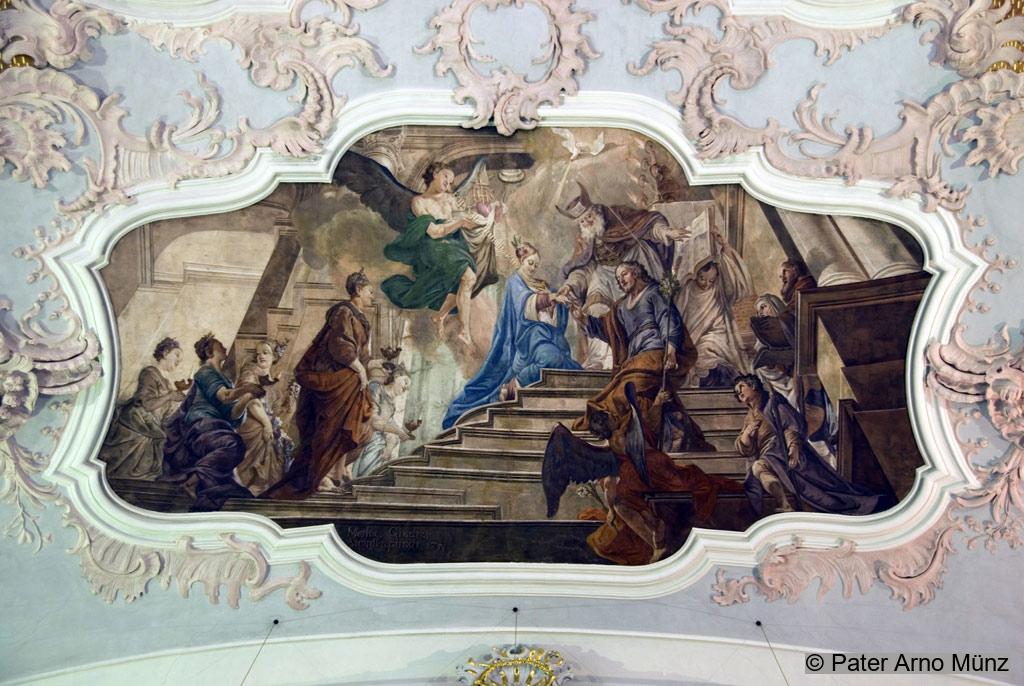
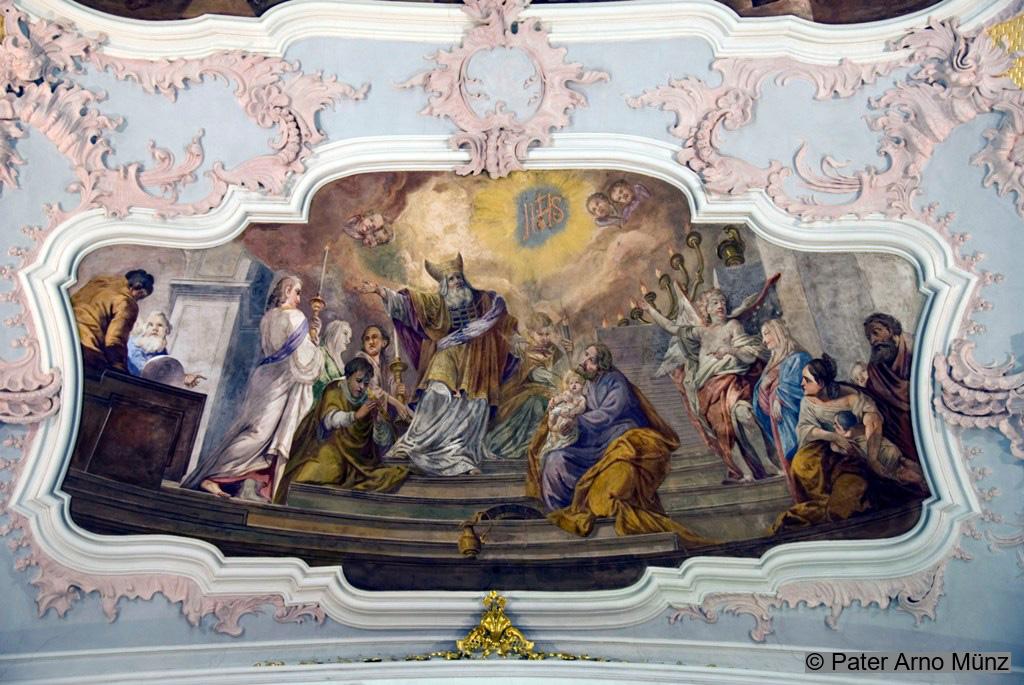
The ceiling frescos and the wall pictures in the choir are all from the hand of Matthäus Günther and have St. Joseph, the patron of the collegiate church, as their theme. The painting in the cupola crossing depicts the Adoration of the Magi, although the actual theme is the presentation of the Infant Jesus. The focus of the composition is the fresco in the eastern side of the cupola, framed by a picturesque ruin, which is designed to be viewed from the nave.
Stucco
Nave vault
1743/44 and 1751 (reconstruction following collapse of the nave vault)
Franz Xaver Feichtmayr (1698–1763), Johann Michael Feichtmayr (1696–1772), Johann Georg Üblhör (1700–1763)
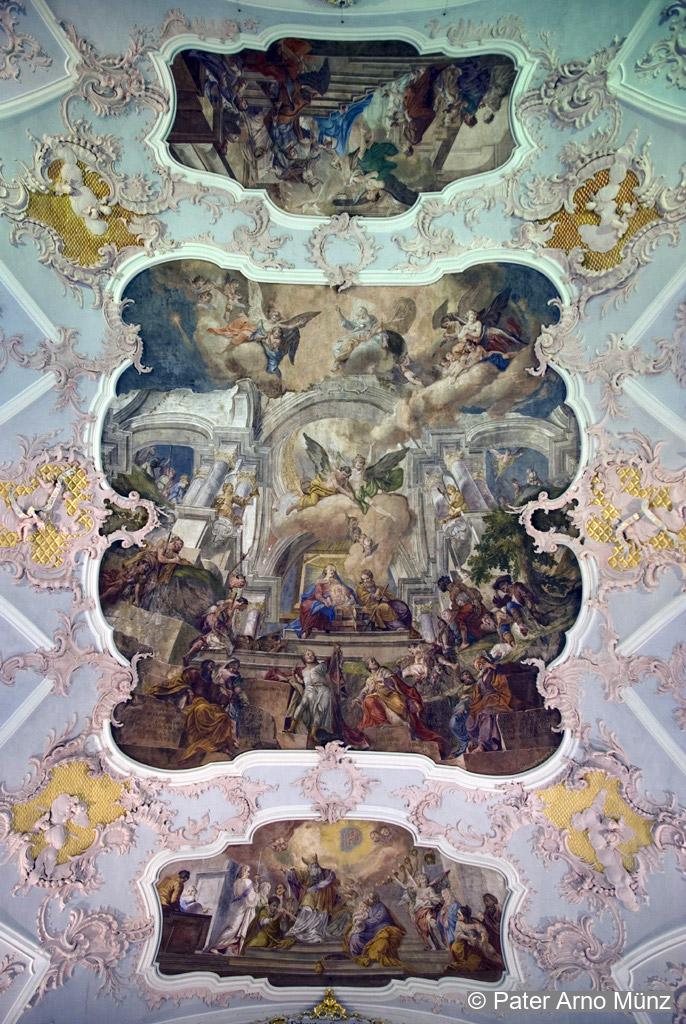
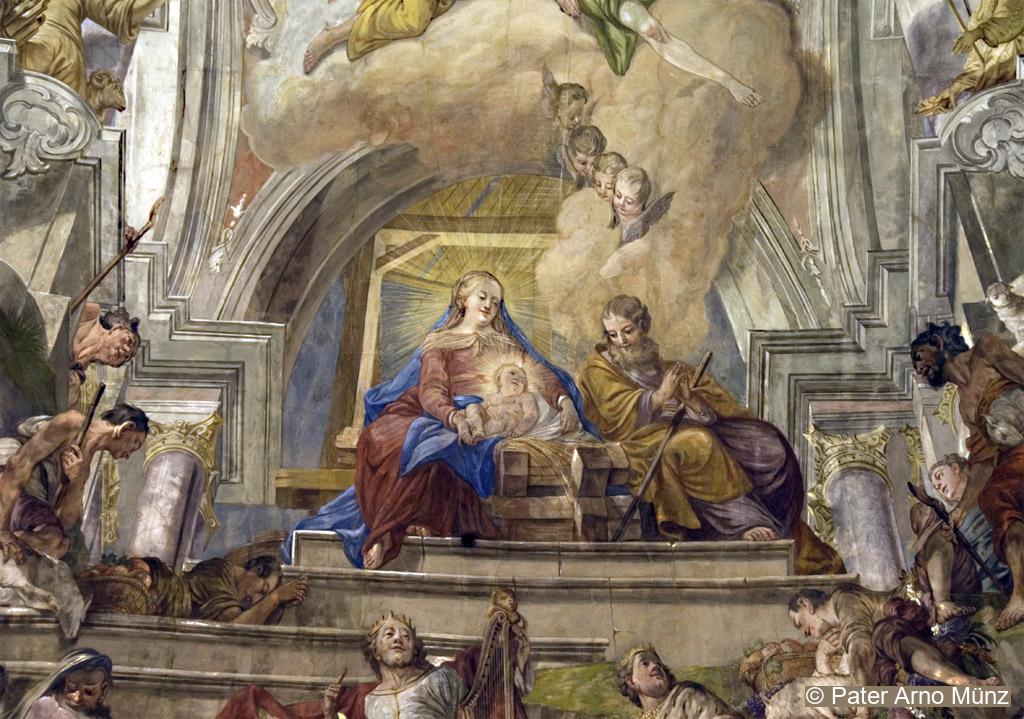
With the brothers Feichtmayr and Johann Georg Üblhör, Abbot Höllerer succeeded in attracting artists of the Wessobrun school, who, collectively, had already proved themselves in the monastery church of Diessen am Ammersee. The ceiling stucco in the nave, largely applied in the form of cartouches, is characterised by fine rocaille figures which fill areas in some parts while establishing playful transitions between the architecture and ceiling pictures in others.
Pews
Nave
1773
Franz Xaver Nißl (1731–1804)
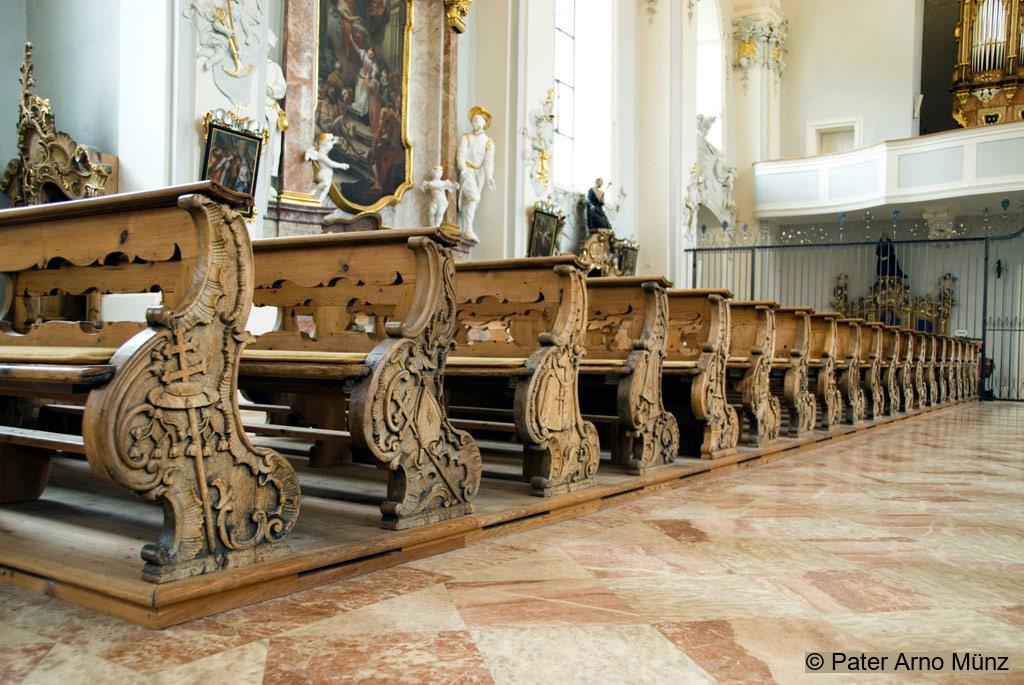
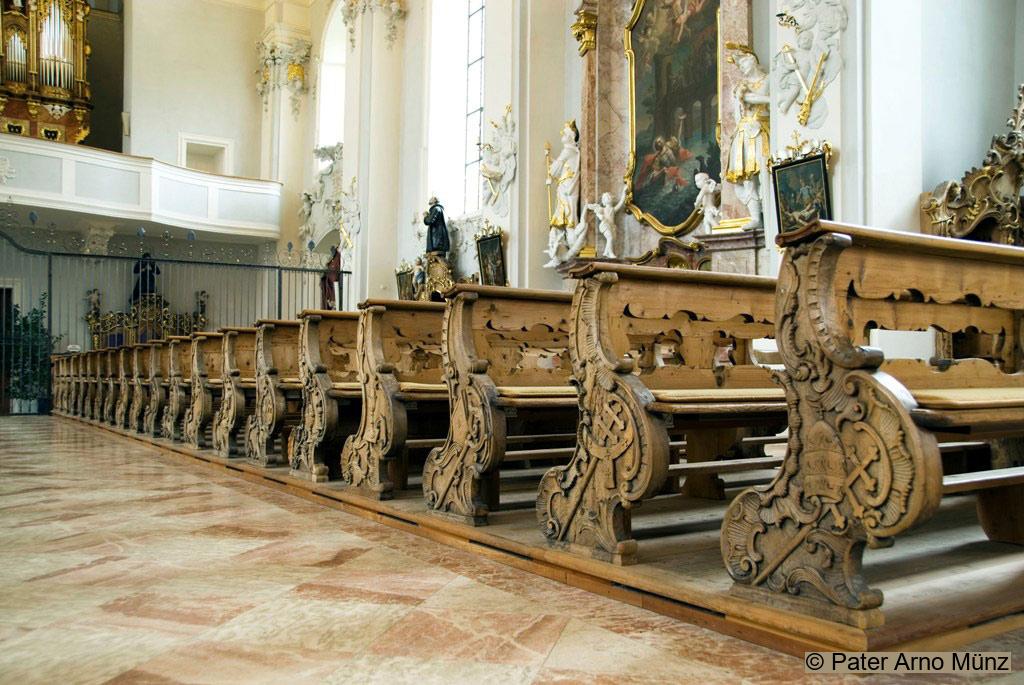
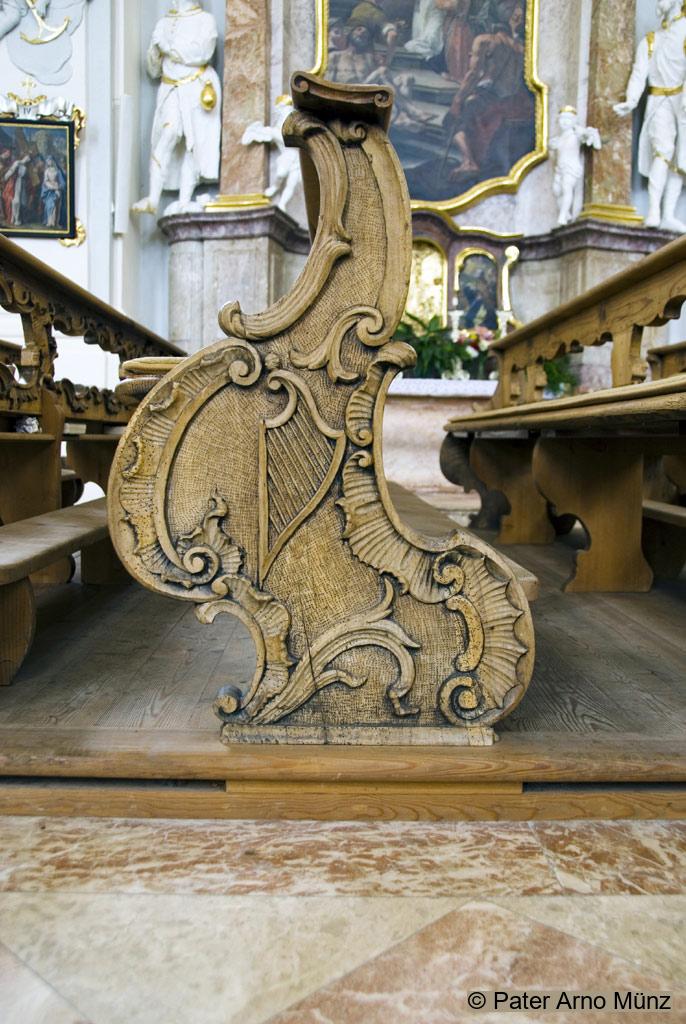
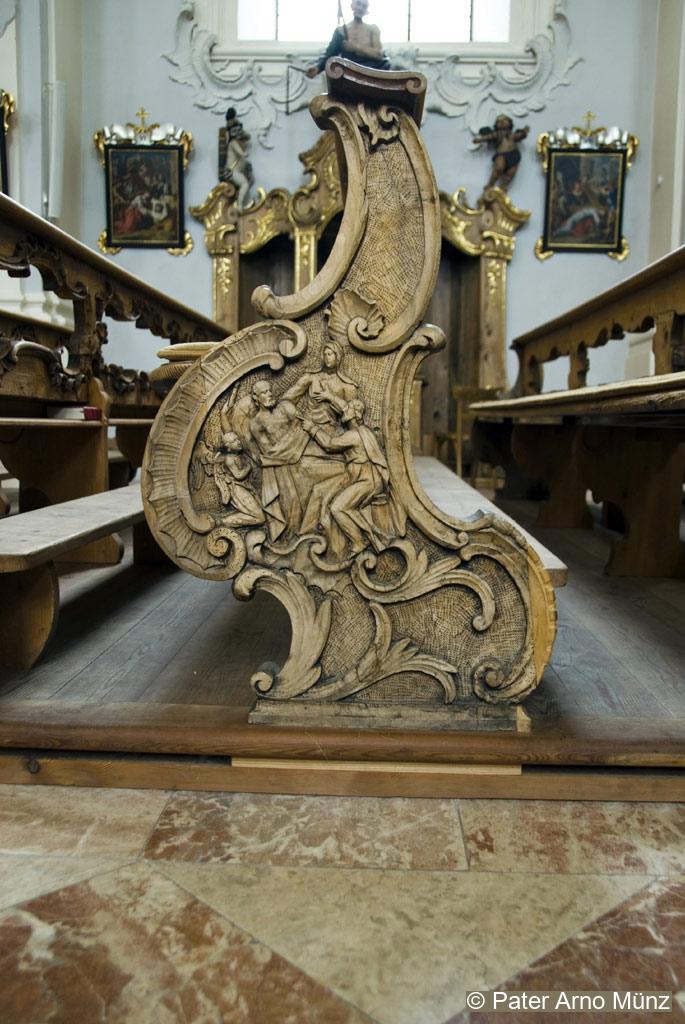
The church pews, with their 80 dividing panels decorated with carvings, are the work of the sculptor Franz Xaver Nißl from Fügen in Zillertal, a student of Johann Baptist Straub. The shorter, front convent pews are decorated with symbols of Christ, Mary and the clergy, the rear pews feature, amongst other motifs, the life of St. Benedict and Joseph and a number of Holy Helpers alongside the coat of arms of the benefactor.
Selected bibliography:
Frodl-Kraft, E., Tiroler Barockkirchen, Innsbruck 1955, p. 45f.
250 Jahre Stiftskirche Benediktinerabtei St. Georgenberg-Fiecht/Tirol, Passau 2000.
Hösch, K., Stiftskirche St. Josef, Benediktinerabtei St. Georgenberg-Fiecht/Tirol, Passau 2001 (Peda-Kunstführer 526).
Citation of this web page:
Frank Purrmann "Benedictine Abbey and Parish Church of St. Joseph" in "Discover Baroque Art", Museum With No Frontiers, 2026.
https://baroqueart.museumwnf.org/database_item.php?id=monument;BAR;at;Mon11;24;en
MWNF Working Number: AT 24