

 Back
Back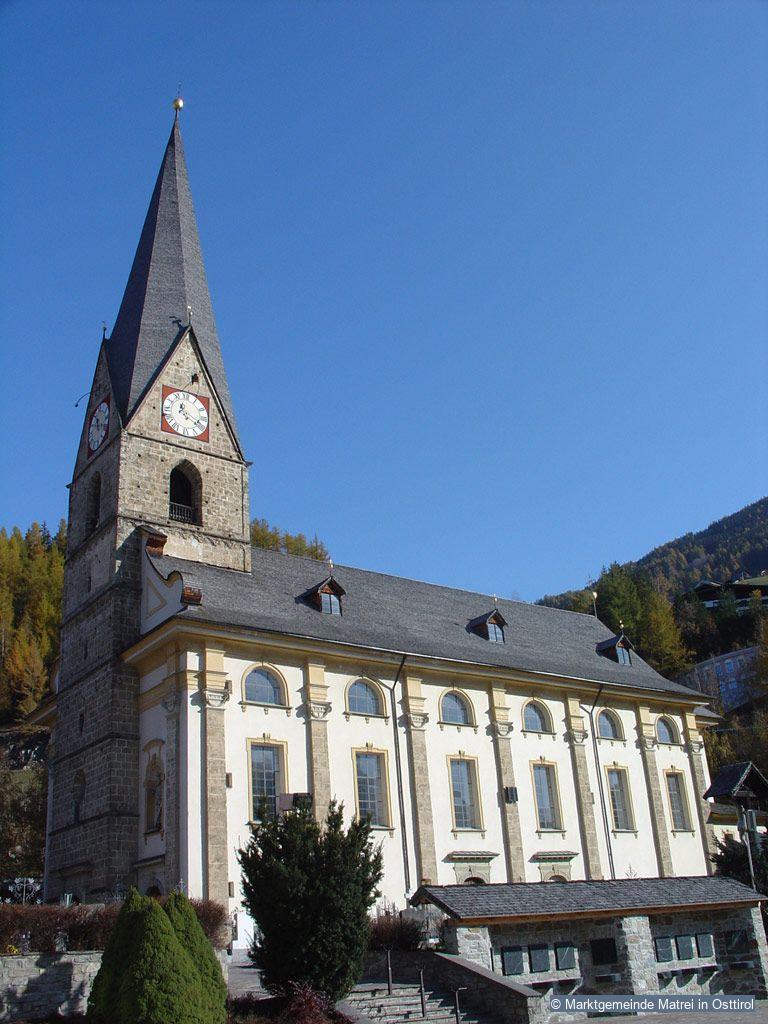
 Add to My Collection
Name of Monument:
Catholic Parish Church of St. Alban
Location:
Matrei in East Tyrol, East Tyrol, Austria
Kirchplatz 1
A-9971 Matrei
T : +43 048 756 507
F : +43 048 755 262
E : pfarramt.matrei@aon.at
Parish of St. Alban (Responsible Institution)
Date:
1776–1783
Artists:
Architectural plan: Thomas Mayr [n.d.], Christoph Anton Mayr (c. 1720–1771); ceiling frescos: Franz Anton Zeiller (1716–1794); altar superstructures: Anton Simeth [n.d.]; figures: Petrus Schmid [n.d]; paintings: Andreas Nesselthaler (1748–1821);Pulpit and baldachin, carpentry: Michael Hueber [n.d.], stuccowork: Franz Graßmayr [n.d.], sculpture: Johann Paterer (1712–1785)
Period / Dynasty:
Late Baroque/Early Classicism
Denomination / Type of monument:
Ecclesiastical architecture (parish church)
Patron(s):
Archbishopric of Salzburg/Parish of Matrei
History:
The parish of Matrei had been under the jurisdiction of the Archbishopric of Salzburg since the Early Middle Ages. A church stood on the site of the Vordermarkt (front market) in the Late Middle Ages but was destroyed by fire in 1326. Its Gothic successor was consecrated in 1334. Due to disrepair and lack of space the decision to erect a new building was made in 1770 and work began in 1777. The church was completed in 1783 and consecrated in 1789. The high altar and side altars were not erected until 1805–1807.
Description:
The largest rural church in the Tyrol, under the patronage of St. Alban of Mainz since the Early Middle Ages, is an imposing Early Classicist building with Late Baroque elements. The latter were executed against the designs and directives of the Salzburg church administration, for example the frescos, which were not originally planned. The design of the Royal Building Commissioner Hagenauer was replaced by the working plan from Thomas Mayr of Lienz. This envisaged a pilaster church enriched with narrow choir lofts in a highly uniform, strict arrangement, however according to the Baroque scheme.
View Short DescriptionThe parish church of Matrei is one of the largest rural churches in Austria as well as one of the most important buildings within the circle of Salzburg Early Classicism influenced by the Royal Building Commissioner Wolfgang Hagenauer. However in its planning and realisation it is largely the work of local artisans who mixed “enlightened Classicism” with Late Baroque traditions.
How Monument was dated:
Archives
Special features
Exterior
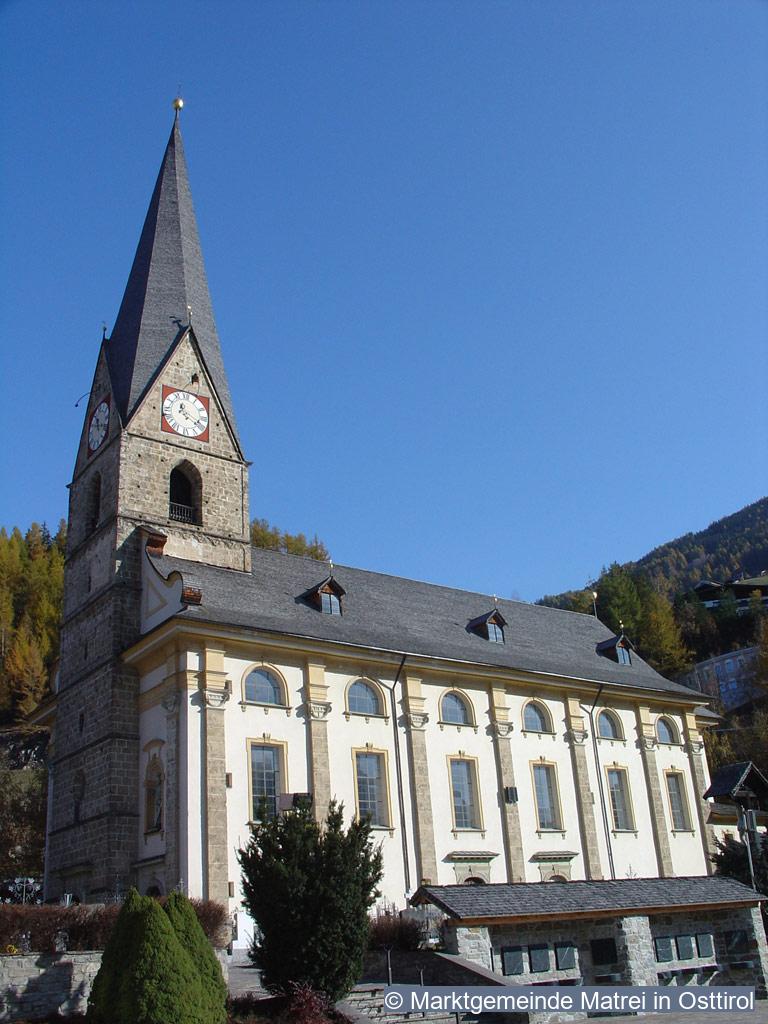
Southern exterior of the nave
1777–1783
Thomas Mayr [n.d.]
The imposing building together with those surrounding it forms an impressive ensemble. The church is surmounted by a tower on the west wall which was retained from the Gothic predecessor. The high Gothic helm-roof contrasts with the subdued design of the rest of the building with uniform pilaster arrangement and a cornice as the sole unifying element. The arrangement of the windows corresponds to the multi-storey configuration of the interior walls.
Interior
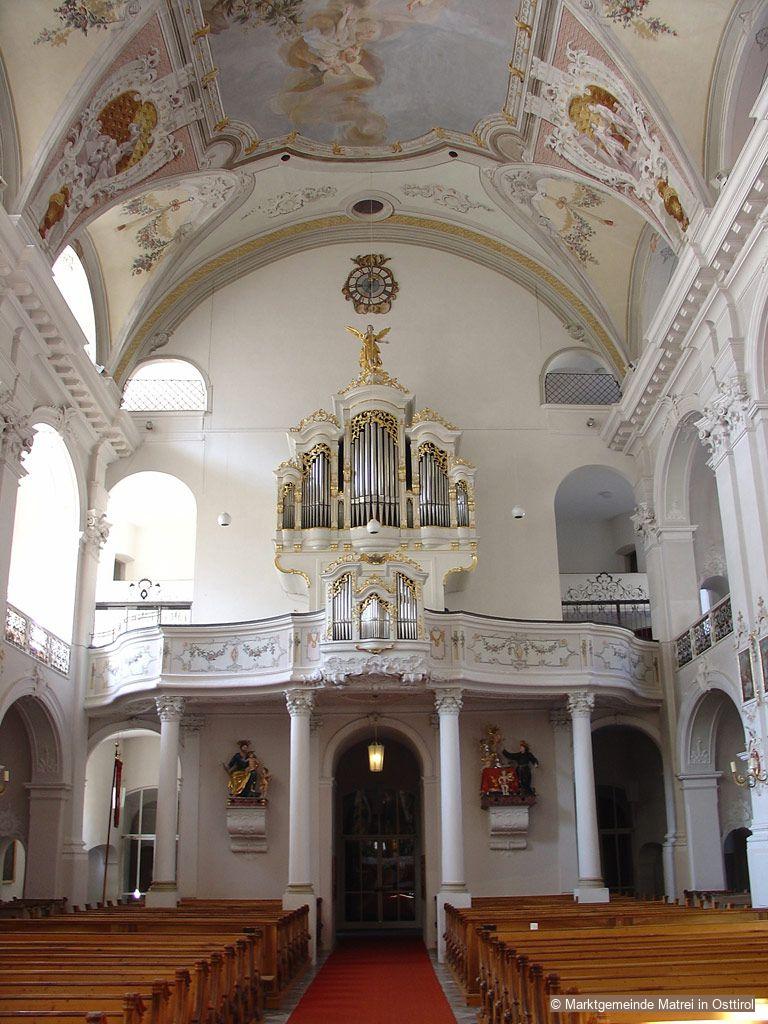
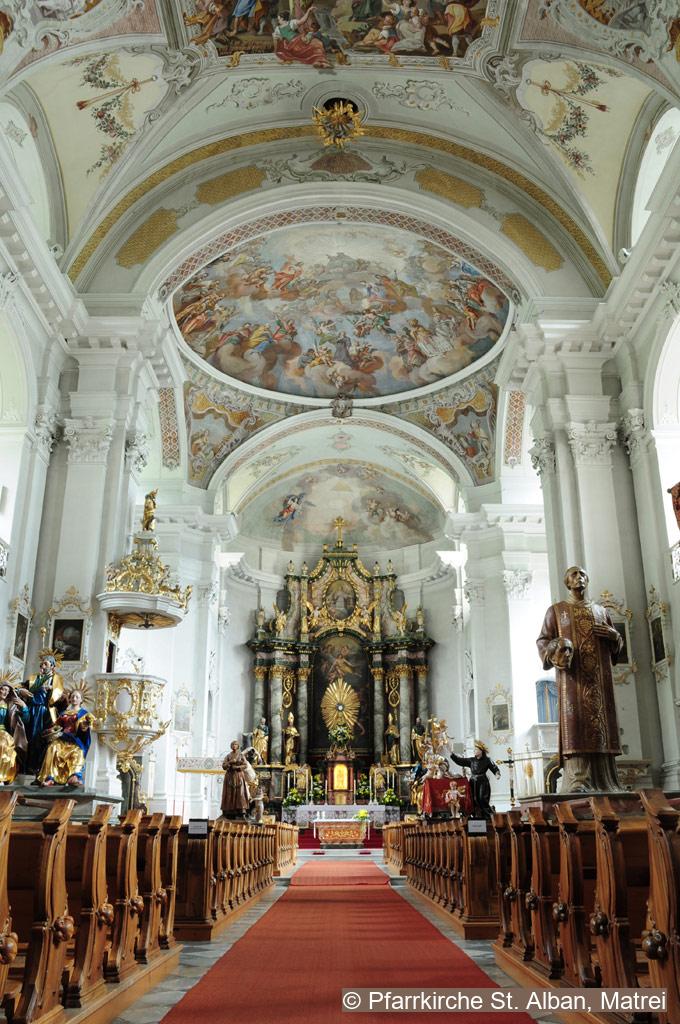
View through the nave from the west
1777–1783
Thomas Mayr [n.d.]
The special feature of the three-bayed pilaster hall with barrel vault is the double-layered construction of the three-storey wall with narrow circumferential choir lofts and a powerful denticular cornice at the foot of the vault. The wall piers are faced with double pilasters. The Baroque interior thus acquires a strictly organised wall arrangement. The crossing is of the St. Peter’s type with tapered piers supporting the cupola.
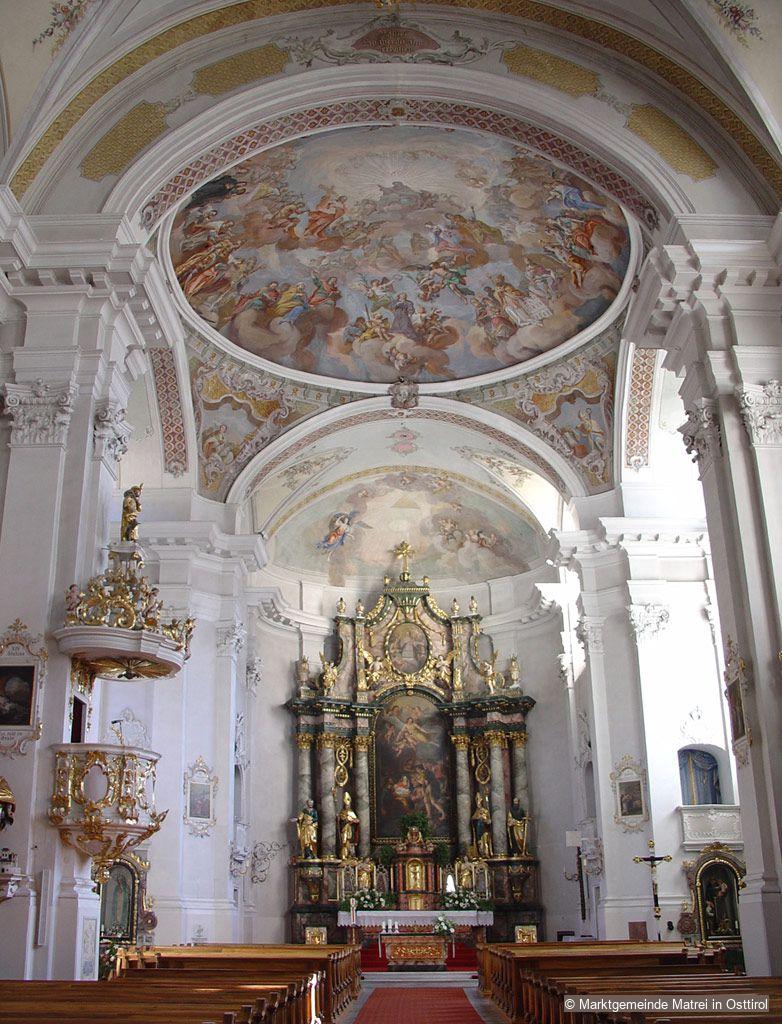
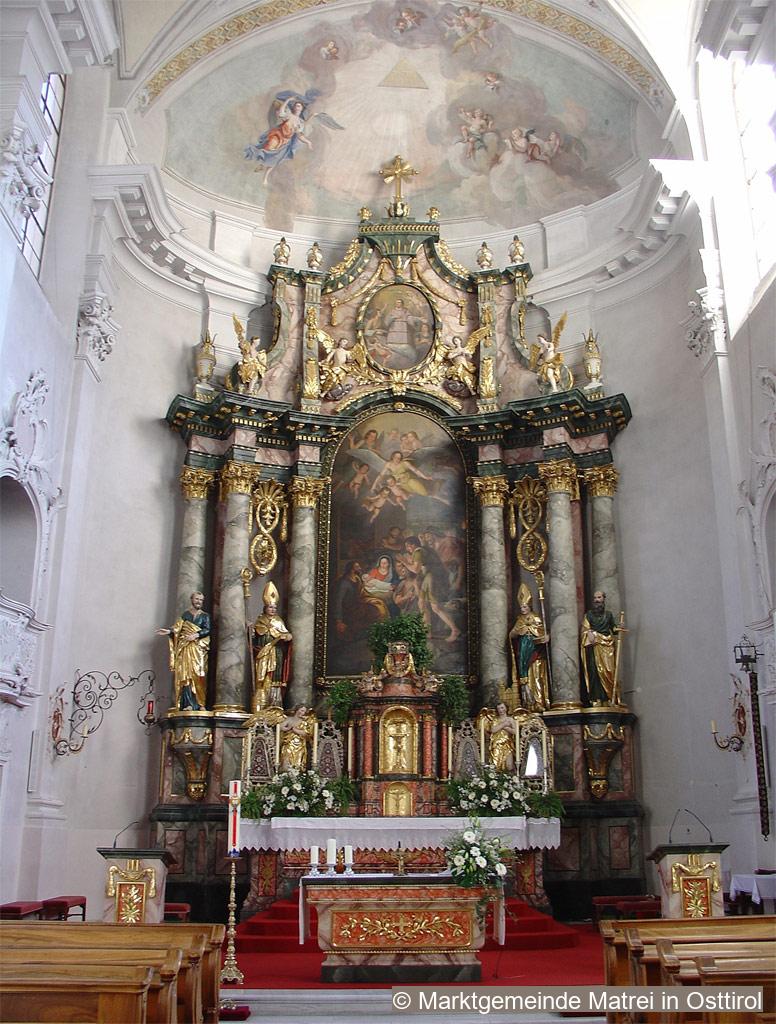
High altar
East wall of the choir
Erected in 1805 utilising statues from before 1787; altarpiece 1807
Anton Simeth [n.d.]; Petrus Schmid [n.d]; Andreas Nesselthaler (1748–1821)
The high altar, erected almost two decades after the church was consecrated, bears only light traces of the Classicist style; this is only apparent in the somewhat stiff, angular form of the altar crown, not the overall form: a column altar with, in part, free-standing supporting elements. The altar from Anton Simeth is probably based on the design from Petrus Schmid who completed a number of figures before suffering a fatal accident in 1787.
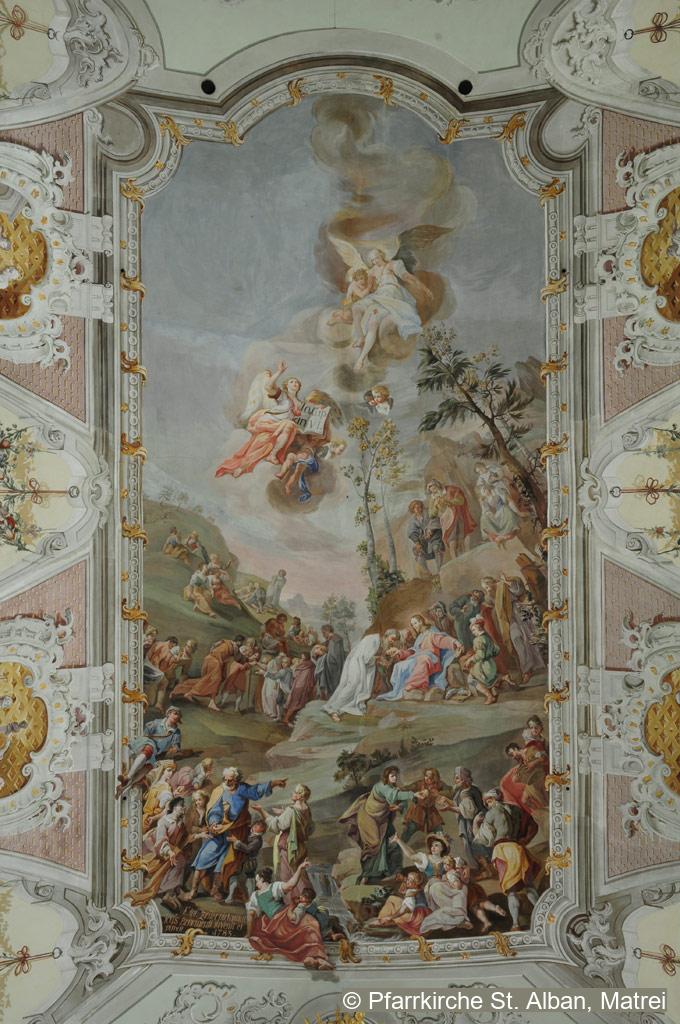
Ceiling fresco Miracle of the Loaves
Nave vault
1783
Franz Anton Zeiller (1716–1794)
The Early Classicist, enlightened spirit is most clearly evident in the ceiling pictures which are a late work of the court painter of Brixen Franz Anton Zeiller. The large nave fresco has been painted without reference to viewing from below and has the appearance of a wall painting that has been transferred to the ceiling. The scene is set in a steep rocky landscape with several groups of figures. Although the composition draws on Baroque traditions, the scene and visual language is executed with didactic clarity.
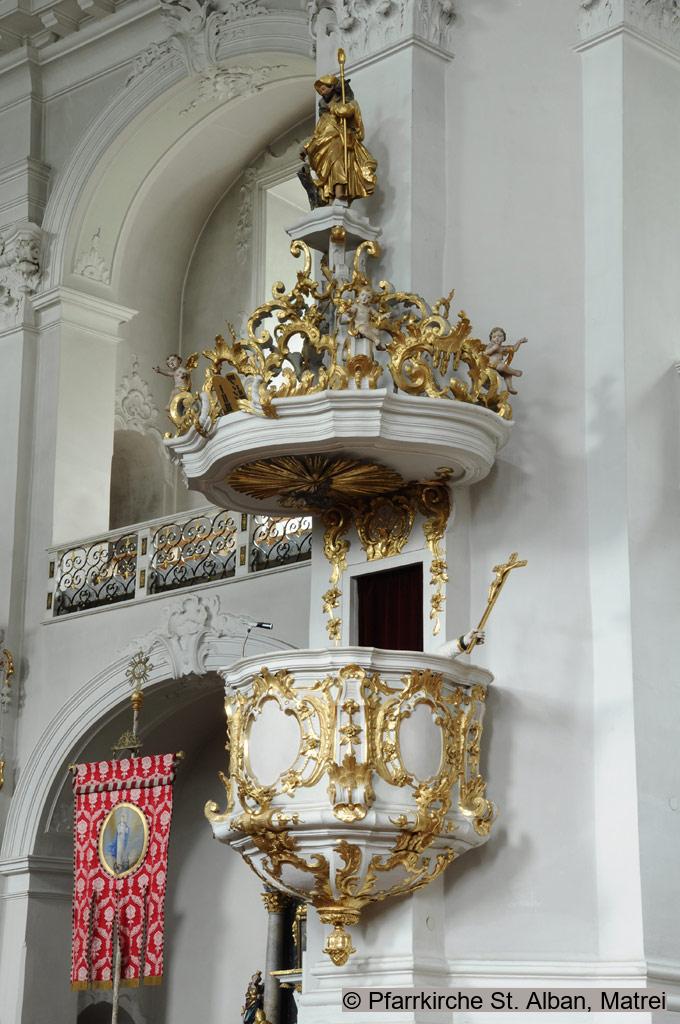
Pulpit
Northwest crossing column
1784
Michael Hueber [n.d.]; Franz Graßmayr [n.d.]; Johann Paterer (1712–1785)
The gently curved pulpit and baldachin in the Late Baroque tradition was completed in 1784 and is the work of three artists, the carpenter Michael Hueber, the stucco mason Graßmayr and the sculptor Paterer who crowned the baldachin with the figures of a good shepherd and four angels.
Selected bibliography:
Brugger, A., Wörgötter, J., Pfarrkirche St. Alban Matrei in Osttirol, Matrei 1984.
Citation of this web page:
Frank Purrmann "Catholic Parish Church of St. Alban" in "Discover Baroque Art", Museum With No Frontiers, 2026.
https://baroqueart.museumwnf.org/database_item.php?id=monument;BAR;at;Mon11;30;en
MWNF Working Number: AT 30