

 Back
Back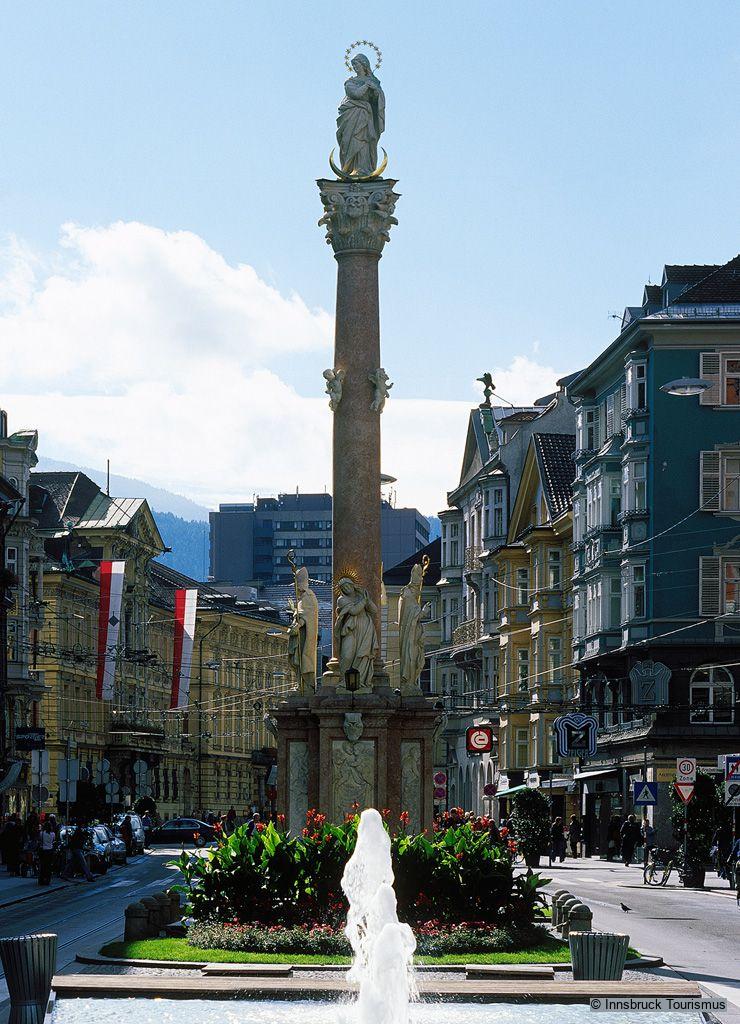
 Add to My Collection
Name of Monument:
St. Anne’s Column
Location:
Innsbruck, Tyrol, Austria
Maria-Theresien-Straße (in front of the town hall, house no. 18)
City of Innsbruck (Responsible Institution)
Date:
1704–1706
Artists:
Cristoforo Benedetti (1660–1735)
Denomination / Type of monument:
Public monument (votive column)
Patron(s):
Estates of the Province of Tyrol
History:
The erection of St. Anne’s Column goes back to the liberation of Tyrol from the invading Bavarian and French troops, the so called “Bavarian Rummel” in the War of the Spanish Succession. On 26 July 1703, on the Feast of St. Anne, Tyrol was liberated from foreign rule. On 15 March 1704, the Estates of the Province of Tyrol vowed to erect St. Anne’s Column and commissioned the sculptor Cristoforo Benedetti. The inauguration took place on 26 July 1706.
Description:
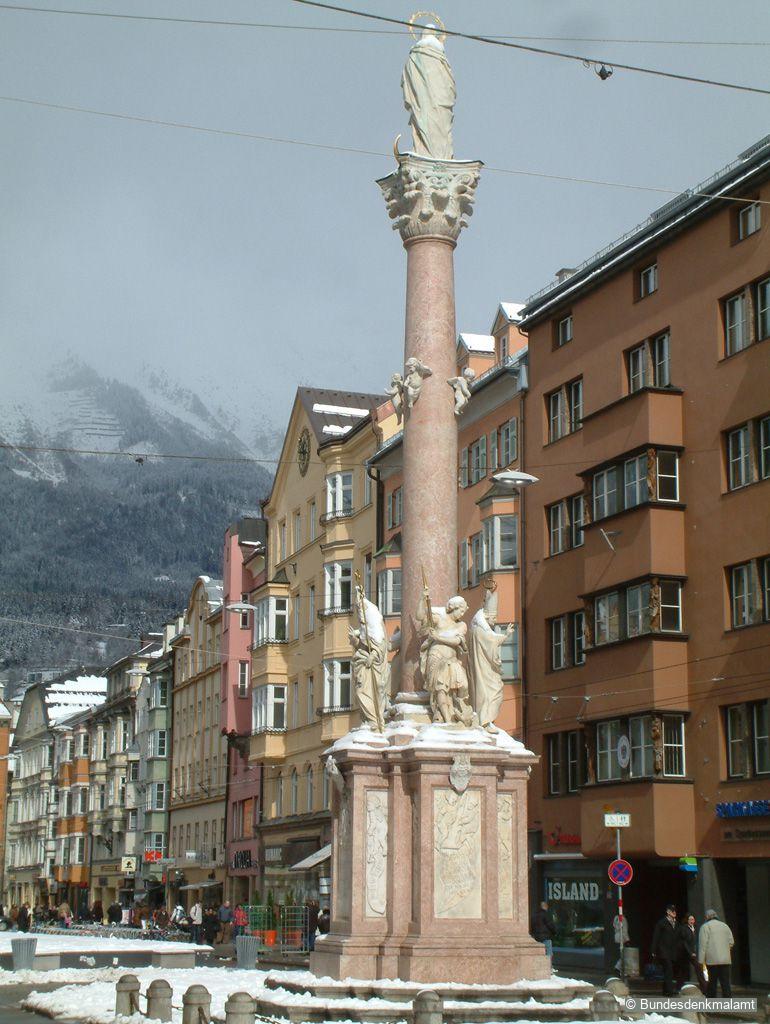
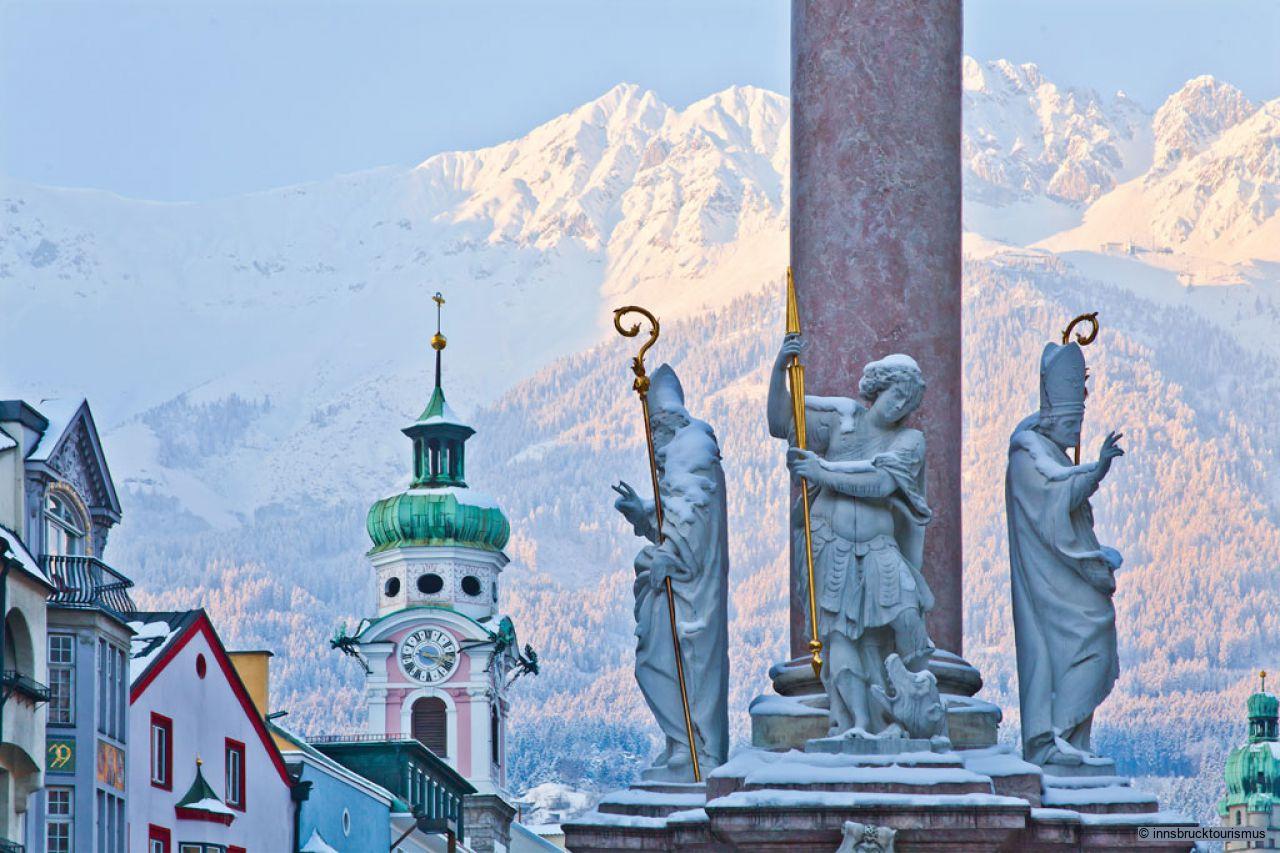
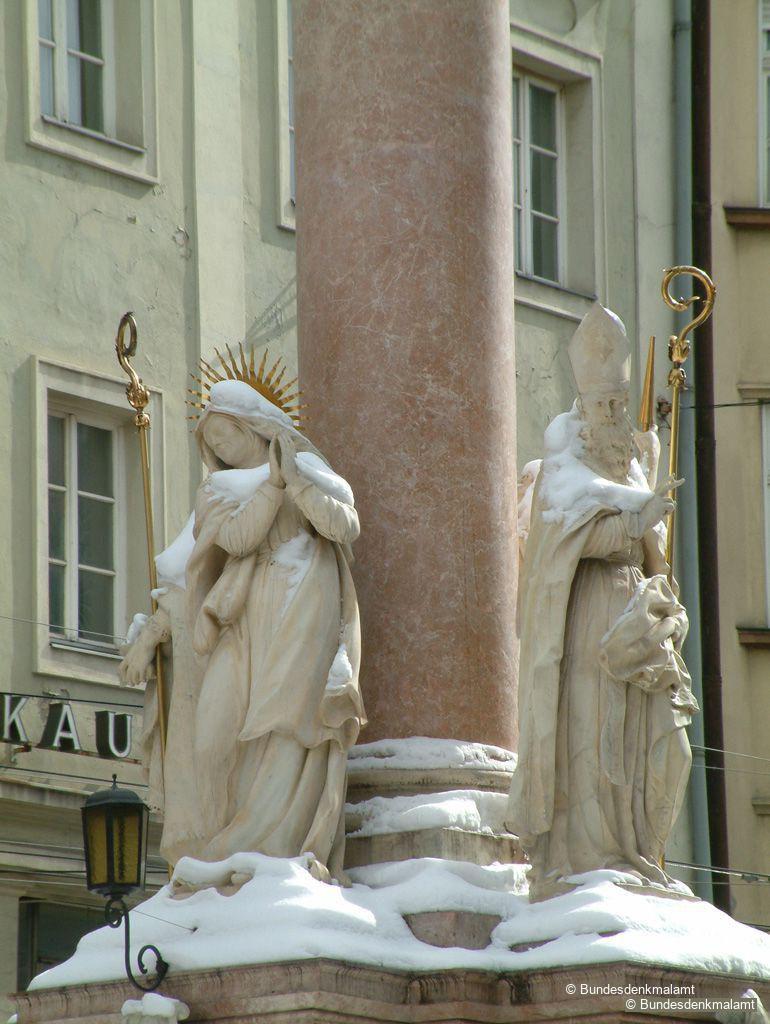
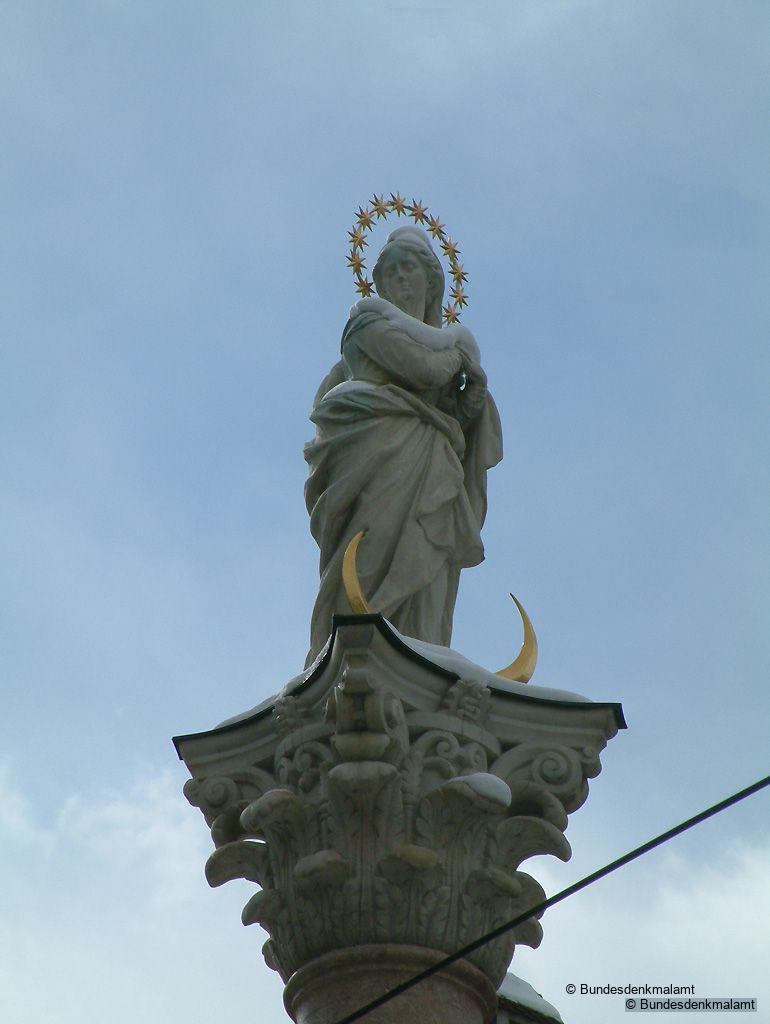
The Corinthian column fashioned from red Kramsach marble is the work of the sculptor Cristoforo Benedetti from Trentino. The column is crowned with a Mary Immaculata, below which, on the cross shaped pedestal, are saintly figures at each point of the compass: To the north St. Anne, Mother of Mary, to the west, Cassian, the patron saint of the diocese of Brixen, to the east Vigilius, the patron saint of the diocese of Trent, and to the south, St. George with the dragon and the lance, the patron saint of the province. The plinth relief features putti with inscriptions. All figures and reliefs were executed in white marble; some of the saintly attributes are highlighted with gilding.
View Short DescriptionSt. Anne’s Column is the most important example of a religious votive monument in Tyrol. It is a memorial to the liberation of Tyrol from the troops of the Bavarian Elector Max Emanuel in the War of the Spanish Succession who were repelled on the Feast of St. Anne. The column, crowned by a figure of the Virgin Mary on the crescent moon, together with the Mary Help Church, was an important centre for the public veneration of the Virgin Mary, initiated by the Estates of the Province of Innsbruck.
How Monument was dated:
Deeds, archives
Special features
Mary Immaculata
Monastery Church of St. Joseph in Fiecht; side altar (former statue on St. Anne’s Column)
1704–1706
Cristoforo Benedetti (1660–1735)
The statue of the Virgin Mary from white marble at the top of St. Anne’s Column was replaced by a copy in 1958 for conservation reasons. The original is now located in the collegiate church of Fiecht near Schwaz as a loan of the Provincial Government of Tyrol. (The figures on the plinth were also replaced with copies in 2009; the originals are now located on the first floor of the Old Federal State Parliament in Innsbruck).
Citation of this web page:
Frank Purrmann "St. Anne’s Column" in "Discover Baroque Art", Museum With No Frontiers, 2026.
https://baroqueart.museumwnf.org/database_item.php?id=monument;BAR;at;Mon11;4;en
MWNF Working Number: AT 04