

 Back
Back
 Add to My Collection
Name of Monument:
Kremsmünster Abbey and Abbey Church Kremsmünster Abbey and Abbey Church Divine Saviour and Redeemer
Also known as:
Kremsmünster Abbey and Abbey Church Salvator Mundi Kremsmünster Abbey and Abbey Church St Agapitus
Location:
Kremsmünster, Upper Austria, Austria
Stift 1,
A-4550 Kremsmünster
T : +43758352750
E : abtei@stift-kremsmuenster.at
Benedictines from Kremsmünster Abbey (Responsible Institution)
Date:
777: foundation of the monastery by Tassilo III, last Duke of Bavaria
1232 until 14th century: erection of the church and monastery buildings
beginning 17th century: construction of the new monastery buildings and baroquisation until about 1700
1638–40: erection of the greenhouse for figs
1640–41: construction of the so-called Mosque (pavilion)
1680/1681: church’s West façade, stucco work in the church
1682–86: most statues on the church’s altars
1690–92: construction of the fish pools
1696: fresco painting in the Imperial Hall
1700–12: painting at high altar
1712: high altar
1717: extension of the fish pools
1719: stucco work in the Imperial Hall
1721: emperors’ portraits in the Imperial Hall
1748–59: construction of the observatory
Artists:
Architecture of church, West façade and two towers: Carlo Antonio Carlone (c. 1635–1708); baroquisation of choir: Marx Martin Spaz (n.d.); baroquisation of church, stucco work: Giovanni Battista Colomba (1638?–93) and Giovanni Battista Barberini (1625–91/92); fresco paintings: brothers Michael Christoph (n.d.), Michael Georg (n.d.) and Johann Bernhard Grabenberger/Gramberger (1637–1710); coat of arms above the portal and sixteen statues (interior): Michael Zürn d.J. (1654–98); painting at high altar: Johann Andreas Wolff (1652–1716); tabernacle, frames of paintings and pulpit: Johann Urban Remele (n.d.) Monastery building West Wing Imperial Hall: Carlo Antonio Carlone (c. 1635–1708); fresco paintings: Melchior Steidl (1657–1727); stucco work: Diego Francesco Carlone (1674–1750); emperors’ portraits: Martino Altomonte (1657–1745); Library stucco work: Girolamo Alfieri (1654–1740); one fresco painting: Melchior Steidl (1657–1727); bookcases: Balthasar Melber (n.d.); panel carvings: Johann Urban Remele (n.d.) Architecture of observatory: Pater Anselm Desing (1699–1772); stucco work on ceiling: Franz Joseph Ignaz Holzinger (1691–1775) Architecture of fish pools: Carlone Antonio Carlone (c. 1635–1708) and Jakob Prandtauer (1660–1726); four fountain figures: Andreas Götzinger (about 1643–1711) Architecture of fig house: n.n. and Mosque/pavilion: Pater Aegyd Everard von Raittenau (1605–75)
Period / Dynasty:
Early, high and late Baroque
Denomination / Type of monument:
Ecclesiastical architecture
Patron(s):
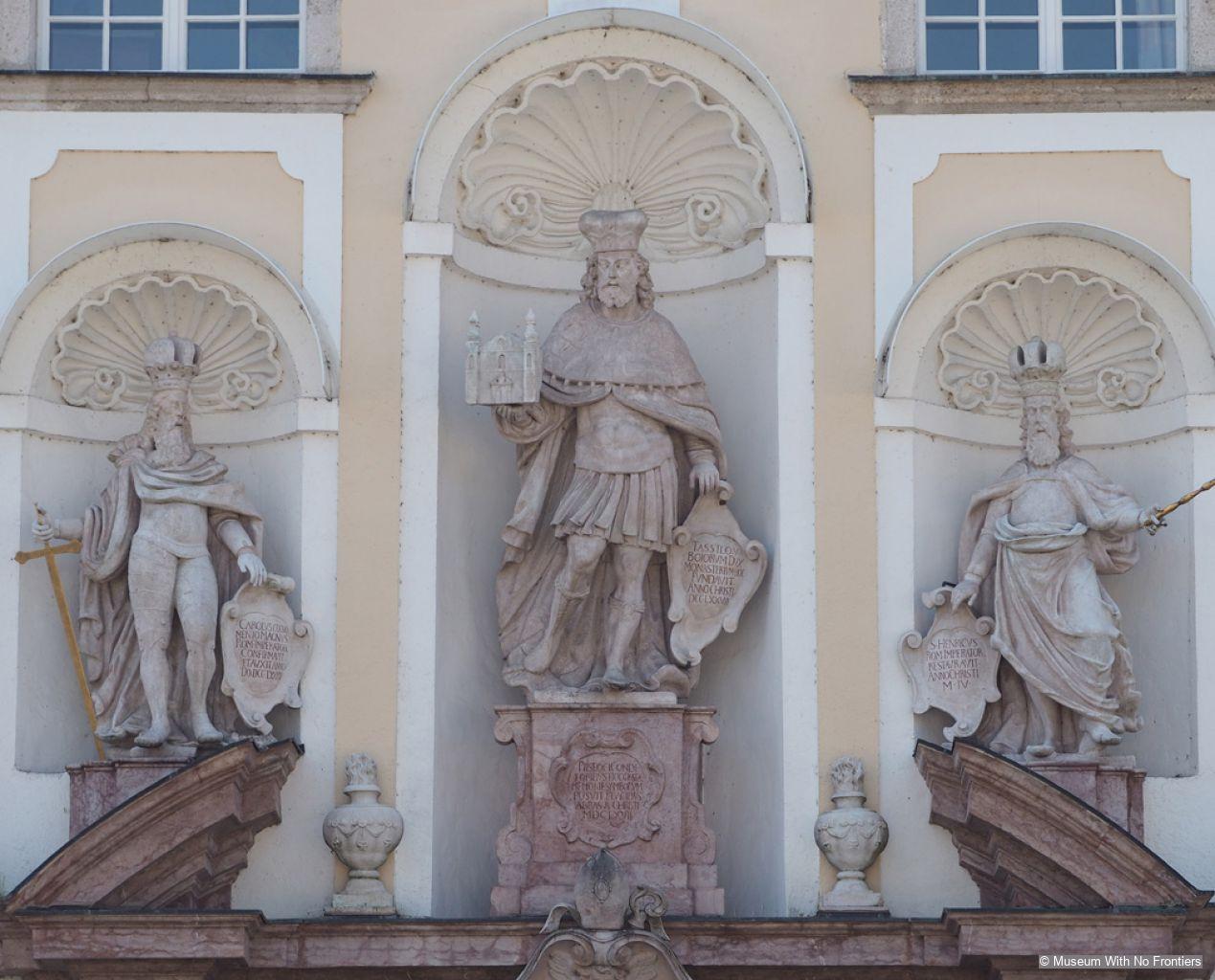
Duke Tassilo III of Bavaria founded the monastery in 777 following the defeat of the Slavs.
History:
Duke Tassilo III of Bavaria, to whose empire the Traungau (= the region around Kremsmünster) belonged, gained victory over the Slavs at the end of the 8th century. His wish to christianise them was the reason for founding the monastery. But there is another version of the story. According to a popular legend, Tassilo’s son Gunther was killed when hunting. The father came to guard his son's corpse in the night when a stag appeared and requested him to build a church and a monastery on the very place.
This was followed by years of economic prosperity but also by raids, fire, loss and again by economic upswing. Like in many other religious communities, the epoch of the Reformation brought a decline. With the help of the emperor new and strong abbots were appointed, the monastic community increased, and a flourishing Baroque era could begin. Two abbots started the baroquisation of the monastery complex and added buildings such as the fig house and the pavilion, the fish pools and an observatory, Kremsmünster´s widely visible landmark. The Reform-Kaiser Josef II tried, of course, to close the community, but that was successfully averted by the abbot. During the Second World War the abbey was confiscated by the Gestapo. This didn’t dissuade the monks having their daily choral prayer in the church.
Description:
During the Baroque epoch there was a brisk construction activity in Kremsmünster. One started without overall plans, step by step, at the end of the 17th century. The abbey wing and the guest wing were the first to be built. In the former there are the two most representative rooms: the Imperial Hall (the stucco work and the emperors’ portraits were added later) and the Library. Even the fish pools and the pavilion (the Mosque) were built at the end of the 17th century. During this time they also began to baroquise the Roman church. It was enlarged and coated with a new interior shell, while the Western front was a totally new addition. The church’s completion lasted until the first decades of the 18th century.
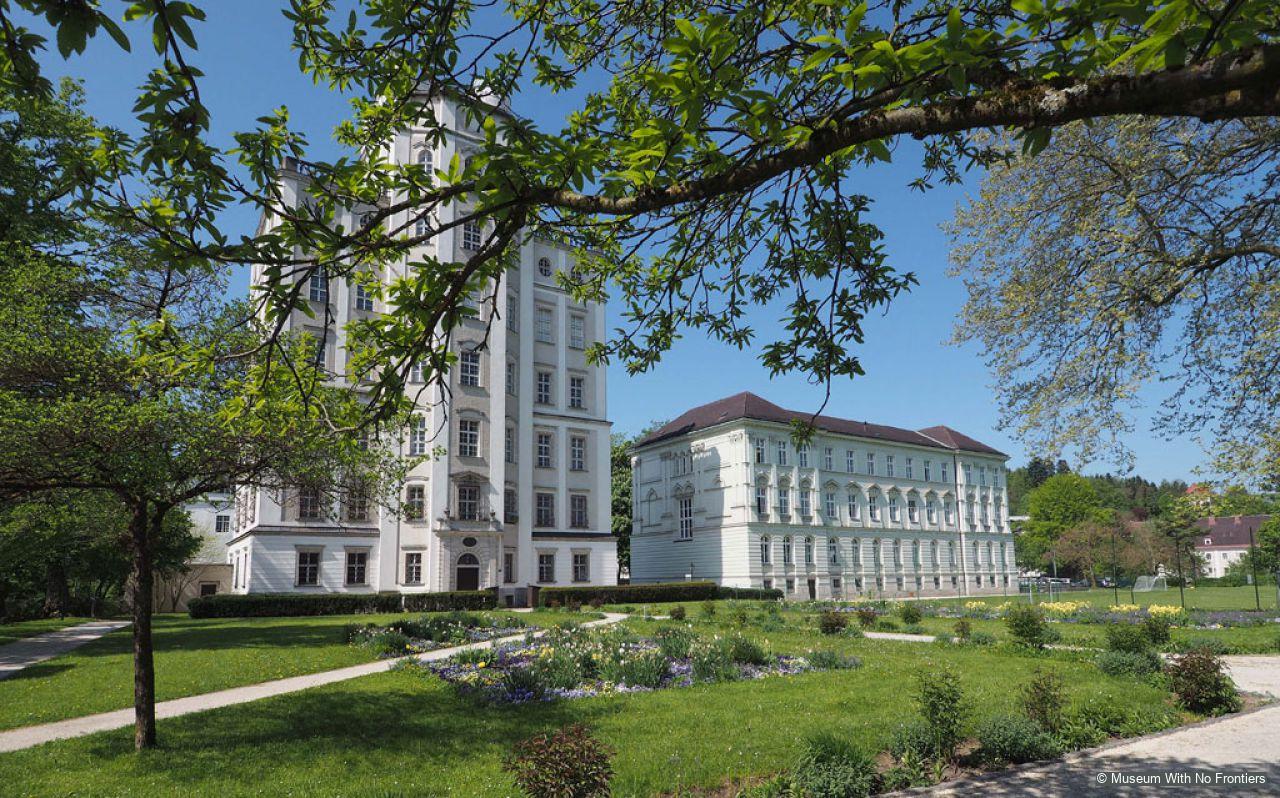
It was in the middle of the 18th century when for a long time the most remarkable building in Upper Austria arose: the observatory, a typical Age of Enlightenment institution.
Unlike other monasteries where the abbots built huge abbey complexes in the Baroque era, the Benedictines from Kremsmünster erected new buildings only step by step. It began at the end of the 17th century with the abbey wing, the fish pools, the garden pavilion (Mosque) and the baroquisation of the Roman church. The building was enlarged and the outside and inside were coated with a new shell. The completion lasted until the first decades of the 18th century. As a typical building project of this era, the Age of Enlightenment, whose people started to take a big interest in natural science, the observatory arose.
How Monument was dated:
Historical documents
Special features
Church (architecture and interior)
Prelate's Court
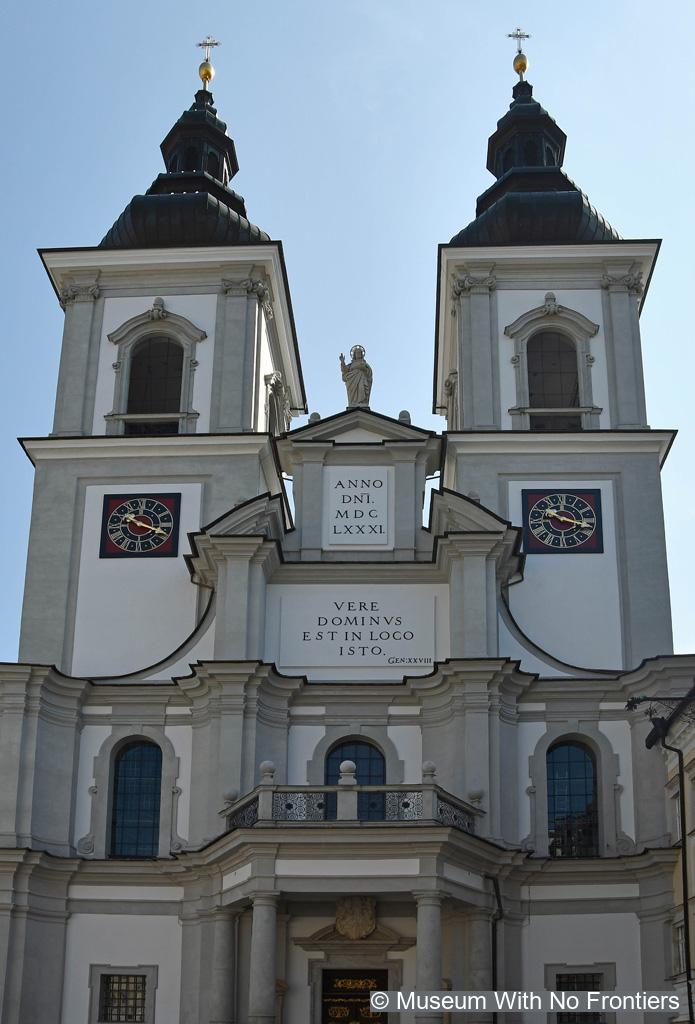
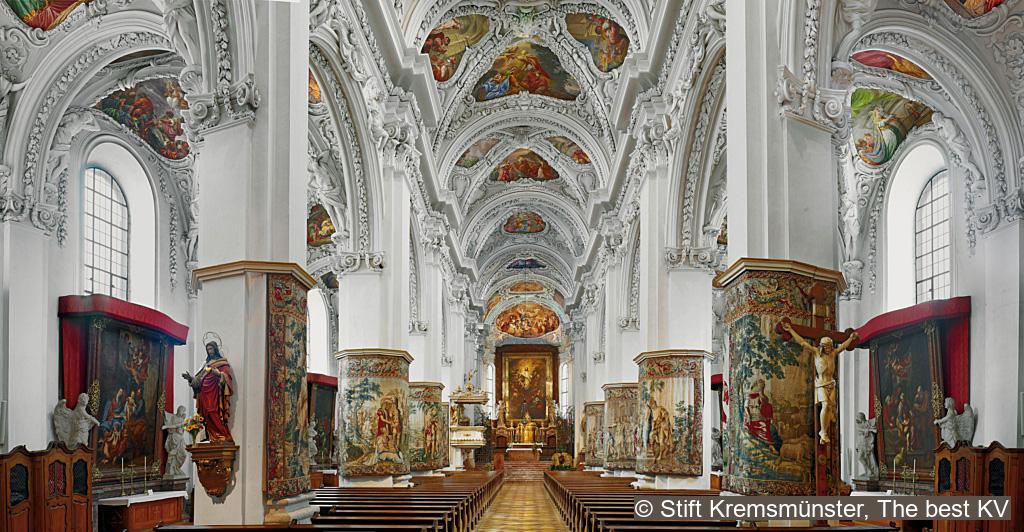
1614: two secondary apses enlarged; 1680/1681: main/west façade and stucco work in the church; as of 1682–86: most statues on the altars; 1699–1712: painting at the high altar
Marx Martin Spaz: secondary apses; Carlo Antonio Carlone: main/west façade; Giovanni Battista Colomba and Giovanni Battista Barberini: stucco work; Michael Zürn the younger: most statues on the altars; Johann Andreas Wolf: painting at the high altar
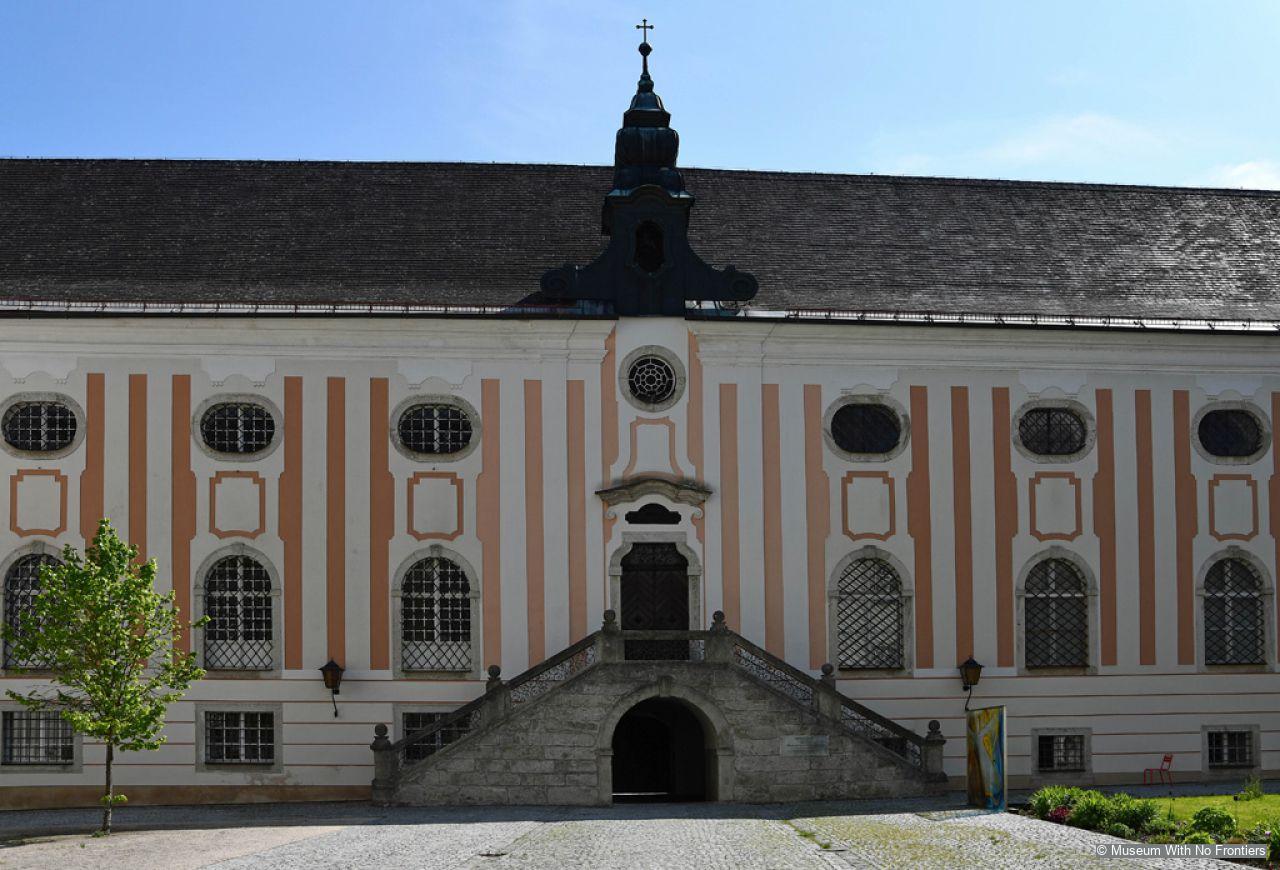
In the first Baroque building period at the begin of the 17th century the two secondary apses were extended and the altars (formerly attached to the pillars) installed on the nave’s sides.
By 1677, 900 years after the abbey’s foundation, the second Baroque building period began. Carlo Antonio Carlone added a chapel and the new main/west façade. The four storey front with pillars, altane, atticas and gables was erected in front of the towers. It looks like a separate (profane) pavilion architecture.
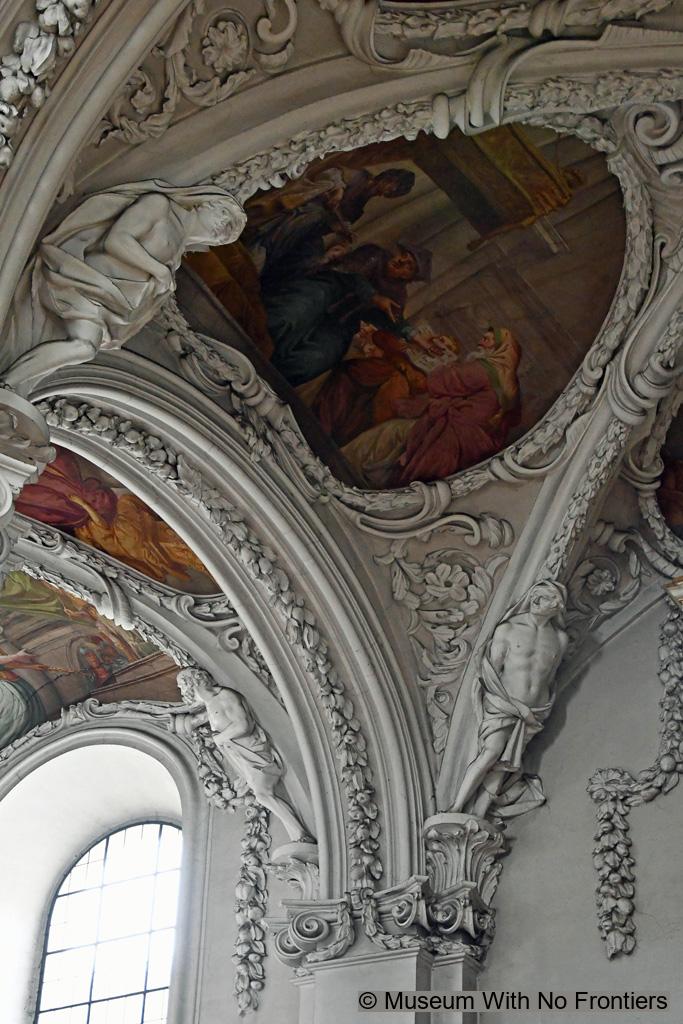
The church’s interior was totally baroquised: the late Roman/early Gothic columns were covered with decorative stucco work and got a mighty winding entablature on top. The fresco paintings on the ceiling were framed with sculptural stucco garlands. The side altars were newly built. The altar paintings originate from this epoch and got sumptuous frames. They are complemented with angels of marble who present the paintings’ biblical scenes to the viewer. Gian Lorenzo Bernini created this altar type, first of all, for the church Santa Maria del Popolo in Rome. It was here applied for the first time outside Italy.
With the order of the painting for the high altar in 1699, the third Baroque phase began. Because of its huge dimension it took thirteen years to get it, as there was no suitable canvas in size. The high altar, complementing angels, the tabernacle, the two statues of the saints Benedict and Scholastika and the pulpit completed the Baroque interior that has stayed untouched for over 300 years.
Library, Imperial Hall
Prelate's Court
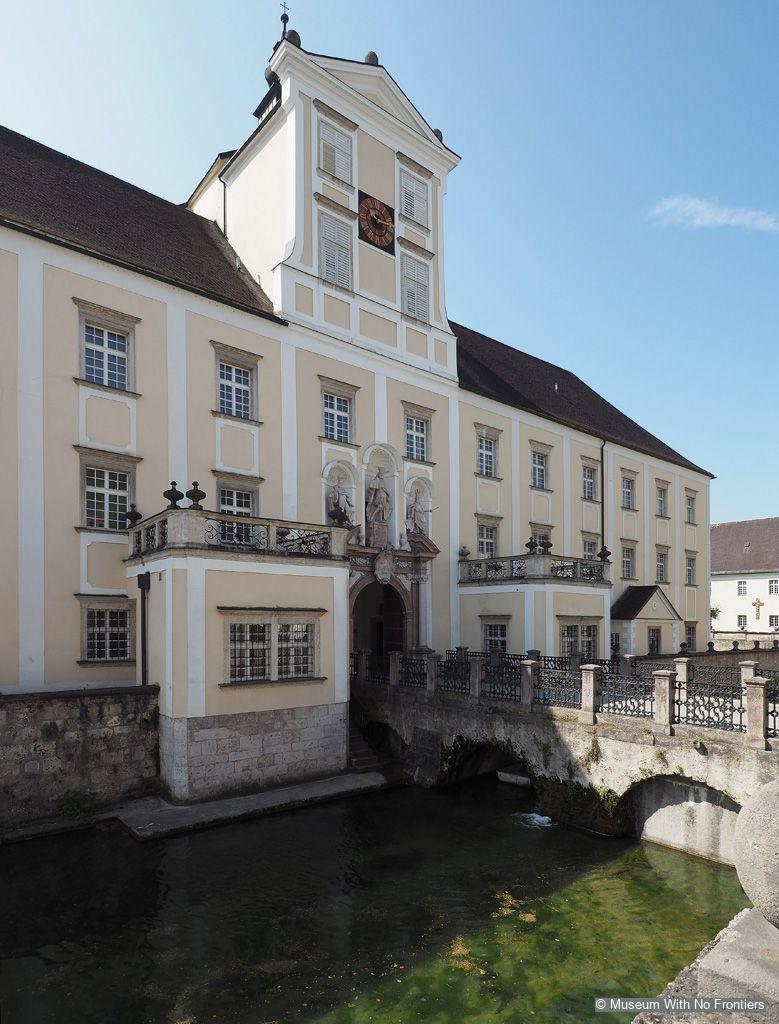
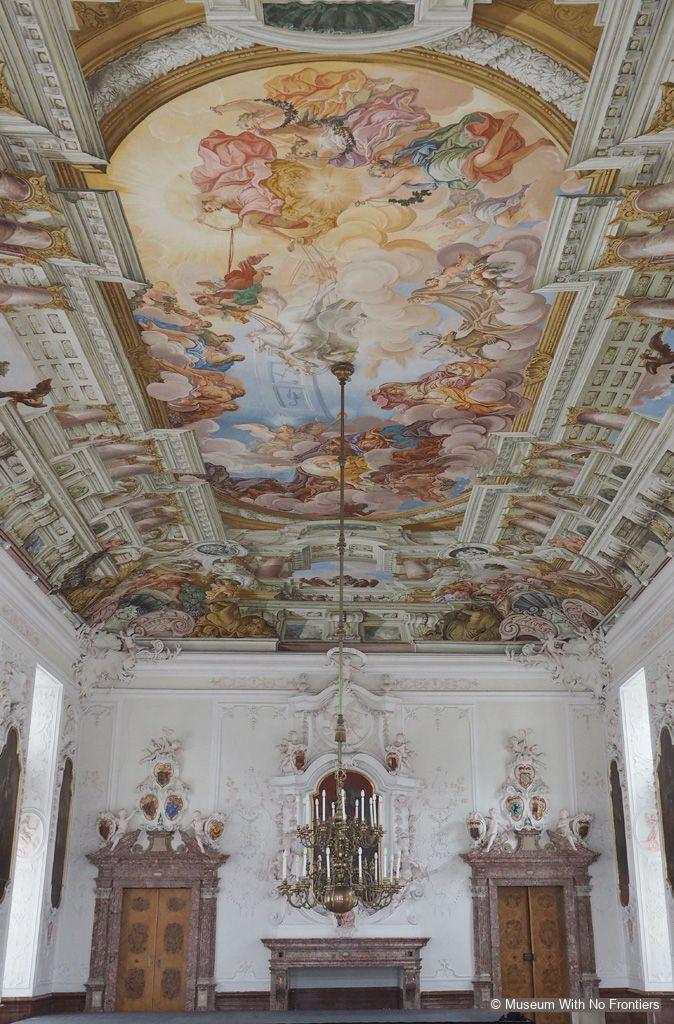
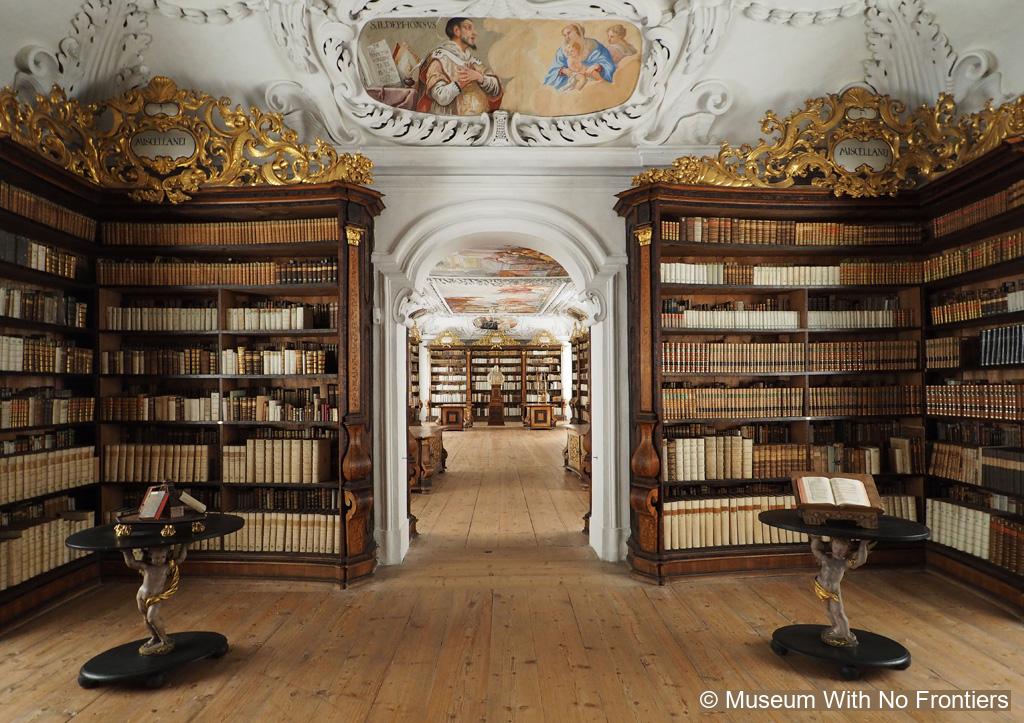
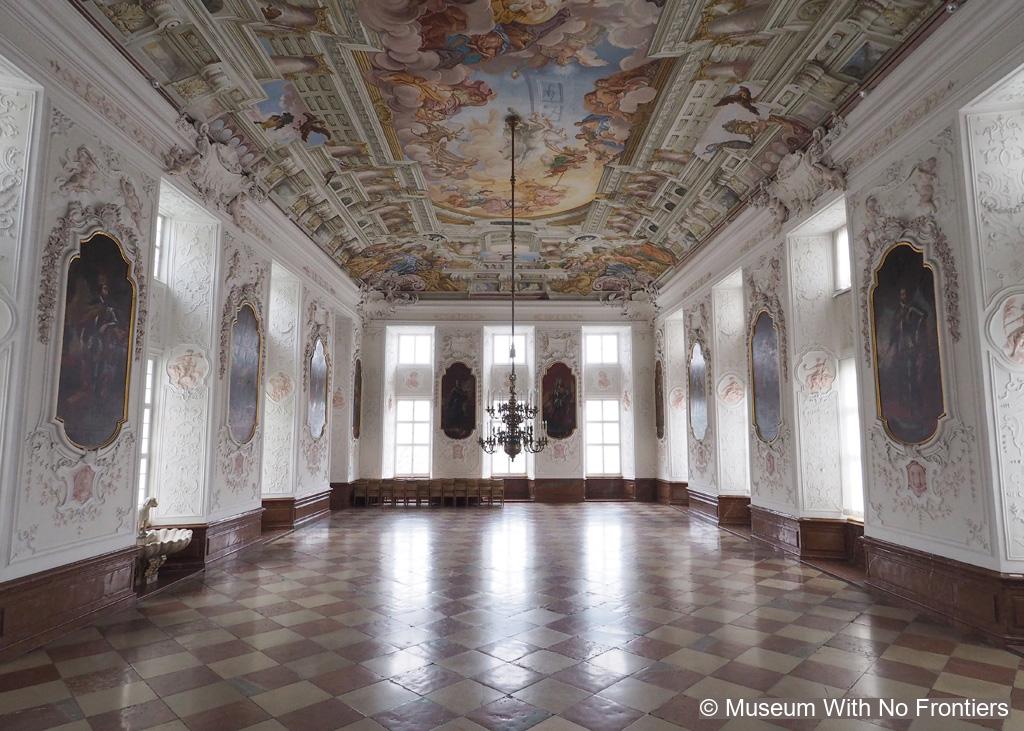
1676–83: construction of the Abbey Wing including the library; 1684: stucco work; n.d. Melchior Steidl’s fresco painting and bookshelves; 1694: the Imperial Hall’s bare brickwork was finished; 1696: fresco painting; 1719: stucco work; 1720: fountain; 1721
Carlo Antonio Carlone: abbey wing (including the library and the Imperial Hall); Girolamo Alfieri: stucco work; Melchior Steidl: one fresco painting on the ceiling; Balthasar Melber: bookshelves; Melchior Steidl: fresco painting Imperial Hall; Diego Francesco Carlone: stucco work; n.n.: fountain; Martino Altomonte: emperors' portraits
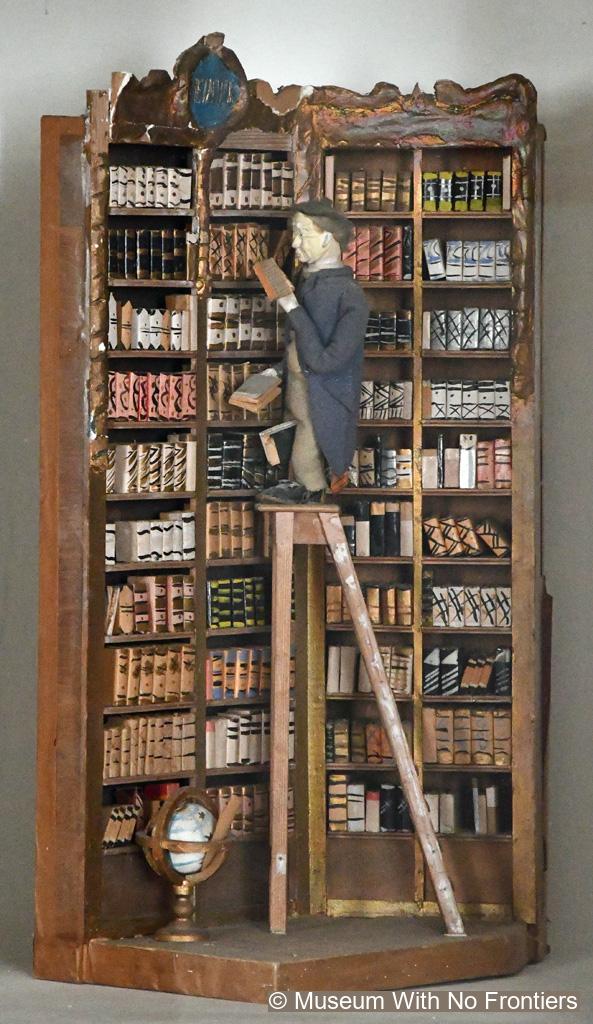
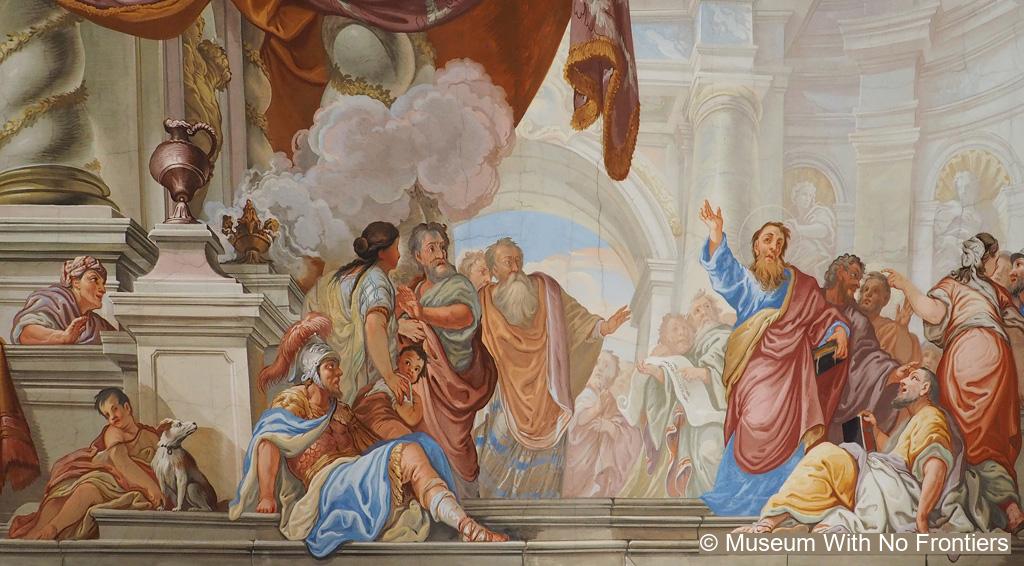
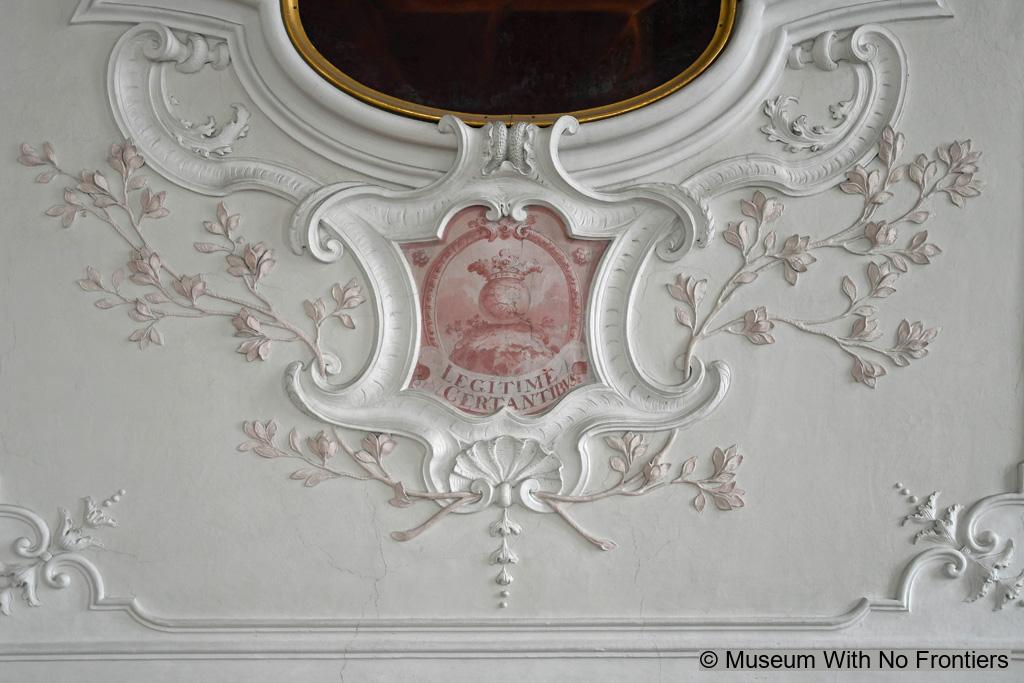
Although the library and the two storey Imperial Hall were built at the end of the 17th century, only the library was finished and equipped before 1700. Typical for the epoch is the deep sculptural stucco decoration framing the ceiling’s fresco paintings. The bookshelves are a masterwork by a cabinet maker from the region. They are crowned by most decorative gilded wood carvings.
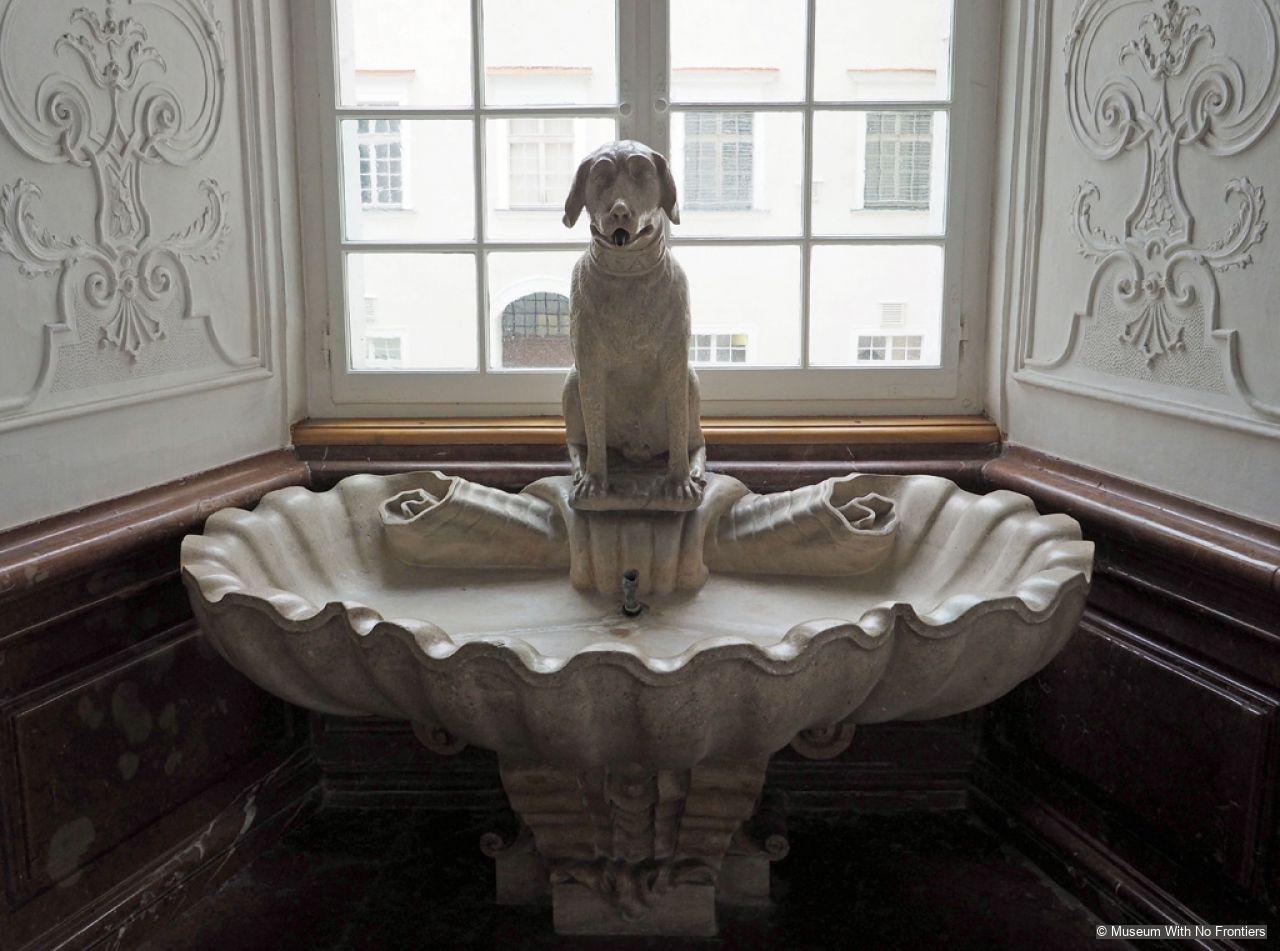
The construction of the Imperial Hall and the fresco paintings with impressive illusionistic columns were finished in 1694 and in 1696. A standstill lasting more than twenty years followed, until the hall was decorated with stucco work and fifteen portraits of emperors, starting with the first sovereign Rudolf I up to Karl VI who was ruling in that era. A charming addition to the room is the (abandoned) fountain in the form of a dog whose mouth poured out the water.
Observatory
East of the monastery complex
1748–59 construction of tower; 1697 stucco work on ceiling
Pater Anselm Desing: architecture; stucco work on ceiling: Franz Joseph Ignaz Holzinger
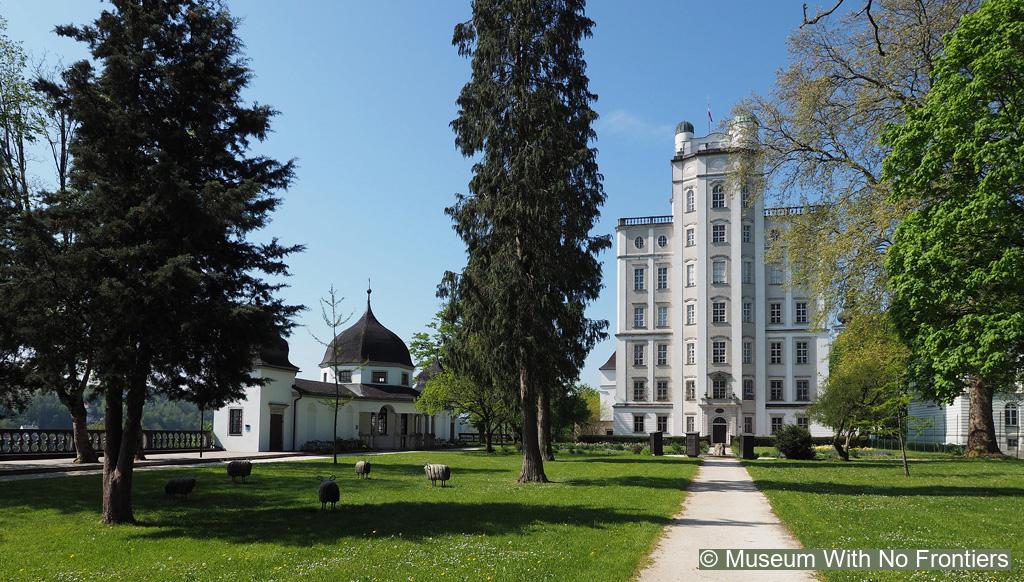
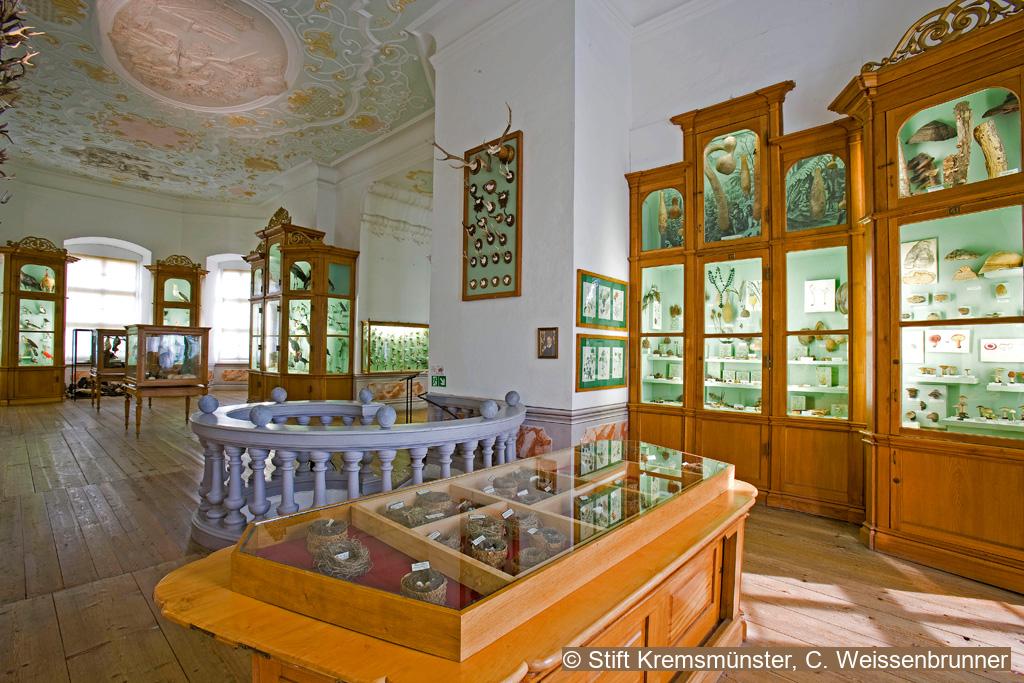
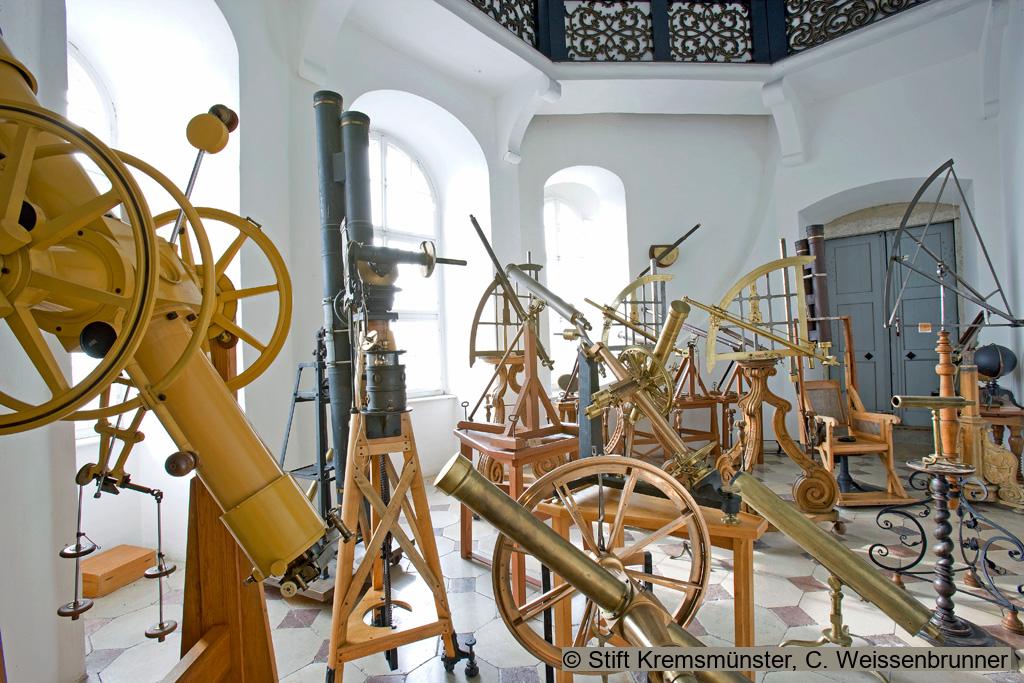
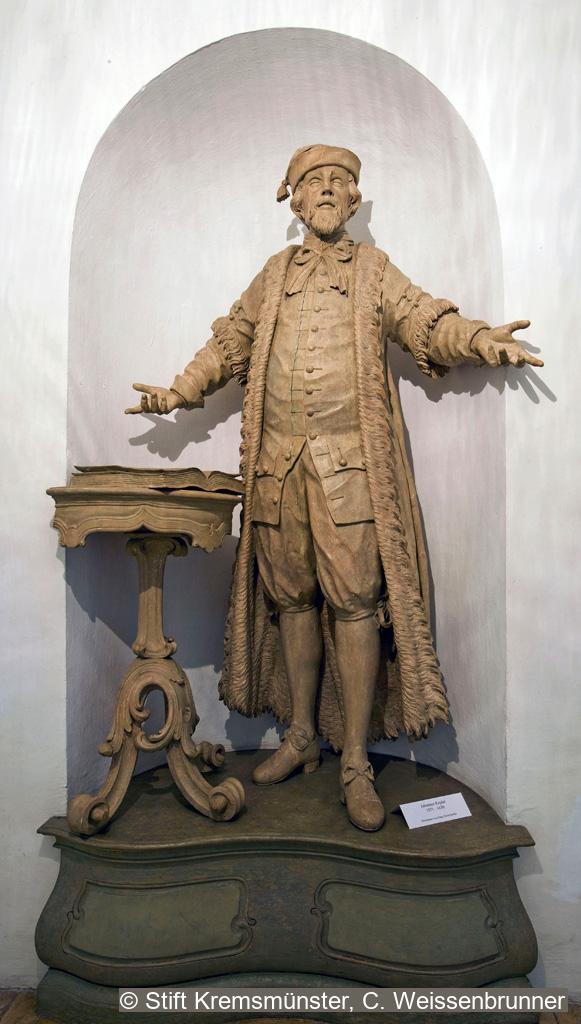
After centuries of disputes between the representatives of the Roman Catholic Church and those of natural sciences, there was finally an acceptation by the church. In consequence, academic institutions, such as the Kremsmünster observatory, arose. In this case, the building of the observatory was even planned by a Benedictine monk. Being the first high-riser in today’s Austria it was not only unique for its height but also as a building where natural research had a home. It houses several collections (mineralogical, zoological, anthropological, physical, astronomical instruments), a chapel and a spacious panoramic terrace.
Fish pools
In the North of the monastery complex
1690–92: construction of the fish pools; 1692: four fountain figures; 1717: extension of the fish pools; n.d. fresco paintings
Carlo Antonio Carlone: construction; Jakob Prandtauer: alteration and extension; Andreas Götzinger: four fountain figures; Johann Michael Feichtmayr (the older or the younger) and Melchior Steidl: fresco paintings (most of them destroyed)
Aside from the observatory, an unusually innovative building in that time, the earlier erected fish pools are another baroque attraction. Carlo Antonio Carlone built the three westerly pools and a fourth, situated ten steps lower. Jakob Prandtauer who was later working for Kremsmünster demolished this pool, raised the terrain level and added two pools at the same level of the older ones to achieve symmetry. In the mid of the pools are water-spouting statues, the earlier westerly ones were done by a sculptor from Salzburg who was then very popular.
The pools are surrounded by roofed arcades on every side. They run along the walls and between the pools, thereby separating them. Originally there were illusionistic fresco paintings on the sidewalls, doubling the arcades. Only a small part on the ceiling has survived. Art and architecture have created a perfect theatre scenery. No wonder that the place was used for theatre performances. It must have been a fantastic art experience watching a play or listening to a concert in the cool arcades in summer.
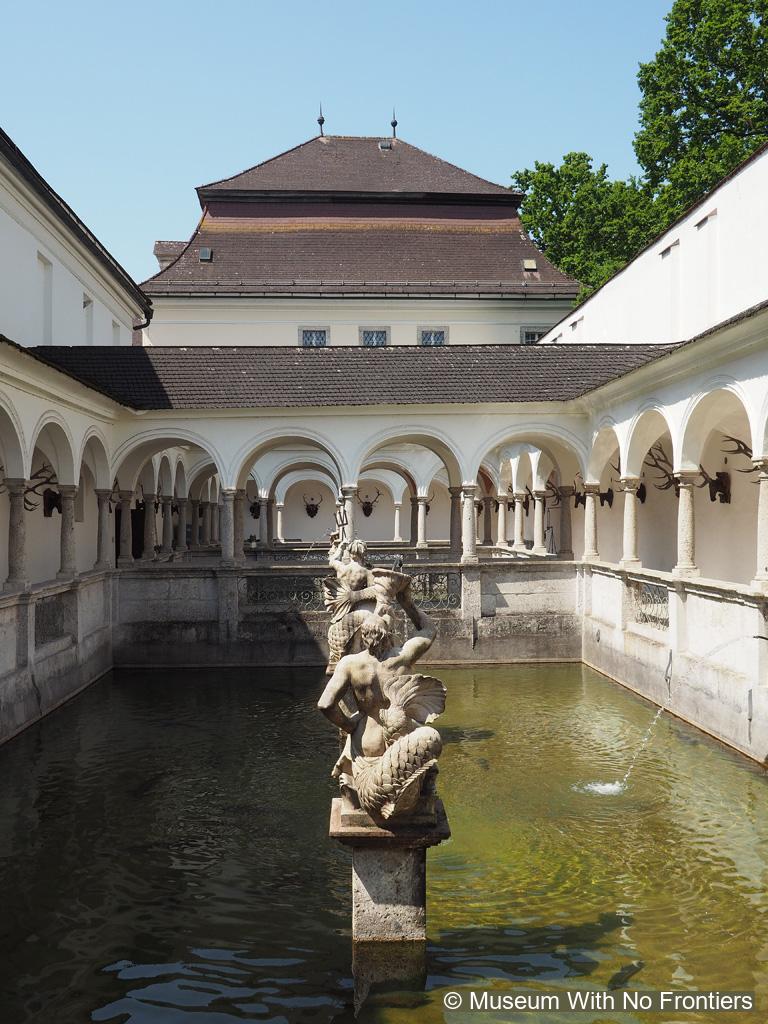
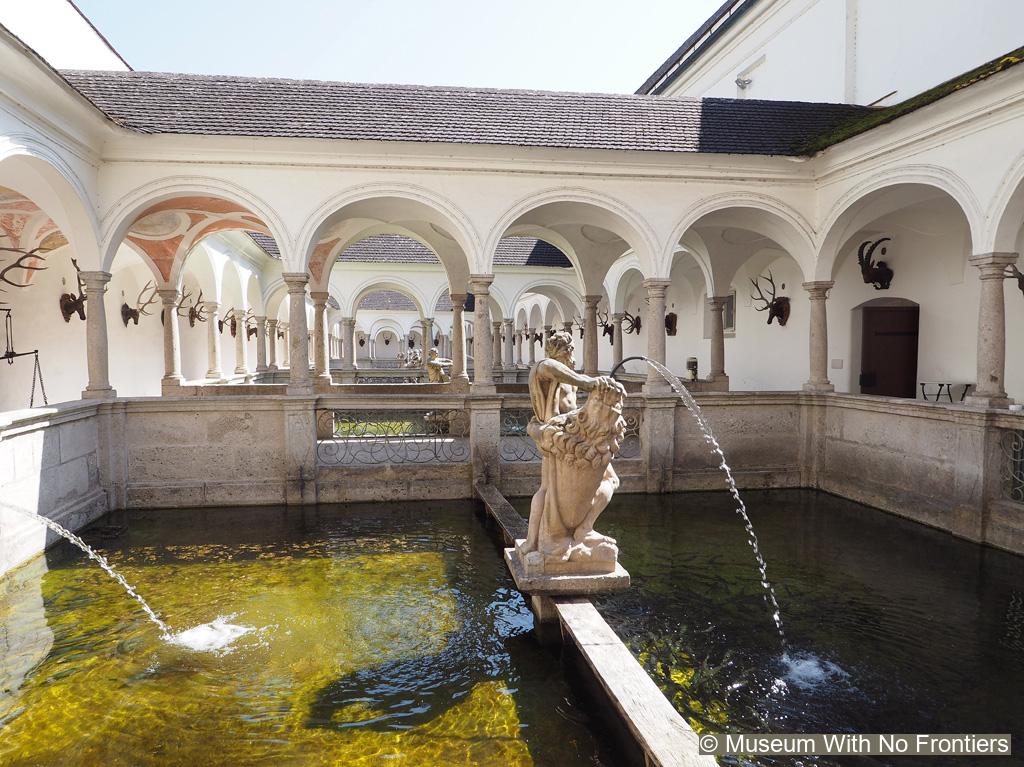
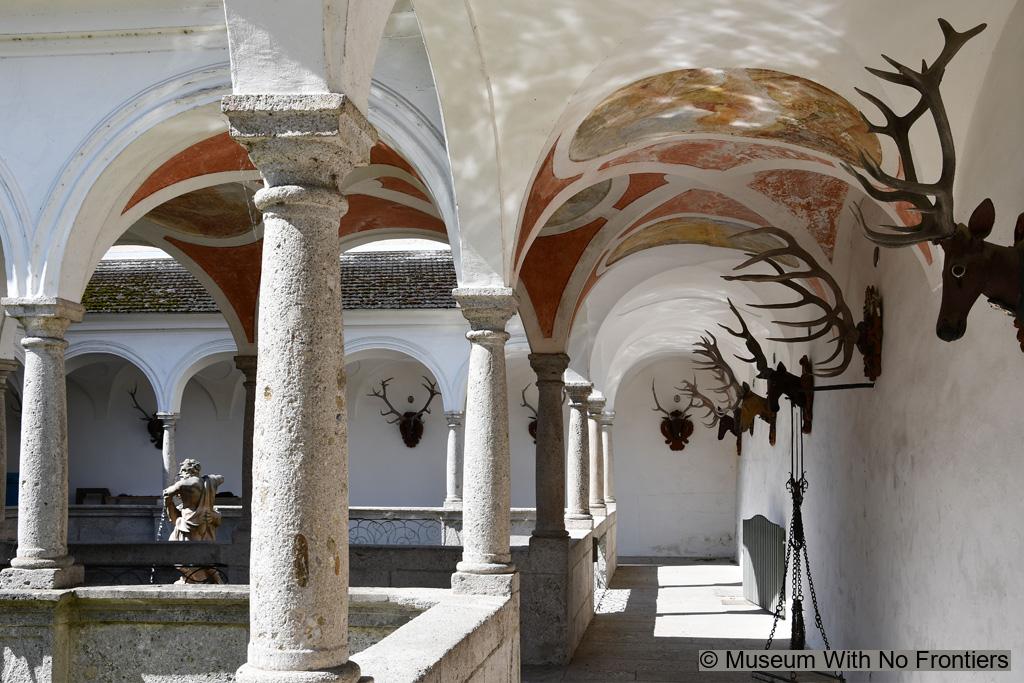
Fig house and Mosque (pavilion)
East and opposite of the observatory
1638–40: fig house; 1640–41: Mosque
n.n.: fig house; Pater Aegyd Everard von Raittenau: Mosque
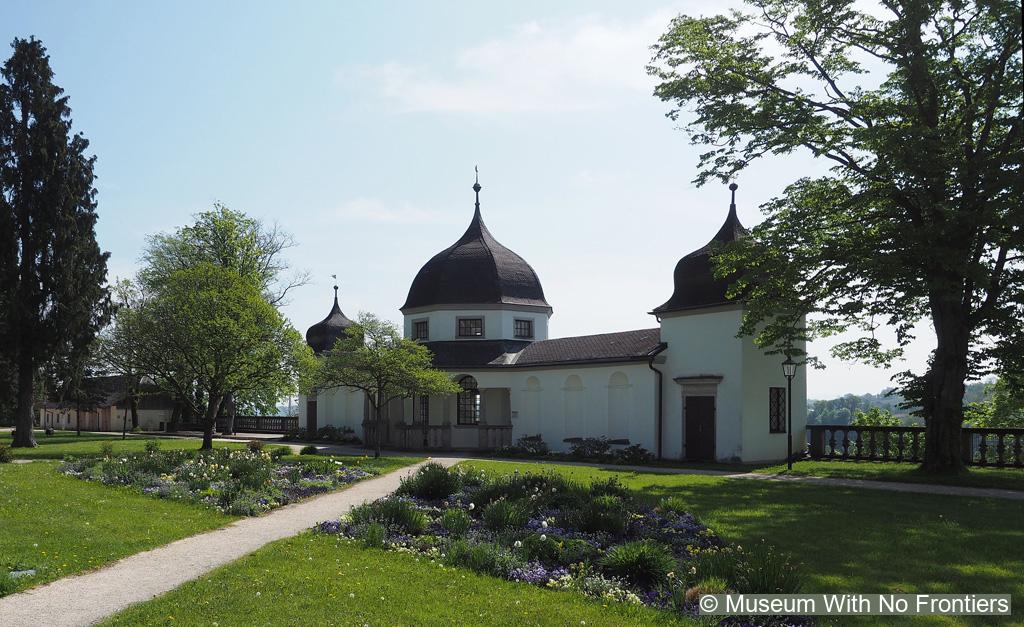
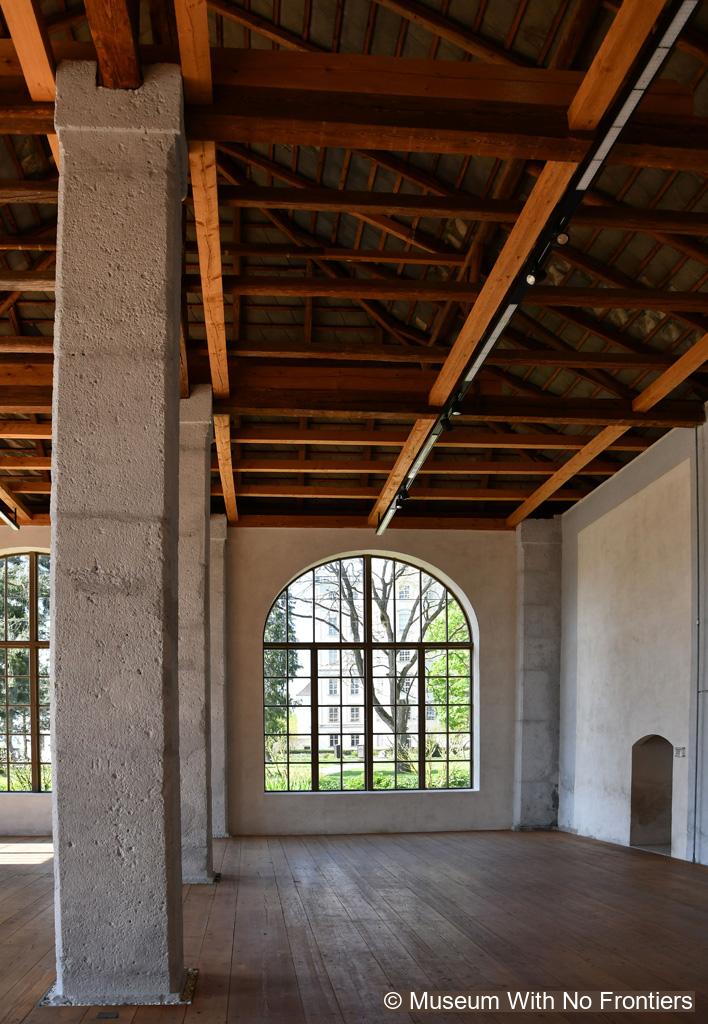
As typical Baroque building projects, green- and garden houses became fashionable during the 17th century. Long before King Louis XIV of France had the famous orangery built, there was a fig house and a garden pavilion in Kremsmünster. The fig house is said to be the oldest preserved greenhouse in Europe. It is a simple construction of walls (with huge windows in the South and West) and pillars. It was heated by two stoves. In the ground were plant beds framed by stones. The roof was removed in summer.
The so-called Mosque is an octagonal, single-storey building with a dome and a crescent moon, a corridor of pillars, two aisles and two towers on both sides. Under the room is a water fed grotto with a grid on top for the cooling upwards. The oriental appearance of the building was typical for the passion for the exotic at that time.
Selected bibliography:
Amt der oberösterreichischen Landesregierung, Abteilung Kultur (ed), Die Bildhauerfamilie Zürn (1585-1724), Linz: Oberösterreichischer Landesverlag, [1979]: 107–109, 286–288.
Amt der oberösterreichischen Landesregierung, Abteilung Kultur und Benediktinerstift Kremsmünster (ed), 1200 Jahre Kremsmünster. Stiftsführer. Geschichte-Kunstsammlungen-Sternwarte, Linz: OÖ Landesverlag Linz, 1977.
OÖ Landesgartenschau Kremsmünster 2017 (ed), Gartengeschichte(n) Kremsmünster Stift / Markt / Schloss, Salzburg, Regau: Self-published, 2017.
Stift Kremsmünster (ed), Stift Kremsmünster. Kirche und Kostbarkeiten des Stiftes, Wels: The Best Kunstverlag, 2011.
Weigl, Huberta, Jakob Prandtauer 1660-1726. Baumeister des Barock, 2 vol., Petersberg: Michael Imhof Verlag, 2021: 296–332 (vol. 1), 599–601 (vol. 2).
Citation of this web page:
Gabriele Liechtenstein "Kremsmünster Abbey and Abbey Church Kremsmünster Abbey and Abbey Church Divine Saviour and Redeemer" in "Discover Baroque Art", Museum With No Frontiers, 2026.
https://baroqueart.museumwnf.org/database_item.php?id=monument;BAR;at;Mon11;44;en
MWNF Working Number: AT 44