

 Back
Back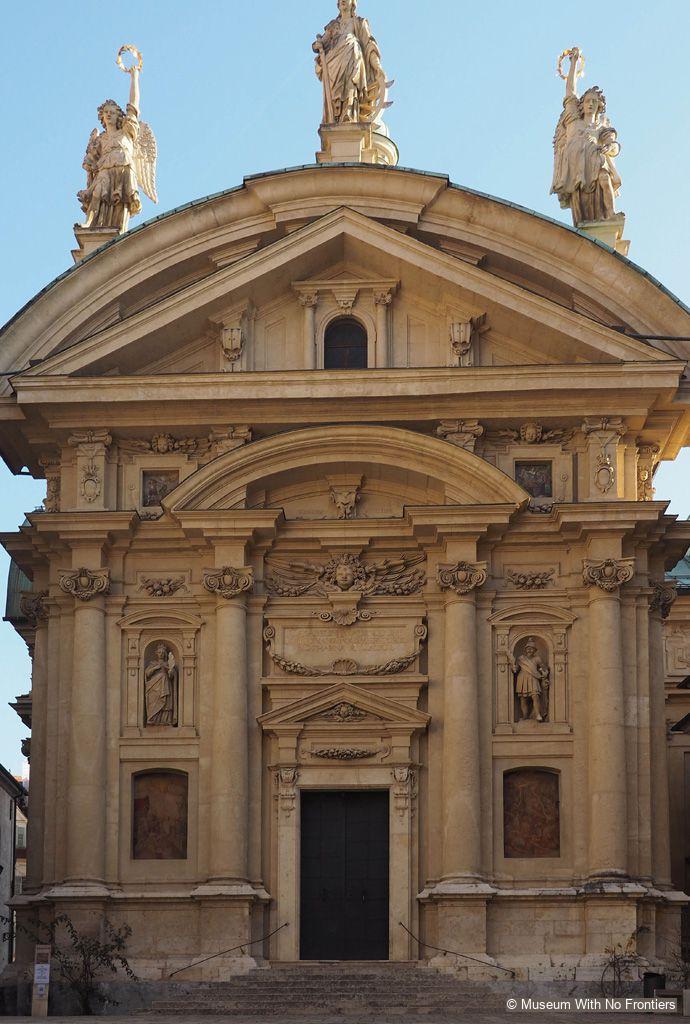
 Add to My Collection
Name of Monument:
Emperor Ferdinand´s II MausoleumBurial Place of Emperor Ferdinand II and his family
Also known as:
Church of St Catherine of Alexandria and Mausoleum
Location:
Graz, Styria, Austria
Burggasse 3
A-8010 Graz
T : +433168041890
E : dioezesanmuseum@graz-seckau.at
Cathedral parish Graz (Responsible Institution)
Date:
1608: red marble sarcophagus
1614: start of the complex´s building on the site of a former cemetery chapel
after 1619/20: addition of the façade´s two segment gables
1622–37: roofing work
1635–36: building of the tower
about 1635/36: statues on the roof
1640: stucco work and altar consecration in the crypt
beginning in 1687: interior church and burial chapel
from 1654: repair work
1688–89: reconditioning and restoration (seventy-four years after start of construction and after a construction pause of over forty years), stucco work in the church, ceiling frescoes in the church and in the burial chapel
beginning in 1689: stucco work in the burial chapel
1694: stucco work in the crypt replaced
1695–96: stucco figures in the burial chapel´s niches
1697–99: sculptures on the altars in the church
1714: consecration of the church and of six altars
1768–69: Holy Sepulchre
Artists:
Architecture: Giovanni Pietro de Pomis (1569–1633); by 1633 new construction manager: Pietro Valnegro (n.d.): sculptures on the roof: probably Sebastian Erlacher (1609–49)Church interior design and altar(?): Johann Bernhard Fischer von Erlach (1656–1723); stucco work: Joseph Antonio Serenio (ca. 1650–after 1702), Girolamo Rossi (n.d.) and Antonio Quadrio (n.d.); ceiling frescoes in the nave: Franz Steinpichler (1630–1714); sculptures on the altars: Marx Schokotnigg (1661–1731)Interior of the two storey mausoleum, burial chapel: Johann Bernhard Fischer von Erlach (1656–1723); putti above the cornice and other stucco work: Joseph Antonio Serenio (ca. 1650–after 1702); ceiling’s fresco paintings: Matthias Echter (1653–94); figures in the niches: Marx Schokotnigg (1661–1731)Crypt: red marble sarcophagus: probably Sebastiano Carlone the elder (before 1570–after 1612); stucco work: Mattia Camin (n.d.), later replaced by Josef Antonio Serenio (ca. 1650–after 1702)
Period / Dynasty:
Early and high Baroque
Denomination / Type of monument:
Ecclesiastical architecture
Patron(s):
The future Emperor Ferdinand II of the Holy Roman Empire had built the Mausoleum as a crypt for his family and for himself.
History:
On the territory of the Holy Roman Empire life in this epoch was characterised by the Thirty Years War. It had started as a political conflict, became a religious war and ended with the triumph of the Catholic church. As a result, the church dignitaries eagerly started to build and to rebuild churches and monasteries. The Catholic Habsburg emperors, being strictly religious, fought the burgeoning Protestantism in the area. The protestants had to convert to the Catholic faith or to leave the country. Archduke Ferdinand, the later emperor Ferdinand II, was an eager counter-reformer and advanced the Catholic restoration. In this atmosphere many new buildings arose to symbolise the supremacy of the Catholic church. The Mausoleum was one of the first to be erected, many others followed. It was a prosperous time for art and architecture, as the wealthy and the noblemen followed the example of the church as builders. Baroque became the era´s artistic expression.
Description:
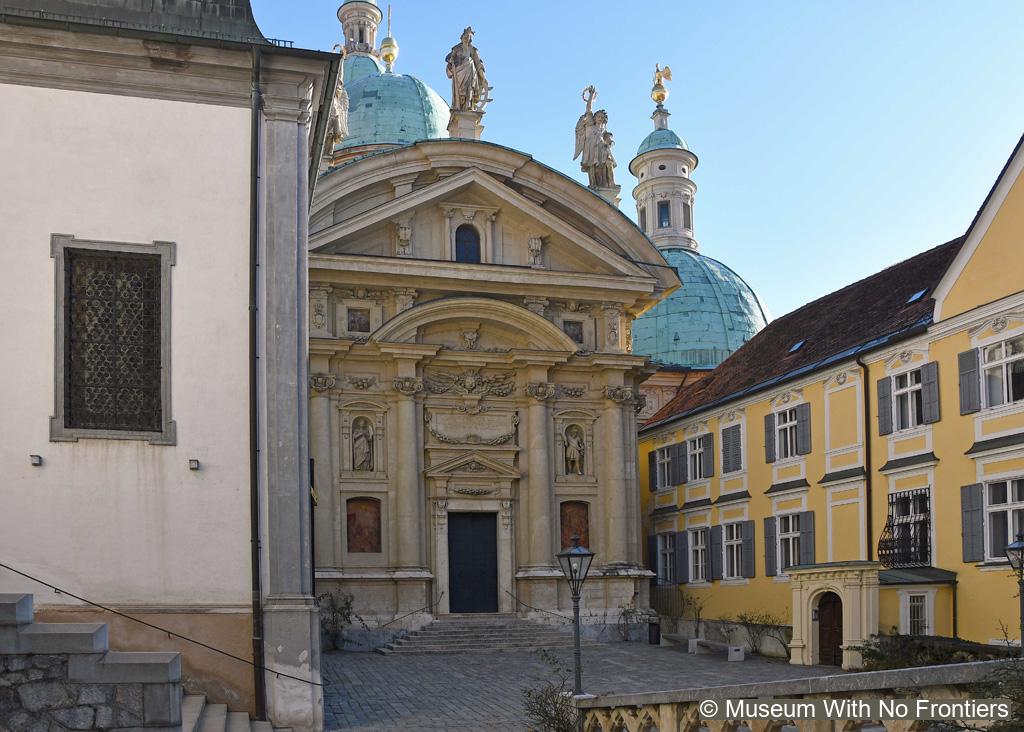
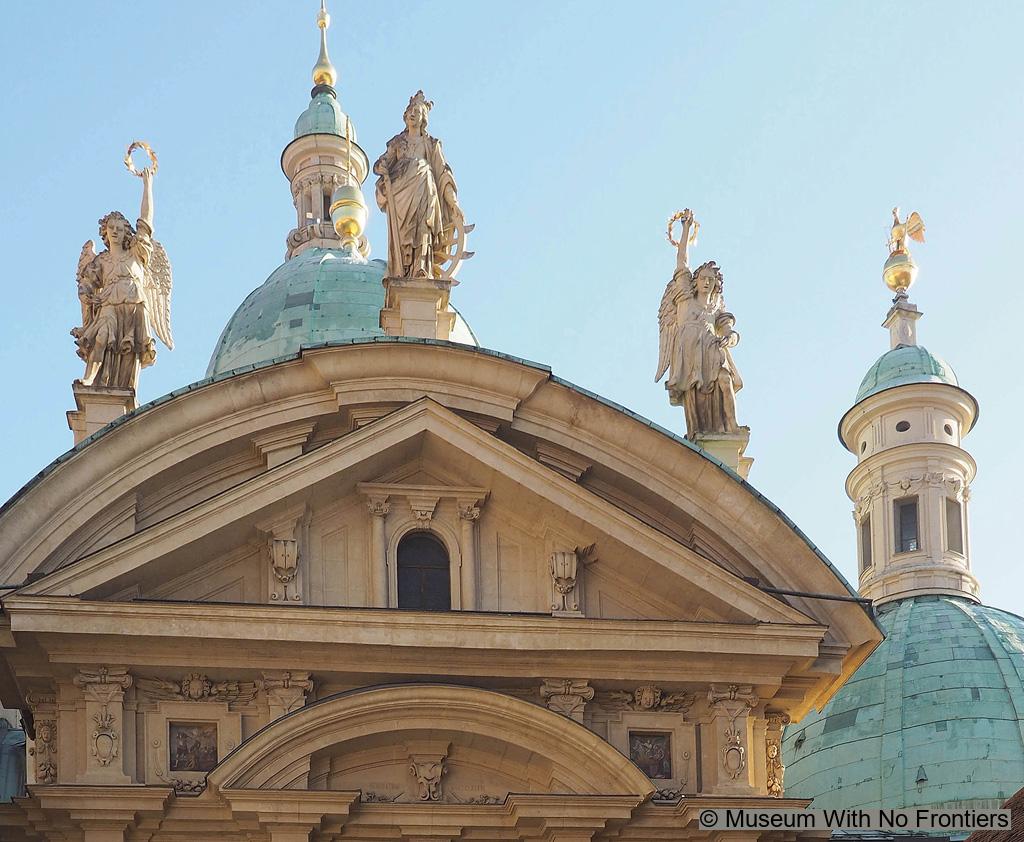
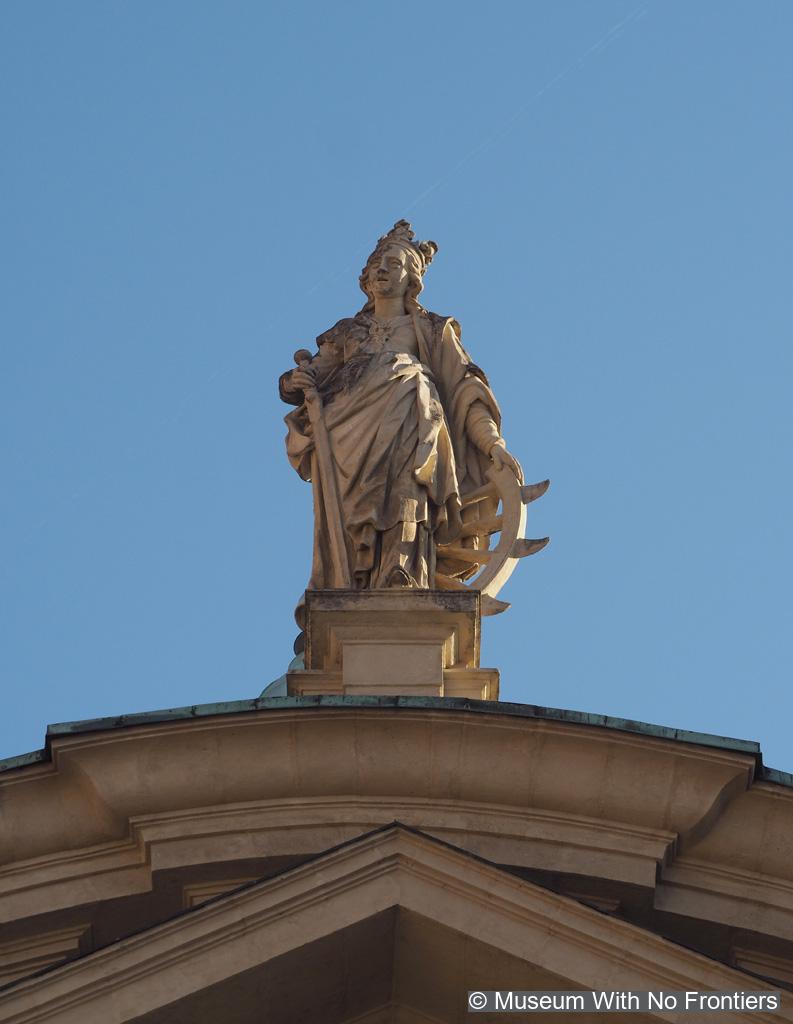
Pietro de Pomis was commissioned by the later emperor Ferdinand II to build the Mausoleum in the South of the cathedral. It is a two part complex with the church, dedicated to St Catherine of Alexandria, and the chapel with the crypt. Saint Catherine was the patron of the Jesuit University. This, her statue on the roof and the façade allude to the Habsburgs´ affinity to the Jesuit order. The triangular gable framed by a segment gable was firstly used at the façade of Il Gesù, the Jesuits’ mother church in Rome.
The oval-shaped floor plan of the Mausoleum is remarkable since the astronomer and mathematician Johannes Kepler had shortly before succeeded in calculating the ellipse shape correctly.
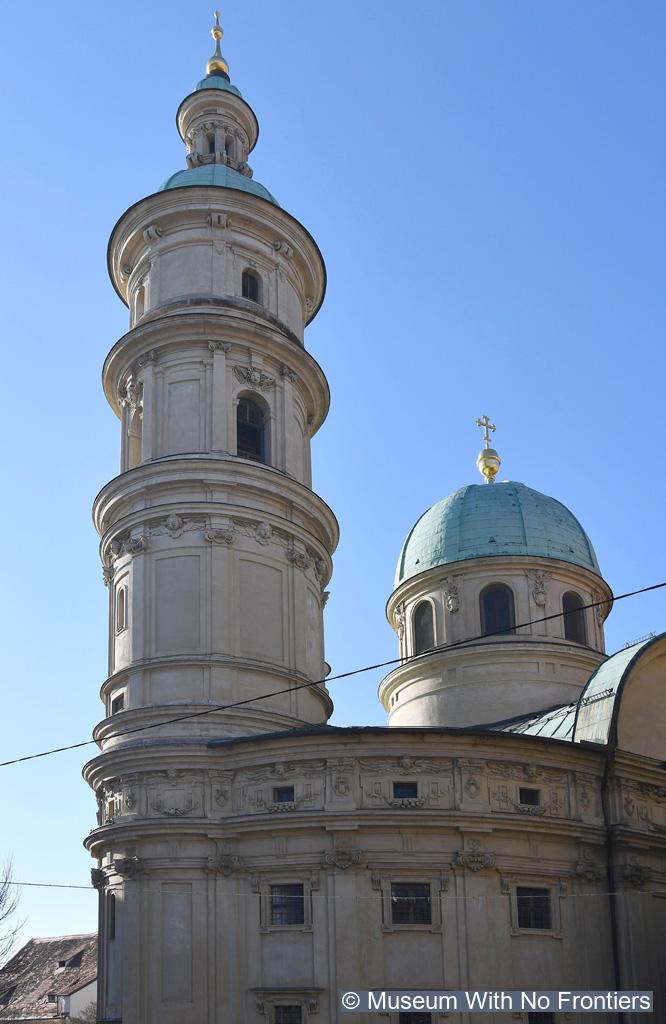
When de Pomis died in 1633 Pietro Valnegro took over the construction management. He finished the roofs, built the tower and added a lantern to it. On top of the church´s cupola and of the mausoleum´s lantern are – at the same height – ecclesiastical and imperial symbols, the cross and the eagle sitting on the orb. On top of the highest part of the building complex, the tower´s lantern, the imperial sceptre rose high into the sky (it was later replaced) to claim the Habsburgs’ supremacy.
The building’s art historical highlight: Johann Bernhard Fischer von Erlach had been entrusted with the interior design which is said to be his earliest documented art work.
When archduke Ferdinand from Inner Austria, the later emperor Ferdinand II, had finished his studies with the Jesuits in Ingolstadt he lived for some years in the family´s residence in Graz. There, the protestants had gained enormous power for what reason he started to take counter-reformatory steps. To achieve his goals he elevated art and architecture to an important matter. He began to build the Mausoleum, taking Italian architecture as a role model, such as Il Gesù, the church of the Jesuits in Rome. The three-quarter columns and the huge crowning gables on the west façade, building two triumphal arches, are supposed to symbolise the Catholic restoration.
How Monument was dated:
Historical documents
Special features
Church and mausoleum (architecture)
South of the cathedral
1614 start of building; after 1619/20 the tower was planned and the façade’s two segment gables were added; 1622 start of the roofing work; about 1635/36 statues on the roof; 1635–36 building of the tower; 1637 roofing work finished
Giovanni Pietro de Pomis: plans church and mausoleum; Pietro Valnegro: new construction manager after de Pomis´ death; (probably) Sebastian Erlacher: statues on the roof
Because of the Habsburgs’ poor financial situation Hans Ulrich von Eggenberg, archduke Ferdinand´s privy councillor, (co-)funded the complex´s building. Pietro de Pomis, the versatile artist from the court in Graz and architect of the Eggenberg Mausoleum in Ehrenhausen, was commissioned with the construction. He planned a classic façade with three-quarter columns, a triangular gable in the attic area and three huge statues (allegedly by Sebastian Erlacher) on the roof. The narrow building site was even narrower than today: a covered corridor connected the mausoleum with the university opposite. It existed until the 19th century when the staircase was added and from then on one could see the façade.
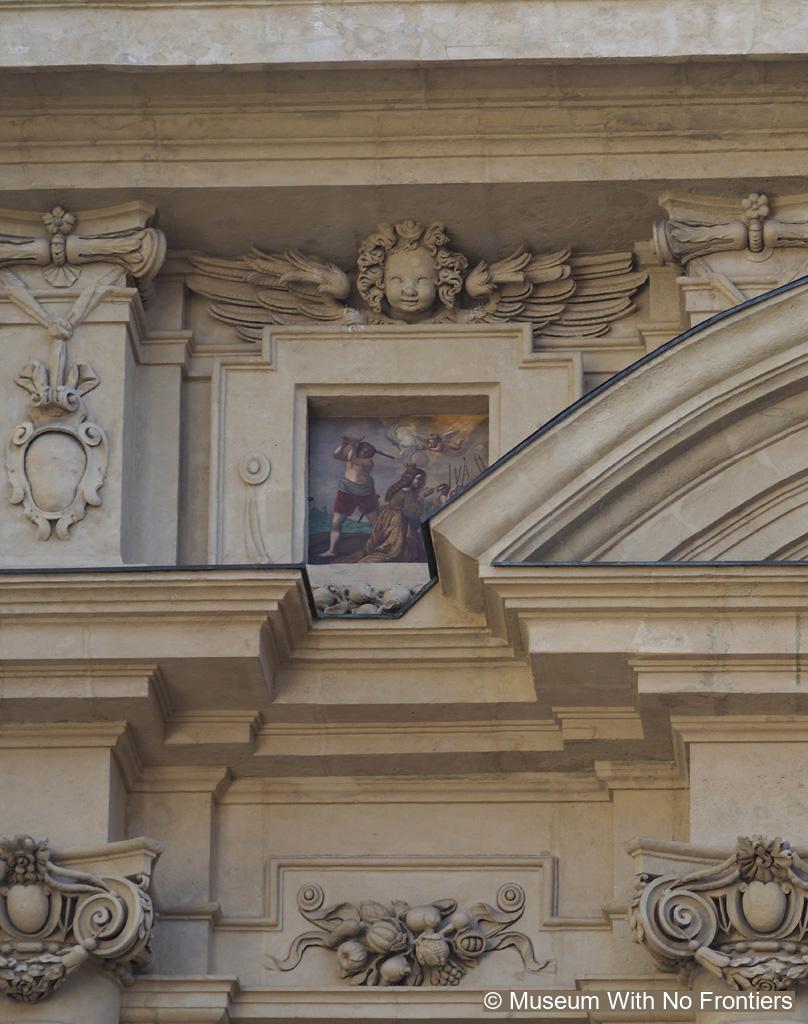
De Pomis changed his first draft in 1619/20. He had knocked off a lot of the stucco and added the two segment gables. The larger one is framing the triangular gable, following the Il Gesù façade in Rome. The two triumphal arches, lying on top of each other, symbolise the Catholic restoration.
After the death of Pietro de Pomis, Pietro Valnegro took over the completion of the church and the mausoleum. He built the tower and finished the roofing work. In a final step he crowned the cupolas with symbols of power, and the tower’s highest part with a sceptre. Despite the proximity to the Catholic church this should indicate the secular sovereign’s primacy.
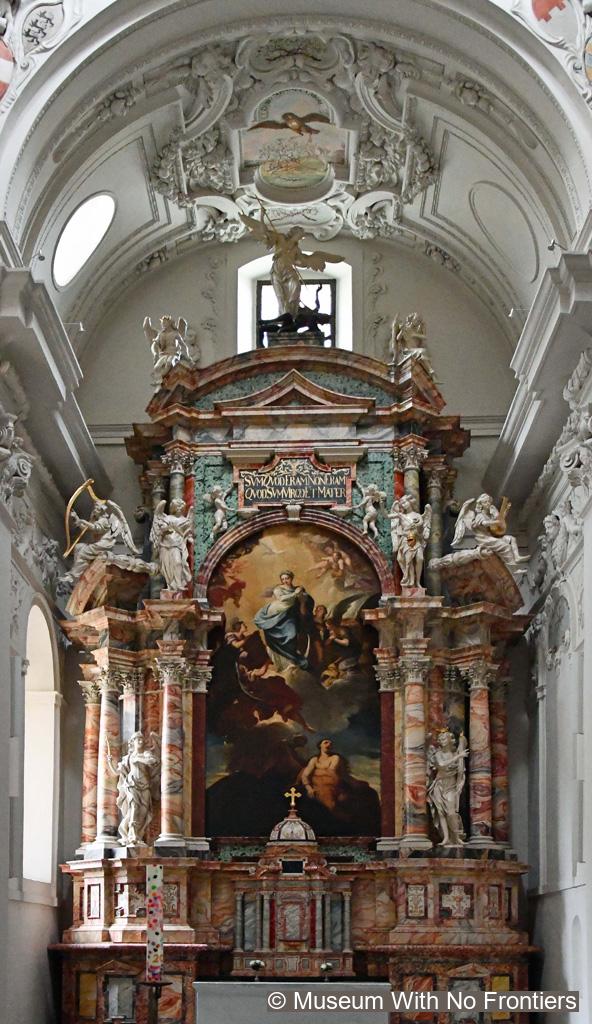
St Catherine's church interior
Northern part of the mausoleum complex
1687 interior design; n.d. ceiling frescoes; 1688–89 stucco work; about 1695 main altar; 1697–99 statues on the main altar; 1697–1701 altar of the Virgin Mary; n.d. statues of St Michael, angels and putti on the altar of the Virgin Mary
Johann Bernhard Fischer von Erlach: interior design and main altar(?); Marx Schokotnigg: statues for the main altar and for the altar of the Virgin Mary; probably Franz Steinpichler: ceiling fresco paintings; Joseph Antonio Serenio, Girolamo Rossi and Antonio Quadrio: stucco work
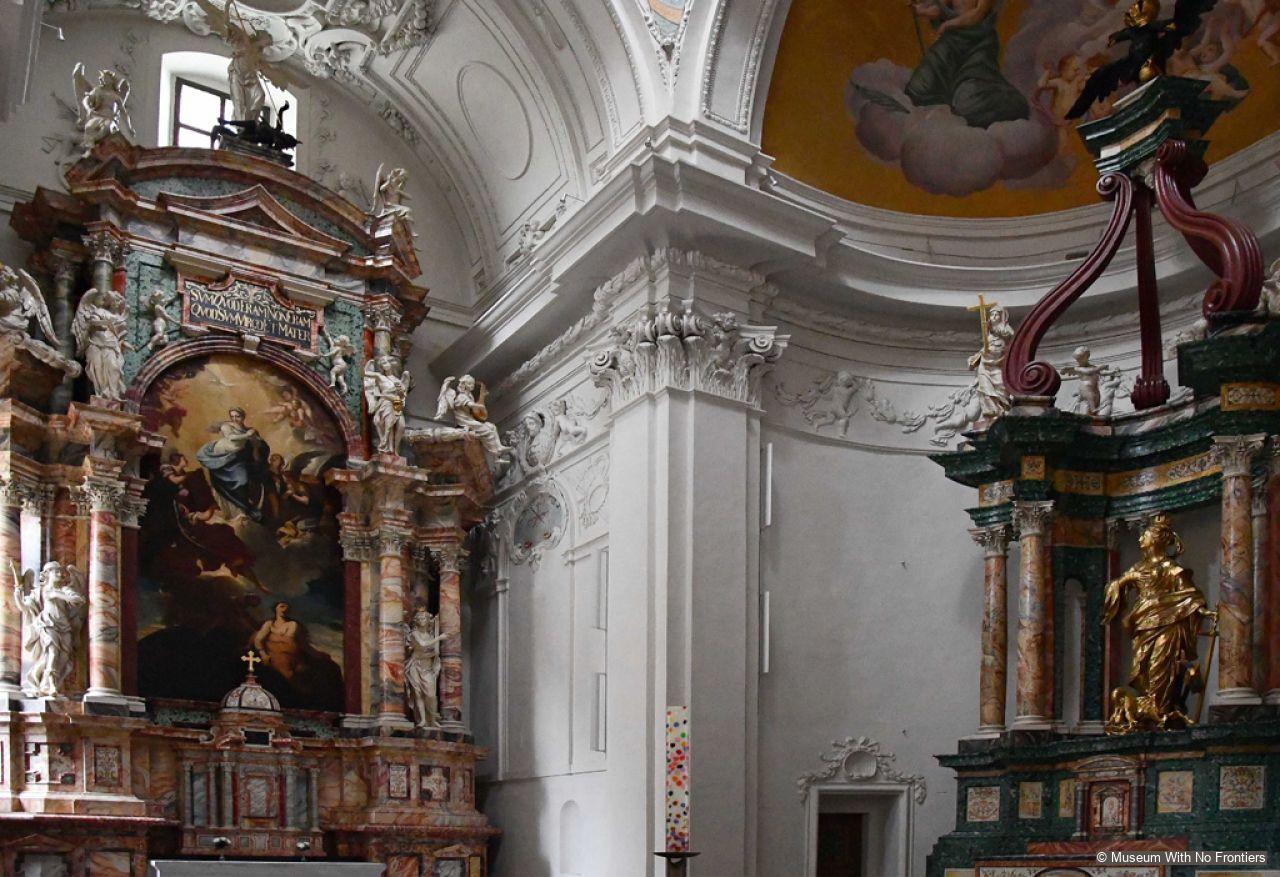
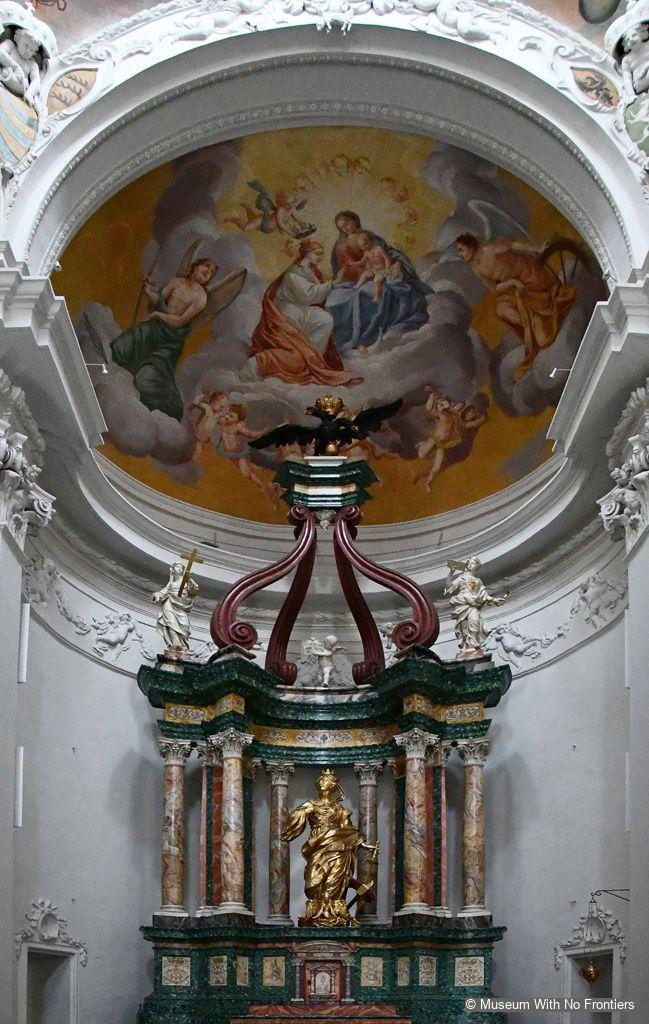
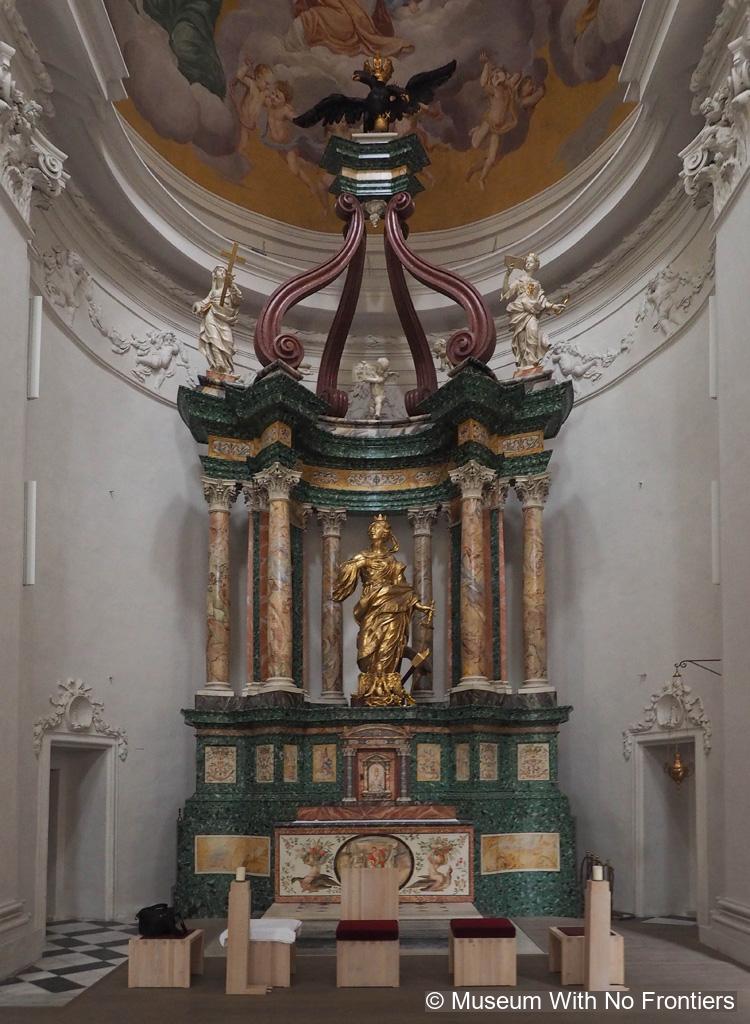
By 1687 Johann Bernhard Fischer von Erlach was working on the plans for the church´s and the burial chapel's interior design. They are considered to be his earliest documented work. Maybe the church’s main altar also originates from him. Marx Schokotnigg, who received many orders from Fischer, created the statues for the main altar and for the side altar. The figure in the centre of the main altar is St Catherine, the church’s and the Jesuit university’s patron saint. The former university building is directly opposite the mausoleum and today houses the seminary.
Franz Steinpichler was presumably commissioned with the ceiling frescoes. They represent “The Glourious Winner (emperor Leopold I) over the Osmans”, a then actual topic that was for sure requested from the court in Vienna. Fischer von Erlach designed the stucco decoration for walls and ceilings and the tall statues at the lower edge of the cross vault. The stucco work was executed by Joseph Antonio Serenio, Girolamo Rossi and Antonio Quadrio.
Burial chapel and crypt interior design
Southern part of the building complex
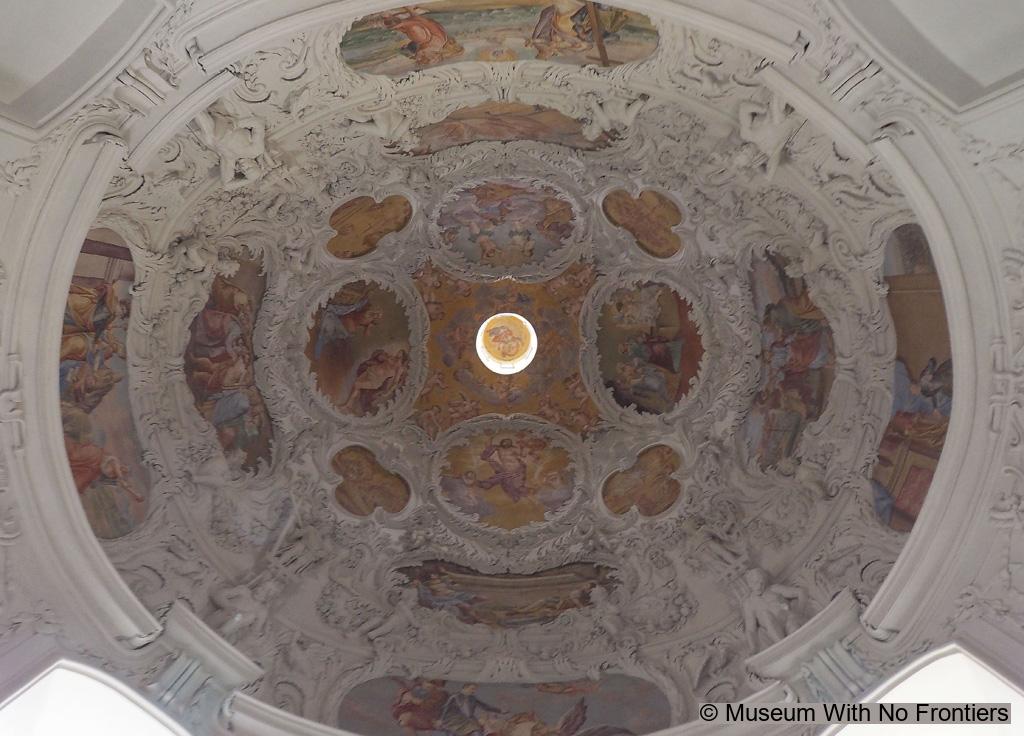
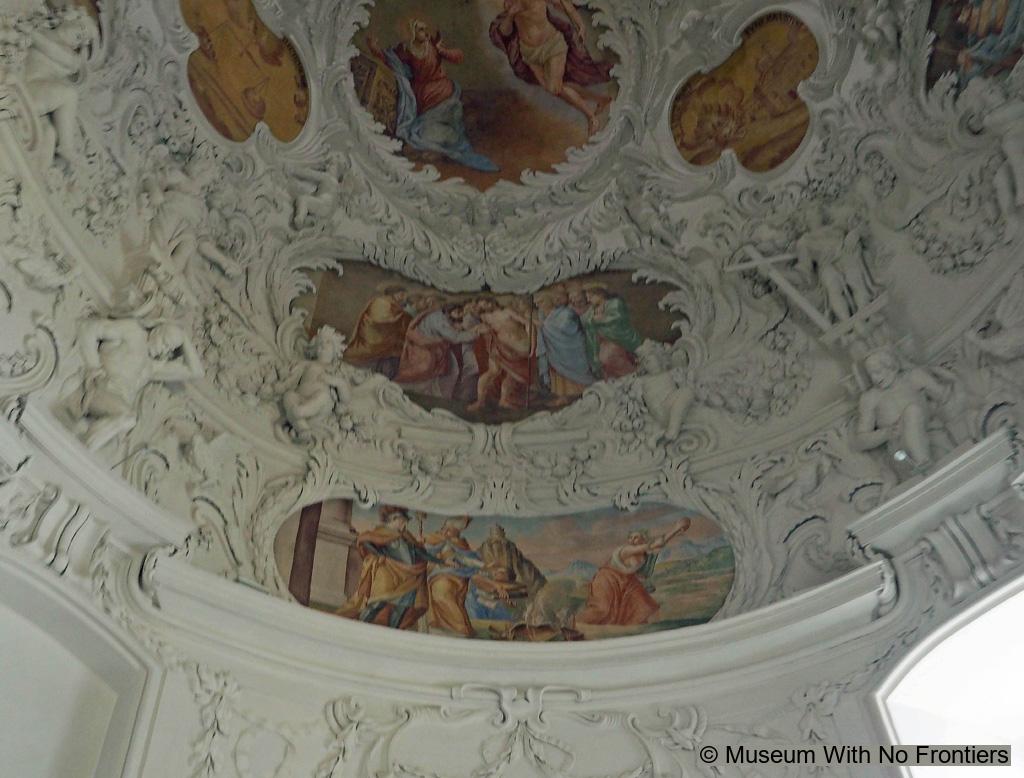
1640 stucco work crypt; 1687 interior design burial chapel; as from 1688 ceiling frescoes and stucco work in the chapel; 1694 the stucco work in the crypt was replaced; 1695–96 stucco figures in the chapel´s niches; 1768–69 Holy Sepulchre
Mattia Camin: stucco work crypt; Johann Bernhard Fischer von Erlach: interior design burial chapel; Matthias Echter: fresco paintings in the burial chapel; Joseph Antonio Serenio: replaced the original stucco work in the crypt; Marx Schokotnigg: stucco figures in the niches; (probably) Sebastiano Carlone the elder: marble sarcophagus in the crypt
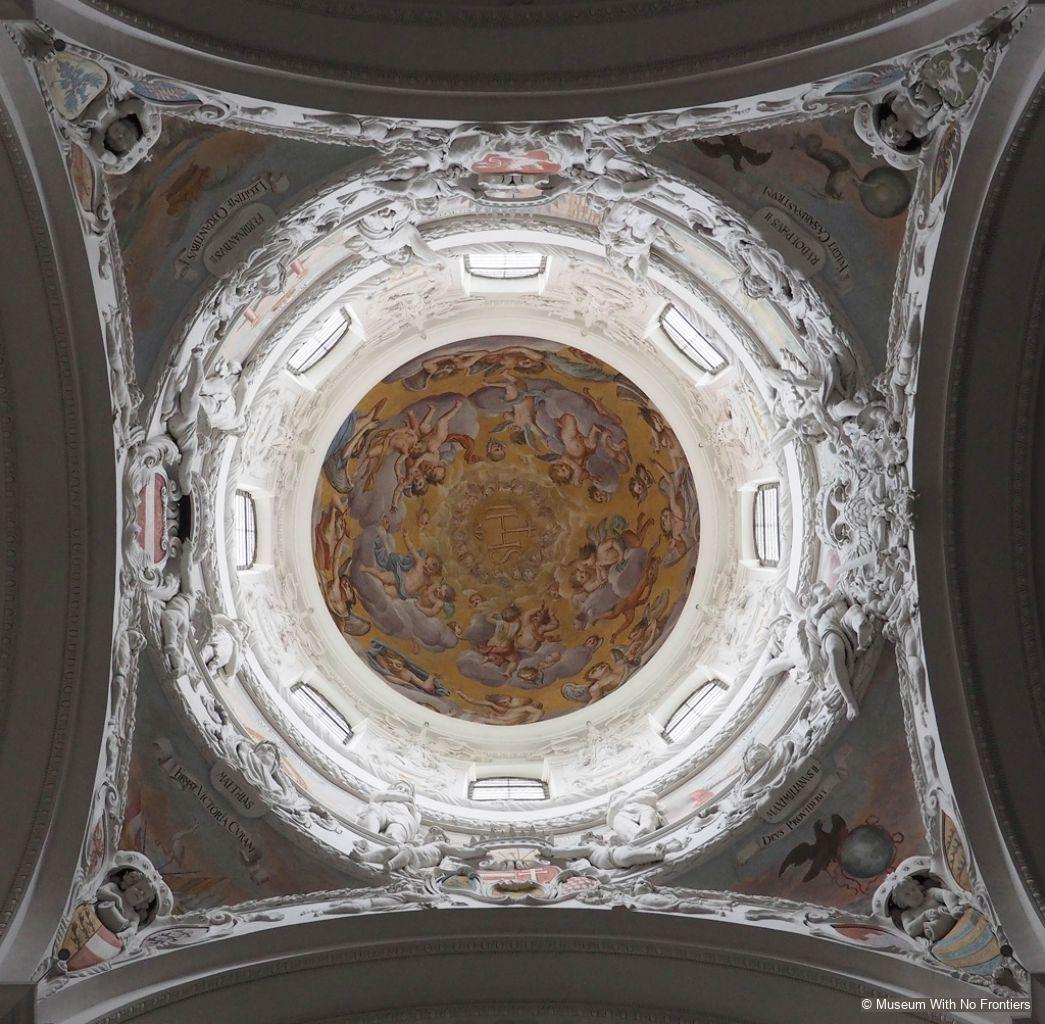
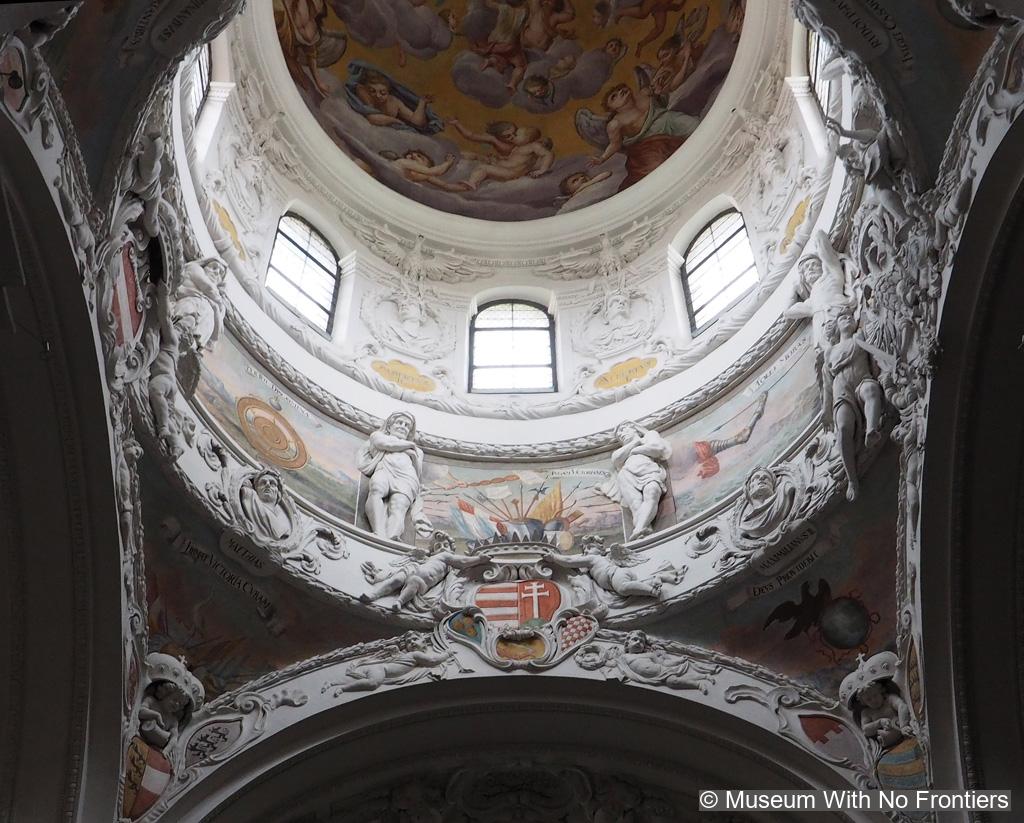
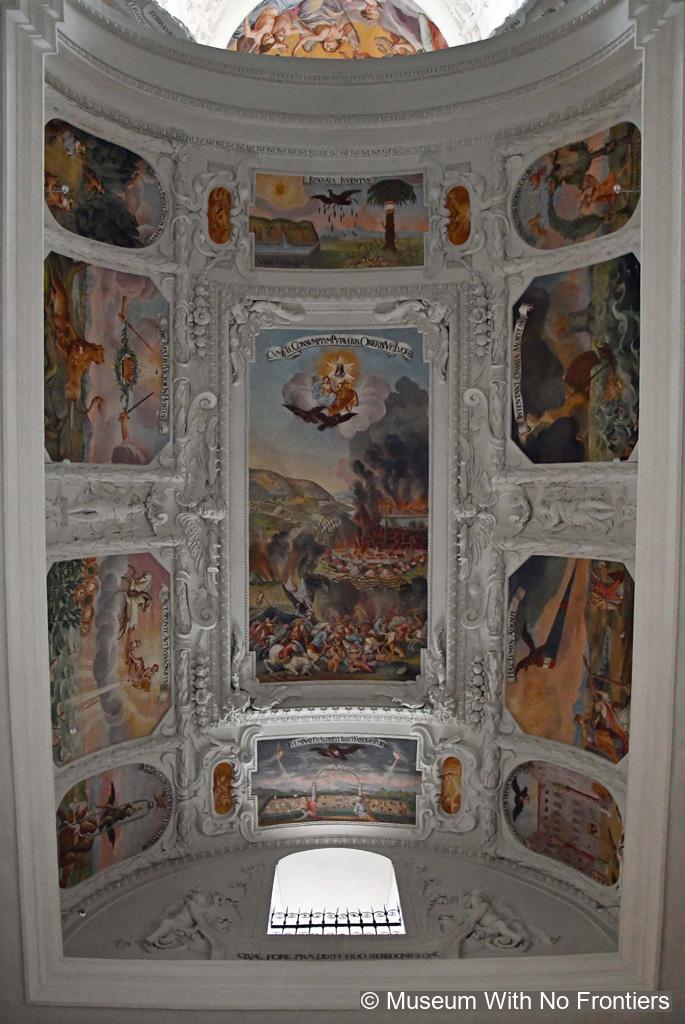
Interestingly, Johann Bernhard Fischer von Erlach’s first draft for the cupola – one fresco painting over the entire area – was criticised and declined. The inspiration might have come from Andrea Pozzo. He was then working on the ceiling fresco of San Ignazio, the second Jesuit church in Rome, from where Fischer had arrived. Fischer´s second plan showed a divided ceiling surface: seventeen small fresco paintings framed by rich stucco decoration. Matthias Echter did the paintings on which emperor Ferdinand´s II virtues and his Catholic deeds are symbolised. Marx Schokotnigg created the stucco figures in the niches; Joseph Antonio Serenio did the stucco work.
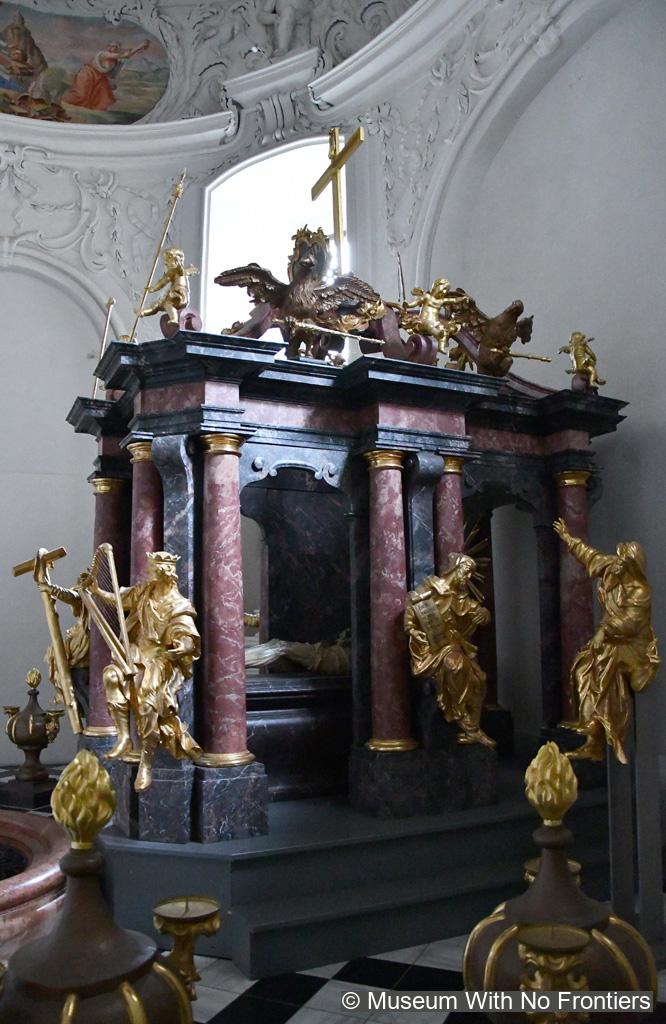
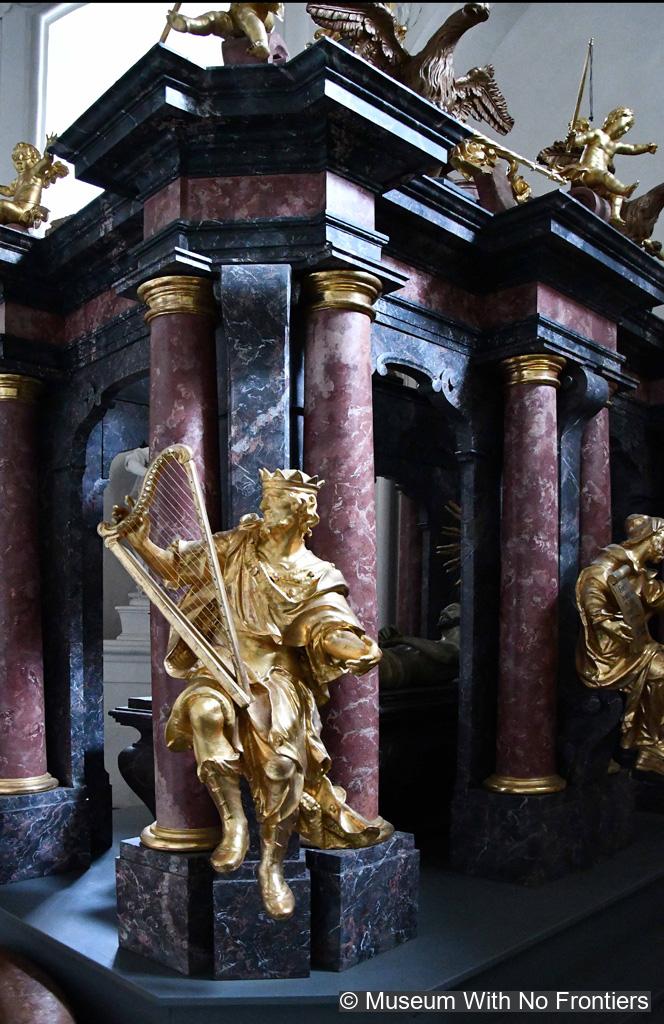
The Holy Sepulchre with gilded figures surrounding and crowning the scaffolding was designed by Veit Königer. Through a circular opening in front of it a red marble sarcophagus can be seen in the crypt below. It is not Ferdinand´s II tomb, but that of his parents archduke Karl II and his first wife archduchess Maria Anna (though Karl´s II body is buried in the Seckau basilica). Ferdinand´s and his wife´s coffins are in niches embedded in the wall and marked with tablets bearing their names. The stucco work in the crypt – putti, insignia and coats of arms representing the lands and hereditary lands ruled by emperor Ferdinand II – was firstly done by Mattia Camin and later replaced by Josef Antonio Serenio.
Selected bibliography:
Günter Brucher, Barockarchitektur in Österreich, Cologne: DuMont Buchverlag, 1983: 25–31, 143.
Rochus Kohlbach, Die barocken Kirchen von Graz, Graz: Grazer Domverlag, 1951: 67–116.
Rochus Kohlbach, Steirische Baumeister: Tausendundein Werkmann, Graz: Grazer Domverlag, 1961: 82–83, 202.
Hans Sedlmayr, Johann Bernhard Fischer von Erlach, Stuttgart: Deutsche Verlagsanstalt, 1997: 43, 376.
Kurt Woisetschläger (ed), Der innerösterreichische Hofkünstler Giovanni Pietro de Pomis: 1569 – 1633, Graz: Styria, 1974: 37–40, 102–121.
Citation of this web page:
Gabriele Liechtenstein "Emperor Ferdinand´s II MausoleumBurial Place of Emperor Ferdinand II and his family" in "Discover Baroque Art", Museum With No Frontiers, 2026.
https://baroqueart.museumwnf.org/database_item.php?id=monument;BAR;at;Mon11;45;en
MWNF Working Number: AT 45