

 Back
Back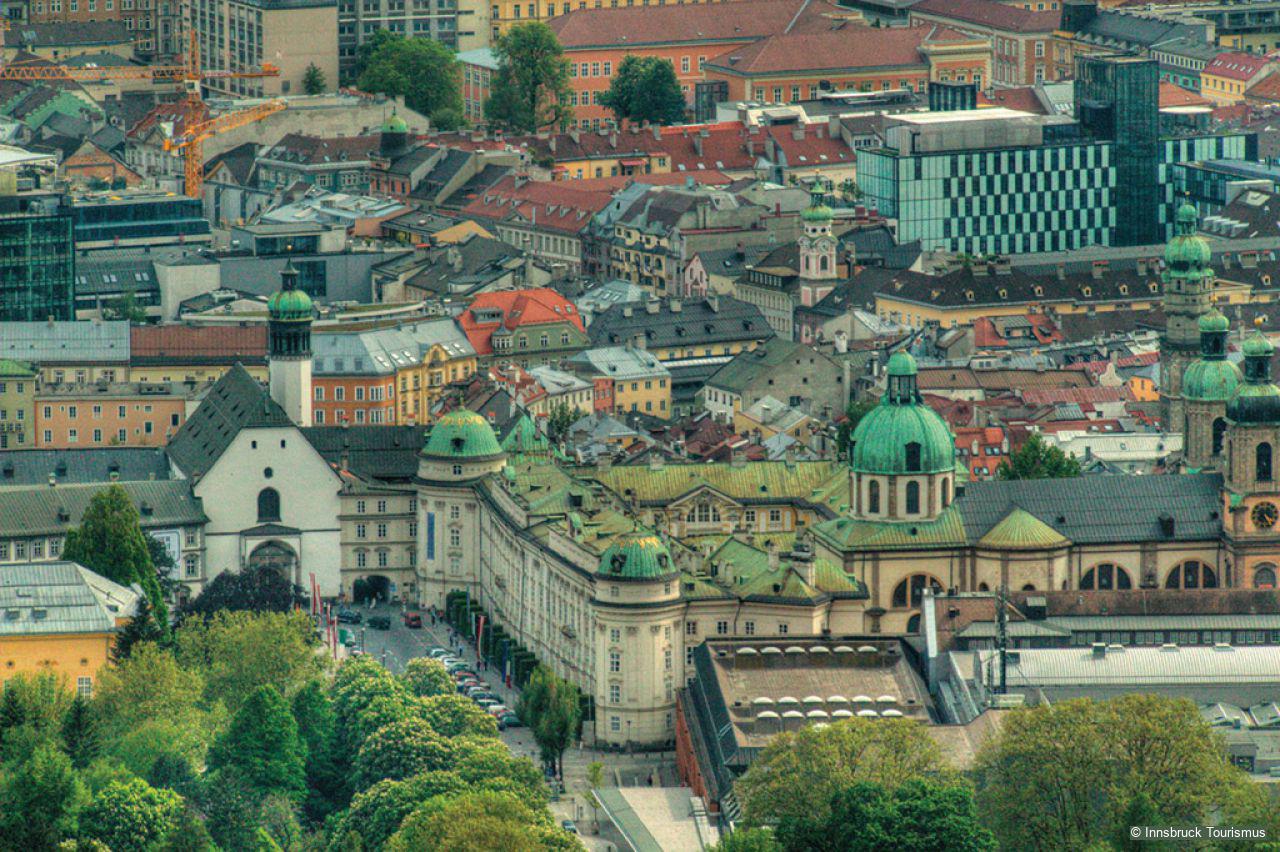
 Add to My Collection
Name of Monument:
Hofburg
Location:
Innsbruck, Tyrol, Austria
Rennweg 1
6020 Innsbruck
T : +43 512 587 186
F : +43 512 587 186 13
E : Hofburg.ibk@burghauptmannschaft.at
Burghauptmannschaft Österreich (Responsible Institution)
Date:
1754–1756 and 1766–1776
Artists:
Architecture: Johann Martin Gumpp the younger (1686–1765), Konstantin Johann von Walther zu Pfeilsberg (1720–1781), Niccolò Pacassi (1716–1790) attributed; frescos: Franz Anton Maulbertsch (1724–1796)
Denomination / Type of monument:
Secular architecture (residence)
Patron(s):
Sovereign of Tyrol (precursor)/Empress Maria Theresa (Late Baroque building)
History:
Construction work on the castle complex, planned under Duke Sigmund and extended under Emperor Maximilian I, began in the middle of the 15th century. Following a fire it was rebuilt between 1534 and 1540. The Late Baroque building was begun in 1754 with the Hofgasse Wing but interrupted in 1756 due to the Seven Year War. It was further expanded between 1766 and 1770 according to changed plans. Following the death of Emperor Franz I, who died in the Hofburg in 1765, the private chapel and the adjoining endowment for ladies of rank were built along with the Riesensaal as “Ancestral Hall” and the so called “Lothringerzimmer” (Lorraine Room). In around 1860 the Imperial Apartments were refurbished.
Description:
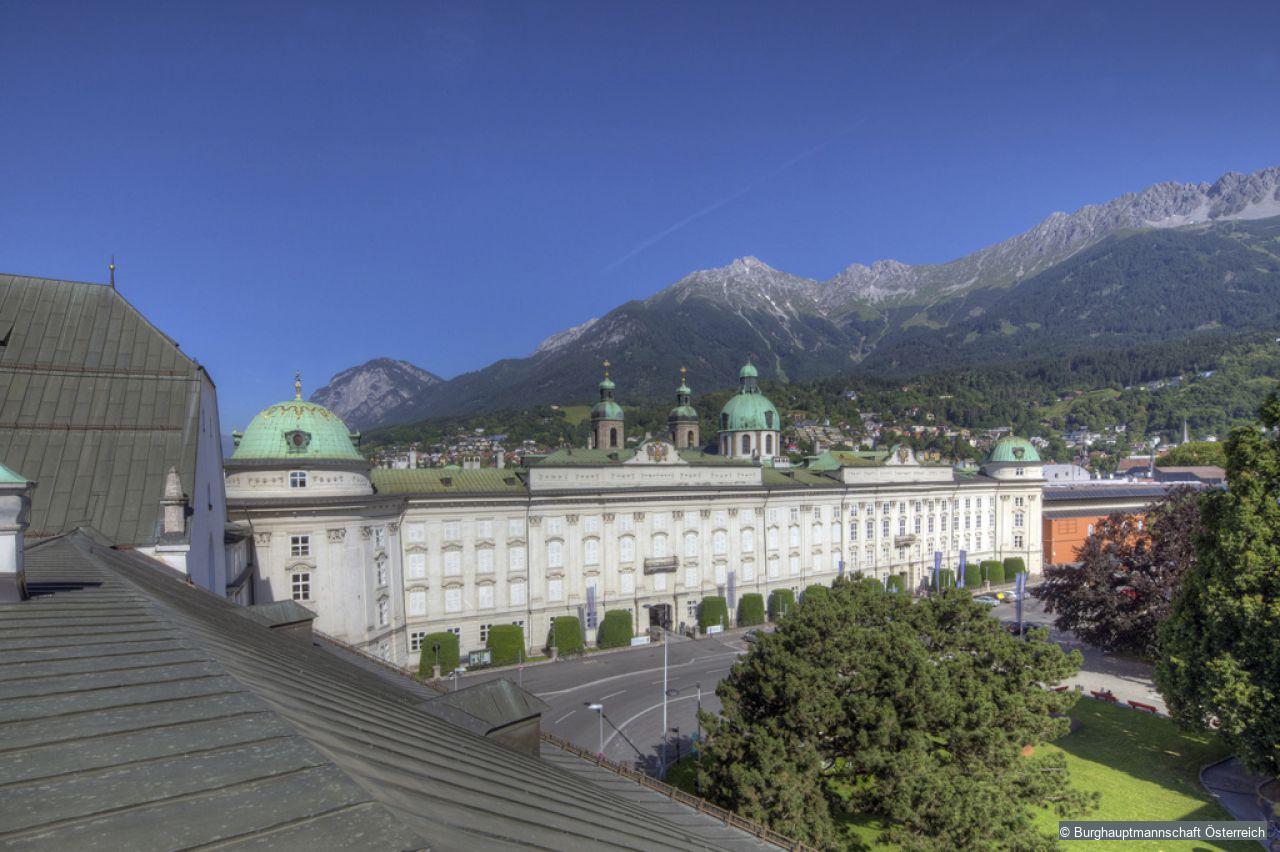
The irregular organisation of the ground plan, untypical for Baroque buildings, bears witness to the incorporation and modification of earlier architectural elements. Situated at the centre of the complex is a large rectangular courtyard, enclosed by the Hofgasse Wing to the south and the elongated, lightly curved wing along Rennweg with its two corner rondels. The most important Baroque state rooms are located in the east wing, including the Guard’s Hall, Riesensaal, Lothringerzimmer and Imperial Apartments. The Late Rococo furnishings in a number of the rooms were replaced by Neo-Rococo in the 19th century.
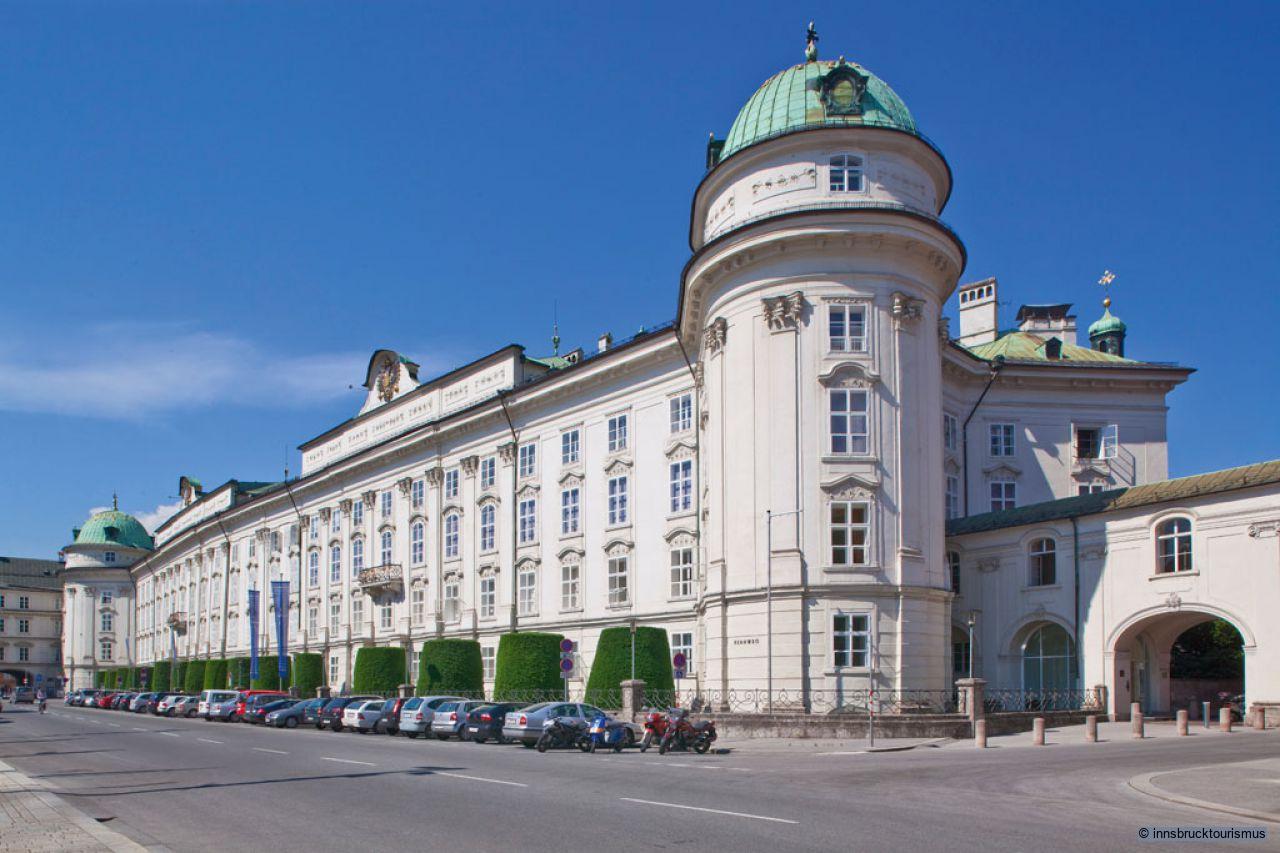
View Short DescriptionThe irregular ground plan of the extensive palace complex located between Rennweg and Dome in the centre of Innsbruck’s old city is a product of its step by step construction from the Late Middle Ages onwards. Between 1755 and 1780, during the reign of Maria Theresa, the building was converted into a Late Baroque residence along Viennese lines. Especially impressive is the elongated façade extending to Rennweg, the four-winged inner courtyard, and the “Riesensaal” (Hall of Giants) painted by Maulbertsch.
How Monument was dated:
Archives
Special features
Exterior, south façade
Hofgasse Wing
1754–1756
Johann Martin Gumpp the younger (1686–1765)
Designed by Gumpp in 1754, the Hofgasse Wing was completed according to his plans by 1756. The centre of the wing is composed of a monumental portal projection in the form of a gabled triumphal arch encompassing all four storeys. It is only here that Johann Martin Gumpp’s façade conception has been realised completely in accordance with his ideas. The influence of his brother Georg Anton’s country house façade is evident. The ponderous Late Baroque style has been adjusted to contemporary taste with the addition of rocaille work on the windows.
Exterior, east façade
Rennweg Wing
1766–1780
Niccolò Pacassi (1716–1790)
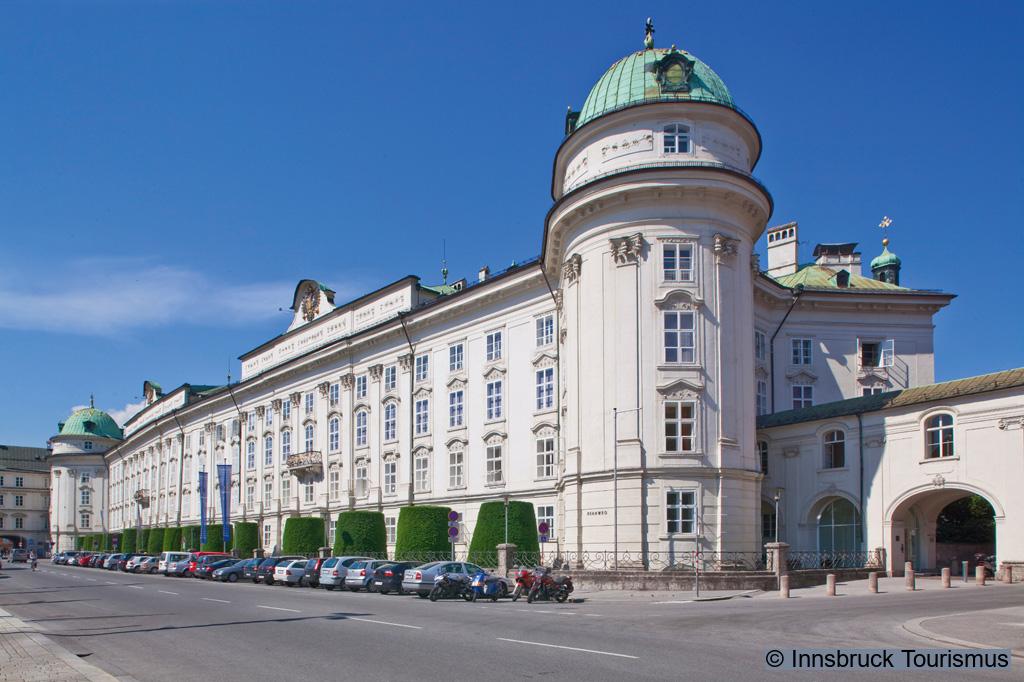
The Hofburg’s main façade differs significantly from that facing the Hofgasse. The wing was erected between 1766–80 according to plans from Pacassi and under the direction of the Viennese military architect Constantin Walter von Pfeilsberg. Gumpp’s plan was abandoned in favour of a new conception. The elongated, lightly curved front is designed along the lines of the Viennese palace built at the same time. It has a high basement storey and colossal order, with two seven-axis portal projections and rounded corner pavilions composed of existing towers.
Riesensaal
Wing on Rennweg (East Wing), Hofburg
1766–1776
Niccolò Pacassi (1716–1790); Franz Anton Maulbertsch (1724–1796)
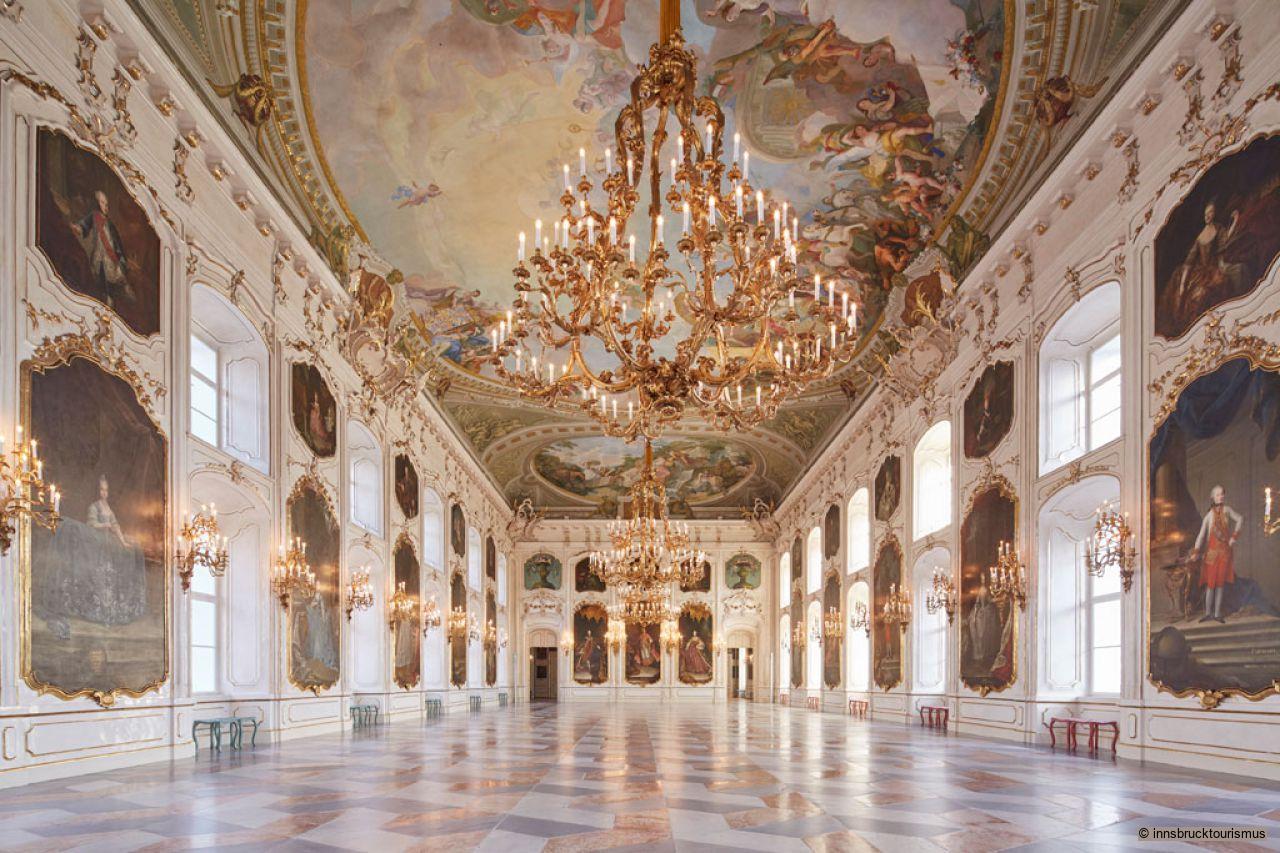
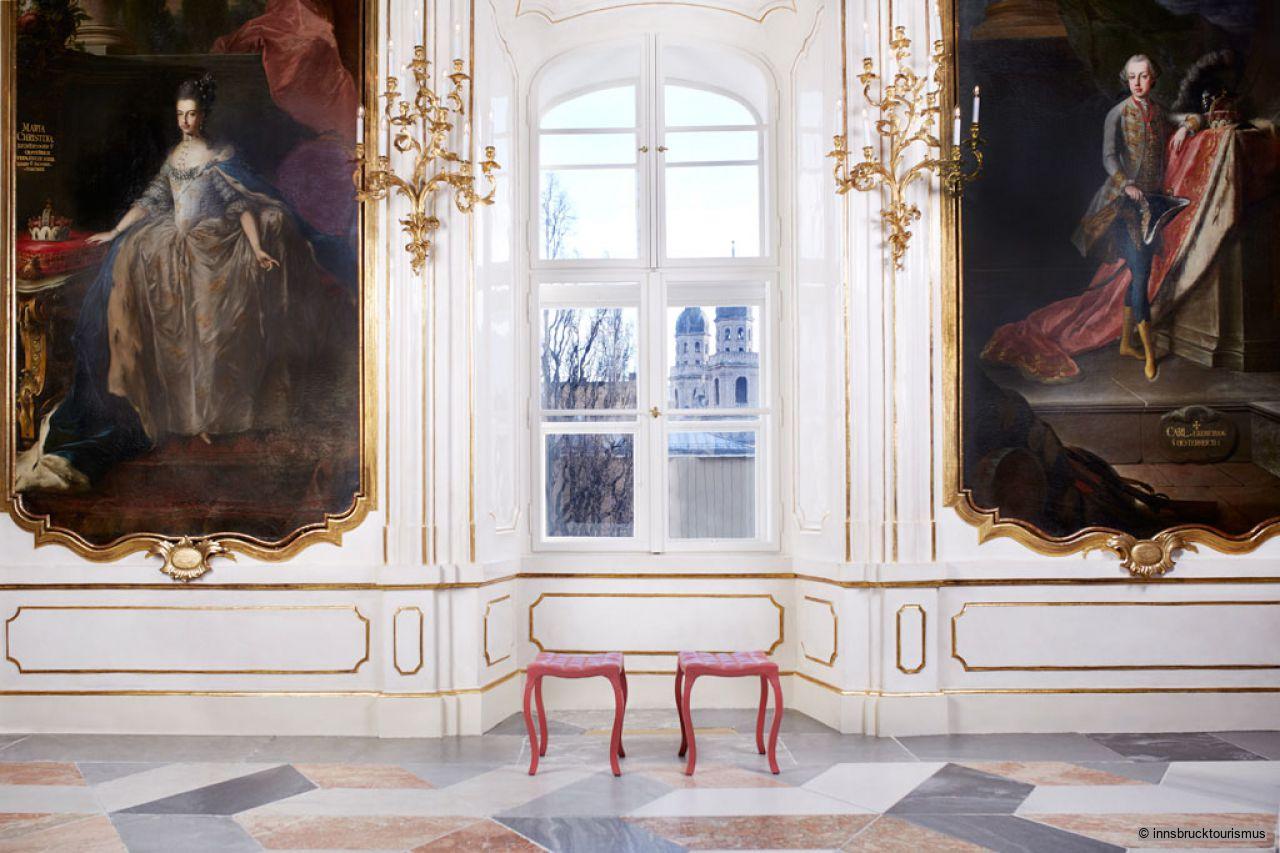
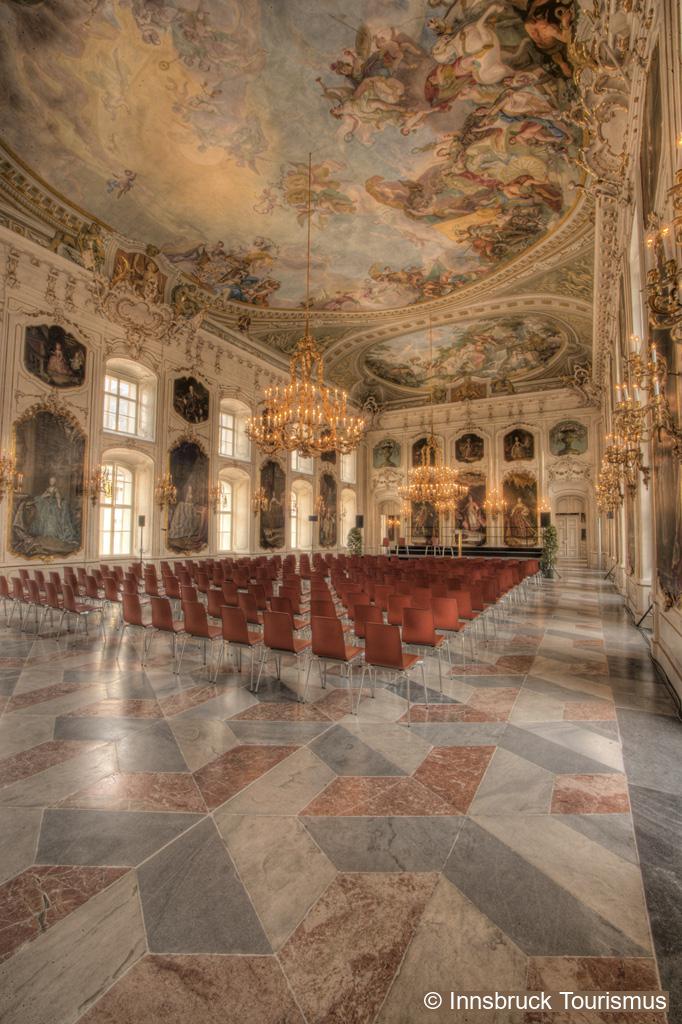
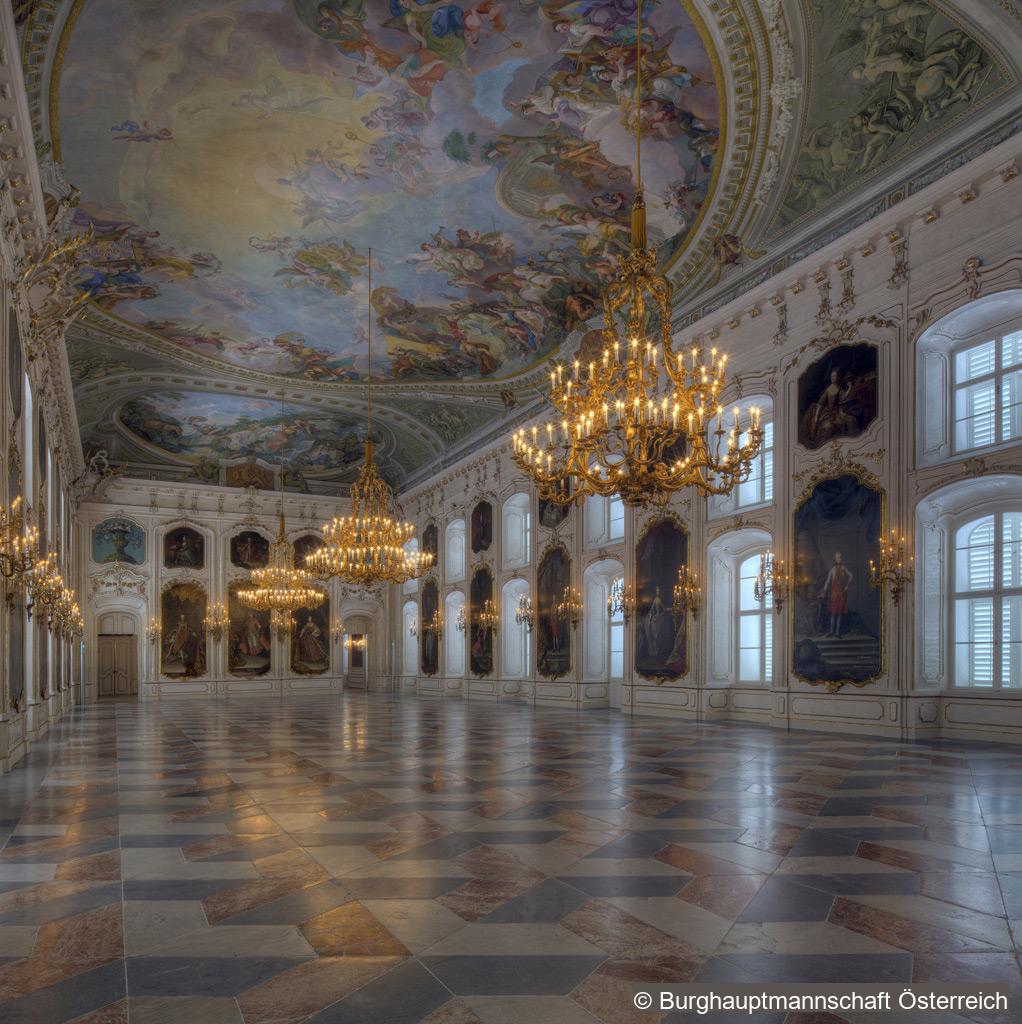
The “Riesensaal”, whose name is derived from an earlier cycle of Hercules paintings, together with the court chapel, is the second room dedicated to the memory of Emperor Franz I and designed according to the model of the Grand Gallery in Schönbrunn Palace. The banqueting hall extending across the whole width of the wing on Rennweg encompasses two storeys and seven window axes. It is furnished in honour of the House of Habsburg. The huge fresco panels depict allegories, the oil paintings the family of the imperial couple.
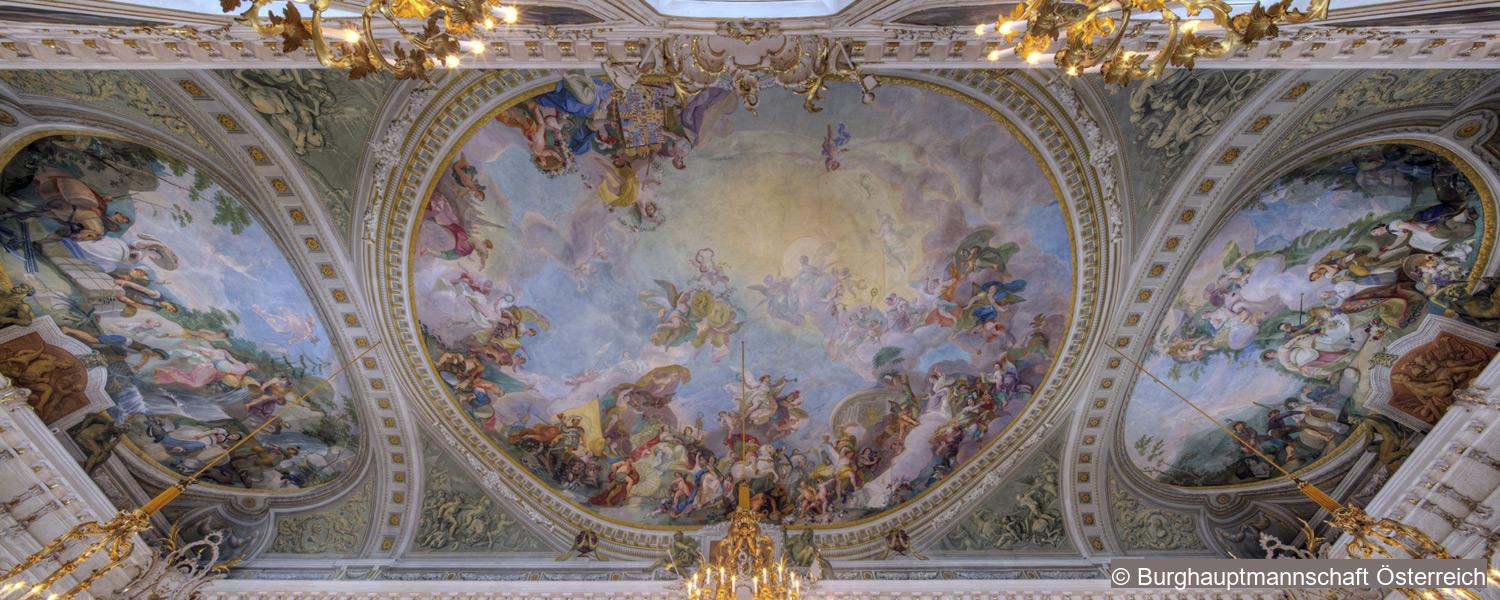
Central ceiling fresco in the Riesensaal
Riesensaal, Hofburg
1775/76
Franz Anton Maulbertsch (1724–1796)
The painted ceiling, including the painted stucco, covers an area of c. 500 square metres and is one of Franz Anton Maulbertsch’s major works. The empress personally contributed to its design. The central fresco shows an allegory of the union of the royal houses of Austria and Lorraine, the flanking ovals depict the regalia of Tyrol. The marriage of the houses of Austria and Lorraine is depicted as a chariot, accompanied by personifications of the sovereign’s virtues.
Memorial Chapel for Emperor Franz I
South Wing, second floor
1765/66
Niccolò Pacassi (1716–1790)
On the order of Maria Theresa the room in which the emperor died in August 1765 was converted into a memorial chapel by Pacassi and an endowment for ladies of rank was founded in his honour. The hall, structured with pilasters, is adorned with gentle rocaille stucco of which the tribune features a painted relief group of God the Father with mourning angels from Franz Anton Leitensdorffer (1721–95).

Selected bibliography:
Maria Theresia und Tirol, exhibition catalogue, Innsbruck 1958.
Krapf, M., Die Baumeister Gumpp, Vienna 1980.
Nicolò Pacassi. Architetto degli Asburgo, Monfalcone 1998.
Lorenz, H., Barock, Munich, London, New York 1999 (= Geschichte der bildenden Kunst in Österreich, Vol. 4), p. 371f.
Hanzl-Wachter, L., Hofburg zu Innsbruck, Vienna 2004.
Sauer, B., Hofburg Innsbruck, Bozen 2010.
Citation of this web page:
Frank Purrmann "Hofburg" in "Discover Baroque Art", Museum With No Frontiers, 2026.
https://baroqueart.museumwnf.org/database_item.php?id=monument;BAR;at;Mon11;5;en
MWNF Working Number: AT 05
RELATED CONTENT
On display in
Exhibition(s)
Discover Baroque Art
The Age of Enlightenment | Signs of social responsibility: enlightened absolutism Absolutism | The spread of the Official style Ephemera, Festivals and Theatrical Representation | “All the world is a stage”Download
As PDF (including images) As Word (text only)