

 Back
Back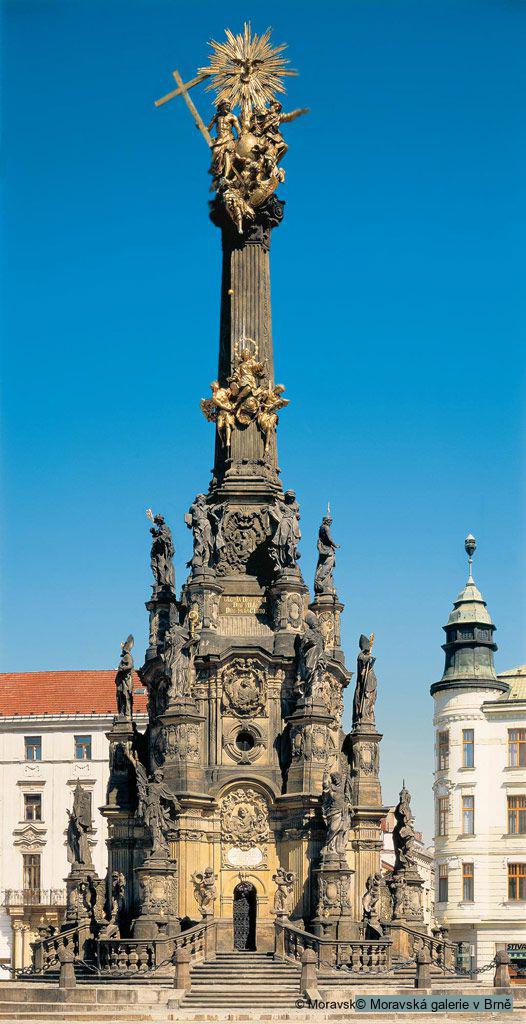
 Add to My Collection
Name of Monument:
Holy Trinity Column, Olomouc
Location:
Olomouc, Moravia, Czech Republic
Olomouc, Horní náměstí
T : + 420 585 513 385
F : + 420 585 220 843
E : infocentrum@olomouc.eu
City of Olomouc (Responsible Institution)
Date:
1716–1754
Artists:
Václav Render (1669–1733, Olomouc), Filip Sattler (1695 Wenns, Tyrol – 1738 Olomouc), Ondřej Zahner (1709 Ettershausen – 1752 Olomouc), Jan Šimon Forstner (1714? Salzburg – 1773 Olomouc), Wolfgang Träger (1714 Pilsen – 1763 Olomouc), Jan Michael Scherhauf (1724 Wels – 1792 Olomouc)
Denomination / Type of monument:
Religious – devotional column – chapel
Patron(s):
City of Olomouc, Václav Render
History:
The Holy Trinity Column was built as a counterpart to the Plague Column of the Virgin Mary in an adjacent square on the initiative of V. Render, a local master stonemason. He oversaw the construction and also contributed preliminary finance. Before his death in 1733, Render built the first-floor chapel. The invasion of the Prussian army in 1741 delayed the construction for which several local masters had joined forces. F. Sattler was responsible for some of the sculpted decoration of the column, with the larger part executed by O. Zahner. It is one of the last memorial columns to be built under the Habsburg monarchy in several towns from the second half of the 17th century onwards. Consecration of the column by the Bishop of Olomouc and Cardinal Troyer was conducted in the presence of Empress Maria Theresa and her husband František I of Lorraine. In 2000 the column was listed as a UNESCO World Cultural Heritage site.
Description:
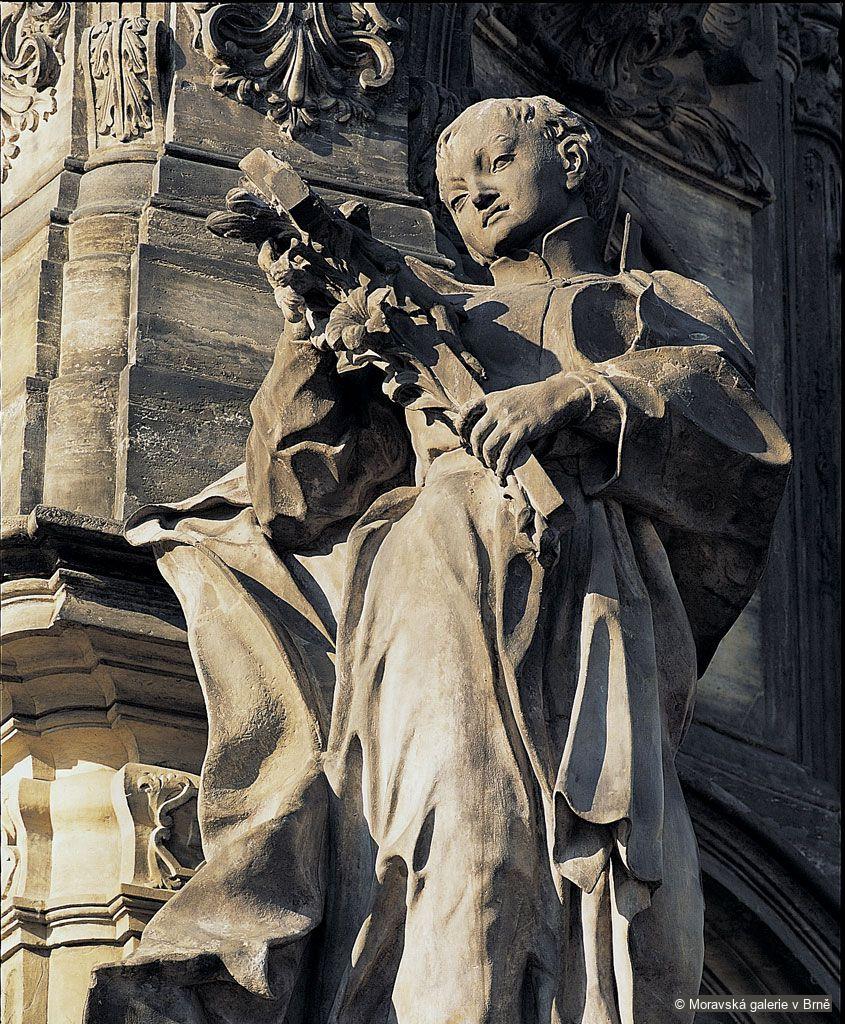
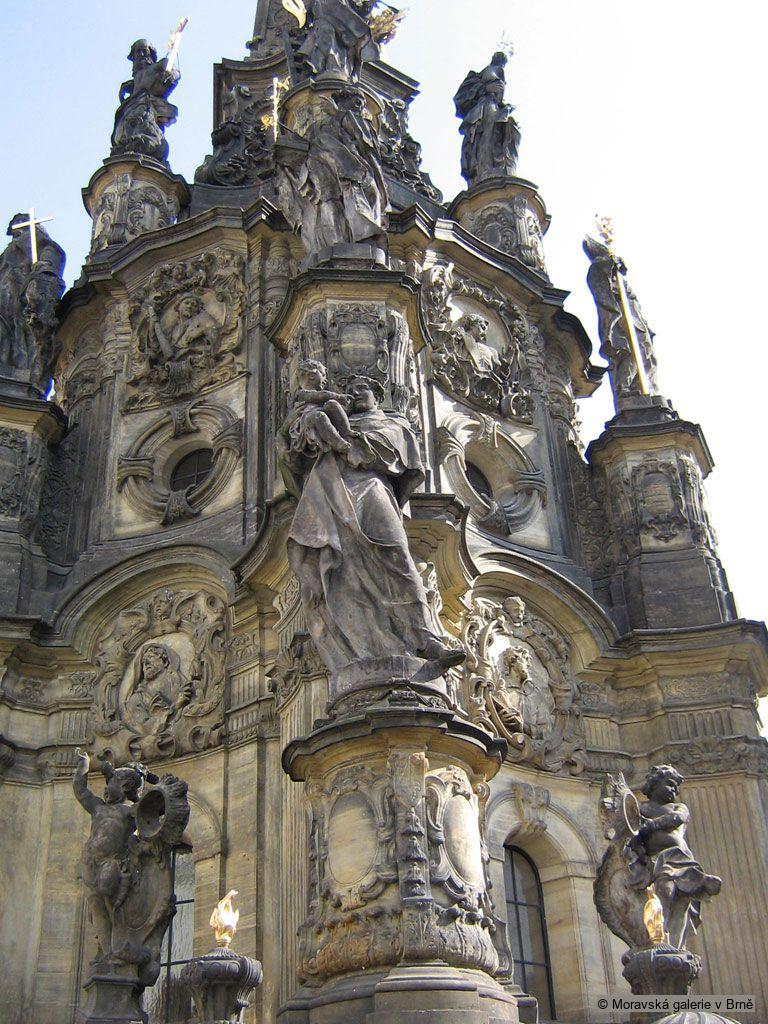
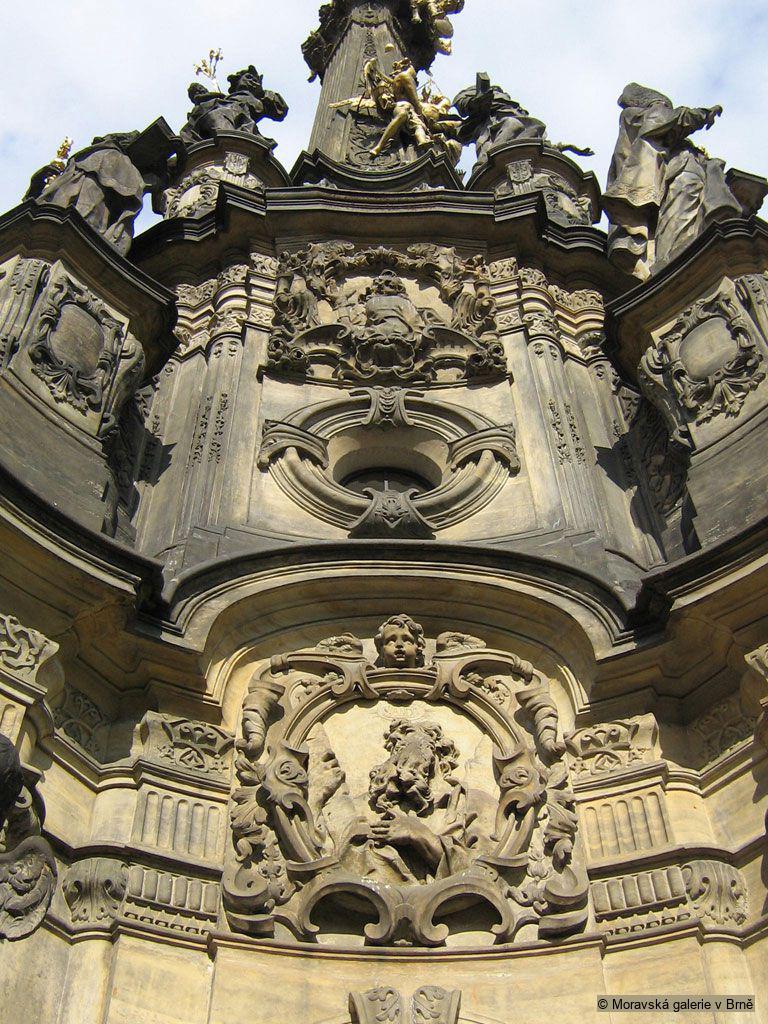
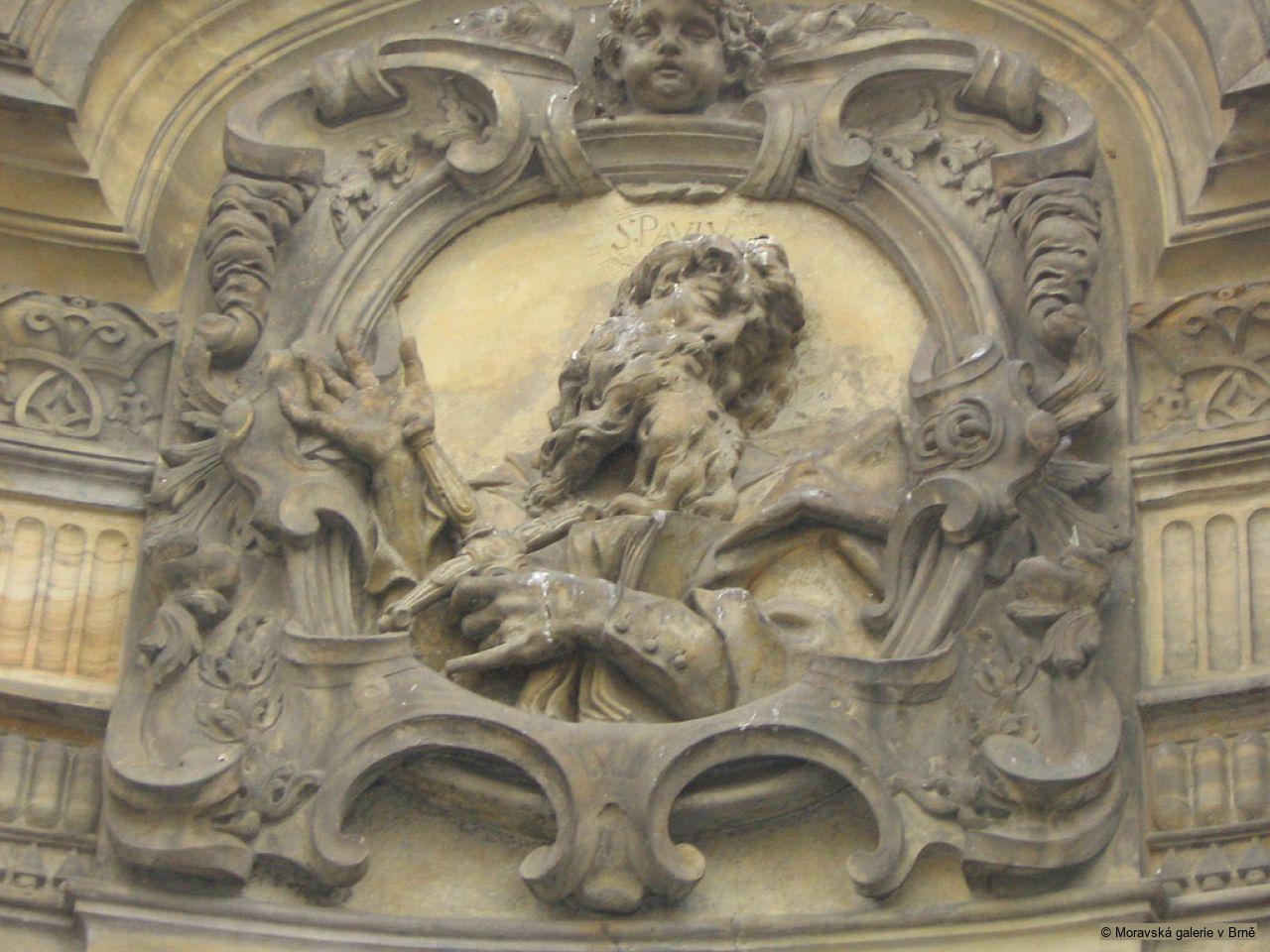
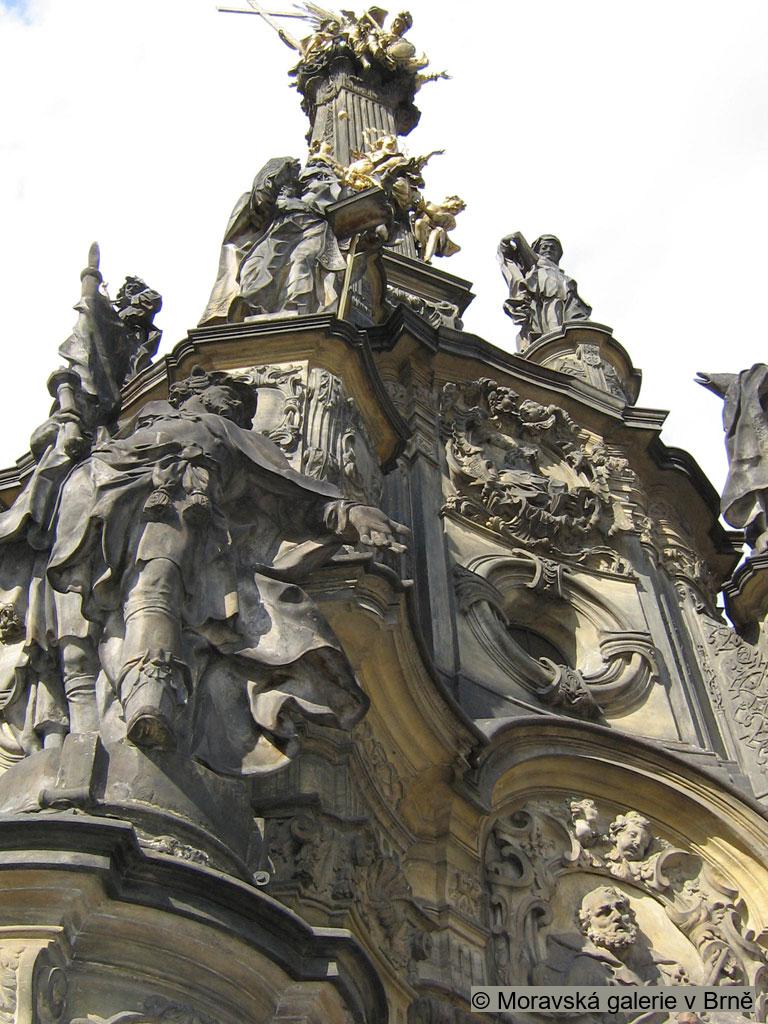
The column, on a hexagonal ground plan, is 35 m tall and has a chapel on the ground floor. It celebrates the Church and the Christian tradition of the city. The sculpted decoration of the column consists of 12 sandstone statues of light-bearers, 12 reliefs with half-figures of the apostles, reliefs with allegories of Faith, Hope and Charity, a sculpture of the Assumption in the central part and, topmost, a sculpture of the Holy Trinity. There are 18 figures of the saints, including the patron saints of the country, preachers (John Capistranus was active in Olomouc) and martyrs. The Jesuit saint, Aloysius Gonzaga, was canonised at the time of the column’s construction (1726). Apart from gilding, the column was originally decorated with white marble.
View Short DescriptionThe column presents the largest grouping of Baroque statues within a single sculpture in Central Europe. In 2000 it was listed as a UNESCO World Cultural Heritage site. The column celebrates the Church and the Christian tradition of the city. The top sculpture of Christ the Saviour and God the Father, the ruler of the world, opens with Archangel Michael, symbol of the eternal struggle with heresy. The work, by several Olomouc masters, is one of the last memorial columns to be built under the Habsburg monarchy in several towns from the second half of the 17th century onwards.
How Monument was dated:
The construction of the column is recorded in Town Council minutes; contracts with individual craftsmen have also been preserved.
Special features
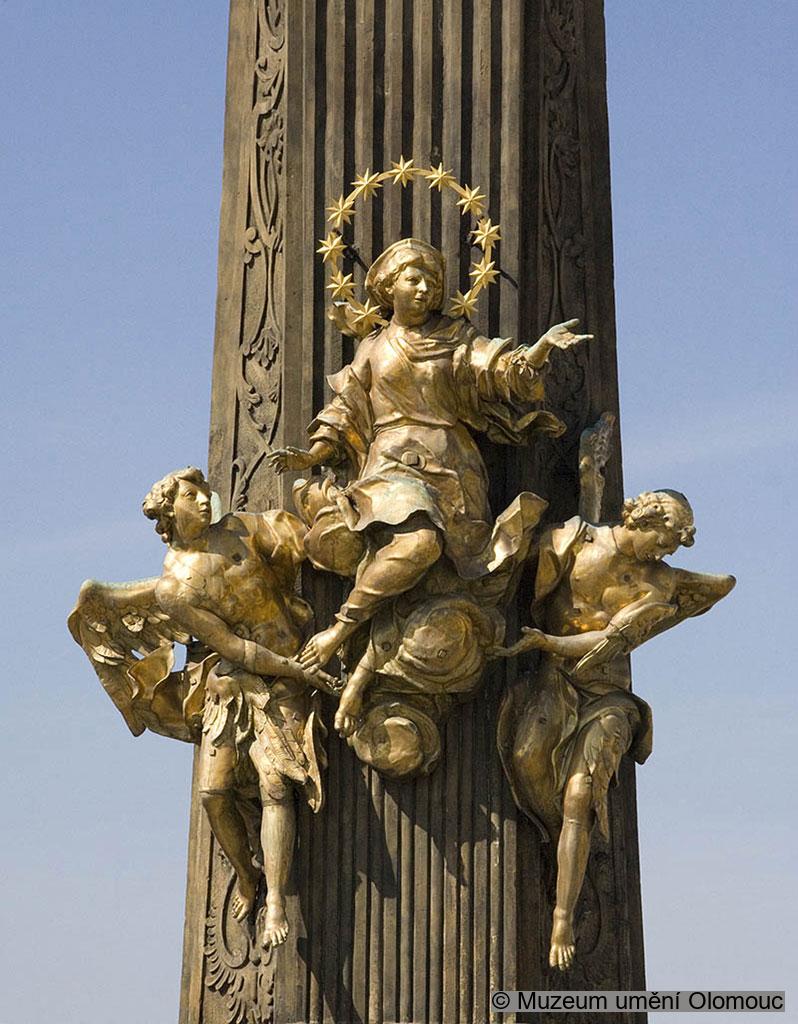
The Holy Trinity
Holy Trinity Column, Olomouc
1753
Ondřej Zahner (1709 Ettershausen – 1752 Olomouc), Jan Šimon Forstner (1714? Salzburg – 1773 Olomouc)
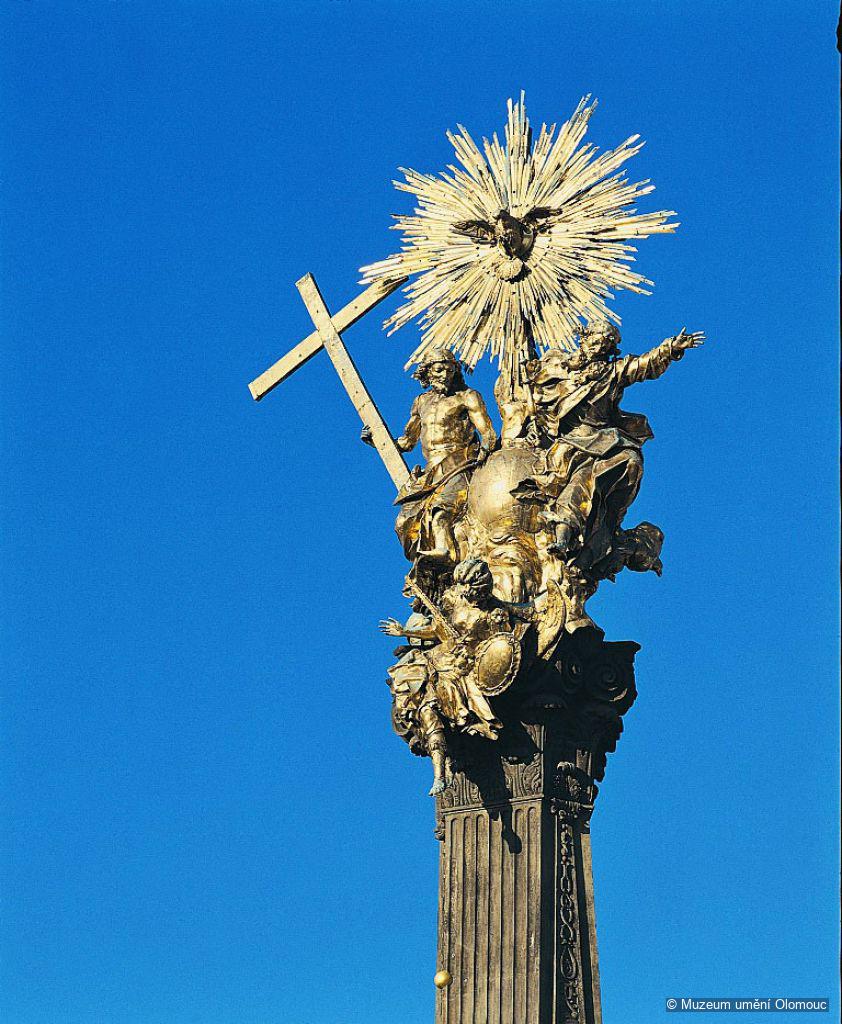
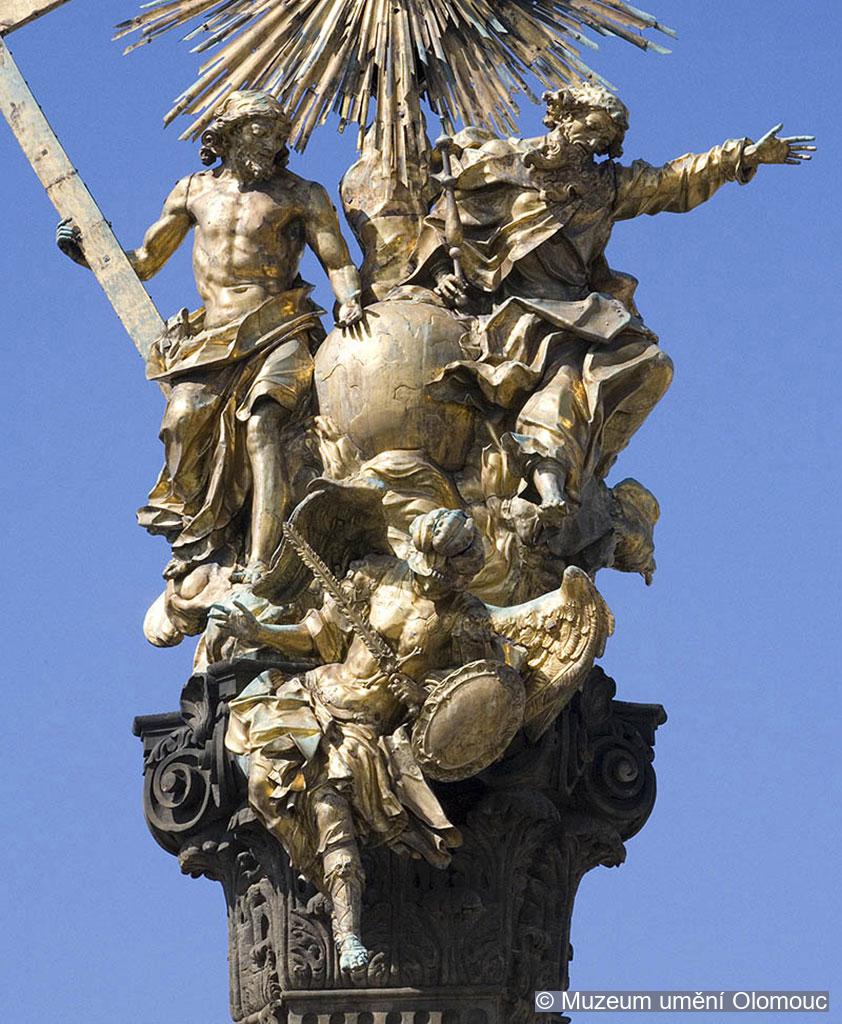
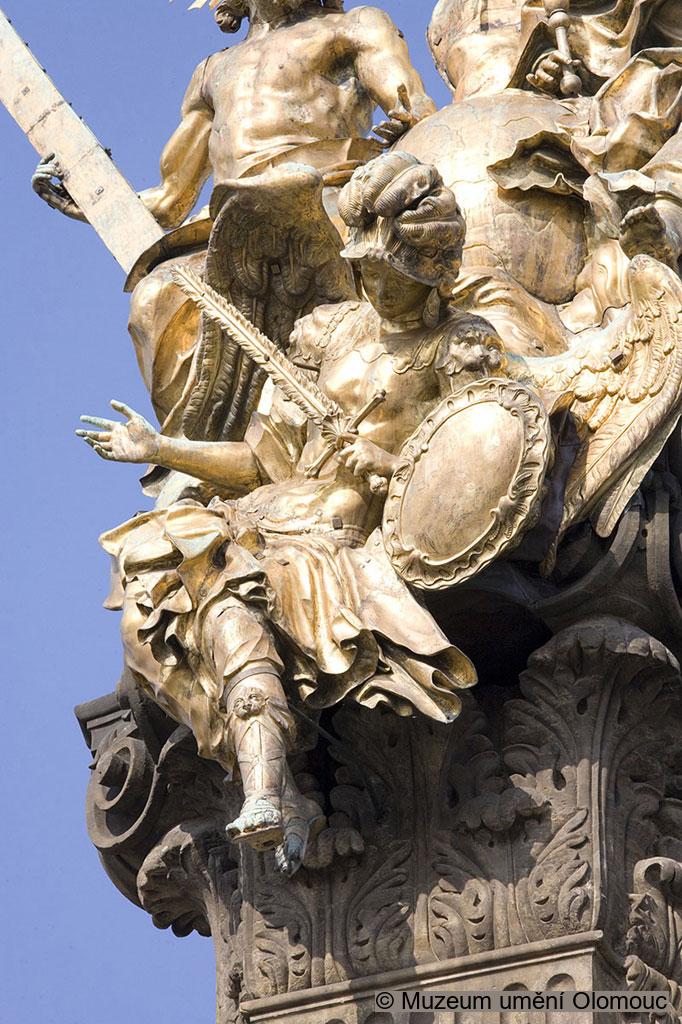
The topmost sculpture of Christ the Saviour and God the Father, the ruler of the world, opens with the Archangel Michael, symbol of the eternal struggle against heresy. The dove of the Holy Spirit on a sunburst has its eminence underlined by the rays of the rising sun. Even the Augsburg masters took an interest in the gilding of the copper statues.
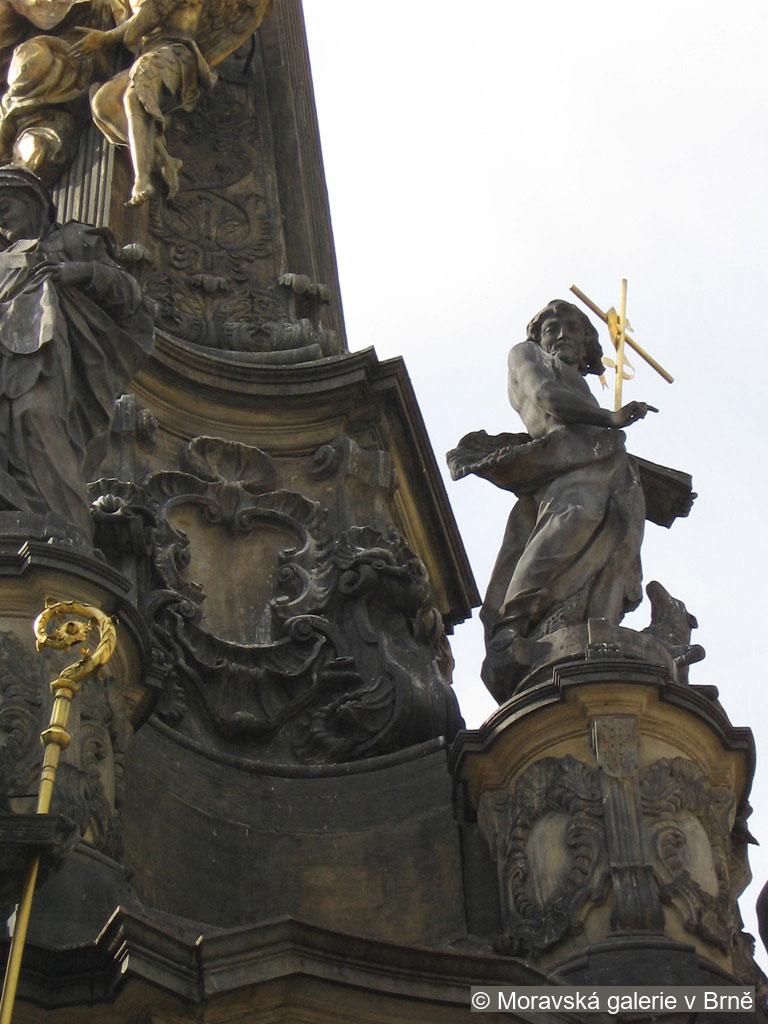
St. John the Baptist
Holy Trinity Column, Olomouc
1745–1752
Ondřej Zahner (1709 Ettershausen – 1752 Olomouc)
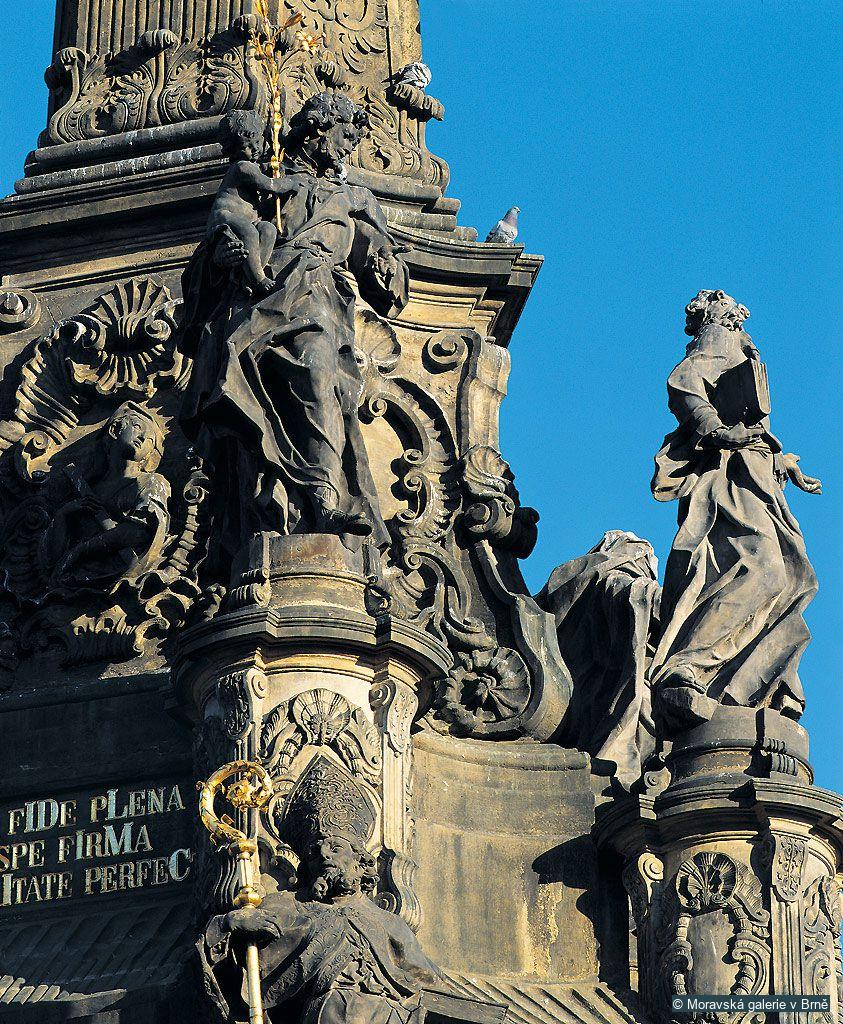
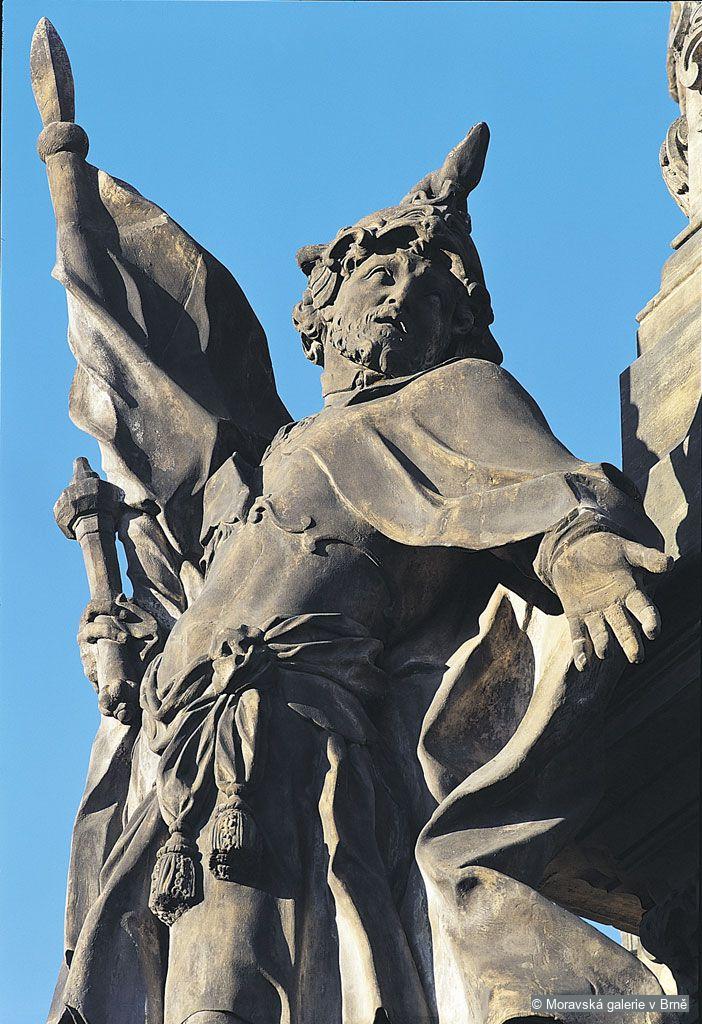
The individual, larger-than-life figures are veiled in light, airy cloaks. Their austere gesticulation and postures correspond with their spiritual facial expressions. The picturesque outlines of the figures enhance the aesthetic impression of a pyramid-like whole. Following Zahner’s death the sculptural decoration was completed by W. Träger and J. M. Scherhauf. They continued with the sculptor’s initial concept and achieved features typical of Zahner in a side-altar figure for the Místek Church.
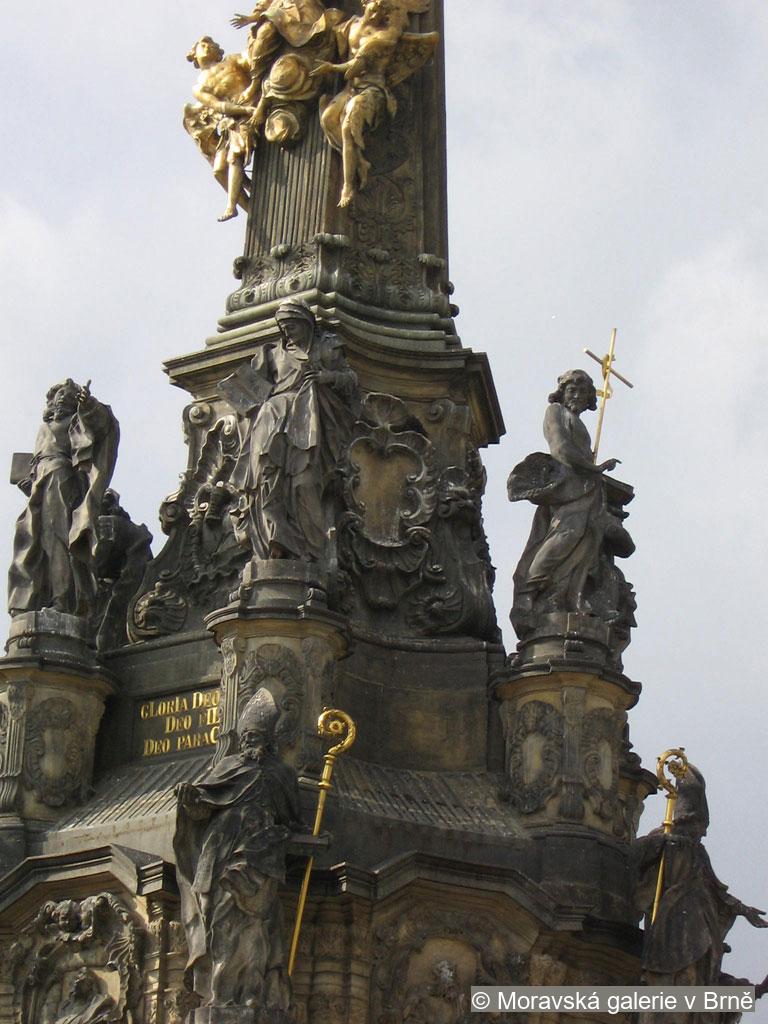
St. Cyril
Holy Trinity Column, Olomouc
1745–1752
Ondřej Zahner (1709 Ettershausen – 1752 Olomouc)
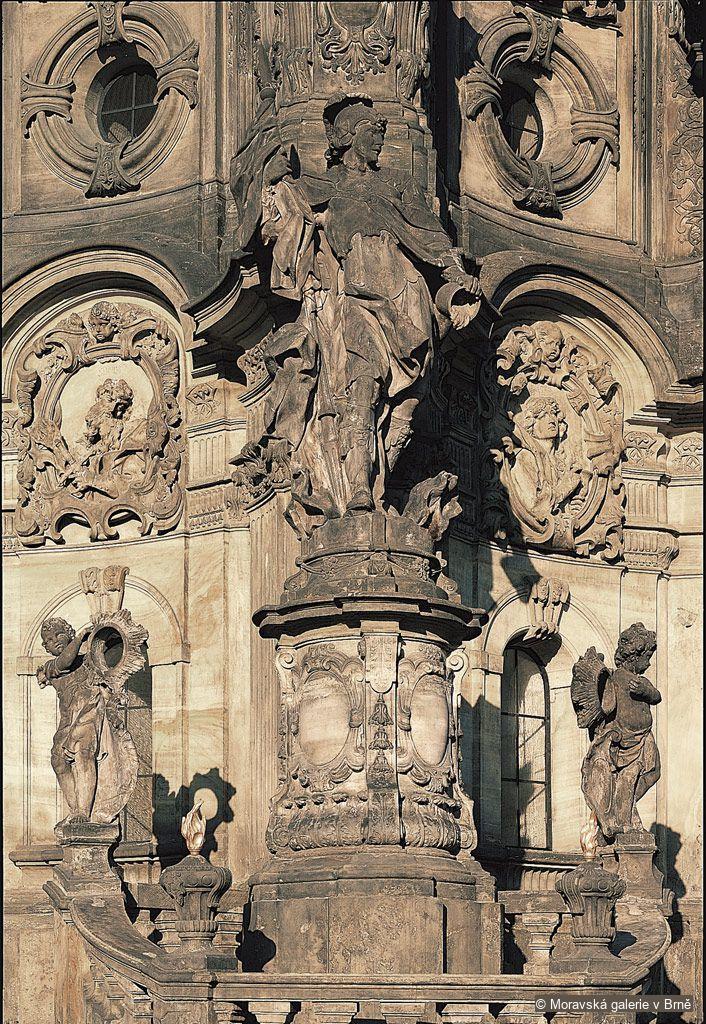
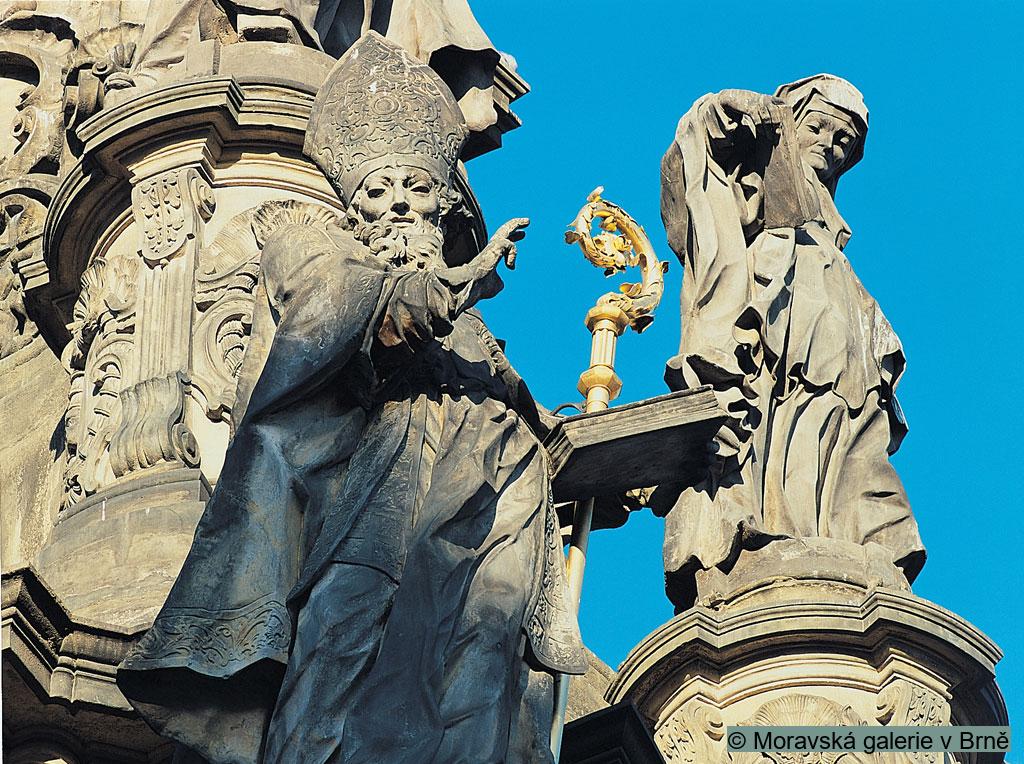
The six statues on the central section represent Slavic saints: Methodius, the first Moravian bishop; Cyril (Konstantin); Vojtěch the Bishop of Prague and founder of the first Benedictine Monastery in Bohemia; John of Nepomuk; John Sarkander, tortured to death in Olomouc in 1620; and St. Blasius to whom the Olomouc Church, considered the oldest Baroque church in the country, was dedicated.
The Apostle Peter
Holy Trinity Column, Olomouc
Before 1733
Filip Sattler (1695 Wenns, Tyrol – 1738 Olomouc)
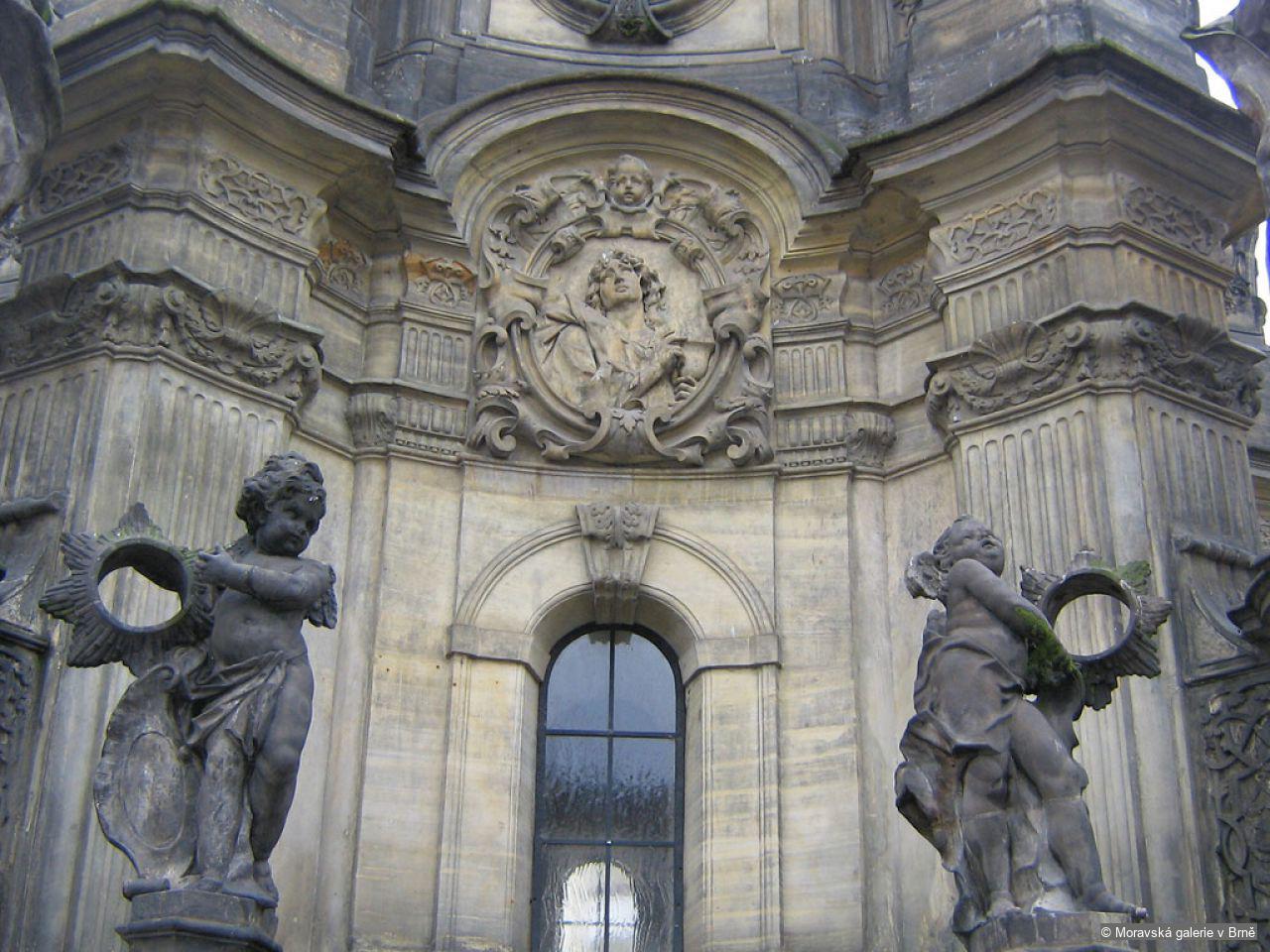
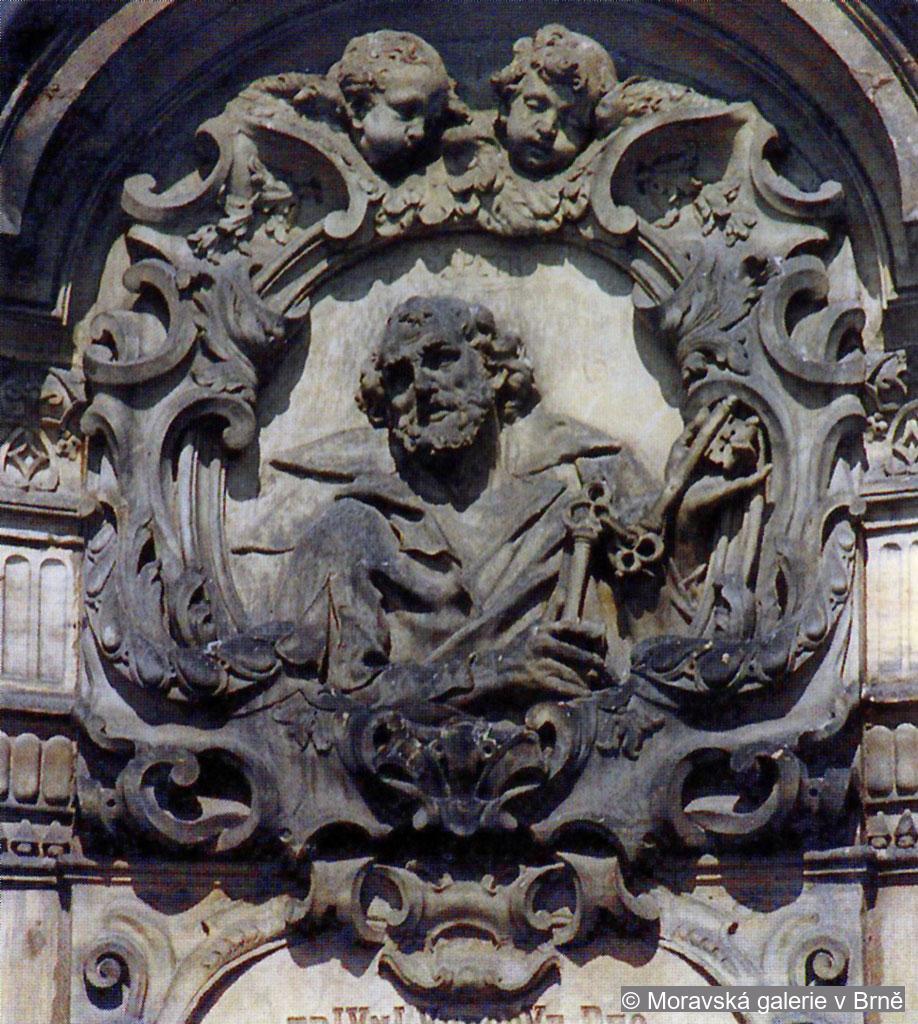
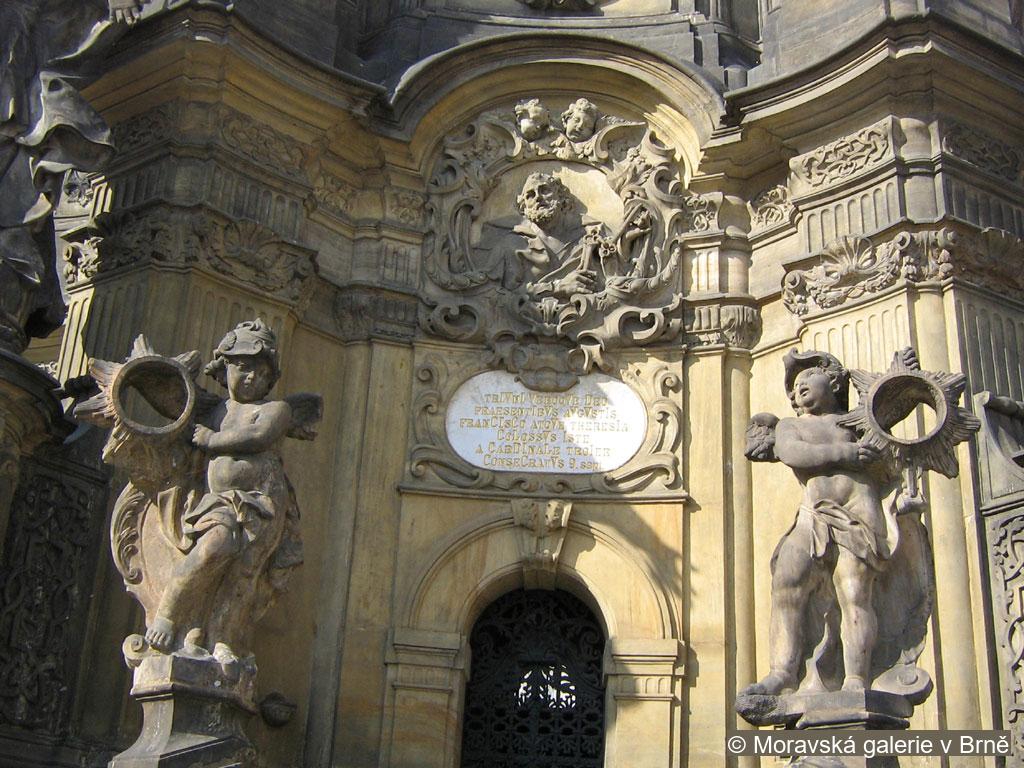
The bust, in relief of the Apostle Peter, opens onto the entrance of the chapel with six reliefs – originally gilded – of Old Testament scenes featuring motifs of sacrifice and thanksgiving by the same sculptor. Sattler also collaborated with V. Render on the Olomouc fountains.
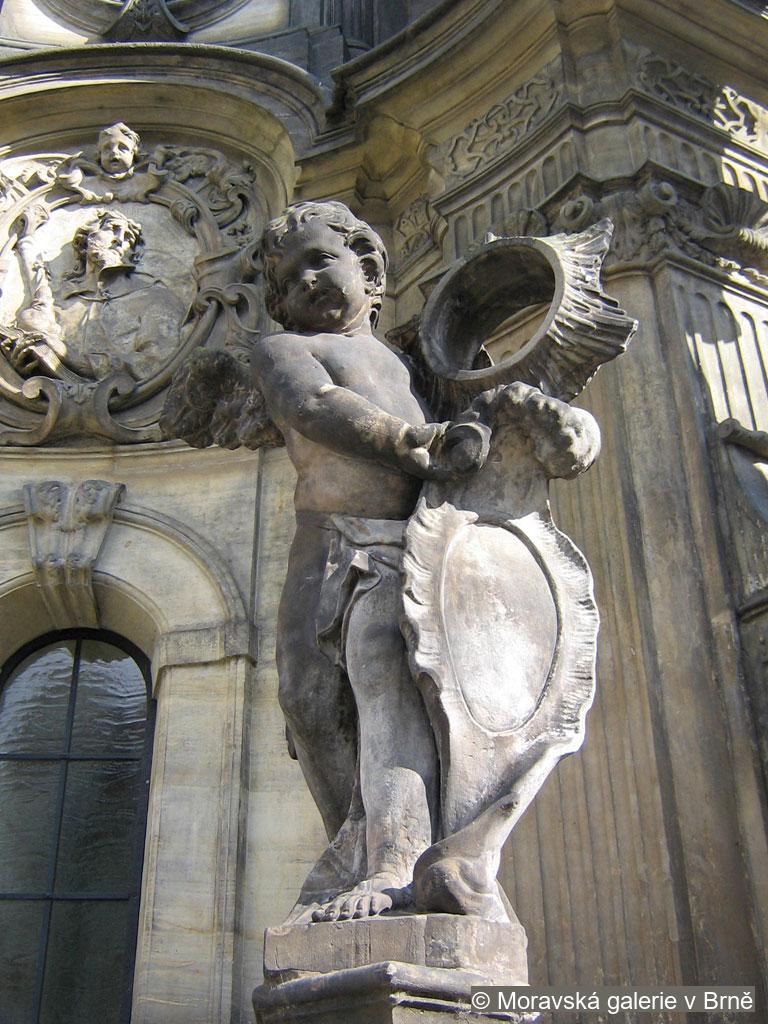
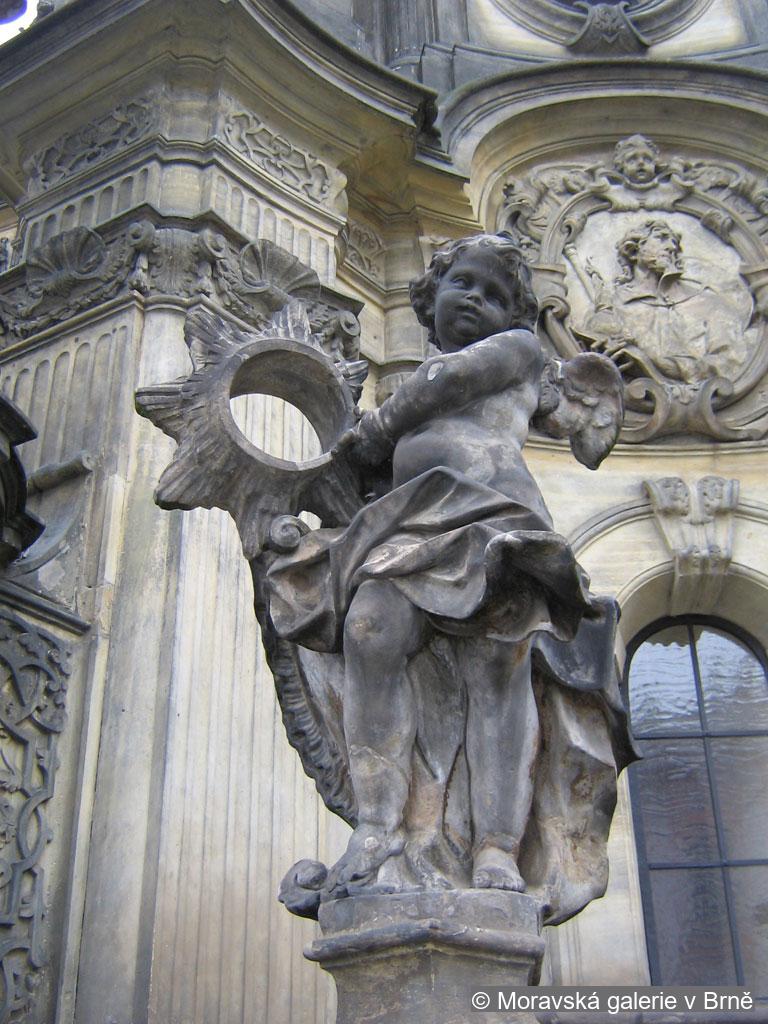
Light-bearer
Holy Trinity Column, Olomouc
1745–1754
Ondřej Zahner (1709 Ettershausen – 1752 Olomouc) and workshop
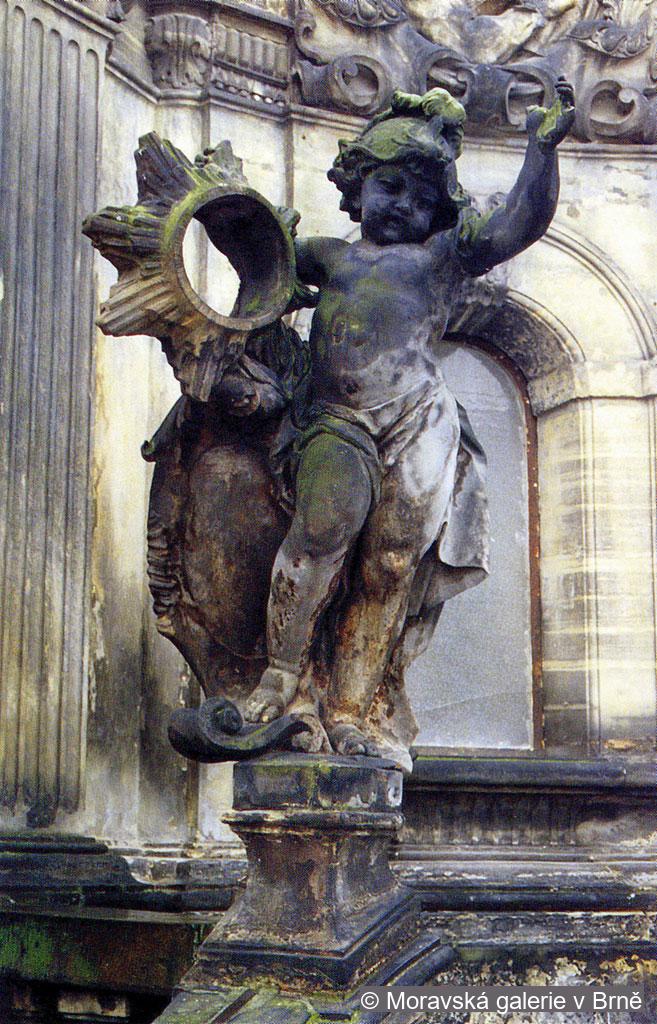
Light played a major role in Baroque iconography as a symbol of the Holy Spirit and was synonymous with holiness. Angels, the mediators of God's Will, are represented on the bottom balustrade of the staircase as decorative putti, messengers and guardians of the light.
Selected bibliography:
Pavel Zatloukal (ed), Horní náměstí v Olomouci, Olomouc, 1995.
Miloš Stehlík, Slohová podstata sochařského díla Ondřeje Zahnera, Opuscula Historiae Artium, F 42, 1998, pp. 7–26.
Marek Perůtka (ed), Sloup Nejsvětější Trojice v Olomouci, Olomouc, 2001.
Miloš Stehlík, in Lubomír Slavíček (ed), Josef Winterhalder d. J. (1743 Vöhrenbach – 1807 Znojmo). Maulbertschs bester Schüler, Langenargen–Brno, 2009.
Citation of this web page:
Zora Wörgötter "Holy Trinity Column, Olomouc" in "Discover Baroque Art", Museum With No Frontiers, 2026.
https://baroqueart.museumwnf.org/database_item.php?id=monument;BAR;cz;Mon11_F;13;en
Prepared by: Zora WörgötterZora Wörgötter
SURNAME: Wörgötter
NAME: Zora
AFFILIATION: Moravian Gallery in Brno
TITLE: Museum Curator and Local Co-ordinator
CV:
Zora Wörgötter studied Applied Painting at the Secondary School of Applied Arts, Video Art (Faculty of Fine Arts) at the University of Technology in Brno and Art History and Ethnology (Faculty of Arts) at Masaryk University, Brno. She has worked at the Moravian Gallery since 1997 and was curator of the Ancient Art Collection up until 2008. Specialising in Dutch and Central European painting of the 17th and 18th centuries, she has participated in the preparation of several exhibitions, catalogues and research projects in the Czech Republic and abroad, and published in the Moravian Gallery Bulletin, Opuscula historiae artium, and other journals. She is co-ordinator of the Art History Database www.ahice.net for the Czech Republic.
Copyedited by: Jiří KroupaJiří Kroupa
SURNAME: Kroupa
NAME: Jiří
AFFILIATION: Department of the History of Art (Faculty of Arts) Masaryk
University, Brno
TITLE: Professor
CV:
Professor Jiří Kroupa studied Art History, History and Sociology Masaryk University, Brno. He was a curator at the Kroměříž Museum and the Moravian Gallery in Brno before joining the staff at Masaryk University in 1988 (Head of the Department 1992–2002; Professor 1999 to present). His particular fields of interest are in the history of architecture, 18th-century cultural history and the methodology of art history. His long list of publications includes an edition on the architect Franz Anton Grimm and an essay “The alchemy of happiness: the Enlightenment in the Moravian context”. He was contributing editor for the volume Dans le miroir des ombres. Moravie a la age baroque. 1670–1790 (2002).
Translation by: Irma Charvátová
Translation copyedited by: Mandi GomezMandi Gomez
Amanda Gomez is a freelance copy-editor and proofreader working in London. She studied Art History and Literature at Essex University (1986–89) and received her MA (Area Studies Africa: Art, Literature, African Thought) from SOAS in 1990. She worked as an editorial assistant for the independent publisher Bellew Publishing (1991–94) and studied at Bookhouse and the London College of Printing on day release. She was publications officer at the Museum of London until 2000 and then took a role at Art Books International, where she worked on projects for independent publishers and arts institutions that included MWNF’s English-language editions of the books series Islamic Art in the Mediterranean. She was part of the editorial team for further MWNF iterations: Discover Islamic Art in the Mediterranean Virtual Museum and the illustrated volume Discover Islamic Art in the Mediterranean.
True to its ethos of connecting people through the arts, MWNF has provided Amanda with valuable opportunities for discovery and learning, increased her editorial experience, and connected her with publishers and institutions all over the world. More recently, the projects she has worked on include MWNF’s Sharing History Virtual Museum and Exhibition series, Vitra Design Museum’s Victor Papanek and Objects of Desire, and Haus der Kulturen der Welt’s online publication 2 or 3 Tigers and its volume Race, Nation, Class.
MWNF Working Number: CZ 13