

 Back
Back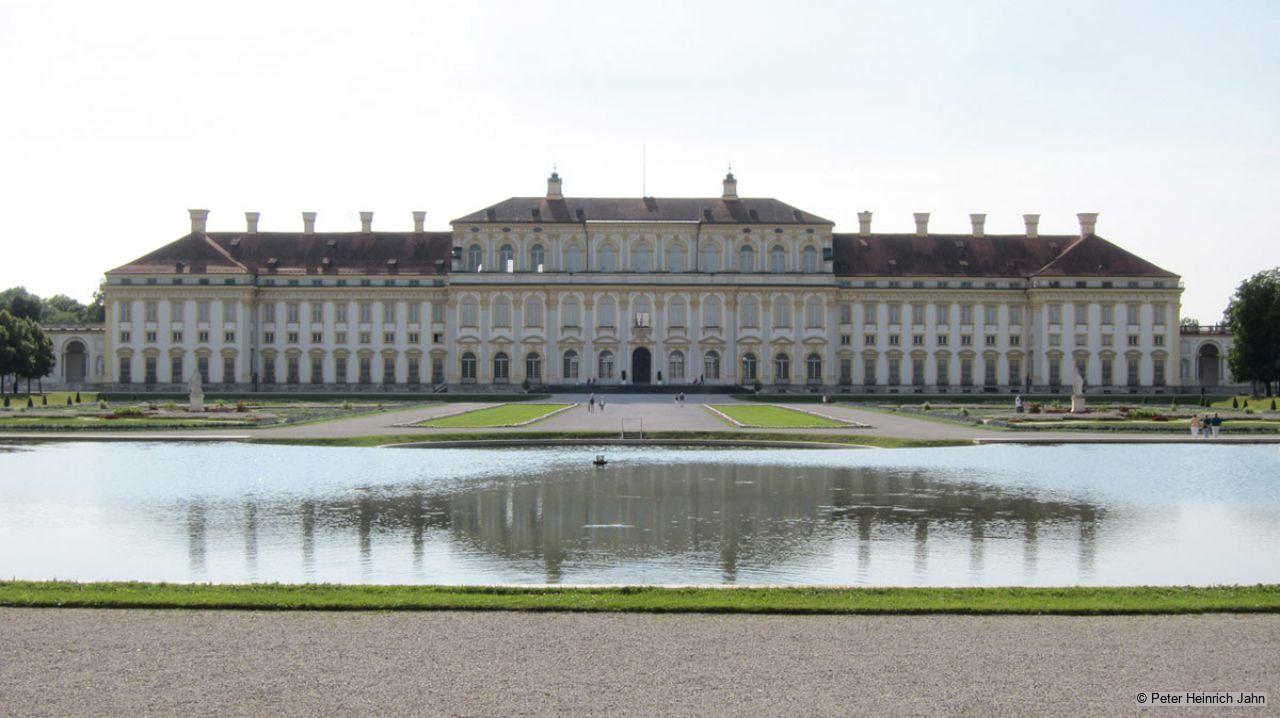

 Add to My Collection
Name of Monument:
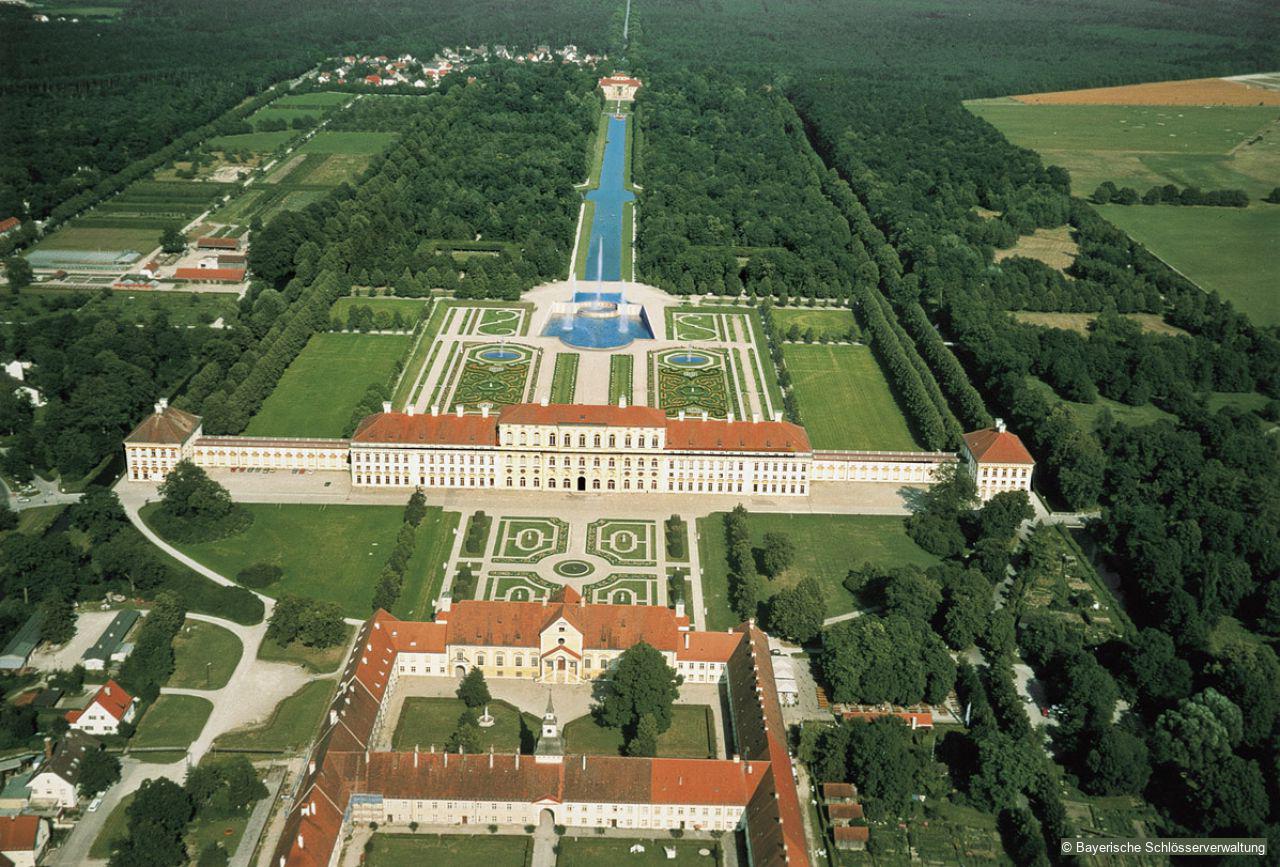
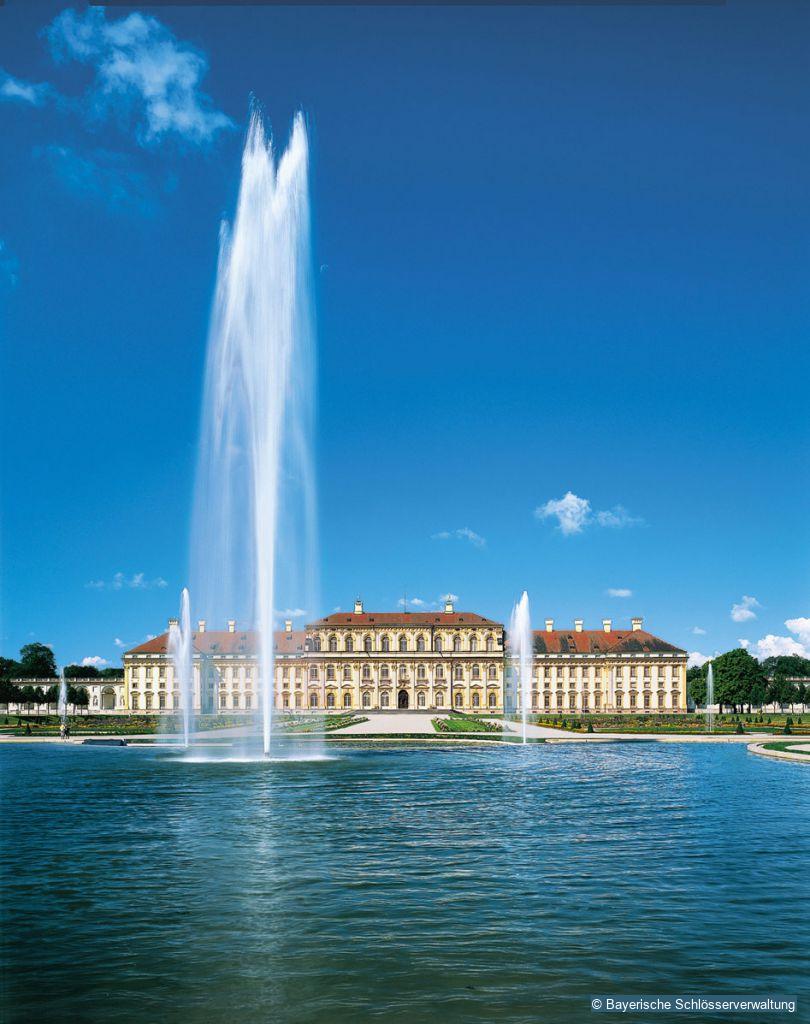
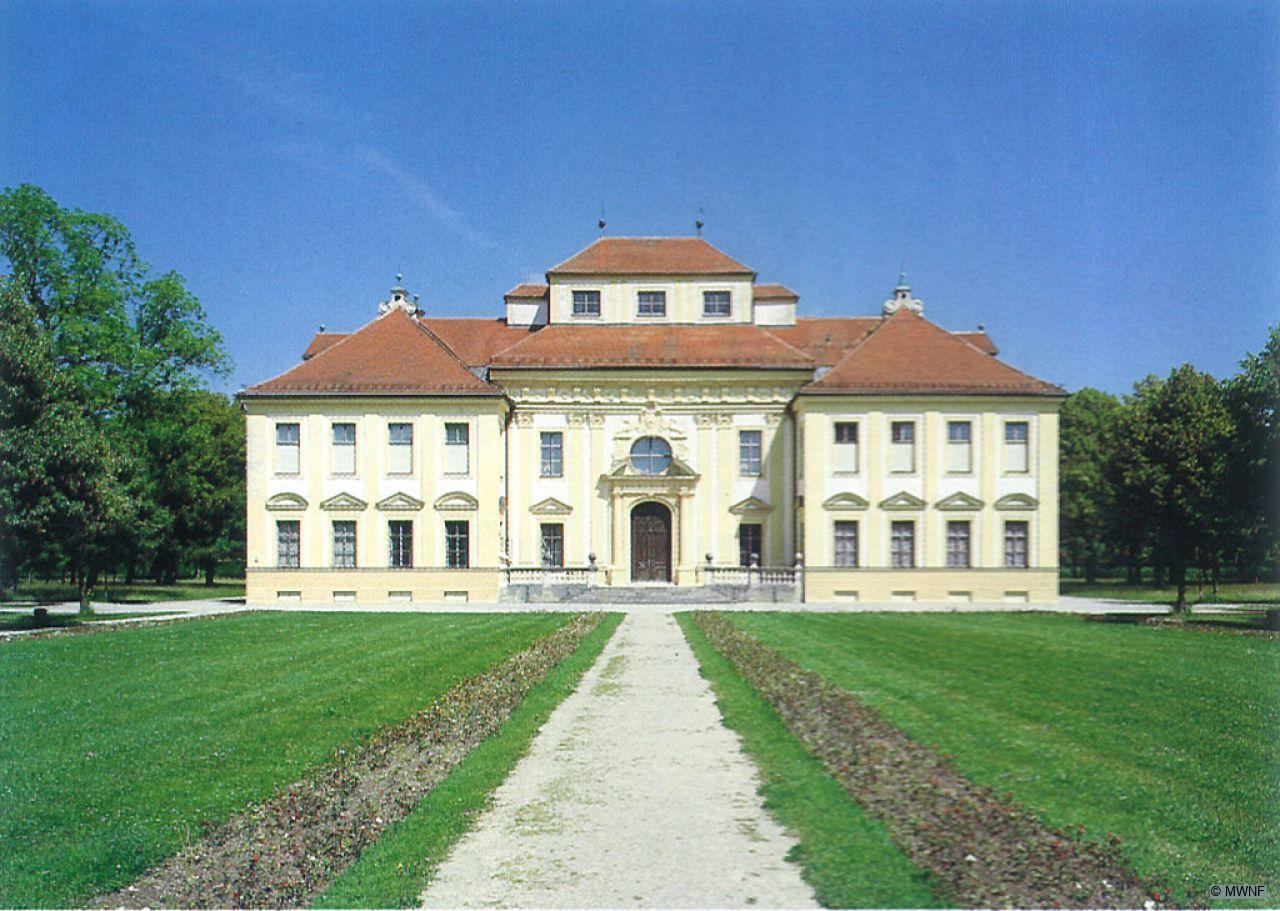
New Schleissheim Palace and Lustheim Palace
Location:
Oberschleißheim (nearby Munich), Upper Bavaria, Germany
Schloss- und Gartenverwaltung Schleißheim
Max-Emanuel-Platz 1
85764 Oberschleißheim
www.schloesser-schleissheim.de
T : +49 (0)89 31 58 72 0
F : +49 (0)89 31 58 72 50
E : sgvschleissheim@bsv.bayern.de
Bavarian Administration of State-owned Palaces, Gardens and Lakes (Responsible Institution)
Date:
1684–1688: Lustheim Palace;
1701–1726: New Schleißheim Palace
Artists:
Lustheim Palace architecture: Enrico Zuccalli (c. 1642–1724); frescos: Antonio Bernardi [n.d.], Francesco Rosa [n.d.], Giovanni Antonio Trubillo (d. 1721), Johann Anton Gumpp (1654–1719)New Schleissheim Palace architecture: Enrico Zuccalli (c. 1642–1724), Joseph Effner (1687–1745); stuccowork: Johann Baptist Zimmermann (1680–1758), Charles Dubut (c. 1687–1742), Giuseppe Volpini (d. 1729); fresco and fireplace painting: Jacopo Amigoni (c. 1682–1752), Thomas Christian Wink (1738–1797); joinery/ornamental carving: Johann Adam Pichler (c. 1690–1761); battle-scene paintings: Joachim Beich (1665–1748)
Denomination / Type of monument:
Secular architecture (palace, hunting seat and summer residence)
Patron(s):
Bavarian Electors: Maximilian II Emanuel (gov. 1680–1726); Karl Albrecht (gov. 1726–1725); Max III Joseph (gov. 1745–1777)
History:
Construction of Lustheim Palace began in 1684 under Bavarian Elector Max II Emanuel probably in anticipation of his marriage to the Emperor’s daughter, Maria Antonia, in 1685. The structure was complete by 1689. During construction of Lustheim Palace, Enrico Zuccalli began drawing the plans for the New Palace, and after redesign, the cornerstone was put in place in 1701.
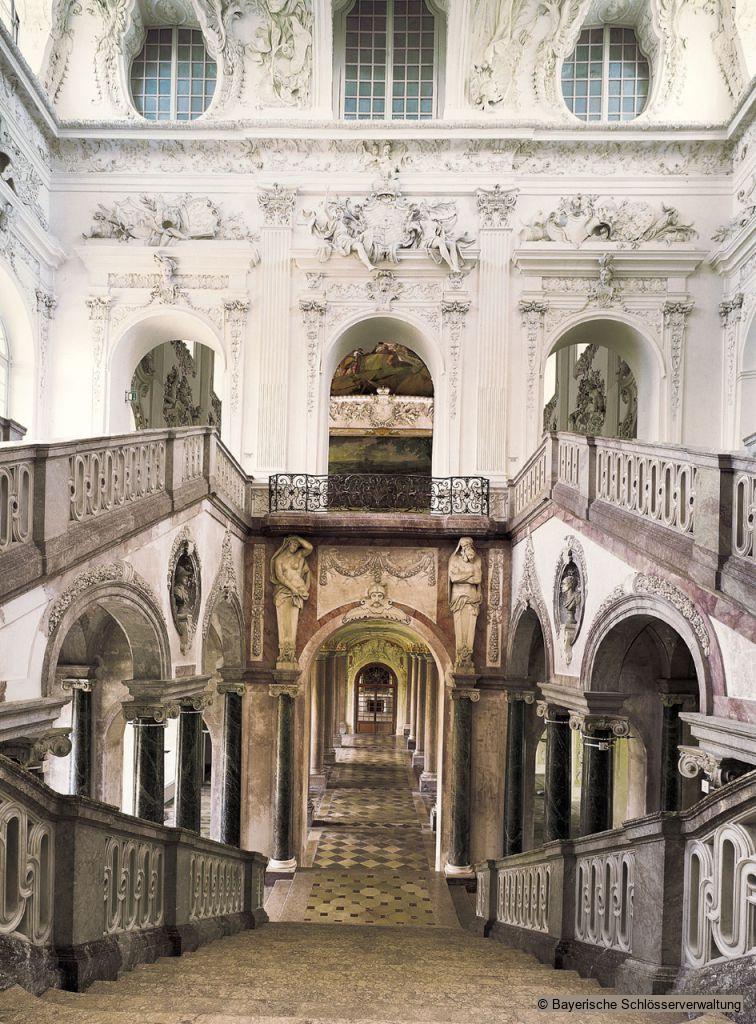
Building work stopped briefly in 1704 because of the War of the Spanish Succession. After Max Emanuel’s return from exile in 1715, the new court architect, Joseph Effner, began decoration of the interior in 1719 following French models. Enrico Zuccalli’s design for a novel type of ceremonial staircase was maintained, but then, as the financial situation worsened, plans had to be restrained. The construction was never completed following the death of Bavarian Elector Max II Emanuel in 1726.
Description:
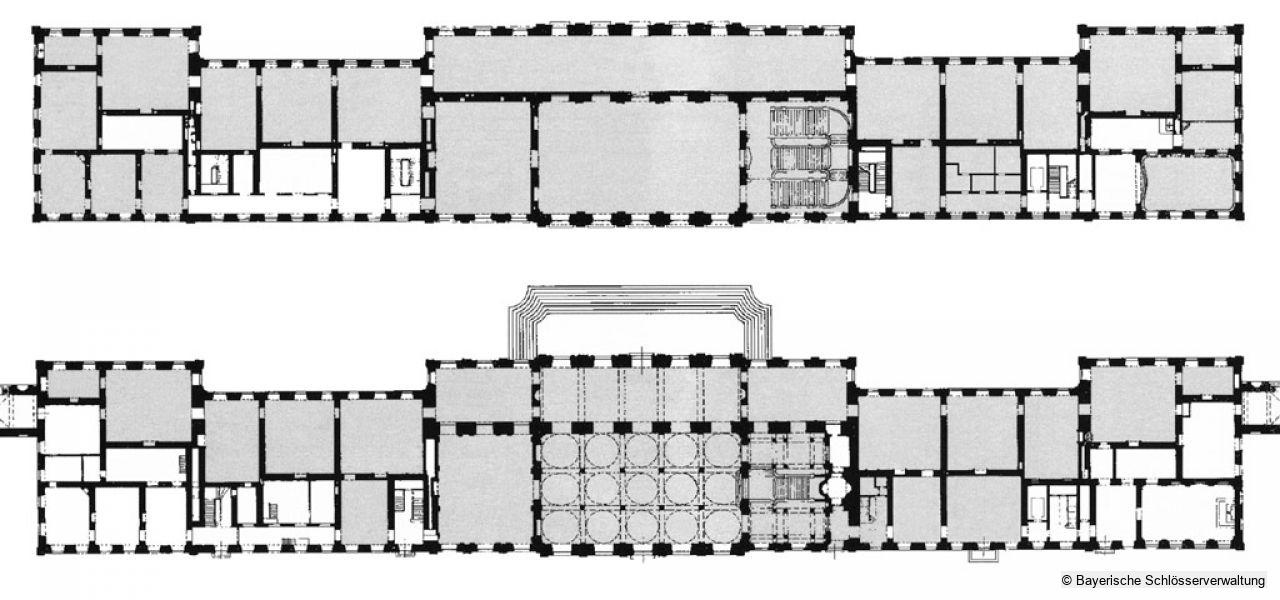
Lustheim Palace, designed in the style of an Italian villa and axially aligned with the Old Palace in a westward direction, has a rectangular ballroom, protruding side-wings with residential rooms, as well as a belvedere above the central wing. The frescos and paintings are all that remain of the originally richly furnished and colourfully decorated interior. According to the concept of a hunting residence, the myth of Diana is illustrated in a number of the ceiling frescos. Her elevation to goddess of the hunt is illustrated on the ceiling of the Banqueting Hall, complemented by other mythological scenes related to her, and surrounded by impressive illusionary architectural features. Today the palace holds a large collection of Meissen porcelain.
The New Palace was designed to provoke comparison with Versailles and Schönbrunn Palace, incorporating numerous splendid residential rooms and festivity halls, and with its pompous Roman Baroque façade, corresponding to Max Emanuel’s ever-growing claim to power.
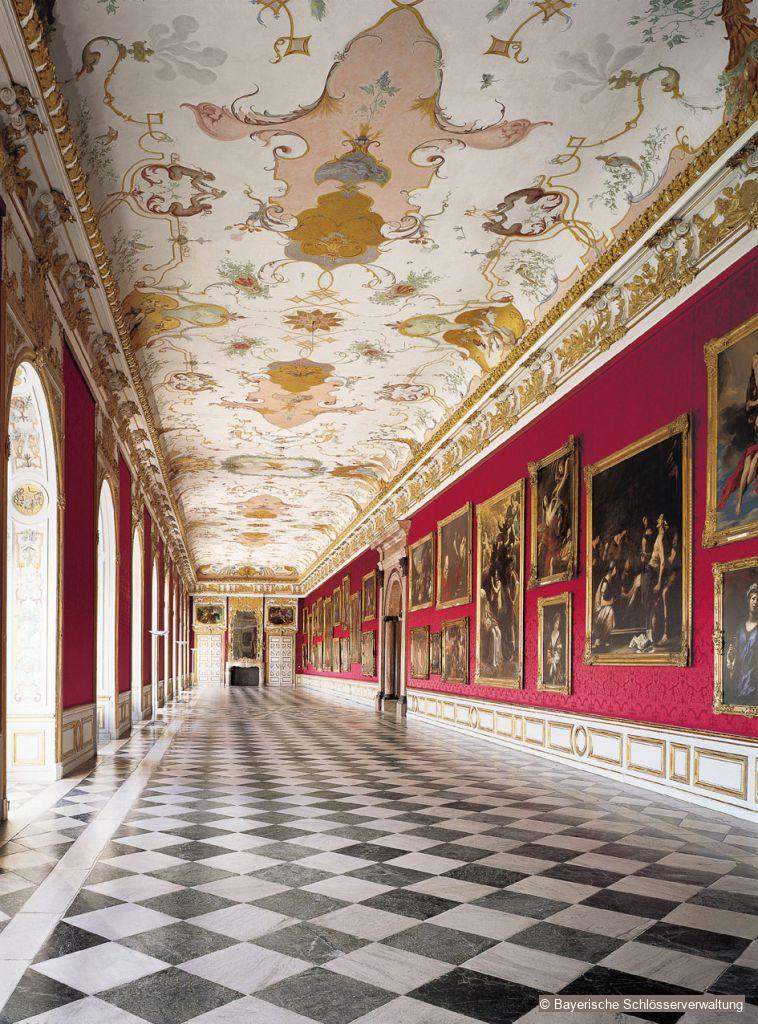
The impressive summer residence of Elector Max II Emanuel ranks among Bavaria’s major secular Baroque buildings incorporating the Old and New Schleissheim Palace, the hunting seat Lustheim, as well as the palace park and canal system. Competing against Versailles, near Paris, and Schönbrunn Palace, near Vienna, the Elector ordered the construction of a sumptuously decorated palace for which he commissioned famous artists, despite the difficult financial and political situation at that time. Among the highlights are the Great Hall and the Great Gallery. In the latter, according to the patron’s intentions, are displayed masterpieces of European Baroque painting.
How Monument was dated:
From archival sources.
Special features
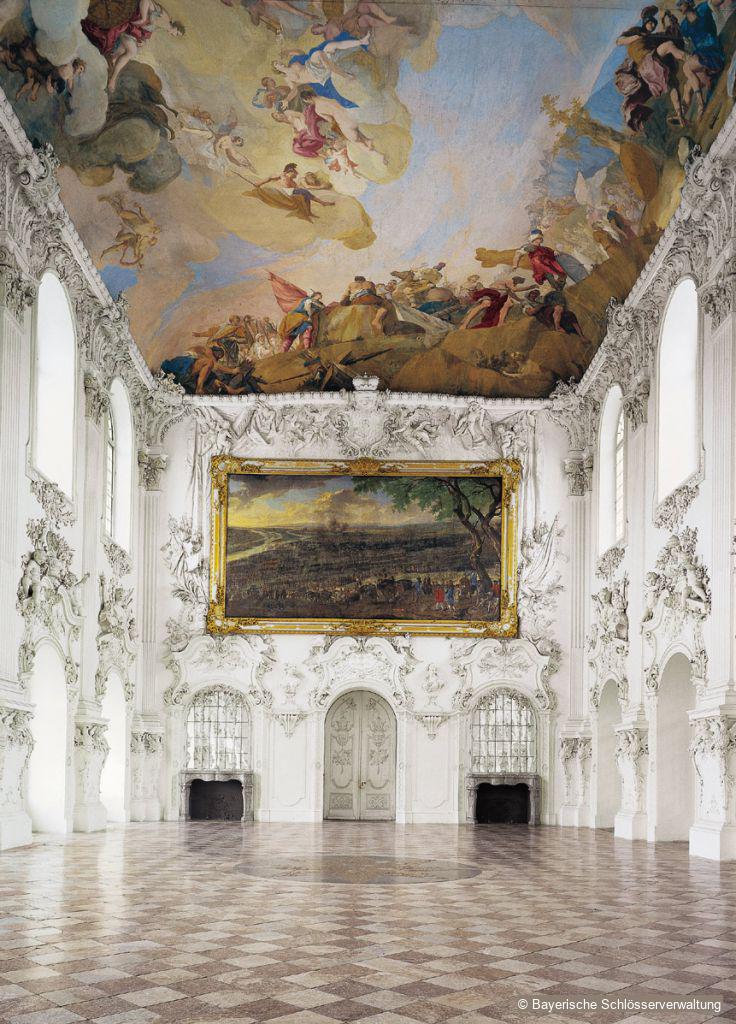
Ceiling fresco of the Great Hall
New Palace, first floor of the central wing
About 1721
Jacopo Amigoni (c.1682–1752)
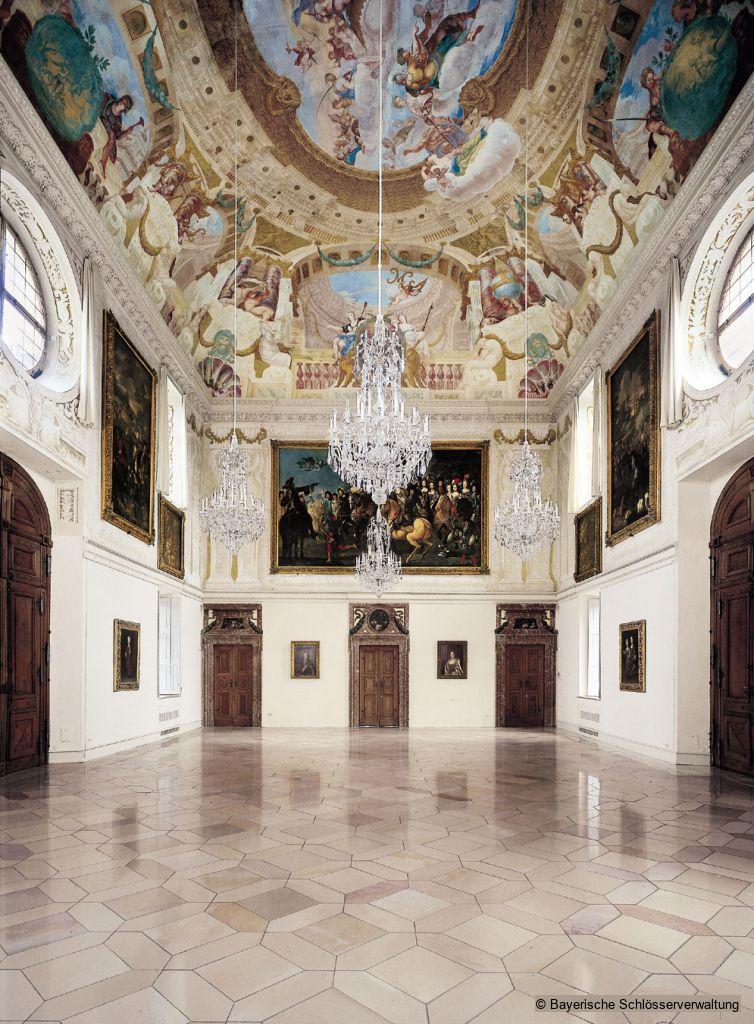
The ceiling fresco of the Great Hall was once the world’s largest. Illustrating the fight between Aeneas and Turnus for the hand of the king’s daughter Lavinia, Aeneas, it is sometimes said resembles the Elector Max II Emanuel. The use of a painted landscape background instead of trompe-l’oeil architectural decoration was novel at the time.

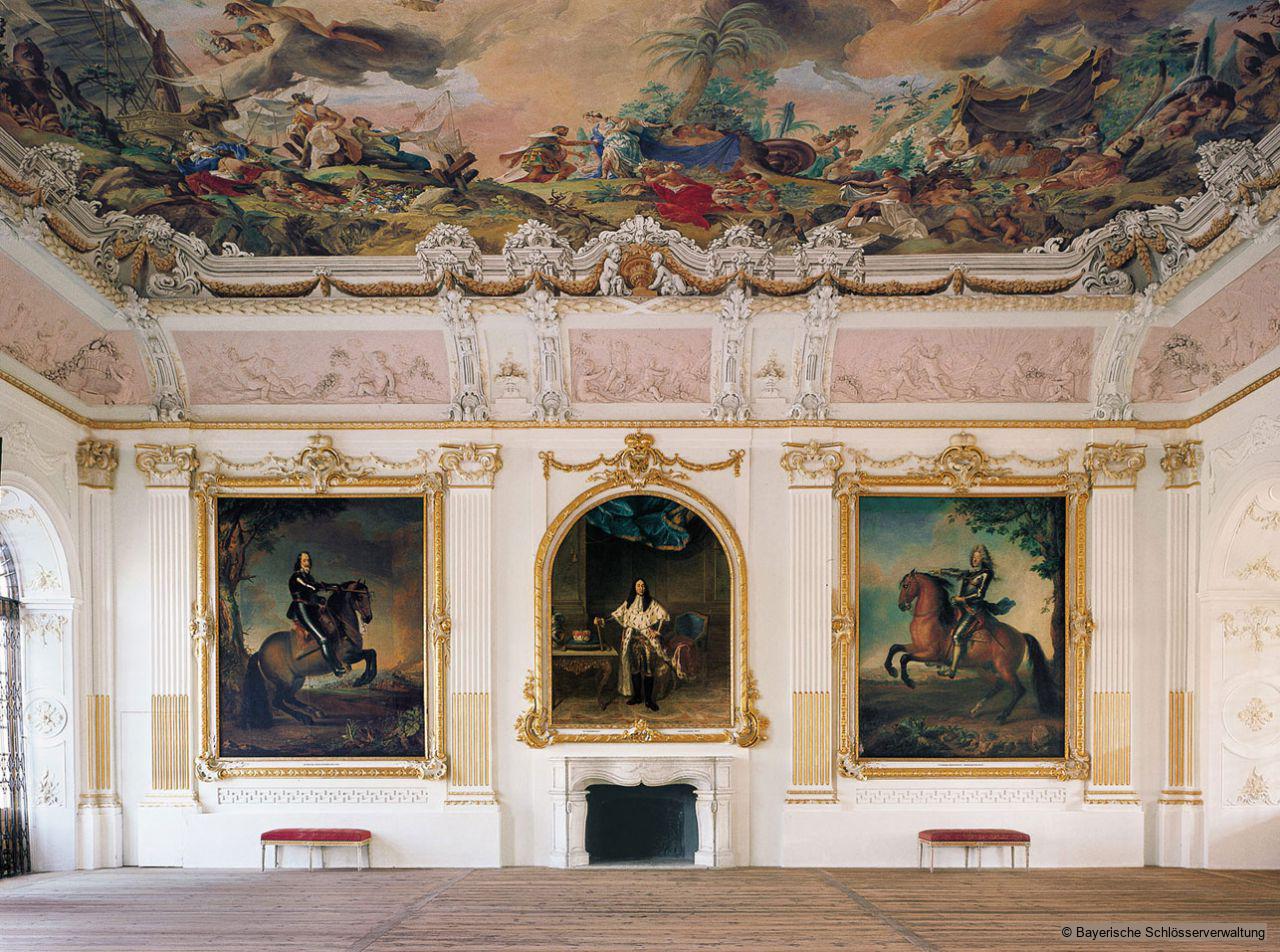
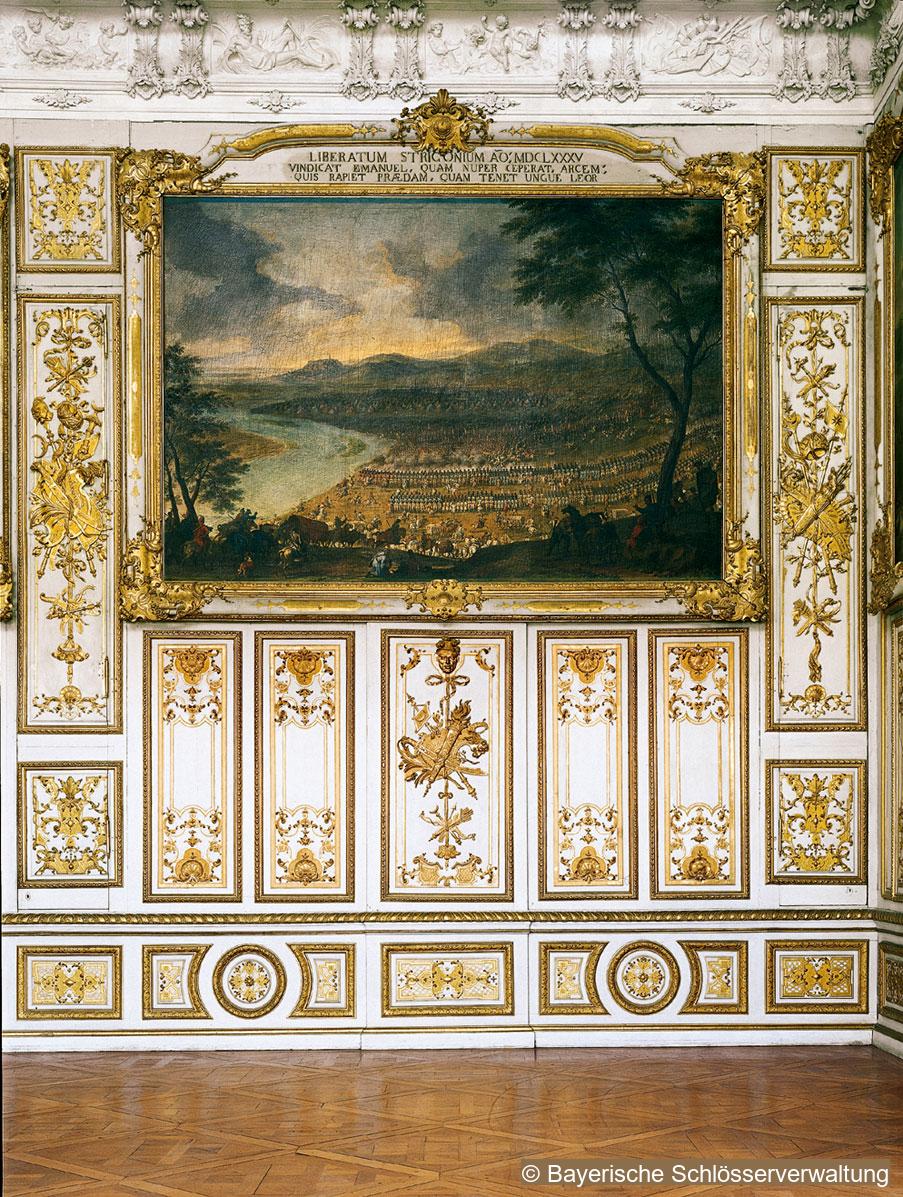
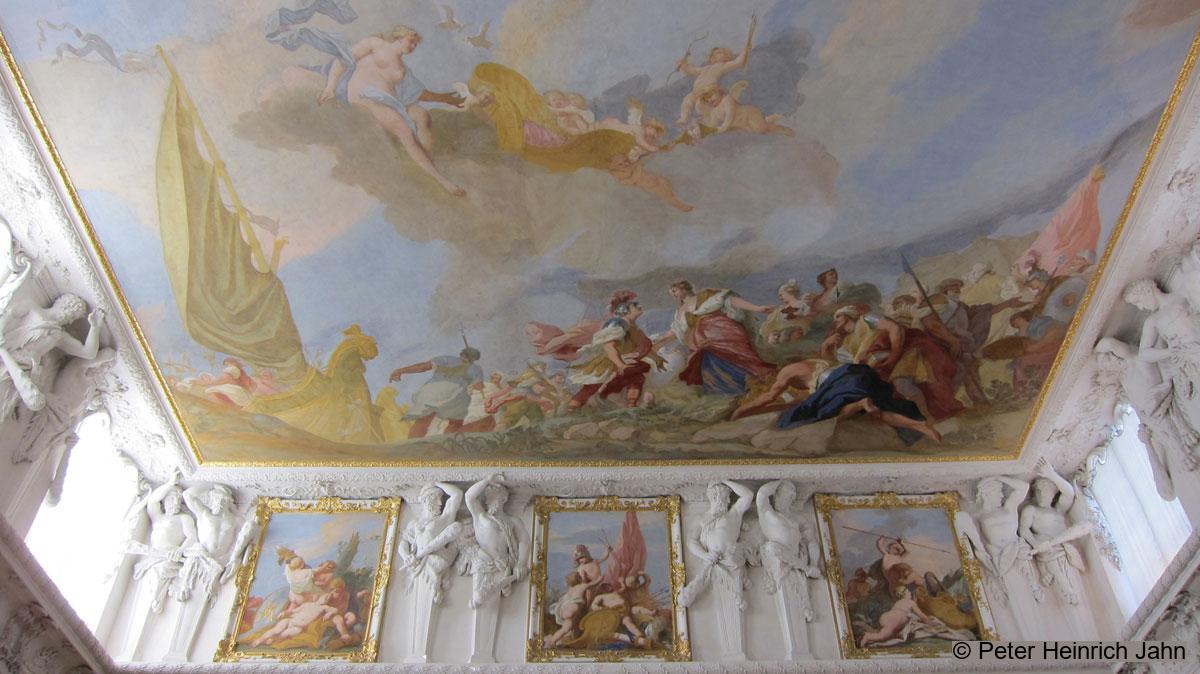
Victory Hall
New Palace, first floor of the central wing
1723–1725
Johann Adam Pichler (c. 1690–1761); Charles Dubut (c. 1687–1742): Jacopo Amigoni (c. 1682–1752); Joachim Beich (1665–1748)
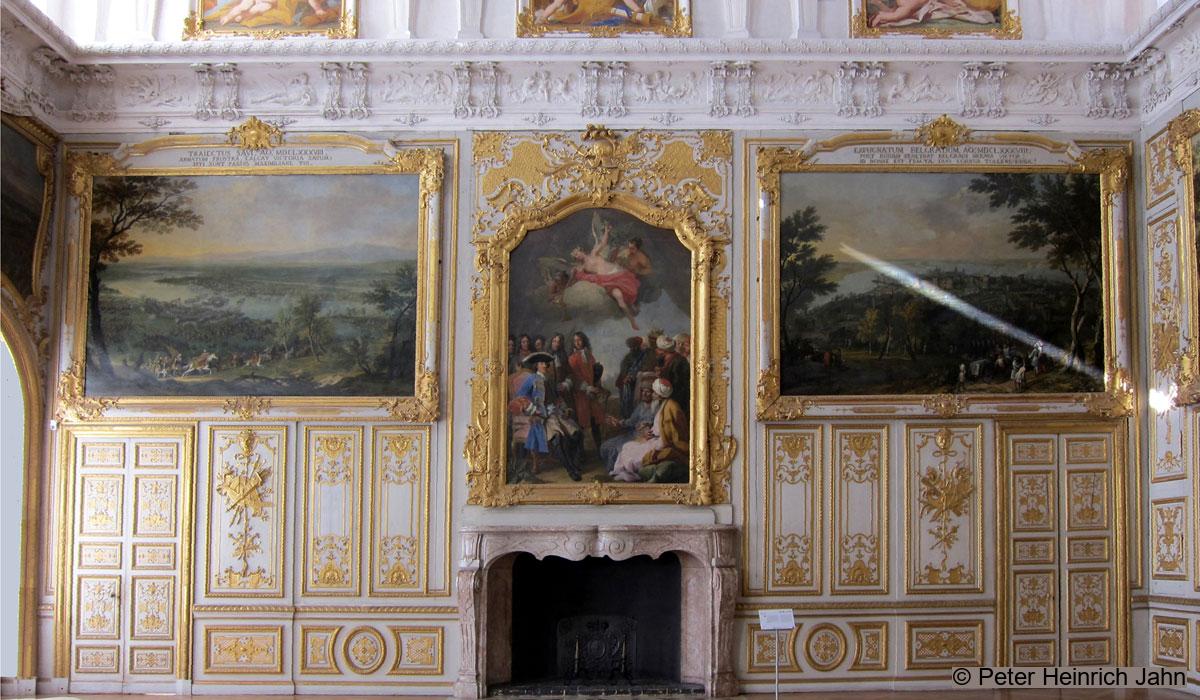
The Regency-style panelled hall shows in its paintings, reliefs, concave moulding and ceiling fresco scenes of war, which refer to the Elector’s military success in the Turkish Wars. Scenes of the unsuccessful War of the Spanish Succession were deliberately avoided.
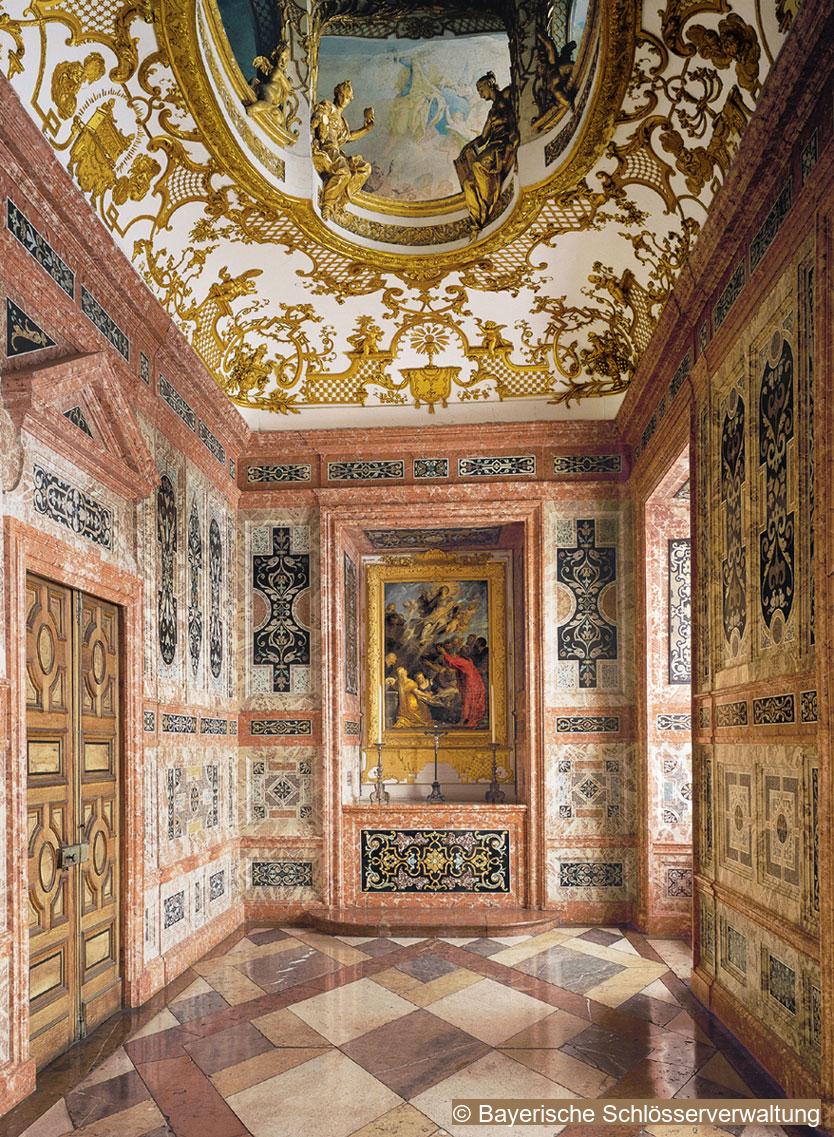
Electress’s Private Chapel
New Palace, first floor of the north wing
About 1725
Panelled with scagliola marble, the chapel flaunts its sumptuous ornamental decoration. To great effect, the ceiling, decorated with interlacing stuccowork, opens into an oval lantern displaying a fresco of heaven. The valuable altarpiece comes from the workshop of Peter Paul Rubens.
Ceiling fresco of the Dining Room
New Palace, ground floor of the central wing
About 1773
Thomas Christian Wink (1738–1797)
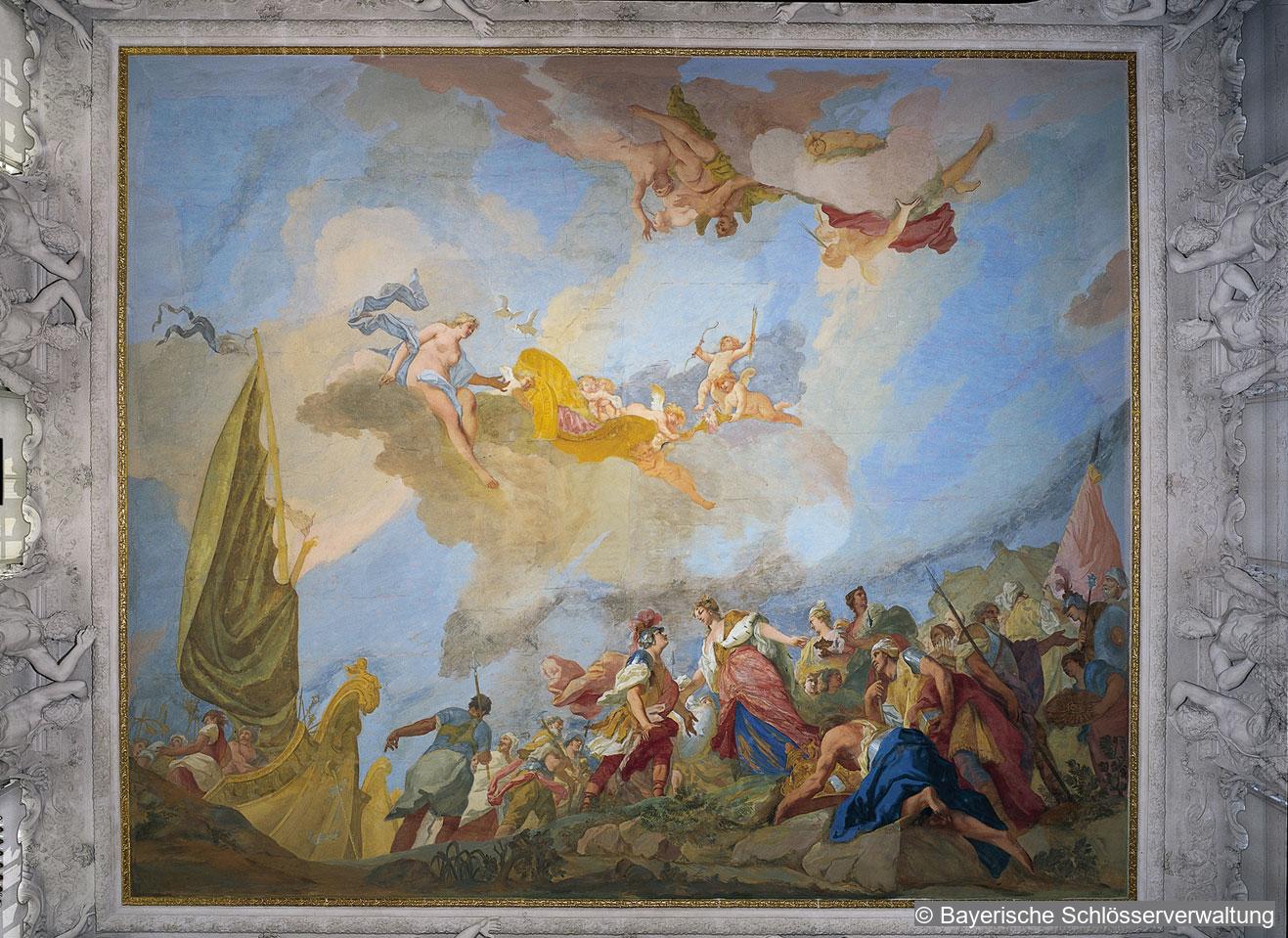
The enchanting fresco on the ceiling of the Dining Room shows Odysseus’ arrival at the nymph Calypso’s island guarded in heaven by gods. It was painted primarily during the reign of Max III Joseph.
Selected bibliography:
Schlossanlage Schleißheim (Amtlicher Führer, Hg. Bayerische Verwaltung der staatlichen Schlösser, Gärten und Seen) (Official guide, ed. Bavarian Administration of State-owned Palaces, Gardens and Lakes), Munich 2005.
Krückmann, P. O. and Salley, V., Schleißheim, Munich/London/New York 2001.
Schmid, E. D., Schloß Schleißheim. Die barocke Residenz mit Altem Schloß und Schloß Lustheim, Munich 1980.
Citation of this web page:
Caroline Straube, Heidi Thiede "New Schleissheim Palace and Lustheim Palace" in "Discover Baroque Art", Museum With No Frontiers, 2026.
https://baroqueart.museumwnf.org/database_item.php?id=monument;BAR;de;Mon12;1;en
MWNF Working Number: DE3 01
RELATED CONTENT
On display in
Exhibition(s)
Discover Baroque Art
Absolutism | The spread of the Official style Ephemera, Festivals and Theatrical Representation | “All the world is a stage” Travelling and Exoticism | Travelling artists and patrons and the exchange of artworksDownload
As PDF (including images) As Word (text only)