

 Back
Back
 Add to My Collection
Name of Monument:
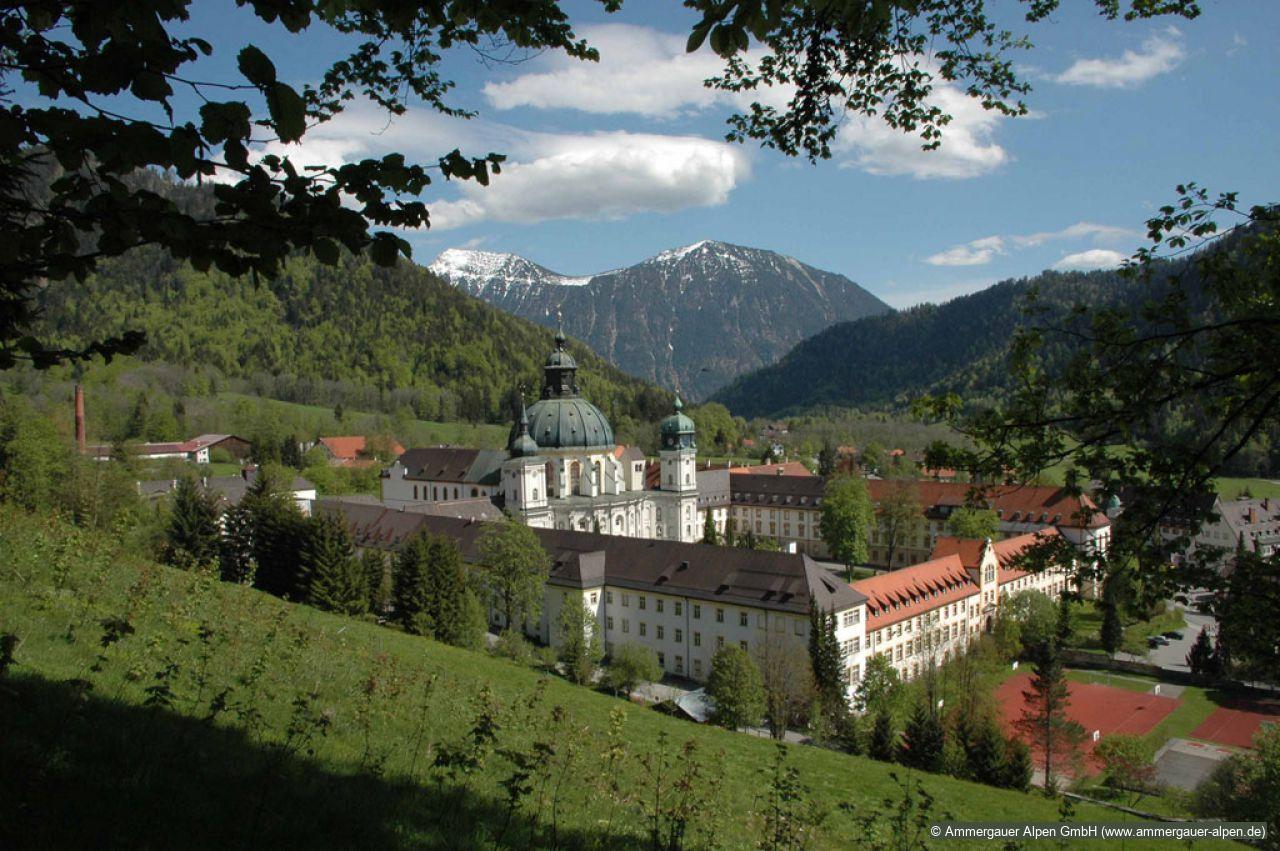
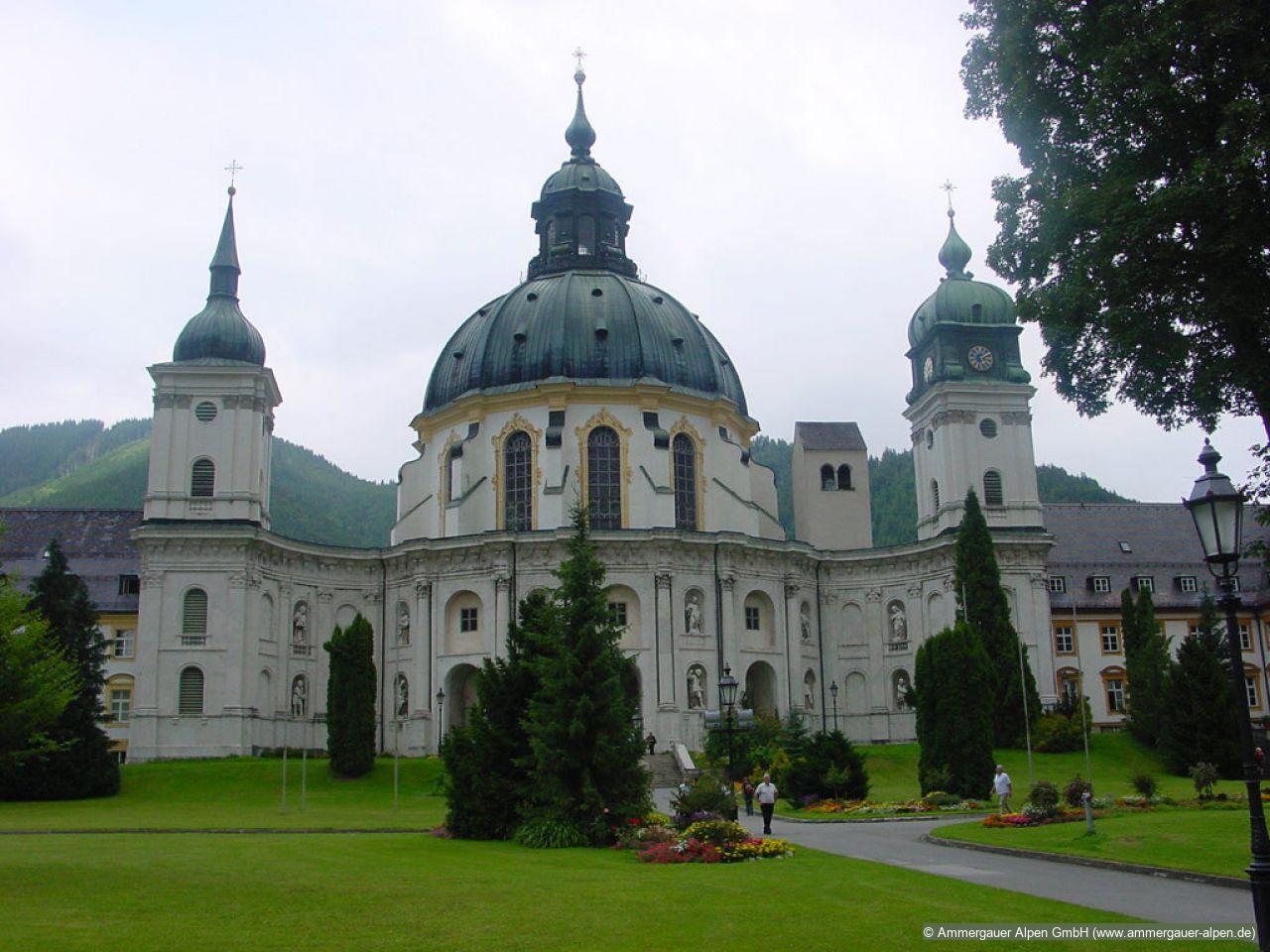
Catholic Benedictine Abbey and Pilgrimage Church of St. Mary
Also known as:
Monastery Church Ettal
Location:
Ettal, Upper Bavaria, Germany
Kaiser-Ludwig-Platz 1
82488 Ettal
T : +49 (0)88 22 74 0
F : +49 (0)88 22 74 22 8
E : Kloster-ettal@web.de
Date:
1710–1726: façade and new construction of the chancel; 1744–1753: completion of the domed structure; 1769–1790: furnishing of the chancel
Artists:
Architecture: Enrico Zuccalli (c. 1642–1724), Joseph Schmuzer (1683–1752); frescos: Johann Jakob Zeiller (1710–1783), Martin Knoller (1725–1804); stucco: Johann Georg Üblher (1700–1763), Franz Xaver Schmuzer (1713–1775); side altars: Johann Baptist Straub (1704–1784); reliefs in the chancel: Roman Anton Boos (1733–1810); niche figures on the facade: Ägid Verhelst (1696–1749)
Denomination / Type of monument:
Ecclesiastical architecture (abbey church)
Patron(s):
Abbots Placidus II Seitz (gov. 1709–1736), Benedikt III Pacher (gov. 1739–1759), Bernhard II. von Eschenbach (gov. 1759–1779), Othmar II. Seibold (gov. 1779–1787), Alphons Haffner (gov. 1787–1803)
History:
The Benedictine Abbey was founded as votive by Emperor Ludwig (Louis) the Bavarian in 1330 and was consecrated in 1370. Under Abbot Placidus II Seitz large scale changes to the monastery buildings were initiated, and in 1710, the ceremonial laying of the cornerstone for the church’s reconstruction based on the existent medieval central-plan building took place. Enrico Zuccalli prepared the architectural plans and set to work on the construction of the new facade with its to-date unfinished towers. The high altar was consecrated in 1726. After a disastrous fire in 1744, which destroyed the greater part of the alterations, as of 1745, construction continued under the direction of the Wessobrunn master builder Joseph Schmuzer.
Description:
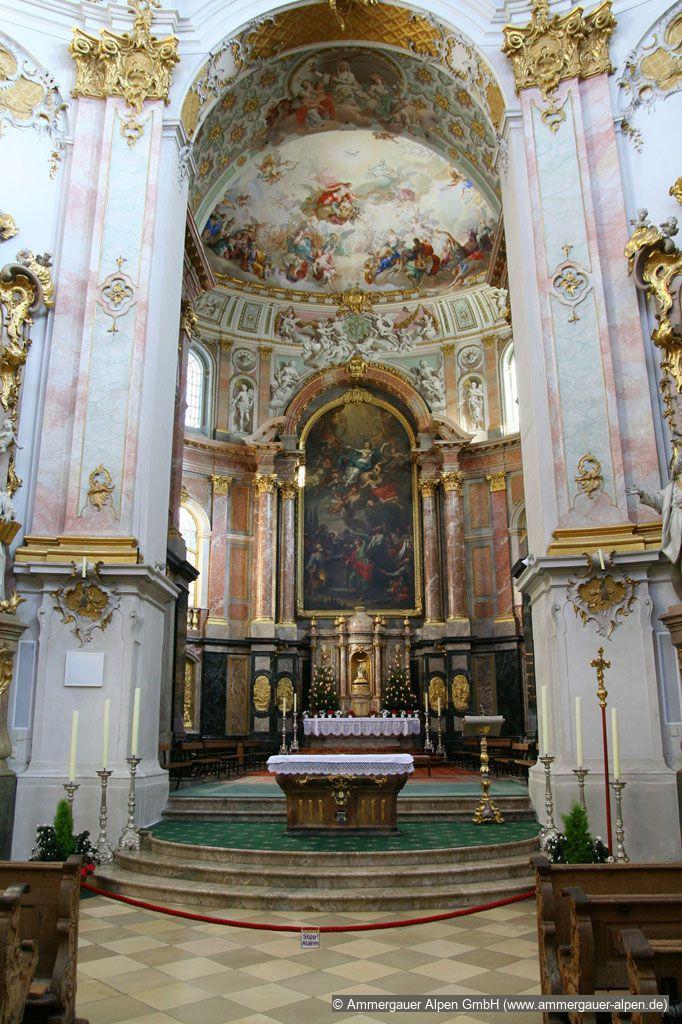
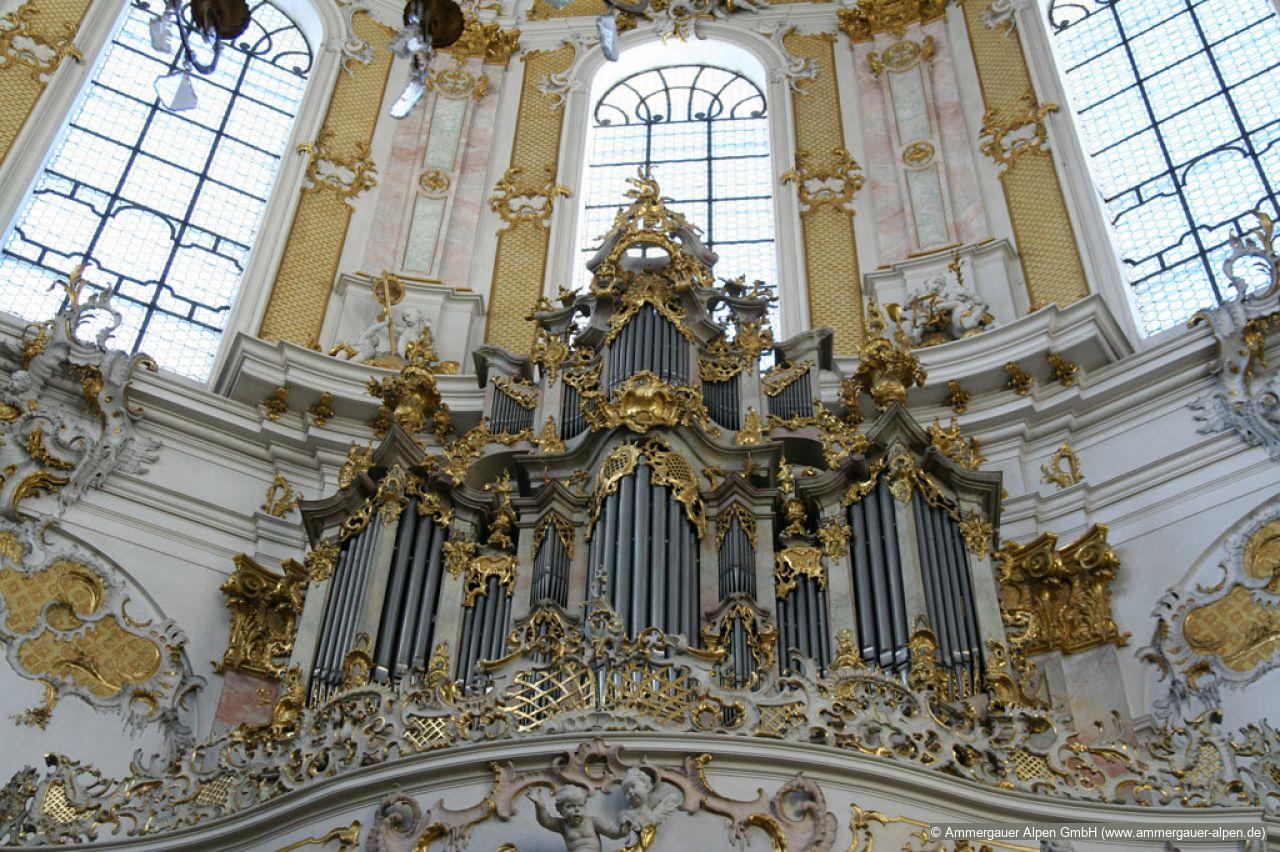
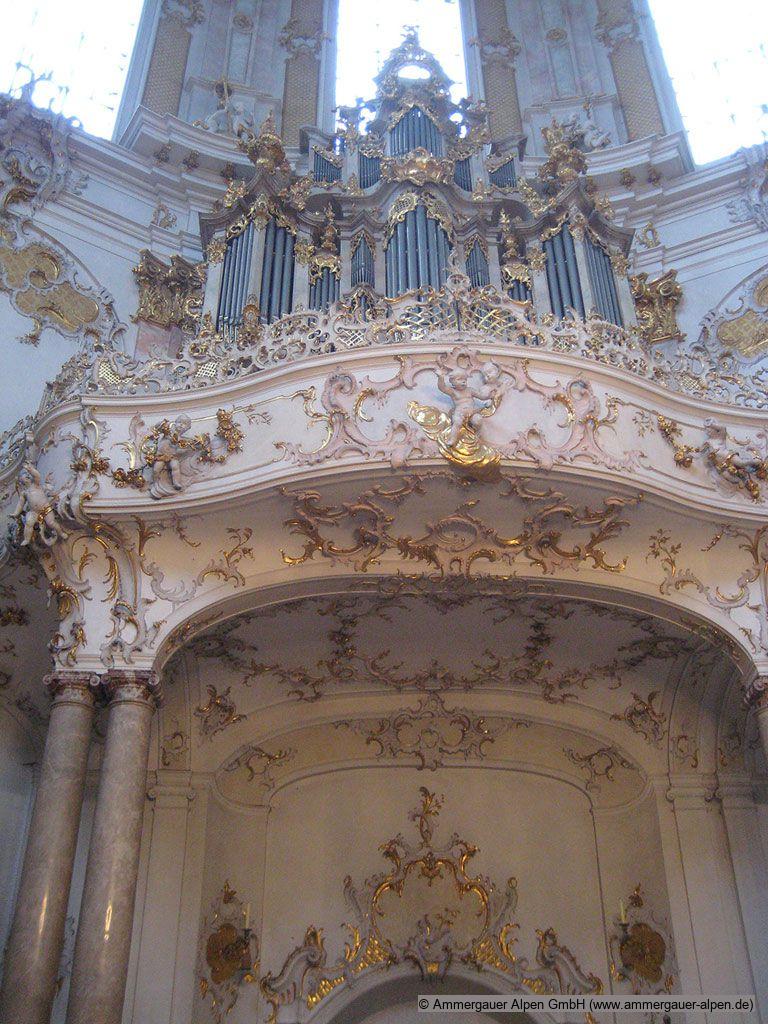
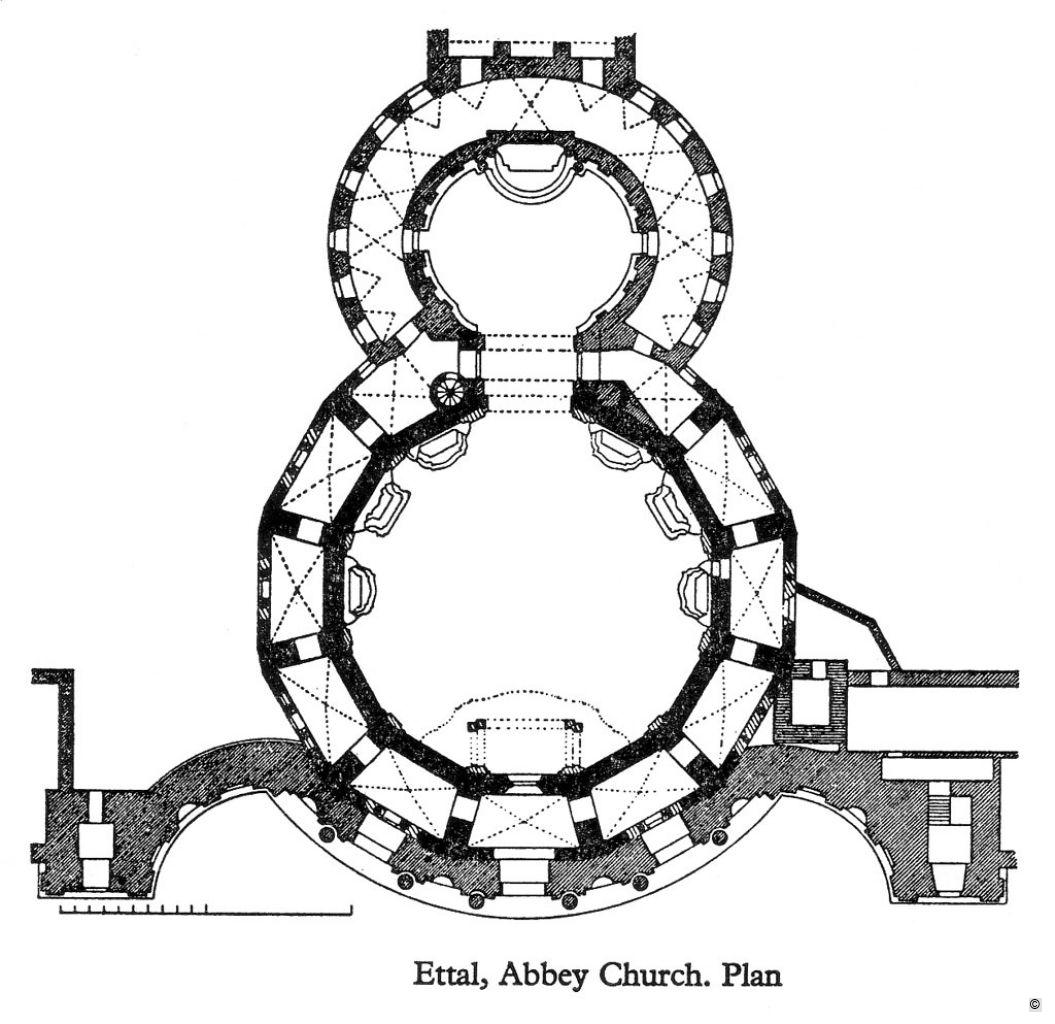
The two-storey facade is a paraphrase of Bernini's Louvre-project and was designed by Enrico Zuccalli, the electoral court architect and Bernini scholar. The niche-figures of the apostles are by Ägid Verhelst, these are enclosed within voluminous Baroque curves and a fenestrated and lantern-crowned dome construction which soars mightily above them. The dodecagonal central-plan building and the easterly attached new chancel have a two-storey ambulatory, which originates partly from the era of the Gothic construction. On the inside, a lavishly stucco-decorated organ loft is located over the entrance portal. The wall spaces have in each case a shallow niche with an altar, crowned with rocaille-cartouches, above which high windows lead the eye to the dome. Luxuriant stucco decorations with capricious rocaille, coquillage and foliage are ascribed to Johann Georg Üblher and Franz Xaver Schmuzer. The elliptical-shaped Louis XVI chancel, with its rational-coolish marble work, forms a contrast to the main room and includes the three-part high altar with the medieval miraculous picture. Installed at the basement-level of the chancel rotunda, four gilded, wood carved reliefs by the Roman Anton Boos illustrate scenes of the Life of Christ.
View Short DescriptionThe Baroque architecture of the pilgrimage church of St. Mary and its splendid Rococo decoration add up to a complex masterpiece, created by the architects Enrico Zuccalli and Joseph Schmuzer, and based on an existent medieval central-plan building. Carved altarpieces of Johann Baptist Straub and the large ceiling fresco by Johann Jakob Zeiller crown the interior decoration which contrasts with the coolish Louis XVI style of the chancel.
How Monument was dated:
Archival sources.
Special features
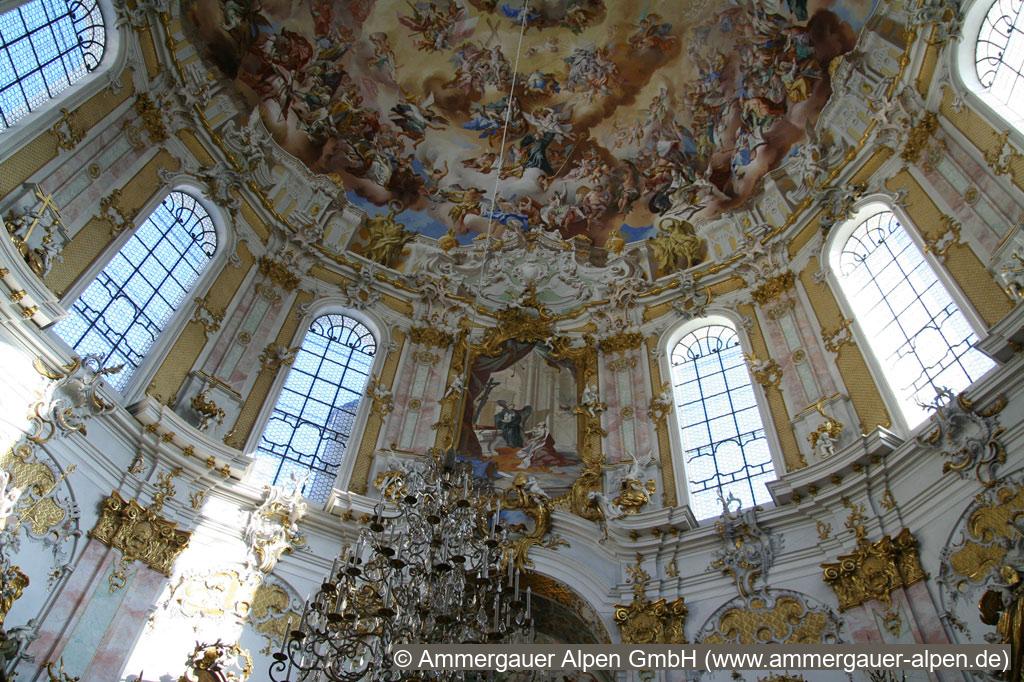
Glory of the Benedictine Order
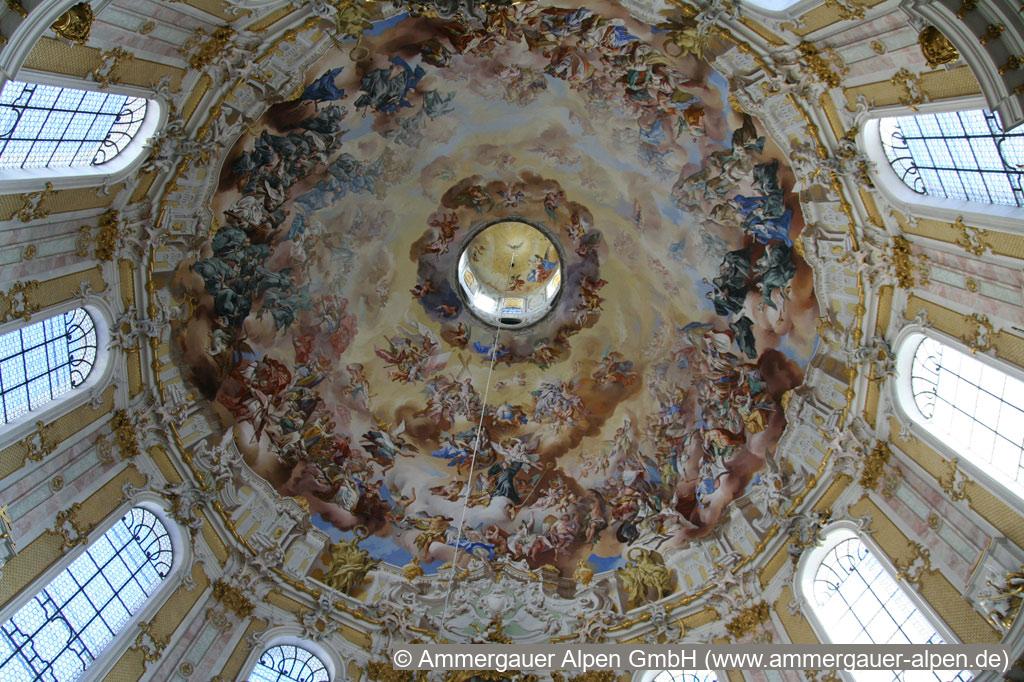
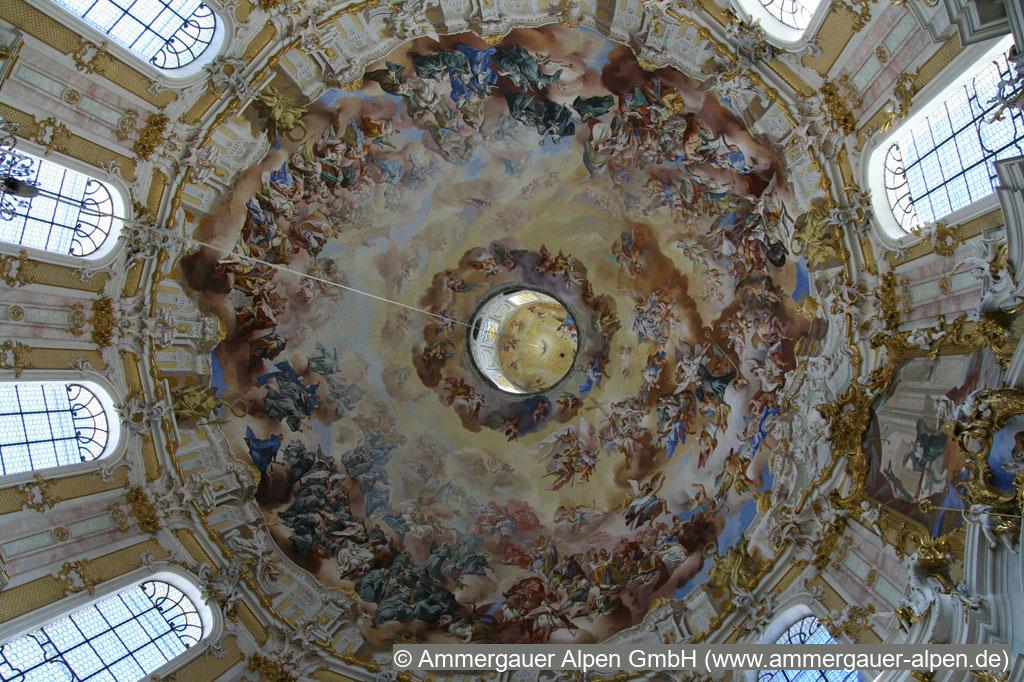
Main dome
1752
Johann Jakob Zeiller (1710–1783)
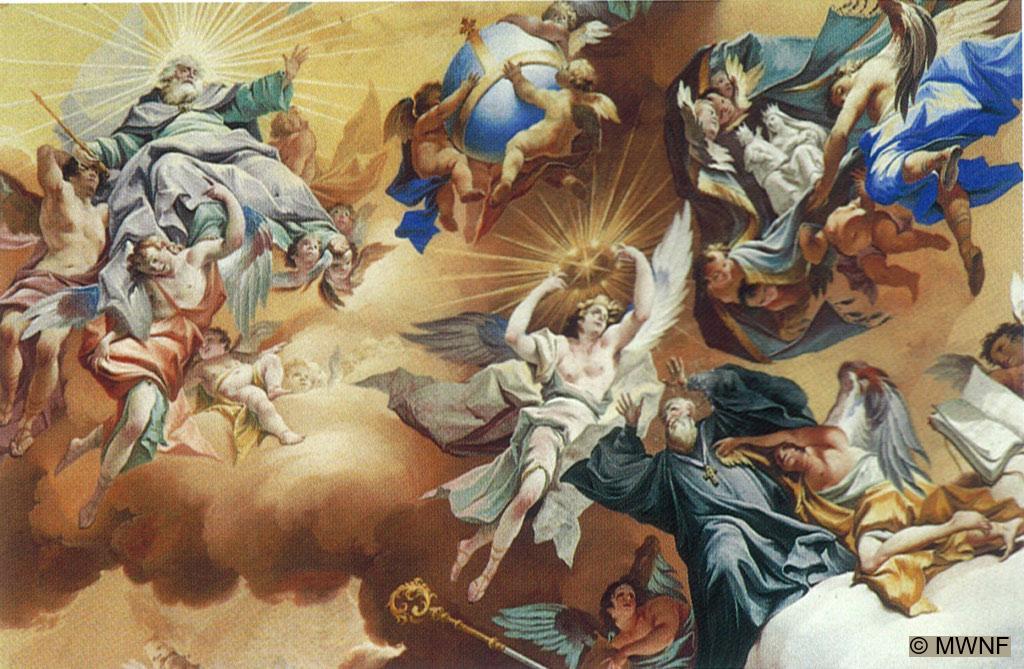
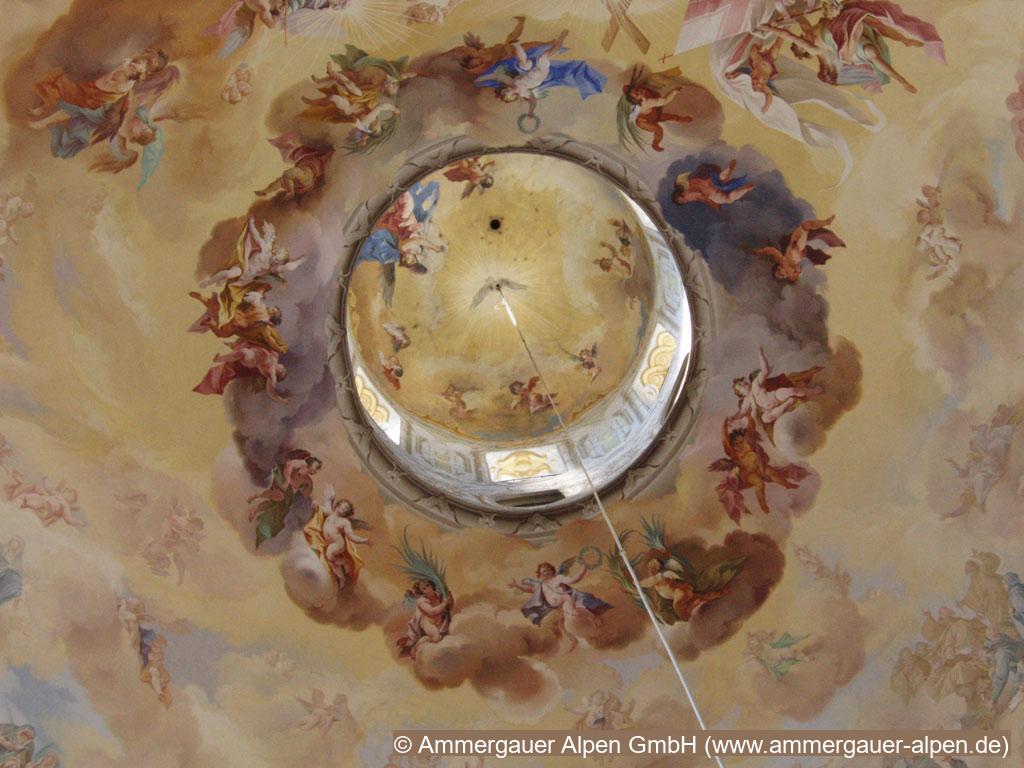
The large dome fresco glorifies, approved by the Holy Trinity, the mission of the Benedictine Order in terms of God’s plan for salvation and includes several hundred figures.
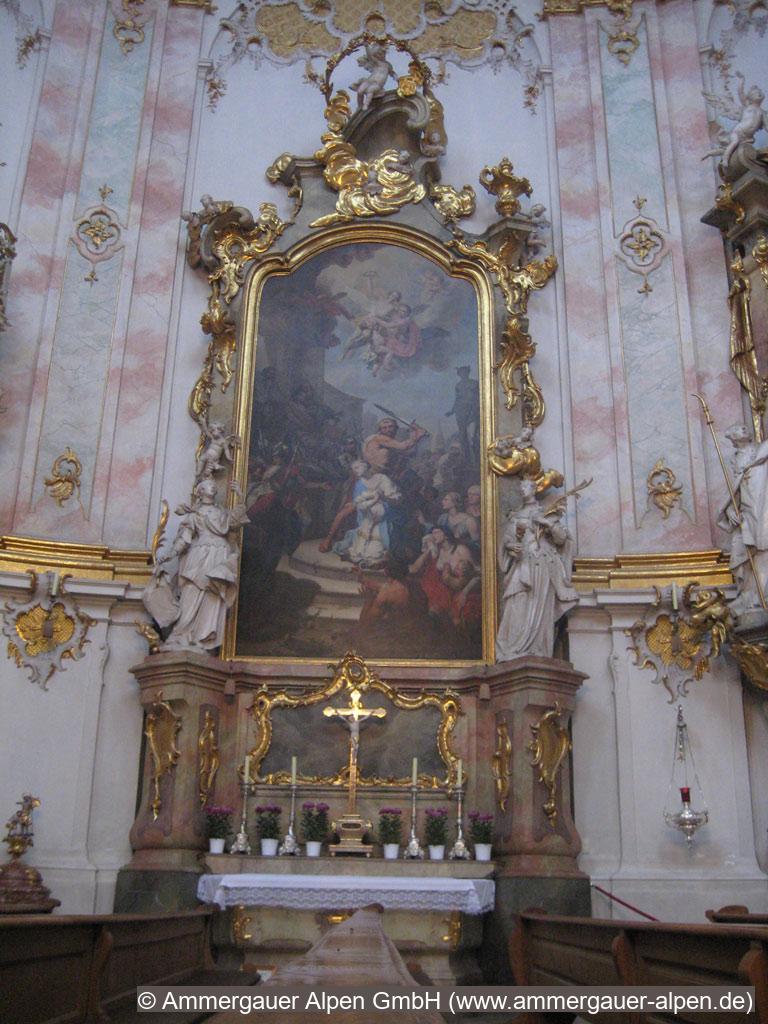
Side altars
Niches of the main room
1757–1762
Johann Baptist Straub (1704–1784); Johann Jakob Zeiller (1710–1783); Martin Knoller (1725–1804)
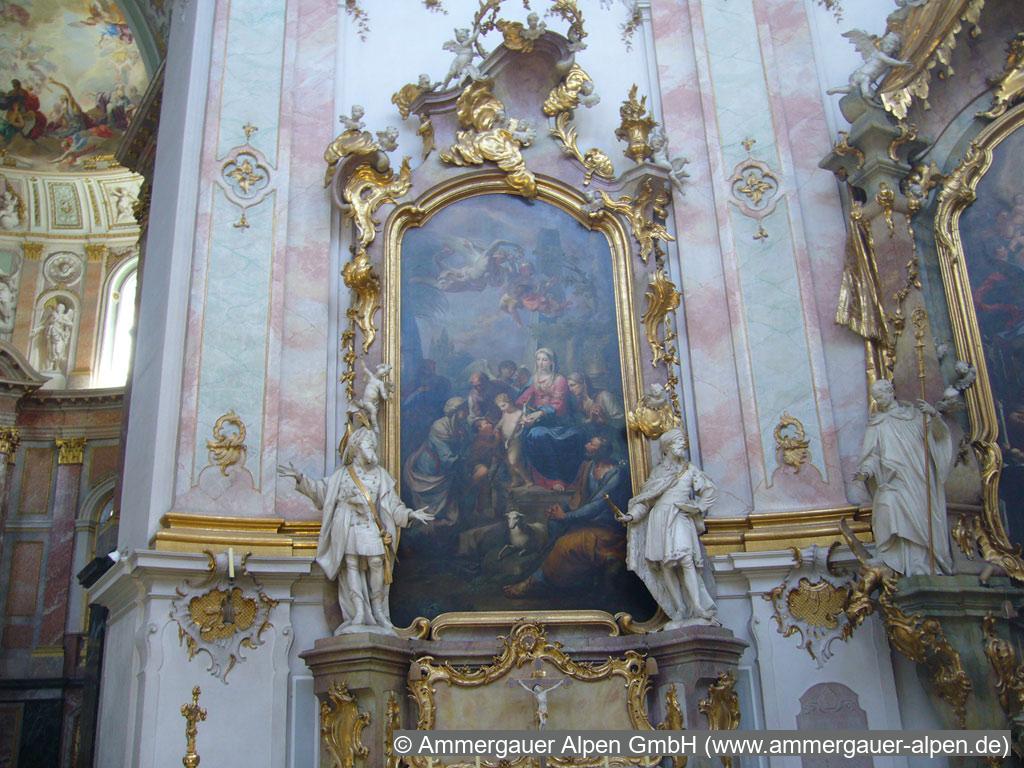
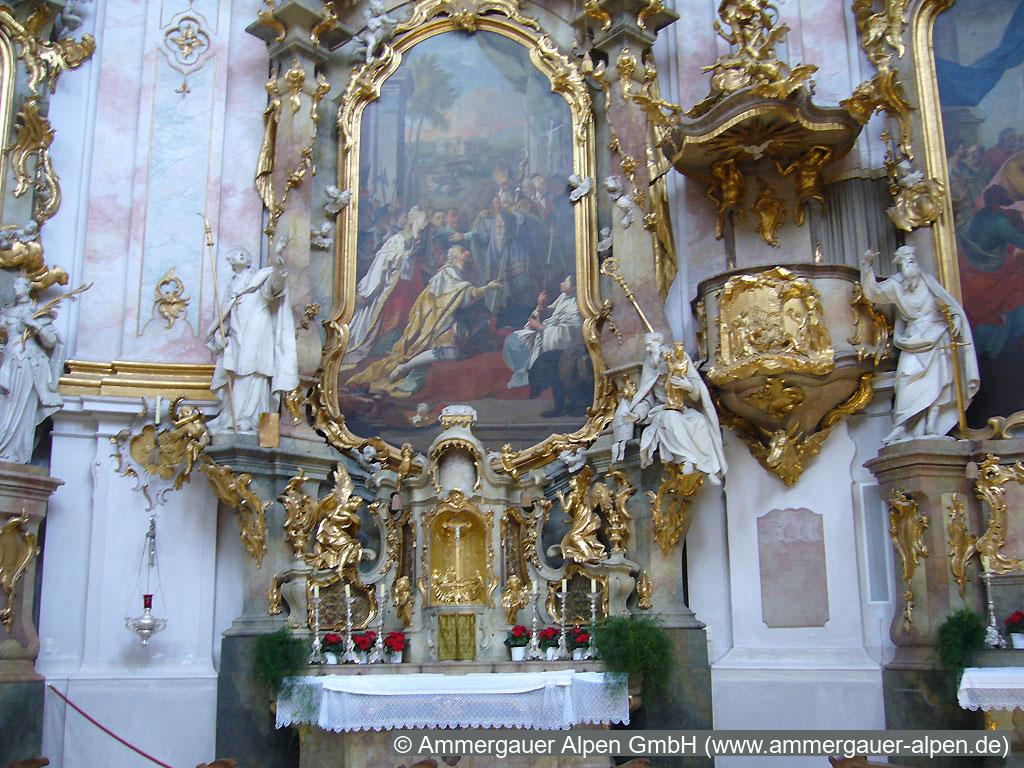
Six virtuosically carved altars mounted in the niches flanking the chancel arch depicting patrons (from left to right: St. Catherine, St. Corbinian, Holy Apostles, Holy Family, St. Benedict, St. Sebastian) as well as the pulpit, are regarded as masterpieces of Johann Baptist Straub. The altarpieces, flanked by sculptures, were made among others by Martin Knoller and Johann Jakob Zeiller.
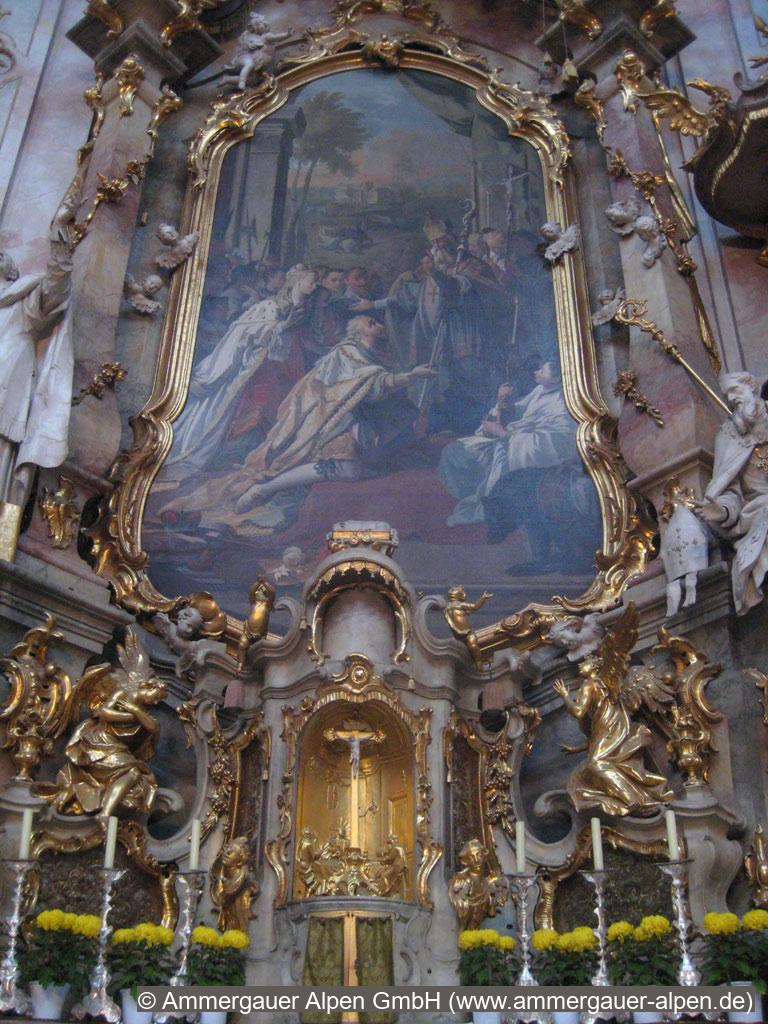
Presentation of the Miraculous Picture
Over the chancel arch
1752
Johann Jakob Zeiller (1710–1783)
The fresco depicts the Abbey’s foundation legend, as in Pisa the donor Emperor Ludwig (Louis) the Bavarian receives the miraculous picture from an angelic-looking monk.
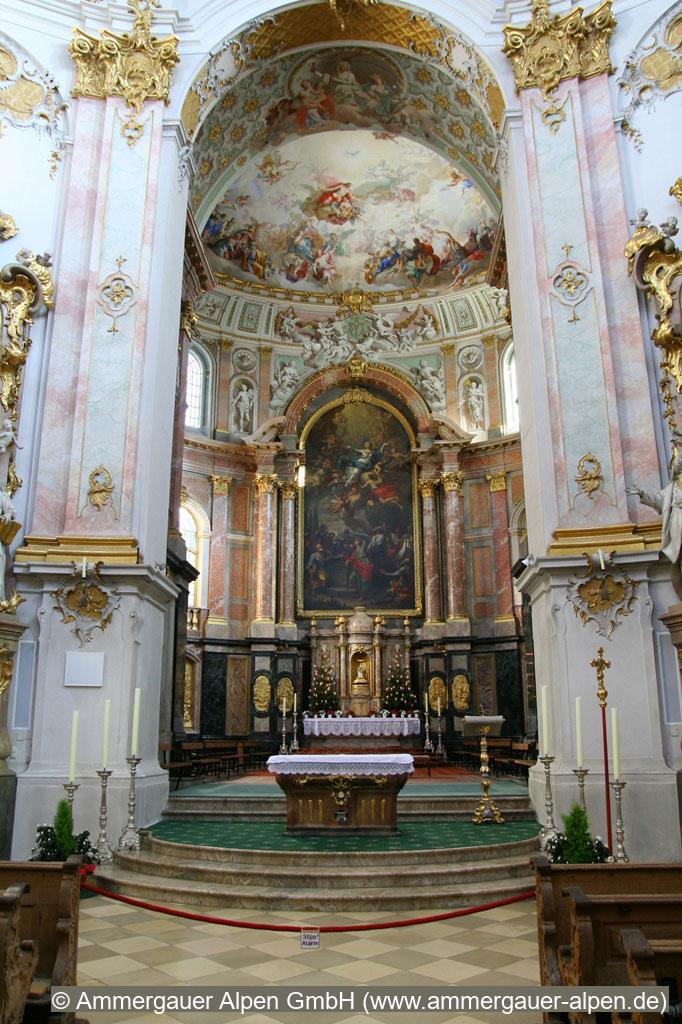
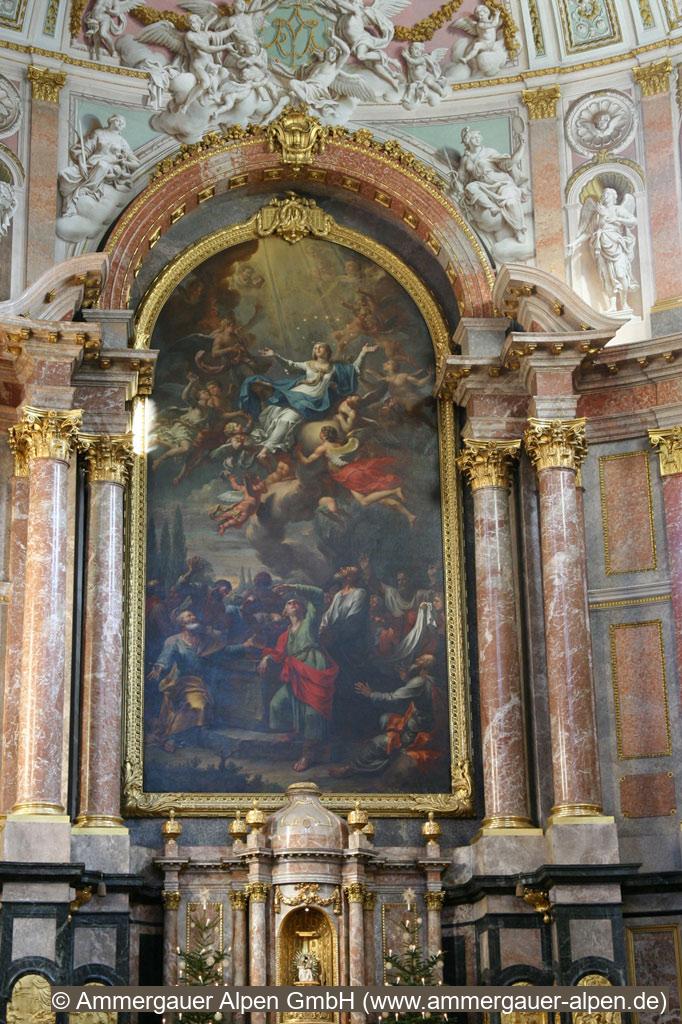
Assumption and Heavenly Reception of the Virgin Mary
High altar and dome of the chancel
1769: fresco; 1786: high altarpiece painting
Martin Knoller (1725–1804)
The complex Neoclassical dome fresco depicts Christ’s reception of the Virgin Mary in heaven together with biblical figures. It is clearly related to the high altarpiece depicting the Assumption of the Virgin Mary.
Relief cycle, Life of the Virgin Mary
High altar
1787/88
Roman Anton Boos (1733–1810)
Ten oval, gilded lead reliefs with pictures depicting the Life of the Virgin Mary are mounted on the marble high altar.
Selected bibliography:
Koch, L., Ettal. Benediktiner-, Pfarr-, Wallfahrtskirche (Grosse Kunstführer 3, 4th revised edition), Munich/Zürich 1980.
Vollmer, E.C., Der Wessobrunner Stukkator Franz Xaver Schmuzer. Ein Meister des süddeutschen Rokoko (Bodensee-Bibliothek 24), Sigmaringen 1979, pp. 54–9.
Dischinger, G., Johann und Joseph Schmuzer. Zwei Wessobrunner Barockbaumeister (Bodensee-Bibliothek 22), Sigmaringen 1977.
Hoffmann, R., Das Marienmünster zu Ettal, Augsburg 1927.
Citation of this web page:
Caroline Straube "Catholic Benedictine Abbey and Pilgrimage Church of St. Mary" in "Discover Baroque Art", Museum With No Frontiers, 2026.
https://baroqueart.museumwnf.org/database_item.php?id=monument;BAR;de;Mon12;15;en
MWNF Working Number: DE3 15