

 Back
Back

 Add to My Collection
Name of Monument:
Amalienburg
Location:
Munich-Nymphenburg, Upper Bavaria, Germany
Date:
1734–1739
Artists:
Architecture and ornament designs: François de Cuvilliés the Elder (1695–1768); Stucco: Johann Baptist Zimmermann (1680–1758); Ornamental carvings: Johann Joachim Dietrich (1690–1753)
Denomination / Type of monument:
Secular architecture (maison de plaisance/hunting pavilion)
Patron(s):
Prince-Elector Charles Albert of Bavaria (gov. 1726–45; 1742–45 as Charles VII, Holy Roman Emperor)
History:
During the reign of Charles Albert’s father, Prince-Elector Maximilian Emanuel, a garden pavilion existed at the location that would later become the Amalienburg. In 1734, Charles Albert tasked his court artist, François de Cuvilliés the Elder, with the construction of a hunting pavilion for his wife, Maria Amalia of Austria, daughter of Emperor Joseph I. Just five years later, the Amalienburg was completed and decorated with Johann Baptist Zimmermann's stuccowork and ornamental carvings from Johann Joachim Dietrich. The style and decorations of the Amalienburg were supposed to resemble a maison de plaisance, thereby following a trend from France where these hunting and summer estates had come into fashion in the 18th century. In accordance with the new living trend at the time, called "commodité" (intimate rooms and retreats for informal relaxation), they were designed to escape the strict court etiquette and indulge in hunting, celebrating and other kinds of leisure distractions in an intimate setting.
Description:
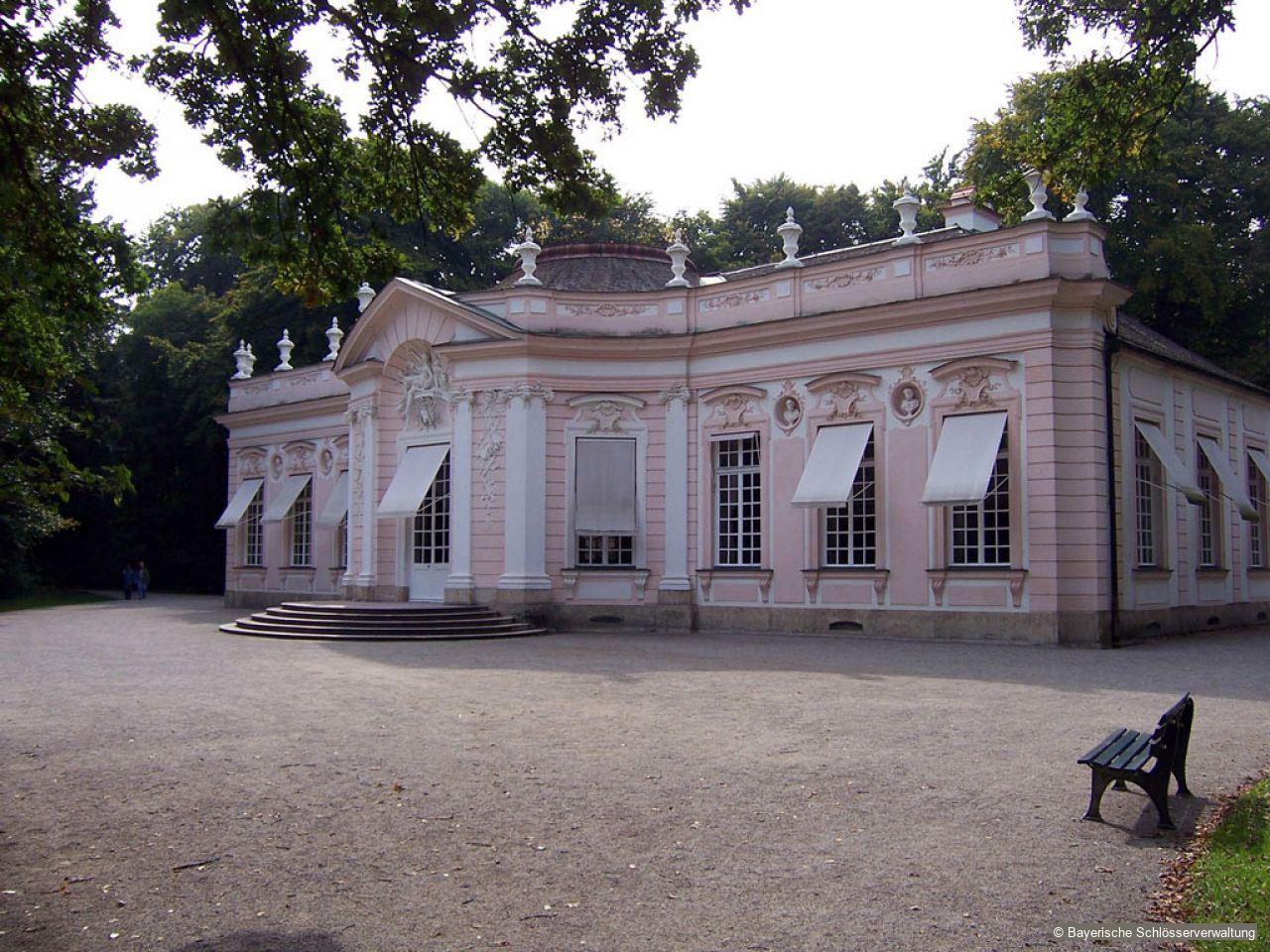
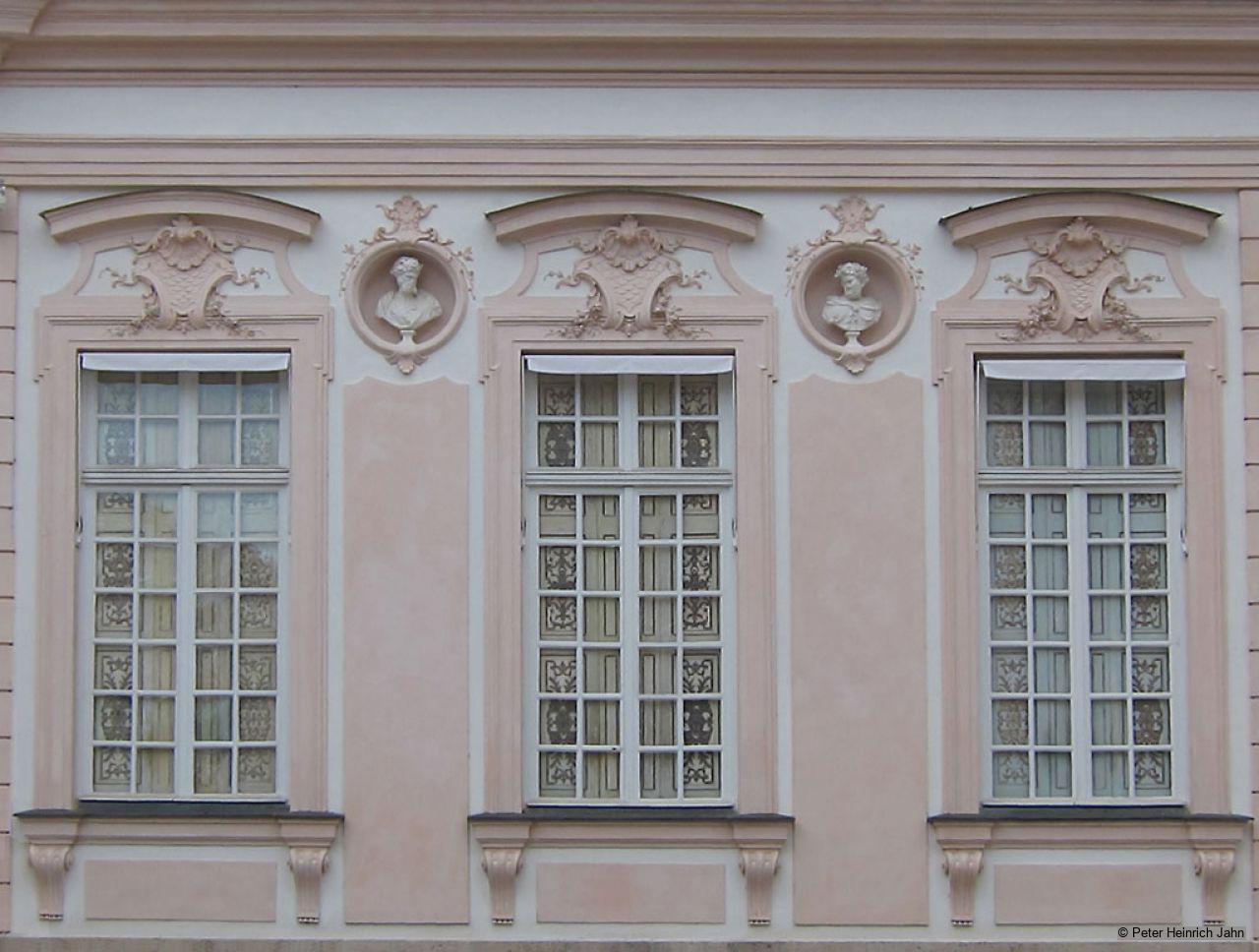
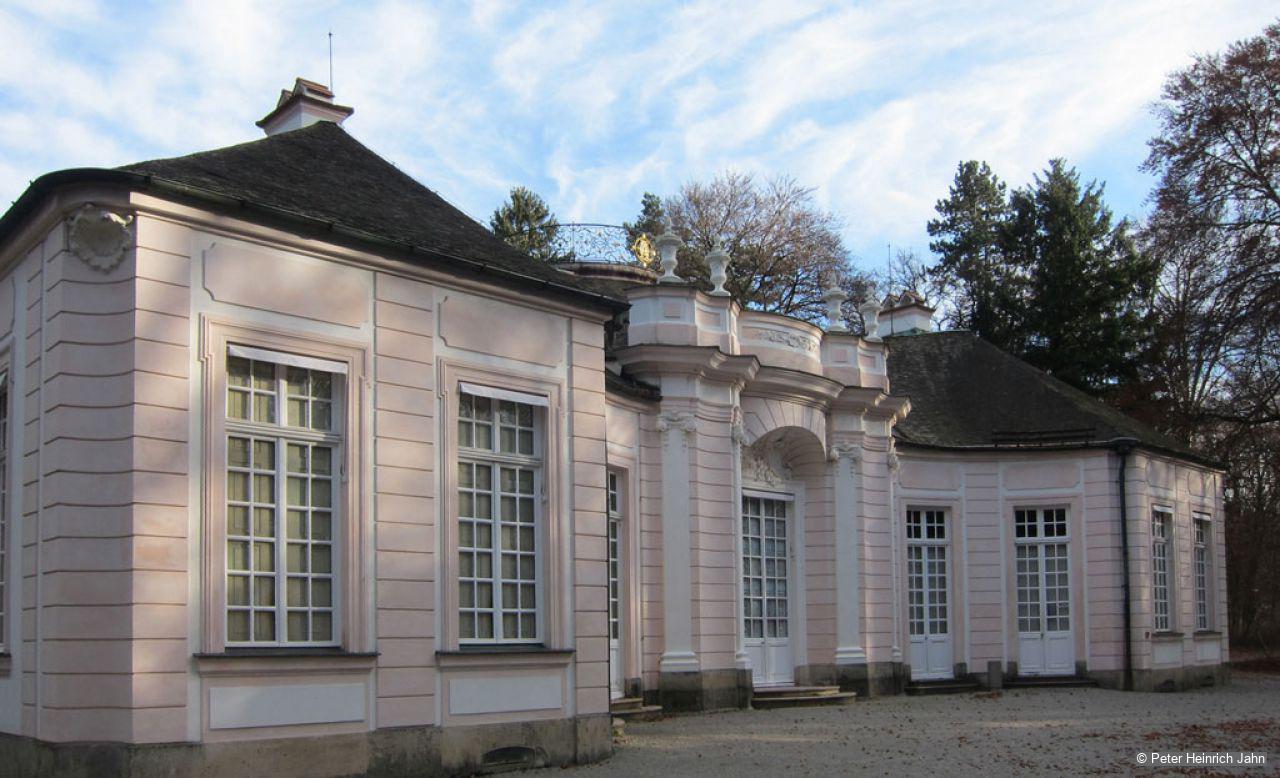
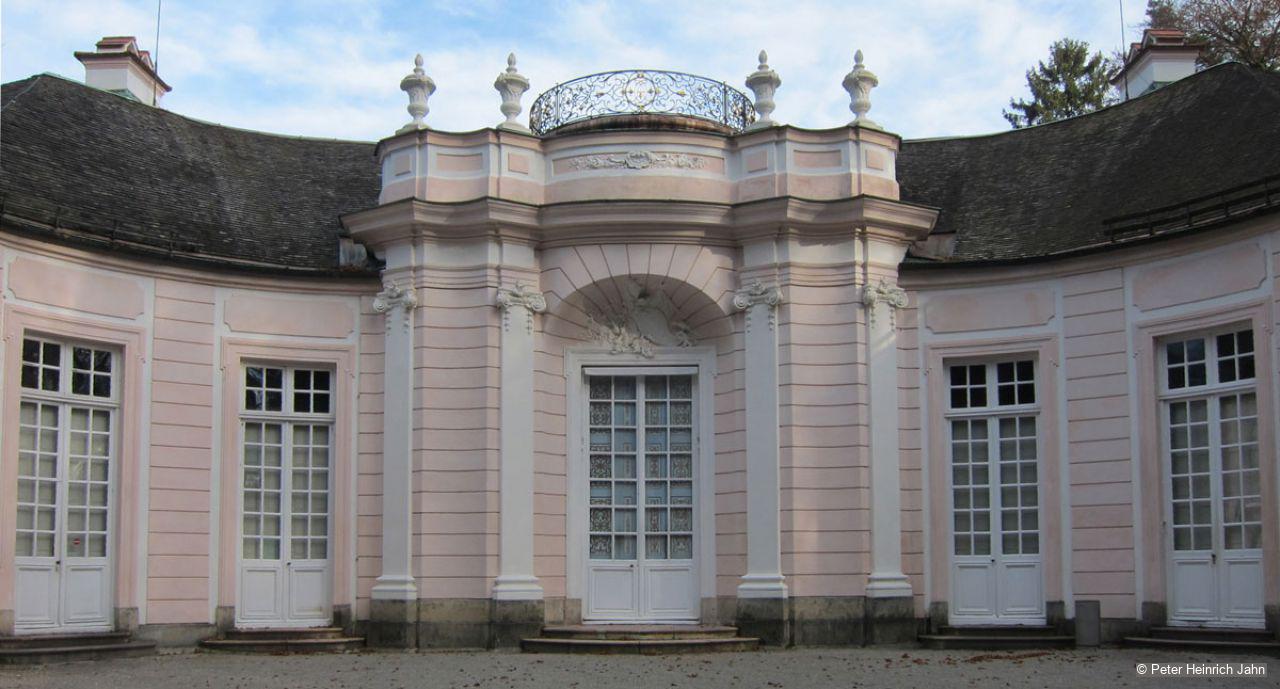
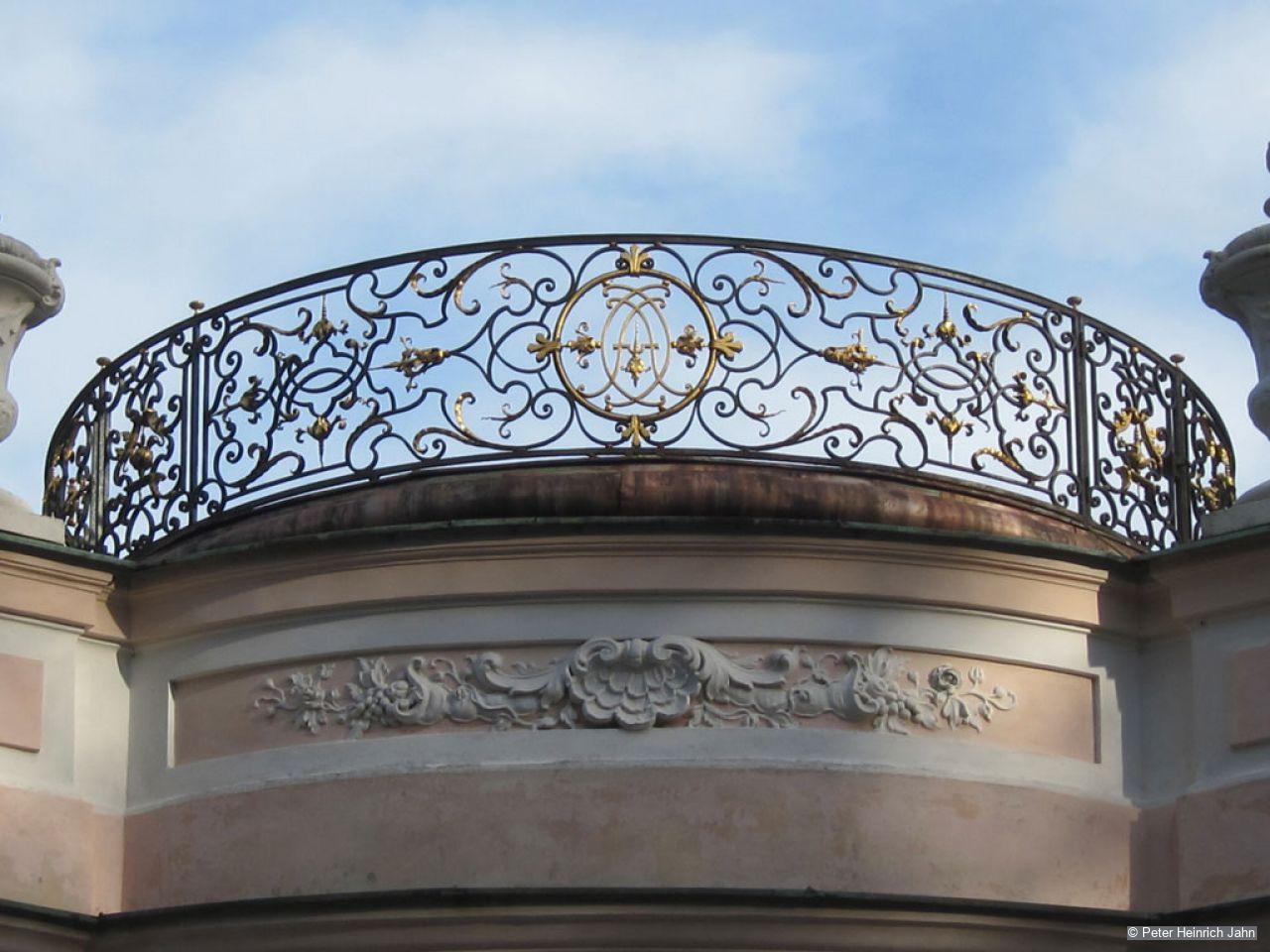
The exterior of the broad, single-storey construction has a pale pink and white stucco facade. Its architectural centre is the round Hall of Mirrors, which curves towards the otherwise straight garden front and is vaulted by a flattened dome. On its roof, a circular platform with a skilfully forged balustrade served as a shooting stand for the Electress’s pheasant hunt. Two equally sized wings adjoin to the Hall of Mirrors. They house hunting rooms, resting chambers, a kitchen and other rooms for the court society to enjoy their distractions . The stylistically homogeneous interior decoration of the Amalienburg is attributed to a cohesive concept of construction and décor.
View Short DescriptionLocated in the Nymphenburg Palace Park, the elegant hunting pavilion was built in the style of a French maison de plaisance and is one of the greatest exponents of its kind, due to its prominent artful interior decoration. Starting in 1734, Charles Albert, Prince-Elector of Bavaria, assigned famous architect, François de Cuvilliés the Elder, to plan and build the Amalienburg for his wife Maria Amalia. The capriccio-like stucco décor of the interior in the late Régence style is regarded as the magnum opus of Munich court stuccoer Johann Baptist Zimmermann.
How Monument was dated:
Archival documents.
Special features
Hall of Mirrors
Central festive hall
1735–37
Design: François de Cuvilliés the Elder (1695–1768); Stucco: Johann Baptist Zimmermann (1680–1758); Ornamental carvings: Johann Joachim Dietrich (1690–1753)
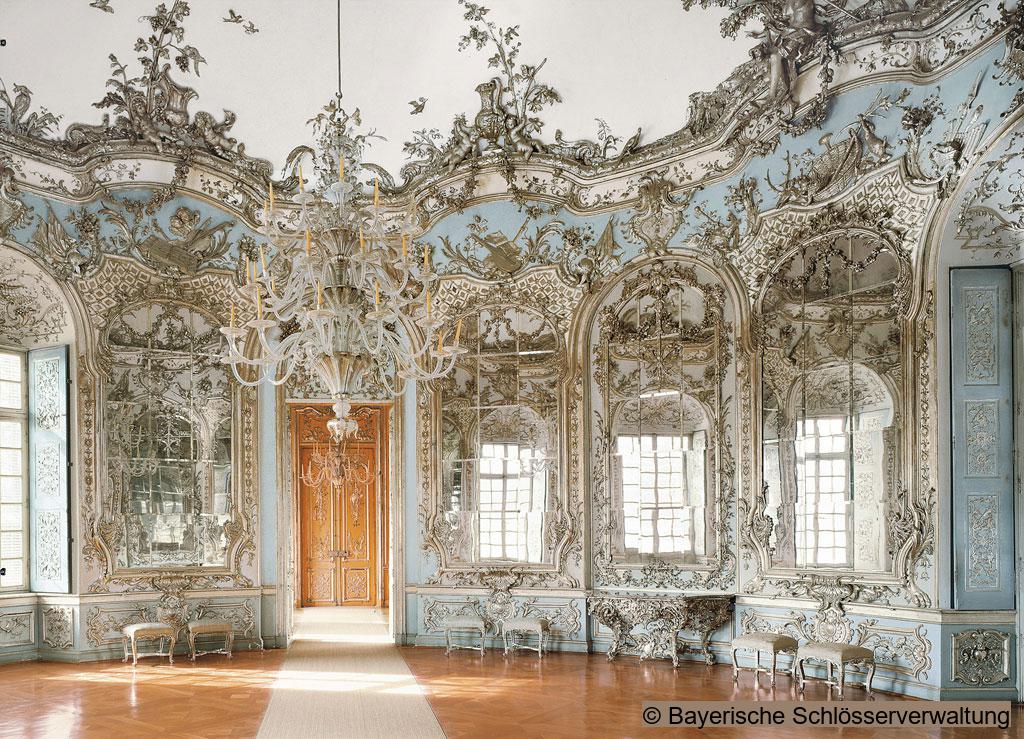
As the heart of the small palace , the Hall of Mirrors functioned as a ballroom, concert hall or as a place of relaxation for the court society following a hunt. Mirrors inside the hall are applied to the wall sections between the windows. The interplay of real and reflecting windows appears to dissolve the surface of the walls and blurs the boundaries between the inside and the outside. The windows and mirrors are framed with sophisticated Régence style décor and silver-plated carvings. Zimmermann's capriccio-like stuccoes of the ceiling transforms it into an Eden-like landscape by depicting trees, putti, divine figures and birds. This theme of the décor is used to connect the interior of the Amalienburg with its formerly surrounding French formal garden.

Diana, Goddess of the Hunt
Niche above the central portal of the eastern façade
1734
Johann Baptist Zimmermann
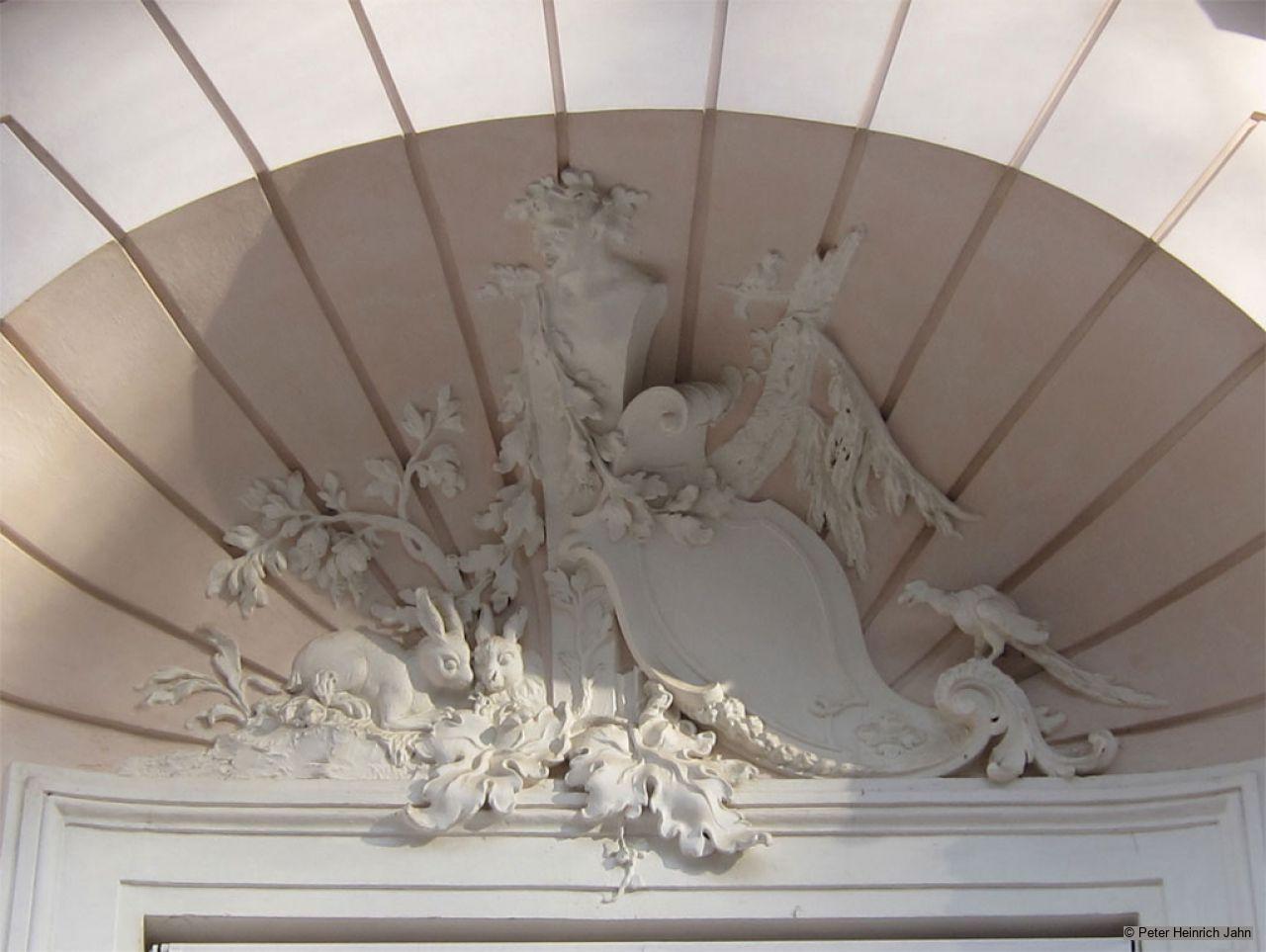
In accordance with the use of the Amalienburg as a hunting lodge, the stuccoed overdoor of the main portal facing the garden depicts Diana, goddess of the hunt, as a half figure, surrounded with putti, hounds and hunting equipment.


Selected bibliography:
Bauer, H. und A., Johann Baptist und Dominikus Zimmermann: Entstehung und Vollendung des bayerischen Rokoko, Regensburg: F. Pustet, 1985: 40–41, 202–207, 317.
Braunfels, W., François Cuvilliés: Der Baumeister der galanten Architektur des Rokoko, München: Süddeutscher, 1986: 90–102, 186.
Hitchcock, Henry-Russell, German Rococo: The Zimmermann Brothers, London: Allen Lane, 1968: 58–62, 89.
Hojer, G., Die Amalienburg: Rokokojuwel im Nymphenburger Schlosspark, München: Schnell & Steiner, 1986.
Schmid, E. D., Nymphenburg: Schloß und Garten, Pagodenburg, Badenburg, Magdalenenklause, Amalienburg, München: Süddeutscher, 1979: 72–87.
Citation of this web page:
Miriam Kuhnke "Amalienburg" in "Discover Baroque Art", Museum With No Frontiers, 2026.
https://baroqueart.museumwnf.org/database_item.php?id=monument;BAR;de;Mon12;2;en
Prepared by: Miriam Kuhnke
Copyedited by: Peter Heinrich Jahn
Translation by: Thea Norris
Translation copyedited by: Janice MedinaJanice Medina
Janice Medina is an artist and educator based in Upstate New York. She studied interior design at Syracuse University and obtained her M.S. in Building Conservation in 2008 (Rensselaer Polytechnic Institute) and Master of Fine Arts in 2019 (University at Albany).
Janice is a former participant in the US/ICOMOS International Exchange Program and she has taught courses in the history of design and historic preservation. Her artwork is influenced by her experiences in historic preservation, as well as by building materials and the natural environment.
Janice has participated as a copy-editor with Museum With No Frontiers since 2019. In this role she has had the opportunity to work on a variety of projects including Discover Islamic Art, Discover Baroque Art and Discover Glass Art.
MWNF Working Number: DE3 02
RELATED CONTENT
On display in
Exhibition(s)
Discover Baroque Art
Absolutism | The spread of the Official style Languages of Baroque | Baroque architectural rhetoric and urban structures Ephemera, Festivals and Theatrical Representation | Festive sitesDownload
As PDF (including images) As Word (text only)