

 Back
Back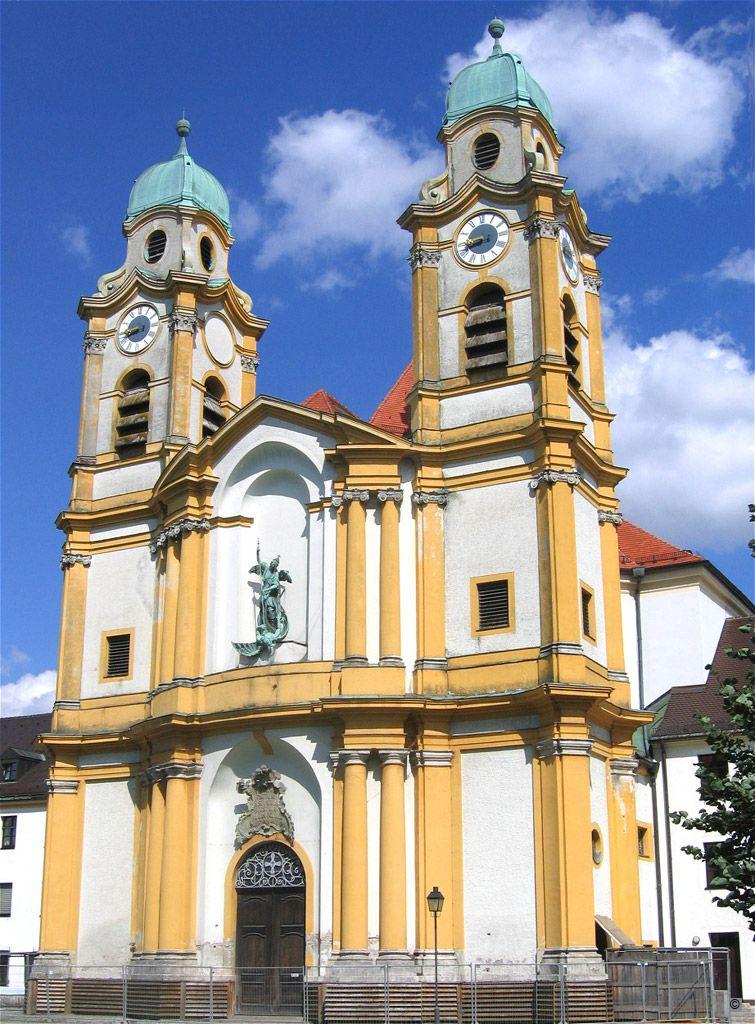
 Add to My Collection
Name of Monument:
Catholic Parish Church St. Michael in Berg am Laim, formerly Electorate of Cologne Archbrotherhood-, Order of Knights- and Court Church
Also known as:
St. Michael in Berg am Laim
Location:
Munich-Berg am Laim, Upper Bavaria, Germany
Date:
1737–51: Construction period;
1759: Transept Altars;
1767: High altar
Artists:
Architecture of double-towered façade: Philipp Jakob Köglsperger (born 1707);Architecture of Church interior: Johann Michael Fischer (1691–1766);Architectural and artistic consulting, design and stuccoing: François de Cuvilliés the Elder (1695–1768);Stucco and ceiling frescoes: Johann Baptist Zimmermann (1680–1758);Altars: Johann Baptist Straub (1704–84) and Andreas Wolf (1652–1716);High altarpiece: Andreas Wolf (1652–1716)
Denomination / Type of monument:
Ecclesiastical Architecture (Court-, Brotherhood- and Order of Knights Church)
Patron(s):
Elector Clemens August, Archbishop of Cologne (gov. 1723–61)
History:
In Berg am Laim, near the Electorate of Bavaria’s capital of Munich, Cologne Elector and Archbishop Clemens August of the house Wittelsbach owned a small castle called Josephsburg. This allowed him the ability to reside according to his social status with his relatives ruling in Bavaria. At the castle chapel, an archbrotherhood of St. Michael had existed since 1693 and grew so quickly that Clemens August decided to erect for it a larger “Main- and Mother Church”. Furthermore, he founded a noble order of knights. After the laying of the foundation stone on 7 October 1738, court masonry foreman (Hofmaurerpolier ) Phillip Jakob Köglsperger from Munich was tasked with the construction. He laid the foundation walls and began the façade, after which the famous bourgeois architect Johann Michael Fischer redesigned the church interior together with its above-ground walls. Bavarian court architect François de Cuvilliés the Elder served as building inspector in order to ensure a courtly ambience.
Description:
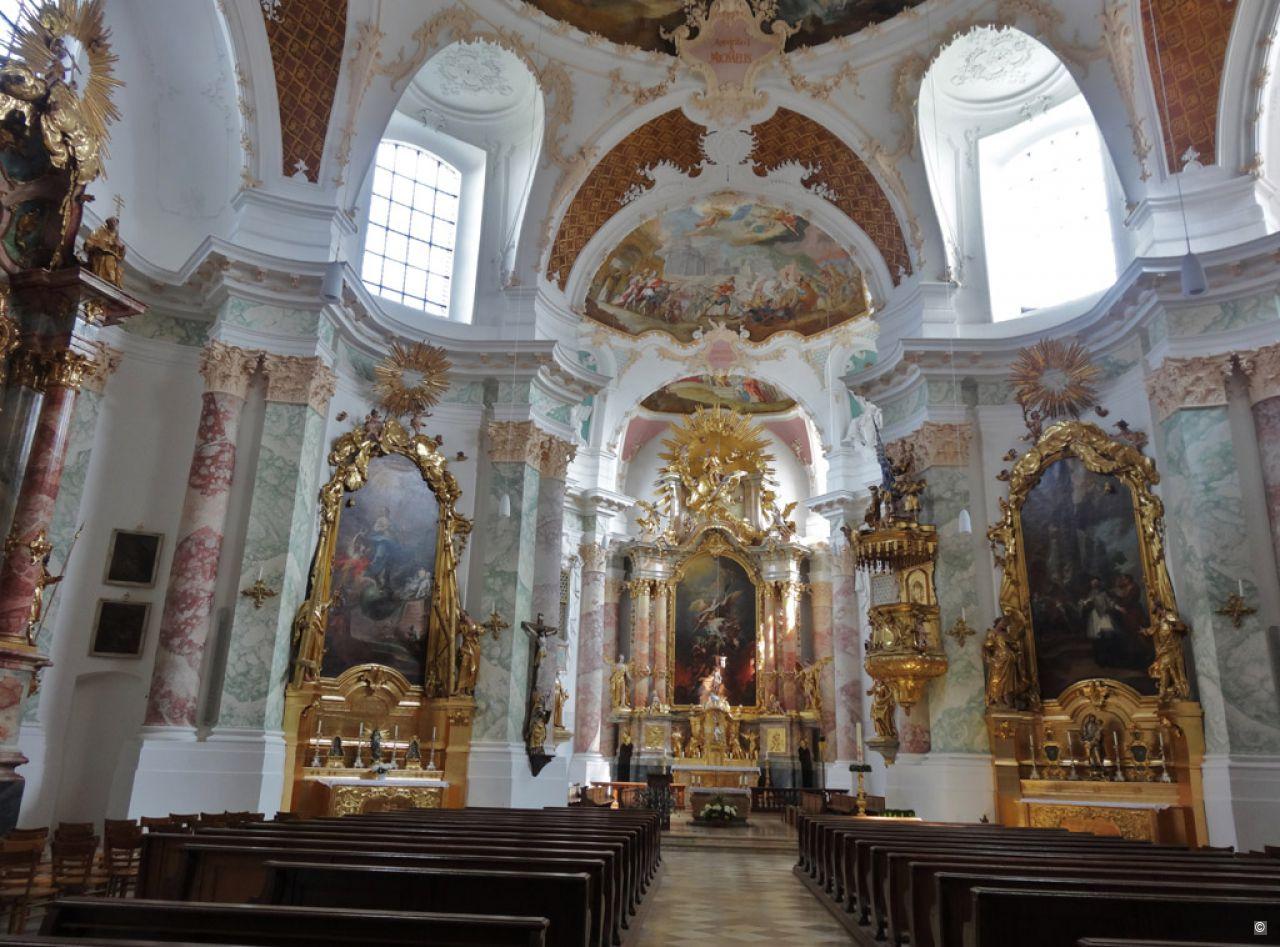
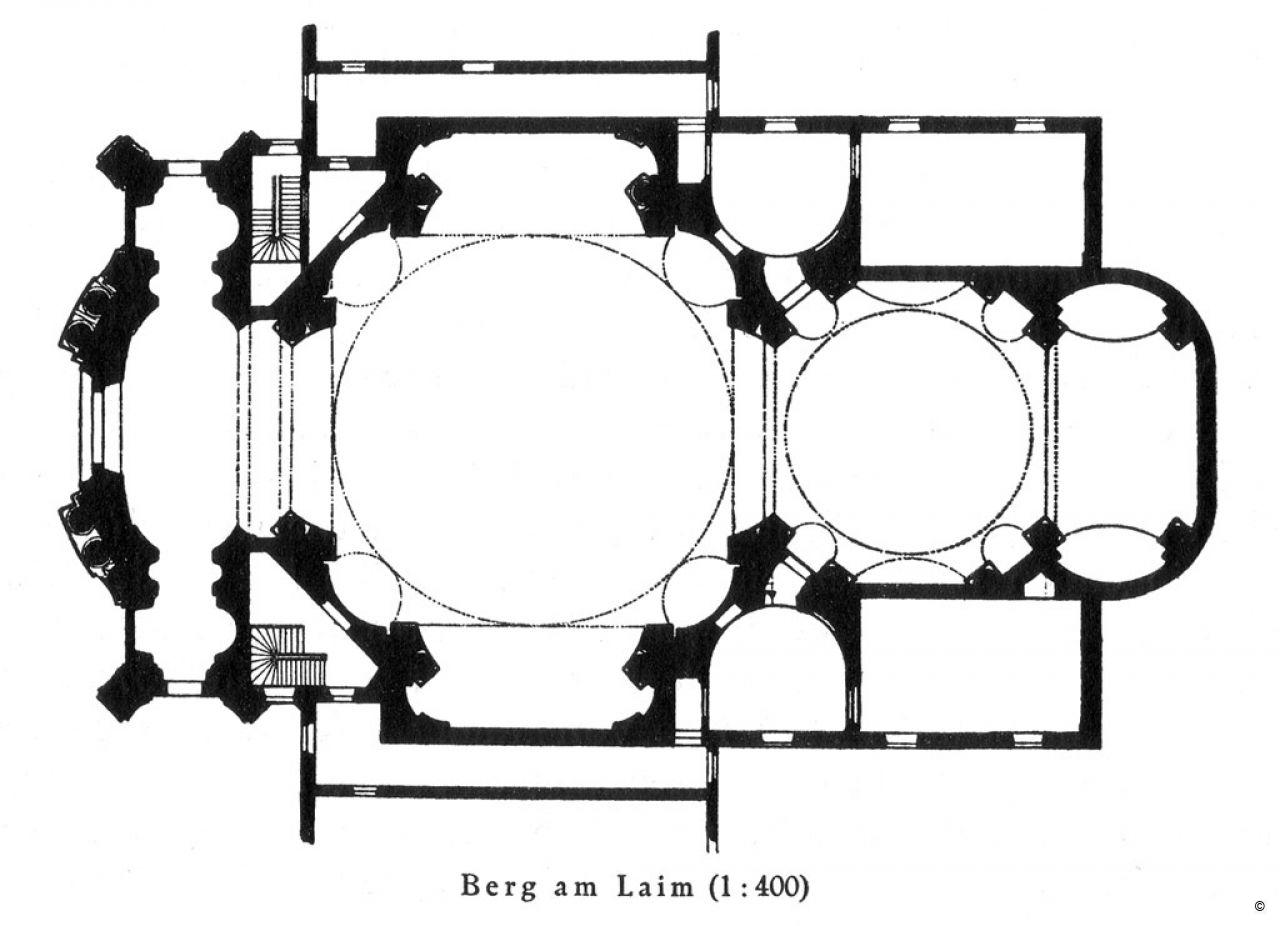
The central insertion of the church building between the two symmetrical wings of Josephsburg castle follows ideal concepts of palace and monastery construction. Even the ostentatious double-towered and bulging façade signalises courtly aspirations. The interior, discretely decorated with noble stucco, is conceptualised as a scenographical sequence of four partial spaces : two centralised ones of decreasing size, but with an increasing number of sections follow a vestibule. Intended for use according to the number of members and hierarchy level, the larger served the archbrotherhood while the smaller one, decorated pompously with columns and provided with court oratories, served the order of knights. A transverse oblong presbytery designed as a columned canopy forms the completion of the interior backdrop. A similar increase in architectural effort also dominates the altar features. Cuvilliés the Elder is to thank for the individualistic flat round vaults in the archbrotherhood room which, in front of the clerestory windows, serve like umbrellas as canopies for the four side altars. In this way, together with the pilaster pillars, they compensate for the lack of chapel space and columned architecture.
View Short DescriptionEven from afar, the ostentatious double-towered façade bears witness to the once high rank of St. Michael’s Church in Berg am Laim. It served not only as Court Church for the Cologne Elector and Archbishop Clemens August, but also as an Order Church for a noble order of knights. The interior is characterised by an impressive scenography of space designed by Johann Michael Fischer paired with courtly and noble furnishings created by Munich’s top talent of the time: stucco and frescoes by Johann Baptist Zimmermann (1680–1758) and altars by Johann Baptist Straub (1704–84).
How Monument was dated:
Through archival documents and chronical news.
Special features
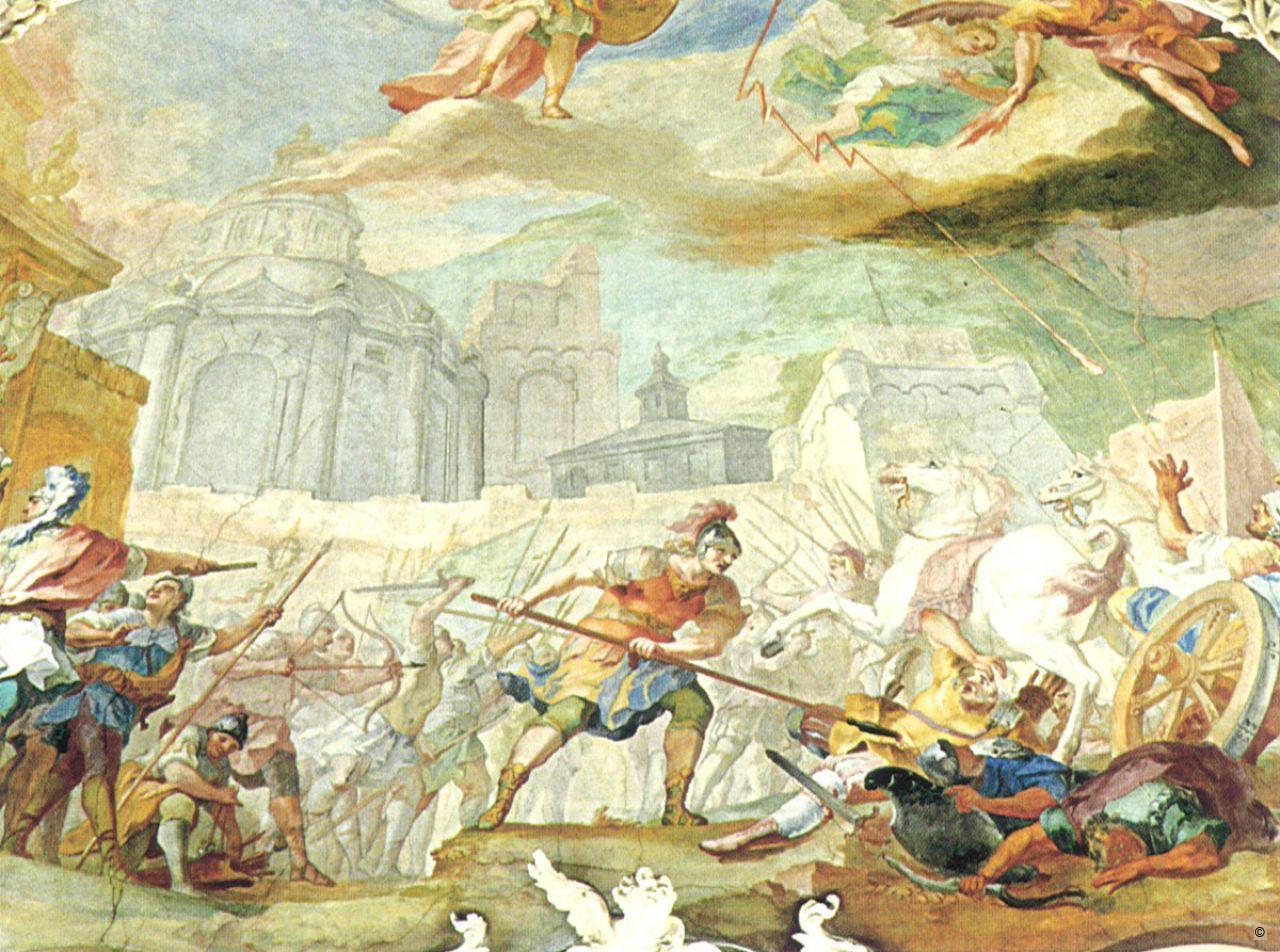
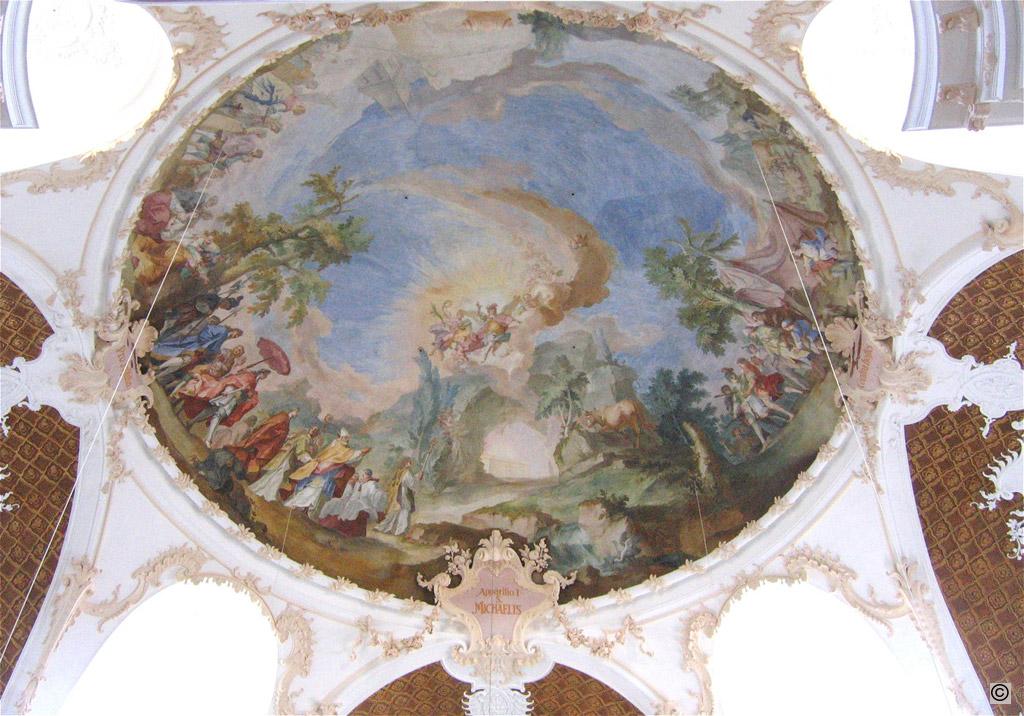
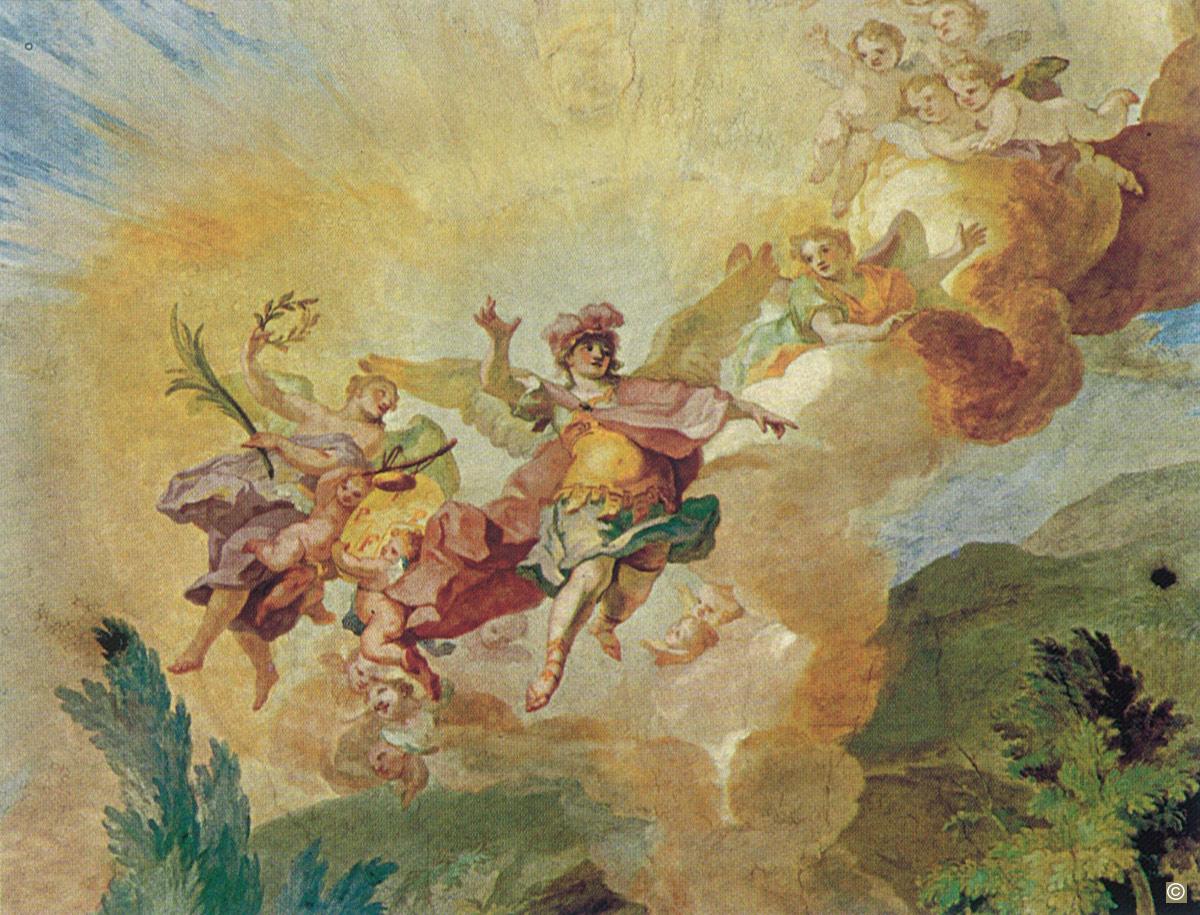
The first appearance of the Archangel Michael and pilgrimage to Monte Gargano
Vault of Archbrotherhood room
1743/44
Johann Baptist Zimmermann
The ceiling frescoes typologically illustrate the founding legend of Western Christianity’s most important sanctuary of St. Michael in southern Italy’s Monte Gargano. Typical to the era of a sophisticated 18th century is the circular landscape strip, on which Zimmerman settles his colourful figure scenes. The nature decorations are based on the French Rococo painting of François Boucher.
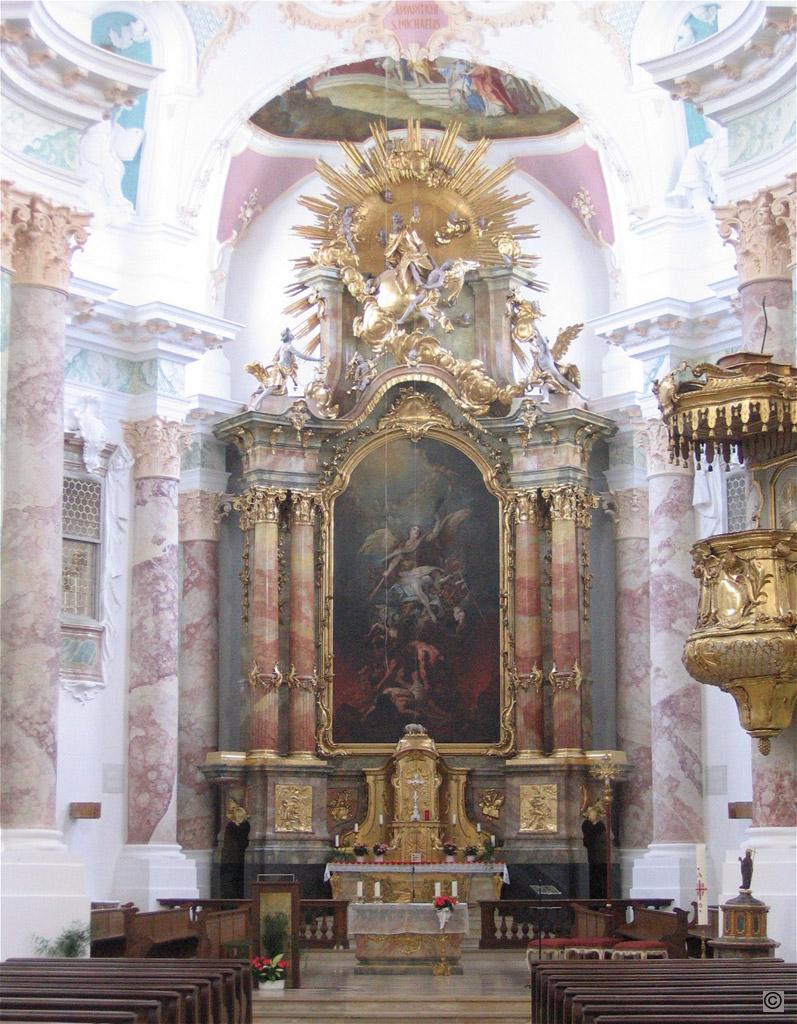
Altar of St. Michael (High Altar)
Presbytery
Around 1693: Altarpiece; 1767: Altar
Altarpiece: Andreas Wolf (1652-1716); Altar and sculptures: Johann Baptist Straub (1704–84)
The high altar is impressive not only through the subtle ponderation of a demanding pomp of columns and architectural elegance, but also through its sculptures: A scenic meal of Emmaus in front of the tabernacle as a typological example of the Eucharist, as well as archangel statues of Gabriel and Raphael, whose ironic dialogue with the accompanying cherub are counted as the highlights of Bavarian Rococo sculpture : The left one performs the Annunciation Madonna, the right one St. Tobias with the fish. In the upper storey of the altar, a third cherub is engaged in horseplay with St. Michael’s weapons. The correlating older altarpiece, which portrays the triumph of the Archangel over Satan, is considered as a major work of Munich Baroque painting.
Selected bibliography:
Bauer, H. und Rupprecht, B. (eds), Corpus der barocken Deckenmalerei in Deutschland, Bd. 1: Freistaat Bayern, Regierungsbezirk Oberbayern, Stadt und Landkreis München, Teil 1: Sakralbauten, München: 1987, 64–72. Hitchcock, Henry-Russell, Rococo Architecture in Southern Germany, London/New York: Phaidon, 1968: 182–183.
Stalla, R., Die kurkölnische Bruderschafts-, Ritterordens- und Hofkirche St. Michael in Berg am Laim: Ein Hauptwerk des süddeutschen Rokoko (Neue Münchner Beiträge zur Kunstgeschichte/Münchner Universitätsschriften 1), Weißenhorn: A. H. Konrad, 1989.
Steiner, P., Kath. Stadtpfarrkirche St. Michael in Berg am Laim (Kleine Kunstführer 1408), München/Zürich: Schnell & Steiner, 1983.
Volk, P., Johann Baptist Straub 1704–1784, München: Hirmer, 1984: 20–23, 41, 199–200.
Citation of this web page:
Katharina Wein, Peter Heinrich Jahn "Catholic Parish Church St. Michael in Berg am Laim, formerly Electorate of Cologne Archbrotherhood-, Order of Knights- and Court Church" in "Discover Baroque Art", Museum With No Frontiers, 2026.
https://baroqueart.museumwnf.org/database_item.php?id=monument;BAR;de;Mon12;29;en
Prepared by: Katharina Wein, Peter Heinrich Jahn
Translation by: Gina Gill
Translation copyedited by: Janice MedinaJanice Medina
Janice Medina is an artist and educator based in Upstate New York. She studied interior design at Syracuse University and obtained her M.S. in Building Conservation in 2008 (Rensselaer Polytechnic Institute) and Master of Fine Arts in 2019 (University at Albany).
Janice is a former participant in the US/ICOMOS International Exchange Program and she has taught courses in the history of design and historic preservation. Her artwork is influenced by her experiences in historic preservation, as well as by building materials and the natural environment.
Janice has participated as a copy-editor with Museum With No Frontiers since 2019. In this role she has had the opportunity to work on a variety of projects including Discover Islamic Art, Discover Baroque Art and Discover Glass Art.
MWNF Working Number: DE3 36