

 Back
Back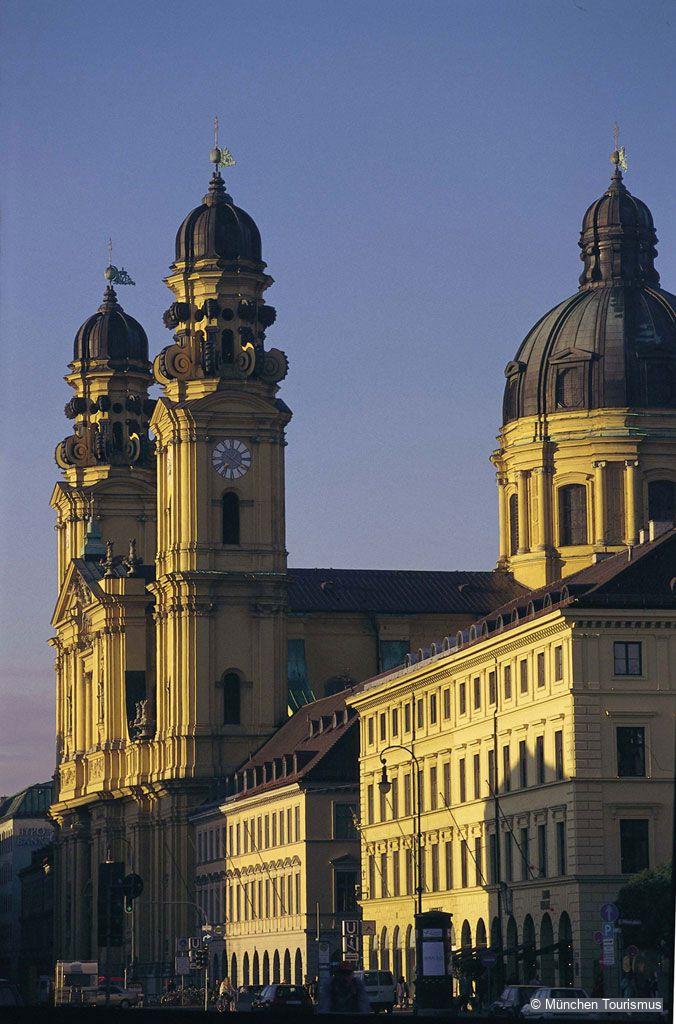
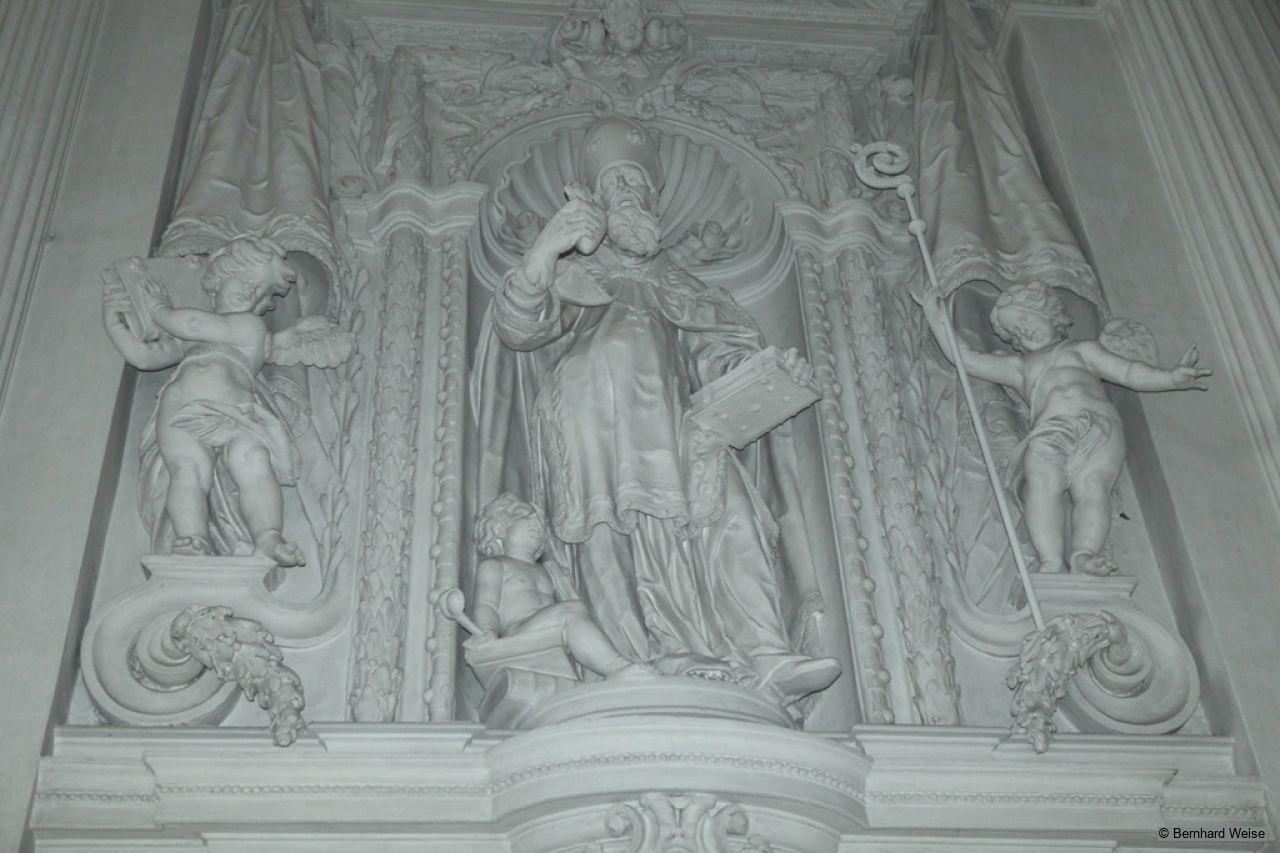
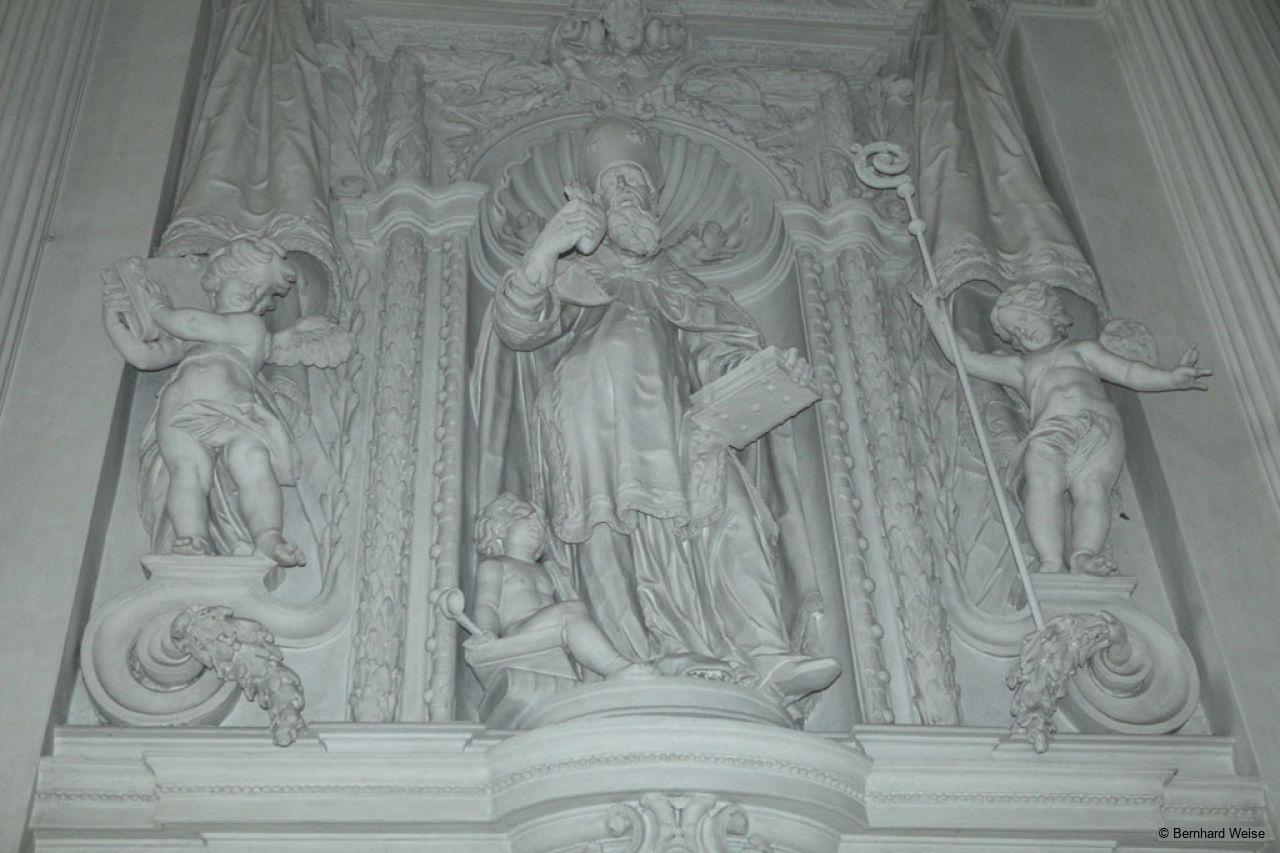
 Add to My Collection
Name of Monument:
Court and Theatine Church of St. Cajetan
Also known as:
Theatinerkirche
Location:
Munich-Old town, Upper Bavaria, Germany
Theatinerstraße 22
80333 Munich
T : +49 (0)89 21 06 96 0
F : +49 (0)89 21 06 96 29
E : info@theatinerkirche.de
Dominican monastery St. Kajetan (Chancellor/headmaster: Dr. Klaus Obermeier OP) (Archbishopric Munich-Freising) (Responsible Institution)
Date:
1663–1675: construction period; 1765–1768: façade
Artists:
Architect: Agostino Barelli (1627–1687); head of construction: Enrico Zuccalli (1642–1724); facade: François de Cuvilliés (1695–1786); altarpiece/retable: Joachim von Sandrart (1606–1688)
Denomination / Type of monument:
Ecclesiastical architecture (collegiate and votive church)
Patron(s):
Bavarian Elector Ferdinand Maria (1636–1679); Bavarian Electress Henriette Adelaide von Savoyen (1636–1679)
History:
The ruling couple of Bavaria commissioned the church in honour of the long-awaited birth of crown prince Max II Emanuel in 1662. Agostino Barelli was responsible for the design of the votive church and Enrico Zuccalli worked as construction supervisor.
Bavarian Elector Ferdinand Maria attended the ceremony where the cornerstone was laid on 29 April 1663. Work on the main dome began in 1674, followed by consecration to celebrate the thirteenth birthday of the young crown prince in 1675; the dome was not completed until 1690.
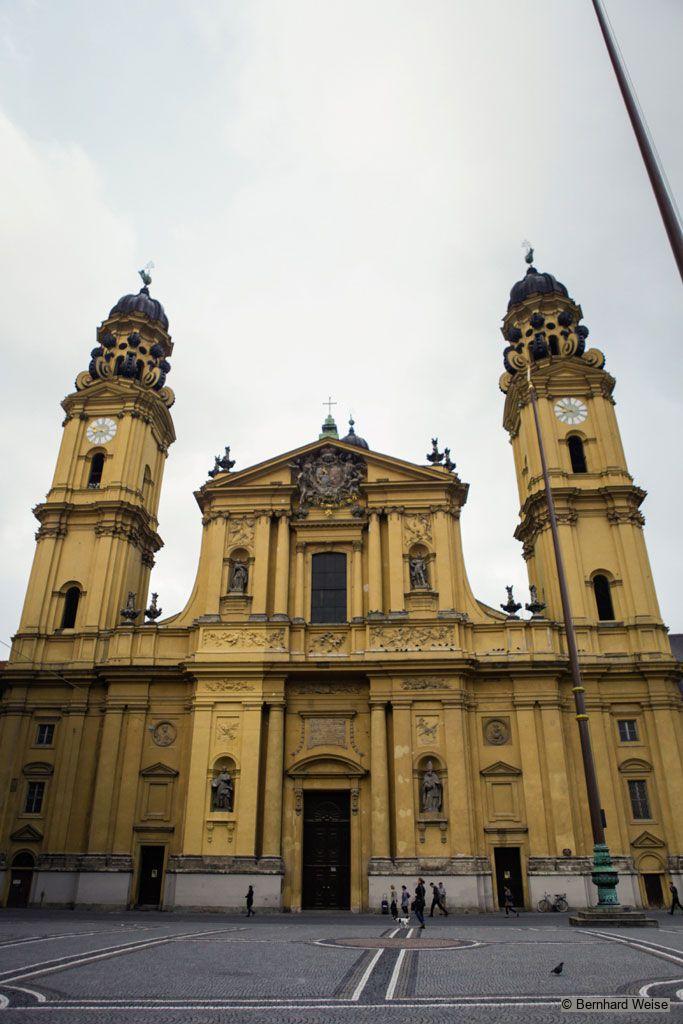
François de Cuvilliés the Elder designed the façade of 1765–68 on behalf of the Elector Max III. The Theatine Church got its current characteristic colouring in 1860.
Description:
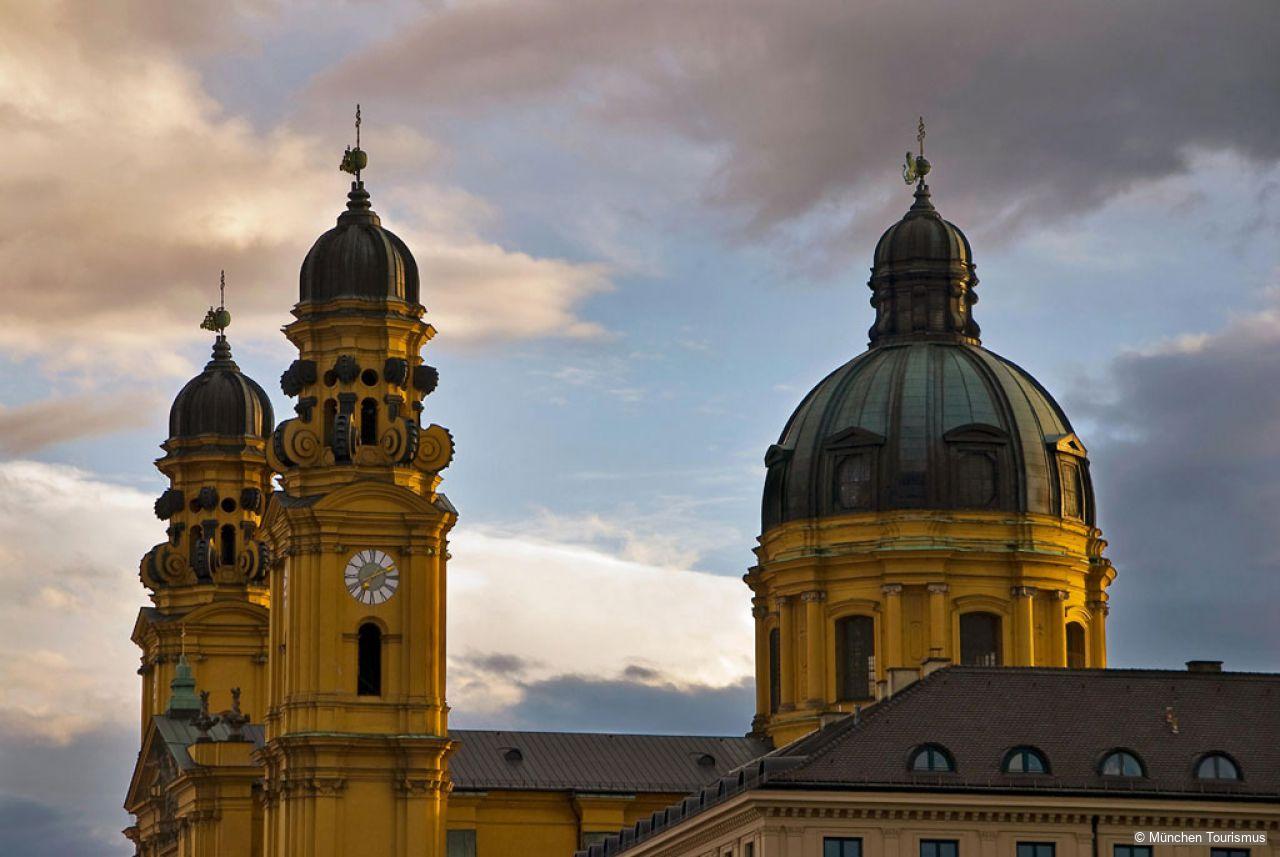
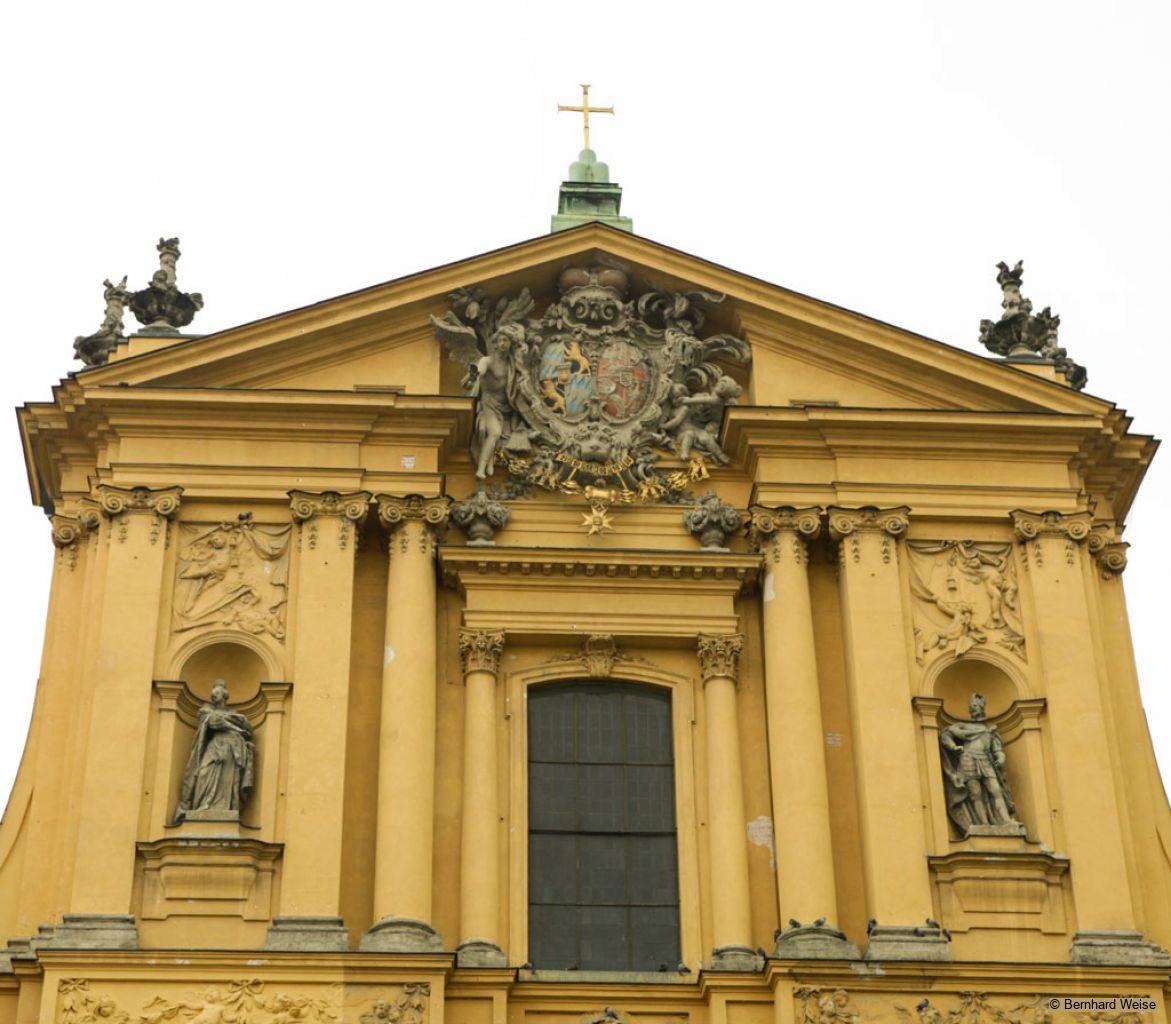
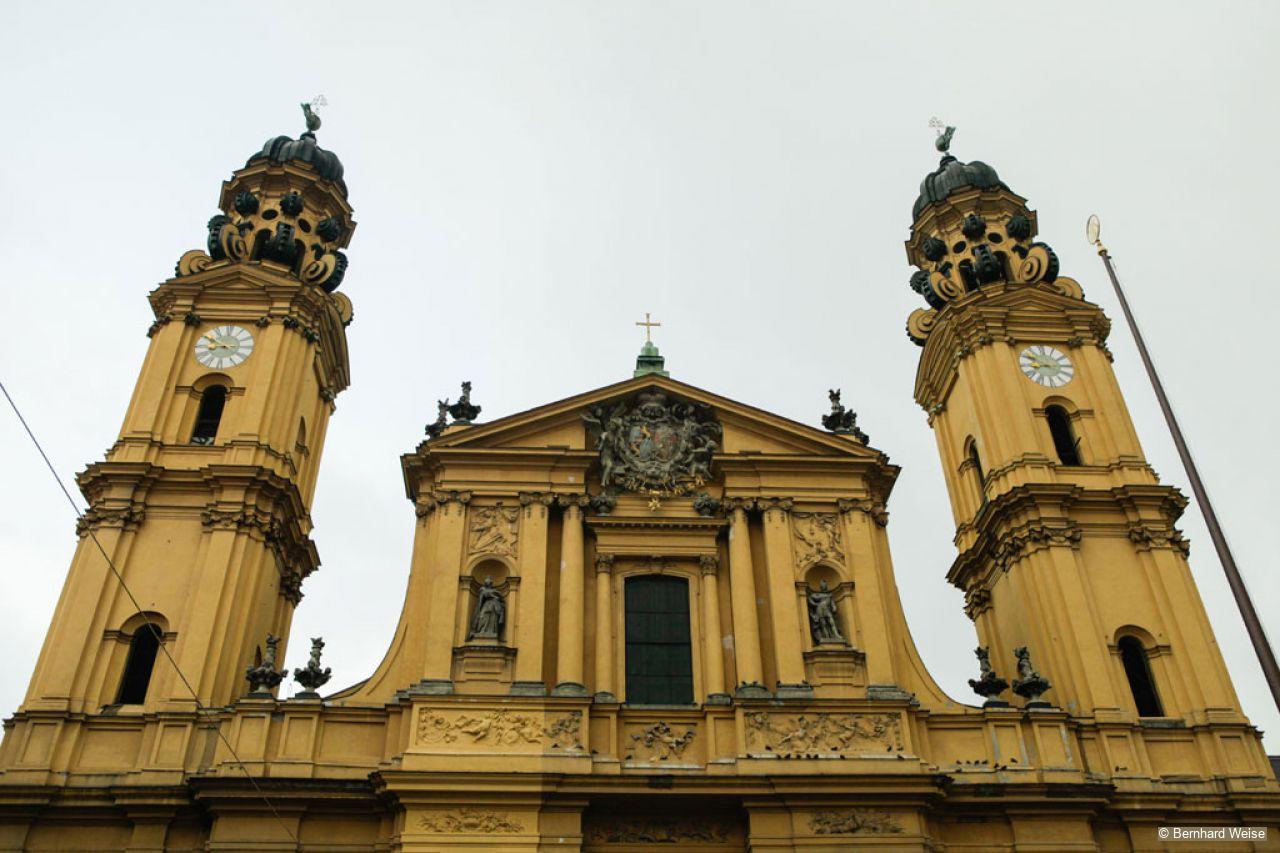
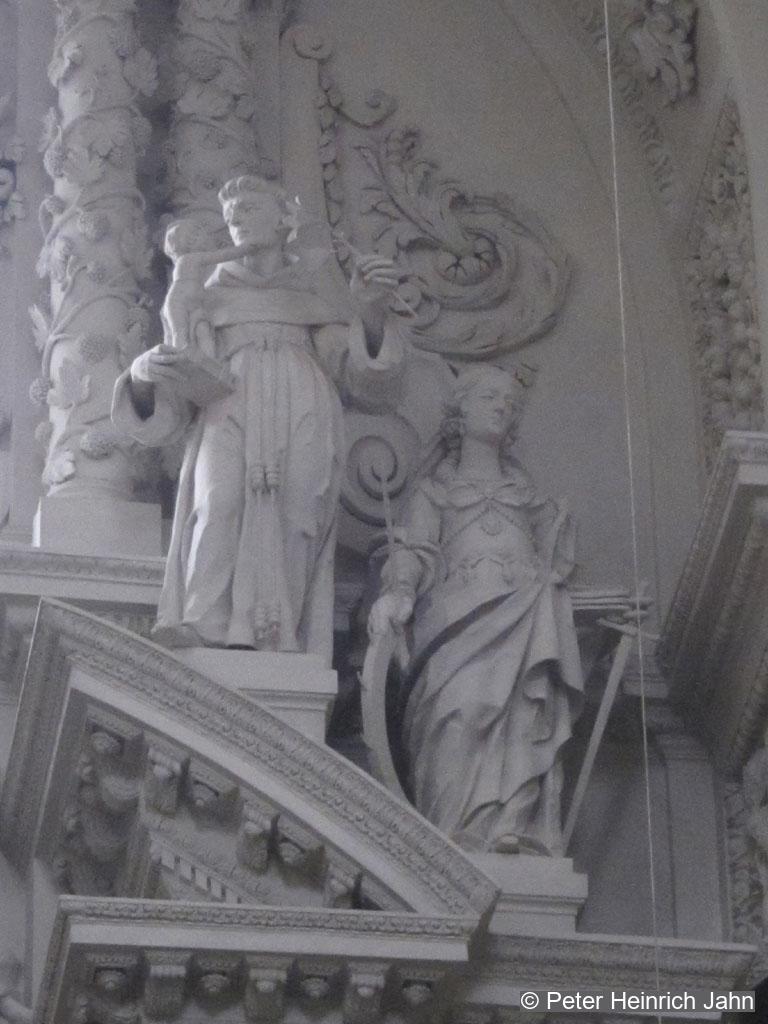
The Theatine church dominates Munich’s Old Town with its two towers and two-level facade. Various statues of saints relevant to the church stand in the façade niches: Cajetan, as founder of the Theatine order and the patron saints of the founding family of Maximilian, Ferdinand and Adelheid, all of which are designed by Ignaz Günther. Above the main portal there is a dedication inscription, and above this the triangular gable bears the coat-of-arms of the Bavarian–Saxon alliance crowned by the so-called Theatine Cross. Two towers with octagonal helm-roofs and volutes adorn the front of the church.
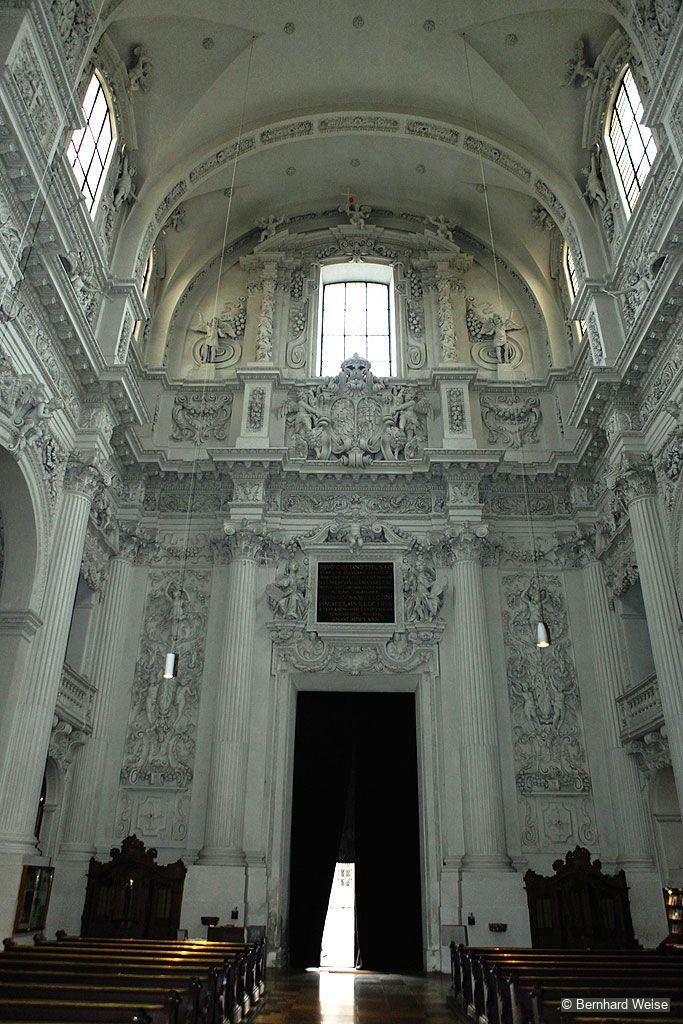
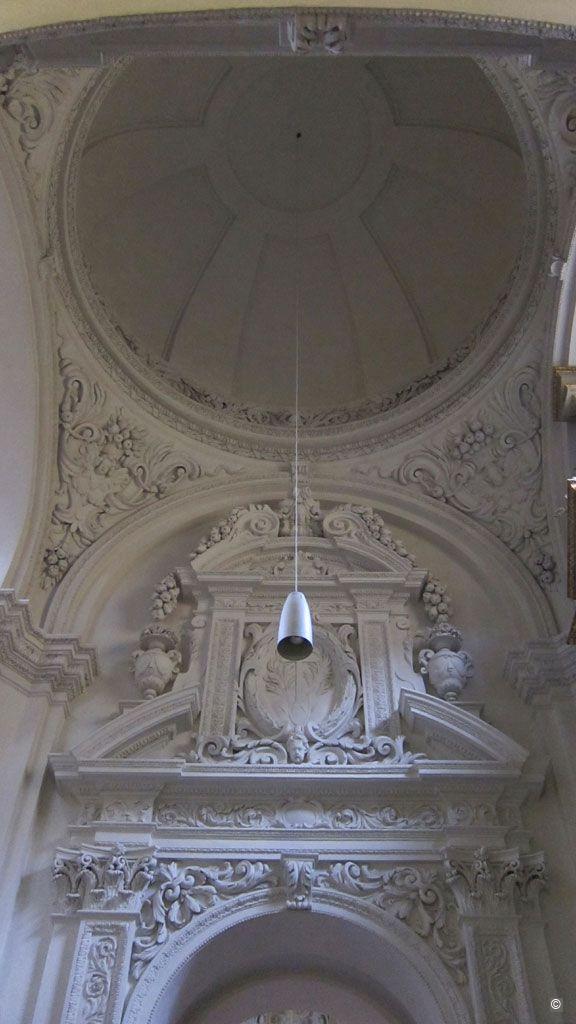
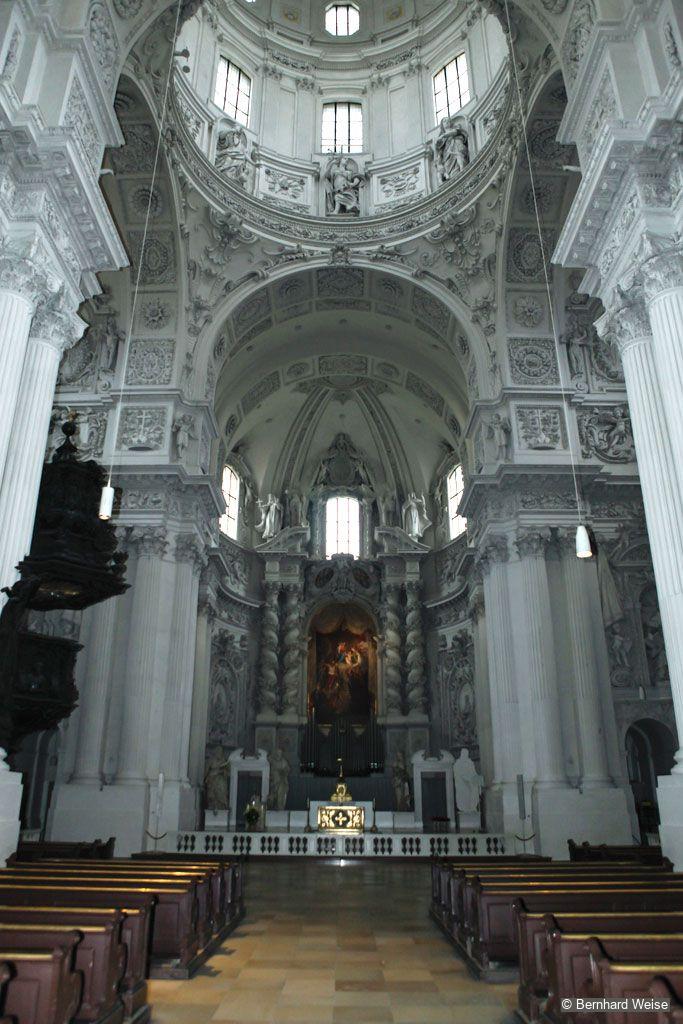
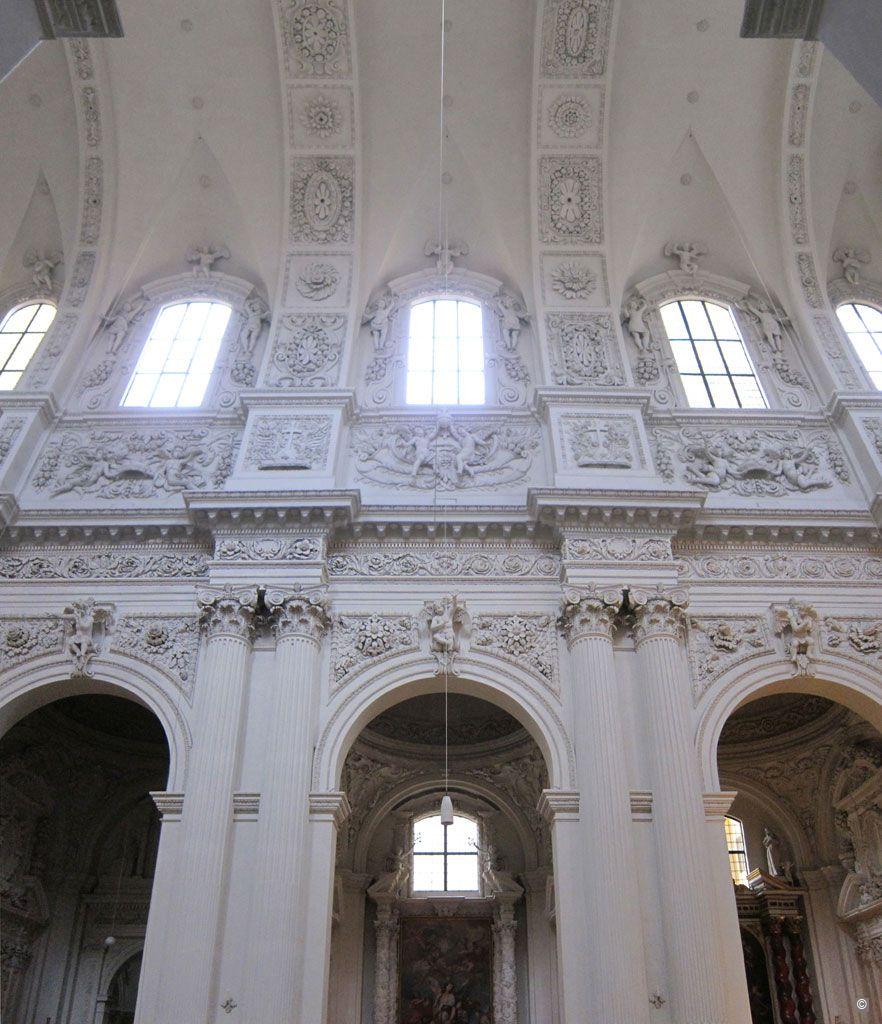
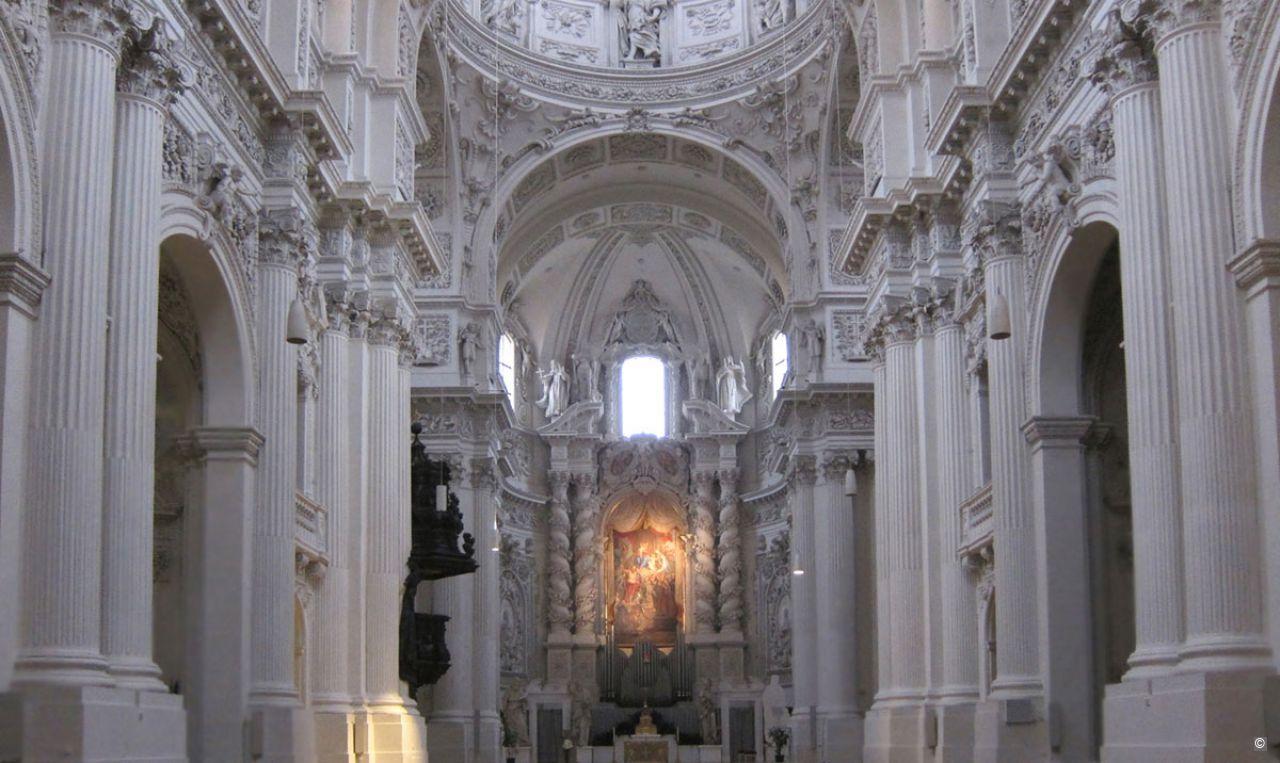
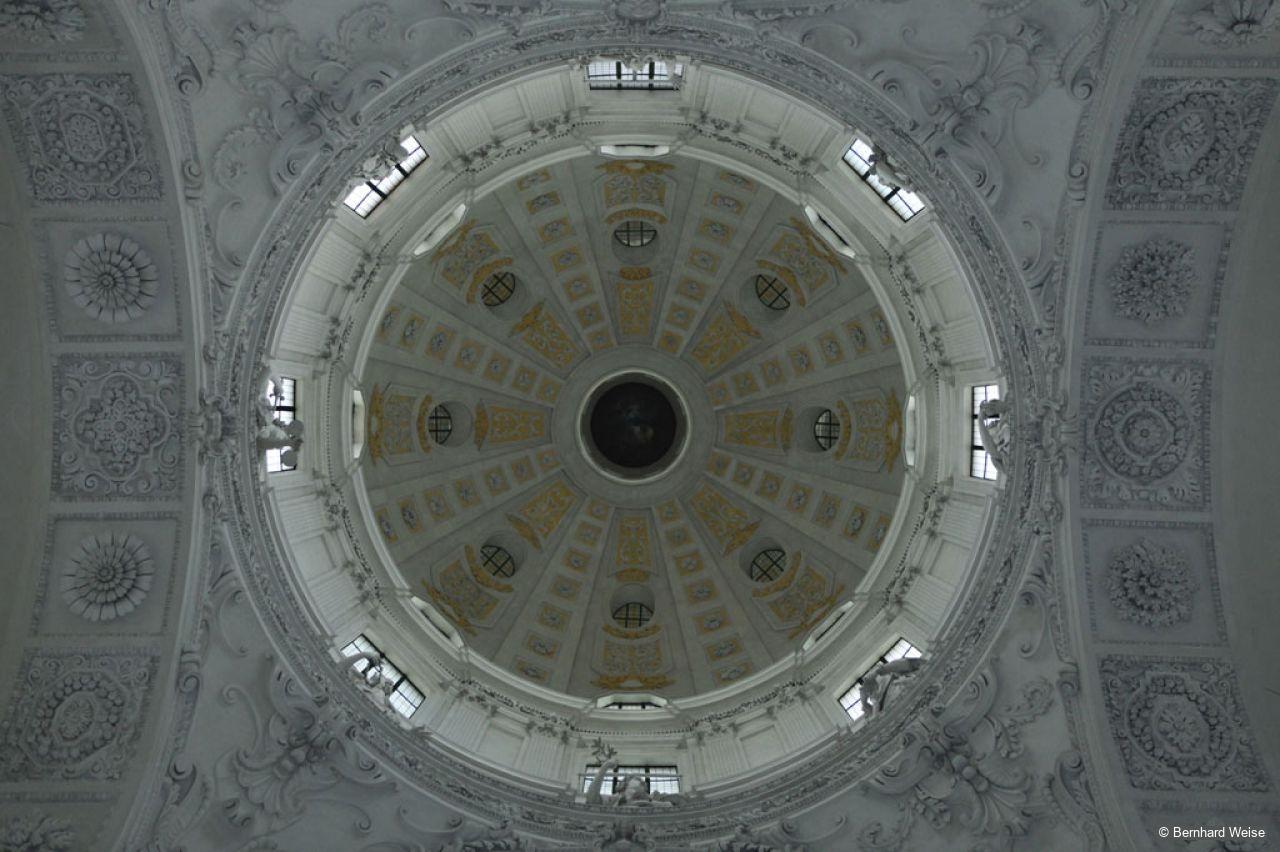
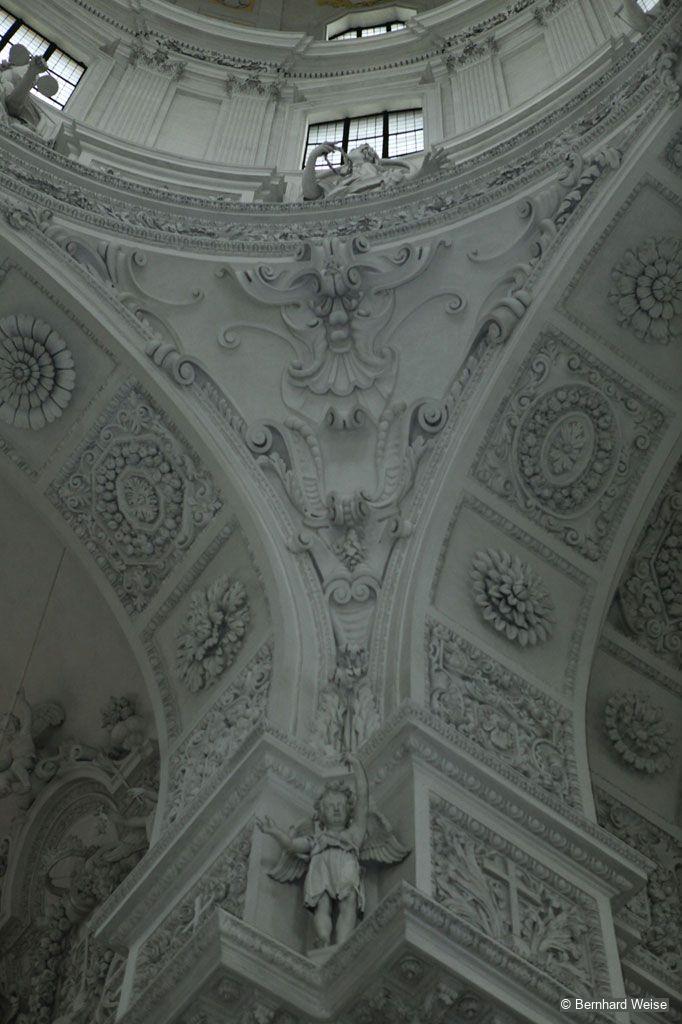
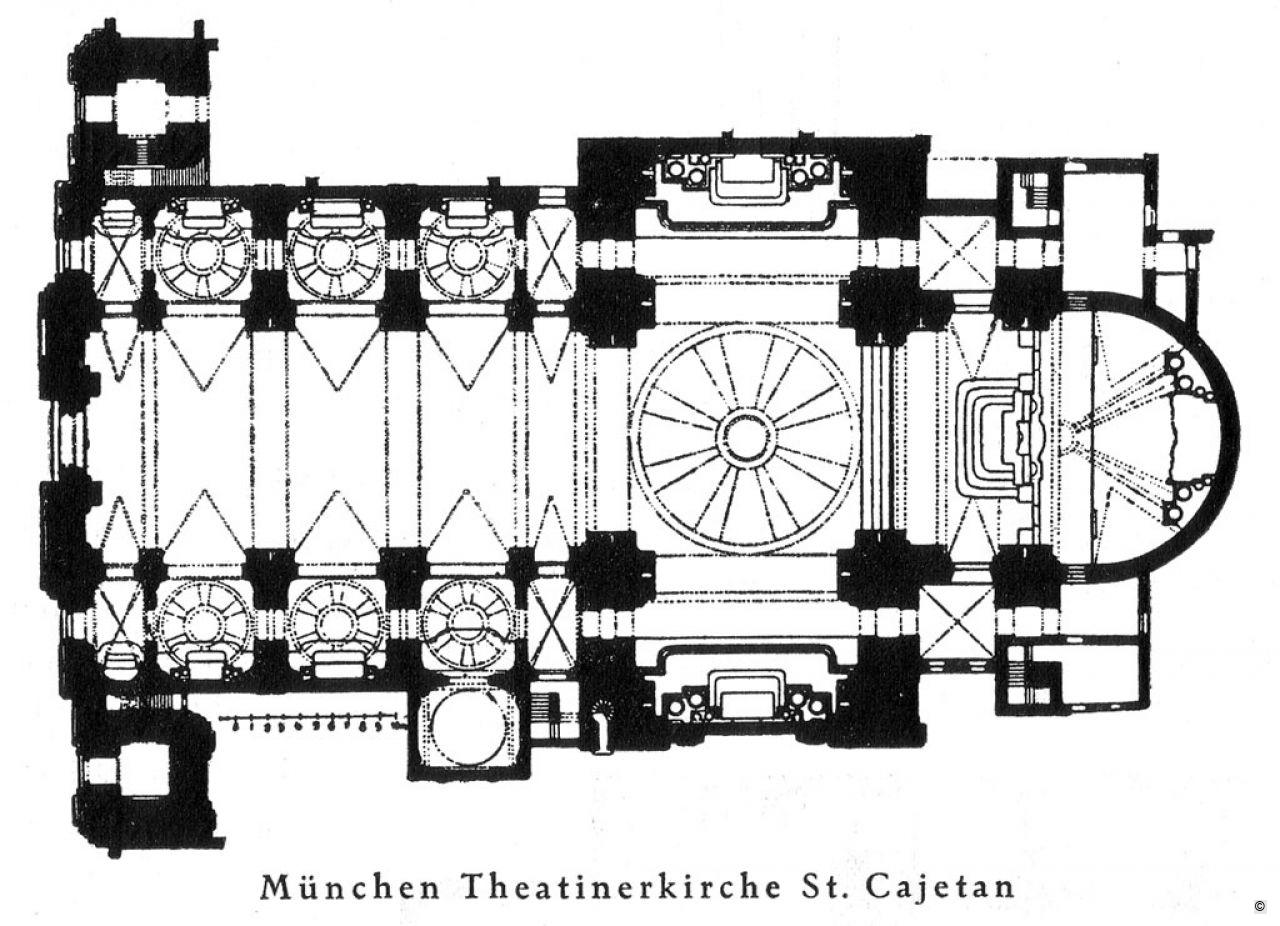
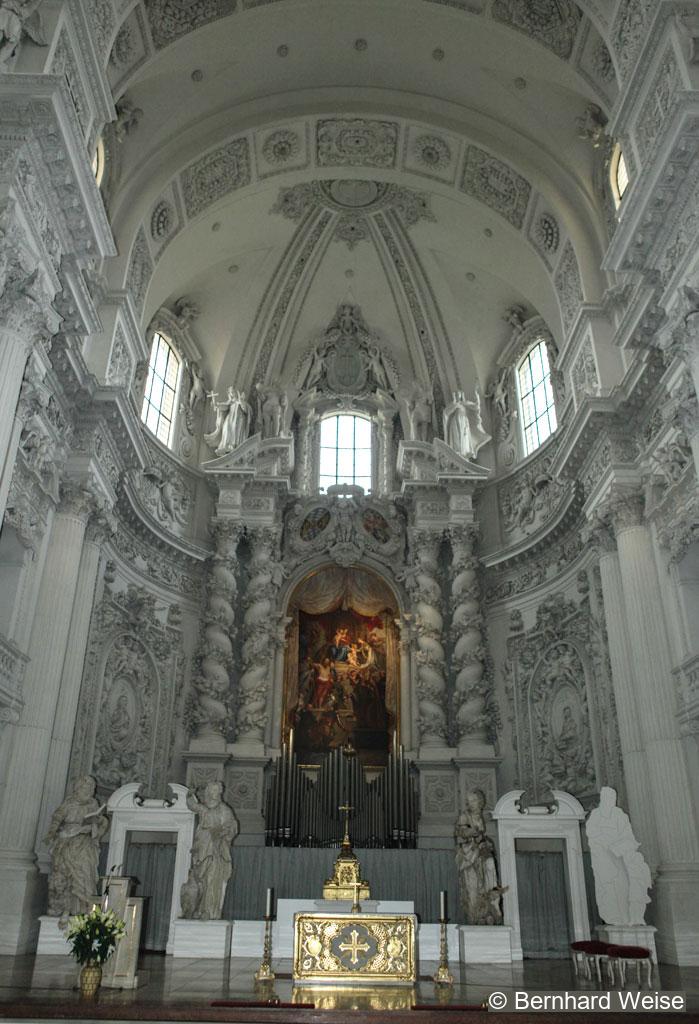
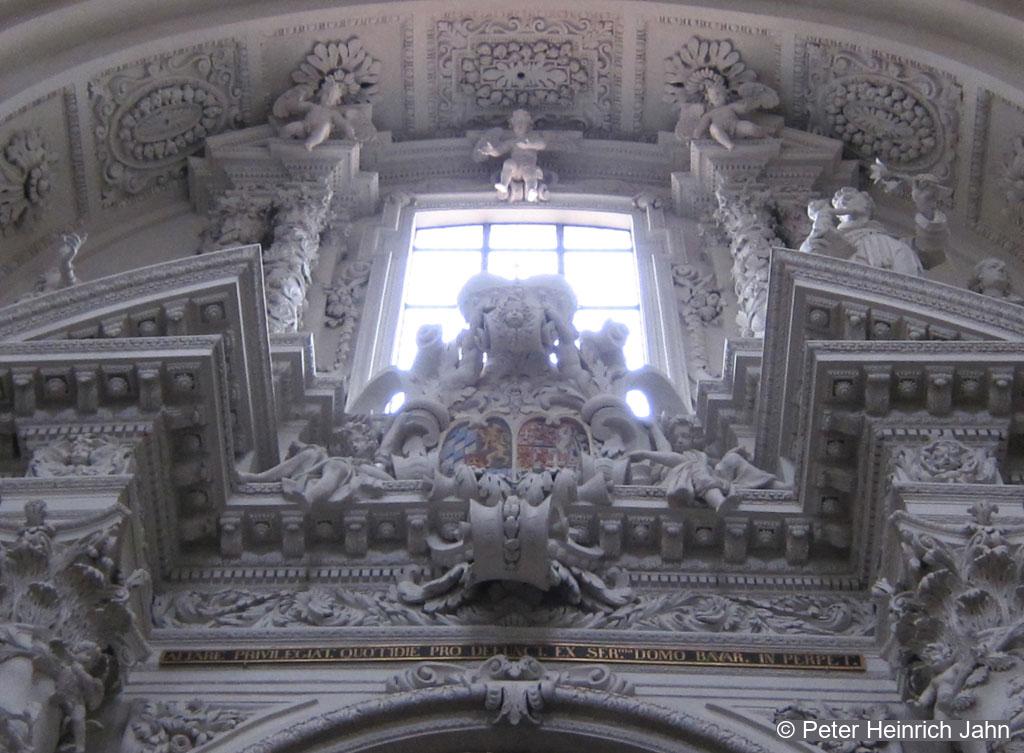
Based on a relatively simple ground plan in crucifix form, the interior has an arrangement similar to the order’s Mater Ecclesia S. Andrea della Valle in Rome. The inner façade mirrors the younger outer one with coat-of-arms and dedication inscription. The impression of grandeur and vastness of space is created by the opulent, colossal columns which fit perfectly the courtly taste for splendour. White stucco dominates the interior of the church and shows an abundance of floral and figural forms. The three-bayed nave and the connected domed side-chapels are illuminated by light from the clerestory and the light that filters in through the large main dome, which, resting on a tambour above the crossing, is separated from the nave and transept by four arches. The highpoints of the interior are the three monumental main altars in the choir and transept, both of which are crowned by stucco figures. Pairs of torsional columns bring about conceptual unity while at the same time professing to the Catholic confession of St. Peter’s Church in Rome.
The Theatine Church is a landmark of “Odeonsplatz” in Munich due to its unique yellow colour and monumental appearance. Built as a votive church by the Elector and his wife to celebrate the birth of crown prince Max II Emanuel, the white-stucco interior which is lavishly decorated and has splendorous columns, is overwhelming. With its tambour cupola pointing towards Rome the Theatine Church is an example of the Italian High Baroque in Bavaria, which really became established after the end of the Thirty Years’ War.
How Monument was dated:
Inscriptions above the main portal and inside the church
Special features
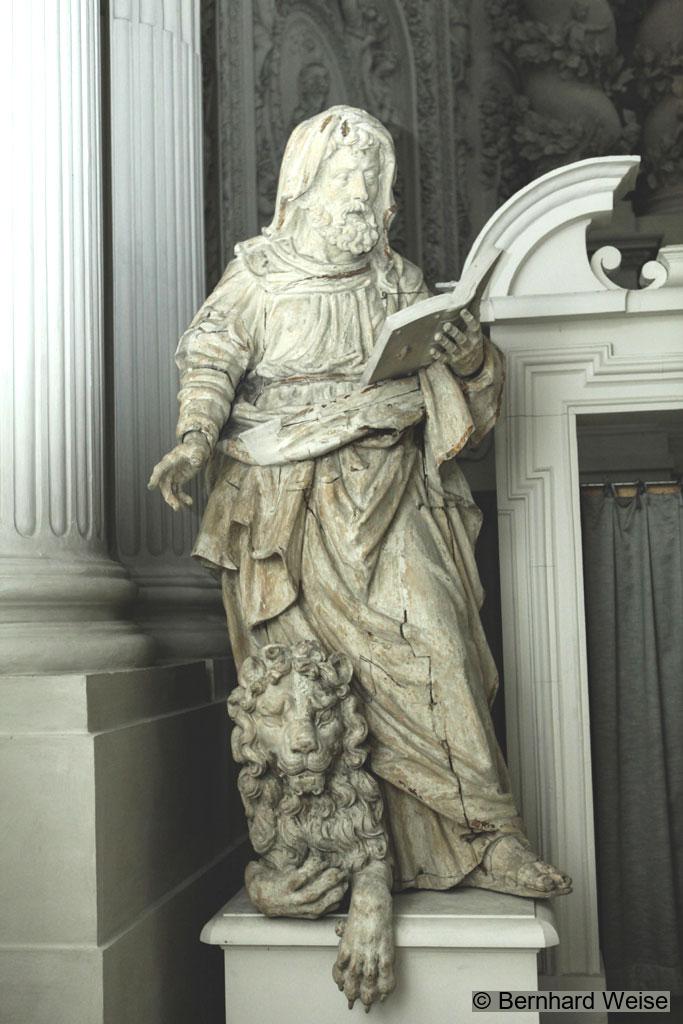
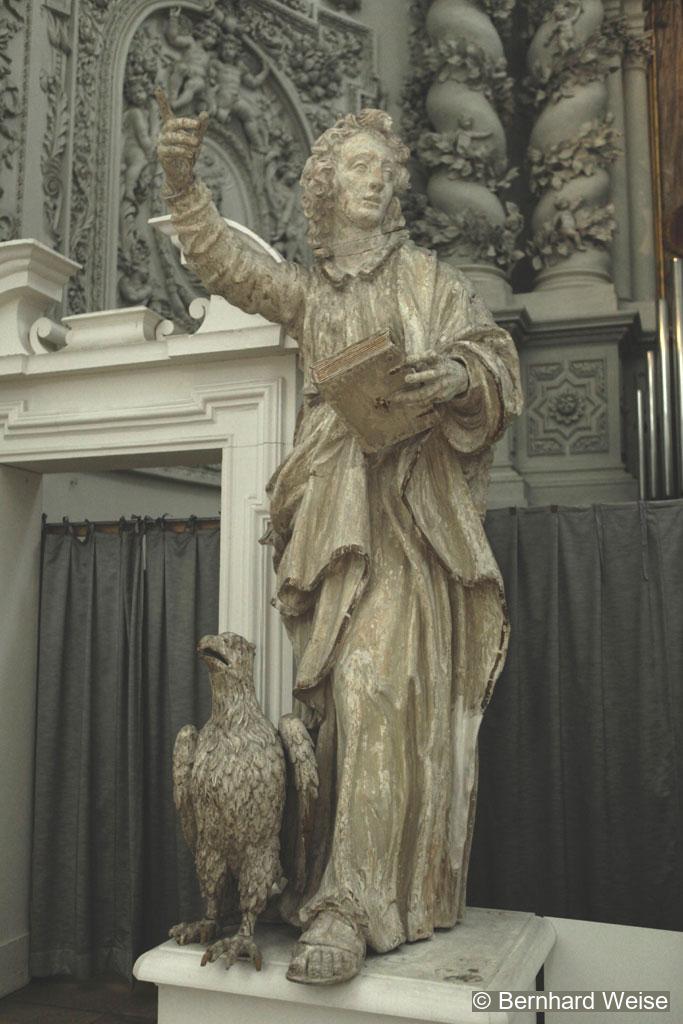
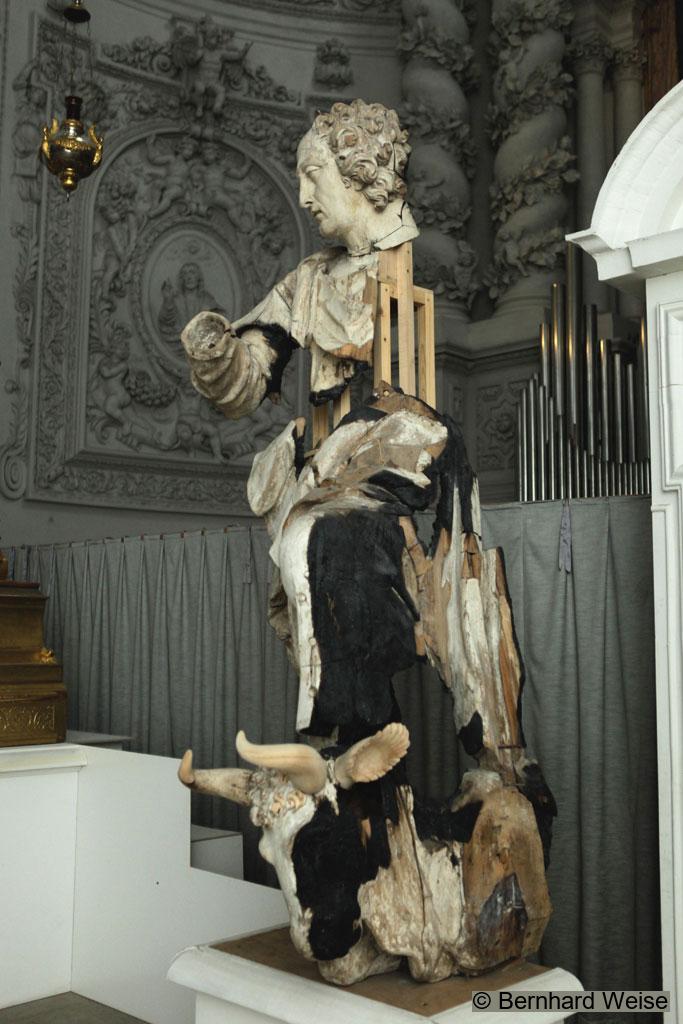
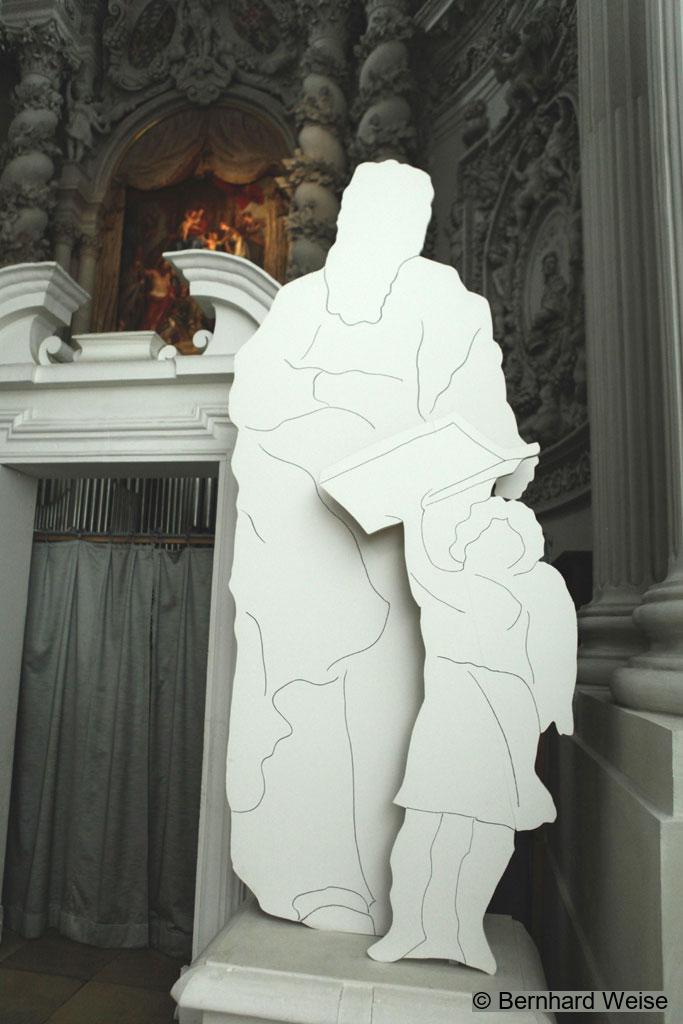
Sculptures of the chancel screen
In front of the presbytery
1670/72
Balthasar Ableithner (1614–1705)
Towards the end of World War II the entire choir area was destroyed by fire, including the high altar, the choir screen and the tabernacle. Of the four evangelist figures flanking the passageways through to the choir, only Marcus, John and Lucas have remained intact. They are counted among the most accomplished Baroque sculptures in Bavaria.
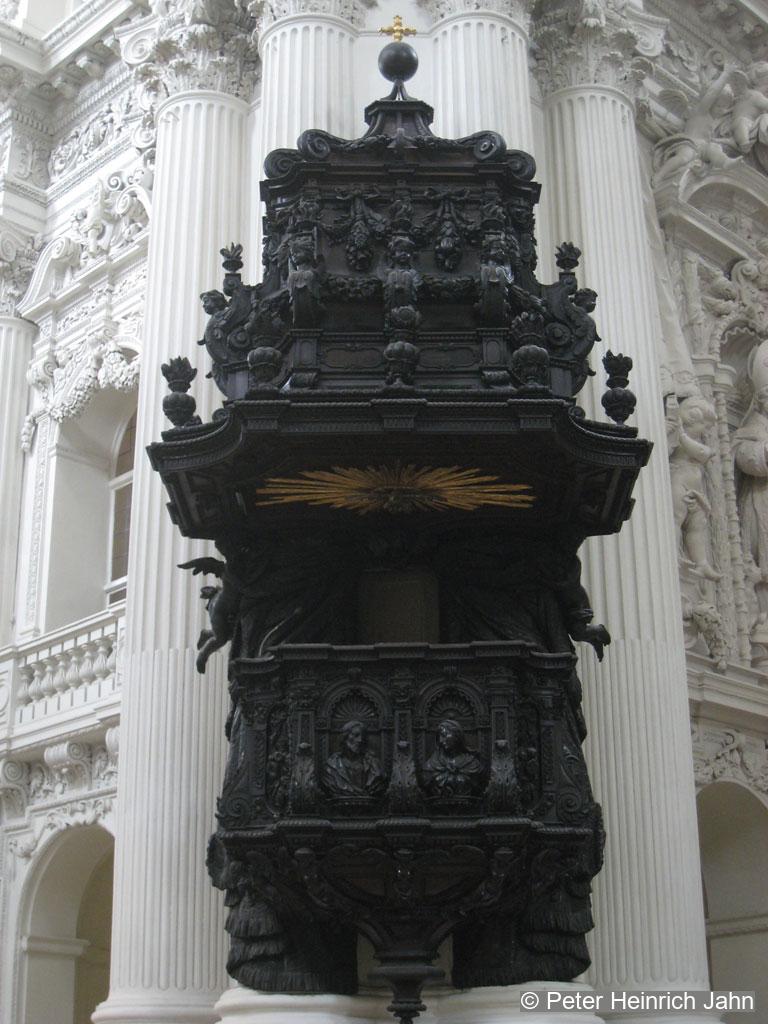
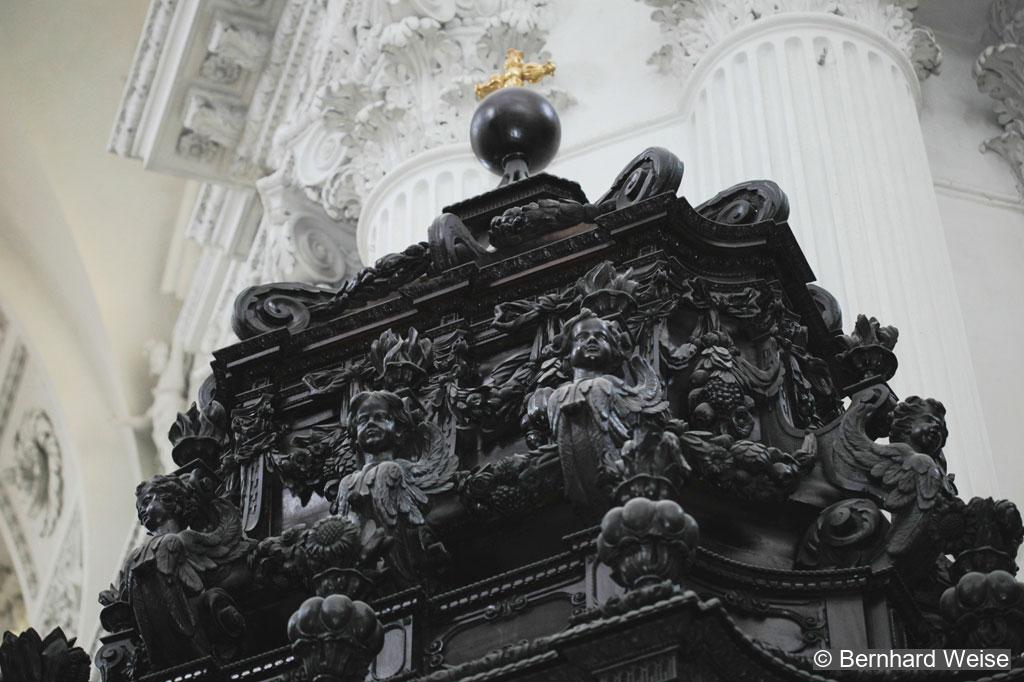
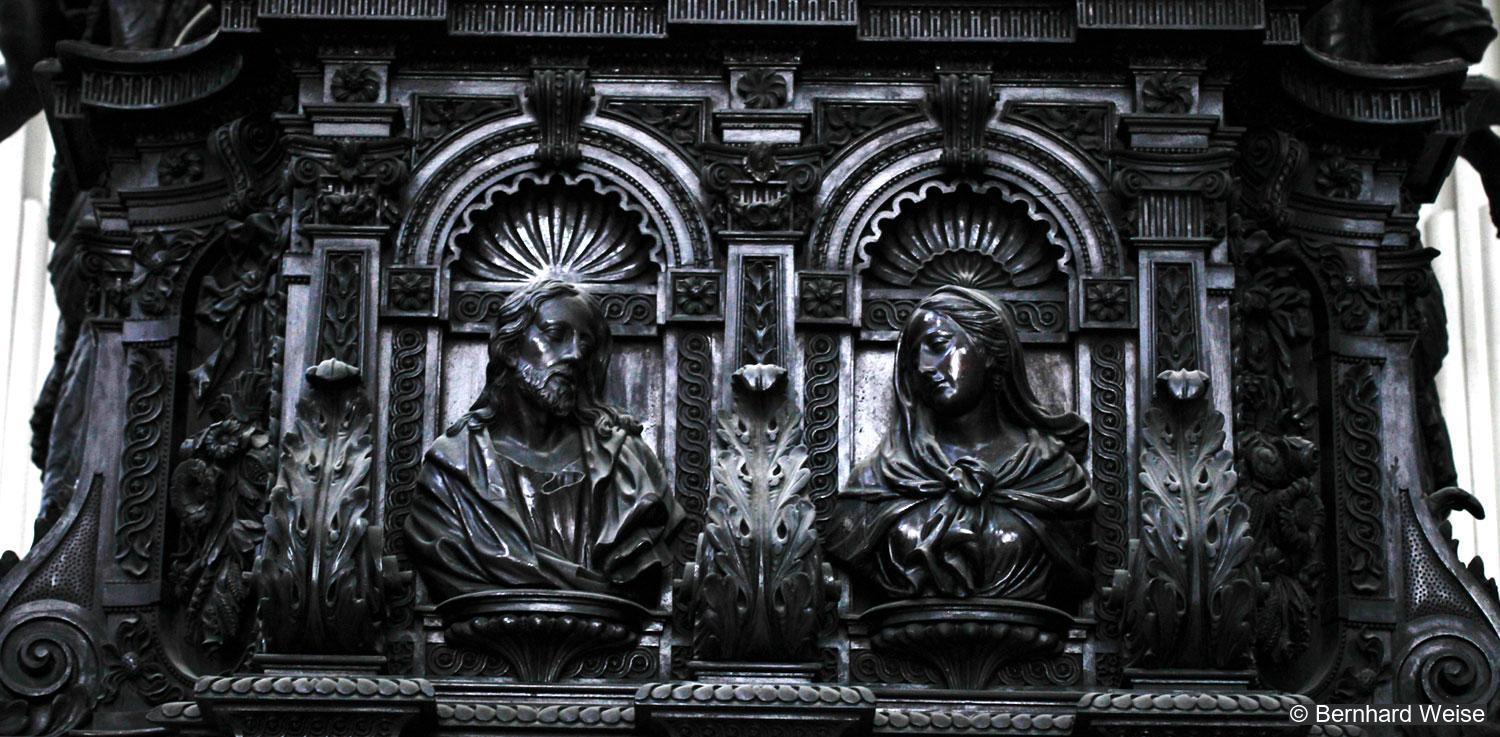
Pulpit
South-eastern pillar/pier crossing
1685–1689
Andreas Faistenberger (1646–1735)
Dark-bated oak pulpit with busts depicting Jesus Christ, the Virgin Mary and Saints Cajetan and Andreas Avellinus.
Altar of the Holy Kinship
In the right transept
Altarpiece: 1676
Altarpiece: Carlo Cignani (1628–1719)
The Altar of the Holy Family (or more broadly the Holy Kinship), with its altarpiece, is a reference to the Bavarian dynasty and the future of Christian Bavaria. The theme of the Annunciation of the Virgin is carried through in the imagery of the altar; the painting, the figures of saints either side, and the predella panel at the bottom. The altar can be seen therefore to indicate the birth of the Crown Prince and reiterate the dedicational background of the church. At one time the altarpiece in the choir (now destroyed) also picked up on this votive purpose.


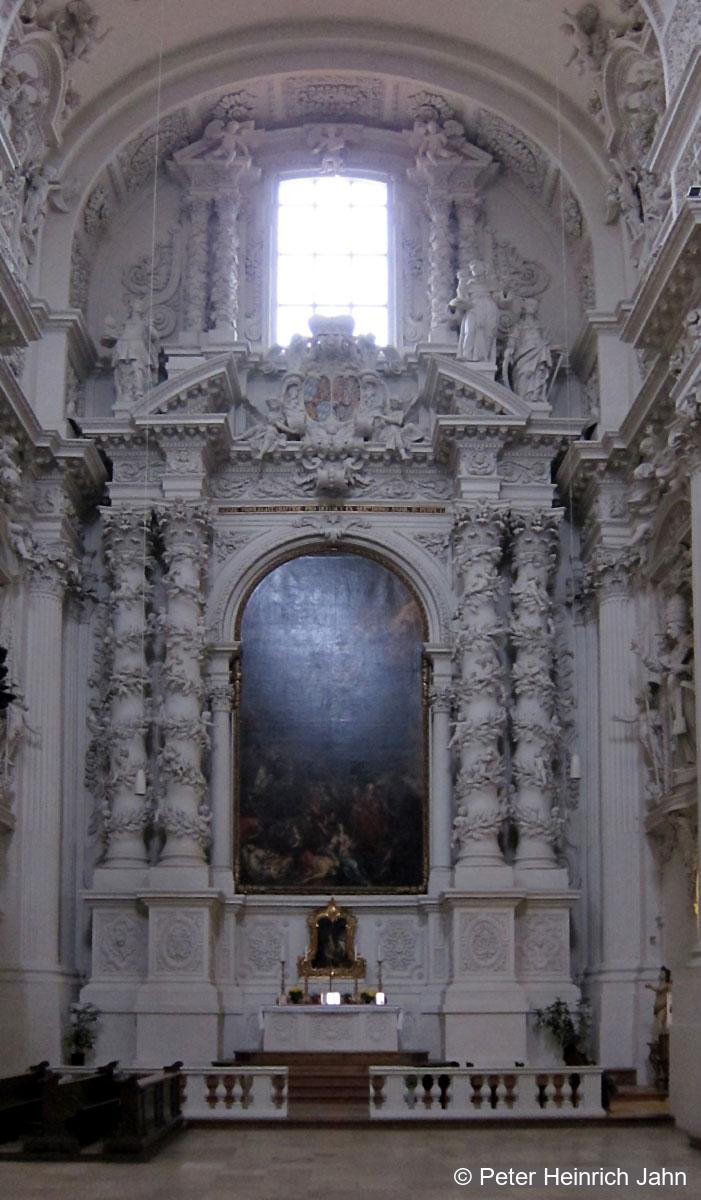
Altar of St. Cajetan
In the left transept
Altarpiece: 1670
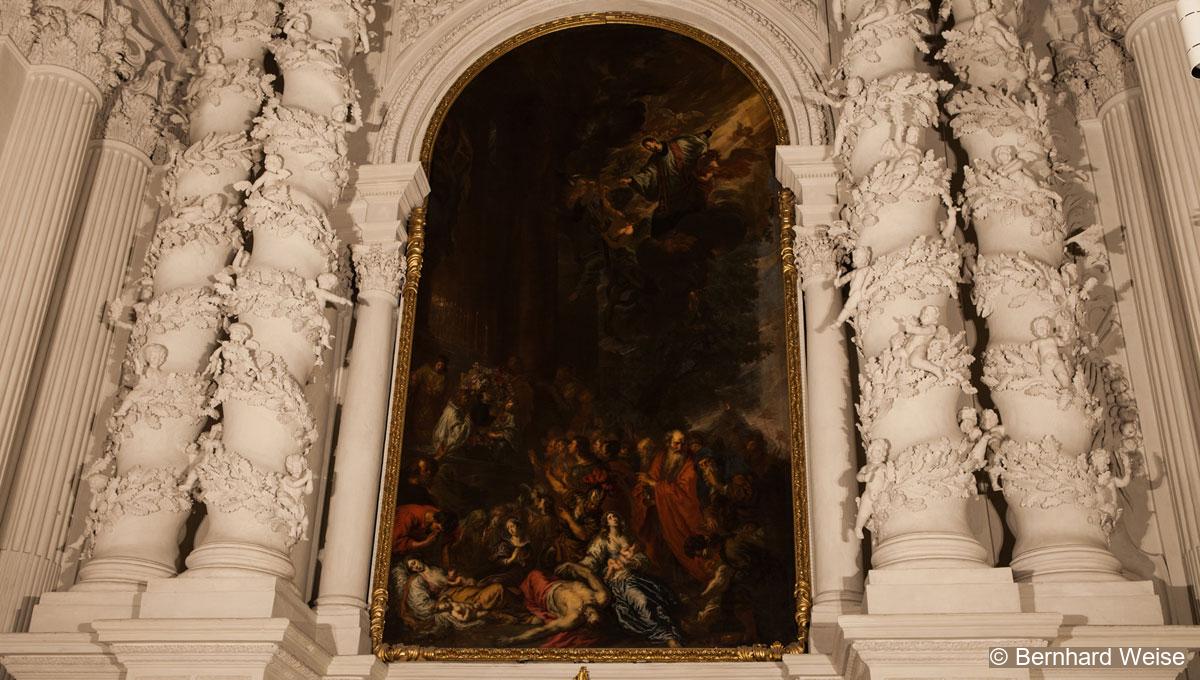
Joachim von Sandrart (1606–1688)
The altar bears a masterpiece of German Baroque painting dedicated to the founder of the Theatine order.
Selected bibliography:
Kaiser, A., Theatinerkirche St. Kajetan München (Kleine Kunstführer 1971), Ratisbone 2008.
Lieb, N., München. Die Geschichte seiner Kunst, 4th revised and enlarged edition, Munich 1988, pp. 223–33.
Braunfels, W., François Cuvilliés. Der Baumeister der galanten Architektur des Rokoko, Munich 1986, pp. 163–8, 186.
Heym, S., Henrico Zuccalli (um 1642–1724). Der kurbayerische Hofbaumeister (Schnell & Steiner Künstlerbibliothek), Munich/Zurich 1984, pp. 32–8.
Riedl, D., “Theatinerkirche St. Kajetan”, Münchens Kirchen (eds. Lieb, N. and Sauermost, H. J.), Munich 1973, pp. 113–26.
Citation of this web page:
Caroline Straube, Heidi Thiede "Court and Theatine Church of St. Cajetan" in "Discover Baroque Art", Museum With No Frontiers, 2026.
https://baroqueart.museumwnf.org/database_item.php?id=monument;BAR;de;Mon12;3;en
MWNF Working Number: DE3 03
RELATED CONTENT
On display in
Exhibition(s)
Discover Baroque Art
Reformation and Counter-Reformation | Religious orders and their function in transmitting the language of the Counter-Reformation Travelling and Exoticism | Travelling artists and patrons and the exchange of artworksDownload
As PDF (including images) As Word (text only)