

 Back
Back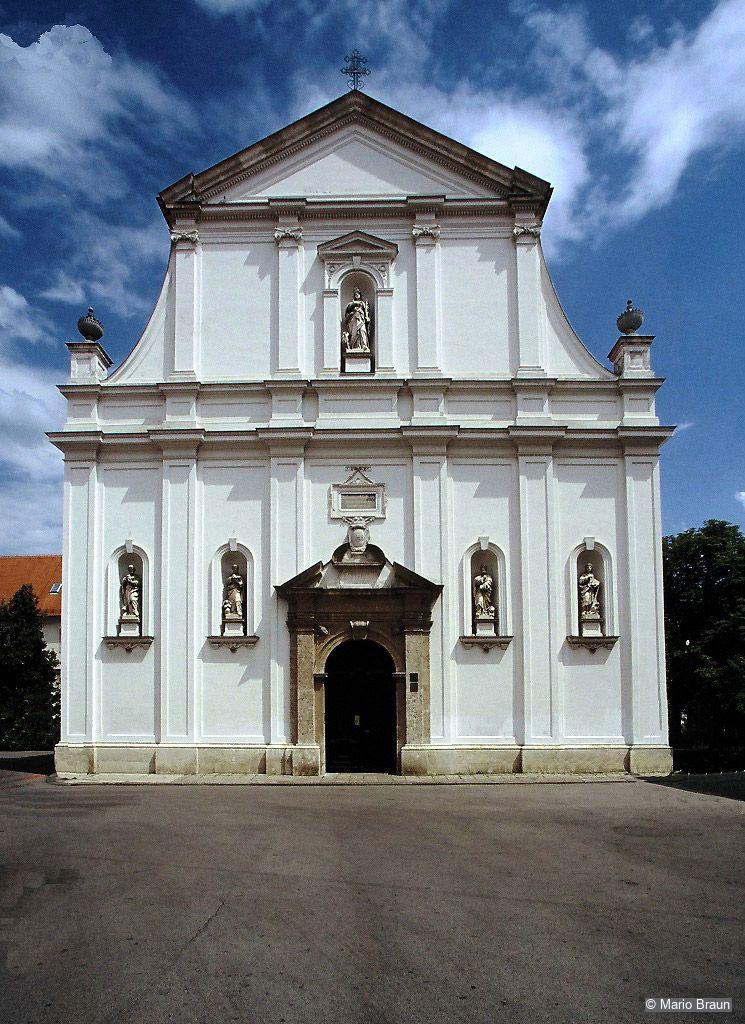
 Add to My Collection
Name of Monument:
Academy Church of St. Catherine
Also known as:
The former Jesuit church
Location:
Zagreb, North-West Croatia, Croatia
Katarinski trg
10000 Zagreb
T : +385 14 851 950
PR Vitezovića 2 (Responsible Institution)
Date:
1620–1632
Artists:
Master builder: Juraj Jassy (Jaszi; active c. 1620); stuccowork: Anton Joseph Quadrio (active c. 1687–1721); painters: Hans Georg Geiger (active 1639–d. 1681), Hans Adam Weissenkircher (1646–1695), Krištof Andrej Jelovšek (Ilovšek, Illouscheg; 1729–1776); sculptors: Ivan Jakob Altenbach (active c. 1675–d. before 1692), Ivan Komersteiner (d. 1694/95); marble sculpture: Francesco Robba (1698–1757)
Denomination / Type of monument:
Religious architecture, an Early Baroque longitudinal nave church with interior buttresses and side chapels
Patron(s):
Society of Jesus
History:
The initiators of the construction of St. Catherine's – the Society of Jesus – arrived in Zagreb's Upper Town in 1606 at the invitation of the Zagreb corporation and bishop, the Croatian ban (viceroy), and Archduke Ferdinand II. The foundation stone was laid in 1620, and the completed building was consecrated in 1632. St. Catherine obtained the status of an Academy Church when the Society was dissolved in 1773.
Description:
The construction of the Jesuit Church of St. Catherine, Zagreb, marked the start of the Baroque period in inland Croatia. It was erected as part of a much larger complex on a prominent site alongside the city walls, and in its very positioning in the town plan heralded a new age. More relevant than that, however, for the development of Baroque architecture, are its architectural features.
Like the home church of the Society – Il Gesù in Rome – St. Catherine's was a longitudinal, barrel-vaulted nave church with side chapels and lofts. However, the design for the chapels between the wall columns is connected to the Central European Late Gothic tradition of interior buttresses – Wandpfeiler – that at the beginning of the 17th century underwent an Early Baroque transformation thanks to the master builder Hans Alberthal. As in the paradigmatic Alberthal church in Dilingen, in St. Catherine's Zagreb, the wall columns are the main element of internal articulation (with Corinthian capitals and sections of architrave), the walls being used for the altars, which, setting the stage towards the sanctuary, give the hall-church interior its Early Baroque dynamic.
It was in accordance with this stylistic and typological determination that the first facade was designed (it was replaced after the 1880 earthquake with a historicist facade). But along with the Early Baroque articulation of the surface with superimposed Tuscan pilasters and cornices, and with an effective stone portal (the portal re-incorporated into today's façade), the structure of the building along with evidence from historical sources, shows that that the original design included two campaniles, which were, however, abandoned during construction. Thus the Jesuit church in Zagreb, with its primarily south German spatial organisation, also corresponded with other churches of the Habsburg monarchy, which during the 17th century were characterised precisely by facades with two campaniles. Indeed St. Catherine's preceded the most important of these churches: the Jesuit church in Vienna, as well as that to which it is most related, the Jesuit church in Trnava.
With its organisation of volume and space, St. Catherine's was the model for a number of Croatian churches, which placed Croatian Early Baroque architecture in the top-ranking Central European constructions of the time.
The Academy Church of St. Catherine in Zagreb was the first religious Jesuit building in Croatia. The design has an international character: the Early Baroque spatial arrangement derived from a distinctive south German hall-type of church with internal buttresses and side chapels on which, at the time, the master builder, Hans Alberthal elaborated. By contrast, the Early Baroque façade, originally designed with two campaniles or bell towers, would have allowed St. Catherine's an elevated position within the hierarchy of Jesuit religious buildings of the Habsburg monarchy, preceding even the most important of them in Vienna and Trnava.
How Monument was dated:
On the basis of documents, archival plans and stylistic features.
Special features
Stuccowork
Church ceiling
1721
Anton Joseph Quadrio (active c. 1687–1721)
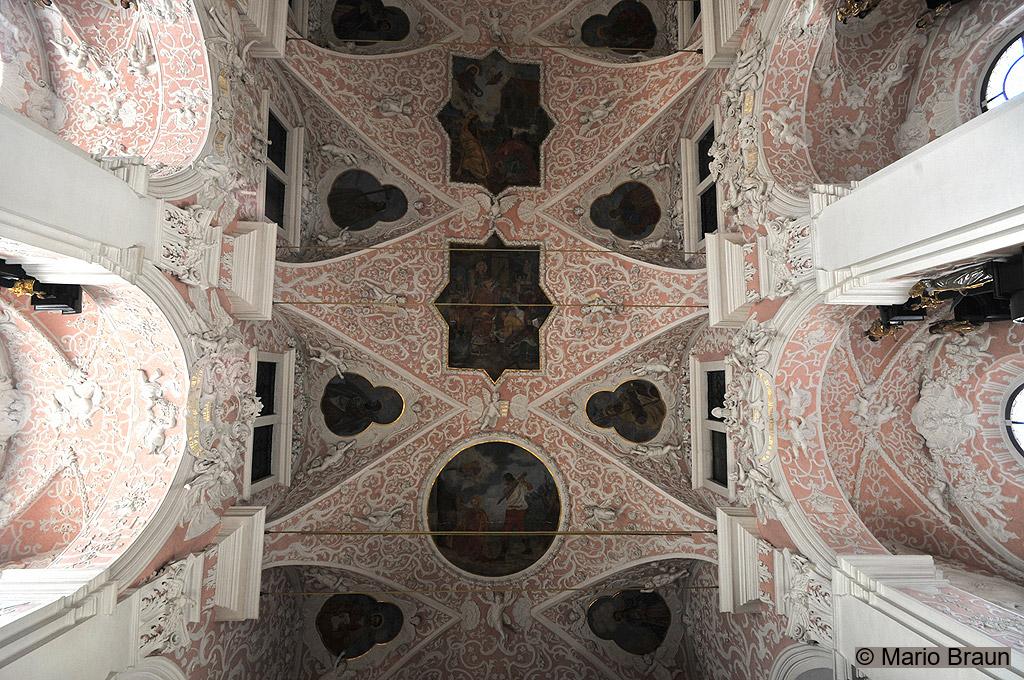
Stucco floral ornamentation and figurative scenes depict the life of the patron saint and saints to which the side chapels were dedicated between 1713 and 1726. The stuccowork, by the Italian master Anton Joseph Quadrio, was constructed between 1713 and 1721, and an anonymous Italian master between 1724 and 1726. With this exquisite work, St. Catherine's reached the ideal of bel composto, the characteristic Baroque unity of architecture, sculpture and painting.

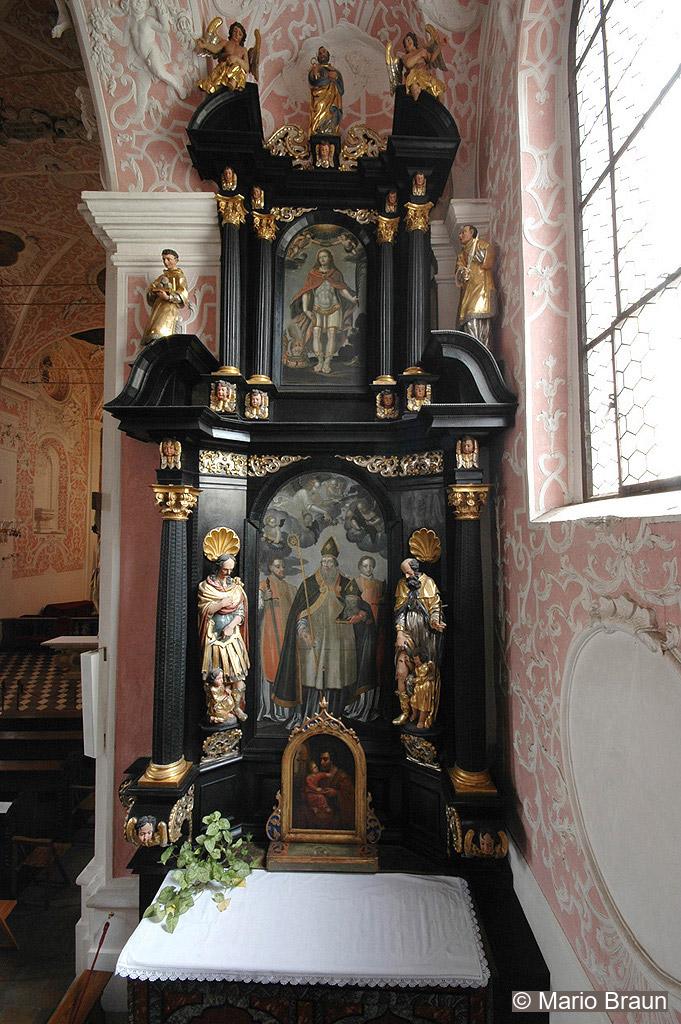
Altar of St. Dionisius (Altar of the Holy Martyrs)
The side chapel of St. Martyrs (St. Dionisius) on the right-hand (south) side of the nave
1675
Ivan Jakob Altenbach (active c. 1675–d. before 1692), Hans Georg Geiger (active 1639–d. 1681)
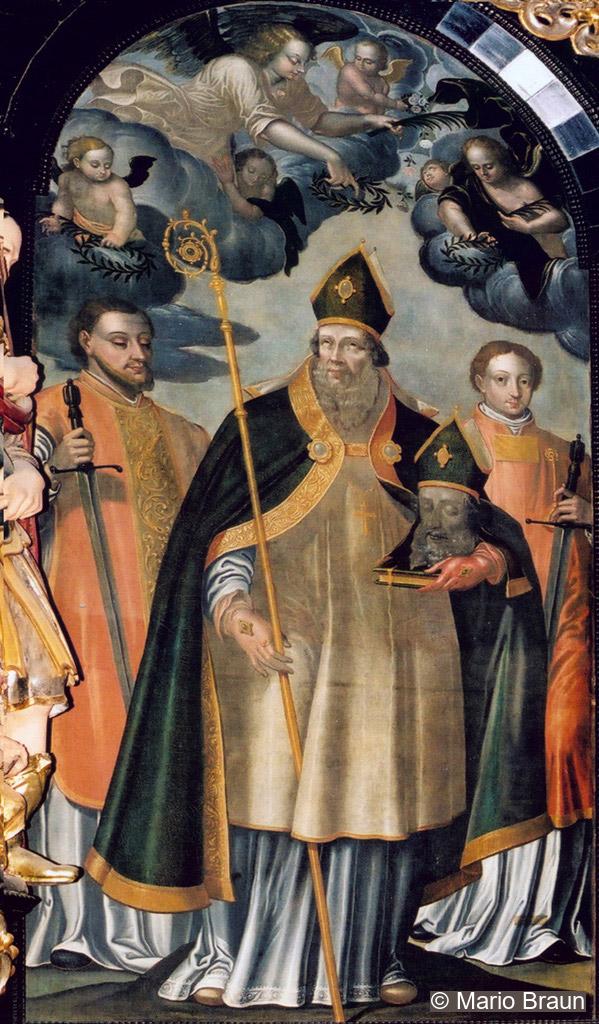
The Altar of St. Dionisius combines sculptures by the early Baroque sculptor from Varasdin, Ivan Jakob Altenbach, and paintings by the Slovenina painter, Hans Georg Geiger. The first domestic sculptor of major artistic note, Ivan Jakob Altenbach appeared in the mid-1670s. His work shows essentially that he overcame the surviving forms of Mannerism to achieve the stylistic features of the Baroque. The Jesuit church in Leoben, Styria, influenced the conservative, two-storey structure of the wooden retable.
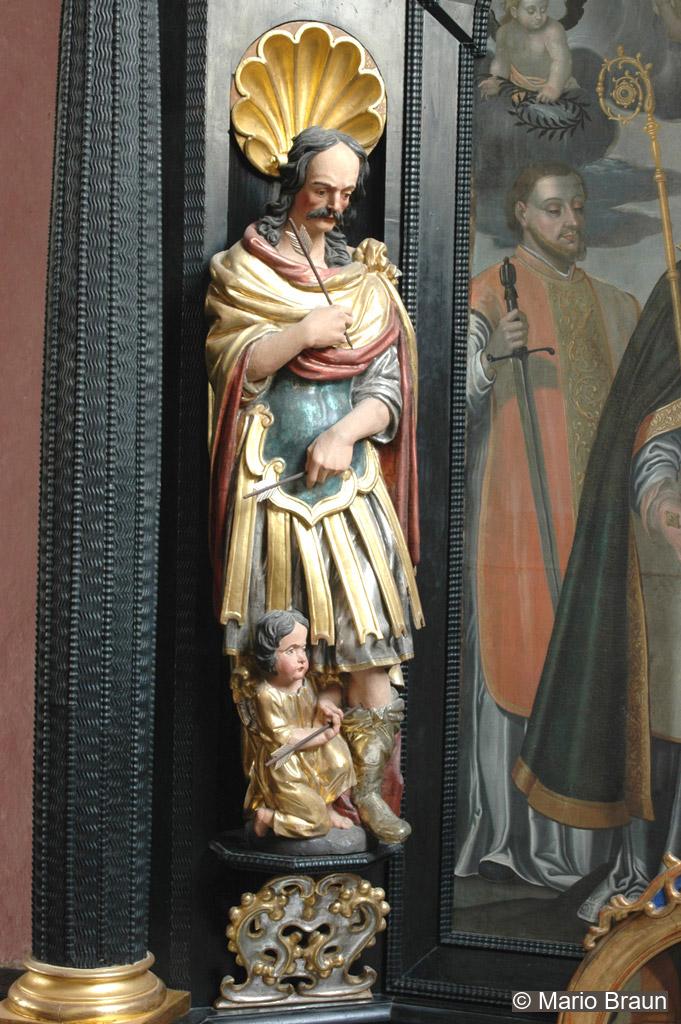
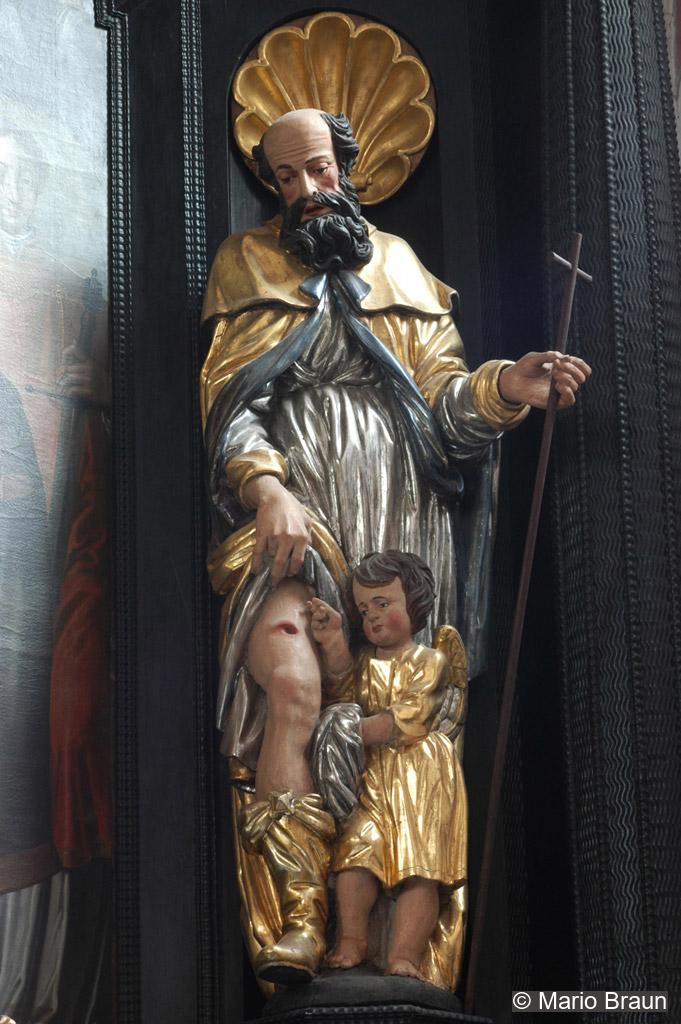
Altar of St. Frances Borgia
The first side chapel of St. Frances Borgia on the right-hand (south) side of the nave
1680
Ivan Komersteiner (d. 1694/95), Hans Adam Weissenkircher (1646–1695)
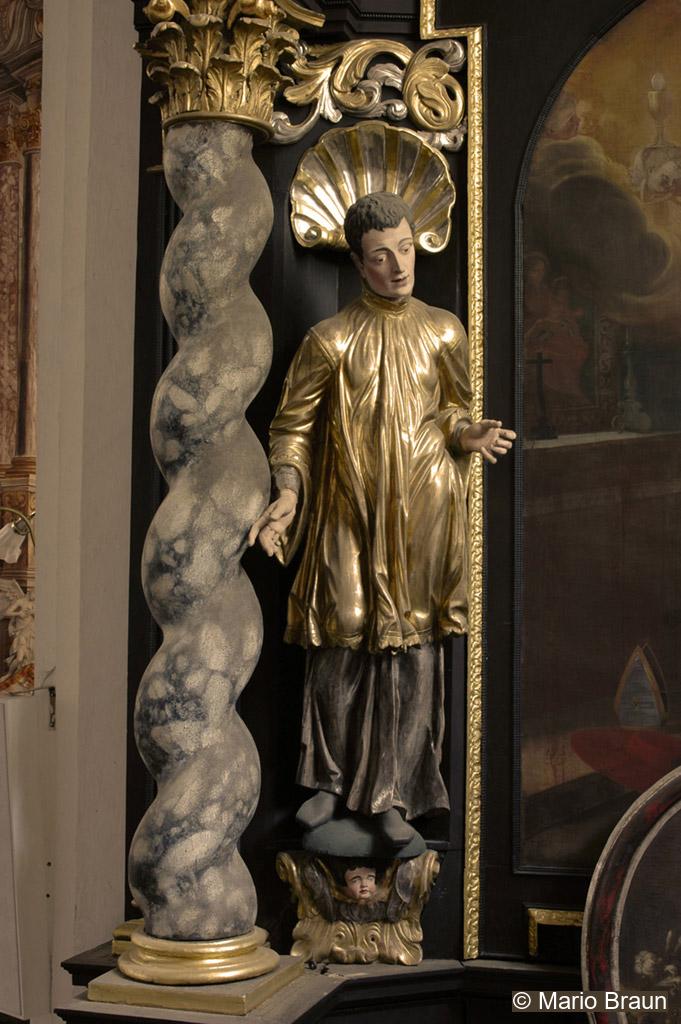
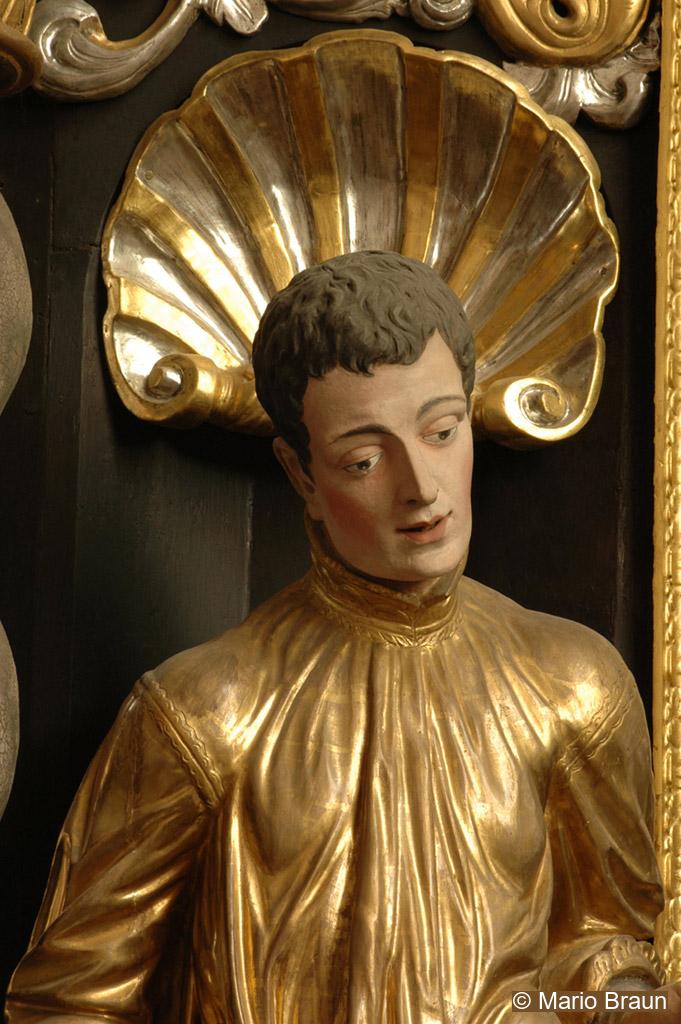
The Altar of St. Francis Borgia is characterised by its conservative, two-storey architectural structure with symmetrically deployed statues. The caryatids of the bottom, the spiral columns, and the acanthus ornaments – which were actually first brought by Komersteiner to Zagreb and northern Croatia in the 1680s – introduce Baroque accents into the church. On the Altar of St. Franics Borgia, softly rounded acanthus leaves sparsely furnish the load-bearing areas and mouldings, more abundantly on the narrow wings. The design of the altarpiece is attributed to H. A. Weissenkircher.
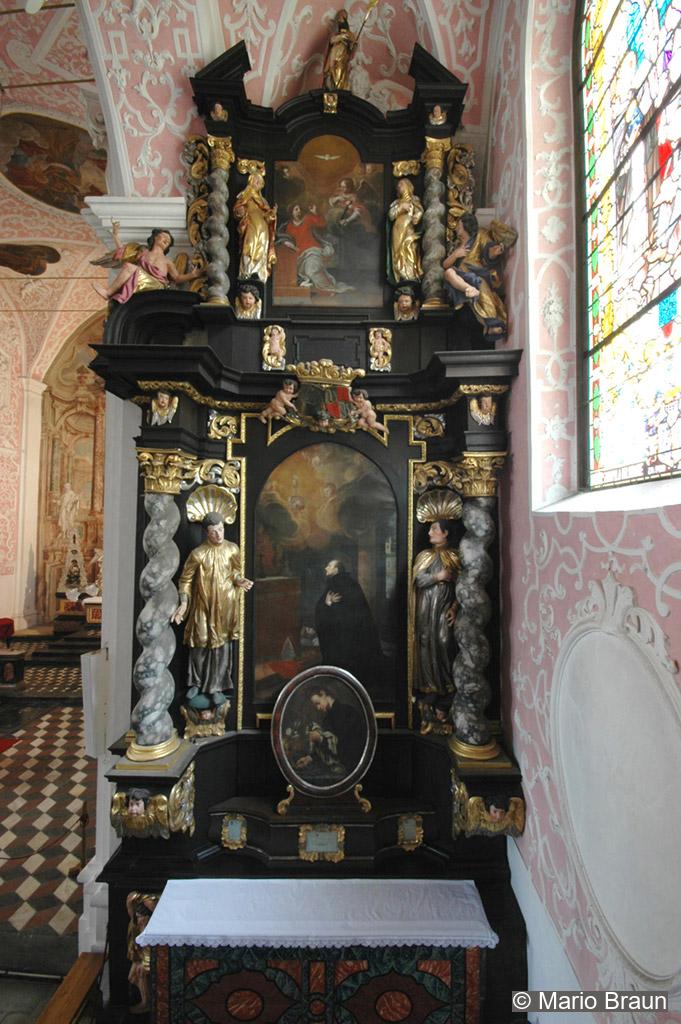
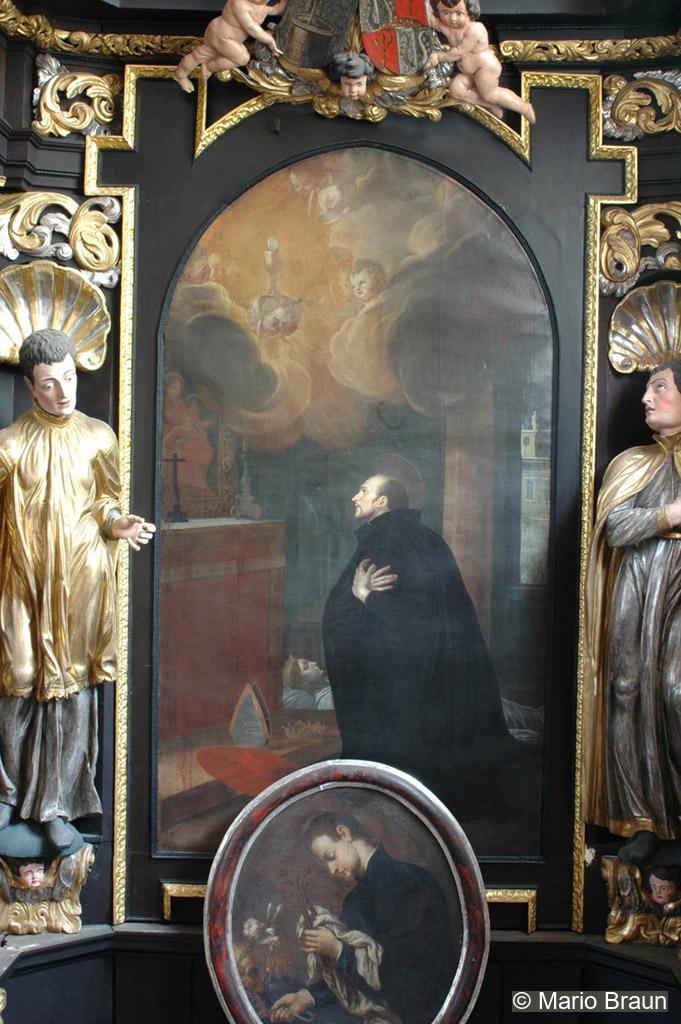
Altar of St. Ignatius
The first side chapel of St. Ignatius on the left-hand (north) side of the nave
1727/1729
Francesco Robba (1698–1757)
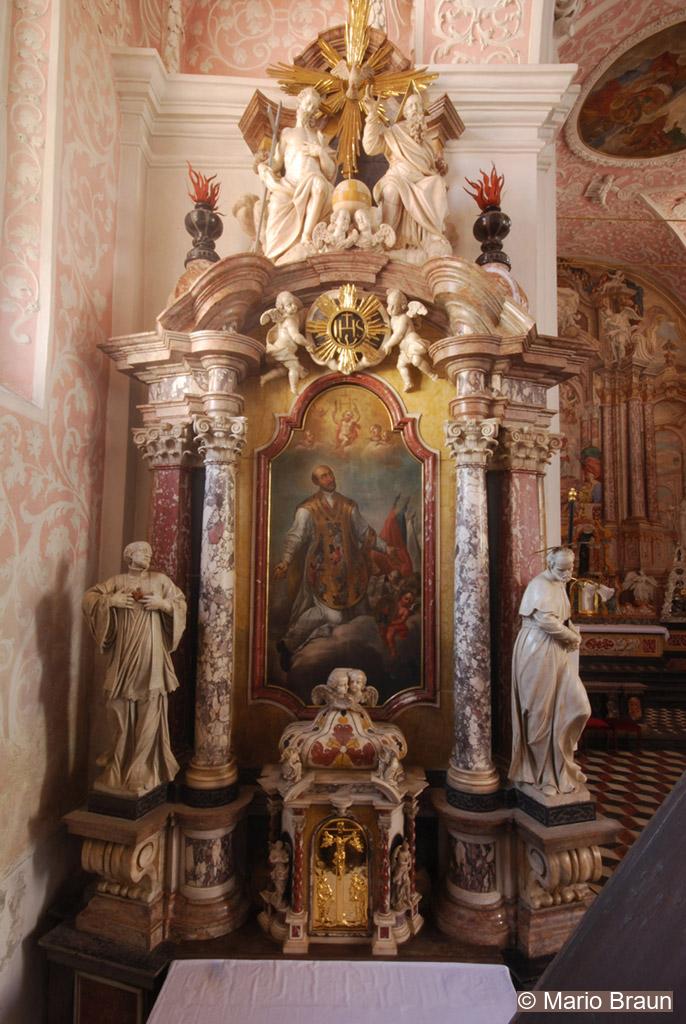
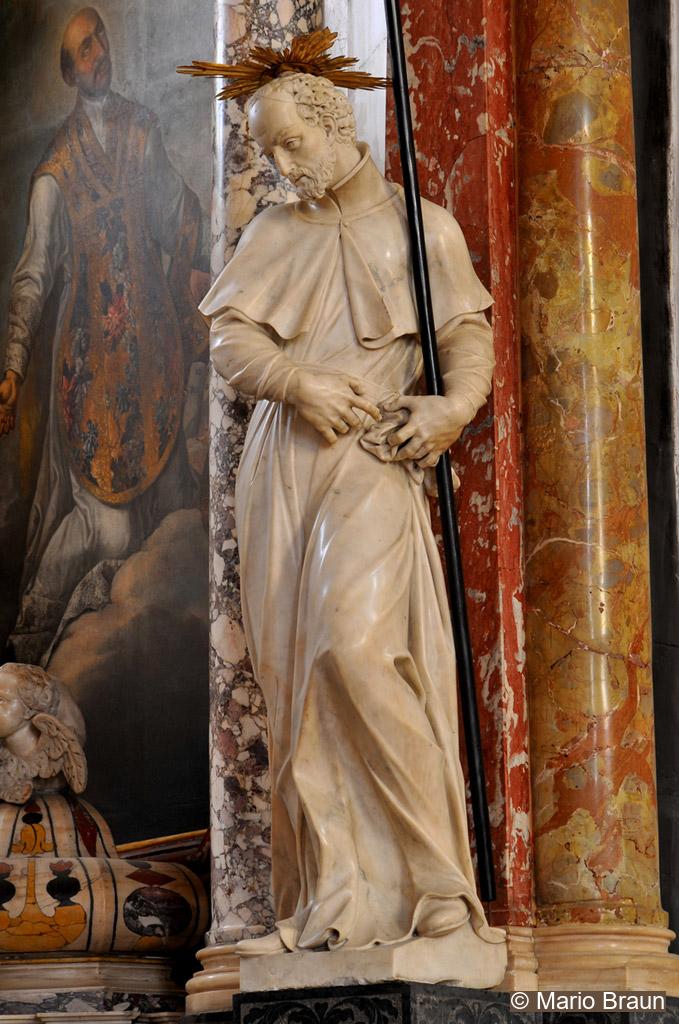
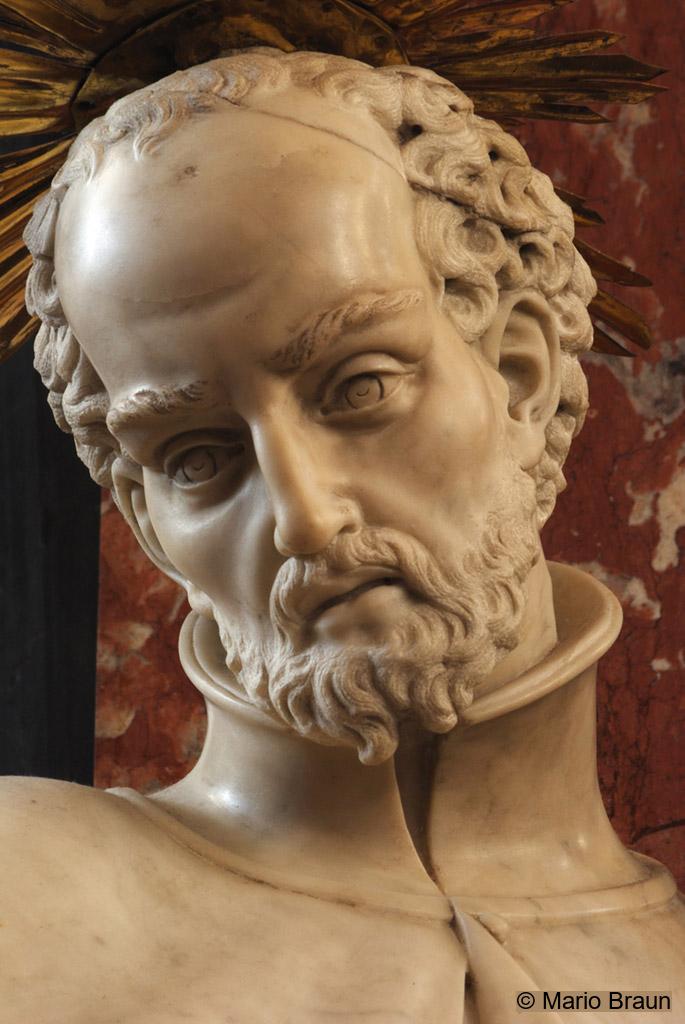
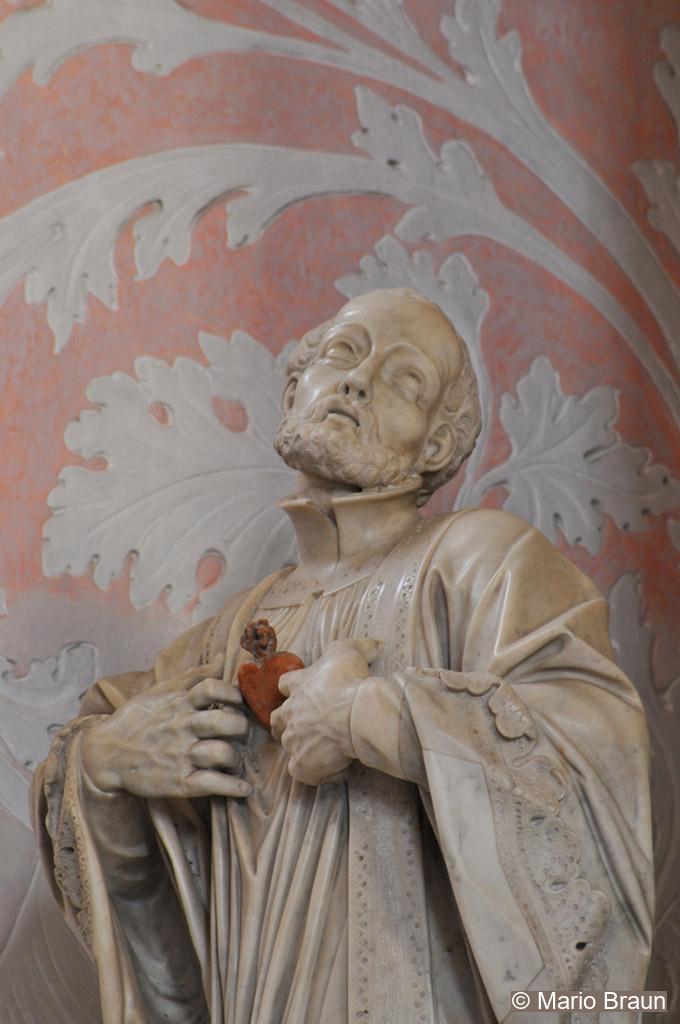
Archbishop Emerik Esterhazy was the donor for the marble Altar of St. Ignatius. In its architectural structure, the altarpiece belongs to a type designed for jesuit churches by Andrea Pozzo. The two side sculptures represent the two Jesuit saints, St. Frances Regis and St. Frances Xavier.
High Altar of St. Catherine of Alexandria
The sanctuary, eastern wall, Academy Church of St. Catherine
1762
Krištof Andrej Jelovšek (Ilovšek, Illouscheg; 1729–1776)
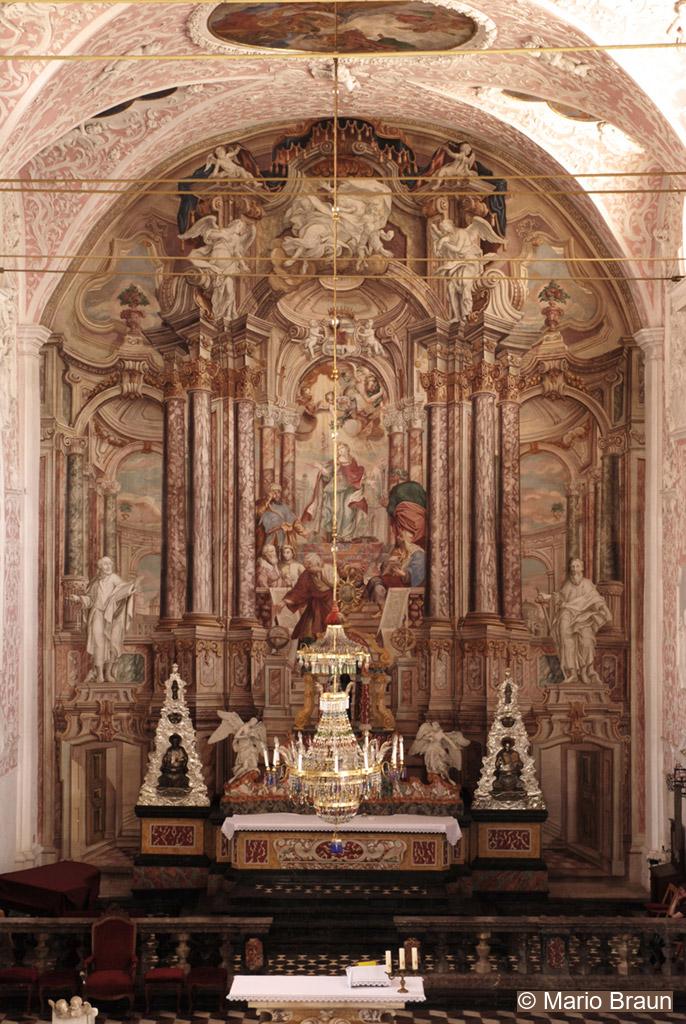
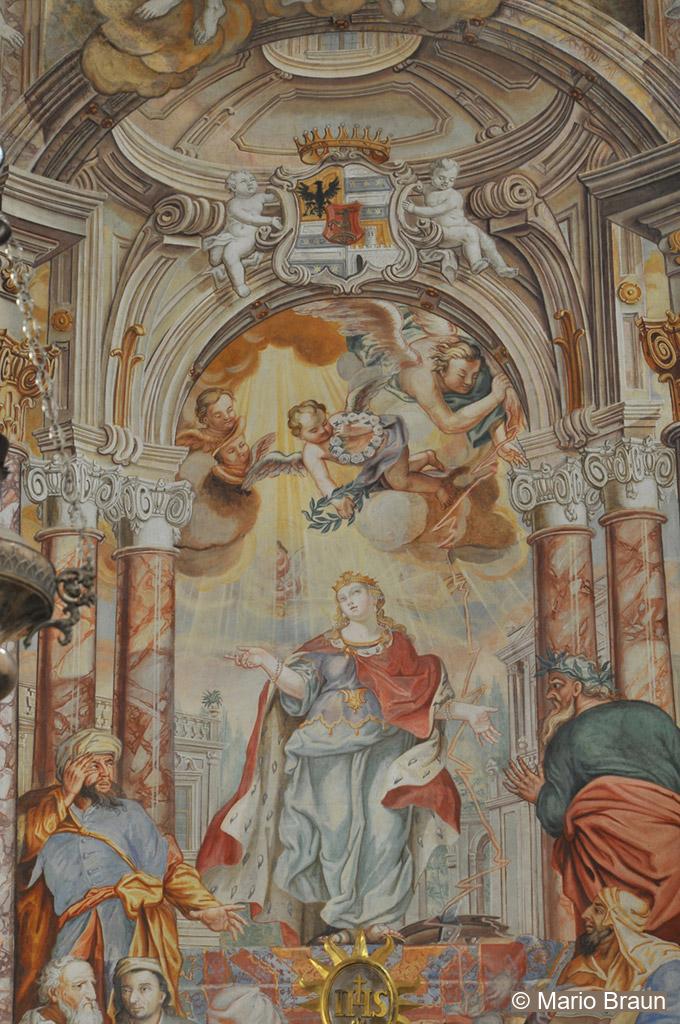
The illusionist fresco St. Catherine Among Alexandrine philosophers and Writers is a quality trompe l'oeil painting displaying illusionist architecture of the Alexandrian temple with the huge figures of St. Catherine and her collocutors occupying the central part of the composition. The painted space spreads towards the background in almost accurate central perspective. On the sides, just above eye level, are St. Paul on the left and St. Peter on the right, while the attic is dedicated to the Holy Trinity accompanied by angels.
Selected bibliography:
Baričević, D., “Varaždinski kipar Ivan Jakob Altenbach” in Peristil, 25, 1982, pp. 107–131.
Cvitanović, D., “Graditelj Hans Alberthal” in Radovi Instituta za povijest umjetnosti, 8, 1984, pp. 63–71.
Dokic, D., Misiuda, D. and Novak, S., “Obnova crkve sv. Katarine u Zagrebu” in Isusovačka baština u Hrvata: u povodu 450-te obljetnice osnutka Družbe Isusove i 500-te obljetnice rođenja Ignacija Loyole, exhibition catalogue, Muzejski prostor, (ed) Biserka Rauter Plančić, Zagreb, 1992, pp. 330–331.
Dobronić, L., “Crkva sv. Katarine u Zagrebu i hrvatsko plemstvo – vodič po starinama” in Tkalčić – godišnjak Društva za povjesnicu zagrebačke nadbiskupije, 4, 2000, pp. 389–421.
Repanić-Braun, M. and First, B., Majstor HGG slikar plastične monumentalnosti, Zagreb–Ljubljana, 2005.
Horvat-Levaj, K., “Ranobarokno pročelje crkve sv. Katarine u Zagrebu – nedovršeni projekt s dva zvonika” in Radovi Instituta za povijest umjetnosti, 31, 2007, pp. 91–110.
Citation of this web page:
Katarina Horvat-Levaj, Mirjana Repanić-Braun "Academy Church of St. Catherine" in "Discover Baroque Art", Museum With No Frontiers, 2026.
https://baroqueart.museumwnf.org/database_item.php?id=monument;BAR;hr;Mon11;1;en
Prepared by: Katarina Horvat-LevajKatarina Horvat-Levaj
SURNAME: Horvat-Levaj
NAME: Katerina
AFFILIATION: Institute of Art History, Zagreb
TITLE: PhD, Scientific Consultant
CV:
Katerina Horvat-Levaj graduated with a BA in Art History and Archaeology in 1981 from the University of Zagreb (Faculty of Philosophy, Department of Art History). In 1985 she obtained her MA and in 1988 she was awarded a scholarship at the University of Padua. In 1995 she defended her Doctorate at Zagreb University on Representative Residential Architecture of the Baroque in Dubrovnik. Since 1982, she has been employed at the Institute of Art History in Zagreb, and is presently a Senior Research Associate. Katarina also teaches at the University of Split. At the University of Zagreb she participates at doctoral level in the Faculty of Croatian Studies and the faculties of Architecture and Philosophy., Mirjana Repanić-BraunMirjana Repanić-Braun
SURNAME: Repanić-Braun
NAME: Mirjana
AFFILIATION: Institute of Art History, Zagreb
TITLE: PhD, Scientific Consultant
CV:
From 1981 to 1982 Mirjana Repanić-Braun was a curator of the Academy’s collection of sculpture in the Gliptoteque of the Croatian Academy of Arts and Sciences; from 1983 to 1998 she worked in the Croatian Academy’s Archives for Visual Arts. Mirjana has been employed as a researcher at the Institute of Art History in Zagreb since 1998: from 2001, as head of the scientific project Baroque Painting, Sculpture and Crafts of Continental Croatia, and since 2006, as head of the scientific project Baroque, Classicism and Historicism in the Arts of North Croatia. Mirjana teaches Art History at the universities of Rijeka and Split. At the University of Zagreb, she participates at doctoral level in the Faculty of Croatian Studies and the Faculty of Philosophy.
Translation by: Graham McMaster, Mirjana Repanić-BraunMirjana Repanić-Braun
SURNAME: Repanić-Braun
NAME: Mirjana
AFFILIATION: Institute of Art History, Zagreb
TITLE: PhD, Scientific Consultant
CV:
From 1981 to 1982 Mirjana Repanić-Braun was a curator of the Academy’s collection of sculpture in the Gliptoteque of the Croatian Academy of Arts and Sciences; from 1983 to 1998 she worked in the Croatian Academy’s Archives for Visual Arts. Mirjana has been employed as a researcher at the Institute of Art History in Zagreb since 1998: from 2001, as head of the scientific project Baroque Painting, Sculpture and Crafts of Continental Croatia, and since 2006, as head of the scientific project Baroque, Classicism and Historicism in the Arts of North Croatia. Mirjana teaches Art History at the universities of Rijeka and Split. At the University of Zagreb, she participates at doctoral level in the Faculty of Croatian Studies and the Faculty of Philosophy.
Translation copyedited by: Mandi GomezMandi Gomez
Amanda Gomez is a freelance copy-editor and proofreader working in London. She studied Art History and Literature at Essex University (1986–89) and received her MA (Area Studies Africa: Art, Literature, African Thought) from SOAS in 1990. She worked as an editorial assistant for the independent publisher Bellew Publishing (1991–94) and studied at Bookhouse and the London College of Printing on day release. She was publications officer at the Museum of London until 2000 and then took a role at Art Books International, where she worked on projects for independent publishers and arts institutions that included MWNF’s English-language editions of the books series Islamic Art in the Mediterranean. She was part of the editorial team for further MWNF iterations: Discover Islamic Art in the Mediterranean Virtual Museum and the illustrated volume Discover Islamic Art in the Mediterranean.
True to its ethos of connecting people through the arts, MWNF has provided Amanda with valuable opportunities for discovery and learning, increased her editorial experience, and connected her with publishers and institutions all over the world. More recently, the projects she has worked on include MWNF’s Sharing History Virtual Museum and Exhibition series, Vitra Design Museum’s Victor Papanek and Objects of Desire, and Haus der Kulturen der Welt’s online publication 2 or 3 Tigers and its volume Race, Nation, Class.
MWNF Working Number: HR 01
RELATED CONTENT
On display in
Exhibition(s)
Discover Baroque Art
The Age of Enlightenment | Discovering the world: rationalist thinking and practice Reformation and Counter-Reformation | Religious orders and their function in transmitting the language of the Counter-ReformationDownload
As PDF (including images) As Word (text only)