

 Back
Back
 Add to My Collection
Name of Monument:
Varaždin Cathedral
Also known as:
Cathedral of the Assumption of the Virgin Mary
Location:
Varaždin, North-West Croatia, Croatia
Pavlinska 4
PP 247
42000 Varaždin
T : +385 42 321 400
Varaždin Bishopric (Responsible Institution)
Date:
1642–1646
Artists:
Designer/supervisor: Jesuit Juraj Matota (c. 1700–?); sculpture (high altar) attributed to Ivan Walz (active 1737); stuccowork: Anton Joseph Quadrio (active c. 1687–1721); painter: Blasius Grueber (c. 1700–1753); Sculptor: Filip Jakob Straub (1706–1774)
Denomination / Type of monument:
Religious architecture
Patron(s):
Count Gašpar Drašković and Count Gabriel Erdödy
History:
The Jesuit Church, now the Cathedral of the Assumption of the Virgin Mary in Varaždin, was built between 1642 and 1646. Count Gašpar Drašković commissioned the church, which was designed by the Jesuit, Juraj Matota, who was born in Koprivnica. The plan follows that of the Academy Church of St. Catherine in Zagreb.
Description:
This single-nave Baroque church has three pairs of side chapels with galleries above them. A barrel-vault surmounts the presbytery, which is as wide as the nave. Although the Jesuit Church in Varaždin follows the design established for the Academy Church of St. Catherine in Zagreb, it does not have the distinguished contrasts of the inventory accomplished in different periods. The main reason for this is the absence of stucco decoration: in St. Catherine's no surfaces are without it. Additionally, the main and side altars, as well as the pulpit, are somewhat later works of different provenance.
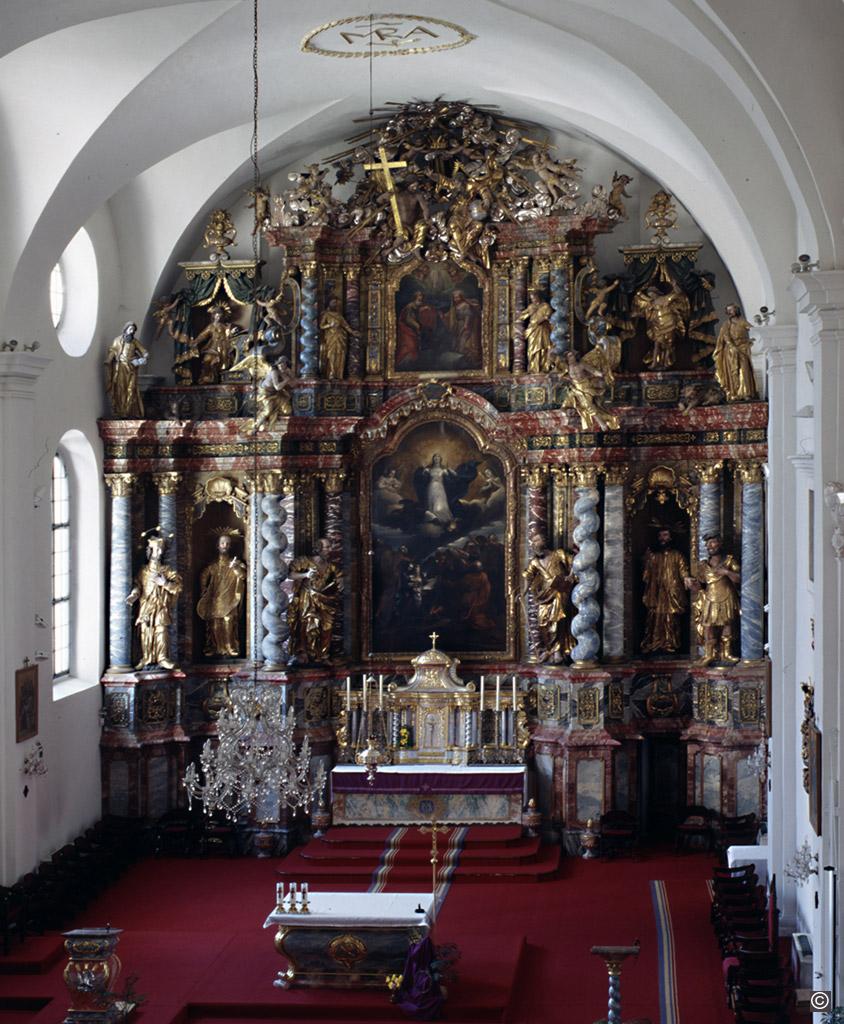
Most impressive is the main altar, which dates to 1737 when Andrija Zamberger was rector. The altar's spatial organisation and the theatrical effects in the attic are impressive: the Annunciation, divided into two parts positioned opposite each other, flanks the central zone with the painting St. Joachim and St. Anne, and statues of the four evangelists, which rise above the architrave. While the attic statues appear elegant and well proportioned, the huge statues of St. Peter and St. Paul, St. Ignatius and St. Frances Xavier in the lower part of the altar, appear almost grotesque in their proportions as they attempt to compete with the monumental architectural structure. Heavy and monumental in the lower part, and yet playful and light in the attic where the Holy Trinity is accompanied with joyful angels, the main altar dominates both the presbytery and the church as a whole.
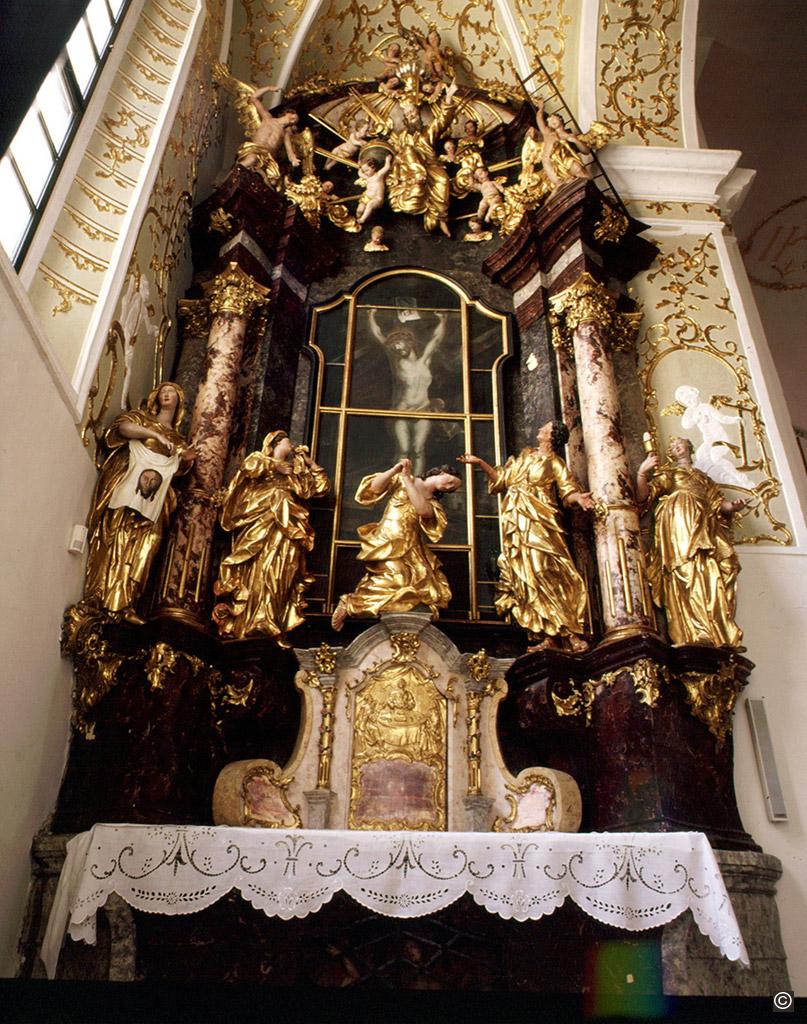
All six of the side chapels had their own altarpieces at one time but only three remain today: the altars of St. Francis Xavier and St. Ignatius are in the first pair of side chapels built in 1742 and 1743 and commissioned and paid for by Count Gabriel Erdödy. The most beautiful altar, however, is in the Chapel of the Holy Cross, the decoration of which was paid for by the Fraternity of the Passion and Death of Christ or Merciful Death.
Varaždin Cathedral, the second church built by the Jesuits in Croatia, is one of the most important Baroque churches in the northwest of the country. A longitudinal, single-nave church with three chapels on each side, it is surmounted by a barrel vault. The nave continues into an equally wide presbytery with a window. The presbytery has an oculus above it on the left-hand side; the sacristy door is on the right.
How Monument was dated:
Mostly through archival documents and inscriptions.
Special features
High Altar
Presbytery
1737
Ivan Walz (active 1737)
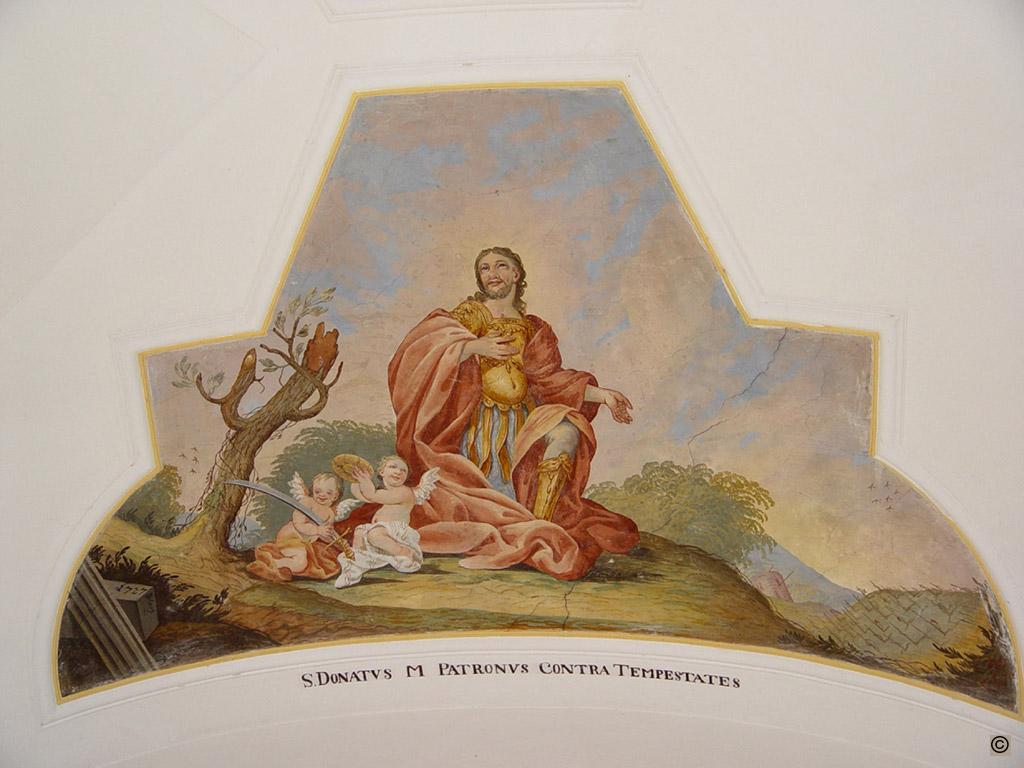
Sculptures of St. Peter and St. Paul, St Ignatius and St Frances Xavier standing in shallow niches furnish the lower side sections of the high altar. At either side of the retable are sculptures of St. John Nepomuk and St. Donat Martyr. In the attic, the Annunciation accompanied by saints and angels, is divided into two zones.
In around 1737, the sculptor, Ivan Walz, was working in Varaždin having taken over the workshop of the Reiss-Schoy family in Maribor, thus it is probable that this altarpiece is his work.
Stucco ornamentation
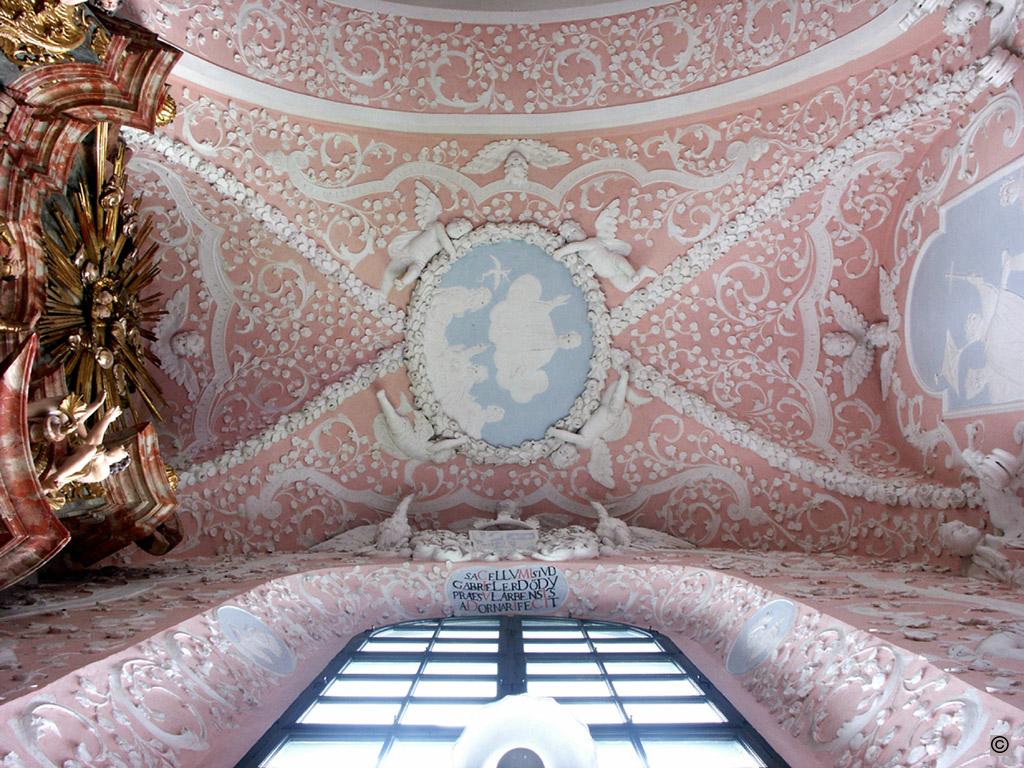
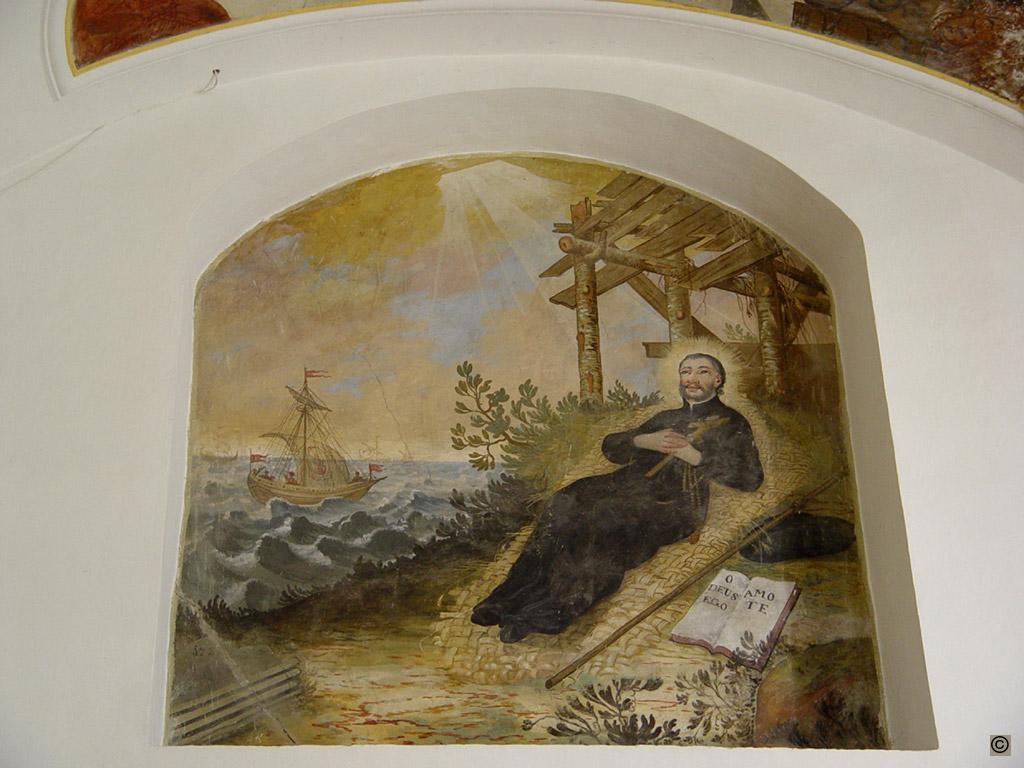
The Chapel of St. Francis Xavier
1710
Anton Joseph Quadrio (active c. 1687–1721)
The decoration consists of floral ornamentation, angels, and figurative representations depicting scenes from St Frances Xavier’s missionary activities and his dying vision on Shangchuan Island in China.



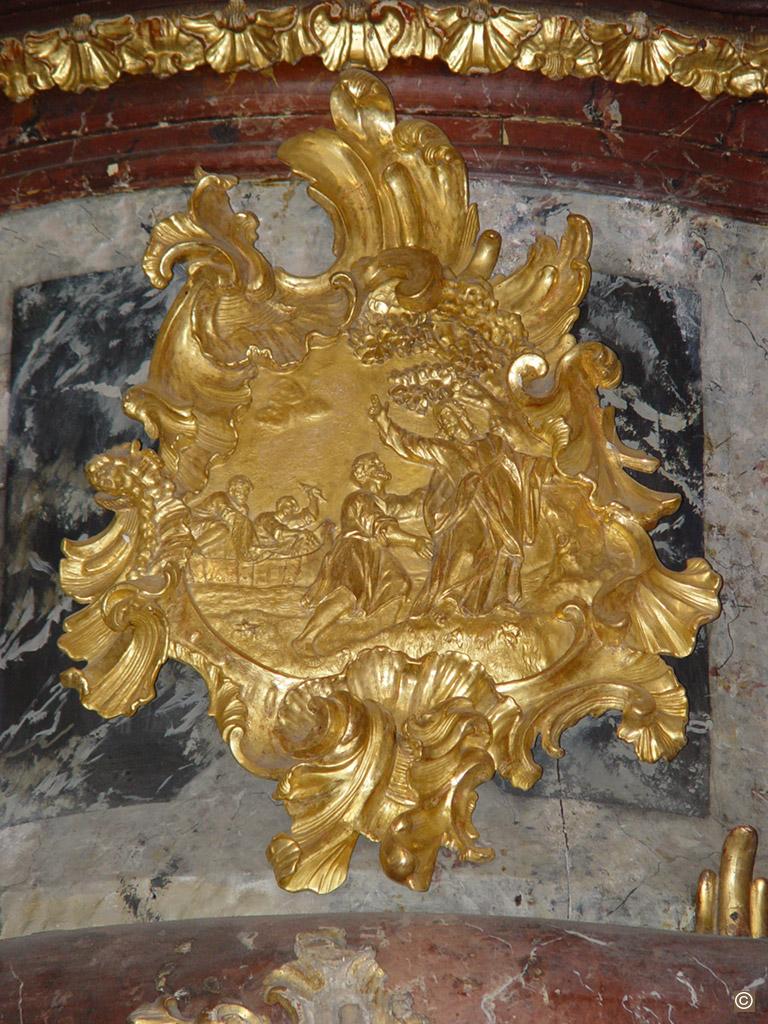
Christ Appears on the Sea of Galilee
Cartouche relief on the pulpit
1761
Filip (Philipp) Filip Jakob Straub (1706–1774)
The cartouche is in the Rococo style. The central area, in low relief, presents the miraculous catch of fish described in the Gospel of St. John (21: 1–14).
Altar of St. Cross
The Chapel of the Holy Cross
1762
Filip (Philipp) Filip Jakob Straub (1706–1774)
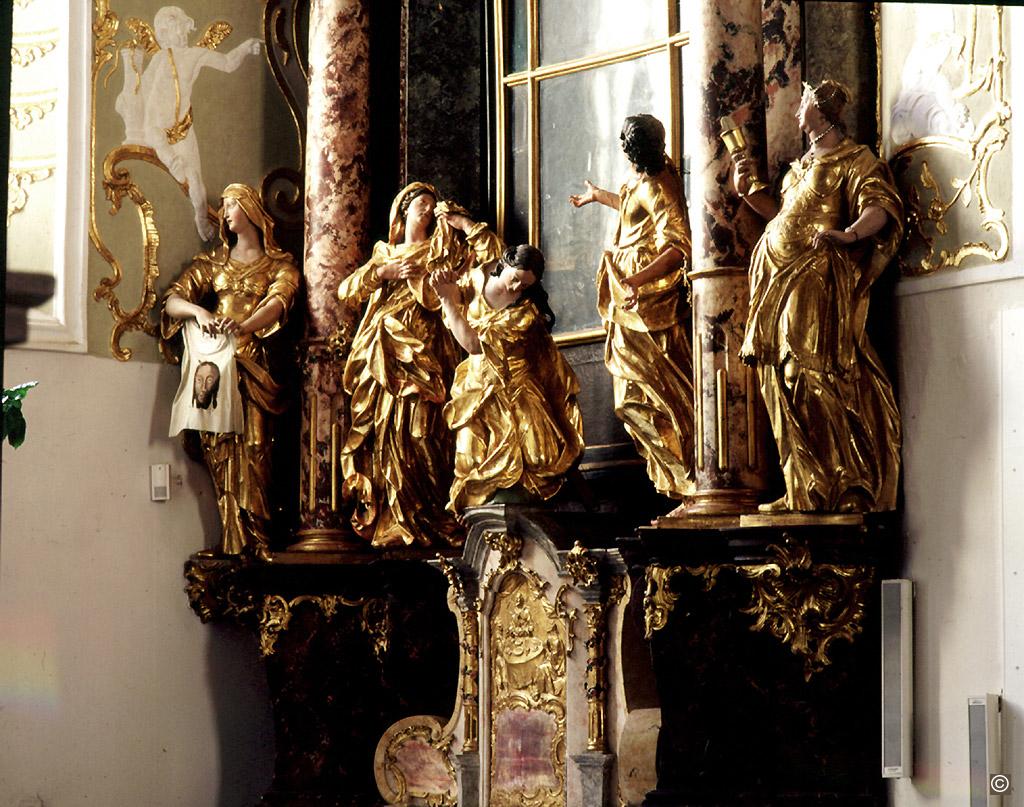
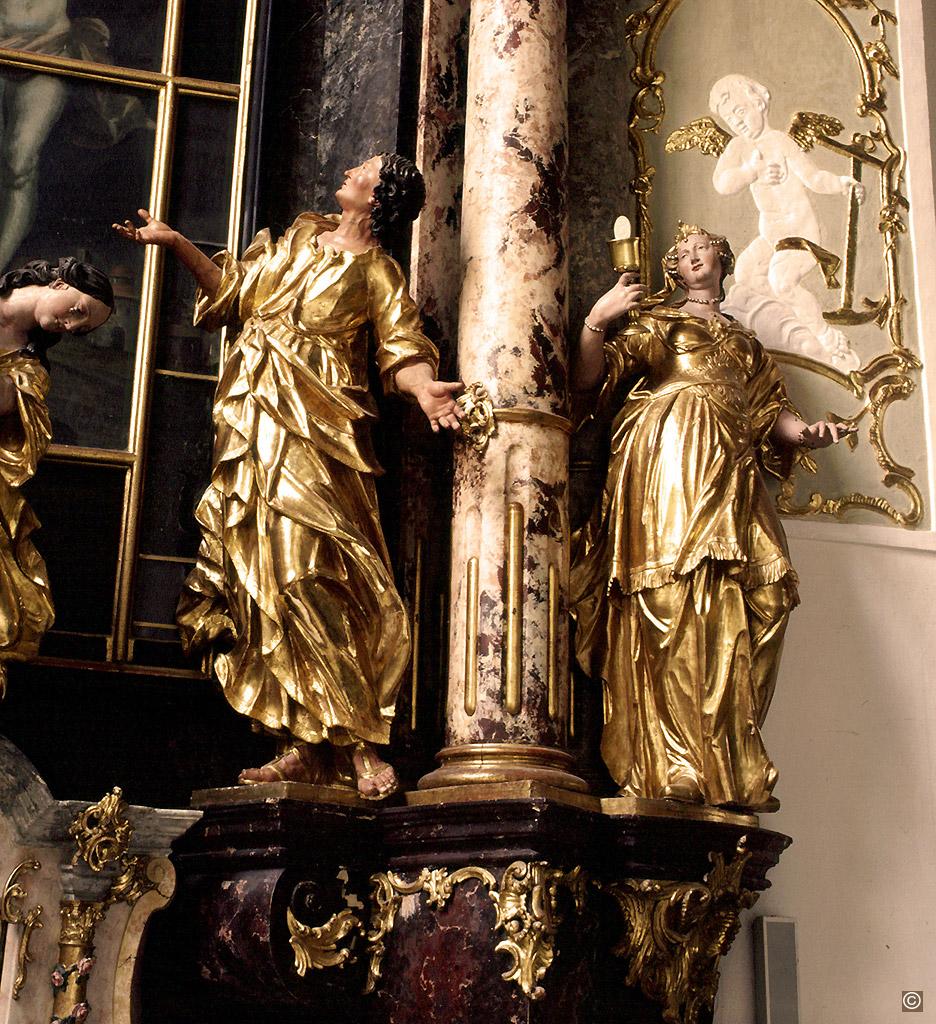
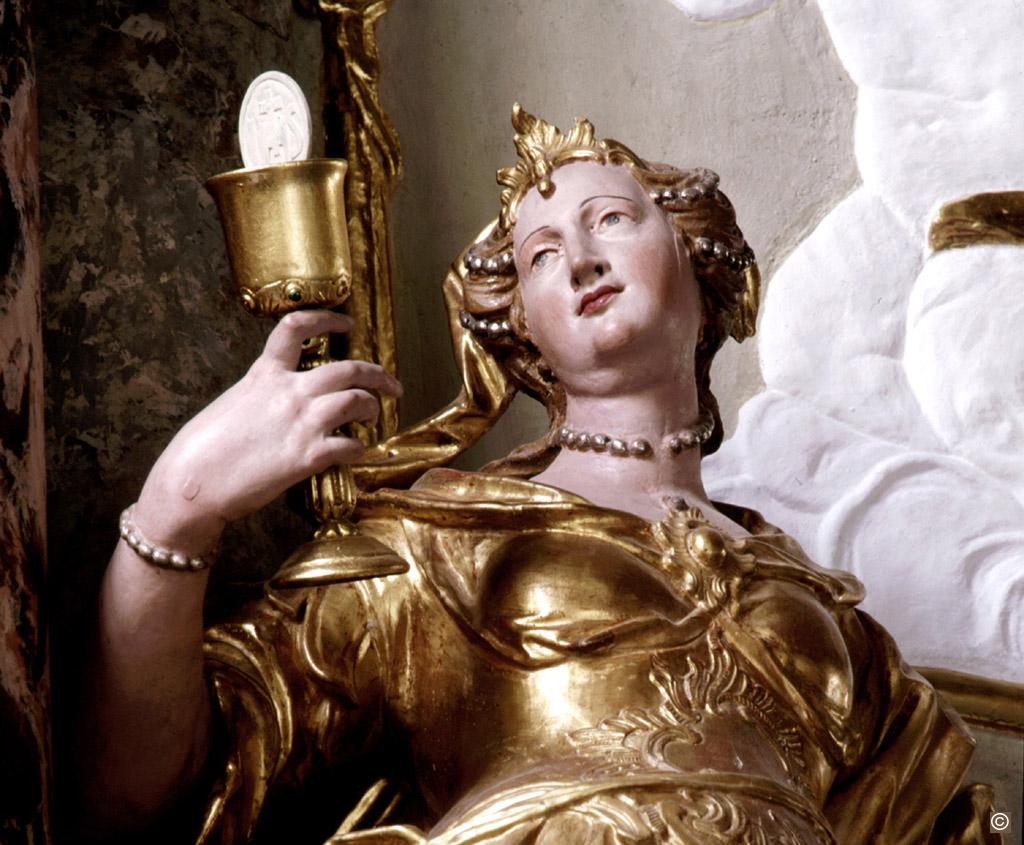
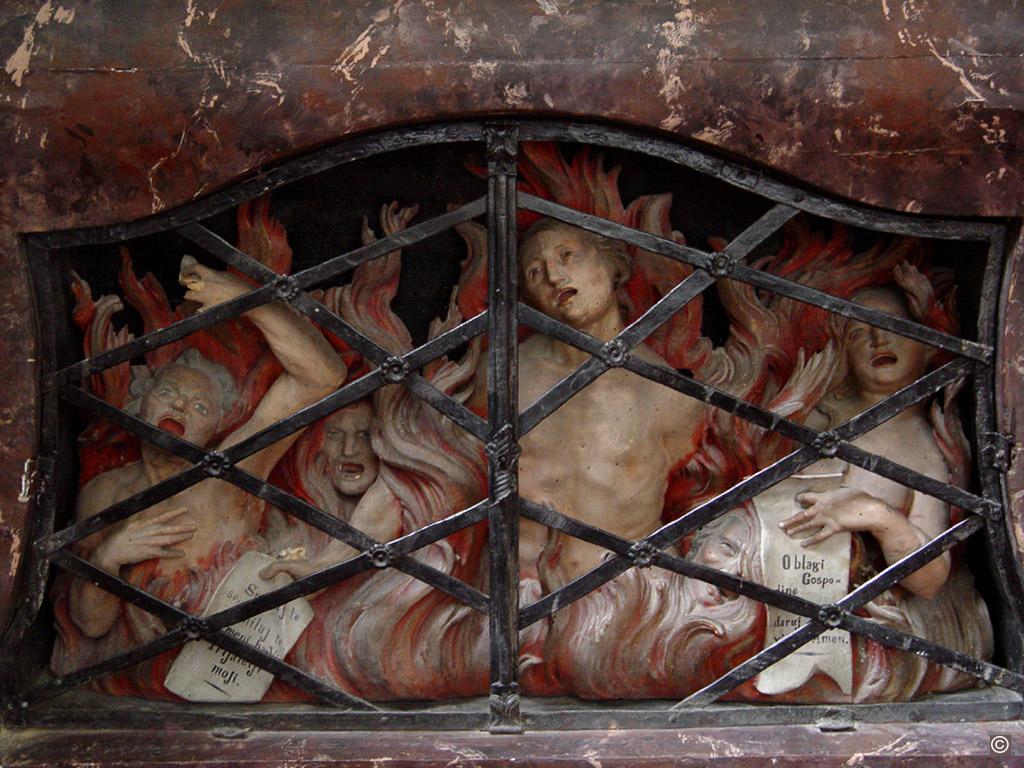
The story of Redemption through the sacrifice of Christ is represented by burning souls behind the bars of the altar cavity; Supper at Emaus, modelled in low relief on the doors of the tabernaculum; the huge sculptures of St. Veronica and St. Barbara on either side; St. Mary, Mary Magdalen and St. Joseph standing in front of the painted Crucifixion and, finally, God surrounded by angels in the attic.
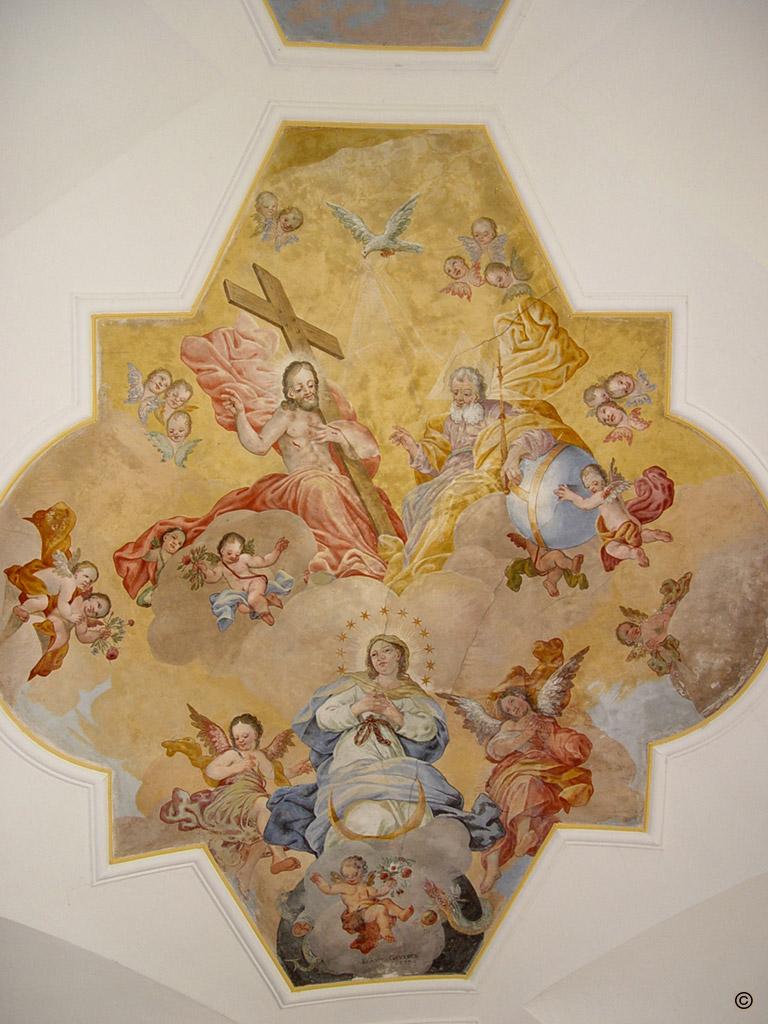
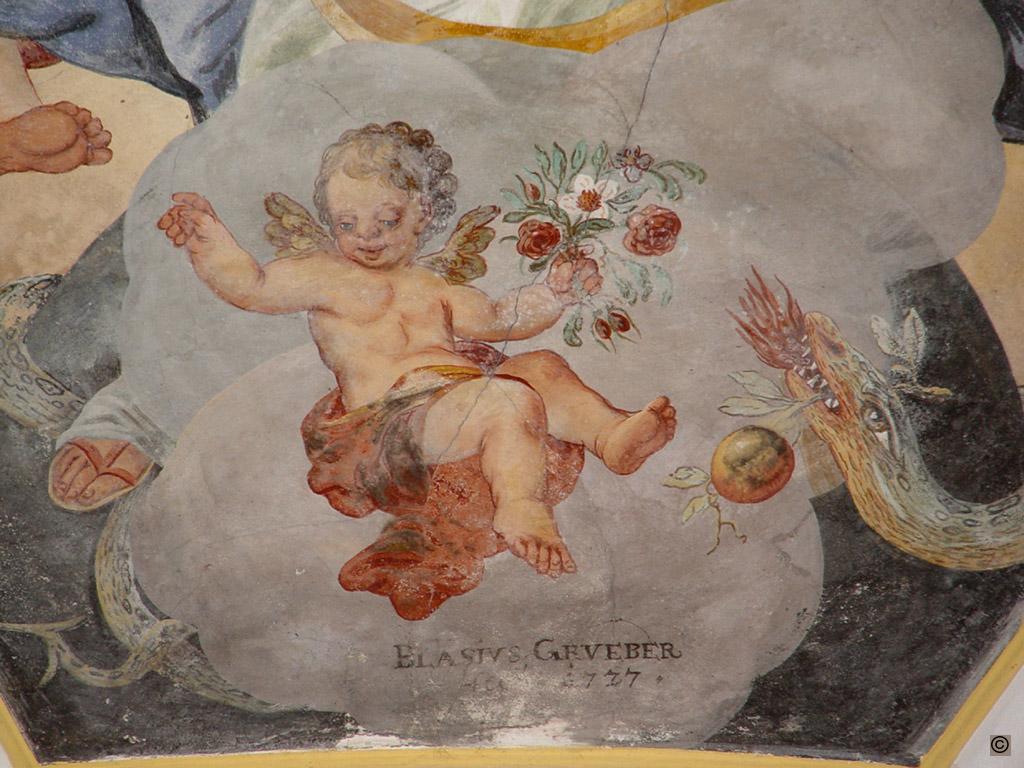
Assumption of the Virgin
Sacristy ceiling
1727
Blasius Grueber (c. 1700–1753)
One of the first illusionist ceiling paintings in north Croatia, this is the work of the local painter, Blasius Grueber, whose naïve characters are typical of the artist’s work. The charm and emotional impact of Grueber’s paintings is similar to that of local painters in Tyrol.
Selected bibliography:
Cvitanović, D., “Isusovačka arhitektura baroknog razdoblja” in Isusovačka baština u Hrvata, exhibition catalogue, Zagreb, 1992/3, pp. 41–45.
Marković, V., “A Jesuit Church and a Franciscan Church”, in The Baroque in Central Europe – Places, Architecture and Art, Venice, 1992, pp. 256–257.
Baričević, D., Barokno kiparstvo sjeverne Hrvatske (Baroque Sculpture of North Croatia), Zagreb, 2008.
Citation of this web page:
Mirjana Repanić-Braun "Varaždin Cathedral" in "Discover Baroque Art", Museum With No Frontiers, 2026.
https://baroqueart.museumwnf.org/database_item.php?id=monument;BAR;hr;Mon11;2;en
Prepared by: Mirjana Repanić-BraunMirjana Repanić-Braun
SURNAME: Repanić-Braun
NAME: Mirjana
AFFILIATION: Institute of Art History, Zagreb
TITLE: PhD, Scientific Consultant
CV:
From 1981 to 1982 Mirjana Repanić-Braun was a curator of the Academy’s collection of sculpture in the Gliptoteque of the Croatian Academy of Arts and Sciences; from 1983 to 1998 she worked in the Croatian Academy’s Archives for Visual Arts. Mirjana has been employed as a researcher at the Institute of Art History in Zagreb since 1998: from 2001, as head of the scientific project Baroque Painting, Sculpture and Crafts of Continental Croatia, and since 2006, as head of the scientific project Baroque, Classicism and Historicism in the Arts of North Croatia. Mirjana teaches Art History at the universities of Rijeka and Split. At the University of Zagreb, she participates at doctoral level in the Faculty of Croatian Studies and the Faculty of Philosophy.
Translation by: Graham McMaster, Mirjana Repanić-BraunMirjana Repanić-Braun
SURNAME: Repanić-Braun
NAME: Mirjana
AFFILIATION: Institute of Art History, Zagreb
TITLE: PhD, Scientific Consultant
CV:
From 1981 to 1982 Mirjana Repanić-Braun was a curator of the Academy’s collection of sculpture in the Gliptoteque of the Croatian Academy of Arts and Sciences; from 1983 to 1998 she worked in the Croatian Academy’s Archives for Visual Arts. Mirjana has been employed as a researcher at the Institute of Art History in Zagreb since 1998: from 2001, as head of the scientific project Baroque Painting, Sculpture and Crafts of Continental Croatia, and since 2006, as head of the scientific project Baroque, Classicism and Historicism in the Arts of North Croatia. Mirjana teaches Art History at the universities of Rijeka and Split. At the University of Zagreb, she participates at doctoral level in the Faculty of Croatian Studies and the Faculty of Philosophy.
Translation copyedited by: Mandi GomezMandi Gomez
Amanda Gomez is a freelance copy-editor and proofreader working in London. She studied Art History and Literature at Essex University (1986–89) and received her MA (Area Studies Africa: Art, Literature, African Thought) from SOAS in 1990. She worked as an editorial assistant for the independent publisher Bellew Publishing (1991–94) and studied at Bookhouse and the London College of Printing on day release. She was publications officer at the Museum of London until 2000 and then took a role at Art Books International, where she worked on projects for independent publishers and arts institutions that included MWNF’s English-language editions of the books series Islamic Art in the Mediterranean. She was part of the editorial team for further MWNF iterations: Discover Islamic Art in the Mediterranean Virtual Museum and the illustrated volume Discover Islamic Art in the Mediterranean.
True to its ethos of connecting people through the arts, MWNF has provided Amanda with valuable opportunities for discovery and learning, increased her editorial experience, and connected her with publishers and institutions all over the world. More recently, the projects she has worked on include MWNF’s Sharing History Virtual Museum and Exhibition series, Vitra Design Museum’s Victor Papanek and Objects of Desire, and Haus der Kulturen der Welt’s online publication 2 or 3 Tigers and its volume Race, Nation, Class.
MWNF Working Number: HR 02