

 Back
 Add to My Collection
Name of Monument:
Vojković Palace
Location:
Zagreb, Upper Town, North-West Croatia, Croatia
Matoševa ulica 9
10 000 Zagreb
T : +385 14 851 990
Croatian History Museum (Responsible Institution)
Date:
1764
Artists:
Unknown
Denomination / Type of monument:
Secular, three-winged palace with a central hall
Patron(s):
Sigismund Vojković
History:
The Lieutenant Colonel of the cavalry troop at Banska Krajina (Border), Sigismund Volković, commissioned the palace in 1764. The Volković residence was the meeting place of the Zagreb elite and the venue for theatrical performances and concerts, particularly after the fire in Varaždin in 1776 when the ban (viceroy's) government returned to Zagreb's Upper Town and the nobility followed suit. Although the owner twice tried to sell the palace to the Zagreb County in the 19th century, the palace changed noble owners several times – the Oršićes, the Kulmers and finally the Rauch family. Today the palace houses the Croatian History Museum.
Description:
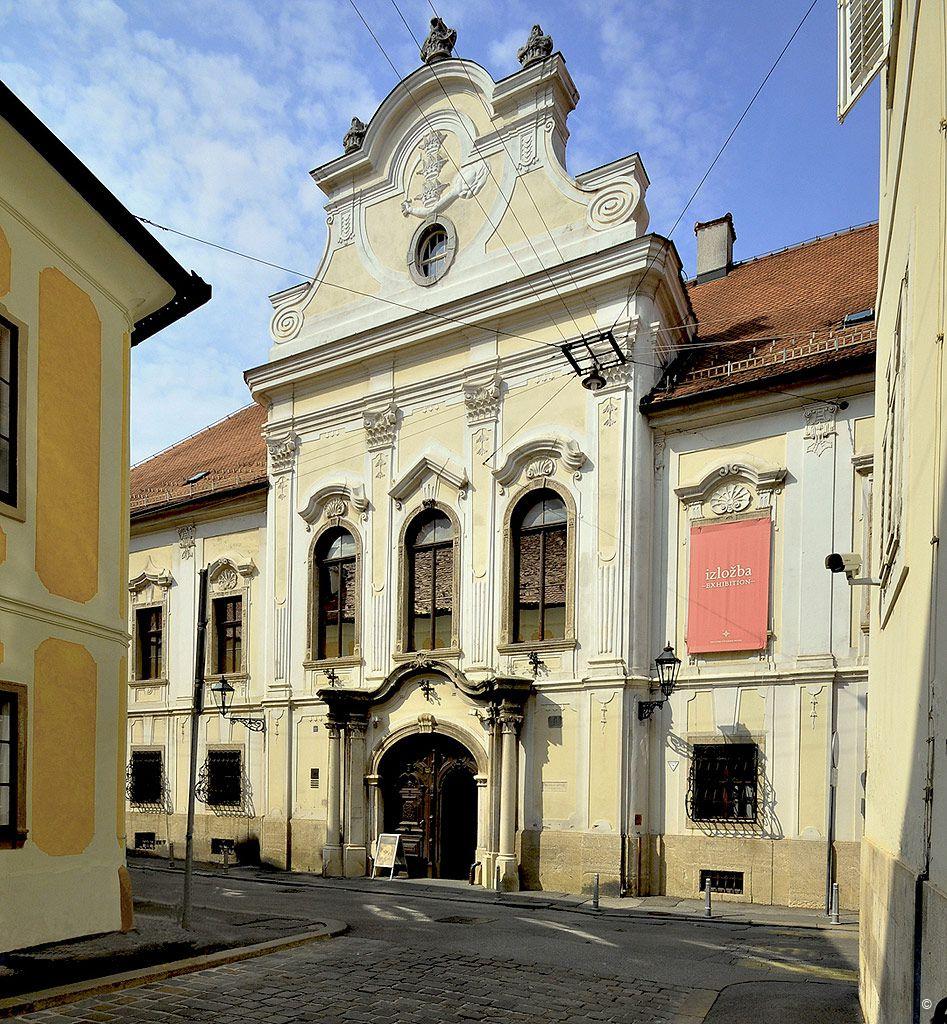
The Late Baroque palace occupied the sites of three older plots. Although the remains of the older houses bring about certain irregularities, the architect created a well-worked out spatial organisation within the framework of the three-winged, U-shaped ground plan. The covered passageway or entrance on the ground floor, and the hall that surmounts it in the same format on the top floor, placed the whole length of the entrance wing on the central axis, giving the building its particular quality. Two symmetrical stairways ascend to small vestibules either side of the entrance to the hall. The fact that here, unlike contemporary Croatian palaces, the characteristic passageway along the courtyard façade was omitted, the double sequences of rooms along the side-wings compensate for this anomaly. The palace achieves equal architectural value exteriorly. The central entranceway passage and hall on the façade are emphasised by their projections, and what is more, the hall achieves independence in the roof area too, emphasised by a scalloped, contoured gable. The elements of articulation, particularly on the window frames and the pilasters, are characterised by the plasticity and dynamics of the Late Baroque, and their enhanced grouping on the central projection – accented by the portal of the undulating gable – is in line with the entire architectural concept of the palace. In this context, an important part is played by the urban location of the palace, which has an entrance façade facing the street that leads to the main square of the Upper Town (that of St. Mark ), while it is also located at the city's edge so that it includes a spacious garden. Thus, the palace contributes to the Baroque opening up of medieval fortified cities and characterises the Baroque synthesis of urban and out-of-town residences and distinctive garden palaces.
View Short DescriptionThe Late Baroque Vojković Palace in Zagreb's Upper Town is characterised by a well-worked-out organisation of space and volume that can be described as one of the most opulent aristocratic residences of the time in inland Croatia. The characteristic Baroque three-wing ground plan is organised around a central axis, with an entrance passageway on the ground floor and a hall on the first floor. Particular architectural prominence is given to the hall externally with an intricate gable projection. When the surrounding parkland is included, the building presents a typically Baroque unification of city- and country-house, known as a garden palace.
How Monument was dated:
On the basis of documents and stylistic features.
Special features
View of the facade
Vojković Palace
1764
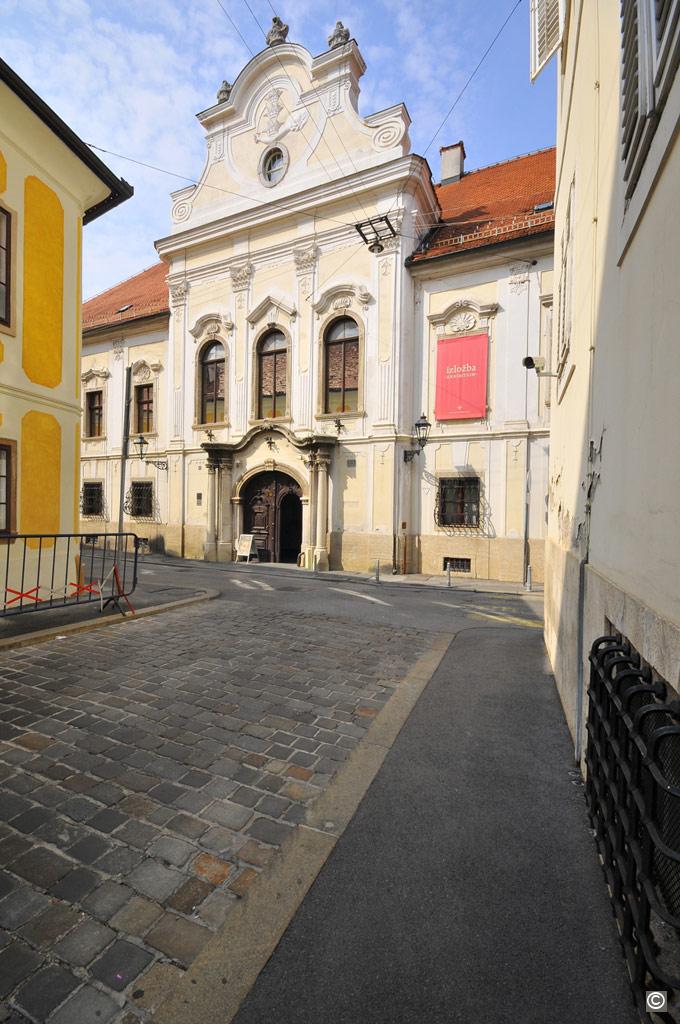
View of the facade
Vojković Palace
1764
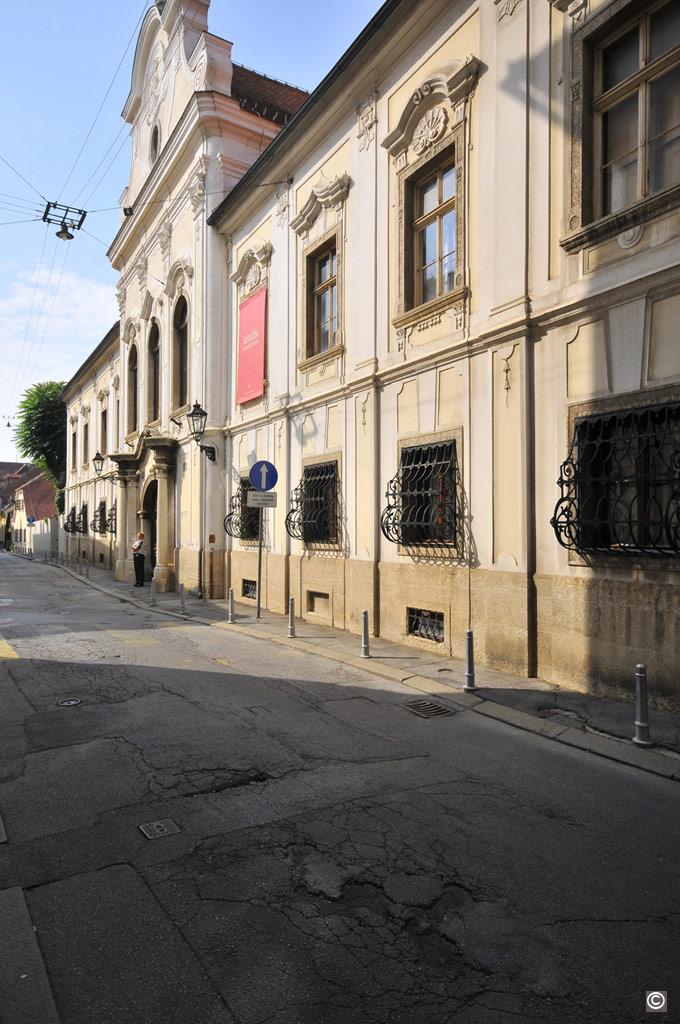
View of the facade
Vojković Palace
1764
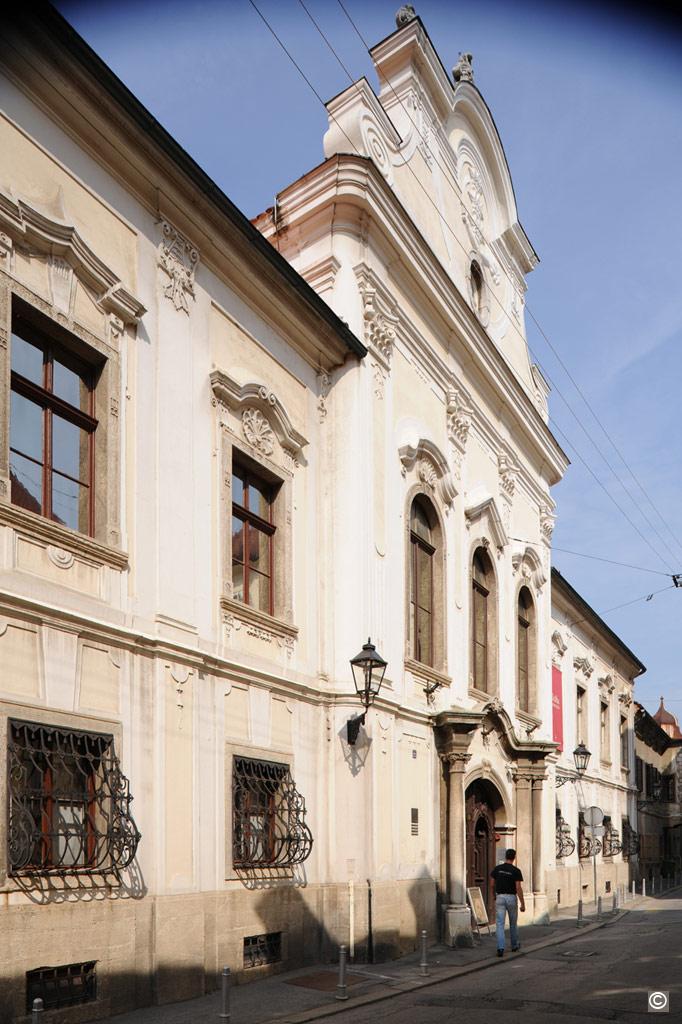
Selected bibliography:
Horvat, A., (ed) “Barok u kontinentalnoj Hrvatskoj” in Barok u Hrvatskoj, Zagreb, 1982, pp. 1–381.
Dobronić, L., Palača Hrvatskog povijesnog muzeja 1764–2004, Zagreb, 2004.
Citation of this web page:
Katarina Horvat-Levaj "Vojković Palace" in "Discover Baroque Art", Museum With No Frontiers, 2026.
https://baroqueart.museumwnf.org/database_item.php?id=monument;BAR;hr;Mon11;22;en
Prepared by: Katarina Horvat-LevajKatarina Horvat-Levaj
SURNAME: Horvat-Levaj
NAME: Katerina
AFFILIATION: Institute of Art History, Zagreb
TITLE: PhD, Scientific Consultant
CV:
Katerina Horvat-Levaj graduated with a BA in Art History and Archaeology in 1981 from the University of Zagreb (Faculty of Philosophy, Department of Art History). In 1985 she obtained her MA and in 1988 she was awarded a scholarship at the University of Padua. In 1995 she defended her Doctorate at Zagreb University on Representative Residential Architecture of the Baroque in Dubrovnik. Since 1982, she has been employed at the Institute of Art History in Zagreb, and is presently a Senior Research Associate. Katarina also teaches at the University of Split. At the University of Zagreb she participates at doctoral level in the Faculty of Croatian Studies and the faculties of Architecture and Philosophy.
Translation by: Graham McMaster
Translation copyedited by: Mandi GomezMandi Gomez
Amanda Gomez is a freelance copy-editor and proofreader working in London. She studied Art History and Literature at Essex University (1986–89) and received her MA (Area Studies Africa: Art, Literature, African Thought) from SOAS in 1990. She worked as an editorial assistant for the independent publisher Bellew Publishing (1991–94) and studied at Bookhouse and the London College of Printing on day release. She was publications officer at the Museum of London until 2000 and then took a role at Art Books International, where she worked on projects for independent publishers and arts institutions that included MWNF’s English-language editions of the books series Islamic Art in the Mediterranean. She was part of the editorial team for further MWNF iterations: Discover Islamic Art in the Mediterranean Virtual Museum and the illustrated volume Discover Islamic Art in the Mediterranean.
True to its ethos of connecting people through the arts, MWNF has provided Amanda with valuable opportunities for discovery and learning, increased her editorial experience, and connected her with publishers and institutions all over the world. More recently, the projects she has worked on include MWNF’s Sharing History Virtual Museum and Exhibition series, Vitra Design Museum’s Victor Papanek and Objects of Desire, and Haus der Kulturen der Welt’s online publication 2 or 3 Tigers and its volume Race, Nation, Class.
MWNF Working Number: HR 29