

 Back
Back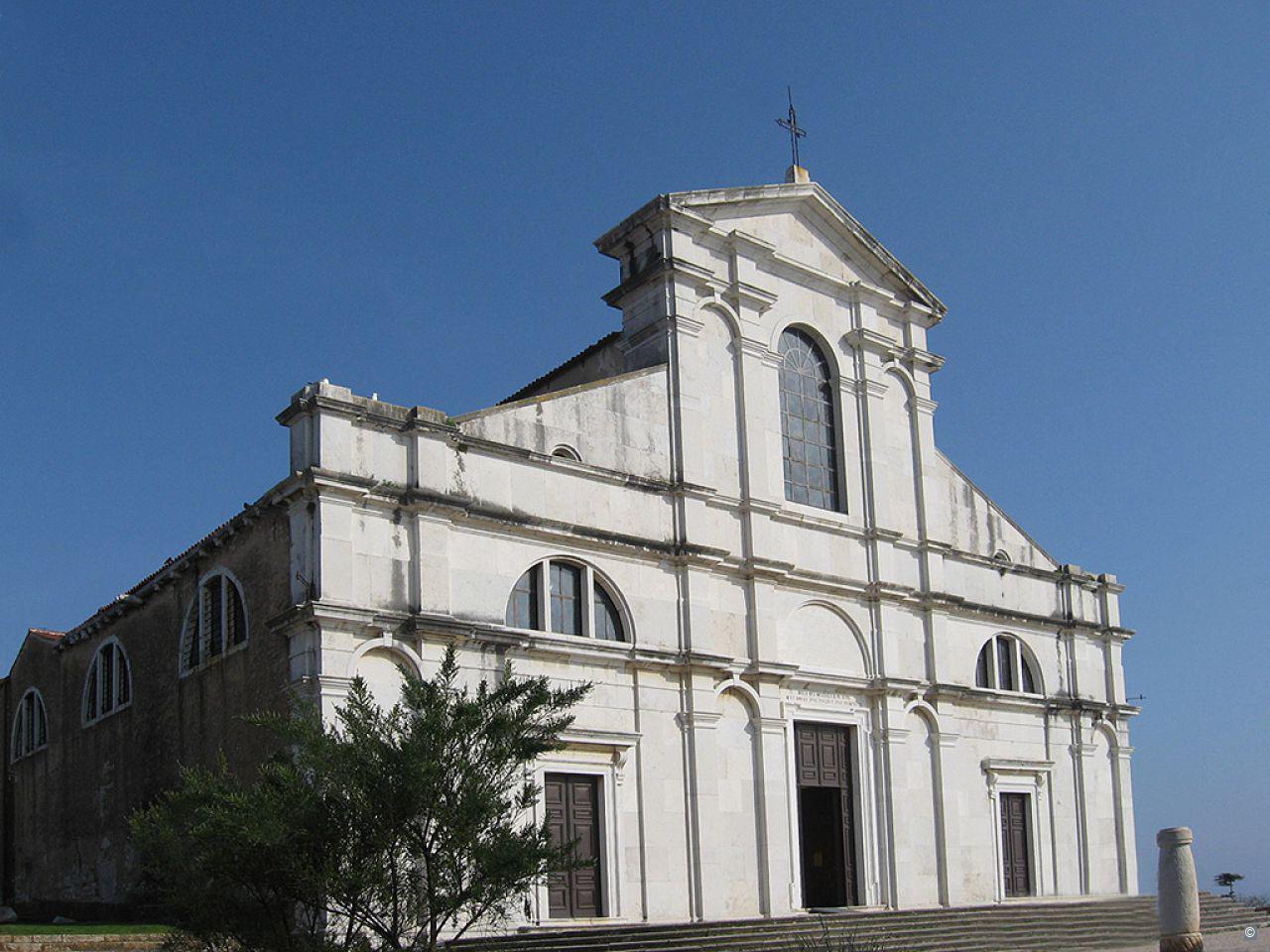
 Add to My Collection
Name of Monument:
Parish Church of St. George and St. Euphemia
Also known as:
Župna crkva sv. Eufemije
Location:
Rovinj, Istria, Croatia
Parish church
Giuseppea Garibaldija 1
52 000 Rovinj
T : +385 52 815 615
Parish Church of St. George and St. Euphemia (Responsible Institution)
Date:
1724–1736 (church); 1739–1741 (Tagliapietra workshop altars); 1654–1680 (bell tower)
Artists:
Bell tower: A. Manopola [n.d.]; church: Giovanni Dozzi [n.d.]; sculptures on several altars: Alvise Tagliapietra (1670–1747) and his sons Ambrogio (b. 1701) and Giuseppe (b. 1711); stuccowork: G. Lattuga [n.d.]; (choir and congregation stalls) G. Besenghi "Napolachi"; organ: A. Barbini; silver antependium: Antonio Scarabella d'Este
Denomination / Type of monument:
Religious, parish church and interior furnishing
Patron(s):
Municipality of Rovinj (the church)
History:
In 1724, the citizens of Rovinj confided the realisation of the plan for the Parish church to Venetian architect, Giovanni Scalfaratto, who at that time was building the church of S. Simeone Piccolo in Venice. They stipulated that the new church should resemble that it was replacing and consist of a nave and two aisles. Since Scalfaratto did not meet their demands and because his plan included demolition of earlier and surrounding structures, they chose the Venetian architect, Giovanni Dozzi instead who completed the work in 1736, although the clients requested certain changes to the plan.
Description:
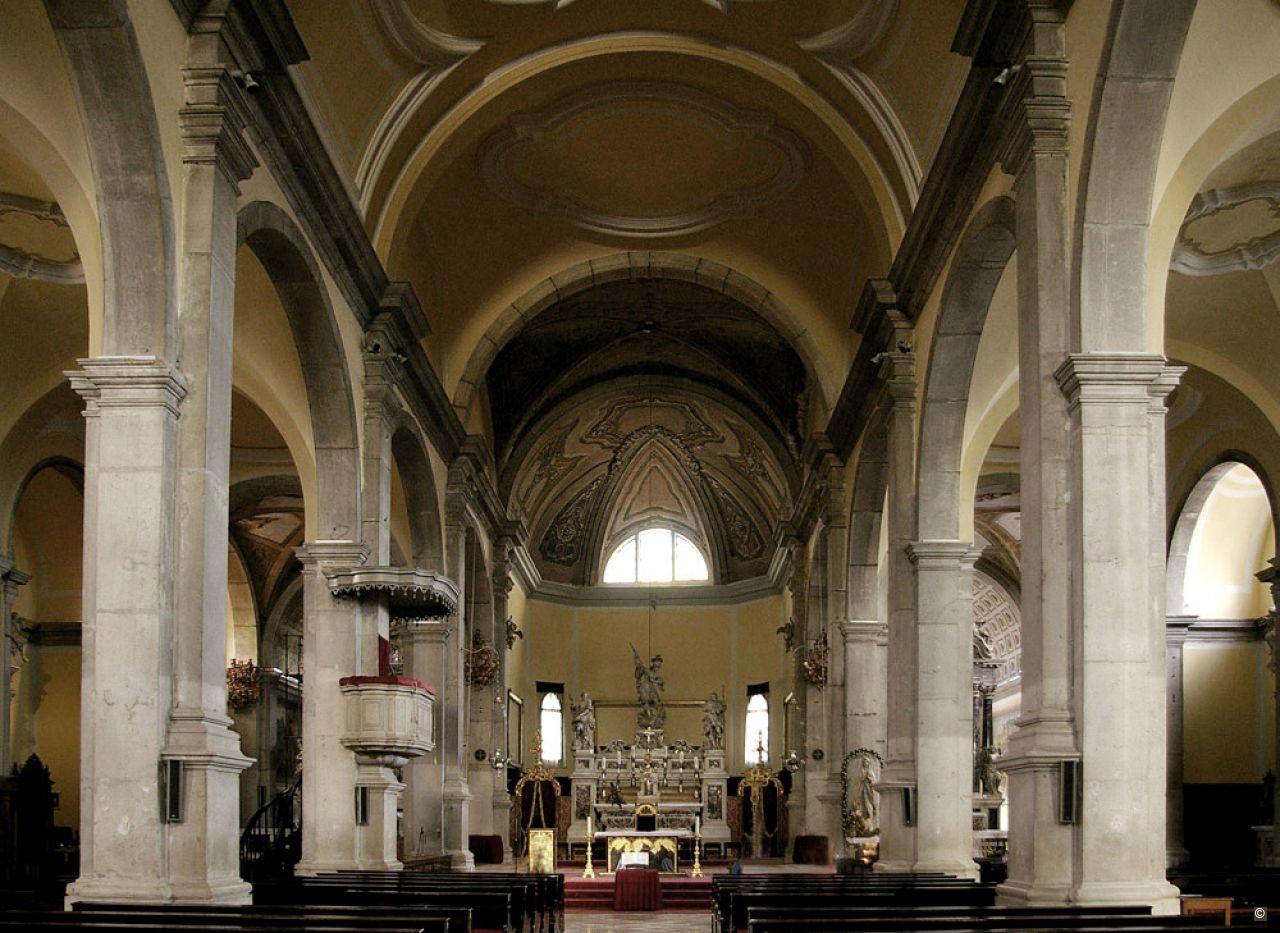
The Parish Church of St. George and St. Euphemia is lit only through the windows of the chapels, this was in order that the height of both nave and aisles were equalised. In addition to the impact of local architectural tradition, the contemporaneous rebuilding of Udine Cathedral (1706–1735) designed by the Venetian architect Domenico Rossi, influenced this architectural solution. Similar approaches were applied by Giorgio Massari in the rebuilding of Koper Cathedral (1738) and Cividale (1766), indicating that they influenced each other.
In the church, there are a number of high quality marble altars, five or six of which are decorated with the statues of the Venetian sculptor Alvise Tagliapietra and his workshop, and which judging from 19th century sources was his last commission. The Rovinj altars came at the end of prolific activity by this workshop, which some 20 years earlier had produced exceptionally high quality sculptures for another client from the Croatian side of the Adriatic at the Church of St. Chrysogonus, Zadar. Along with the statues of the two sanctuary altars in Rovinj – the High Altar and the Altar of St. Euphemia – the work of the Tagliapietra workshop includes the statues of Our Lady of the Rosary and St. Nicholas (jointly signed by Alvise and his son Giuseppe) and the reliefs of St. Michael the Archangel and St. Peter on side altars. As well as the traditional attribution to the Tagliapietra workshop, the sculptures of the left-hand altar in the sanctuary dedicated to the Holy Sacrament are thought to be the work of the Classicist-oriented Venetian sculptor, Giovanni Marchiori, who earlier, in 1737, had made the sculpture for the high altar of the nearby Church of St. Servulus, Buje. While the altars indicate the refined taste of the Rovinj commune as client, the overall impression of unity in the opulent Baroque furnishing is enhanced by the works of others: the stuccowork of G. Lattuga (1750), the stalls for the choir and congregation by G. Besenghi (known as “Napolachi”, also 1750), the organ by A. Barbini (1754) and the silver Baroque antependium by A. Scarabella d'Este (1776).
The church is located at the highest point of the one-time islet on which the settlement of Rovinj developed, creating together with the packed core of the old town, an extremely harmonious and picturesque unit. The campanile by A. Manopola was built between 1654 and 1680, and the church, nave and two aisles by Giovanni Dozzi Alvise between 1724 and 1736. The unique architecture and valuable furnishings place this church among the finest religious structures in this area of the Croatian Adriatic.
How Monument was dated:
Archival sources and dates recorded on the monuments
Special features
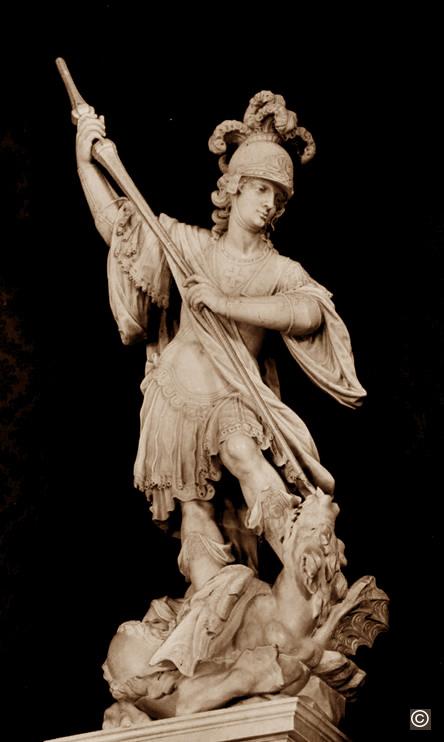
St. George
High Altar
1741
Alvise Tagliapietra (1670–1747) and his son Ambrogio (b. 1701)
The youthful figure of St. George with a tender and melancholic expression is shown in elegant movement. The careful shaping of the opulent costume together with the surface worked with particular sensitivity to the effects of light make this work a characteristic example of the style and sculptural capacities of the Tagliapietra workshop.
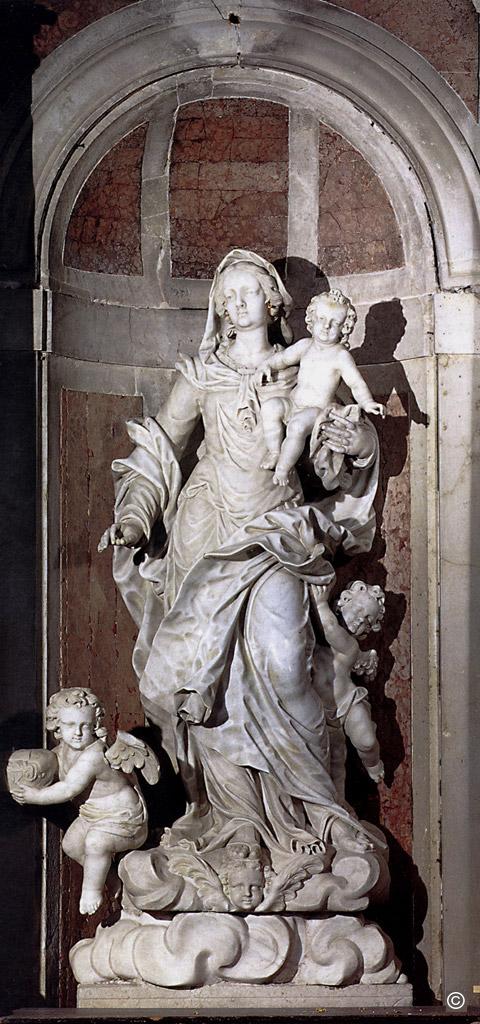
Our Lady of the Rosary
Altar of Our Lady of the Rosary
1741
Alvise Tagliapietra (1670–1747) and his son Ambrogio (b. 1701)
The sculpture of Our Lady with Christ accompanied by two angels is characterised by the harmony of the statuary and the pictorial treatment of the surface.
Adoring Angel
Altar of the Holy Sacrament
1741
Giovanni Marchiori (?)
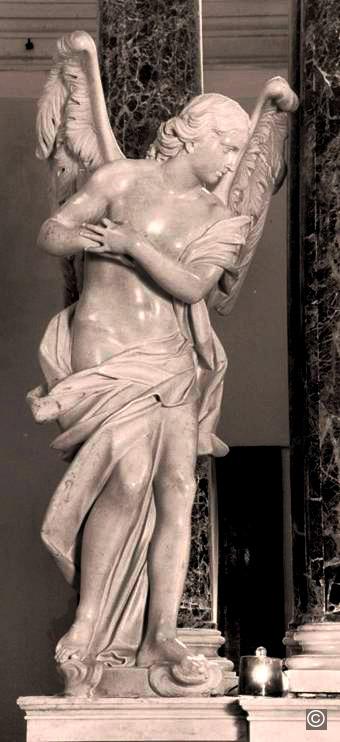
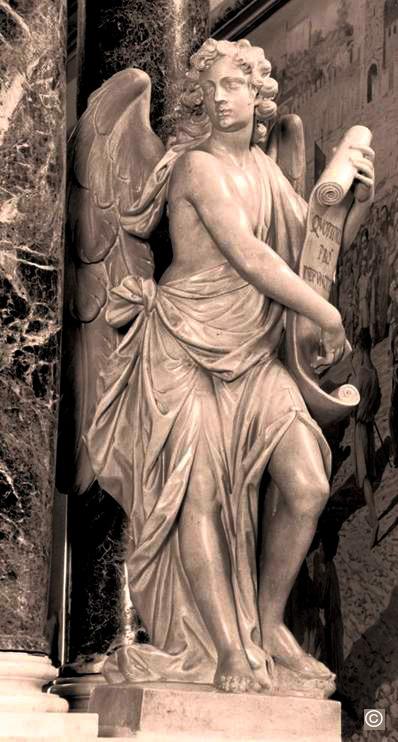
Angel with Banderola
Altar of St. Euphemia
1741
Alvise Tagliapietra (1670–1747) and his son Ambrogio (b. 1701)
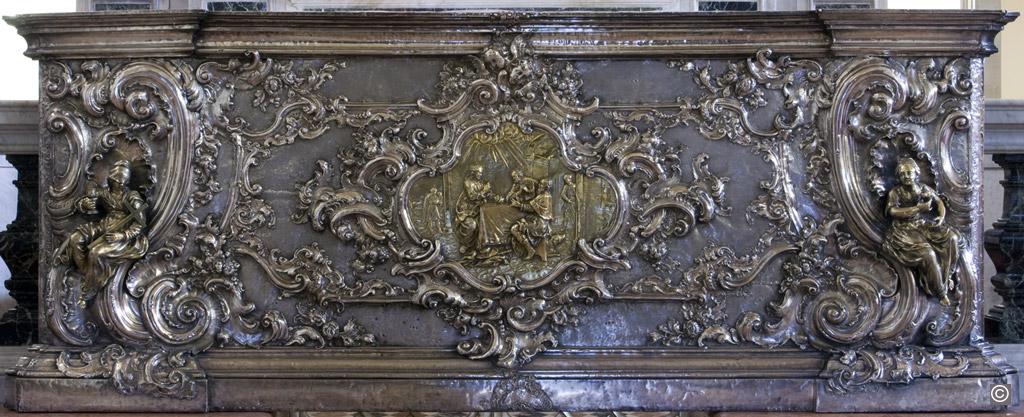
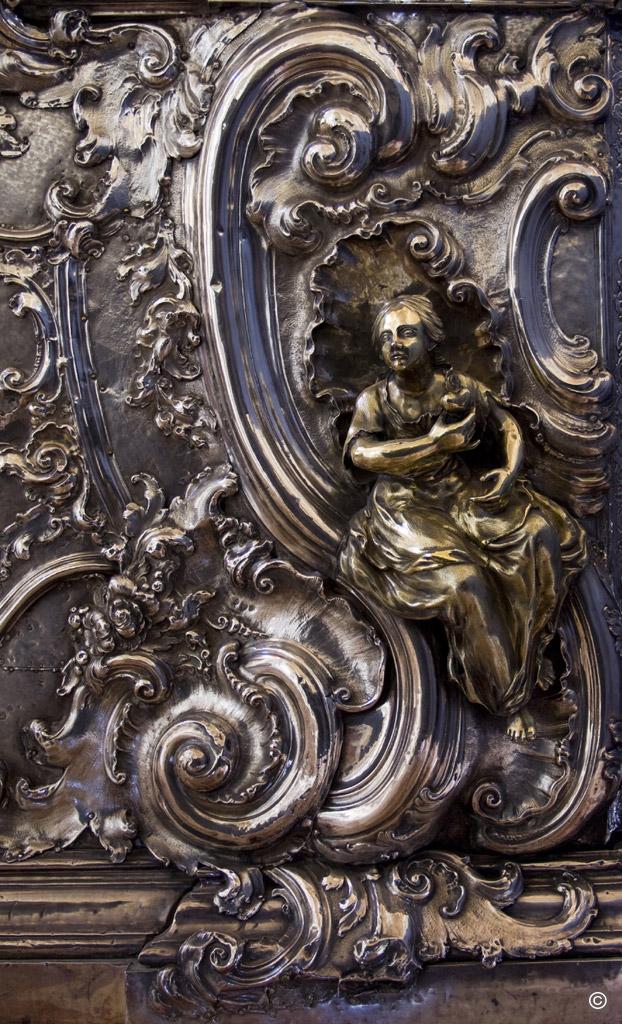
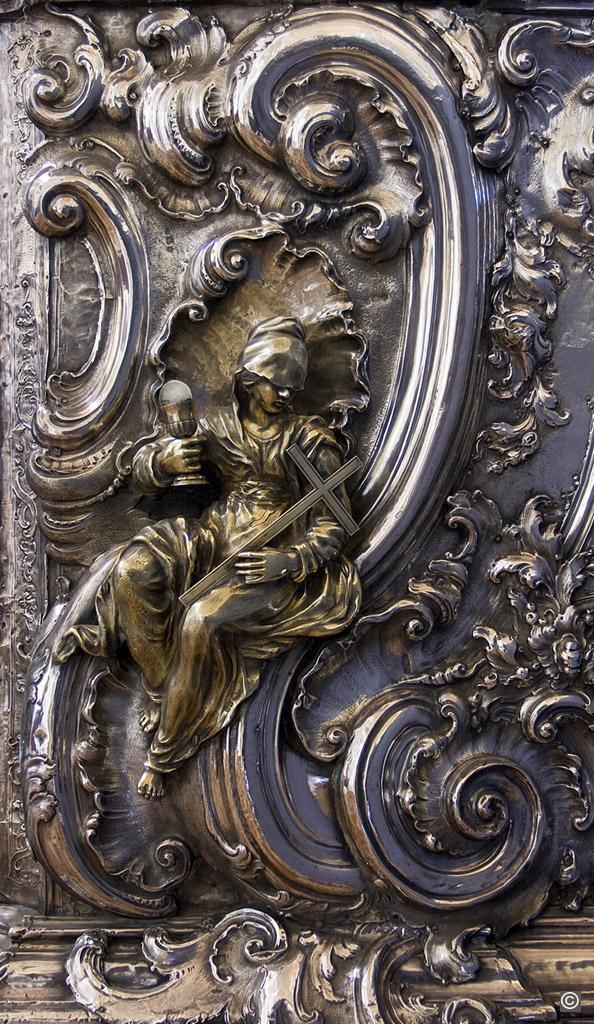
Silver Antependium
1776
Angiolo Scarabella d'Este [n.d.]
The antependium is covered with opulent Rocaille ornamentation with interwoven volutes and plant motifs. In the central field, there is a depiction of Christ in Emmaus in relief.
Selected bibliography:
Matejčić, R., "Barok u Istri i Hrvatskom Primorju" in Horvat, A., (ed) Barok u Hrvatskoj, Zagreb, 1982.
Tomić, R., Barokni oltari i skulptura u Dalmaciji, Zagreb, 1995.
Klemenčič, M., "Giovanni Marchiori v Rovinju" in Acta historiae artis Slovenica 2, 1997, pp. 97–108.
Klemenčič, M., "Alvise Tagliapietra", in: La scultura a Venezia da Sansovino a Canova, (ed. Bacchi, A.), Milano, 2000, pp. 790–791.
Marković, V., Crkve 17. i 18. stoljeća u Istri – tipologija i stil, Zagreb, 2004.
Citation of this web page:
Vlasta Zajec "Parish Church of St. George and St. Euphemia" in "Discover Baroque Art", Museum With No Frontiers, 2026.
https://baroqueart.museumwnf.org/database_item.php?id=monument;BAR;hr;Mon11;8;en
Prepared by: Vlasta ZajecVlasta Zajec
SURNAME: Zajec
NAME: Vlasta
AFFILIATION: Institute of Art History, Zagreb
TITLE: PhD, Scientific Consultant
CV:
Vlasta Zajec was awarded her BA in Art History and Comparative Literature from Zagreb University (Faculty of Philosophy) in 1989. In the same year she began work at the Institute of Art History. She was awarded her MA in 1995 (17th-Century Wooden Altars in Istria), and her PhD in 2001 (17th Century Wooden Sculpture in Istria). She has spent brief periods of study in Italy (Udine, Venice and Trieste) and Germany (Munich). Her areas of research are wooden and marble altars and 17th- and 18th-century sculpture in Istria and North Croatia.
Translation by: Graham McMaster
Translation copyedited by: Mandi GomezMandi Gomez
Amanda Gomez is a freelance copy-editor and proofreader working in London. She studied Art History and Literature at Essex University (1986–89) and received her MA (Area Studies Africa: Art, Literature, African Thought) from SOAS in 1990. She worked as an editorial assistant for the independent publisher Bellew Publishing (1991–94) and studied at Bookhouse and the London College of Printing on day release. She was publications officer at the Museum of London until 2000 and then took a role at Art Books International, where she worked on projects for independent publishers and arts institutions that included MWNF’s English-language editions of the books series Islamic Art in the Mediterranean. She was part of the editorial team for further MWNF iterations: Discover Islamic Art in the Mediterranean Virtual Museum and the illustrated volume Discover Islamic Art in the Mediterranean.
True to its ethos of connecting people through the arts, MWNF has provided Amanda with valuable opportunities for discovery and learning, increased her editorial experience, and connected her with publishers and institutions all over the world. More recently, the projects she has worked on include MWNF’s Sharing History Virtual Museum and Exhibition series, Vitra Design Museum’s Victor Papanek and Objects of Desire, and Haus der Kulturen der Welt’s online publication 2 or 3 Tigers and its volume Race, Nation, Class.
MWNF Working Number: HR 09