

 Back
Back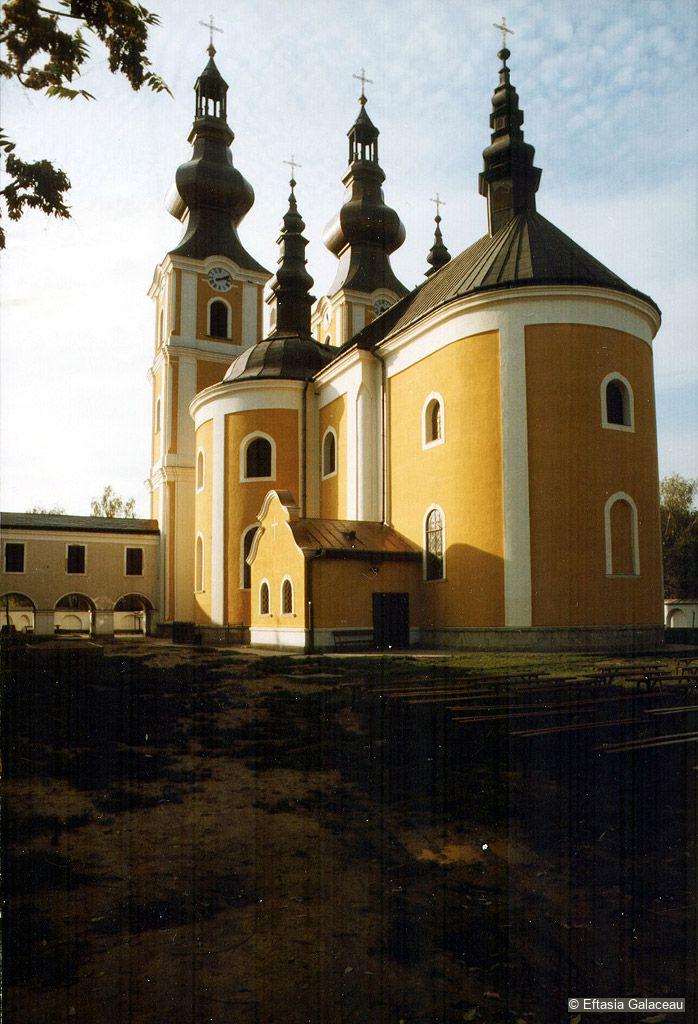
 Add to My Collection
Name of Monument:
Church of Worship and Basilian Monastery of Máriapócs
Also known as:
Greek Catholic Church of Worship and Monastery
Location:
Máriapócs, Északkelet-Magyarország / Northeast Hungary, Hungary
Kossuth tér 11-25
4326 Máriapócs
T : +36 42 385 142 +36 42 415 901
F : +36 42 415 911
E : eparchia@hajdudorog.axelero.net
Greek Catholic Church of Hungary, Diocese of Hajdúdorog, Greek Catholic Bishopric of Hajdúdorog, Apostolic Exarchate of Miskolc (Responsible Institution)
Date:
Baroque
Artists:
Painters: Mihály Spalinszky (2nd half of the 18th century), Tádé Spalinszky (?–1809), István Papp (brother of the local Greek Catholic pastor), József Boksay; unknown wood carvers from Eperjes; stained glass: Manó Petrasovszky (active middle of the 20th century)
Denomination / Type of monument:
Religious architecture, church
Patron(s):
László Csigri judge of Máriapócs; Lőrinc Hurta and his family; Count Ferenc Károlyi; Bishop and Apostolic Vicar György Bizáncy Gennadius (d. 1733); István Simon Olsavszky; Gábor Blazsovszky; Bishop Mihály Mánuel Olsavszky (d. 1767); Basilian Monks of Máriapócs; Baroness Zsigmond Palocsay née Countess Rozália Gersei Petheő; Count Pál Forgách Bishop of Nagyvárad; István Telekessy Bishop of Eger (1633–1715).
History:
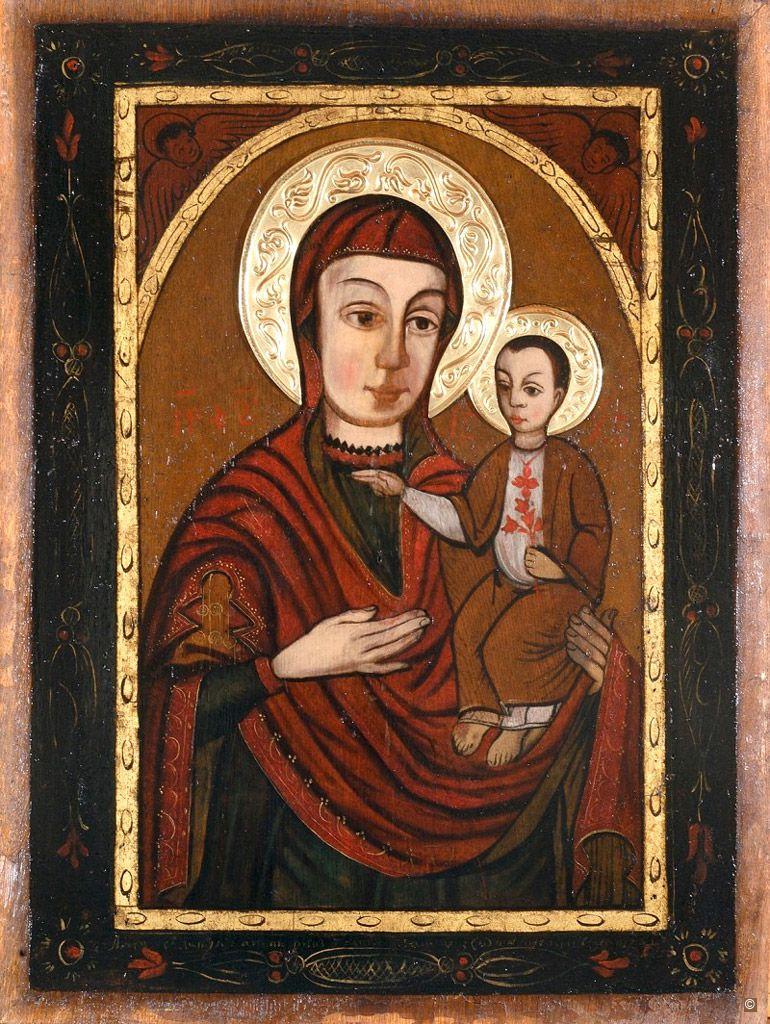
The Church of Worship and Monastery of Máriapócs is a highly significant place for the Greek Catholic Church. Pócs first gained significance in 1696 when in a small, wooden Greek Catholic church in Pócs a group of soldiers witnessed a devotional image, painted in 1676, weeping.
The original “Weeping Mary of Máriapócs” was commissioned by László Csigri judge of Máriapócs as a votive painting in gratitude for his release from Turkish captivity. István Papp, the younger brother of the local Greek Catholic pastor Dániel Papp, painted the picture but the judge could not pay him on completion. Lőrinc Hurta and his family subsequently purchased the painting and donated it to the church. Following the first act of weeping, Emperor Leopold I had the painting transferred to Vienna, where it was finally placed in St. Stephen's Dome on 11 September 1697, the day the troops of Prince Eugene of Savoy defeated the Turkish armies at Zenta (Senta). The people of Vienna related the triumph to the miraculous power of the “Mary of Pócs”, which Leopold I confirmed in his bull issued to Pócs in 1701.
Belief in the power of the painting led Leopold I to support the people of Pócs in their fundraising efforts to erect a new church in 1701. Later, Charles VI Emperor gave permission for construction of a church, and the settlement of Greek Catholic Basilian monks in Pócs; Count Ferenc Károlyi donated a large sum of money towards construction as well as his entire Pócs estate.
Construction began in 1731 at the personal expense of Bishop and Apostolic Vicar György Bizáncy Gennadius, but was halted when the bishop died in 1733.
István Simon Olsavszky and Gábor Blazsovszky renovated the deteriorating walls before Bishop Mihály Mánuel Olsavszky continued the building programme and consecrated the church in 1749. The foundations were laid and the sanctuary walls erected by 1748.
In 1749, Bishop Olsavszky received permission from Queen Maria Theresia to establish the Basilian Monastery and the independent bishopric of Munkács (Mukachevo). By 1751, the foundation stone was laid and part of the monastery was complete, so the monks from Munkács (Mukachevo) moved in. The whole building was consecrated in 1753.
By 1756, the church was complete.
The Greek Catholic Vicar of Pócs addressed a petition to the emperor requesting that the “Weeping Mary of Máriapócs” be returned. Leopold I promised that a replica would be donated to the church in his written transcript addressed to István Telekessy Bishop of Eger, but in the end, Telekessy commissioned an Austrian artist to paint the copy in 1707, which arrived to Pócs in the same year.
The paintings of the iconostasis (replaced in 1896) are by Mihály and Tádé Spalinszky (Tádé was also a Basilian monk) of Polish origin between 1785 and 1788. Its gold-plated wooden structure was probably made by a craftsman from Eperjes (Prešov).
In 1943, the miraculous “Weeping Mary of Máriapócs”, which hung above the Royal Door of the iconostasis, was moved to a side altar in the north wing, then in 1946, on the 250th anniversary of the first weeping, it was moved to its present location.
The marble main altar was made in the 18th century; the towers of the church in 1856, and the new bronze gate of the church completed in 1991 for the visit and mass of Pope John Paul II. Pope Pius XII gave the Church of Worship of Máriapócs the title Basilica Minor in 1948.
The church was cared for by Basilian monks until the dissolution of the order in 1950. The monastery then became a care home, and 10,000 volumes from the library were removed, along with valuable furnishings and items of worship from the church and monastery, which were scattered among various locations. Renovation of the church and monastery began in 2008.
Description:
The Church of Worship of Máriapócs has a transept and two towers on the west façade; the sanctuary is oriented east. It has three ridged turrets on the roof and the vestry is on the south side.
The date of construction and the names of the builders are commemorated on a chronosticon above the main gate, above which there is a mosaic representing the Madonna (Theotokosz). Beside bishops, many of the church’s patrons are lying in the crypt.
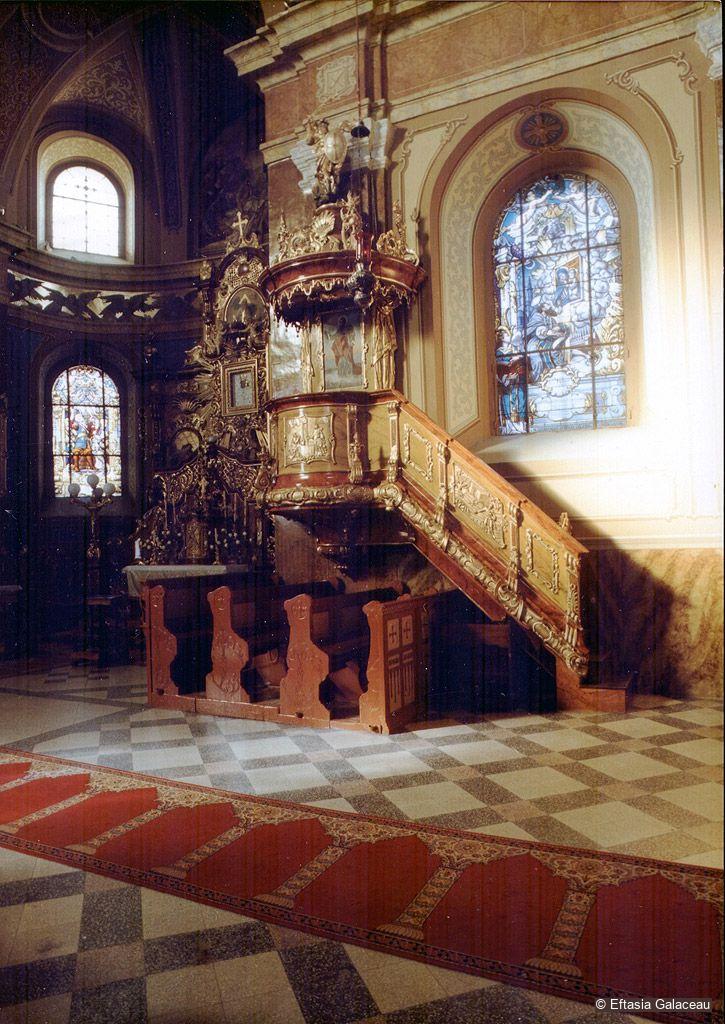
The main red marble altar was a gift from Count Pál Forgách Bishop of Nagyvárad (Oradea) in 1750; the two preparation altars (in the sanctuary with the main altar); its pulpit (carved and gilded with the statue of St. Michael the archangel above); the painting of the Apostle Paul below the baldachin, with paintings, Christ and the Samaritan Woman and the Seed-Sower, and the structure of its iconostasis (with a Rococo balustrade and crowned with a cross; the pictures of which date to 1896) are also 18th century.
There are two side altars: on the north side, the Altar of the Virgin Mary (1943–1944) designed by the Franciscan monks of Pécs, now houses the the miraculous “Weeping Mary of Máriapócs”. The south altar, known as the Altar of the Heart of Jesus, holds a cross relic. The Great Altar of St. Basil is at the same side of the church.
The sanctuary wall paintings, by Manó Petrasovszky, depict King St. Stephen (Szent István) I offering Hungary to the Virgin Mary with the first martyr St. Stephen, patron saint of the Diocese of Hajdúdorog, and Hungarian saints and pilgrims. The stained-glass windows were made after designs by Petrasovszky between 1944 and 1945. Other wall paintings are by József Boksay (1943).
The two-storey rectangular Baroque monastery is connected to the church via a suspended corridor.
The Church of Worship in Máriapócs is one of Hungary's most important places of worship particularly for the Greek Catholic community living mostly in eastern Hungary. Up until 1950, the church was maintained by monks from the next-door Basilian Monastery, which was consecrated in 1756. The interior of the church along with the furnishing, much of which dates to the 1780s, has been renovated several times during the 19th and 20th centuries. A copy of the miraculous “Weeping Mary of Máriapócs” was placed in the church in 1707. Since then, this miraculous image has wept twice, attracting numerous other miraculous events to Máriapócs.
How Monument was dated:
Based on written and visual sources, stylistic and field research.
Selected bibliography:
Bachleitner, R., “The picture of the Hungarian Madonna in St. Stephen's Dome in Vienna” (“Das Bild der Ungarischen Madonna im Stephansdom zu Wien”), Historical pages of Vienna (Wiener Geschichtblätter), 4, 1961.
Szalontai, B., Church of Worship, Máriapócs (Máriapócs kegytemplom). Regions–Eras–Museums (Tájak–Korok–Múzeumok), Veszprém, 1982.
The Jubilee Yearbook of the Hajdúdorog Byzantine Diocese 1912–1987, (Hajdúdorogi Bizánci Katolikus Egyházmegye Jubileumi Emlékkönyve 1912–1987), Nyíregyháza, 1987.
Barna, G., Places of Pilgrimage and Worship in Hungary (Búcsújáró és kegyhelyek Magyarországon). Budapest, 1990, pp. 109–111.
Pirigyi, I., The History of the Hungarian Greek Catholics (A magyarországi görög katolikusok története), Nyíregyháza, 1990.
Gergelyffy, A., “Máriapócs”, Monument Protection (Műemlékvédelem), 2, XXXV, 1991, pp. 100–109;
Dudás, B., Legeza, L., Szacsvay, P., Basilians (Monastic Orders in the Pannonian Basin) (Baziliták (Szerzetesrendek a Kárpát-medencében)), Budapest, 1993.
Bacsóka, P., The Miraculous Painting of the Weeping Virgin Mother of Máriapócs (A Könnyező Máriapócsi Szűzanya csodatevő kegyképe), Nyíregyháza, 1994.
Puskás, B., “The Church of Worship and Basilian Monastery of Máriapócs” (“A máriapócsi kegytemplom és bazilita kolostor”), Art History Chronicle (Művészettörténeti Értesítő), XLIV, 1995, pp. 169–191.
Puskás, B., “Két Lengyelországból származó festő a munkácsi püspök szolgálatában – Spalinszky Tádé és Mihály, XVIII. század második fele” (“Two painters from Poland – Tádé and Mihály Spalinszky, 2nd half of the 18th century”) Athanasiana, 2, 1995, pp. 20–23.
Ivancsó, I., “Il centenario di Máriapócs” in I Santuari dove Divcerea l'uomo, Città del Vaticano, 1996, pp. 179–192.
Ivancsó, I., “De wenende Moeder Gods van Máriapócs 300 jaar na het eerste traneuwonder”, Het Christelijk Ooseten, 49. évf, 4. sz., 1997, pp. 334–365.
Citation of this web page:
Terézia Bardi "Church of Worship and Basilian Monastery of Máriapócs" in "Discover Baroque Art", Museum With No Frontiers, 2026.
https://baroqueart.museumwnf.org/database_item.php?id=monument;BAR;hu;Mon11;10;en
Prepared by: Terézia BardiTerézia Bardi
SURNAME: Bardi
NAME: Terézia Anna
AFFILIATION: National Trust of Monuments for Hungary
TITLE: Art Historian, Vice Director for Research at The National Trust of
Monuments for Hungary; MWNF DBA local co-ordinator (Hungary), author
and copy-editor
CV:
Terézia Bardi, Vice Director for Research at the National Trust of Monuments for Hungary since 2004, was awarded her MA in History and History of Art at the Eötvös Loránd University in Budapest. After a period of fellowships mainly in Italy, Terézia gained her PhD from the Faculty of Art History at the same university for her thesis Presentation and Representation – the European Reception of the Liberation of Buda in 1686: Feast and Public Opinion. Her main fields of research are 17th-and18th-century Baroque and Rococo: the spectacles, festival decorations and associated iconography – including theatre productions of the period – and interior decoration of historic houses. Since 1988, she has edited a number of art historical books that include some on Oriental art and architecture. She is MWNF DBA’s local (Hungarian) co-ordinator, author and copy-editor.
Copyedited by: Terézia BardiTerézia Bardi
SURNAME: Bardi
NAME: Terézia Anna
AFFILIATION: National Trust of Monuments for Hungary
TITLE: Art Historian, Vice Director for Research at The National Trust of
Monuments for Hungary; MWNF DBA local co-ordinator (Hungary), author
and copy-editor
CV:
Terézia Bardi, Vice Director for Research at the National Trust of Monuments for Hungary since 2004, was awarded her MA in History and History of Art at the Eötvös Loránd University in Budapest. After a period of fellowships mainly in Italy, Terézia gained her PhD from the Faculty of Art History at the same university for her thesis Presentation and Representation – the European Reception of the Liberation of Buda in 1686: Feast and Public Opinion. Her main fields of research are 17th-and18th-century Baroque and Rococo: the spectacles, festival decorations and associated iconography – including theatre productions of the period – and interior decoration of historic houses. Since 1988, she has edited a number of art historical books that include some on Oriental art and architecture. She is MWNF DBA’s local (Hungarian) co-ordinator, author and copy-editor.
Translation by: Emese Polyák, László Domoszlai
Translation copyedited by: Mandi GomezMandi Gomez
Amanda Gomez is a freelance copy-editor and proofreader working in London. She studied Art History and Literature at Essex University (1986–89) and received her MA (Area Studies Africa: Art, Literature, African Thought) from SOAS in 1990. She worked as an editorial assistant for the independent publisher Bellew Publishing (1991–94) and studied at Bookhouse and the London College of Printing on day release. She was publications officer at the Museum of London until 2000 and then took a role at Art Books International, where she worked on projects for independent publishers and arts institutions that included MWNF’s English-language editions of the books series Islamic Art in the Mediterranean. She was part of the editorial team for further MWNF iterations: Discover Islamic Art in the Mediterranean Virtual Museum and the illustrated volume Discover Islamic Art in the Mediterranean.
True to its ethos of connecting people through the arts, MWNF has provided Amanda with valuable opportunities for discovery and learning, increased her editorial experience, and connected her with publishers and institutions all over the world. More recently, the projects she has worked on include MWNF’s Sharing History Virtual Museum and Exhibition series, Vitra Design Museum’s Victor Papanek and Objects of Desire, and Haus der Kulturen der Welt’s online publication 2 or 3 Tigers and its volume Race, Nation, Class.
MWNF Working Number: HU 10
RELATED CONTENT
On display in
Exhibition(s)
Discover Baroque Art
Reformation and Counter-Reformation | Art as political tool Devotion and Pilgrimage | PilgrimageThe Use of Colours in Art
Primary Colours and Emotions | Primary Colours in Architectural MonumentsDownload
As PDF (including images) As Word (text only)