

 Back
Back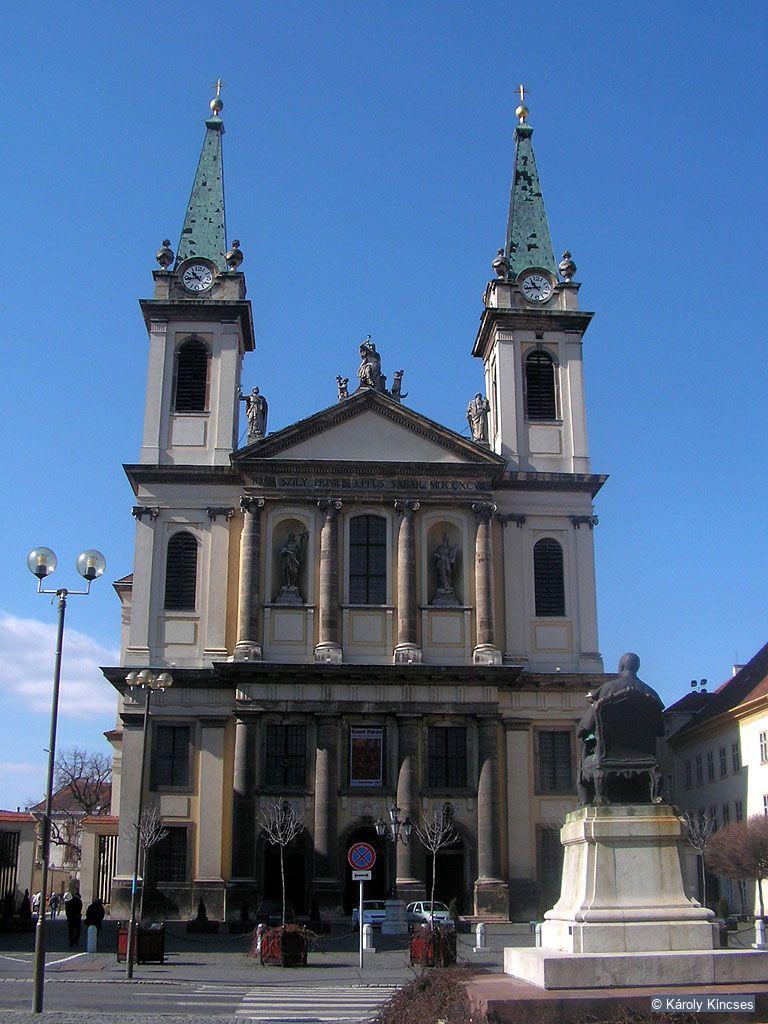
 Add to My Collection
Name of Monument:
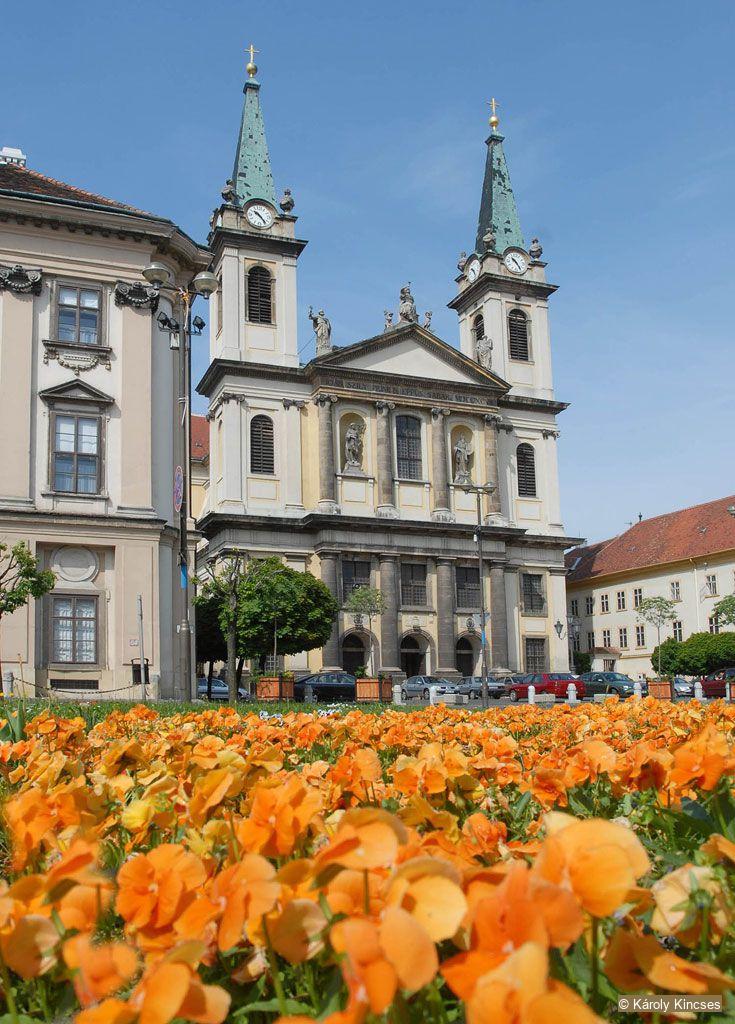
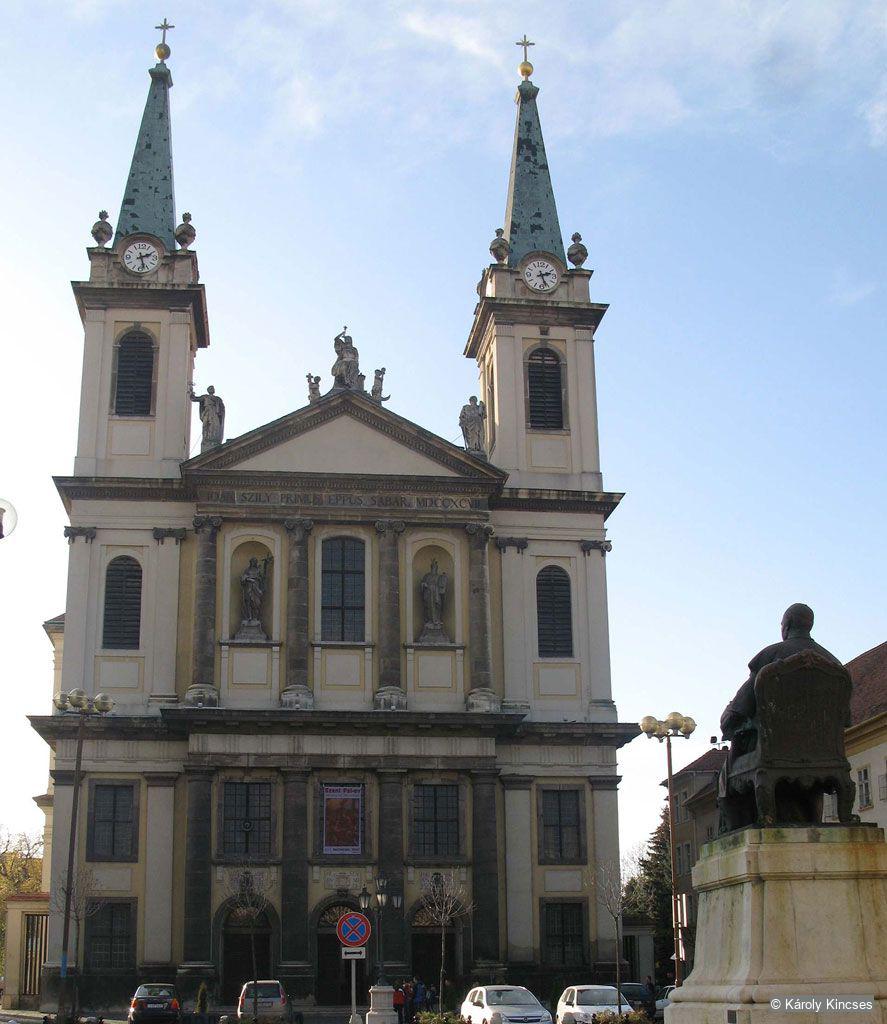
Szombathely Cathedral
Also known as:
Sarlós Boldogasszony-székesegyház (Cathedral of Our Lady)
Location:
Szombathely, Nyugat-Magyarország / West Hungary, Hungary
Mindszenty tér 1
9700 Szombathely
Archdiocese of Szombathely:
Pf. 41
9701 Szombathely
Catholic Church in Hungary, Archdiocese of Szombathely (Responsible Institution)
Date:
1791–1814
Artists:
Architect: Melchior Hefele (1716–1794); painters: Franz Anton Maulbertsch (1724–1796), Stephan Dorffmaister (1730–1797), J. Winterhantel, A. Spreng
Denomination / Type of monument:
Religious architecture, cathedral
Patron(s):
Bishop János Szily (1777–1799); Bishop Count Ferenc Herzan (1799–1806); Bishop Lipót Somogy (1806–1822)
History:
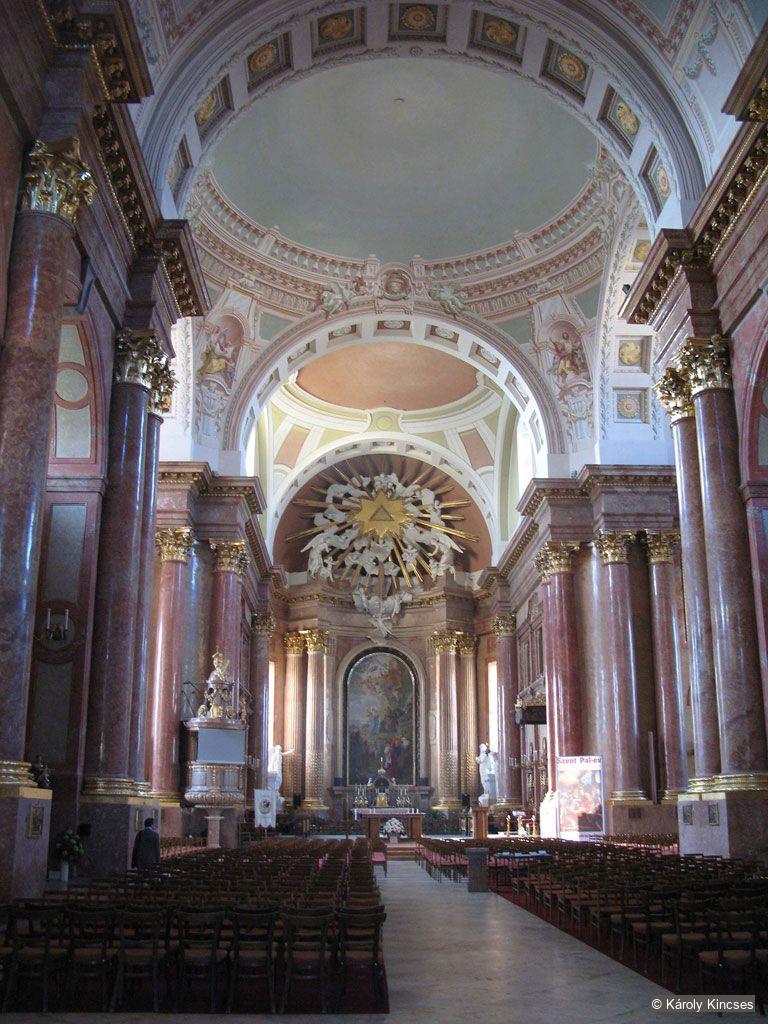
Due to the oversized character of Hungarian dioceses, Queen Maria Theresia (1740–1780) decided to found new ones, including the diocese of Szombathely in 1777. János Szily (1777–1799) was appointed as Szombathely's first bishop. After the diocese was founded, it was felt that Szombathely required new public buildings to reflect the town's new-found status. Accordingly, Szily was the patron of the building complex comprising first the Bishop's Palace, then the Seminary and lastly the Cathedral (1791–1814). The architect of the cathedral was Melchior Hefele, one of the most significant masters of his time.
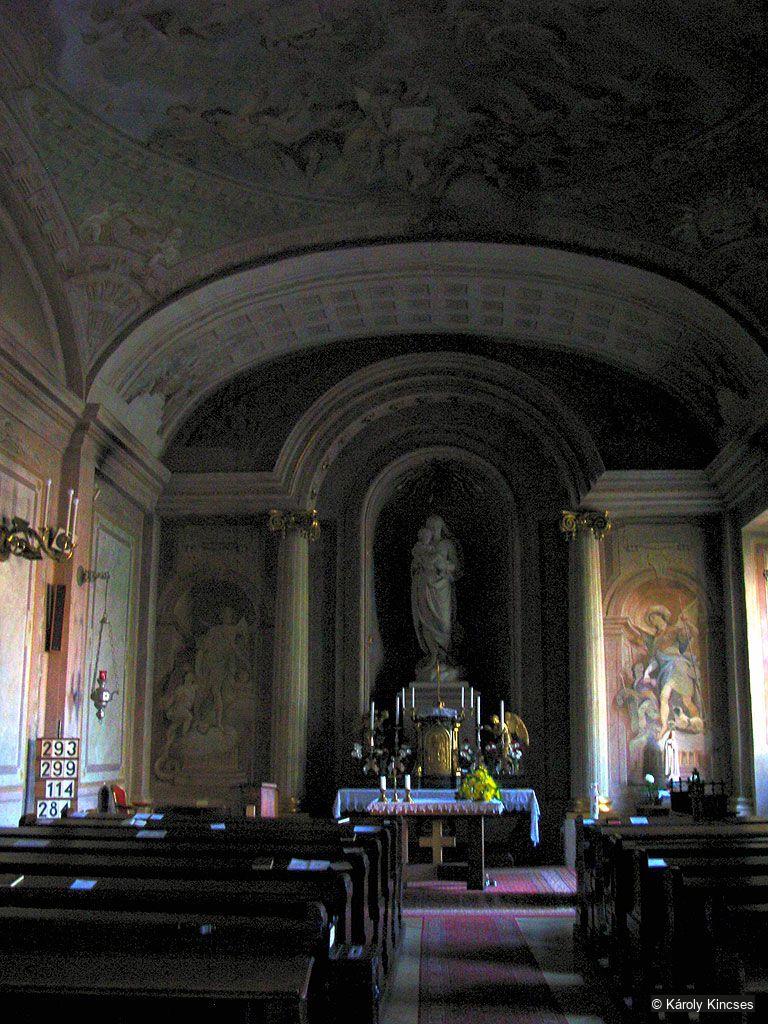
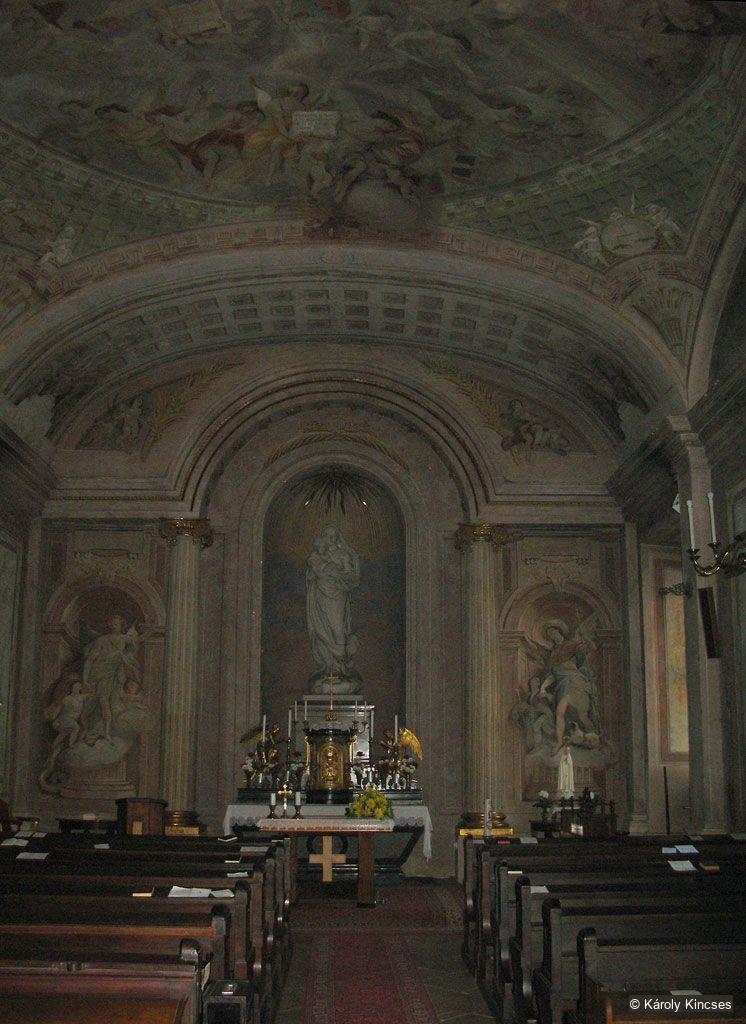
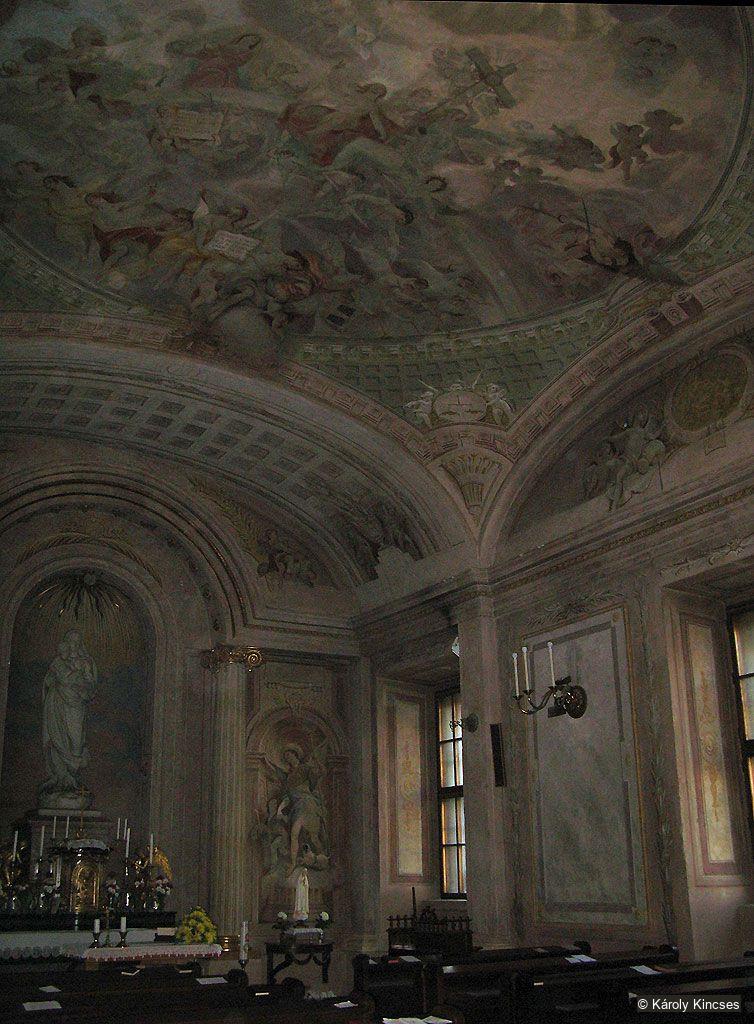
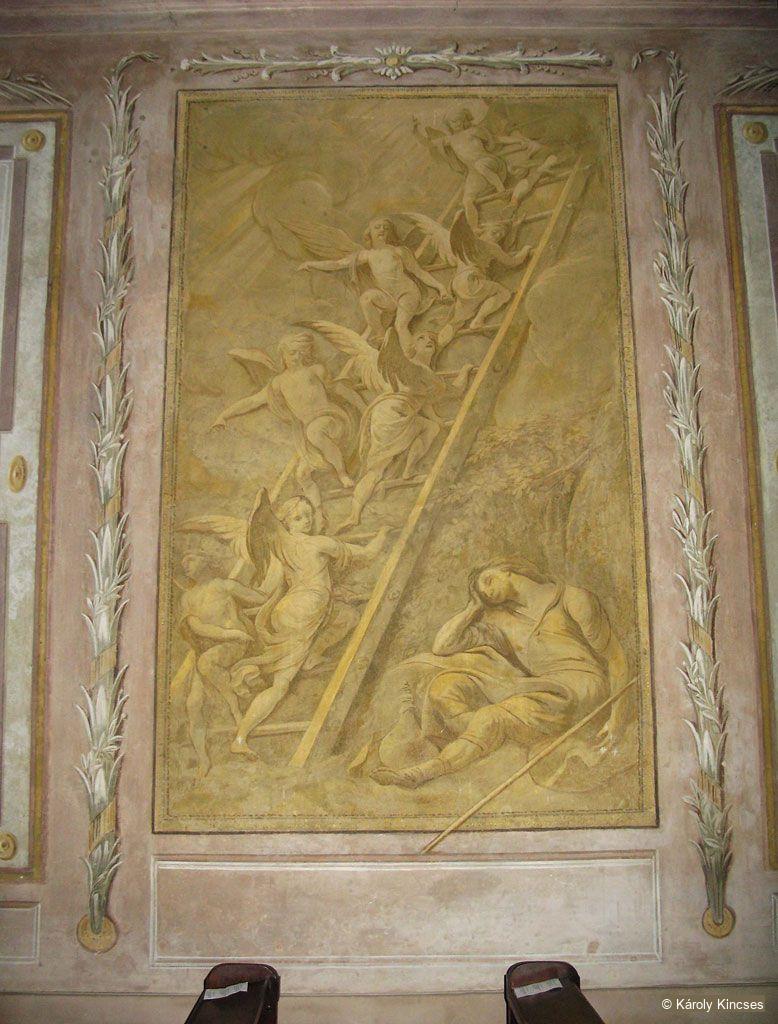
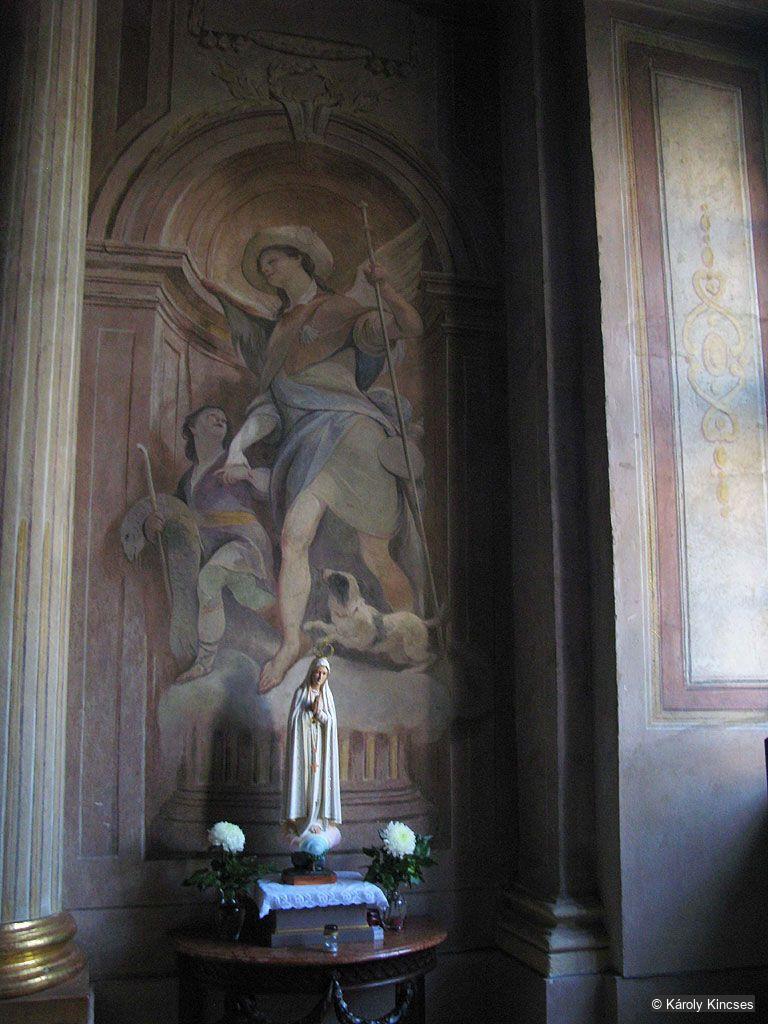
The frescoes, which were destroyed during World War Two, once represented scenes from the Life of the Virgin Mary painted by Franz Anton Maulbertsch and finished by his assistants. The same fate befell the altarpieces and the paintings of the Conversion of St. Paul and the Giving of the Keys. The altarpiece paintings dating to 1791 of local saints, St. Quirinus and St. Martin were also destroyed, but the sketches that relate to these works can be seen in the Österreichische Galerie in Vienna and the Bishop's Palace in Szombathely. The main altarpiece painting (1791–1792) of the Visitation prevailed. A sketch for an unfinished painting of St. László (Ladislaus) King of Hungary striking water from a rocky outcrop can be seen in the Bishop's Palace. One of the side altars holds a painting by Stephan Dorffmaister of King St. István (Stephen) founding the Benedictine Abbey of Pannonhalma.
Description:
The ground plan of Szombathely Cathedral merges the central and the longitudinal types. It commences with an organ-loft and an entrance hall, followed by three sections topped by sail vaults, and decorated with altar-niches. In the fourth section, the nave expands into a wide transept which, according to local tradition, it is not topped by a dome resting on a tholobate. A long, semi-circular sanctuary adjoins the transept, which opens into a vestry. The interior is articulated by monumental columns. The facade is framed by two towers. The details are moderate and linear, but the mouldings do not stand out emphatically. The two towers, capped by two pyramidal spires, embrace a two-level mid-section, closed by a triangular tympanum. The mid-section consists of a two-storey tetra-style portico, decorated with Tuscan columns on the lower level and Ionic columns on the upper. The classical column articulation, the indented cornices and the dramatic light and shade effects – all typical Baroque features – are missing. The inscription on the building reads: “JOAN. SZILY PRIMUS EPPVS SABAR. MDCCXCVII”. (“János Szily First Bishop of Szombathely [Savaria] 1797”). The building symbolises the genesis of Neo-Classicism in Hungary, but as the frescoes are irreparable and most of the original altarpieces have been destroyed, the interior does not reflect the original visual appearance of the cathedral.
View Short DescriptionSzombathely Cathedral is an outstanding example of the Hungarian Late Baroque style with Neo-Classical features. Queen Maria Theresia (1740–1780) founded a new diocese in 1777 and appointed János Szily as bishop, who was the patron for the construction of the Bishop’s Palace, Seminary and Cathedral. Of this building complex, the construction of the cathedral was completed last (1791–1814). The cultural and historical value of the cathedral lies in, among other things, that on one hand it is one of the last creations in the Late Baroque style, while on the other, it also symbolises the genesis of Neo-Classicism. The ceiling frescoes in the cathedral were destroyed during a Second World War bombing raid.
How Monument was dated:
Based on written and visual sources, and stylistic research.
Selected bibliography:
Galavics, G., “A szombathelyi püspökség mint műalkotás. Das Bistum von Szombathely als Kunstwerk” (“The Diocese of Szombathely as an Artwork”), Melchior Hefele (1716—1794) építész emlékkiállítása. Gedenkausstellung des Architekten Melchior Hefele (1716–1794) (An Exhibition in Remembrance of Melchior Hefele (1716–1794) Master Architect) (ed. Zsámbéky Mónika), Szombathely, 1994, pp. 111–113.
Jávor, A., “Zu Maulbertschs Spätwerk in Ungarn (Eger, Pápa, Szombathely)”, Franz Anton Maulbertsch und Mitteleuropa. Festschrift zum 30-jahrigen Bestehen des Museums Langenargen, (eds) E. Hindelang, L. Slaviček, Langenargen–Brno, 2007, pp. 103–119.
Sisa, J., Wiebenson D. (ed.), Magyarország építészetének története (The History of Hungarian Architecture), Budapest, 1998, p. 154.
Citation of this web page:
Áron Tóth "Szombathely Cathedral" in "Discover Baroque Art", Museum With No Frontiers, 2026.
https://baroqueart.museumwnf.org/database_item.php?id=monument;BAR;hu;Mon11;16;en
Prepared by: Áron Tóth Áron Tóth
SURNAME: Tóth
NAME: Áron
AFFILIATION: National Trust of Monuments for Hungary
TITLE: Art Historian; MWNF DBA author (Hungary)
CV:
Áron Tóth works as an Art Historian at The National Trust of Monuments for Hungary. He was awarded his MA in Art History at the Eötvös Loránd University in Budapest, and received his PhD at the university’s Institute of Art History in 2009. He was a scholar at the Research Institute for Art History at the Hungarian Academy of Sciences from 2005 until 2009. His research interests embrace 17th- and 18th-century architecture and architectural theory. He is Secretary for the Association Art Centre – New Workshop of Art Historians – in Budapest and a contributing author for MWNF DBA (Hungary).
Copyedited by: Terézia BardiTerézia Bardi
SURNAME: Bardi
NAME: Terézia Anna
AFFILIATION: National Trust of Monuments for Hungary
TITLE: Art Historian, Vice Director for Research at The National Trust of
Monuments for Hungary; MWNF DBA local co-ordinator (Hungary), author
and copy-editor
CV:
Terézia Bardi, Vice Director for Research at the National Trust of Monuments for Hungary since 2004, was awarded her MA in History and History of Art at the Eötvös Loránd University in Budapest. After a period of fellowships mainly in Italy, Terézia gained her PhD from the Faculty of Art History at the same university for her thesis Presentation and Representation – the European Reception of the Liberation of Buda in 1686: Feast and Public Opinion. Her main fields of research are 17th-and18th-century Baroque and Rococo: the spectacles, festival decorations and associated iconography – including theatre productions of the period – and interior decoration of historic houses. Since 1988, she has edited a number of art historical books that include some on Oriental art and architecture. She is MWNF DBA’s local (Hungarian) co-ordinator, author and copy-editor.
Translation by: Judit Harangozó, Philip Barker, Terézia Bardi (translation of Latin inscriptions) Terézia Bardi (translation of Latin inscriptions)
SURNAME: Bardi
NAME: Terézia Anna
AFFILIATION: National Trust of Monuments for Hungary
TITLE: Art Historian, Vice Director for Research at The National Trust of
Monuments for Hungary; MWNF DBA local co-ordinator (Hungary), author
and copy-editor
CV:
Terézia Bardi, Vice Director for Research at the National Trust of Monuments for Hungary since 2004, was awarded her MA in History and History of Art at the Eötvös Loránd University in Budapest. After a period of fellowships mainly in Italy, Terézia gained her PhD from the Faculty of Art History at the same university for her thesis Presentation and Representation – the European Reception of the Liberation of Buda in 1686: Feast and Public Opinion. Her main fields of research are 17th-and18th-century Baroque and Rococo: the spectacles, festival decorations and associated iconography – including theatre productions of the period – and interior decoration of historic houses. Since 1988, she has edited a number of art historical books that include some on Oriental art and architecture. She is MWNF DBA’s local (Hungarian) co-ordinator, author and copy-editor.
Translation copyedited by: Mandi GomezMandi Gomez
Amanda Gomez is a freelance copy-editor and proofreader working in London. She studied Art History and Literature at Essex University (1986–89) and received her MA (Area Studies Africa: Art, Literature, African Thought) from SOAS in 1990. She worked as an editorial assistant for the independent publisher Bellew Publishing (1991–94) and studied at Bookhouse and the London College of Printing on day release. She was publications officer at the Museum of London until 2000 and then took a role at Art Books International, where she worked on projects for independent publishers and arts institutions that included MWNF’s English-language editions of the books series Islamic Art in the Mediterranean. She was part of the editorial team for further MWNF iterations: Discover Islamic Art in the Mediterranean Virtual Museum and the illustrated volume Discover Islamic Art in the Mediterranean.
True to its ethos of connecting people through the arts, MWNF has provided Amanda with valuable opportunities for discovery and learning, increased her editorial experience, and connected her with publishers and institutions all over the world. More recently, the projects she has worked on include MWNF’s Sharing History Virtual Museum and Exhibition series, Vitra Design Museum’s Victor Papanek and Objects of Desire, and Haus der Kulturen der Welt’s online publication 2 or 3 Tigers and its volume Race, Nation, Class.
MWNF Working Number: HU 16