

 Back
Back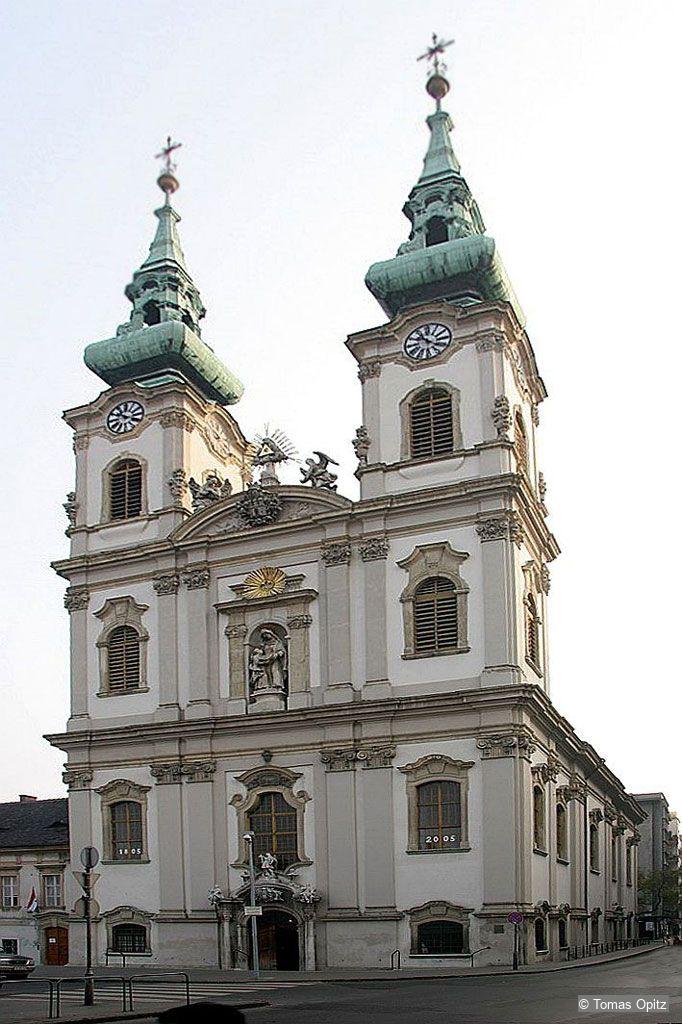
 Add to My Collection
Name of Monument:
Parish Church of St. Anne, Budapest-Felsővíziváros (Upper Watertown)
Also known as:
Church of St. Anne, Buda
Location:
Budapest, Közép-Magyarország / Central Hungary, Hungary
Batthyány tér 7
1011 Budapest
T : +36 12 013 404
F : +36 12 253 907
Catholic Church of Hungary (Responsible Institution)
Date:
1740–1762; 1804–1805
Artists:
Architects: Cristoph Hamon, Mathäus Nepauer, Johann Michael Hamon, Christoph Hickisch, supervisor: Johann Heinrich Seyffert; stonemasons: Franz Endl, Leonard Weber, Thomas Weibl; sculptors: Anton Eberhardt, Károly (Karl) Bebó (1712–1779); painters: Gregor Vogl, Franz Wagenschön; master locksmith: Ignaz Pügl; wood carver: Michael Mayrhold
Denomination / Type of monument:
Religious architecture, parochial church
Patron(s):
Ignác Pretelli, Society of Jesus (SJ) (1736–1740); József Reck SJ (1740–1757); Ádám Kögl SJ (1757–1771); Ferenc Luprecht (1803–1814)
History:
The predecessor of the Church of St. Anne was destroyed when the Ottomans occupied Buda between 1541 and 1686. Construction of the church that stands today commenced in 1740. Christoph Hamon, a master from Buda with origins in Bohemia, designed the layout. Parson Ignác Pretelli, who initiated the construction, died in late 1740. Completion of the church was left to his successors, József Reck and Ádám Kögl.
After the death of Hamon in 1748, Mathäus Nepauer from Brünn (Brno) took command of the construction. The cupola of the nave, built by Johann Michael Hamon son of Cristoph Hamon, was completed in 1762. In 1763, a serious earthquake damaged the church after which restoration dragged on. The interior decoration, however, continued uninterrupted. Karl Bebó, one of the most significant sculptors of the Hungarian Baroque, built the main altar and also carved the pulpit. The side altars were built by Anton Eberhardt between 1767 and 1768. The Church was renovated under the guidance of Christoph Hickisch between 1804 and 1805.
Description:
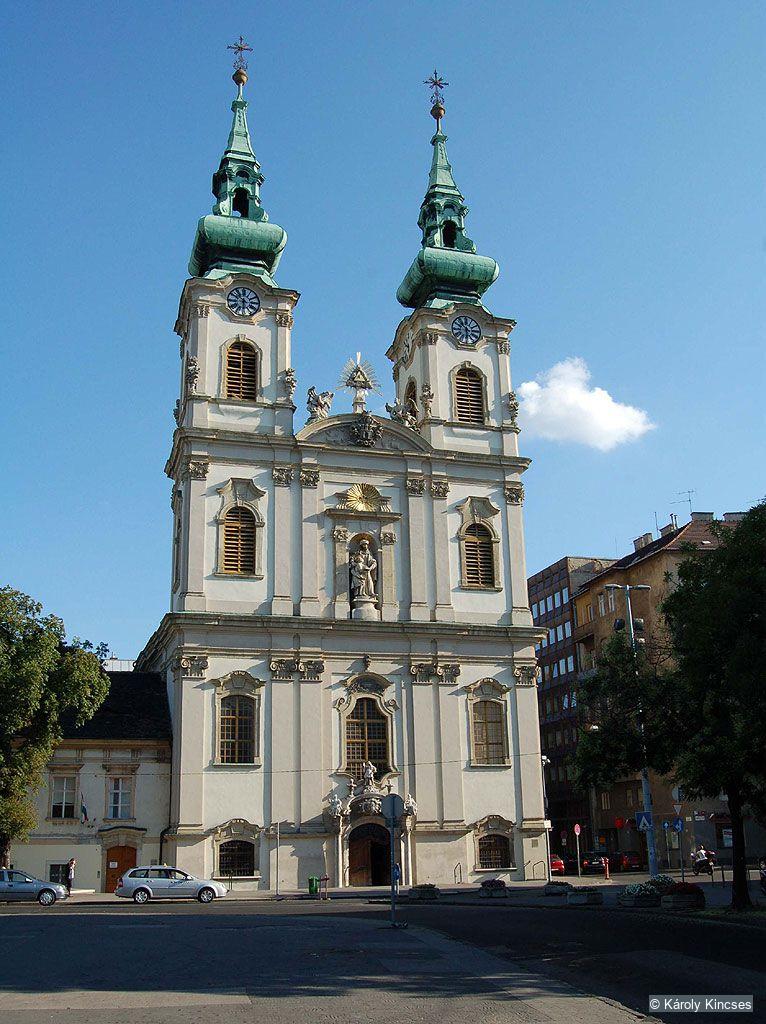
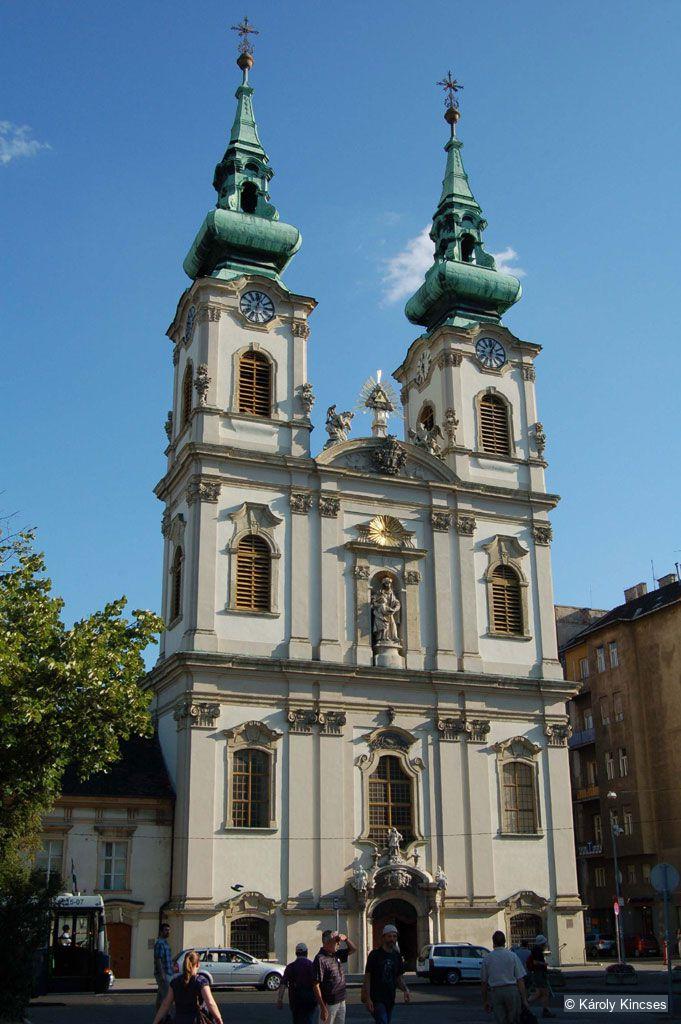
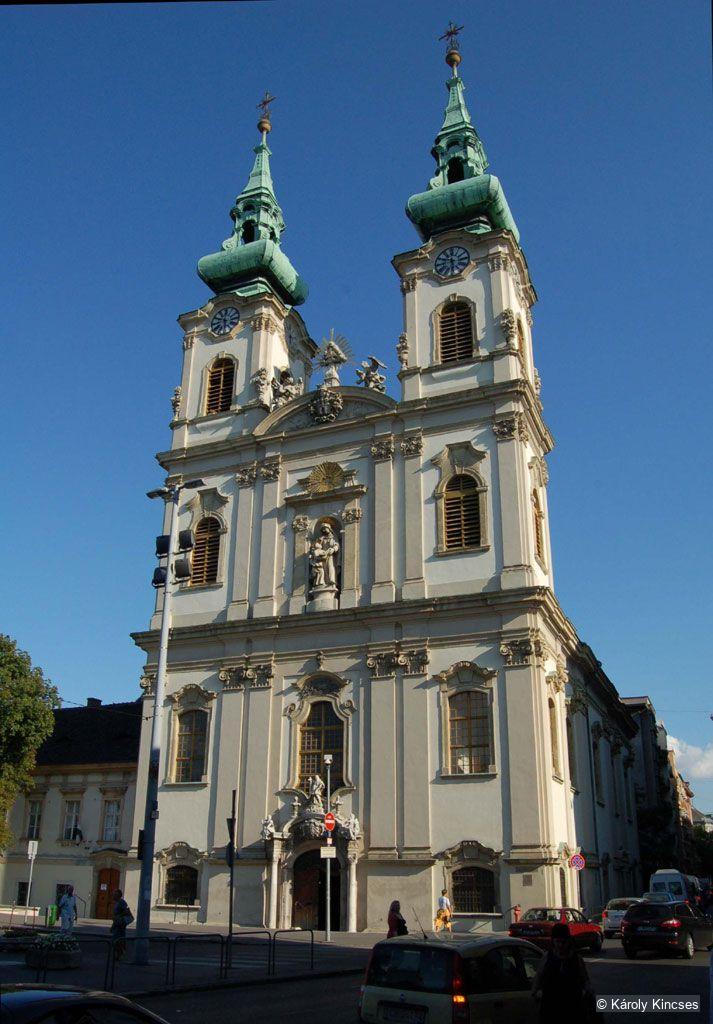
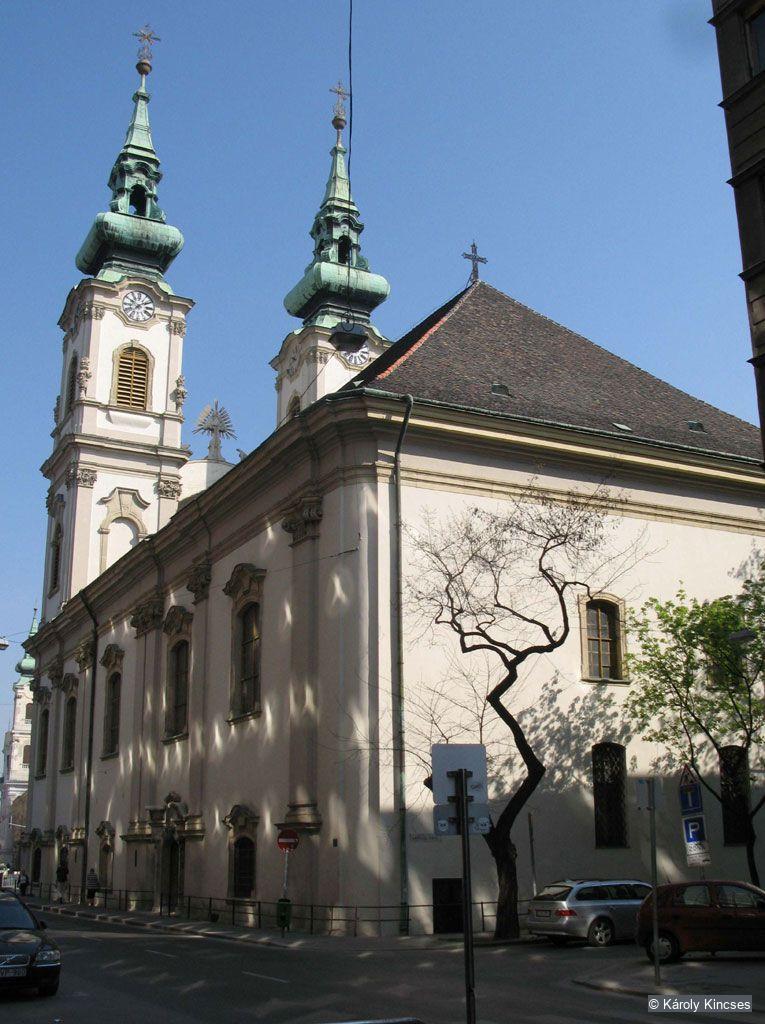
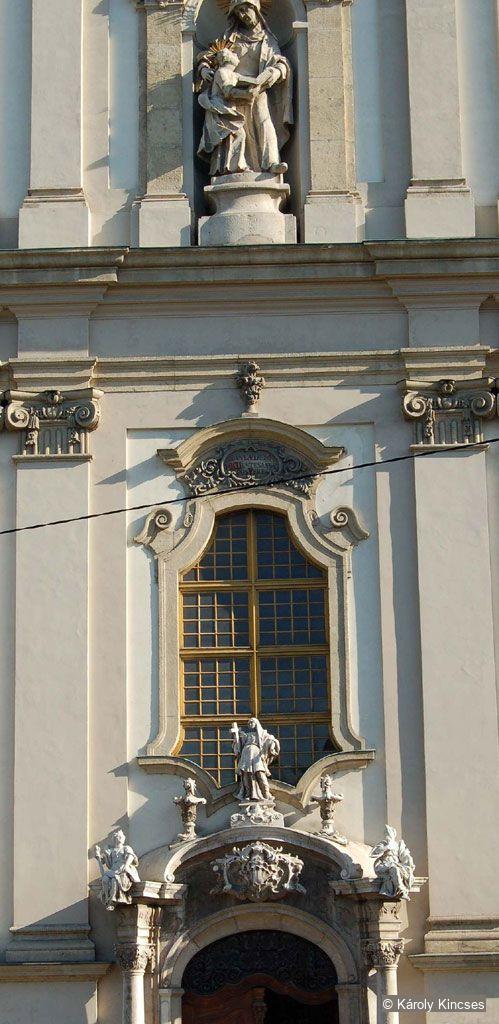
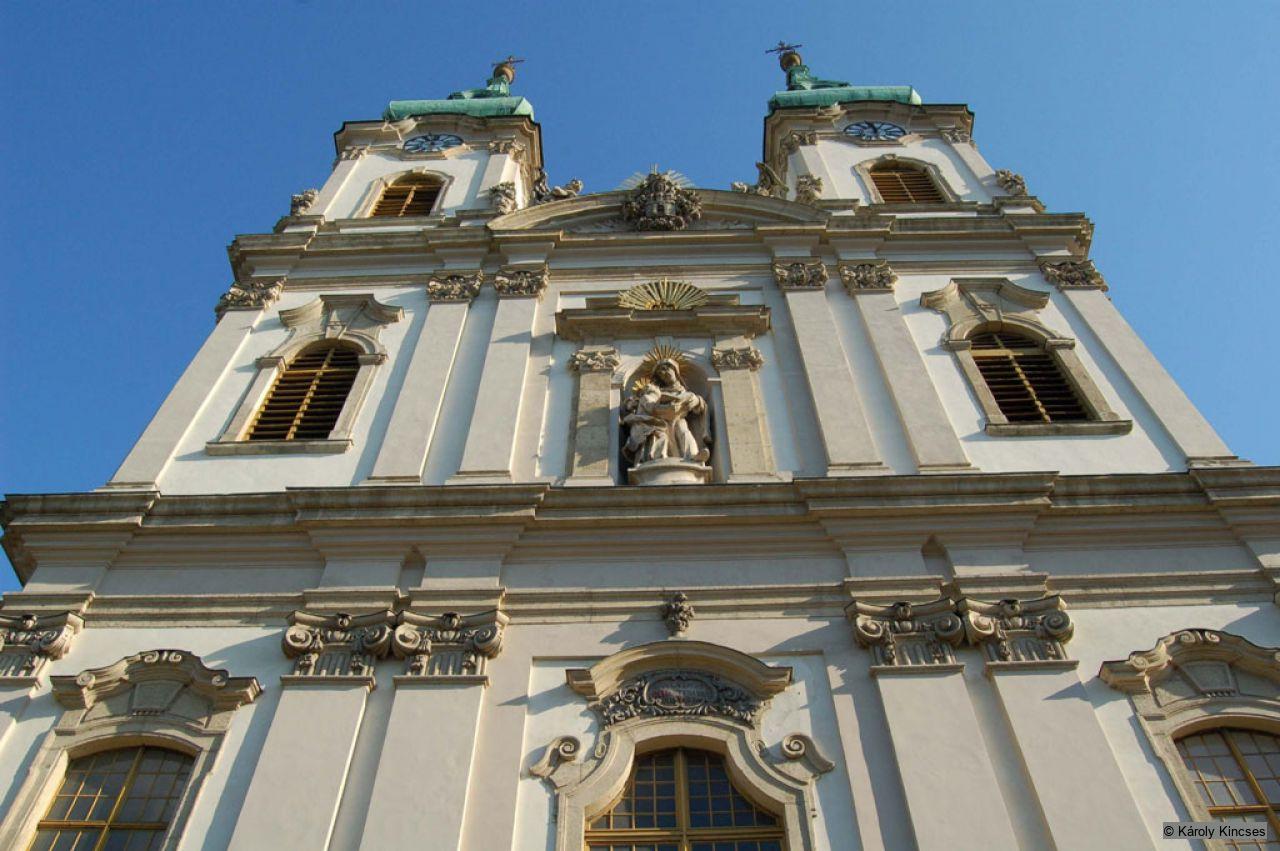
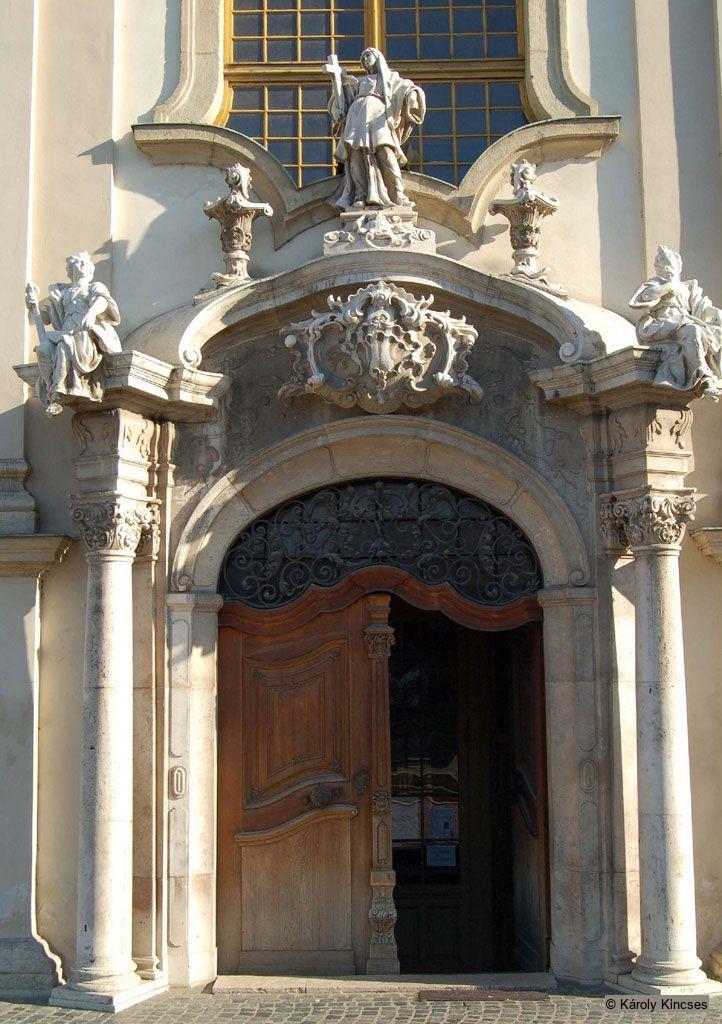
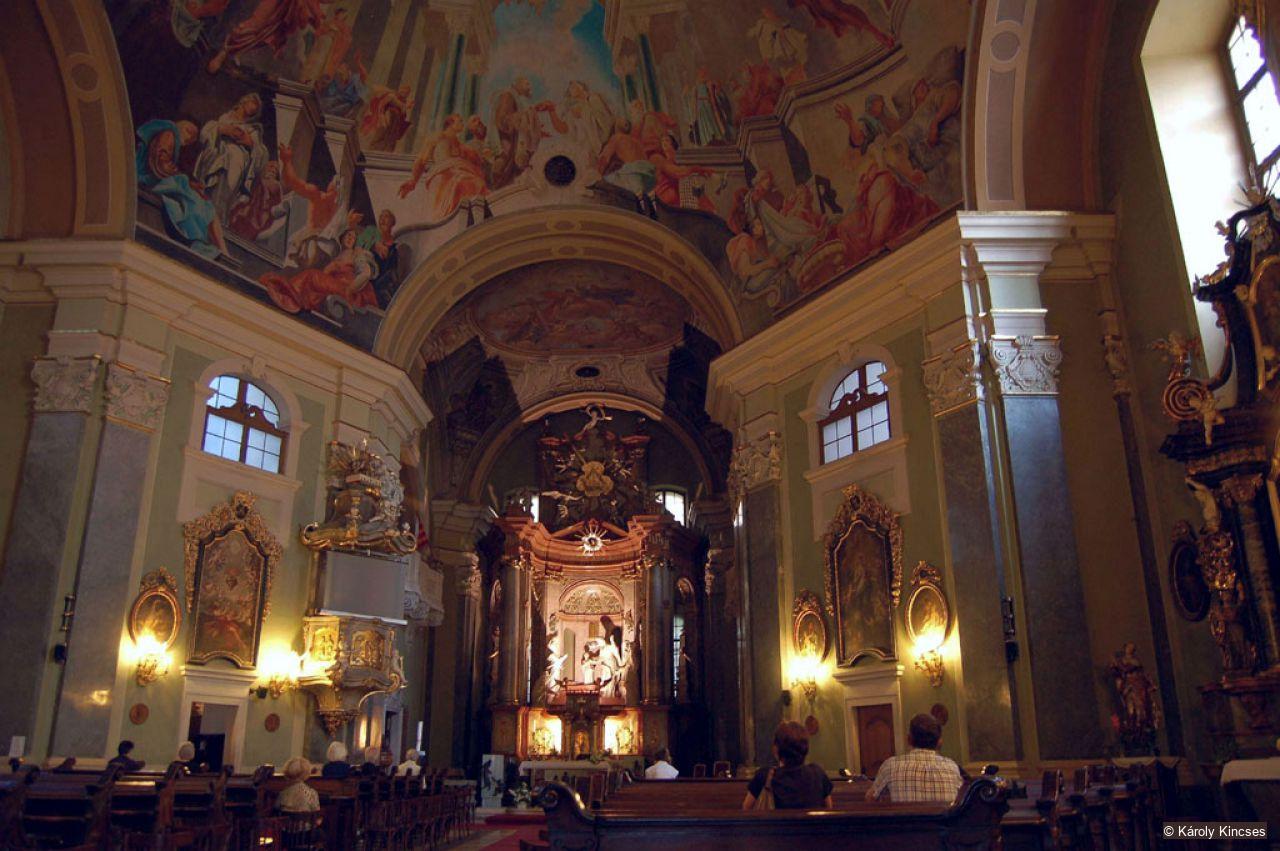
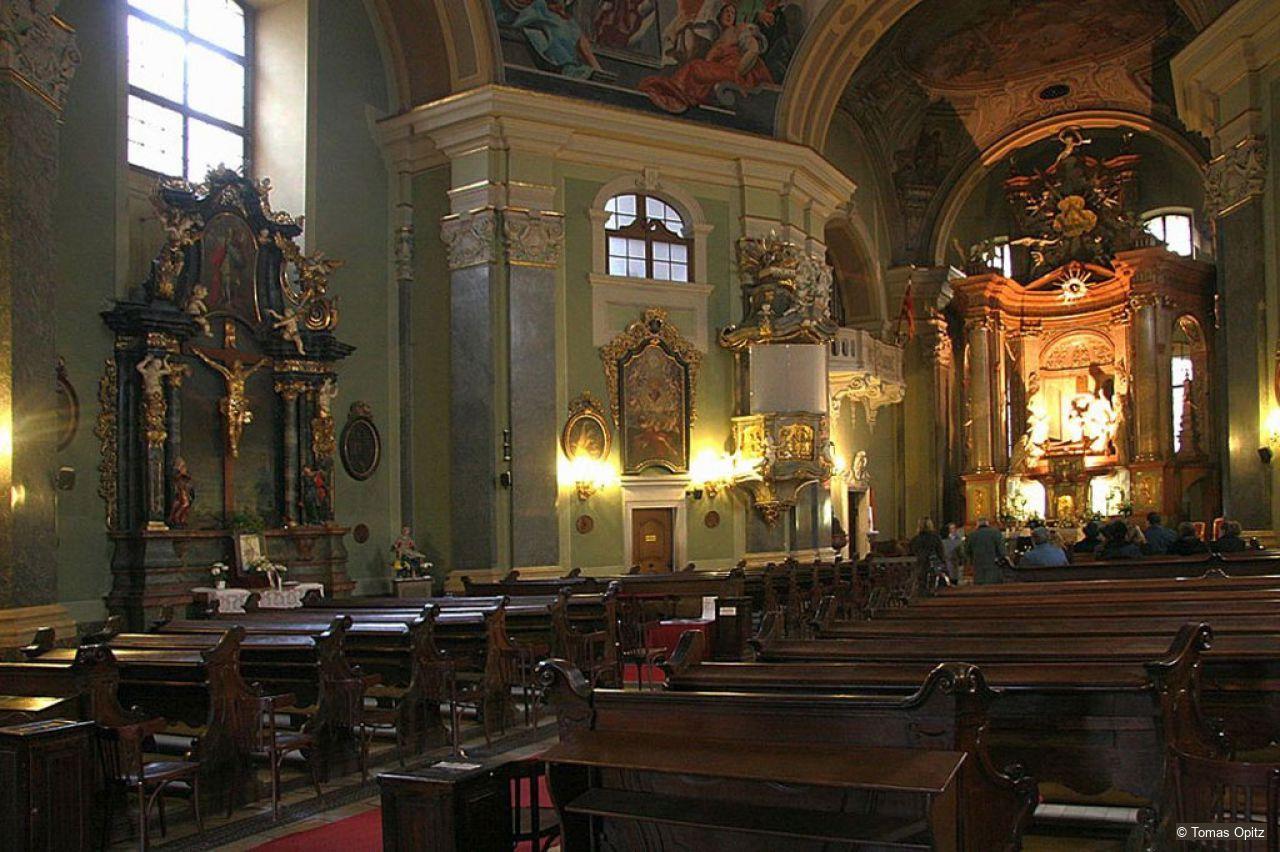
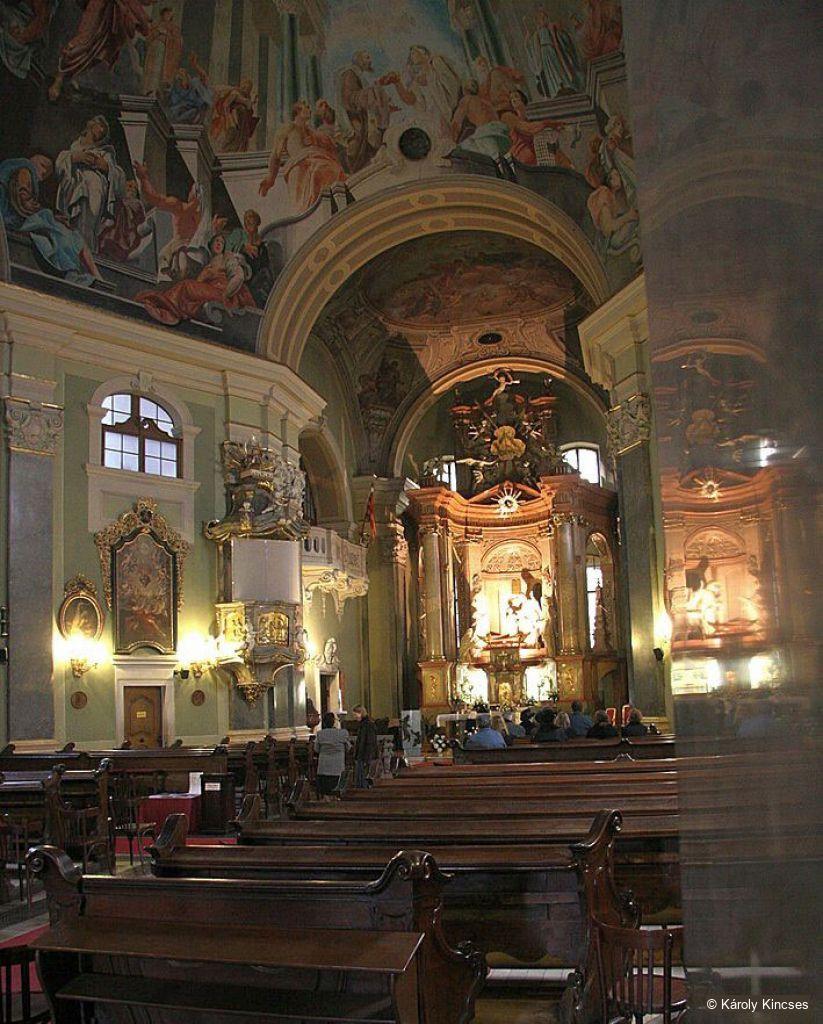
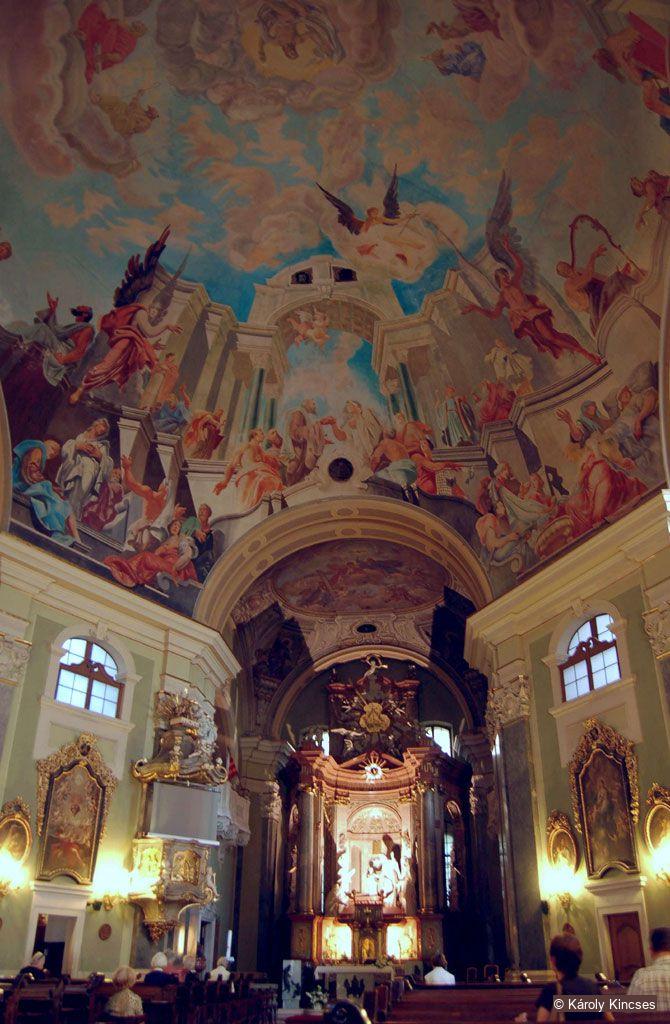
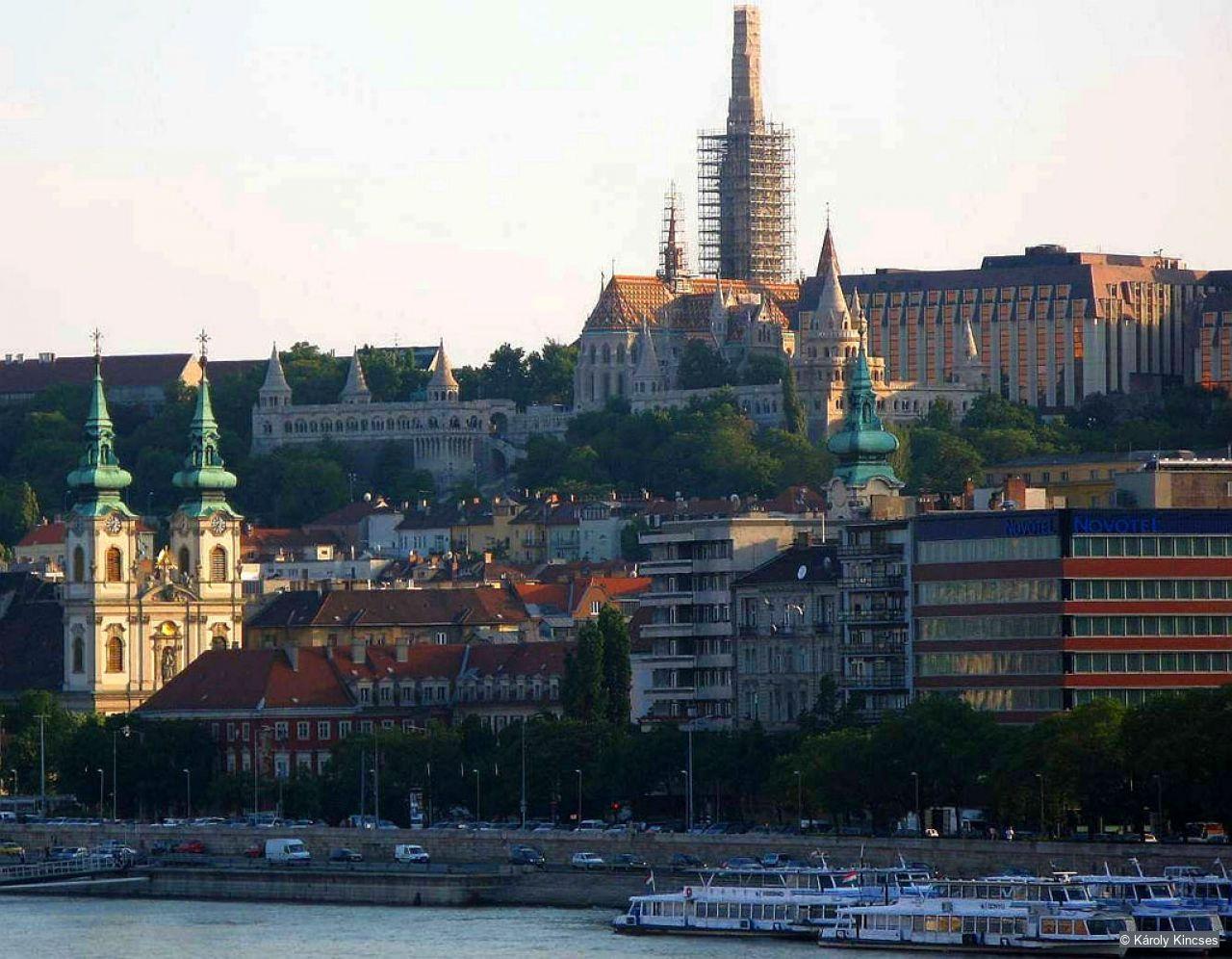
The layout of the building is a combination of central and longitudinal arrangements. Its elongated octagonal nave is topped by an oval cupola covered by a pitched roof on the outside. On the entrance side, the nave continues in an organ-loft, and an entrance hall joins the nave. To the south, the nave continues to a sanctuary. On the western side of the sanctuary is the old Loreto Chapel – today the Holy Sepulchre Chapel. On the eastern side of the church is a one-storey parish building that was continuously being built throughout the 18th century, and which was further extended in the 1930s. The two-tower façade is separated into two levels by a horizontally accentuated stringcourse. Vertically, it is articulated by paired Ionic pilasters. The design of the façade was influenced by the so-called Danube school, prevalent in Hungary in the first-third of the 18th century. The carved gate, decorated with allegorical figures of Faith, Hope and Love, opens in the middle. The original gate was created by Franz Endl and the statues were carved by Leonard Weber. The gate seen today is a copy of the original that was destroyed in the Second World War. Above the gate, the lyre window of the organ loft can be seen; on the second level stands a statue of St. Anne with the Virgin Mary.
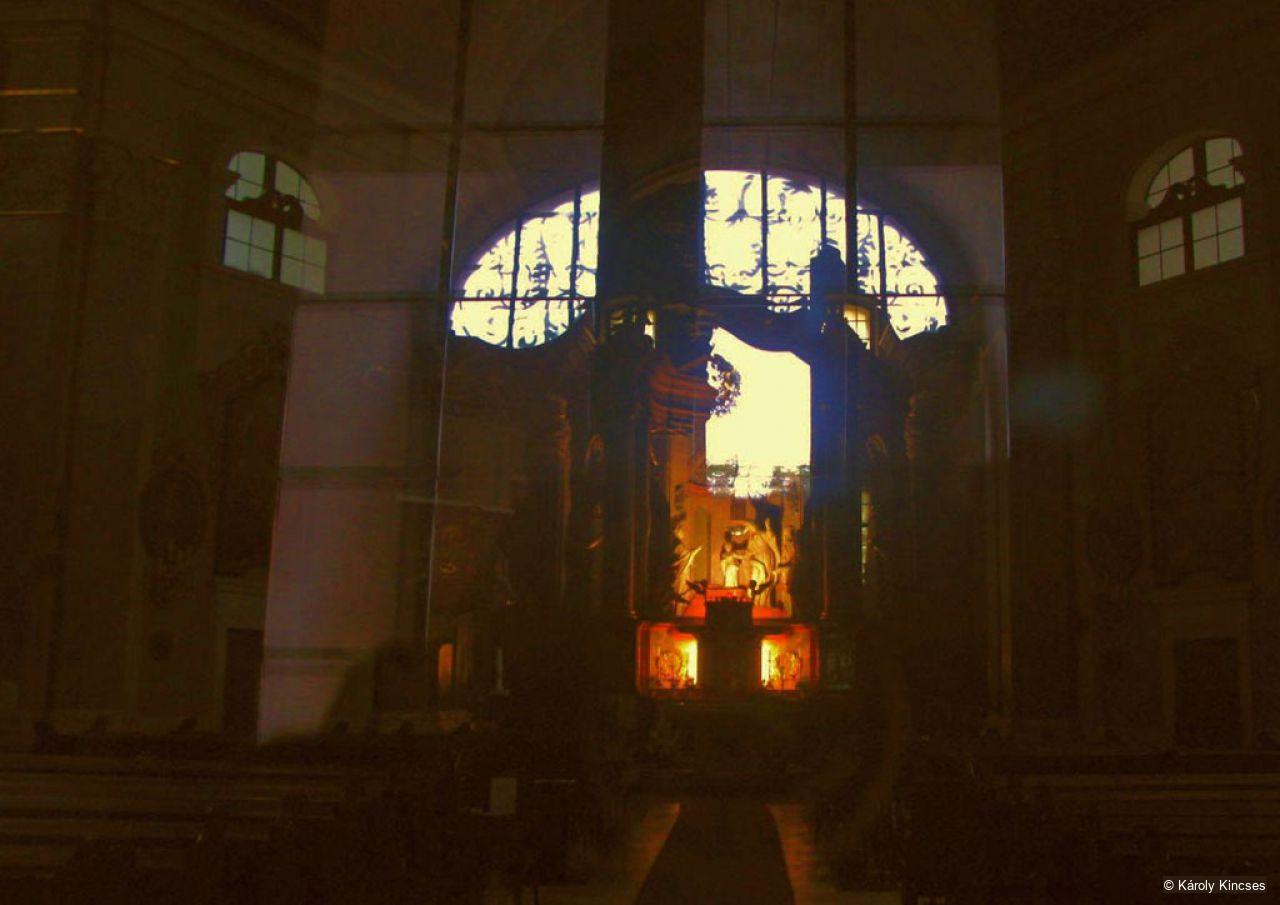
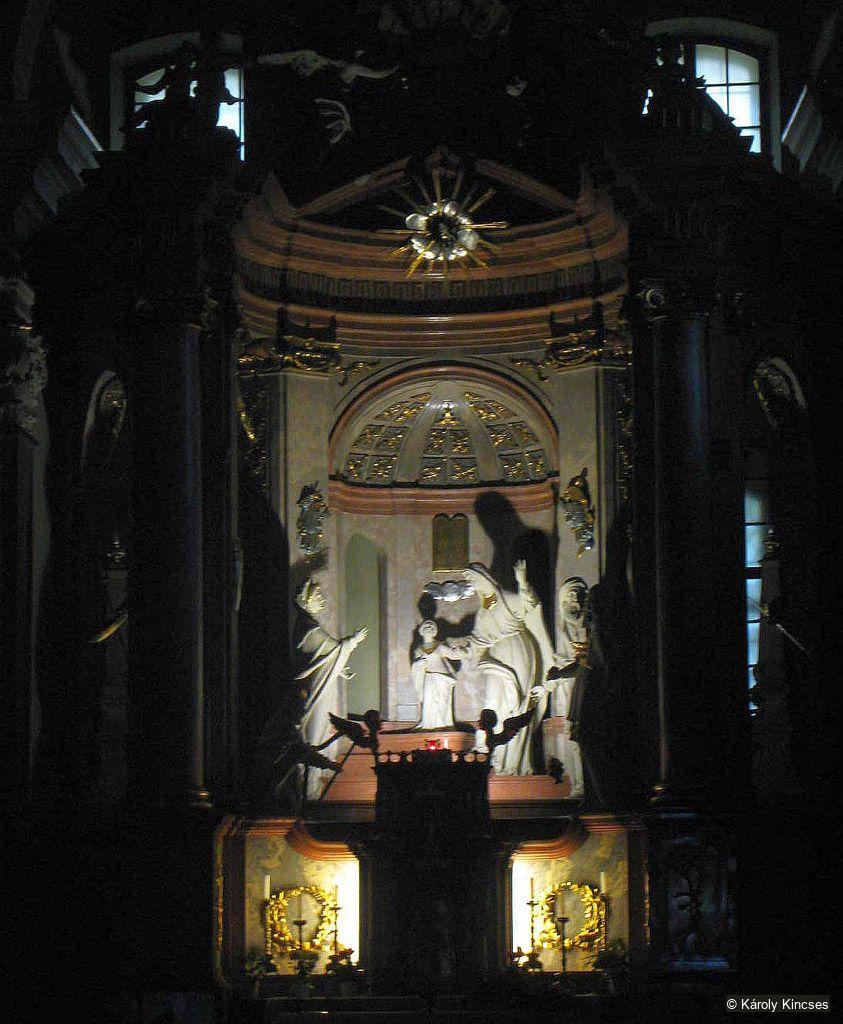
The gable is decorated with the coat of arms of Buda and angels adoring the Holy Trinity by Anton Eberhardt. The towers are capped with finely articulated Baroque spires. The main altar is a fine example of a theatrum sacrum: its architecture resembling the Jerusalem Church, with the figures of St. Anne, Joachim, Mary, Elizabeth and King David. The fresco depicting the Holy Trinity on the vault of the sanctuary was painted by Gregor Vogl. The side altars are dedicated to the Holy Cross and St. Francis Xavier. In the 18th century, the pulpit was decorated in high relief with a scene of the Sower; today it is embellished with scenes from the lives of Moses and Joshua. The oil painting sequence is by Franz Wagenschön. Michael Mayrhold carved the pews; the organ originally belonged to the Carmelite Church in Buda Castle. The stone balustrade of the tabernacle was created by Thomas Weibl, and the wrought-iron door of the chapel was the work of Ignaz Pügl. The fresco on the cupola of the nave was painted in the 1930s.
The Church of St. Anne in Buda built by the Jesuits, is an outstanding example of Hungarian architecture from the 18th century. Its peculiarity lies in its central interior layout, which cannot be discerned from its exterior. The façade with the two towers indicates the influence of the Danube school, which is also noticeable in the Cathedral of Kalocsa and the Pauline Church of Pest (today the “University Church”). The Church of St. Anne used to be the Parish Church of Víziváros (meaning Watertown), one of the oldest parts of Buda.
How Monument was dated:
Based on written and visual sources and stylistic research.
Selected bibliography:
Sisa, J., Wiebenson, D. (ed), Magyarország építészetének története (History of Hungarian Architecture), Budapest, 1998, p. 156.
Voit, P., A barokk Magyarországon (Baroque in Hungary), Budapest, 1970, p. 45.
Zakariás, G. S., A budai Batthyány tér (Batthyány square in Buda), Budapest, 1958, pp. 19–31.
Citation of this web page:
Áron Tóth "Parish Church of St. Anne, Budapest-Felsővíziváros (Upper Watertown)" in "Discover Baroque Art", Museum With No Frontiers, 2026.
https://baroqueart.museumwnf.org/database_item.php?id=monument;BAR;hu;Mon11;2;en
Prepared by: Áron Tóth Áron Tóth
SURNAME: Tóth
NAME: Áron
AFFILIATION: National Trust of Monuments for Hungary
TITLE: Art Historian; MWNF DBA author (Hungary)
CV:
Áron Tóth works as an Art Historian at The National Trust of Monuments for Hungary. He was awarded his MA in Art History at the Eötvös Loránd University in Budapest, and received his PhD at the university’s Institute of Art History in 2009. He was a scholar at the Research Institute for Art History at the Hungarian Academy of Sciences from 2005 until 2009. His research interests embrace 17th- and 18th-century architecture and architectural theory. He is Secretary for the Association Art Centre – New Workshop of Art Historians – in Budapest and a contributing author for MWNF DBA (Hungary).
Copyedited by: Terézia BardiTerézia Bardi
SURNAME: Bardi
NAME: Terézia Anna
AFFILIATION: National Trust of Monuments for Hungary
TITLE: Art Historian, Vice Director for Research at The National Trust of
Monuments for Hungary; MWNF DBA local co-ordinator (Hungary), author
and copy-editor
CV:
Terézia Bardi, Vice Director for Research at the National Trust of Monuments for Hungary since 2004, was awarded her MA in History and History of Art at the Eötvös Loránd University in Budapest. After a period of fellowships mainly in Italy, Terézia gained her PhD from the Faculty of Art History at the same university for her thesis Presentation and Representation – the European Reception of the Liberation of Buda in 1686: Feast and Public Opinion. Her main fields of research are 17th-and18th-century Baroque and Rococo: the spectacles, festival decorations and associated iconography – including theatre productions of the period – and interior decoration of historic houses. Since 1988, she has edited a number of art historical books that include some on Oriental art and architecture. She is MWNF DBA’s local (Hungarian) co-ordinator, author and copy-editor.
Translation by: Judit Harangozó, Philip Barker
Translation copyedited by: Mandi GomezMandi Gomez
Amanda Gomez is a freelance copy-editor and proofreader working in London. She studied Art History and Literature at Essex University (1986–89) and received her MA (Area Studies Africa: Art, Literature, African Thought) from SOAS in 1990. She worked as an editorial assistant for the independent publisher Bellew Publishing (1991–94) and studied at Bookhouse and the London College of Printing on day release. She was publications officer at the Museum of London until 2000 and then took a role at Art Books International, where she worked on projects for independent publishers and arts institutions that included MWNF’s English-language editions of the books series Islamic Art in the Mediterranean. She was part of the editorial team for further MWNF iterations: Discover Islamic Art in the Mediterranean Virtual Museum and the illustrated volume Discover Islamic Art in the Mediterranean.
True to its ethos of connecting people through the arts, MWNF has provided Amanda with valuable opportunities for discovery and learning, increased her editorial experience, and connected her with publishers and institutions all over the world. More recently, the projects she has worked on include MWNF’s Sharing History Virtual Museum and Exhibition series, Vitra Design Museum’s Victor Papanek and Objects of Desire, and Haus der Kulturen der Welt’s online publication 2 or 3 Tigers and its volume Race, Nation, Class.
MWNF Working Number: HU 02