

 Back
Back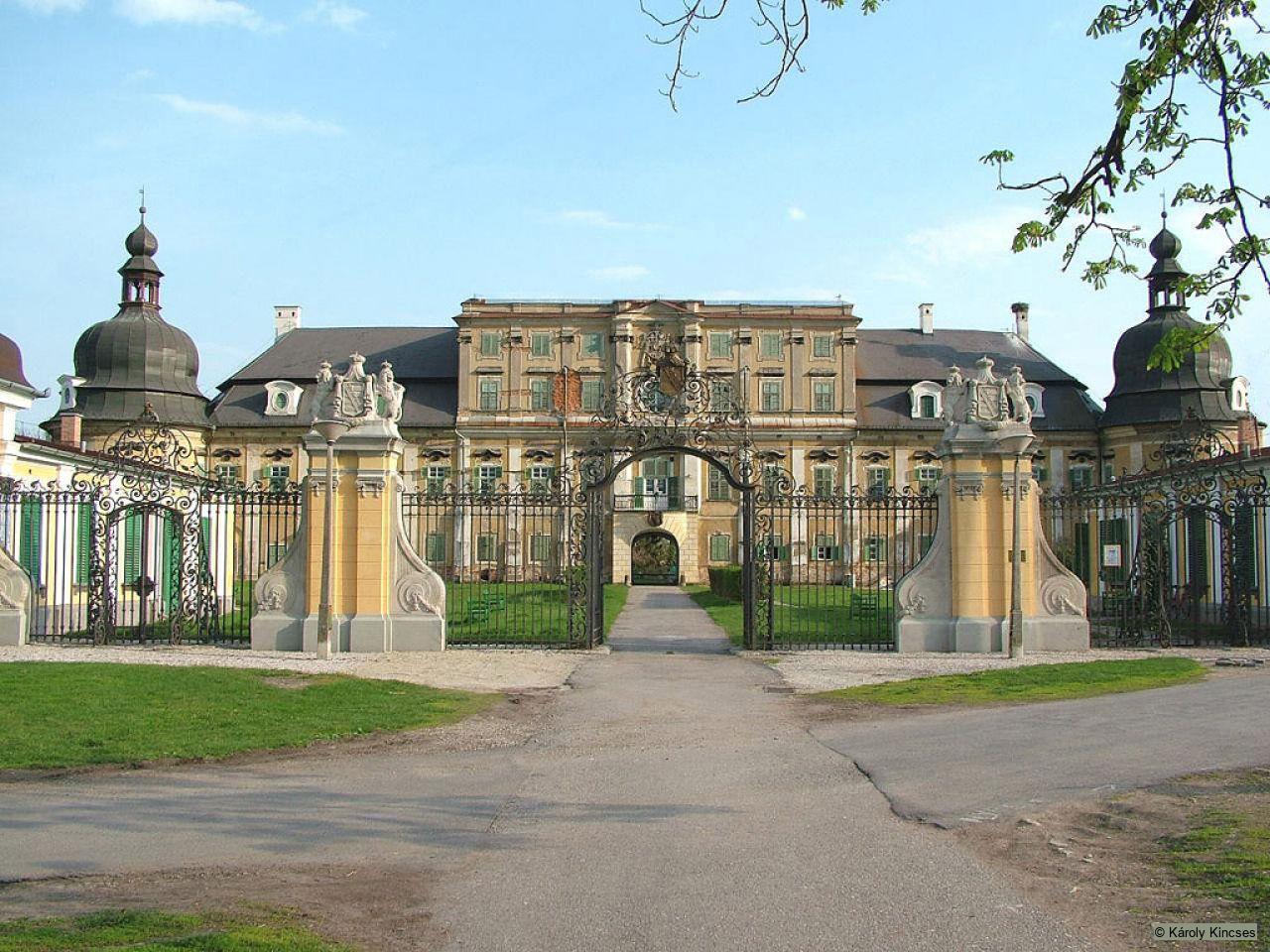
 Add to My Collection
Name of Monument:
L’Huillier-Coburg Mansion
Location:
Edelény, Észak-Magyarország / North Hungary, Hungary
Borsodi út 7
3780 Edelény
T : +36 99 537 640
F : +36 99 537 640
E : info@eszterhaza.hu
Eszterháza Centre for Culture, Research and Festivals (Responsible Institution)
Date:
1727–1730; 1765; 1769
Artists:
Unknown architect; attributed to architect: Giovanni Battista Carlone (1682–1747); painters: Franciscus Lieb (active: 1758–1788), János Woronieski
Denomination / Type of monument:
Secular architecture, residence, mansion
Patron(s):
Jean-François L’Huillier (1668–1728); Maria Magdalena Santa Croce; Count István Esterházy
History:
The mansion-house was built between 1727 and 1730 by General Jean-François L'Huillier, captain of Eger Castle. L'Huillier was ennobled in 1715, and obtained the land on which the property was built in 1727. After his death in 1728, construction was completed under the supervision of his wife, Maria Magdalena Santa Croce. The architect was thought to have been Giovanni Battista Carlone – who at the time lived in Eger – however, no conclusive evidence to support this assumption has been found to date.
The house was inherited through the female line by L'Huiller's daughter. Count István Esterházy, who was the second husband of L'Huiller's granddaughter Ludmilla Forgách, entrusted Franciscus Lieb from Igló (Spišská Nová Ves) with painting the allegories and Rocco scenes seen in several rooms.
After the death of L'Huillier's last descendant, Count Ferenc Dessewffy in 1820, the mansion was acquired by the Prince of Saxe-Coburg and Gotha who leased it out to various institutions. In the 1920s the mansion was sold to the State and used by the County Court. After the Second World War it was used by the police, and after that it was divided into several flats. Today the mansion is managed by the National Trust of Monuments for Hungary, under whose auspices a restoration programme began in 2009.
Description:
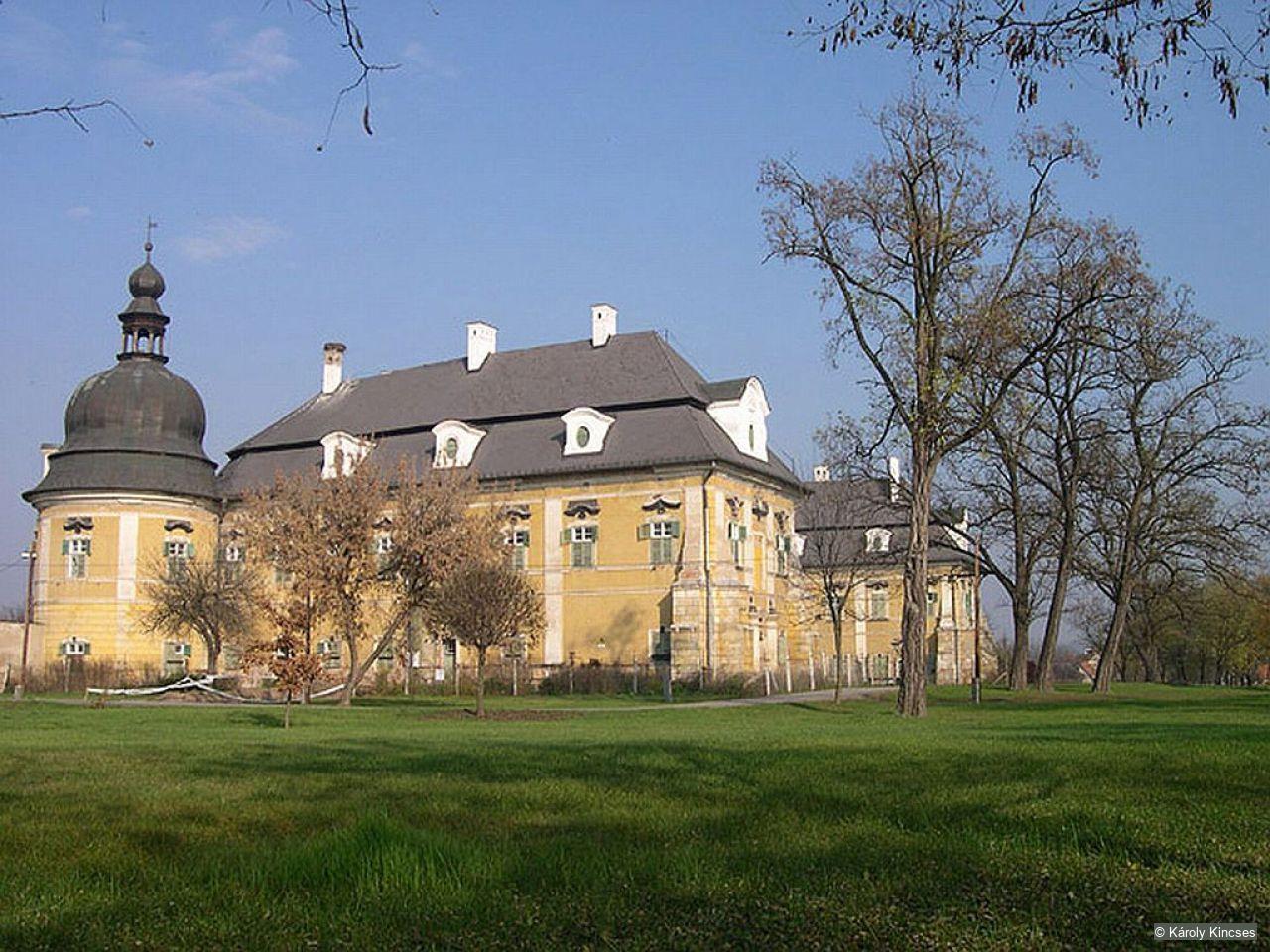
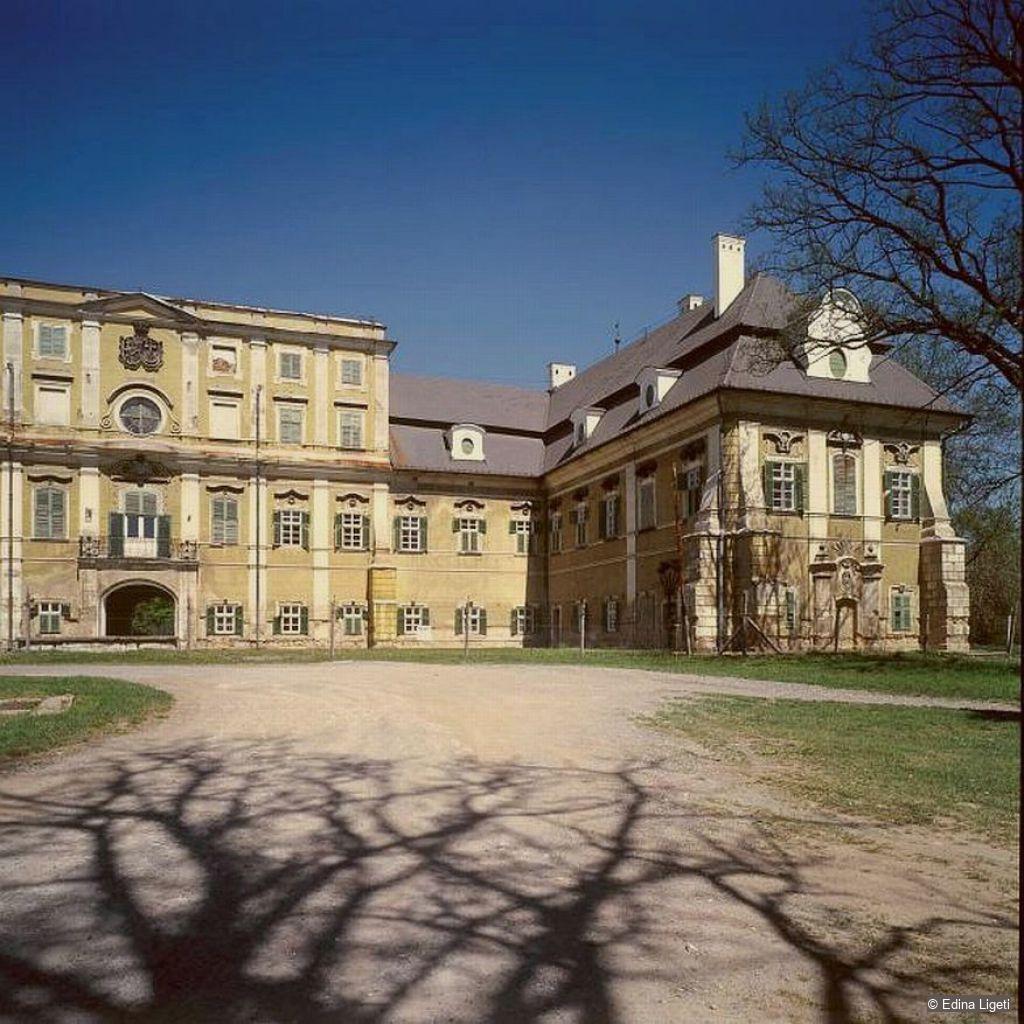
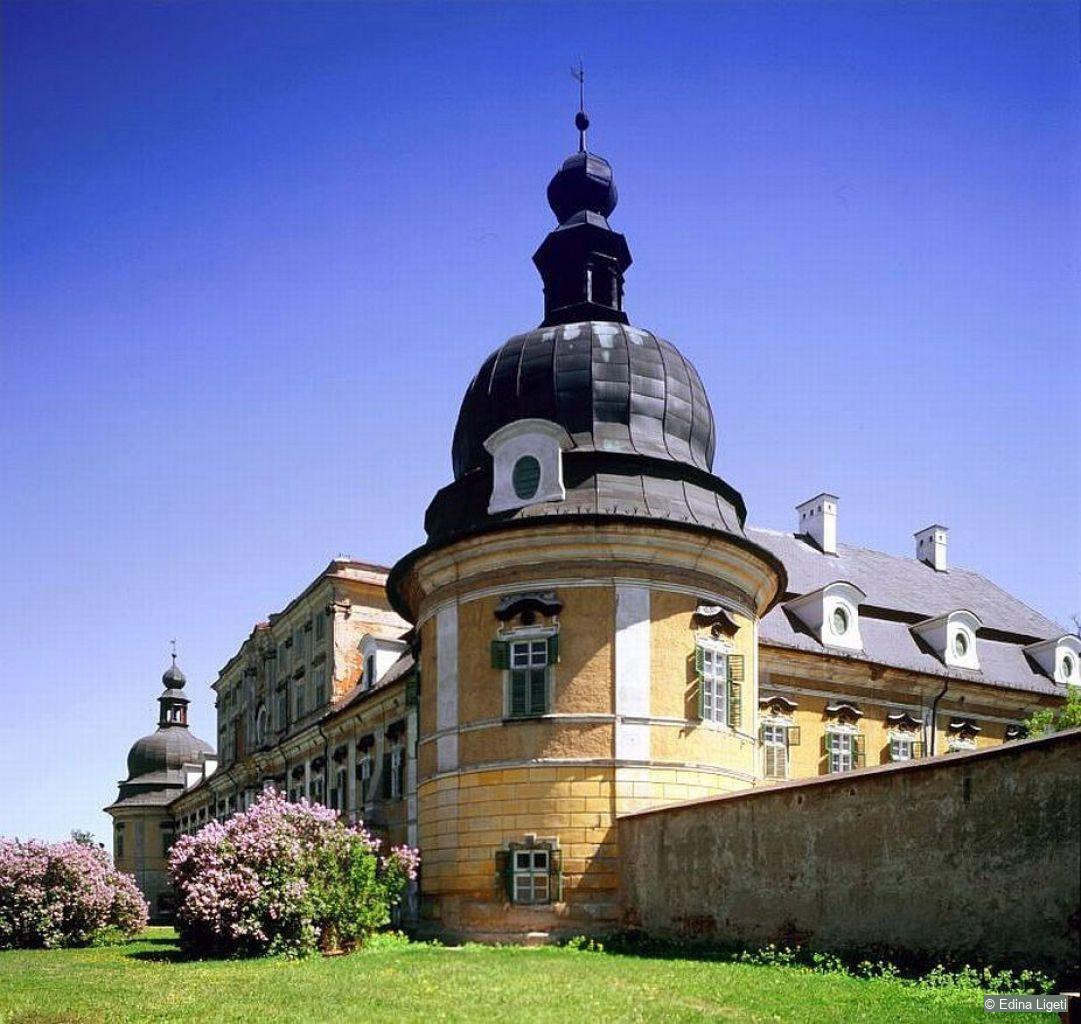
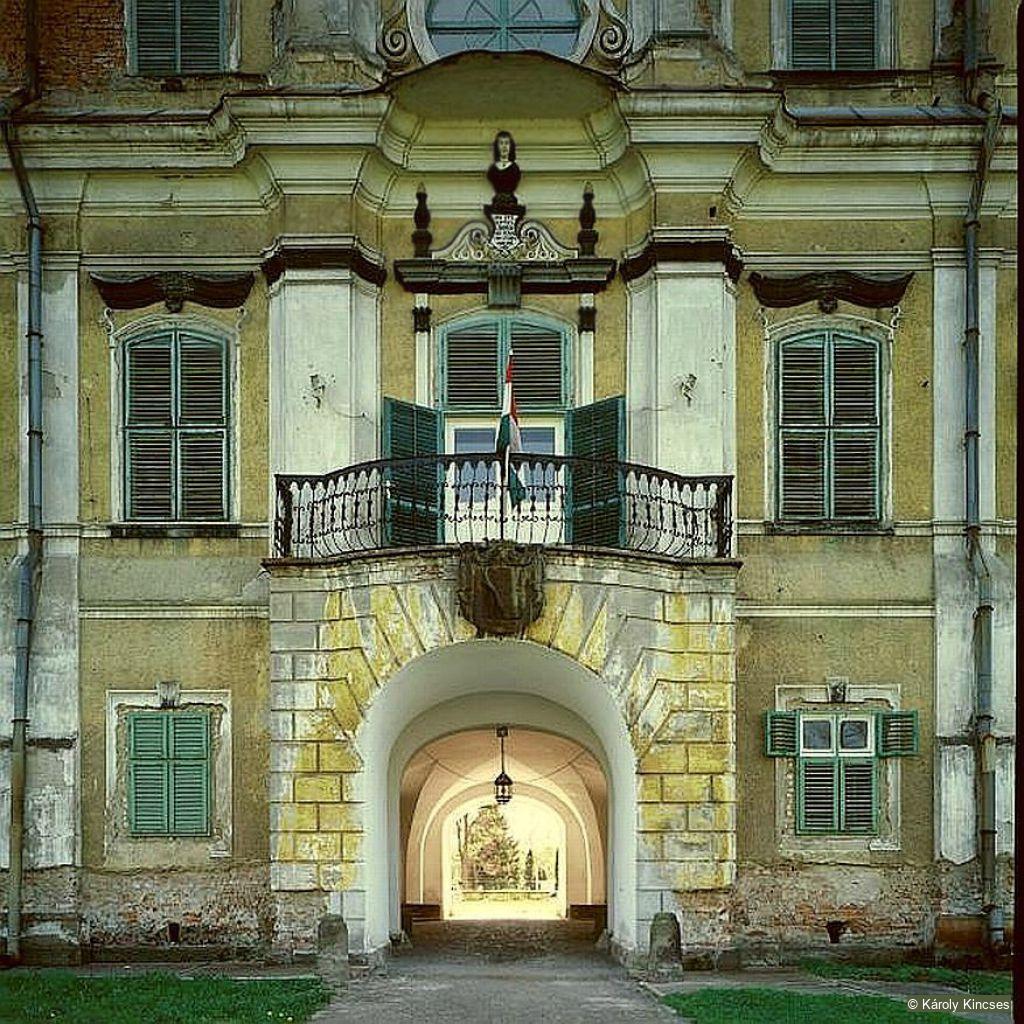
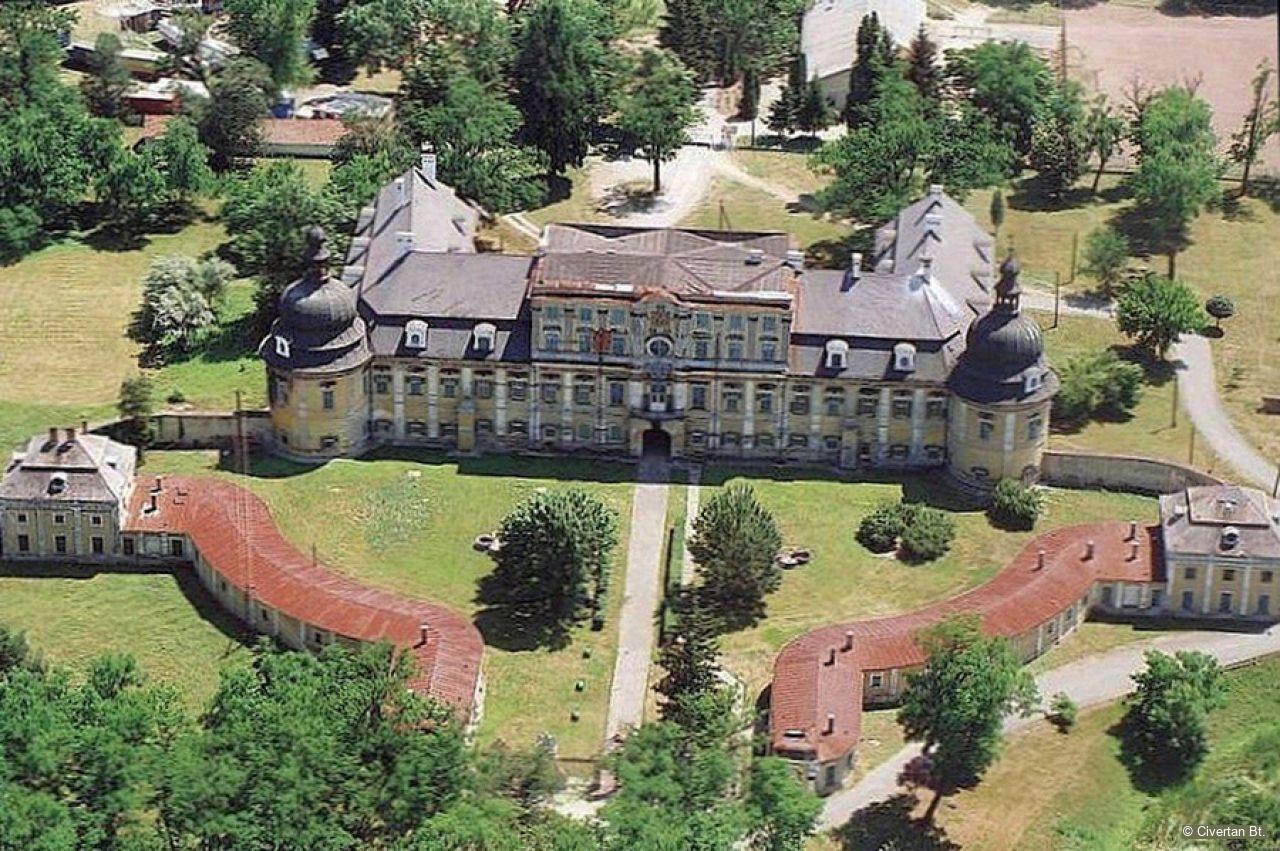
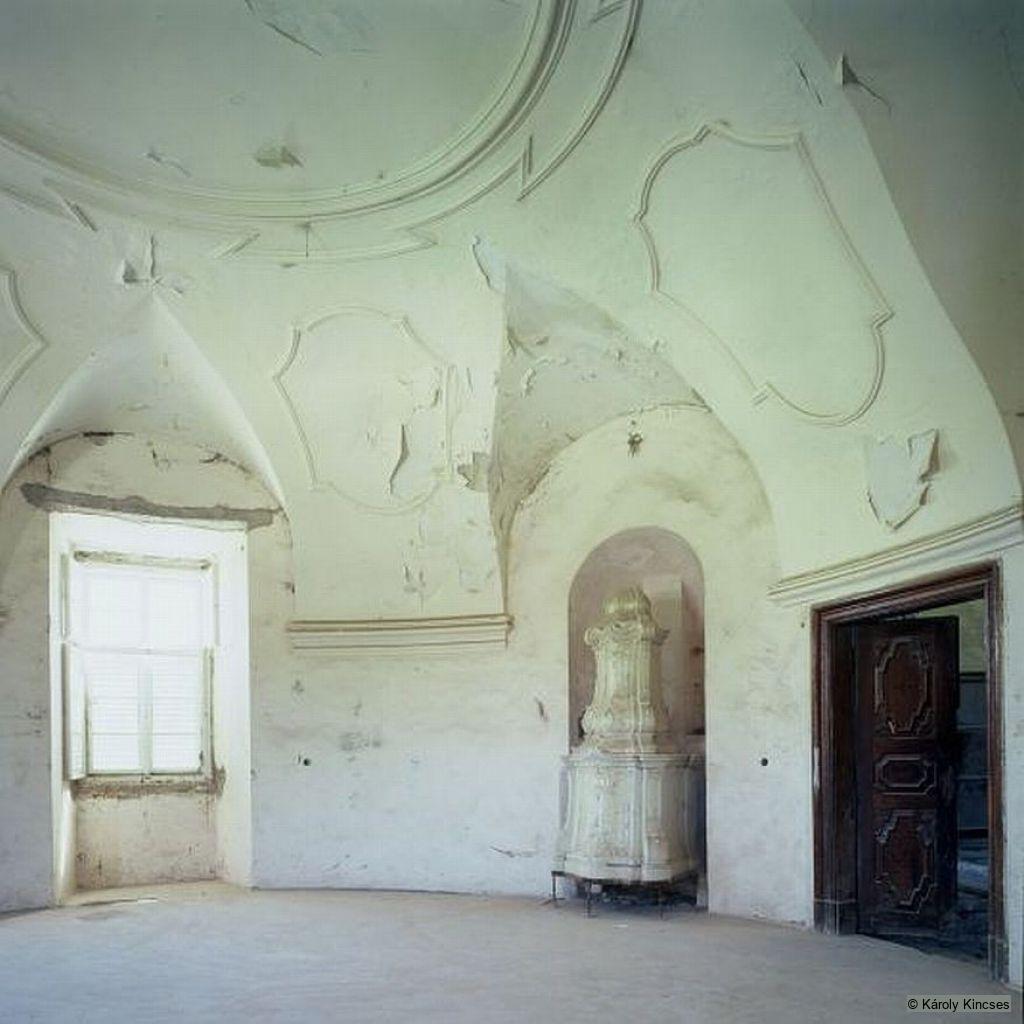
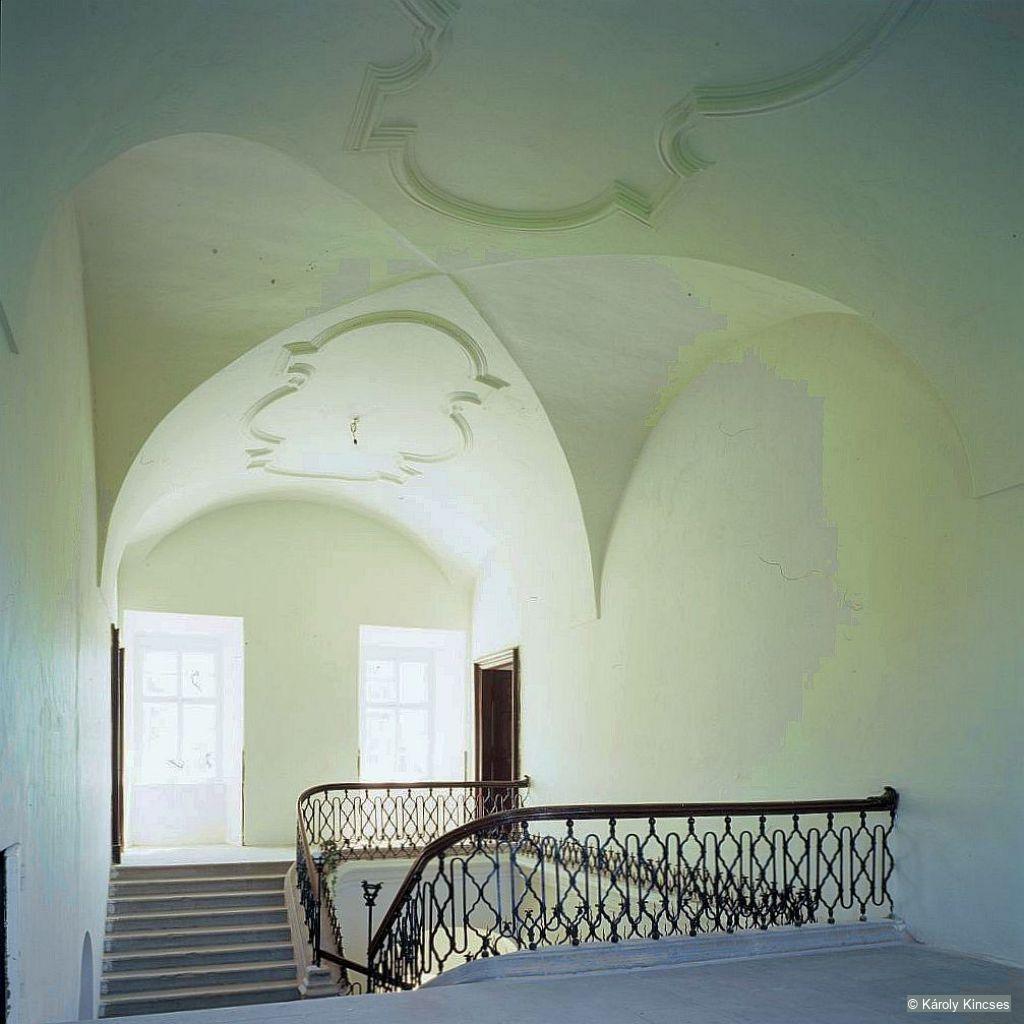
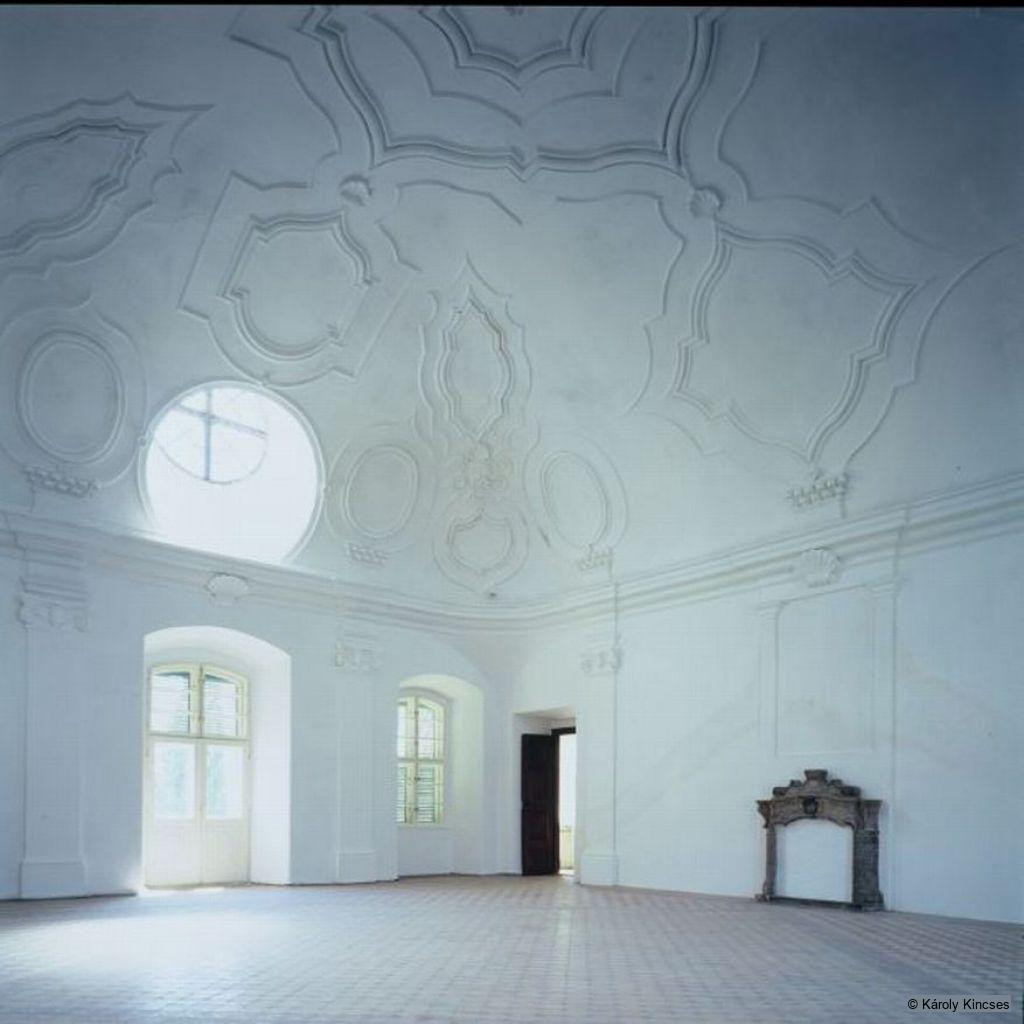
The Mansion-house in Edelény has a U-shaped layout, a typical feature of European and Hungarian Baroque architecture. Also in line with the traditions of Baroque architecture, two parallel rows of rooms are arranged around an axis. The most representative rooms are located on the first floor, the so-called piano nobile (noble floor). The two wings have two floors while the main, mid-section building consists of three floors. The exterior design of the mansion is articulated with richly decorated windows, and its central risalit with monumental pilasters. The north façade develops into two massive corner towers, which bear typical features of late 17th- and early 18th-century architecture. The towers presumably signify the social status and military career of the owner. The L'Huillier and Santa Croce coats of arms are located in the centre of the fourth tier of the north façade. The inscription on the plaquette on the south facade records the names of the owners and the year when construction was completed. The main hall with its stucco decorations is situated on the first floor of the main, mid-section building.
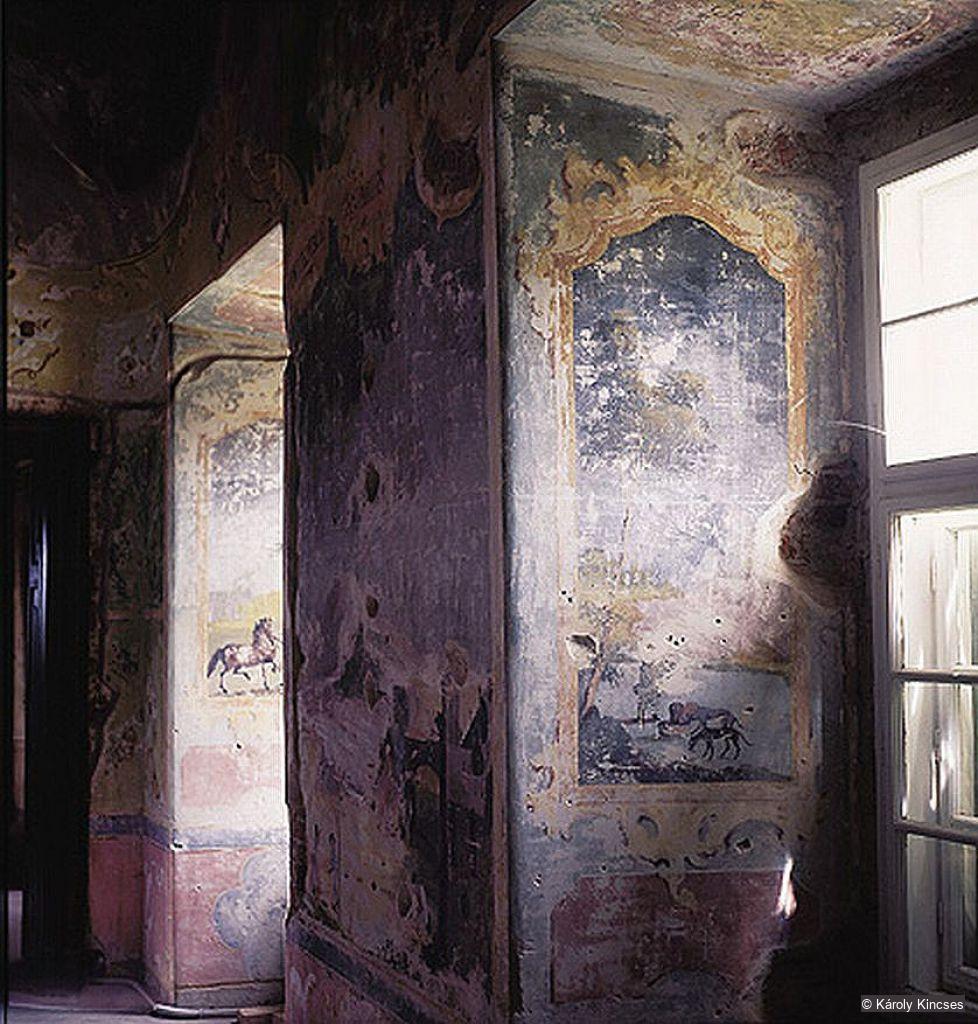
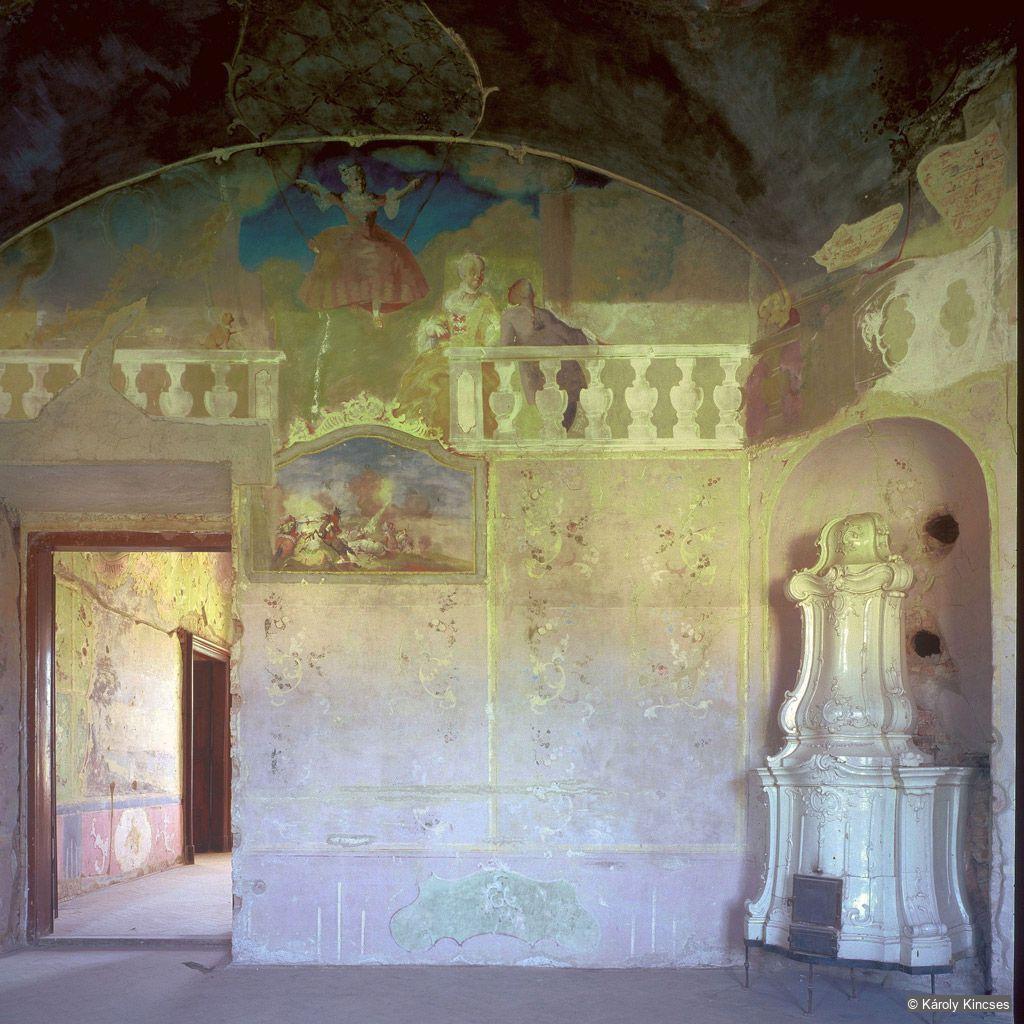
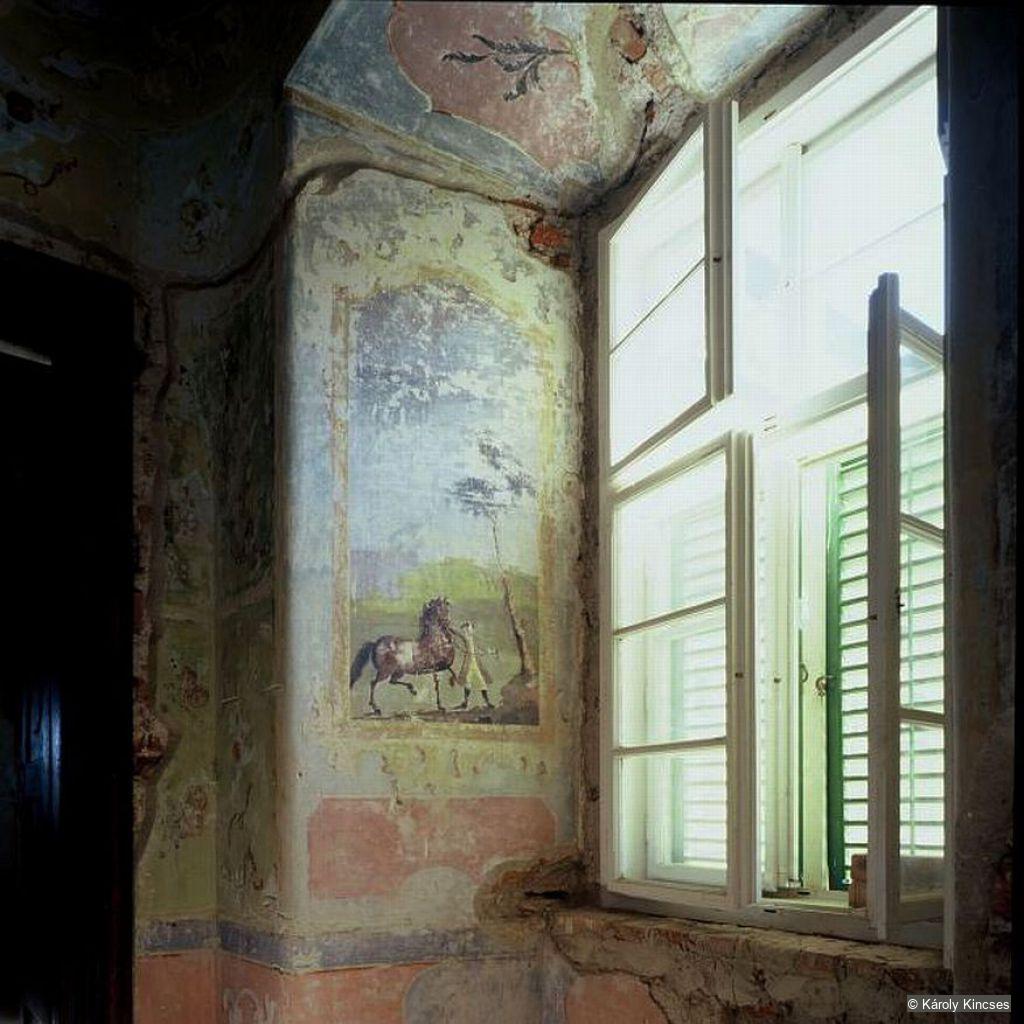
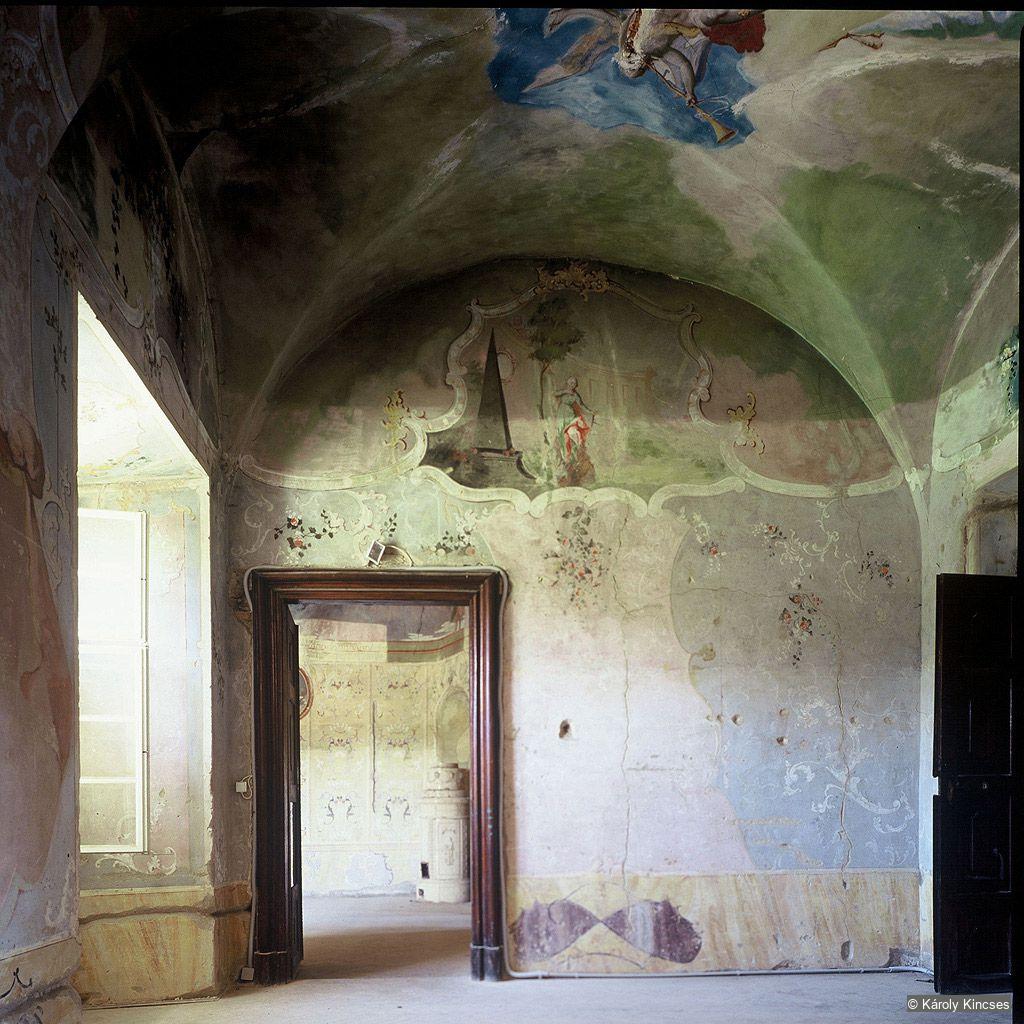
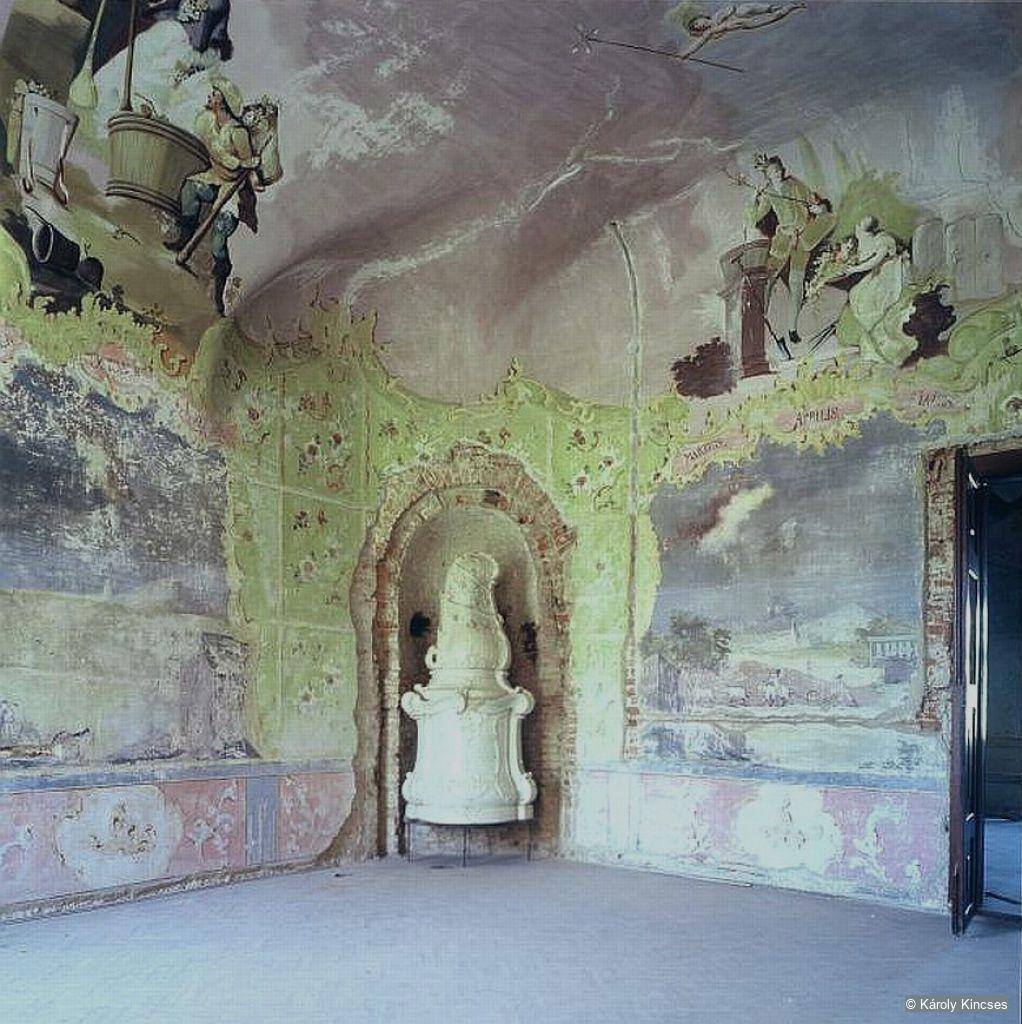
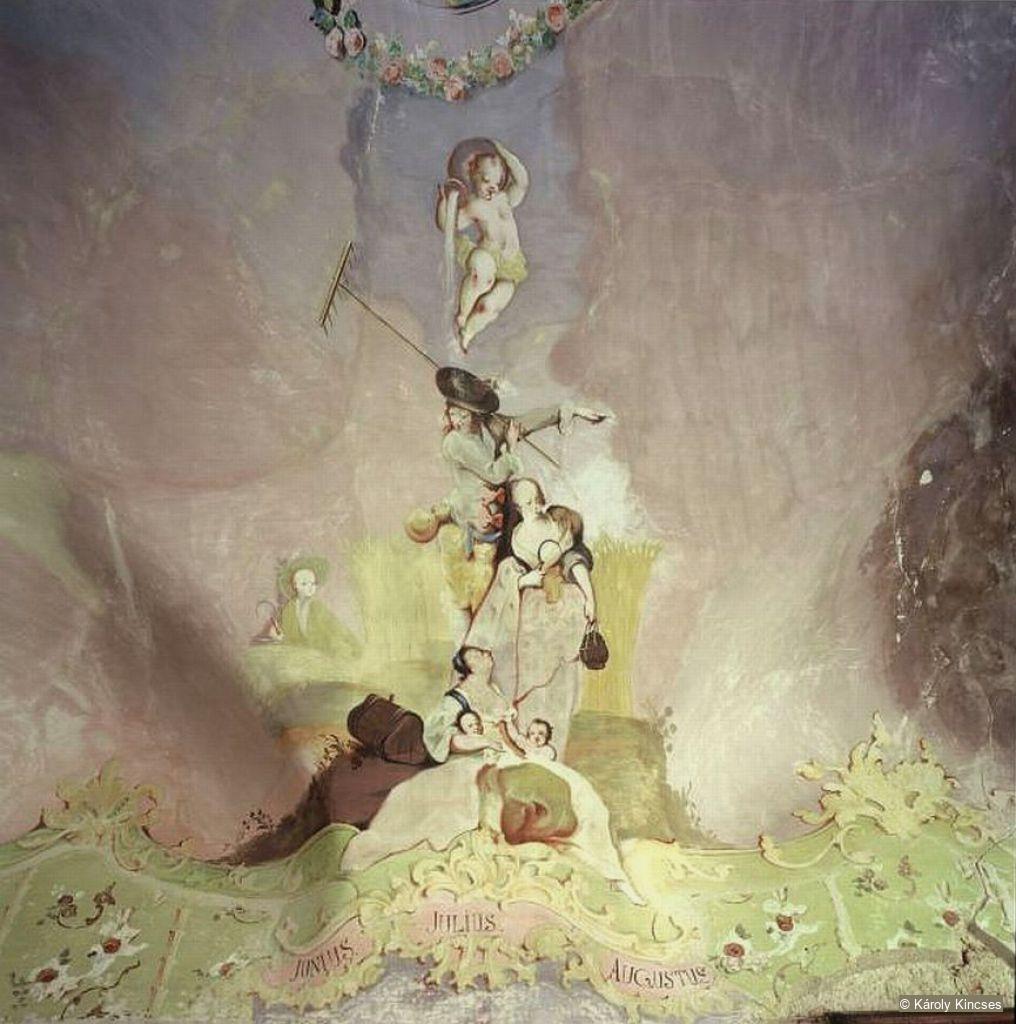
Seven rooms on the first floor of the mansion wings are decorated with frescoes illustrating symbolic mythological figures and Rococo scenes depicting a rendition of an aristocratic lifestyle. (One of these rooms – painted in impressive green tones – is located in the west wing and the other rooms are located in the east wing). The decoration in Room 103 consists of two scenes of courtship in the background of which there is a woman on a swing; on the wall in front of this another scene depicts a carriage pulled by swans. Other paintings illustrate hunting scenes and some other smaller works of putti. The paintings in Room 104 are allegories of the Four Seasons and the Four Elements. Room 105 is decorated with ornamental flower pieces, and the ceiling fresco depicts a putto and a winged figure, presumably Hermes. Room 106 also has ornamental flower pieces, and the walls of the door and window niches are decorated with emblems that follow the Idea Sapiensis (1725), a work by Antonio Vanossi. Also, the frescoes and paintings in this room illustrate a rendition of an aristocratic lifestyle according to the era, and there are depictions of mythological figures such as Jupiter, Narcissus and Andromeda. The fresco in Room 110 depicts Fame (Fama) in the Company of Minerva, and Virtue Crowning the Female Figure of Royal Wisdom. The walls are decorated with cartouches illustrating scenes from the myth of Pyramus and Thisbe. In Room 112 the paintings depict allegories of the Four Continents.
The 18th-century L'Huillier-Coburg Mansion in Edelény is one of Hungary's most impressive aristocratic buildings. The owner, Jean-Francios L'Huillier from Lotharingia, served in the emperor's army, was captain of Eger Castle and ennobled in 1715. The mansion was inherited by his daughter. Count István Esterházy, who was the second husband of L'Huiller's granddaughter Ludmilla Forgách, decorated the house with elegant Rococo wall-paintings illustrating the aristocratic lifestyle of the era.
How Monument was dated:
Based on written and visual research, stylistic research, wall and mural restoration analysis, and archaeological findings.
Selected bibliography:
Pazár, M., Joó, T., “Új adatok az edelényi kastély építéstörténetéhez” (“Additional Data on the Construction History of the Edelény Palace”), Műemlékvédelem (Monument Trust), 1963, pp. 138–144.
Joó, T., “Az edelényi kastély” (“The Edelény Palace”), Művészettörténeti Értesítő, 17:3–4, 1968, pp. 189–207.
Jávor, A., “Lieb Ferenc, az edelényi festő” (“Ferenc Lieb, Painter of Edelény”), Művészettörténeti Értesítő, 49:3–4, 2000, pp. 167–186.
Citation of this web page:
Áron Tóth "L’Huillier-Coburg Mansion" in "Discover Baroque Art", Museum With No Frontiers, 2026.
https://baroqueart.museumwnf.org/database_item.php?id=monument;BAR;hu;Mon11;23;en
Prepared by: Áron Tóth Áron Tóth
SURNAME: Tóth
NAME: Áron
AFFILIATION: National Trust of Monuments for Hungary
TITLE: Art Historian; MWNF DBA author (Hungary)
CV:
Áron Tóth works as an Art Historian at The National Trust of Monuments for Hungary. He was awarded his MA in Art History at the Eötvös Loránd University in Budapest, and received his PhD at the university’s Institute of Art History in 2009. He was a scholar at the Research Institute for Art History at the Hungarian Academy of Sciences from 2005 until 2009. His research interests embrace 17th- and 18th-century architecture and architectural theory. He is Secretary for the Association Art Centre – New Workshop of Art Historians – in Budapest and a contributing author for MWNF DBA (Hungary).
Copyedited by: Terézia BardiTerézia Bardi
SURNAME: Bardi
NAME: Terézia Anna
AFFILIATION: National Trust of Monuments for Hungary
TITLE: Art Historian, Vice Director for Research at The National Trust of
Monuments for Hungary; MWNF DBA local co-ordinator (Hungary), author
and copy-editor
CV:
Terézia Bardi, Vice Director for Research at the National Trust of Monuments for Hungary since 2004, was awarded her MA in History and History of Art at the Eötvös Loránd University in Budapest. After a period of fellowships mainly in Italy, Terézia gained her PhD from the Faculty of Art History at the same university for her thesis Presentation and Representation – the European Reception of the Liberation of Buda in 1686: Feast and Public Opinion. Her main fields of research are 17th-and18th-century Baroque and Rococo: the spectacles, festival decorations and associated iconography – including theatre productions of the period – and interior decoration of historic houses. Since 1988, she has edited a number of art historical books that include some on Oriental art and architecture. She is MWNF DBA’s local (Hungarian) co-ordinator, author and copy-editor.
Translation by: Judit Harangozó, Philip Barker
Translation copyedited by: Mandi GomezMandi Gomez
Amanda Gomez is a freelance copy-editor and proofreader working in London. She studied Art History and Literature at Essex University (1986–89) and received her MA (Area Studies Africa: Art, Literature, African Thought) from SOAS in 1990. She worked as an editorial assistant for the independent publisher Bellew Publishing (1991–94) and studied at Bookhouse and the London College of Printing on day release. She was publications officer at the Museum of London until 2000 and then took a role at Art Books International, where she worked on projects for independent publishers and arts institutions that included MWNF’s English-language editions of the books series Islamic Art in the Mediterranean. She was part of the editorial team for further MWNF iterations: Discover Islamic Art in the Mediterranean Virtual Museum and the illustrated volume Discover Islamic Art in the Mediterranean.
True to its ethos of connecting people through the arts, MWNF has provided Amanda with valuable opportunities for discovery and learning, increased her editorial experience, and connected her with publishers and institutions all over the world. More recently, the projects she has worked on include MWNF’s Sharing History Virtual Museum and Exhibition series, Vitra Design Museum’s Victor Papanek and Objects of Desire, and Haus der Kulturen der Welt’s online publication 2 or 3 Tigers and its volume Race, Nation, Class.
MWNF Working Number: HU 23