

 Back
Back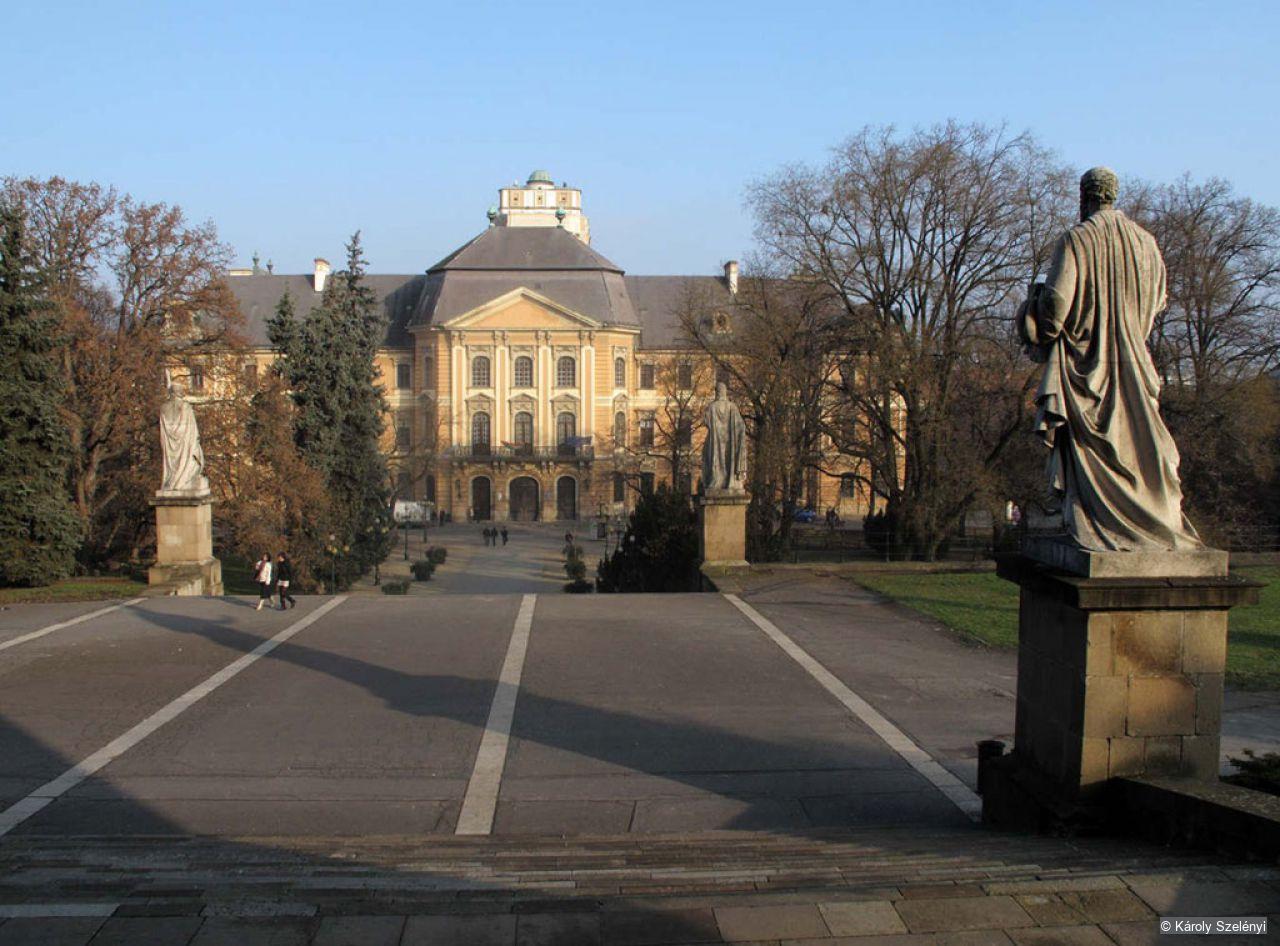
 Add to My Collection
Name of Monument:
Lyceum
Also known as:
Eszterházy Károly Főiskola (Eszterházy Károly High School)
Location:
Eger, Észak-Magyarország / North Hungary, Hungary
Eszterházy tér 1
3300 Eger
T : +36 36 520 400; +36 36 410 466
E : gazd@ektf.hu
Eszterházy Károly Főiskola (Eszterházy Károly College) (Responsible Institution)
Date:
1762–1795
Artists:
Architectural design: Josef Ignaz Gerl; architecture and furniture design: Jakab Fellner (Jakab Fellenthali Fellner; 1722–1780); foremen: Jozef Francz, János Povolni; construction supervision (after death of Fellner): József Grossmann (1747–1785) stonework supervisor: József Hagen, János Miller; design and build (observatory equipment): Miksa Hell (1720–1792), Lénárd Fassola (Fazola) (1737–1805); painters: Johann Lucas Kracker (1719–1779), József Zach (1730–after 1782), Franz Sigrist (1727–1803), Franz Anton Maulbertsch (1724–1796) and assistants, Márton Mich, Mihály Hesz (2nd-half of the 18th century–early 19th century) sculptor of high relief: Vencel Halblechner (2nd half of the 18th century); stove-maker: Károly Mágner (2nd-half of the 18th century); cabinet maker: Thomas Lotter; design of main altar: Giovanni Adami (2nd-half of the 18th century)
Denomination / Type of monument:
Secular architecture, school building
Patron(s):
Count Károly Esterházy (1725–1799) Bishop of Eger
History:
The bishops of Eger had long planned to establish an institution of higher education in the town. Bishop György Foglár founded an academic law faculty (Foglarianum) in around 1740, to which Bishop György Barkóczy added a liberal arts faculty in 1744. Barkóczy wanted a new building for his school and commissioned Josef Gerl, an architect from Vienna, to design it. His plan could not be fulfilled, however, until his appointment as Archbishop of Esztergom in 1761. Bishop Károly Esterházy succeeded Barkóczy as Bishop of Eger, and wanted to establish a university by adding a theology and a medical faculty to the academy. He also wanted to erect a new building and contracted Gerl in 1762 to design new plans. Following the ideas presented by Esterházy, Gerl reworked his plans and added an observatory and a library to the original drawings. Gerl received another request from the chapter to modify the plans so that students could move from the deteriorated Collegium Juridicum Foglarianum to the new building. This was accomplished by adding another floor. Esterházy received no state subsidies, so he lobbied priests to build up a construction fund.
Work began in 1763 led by Jozef Francz, a foreman from Vienna. The stonework was supervised by József Hagen and János Miller from Demjén. As Esterházy had not raised sufficient funds to finance the entire construction, he sacrificed much of his private wealth to continue the building programme. He commissioned Jakab Fellner to modify the plans and to manage the building and construction. Fellner determined the final interior structure of the building, modified the facades (to accommodate the extra level) and increased the size of the windows. He designed Zopf decorative features (the wrought iron railings of the first-floor balcony for example) and furnishings for the library. Fellner delegated onsite supervision to János Povolni in 1764. After the death of Fellner in 1780, József Grossmann took charge of construction. The Scola Medicinalis, the first medical school in Hungary, opened in 1769.The Lyceum, which never gained university status, operated a philosophy and a justice faculty from 1777.
The observatory dome was completed in 1778, for which the acknowledged Jesuit astronomer, Miksa Hell, directed the purchase and installation of the astronomical equipment. The camera obscura on the 10th floor of the observatory was designed by Hell, and Lénárd Fassola was responsible for the construction of many of the instruments. The furnaces were designed by the renowned stove-maker, Károly Magner from Győr, in the Zopf style.
Construction of the Lyceum was complete by 1782 but the interior design was not finished until 1795. The ceiling painting in the library was executed by Johann Lucas Kracker and Joseph Zach; those in the Great Hall are by Franz Sigrist (1781). The chapel wall paintings are by Franz Anton Maulbertsch and his assistant, Márton Mich (1793).
The famous Lyceum library opened in 1793, virtually the first public library in Hungary. Bishop Esterházy died in 1799 and bequeathed a great number of books to the library.
The bishopric press founded in 1755, operated from the ground floor of the Lyceum. The museum and picture gallery on the third floor became part of the Dobó István Castle Museum in the 1950s after nationalisation. The theology and justice academies functioned until 1949, as did the art school, founded in 1828 by Archbishop János László Pryker, and the training and practice schools. The Lyceum was a pedagogical school from 1949 and a teacher training college from 1963. It was known as Ho Si Minh from 1970 to 1990, since when it was renamed Eszterházy Károly.
Description:
A three-storey building, its wings surround a rectangular inner courtyard with a mansard roof decorated with two vases, which sits over the abutting middle bay crowned with a tympanum. Above the three ground-floor round-arched gates of the central bay on the second floor, there is a balcony on stone consoles with wrought-iron railings in front of French windows. Above the windows are tympanum and garland motifs; the latter can be seen above the arched windows of the third storey as well. The middle bay is divided by two storey-high pilasters the corner bays of which are only slightly abutting. The connecting wings have a saddle roof.
Inside the main entrance, an oval hall is accessed through barrel-roofed corridors. A two-armed stairway with balustrades leads up to the second floor of the middle bay, where the exquisite two-storey-high library, Great Hall, chapel and theatre are located. The famous observatory is in the back axis of the building in the east wing.
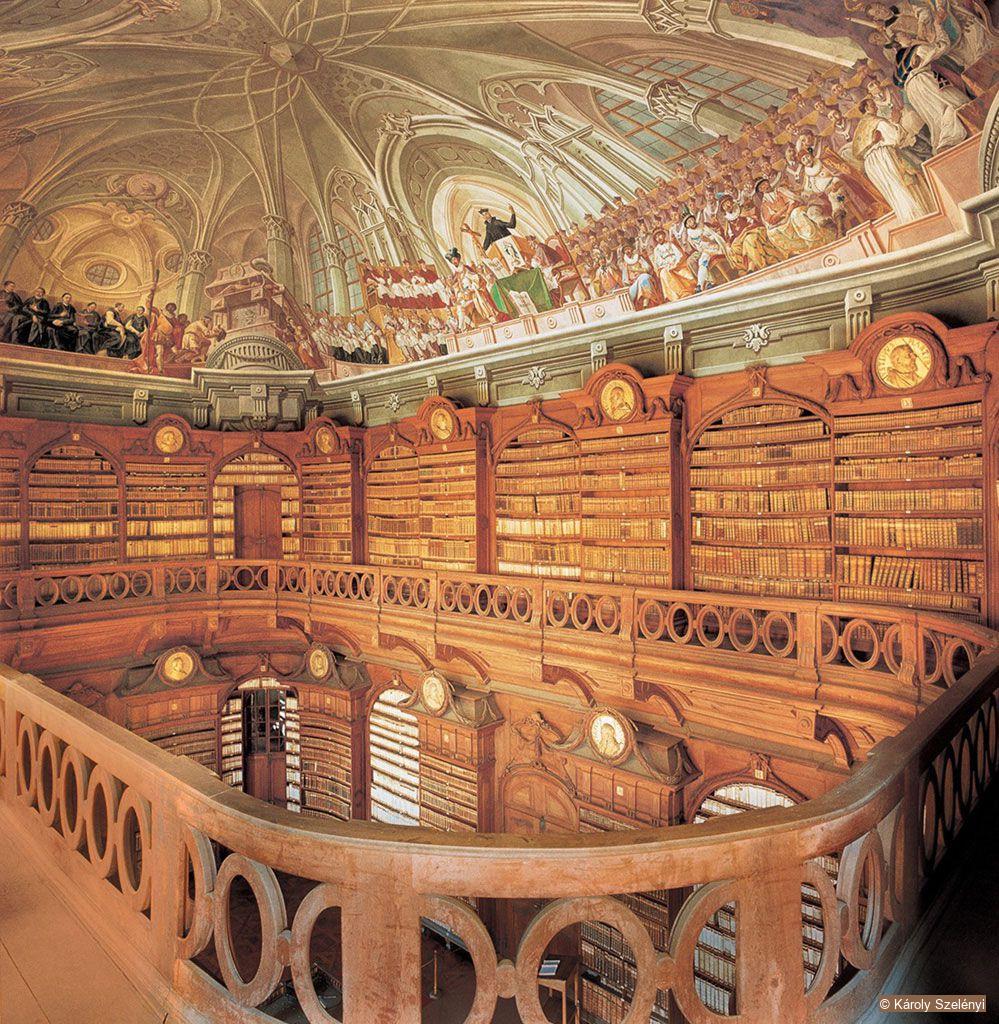
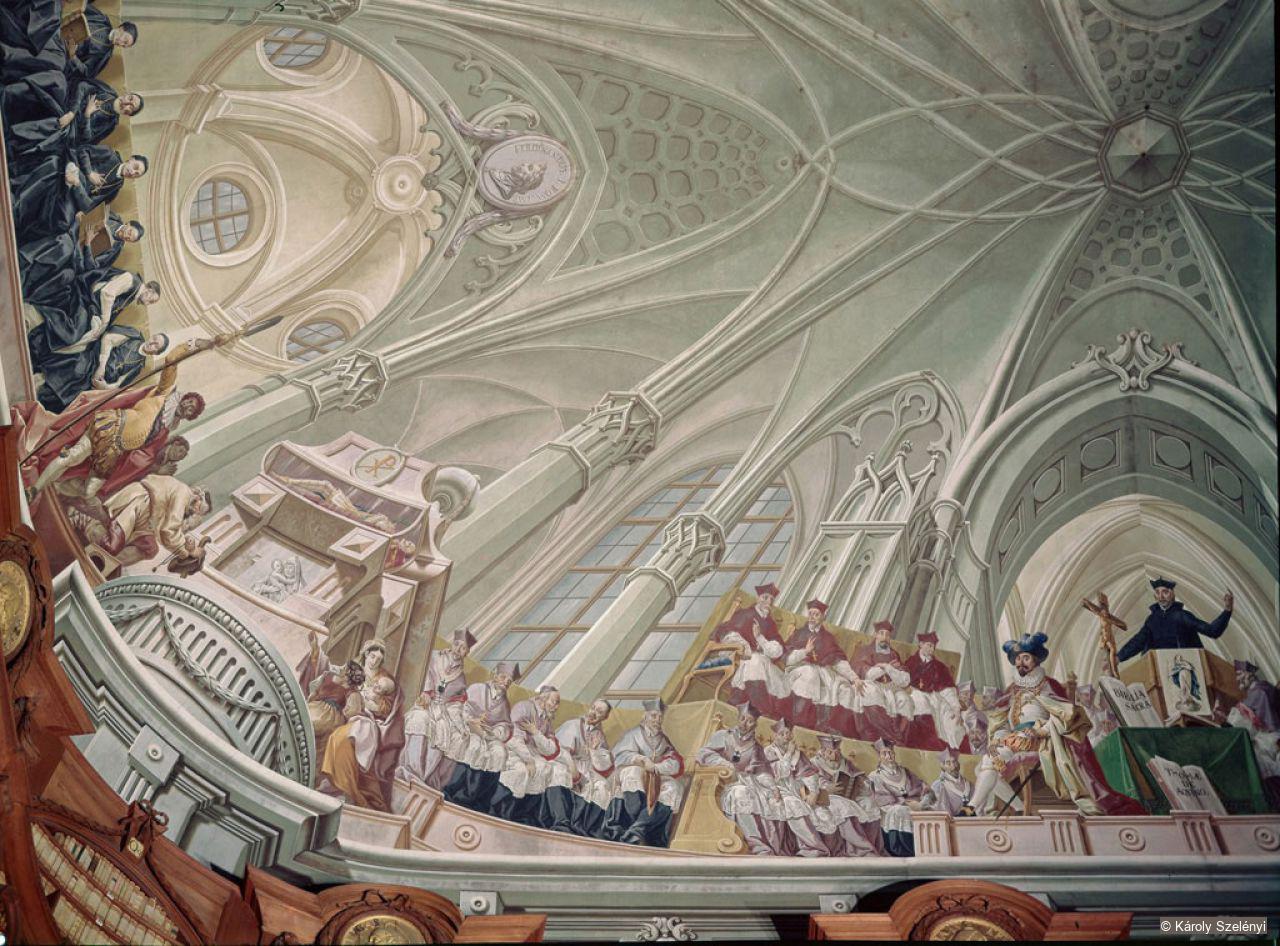
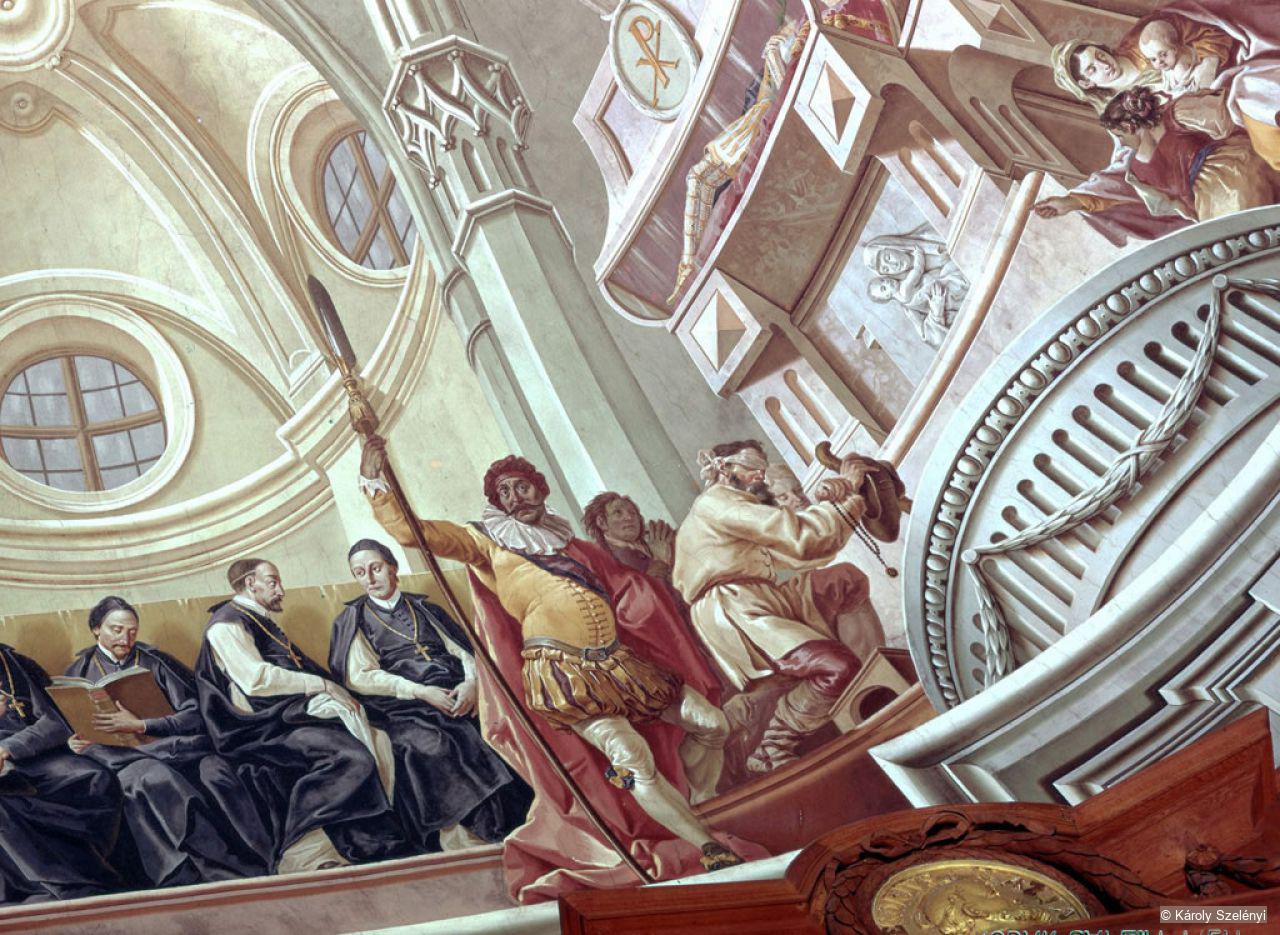
The Library ceiling painting in the south risalit is probably the Austrian Johann Lucas Kracker's most significant work in Hungary. The monumental, perspectival tabloid – an addition suggested by Esterházy – represents the Trident Synod in a huge Gothic temple (designed by Joseph Zach in 1782) in which self portraits of Kracker and Zach feature.
The oak furniture was designed by Fellner and built by Thomas Lotter. The 24 gilded portrait medallions were made by Vencel Halblechner between 1778 and 1779.
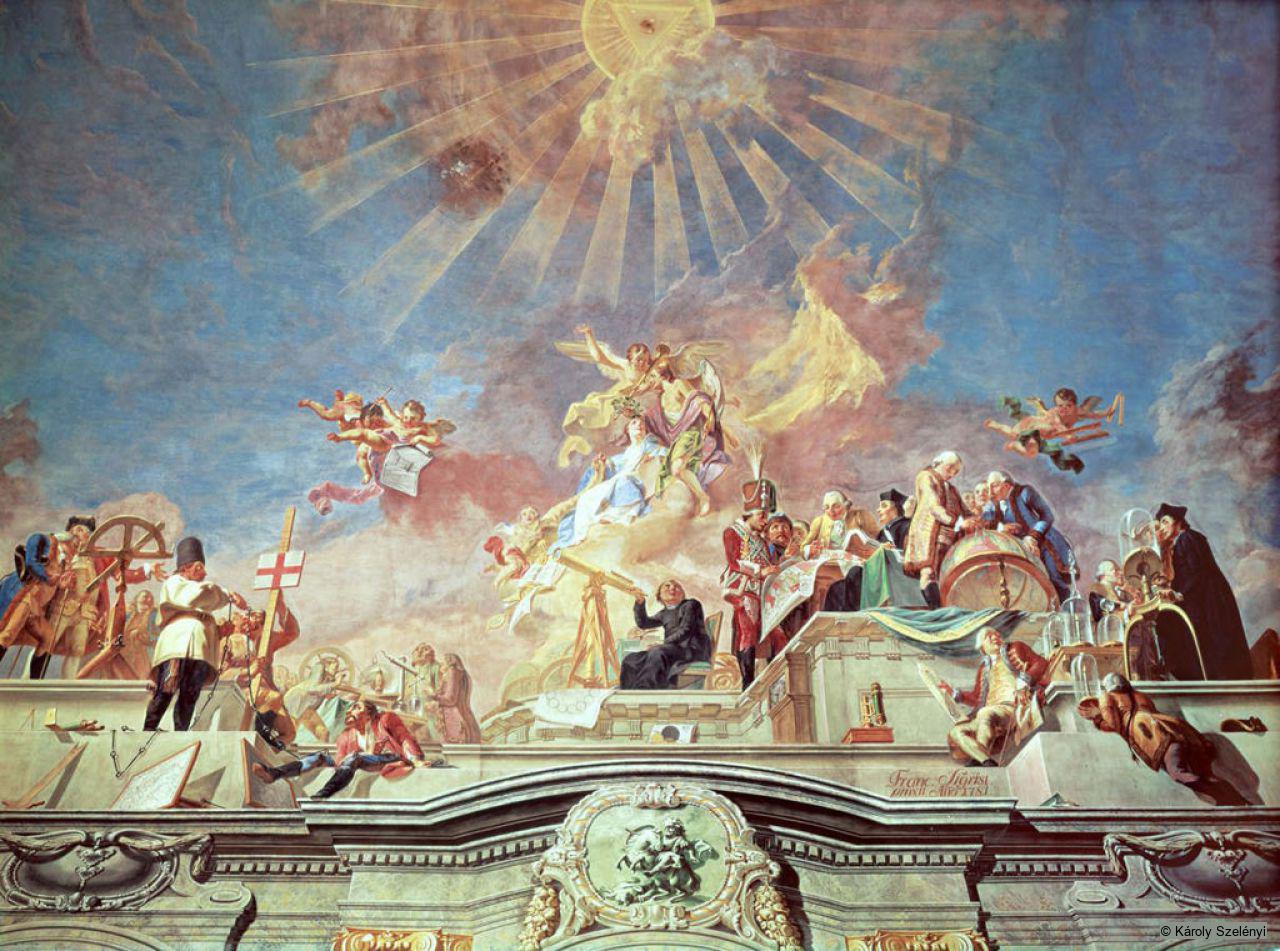
After the death of Kracker in 1779, Esterházy commissioned Franz Sigrist to complete the painting programme. Sigrist painted the ceiling in the Great Hall of the west bay where the four university faculties (1781–1782) are watched over by God. Beneath sunrays is Science, portrayed occupied in typical activities. Under Physics and Geography the date and signature of Sigrist (“Sigrist / pincit Ano 1781”) is discernable.
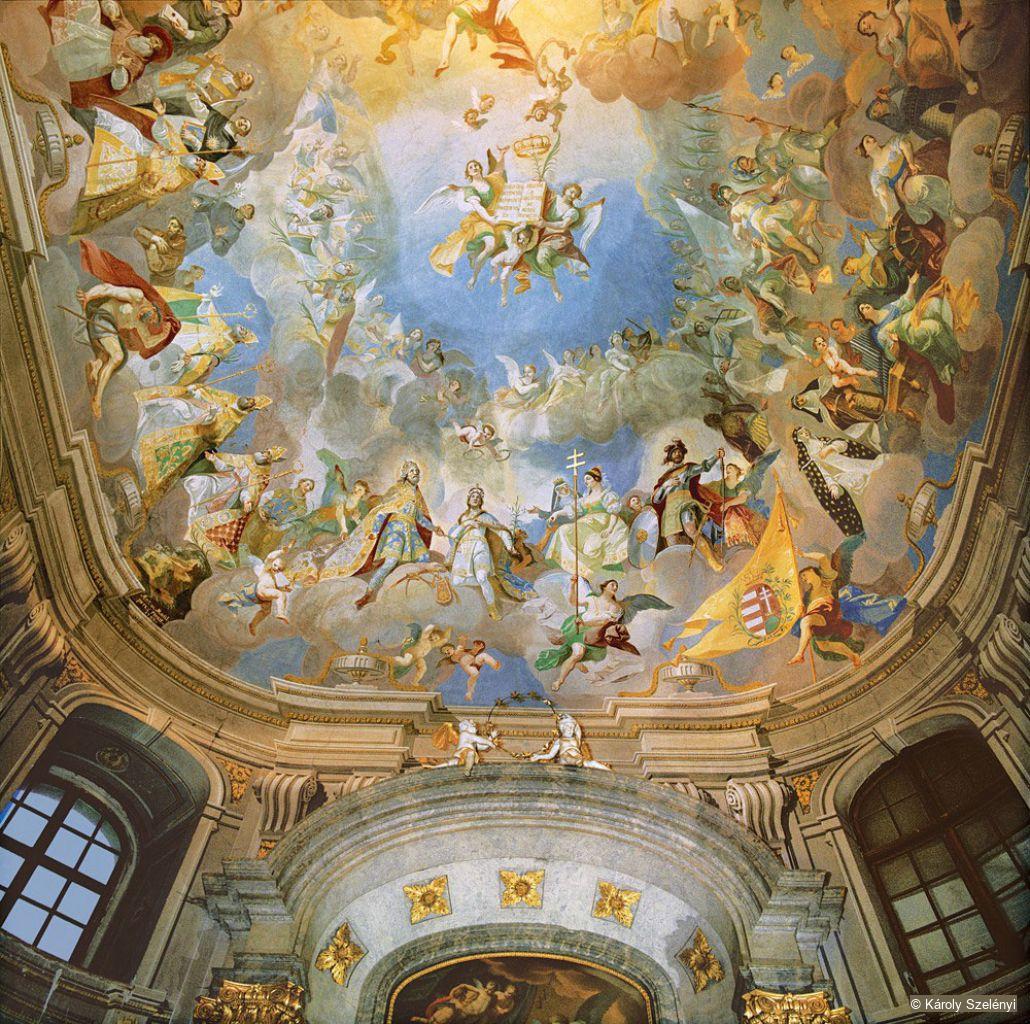
The barrel-vaulted chapel is on the north side of the building. The painted ceiling is adorned with the allegorical Saints of the Church and the Glory of All Saints with the Holy Trinity and Mary in which the Hungarian saints: Stephen, Emeric, Margaret, Elizabeth and Ladislaus, are emphasised. The main altar in coloured marble sits in a basket-arched alcove beneath the Hungarian saints (Giovanni Adami, 1794). The altar painting (St. Stephen offers Hungary to the Virgin Mother) is the work of a local painter Mihály Hesz (1813).
Construction and decoration of the building, based on designs by Josef Ignaz Gerl and Jakab Fellner, lasted for more than two decades from 1762. The erudite and business-minded Bishop Károly Esterházy, who was educated in Rome, commissioned the building which was designed specifically as a university. However, with its exquisite wall paintings, huge library and modern, well-equipped observatory, the Lyceum never gained university status because of the resistance of Queen Maria Theresia, and later that of King Joseph II and Barkóczy Archbishop of Esztergom, during the Ratio Educationis era. Thus it was destined to remain a Lyceum. The building is a beautiful example of Hungarian Late Baroque-Rococo architecture with Neo-Classical features.
How Monument was dated:
Based on written and visual sources and field research.
Selected bibliography:
Dornyai, B., About Jakab Fellenthali Fellner Building Master of Tata (Fellenthali Fellner Jakab tatai épitőművészről), Budapest, 1930.
Entz, G., “Activities in Art and Science of Hungarian Prelates in the 18th century” (“Magyar főpapok művészeti és műveltségi tevékenysége a XVIII. Században”), Regnum Church History Yearbook (Regnum Egyháztörténeti Évkönyv), 5, 1942–1943, pp. 253–273.
Soós, I., “Henrik and Lénárd Fazola Ironmongers of Eger” (“Fazola Henrik és Lénárd egri vasművesek”), Art History News (Művészettörténeti Értesítő), 4, 1955, 1. sz., pp. 29–46.
Jávor, A, “The Synod of Trident: The Fresco of Johann Lukas Kracker and Joseph Zach in the Lyceum of Eger” (“A tridenti zsinat. Johann Lukas Kracker és Joseph Zach freskója az egri líceumban”) Art History News (Művészettörténeti Értesítő), 42, 1993, pp. 160–184.
Bitskey, I., “Bishops, Writers, Libraries. The literary Maecenas Activities of Prelates of Eger in the Baroque Era” (“Püspökök, írók, könyvtárak. Egri főpapok irodalmi mecenatúrája a barokk korban”), Studia Agriensia, 16, Eger, 1997.
Bitskey, I., “'Our Bishop, Our Example, Our Mirror ...' The life and Personality of Károly Eszterházy” (“'Püspökünk, példánk és tükörünk volt …' Eszterházy Károly életpályája és egyénisége”), Károly Eszterházy Memories (Eszterházy Károly Emlékkönyv), (ed. B. Kovács), Eger, 1999, pp. 7–22.
Lüffler, E., “Acts of Art Patronage of Károly Eszterházy” (“Ad maiorem Dei gloriam. Eszterházy Károly művészetpártoló tevékenysége”), Károly Eszterházy Memories (Eszterházy Károly Emlékkönyv), (ed. B. Kovács), Eger, 1999, pp. 191–199.
Bitskey, I., “Pietas, Ars, Scientia. The Maecenas Principles and Practices of Károly Eszterházy Bishop of Eger” (“Pietas, Ars, Scientia. Eszterházy Károly egri püspök mecénási elvei és gyakorlata”), Limes, 13, 2000, 4, pp. 80–87.
Jávor, A., Johann Lukas Kracker, a Late Baroque Painter in Central Europe (Johann Lukas Kracker, egy késő-barokk festő Közép-Európában), Budapest, 2004.
Citation of this web page:
Terézia Bardi "Lyceum" in "Discover Baroque Art", Museum With No Frontiers, 2026.
https://baroqueart.museumwnf.org/database_item.php?id=monument;BAR;hu;Mon11;28;en
Prepared by: Terézia BardiTerézia Bardi
SURNAME: Bardi
NAME: Terézia Anna
AFFILIATION: National Trust of Monuments for Hungary
TITLE: Art Historian, Vice Director for Research at The National Trust of
Monuments for Hungary; MWNF DBA local co-ordinator (Hungary), author
and copy-editor
CV:
Terézia Bardi, Vice Director for Research at the National Trust of Monuments for Hungary since 2004, was awarded her MA in History and History of Art at the Eötvös Loránd University in Budapest. After a period of fellowships mainly in Italy, Terézia gained her PhD from the Faculty of Art History at the same university for her thesis Presentation and Representation – the European Reception of the Liberation of Buda in 1686: Feast and Public Opinion. Her main fields of research are 17th-and18th-century Baroque and Rococo: the spectacles, festival decorations and associated iconography – including theatre productions of the period – and interior decoration of historic houses. Since 1988, she has edited a number of art historical books that include some on Oriental art and architecture. She is MWNF DBA’s local (Hungarian) co-ordinator, author and copy-editor.
Copyedited by: Terézia BardiTerézia Bardi
SURNAME: Bardi
NAME: Terézia Anna
AFFILIATION: National Trust of Monuments for Hungary
TITLE: Art Historian, Vice Director for Research at The National Trust of
Monuments for Hungary; MWNF DBA local co-ordinator (Hungary), author
and copy-editor
CV:
Terézia Bardi, Vice Director for Research at the National Trust of Monuments for Hungary since 2004, was awarded her MA in History and History of Art at the Eötvös Loránd University in Budapest. After a period of fellowships mainly in Italy, Terézia gained her PhD from the Faculty of Art History at the same university for her thesis Presentation and Representation – the European Reception of the Liberation of Buda in 1686: Feast and Public Opinion. Her main fields of research are 17th-and18th-century Baroque and Rococo: the spectacles, festival decorations and associated iconography – including theatre productions of the period – and interior decoration of historic houses. Since 1988, she has edited a number of art historical books that include some on Oriental art and architecture. She is MWNF DBA’s local (Hungarian) co-ordinator, author and copy-editor.
Translation by: Emese Polyák, László Domoszlai
Translation copyedited by: Mandi GomezMandi Gomez
Amanda Gomez is a freelance copy-editor and proofreader working in London. She studied Art History and Literature at Essex University (1986–89) and received her MA (Area Studies Africa: Art, Literature, African Thought) from SOAS in 1990. She worked as an editorial assistant for the independent publisher Bellew Publishing (1991–94) and studied at Bookhouse and the London College of Printing on day release. She was publications officer at the Museum of London until 2000 and then took a role at Art Books International, where she worked on projects for independent publishers and arts institutions that included MWNF’s English-language editions of the books series Islamic Art in the Mediterranean. She was part of the editorial team for further MWNF iterations: Discover Islamic Art in the Mediterranean Virtual Museum and the illustrated volume Discover Islamic Art in the Mediterranean.
True to its ethos of connecting people through the arts, MWNF has provided Amanda with valuable opportunities for discovery and learning, increased her editorial experience, and connected her with publishers and institutions all over the world. More recently, the projects she has worked on include MWNF’s Sharing History Virtual Museum and Exhibition series, Vitra Design Museum’s Victor Papanek and Objects of Desire, and Haus der Kulturen der Welt’s online publication 2 or 3 Tigers and its volume Race, Nation, Class.
MWNF Working Number: HU 29