

 Back
Back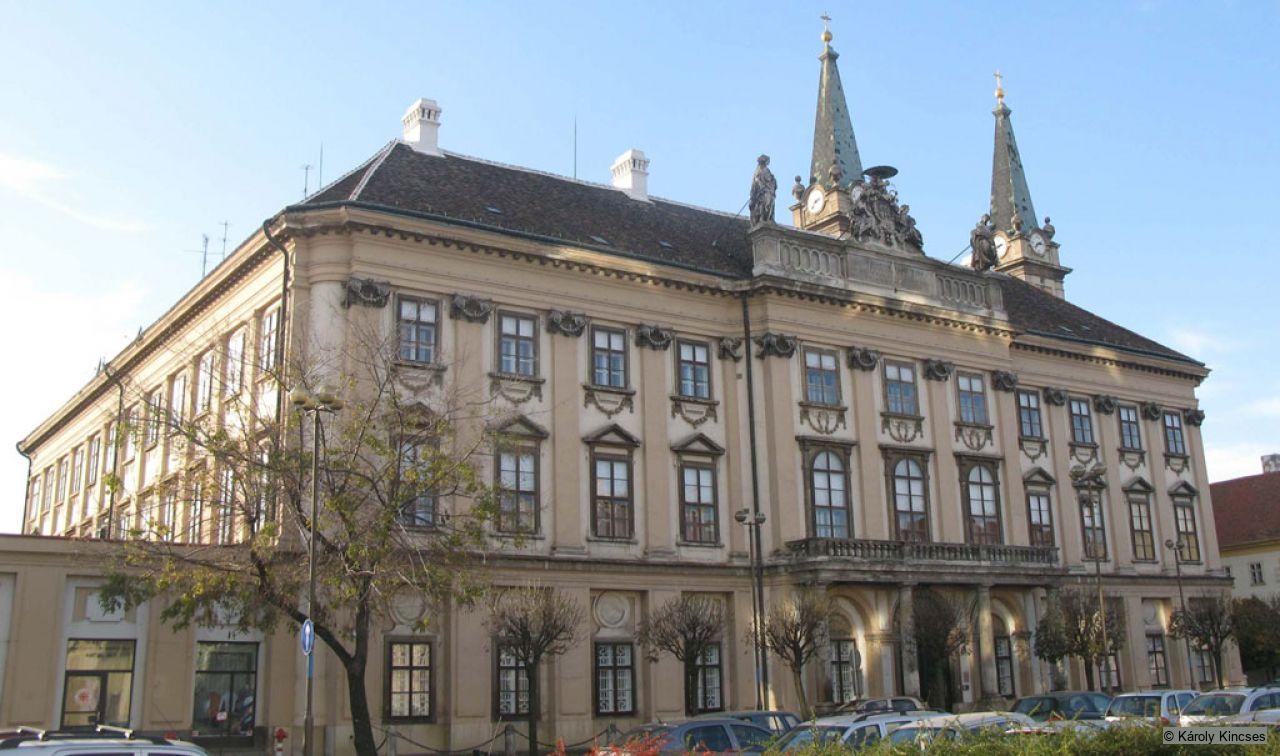
 Add to My Collection
Name of Monument:
Bishop’s Palace, Szombathely
Location:
Szombathely, Nyugat-Magyarország / West Hungary, Hungary
Berzsenyi Dániel tér 3
9700 Szombathely
T : +36 94 312 056; +36 94 312 890; +36 94 317 929
F : +36 94 318 538
E : muzeum@martinus.hu
Catholic Church in Hungary, Archdiocese of Szombathely (Responsible Institution)
Date:
1778–1783
Artists:
Architect: Melchior Hefele (1716–1794); painters: Franz Anton Maulbertsch (1724–1796), Stephan Dorffmaister (1730–1797)
Denomination / Type of monument:
Secular architecture, residence, palace
Patron(s):
Bishop János Szily (1777–1799)
History:
Due to the oversized character of Hungarian dioceses, Queen Maria Theresia (1740–1780) decided to found new ones, including that of Szombathely, in 1777. She appointed János Szily (1777–1799) as the first bishop. After the diocese was founded, Szombathely required new public buildings to reflect the town's new-found status. Szily erected a building complex: first the Bishop's Palace, then the Seminary and lastly the Cathedral (1791–1814). The architect of the cathedral was Melchior Hefele, one of the most significant masters of his time.
The ground plan of the basement, ground and first floors of the palace is still extant, and the original painting of the facade is recorded in a copy. In 1784, on the ground floor of the palace (in the so called sala terrena), Szily founded a museum comprised of stone carvings excavated in Savaria, the ancient Roman city that lay beneath Szombathely.
The palace interior was decorated with frescoes by Stephan Dorffmeister. The bishop entrusted Franz Anton Maulbertsch, the most significant painter of the era, to paint the Central Hall with frescoes that would illustrate the glory of the diocese and the ancient history of the city.
Description:
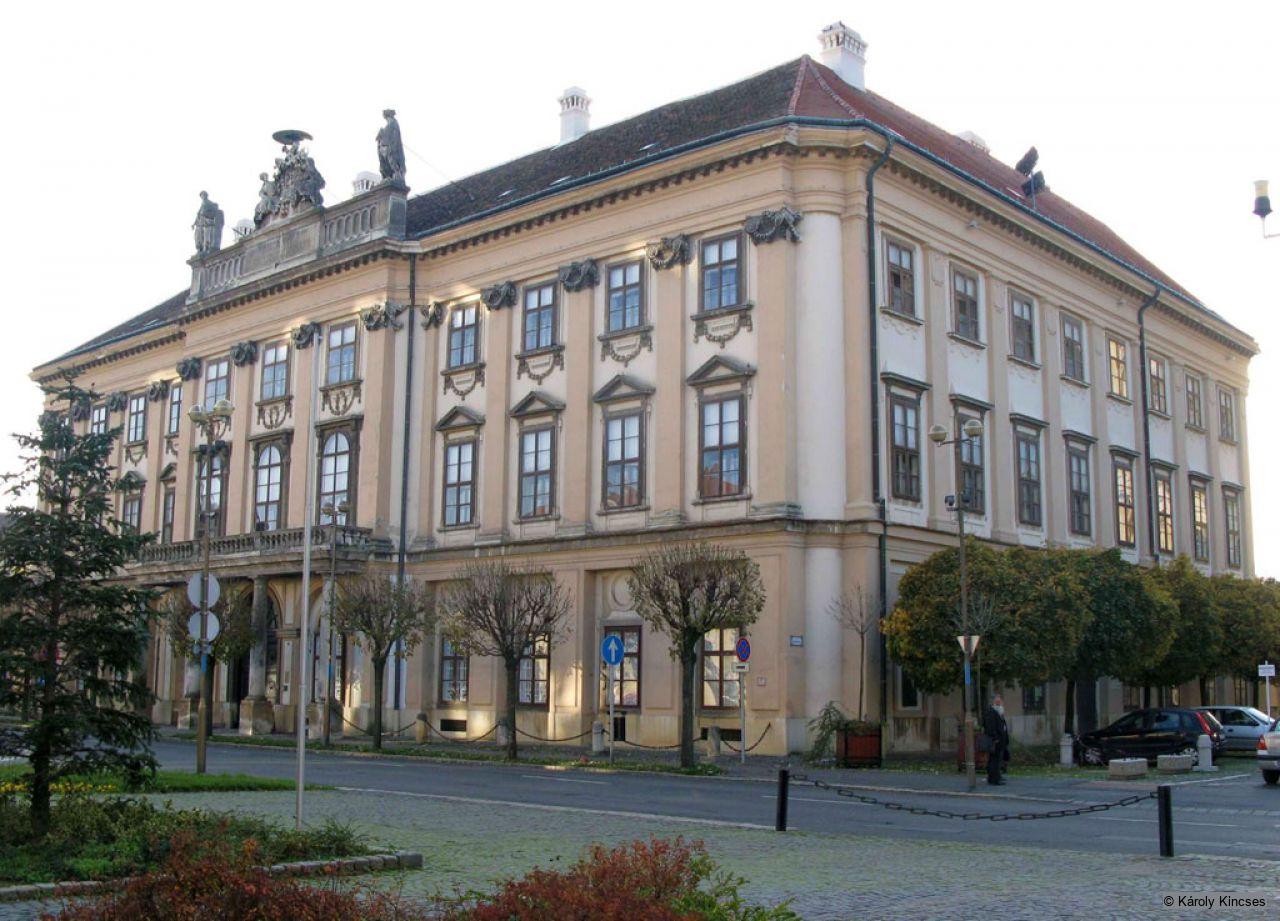
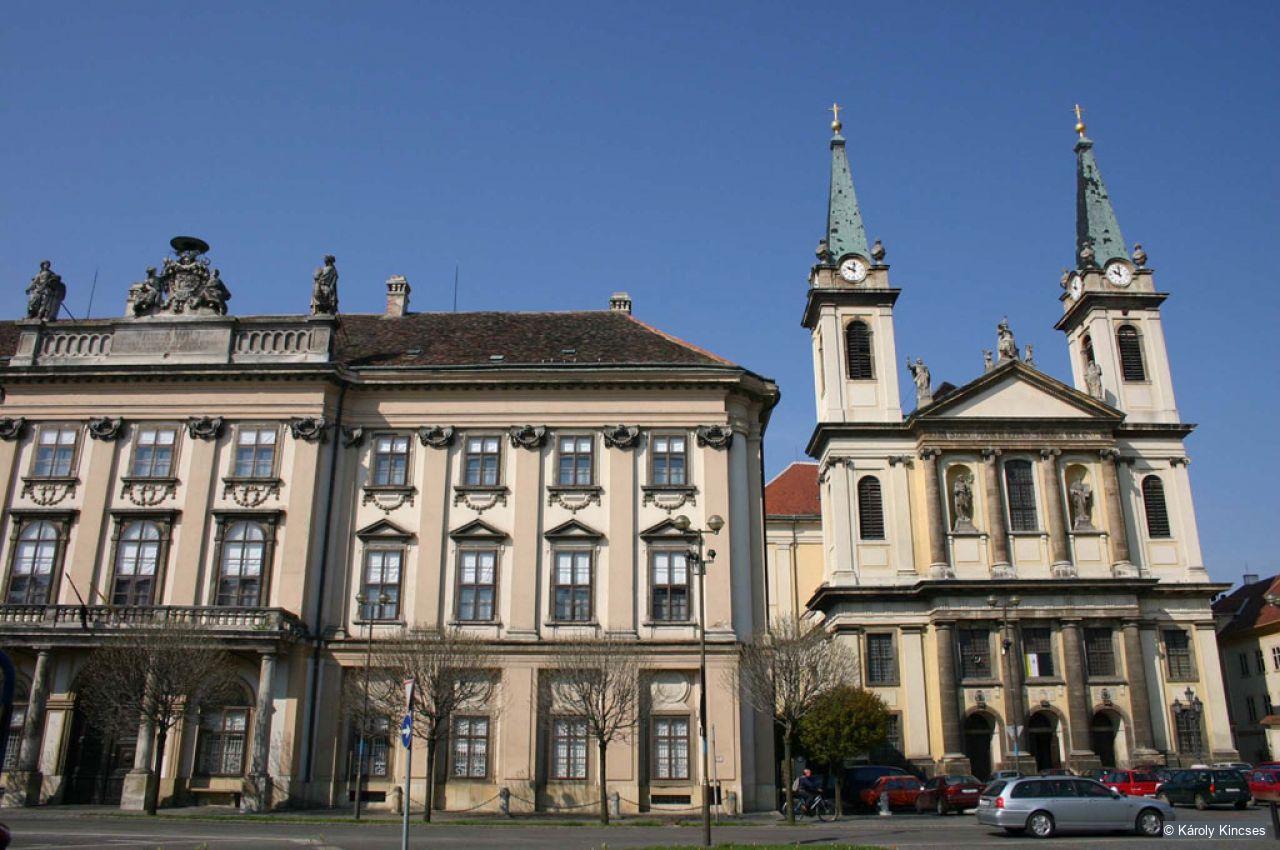
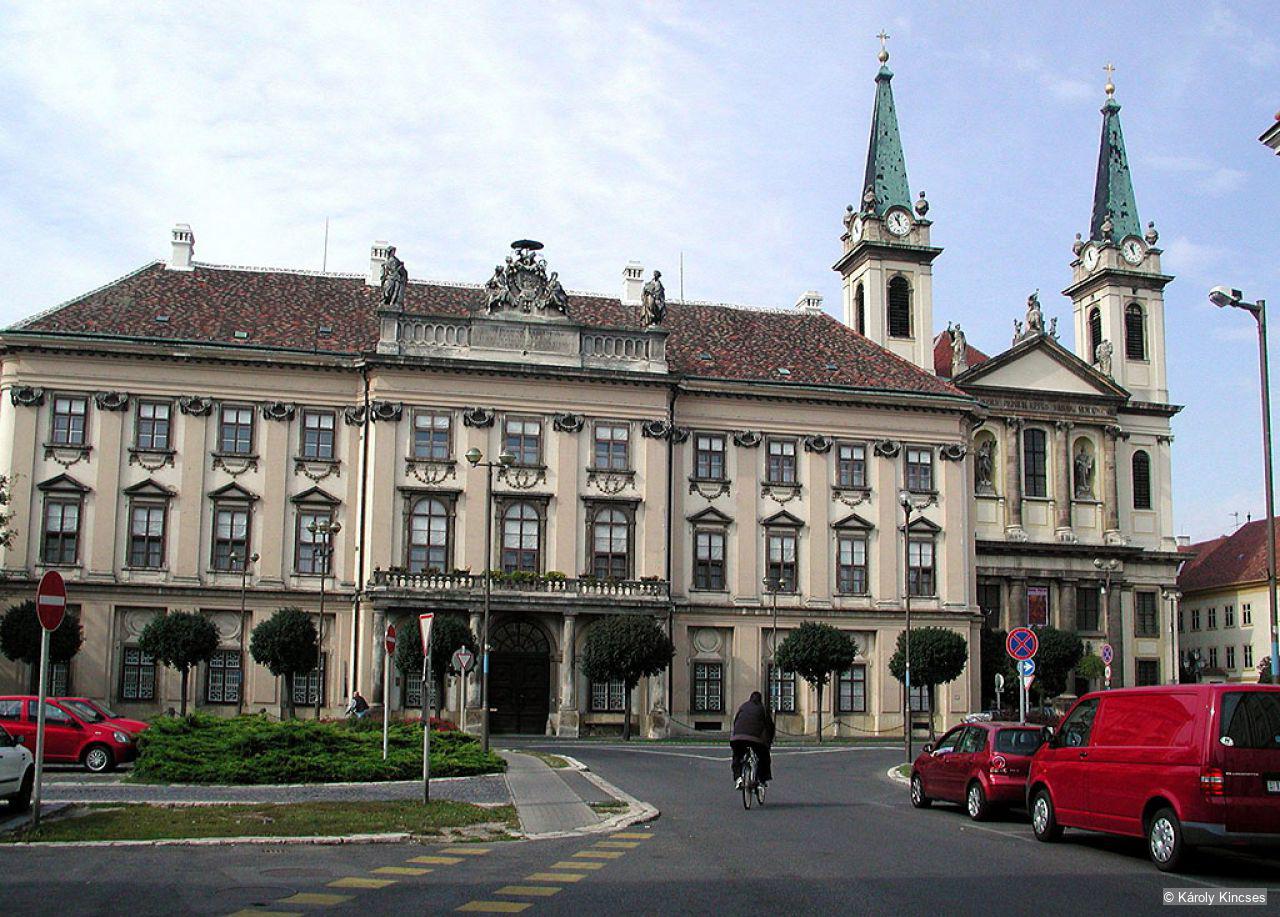
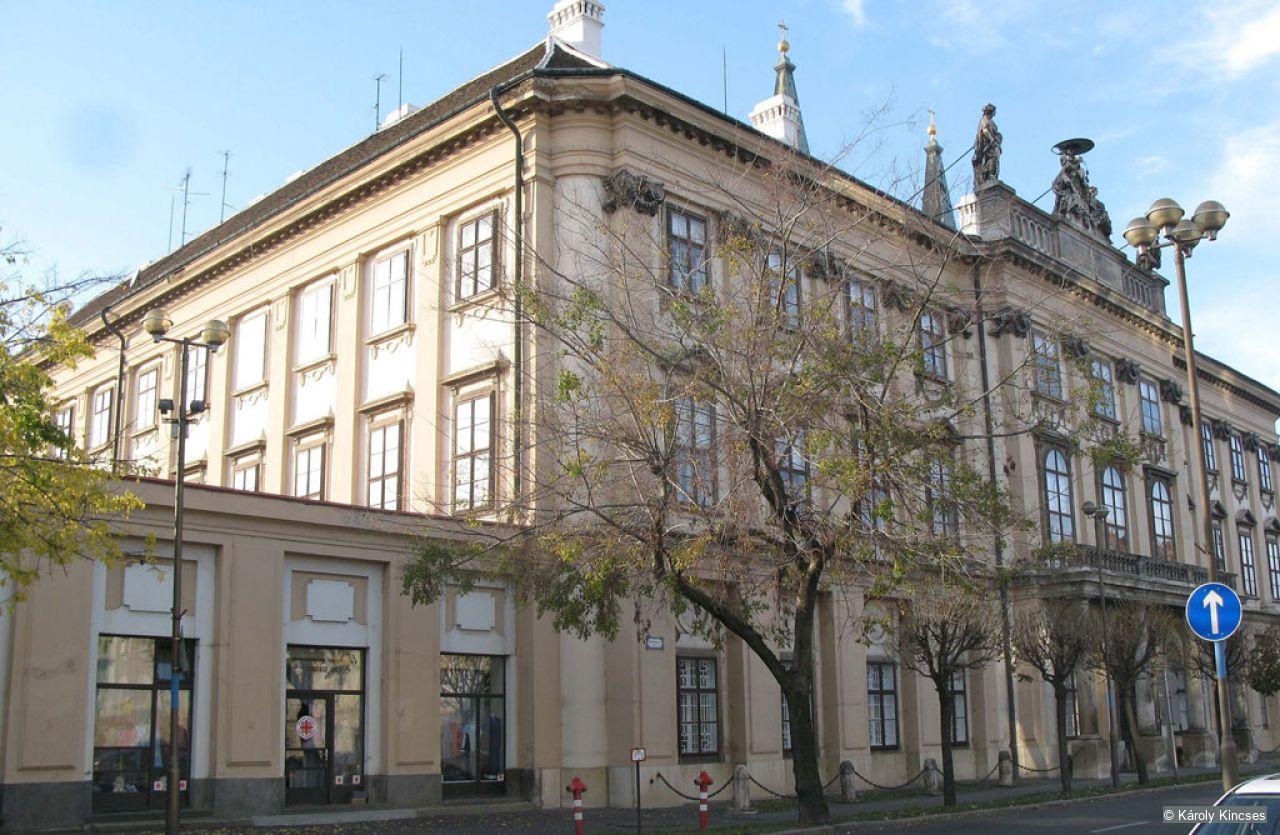
The U-shape layout of the Palace is an enduring feature of Baroque palace architecture in Europe and in Hungary. The cour d'honneur, however, does not open out onto the street, as local tradition required, but onto the garden instead. The row of most representative rooms is located on the first floor, the so-called piano nobile. According to local tradition a corridor runs in front of the rooms facing the courtyard. The main entrance opens onto a vaulted driveway. Walking away from the driveway, the entrance hall and sala terrena are on the right; to the left is the main stairway that leads to the first floor. The Baroque enfilade runs behind the main facade, and the Ceremonial Hall is located centrally in the building. Above the piano nobile there is a lower mezzanine floor.
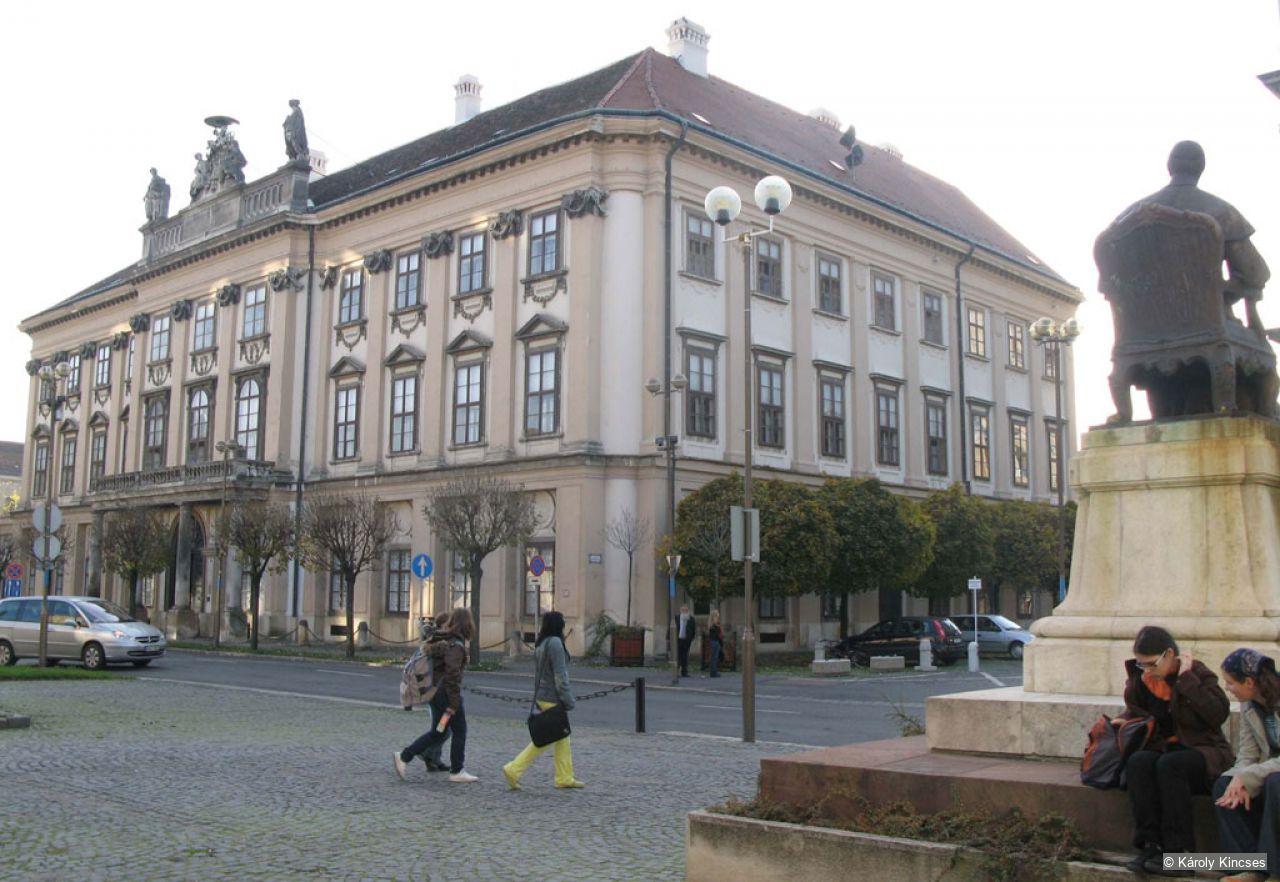
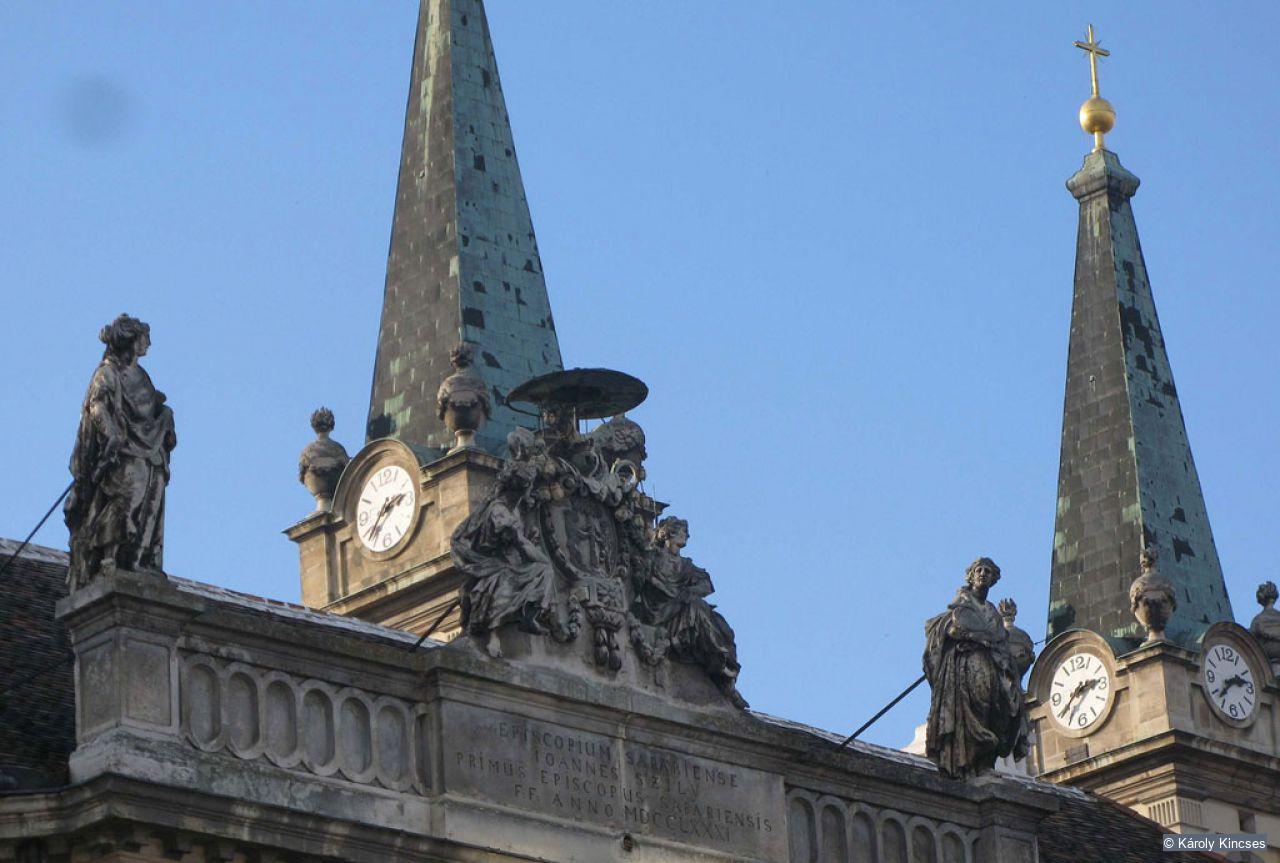
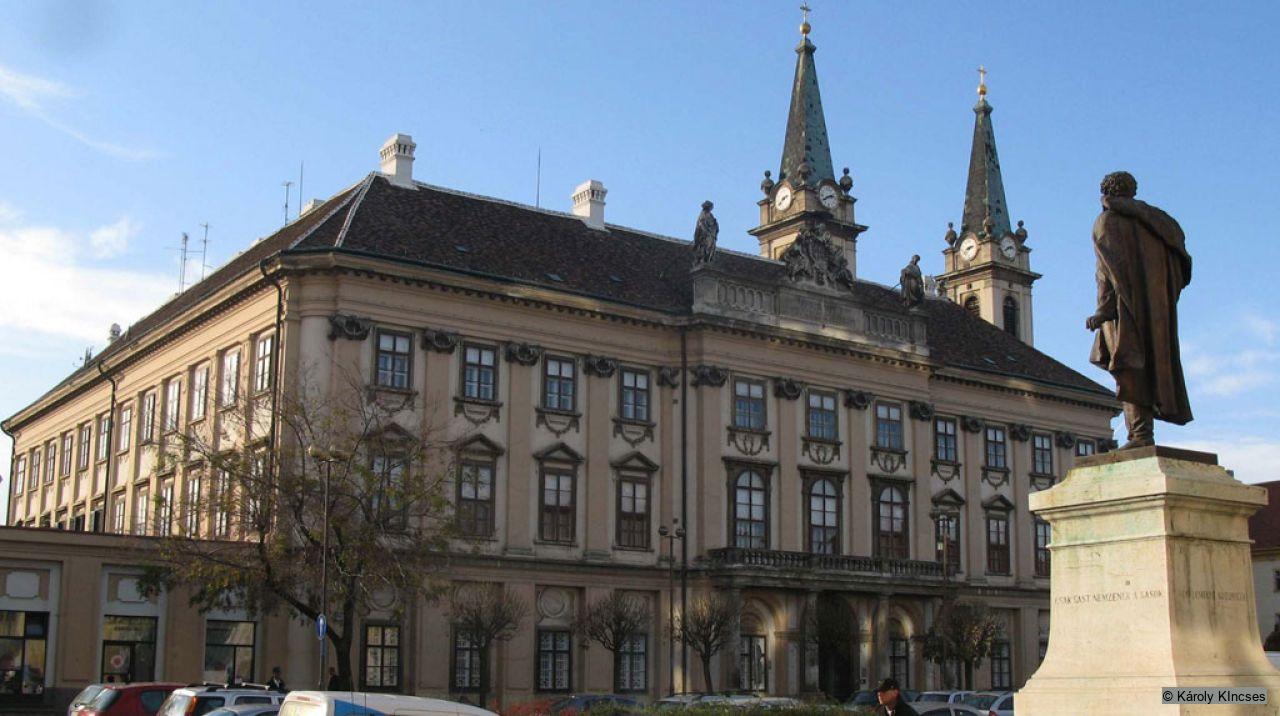
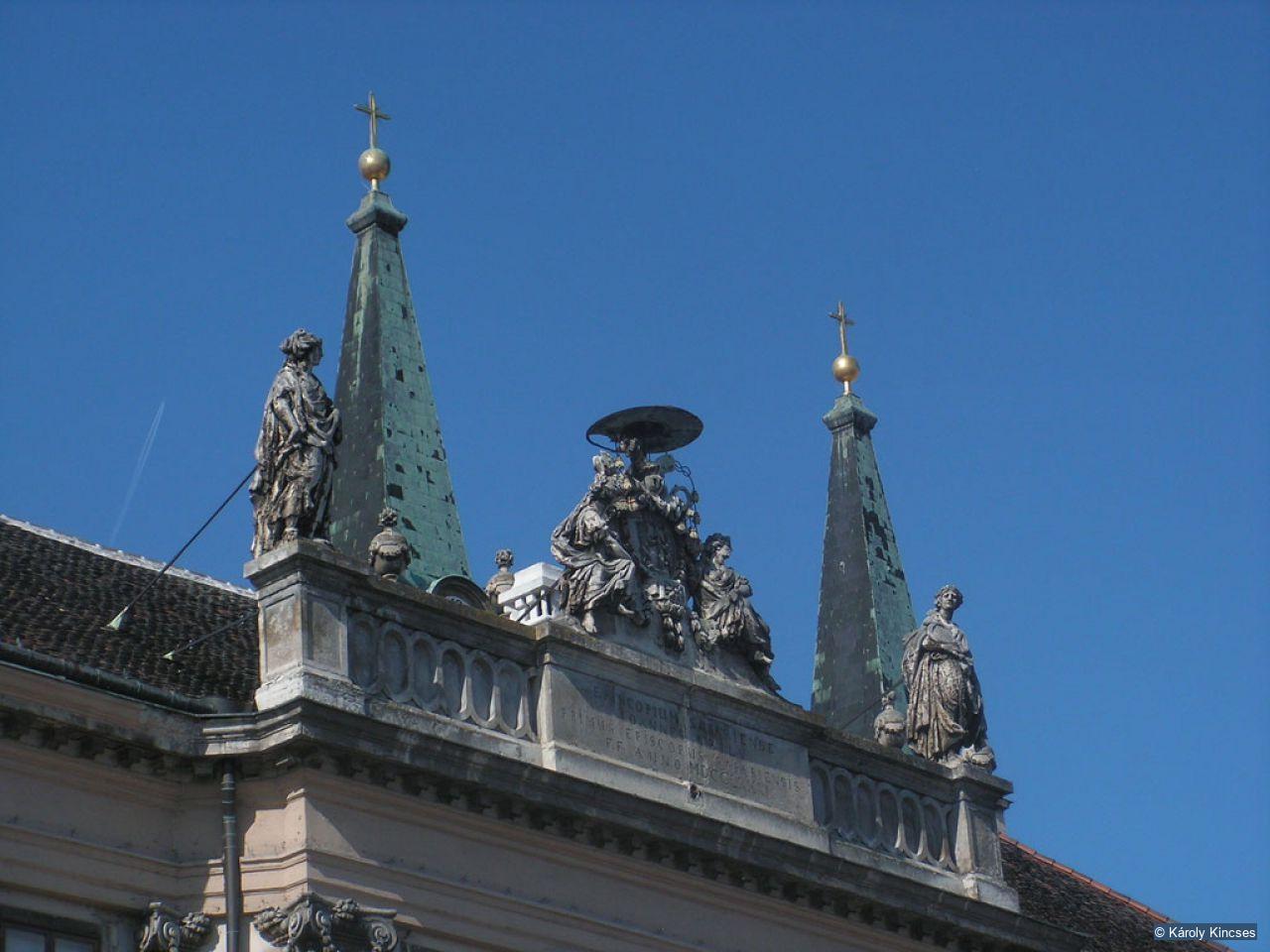
The facade reflects the characteristics of Viennese palace architecture. The arrangement of the axes follows a 4-3-4 pattern; the central risalit is only slightly projected, and a balcony in front of it rests on columns. The ground floor, which rather resembles a footing, ends in a string-course and then continues with the high windows of the piano nobile and the lower windows of the second floor. The first floor is articulated by monumental pilasters. On the façade are festoon decorations typical of the era. On the mid-section gable, the coat of arms of the patron can be seen. The articulation and decorations are simple, showing the calm linearity of the Late Baroque style, but also Neo-Classical features. The sala terrana is embellished with pictures of Rome, based on the engravings of Giovanni Battista Piranesi, and Roman woodcarvings exhibited there are also illustrated. The fresco in the Ceremonial Hall depicts the Allegory of Divine Providence, and on the walls are scenes from the history of ancient Savaria: Tiberius Claudius founds Savaria; Septimius Severus becomes Emperor; Constantinus Chlorus becomes Legislator and, finally, Attila Defeats the Romans. In the palace there are several oil sketches for the cathedral frescoes and altarpieces.
The Bishop's Palace in Szombathely is an outstanding example in Hungary of the so-called Late Baroque style with Neo-Classical features. Queen Maria Theresia (1740–1780) founded a new diocese in 1777 and appointed János Szily (1777–1799) as Bishop. Szily constructed the Bishop's Palace, the Seminary and the Cathedral. Of this building complex, the construction of the Bishop's Palace was completed first (1778–1783). Its cultural and historical value lies also in the fact that it was the first museum in Hungary, founded by Szily. The museum, on the ground floor of the palace (in the so called sala terrena), comprised of stone carvings excavated in the ancient Roman city of Savaria, which lay beneath Szombathely.
How Monument was dated:
Based on written and visual sources.
Selected bibliography:
Galavics, G., “A szombathelyi püspökség mint műalkotás. Das Bistum von Szombathely als Kunstwerk” “The Diocese of Szombathely as an Artwork”, An Exhibition in Remembrance of Melchior Hefele (1716-1794) Master Architect (Melchior Hefele (1716–1794) építész emlékkiállítása. Gedenkausstellung des Architekten Melchior Hefele (1716–1794) (ed. Zsámbéky Mónika), Szombathely, 1994, pp. 111–113.
Jávor, A., “Zu Maulbertschs Spätwerk in Ungarn (Eger, Pápa, Szombathely)”, Franz Anton Maulbertsch und Mitteleuropa. Festschrift zum 30-jahrigen Bestehen des Museums Langenargen (eds. E. Hindelang and L. Slaviček), Langenargen–Brno, 2007, pp. 103–119.
Sisa, J., Wiebenson, D. (ed.), Magyarország építészetének története (The History of Hungarian Architecture), Budapest, 1998, p. 154.
Citation of this web page:
Áron Tóth "Bishop’s Palace, Szombathely" in "Discover Baroque Art", Museum With No Frontiers, 2026.
https://baroqueart.museumwnf.org/database_item.php?id=monument;BAR;hu;Mon11;32;en
Prepared by: Áron Tóth Áron Tóth
SURNAME: Tóth
NAME: Áron
AFFILIATION: National Trust of Monuments for Hungary
TITLE: Art Historian; MWNF DBA author (Hungary)
CV:
Áron Tóth works as an Art Historian at The National Trust of Monuments for Hungary. He was awarded his MA in Art History at the Eötvös Loránd University in Budapest, and received his PhD at the university’s Institute of Art History in 2009. He was a scholar at the Research Institute for Art History at the Hungarian Academy of Sciences from 2005 until 2009. His research interests embrace 17th- and 18th-century architecture and architectural theory. He is Secretary for the Association Art Centre – New Workshop of Art Historians – in Budapest and a contributing author for MWNF DBA (Hungary).
Copyedited by: Terézia BardiTerézia Bardi
SURNAME: Bardi
NAME: Terézia Anna
AFFILIATION: National Trust of Monuments for Hungary
TITLE: Art Historian, Vice Director for Research at The National Trust of
Monuments for Hungary; MWNF DBA local co-ordinator (Hungary), author
and copy-editor
CV:
Terézia Bardi, Vice Director for Research at the National Trust of Monuments for Hungary since 2004, was awarded her MA in History and History of Art at the Eötvös Loránd University in Budapest. After a period of fellowships mainly in Italy, Terézia gained her PhD from the Faculty of Art History at the same university for her thesis Presentation and Representation – the European Reception of the Liberation of Buda in 1686: Feast and Public Opinion. Her main fields of research are 17th-and18th-century Baroque and Rococo: the spectacles, festival decorations and associated iconography – including theatre productions of the period – and interior decoration of historic houses. Since 1988, she has edited a number of art historical books that include some on Oriental art and architecture. She is MWNF DBA’s local (Hungarian) co-ordinator, author and copy-editor.
Translation by: Emese Polyák, László Domoszlai
Translation copyedited by: Mandi GomezMandi Gomez
Amanda Gomez is a freelance copy-editor and proofreader working in London. She studied Art History and Literature at Essex University (1986–89) and received her MA (Area Studies Africa: Art, Literature, African Thought) from SOAS in 1990. She worked as an editorial assistant for the independent publisher Bellew Publishing (1991–94) and studied at Bookhouse and the London College of Printing on day release. She was publications officer at the Museum of London until 2000 and then took a role at Art Books International, where she worked on projects for independent publishers and arts institutions that included MWNF’s English-language editions of the books series Islamic Art in the Mediterranean. She was part of the editorial team for further MWNF iterations: Discover Islamic Art in the Mediterranean Virtual Museum and the illustrated volume Discover Islamic Art in the Mediterranean.
True to its ethos of connecting people through the arts, MWNF has provided Amanda with valuable opportunities for discovery and learning, increased her editorial experience, and connected her with publishers and institutions all over the world. More recently, the projects she has worked on include MWNF’s Sharing History Virtual Museum and Exhibition series, Vitra Design Museum’s Victor Papanek and Objects of Desire, and Haus der Kulturen der Welt’s online publication 2 or 3 Tigers and its volume Race, Nation, Class.
MWNF Working Number: HU 37