

 Back
Back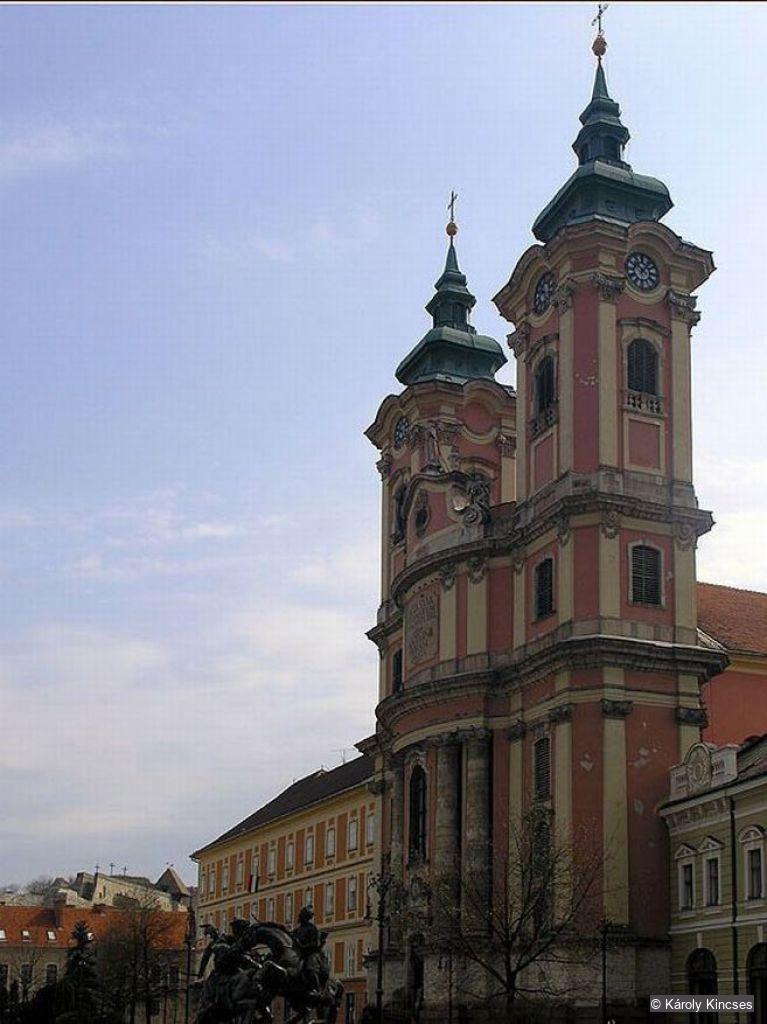
 Add to My Collection
Name of Monument:
Minorite Church of Eger
Also known as:
St. Anthony of Padua Church
Location:
Eger, Észak-Magyarország / North Hungary, Hungary
Dobó István tér 4
H-3300 Eger
T : +36 36 516 613
Catholic Church in Hungary, Archdiocese of Eger (Responsible Institution)
Date:
1757–1773; 1773–1778; 1781
Artists:
Architecture (attributed to): Matthias Gerl (1712–1765), Kilian Ignaz Dientzenhoffer (1689–1751)(?); master builders: Johann Falk, Johann Nitsmann, Johann Povolni; foreman: Andreas Trethon; stonemasons: Joseph Hagen, Joseph Miller; sculptors: “Öreg” (Old) János Hösz, Joseph Hebenstreit, Joseph Moczer; marbling: Mihály Spórer; master carpenters: György Polereczky; Melchior Máhr; painters: Martin Reindl, Johann Lukas Kracker, Johann Zirckler, Anton Lieb; cabinet makers: Benedictus Mönch, Joseph Stöckerle
Denomination / Type of monument:
Religious architecture, church
Patron(s):
Guardian Román Jakabfalvy
History:
The decision to build a Minorite Church and Monastery in Eger was made at a chapter meeting of Hungarian and Transylvanian Minorites in 1745. Having acquired the building plot in 1758, construction began soon thereafter. Guardian Román Jakabfalvy was the patron, and according to the Historia Domus the contractors included master masons Johann Falk and later Johann Nitsmann, and the foreman was Andreas Trethon. The carved stone footings of the church were the work of Joseph Hagen in 1759; but work appears to have stopped and started on the project: it is known that that a local master joiner, György Poleczky, stopped work on the roof because his day-labourers had not been paid. The Church was almost ready by 1767 but the foundation stone of the monastery was not laid until 1772. The roof structure (the work of master joiner Melchior Máhr) was not completed until 1777. Johann Povolni began building work on the vestry in 1781. The sculpted decorations of the façade were created by local sculptor “Öreg” (Old) János Hösz.
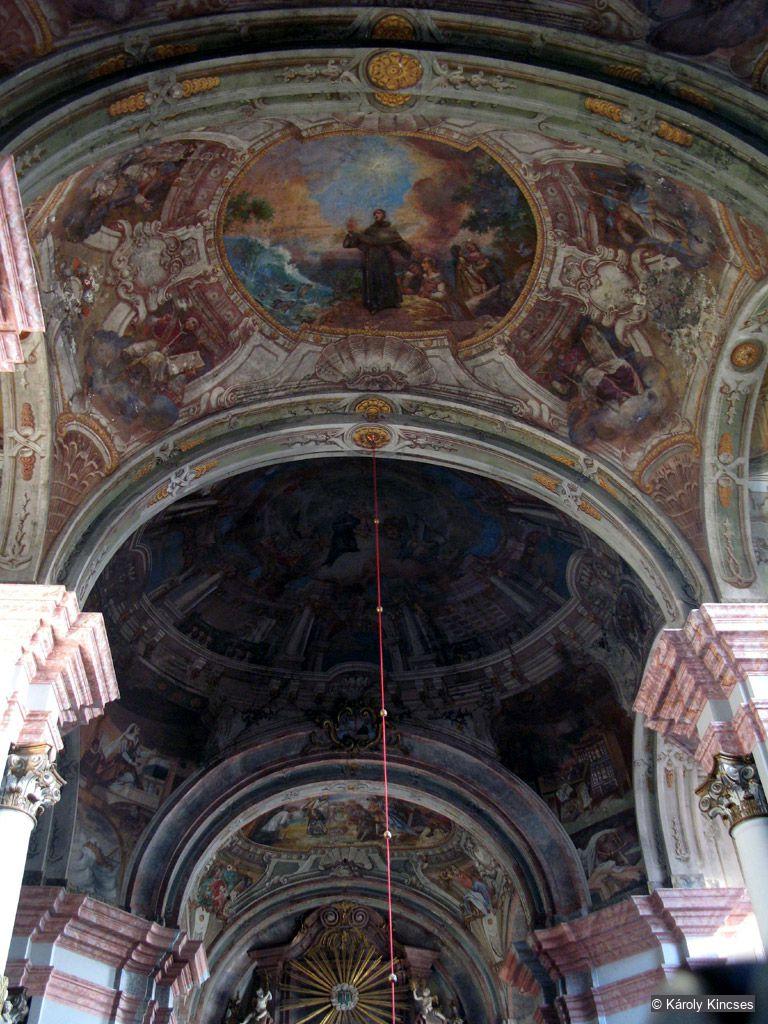
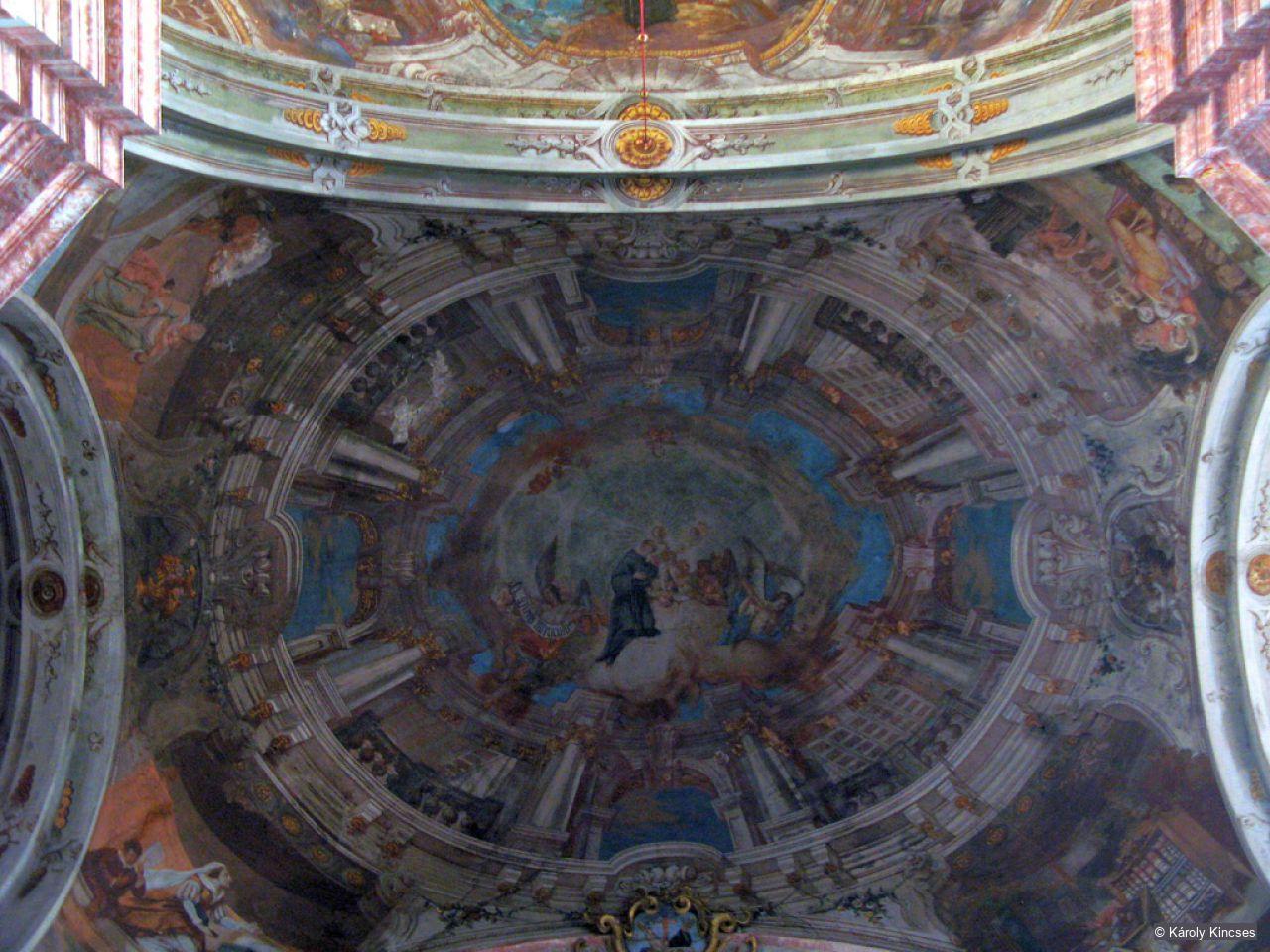
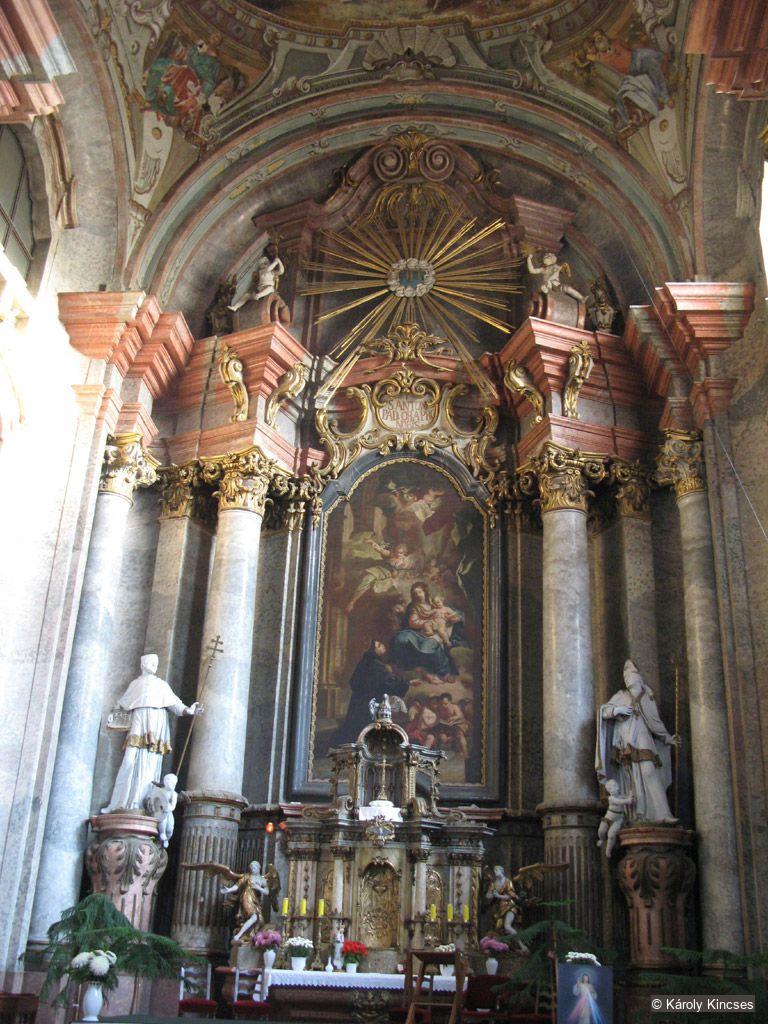
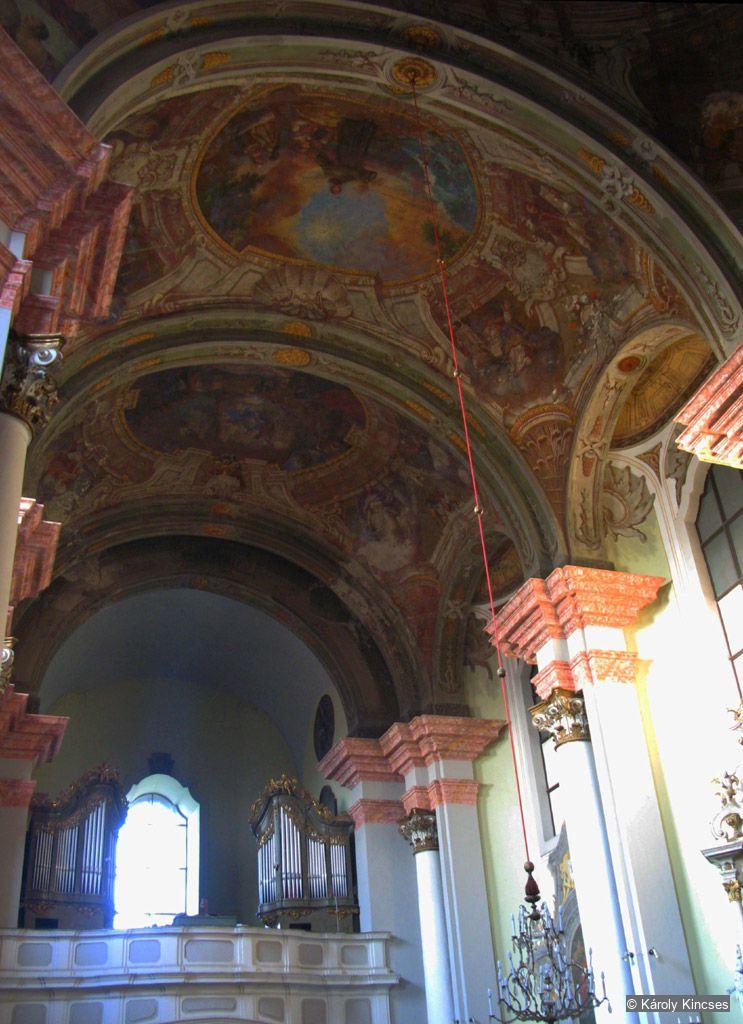
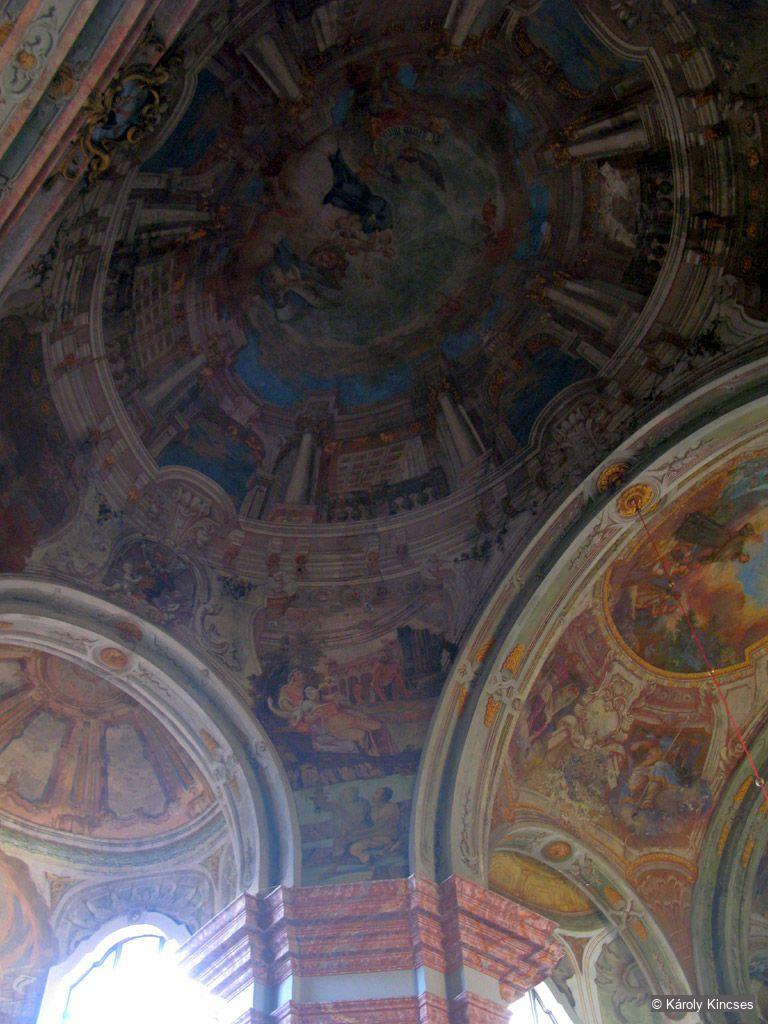
Inside, the ceiling paintings were executed by Martin Reindl of Pozsony (Bratislava) between 1769 and 1770; and the main altarpiece holds a painting by the renowned local painter, Johann Lukas Kracker, of 1771.
Description:
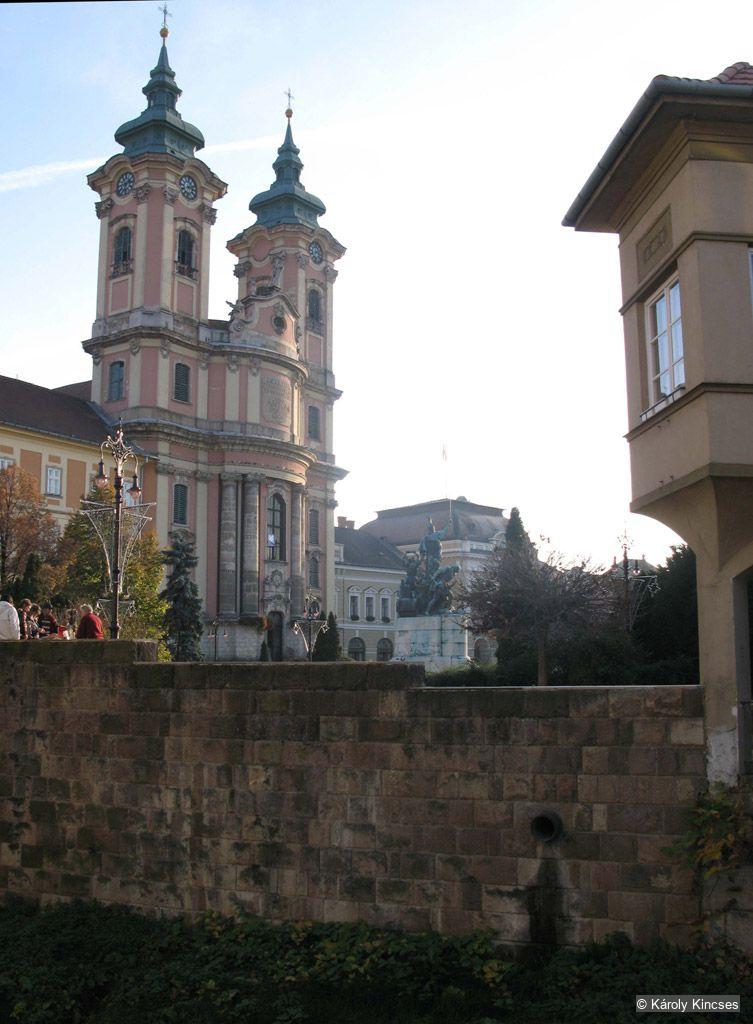
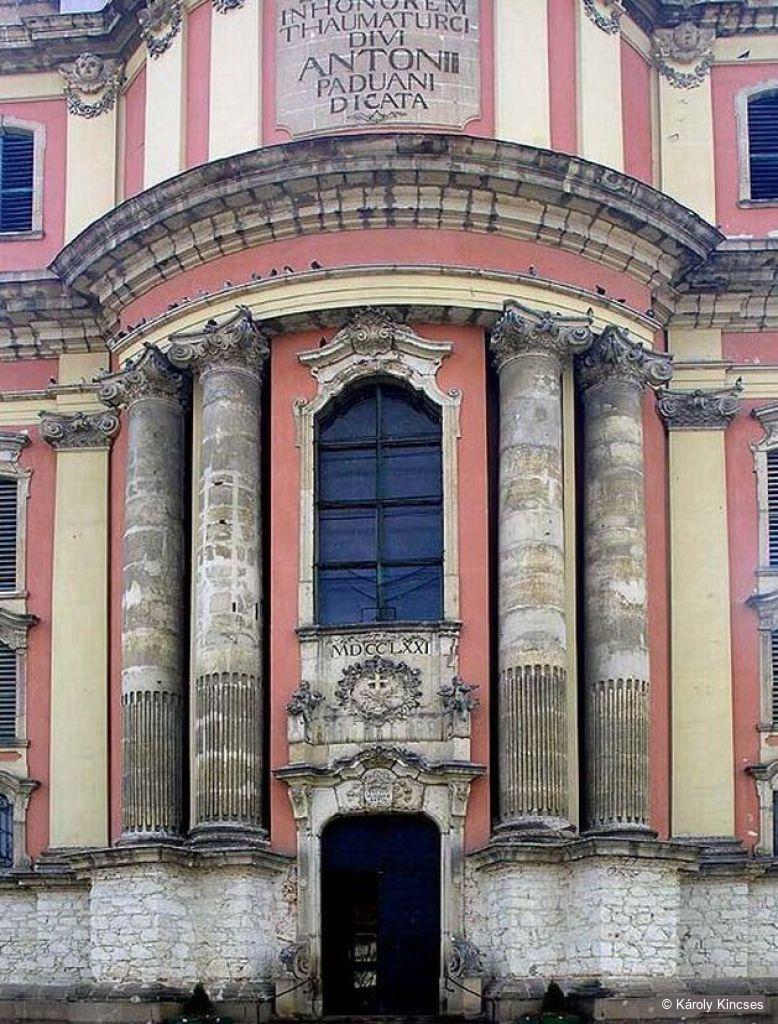
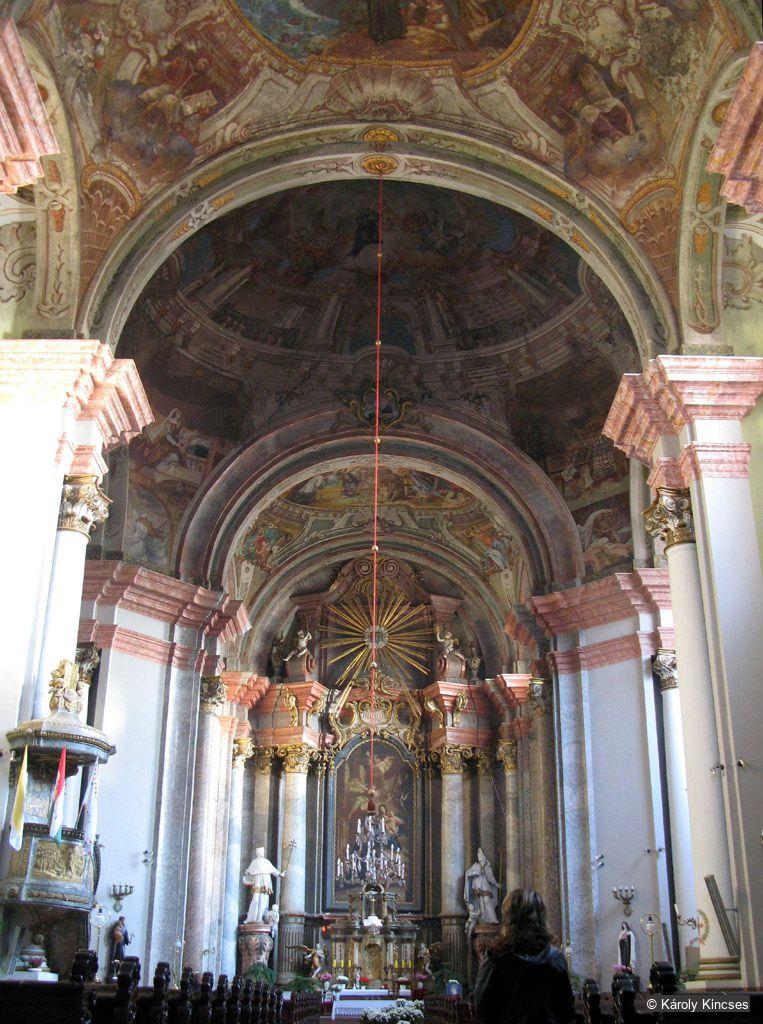
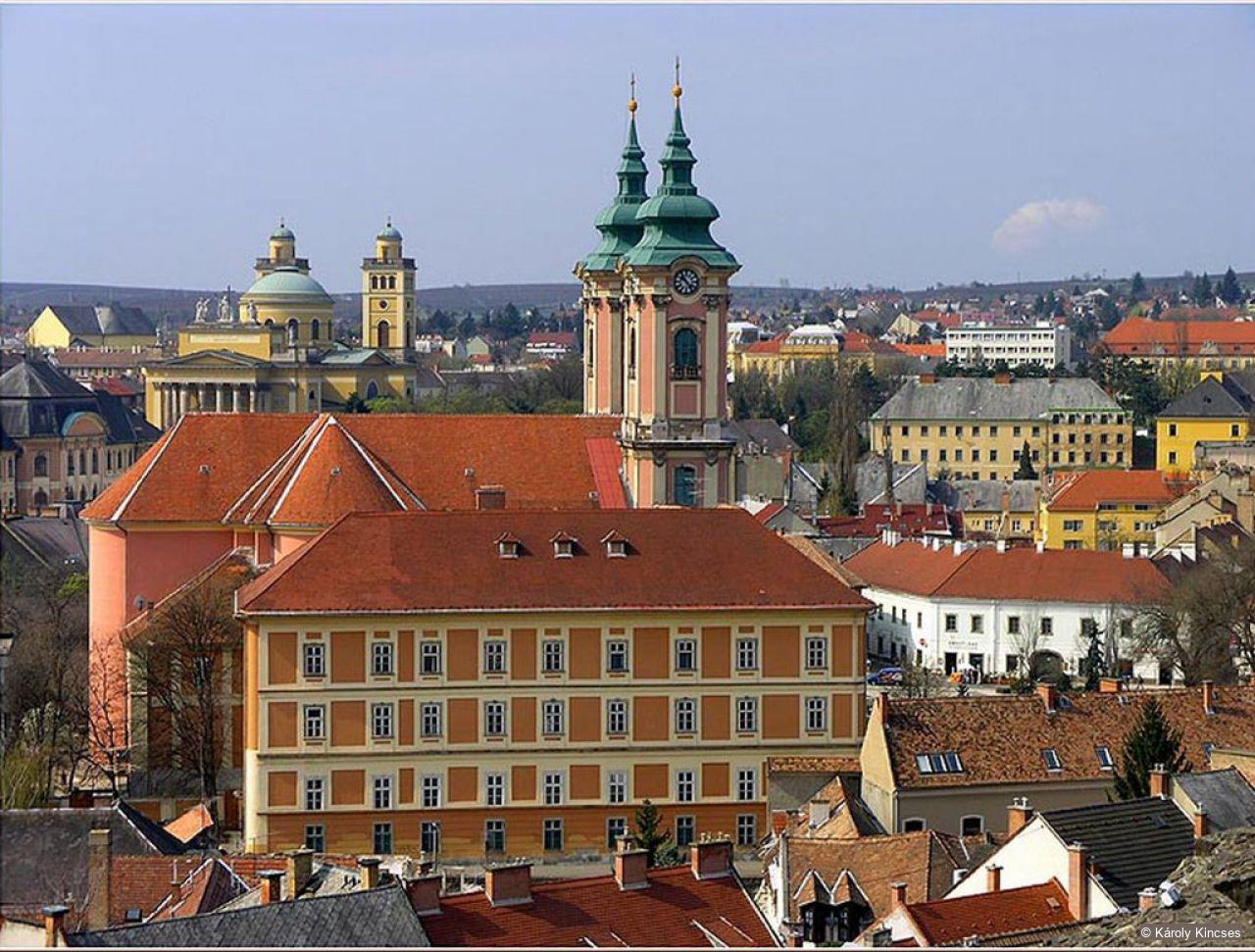
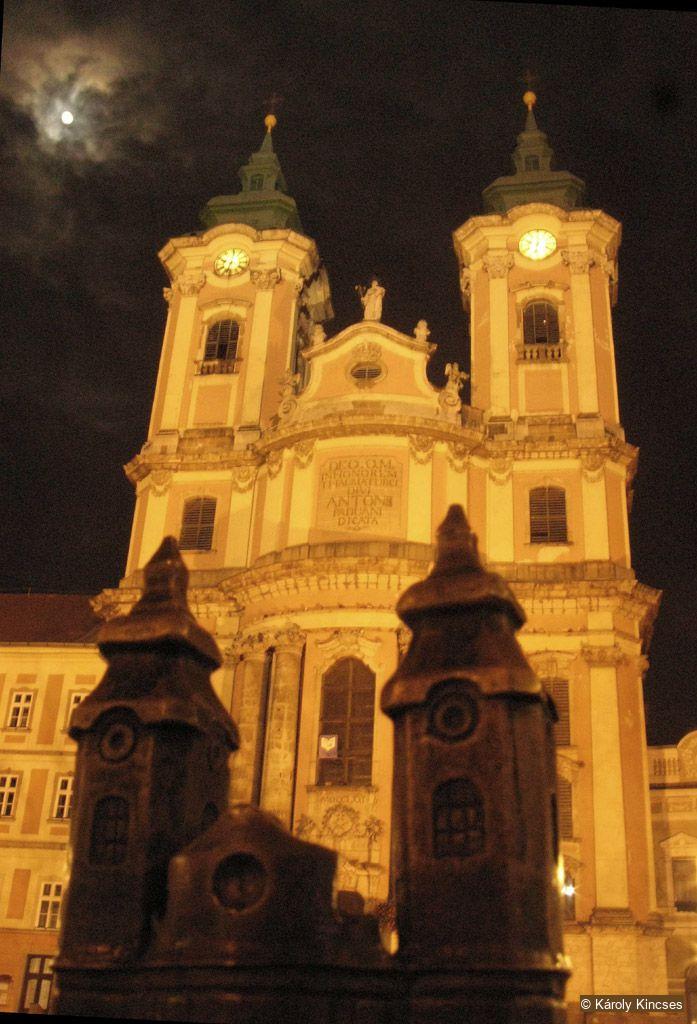
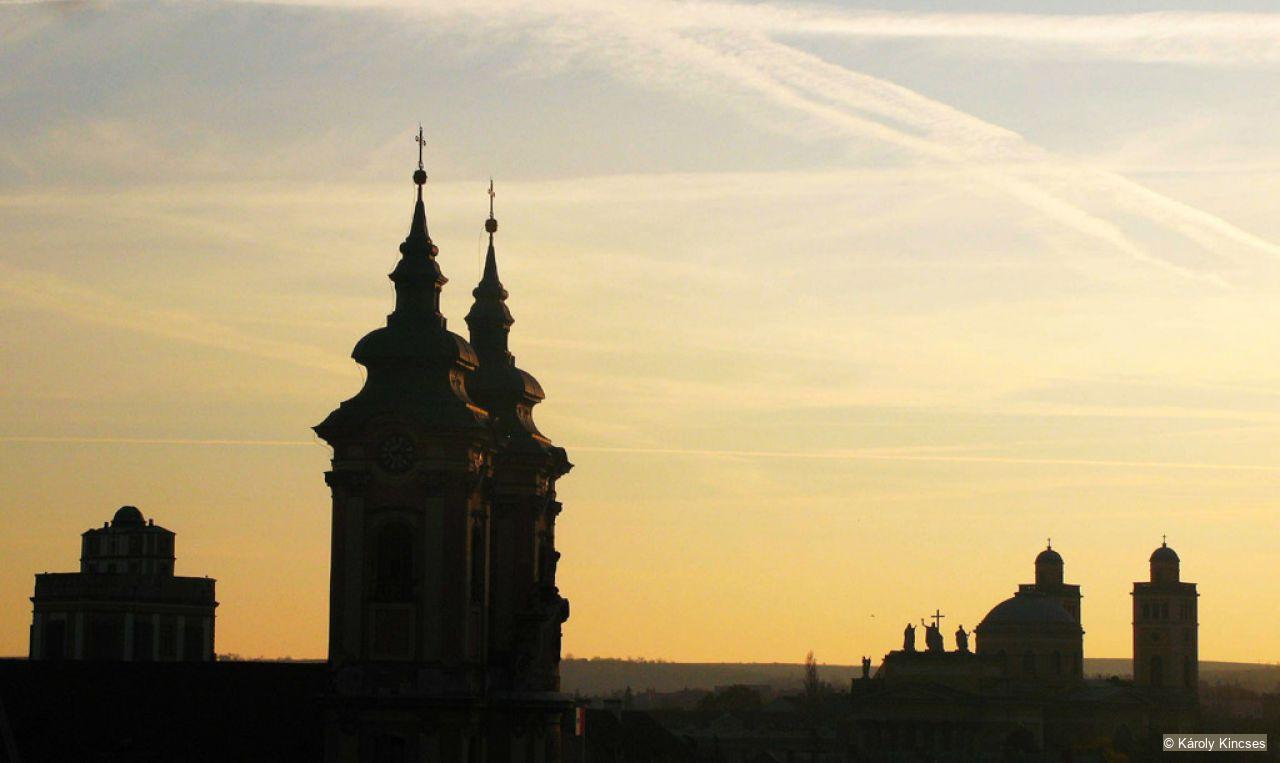
The ground plan of the Church merges central and longitudinal types. The nave consists of three sections covered by sail vaults, with an adjoining entrance hall and organ loft on the entrance side, and a rather narrow sanctuary on the other side. The first two sections are extended by altar niches, and the third section widens into a transept with semi-circular ends, giving the monumental longitudinal space – articulated by free-standing columns – a central feel. The two-tower façade gives the building a monumental appeal: standing on a high footing, it is separated into two levels by an emphasised stringcourse. The attic is articulated by outstanding moulding, above which are arched gables and the towers. The mid-section, framed by three-quarter detached Ionic columns, forms a convex arch. On the keystone of the drip moulding above the gate there is an inscription that reads: “PRO DEO NUNQUAM SATIS” (“For God nothing is enough”). On the supraport the year “MDCCLXXI” is inscribed. The attic inscription reads “DEO. O. M. / IN HONOREM / THAUMATURGI / DIVI / ANTONII / PADUANI/ DICATA” (“Deo. O[ptimo] M[aximo] the God, the Best, the Greatest / dedicated in honour of the Thaumaturgic St. Anthony of Padua”). On the gables a statue of St. Anthony of Padua stands between two angels.
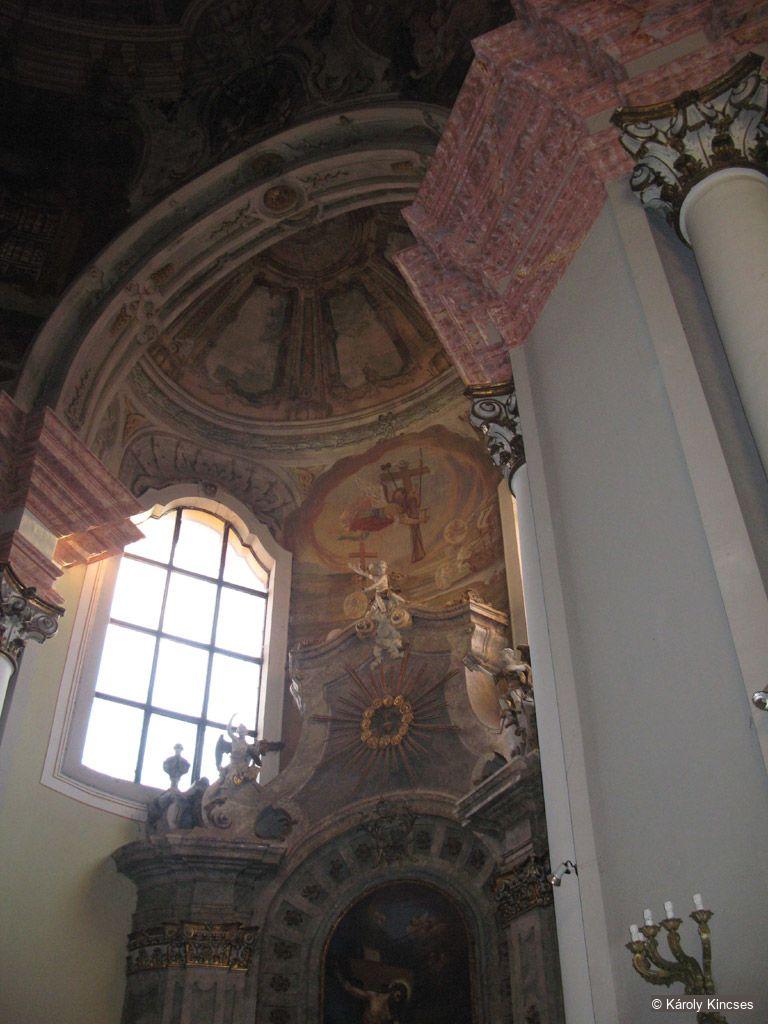
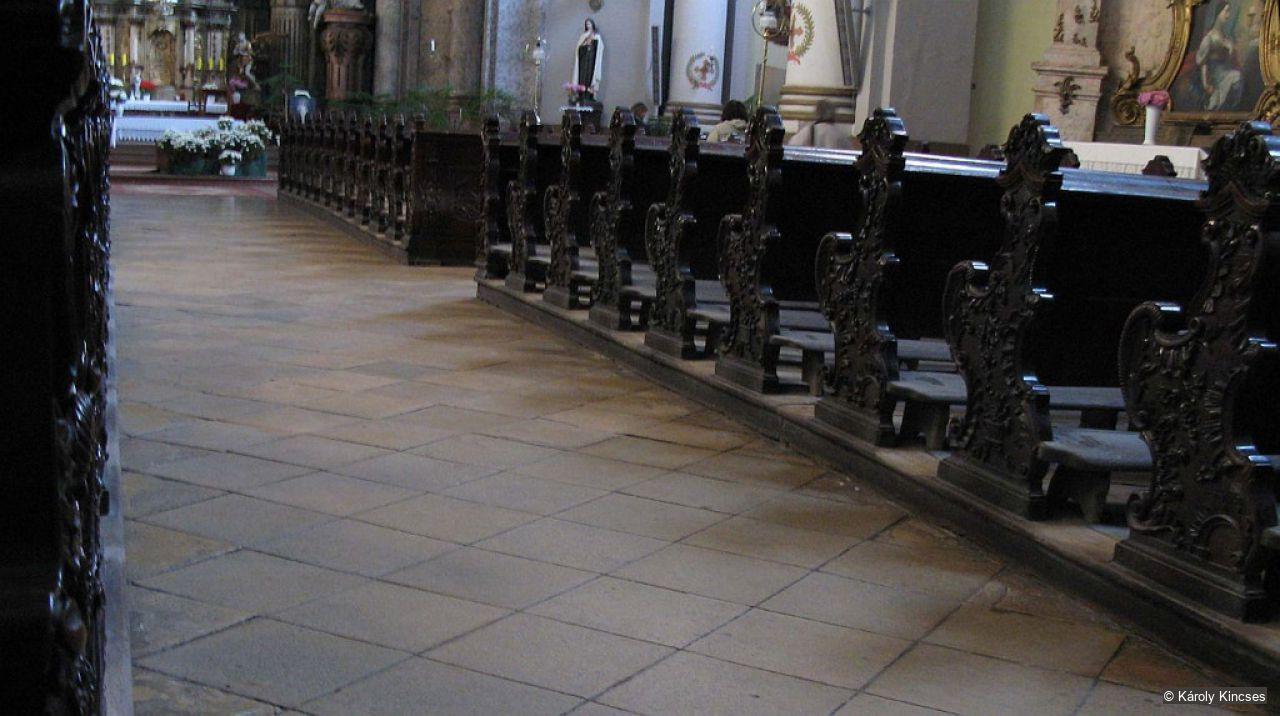
Inside, the main altarpiece painting the Virgin Mary Appears to St. Anthony has statues of St. Louis and St. Bonaventure either side of it; the entirety crowned by an eagle that symbolises St. John. On the ceiling of the nave are scenes from the Life of St. Anthony. The side altars are dedicated to the Holy Cross, Our Lady of Sorrows, St. John of Nepomuk, St. Anne, St. Joseph and St. Florian; the painted architectural elements of the two latter were painted by the local painter Anton Lieb, in 1805. The painting on the Altar of the Holy Cross was replaced in the 1930s. The figure of St. John seen in the pulpit was created by Joseph Moczer from Eger. The interior decoration includes carved pews and other fine furniture, the exceptional carving of which is by the master cabinet maker Benedictus Mönch, who between 1777 and 1779 also carved the choir pews of the organ loft in a Louis XIV style with a hint of Neo-Classicism. The pews in the nave were carved by Joseph Stöckerle.
The Minorite Church of Eger represents Hungarian Baroque art of exceptional quality. The identity of the architect is unclear, for although historically the building design has been attributed to Kilian Ignaz Dientzenhoffer from Prague, more recent research indicates that Matthias Gerl from Vienna was the architect. The model for the building was the Piarist Church of Maria Treu in Vienna, where it is known Gerl worked on the construction. The ground plan, interior design and furnishings all mirror the splendour of religious Baroque architecture; the building is a fine example of the religious culture of the era.
How Monument was dated:
Based on written and visual sources and stylistic research.
Selected bibliography:
Sisa, J., Wiebenson D. (ed.), Magyarország építészetének története (History of Hungarian Architecture), Budapest, 1998, p. 156.
Voit, P., Az egri minorita templom (The Minorite Church of Eger), Budapest, 1971.
Voit, P. (ed.), Heves megye műemlékei II (Monuments of Heves County, vol. II), Budapest, 1972, pp. 234–256.
Kelényi, Gy., “Az egri minorita templom építészéről” (“About the Architecture of the Minorite Church in Eger”), Ars Hungarica, 2006, pp. 29–38.
Citation of this web page:
Áron Tóth "Minorite Church of Eger" in "Discover Baroque Art", Museum With No Frontiers, 2026.
https://baroqueart.museumwnf.org/database_item.php?id=monument;BAR;hu;Mon11;9;en
Prepared by: Áron Tóth Áron Tóth
SURNAME: Tóth
NAME: Áron
AFFILIATION: National Trust of Monuments for Hungary
TITLE: Art Historian; MWNF DBA author (Hungary)
CV:
Áron Tóth works as an Art Historian at The National Trust of Monuments for Hungary. He was awarded his MA in Art History at the Eötvös Loránd University in Budapest, and received his PhD at the university’s Institute of Art History in 2009. He was a scholar at the Research Institute for Art History at the Hungarian Academy of Sciences from 2005 until 2009. His research interests embrace 17th- and 18th-century architecture and architectural theory. He is Secretary for the Association Art Centre – New Workshop of Art Historians – in Budapest and a contributing author for MWNF DBA (Hungary).
Copyedited by: Terézia BardiTerézia Bardi
SURNAME: Bardi
NAME: Terézia Anna
AFFILIATION: National Trust of Monuments for Hungary
TITLE: Art Historian, Vice Director for Research at The National Trust of
Monuments for Hungary; MWNF DBA local co-ordinator (Hungary), author
and copy-editor
CV:
Terézia Bardi, Vice Director for Research at the National Trust of Monuments for Hungary since 2004, was awarded her MA in History and History of Art at the Eötvös Loránd University in Budapest. After a period of fellowships mainly in Italy, Terézia gained her PhD from the Faculty of Art History at the same university for her thesis Presentation and Representation – the European Reception of the Liberation of Buda in 1686: Feast and Public Opinion. Her main fields of research are 17th-and18th-century Baroque and Rococo: the spectacles, festival decorations and associated iconography – including theatre productions of the period – and interior decoration of historic houses. Since 1988, she has edited a number of art historical books that include some on Oriental art and architecture. She is MWNF DBA’s local (Hungarian) co-ordinator, author and copy-editor.
Translation by: Judit Harangozó, Philip Barker
Translation copyedited by: Mandi GomezMandi Gomez
Amanda Gomez is a freelance copy-editor and proofreader working in London. She studied Art History and Literature at Essex University (1986–89) and received her MA (Area Studies Africa: Art, Literature, African Thought) from SOAS in 1990. She worked as an editorial assistant for the independent publisher Bellew Publishing (1991–94) and studied at Bookhouse and the London College of Printing on day release. She was publications officer at the Museum of London until 2000 and then took a role at Art Books International, where she worked on projects for independent publishers and arts institutions that included MWNF’s English-language editions of the books series Islamic Art in the Mediterranean. She was part of the editorial team for further MWNF iterations: Discover Islamic Art in the Mediterranean Virtual Museum and the illustrated volume Discover Islamic Art in the Mediterranean.
True to its ethos of connecting people through the arts, MWNF has provided Amanda with valuable opportunities for discovery and learning, increased her editorial experience, and connected her with publishers and institutions all over the world. More recently, the projects she has worked on include MWNF’s Sharing History Virtual Museum and Exhibition series, Vitra Design Museum’s Victor Papanek and Objects of Desire, and Haus der Kulturen der Welt’s online publication 2 or 3 Tigers and its volume Race, Nation, Class.
MWNF Working Number: HU 09