

 Back
Back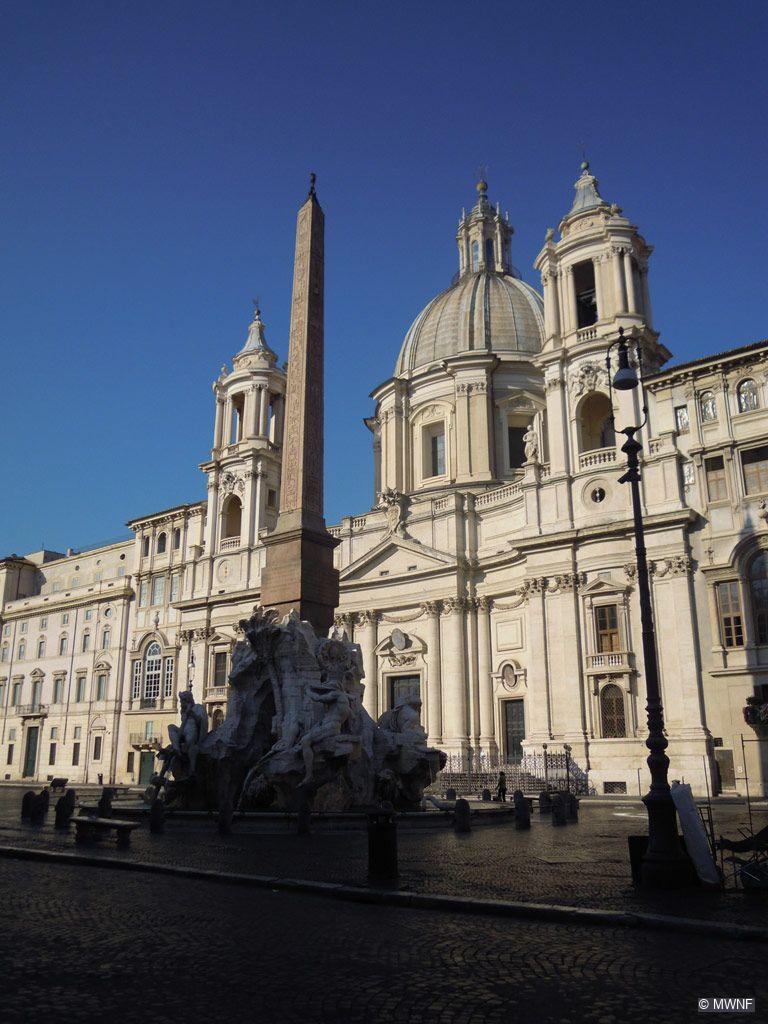
 Add to My Collection
Name of Monument:
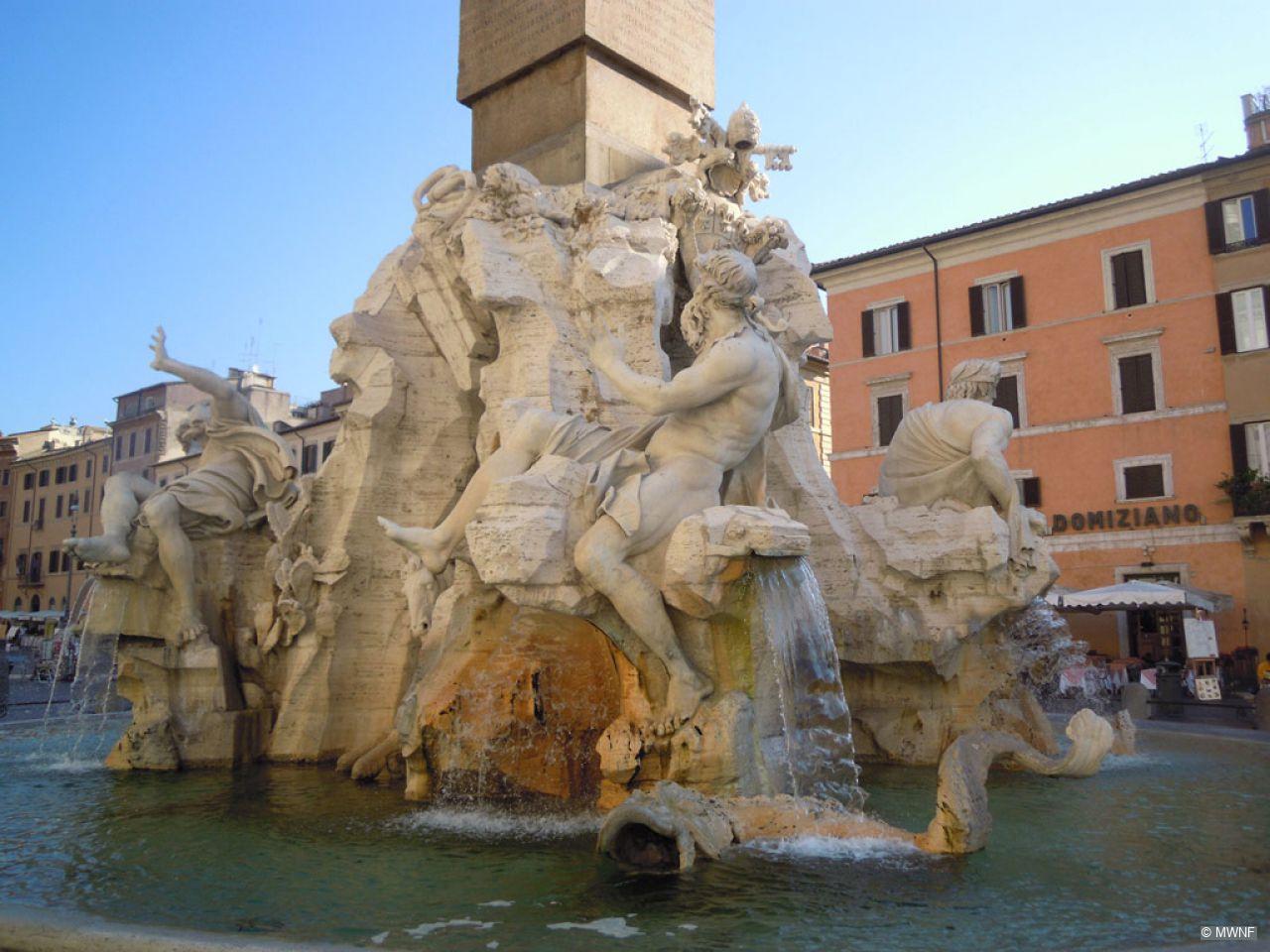
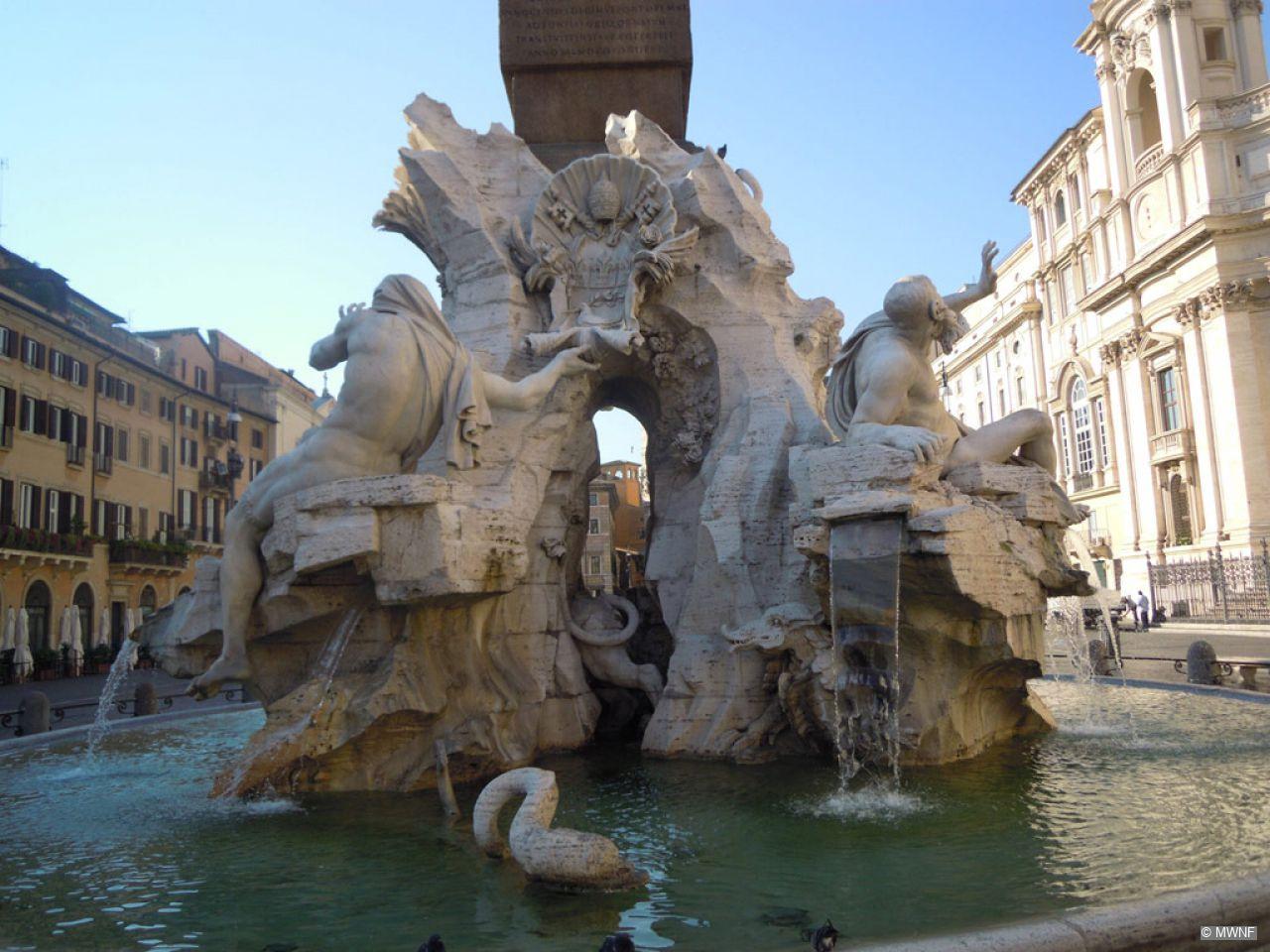
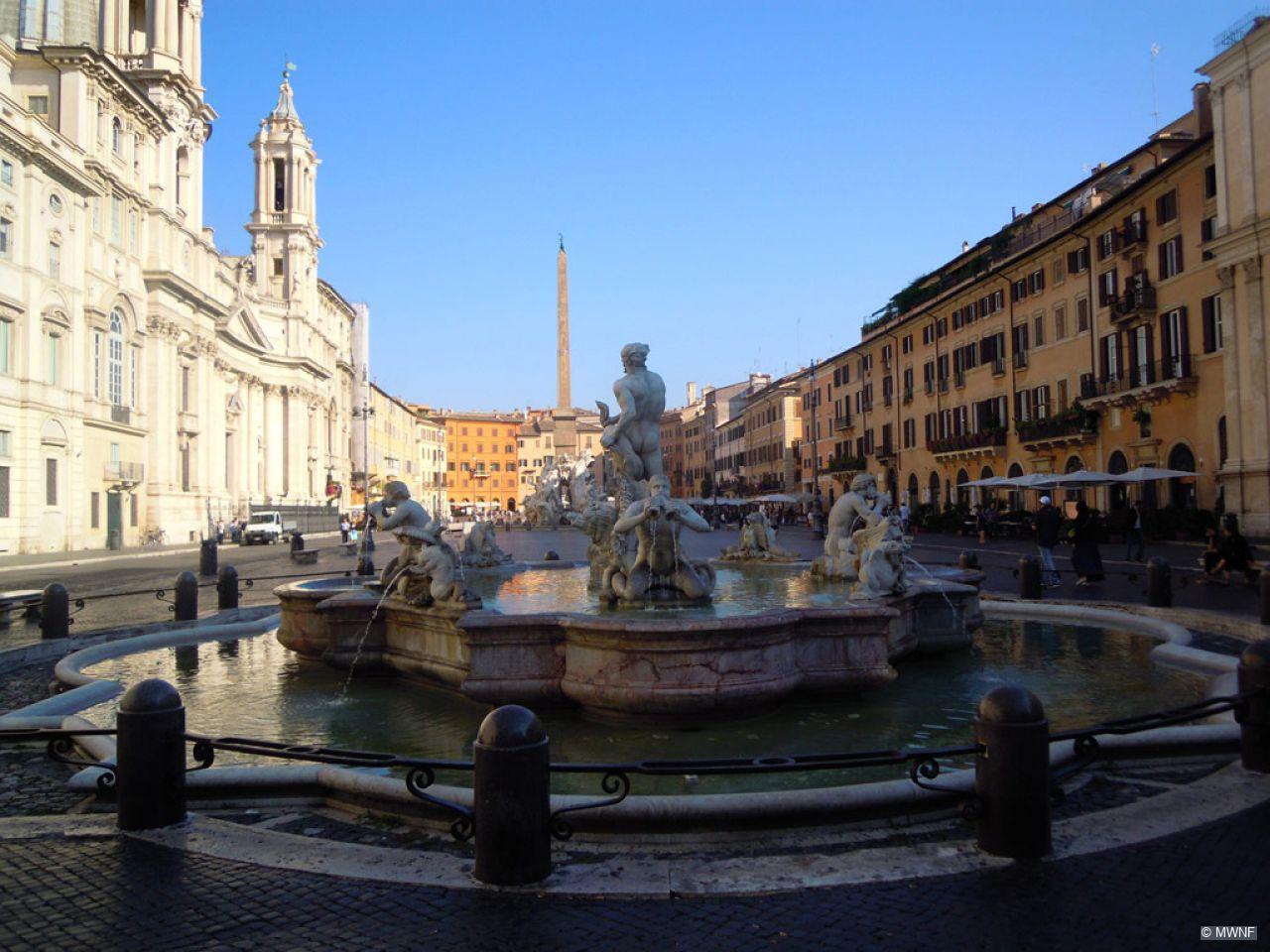
Fountain of the Rivers
Location:
Rome, Latium, Italy
Piazza Navona
Rome
Date:
1648–51
Artists:
Gian Lorenzo Bernini (design); Francesco Baratta; Claude Poussin; Antonio Raggi; Jacopo Antonio Fancelli
Denomination / Type of monument:
Fountain
Patron(s):
Pope Innocent X Pamphili
History:
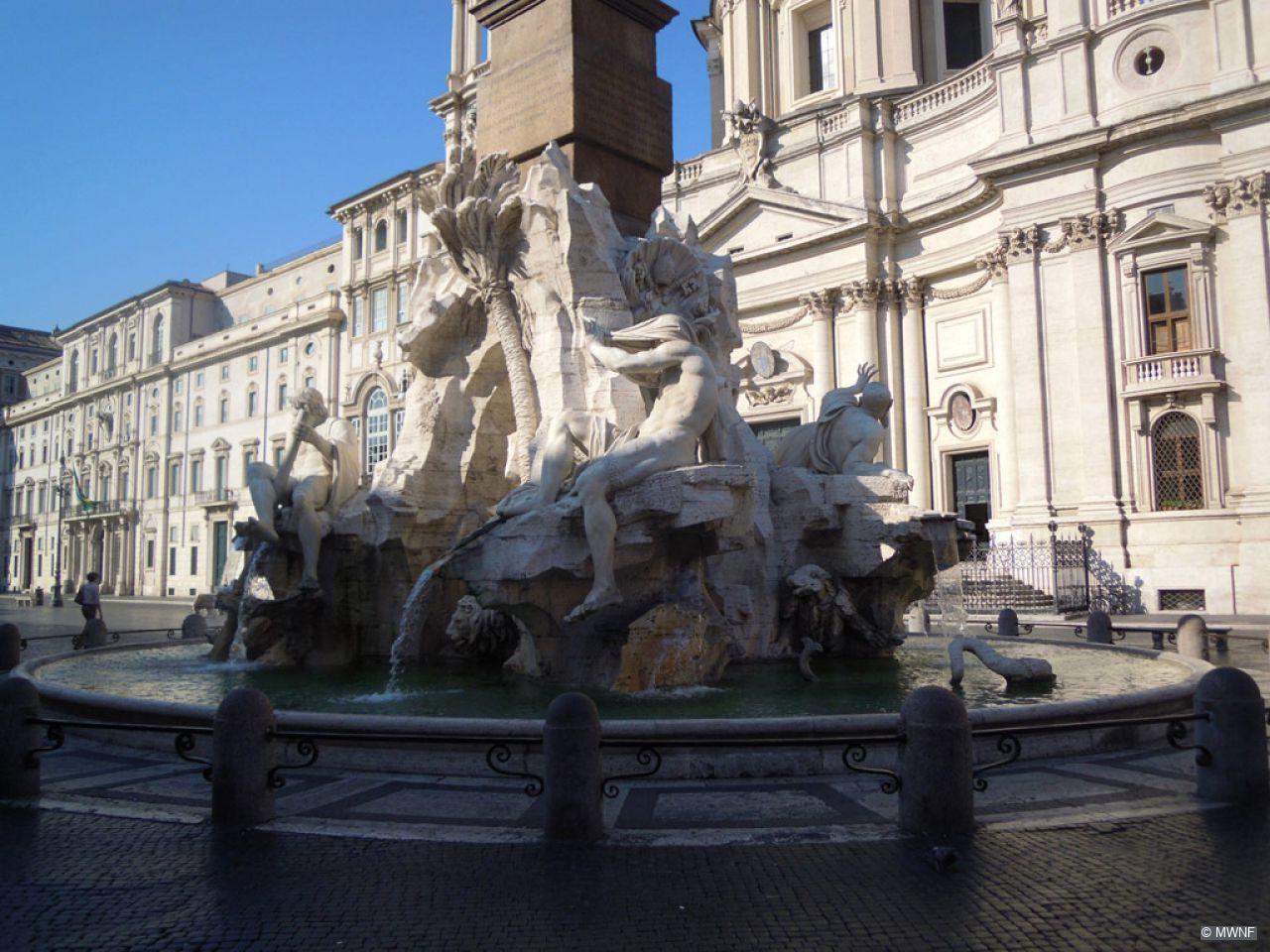
Pope Innocent X Pamphili had decided to give prestige to his family by having Francesco Borromini design the new facade of the building on Piazza Navona (1644–50) and having the small Church of Sant’Agnese rebuilt from scratch to transform it into the family mausoleum. Borromini had also been commissioned to design a third fountain to be placed in the centre of the square, with the water provided by the Aqua Virgo aqueducts like the two pre-existing fountains. For the occasion, the architect from Ticino provided the design of a fountain surmounted by an obelisk (from the Circus of Maxentius, on the Appian Way) and with four figures of river gods. However, in the meanwhile Prince Niccolò Ludovisi, nephew of the pope and a great admirer of Gian Lorenzo Bernini, proposed to the artist to create a model for the fountain to be submitted to the attention of the pope.
Bernini made the silver model (now lost) which, thanks to the mediation of Donna Olimpia, the pope’s sister-in-law, was shown to Innocent X who was so fascinated that he immediately commissioned the prestigious work to Bernini.
Description:
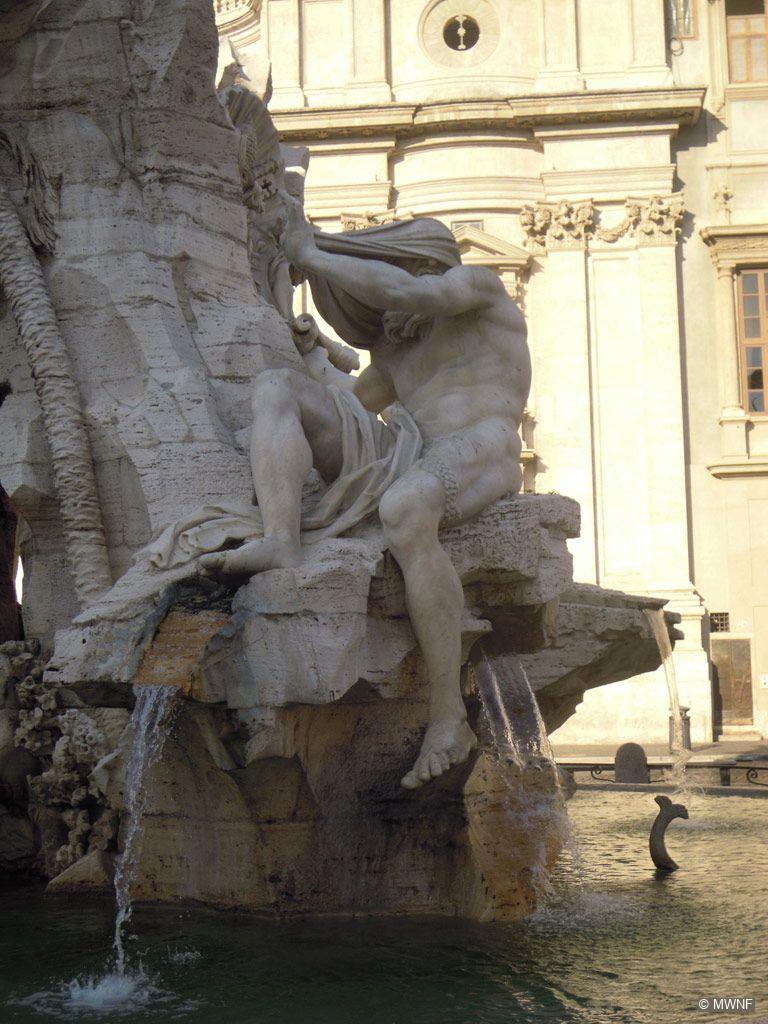
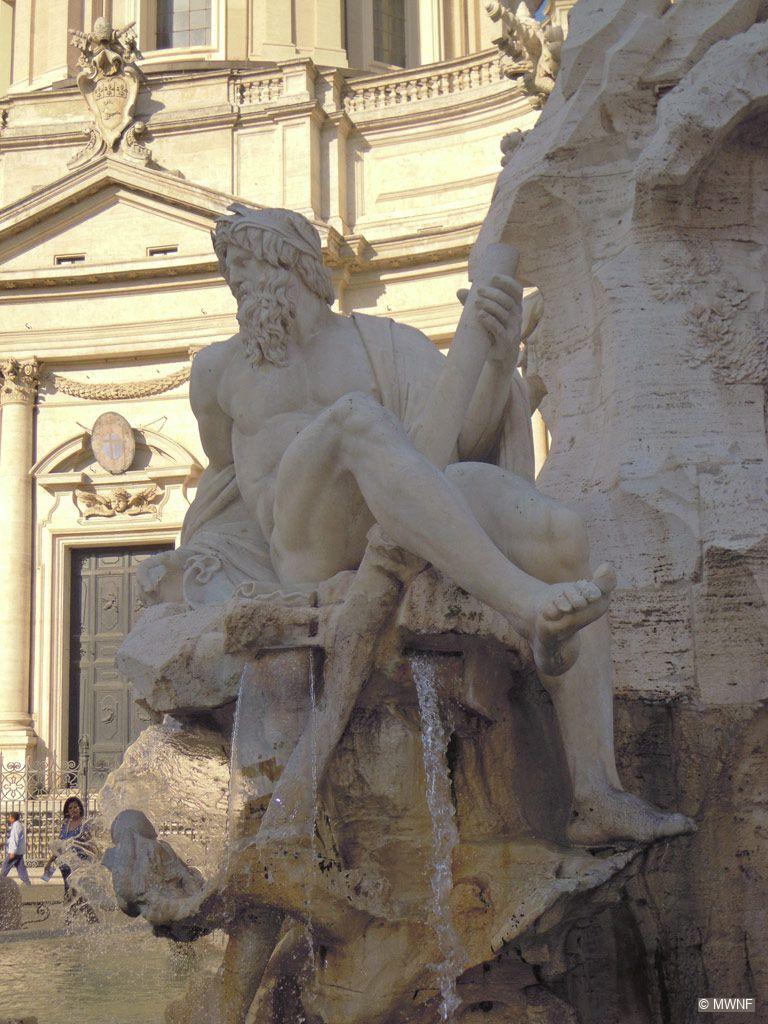
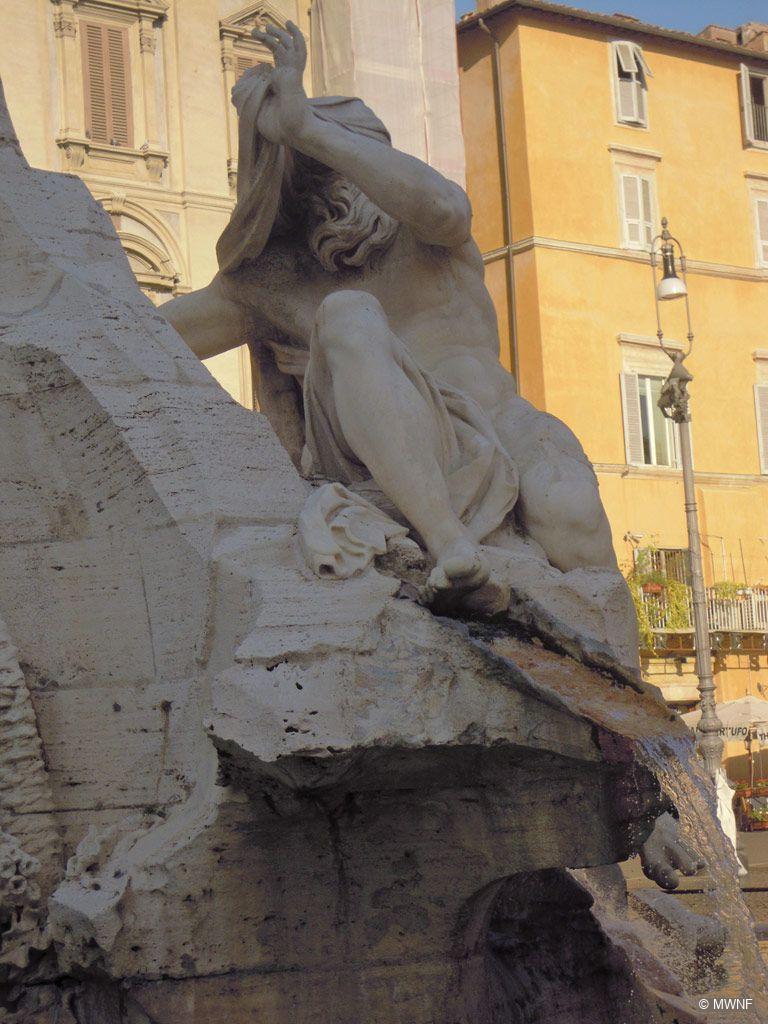
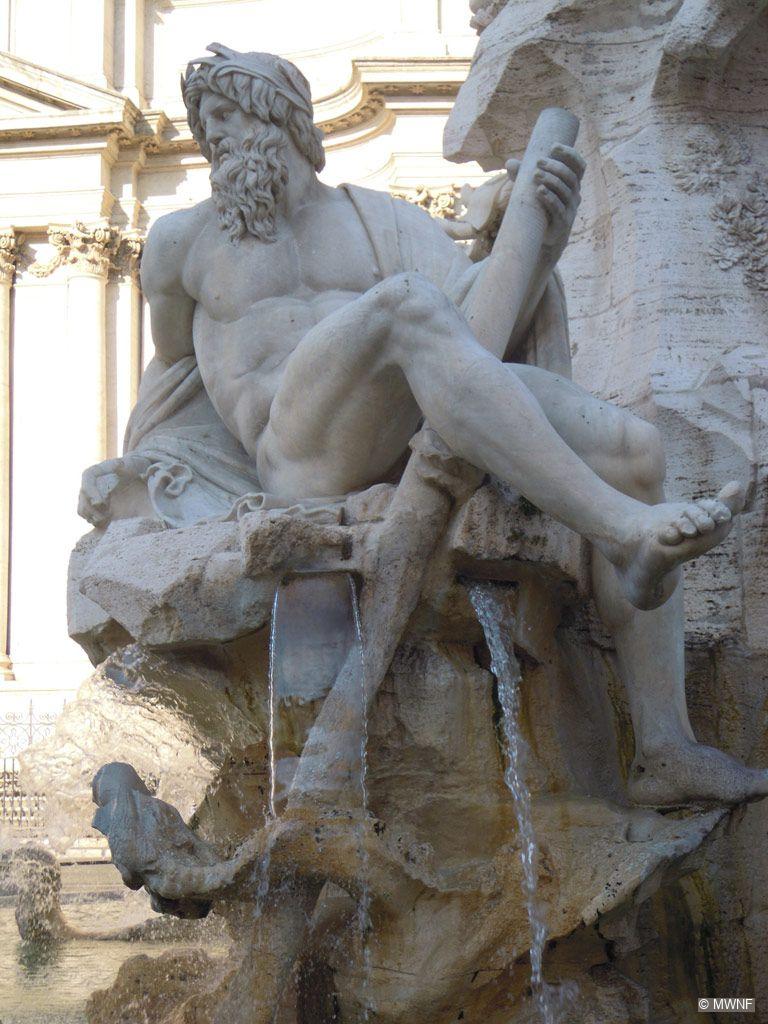
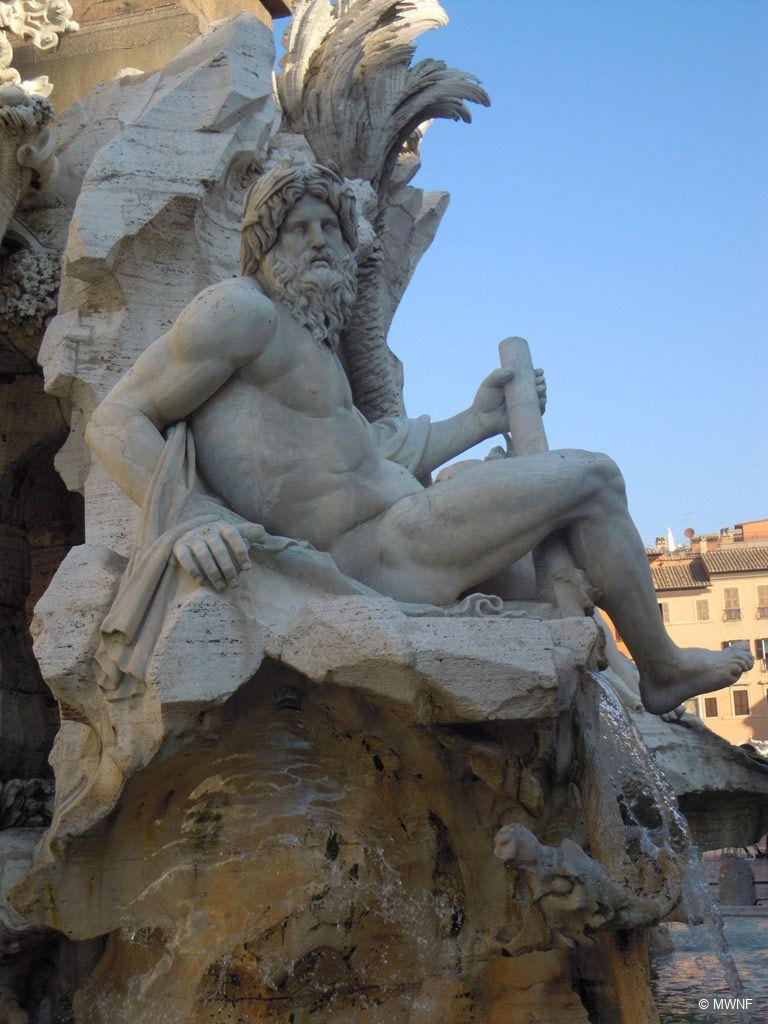
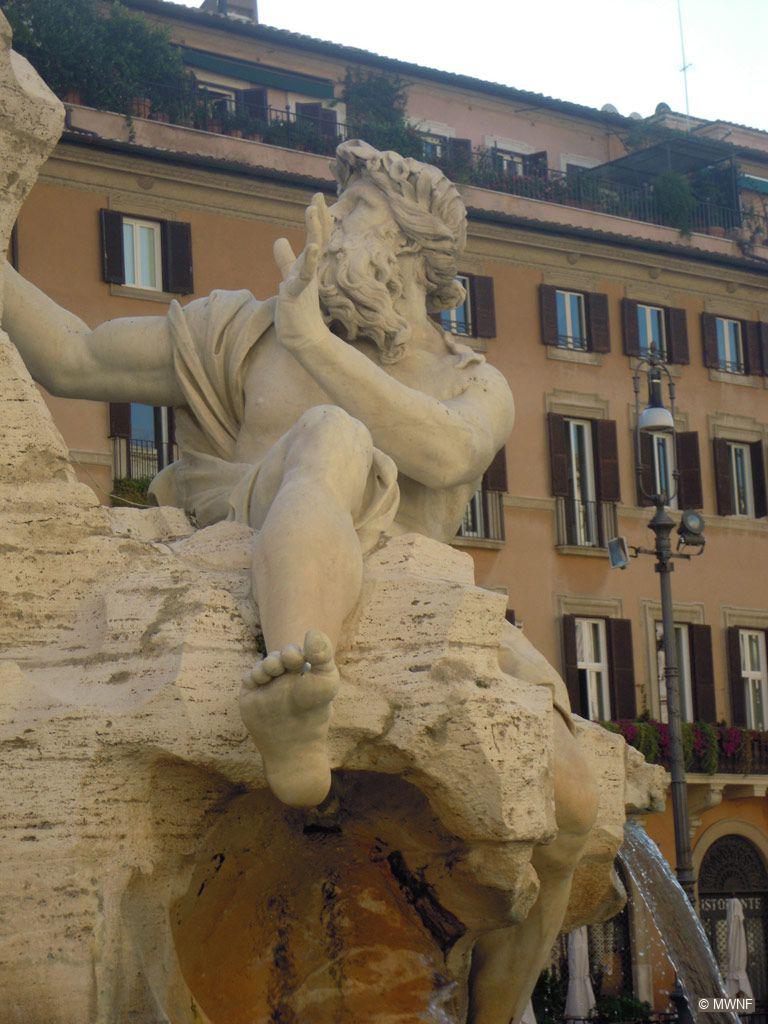
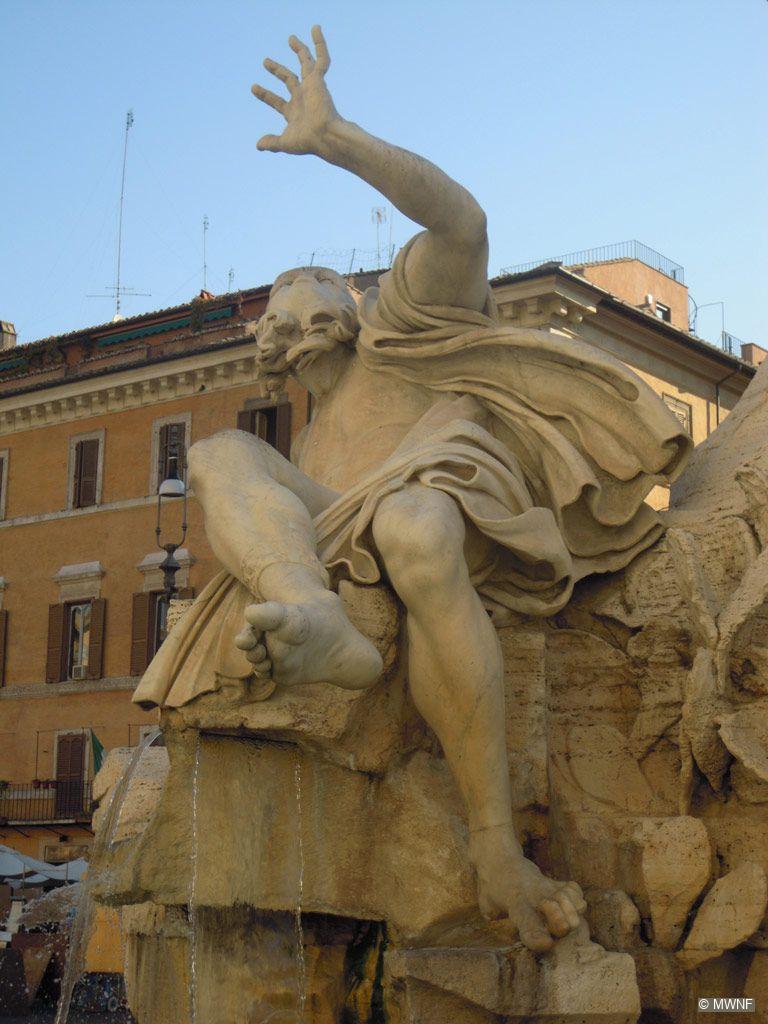
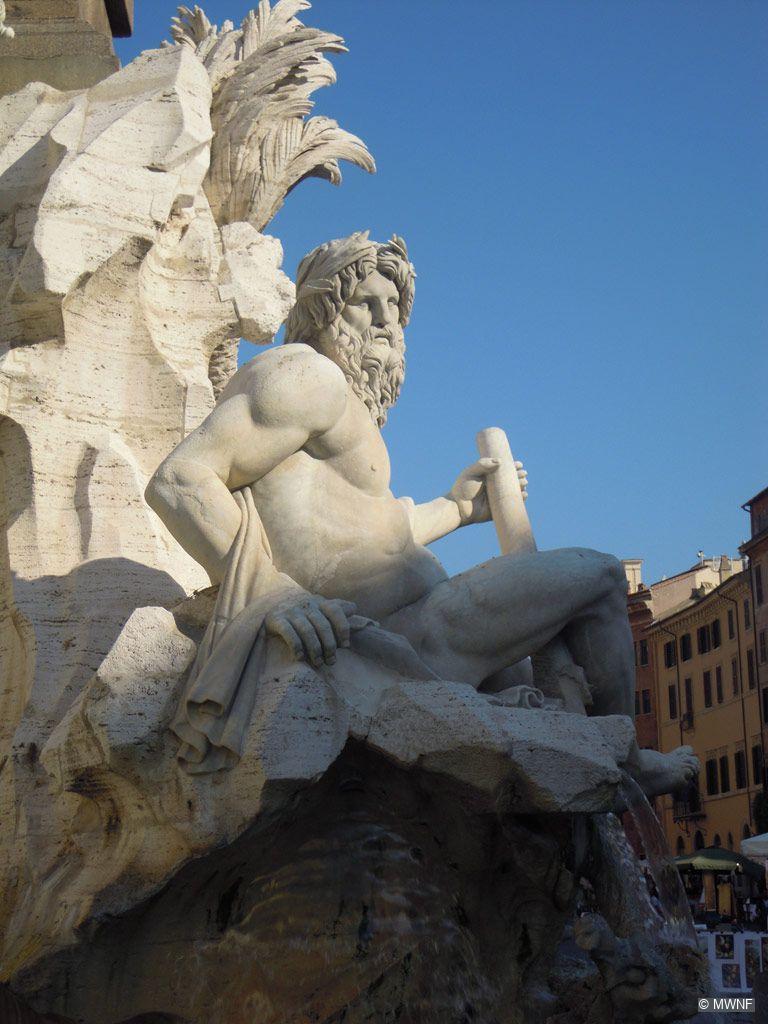
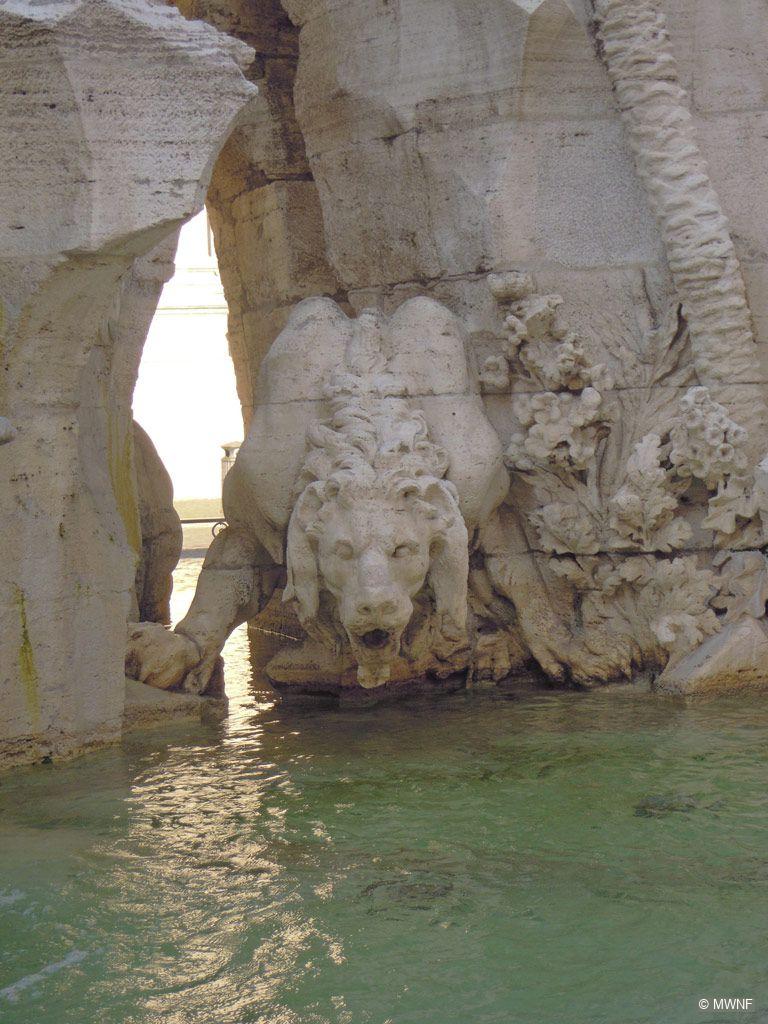
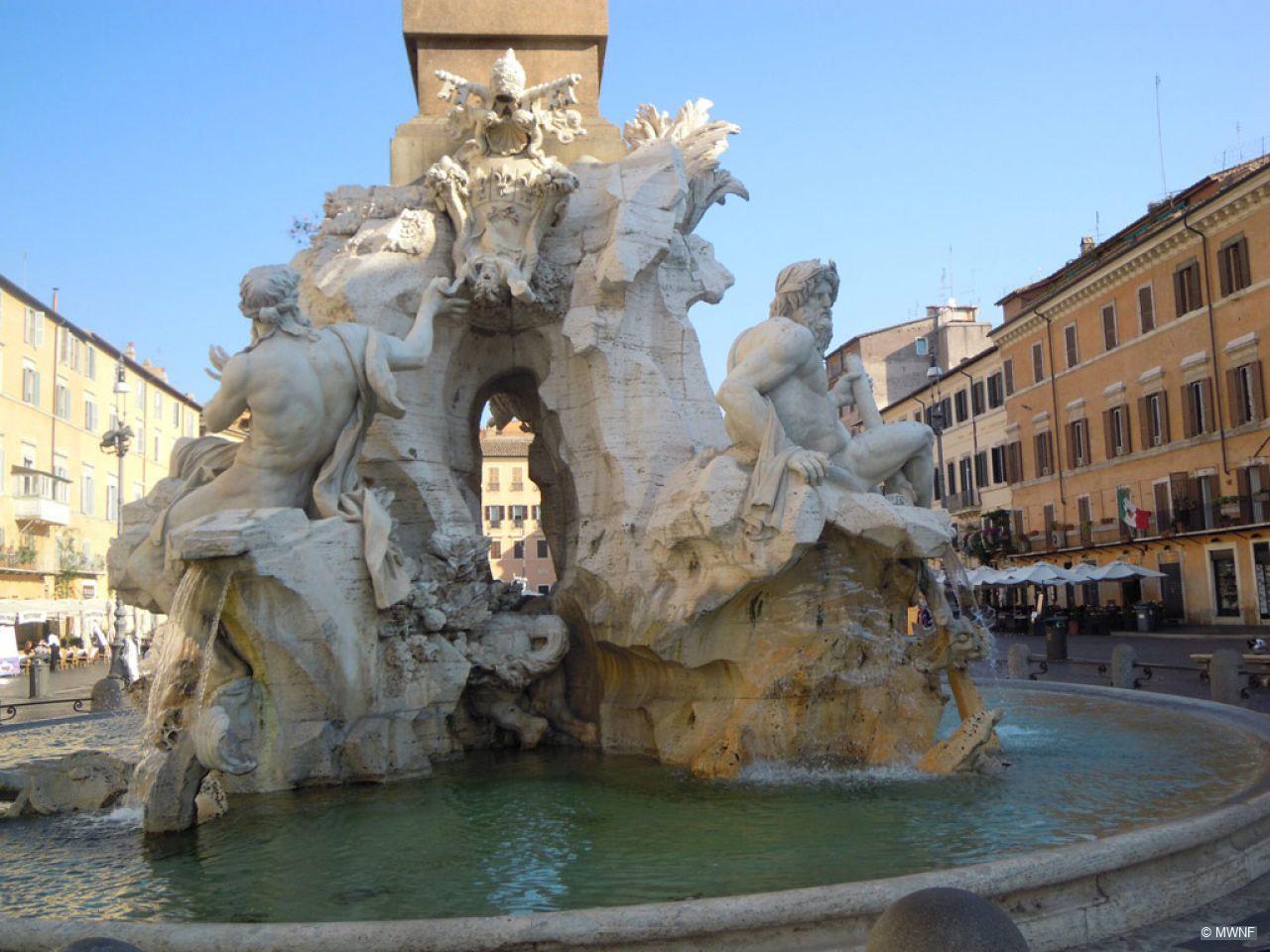
The idea of adorning the fountain with the depiction of four river gods was Borromini's. However, another possible model could have been offered to Bernini by the fountain in Villa Lante in Bagnaia (Viterbo). Images of river gods depicted as colossal, bearded figures lying down abounded in Rome (among the most famous the Tiber, the Nile and the Marforio in the Campidoglio and again the Tiber, the Arno and the Nile in the Cortile del Belvedere in the Vatican). Despite those ancient models, Bernini would eventually rely on classic iconography only in the statue depicting the Ganges: the other three, seated and captured in dramatic actions, are instead closer to Renaissance models such as the Ocean Fountain of the Boboli Gardens (Florence) by Giambologna, or the statues of chained slaves placed at the base of the Monument to Ferdinand I of Tuscany, in Livorno, by Pietro Tacca. Some drawings made by Bernini, as well as the models made in wood and terracotta (Museo Civico di Bologna, Galleria Giorgio Franchetti alla Ca’ d’Oro in Venice) illustrate the different design phases of the fountain. The execution of the statues (which took place between February 1650 and July 1651) was entrusted to the collaborators of the master: Antonio Raggi sculpted the Danube, Jacopo Antonio Fancelli the Nile (his face covered to symbolize the then unknown location of its source), Claude Poussin the Ganges and Francesco Baratta the Rio de la Plata. The final touches to the rock, palm, horse and lion were given by Bernini himself.
The Pamphili dove, eloquently placed on the top of the obelisk of Domitian, in turn soaring over the rocks, symbolizes the dominion of the papacy over the natural elements and over the four known continents (Asia, Europe, Africa and America represented respectively by the Ganges, Danube, Nile and Rio de la Plata). In this way the fountain became the spectacular fulcrum of the square, eternalizing in the stone the 17th century tradition of setting up sumptuous and ephemeral apparatuses dedicated to various entertainments, such as horse carriage races and staged square floods. Those traditions referred to the games that were held in ancient times in the stadium of Domitian, on which Piazza Navona was built.
Thanks to the Fountain of the Four Rivers Bernini, gained the admiration and protection of Pope Innocent X. It recalls the temporary apparati created at the Baroque time for festivals, mostly set in piazza Navona.
How Monument was dated:
Archival documentation and coeval literature.
Selected bibliography:
Fagiolo, M., “Piazza Navona e la Fontana dei Fiumi”, in Fagiolo M. and Portoghesi P. (eds), Roma Barocca. Bernini, Borromini, Pietro da Cortona, Milan: Electa, 2006: 200–207.
Rolfi, S., “Piazza Navona”, I principi della chiesa, Milan: Edizioni Charta, 1998: 182–183.
Citation of this web page:
Pier Paolo Racioppi "Fountain of the Rivers" in "Discover Baroque Art", Museum With No Frontiers, 2026.
https://baroqueart.museumwnf.org/database_item.php?id=monument;BAR;it;Mon11;23;en
Prepared by: Pier Paolo RacioppiPier Paolo Racioppi
Laureato e specializzato in storia dell'arte presso l'Università di Roma “La Sapienza” sta conseguendo il dottorato di ricerca in Storia e conservazione dell'oggetto d'arte e d'architettura presso l'Università di Roma TRE. Ha svolto attività seminariali presso l'Istituto di Storia dell'Arte all'Università La Sapienza di Roma e attualmente è docente di storia dell'arte del Rinascimento presso la IES at Luiss (Roma).
Ha pubblicato diversi contributi sulla tutela artistica, il collezionismo e le accademie d'arte, ed ha collaborato al Dizionario Biografico degli Italiani dell'Enciclopedia Treccani.
Copyedited by: Janice MedinaJanice Medina
Janice Medina is an artist and educator based in Upstate New York. She studied interior design at Syracuse University and obtained her M.S. in Building Conservation in 2008 (Rensselaer Polytechnic Institute) and Master of Fine Arts in 2019 (University at Albany).
Janice is a former participant in the US/ICOMOS International Exchange Program and she has taught courses in the history of design and historic preservation. Her artwork is influenced by her experiences in historic preservation, as well as by building materials and the natural environment.
Janice has participated as a copy-editor with Museum With No Frontiers since 2019. In this role she has had the opportunity to work on a variety of projects including Discover Islamic Art, Discover Baroque Art and Discover Glass Art.
Translation by: Lavinia Amenduni
MWNF Working Number: IT1 23