

 Back
Back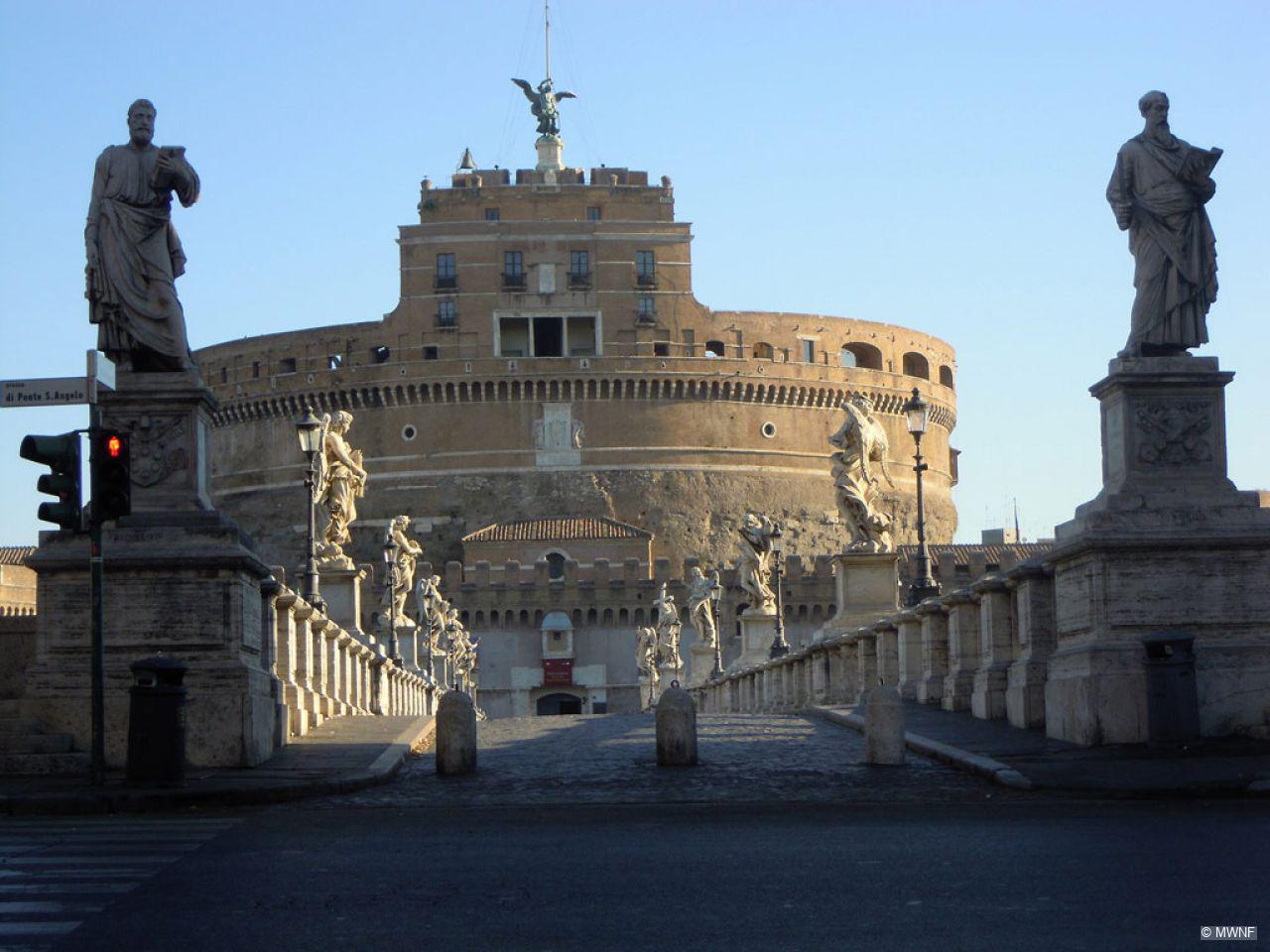

 Add to My Collection
Name of Monument:
Ponte Sant’Angelo
Location:
Rome, Italy
Date:
1667–71
Artists:
Gian Lorenzo Bernini; Lazzaro Morelli; Antonio Raggi; Cosimo Fancelli; Girolamo Lucenti; Giulio Cartari; Ercole Ferrata; Antonio Giorgetti; Domenico Guidi; Paolo Naldini
Denomination / Type of monument:
Bridge
Patron(s):
Clement IX Rospigliosi
History:
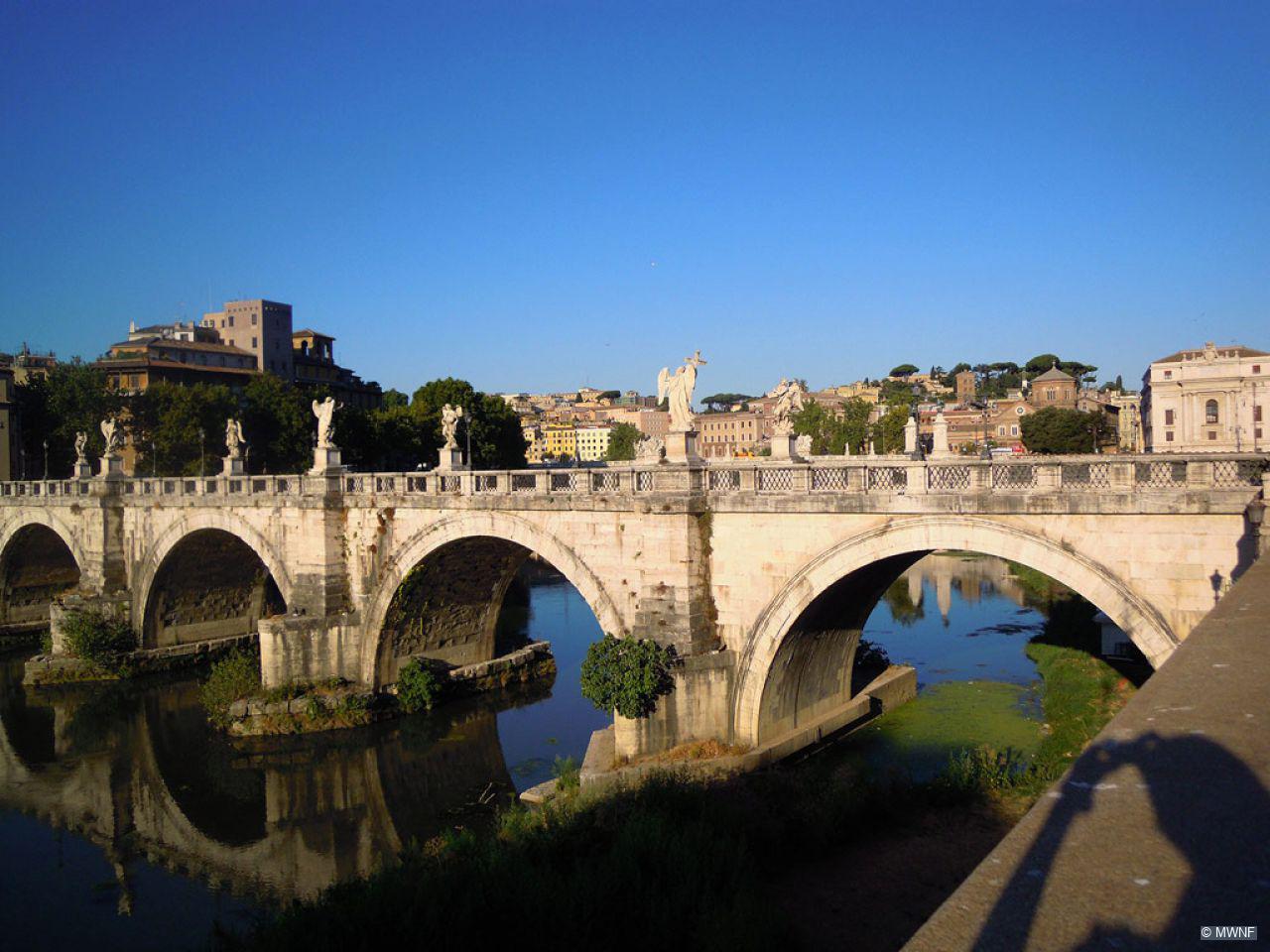
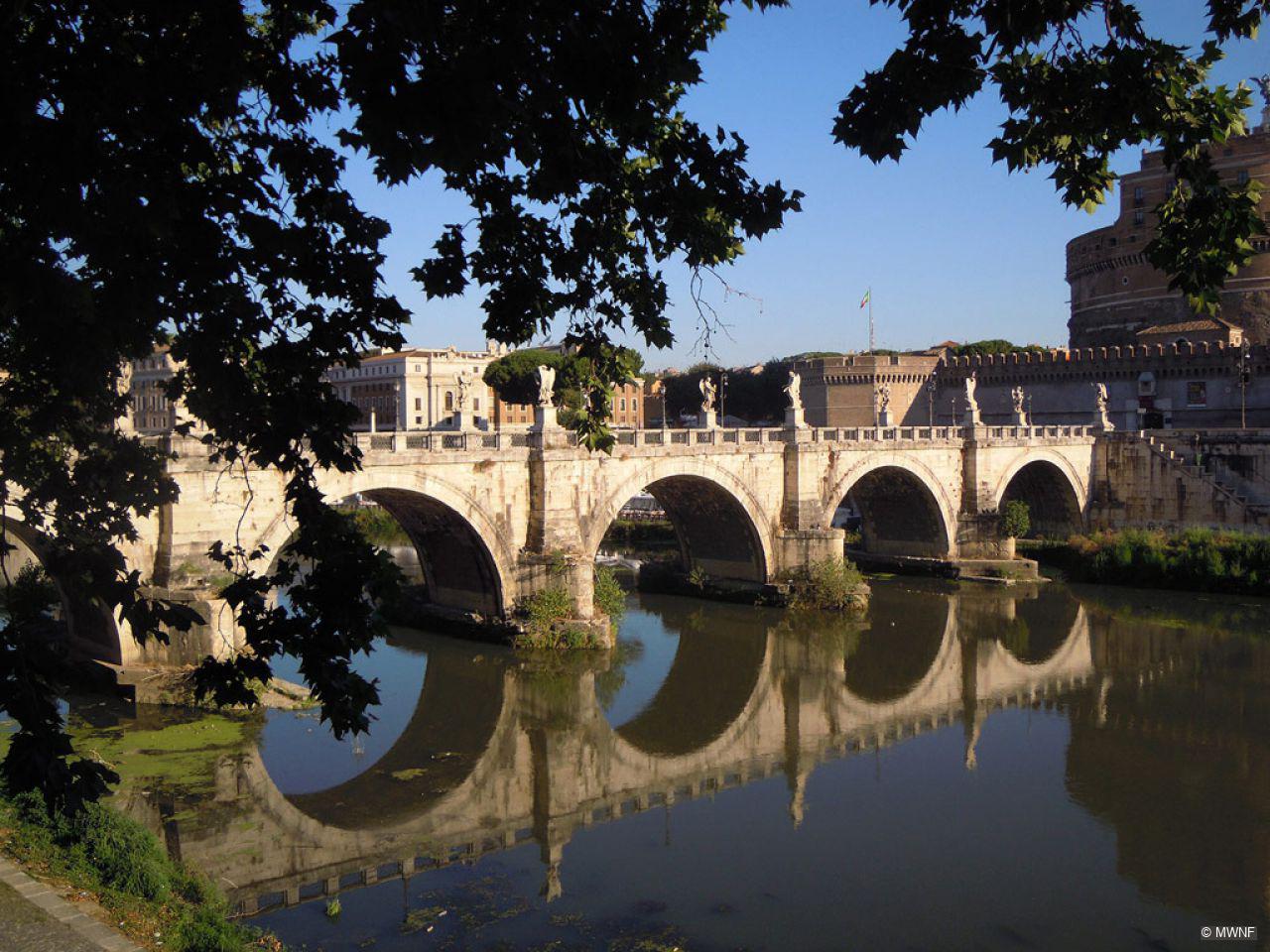
The ancient Aelian Bridge was built by Hadrian in the 2nd century AD to connect the ancient Campus Martius with his mausoleum. It underwent structural changes under Alexander VI (late 15th century) and was decorated to celebrate the triumphal procession of Charles V (1536). On that occasion Lorenzetto and Raffaello da Montelupo had created stucco statues of patriarchs and evangelists. It is very likely that, for the realization of his own project for the bridge, Bernini had gathered information, through prints, about the older decorative apparatus.
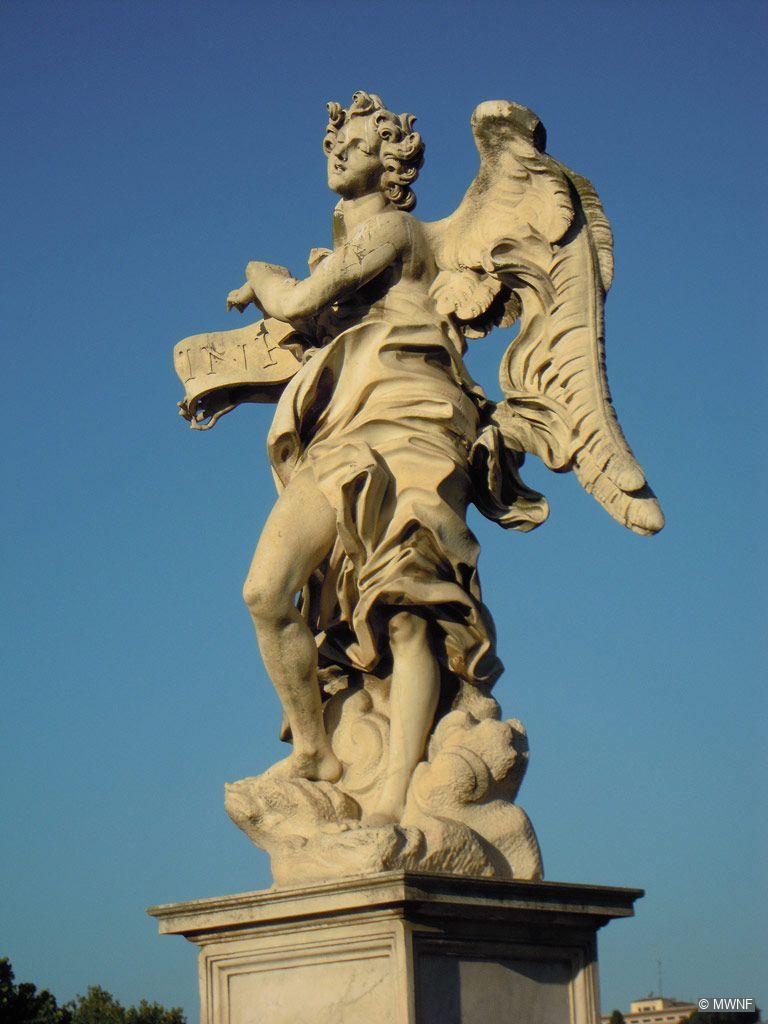
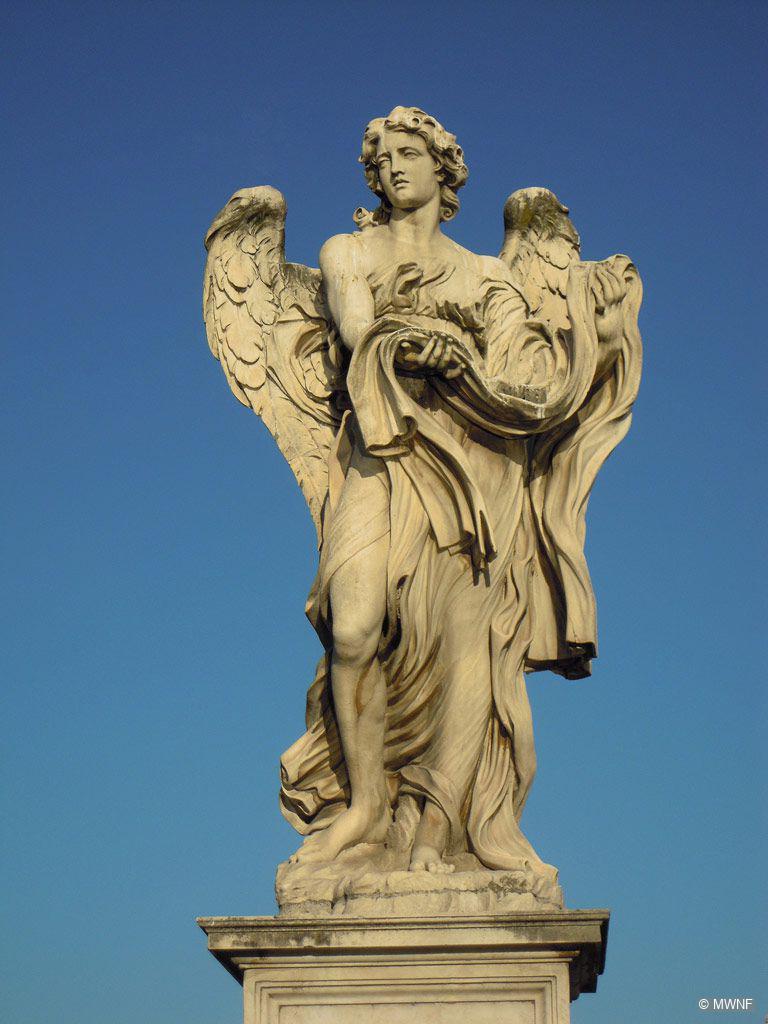
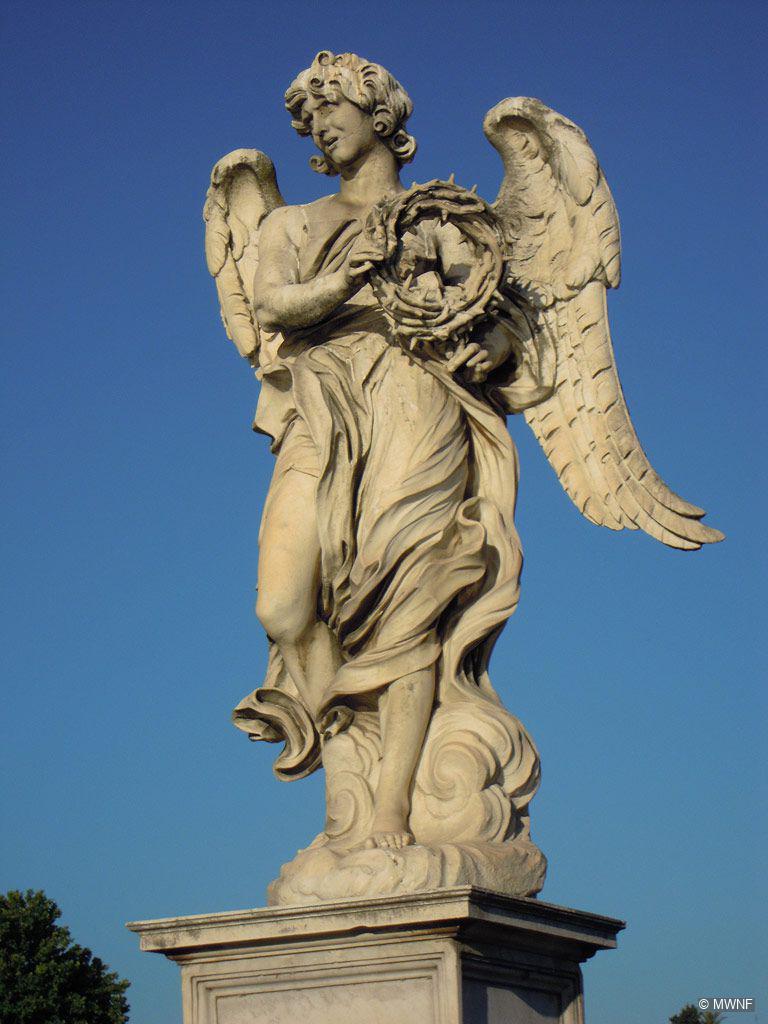
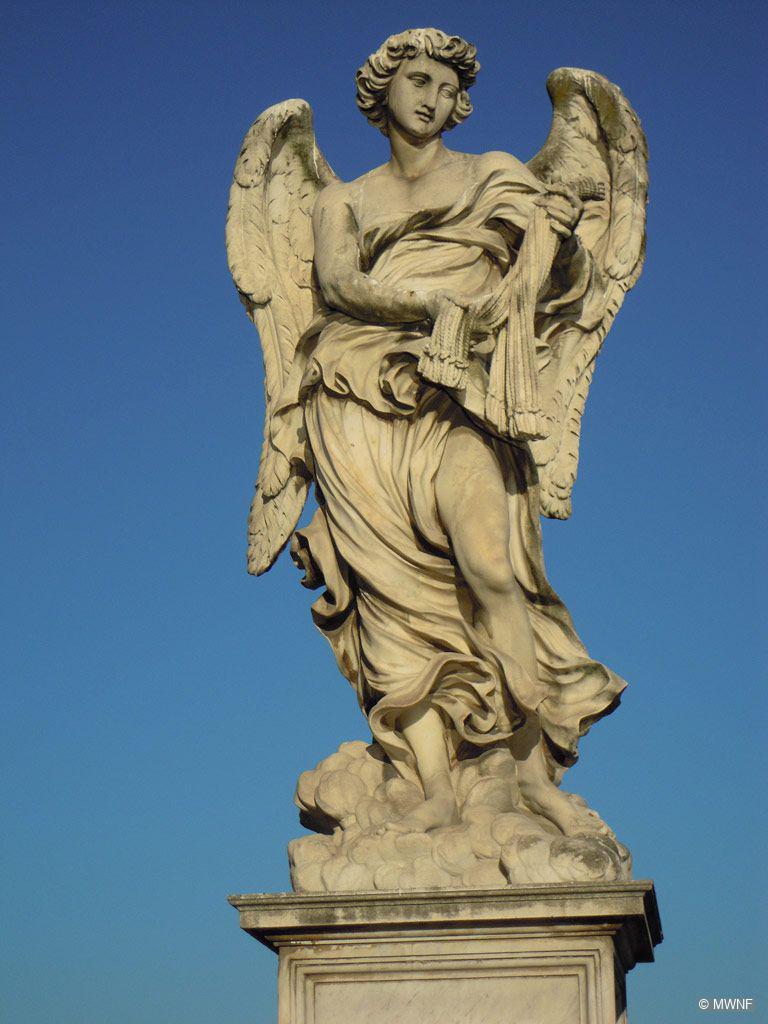
The project to redecorate the bridge was resumed in 1669 by Pope Clement IX Rospigliosi, who commissioned Bernini to repair the structure, to enlarge it with an arch and to decorate it with a double row of angels bearing the symbols of the Passion of Christ, to be placed on the parapets. To ensure a degree of uniformity, Bernini provided a series of terracotta drawings and models to his collaborators, reserving for himself the execution of the Angel with the Crown of Thorns and the Angel with the Subscription. Clement IX, who saw the two sculptures in the artist’s studio, was deeply impressed and had copies made for the bridge, while donating the originals to Cardinal Rospigliosi for his palace. They remained there until 1729, when they were transferred to S. Andrea delle Fratte, Bernini’s parish church. Paolo Naldini made the copy of the Angel with the Crown of Thorns while Giulio Cartari (but according to other sources it was actually Bernini himself) that of the Angel with the Subscription.
Description:
At the time of Bernini's interventions, the statue of St. Peter (by Lorenzo Lotti, called Lorenzetto) and that of St. Paul (by Paolo Romano) were already there, guarding the bridge towards the southern side. Coming from Campo Marzio, the beholder first encounters the Angel with the Column, by Antonio Raggi, to symbolize the Flagellation as the beginning of the Passion of Christ, while at the end of the path the Angel with the Lance of Longinus appears, sculpted by Domenico Guidi, the final event of the Crucifixion, when Longinus pierced the side of Christ. Between these two extremities there are, in order, the Angel with the Scourges by Lazzaro Morelli, the Angel with the Crown of Thorns by Paolo Naldini (copy of the Bernian original in Sant'Andrea delle Fratte), the Angel with the Holy Face by Cosimo Fancelli, the Angel with the Robe and the Dices by Paolo Naldini, the Angel with the Nails by Gerolamo Lucenti, the Angel with the Cross by Ercole Ferrata, the Angel with the Subscription by Giulio Cartari (or by Bernini himself) and the Angel with the Sponge by Antonio Giorgetti. The angels, located in accordance with the chronological sequence of the events of the Passion as indicated by the objects they carry, underline with great dramatic force the processional role the bridge had. The bridge in fact played as an obligatory point of passage between the secular city and the holy city of the Vatican, in line with contemporary Counter-Reformation dictates on devotional practices connected to meditation on the Passion of Christ. Such practices were strongly encouraged and supported by the Catholic Church in the 17th century. Bernini replaced the previous travertine parapets with elegant, grated balustrades so as to allow the view of the river. Placed between the transient elements of the water and the sky, the angels are also characterized by an accentuated dynamism. The frescoes by Anastasio Fontebuoni in the church of Santa Prisca (early 17th century) and those in the church of Santa Prassede (1594–96) have been identified as possible referents for Bernini's iconography: the church of Santa Prassede, moreover, supposedly hosted a relic of the column of the Flagellation, which Antonio Raggi faithfully reproduced for his Angel with the Column.
View Short DescriptionThe statues of the Angels on the bridge commissioned by pope Clement IX were designed by Bernini in 1669. A scenografical fix route created for pilgrims and travellers heading for Saint Peter’s.
How Monument was dated:
Literature of the time, archival documentation.
Selected bibliography:
Minozzi, M., “La decorazione di Ponte S. Angelo”, in Strinati, C. and Bernardini, M.G. (eds), Gian Lorenzo Bernini: regista del Barocco, Milan: Skira, 1999: 77–83.
Tolomeo M.G., Ponte Sant'Angelo, Rome: Fratelli Palombi, 1990.
Citation of this web page:
Pier Paolo Racioppi "Ponte Sant’Angelo" in "Discover Baroque Art", Museum With No Frontiers, 2026.
https://baroqueart.museumwnf.org/database_item.php?id=monument;BAR;it;Mon11;28;en
Prepared by: Pier Paolo RacioppiPier Paolo Racioppi
Laureato e specializzato in storia dell'arte presso l'Università di Roma “La Sapienza” sta conseguendo il dottorato di ricerca in Storia e conservazione dell'oggetto d'arte e d'architettura presso l'Università di Roma TRE. Ha svolto attività seminariali presso l'Istituto di Storia dell'Arte all'Università La Sapienza di Roma e attualmente è docente di storia dell'arte del Rinascimento presso la IES at Luiss (Roma).
Ha pubblicato diversi contributi sulla tutela artistica, il collezionismo e le accademie d'arte, ed ha collaborato al Dizionario Biografico degli Italiani dell'Enciclopedia Treccani.
Copyedited by: Janice MedinaJanice Medina
Janice Medina is an artist and educator based in Upstate New York. She studied interior design at Syracuse University and obtained her M.S. in Building Conservation in 2008 (Rensselaer Polytechnic Institute) and Master of Fine Arts in 2019 (University at Albany).
Janice is a former participant in the US/ICOMOS International Exchange Program and she has taught courses in the history of design and historic preservation. Her artwork is influenced by her experiences in historic preservation, as well as by building materials and the natural environment.
Janice has participated as a copy-editor with Museum With No Frontiers since 2019. In this role she has had the opportunity to work on a variety of projects including Discover Islamic Art, Discover Baroque Art and Discover Glass Art.
Translation by: Lavinia Amenduni
MWNF Working Number: IT1 28
RELATED CONTENT
On display in
Exhibition(s)
Discover Baroque Art
Devotion and Pilgrimage | Places of worship Reformation and Counter-Reformation | A persuasive language for religious art Ephemera, Festivals and Theatrical Representation | Festive sitesDownload
As PDF (including images) As Word (text only)