

 Back
Back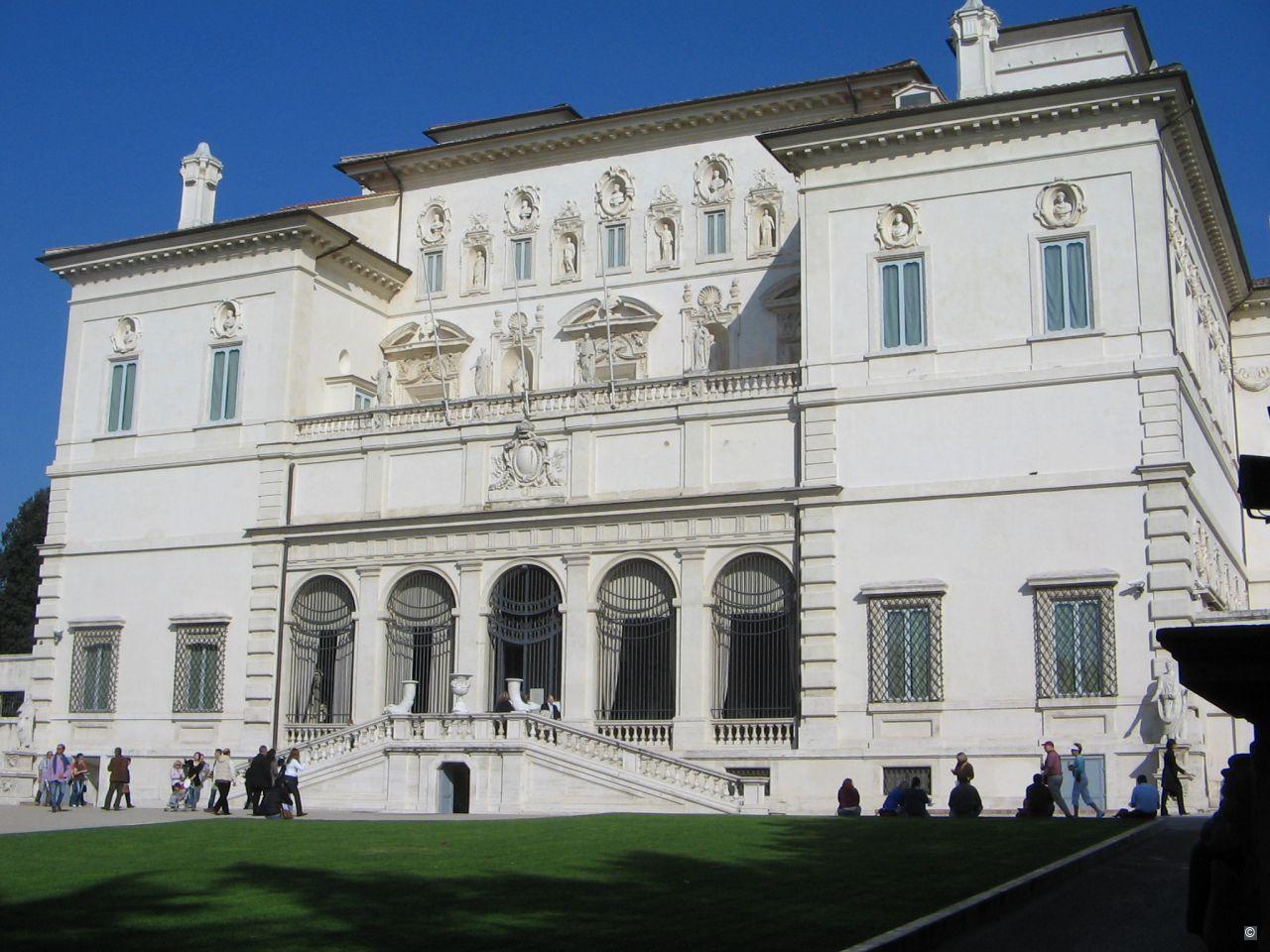
 Add to My Collection
Name of Monument:
Villa Borghese
Location:
Rome, Latium, Italy
Galleria Borghese
Piazzale Scipione Borghese, 5
00197 Roma
T : +39 06 8413979
E : sspsae-rm.borghese@beniculturali.it
Soprintendenza SPSAE e per il Polo Museale della Città di Roma (Responsible Institution)
Date:
1608-1613
Artists:
Flaminio Ponzio; Giovanni Vasanzio; Antonio and Mario Asprucci
Denomination / Type of monument:
Historic residence
Patron(s):
Cardinal Scipione Borghese
History:
In 1608 Cardinal Scipione Borghese’s ecclesiastic career, favoured by his uncle Pope Paul V, was on the rise. It was under this positive circumstance that he started the construction of the Casino Nobile, which still today hosts the famous Borghese collection of art and antiquities, in the vineyard outside Porta Pinciana, purchased by the Borghese family in 1580. Starting from 1606 (one year after the election of Paul V) the property had started to grow thanks to the purchase of neighbouring land and the donation of a vineyard by Tommaso d'Avalos d'Aquino.
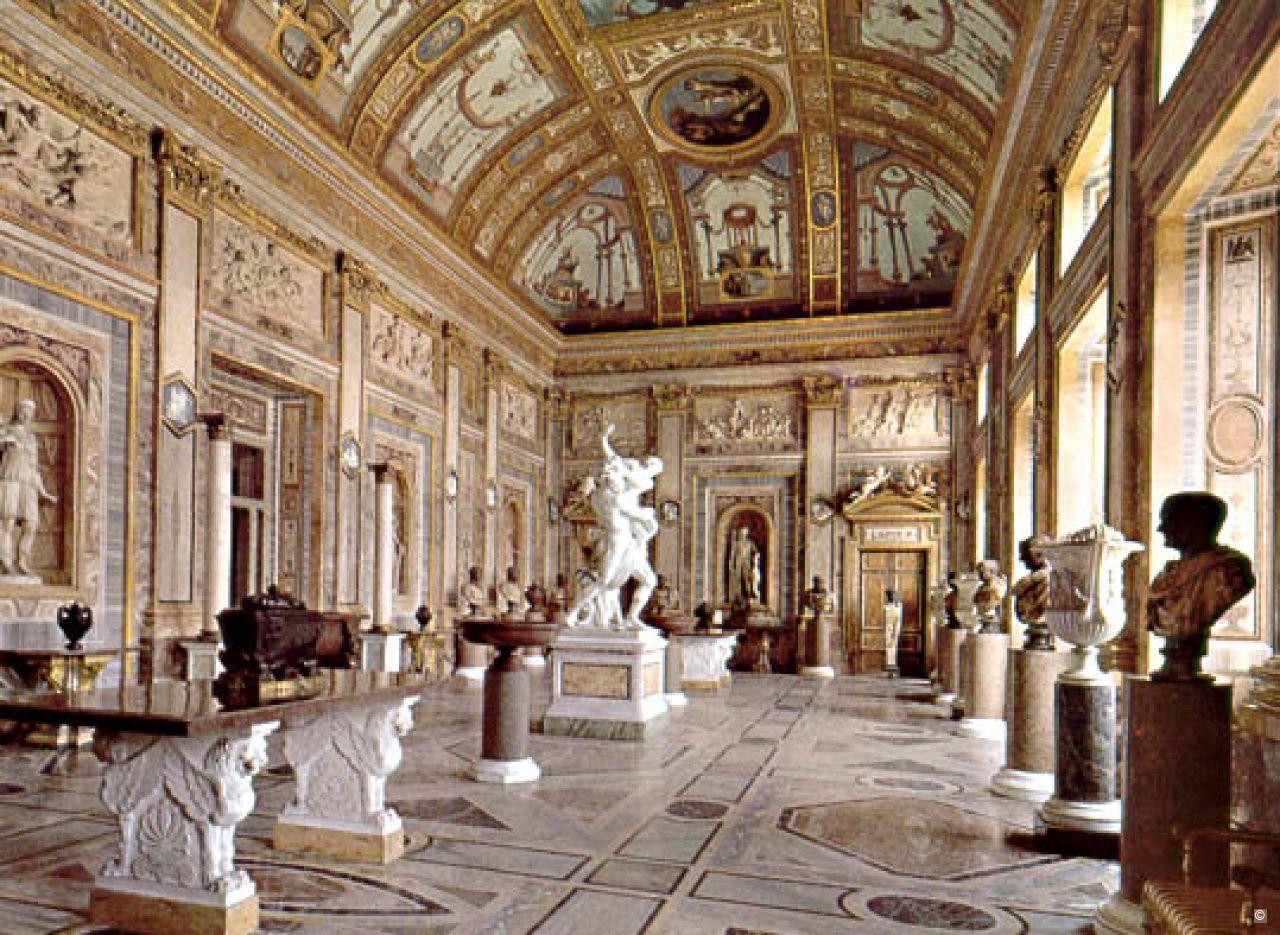
The Casino was intended to house a real "theatre of the Universe", a microcosm made of the innumerable naturalia and artificialia that Cardinal Scipione had keenly collected. In line with the encyclopaedic taste of the time, the collection included ancient sculptures, contemporary and Renaissance works of art (among these the famous sculptures of young Gian Lorenzo Bernini, Caravaggio’s paintings and Raphael's Deposition) as well as minerals, fossils, watches, lenses with the most extravagant shapes, and automata. The creation of an aviary and the grafting of exotic plants in the garden is also due to the cardinal’s scientific interest. In 1633, shortly before his death, Cardinal Scipione instituted the fideicommisum, which established the unity of the collection as a whole, forcing the heirs to preserve it intact over the centuries.
Description:
The building is inspired by the ancient suburban villas. From this model the villa also takes the whiteness of the external surfaces which used to be richly adorned with ancient statues and reliefs. In 1808 Napoleon, brother-in-law of the descendant of Scipione, Prince Camillo Borghese, forced Camillo to sell him over 300 pieces from the collection of antiquities to be allocated to the Musée Napoléon (now the Louvre). The architect of the Villa, Flaminio Ponzio, who was later replaced by the Flemish Giovanni Vasanzio (Jan van Santen), designed the facade of the villa with two bodies jutting out on the sides of the loggia, using as a model another famous Roman Renaissance suburban villa, the Farnesina by Baldassarre Peruzzi. The motif of the soaring turrets on the side wings in the back part of the building is taken from the Medici villa. The stairway with two parallel flights also has a precedent in Michelangelo’s stairway in the Senatorial Palace at the Capitoline Hill. The interior is divided in two levels: on the first floor one finds the reception hall, which solemnly welcomes the visitors as they enter from the loggia, and behind it a gallery parallel to the hall.
Upstairs, above the gallery, a loggia used to be found, opening onto the secret garden, frescoed by Lanfranco and then walled up at the end of the 18th century. The interior, together with the park of the villa, underwent radical renovation at the time of Prince Marcantonio Borghese IV who, starting from 1775 and until about 1790, commissioned the architect Antonio Asprucci to coordinate the decoration of vaults and walls with frescoes, mosaics, and marble and stucco reliefs, an enterprise which saw the contribution of many renowned Italian and foreign artists. It was in that period that the art collection underwent a more organic arrangement by adopting modern museographic principles aimed at maximizing the beholder’s appreciation of the works.
The Casino Pinciano – now Museo and Galleria Borghese –dating to the years 1608-1613 was built by Flaminio Ponzio, pope’s favourite architect. It was completed after Ponzio’s death in 1613-15 by Giovanni Vasanzio, his assistant. Between 1775 and 1790 prince Marcantonio IV Borghese ordered architect Antonio Asprucci to renovate the interior of the casino: Asprucci coordinated all the works executed by his workshop, including paintings, stucco works, mosaics etc.
How Monument was dated:
Archival documentation.
Selected bibliography:
Moreno, P.- Stefani, C., Galleria Borghese, Milan: Touring Club, 2000.
Rolfi, S., “Villa Borghese”, I principi della chiesa, Milan: Edizioni Charta, 1998: 144–146.
Citation of this web page:
Pier Paolo Racioppi "Villa Borghese" in "Discover Baroque Art", Museum With No Frontiers, 2026.
https://baroqueart.museumwnf.org/database_item.php?id=monument;BAR;it;Mon11;35;en
Prepared by: Pier Paolo RacioppiPier Paolo Racioppi
Laureato e specializzato in storia dell'arte presso l'Università di Roma “La Sapienza” sta conseguendo il dottorato di ricerca in Storia e conservazione dell'oggetto d'arte e d'architettura presso l'Università di Roma TRE. Ha svolto attività seminariali presso l'Istituto di Storia dell'Arte all'Università La Sapienza di Roma e attualmente è docente di storia dell'arte del Rinascimento presso la IES at Luiss (Roma).
Ha pubblicato diversi contributi sulla tutela artistica, il collezionismo e le accademie d'arte, ed ha collaborato al Dizionario Biografico degli Italiani dell'Enciclopedia Treccani.
Copyedited by: Janice MedinaJanice Medina
Janice Medina is an artist and educator based in Upstate New York. She studied interior design at Syracuse University and obtained her M.S. in Building Conservation in 2008 (Rensselaer Polytechnic Institute) and Master of Fine Arts in 2019 (University at Albany).
Janice is a former participant in the US/ICOMOS International Exchange Program and she has taught courses in the history of design and historic preservation. Her artwork is influenced by her experiences in historic preservation, as well as by building materials and the natural environment.
Janice has participated as a copy-editor with Museum With No Frontiers since 2019. In this role she has had the opportunity to work on a variety of projects including Discover Islamic Art, Discover Baroque Art and Discover Glass Art.
Translation by: Lavinia Amenduni
MWNF Working Number: IT1 36