

 Back
Back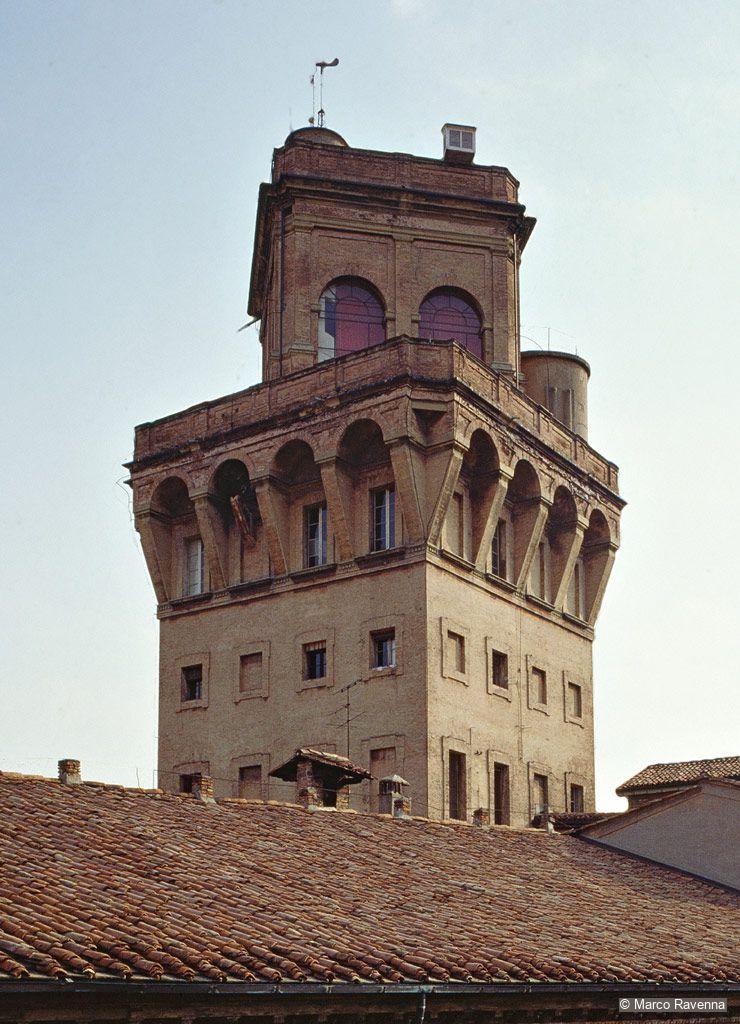
 Add to My Collection
Name of Monument:
Palazzo Poggi’s Observatory
Also known as:
La Specola
Location:
Bologna, Emilia-Romagna, Italy
Via Zamboni, 33
Bologna
T : +39 051 2099398
F : +39 051 2099402
E : museopoggiorganizzazione@unibo.it
Museo della Specola (University of Bologna) (Responsible Institution)
Date:
1712–1725
Artists:
Giuseppe Antonio Torri; Carlo Francesco Dotti
Denomination / Type of monument:
Astronomical Observatory
Patron(s):
Istituto delle Scienze (Institute of the Sciences and Arts)
History:
The Observatory was created as part of the Institute of Sciences and Arts. The Institute, due to the farsighted outlook of its founder, Luigi Ferdinando Marsili, was composed of two academies. The first was devoted to scientific studies, while the second was intended for the teaching of the arts. At the beginning of the eighteenth century it became necessary to find an appropriate building to house the Institute. Among the requirements for a suitable building was the stability of the structure in order to erect an Observatory on the roof. The Academy purchased the sixteenth century palace owned by the cardinal Giovanni Poggi. The Observatory was started in 1712 under the direction of the architect Giovanni Battista Torri. After his death, the following year, Carlo Francesco Dotti, architect of the Observatory, modified the plan. The work was finished in 1725.
Description:
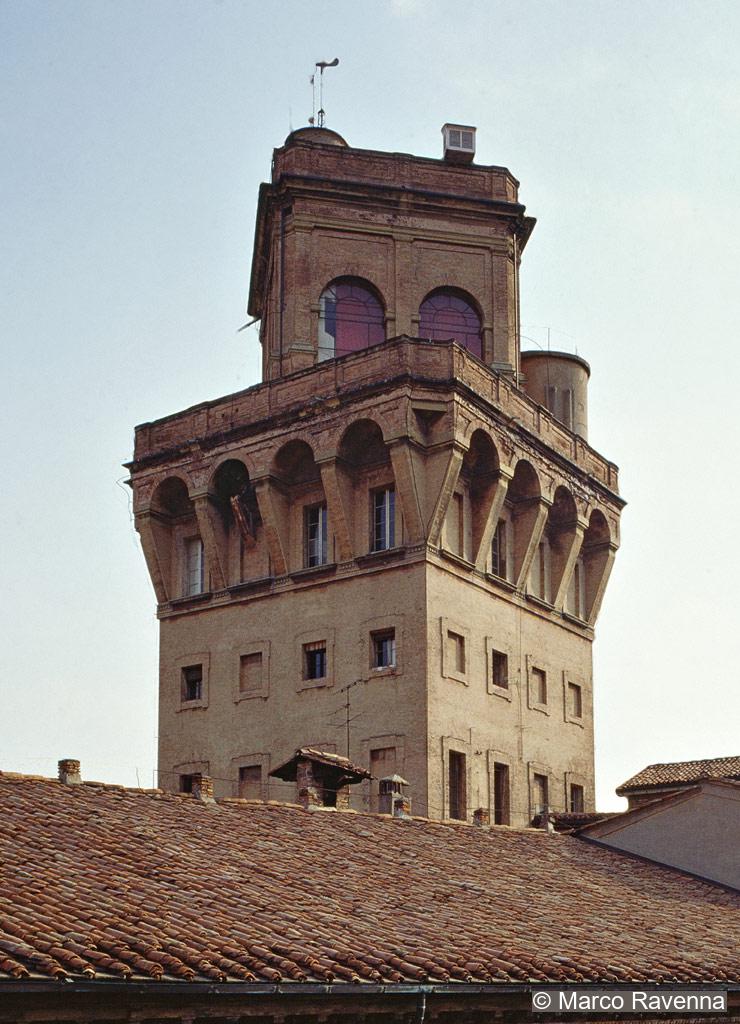
Built to easily view the entire night sky, the Observatory has an elevated and massive structure and is shaped like a tower. The upper part is located over a large terrace which is jutting out. On top, stands a large chamber with wide windows, rotated 90˚ from the axis of the tower below.
It is known that the Observatory was modified by the architects with the help of many experts including learned scientists working at the Institute, such as Eustachio Manfredi.
Together with the anatomical theatre in the Palace of the Archiginnasio, the Observatory is the most important evidence of Bolognese scientific culture and activity during baroque age. Both were connected with places of learning: while the first was part of the so-called ‘studio’, the famous, local University, the second was created as part of the Eighteenth century Institute of Sciences and Arts, a very modern institution where, according with the project of the founder, the count and general Luigi Ferdinando Marsili, scientists and artists should have collaborated in researching and teaching.
How Monument was dated:
Historical documents.
Special features
The Observatory
Palazzo Poggi, Bologna
1712–1725
Giuseppe Antonio Torri; Carlo Francesco Dotti
According to Anna Maria Matteucci, when Carlo Francesco Dotti was appointed to the Institute – where he also designed the Library – he modified the plan of his predecessor, Giuseppe Antonio Torri. In particular, consistent with his architectural style, he simplified the baroque motifs giving the tower a severe, neo medieval look.
Selected bibliography:
Matteucci, A. M., Carlo Francesco Dotti e l'architettura bolognese del Settecento, Bologna, 1969, pp. 100-101.
Lenzi, D., “Le trasformazioni settecentesche”, Palazzo Poggi: da dimora aristocratica a sede dell'Università di Bologna (ed. A. Ottani Cavina), Bologna, 1988, pp. 58-78.
Citation of this web page:
Silvia Medde "Palazzo Poggi’s Observatory" in "Discover Baroque Art", Museum With No Frontiers, 2026.
https://baroqueart.museumwnf.org/database_item.php?id=monument;BAR;it;Mon12;22;en
Prepared by: Silvia MeddeSilvia Medde
SURNAME: Medde
NAME: Silvia
AFFILIATION: Universita di Bologna
TITLE: Art historian
CV: Graduated and specialized in History of art, Ph D, Post doctorate, two year post doctorate scholarship (Università degli studi di Bologna). She is a specialist of eighteenth and ninenteenth-century Bolognese art and architecture.
Translation by: Silvia MeddeSilvia Medde
SURNAME: Medde
NAME: Silvia
AFFILIATION: Universita di Bologna
TITLE: Art historian
CV: Graduated and specialized in History of art, Ph D, Post doctorate, two year post doctorate scholarship (Università degli studi di Bologna). She is a specialist of eighteenth and ninenteenth-century Bolognese art and architecture.
Translation copyedited by: Lisa Kelman
MWNF Working Number: IT2 26