

 Back
Back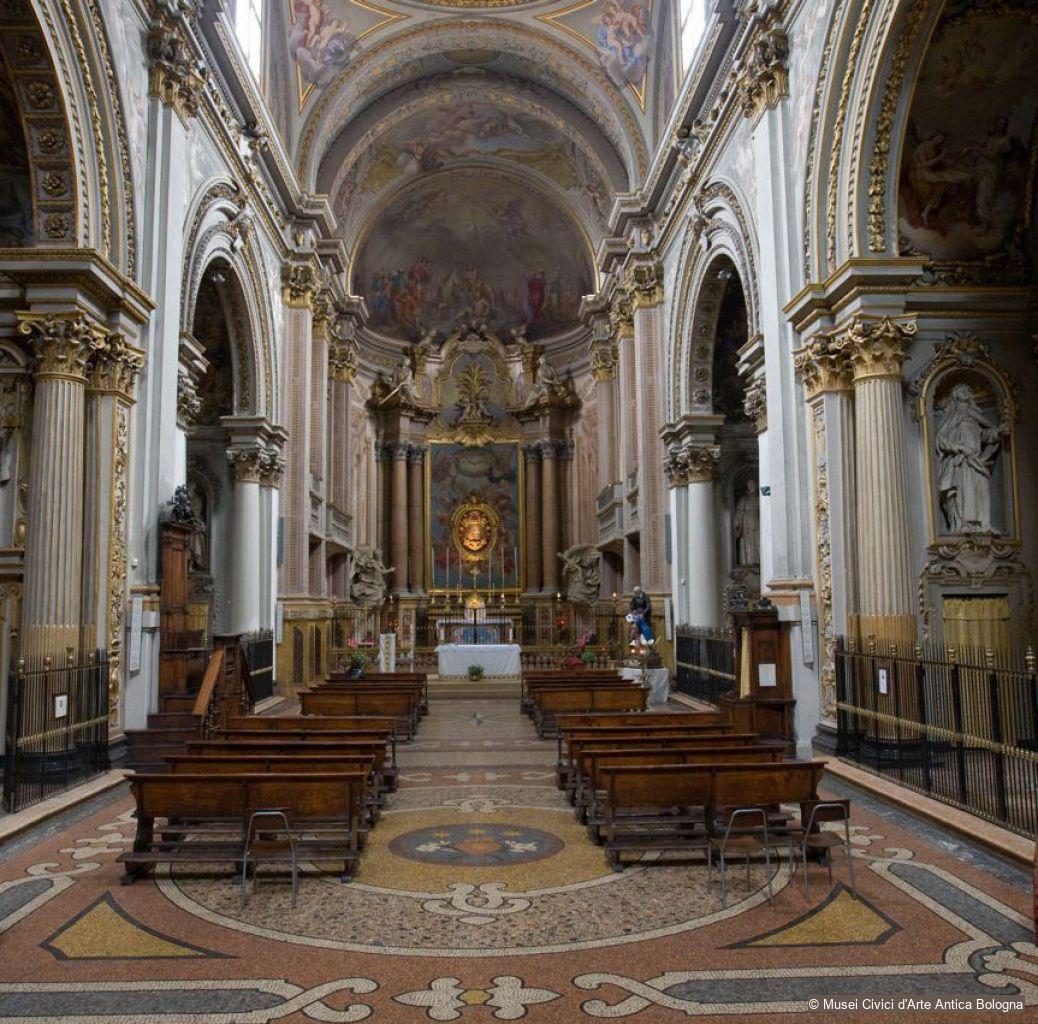
 Add to My Collection
Name of Monument:
Santa Maria di Galliera
Also known as:
Filippini (Church of the Oratorian Fathers)
Location:
Bologna, Emilia-Romagna, Italy
Via Manzoni, 5
Bologna
T : +39 051 230682
F : +39 051 232152
E : bologna@oratoriosanfilippo.org
Oratorian Fathers (Responsible Institution)
Date:
In the fourteenth-century the first church dedicated to the Holy Spirit was built on this site, in the seventeenth-century the church was remodelled in the present form by Giovanni Battista Torri
Artists:
Architects: Giovanni Battista Torri, Francesco Galli Bibiena (1659–1739); sculptors: Giuseppe Maria Mazza (1653–1741), Silvestro Giannotti (1680–1750), Angelo Gabriello Piò (1690–1770); painters: Giuseppe Rolli (1645–1727), Giuseppe Marchesi known as Sansone (1699–17)
Denomination / Type of monument:
Religious architecture (church)
Patron(s):
Oratorian Fathers
History:
The church was originally built in the fourteenth-century and dedicated to the Holy Spirit. It became an important place of worship of the Madonna, today displayed on the high altar but originally painted on a wall outside the church. In the fifteenth-century the present sandstone façade was added in the Renaissance style. The interior was refurbished in the seventeenth-century by the architect Giovanni Battista Monti for the Oratorian Fathers. He was invited to Bologna and in charge of the church following the will of Pope Gregory XV Ludovisi (1621). The fresco decorations of vaults and walls were added in 1730 ca. by the Bolognese painter Giuseppe Marchesi known as Sansone. The side chapels are home to several famous pictures by Bolognese masters (Albani, Guercino, Franceschini) framed by beautiful stucco or gilded wooden frames. In 1806 the Congregation of the Oratory was suppressed following Napoleonic dispositions and the church was temporarily closed. Today the church is owned and maintained by the Oratorian Fathers.
Description:
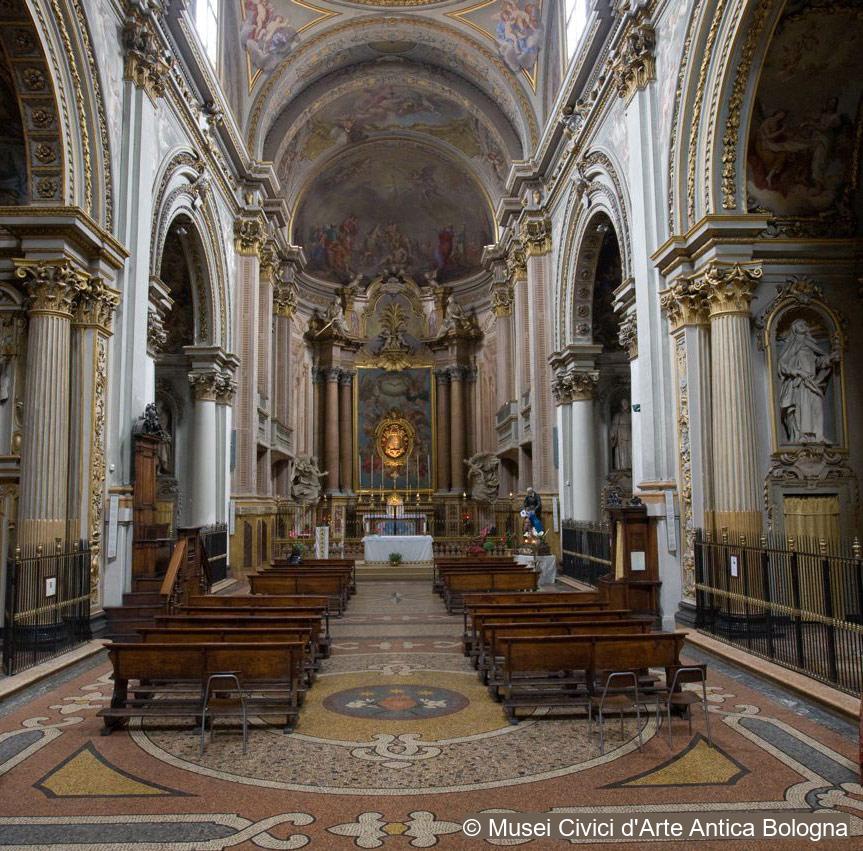
The church shows a single nave plan with side chapels, typical of Counterreformation churches. The interior space was intended as a theatre, devoted to preaching, and the attention of people had to be focused on the high altar as on a stage. The interior is a perfect blend of different arts and techniques. The colours of the frescoes harmonise perfectly with the white and gold stucco decorations and with the soft light coming from the windows.
View Short DescriptionThis church is a classical example of Bolognese High Baroque. The interior with single nave and side chapels emphases the counterreformation use of churches as places especially dedicated to preaching. The pictorial decoration showing three episodes of the life of St. Philip Neri, founder of the Oratorian congregation, covers the ceilings and the apse, conveying an impression of lively movement. The high altar is typically baroque, with its elegant curves and its open shape, embracing the visitor. It is a good example of the combination of different techniques (sculpture, architectural and figural painting) and of the employ of different materials (stucco, painted and gilded wood, fresco, and oil on canvas).
How Monument was dated:
Bibliography and historical documents
Special features
Interior of the church
Santa Maria di Galliera
Frescoes: c. 1730
Monti, Marchesi known as Sansone
The interior is a perfect blend of different arts and techniques. The colours of the frescoes harmonise perfectly with the white and gold stucco decorations and with the soft light coming from the windows.
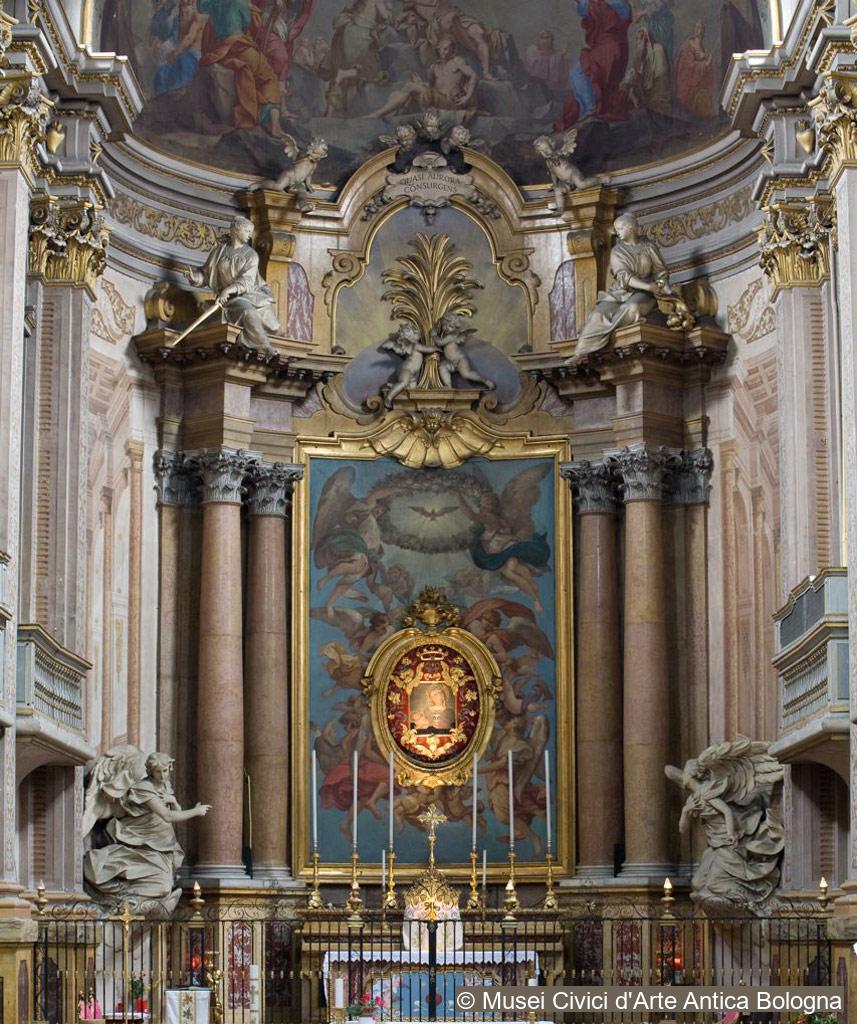
High altar
Santa Maria di Galliera
c. 1739
Francesco Bibiena, Giuseppe Maria Mazza, Giuseppe Rolli, Angelo Gabriello Piò, Silvestro Giannotti
This altar is typically baroque with its elegant curved lines and its open shape, embracing the space. It is a good example of different artistic techniques (sculpture, architectural painting, architecture and figural painting) and of different materials (stucco, painted and gilded wood, fresco, and oil on canvas). It is perfectly in harmony with the space of the church blending the frescoes on the ceiling, the elegant balustrade, the organs and side pillars. This imposing altar frames a fresco fragment of the Virgin with Child, worshipped in the church of Santa Maria di Galliera since the fifteenth-century. The church was completely remodelled in the eighteenth-century and the main altar was rebuilt twice. Giuseppe Maria Mazza built the first version between 1691, when the Filippines fathers inherited a large sum of money in order to refurbish the main chapel, and 1706, when the decoration is mentioned in a guidebook for the first time. This altar, made of stucco, looked like great curtain suspended to the wall and held by two angels and some putti. Before 1739 the decoration was destroyed in order to build a new altar which was designed by Francesco Bibiena. This altar was decorated with two wooden statues of Justice and Peace, carved by the Tuscan Silvestro Giannotti, and two putti, moulded by Angelo Gabriello Piò. The central part of the altar is decorated with a picture by Giuseppe Rolli of angels carrying the medieval Madonna and Child, framed by a rich baroque carving.
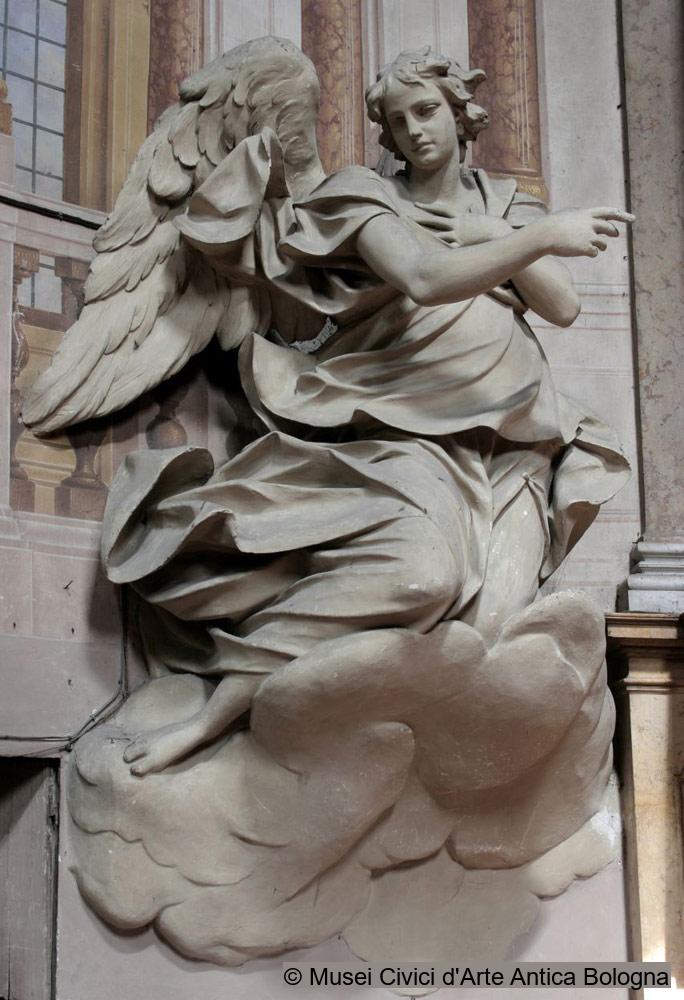
Angel pointing to the Virgin with Child
Santa Maria di Galliera
1739 ante
Giuseppe Maria Mazza
The beautiful side angels made by Mazza for the former altar were reused in this new version with the help of the sculptor himself.
Selected bibliography:
Fleming, J., “Giuseppe Mazza”, The Connoisseur, November 1961, p. 114.
Riccomini, E., “Sculture del Settecento a Bologna: Angelo Piò ed altri problemi”, Arte Antica e Moderna, 21, 1963, p. 54.
Riccomini, E., Scultura Bolognese del Settecento, (exhibition catalogue), Bologna, 1965, p. 49.
Matteucci, A. M., Carlo Francesco Dotti e l'architettura bolognese del Settecento, Bologna, 1969, p. 59, p. 61.
Riccomini, E., Ordine e Vaghezza, Bologna, 1972, pp. 101-102.
Additional Copyright Information:
Copyright images: Comune di Bologna, Musei Civici d'Arte Antica.
Citation of this web page:
Antonella Mampieri "Santa Maria di Galliera" in "Discover Baroque Art", Museum With No Frontiers, 2026.
https://baroqueart.museumwnf.org/database_item.php?id=monument;BAR;it;Mon12;33;en
Prepared by: Antonella MampieriAntonella Mampieri
SURNAME: Mampieri
NAME: Antonella
AFFILIATION: Musei Civici d’Arte Antica, Bologna
TITLE: Art Hitorian
CV:
Graduated and specialised at the University of Bologna. She is a specialist in Bolognese late Baroque art, namely sculpture. Among other subjects she has been studying nineteenth-century funerary art in the Bologna monumental cemetery, la Certosa.
Translation by: Antonella MampieriAntonella Mampieri
SURNAME: Mampieri
NAME: Antonella
AFFILIATION: Musei Civici d’Arte Antica, Bologna
TITLE: Art Hitorian
CV:
Graduated and specialised at the University of Bologna. She is a specialist in Bolognese late Baroque art, namely sculpture. Among other subjects she has been studying nineteenth-century funerary art in the Bologna monumental cemetery, la Certosa.
Translation copyedited by: Lisa Kelman
MWNF Working Number: IT2 38