

 Back
Back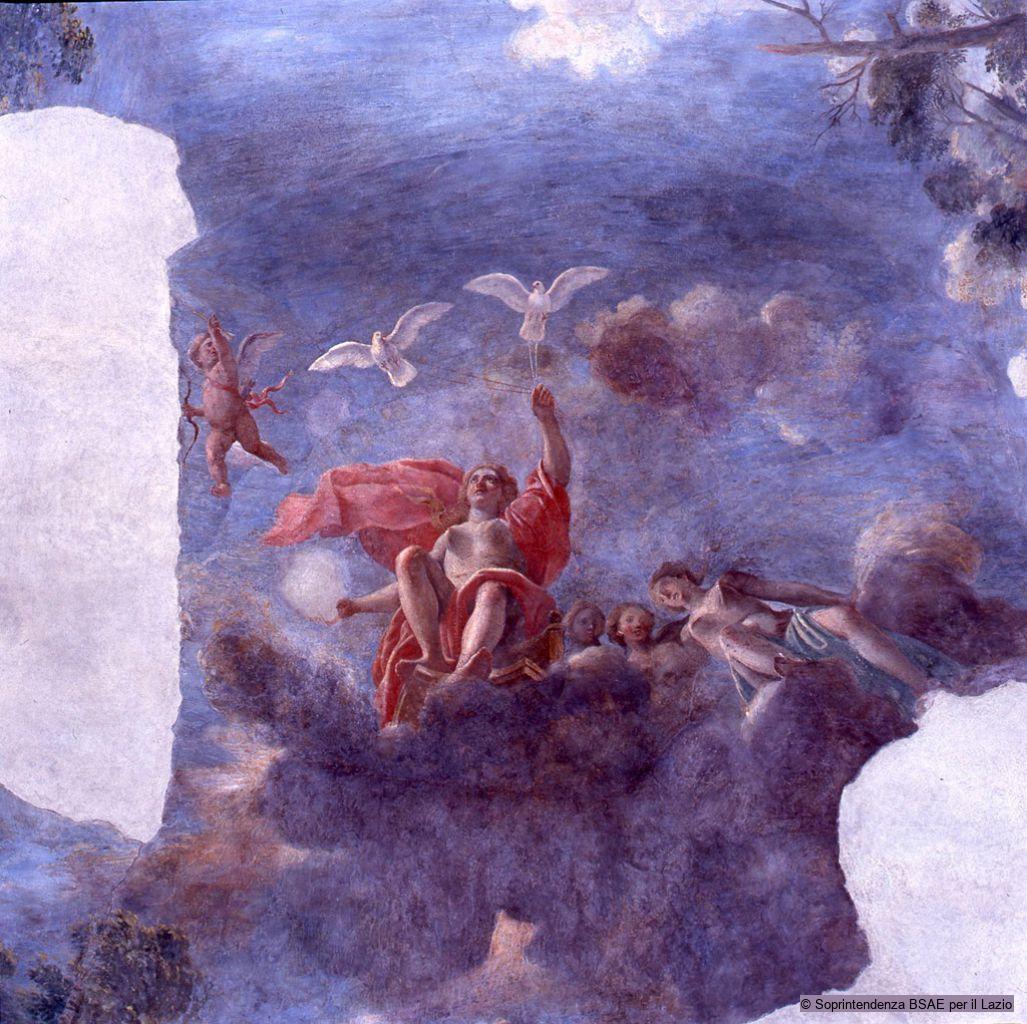

 Add to My Collection
Name of Monument:
Palazzo Doria Pamphili, frescoes
Also known as:
Palazzo Doria Pamphilj
Location:
Valmontone, Rome, Latium, Italy
Piazza Costituente
Valmontone
Rome
T : +39 06 89 68 69 18
F : +39 06 89 68 69 18
E : info@palazzodoriavalmontone.it
Valmontone Town Council (Responsible Institution)
Date:
1657–61
Artists:
Guillaume Courtois (Cortese) known as Borgognone (1628–79) of French origin, in Rome around 1640, pupil of Pietro da Cortona; Francesco Cozza (1605–82), from Calabria, in Rome from 1631; Gaspard Dughet (1615–75), of a French father and brother-in-law of Nicolas Poussin, landscape artist who often worked with Courtois; Pier Francesco Mola (1612–66), born in Ticino but in Rome since childhood; Mattia Preti (1613–99), from Calabria, in Rome from the 1630s, active in Valmontone in 1661 just before leaving for Malta, where he died; Giambattista Tassi, the least well-known, between 1657 and 1681
Denomination / Type of monument:
Secular architecture, noble palace
Patron(s):
Camillo Pamphili (1622, Naples – 1666, Rome), cardinal and nephew of Pope Innocent X, son of Olimpia Maidalchini, put aside the purple cloth to marry Olimpia Aldobrandini
History:
The Valmontone estate was acquired by Camillo Pamphili, nephew of Pope Innocent X Pamphili (1644–55), in 1651, with the aim of undertaking a grand restructuring project for the entire village (the Pamphiljan Town) which was to be centred round the palace, the church and the square. The Pamphili family, from a small Umbrian patriciate, had lived in Rome since the 15th century and found recognition of its social ascent in particular with the appointment to the papacy of Giovanni Battista as Innocent X. A series of significant urban development projects, which can be dated to the mid-17th century, still characterise both the city of Rome and the surrounding area: including the palace in Piazza Navona, the palace on the Corso acquired through the marriage of Camillo and Olimpia, the Casino del Bel Respiro in the out-of-town villa San Pancrazio, and the ambitious restructuring program for the village of Valmontone.
Description:
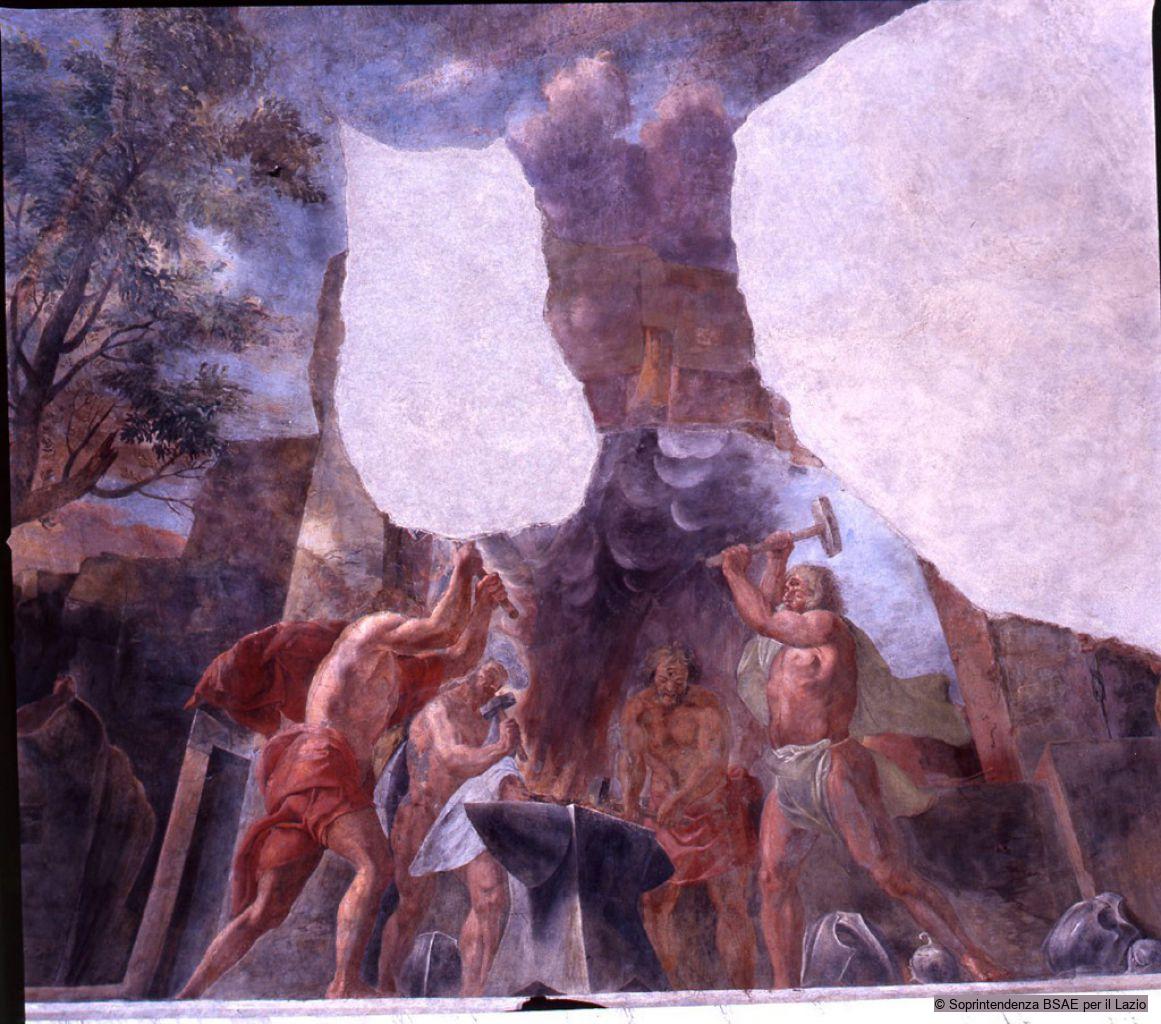
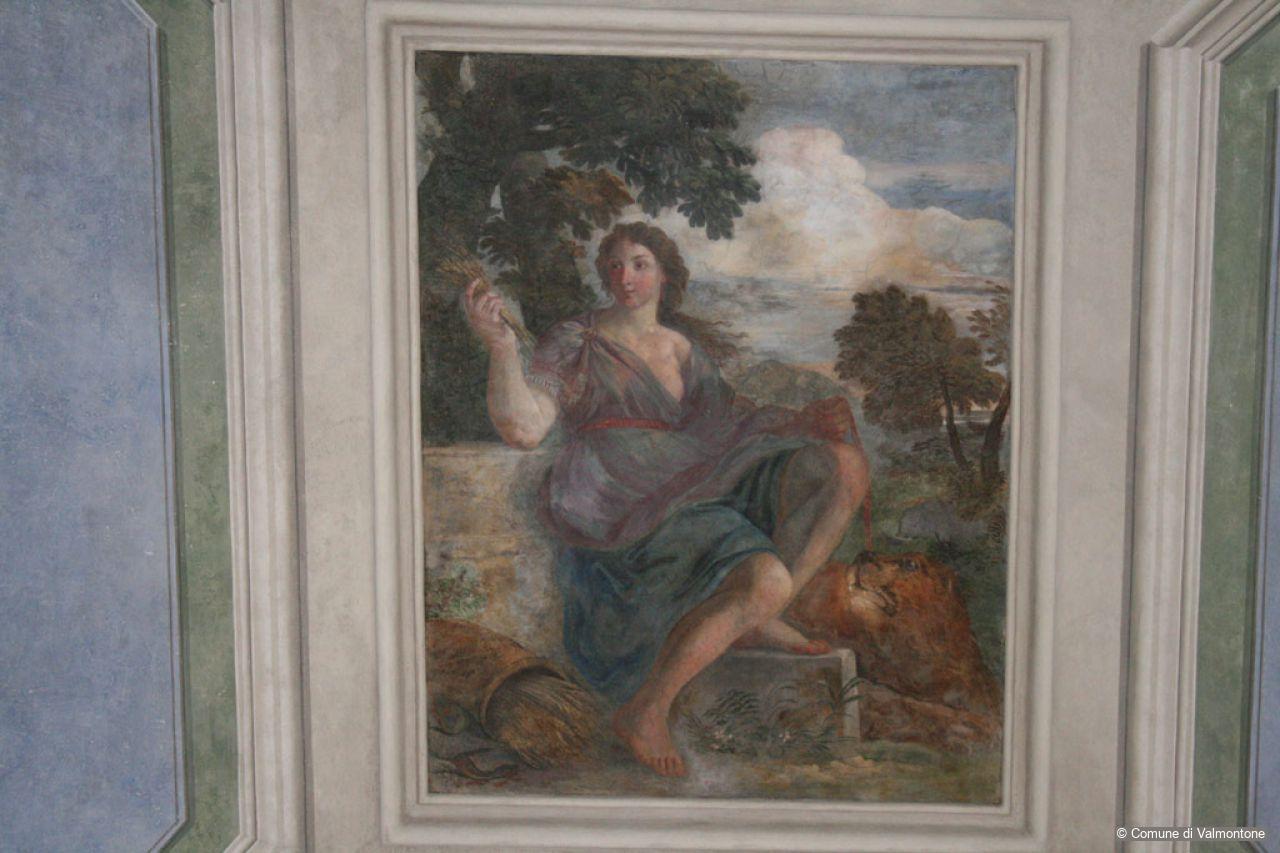
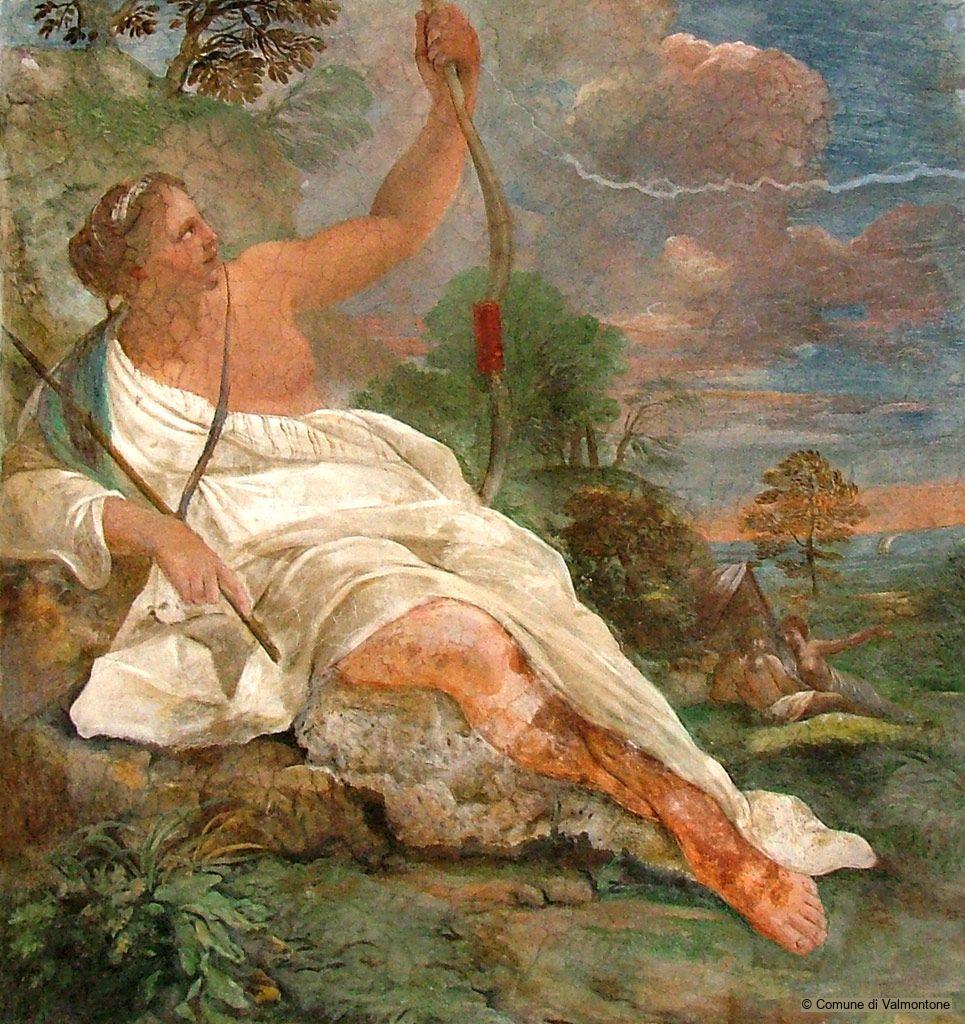
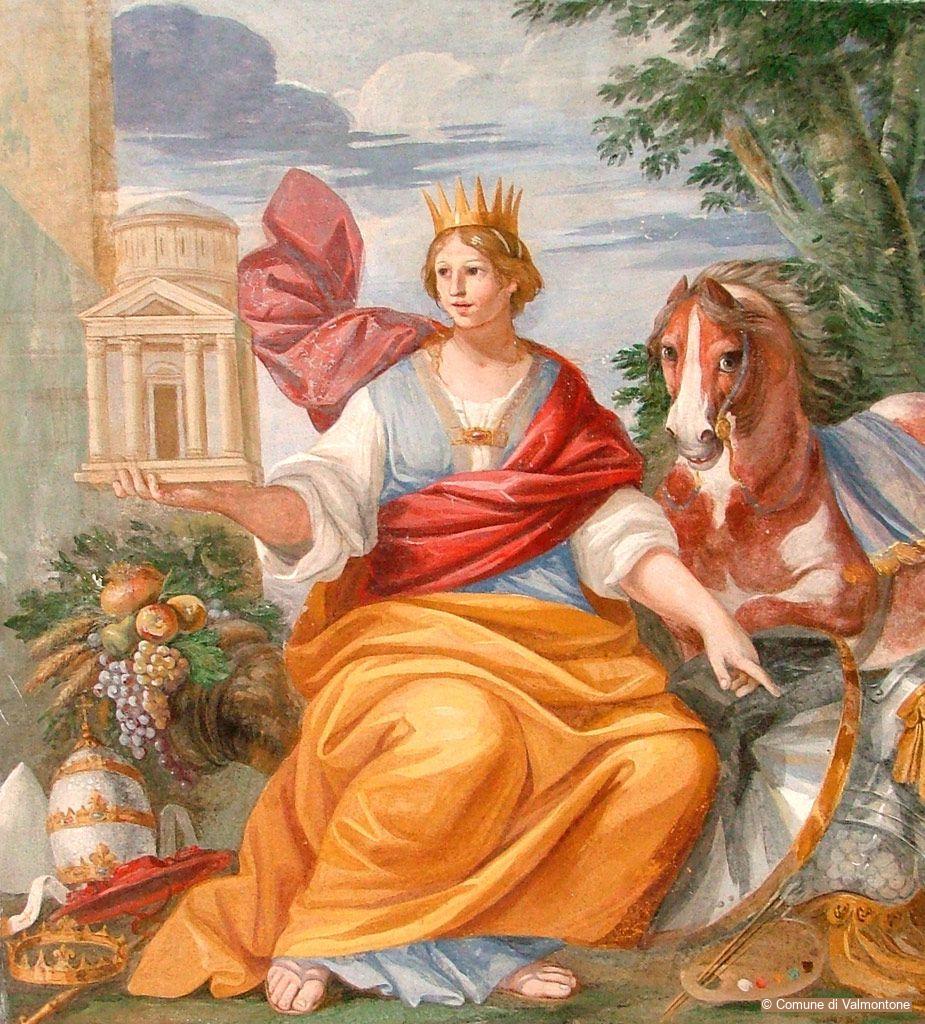
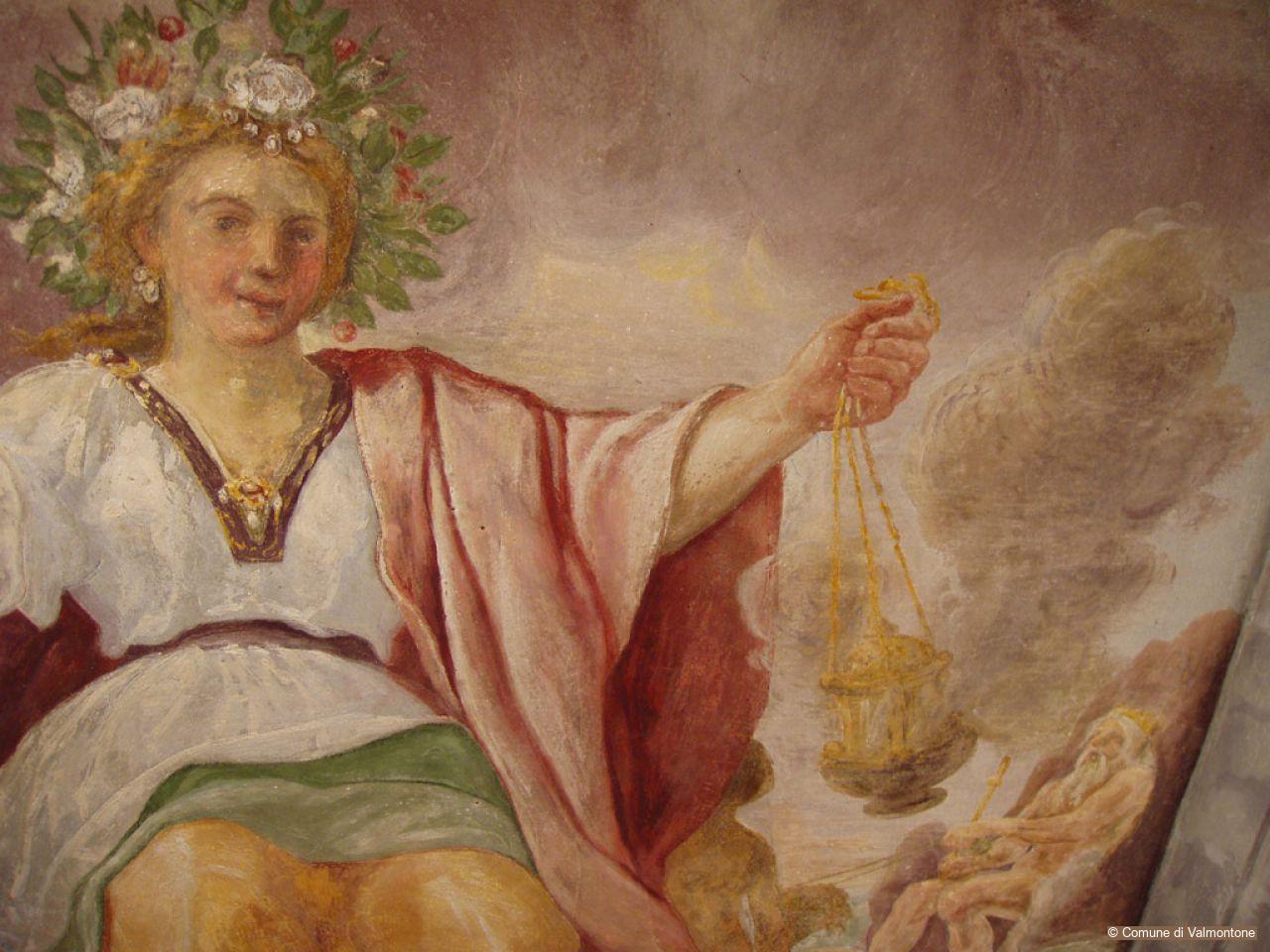
Following acquisition of the estate, the majestic restructuring of the palace began immediately, and by 1657, the extensive decorative scheme for the rooms on the main floor was in progress. Four large rooms on the south side are known as Fire, Air, Water and Earth on account of the representations in them, and four smaller rooms on the other side contain images of the Four Continents (Africa, America, Asia and Europe) around the larger, rectangular Prince’s room, whose walls show a landscape opening onto a colonnade that supports a balustrade. At the centre of the vault in the Prince’s room the coat of arms of Pamphili Aldobrandini is clearly commemorative.
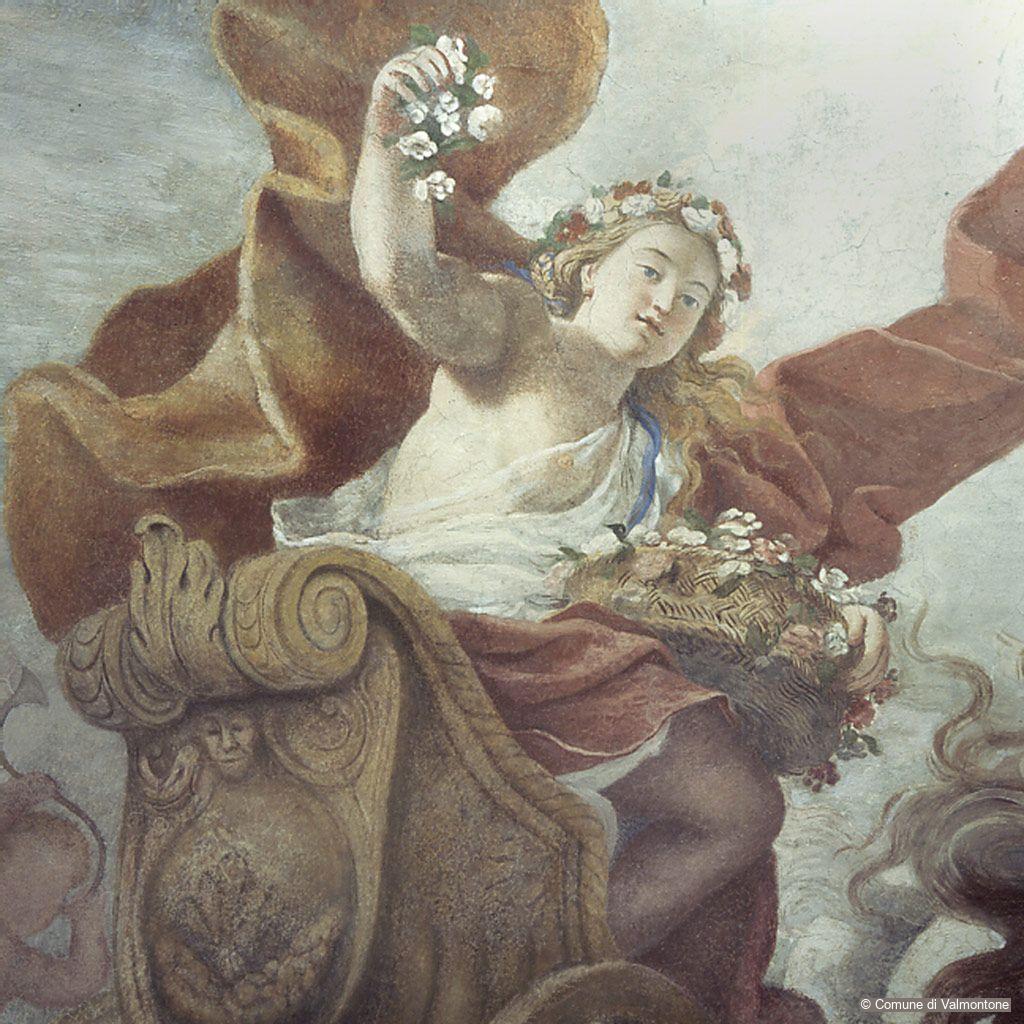
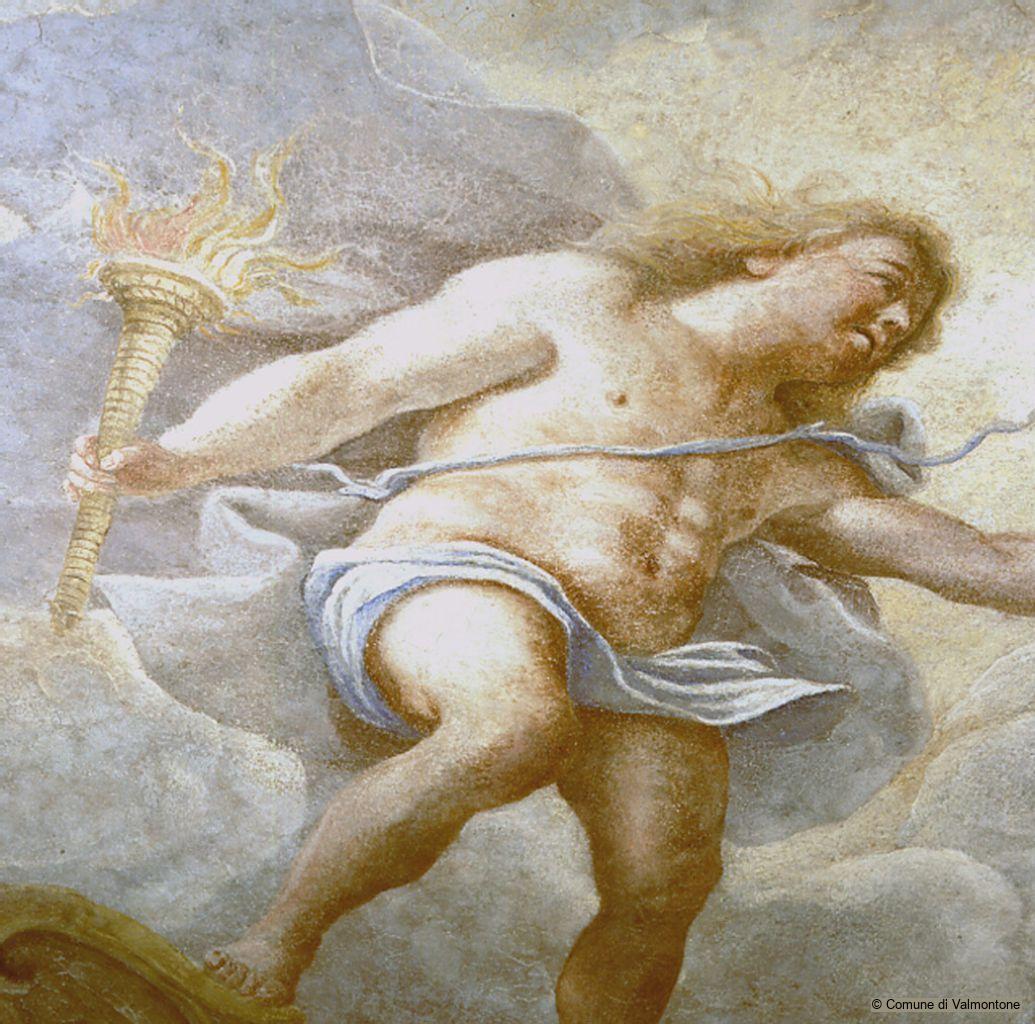
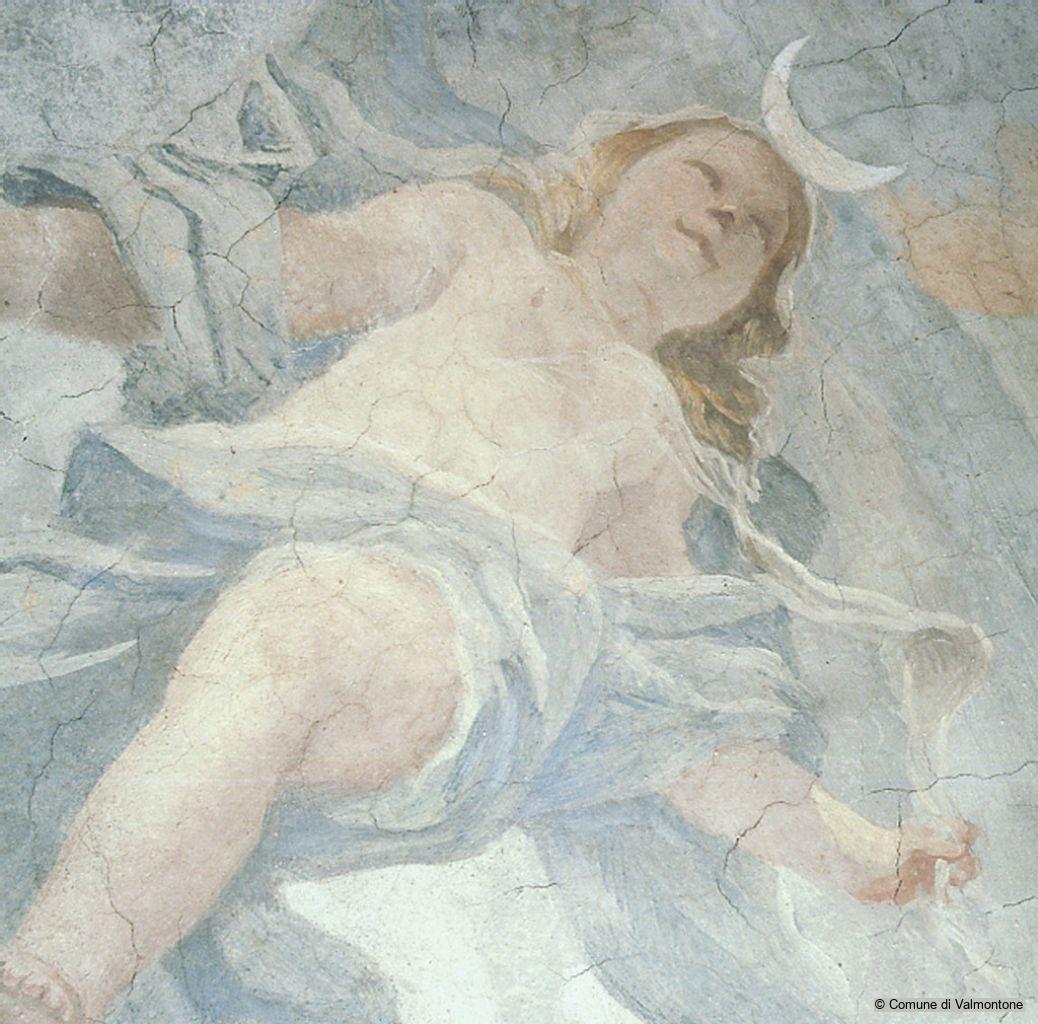
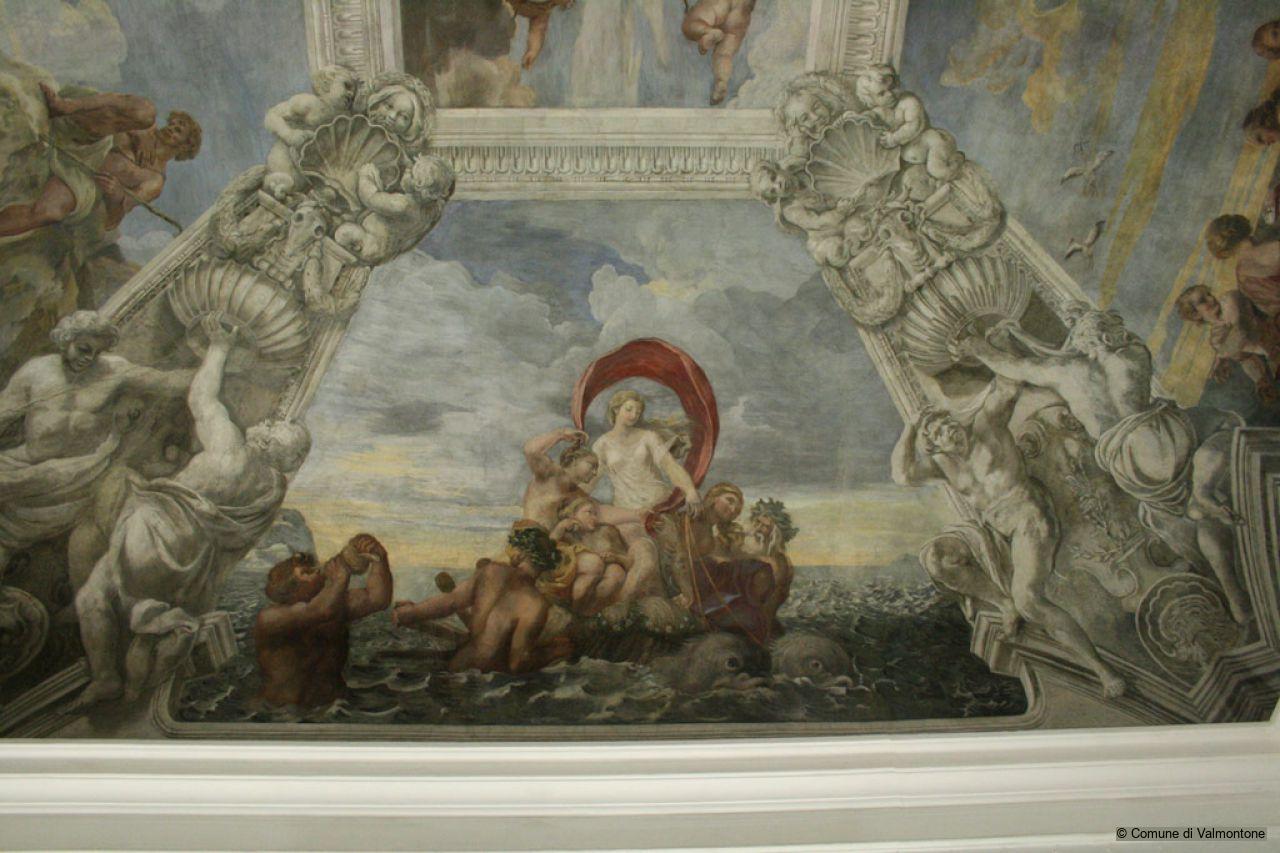
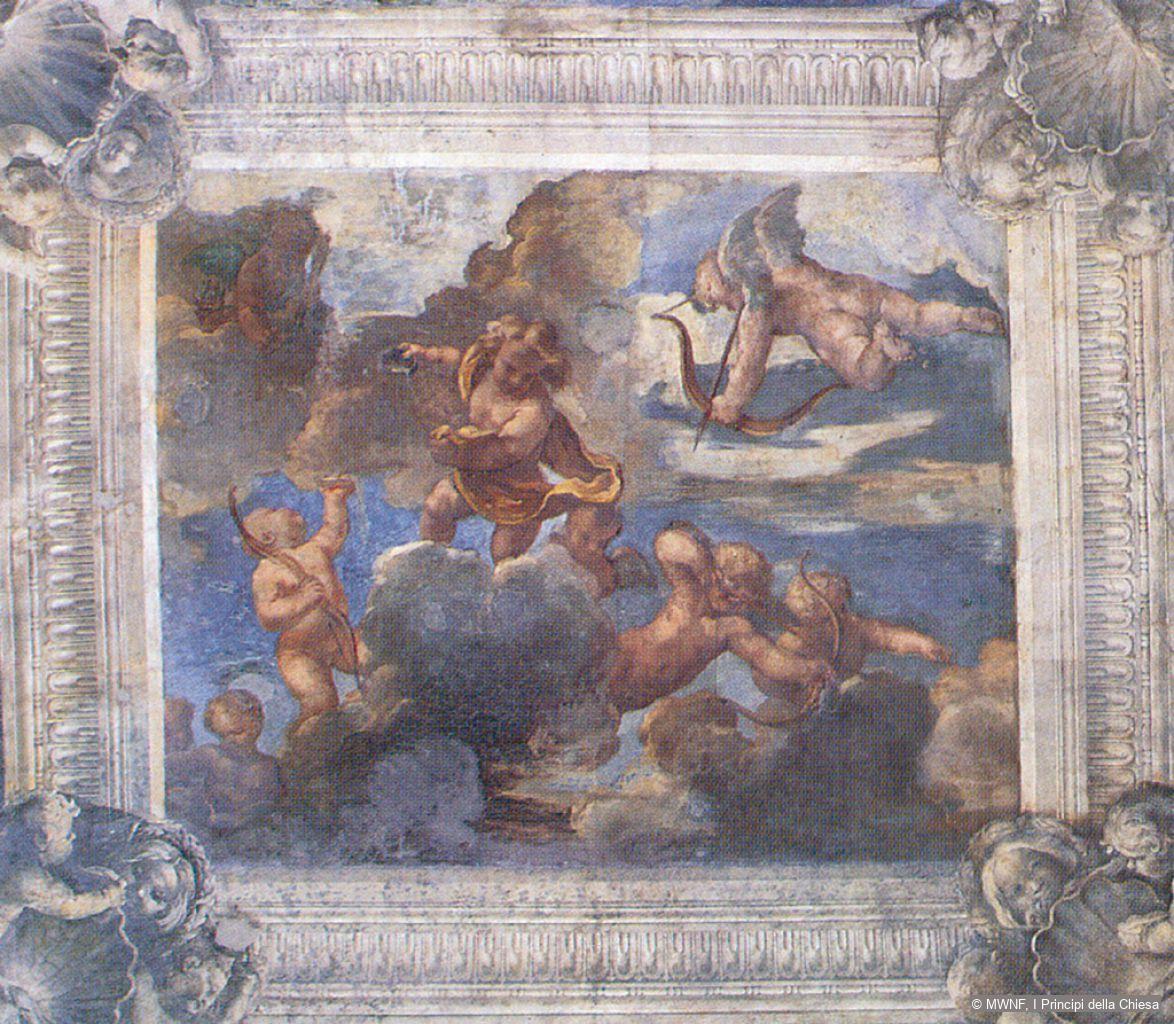
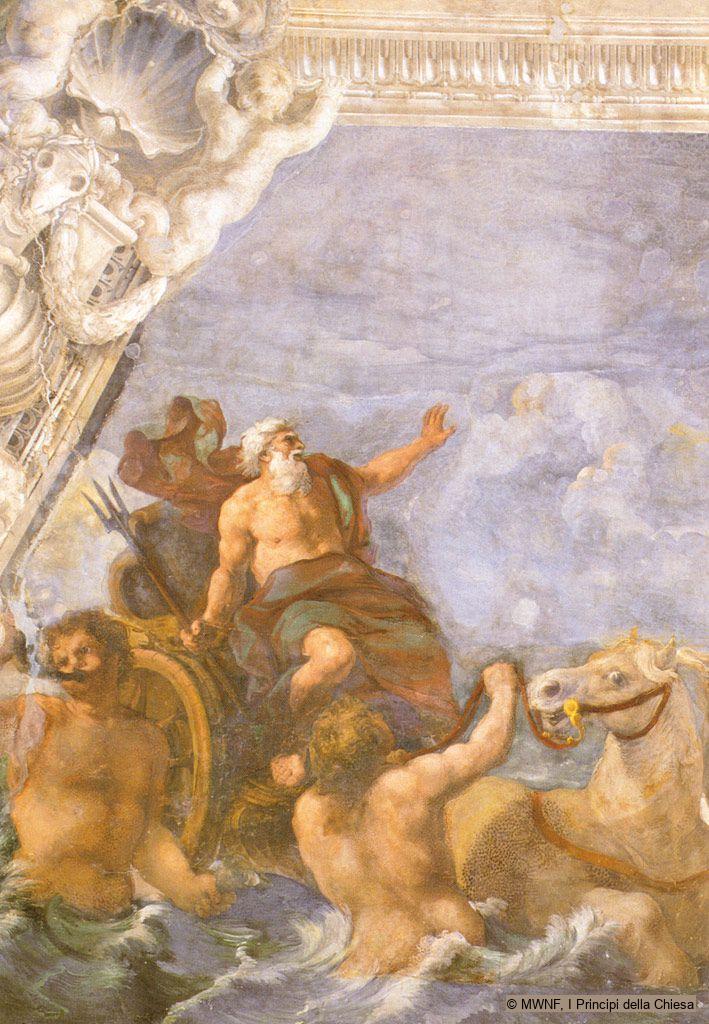
Two more rooms intended for religious services display religious subjects. Many painters from different places were involved in the decorative scheme, all inspired by Cortona. First there is the Fire Room, created by Cozza between 1658 and 1659, with a continuous representation of Vulcan’s Forge, entirely free of architectural divisions. Next, the Air Room, the masterpiece of the cycle, painted in just 16 days by Preti in 1661 where the subject is rendered perfectly through the sense of “airiness” that pervades the entire composition, which shows allegories of Dawn, Day, Evening and Night. The Water Room, painted between 1658 and 1659 by Cortese, has four side panels and one central panel, divided by monochrome telamons that hold up trompe-l’oeil architecture, with mythological subjects related to Water. The similarly laid out Earth Room was painted by Tassi between 1657 and 1659, and is divided by pairs of caryatids with a personification of the Earth at its centre. In the smaller rooms, America and Africa have been attributed to Mola, Asia to Cozza, and Europe to Tassi, while the Prince’s Room was decorated by Dughet and Borgognone between 1658 and 1659.
The decoration consists of four large rooms on the south side of the building known as Fire, Air, Water and Earth on account of the representations in them, and four smaller rooms on the other side with images of the Four Continents (Africa, America, Asia and Europe) around the larger, rectangular Prince’s room. The entirety can be understood to be an extensive decorative scheme inspired by Cortona and intended to celebrate the family in space (the continents) and in time (the elements of human life).
Selected bibliography:
Baiocchi, G. and Indrio, L., “Palazzo Doria Pamphili”, I Principi della Chiesa, Milan 1998, pp. 191–3.
B. Fabjan and M. Di Gregorio (eds) Palazzo Doria Pamphilj a Valmontone, Rome 2004 (with bibliography).
Citation of this web page:
Laura Indrio "Palazzo Doria Pamphili, frescoes" in "Discover Baroque Art", Museum With No Frontiers, 2026.
https://baroqueart.museumwnf.org/database_item.php?id=monument;BAR;it;Mon13;22;en
MWNF Working Number: IT1 22