

 Back
Back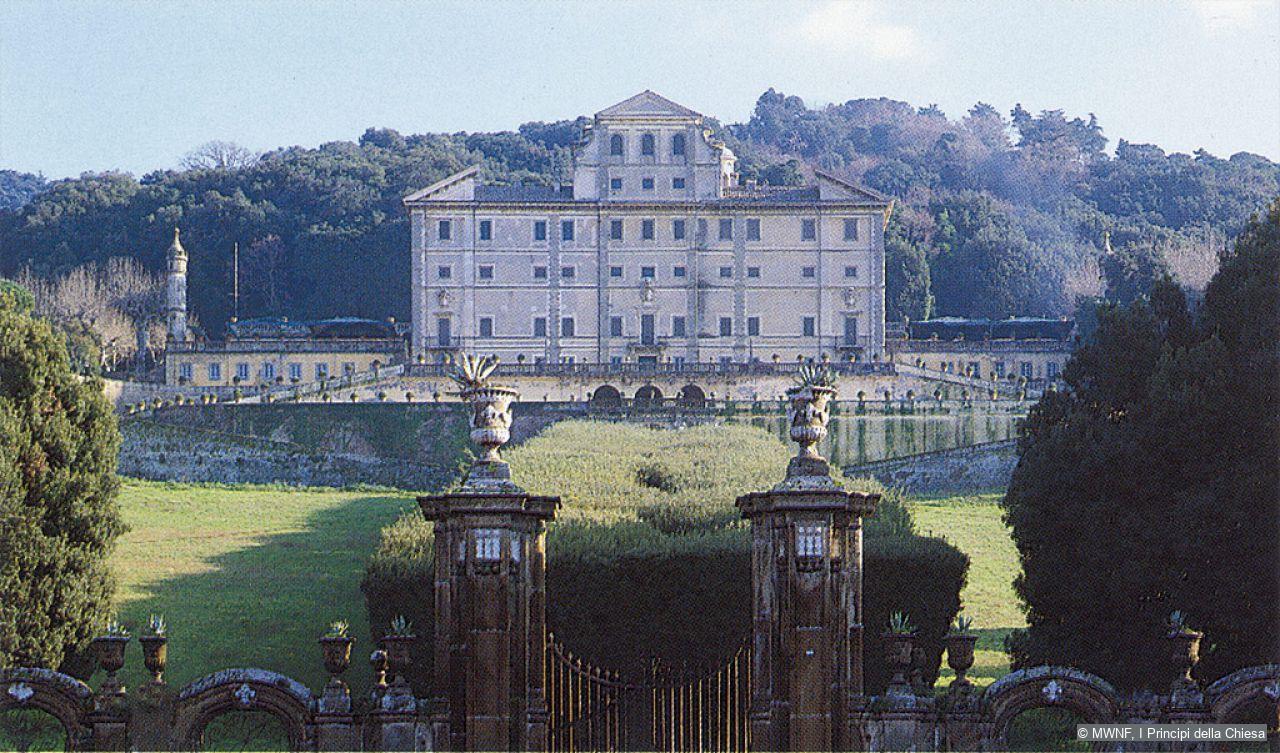
 Add to My Collection
Name of Monument:
Villa Aldobrandini, Water Theatre
Also known as:
Belvedere
Location:
Frascati, Rome, Latium, Italy
Piazza Marconi
00044 Frascati
Rome
Private Residence (Responsible Institution)
Date:
1603
Artists:
Carlo Maderno (1556, Capolago, Bissone – 1629, Rome), architect documented in Rome from 1576; Giovanni Fontana (1540, Melide – 1614, Rome), hydraulic engineer, brother of the better known Domenico, architect to Pope Sixtus V
Denomination / Type of monument:
Secular architecture, villa with water theatre (nymphaeum)
Patron(s):
Pietro Aldobrandini (1571, Rome – 1621, Rome)
History:
This, the most original and sumptuous of the villa Tuscolana, was built to the design of Giacomo Della Porta (Porlezza, Como 1532–Rome 1629) for Cardinal Pietro Aldobrandini, nephew of Clement VIII (1592–1606), from 1598, on the site of a demolished country retreat known as Belvedere that belonged to Antonio Contugi, doctor to Pius IV Medici.
Description:
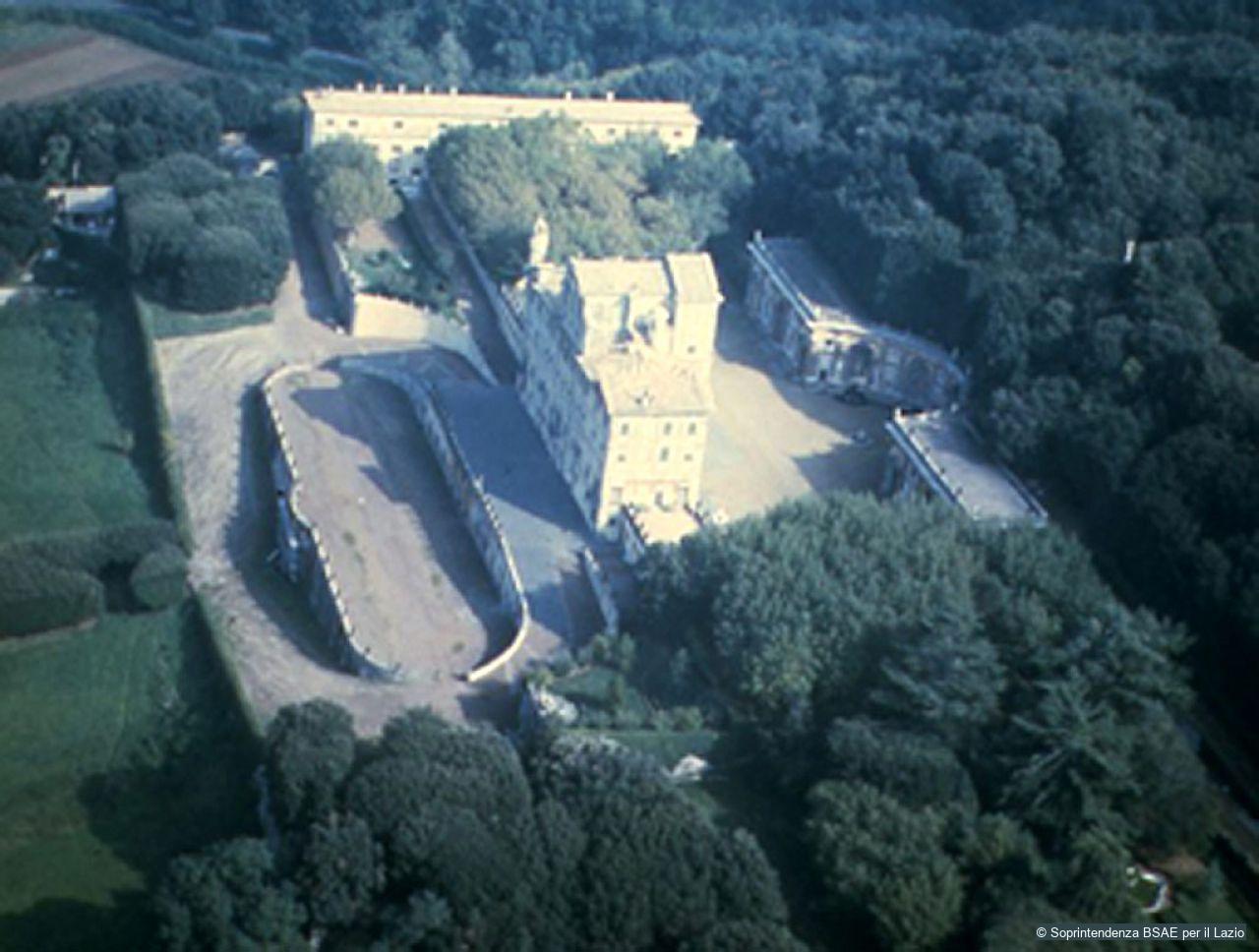
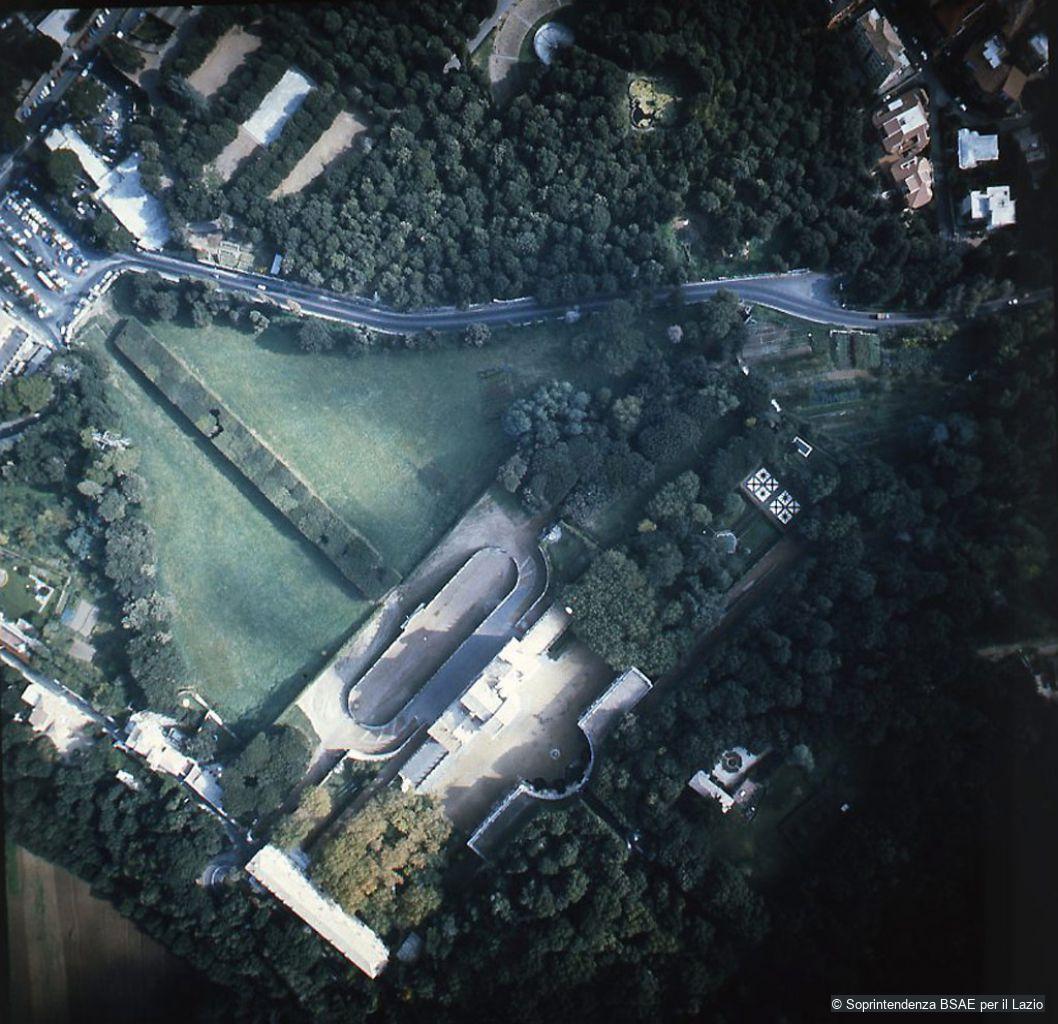
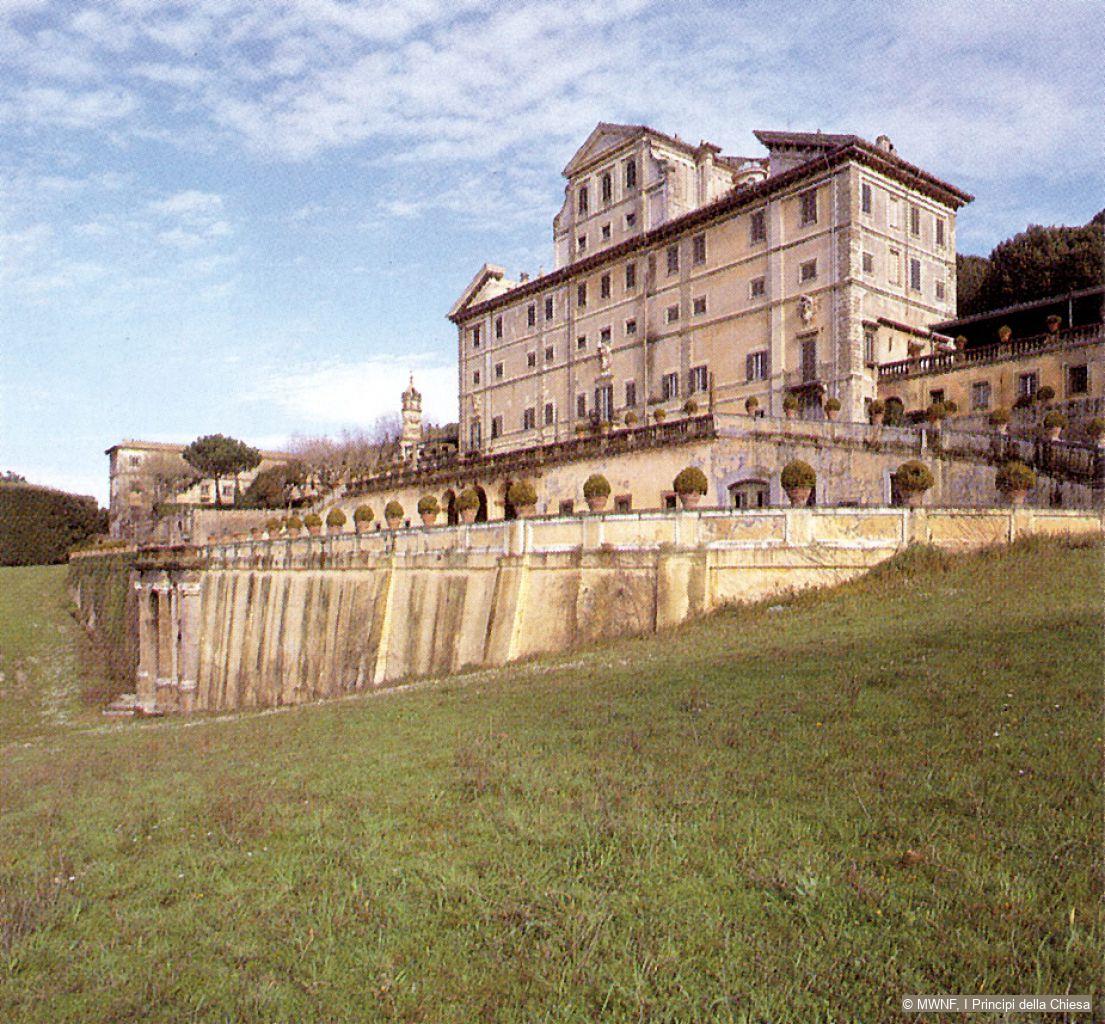
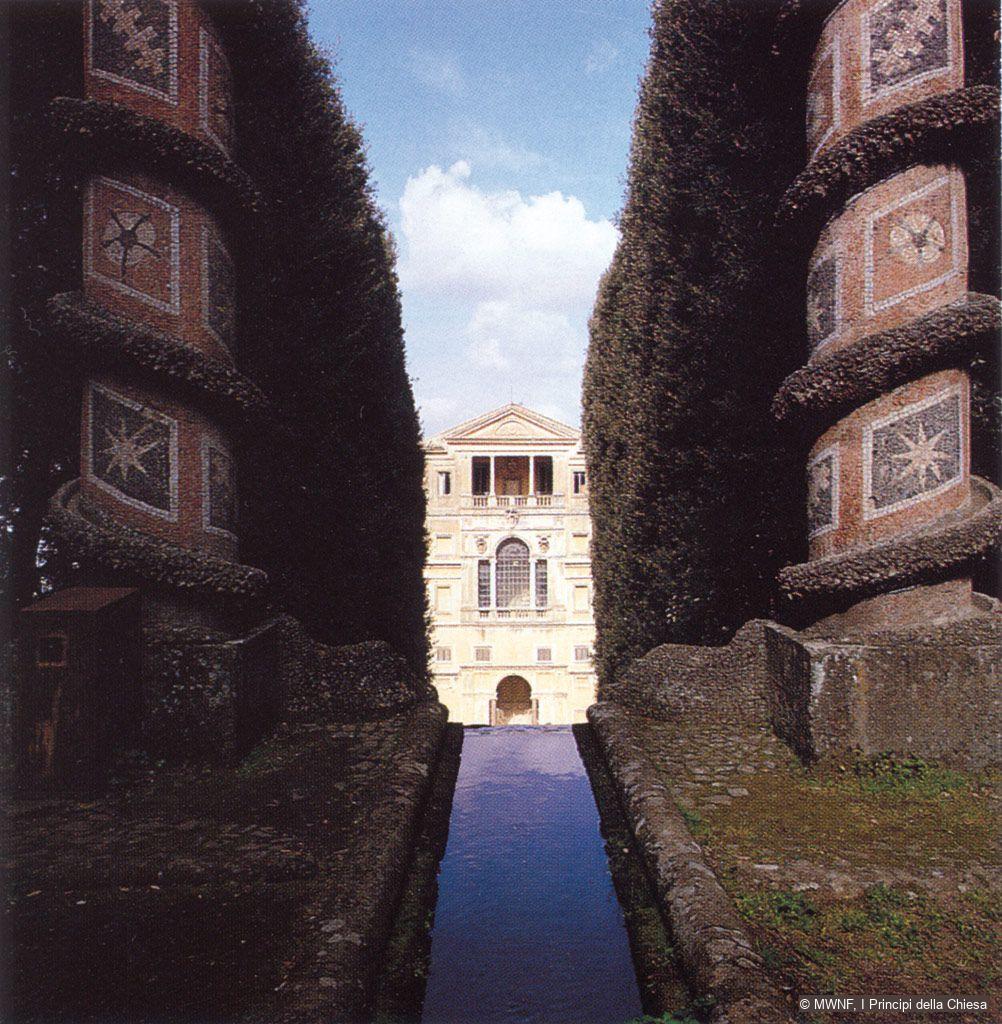
The downward-facing, luminous, continuous façade of the villa is characterised by a series of terraces, along a central axis, with symmetrical ramps and pathways that interrupt the steep hillside. Although it was only built later by Maderno and Fontana, the majestic nymphaeum located to the rear was part of Della Porta's initial design, and as such Aldobrandini had acquired all of the available water in the area and channelled it through an aqueduct.
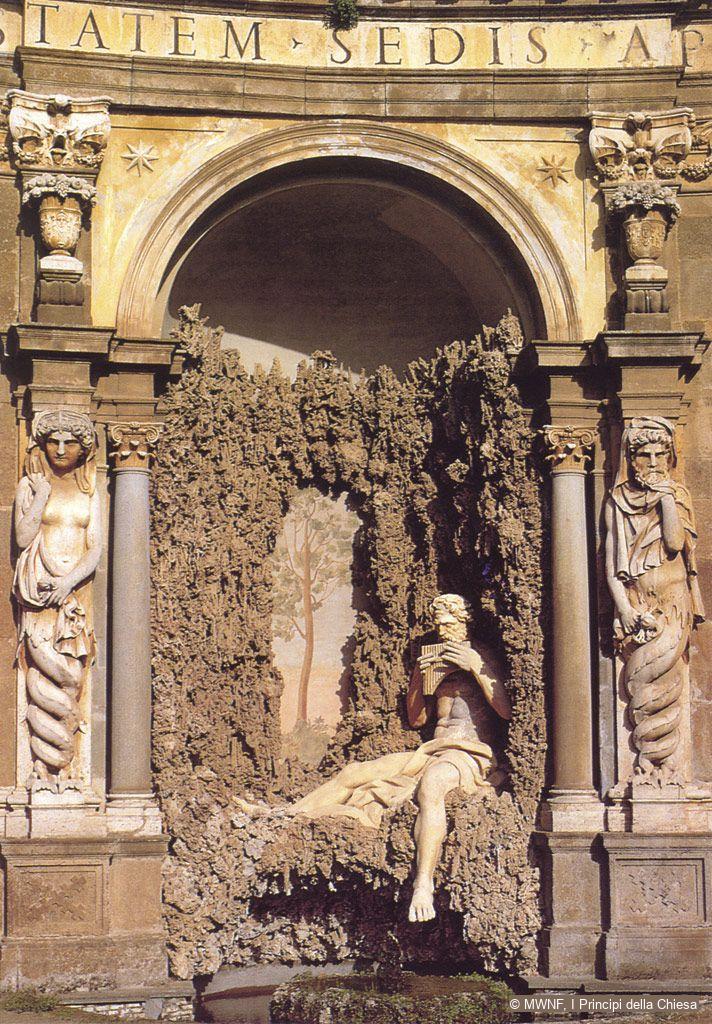
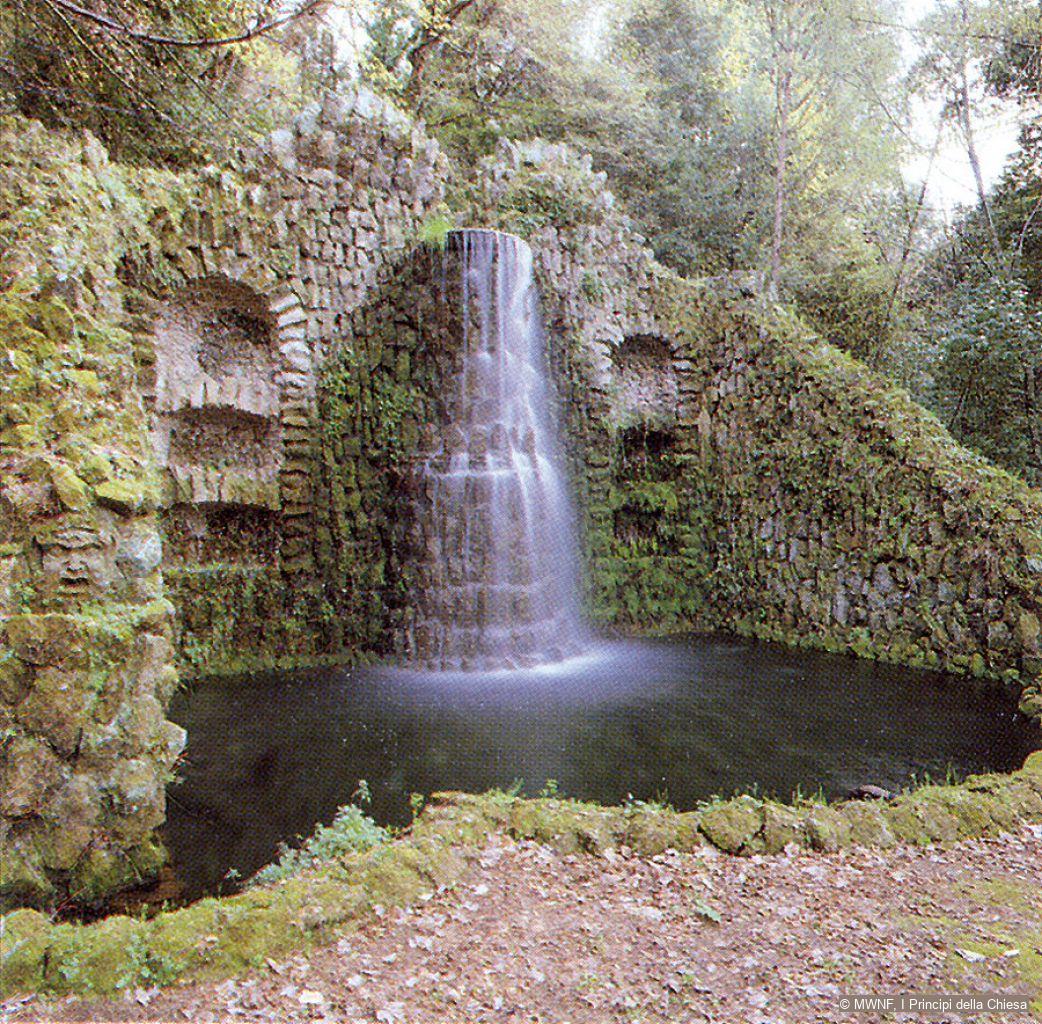
The long front of the nimphaeum is divided up architecturally by columns, pilaster strips, herms, and tympana, niches of varying depth, capitals, vases and framed busts. At the centre is a flight of steps over which water cascades, channelling the water into the large central- and side-niches, and flanked by two pillars known as the Columns of Hercules. In the side-niches, set against the backdrop of a cave partially painted with landscapes and decorated with mosaics, stand statues of a Cyclops and a Centaur with musical instruments (pan-pipes and bugle respectively), which once contained water-activated mechanisms that would have generated sound but which are now, unfortunately, no longer in operation. In the central niche, Atlas, originally standing beside Hercules (now lost), supports the celestial globe above the head of Tantalus (also interpreted as Enceladus), reconstructed and buried by rocks. The entire frontage is surmounted by a long inscribed commemorative dedication above which is a columned balustrade bearing statues and vases of flowers. The side wings lead on the left to the Parnassus or Apollo Room and the chapel decorated with gilded stuccowork and dedicated to St. Sebastian, the family's patron saint, and on the right-hand side to the "Ogliara", used as an oil store in recent times. The Parnassus Room originally had frescoed walls interspersed with mosaics and gilded stuccowork, with the Stories of Apollo by Domenico Zampieri, also known as Domenichino (1581–1641), now in the National Gallery, London. At the far end of the room is a grotto structure representing Parnassus, with the statues of Apollo accompanied by the Muses carrying instruments, which were initially activated by the air generated by a hydraulic system constructed according to the designs of the master organist Giovanni Guglielmi. The ceiling is painted as if the room were a pergola.
The water theatre, also known as the nymphaeum, was designed in the classical Roman tradition and has an extremely wide front—as wide as the building—that curves in a large exedra between two straight wings. Located behind the villa against the slope of the hill, almost acting as an embankment, it forms the boundary between the constructed space and nature, and was conceived, with its playful combination of water and sounds, as a scenic crown for the gardens as a whole.
How Monument was dated:
Tantillo, A. M., “Villa Aldobrandini”, I principi della chiesa, Milan 1998
Selected bibliography:
Tantillo, A. M., "Villa Aldobrandini", I principi della chiesa, Milan 1998, pp. 130–133.
Devoti, L., Itinerari nella campagna romana: le ville tuscolane: Belvedere Aldobrandini – Lancellotti – Rufinella Tuscolana, Velletri 2001
Citation of this web page:
Laura Indrio "Villa Aldobrandini, Water Theatre" in "Discover Baroque Art", Museum With No Frontiers, 2026.
https://baroqueart.museumwnf.org/database_item.php?id=monument;BAR;it;Mon13;7;en
MWNF Working Number: IT1 07