

 Back
Back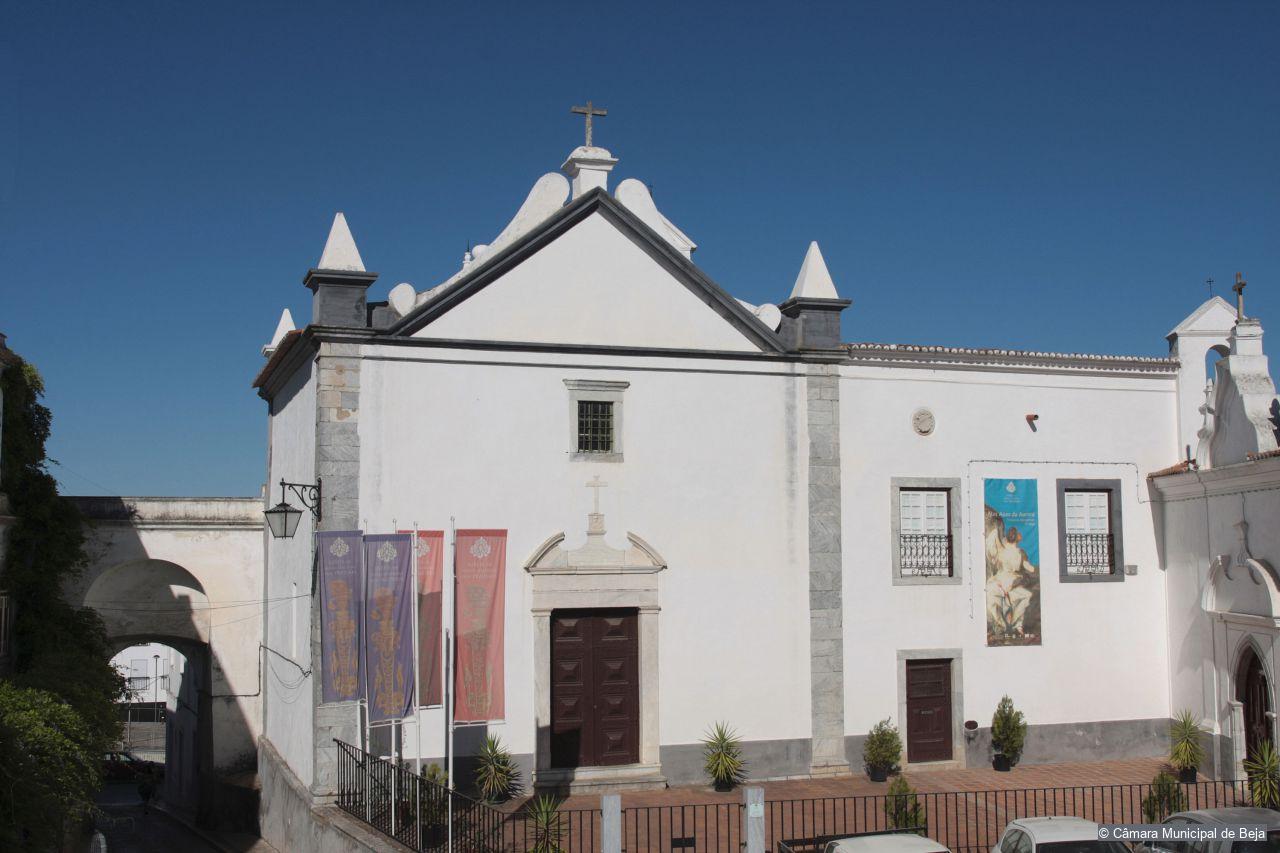
 Add to My Collection
Name of Monument:
Church of Nossa Senhora dos Prazeres
Location:
Beja, Beja, Portugal
Igreja de Nossa Senhora dos Prazeres
Largo dos Prazeres, 4
7800-475 Beja
T : +351 284 320918
F : +351 284 320052
E : dphadb@sapo.pt
Departamento do Património Histórico e Artístico da Diocese de Beja (Responsible Institution)
Date:
1672
Artists:
Woodcarvers: João de Touro Freitas [n.d.], António de Oliveira (1675–?), Manuel João da Fonseca [n.d.], Francisco da Silva (1684-?); painters: António de Oliveira Bernardes (1662–1732), Pedro Figueira [n.d.], João Pereira Pegado (1662–1732); tile painter: Gabriel del Barco (1649–1703?)
Period / Dynasty:
Braganza Dynasty, King Pedro II
Denomination / Type of monument:
Religious architecture
Patron(s):
Brotherhood of Nossa Senhora dos Prazeres
History:
During the 16th century a door was opened in the medieval wall of Beja allowing access to the main square, near the Corredoura (a road used for horse racing). Our Lady of Pleasures Church was built in veneration of the Miracle of Our Lady and to eulogise the Seven Sorrows and the Seven Joys of the Mother of God, the importance of which was further intensified by a miracle said to have taken place on a farm near Lisbon. According to tradition, the Virgin appeared to a girl and asked her to tell her parents and neighbours that a chapel should be built close by. Thereafter, a series of other miracles aroused intense devotional outbreaks in the country and overseas territories, and these accelerated the construction of even more places of worship.
Description:
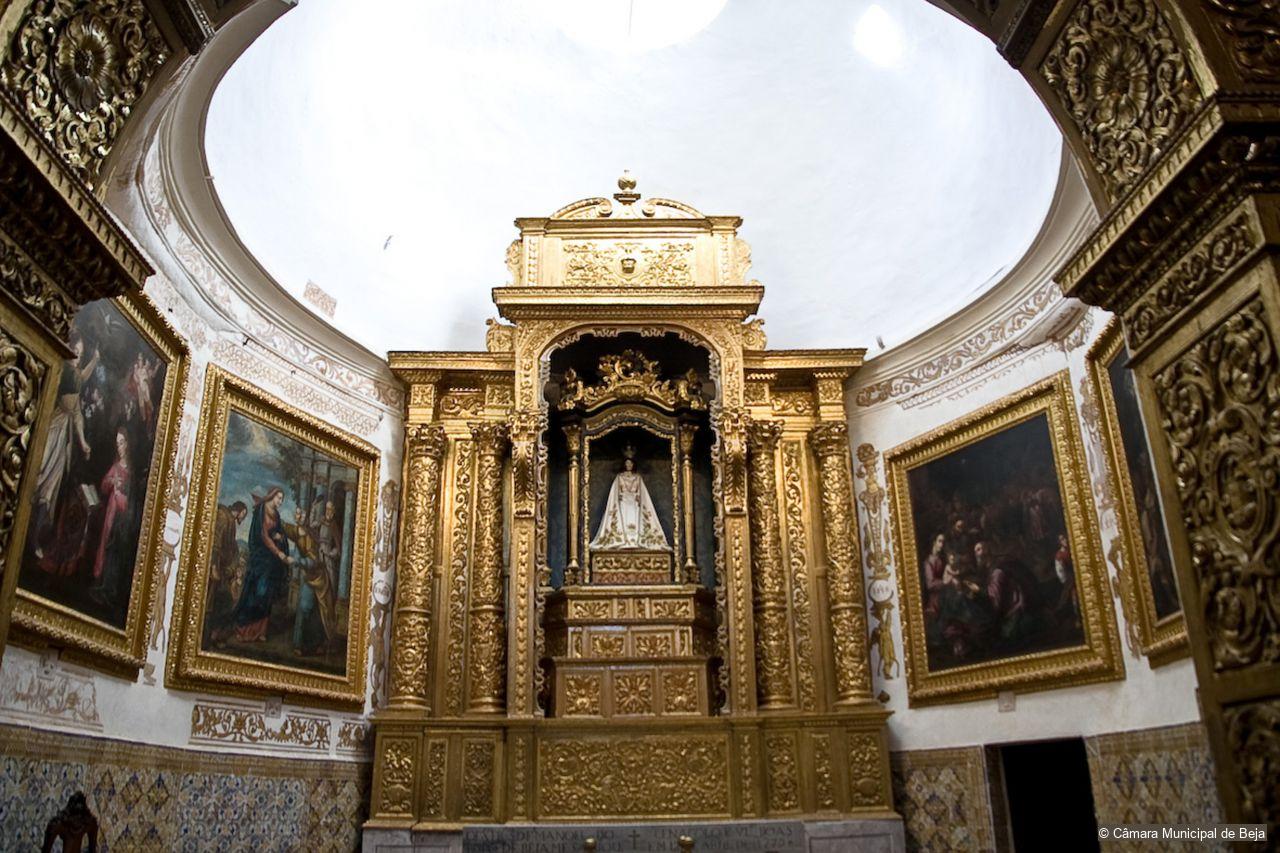
The church of Beja (1672) has a quadrangular nave covered by a tunnel vault; a narrower and lower chancel, a semi-circular apse – finished with a cupola and louvre – and a quadrangular addorsed sacristy, also covered with a vault.
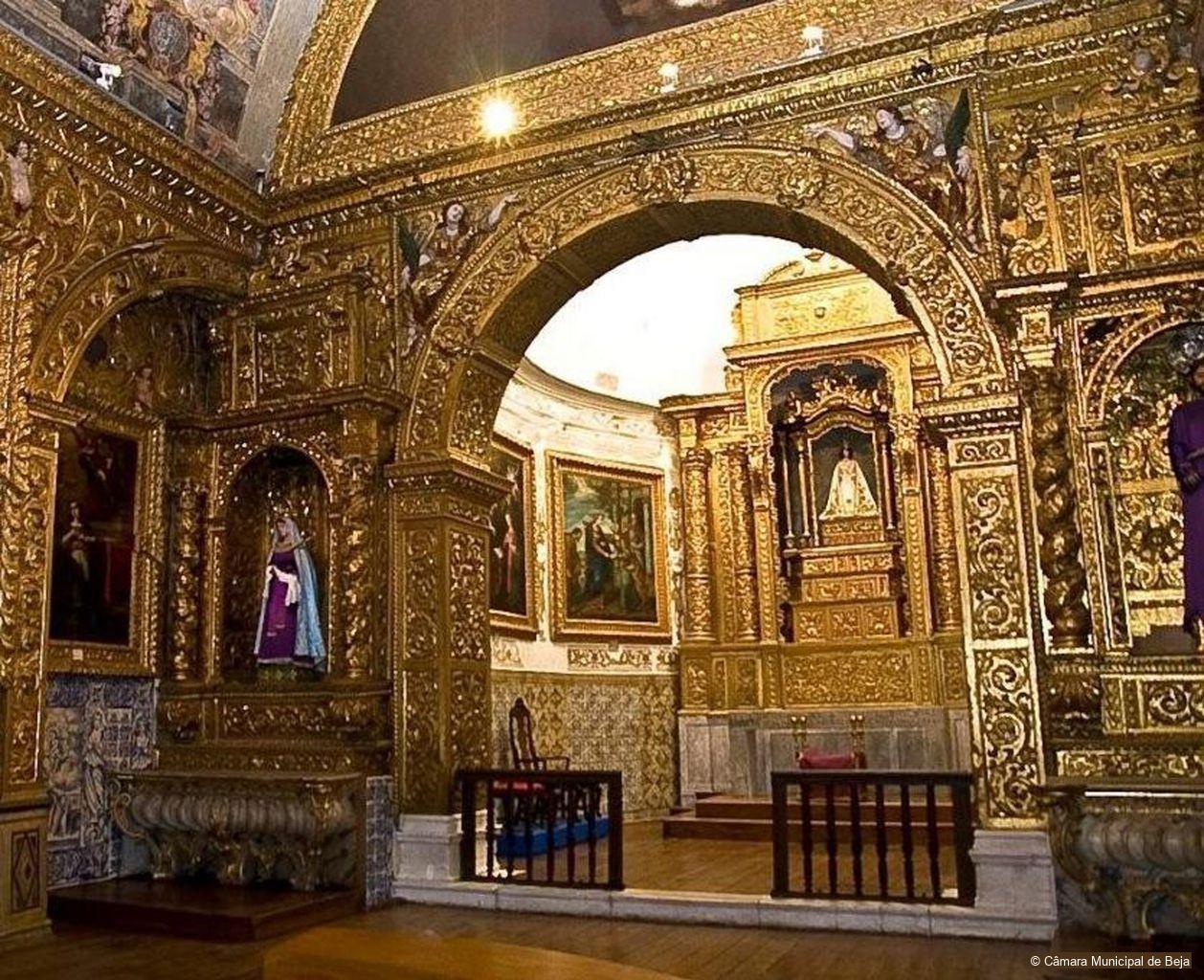
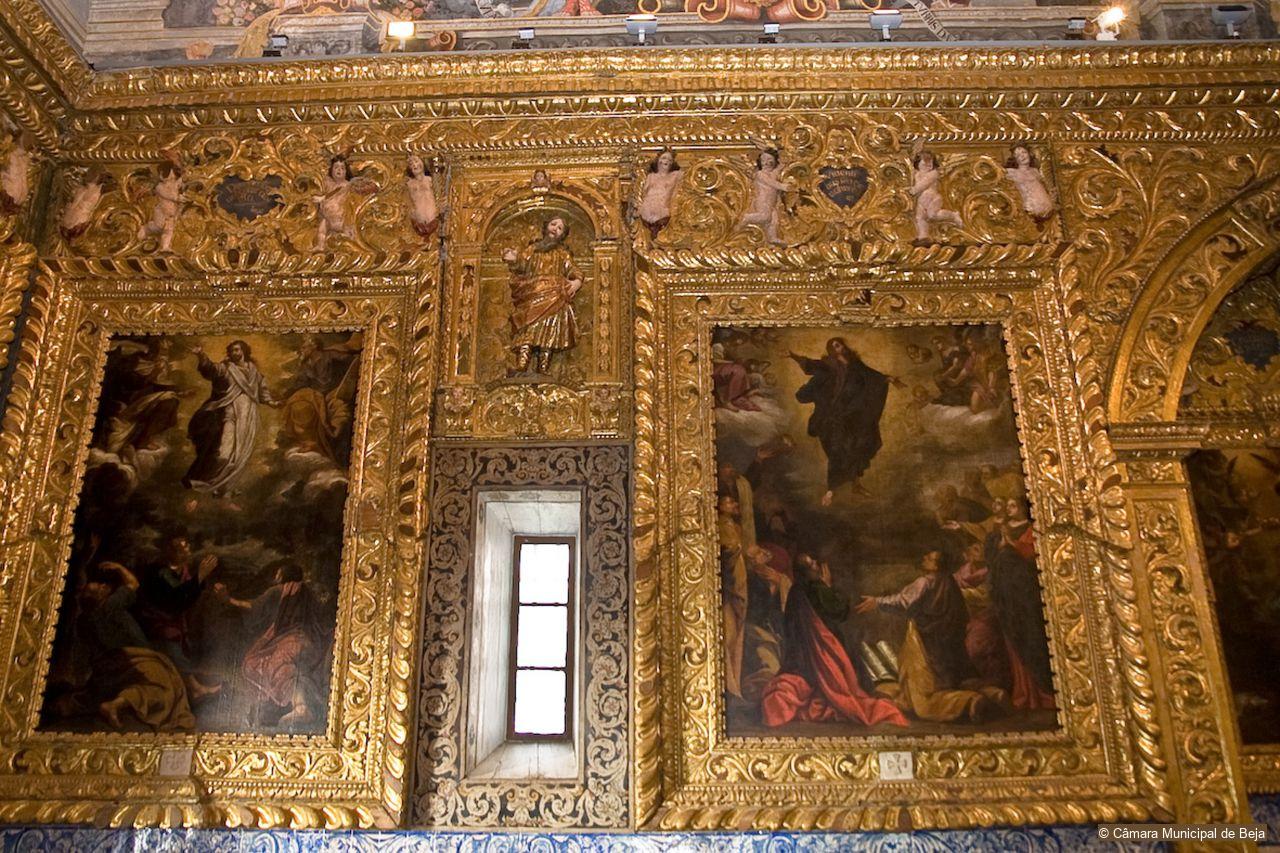
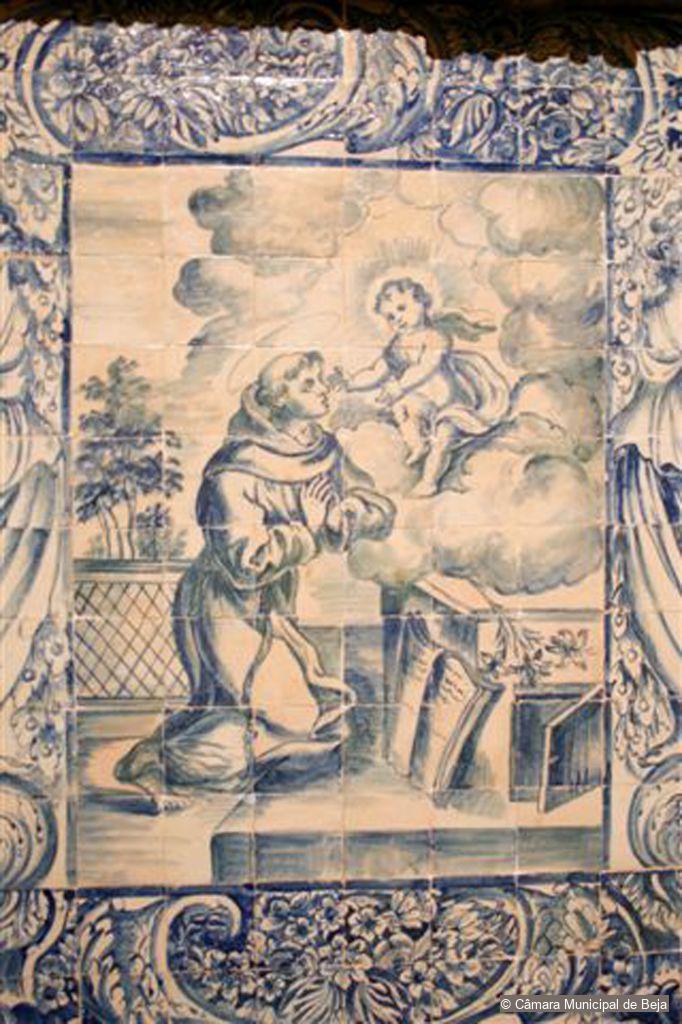
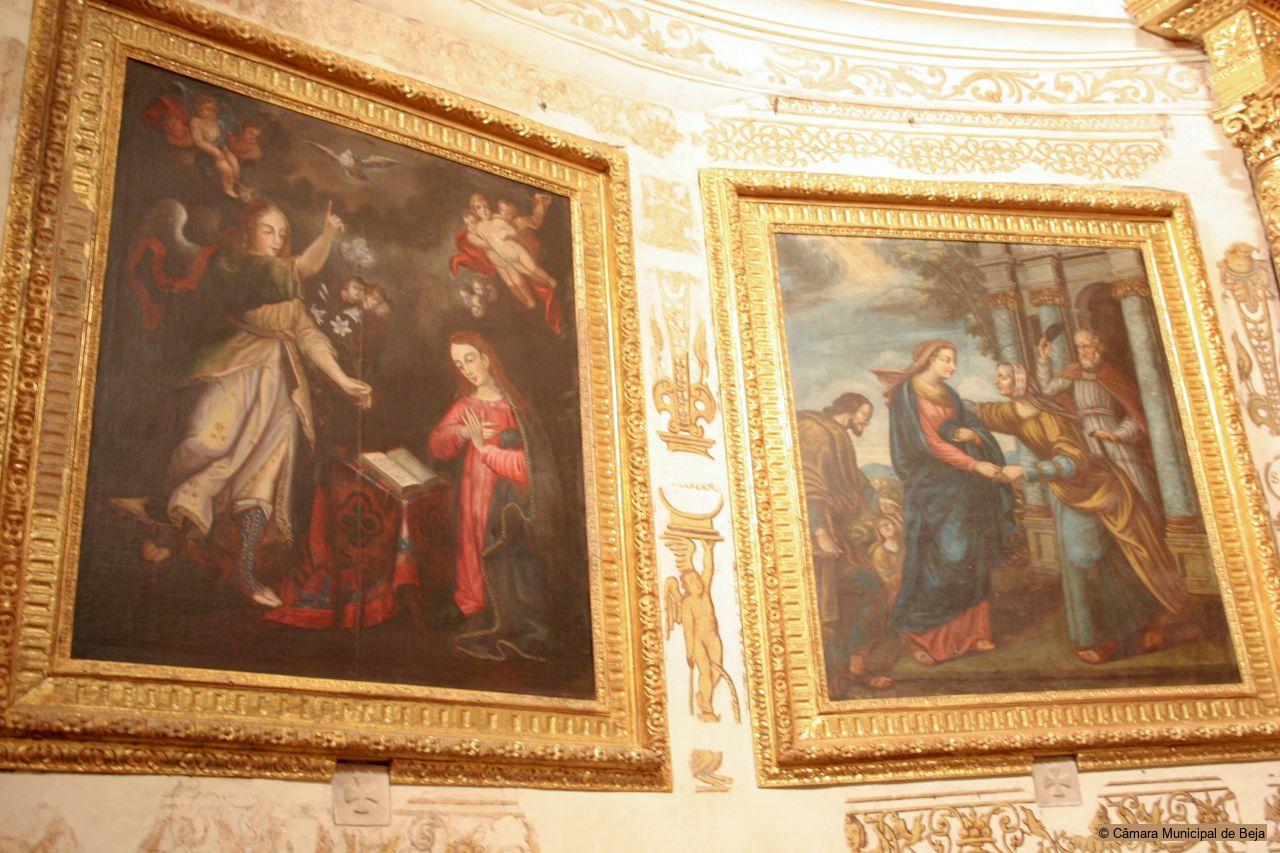
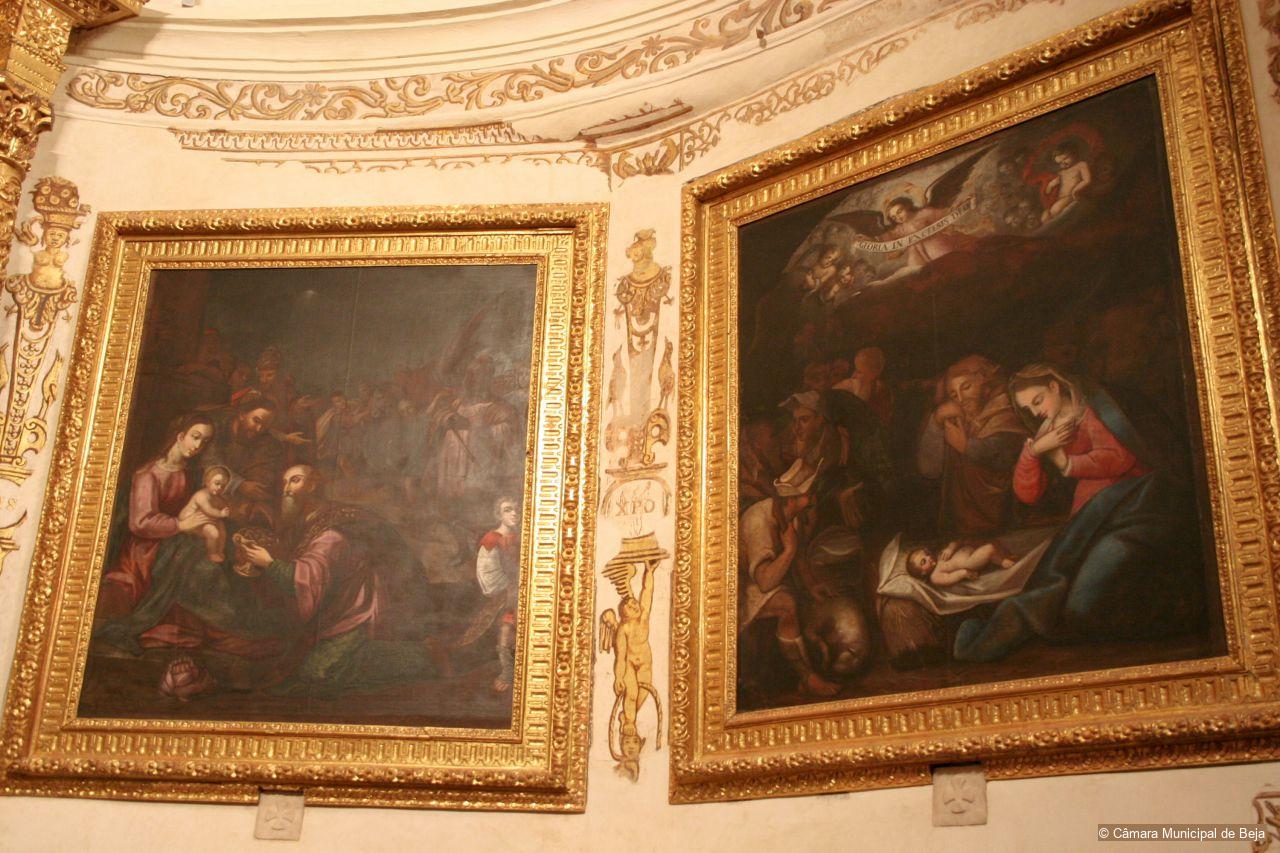
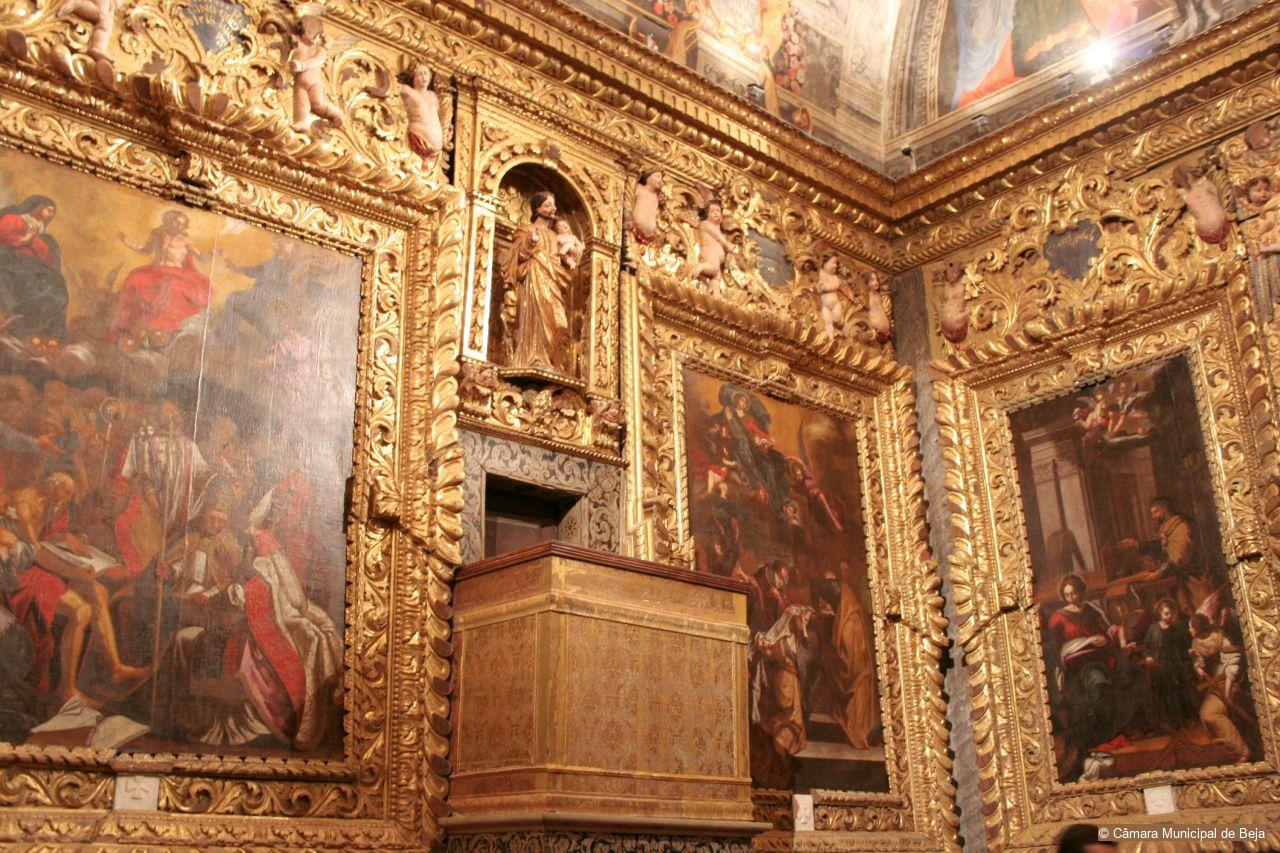
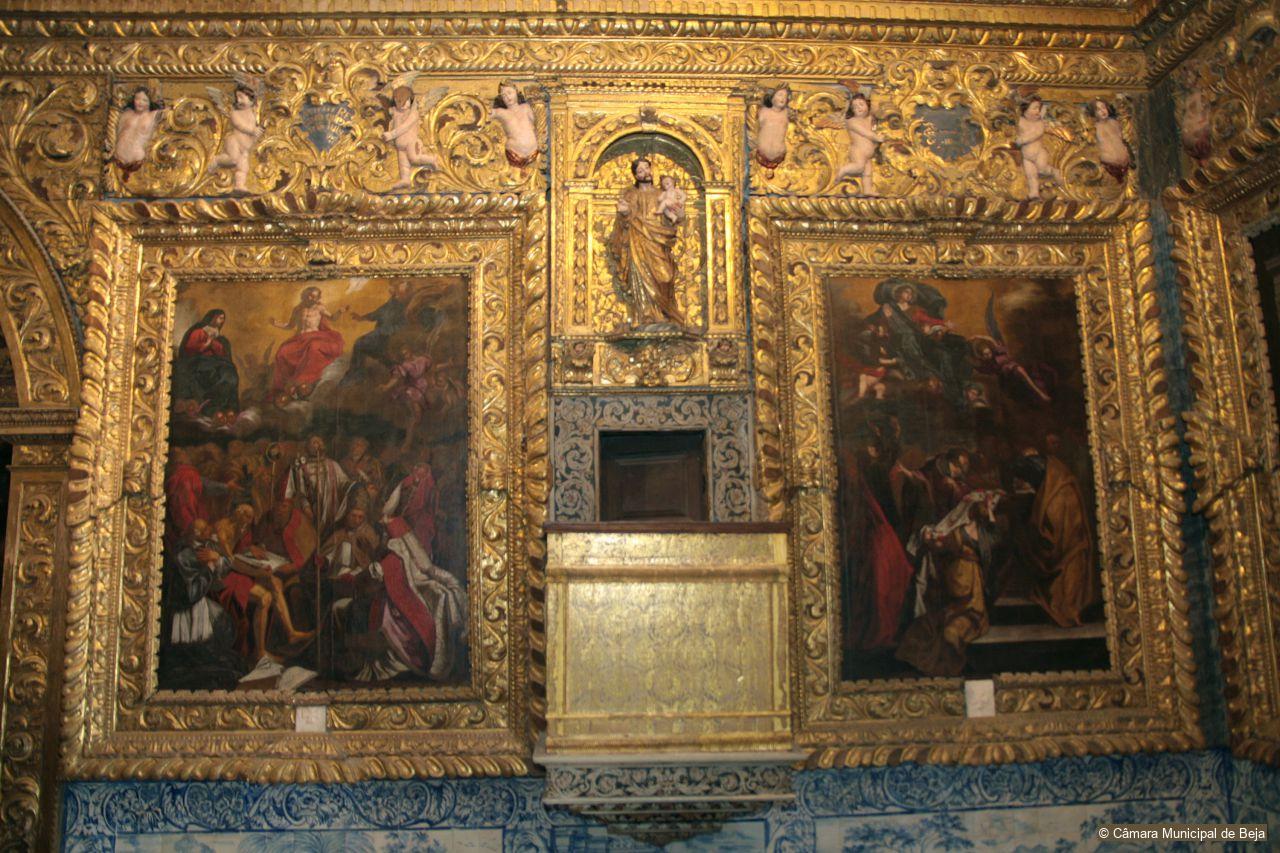
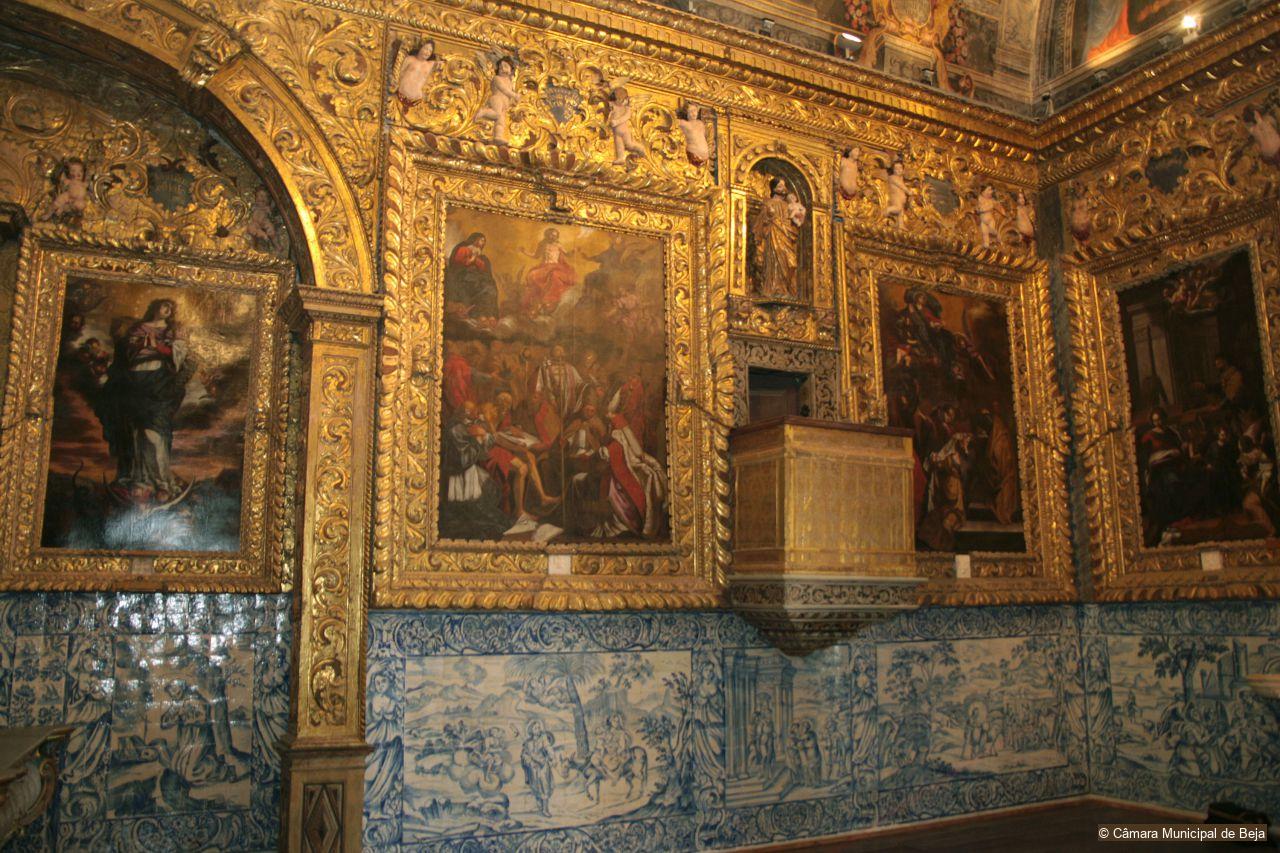
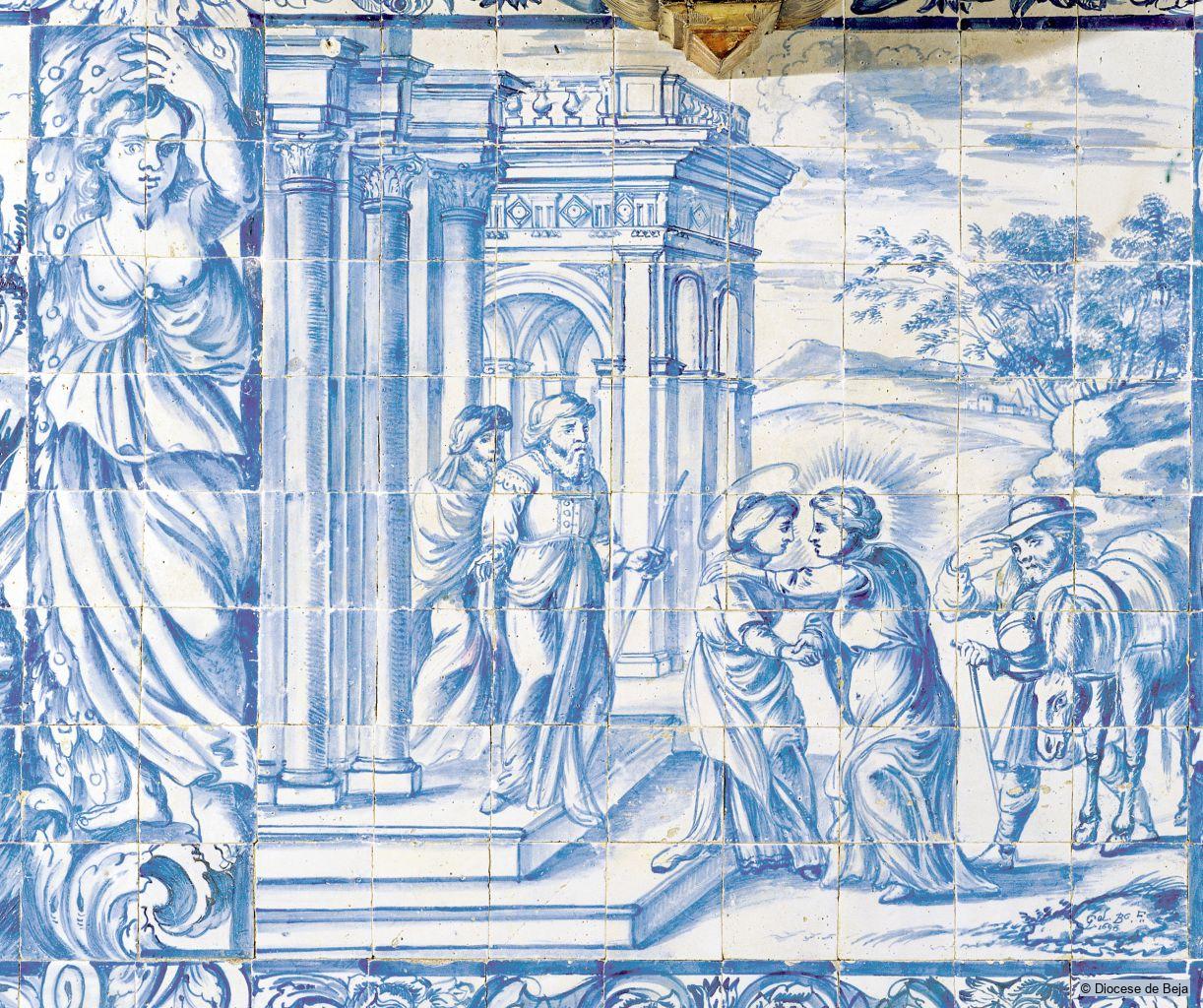
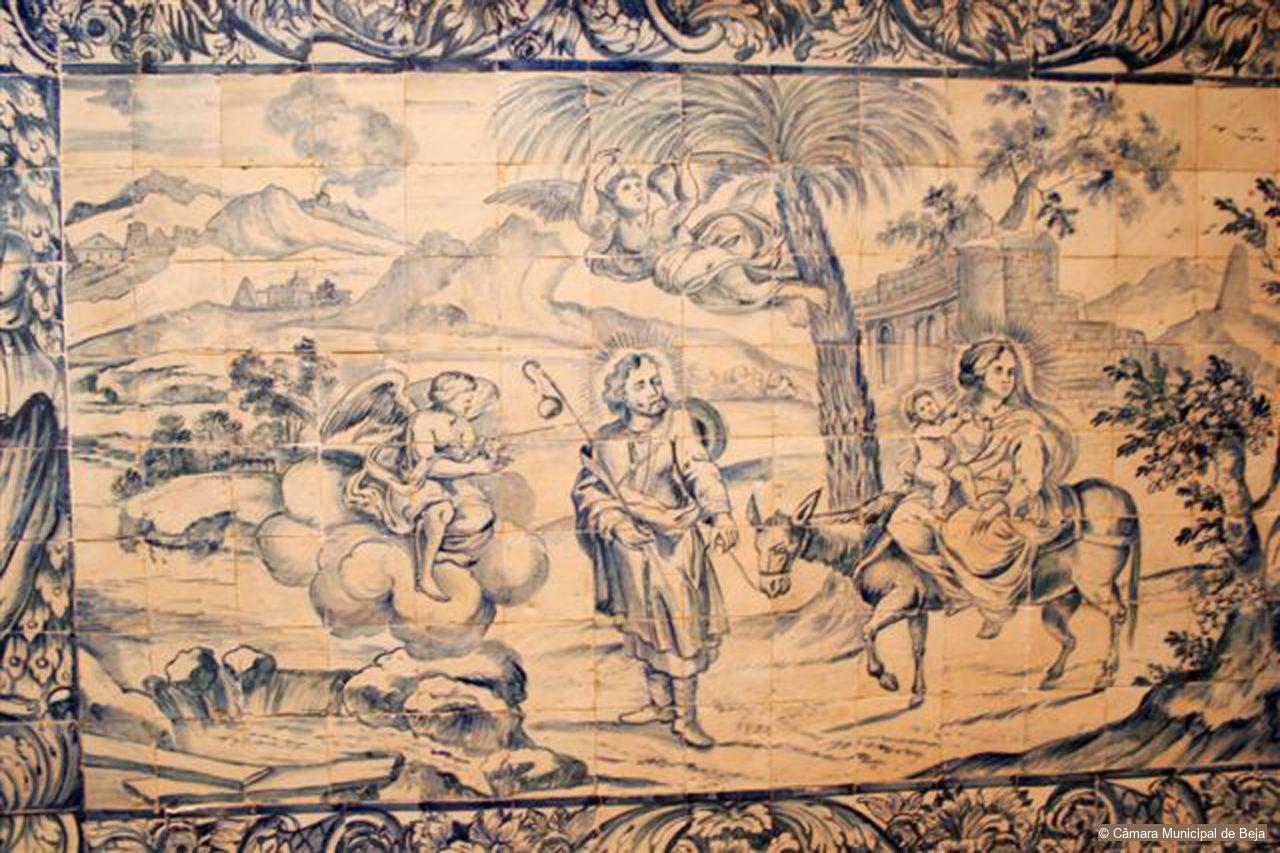
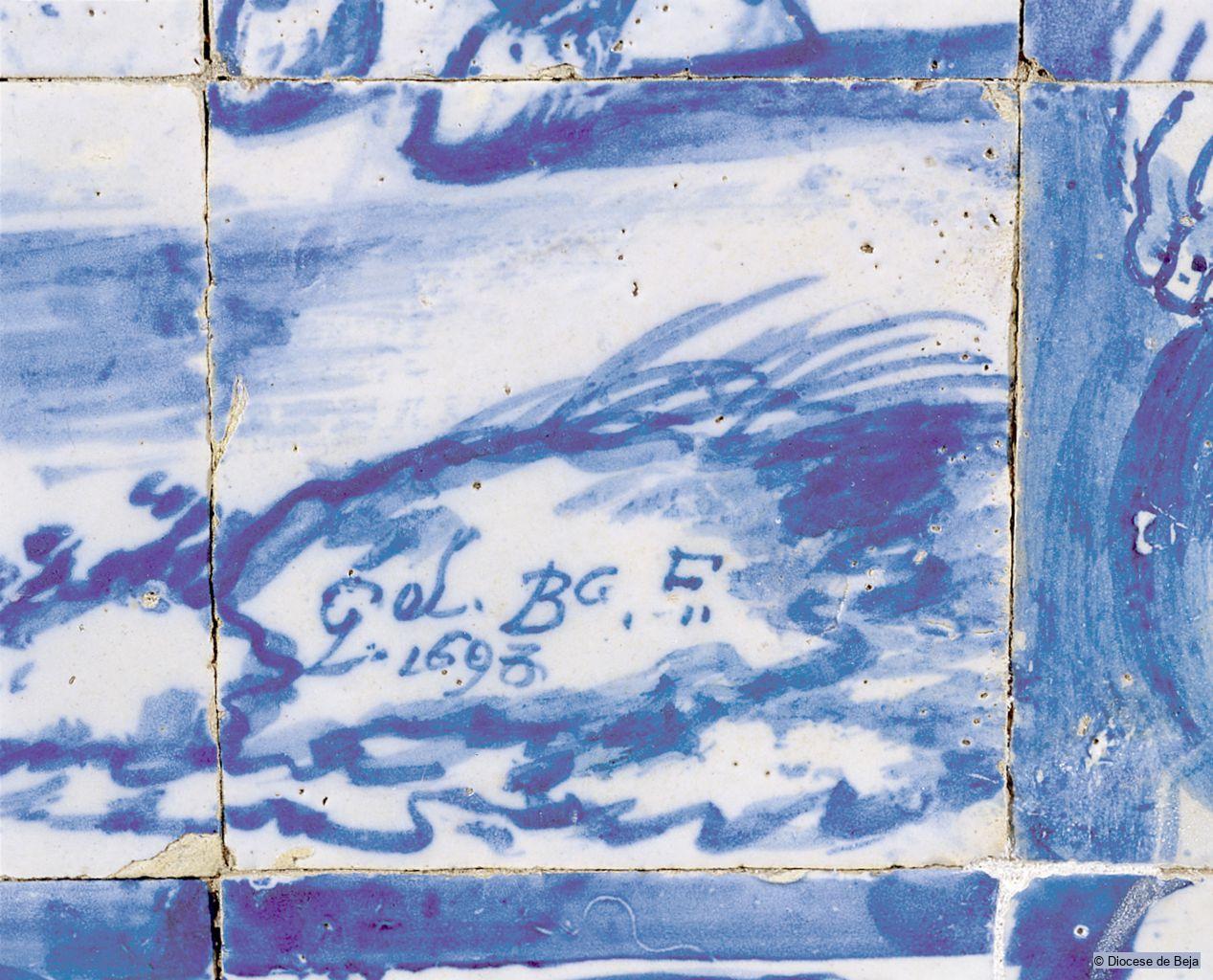
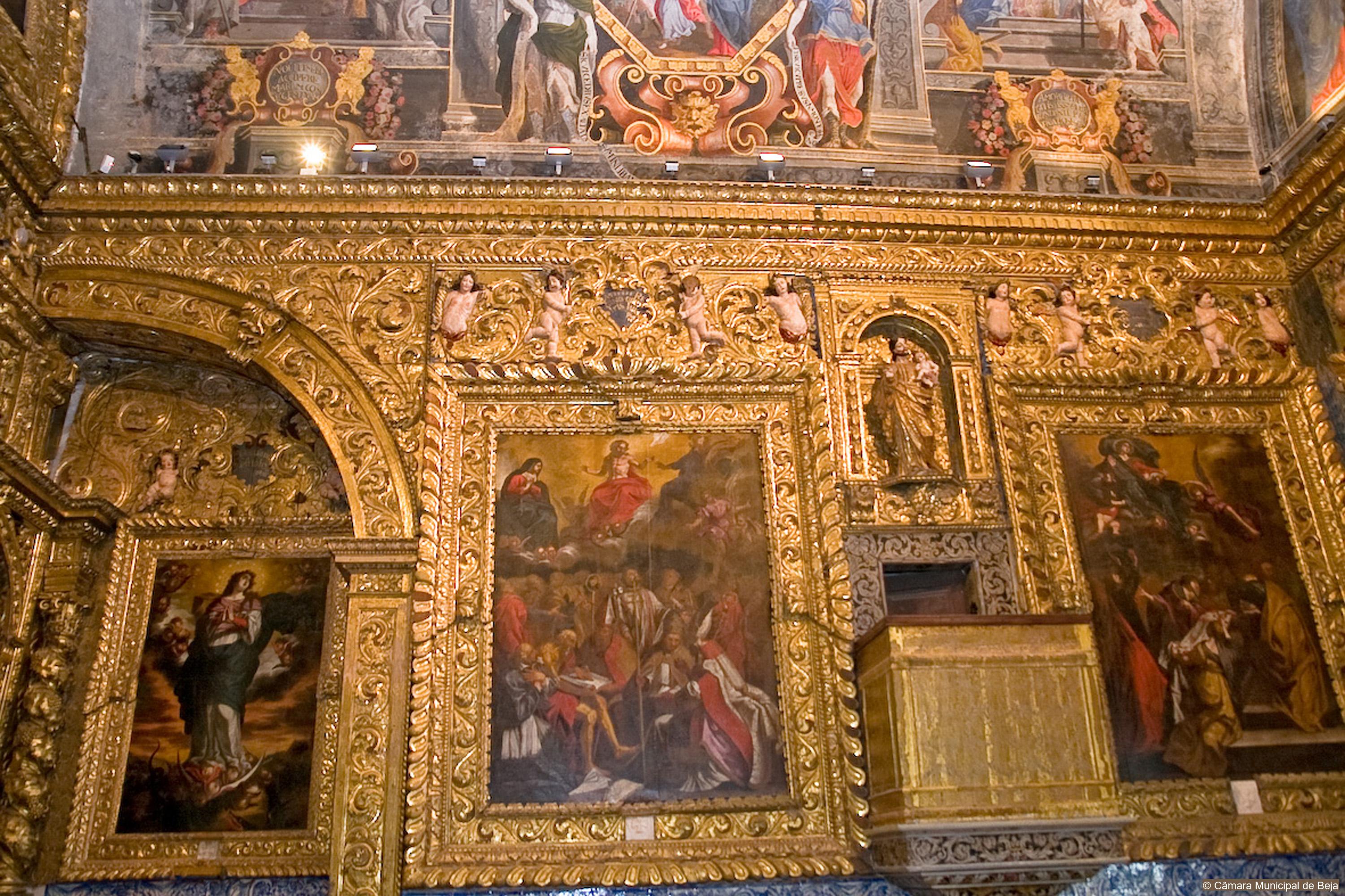
The church is an excellent example of a “total work of art” or gesamtkunstwerk, a sensibility often associated with Baroque interiors. The interior, a theatrum sacrum, holds within it the wood carvings of Manuel João da Fonseca and Francisco da Silva, which reflect the dialogue between the artistic schools of Lisbon and Évora. The ceiling compositions by Pedro Figueira, António de Oliveira Bernardes and João Pereira Pegado, who were influenced by the Beja masters, continue the artistic dialogue. Oliveira Bernardes' canvases and Gabriel del Barco's tile work represent the Mysteries of the Life of the Virgin, enhancing the theme of the Immaculate Conception.
The church of Nossa Senhora dos Prazeres in Beja lies close to the medieval city wall. Built in veneration of Our Lady, its importance was intensified by a miracle said to have taken place on a farm in Lisbon in the 16th century. Later, during the reign of King Pedro II, the church underwent renovation, turning it into one of the best examples of “plain” architecture and interior decoration in the Lower Alentejo. A remarkable example of a “Golden Church”, it is enriched with azulejos, gilded woodcarving, wall painting and canvases devoted to the Mysteries of the Life of Virgin, focusing on the co-existence of the Seven Sorrows and the Seven Joys of the Mother of God.
How Monument was dated:
Historical evidence and stylistic analysis.
Special features
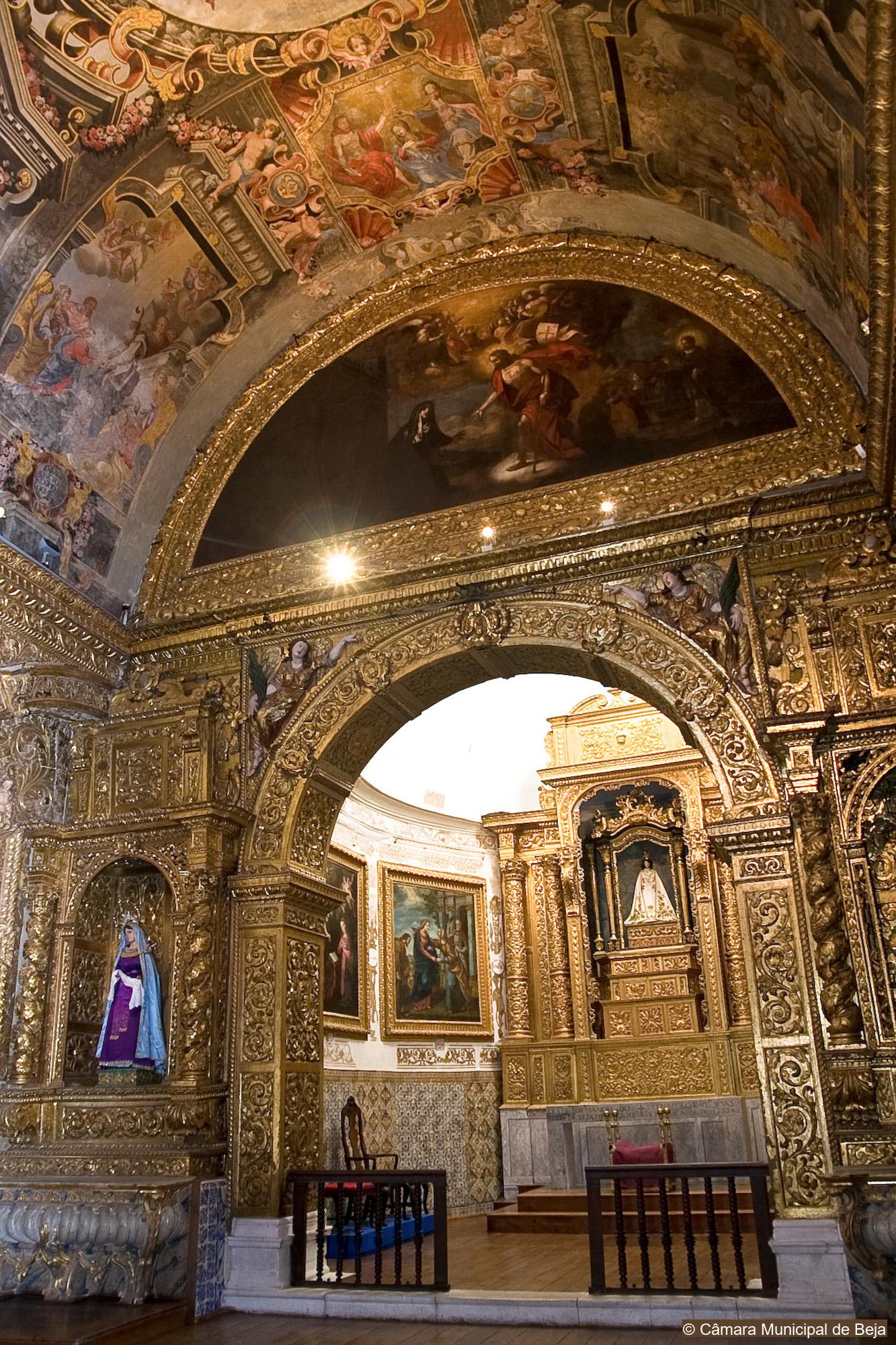
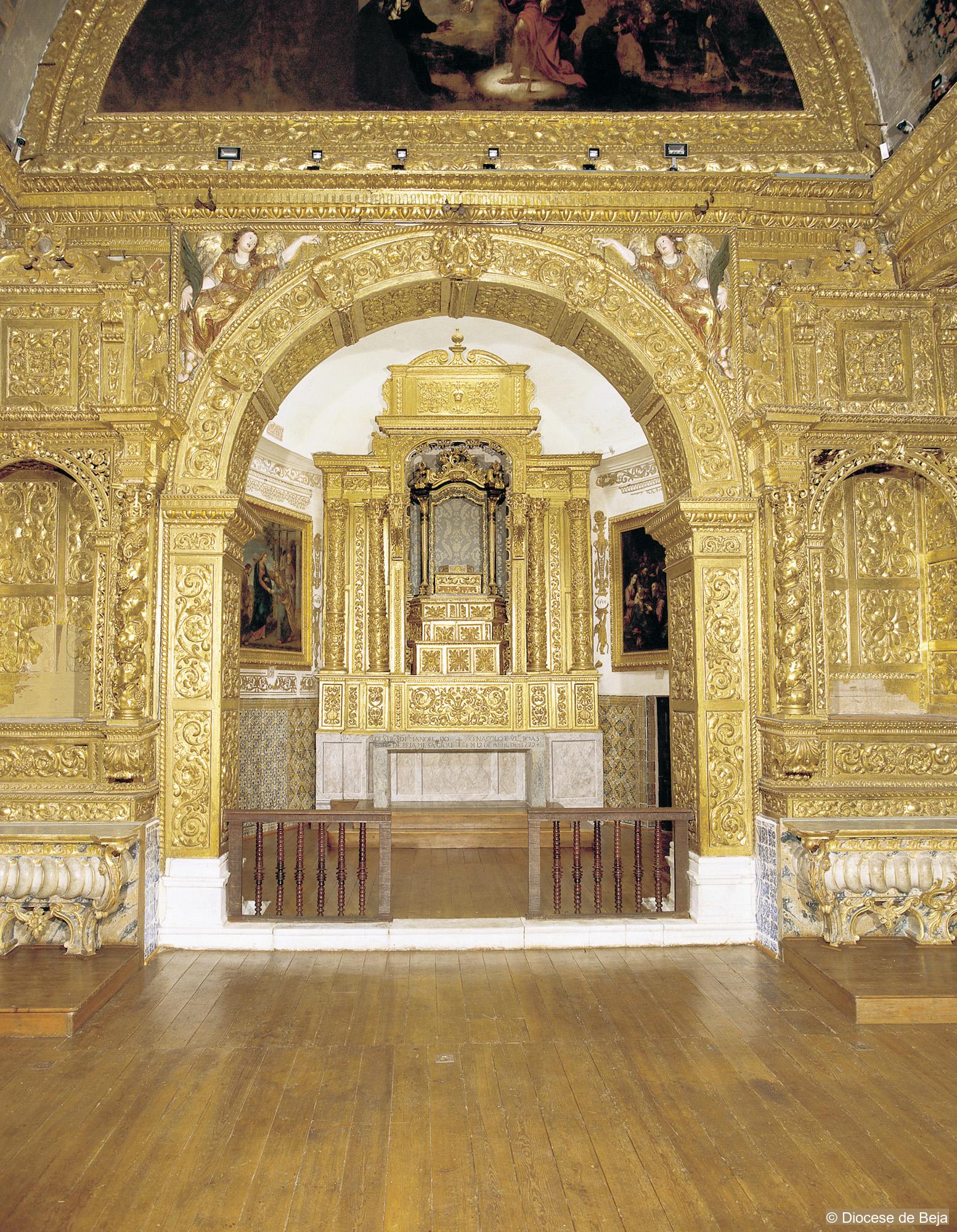
Panoramic view of the church interior
Interior
1672–1747(n.d.)
Woodcarvers: João de Touro Freitas, António de Oliveira (1675–n.d.), Manuel João da Fonseca and Francisco da Silva (1684-n.d.); painters: António de Oliveira Bernardes (1662–1732) and Pedro Figueira; azulejos painters: Gabriel del Barco (1649–c.1703)
Commissioned by the wealthy merchant, Manuel Álvares Azeitado, this is the first scarto known in Portugal, forming part of the International Baroque program. The panoramic view of the interior shows the trompe l'œil architecture of the barrel-vaulted ceiling, which appears to be a continuation of the walls. The trompe l'œil, centred towards one focal point, creates the illusion of deep recession, heavenly sphere or even an open sky.


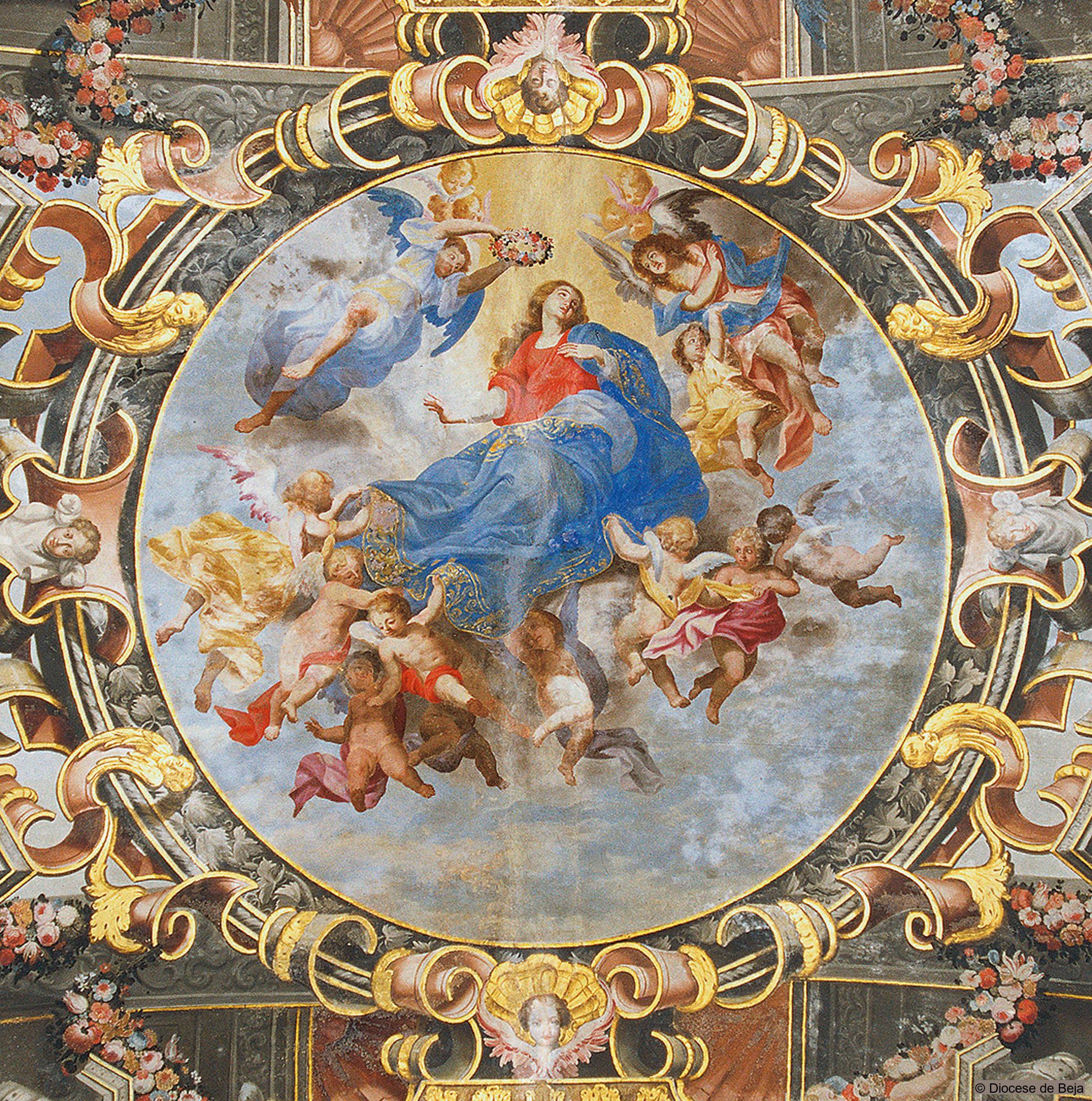
Painted ceiling (central medallion)
Nave vault
1690
António de Oliveira Bernardes (1662–1732)
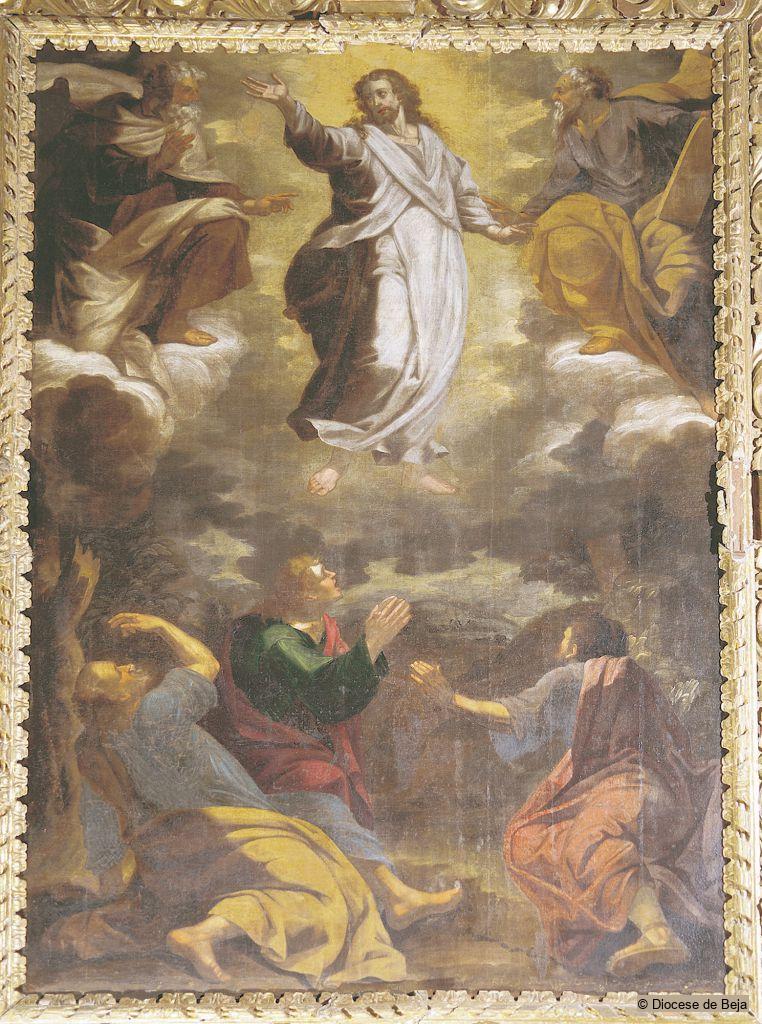
A type of ceiling painting known as di sotto in sù (“above from below”), designed to create the illusion that the figures are suspended above the viewer when seen from below. The Ascension of the Virgin is influenced by Rubens' di sotto in su ceilings. The Triumph of the Mother of God oval medallion is contained within ferronneries.
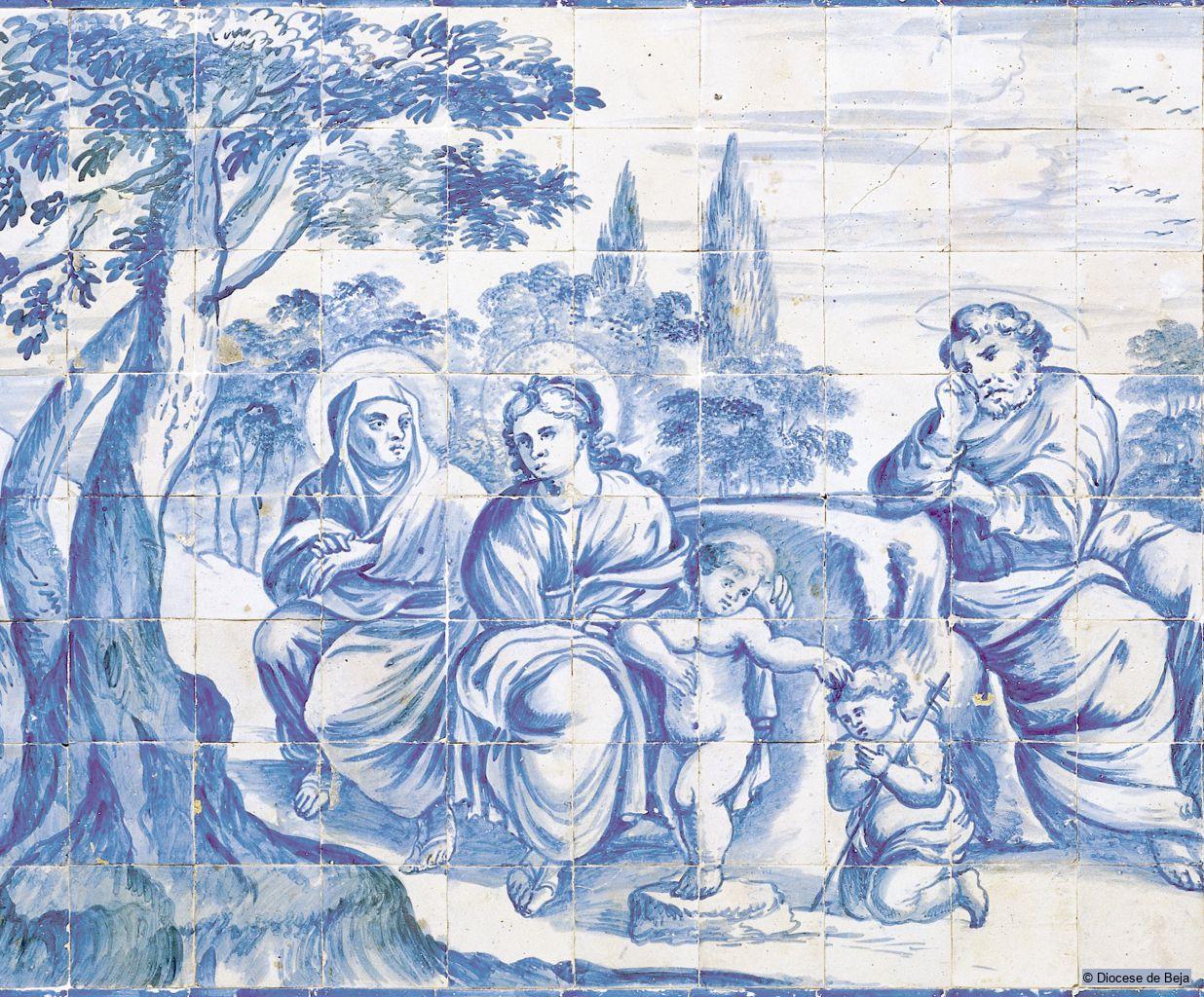
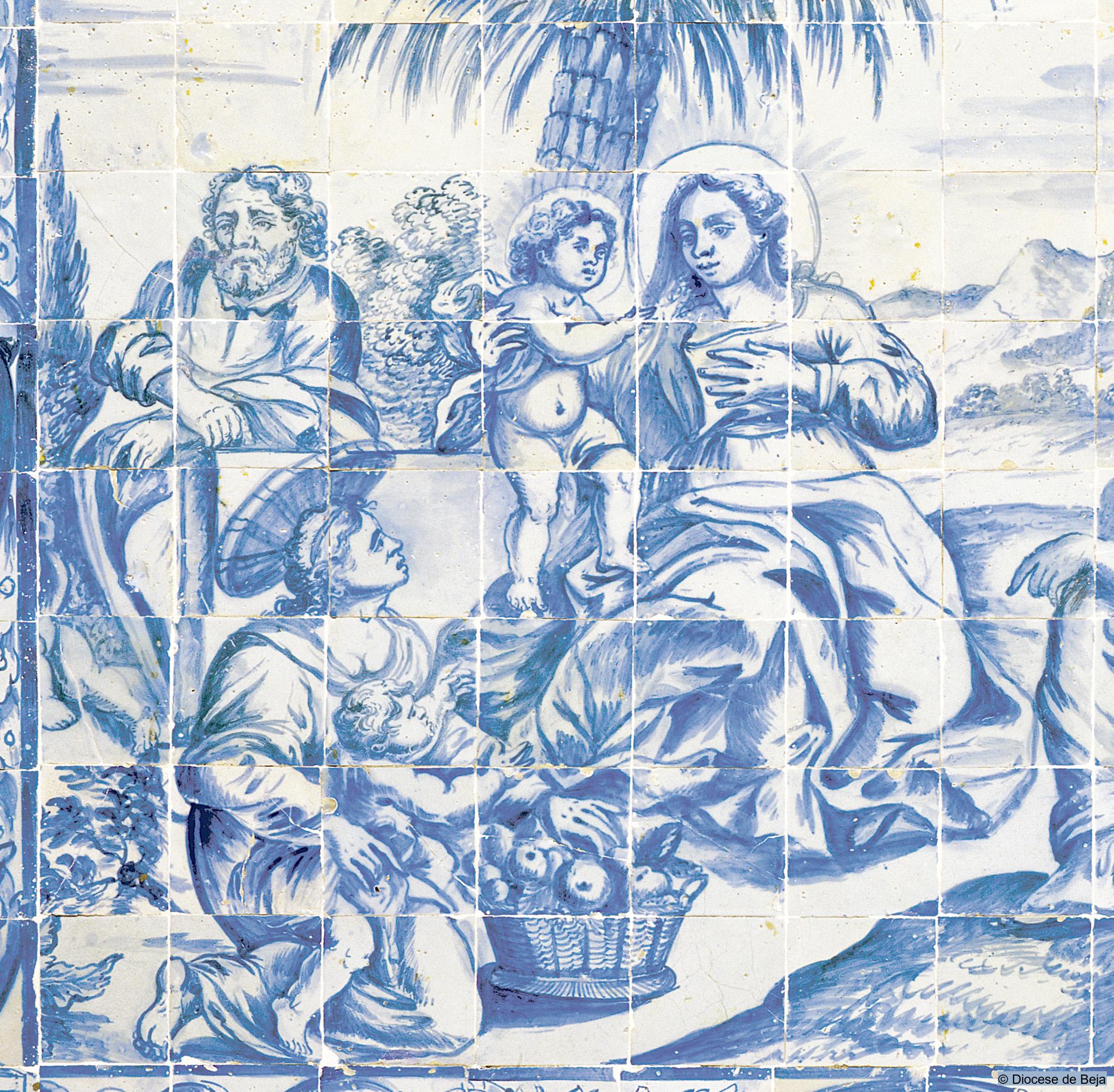
Child Jesus teaching the Virgin
Left-hand wall of the nave
1690
António de Oliveira Bernardes (1662–1732) and Pedro Figueira [n.d.]
Focusing on their lesson, Jesus and Mary appear to be engaged in a private interaction but are welcoming the viewer to join them.
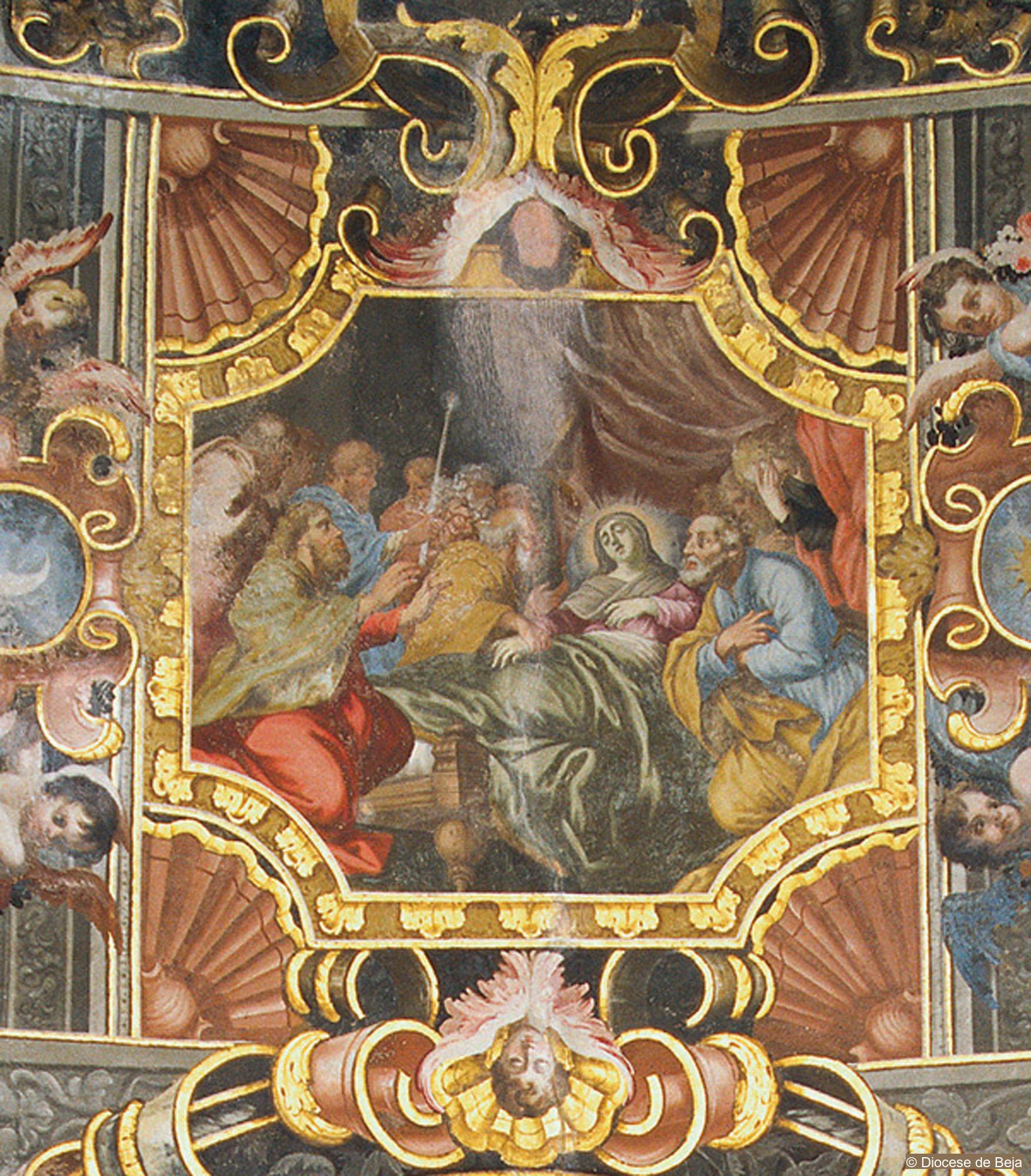
Death of the Virgin (smaller central medallion)
Nave vault
1690
António de Oliveira Bernardes (1662–1732) and Pedro Figueira [n.d.]
Small octagonal medallion showing a representation of the Death of the Virgin inspired by the mannerist engravings of Adrien Collaert and Cornelis Galle.
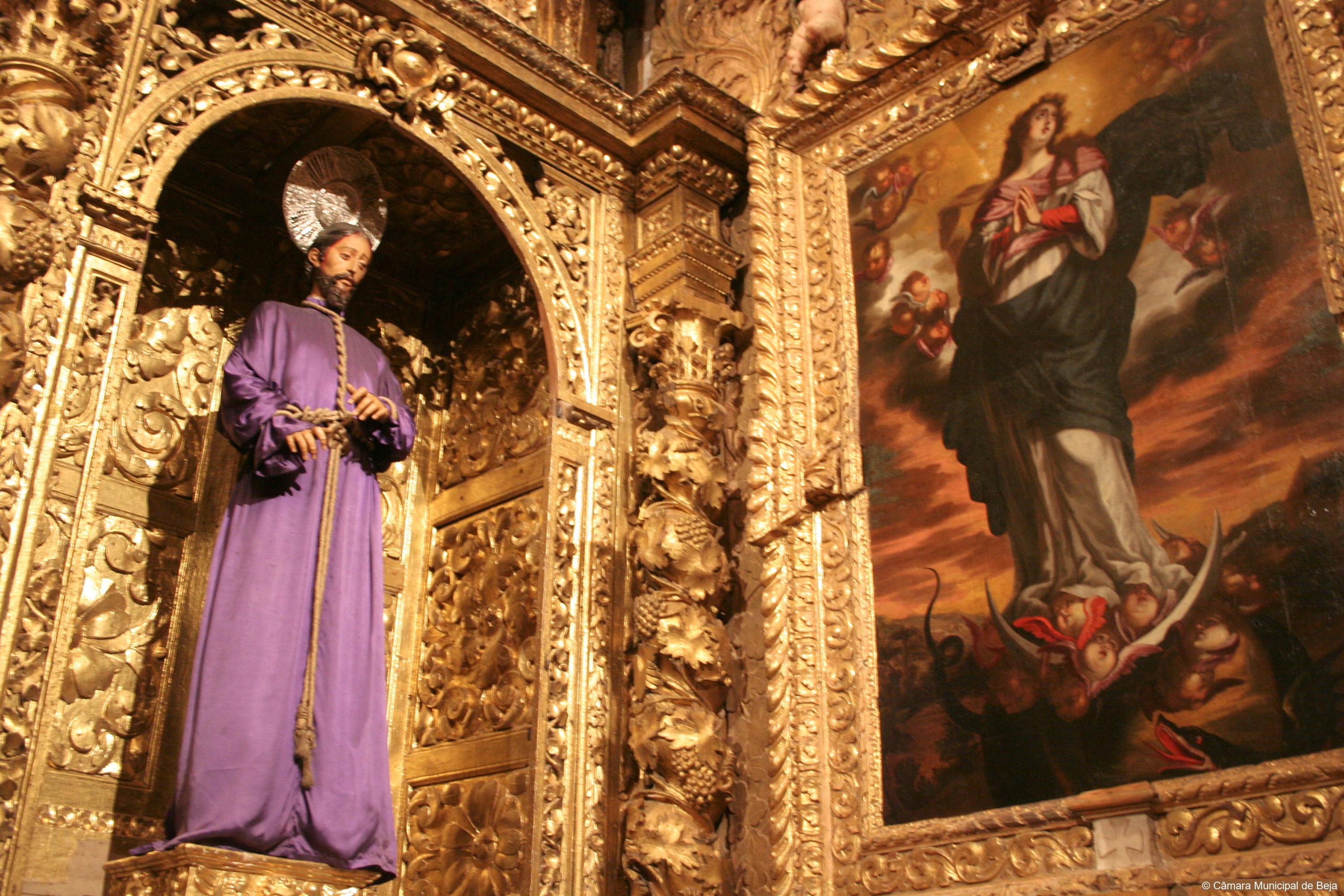
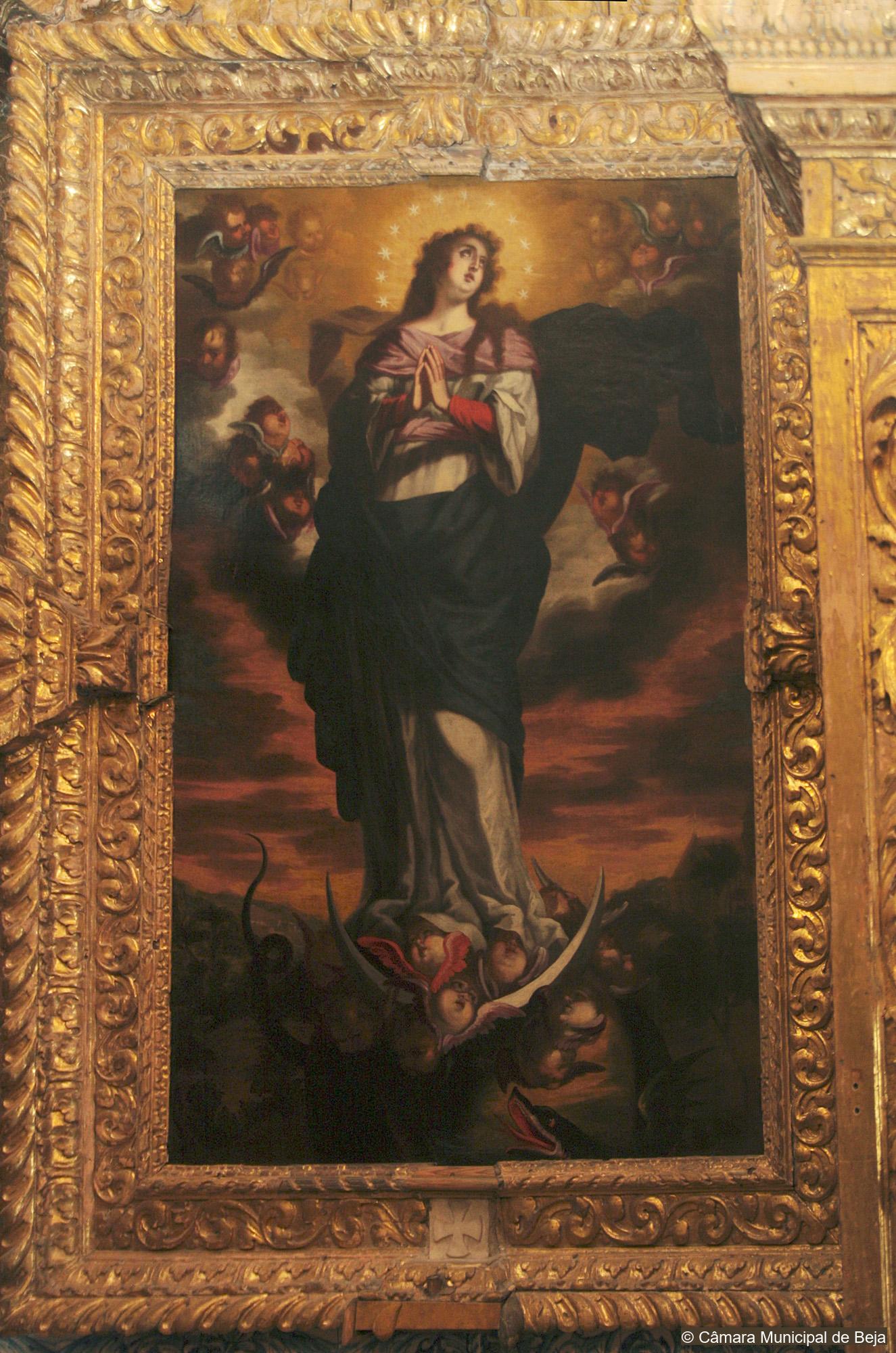
Immaculate Conception
Near the pulpit
c. 1695–1698
António de Oliveira Bernardes (1662–1732)
In 1646, on restoration of Portugal’s Independence from Spain, King João IV officially consecrated Portugal to the Virgin of the Immaculate Conception. Depictions of scenes from the Life of the Virgin go back to the earliest days of Christian art but it is unusual to see this particular scene depicted.
Selected bibliography:
Serrão, V., Lameira, F., Falcão, J. A., A Igreja de Nossa Senhora dos Prazeres em Beja, Arte e História de um Espaço Barroco (1672–1698), Lisbon, 2007.
Additional Copyright Information:
Copyright images "Diocese de Beja": Departamento do Património Histórico da Diocese de Beja.
Citation of this web page:
José António Falcão "Church of Nossa Senhora dos Prazeres" in "Discover Baroque Art", Museum With No Frontiers, 2026.
https://baroqueart.museumwnf.org/database_item.php?id=monument;BAR;pt;Mon11;1;en
Prepared by: José António FalcãoJosé António Falcão
SURNAME: Falcão
NAME: José António
AFFILIATION: Department of Historical and Artistic Heritage, Diocese of Beja
TITLE: Director
José António Falcão is a graduate in History of Art and has an MA in Museology and a PhD in Architecture. A Museum Curator and University Professor, he has been Director of the Department of Historical and Artistic Heritage in the Diocese of Beja since its foundation in 1984. He has extensive experience in the field of religious heritage and is a member of the Portuguese Academy of History and the National Academy of Fine Arts. José António Falcão is President of the Portuguese Association of Church Museums and Deputy General Secretary of Europae Thesauri.
Translation by: Lili Cavalheiro, Cristina CorreiaCristina Correia
SURNAME: Correia
NAME: Cristina
AFFILIATION: Eça de Queirós Public High School, Lisbon and MWNF
TITLE: Senior Teacher, Local Co-ordinator and Vice-President of MWNF
CV:
Cristina Correia is a History graduate and, since 1985, a Senior Teacher of History at the Eça de Queirós Public High School, Lisbon where she also lectures in Portuguese Language and Culture for non-native speakers. From 1987 to 1998 she was involved with youth affairs, primary prevention and the Camões Institute. She is Vice-President and Local Co-ordinator (Portugal) for MWNF.
Translation copyedited by: Mandi GomezMandi Gomez
Amanda Gomez is a freelance copy-editor and proofreader working in London. She studied Art History and Literature at Essex University (1986–89) and received her MA (Area Studies Africa: Art, Literature, African Thought) from SOAS in 1990. She worked as an editorial assistant for the independent publisher Bellew Publishing (1991–94) and studied at Bookhouse and the London College of Printing on day release. She was publications officer at the Museum of London until 2000 and then took a role at Art Books International, where she worked on projects for independent publishers and arts institutions that included MWNF’s English-language editions of the books series Islamic Art in the Mediterranean. She was part of the editorial team for further MWNF iterations: Discover Islamic Art in the Mediterranean Virtual Museum and the illustrated volume Discover Islamic Art in the Mediterranean.
True to its ethos of connecting people through the arts, MWNF has provided Amanda with valuable opportunities for discovery and learning, increased her editorial experience, and connected her with publishers and institutions all over the world. More recently, the projects she has worked on include MWNF’s Sharing History Virtual Museum and Exhibition series, Vitra Design Museum’s Victor Papanek and Objects of Desire, and Haus der Kulturen der Welt’s online publication 2 or 3 Tigers and its volume Race, Nation, Class.
MWNF Working Number: PT 01