

 Back
Back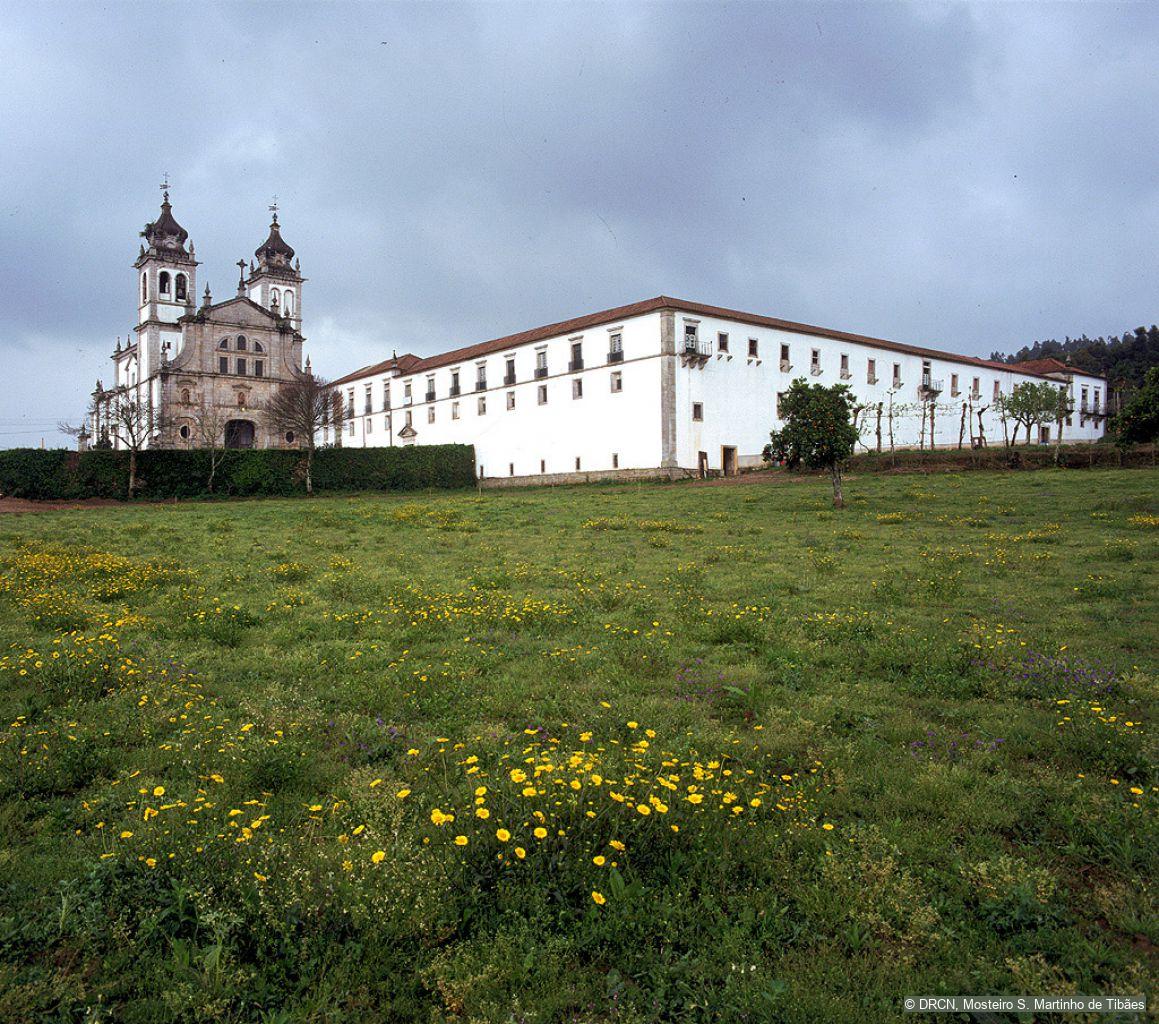


 Add to My Collection
Name of Monument:
St. Martinho de Tibães Monastery
Also known as:
Tibães Monastery
Location:
Mire de Tibães, Braga, Portugal
Rua do Mosteiro
4700-565 Mire de Tibães
T : +351 253 622 670 / +351 253623950
F : +351 253 623 951
E : msmtibaes@culturanorte.pt
Direcção Regional da Cultura do Norte – Vila Real (Responsible Institution)
Date:
17th–18th centuries
Artists:
Architects: Manuel Álvares [n.d.], João Turriano [n.d.]; sculptors/carvers: Friar José Cipriano da Cruz Sousa (c. 1645–1716); André Soares (1720–1769), José Álvares de Araújo (active 1756); Friar José de Santo António Vilaça (1731–1809)
Denomination / Type of monument:
Religious architecture, monastery
Patron(s):
Order of Saint Benedict
History:
The monastery was founded in the 12th century and rebuilt between the 17th century and the 18th century, when important works of reconstruction were once again undertaken. With the dissolution of the religious orders in Portugal between 1833 and 1834, the monastery was abandoned and all its assets sold at public auction. In 1864 it was acquitted by the Portuguese state.
Description:
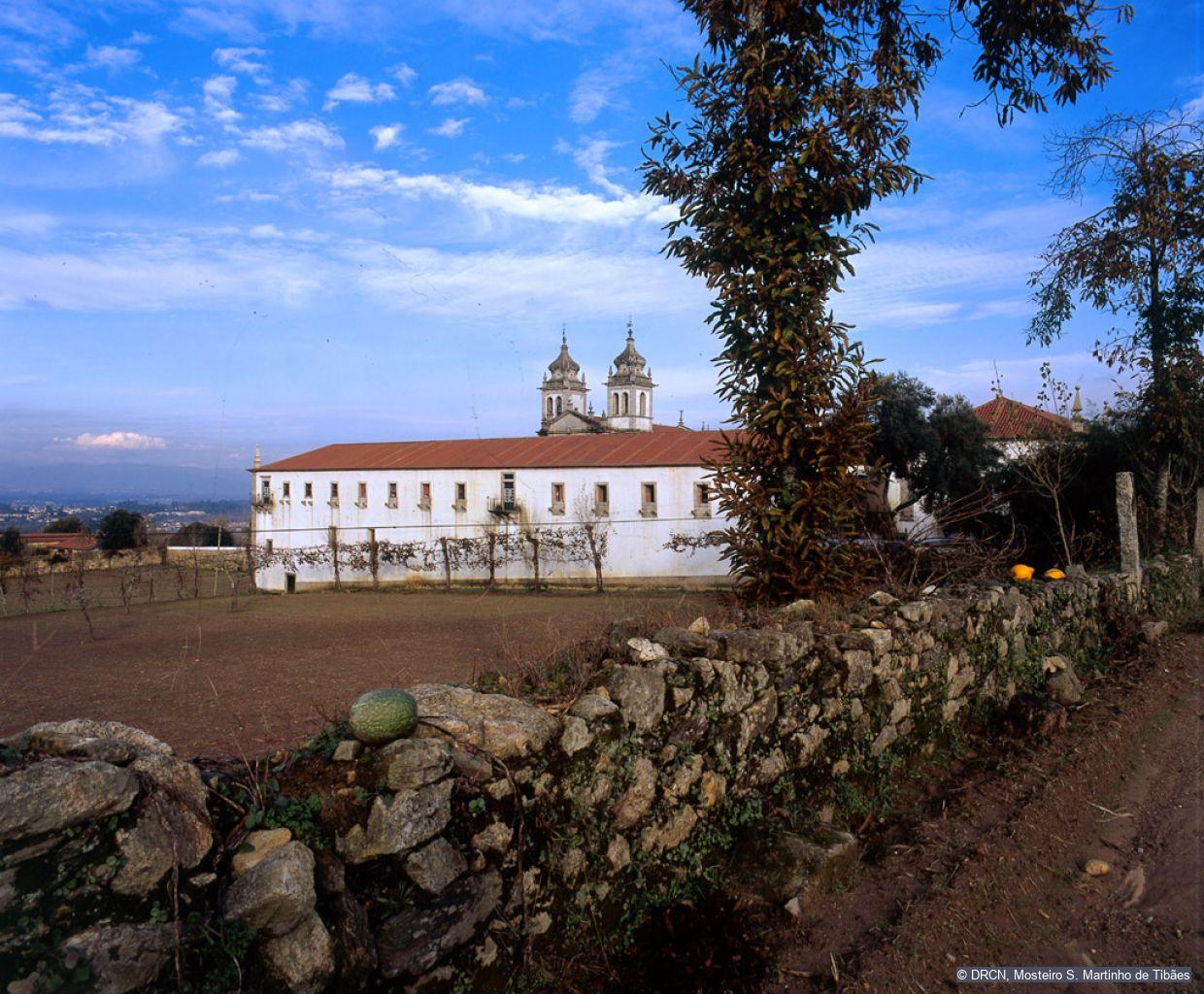
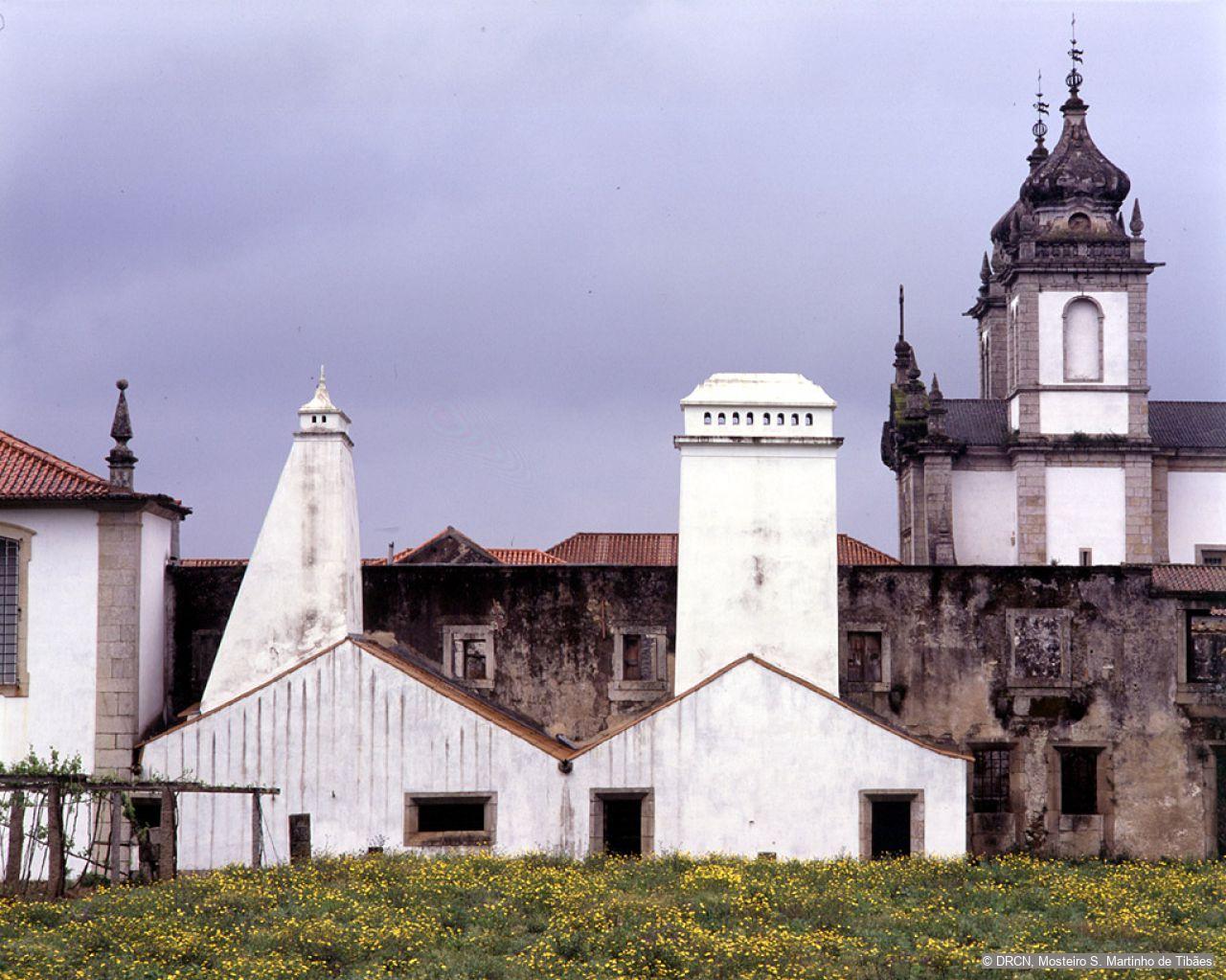
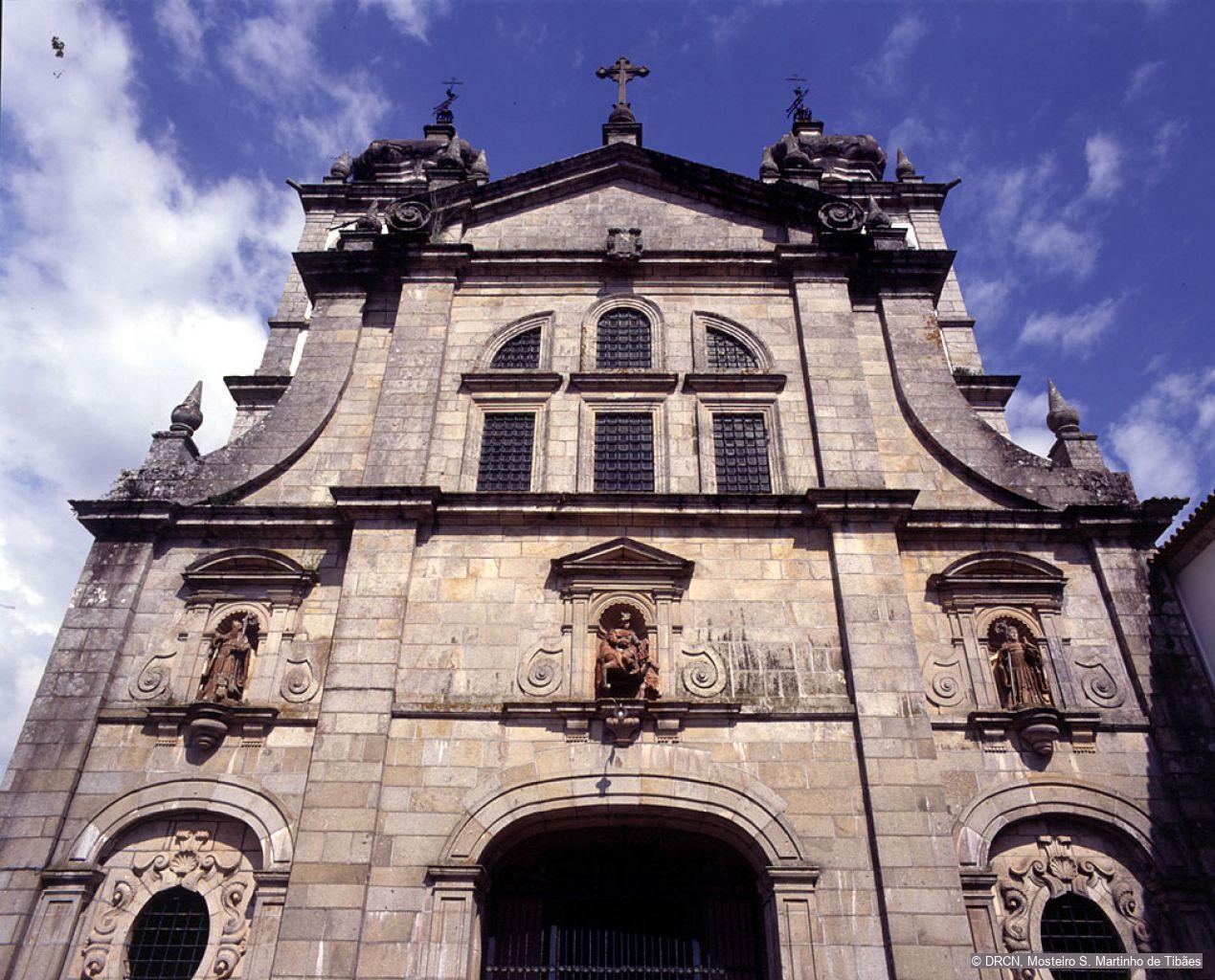
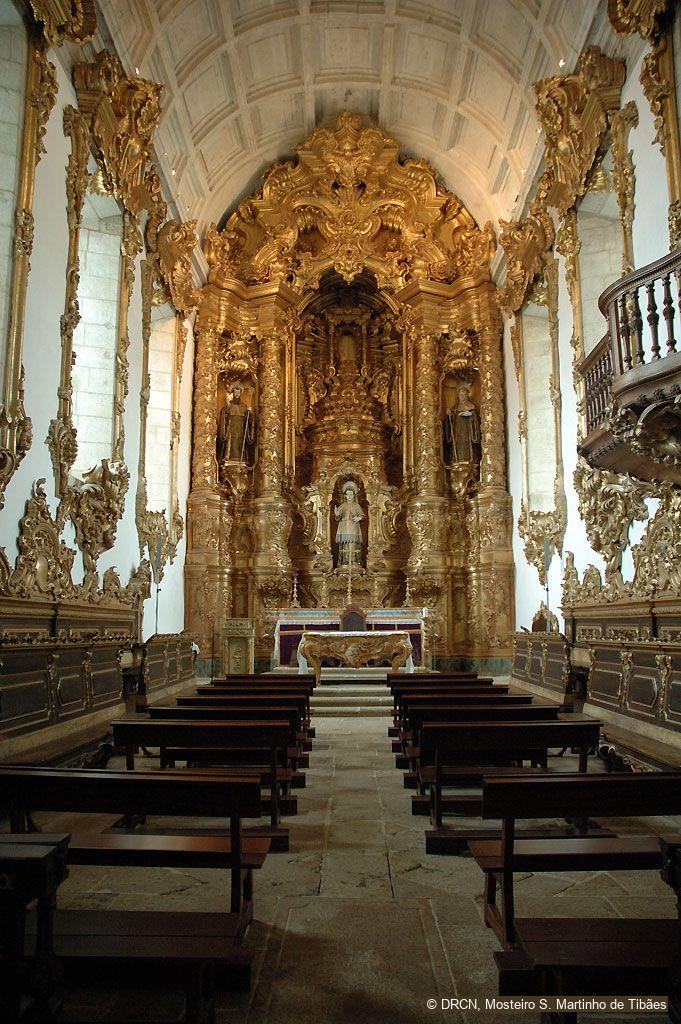
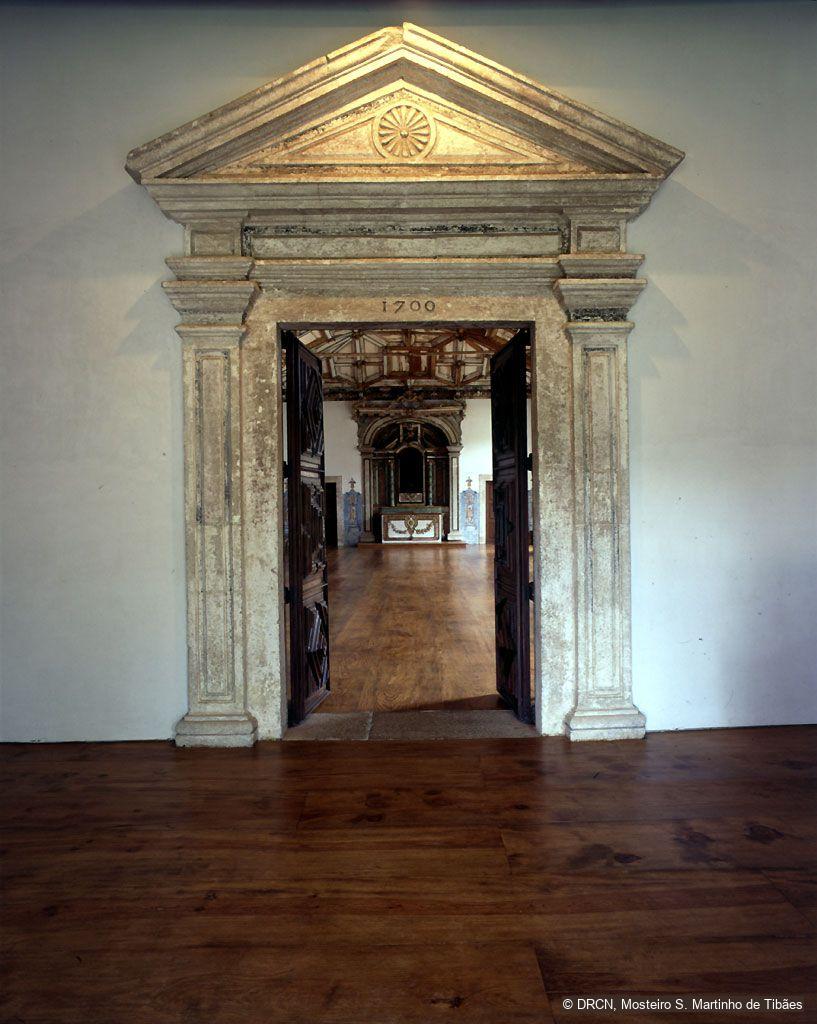
The Monastery is composed of a large building with a church, cloisters, courtyards and some monastic areas or adjoining wings. There is also a walled convent that includes gardens, an agricultural area and a forest. The church was built between 1628 and 1661 to the plans of Manuel Álvares and Friar João Turriano. “Plain” in style, its dimensions are huge. The interior decoration is notable for its decorative woodcarving designed and carved by Friar Cipriano da Cruz Sousa, André Soares and Friar José de Santo António Vilaça. The importance of Tibães Monastery is due also to its role as a “workshop-school” for a group of woodcarvers, sculptors, architects, master masons, carpenters, and other artists working in the north-west of the Peninsula.
The monastic enclosure is unique because of the forest, large rural farm and Baroque garden. The garden has monumental fountains with a remarkable hagiographic and allegoric iconography and also has some important hydraulic pieces that are still in operation. It stands out as a unique example of Baroque monastic garden design.
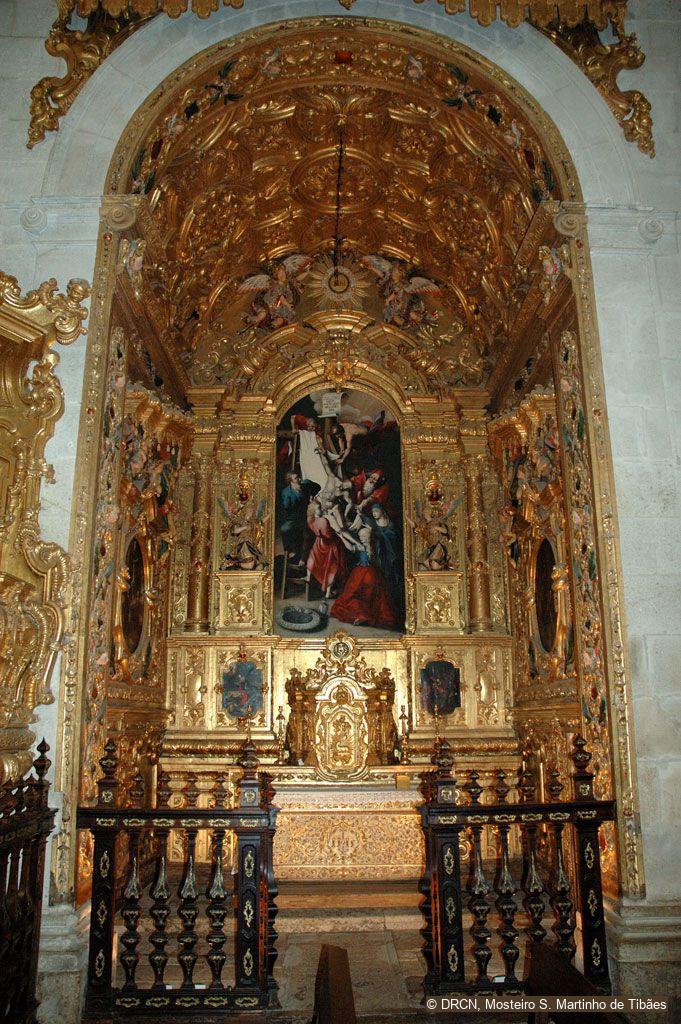
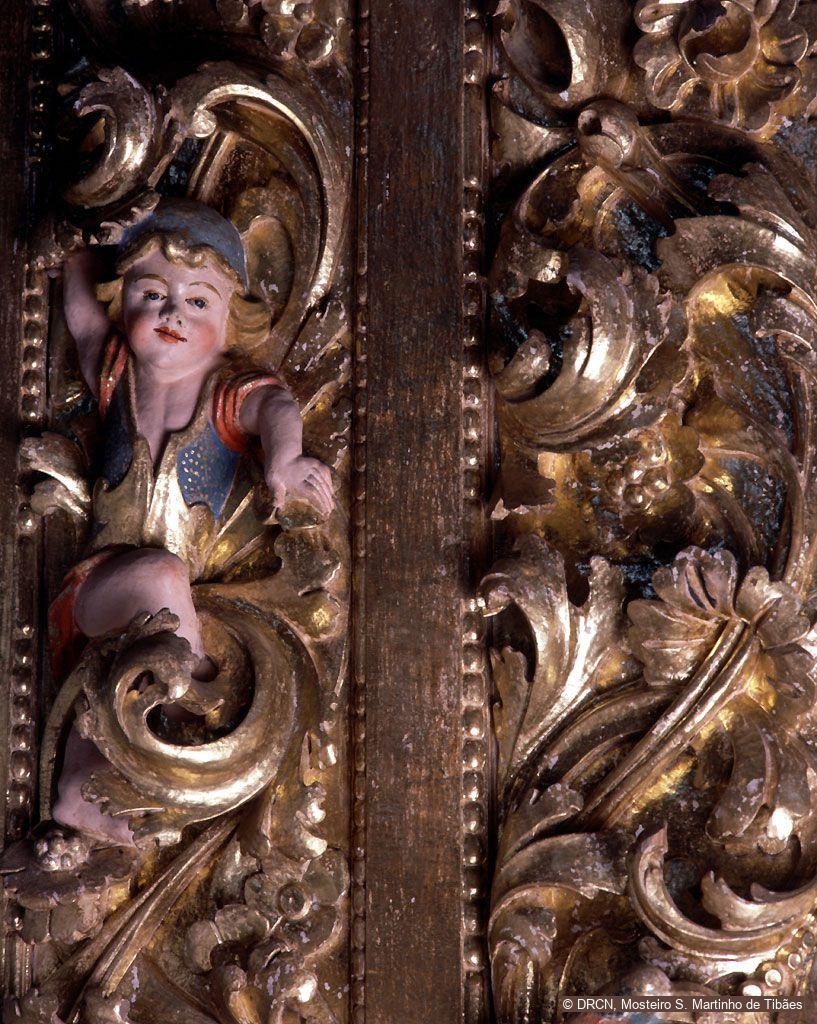
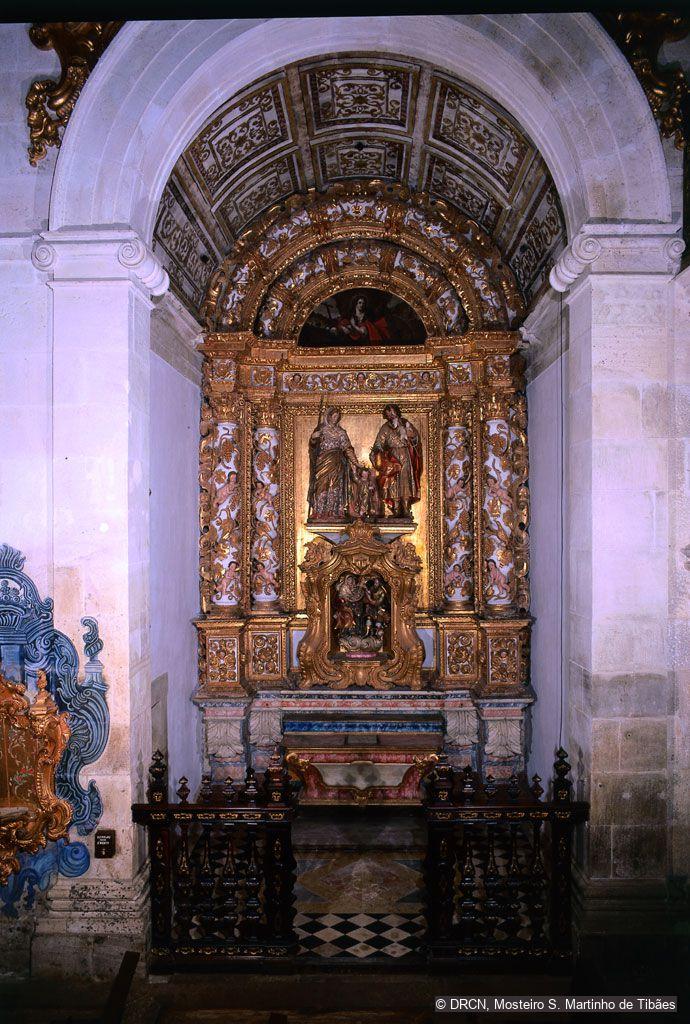
St. Martinho de Tibães Monastery is composed of four main parts: the church, monastery and adjoining ensemble, the ruins and enclosure. The church was rebuilt between 1628 and 1661 to the plans of Manuel Álvares and Friar João Turriano. The interior decoration is notable, mainly composed of gilt woodcarving, designed and carved by Friar Cipriano da Cruz Sousa, André Soares and Friar José de Santo António Vilaça.
How Monument was dated:
Historical evidence and stylistic analysis
Special features
Cemetery Cloister
Monastery ensemble
17th–18th centuries
Unknown
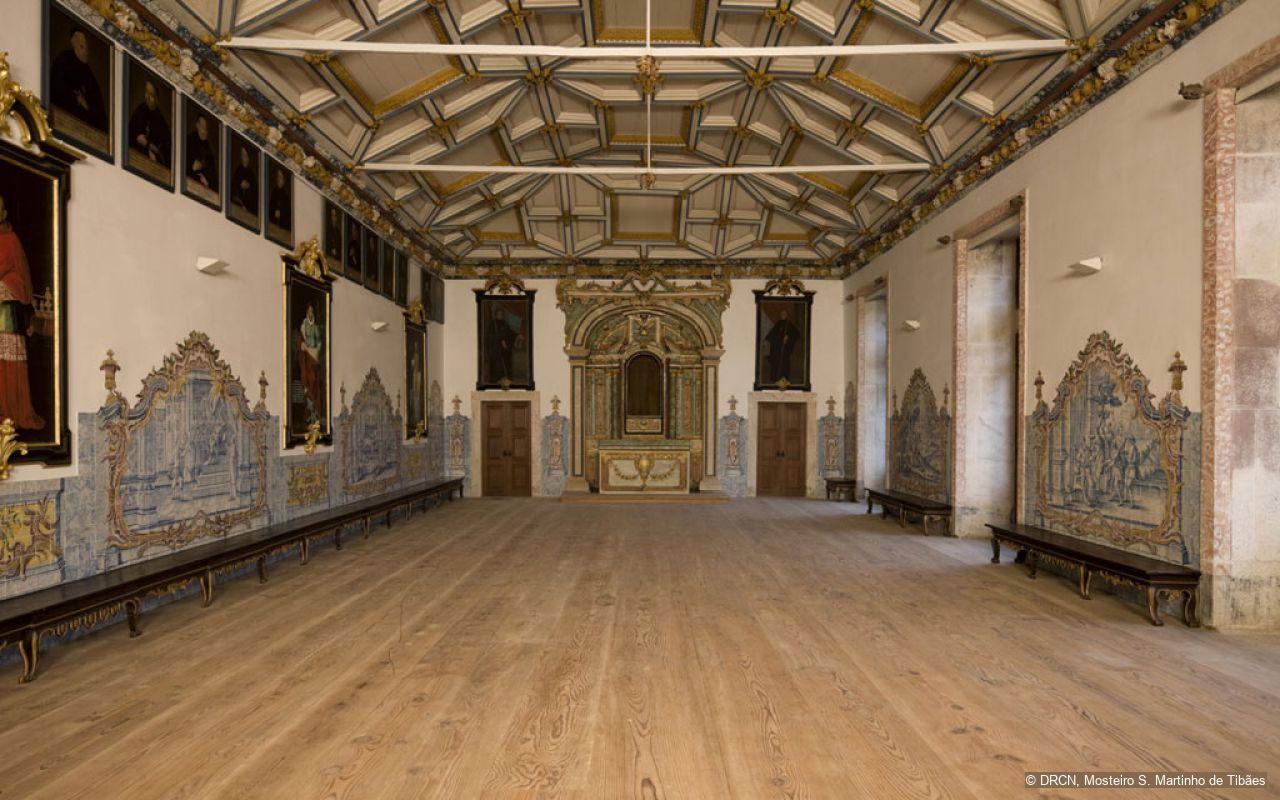
The Monastery includes two cloisters: the Refectory Cloister ruins; the Cemetery Cloister, in the classical style, comprises arched galleries richly decorated with tiles that are incomplete. The monastic areas or adjoining wings include the Jericho Garden; the Courtyard of St. John in its original state as far as its structure and design are concerned, and complete with a small garden and monumental fountain at the centre and the Wine Cellar Courtyard.
Monastic wings
Monastic ensemble
17th–18th centuries
Unknown
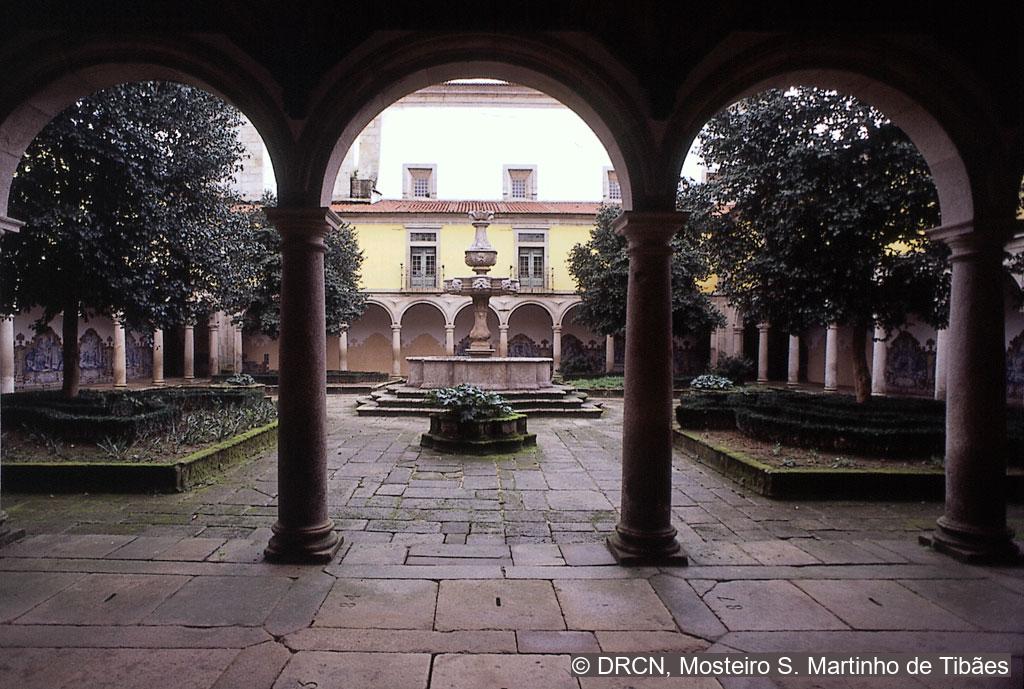
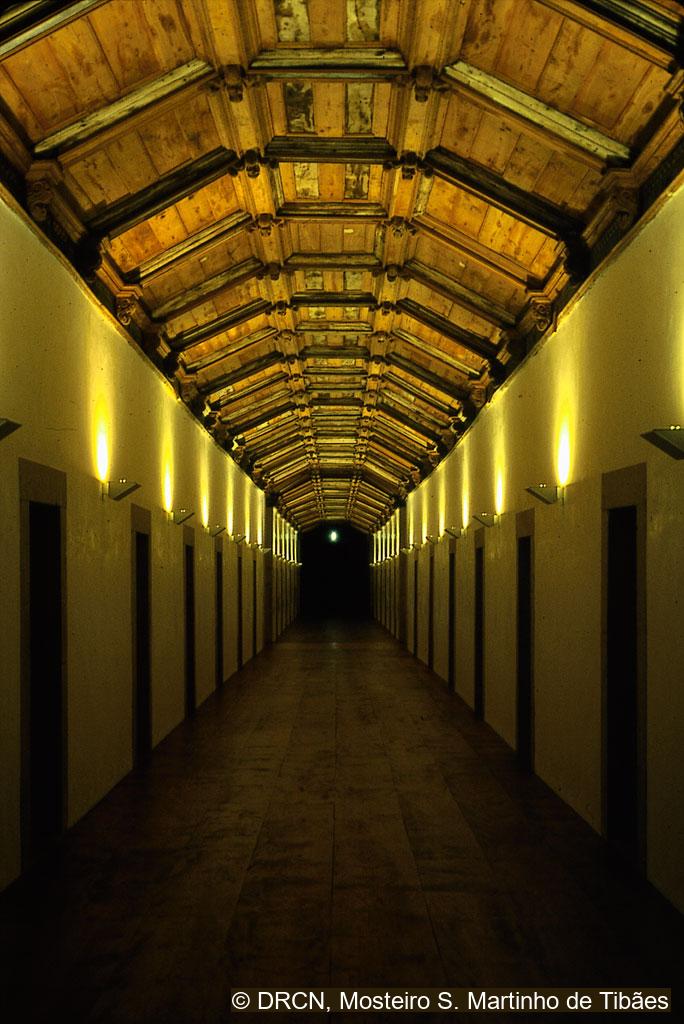
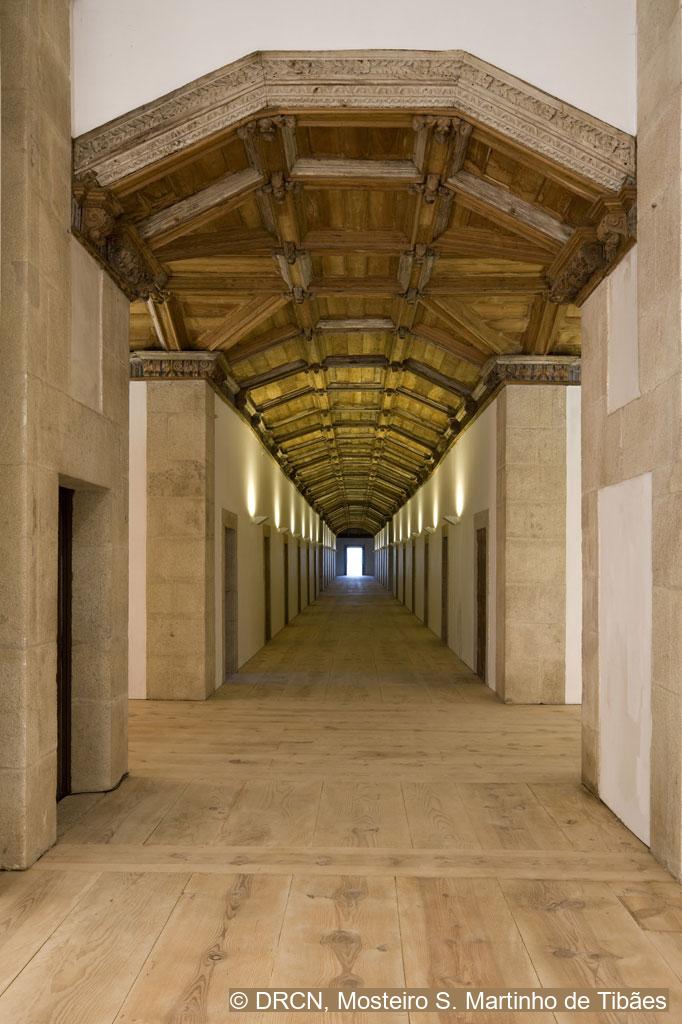
The newly renovated large corridors of these wings portray the eloquence of the great baroque monastic spaces, not due to the excessive ornamentations, but rather due to its size, its infinite passages and the repetitive and monotonous spans of the cells with its partition walls.
Stairway
Cerca (Enclosure), St. Martinho de Tibães Monastery
c. 1725
Unknown
The Tibães Stairway was built almost simultaneously with the first phase of construction of Bom Jesus de Braga in around 1725. It can be considered as part of the baroque “fashion” of stairways.
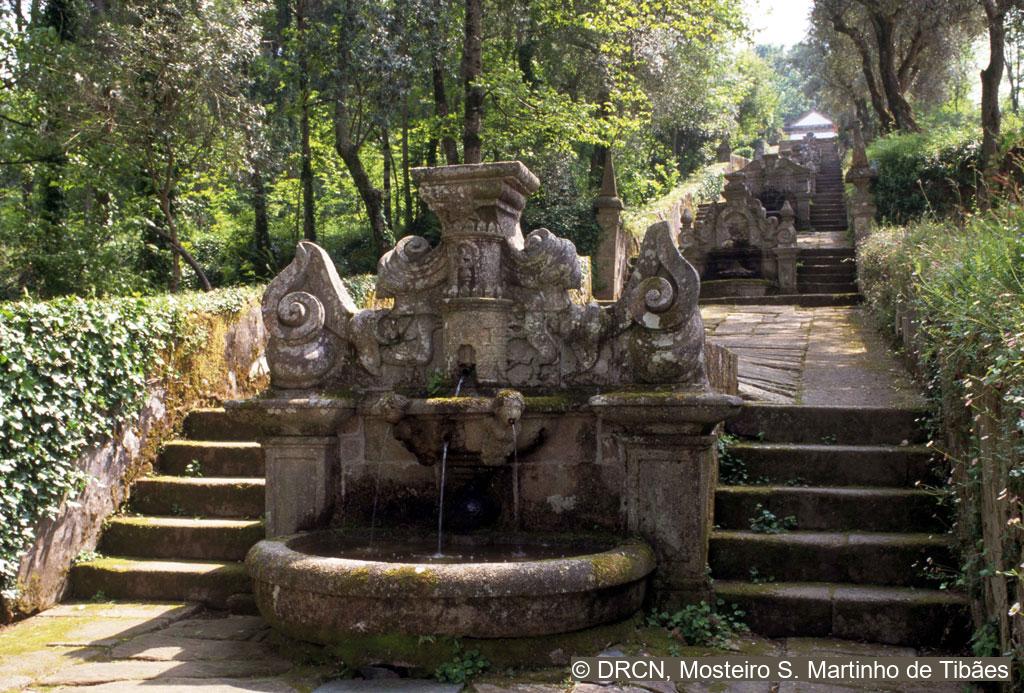
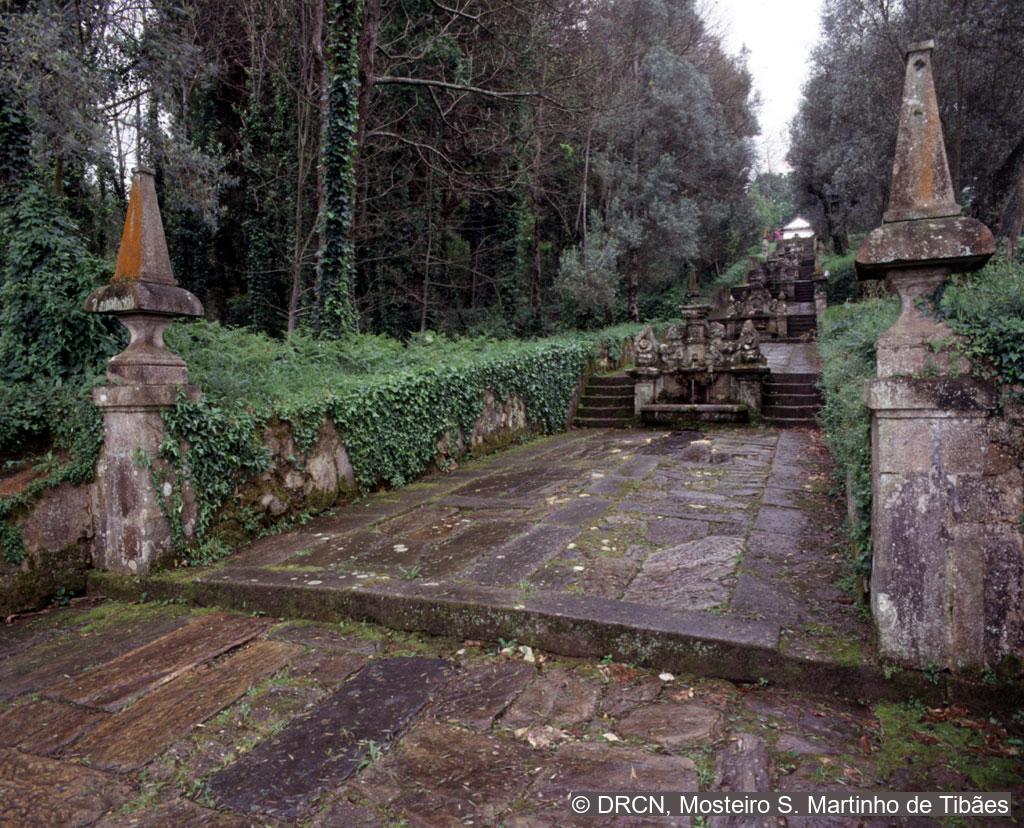
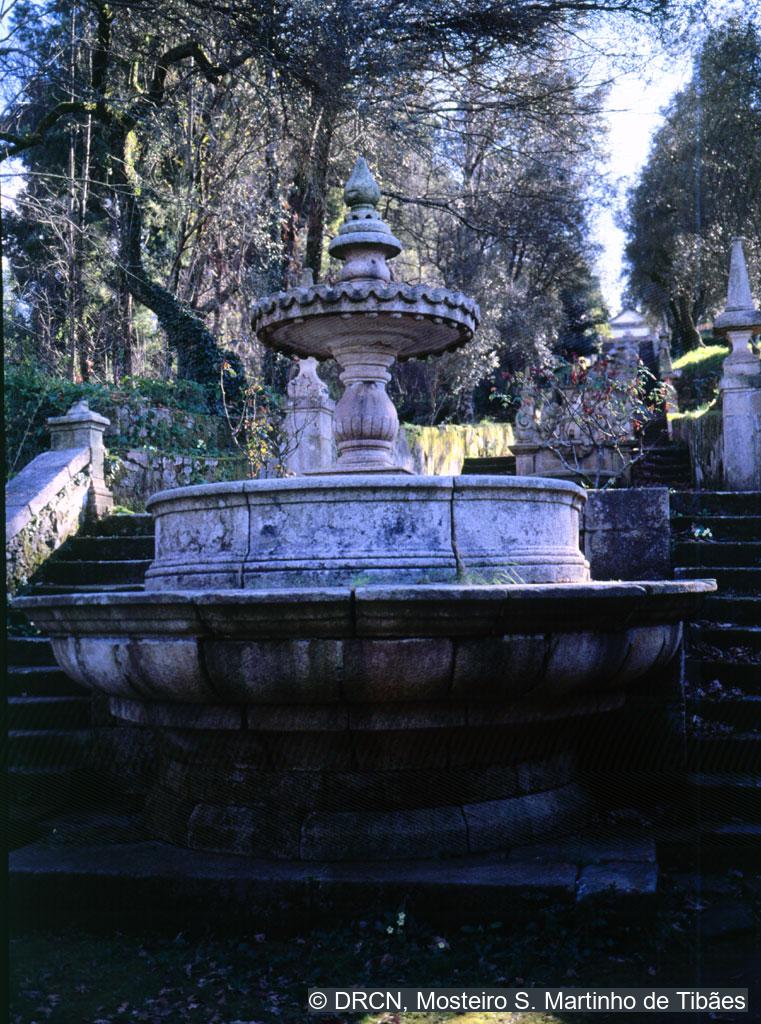
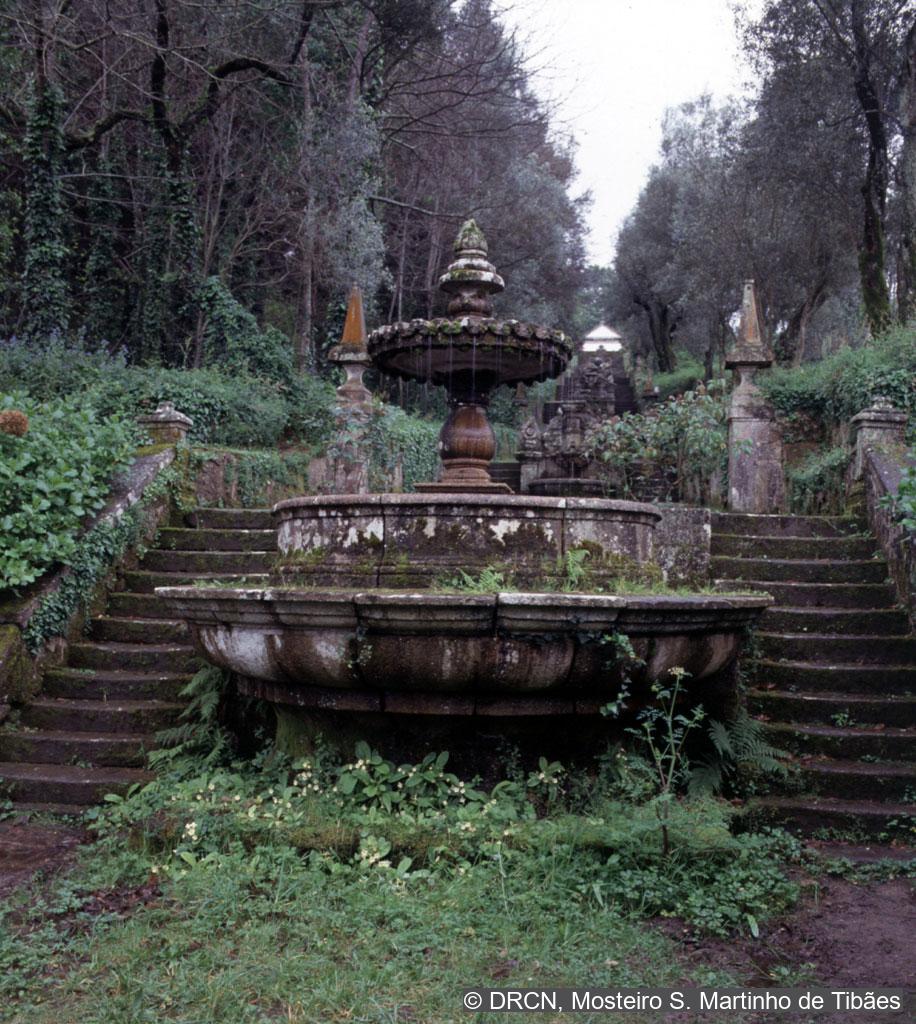
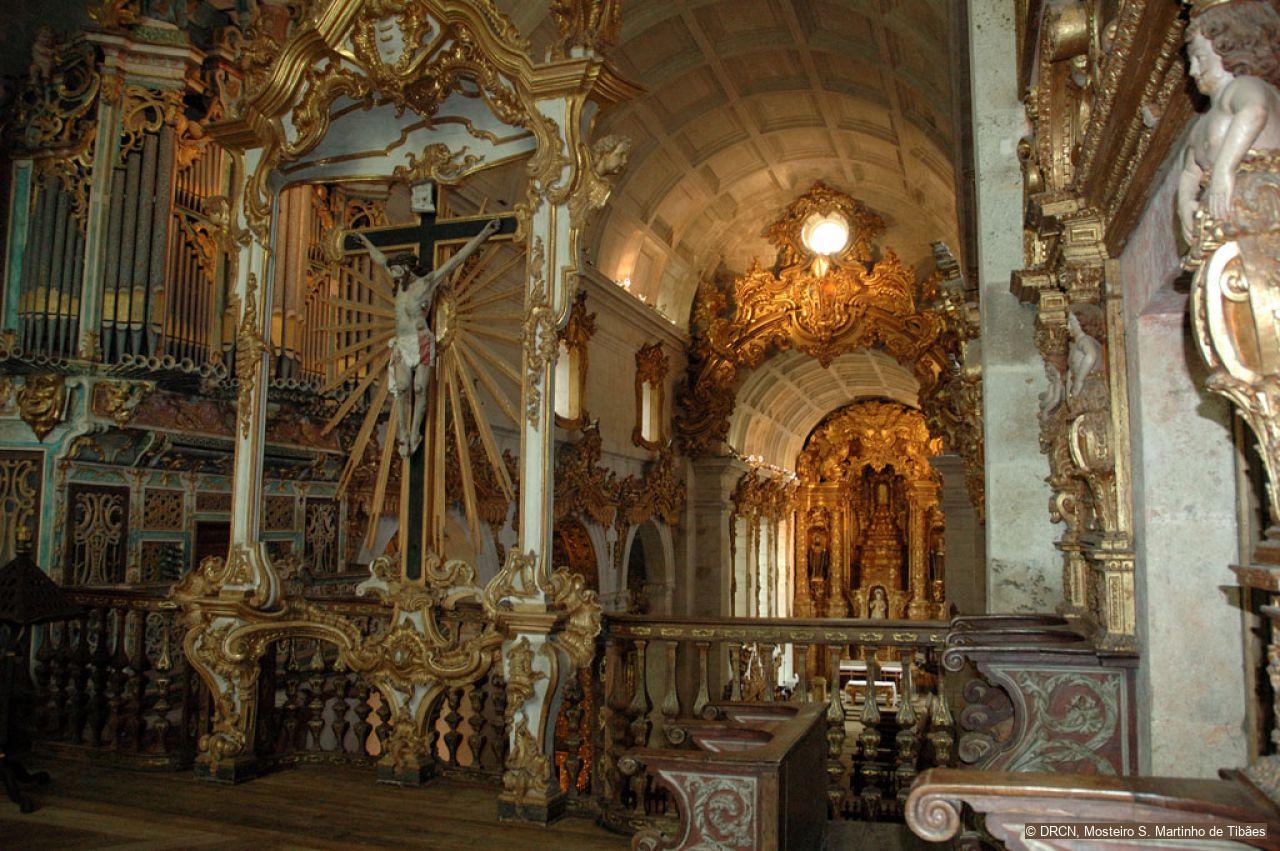
Church interior viewed from the choir
Late 18th century
André Soares (1720–1769), Friar José de Santo António Vilaça (1731–1809) and others
Gilded woodcarving on the triumphal arch and main altar retable.
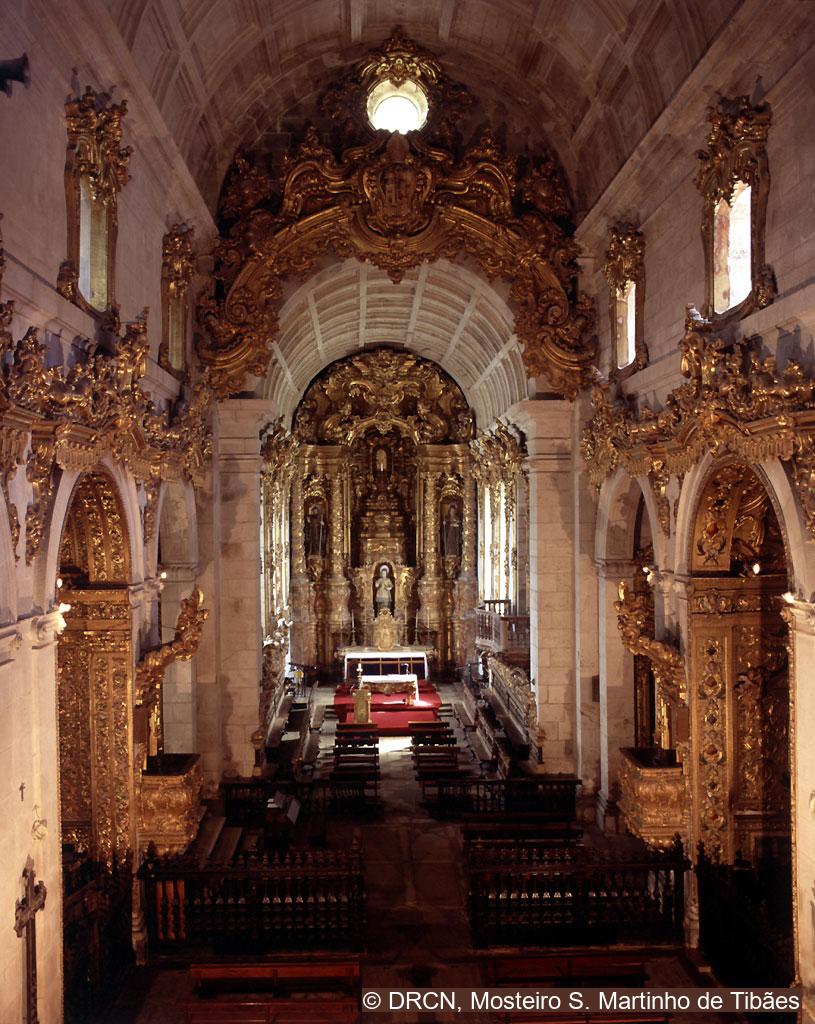
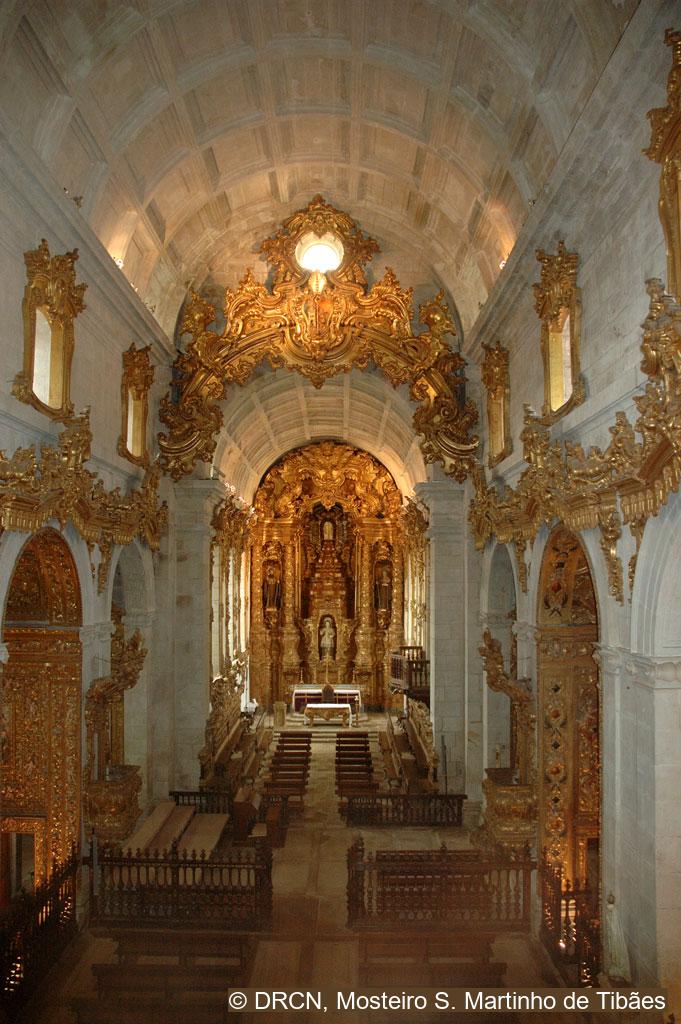
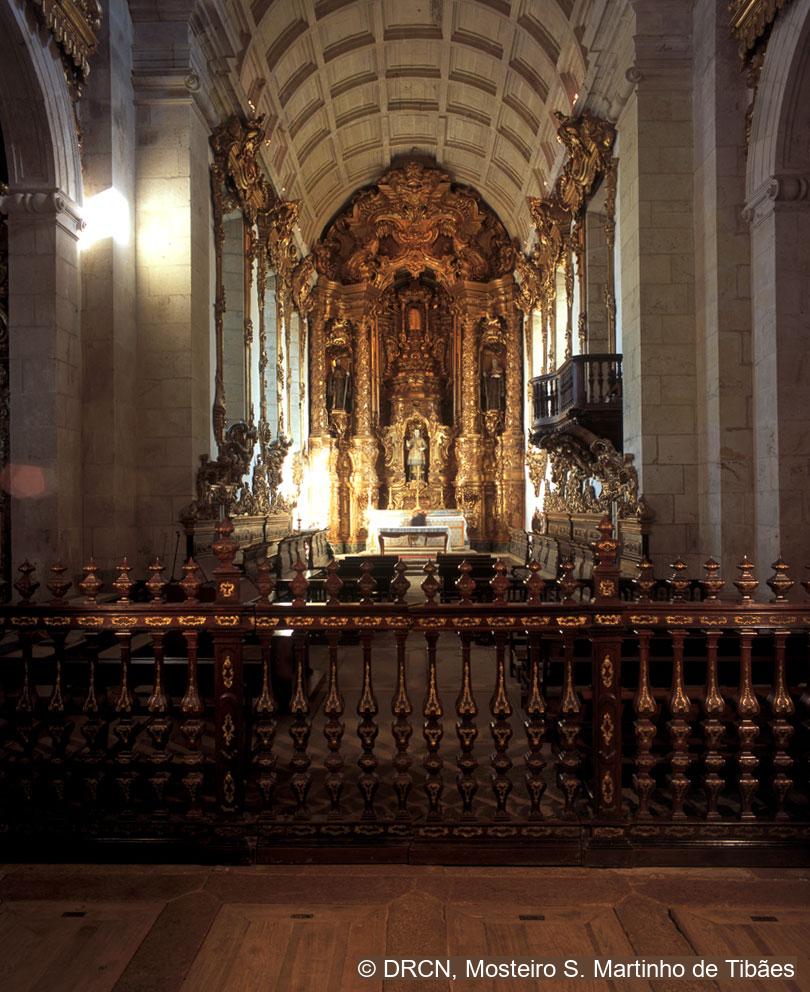
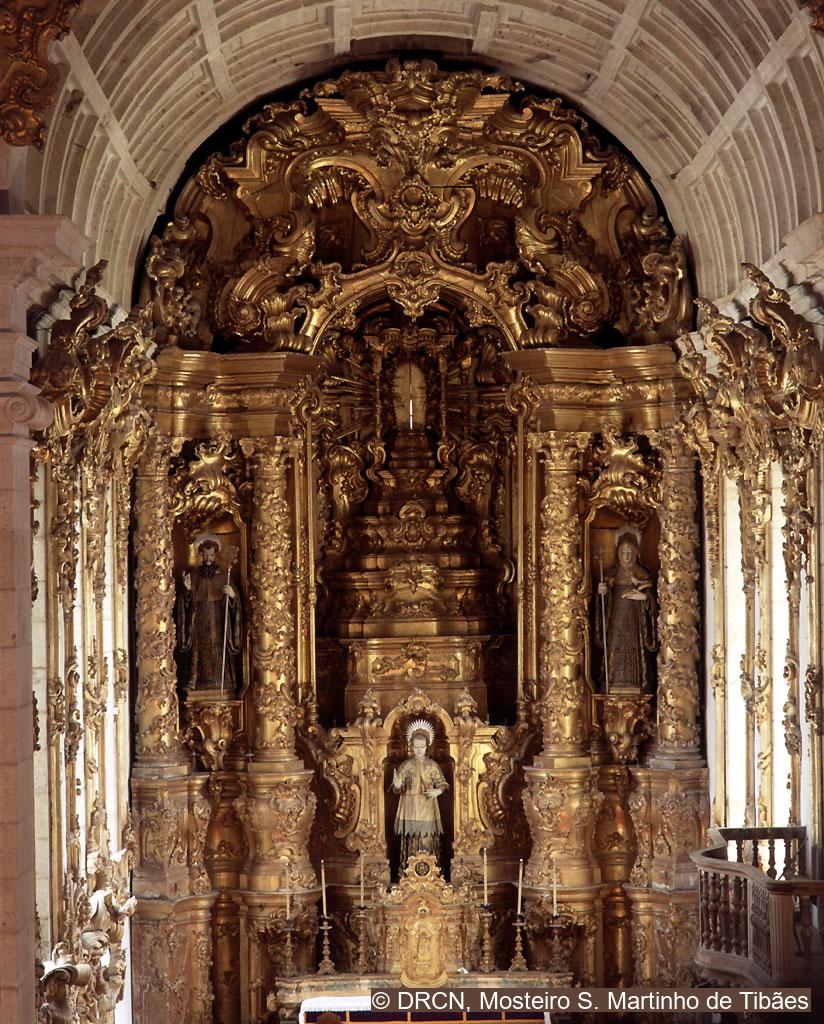
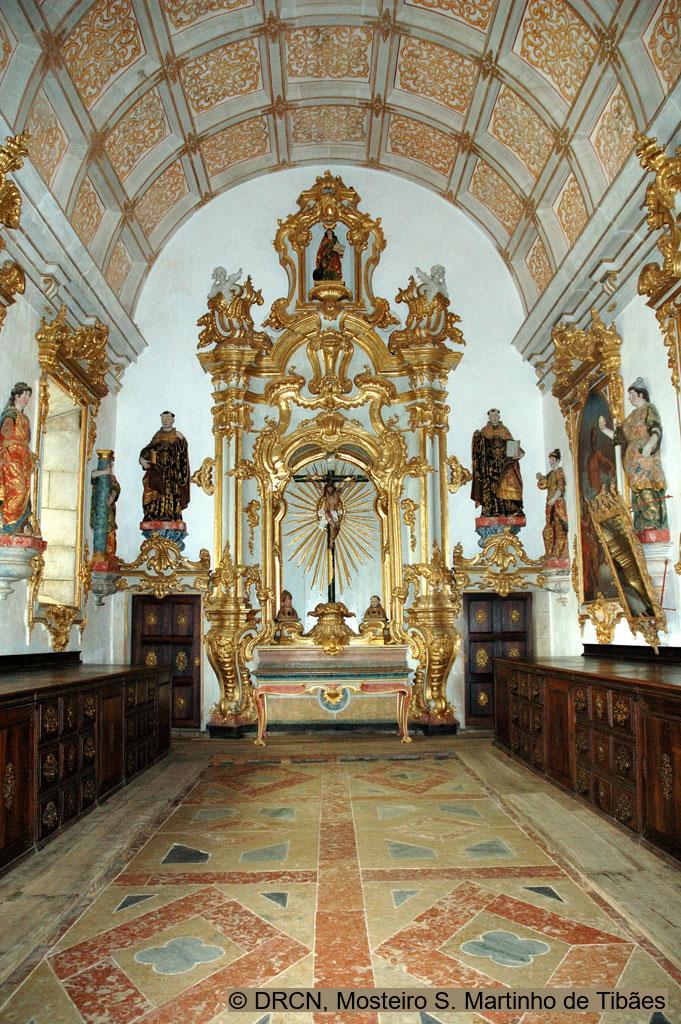
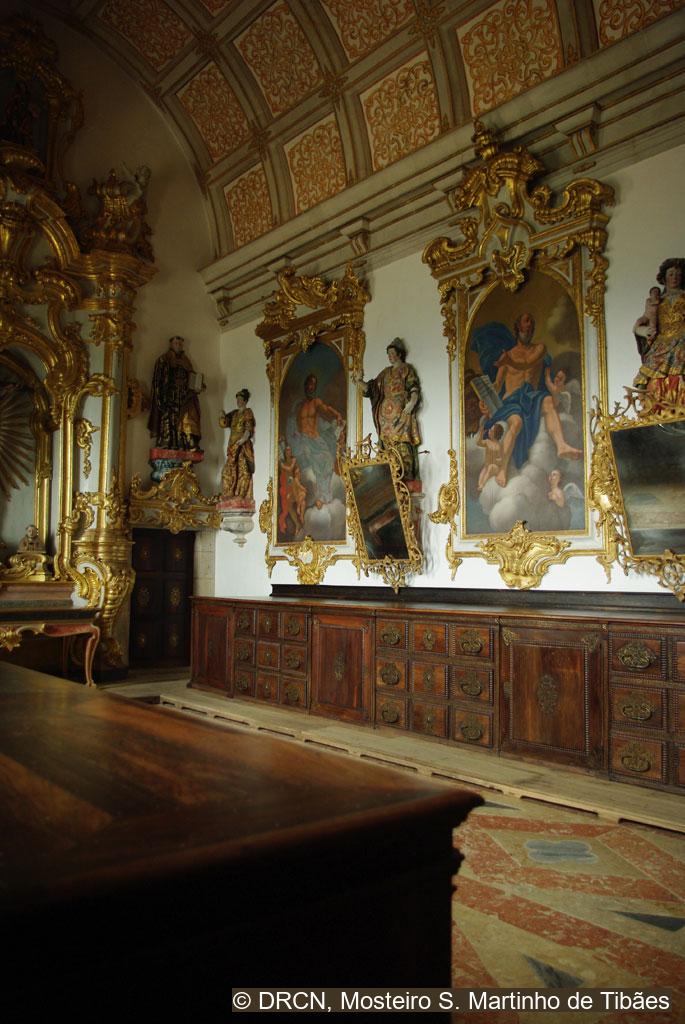
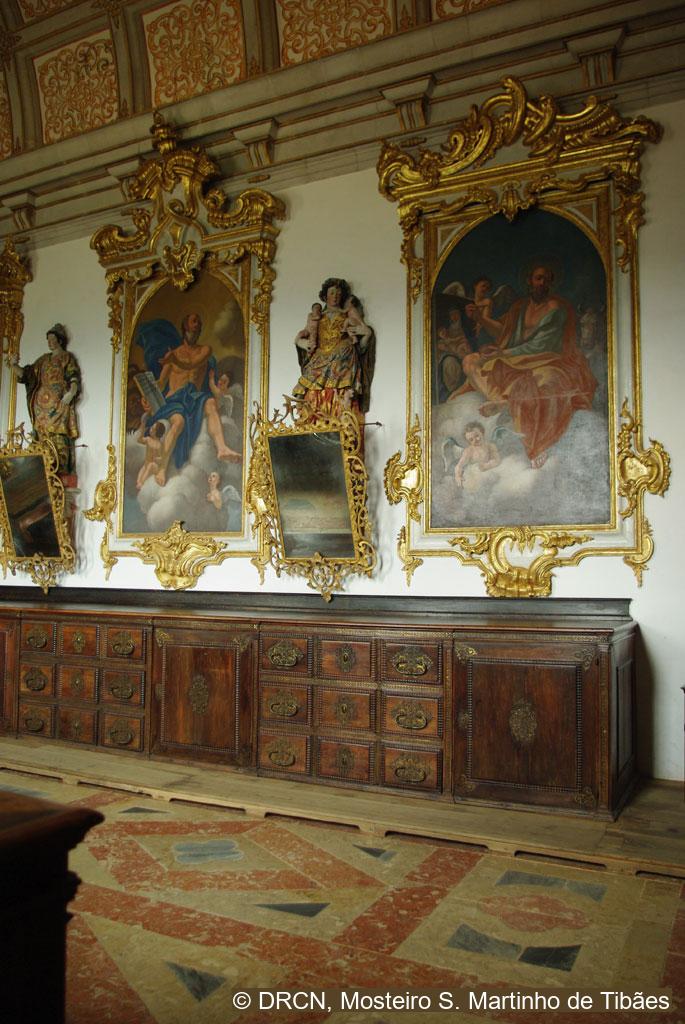
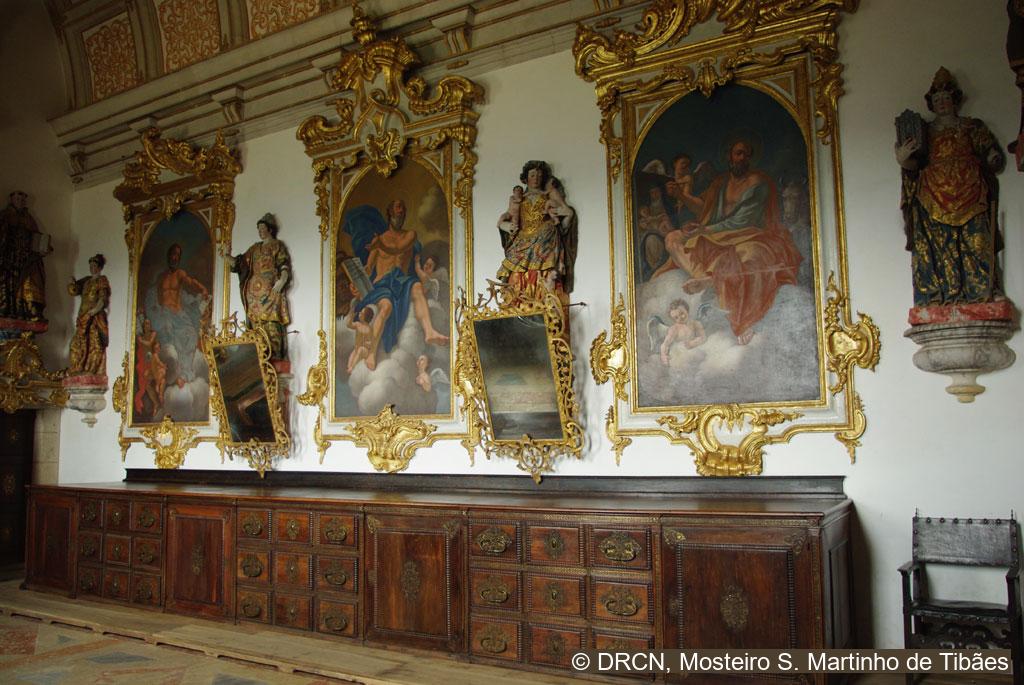
Sacristy (general view)
Church interior, Sacristy
17th and 18th centuries
Friar José Cipriano da Cruz Sousa (c. 1645–1716) and others
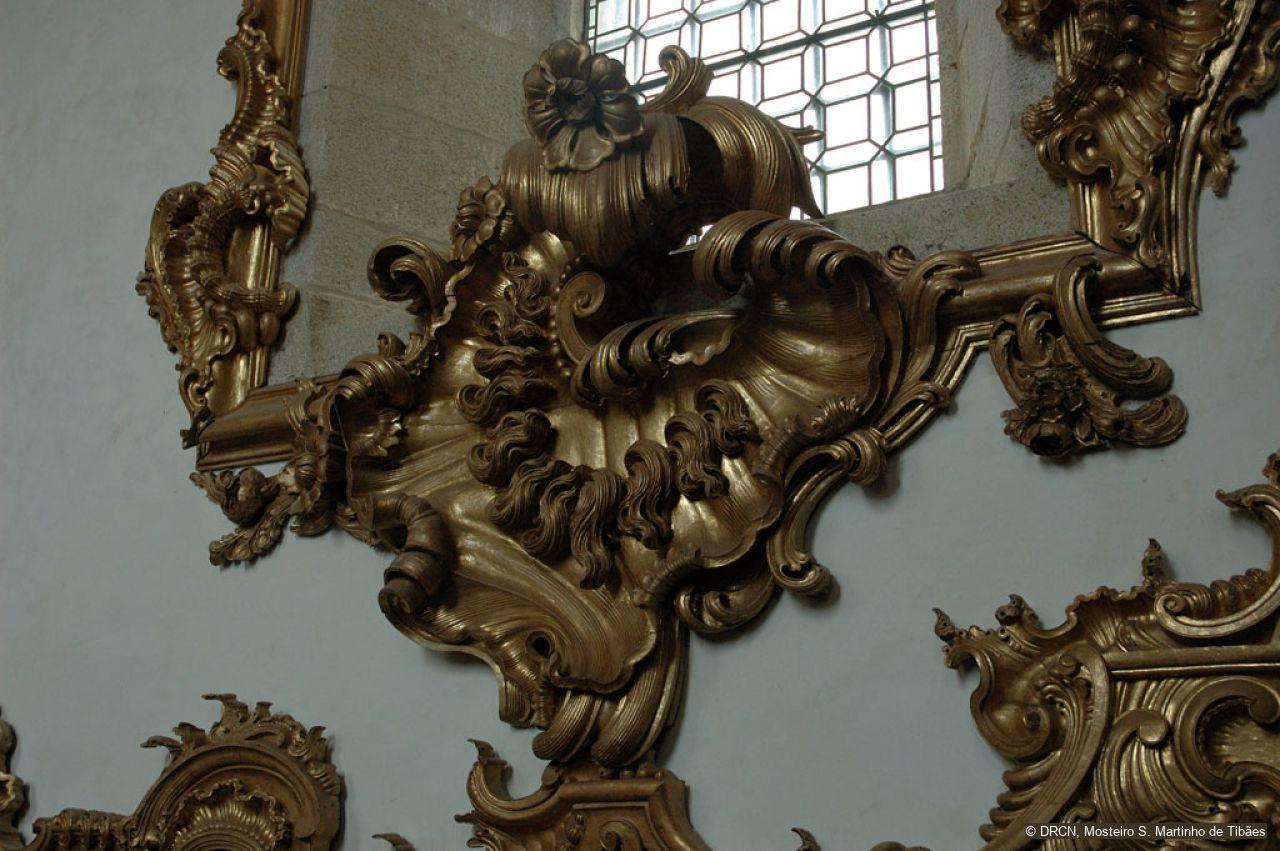
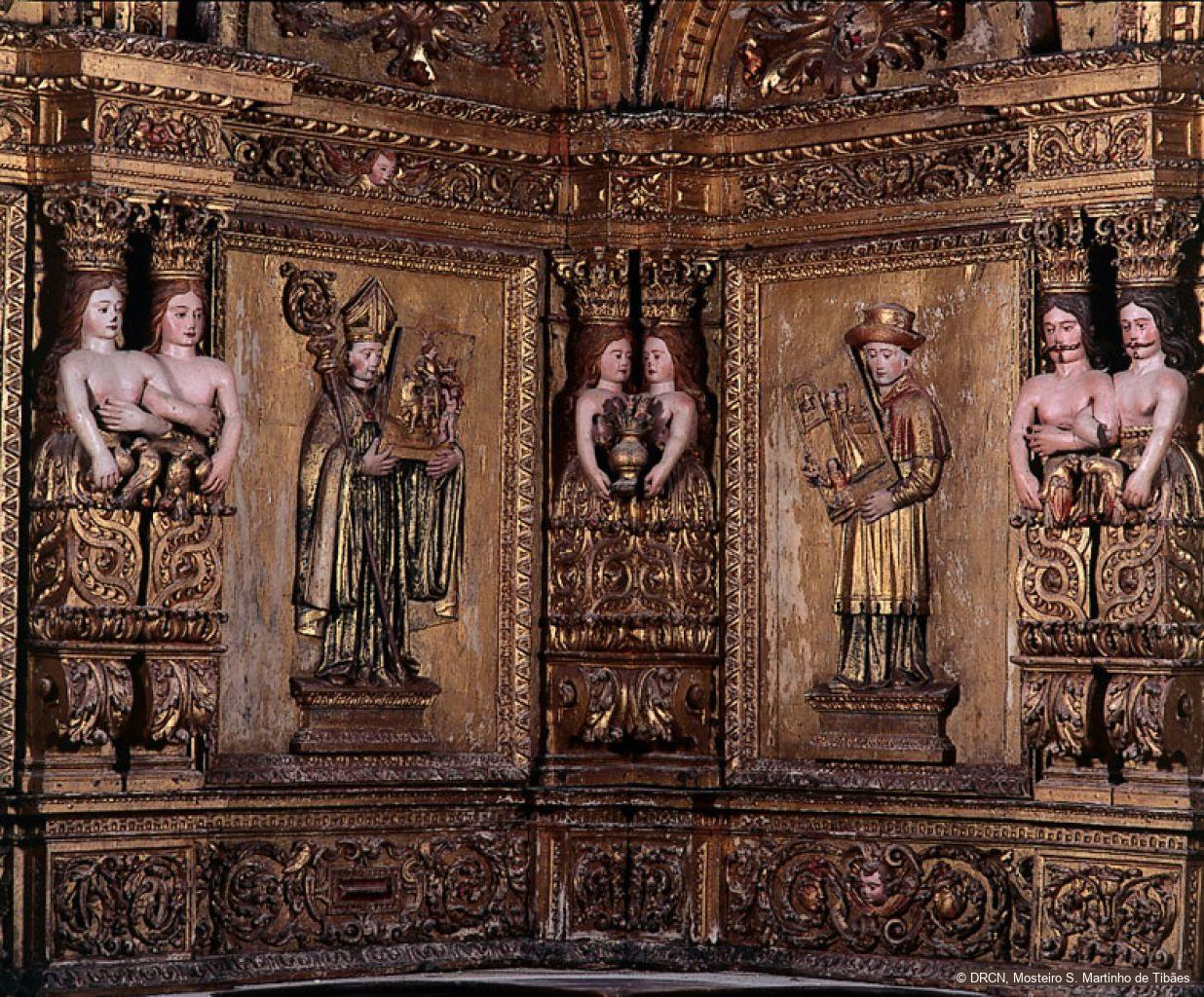
The sacristy owns what can be considered a complete and unique – both in terms of iconography and style – series of rocaille wood-carved and Baroque sculptures, and also a series of Benedictine figures.
Selected bibliography:
Smith, R. C., A Talha em Portugal, Lisbon, 1968.
Smith, R. C., Frei Cipriano da Cruz, Escultor de Tibães, Porto, I968.
Smith R. C., Frei José de Santo António Ferreira Vilaça. Escultor Beneditino do Século XVIII, Lisbon, 1972.
Smith, R. C., André Soares, Arquitecto do Minho, Lisbon, 1973.
Sobral, L. M. de, Do Sentido das Imagens. Ensaios sobrepintura barroca portuguesa e outros temas ibéricos, Lisbon, 1996.
Additional Copyright Information:
Copyright images: Direcção Regional da Cultura do Norte, Mosteiro de São Martinho de Tibães.
Citation of this web page:
Aida Mata, Paulo Pereira "St. Martinho de Tibães Monastery" in "Discover Baroque Art", Museum With No Frontiers, 2026.
https://baroqueart.museumwnf.org/database_item.php?id=monument;BAR;pt;Mon11;10;en
Prepared by: Aida Mata, Paulo PereiraPaulo Pereira
SURNAME: Pereira
NAME: Paulo
AFFILIATION Faculty of Architecture, Technical University of Lisbon
TITLE: University Lecturer
CV:
Paulo Pereira holds an MA in Cultural Studies and has been a speaker at numerous seminars and congresses in Portugal, Spain, France, Italy, the United States and Brazil. Paulo has co-ordinated and published books about Portuguese art and history, some of which are award winning. He is curator of several exhibitions held in Portugal, Ghent, Brussels and Berlin and been a contributing author for several exhibition catalogues. He has exercised managerial roles within the Town Hall of Lisbon, was Vice President of the Portuguese Heritage Institute (IGESPAR) and is a lecturer at the Technical University of Lisbon (Faculty of Architecture).
Translation by: Lili Cavalheiro, Cristina CorreiaCristina Correia
SURNAME: Correia
NAME: Cristina
AFFILIATION: Eça de Queirós Public High School, Lisbon and MWNF
TITLE: Senior Teacher, Local Co-ordinator and Vice-President of MWNF
CV:
Cristina Correia is a History graduate and, since 1985, a Senior Teacher of History at the Eça de Queirós Public High School, Lisbon where she also lectures in Portuguese Language and Culture for non-native speakers. From 1987 to 1998 she was involved with youth affairs, primary prevention and the Camões Institute. She is Vice-President and Local Co-ordinator (Portugal) for MWNF.
Translation copyedited by: Mandi GomezMandi Gomez
Amanda Gomez is a freelance copy-editor and proofreader working in London. She studied Art History and Literature at Essex University (1986–89) and received her MA (Area Studies Africa: Art, Literature, African Thought) from SOAS in 1990. She worked as an editorial assistant for the independent publisher Bellew Publishing (1991–94) and studied at Bookhouse and the London College of Printing on day release. She was publications officer at the Museum of London until 2000 and then took a role at Art Books International, where she worked on projects for independent publishers and arts institutions that included MWNF’s English-language editions of the books series Islamic Art in the Mediterranean. She was part of the editorial team for further MWNF iterations: Discover Islamic Art in the Mediterranean Virtual Museum and the illustrated volume Discover Islamic Art in the Mediterranean.
True to its ethos of connecting people through the arts, MWNF has provided Amanda with valuable opportunities for discovery and learning, increased her editorial experience, and connected her with publishers and institutions all over the world. More recently, the projects she has worked on include MWNF’s Sharing History Virtual Museum and Exhibition series, Vitra Design Museum’s Victor Papanek and Objects of Desire, and Haus der Kulturen der Welt’s online publication 2 or 3 Tigers and its volume Race, Nation, Class.
MWNF Working Number: PT 10