

 Back
Back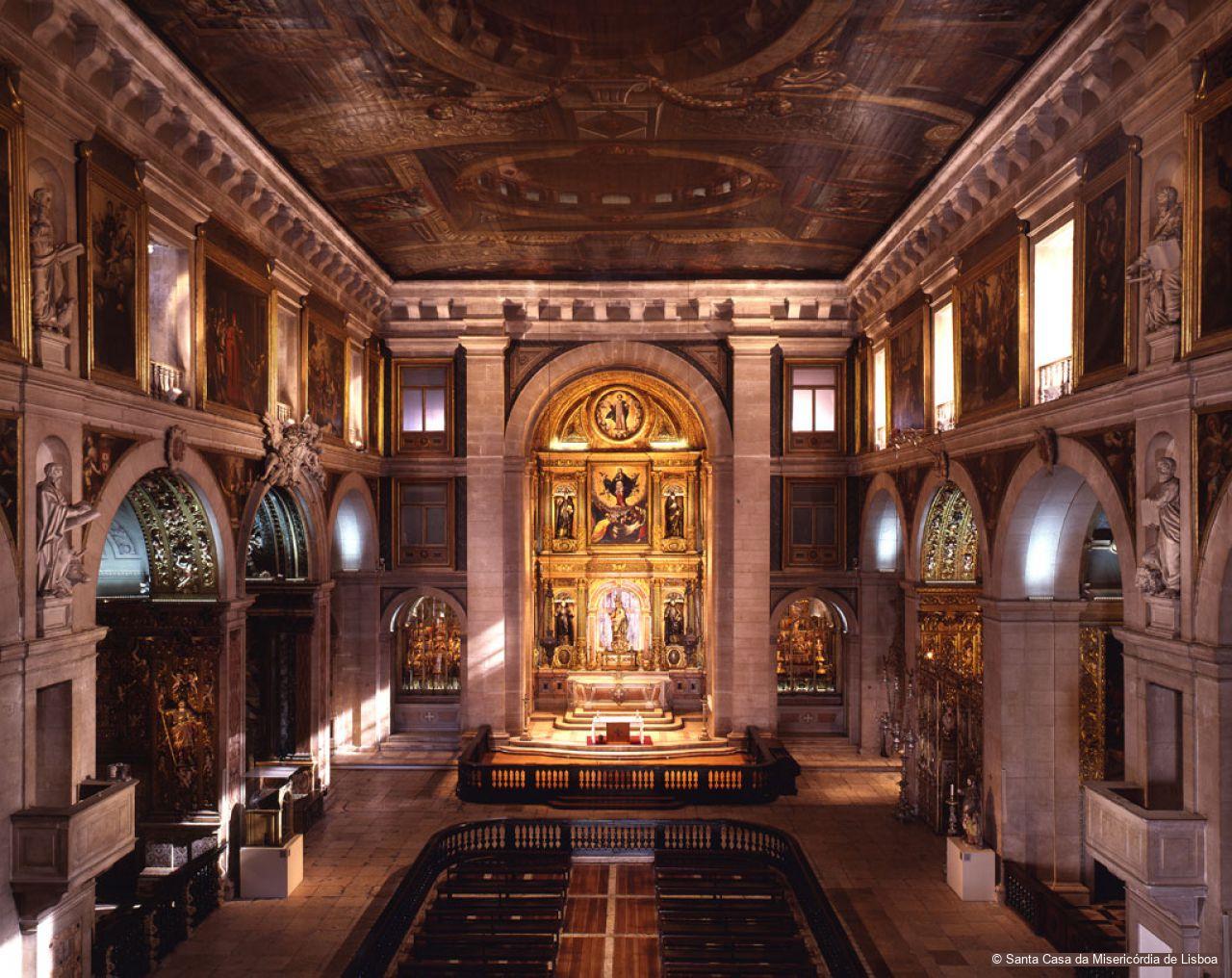
 Add to My Collection
Name of Monument:
Church of São Roque
Location:
Lisbon, Évora, Portugal
Largo Trindade Coelho
1200-470 Lisbon
T : +351 21 323 5065
F : +351 21 323 5060
E : museus.roque@scml.pt
Santa Casa da Misericórdia de Lisboa / Museum of São Roque (Responsible Institution)
Date:
Second half of the 16th century
Artists:
Architects: Afonso Álvares (active 1566–1577), Filipe Térzi (active 1576), Baltazar Álvares (active 1577), Luigi Vanvitelli (1700–1773), Niccolò Salvi (1697–1751); wood carvering: José Rodrigues Ramalho (1660–1721), Matias Rodrigues de Carvalho (18th century), Bento da Fonseca de Azevedo (18th century); mosaics: Mattia Moretti (active 1730–1760), Enrico Enuo (18th century); stonemasons: Leonardo Jorge [n.d.], Gregório Luís [n.d.], Silvestre Jorge (1560–1601), Manuel Antunes [n.d.], João Teixeira [n.d.]; painters: Gaspar Dias (active 1584); Francisco Venegas (active 1588–1589); Bento Coelho da Silveira (1648–1708); Amaro do Vale (active 1602); André Reinoso (active 1619–1635); Domingos da Cunha known as "Cabrinha" (active 1630); João Gresbante (active 1630–1640); Avelar Rebelo (active 1635–1640); Inácio de Oliveira Bernardes (1685–1781); Agostino Masucci (d. 1779), Joaquim Manuel da Rocha (1727–1786); Manuel José Gonçalves (18th century); Miguel António do Amaral (18th century); André Gonçalves (1685–1762); Francisco Vieira de Matos (known as Vieira Lusitano 1699–1783); tile painter: Francisco de Matos (active 1584)
Denomination / Type of monument:
Religious architecture, church
Patron(s):
Society of Jesus
History:
The Church of São Roque was built in the second half of the 16th century to meet the demands of priests of the Society of Jesus who in 1540 (during the reign of João III; King of Portugal 1521–1557) arrived in Lisbon to preach. A chapel dedicated to the devotion of São Roque formerly stood on the site. This chapel had been commissioned by King Manuel I (1495–1521) to house a relic of the saint, protector of sufferers of the plague. The Society of Jesus received the chapel in 1553, and the first enlargement of the building was undertaken in 1555.
João III had initially intended to build a monumental building with three naves but the Society of Jesus opposed the design in accordance with the principles of the Catholic Reformation, which emphasised both simplicity and functionality in church layouts. The new design changed the orientation of the building from east-west to north-south, and increased its length. In 1565 the church was enlarged for a second time according to plans brought from Rome. These plans maintained the principle of a single nave. The completion of the church took place during the reign of Philip I of Portugal (Philip II of Spain; 1580–1598). After the expulsion of the Jesuits from Portugal in 1759, São Roque Church and annexed residences were given to the Santa Casa da Misericórdia de Lisboa by a Royal Charter issued on 8 February 1768.
Description:
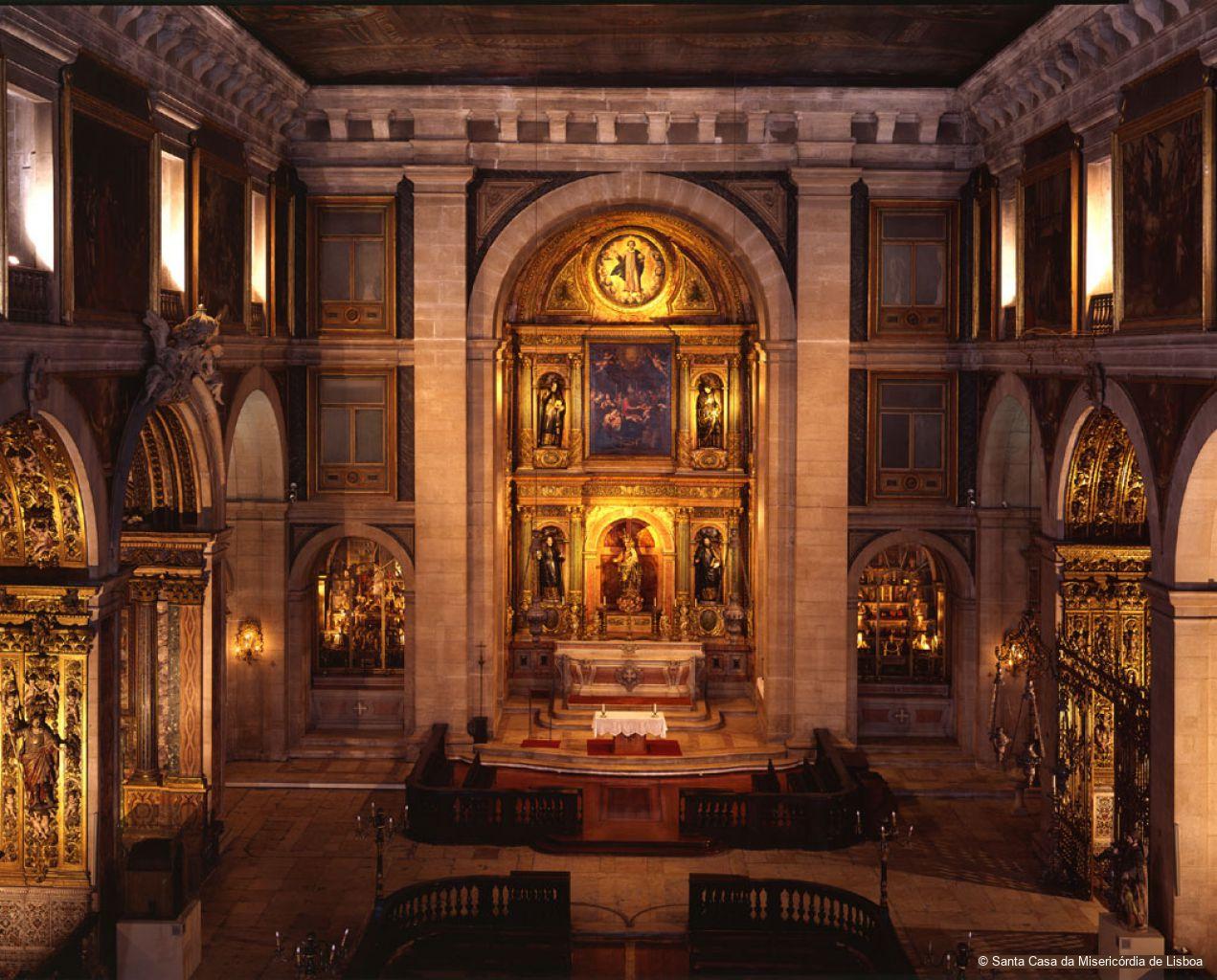
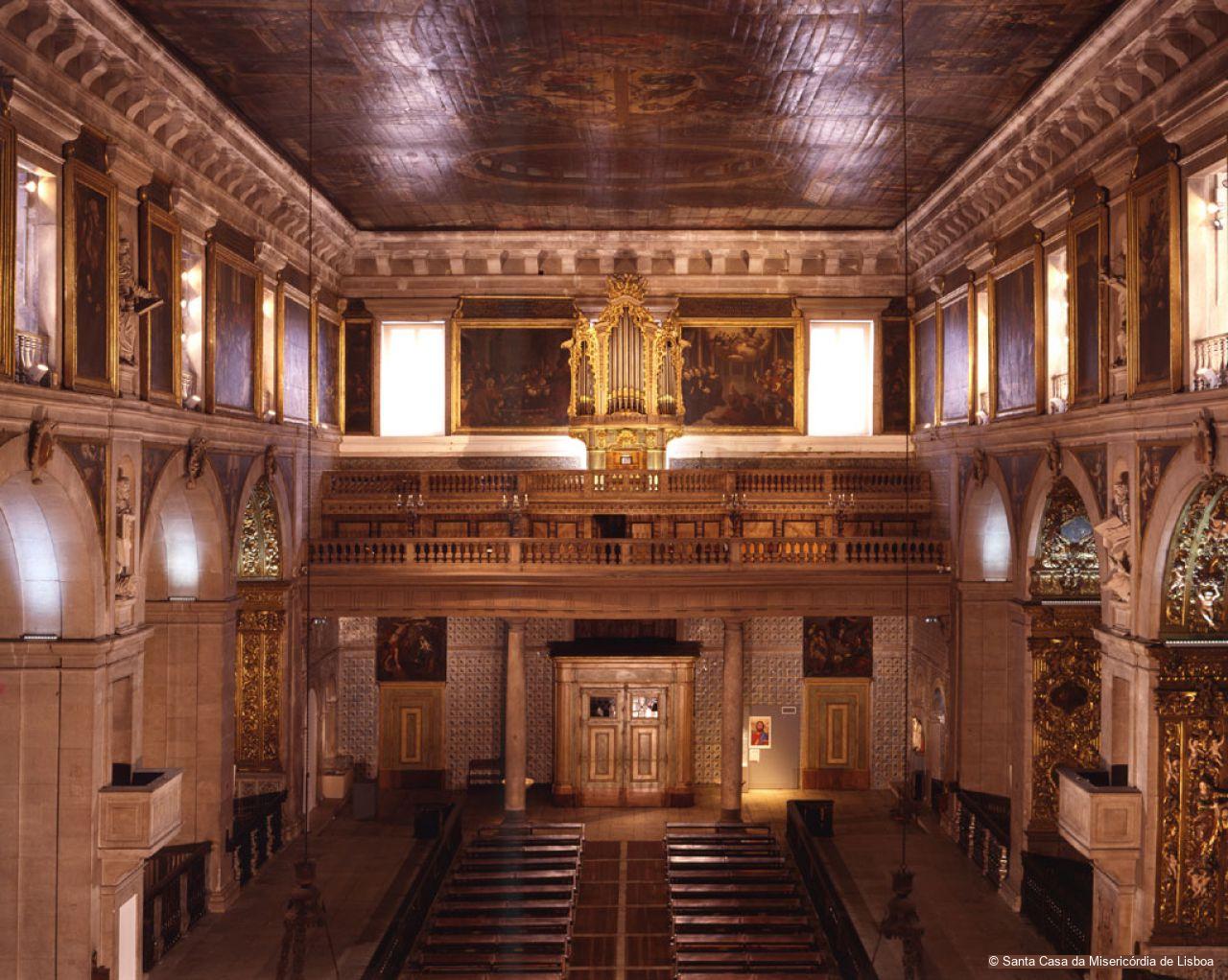
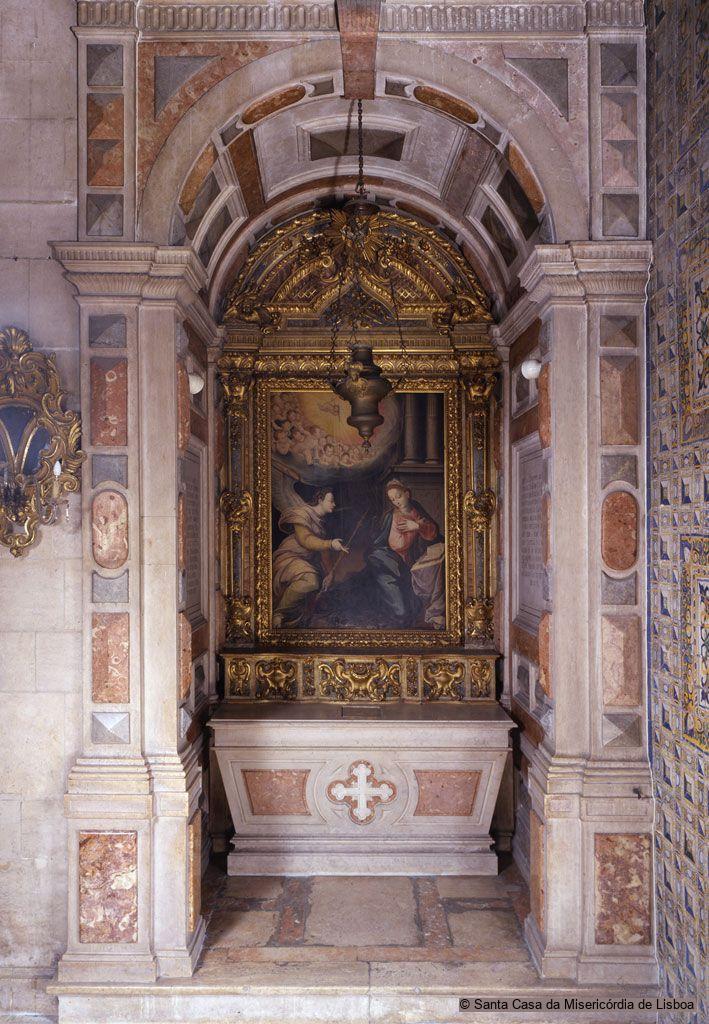
The church, a simple and sober construction in the mannerist style, complies with the doctrines of the Society of Jesus. The interior comprises a nave and eight side chapels, the decoration of which took place between the second half of the 16th century and the first half of the 18th century. Worth noting is the amazing contrast between the Mannerist style and the more elaborate decoration of the Baroque period. The main façade of the church is very sober: symmetrical, it has two floors, the lower one with three doors, the lateral ones surmounted by two small windows, and the upper floor with three windows. A triangular pediment with an eye-window completes the top of the façade as a result of some works that were partially undertaken after the earthquake of 1755.
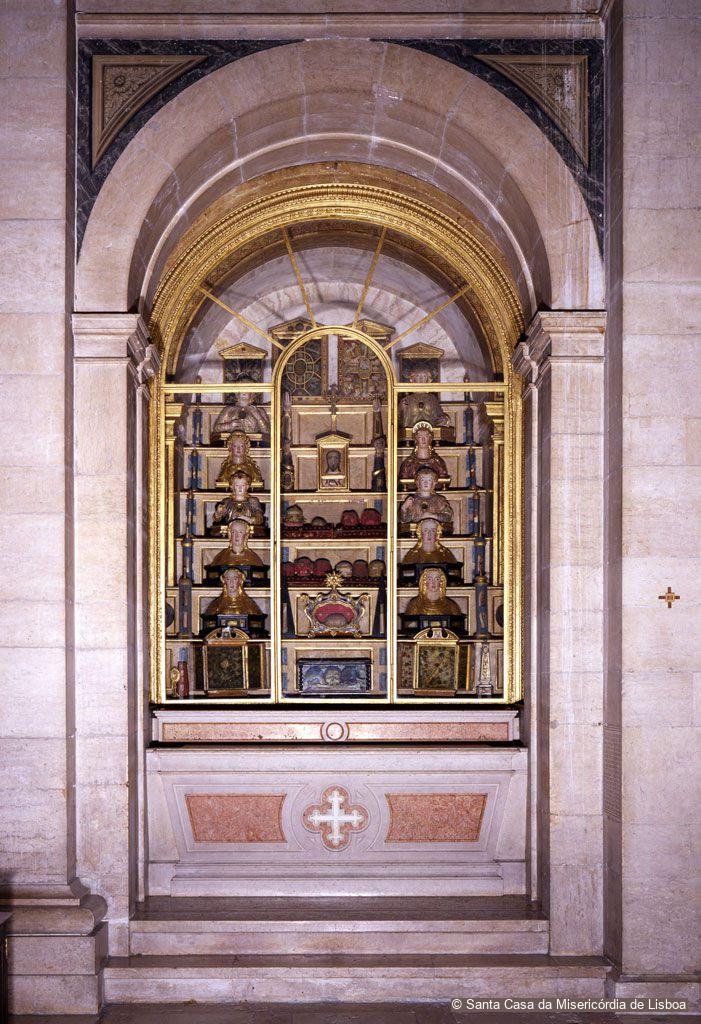
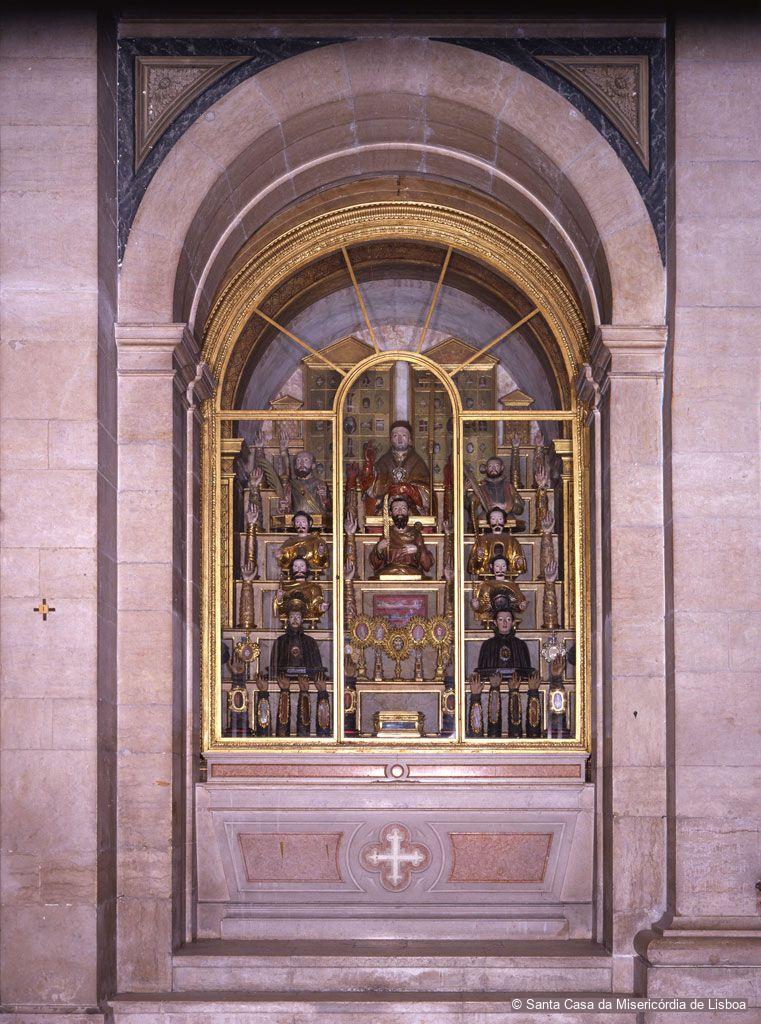
The Chapel of Our Lady of the Doctrine is a typical example of Portuguese Baroque decoration, the ceiling and side walls covered with gilt woodwork. The side walls hold some relics offered to the church by D. João de Borja – an ambassador of King Filipe II at the Imperial Court of Rudolf II in Prague – in 1588. Most of the relics are kept inside two altars situated on either side of the main chapel; it is a most remarkable collection second only to that at the Escorial in Spain.
The most imposing of all chapels, however, is the one dedicated to St. John the Baptist. It was commissioned from Rome by King João V in 1740. Construction began in 1742, carried out by a team of high profile artists under the supervision of the architects, Luigi Vanvitelli and Nicola Salvi. An important collection of liturgical objects was produced at the same time as the interior decoration: gold-embroidered vestments, several metal objects – candleholders, reliquaries and crucifixes – and also books for the Mass. The painted ceilings of the church and the sacristy are also remarkable.
The church, a simple and sober construction in the Mannerist style, complies with the doctrines of the Society of Jesus. The interior comprises a nave and eight side chapels, which were decorated between the second half of the 16th century and the first half of the 18th century. A keynote feature is the amazing contrast between the Mannerist style and the more elaborate decoration of the Baroque period. The main façade of the church is very sober. A triangular pediment with an eye-window completes the top of the façade as a result of some works that were partially undertaken after the earthquake of 1755, and again at the beginning of the 20th century. The painted ceiling of the church, dating to the 16th and 17th centuries, is also notable. Lastly, in the sacristy, there is a large chest of drawers from the 17th century. On its wooden backboard are 20 paintings relating to the Life of St. Francis Xavier.
How Monument was dated:
Historical documents, inscriptions and stylistic analysis.
Special features
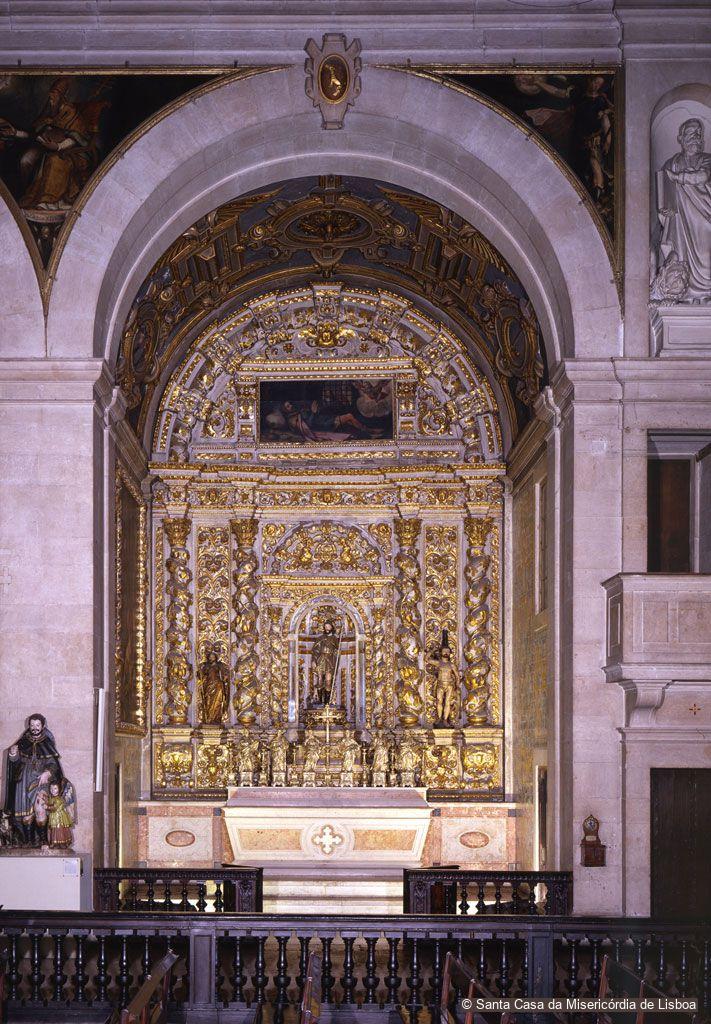
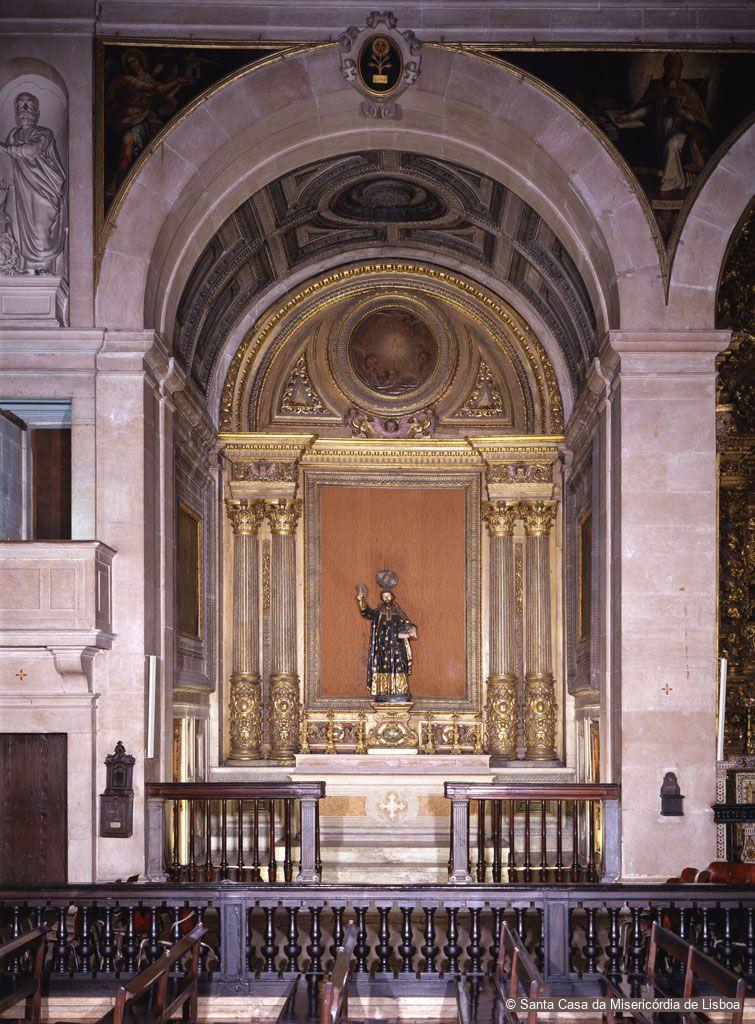
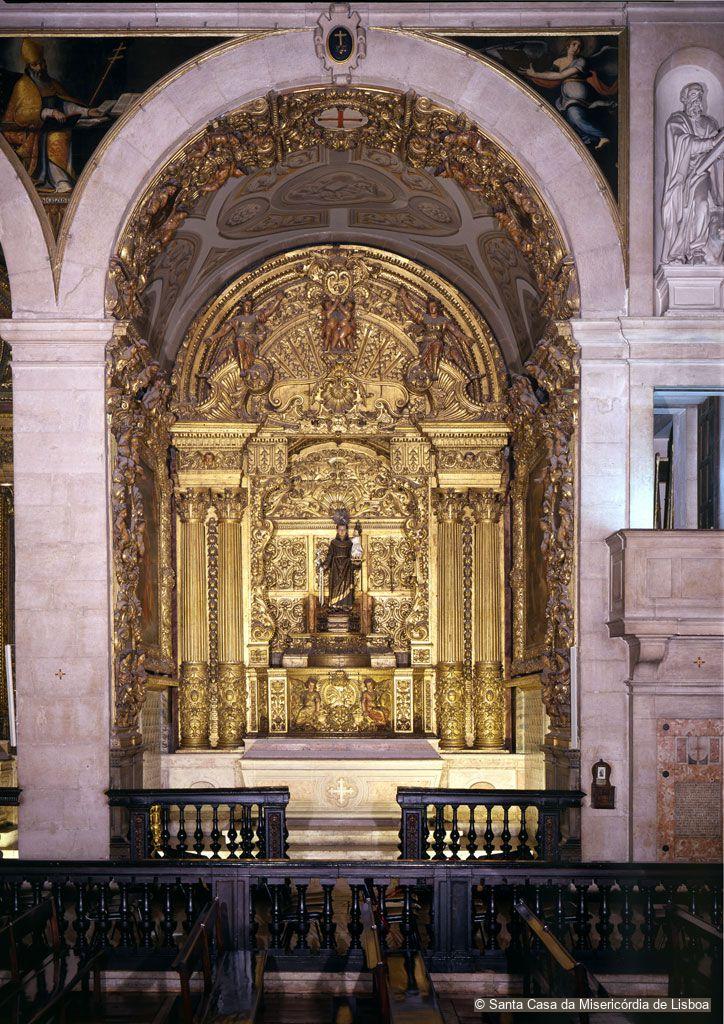
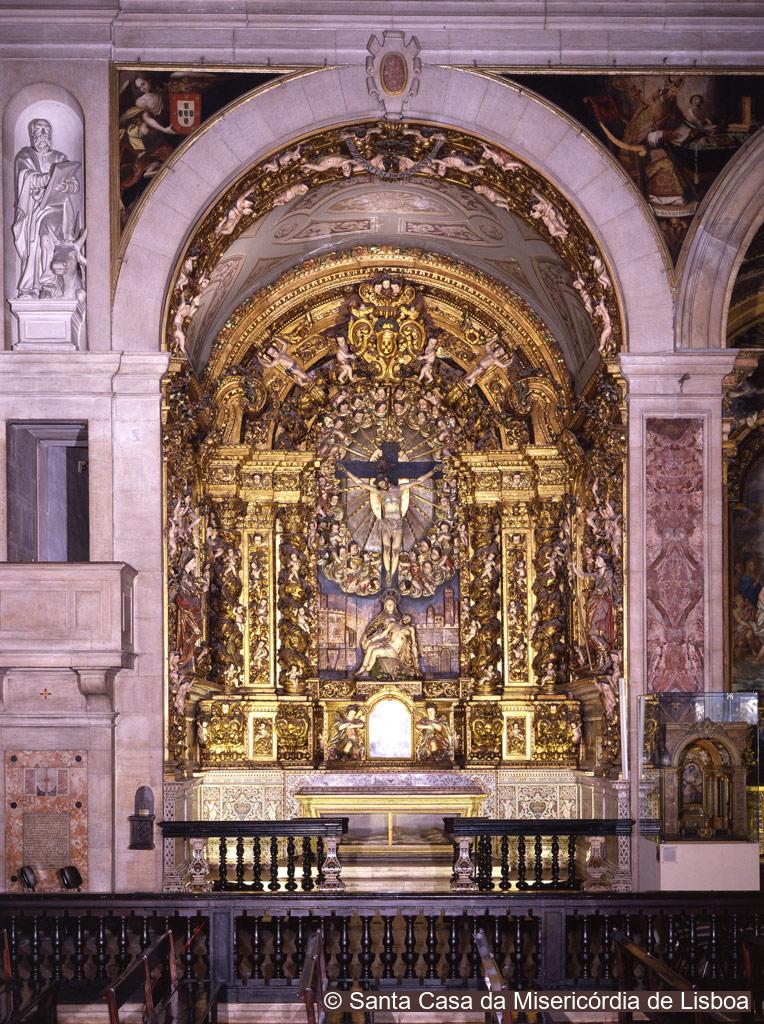
Chapel of Our Lady of Piety
Church Interior, Church of São Roque
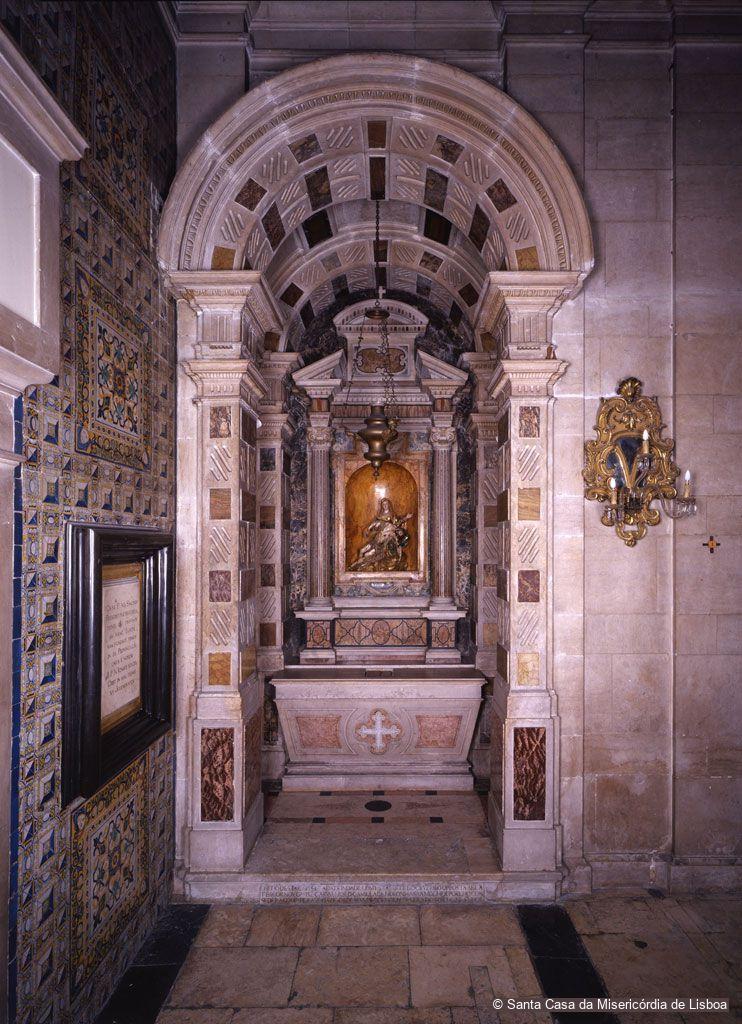
The construction and decoration was overseen by the Brotherhood of Our Lady of Piety. According to an inscription, work began in September 1686 and was completed by 1711. The retable dates from 1708. The gilding was added in 1716.
The retable was made by the 18th-century master carver Bento da Fonseca de Azevedo
The design for the retable is centred on a representation of Calvary. A 17th-century sculpture of the Pietà completes the tribune. The wood carving is exuberantly multi-coloured as a result of the variety of gold leaf that covers it.
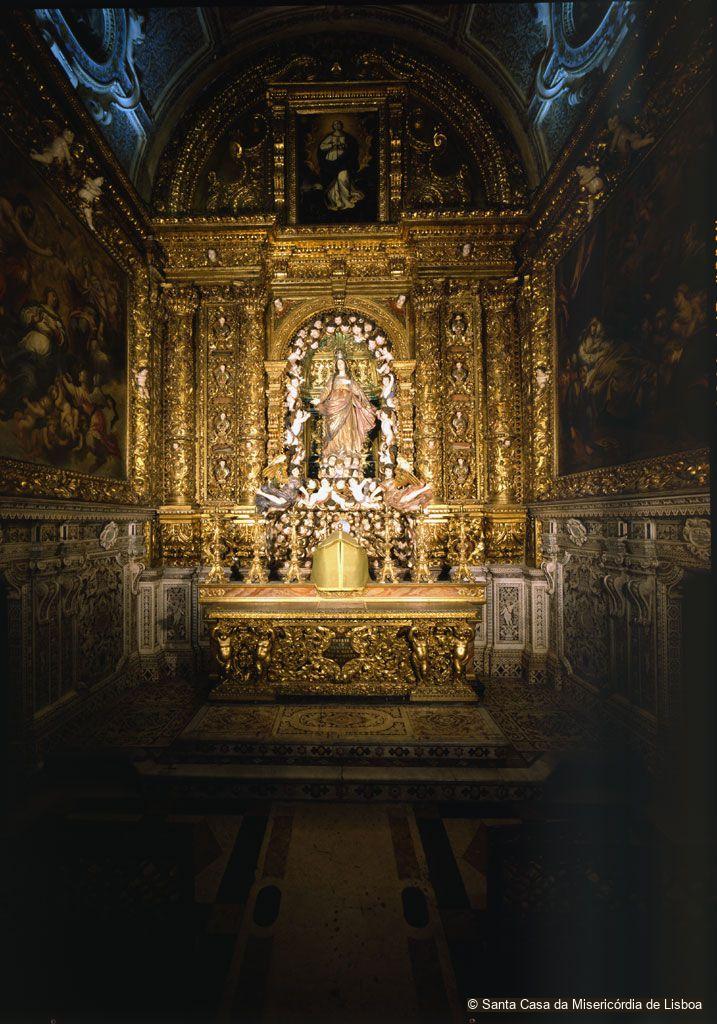
Chapel of Our Lady of the Doctrine
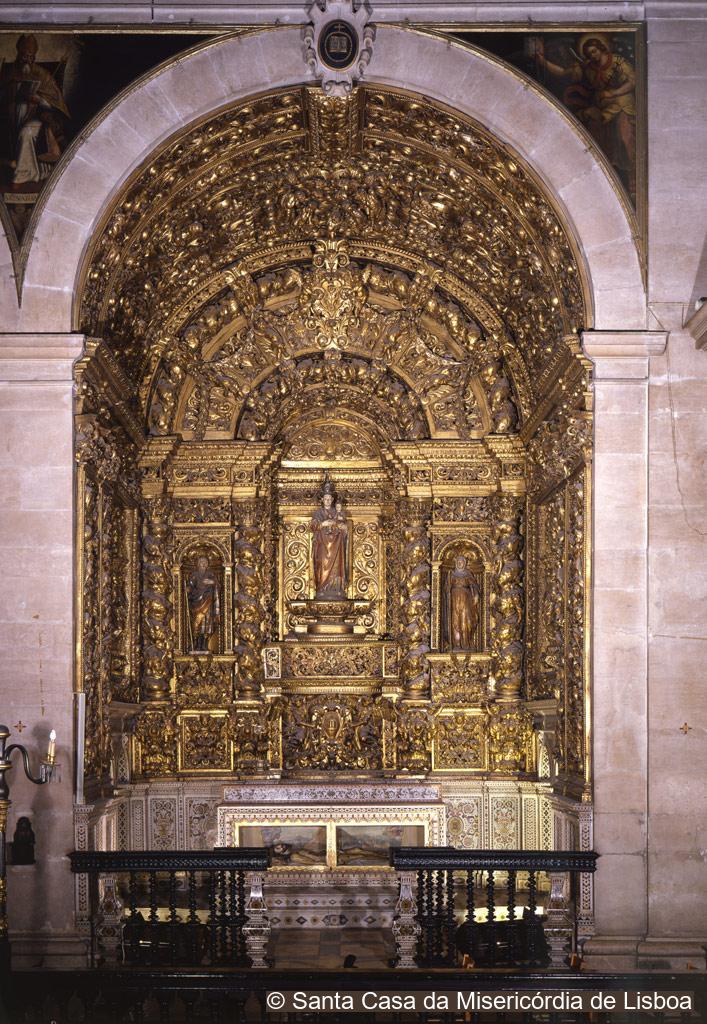
Church Interior, Church of São Roque
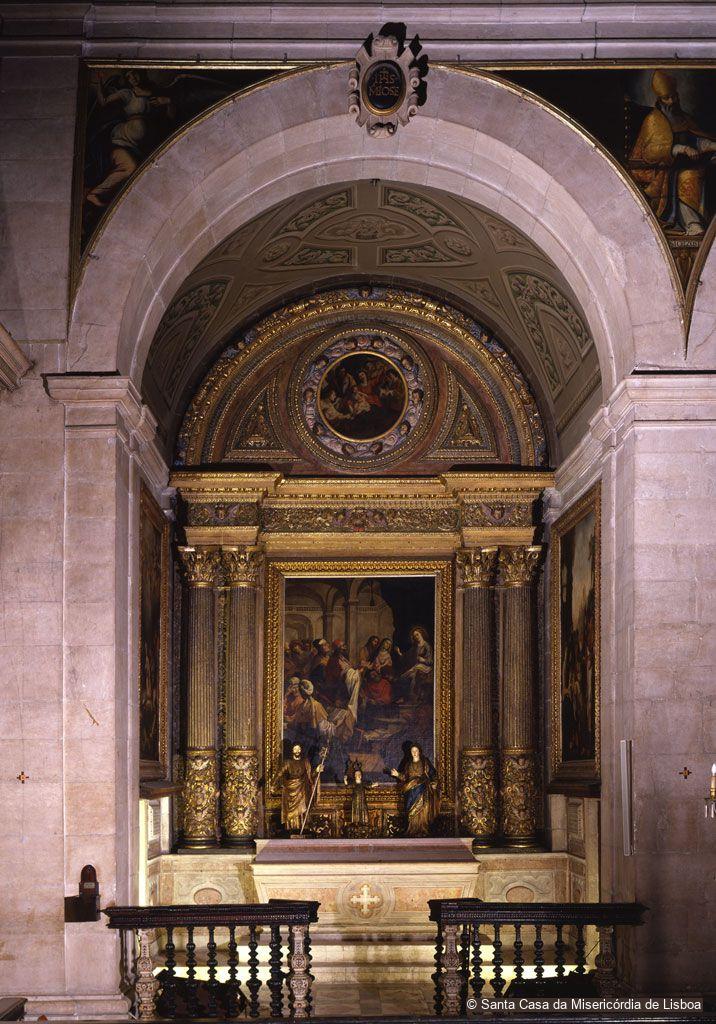
Work on the chapel began on 1 April 1634 and it was used by the Brotherhood of Our Lady of the Doctrine as their headquarters. The stonework was finally completed in 1690.
The woodwork is by José Rodrigues Ramalho (1660–1721) according to a contract dated 1688 between him and the Brotherhood. The stonework was executed by master masons, Manuel Antunes and João Teixeira, whose exact dates are unknown.
The main image of this chapel represents Our Lady of the Doctrine (St. Ann with the Virgin Mary in her arms). Although the chapel was built in the 17th century, the decoration is typical of the Portuguese Baroque “National style”, which developed during the late 17th and early 18th century. This side chapel is the only one where gilded woodwork covers the whole of the interior surface including the barrel-vaulted ceiling.
Chapel of St. John the Baptist
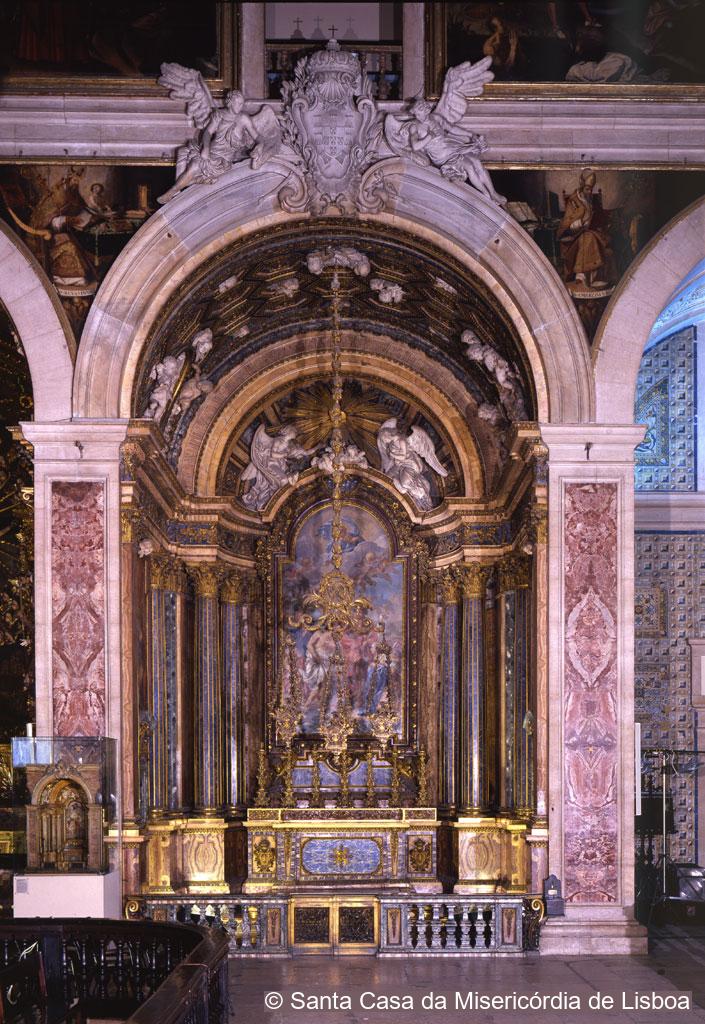
Church Interior, Church of São Roque
The interior decoration of the chapel was commissioned from Rome in 1740 by King João V (1706–50) and constructed between 1742 and 1750, when it was officially inaugurated in Lisbon.
In Rome architects Luigi Vanvitelli (1700–1773) and Niccolò Salvi (1697–1751) directed hundreds of artists and craftsmen; Mosaic: Agostino Masucci (1691–1758) and Mattia Moretti (d. 1779); Floor mosaic: Enrico Enuo.
The Chapel of St. John the Baptist, with its lavishly ornamented surfaces in coloured marble and other stone facings, is in the Roman Baroque style. The bronze gates of the front balustrade and the bronze side doors display the monogram of King João V. The side panels – the Annunciation (right) and Pentecost (left) – and the central panel – The Baptism of Christ – as well as the floor (displaying an armillary sphere), are mosaics. Several types of ornamental stone are used in the chapel. An important collection of liturgical objects was produced as part of the interior decoration project: gold-embroidered vestments, several metal objects – candleholders, reliquaries and crucifixes – and also books for the Mass.
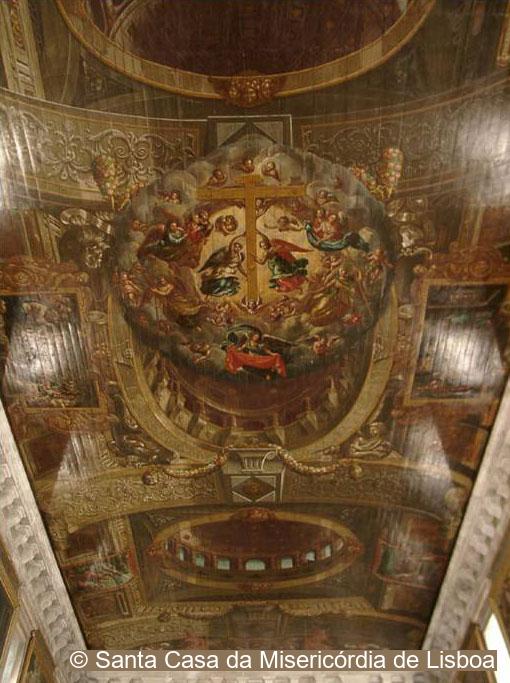
Ceiling Painting
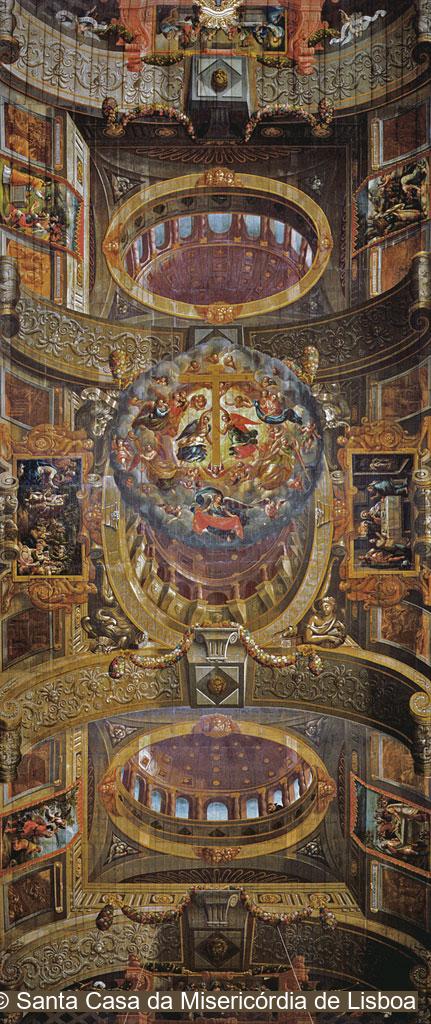
Interior, Church of São Roque
16th and 17th centuries
Francisco Venegas (active 1588–1589), Amaro do Vale (active 1602)
The original ceiling painting comprising architectural elements was made by the Spanish painter Francisco Venegas at the end of the 16th century. The Triumph of the Holy Cross, among other scenes from the bible, were mostly inspired by engravings from Antwerp and added in the early 17th century by the Portuguese painter, Amaro do Vale.
Sacristy
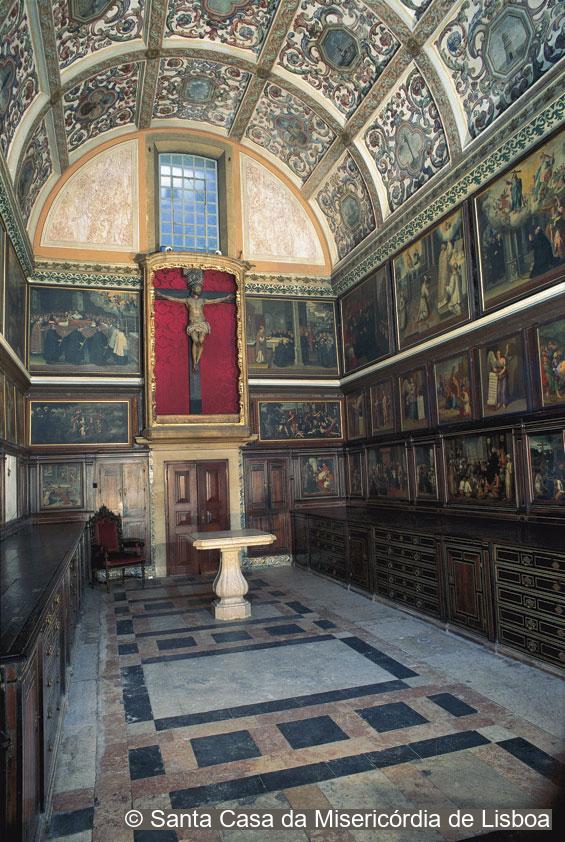
Church interior, Sacristy, Church of São Roque
16th and 17th centuries
André Reinoso (active 1619–1635)
The sacristy holds a large chest of drawers form the 17th century. On its wooden back board is a set of 20 paintings from the Life of St. Francis Xavier.
Selected bibliography:
Rodrigues, Maria João Madeira, A Capela de São João Baptista/The Chapel of Saint John the Baptist, Lisbon, 1988.
O Tecto da Igreja de São Roque. História, Conservação e Restauro, Santa Casa da Misericórdia/Museu de São Roque, Lisbon, 2002.
Serrão, V., Henriques, A. M. M., São Francisco Xavier. Vida e Lenda/Saint Francis Xavier. Life and Legend, Santa Casa da Misericórdia/Museu de São Roque, Lisbon, 2006.
Património Arquitectónico. Santa Casa da Misericórdia de Lisboa, Vol. I, Lisbon, Santa Casa da Misericórdia/Museu de São Roque, 2006.
Seabra Carvalho, Alberto, J., Sete Imagens para o Calendário Litúrgico. As pinturas do alto-mor da Igreja de São Roque / Seven Pictures for the Liturgical Calendar. The Church of S. Roque main chapel tribune paintings, Santa Casa da Misericórdia/Museu de São Roque, lisbon, 2006.
Brito, M. F., Church of Saint Roch, 3rd. ed., Santa Casa da Misericórdia de Lisboa/Museu de São Roque, Lisbon, 2008.
Citation of this web page:
Museum of São Roque , Teresa Morna "Church of São Roque" in "Discover Baroque Art", Museum With No Frontiers, 2026.
https://baroqueart.museumwnf.org/database_item.php?id=monument;BAR;pt;Mon11;12;en
Prepared by: Museum of São Roque , Teresa MornaTeresa Morna
SURNAME: Freitas Morna
NAME: Maria Teresa
AFFILIATION: Lisbon’s Holy House of Mercy/Museum of São Roque
TITLE: Museum Director
CV:
Maria Teresa Freitas Morna, a History and Art History graduate, initially joined Lisbon’s Holy House of Mercy/Museum of São Roque as a curator. Since 2001 she has been Director of the Museum. She is the author of several published works on Indo-Portuguese ivory artefacts published by the Museum of São Roque, the Commission for the Celebration of the Portuguese Discoveries and the Calouste Gulbenkian Museum, and recently collaborated on the catalogue for the exhibition, Encompassing the Globe – Portugal and the World in the 16th and 17th Centuries.
Translation by: Lili Cavalheiro, António Meira
Translation copyedited by: Mandi GomezMandi Gomez
Amanda Gomez is a freelance copy-editor and proofreader working in London. She studied Art History and Literature at Essex University (1986–89) and received her MA (Area Studies Africa: Art, Literature, African Thought) from SOAS in 1990. She worked as an editorial assistant for the independent publisher Bellew Publishing (1991–94) and studied at Bookhouse and the London College of Printing on day release. She was publications officer at the Museum of London until 2000 and then took a role at Art Books International, where she worked on projects for independent publishers and arts institutions that included MWNF’s English-language editions of the books series Islamic Art in the Mediterranean. She was part of the editorial team for further MWNF iterations: Discover Islamic Art in the Mediterranean Virtual Museum and the illustrated volume Discover Islamic Art in the Mediterranean.
True to its ethos of connecting people through the arts, MWNF has provided Amanda with valuable opportunities for discovery and learning, increased her editorial experience, and connected her with publishers and institutions all over the world. More recently, the projects she has worked on include MWNF’s Sharing History Virtual Museum and Exhibition series, Vitra Design Museum’s Victor Papanek and Objects of Desire, and Haus der Kulturen der Welt’s online publication 2 or 3 Tigers and its volume Race, Nation, Class.
MWNF Working Number: PT 12
RELATED CONTENT
On display in
Exhibition(s)
Discover Baroque Art
Travelling and Exoticism | Travelling artists and patrons and the exchange of artworks Reformation and Counter-Reformation | Religious orders and their function in transmitting the language of the Counter-Reformation Reformation and Counter-Reformation | Art as political toolDownload
As PDF (including images) As Word (text only)