

 Back
Back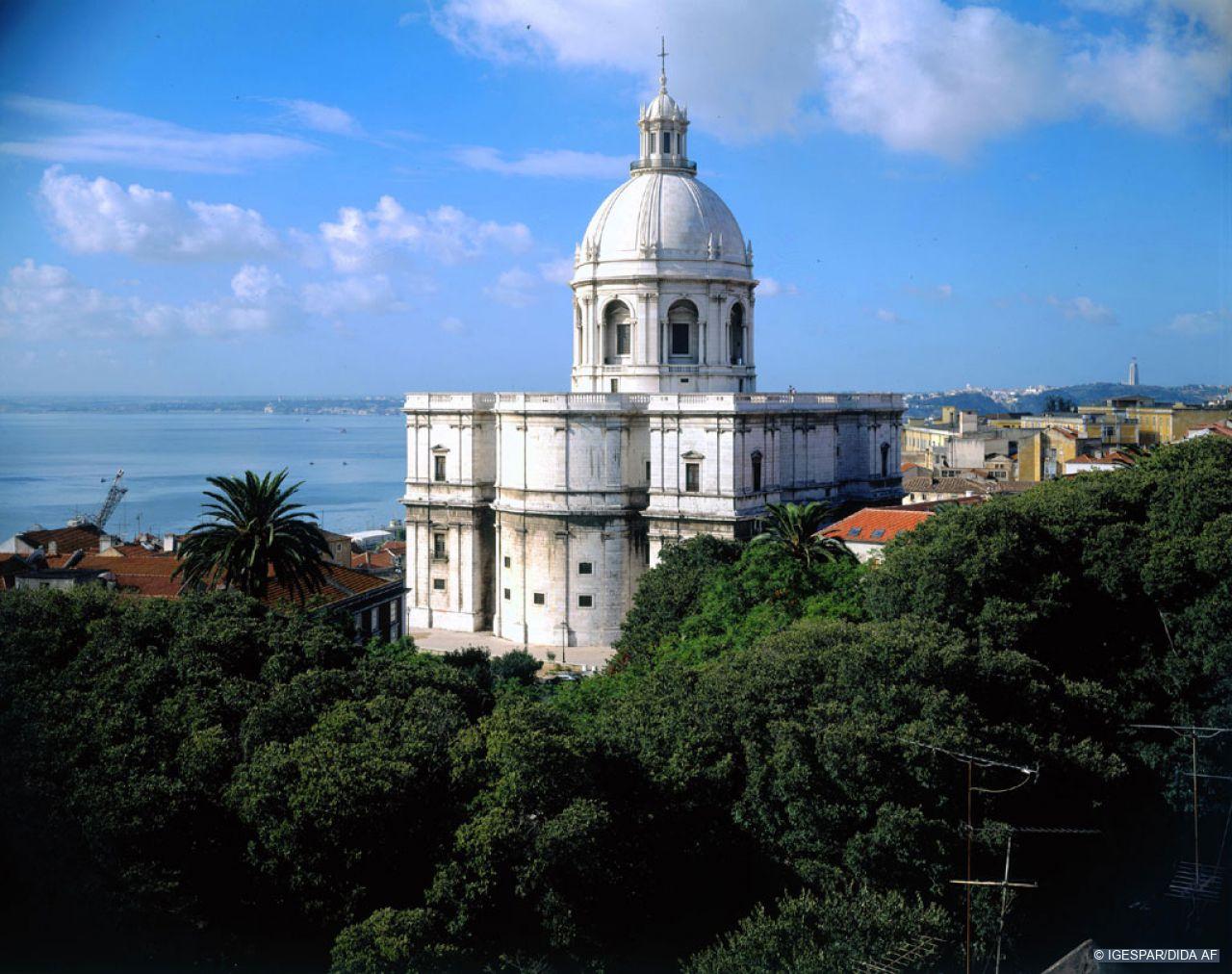
 Add to My Collection
Name of Monument:
National Pantheon and Church of St. Engrácia
Location:
Lisbon, Lisbon, Portugal
Campo de Santa Clara
1100–471 Lisbon
T : 00 351 218 854 820
F : 00 351 218 854 839
E : panteao@igespar.pt
Instituto de Gestão do Património Arquitectónico e Arqueológico (IGESPAR) (Responsible Institution)
Date:
1681: design and project approval
Artists:
Architects: João Antunes (1643–1712), Luís Amoroso Lopes (20th century); sculptors: Claude Laprade (17th century), Leopoldo de Almeida, António Duarte (20th century).
Denomination / Type of monument:
Religious, church
Patron(s):
Brotherhood of the Slaves of the Most Holy Sacrament
History:
The original Church of St. Engrácia was founded at the beginning of the 17th century to satisfy the wishes of Princess Maria, an outstanding figure of Portuguese Humanism and the daughter of King Manuel I. Built by the architect Nicolau de Frias and possibly his son, Teodósio de Frias, nothing remains of this original construction which was robbed and defaced in 1630. Following this, the architects Mateus do Couto (uncle and nephew) conducted reconstruction works in the chancel, but the church was ruined again as a result of a storm in 1681.
Nobles and other prominent aristocratic figures then formed the Brotherhood of the Holy Sacrament Slaves and decided to construct a new and more sumptuous church on the same site.
A public tender of 1681 was awarded to the architect João Antunes, who was responsible for the first-stage construction of 1682, and to which ceremonial opening Prince Regent D. Pedro (future King Pedro II) presided.
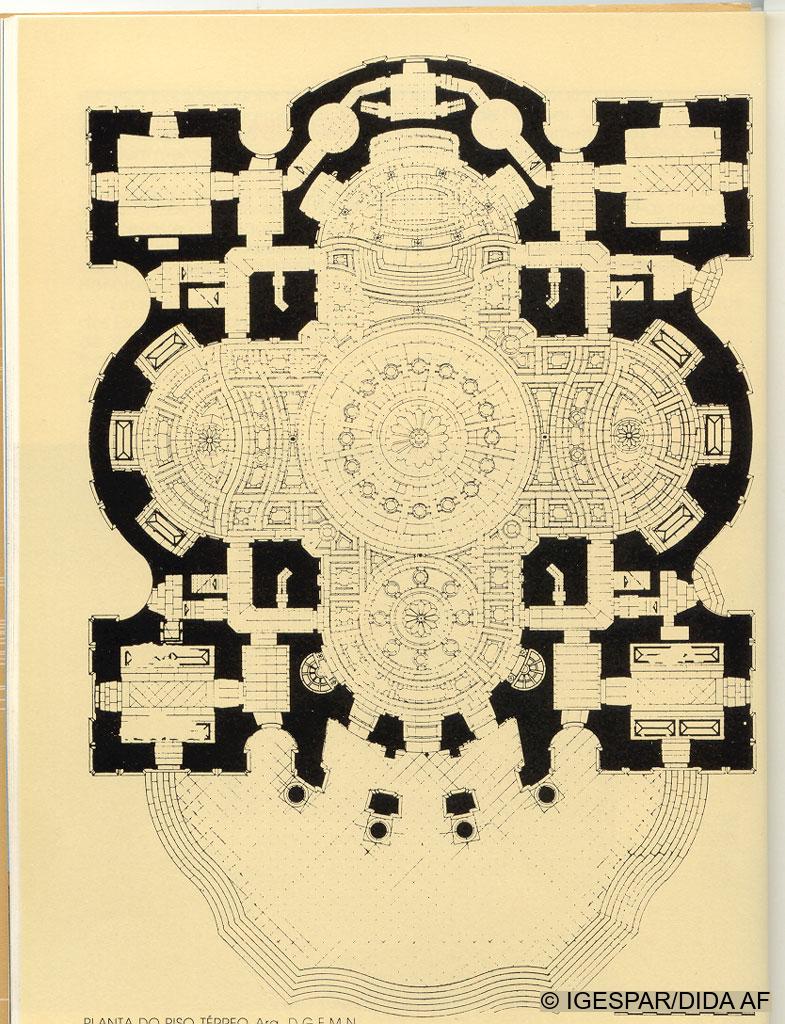
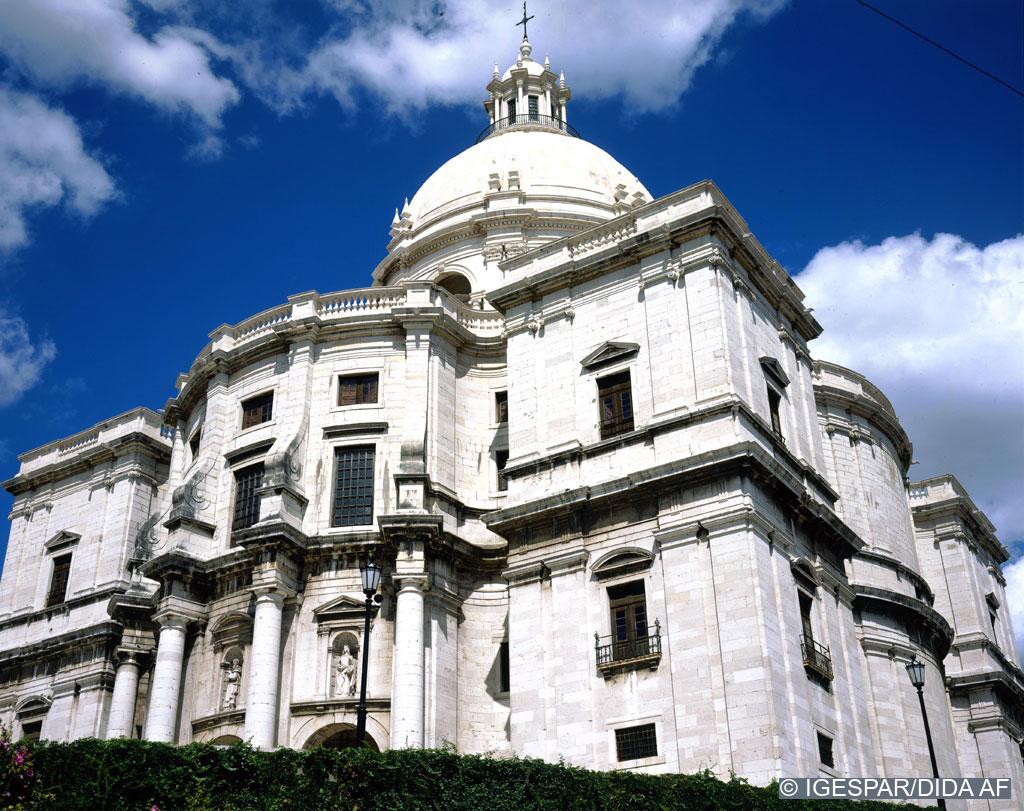
João Antunes took full advantage of the location overlooking the river Tagus, designing the first clearly Baroque structure in Portuguese architecture: a large, central-plan church that forms a Greek cross and with four turrets. A majestic dome, rising almost 80 metres above the ground, crowns the monument.
Description:
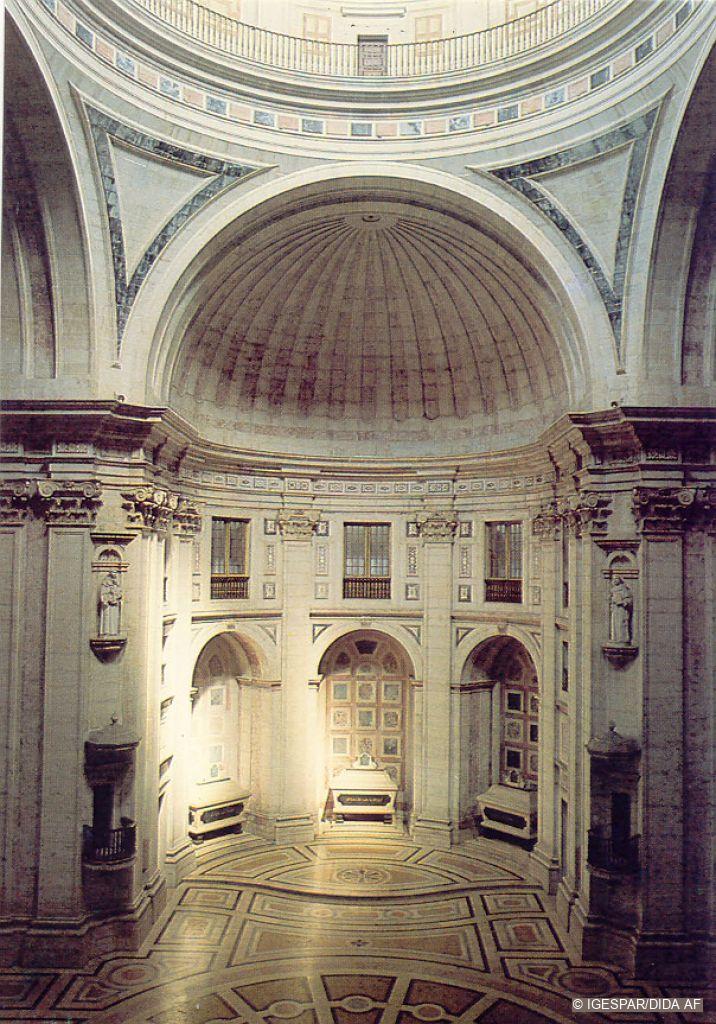
The National Pantheon, also known as the Church of St. Engrácia, rises magnificently above the River Tagus overlooking one of the city's oldest quarters, Alfama. One of the most beautiful examples of Portuguese Baroque, the undulating exterior elevations give the building grace and movement, while inside, the contrast between the polychrome marble and white stone creates a unique game of light and shadow.
The National Pantheon was inaugurated on 7 December 1966 and houses the tombs of some of the most outstanding Portuguese Presidents of the Republic, writers, artists and politicians.
The National Pantheon, also known as the Church of St. Engrácia, is set high above the city's historic quarter and the River Tagus. Serving as a reference point to the city's image, it is one of the most beautiful testimonies to the Baroque period in Portugal. Foundation of the church dates to the early 17th century and the present structure was completed in the mid-20th century. This long and troubled 400-year construction history is tellingly apparent in the popular expression “[like] the works of Santa Engrácia!” said in reply to the mention of a project that is running late or unlikely ever to be completed. Despite this, the Church of St. Engrácia has retained the initial 17th-century Baroque vision.
Since 1966 the church has paid homage to and accommodated the tombs of some prominent figures of recent Portuguese history.
How Monument was dated:
Historical documents, other evidence and stylistic analysis
Special features
Church’s plan
Interior
1682–1966
João Antunes (1643–1712)
Greek cross plan with four symmetrical towers united by undulating walls.
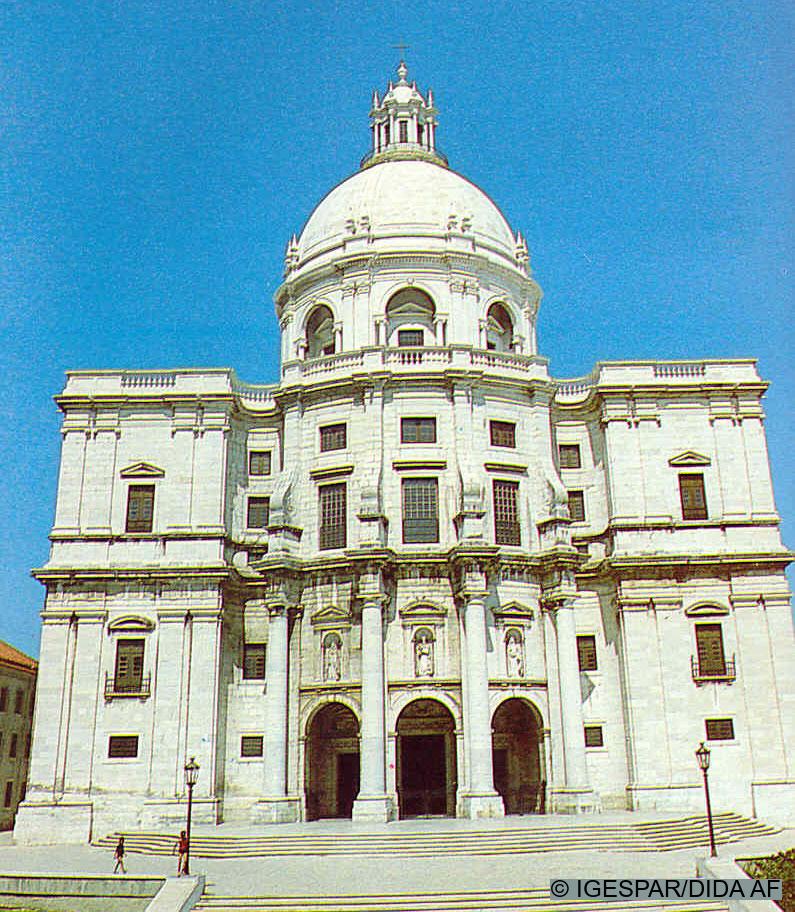
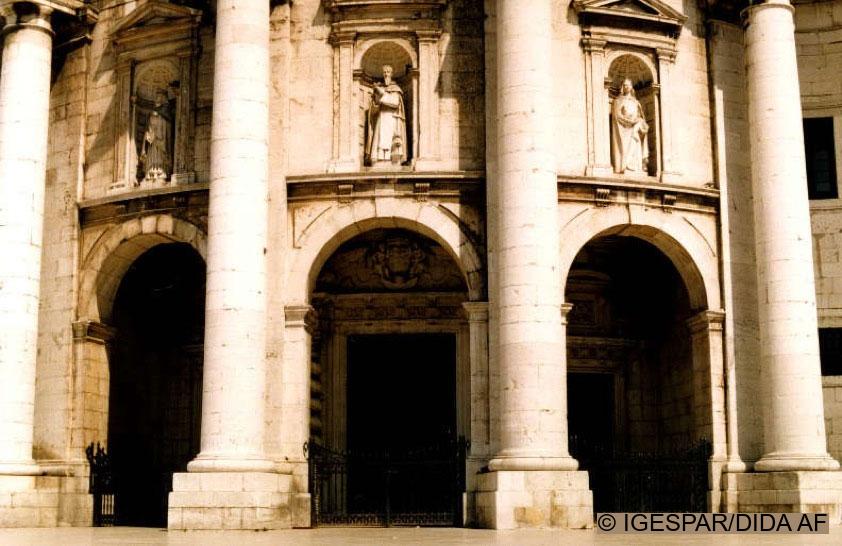
Façade of the Church of St. Engrácia
Exterior
1682–1966
João Antunes (1643–1712)
Convex colonnade surmounted by volutes.
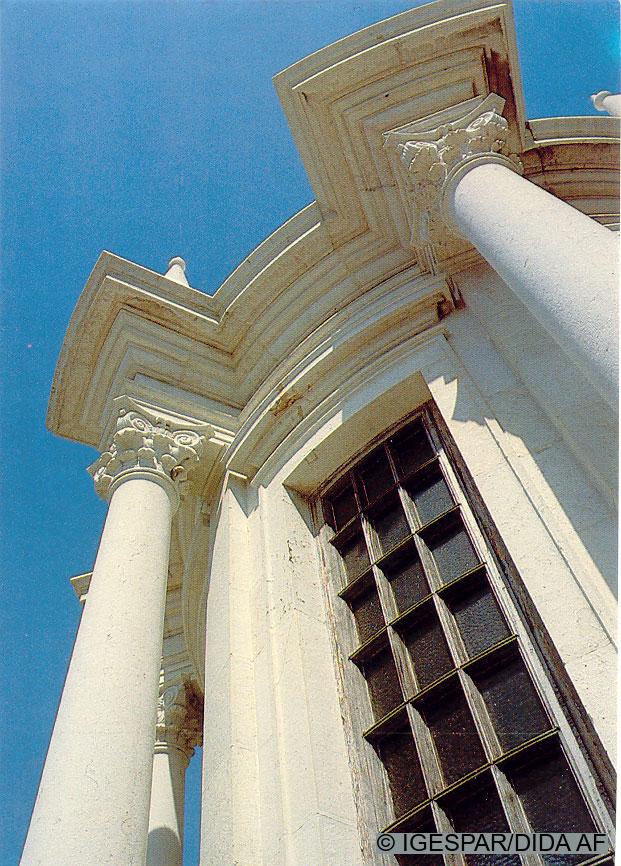
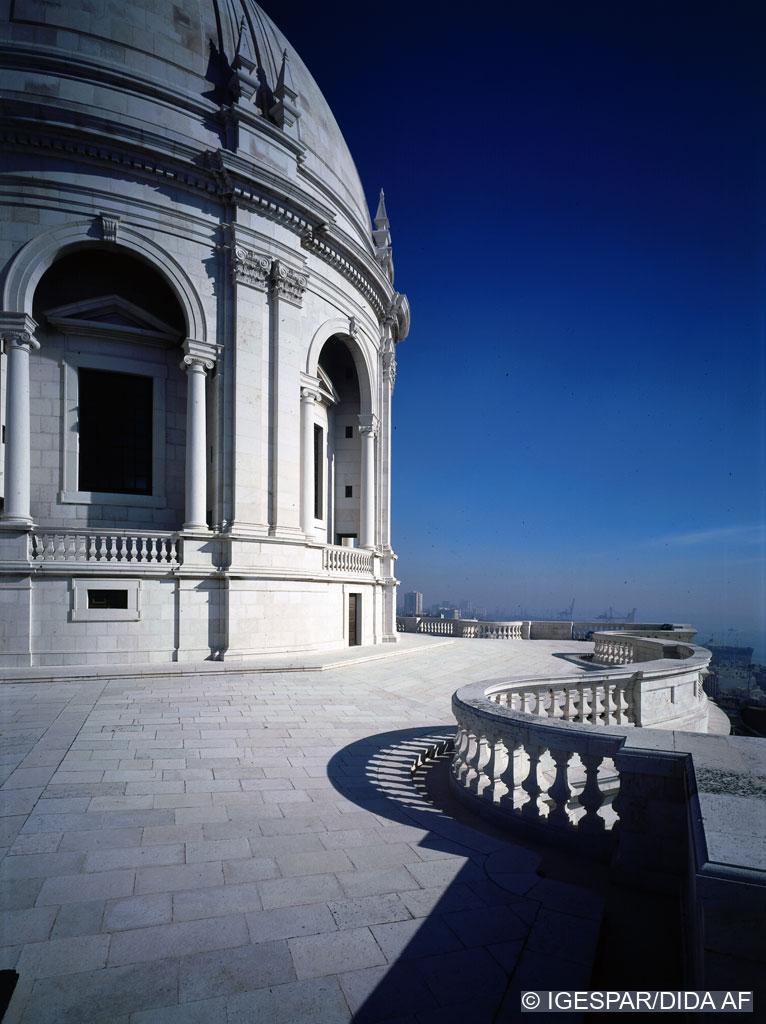
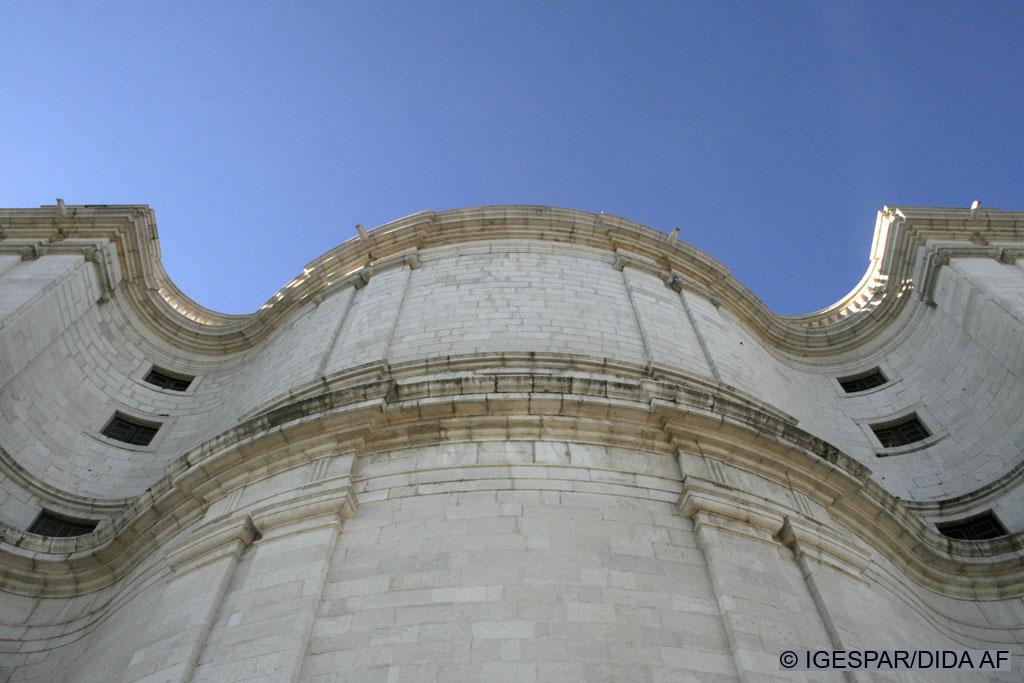
Detail of side walls and terrace
North, south and east exterior walls
1682–1966
João Antunes (1643–1712)
Dynamic exterior walls.
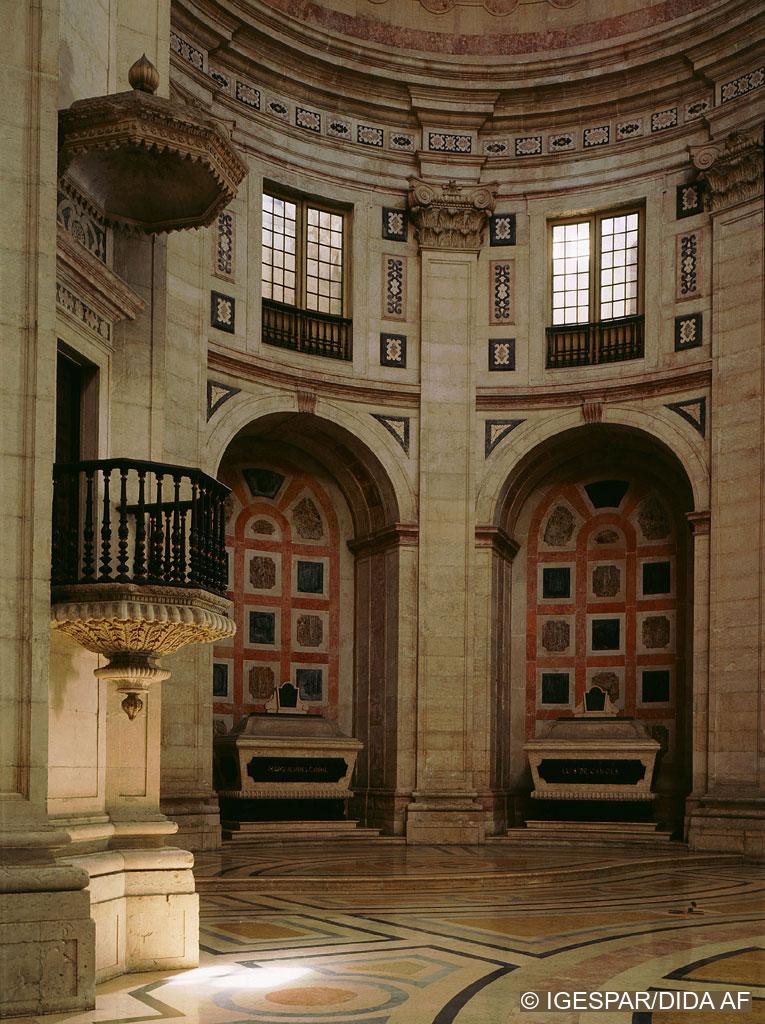
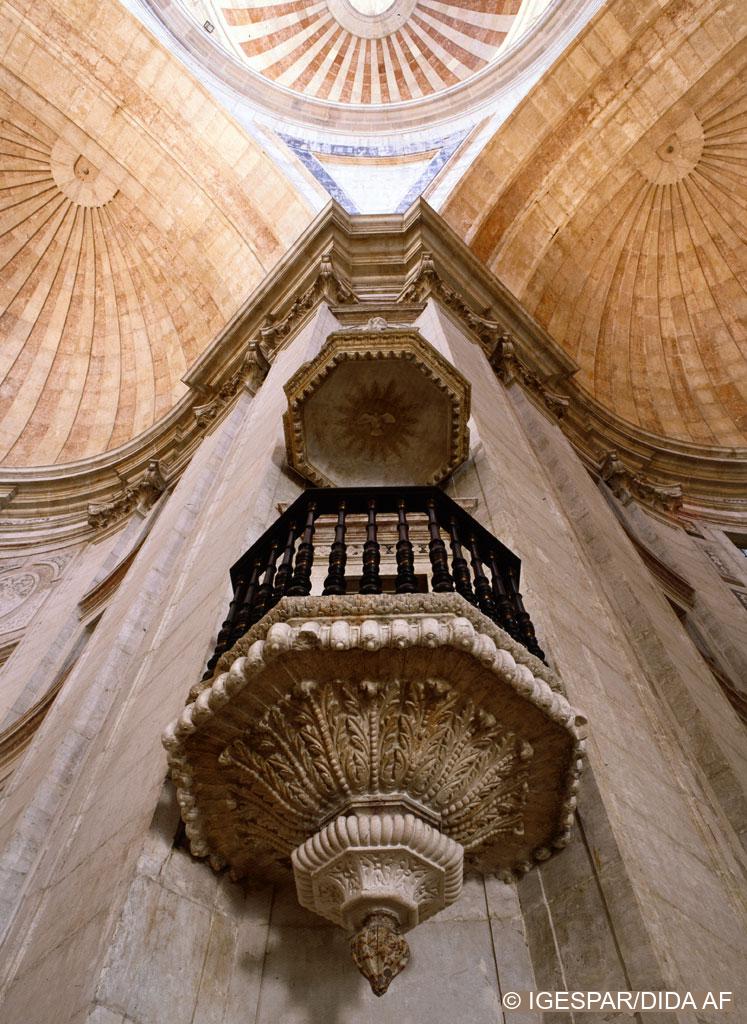
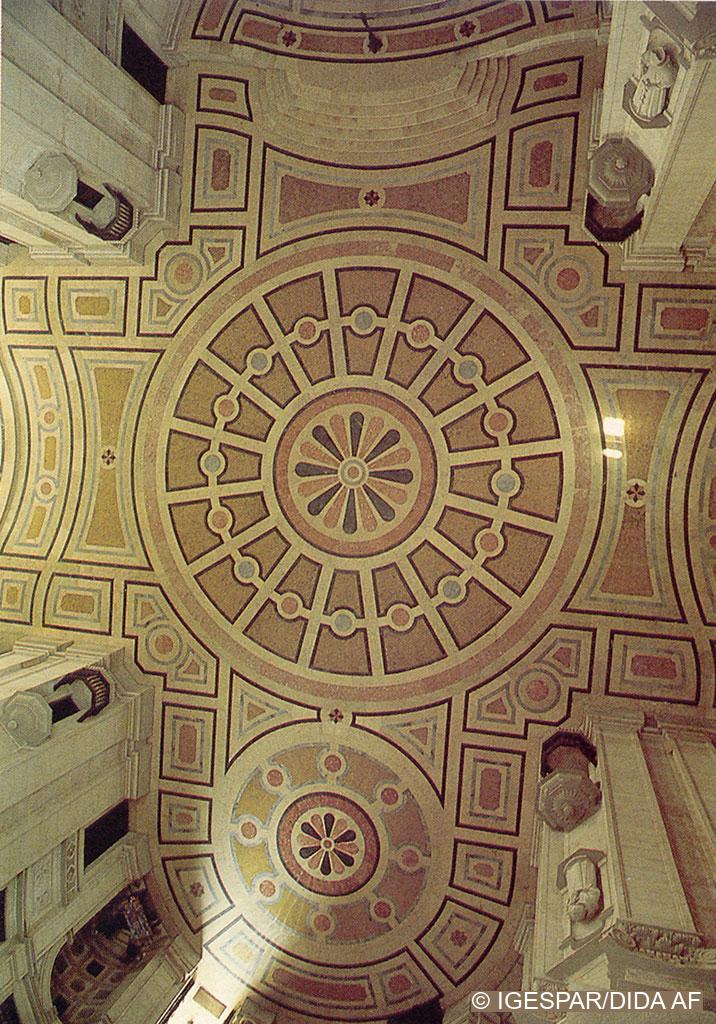
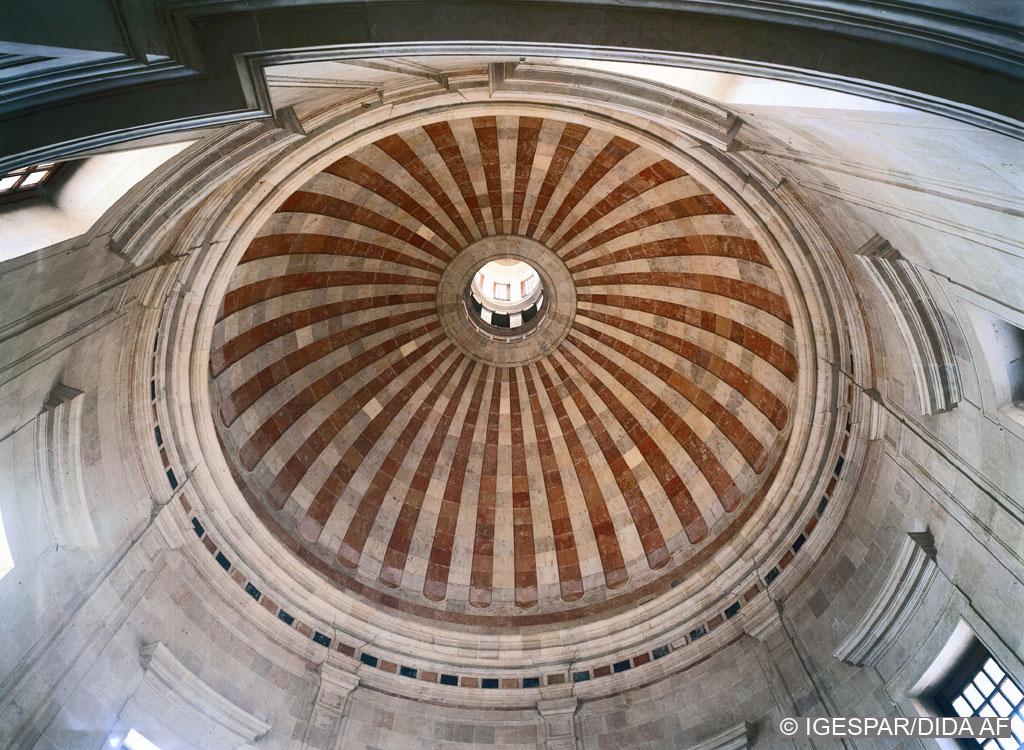
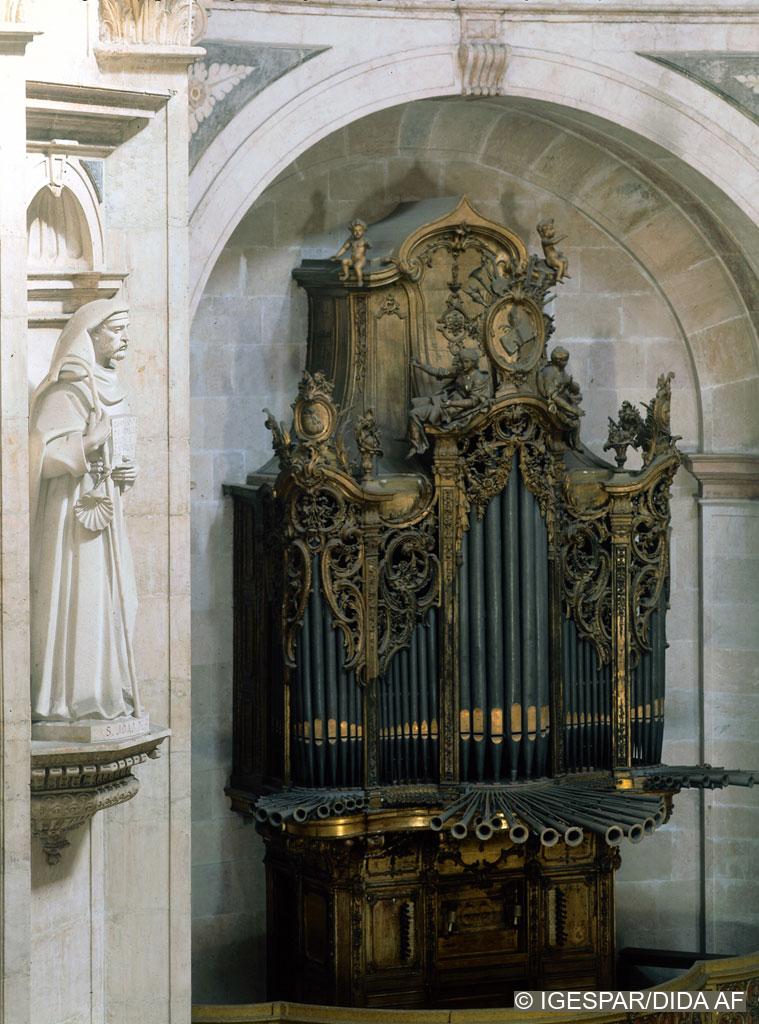
Detail of interior
Interior
1682–1966
João Antunes (1643–1712) Organ: Joaquim António Peres Fontanes [n.d.]
Detail of the magnificent inlaid marble work on the walls, dome and floor, remarkable for its precocious use of marble inlaid with white and other colours.
The 18th-century organ with carved gilt wood casing was made by the Portuguese school of Joaquim António Peres Fontanes.
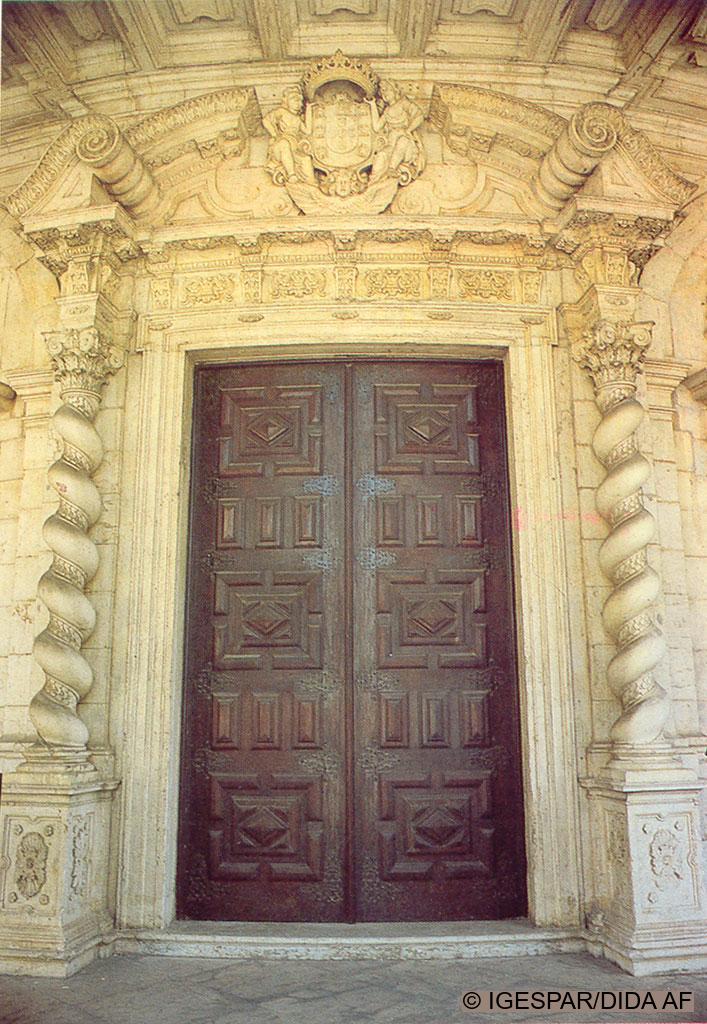
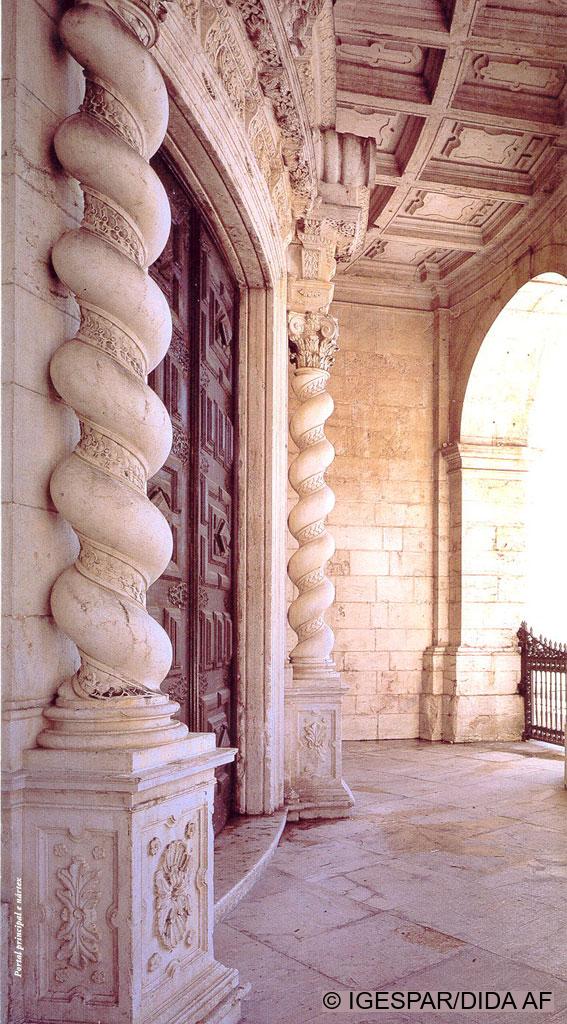
Portal and façade detail
Façade/Portal
1682–1966
João Antunes (1643–1712); Claude Laprade (17th century)
Atop the three round arches of the façade are the figures of St. Engrácia, St
Condestável and St. Isabel, according to the decree of Infanta D. Maria, whose wish was that only Portuguese saints should be depicted here.
The portal is flanked by two Solomonic columns surmounted by a crown and coat-of-arms.
Selected bibliography:
Carvalho, A., As Obras de Santa Engrácia e os seus artistas, Lisbon, 1971.
Ataide, M. M., Monumentos e Edifícios Notáveis do Distrito de Lisboa. Junta Distrital de Lisbon, 1975.
Gomes, P. V., O Essencial sobre a Arquitectura barroca em Portugal, INCM, Lisbon, 1987.
Birg, M., João Antunes Arquitecto, Lisbon, 1988.
Mantas, H., O Panteão Nacional, Memória e afirmação de um ideário de decadência. A intervenção da DGEMN na Igreja de Santa Engrácia, Tese de Mestrado, FLUL, Lisbon, 2002.
Citation of this web page:
Isabel Melo/National Pantheon "National Pantheon and Church of St. Engrácia" in "Discover Baroque Art", Museum With No Frontiers, 2026.
https://baroqueart.museumwnf.org/database_item.php?id=monument;BAR;pt;Mon11;13;en
Prepared by: Isabel Melo/National PantheonIsabel Melo/National Pantheon
SURNAME: Melo
NAME: Isabel
AFFILIATION: National Pantheon, Lisbon
TITLE: Monument Director
CV:
Isabel Melo is a Furniture Design graduate and Expert in Art. Her professional career began in 1986 at the National Palace of Queluz where she set up and carried out several cultural projects and protocolic receptions for Heads of State, besides being responsible for various other exhibitions and projects. She is currently the Director of the National Pantheon in Lisbon, and since 1997, has been responsible for the Commercial Spaces Department of IGESPAR (Head of Shops) that was created by her.
Translation by: Cíntia Pereira de Sousa/IGESPAR
Translation copyedited by: Mandi GomezMandi Gomez
Amanda Gomez is a freelance copy-editor and proofreader working in London. She studied Art History and Literature at Essex University (1986–89) and received her MA (Area Studies Africa: Art, Literature, African Thought) from SOAS in 1990. She worked as an editorial assistant for the independent publisher Bellew Publishing (1991–94) and studied at Bookhouse and the London College of Printing on day release. She was publications officer at the Museum of London until 2000 and then took a role at Art Books International, where she worked on projects for independent publishers and arts institutions that included MWNF’s English-language editions of the books series Islamic Art in the Mediterranean. She was part of the editorial team for further MWNF iterations: Discover Islamic Art in the Mediterranean Virtual Museum and the illustrated volume Discover Islamic Art in the Mediterranean.
True to its ethos of connecting people through the arts, MWNF has provided Amanda with valuable opportunities for discovery and learning, increased her editorial experience, and connected her with publishers and institutions all over the world. More recently, the projects she has worked on include MWNF’s Sharing History Virtual Museum and Exhibition series, Vitra Design Museum’s Victor Papanek and Objects of Desire, and Haus der Kulturen der Welt’s online publication 2 or 3 Tigers and its volume Race, Nation, Class.
MWNF Working Number: PT 13