

 Back
Back


 Add to My Collection
Name of Monument:
Évora Cathedral, Main Chancel
Location:
Évora, Évora, Portugal
Cathedral de Évora
Largo Marquês de Marialva
7000-809 Évora
T : +351 266 759 330
F : +351 266 759 339
E : pastoral@diocese-evora.pt
Cathedral Chapter House (Responsible Institution)
Date:
1746
Artists:
Architect: Johan Friedrich Ludwig (active 1718–46); stone sculpture Antonio Bellini of Pádua (active 1725–48) assisted by Carlos Henrique Harcuria; wood sculpture: Manuel Dias; organ maker: Pascoal Oldovini (active 1758); painters: Agostino Masucci (1690–1768) and workshop; carvers: director José de Andrade (active 1734–35) with Manuel de Abreu, Silvestre Correia, José Carvalho, Manuel Nunes, José Ferreira, Francisco Paixão, José de Sequeira, Eugénio Fonseca, Francisco Xavier Borges, Manuel da Cruz Matoso; goldsmith: Tomás Correia; construction: Manuel da Cruz Matoso, Manuel Gomes Negrão (active 1718–21); marble: Manuel de Abreu; chapters: José de Oliveira, José Correia e José Carreira (active 1735–36); balustrade: António Ribeiro, Manuel Pires (1724–33); German masters: João Baptista Monge, António Ecart; Italian master: Caetano da Paz; ironwork: António Dias [dates unknown unless stated]
Denomination / Type of monument:
Religious architecture, church
Patron(s):
King D. João V
History:
Following a royal visit in 1716, the small Gothic Chapel of Évora was replaced by the magnificent Évora Cathedral. Built to a design typical of the reign of King João V, it pays honour to the former church in one of the most important diocese of King João V's reign. Building began in around 1718 and lasted until 1746.
Description:
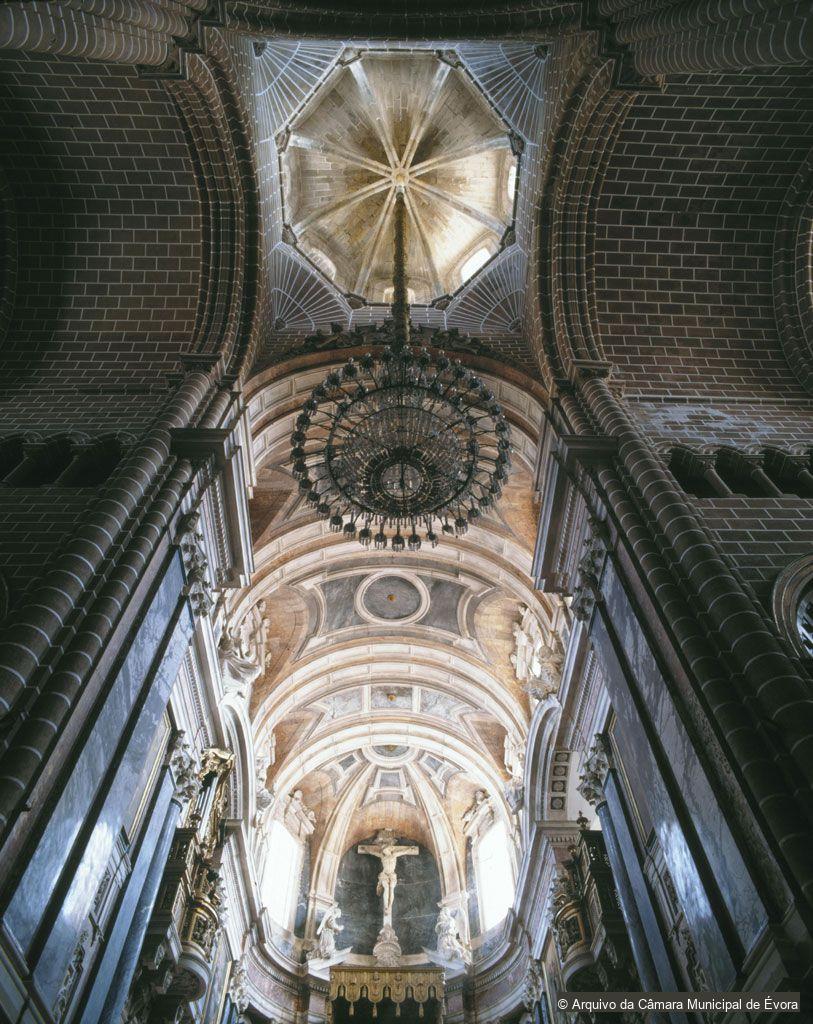
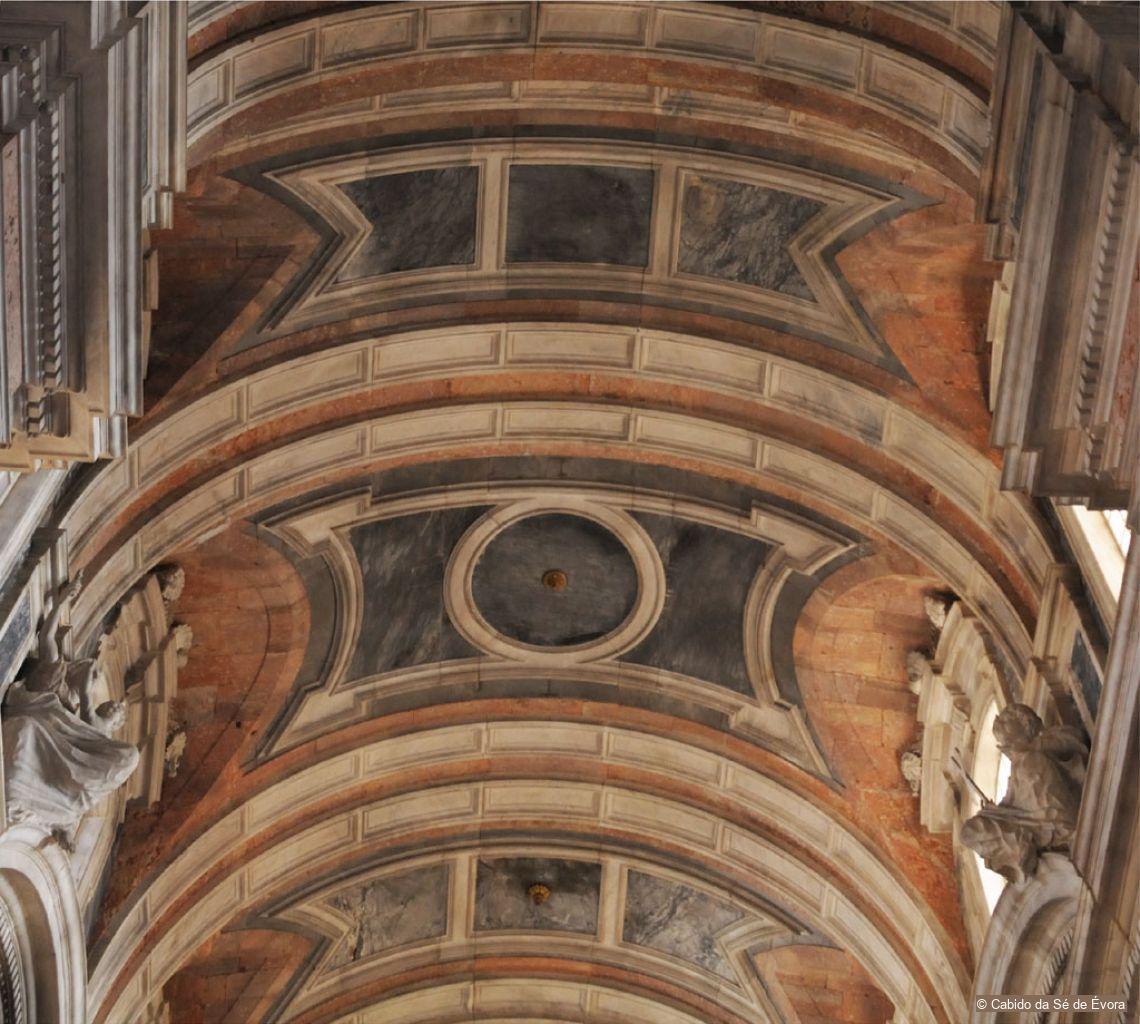
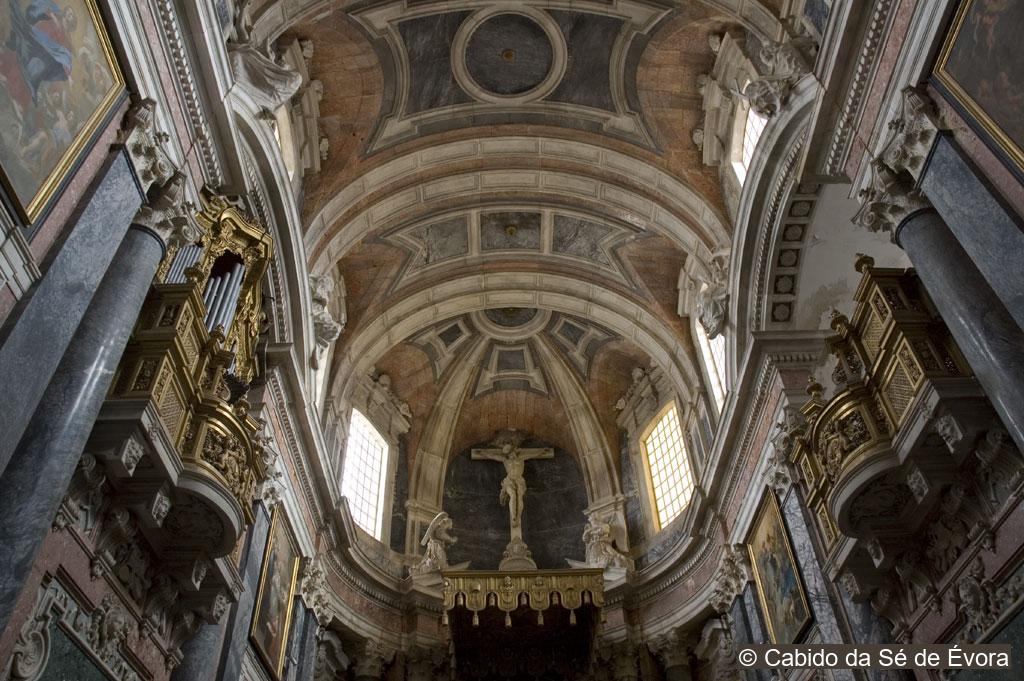
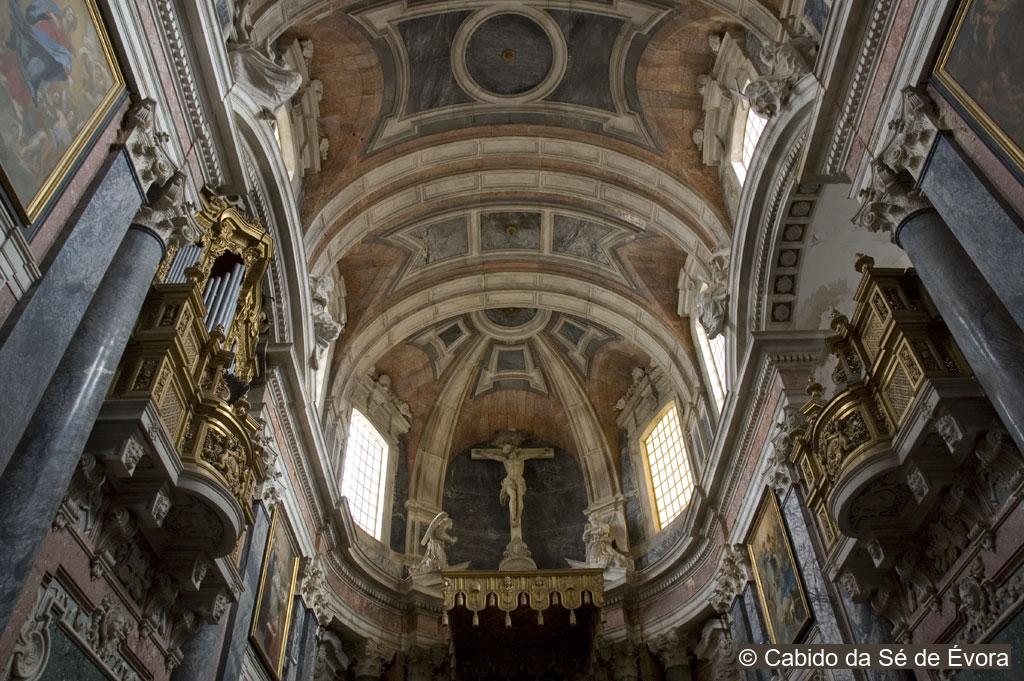
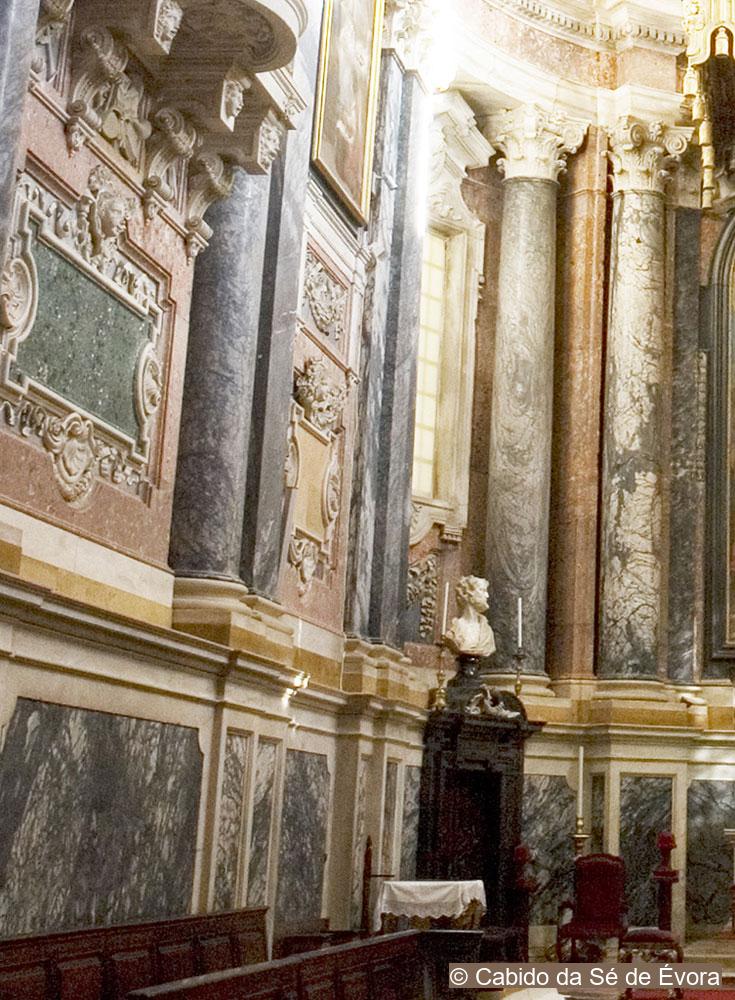
The chancel, with three upright bays and a barrel vault terminating in the half-dome, includes a coretto for the organ by Pascoal Oldovini and royal tribune. The chancel was built with a variety of marbles: the white from Estremoz, Vila Viçosa, Borba and Montes Claros; the yellow, black and pink from Sintra and Pêro Pinheiro and the green and black marbles from Italy. The statues of Charity, Faith, Hope and Religion, the pediment of the main arch and the busts of St. Peter and St. Paul were made by António Bellini of Pádua between 1725 and 1734.
The five paintings of the main altar were executed in Rome and commissioned by King João V from the workshop of Agostino Masucci. The high altar and the canopy were made between 1734 and 1736, as were the royal tribune and the organ coretto. Part of the silver collection was looted in the French invasion of 1808.
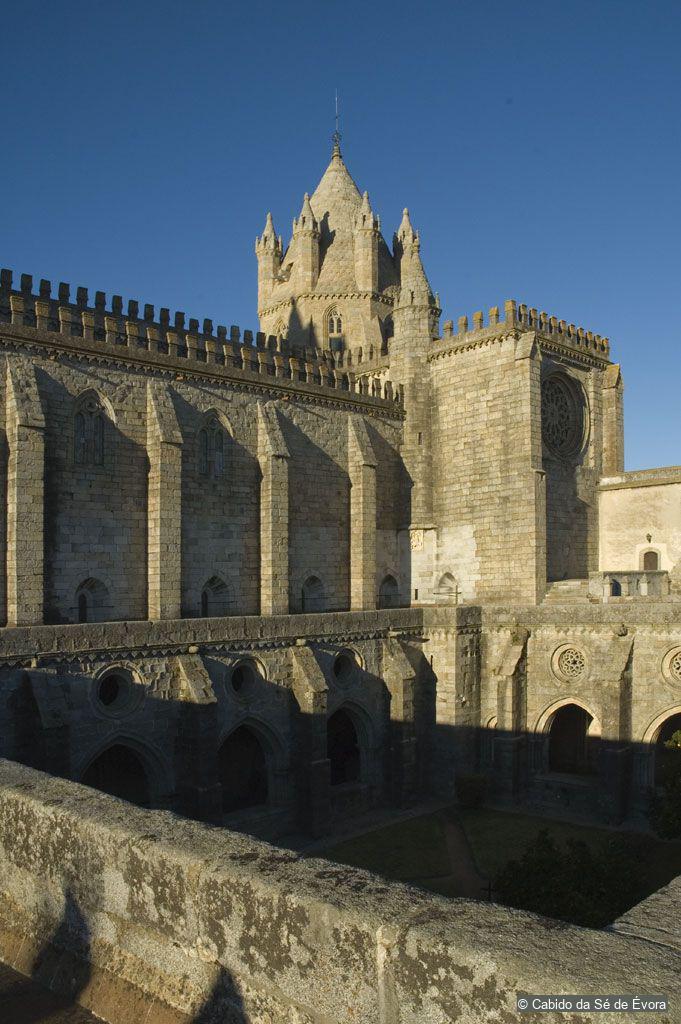
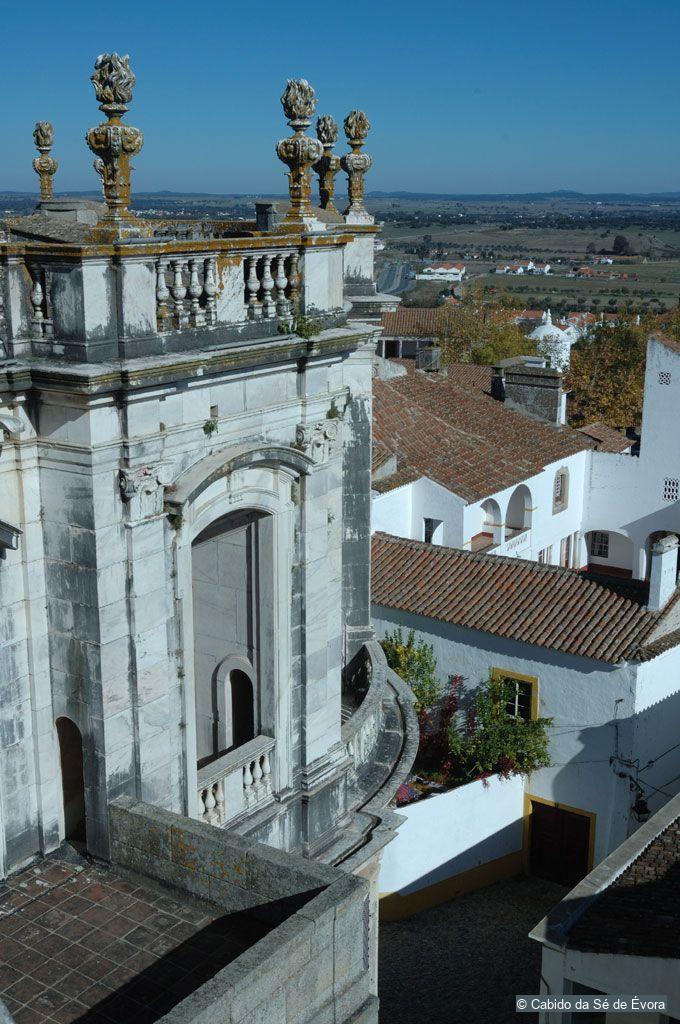
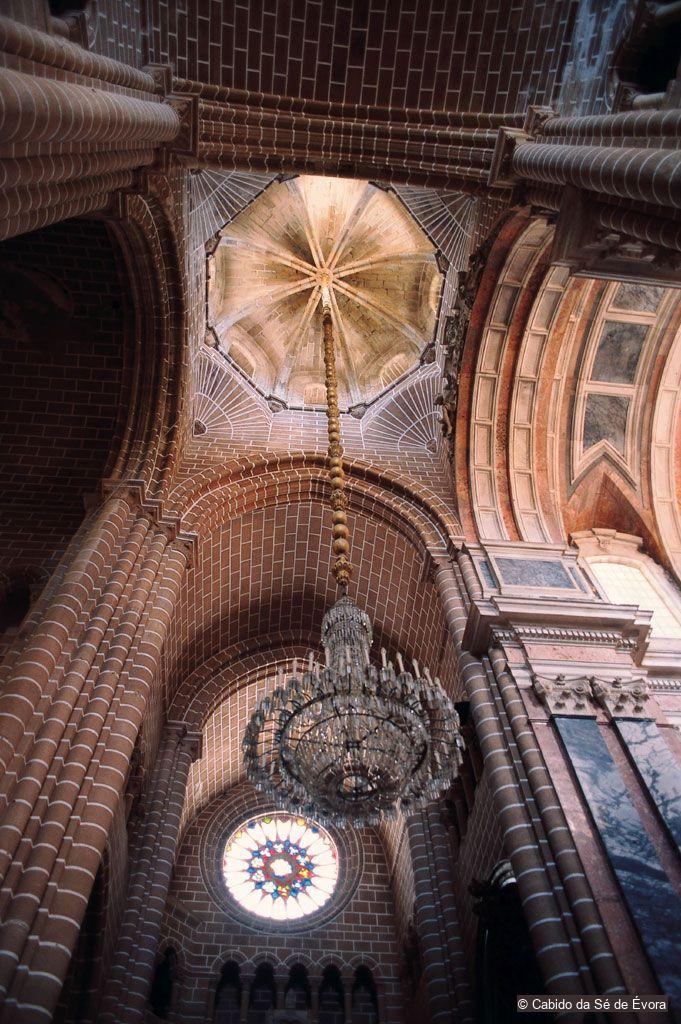
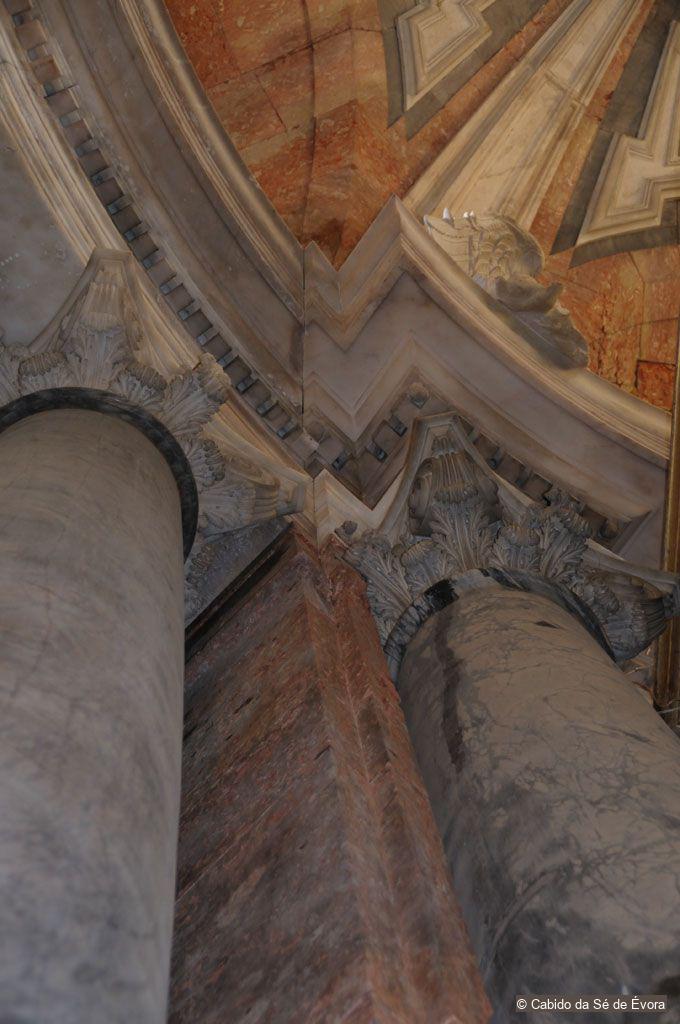
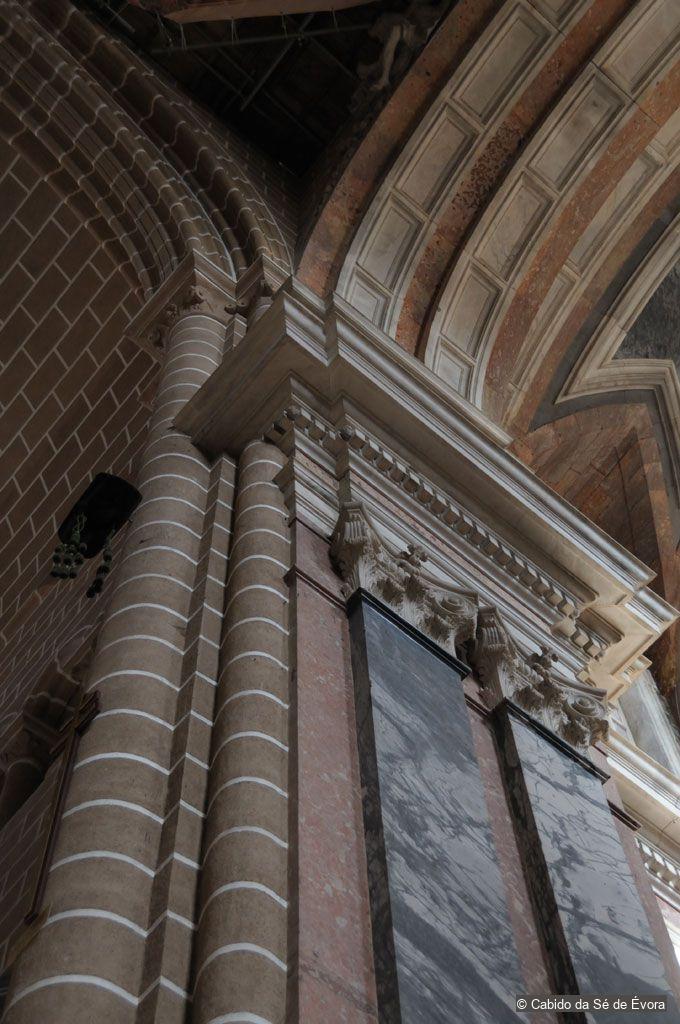
Despite the obvious contrast in design, especially on the exterior with its rich marble from Estremoz and Vila Viçosa, it is the Roman Baroque-style architecture of the interior that reflects the brilliance of the architect Johan Friedrich Ludwig. The black marble of the seven metre-high columns with white capitals, and the double pilasters, are masterfully combined with the pink marble framed cartouches on the walls that are crowned by angels. The contrast between the different coloured marbles enriches the entire decorative composition.
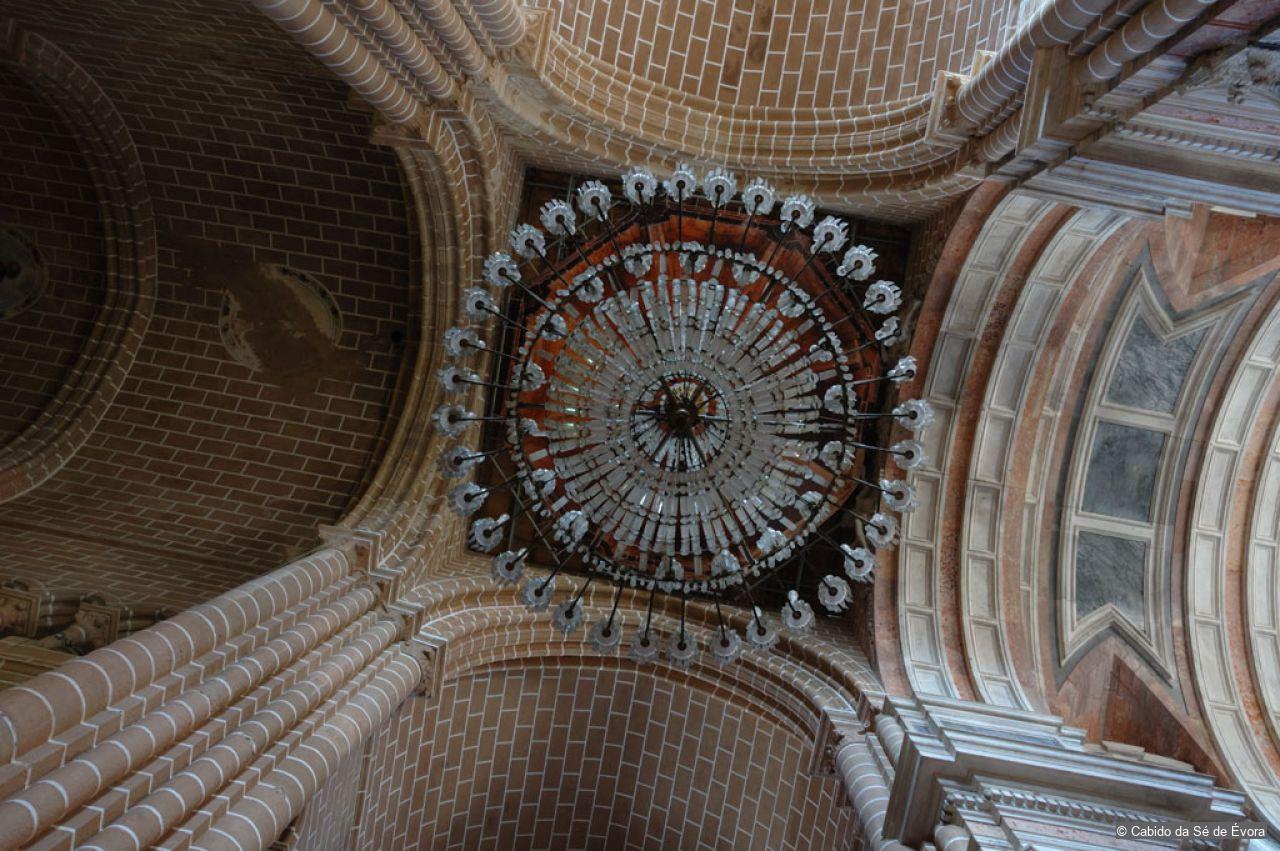
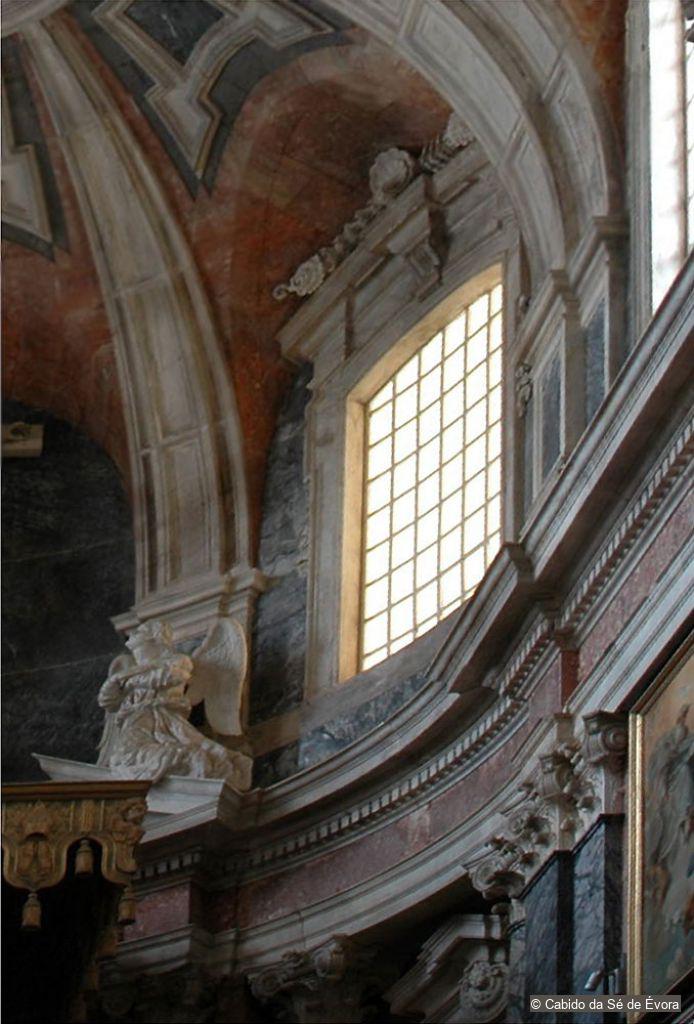
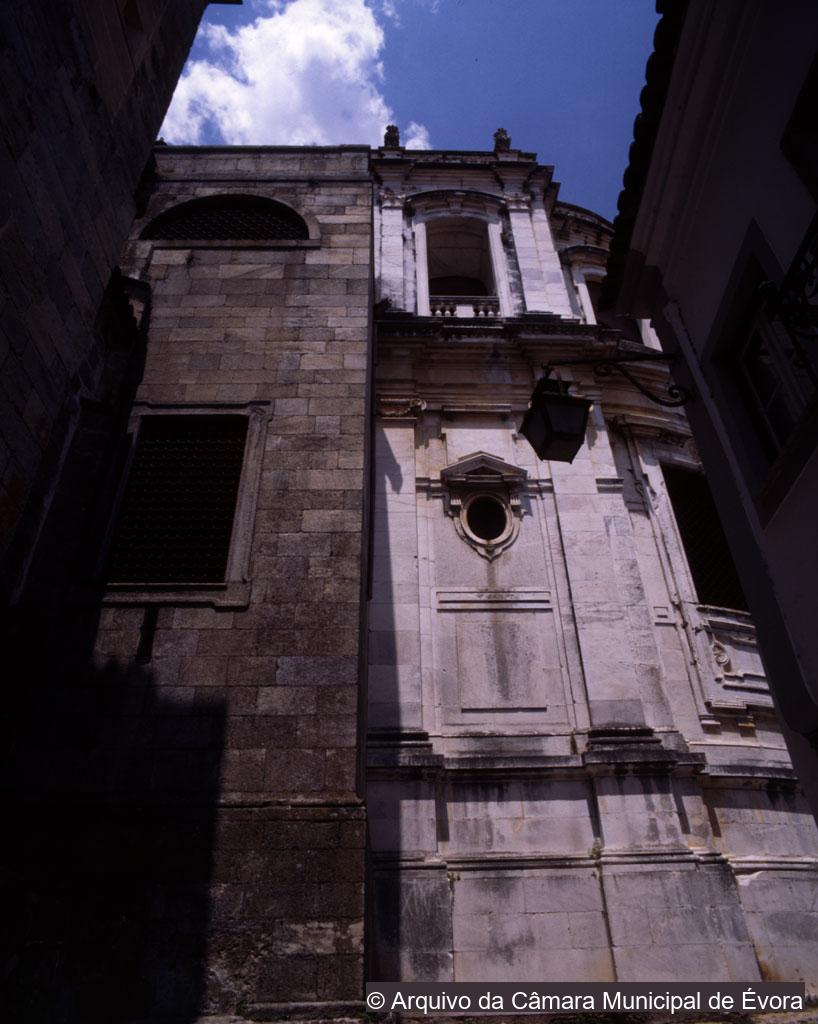
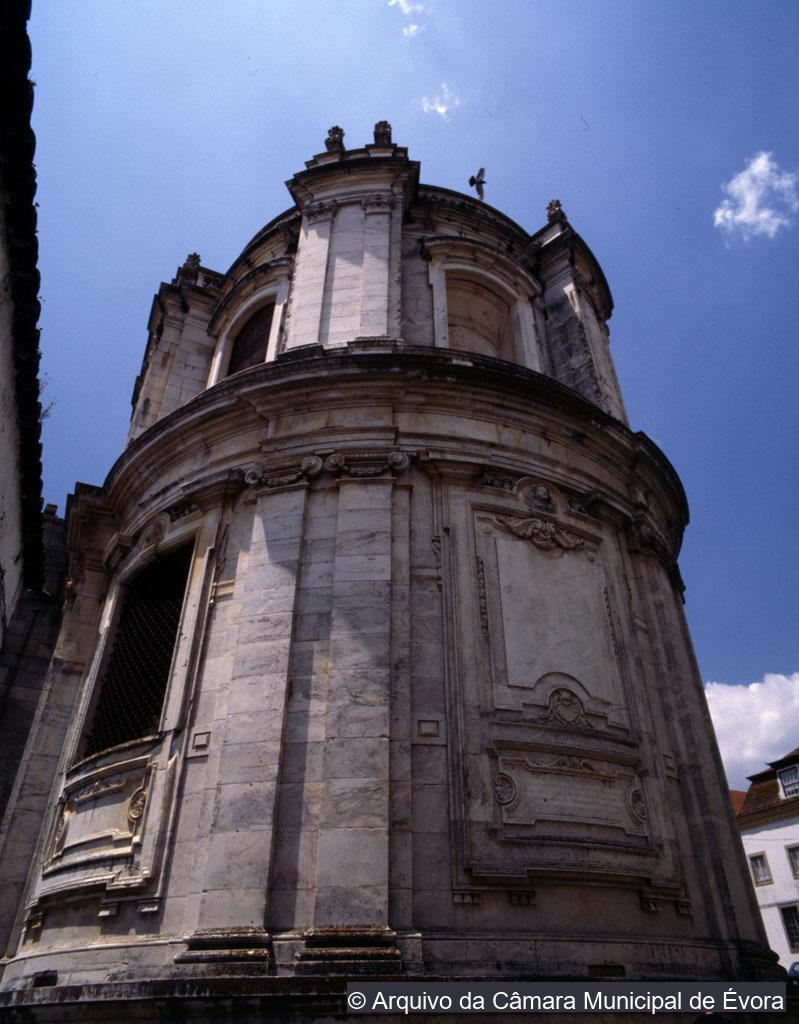
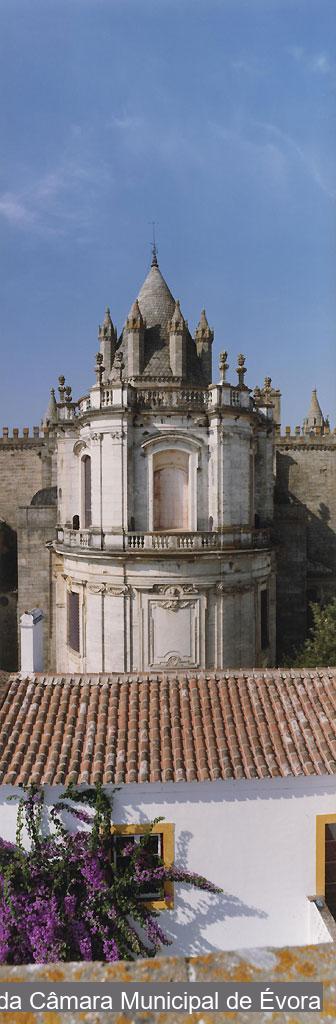
The perspective of elevation is obtained by the wide, elegantly outlined windows that allow for a diaphanous distribution of light. The pink marble-coated ceiling adds to the elegance and luminescence of the building. The exterior, despite similarities with Mafra Basilica, abides with a scheme of balanced classicism. This is one of Portugal's most beautiful Baroque monuments.
A Baroque chancel with a marble interior and exterior commissioned by King João V. It has three upright bays with a barrel vault terminating in the half-dome of the apse. Inspired by the chancel in Mafra Basilica, the chancel is an 18th-century addition to the great Gothic Évora Cathedral.
It includes a remarkable collection of sculpture, painting, gilded carving and an organ. Part of the silver collection was looted during the French Invasion of 1808.
How Monument was dated:
Contemporary documentation
Special features
High Altar
Interior, Évora Cathedral
22 May 1746
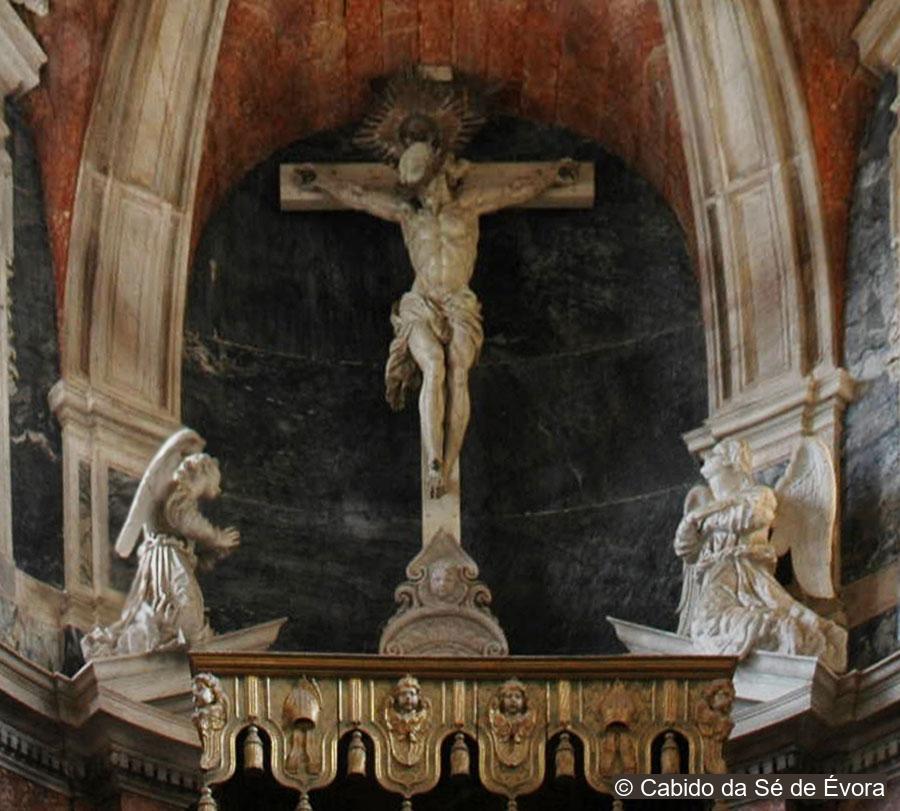
The angels, the Four Virtues, the pediment over the main arch and busts of St. Peter and St. Paul are by João António Bellini de Pádua (active 1725–1748); the paintings are by the workshop of Agostino Masucci
The sculptor, António Bellini of Pádua, was responsible for the decoration of the chancel. He endowed it with a sense of immateriality and a subtle notion of “suspension” seen in, for example, the main altar where angels worship on top of the white marble pediment flanking the cedar sculpture of Christ by Manuel Dias.
In the central panel is the Assumption of the Virgin, signed and dated 1731 by Agostino Masucci. This is surrounded by other paintings of the Nativity, Conception, Adoration of the Shepherds and the Coronation, all of which were painted in his workshop.
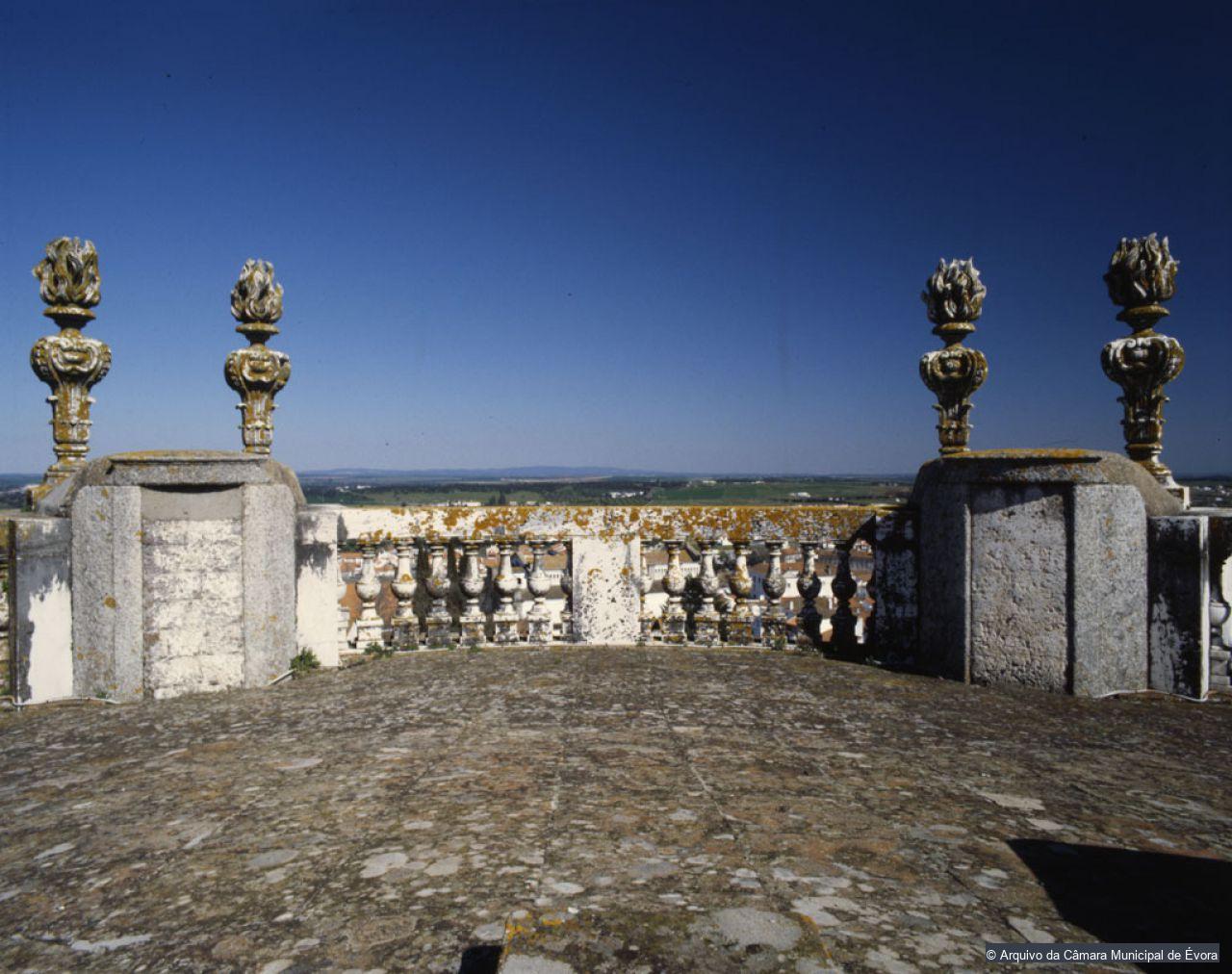
Main Chapel exterior
Largo Marquês de Marialva
22 May 1746
Johan Friedrich Ludwig (João Frederico Ludovice, active 1718–1746)
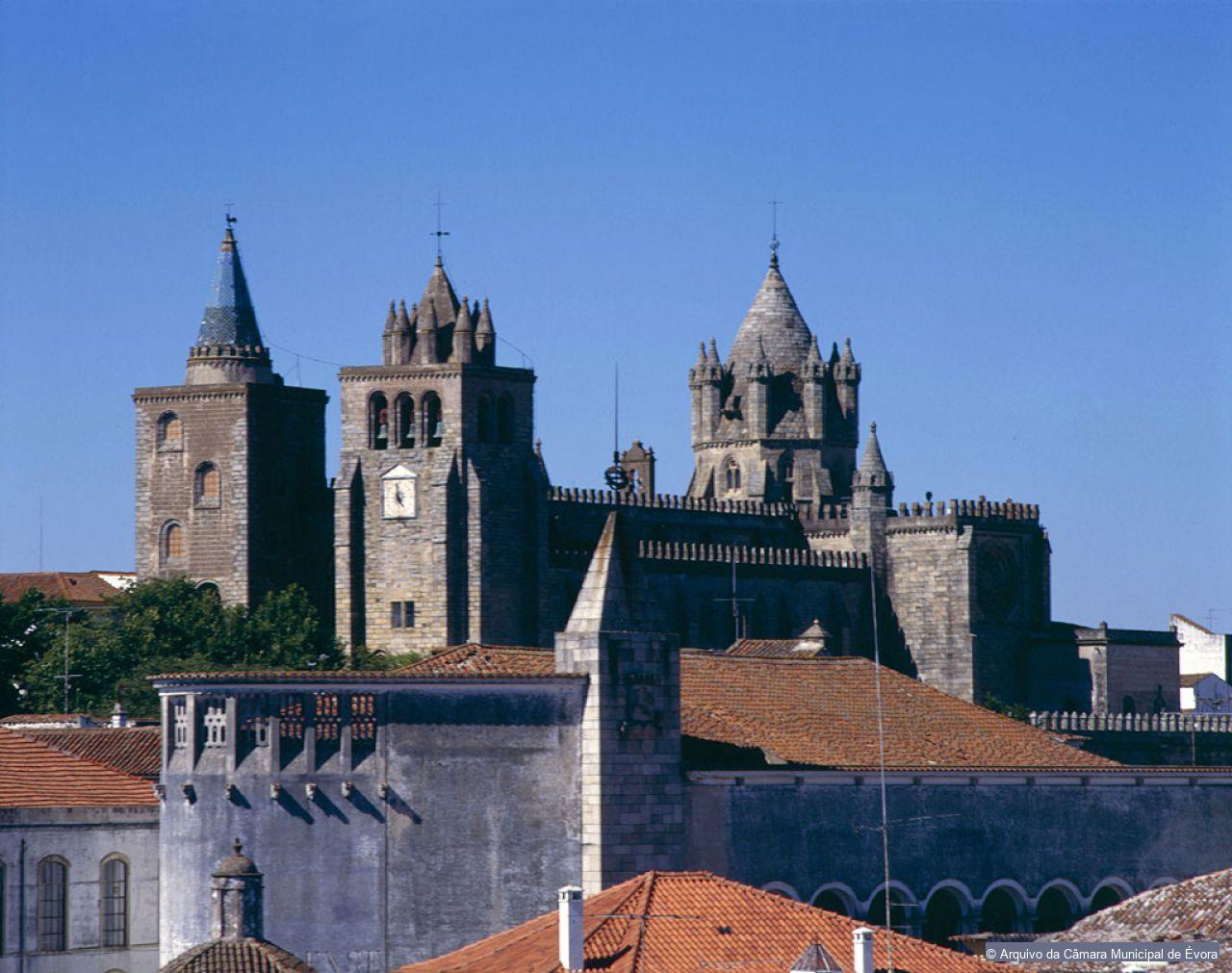
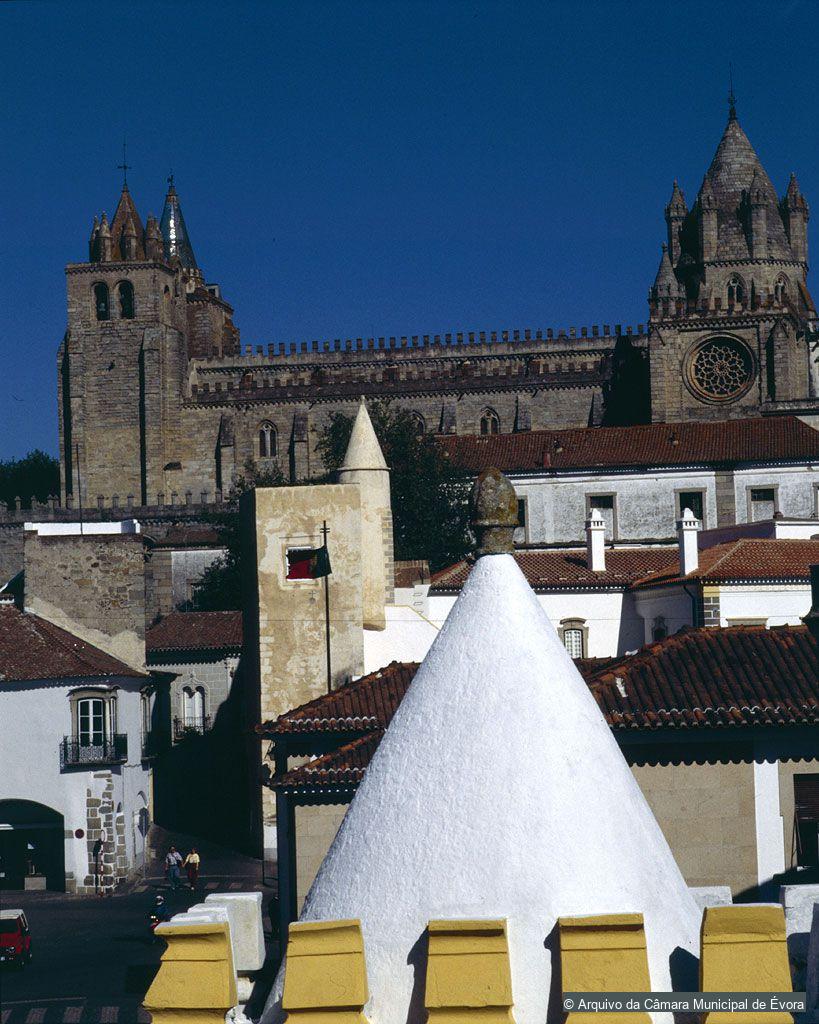
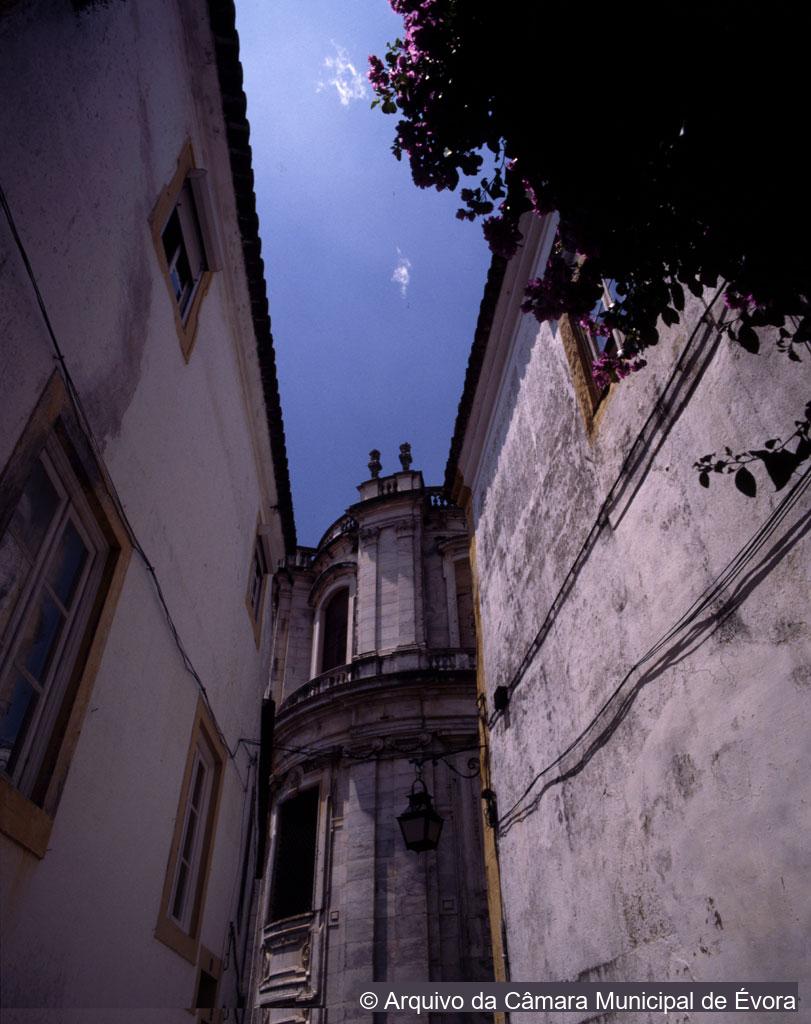
The element of surprise, a major component of the project, continues to impose itself on all those that walk the labyrinthine streets surrounding the cathedral.
Selected bibliography:
Smith, R. C., “João Frederico Ludovice, an Eighteen-Century Architect in Portugal” in The Art Bulletin, Vol. XVIII, 1936.
Carvalho, A. de, D. João V e a arte do seu tempo, Lisbon, 2 vols, 1960–1962.
Espanca, T., Inventário Artístico de Portugal. Distrito de Évora. Concelhos de Arraiolos, Estremoz, Montemor-o-Novo, Mora e Vendas Novas, Lisbon, 1975.
Pereira, J. F., “Biblioteca Breve” in Arquitectura Barroca em Portugal, Lisbon, 1986.
Pereira, J. F. (ed), Dicionário de Arte Barroca em Portugal, Lisbon, 1989.
Espanca, T., Évora, Lisbon, 1993.
Pereira, J. F., A Escultura em Mafra, Lisbon, 2002.
Citation of this web page:
Paulo Pereira, Cristina Correia "Évora Cathedral, Main Chancel" in "Discover Baroque Art", Museum With No Frontiers, 2026.
https://baroqueart.museumwnf.org/database_item.php?id=monument;BAR;pt;Mon11;18;en
Prepared by: Paulo PereiraPaulo Pereira
SURNAME: Pereira
NAME: Paulo
AFFILIATION Faculty of Architecture, Technical University of Lisbon
TITLE: University Lecturer
CV:
Paulo Pereira holds an MA in Cultural Studies and has been a speaker at numerous seminars and congresses in Portugal, Spain, France, Italy, the United States and Brazil. Paulo has co-ordinated and published books about Portuguese art and history, some of which are award winning. He is curator of several exhibitions held in Portugal, Ghent, Brussels and Berlin and been a contributing author for several exhibition catalogues. He has exercised managerial roles within the Town Hall of Lisbon, was Vice President of the Portuguese Heritage Institute (IGESPAR) and is a lecturer at the Technical University of Lisbon (Faculty of Architecture). , Cristina CorreiaCristina Correia
SURNAME: Correia
NAME: Cristina
AFFILIATION: Eça de Queirós Public High School, Lisbon and MWNF
TITLE: Senior Teacher, Local Co-ordinator and Vice-President of MWNF
CV:
Cristina Correia is a History graduate and, since 1985, a Senior Teacher of History at the Eça de Queirós Public High School, Lisbon where she also lectures in Portuguese Language and Culture for non-native speakers. From 1987 to 1998 she was involved with youth affairs, primary prevention and the Camões Institute. She is Vice-President and Local Co-ordinator (Portugal) for MWNF.
Translation by: Lili Cavalheiro, Cristina CorreiaCristina Correia
SURNAME: Correia
NAME: Cristina
AFFILIATION: Eça de Queirós Public High School, Lisbon and MWNF
TITLE: Senior Teacher, Local Co-ordinator and Vice-President of MWNF
CV:
Cristina Correia is a History graduate and, since 1985, a Senior Teacher of History at the Eça de Queirós Public High School, Lisbon where she also lectures in Portuguese Language and Culture for non-native speakers. From 1987 to 1998 she was involved with youth affairs, primary prevention and the Camões Institute. She is Vice-President and Local Co-ordinator (Portugal) for MWNF., Artur Fouto
Translation copyedited by: Mandi GomezMandi Gomez
Amanda Gomez is a freelance copy-editor and proofreader working in London. She studied Art History and Literature at Essex University (1986–89) and received her MA (Area Studies Africa: Art, Literature, African Thought) from SOAS in 1990. She worked as an editorial assistant for the independent publisher Bellew Publishing (1991–94) and studied at Bookhouse and the London College of Printing on day release. She was publications officer at the Museum of London until 2000 and then took a role at Art Books International, where she worked on projects for independent publishers and arts institutions that included MWNF’s English-language editions of the books series Islamic Art in the Mediterranean. She was part of the editorial team for further MWNF iterations: Discover Islamic Art in the Mediterranean Virtual Museum and the illustrated volume Discover Islamic Art in the Mediterranean.
True to its ethos of connecting people through the arts, MWNF has provided Amanda with valuable opportunities for discovery and learning, increased her editorial experience, and connected her with publishers and institutions all over the world. More recently, the projects she has worked on include MWNF’s Sharing History Virtual Museum and Exhibition series, Vitra Design Museum’s Victor Papanek and Objects of Desire, and Haus der Kulturen der Welt’s online publication 2 or 3 Tigers and its volume Race, Nation, Class.
MWNF Working Number: PT 18