

 Back
Back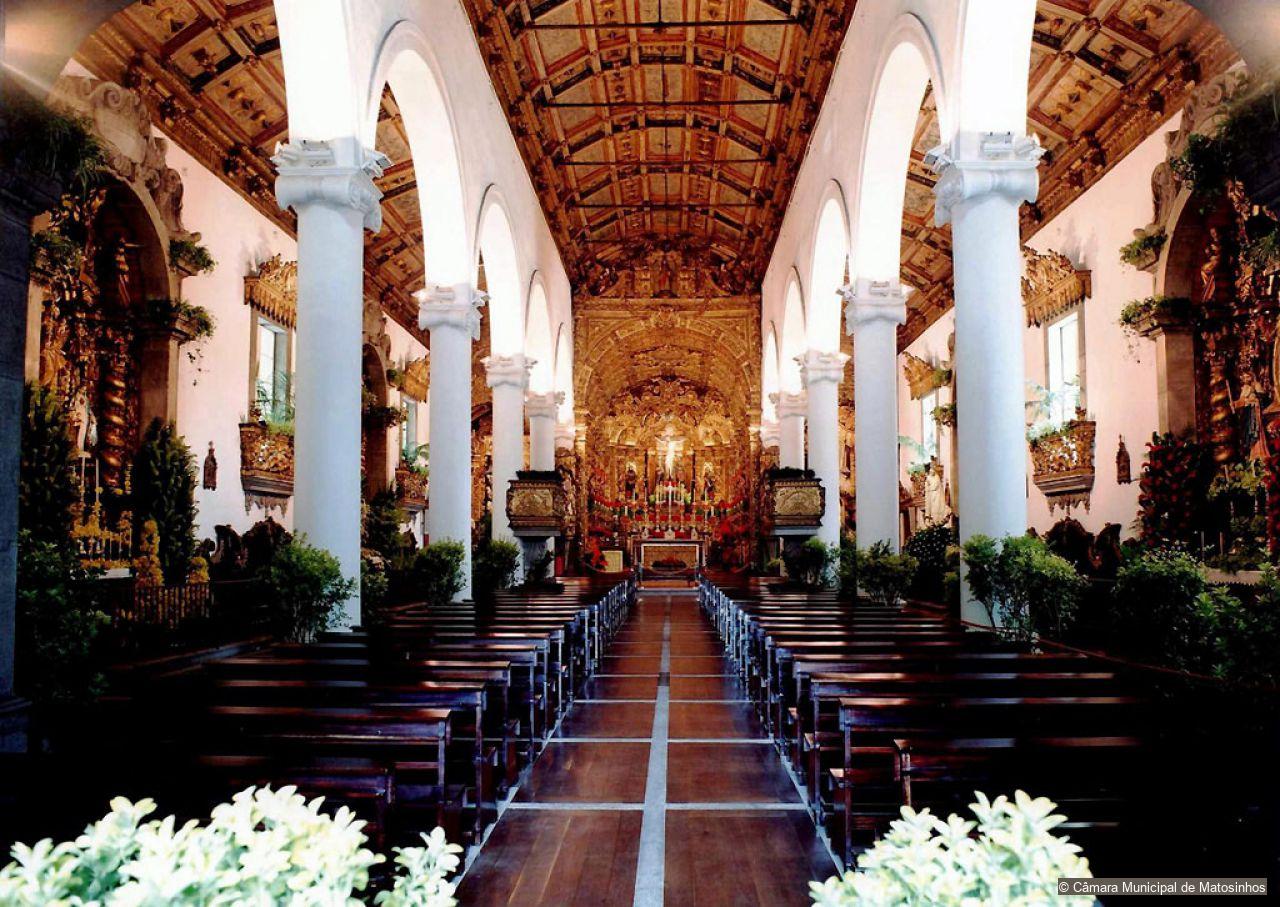
 Add to My Collection
Name of Monument:
Sanctuary of Bom Jesus de Matosinhos
Also known as:
Igreja paroquial de Matosinhos; Igreja do Salvador
Location:
Parish of Matosinhos, Porto, Portugal
Santuário do Bom Jesus de Matosinhos
Rua Silva Cunha, 107
4450-222 Matosinhos
T : +351 22 939 7980/86
F : +351 22 939 7989
E : paroquia.matosinhos@clix.pt
Salvador Parish, Matosinhos (Responsible Institution)
Date:
18th century
Artists:
Architecture, painting and decorating attributed to Nicolau Nasoni (1691–1773); woodcarvers: Luís Pereira da Costa (active 1724–?), Domingos Martins Moreira (active 1746–1750)
Denomination / Type of monument:
Religious architecture, pilgrimage sanctuary
Patron(s):
Brotherhood of Bom Jesus de Matosinhos
History:
The origin of the sanctuary is linked to a legend which, similar to other Portuguese legends, has its mythical origins in an object of worship. According to legend, the wooden figure of the Senhor de Matosinhos (Our Lord of Matosinhos) was thrown into the sea by Nicodemos in Palestine. The figure was found in Espinheiro, Matosinhos, on 3 May 124. During the journey it had lost an arm but no one was able to repair it. Later, an old woman was surprised by a dry branch that kept springing out of the fire and recognised it as the figure's missing arm.
Description:
Bom Jesus de Matosinhos Church has three naves, a chancel and two side chapels. It was re-built to the plans drawn by Nicolau Nasoni, who was instructed by the brotherhood to renew the church, the earlier version of which dated from the 16th century.
The reconstruction retained the 16th-century floor plan, arches and columns, but Nasoni added the Baroque façade and partially changed the elevations according to the new taste, thus allowing the installation of a coffered ceiling.
Several restorations and renovations have endowed the church with a series of gilt wood altarpieces, appropriately scaled to the building, and seen the chancel completely covered with gilt and carved woodwork.
A church belonging to an ancient pilgrimage sanctuary with three naves and a symmetrical façade of two towers, the latter designed by the Italian Baroque architect, Nicolau Nasoni.
How Monument was dated:
Historical evidence and stylistic analysis
Special features
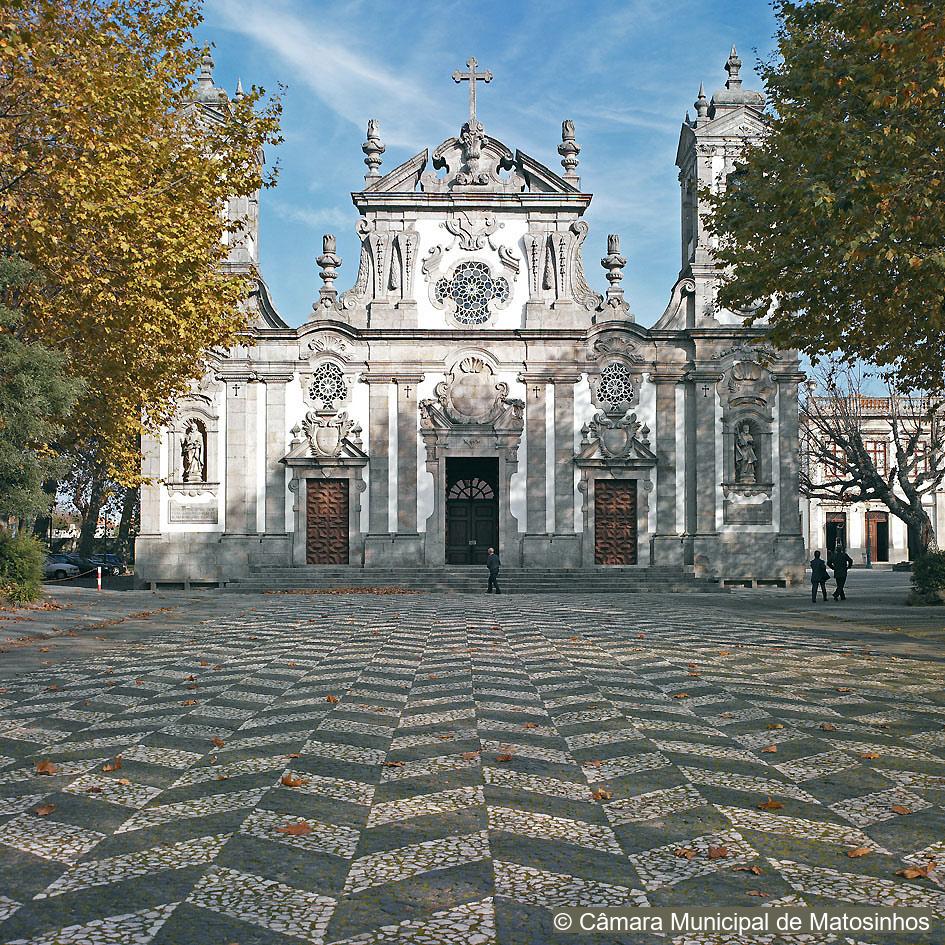
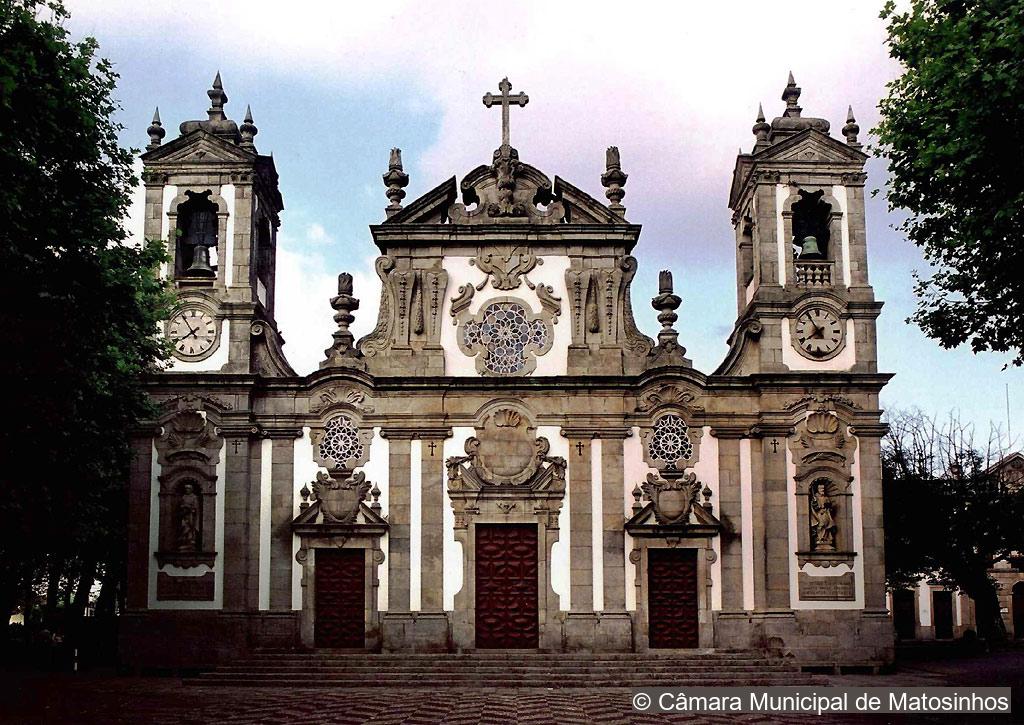
Façade
Rua Silva Cunha
1743–1748
Nicolau Nasoni (1691–1773)
Despite the dominant horizontal façade, the two towers are thin and crowned with the reverse ogee pinnacles that are typical of regional Portuguese Baroque.
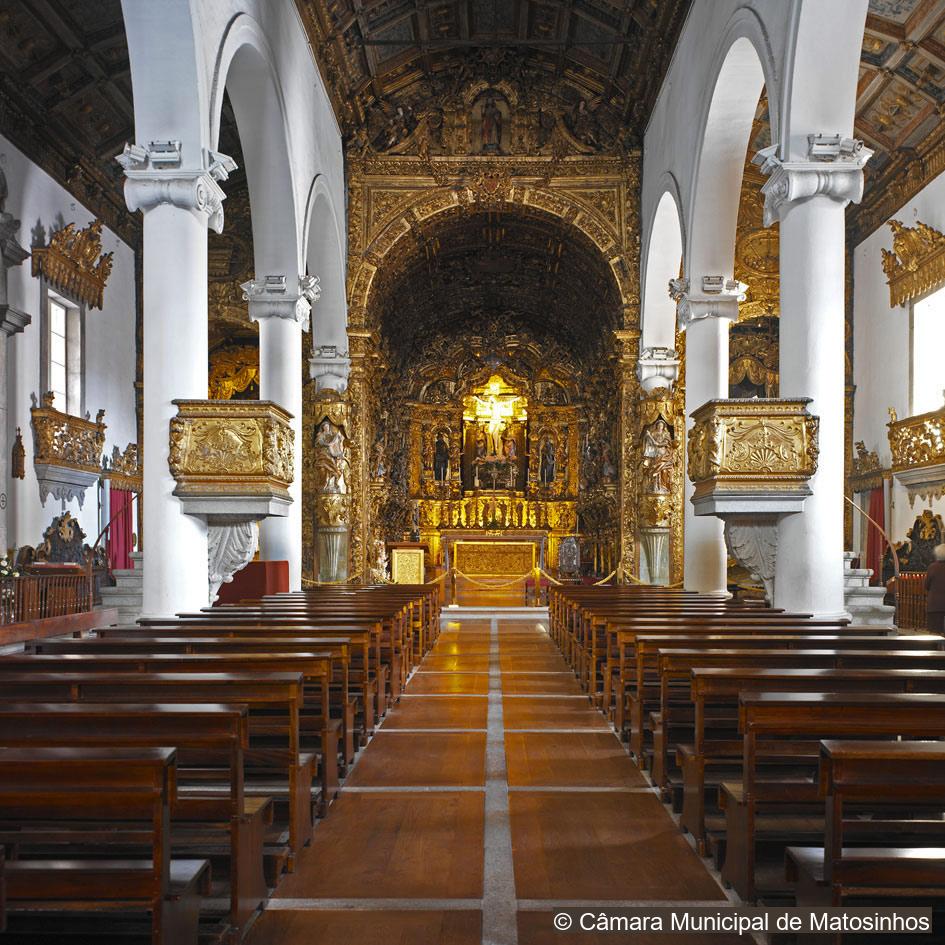
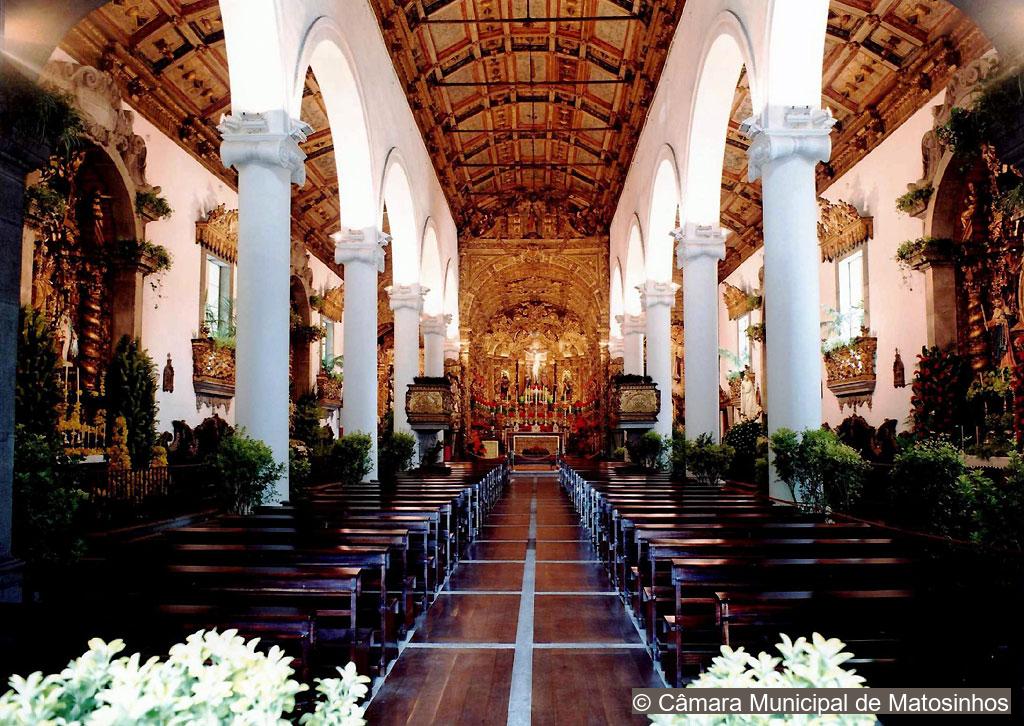
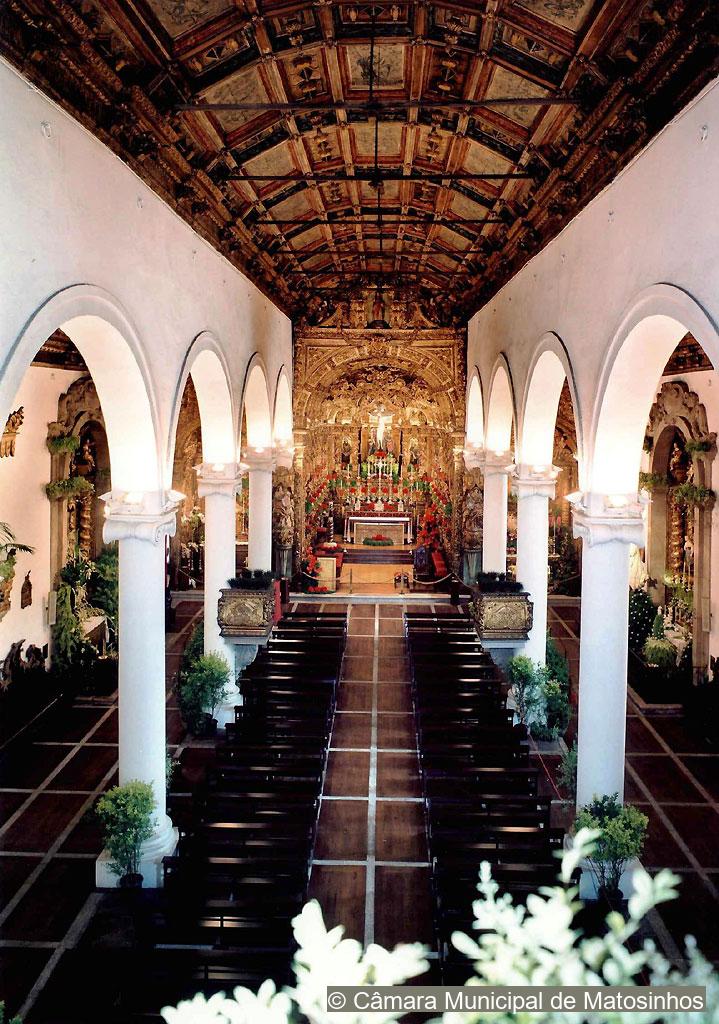
General View of the Nave towards the Chancel
Interior, Sanctuary of Bom Jesus de Matosinhos
1726–1750
Portuguese woodcarvers: Luís Pereira da Costa (active 1724–?), Domingos Martins Moreira (active 1746–1750)
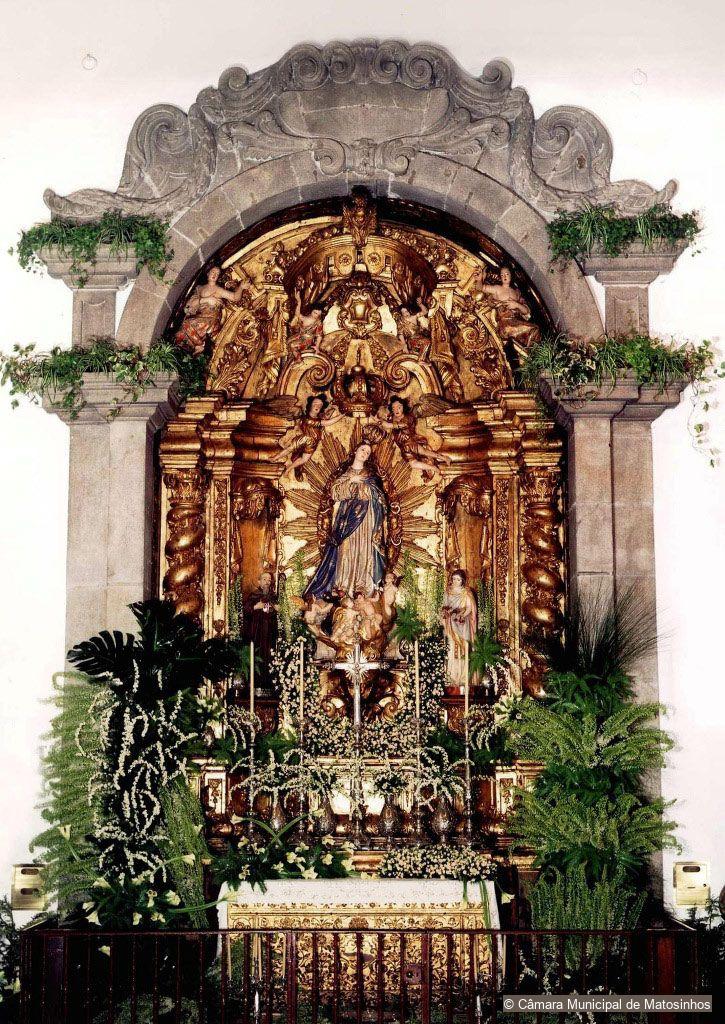
Although small and low, the true value of the church interior lies in the densely carved and gilded woodwork of the lateral altarpieces, seen most spectacularly in the chancel.
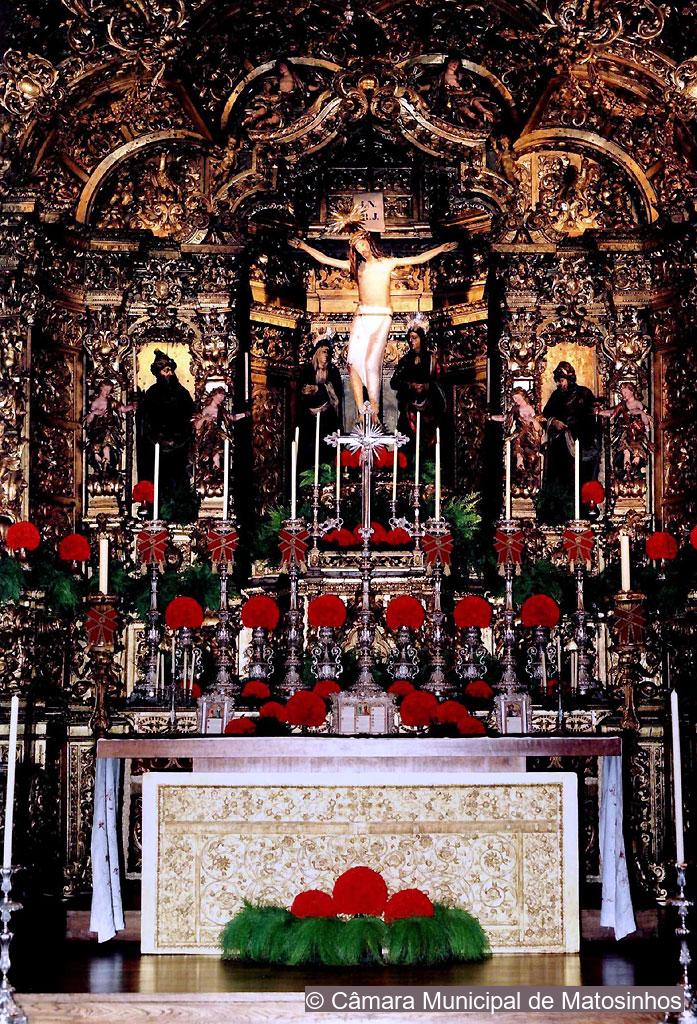
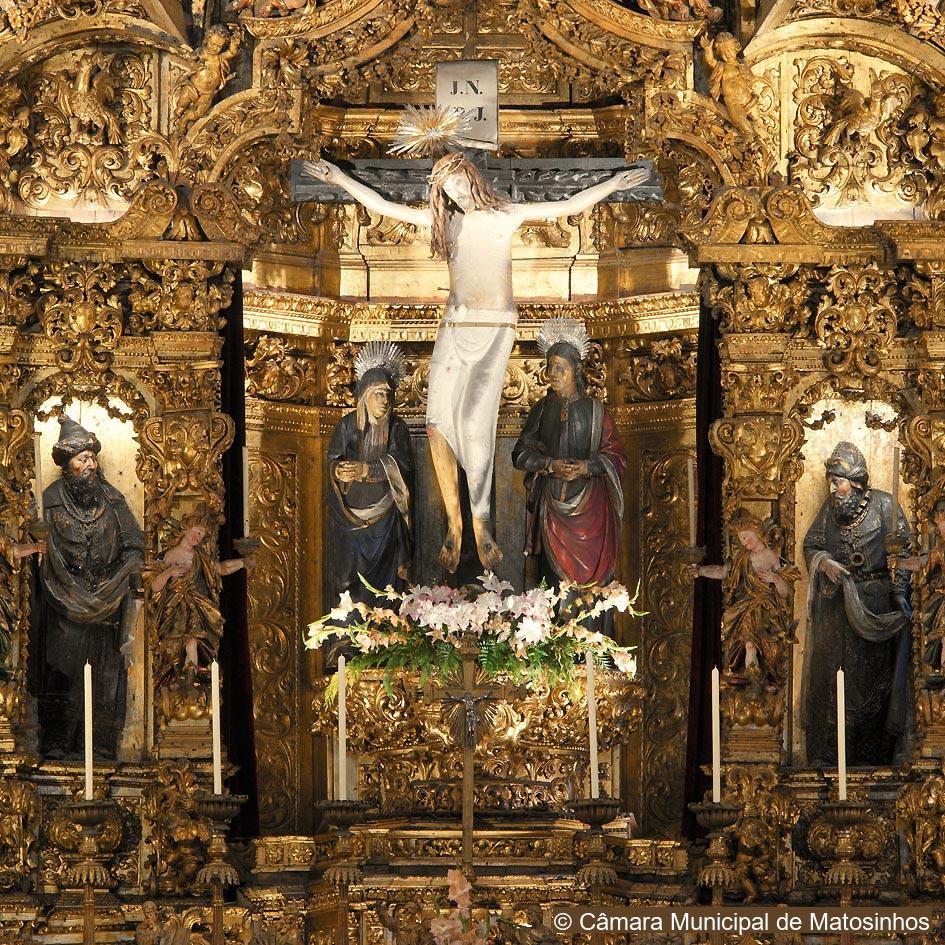
Chancel
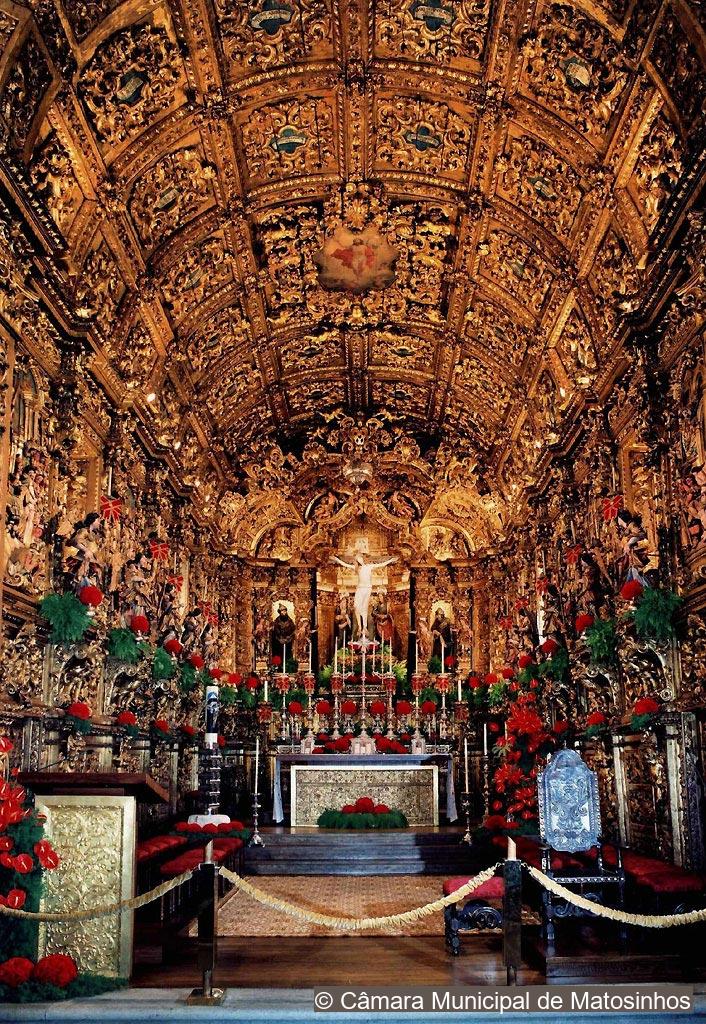
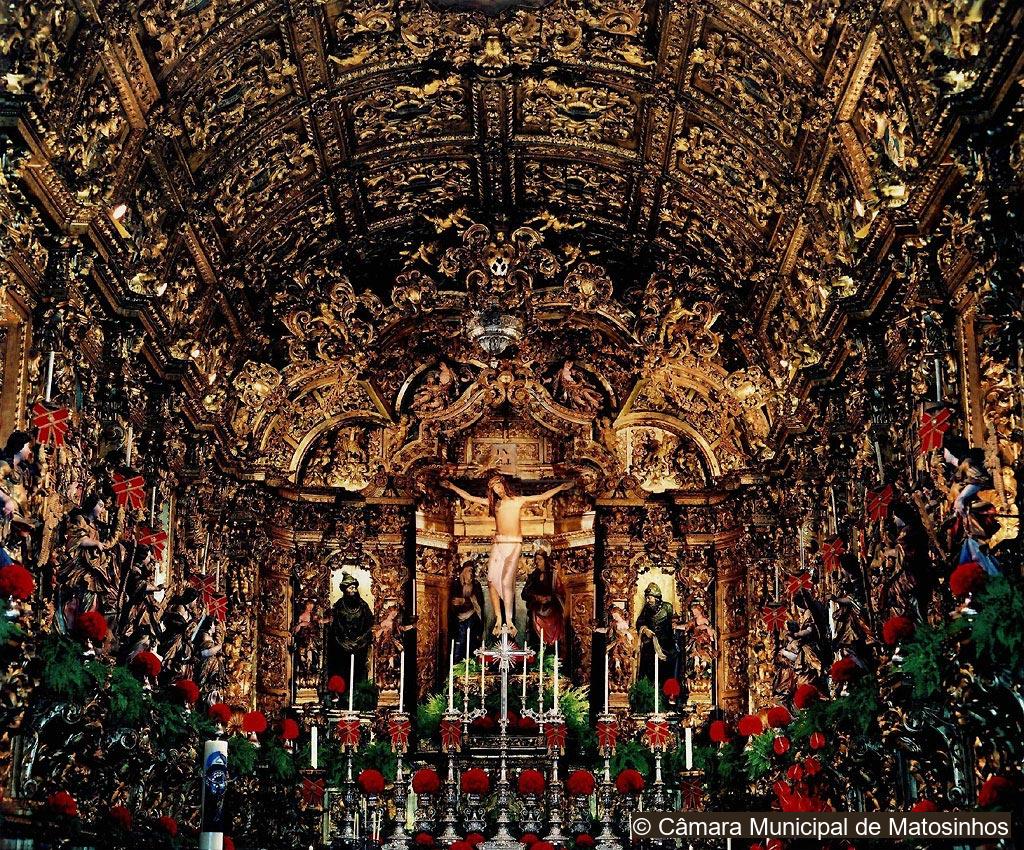
Interior, Sanctuary of Bom Jesus de Matosinhos
1726–1750
Portuguese woodcarvers: Luís Pereira da Costa (active 1724–?), Domingos Martins Moreira (active 1746–1750)
The chancel is completely covered with gilded and carved woodwork. In the centre of the altar stands the miraculous image of Our Lord of Matosinhos flanked by Late Renaissance stone figures.
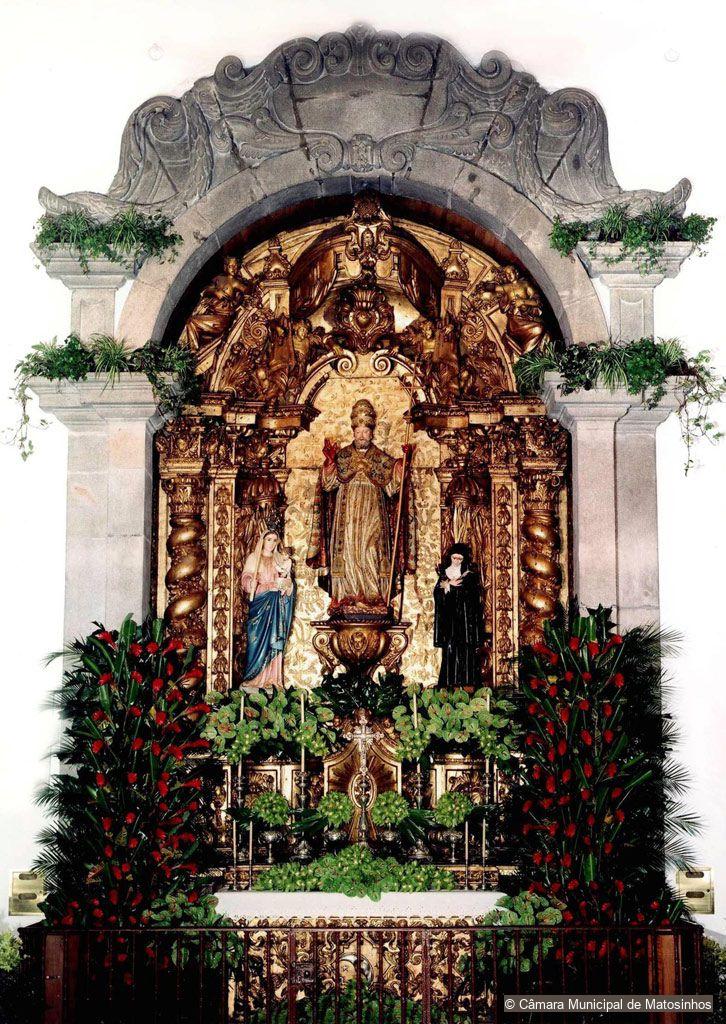
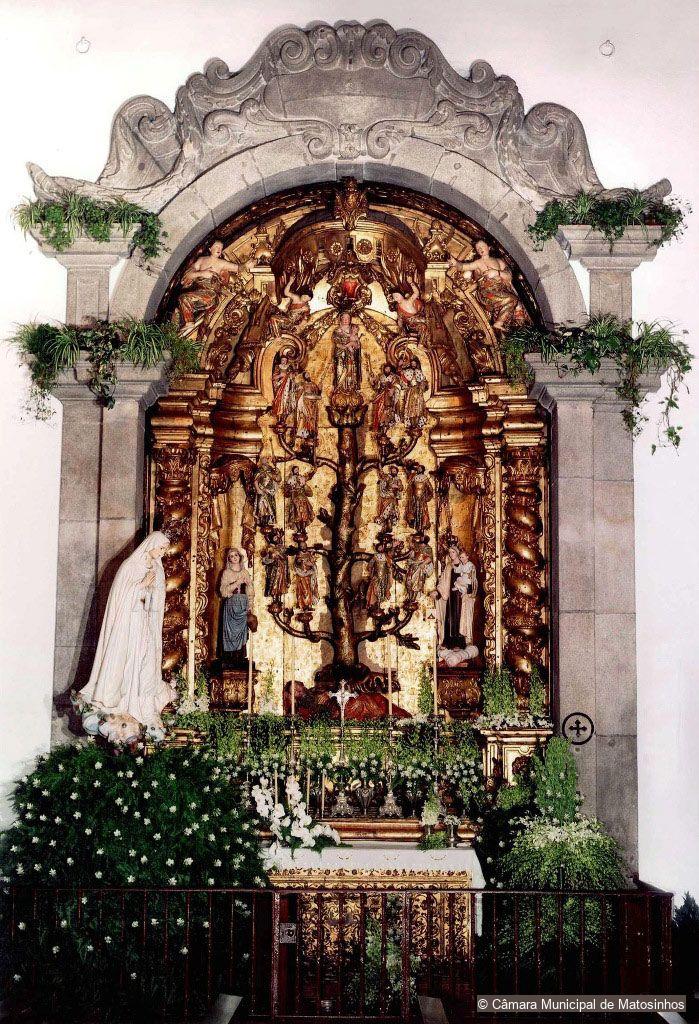
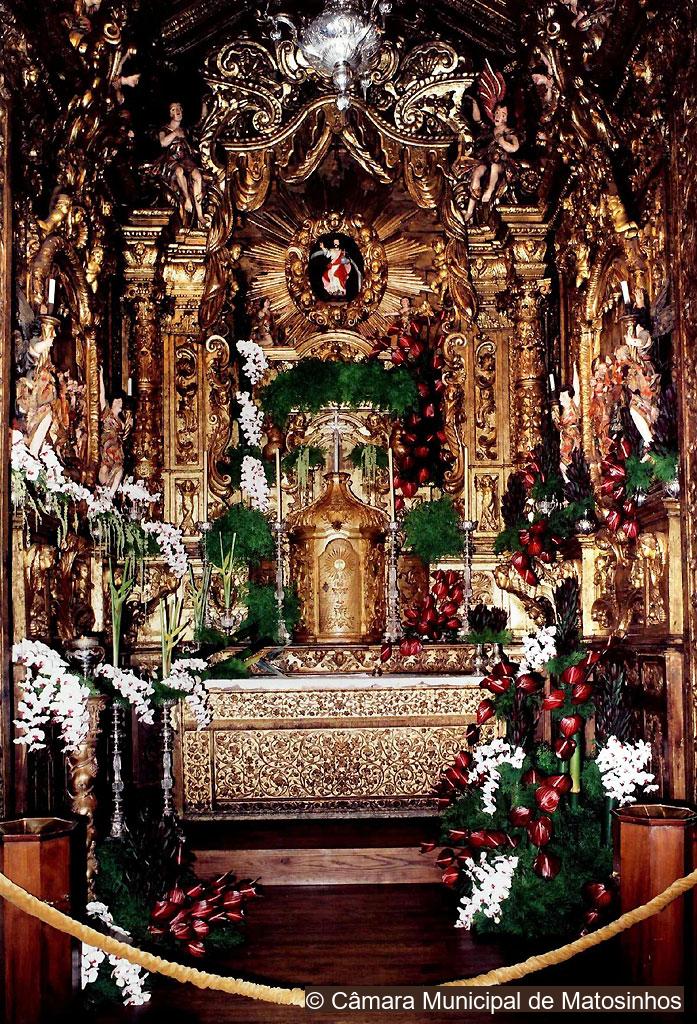
Side Chapel, left (Holy Sacrament Chapel)
Interior, Sanctuary of Bom Jesus de Matosinhos
1726–1750
Portuguese woodcarvers: Luís Pereira da Costa (active 1724–?), Domingos Martins Moreira (active 1746–1750)
Sumptuous gilt wood carved retable.
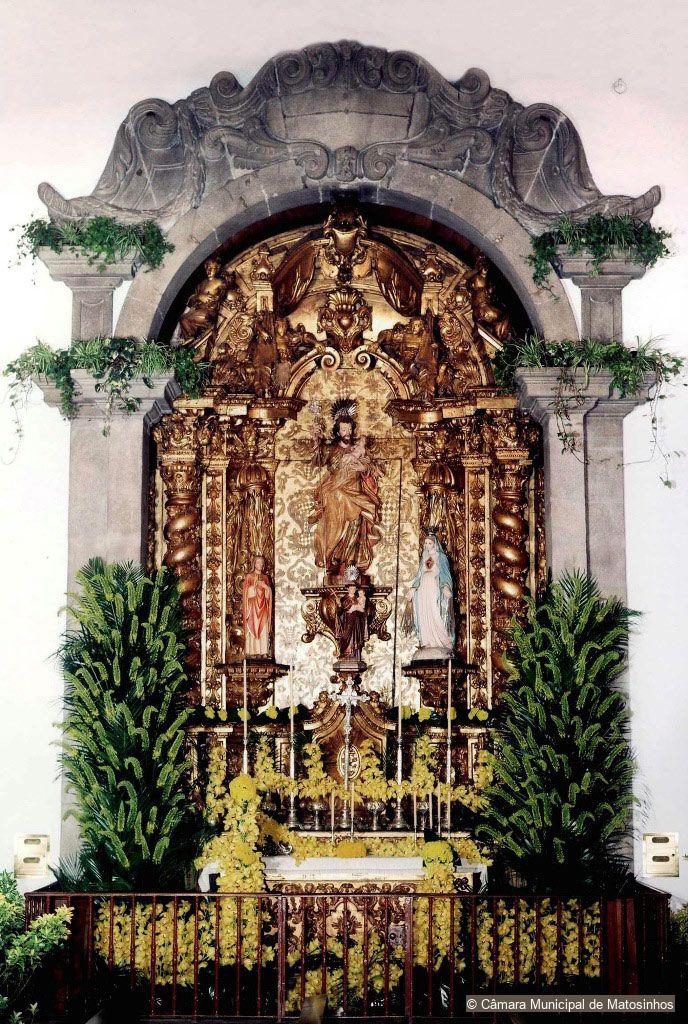
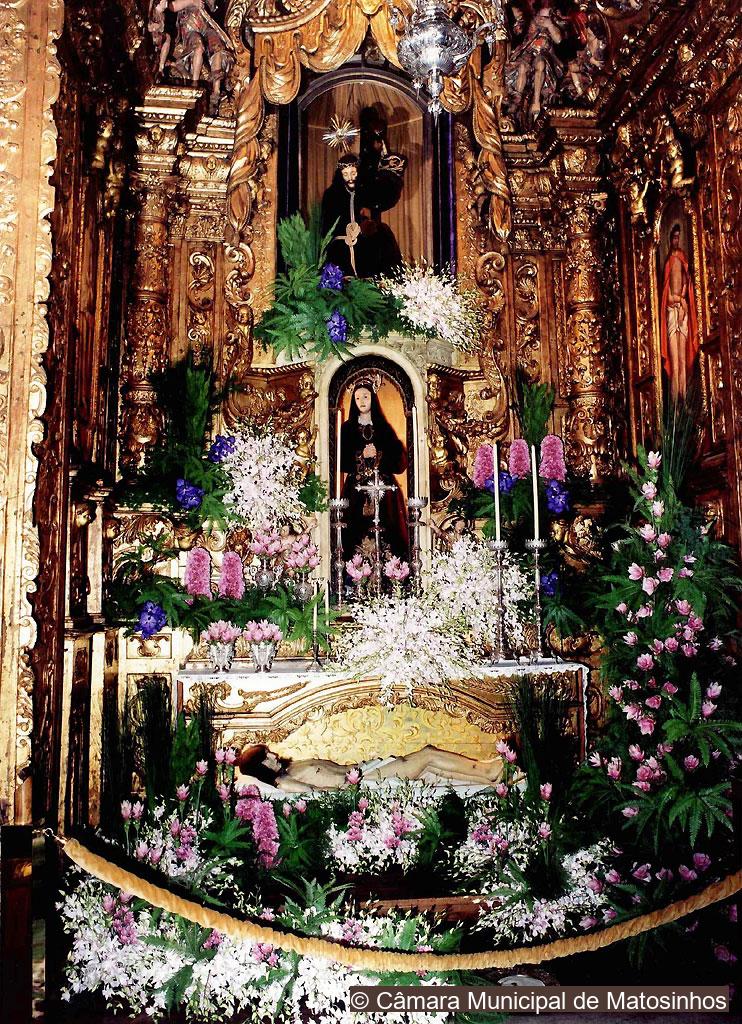
Side chapel, right (Our Lord of Passos Chapel and Our Lady of Soledad)
Interior, Sanctuary of Bom Jesus de Matosinhos
1726–1750
Portuguese woodcarvers: Luís Pereira da Costa (active 1724–?), Domingos Martins Moreira (active 1746–1750)
Splendid gilt wood carved retable.
Selected bibliography:
Brandão, D. P., A obra de Nicolau Nasoni no actual Concelho de Matosinhos, Porto, 1964.
Oliveira, M. J., Matosinhos (…), 1989.
Citation of this web page:
Paulo Pereira "Sanctuary of Bom Jesus de Matosinhos" in "Discover Baroque Art", Museum With No Frontiers, 2026.
https://baroqueart.museumwnf.org/database_item.php?id=monument;BAR;pt;Mon11;21;en
Prepared by: Paulo PereiraPaulo Pereira
SURNAME: Pereira
NAME: Paulo
AFFILIATION Faculty of Architecture, Technical University of Lisbon
TITLE: University Lecturer
CV:
Paulo Pereira holds an MA in Cultural Studies and has been a speaker at numerous seminars and congresses in Portugal, Spain, France, Italy, the United States and Brazil. Paulo has co-ordinated and published books about Portuguese art and history, some of which are award winning. He is curator of several exhibitions held in Portugal, Ghent, Brussels and Berlin and been a contributing author for several exhibition catalogues. He has exercised managerial roles within the Town Hall of Lisbon, was Vice President of the Portuguese Heritage Institute (IGESPAR) and is a lecturer at the Technical University of Lisbon (Faculty of Architecture).
Translation by: Lili Cavalheiro, Cristina CorreiaCristina Correia
SURNAME: Correia
NAME: Cristina
AFFILIATION: Eça de Queirós Public High School, Lisbon and MWNF
TITLE: Senior Teacher, Local Co-ordinator and Vice-President of MWNF
CV:
Cristina Correia is a History graduate and, since 1985, a Senior Teacher of History at the Eça de Queirós Public High School, Lisbon where she also lectures in Portuguese Language and Culture for non-native speakers. From 1987 to 1998 she was involved with youth affairs, primary prevention and the Camões Institute. She is Vice-President and Local Co-ordinator (Portugal) for MWNF.
Translation copyedited by: Mandi GomezMandi Gomez
Amanda Gomez is a freelance copy-editor and proofreader working in London. She studied Art History and Literature at Essex University (1986–89) and received her MA (Area Studies Africa: Art, Literature, African Thought) from SOAS in 1990. She worked as an editorial assistant for the independent publisher Bellew Publishing (1991–94) and studied at Bookhouse and the London College of Printing on day release. She was publications officer at the Museum of London until 2000 and then took a role at Art Books International, where she worked on projects for independent publishers and arts institutions that included MWNF’s English-language editions of the books series Islamic Art in the Mediterranean. She was part of the editorial team for further MWNF iterations: Discover Islamic Art in the Mediterranean Virtual Museum and the illustrated volume Discover Islamic Art in the Mediterranean.
True to its ethos of connecting people through the arts, MWNF has provided Amanda with valuable opportunities for discovery and learning, increased her editorial experience, and connected her with publishers and institutions all over the world. More recently, the projects she has worked on include MWNF’s Sharing History Virtual Museum and Exhibition series, Vitra Design Museum’s Victor Papanek and Objects of Desire, and Haus der Kulturen der Welt’s online publication 2 or 3 Tigers and its volume Race, Nation, Class.
MWNF Working Number: PT 21