

 Back
Back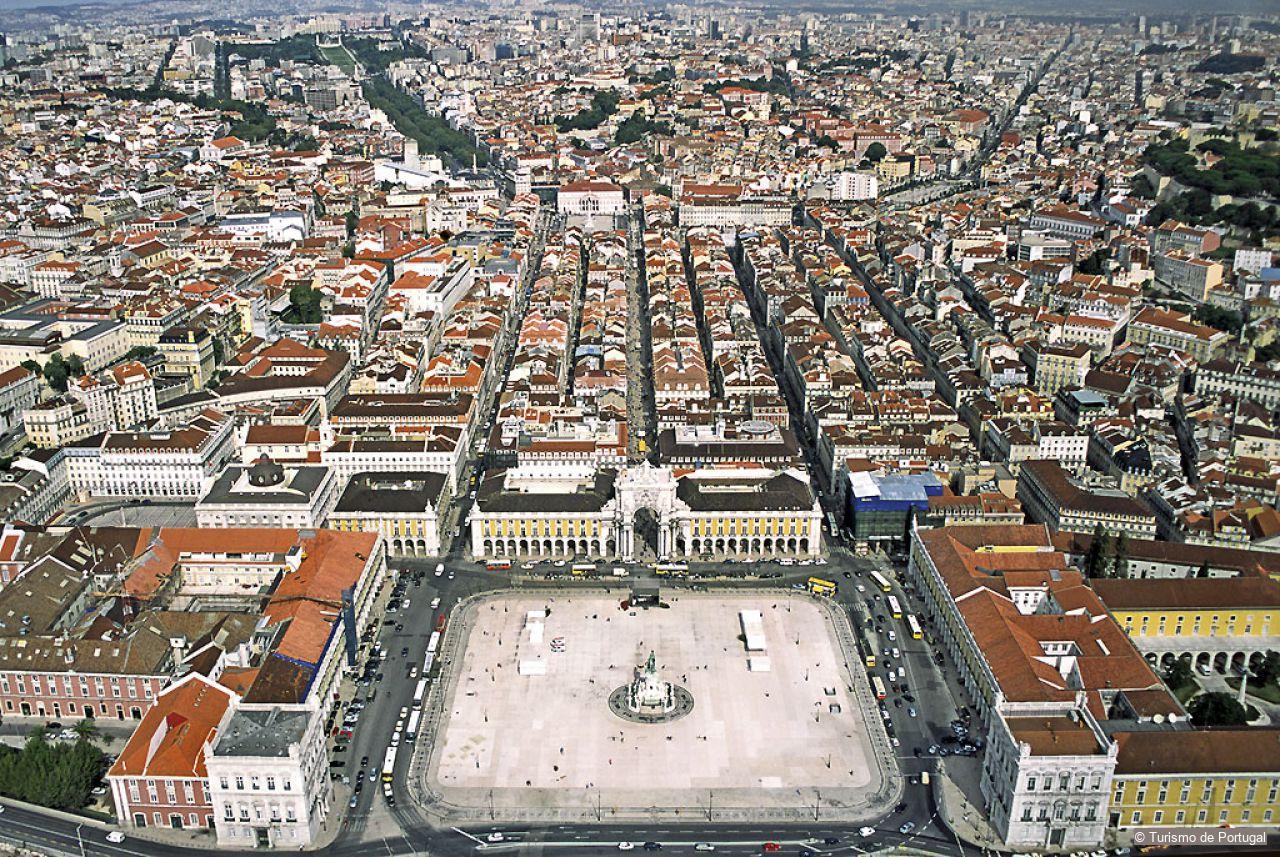
 Add to My Collection
Name of Monument:
Downtown Lisbon
Also known as:
Baixa Pombalina
Location:
Lisbon, Lisbon, Portugal
Museu da Cidade
Campo Grande, 245
1700-091 Lisbon
T : +351 21 751 3200
F : +351 21 757 1858
E : museudacidade@cm-lisboa.pt
Câmara Municipal de Lisboa and Museu do Regimento dos Sapadores Bombeiros de Lisboa (Responsible Institution)
Date:
1755–1759
Artists:
Master builders and military engineers: Manuel da Maia (1677–1766), Eugénio dos Santos (1711–1760); architects: Carlos Mardel (c. 1695–1763), Elias Sebastião Poppe; sculptor: Joaquim Machado de Castro (1731–1822); triumphal arch: Veríssimo José da Costa [n.d.] assisted by Vitor Bastos (1830–1894) and Anatole C. Calmels (1822–1906)
Denomination / Type of monument:
Urban Planning
Patron(s):
King José I
History:
On 1 November 1755 a violent earthquake, followed by a tsunami and a week-long fire, destroyed two-thirds of Lisbon. Around 10,000 people were killed and the most important part of the city was in ruins. Terreiro do Paço (the Palace square and commercial centre situated by the river), the 16th century palace of King Manuel I (remodelled by King Philip II of Spain and embellished by King Joao V), the Casa da India (Royal Emporium), close to the Alfândega (Customs) and Arsenal (Navy), several churches (including the Patriarchal Basilica), hospitals, the Opera and the upper class area were all destroyed.
With a square that opens up onto the river, a new urban solution was conceived. The Marquis of Pombal co-ordinated the rebuilding programme, reaffirming architecturally the absolute power of the king with the principle governmental and administrative buildings, a triumphal arch and, at its centre, an equestrian statue of King José I.
Description:
The plan of Baixa Pombalina was conceived by Manuel da Maia and Eugénio dos Santos, while Carlos Mardel and others provided the simple, symmetrical and harmonised prototype designs for the building façades. Based on an octagonal-grid system with parallel and perpendicular streets of various sizes, Baixa Pombalina covers an area that stretches from the River Tejo and Praça do Comércio, in the south, and Rossio and Praça da Figueira in the north.
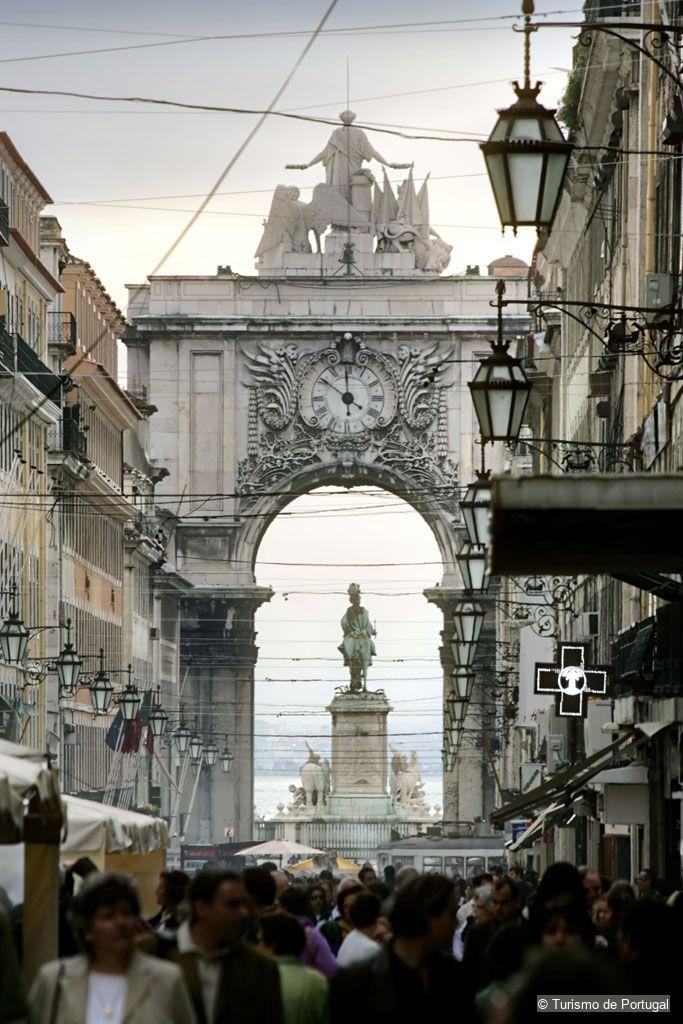
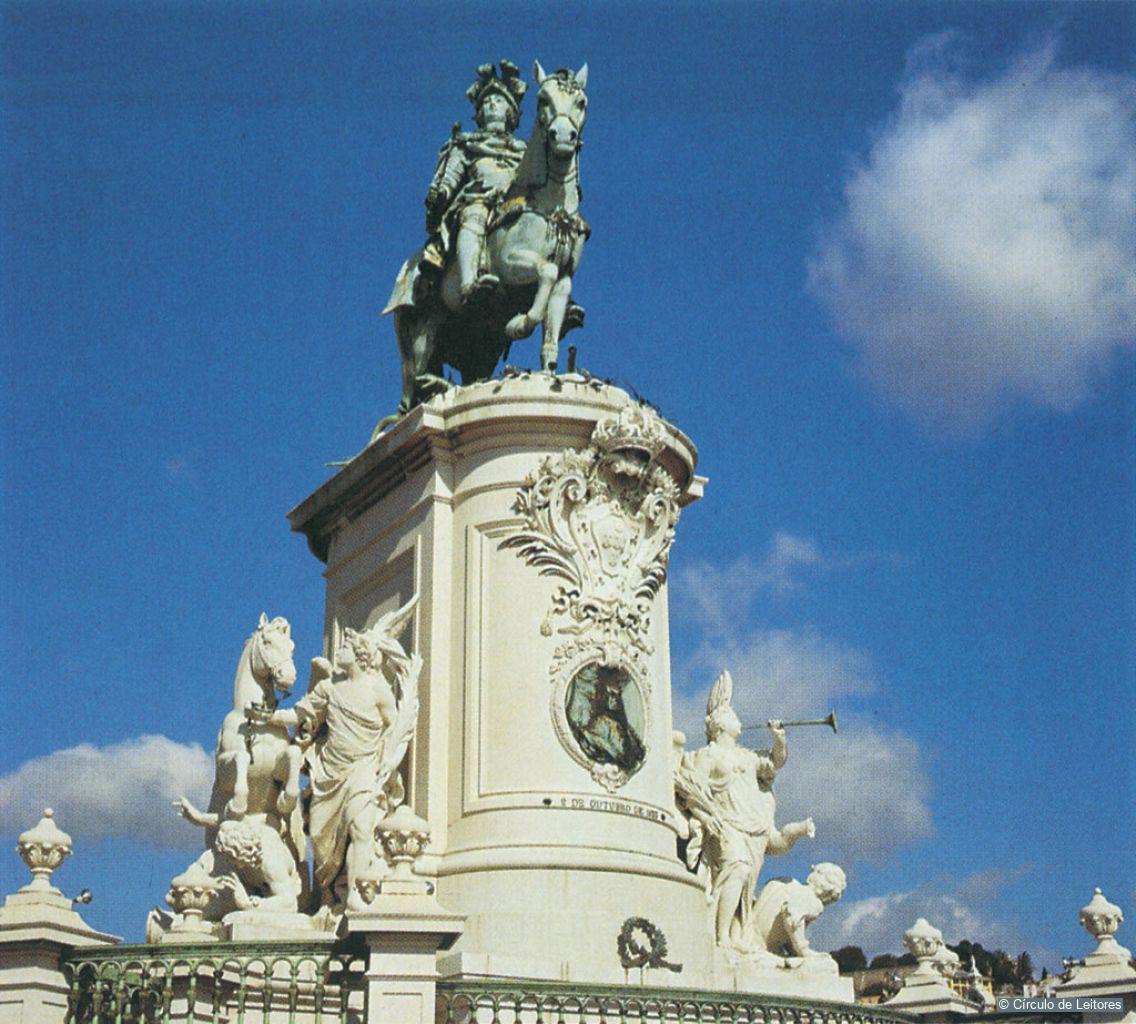
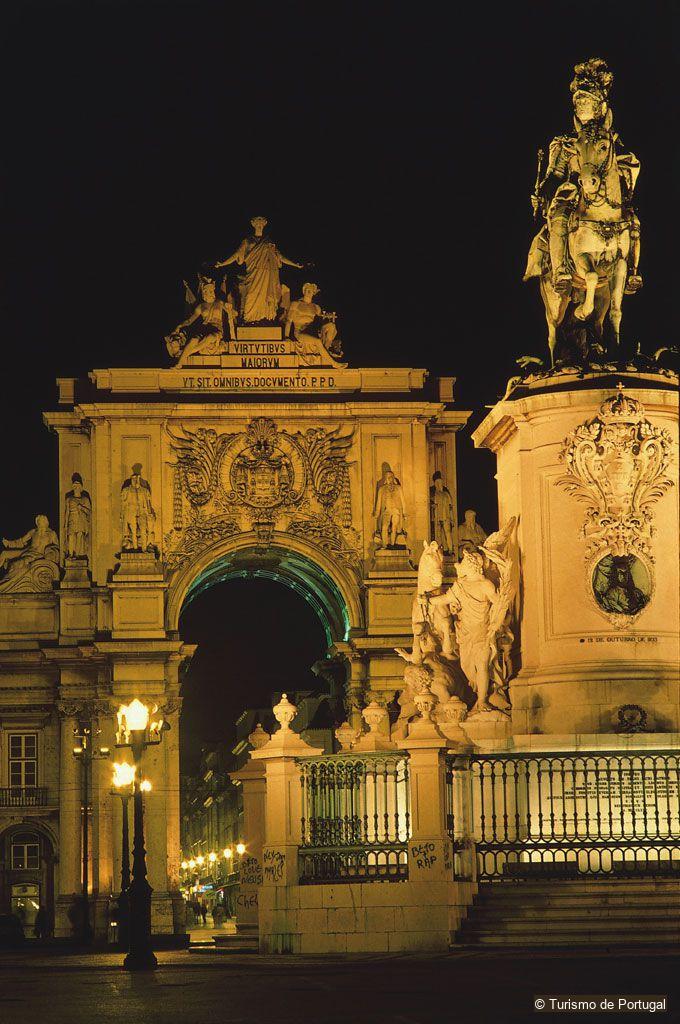
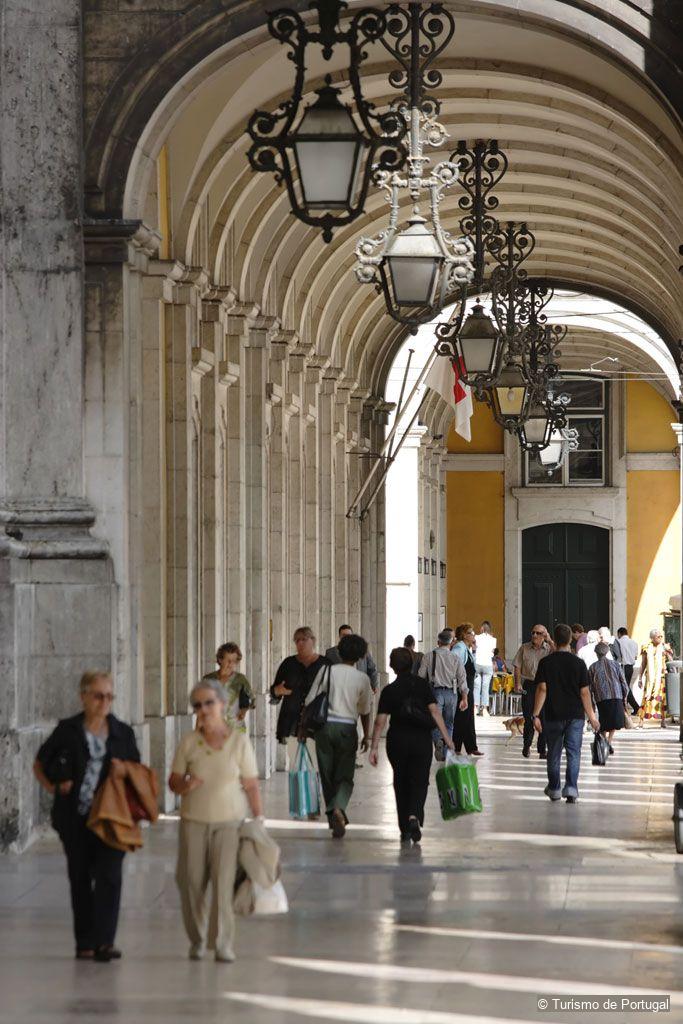
The Praça do Comércio is a quadrangular structure based on a U-shaped plan. It has three uniform façades and a ground-level arcade that terminates in two large pavilions overlooking the river on the fourth side. Access to the river is through the Cais das Colunas (Columns Quay). The bronze equestrian statue of King José I by Machado de Castro is dominant in the middle of the square. In front of the statue on the north side, a 19th-century triumphal arch by Veríssimo José da Costa and his team, leads to the urban centre.
In the aftermath of the destruction caused by the earthquake of 1755, downtown Lisbon was rebuilt to comply with the innovative and pragmatic principles of Enlightenment urban planning and architecture. It was named after the Marquis of Pombal, who coordinated the reconstruction together with his team of architects and engineers. With an octagonal grid-shaped plan, regular and symmetrical facades stretching from the Praça do Comércio to Rossio make this area both historically and culturally significant; Praça do Comércio is classified as a National Monument and Baixa as a National Heritage Site.
How Monument was dated:
Historical evidence
Special features
Three out of the six original plans with a new layout sympathetic to the old one; final plan and orthophoto of Lisbon
1756–58; 19th century
Military engineers: Manuel da Maia (1677–1766), Eugénio dos Santos (1711–1760)
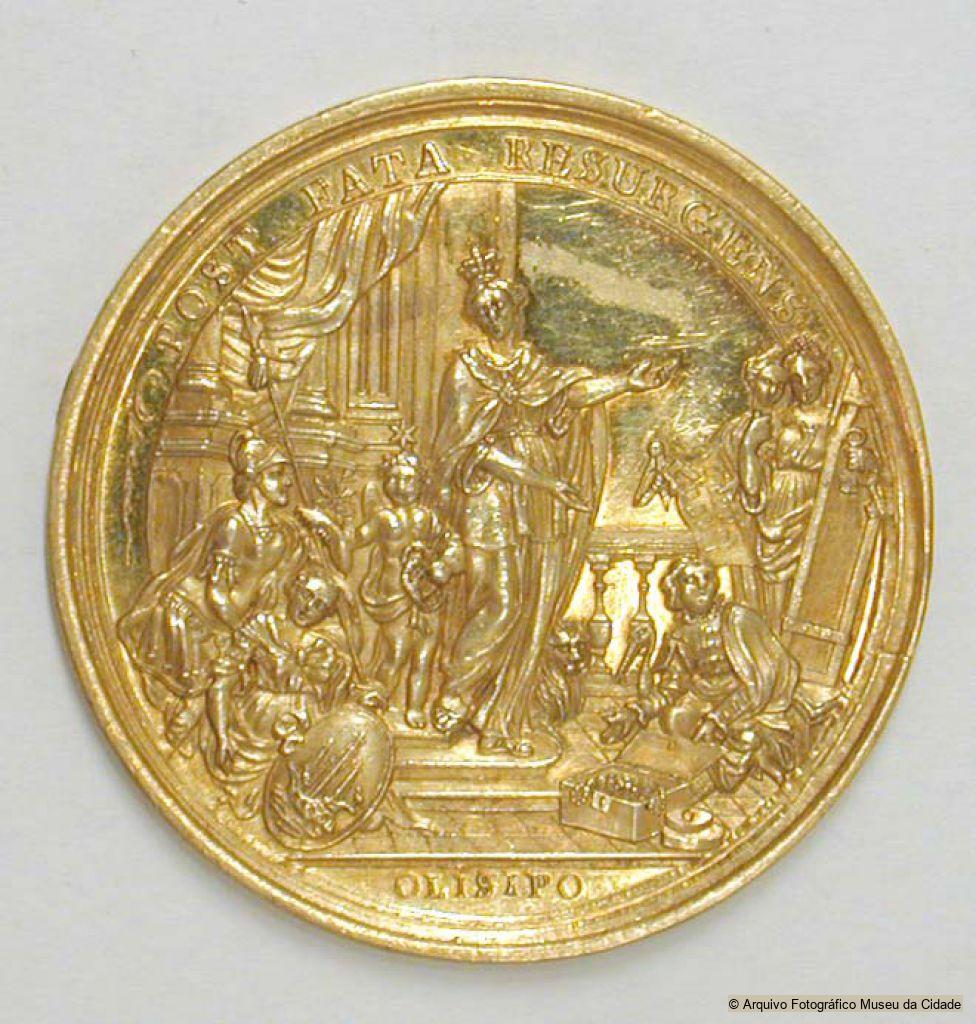
Following the earthquake of 1755, the Marquis of Pombal rapidly ordered a competition for the design of Baixa Pombalina. Six plans were submitted from which he would select the winner. On 4 December 1755, Manuel da Maia and Eugénio dos Santos presented plans that proposed replacing Terreiro do Paço (Palace Square) with Praça do Comércio, conceived as a monumental entrance into the town through the Cais das Colunas (Columns Quay).
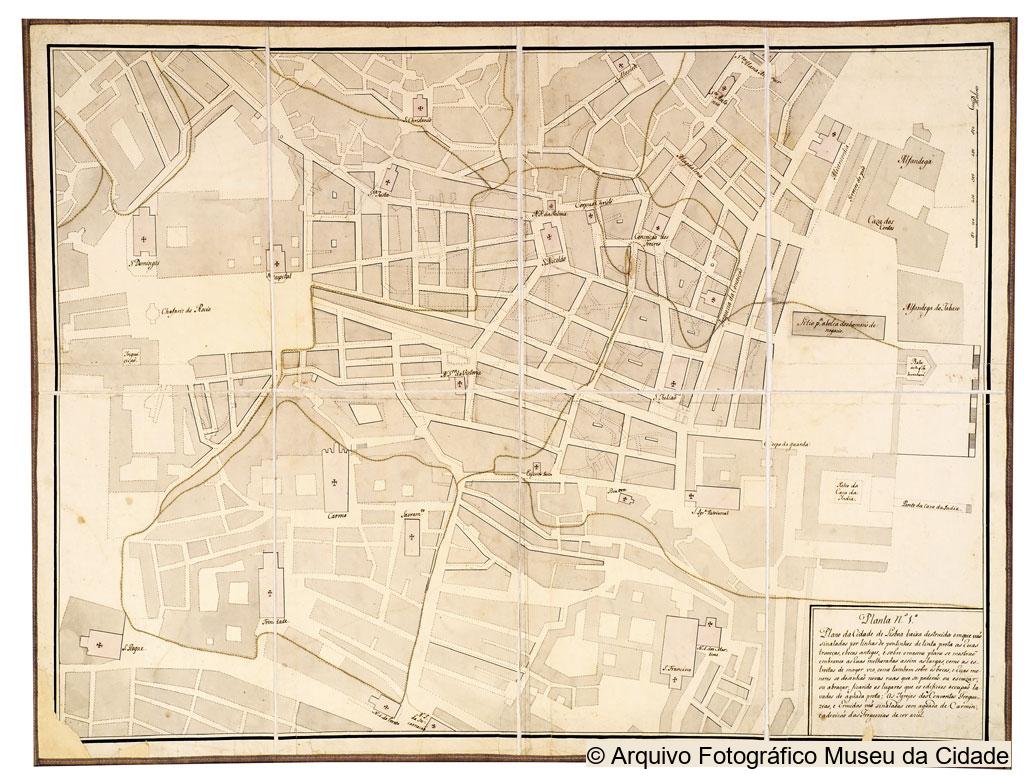
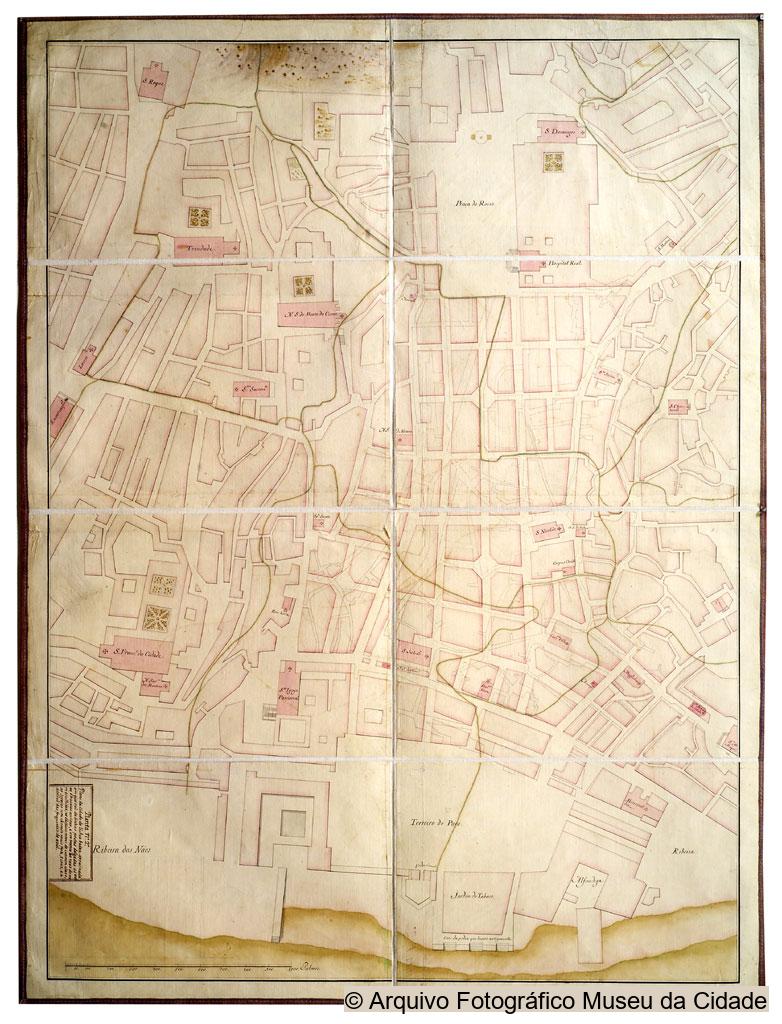
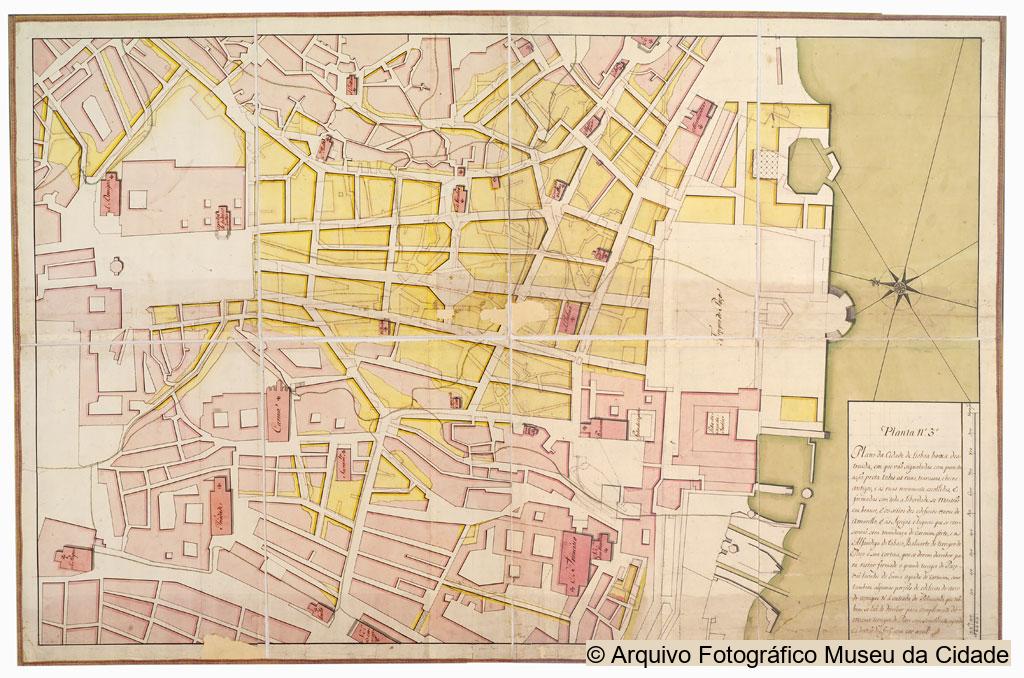
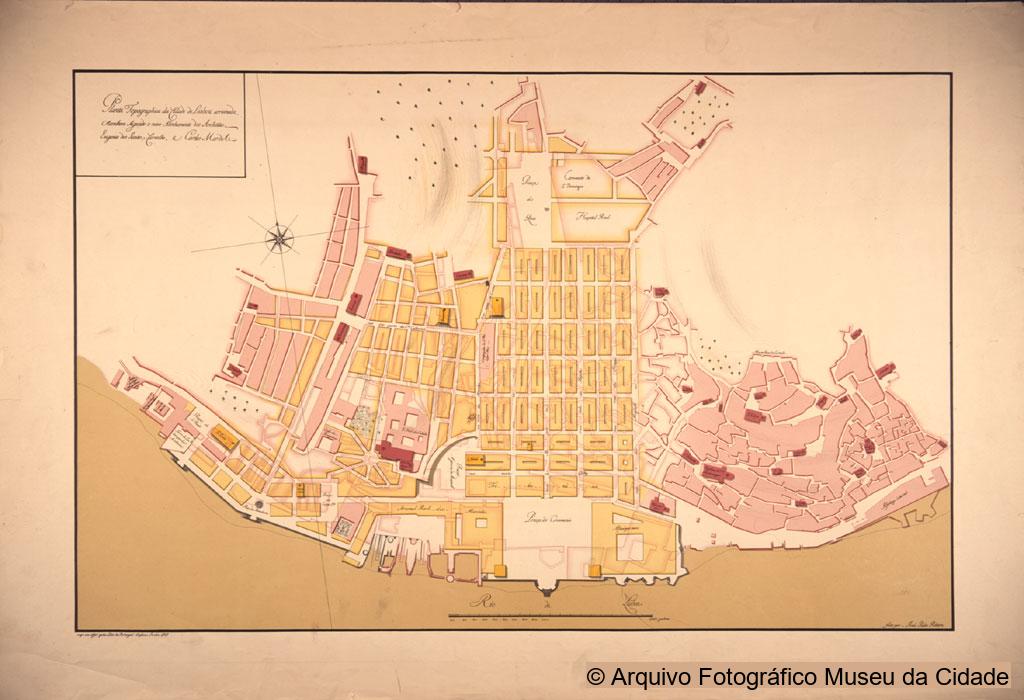
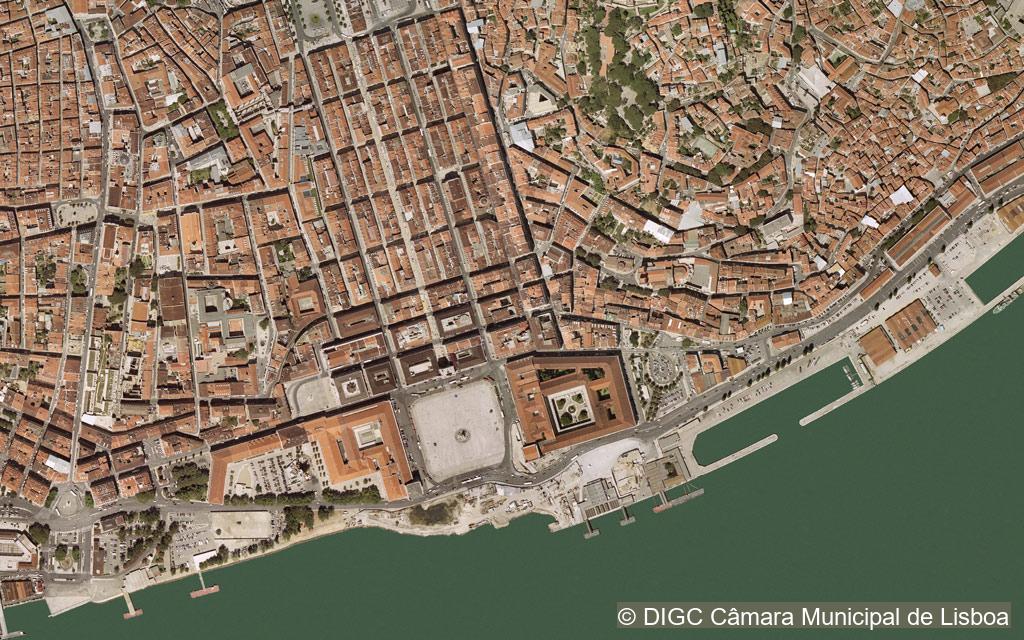
Praça do Comércio
Facing the estuary of the River Tagus
1759 to 1873
Initial plans of Praça do Comércio: Manuel da Maia (1677–1766), Eugénio dos Santos (1711–1760); Carlos Mardel (c. 1695–1763); triumphal arch: Veríssimo José da Costa [n.d.] assisted by Vítor Bastos (1830–1894) and Anatole C. Calmels (1822–1906)
Praça do Comércio overlooking the River Tejo is an emblematic part of the Baixa. According to the engraving attributed to Gaspar Froes Machado, the initial plans were not entirely fulfilled; the triumphal arch was finally built in 1873 according to the design of Veríssimo José da Costa.
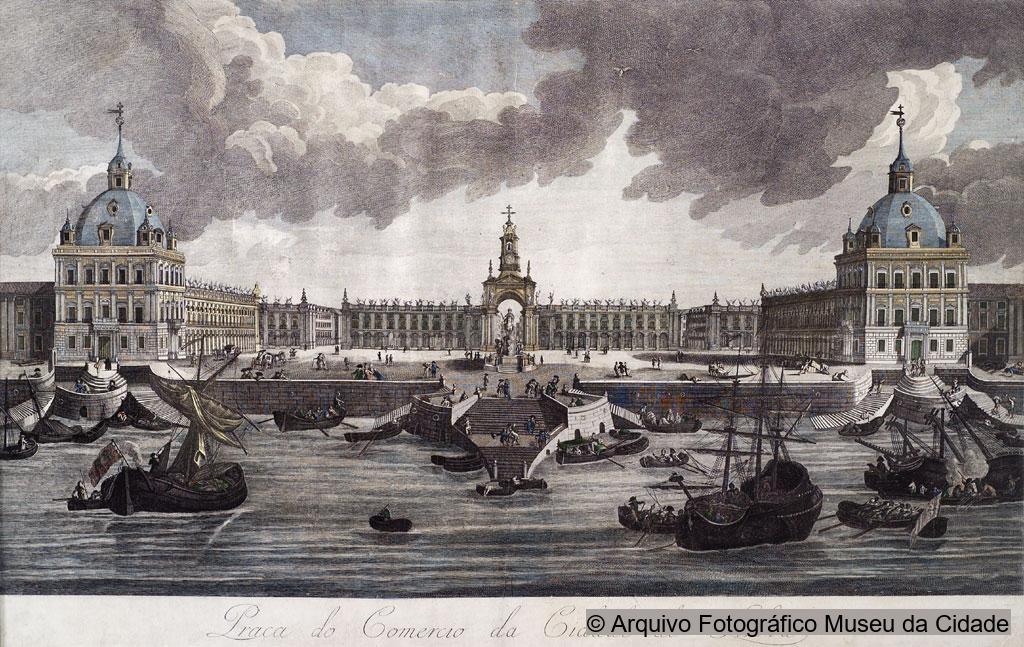
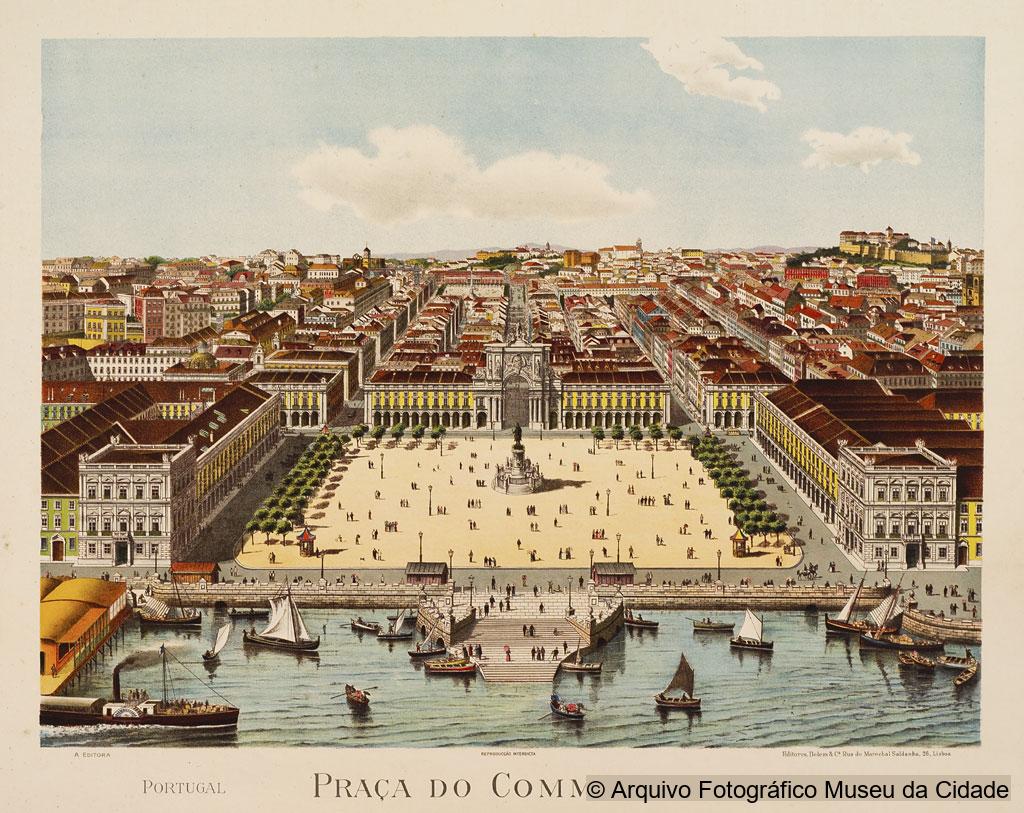
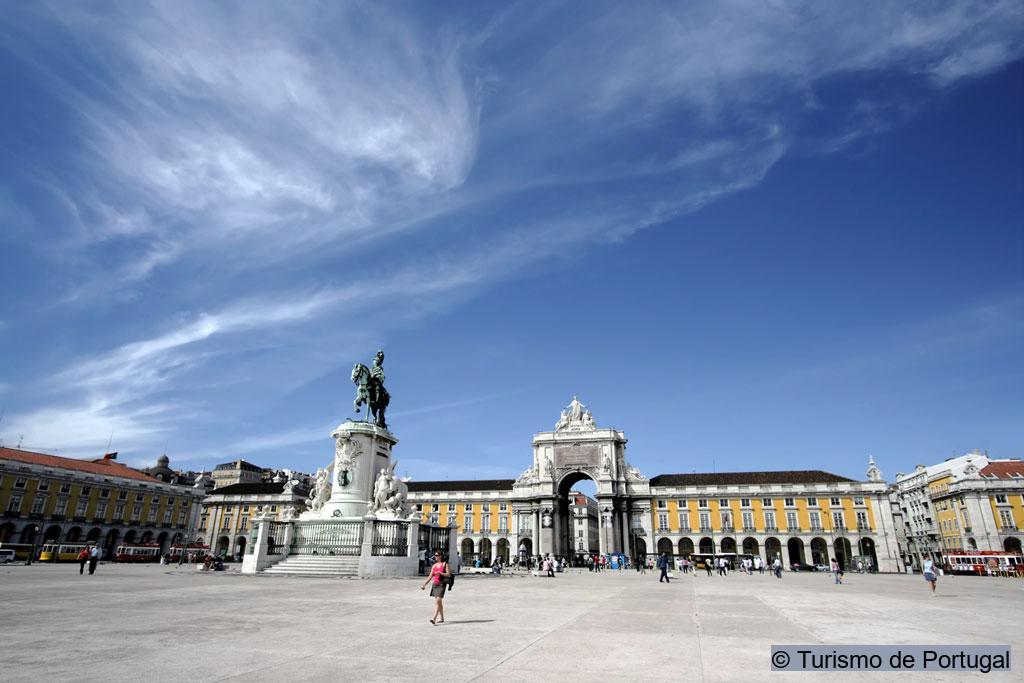
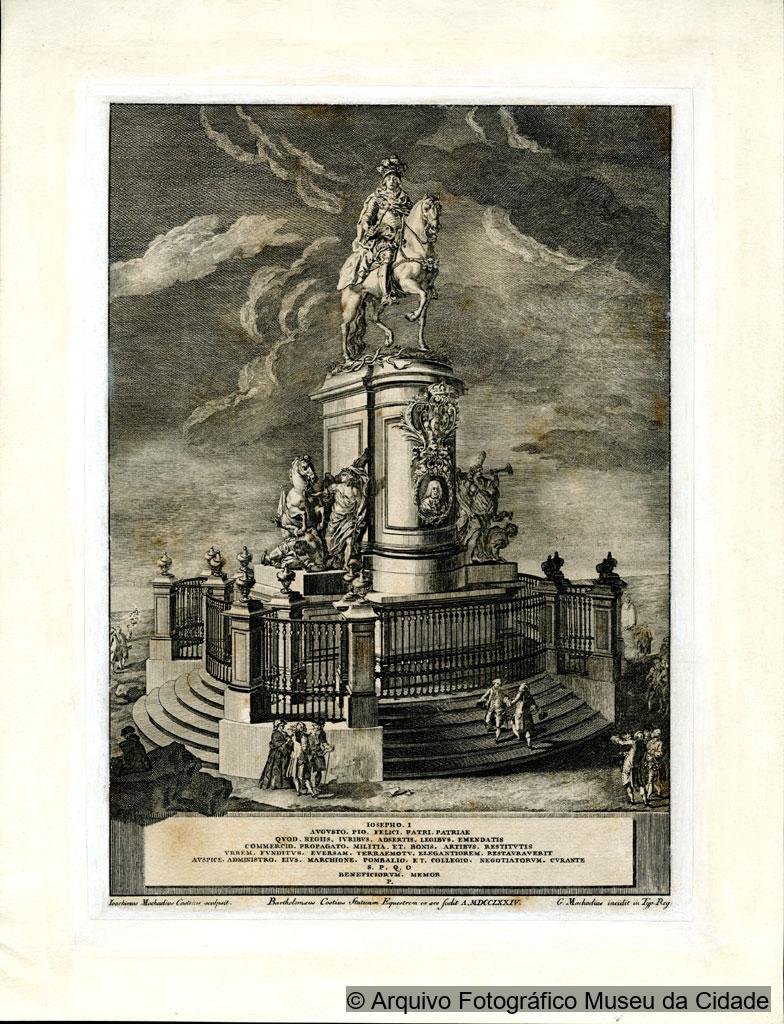
Bronze Equestrian Statue of King José I (copper engraving by Carneiro da Silva made before the unveiling in 1774)
Terreiro do Paço (Palace Square) or Praça do Comércio (Commerce Square)
Made in 1771, inaugurated in 1775
Joaquim Machado de Castro (1731–1822)
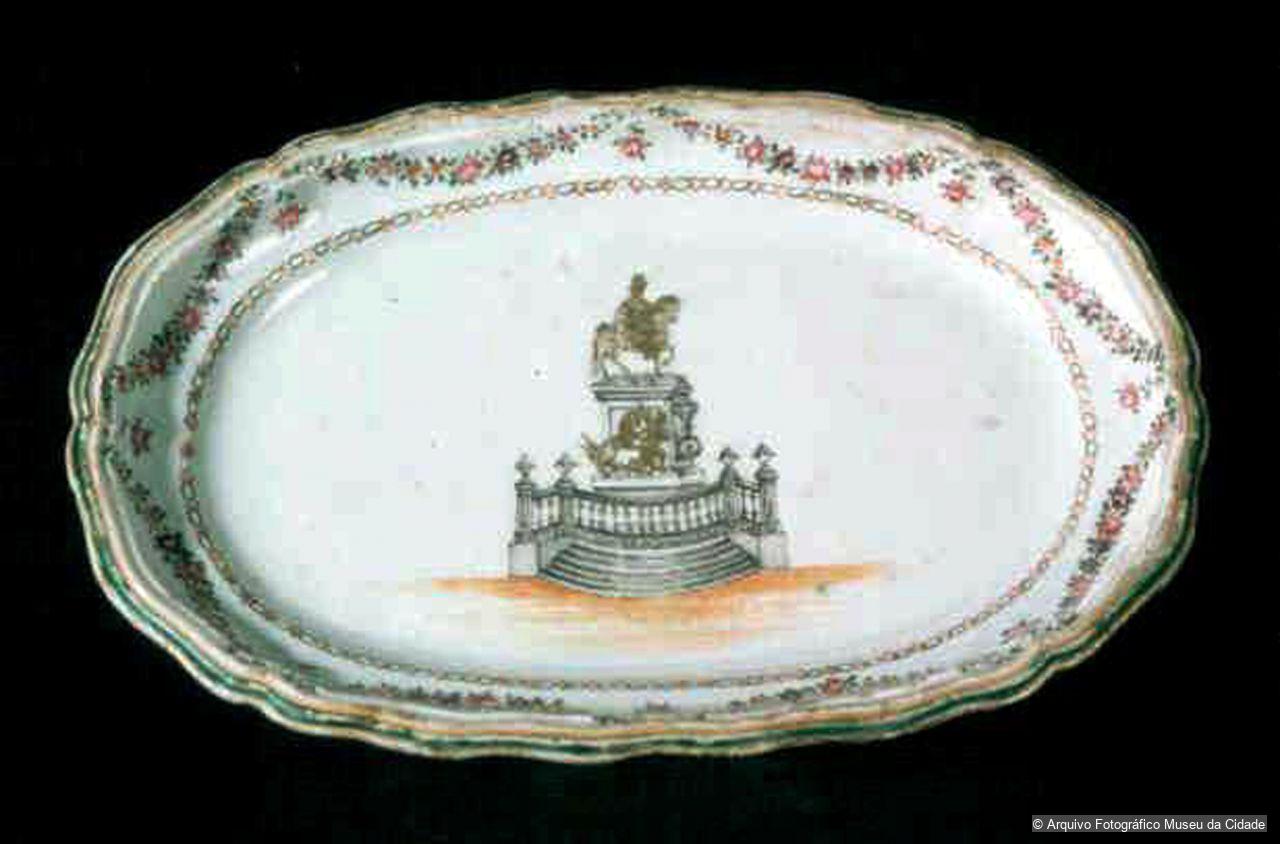
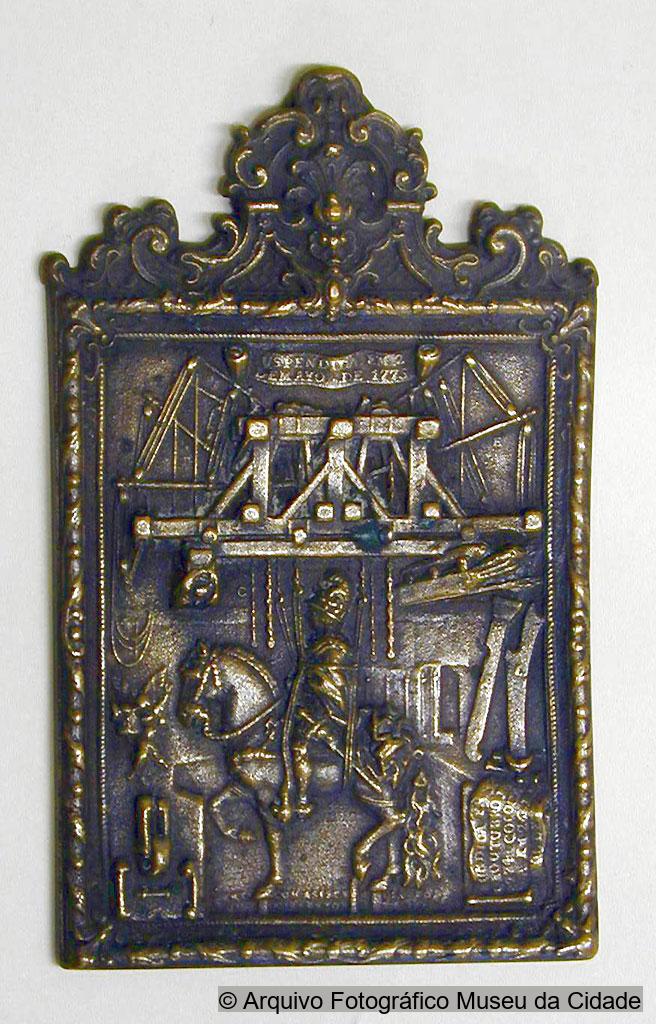
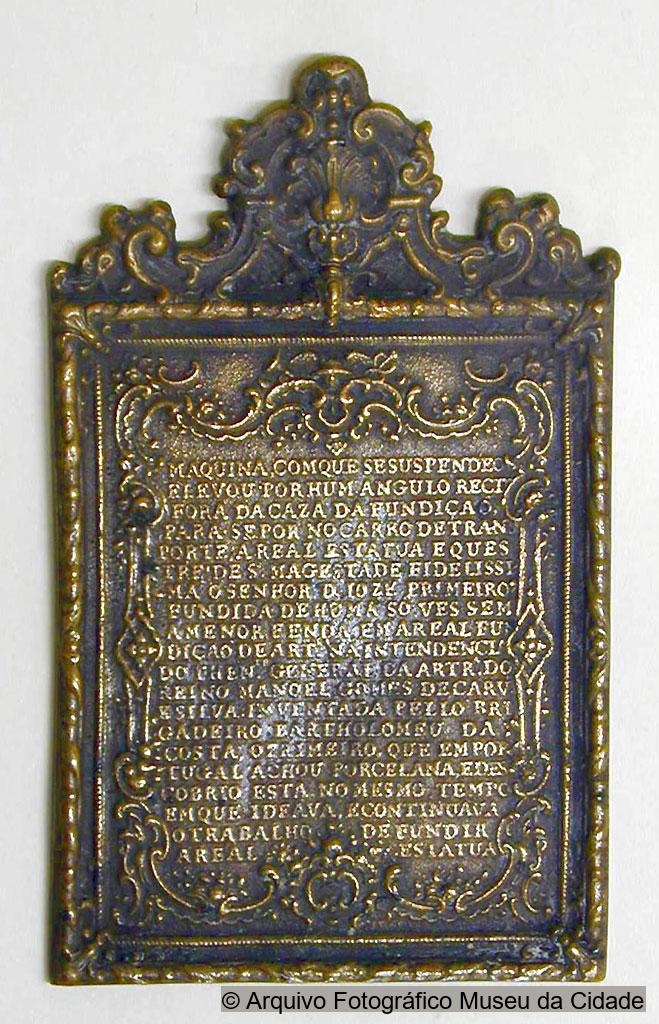
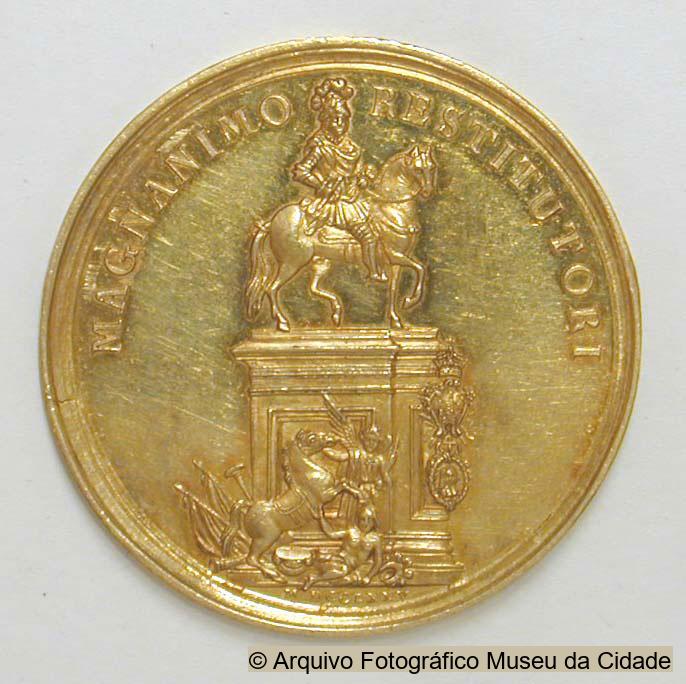
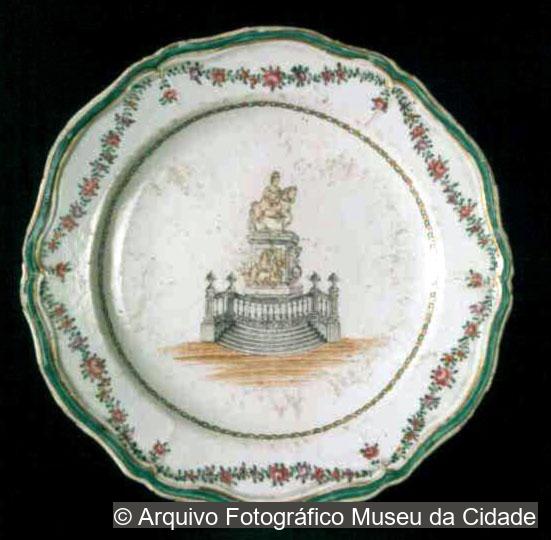
The statue by Joaquim Machado de Castro was unveiled on 27 May 1775 on King José I’s birthday. The copper engraving by Joaquim Carneiro da Silva was made a year prior to this in 1774 to commemorate the unveiling. Other commemorative items include china decorated with reproductions of the statue.
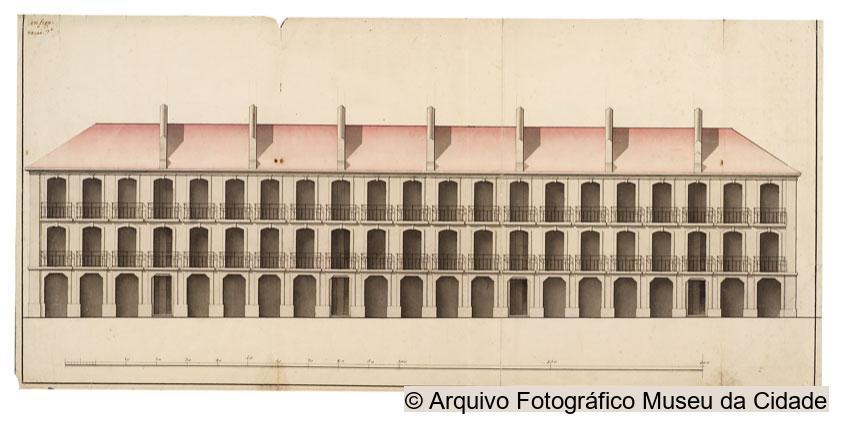
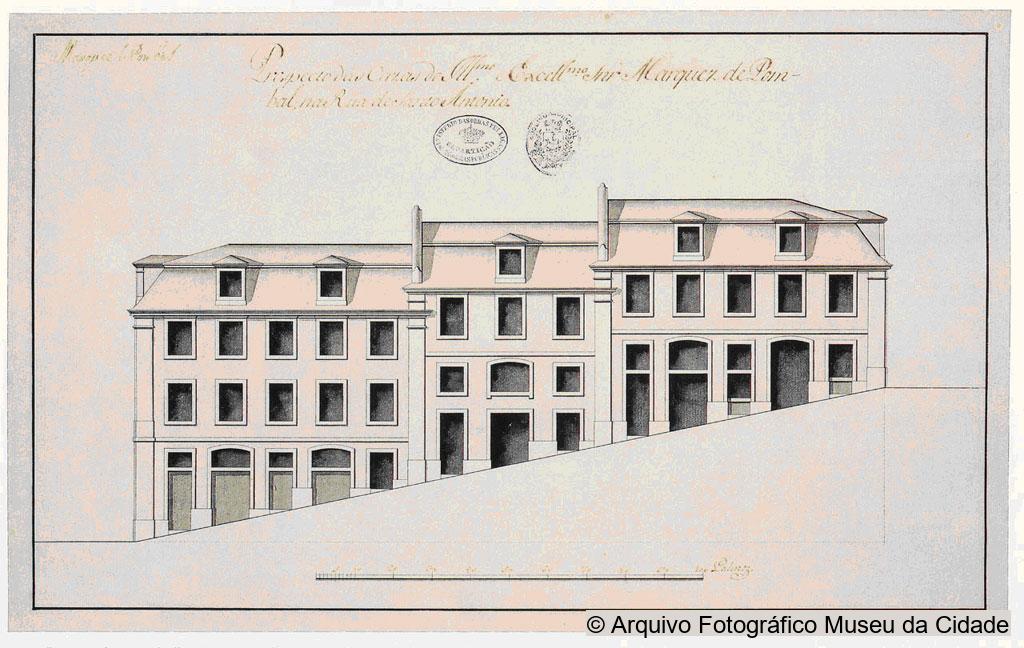
Drawing of Pombaline Façades
Museu da Cidade
1756–1758
Carlos Mardel and others
Fire became a major concern after the earthquake of 1755 when tightly packed downtown Lisbon was consumed by fire that swept through the narrow streets and quickly destroyed buildings that were built closely together.
Henceforth, buildings were separated by stone walls in order to isolate them. The uniform, multi-storey Pombaline façades (with shops, three domestic floors and an attic) are unique, constructed at a time when the focus was on safety and cost was a priority.
The uniformity of the façades and windows is linked to the cost controls that dictated reconstruction: installation of the doors and windows were straightforward once all the stone frames had been made with identical measurements. The addition of a coat of arms was not allowed.
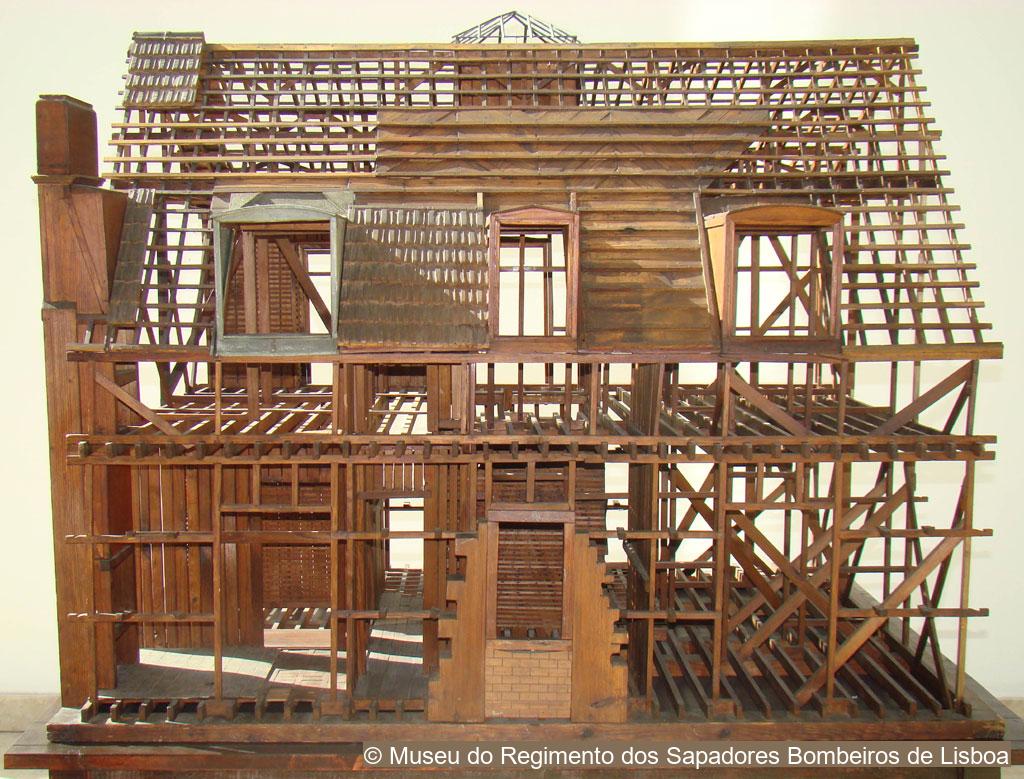
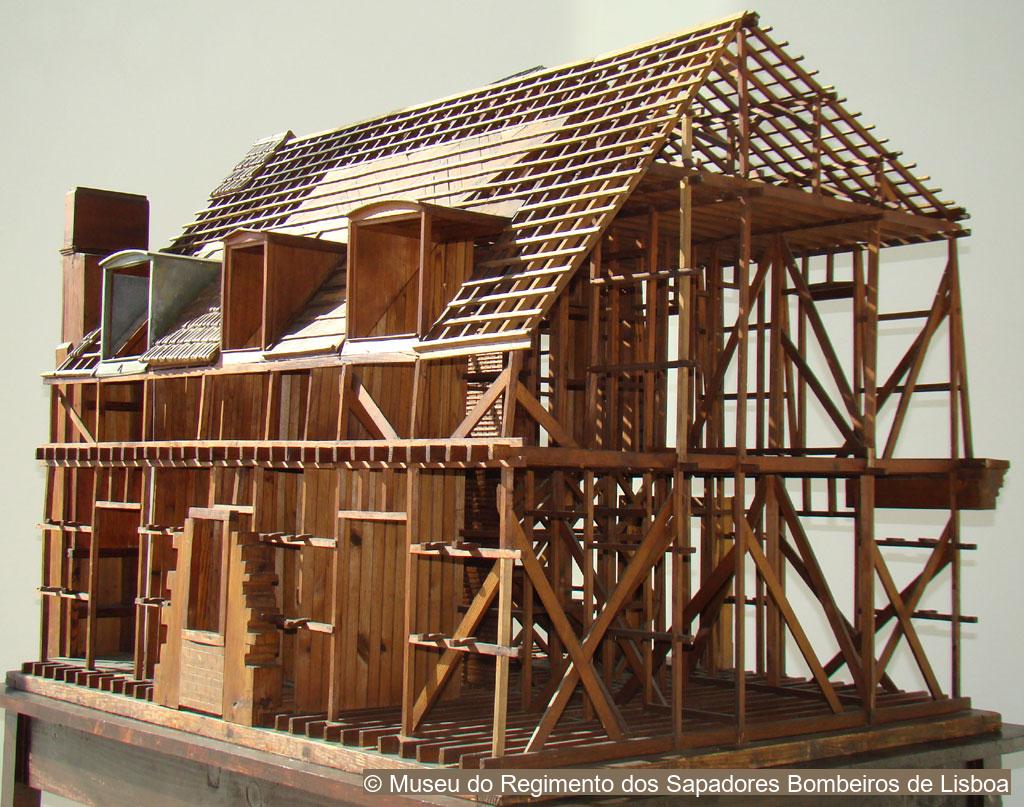
Gaiolas Building Structure
Baixa Pombalina or downtown Lisbon. These drawings are displayed in Museu da Cidade and a prototype is in the Museu dos Bombeiros.
1756–1758
Eugénio dos Santos (1711–1760); Carlos Mardel (c. 1695–1763), Manuel da Maia (1677–1766)
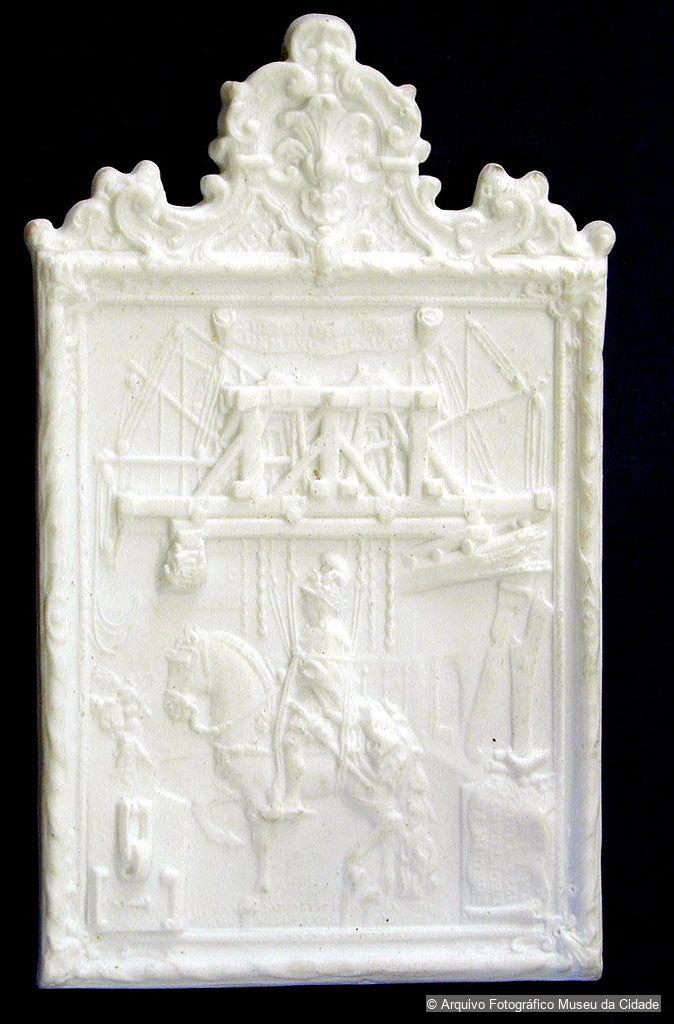
The Gaiola Pombalina is a remarkable symmetrical structure built from wood to distribute and balance the forces of an earthquake. All buildings in downtown Lisbon were built according to this system, and this is the world's first anti-seismic structure. This prototype, built by the fire department at the beginning of the 20th century, is used for fire-fighting training.
Selected bibliography:
França, J.-A., Lisboa Pombalina e o Iluminismo, Lisbon, 1966.
França, J.-A., A Reconstrução de Lisboa e a arquitectura Pombalina, ICP, Lisbon, 1978.
Calado, M., Ferreira, V., Lisboa, Lisbon, 1992.
Tostões, A., Catálogo Exposição Lisboa 1758, o Plano da Baixa hoje, Lisbon, 2008.
Citation of this web page:
Henrique Carvalho, Cristina Correia, Miguel Soromenho "Downtown Lisbon" in "Discover Baroque Art", Museum With No Frontiers, 2026.
https://baroqueart.museumwnf.org/database_item.php?id=monument;BAR;pt;Mon11;28;en
Prepared by: Henrique CarvalhoHenrique Carvalho
SURNAME: Carvalho
NAME: Henrique
AFFILIATION: Town Museum, Lisbon
TITLE: Museum Curator
CV:
Henrique Carvalho is a History graduate and Curator at the Town Museum in Lisbon. He has published several articles on the History of Lisbon and contributes widely to the Museum’s varied exhibition programme., Cristina CorreiaCristina Correia
SURNAME: Correia
NAME: Cristina
AFFILIATION: Eça de Queirós Public High School, Lisbon and MWNF
TITLE: Senior Teacher, Local Co-ordinator and Vice-President of MWNF
CV:
Cristina Correia is a History graduate and, since 1985, a Senior Teacher of History at the Eça de Queirós Public High School, Lisbon where she also lectures in Portuguese Language and Culture for non-native speakers. From 1987 to 1998 she was involved with youth affairs, primary prevention and the Camões Institute. She is Vice-President and Local Co-ordinator (Portugal) for MWNF., Miguel Soromenho Miguel Soromenho
SURNAME: Soromenho
NAME: Miguel
AFFILIATION: Portuguese Heritage Institute (IGESPAR)
TITLE: Architectural Researcher and Expert
CV:
Miguel Soromenho is an Art History graduate with an MA and particular expertise in 16th and 17th-century architecture. He teaches at the Universidade Nova in Lisbon and is a Researcher and Expert at the Portuguese Heritage Institute (IGESPAR).
Translation by: Cristina CorreiaCristina Correia
SURNAME: Correia
NAME: Cristina
AFFILIATION: Eça de Queirós Public High School, Lisbon and MWNF
TITLE: Senior Teacher, Local Co-ordinator and Vice-President of MWNF
CV:
Cristina Correia is a History graduate and, since 1985, a Senior Teacher of History at the Eça de Queirós Public High School, Lisbon where she also lectures in Portuguese Language and Culture for non-native speakers. From 1987 to 1998 she was involved with youth affairs, primary prevention and the Camões Institute. She is Vice-President and Local Co-ordinator (Portugal) for MWNF., Amanda Barron
Translation copyedited by: Mandi GomezMandi Gomez
Amanda Gomez is a freelance copy-editor and proofreader working in London. She studied Art History and Literature at Essex University (1986–89) and received her MA (Area Studies Africa: Art, Literature, African Thought) from SOAS in 1990. She worked as an editorial assistant for the independent publisher Bellew Publishing (1991–94) and studied at Bookhouse and the London College of Printing on day release. She was publications officer at the Museum of London until 2000 and then took a role at Art Books International, where she worked on projects for independent publishers and arts institutions that included MWNF’s English-language editions of the books series Islamic Art in the Mediterranean. She was part of the editorial team for further MWNF iterations: Discover Islamic Art in the Mediterranean Virtual Museum and the illustrated volume Discover Islamic Art in the Mediterranean.
True to its ethos of connecting people through the arts, MWNF has provided Amanda with valuable opportunities for discovery and learning, increased her editorial experience, and connected her with publishers and institutions all over the world. More recently, the projects she has worked on include MWNF’s Sharing History Virtual Museum and Exhibition series, Vitra Design Museum’s Victor Papanek and Objects of Desire, and Haus der Kulturen der Welt’s online publication 2 or 3 Tigers and its volume Race, Nation, Class.
MWNF Working Number: PT 28
RELATED CONTENT
On display in
Exhibition(s)
Discover Baroque Art
The Age of Enlightenment | Signs of social responsibility: enlightened absolutism The Ascension of the Bourgeoisie | The identity and representation of the city Languages of Baroque | Baroque architectural rhetoric and urban structures Absolutism | Imperial dreamsDownload
As PDF (including images) As Word (text only)