

 Back
Back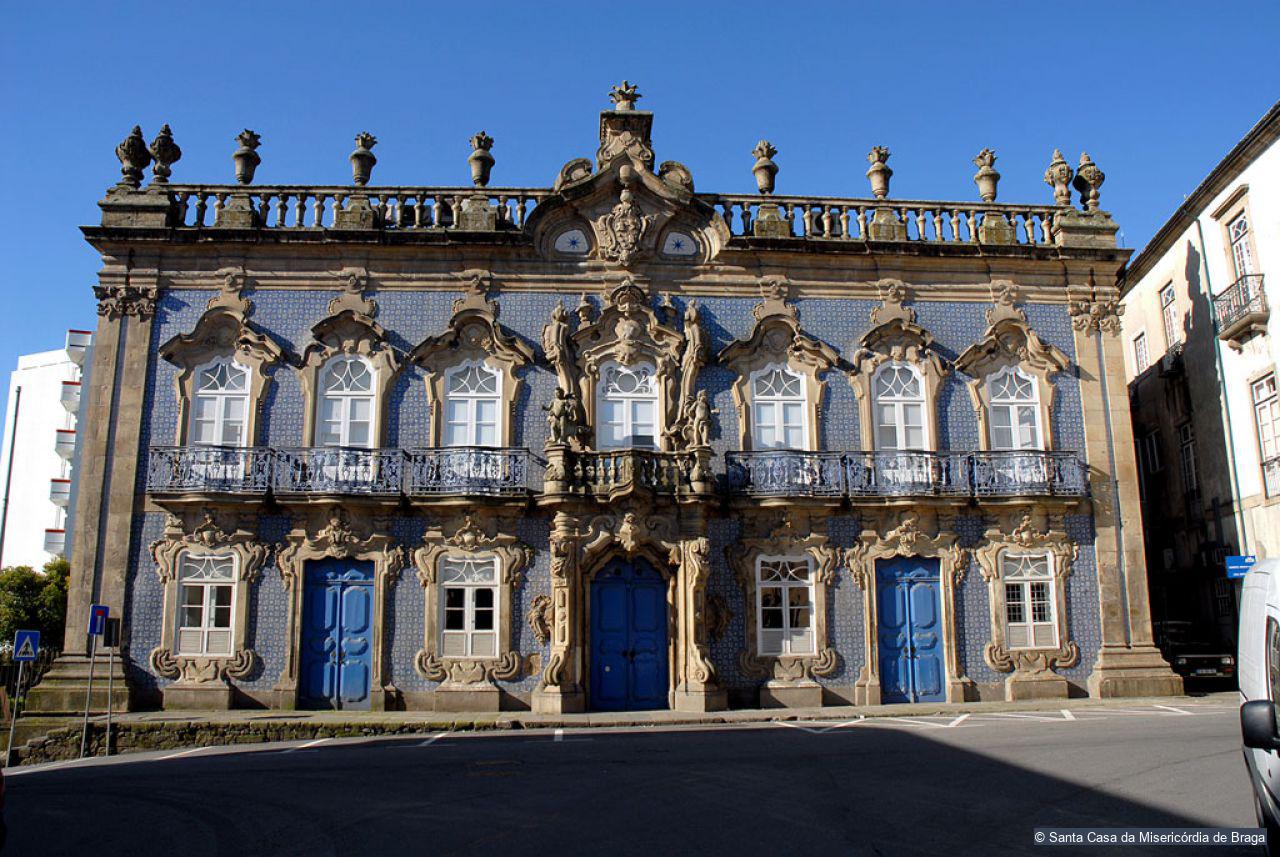
 Add to My Collection
Name of Monument:
Raio Palace
Also known as:
Casa do Raio
Location:
Parish of S. Lázaro, S. José, Braga, Braga, Portugal
Santa Casa da Misericórdia de Braga
Edifício Nevarte Gulbenkian
4700-352 Braga
T : +351 253 205 100
F : +351 253 205 101
E : scmbraga@mail.telepac.pt; www.scmbraga.net
Santa Casa da Misericórdia de Braga (Responsible Institution)
Date:
1754/5 –1760
Artists:
Architect: André Soares (1720–1769), possibly in association with the decorative artist Bartolomeu Antunes (1688–1753)
Denomination / Type of monument:
Civil architecture, palace
Patron(s):
João Duarte de Faria
History:
Ordered by João Duarte Faria, a rich merchant and also “receiver” (recebedor) of church works and Falperra Sanctuary, its name – Raio Palace – derives from it having been purchased in 1834 by the Viscount of São Lázaro, Miguel José Raio.
Description:
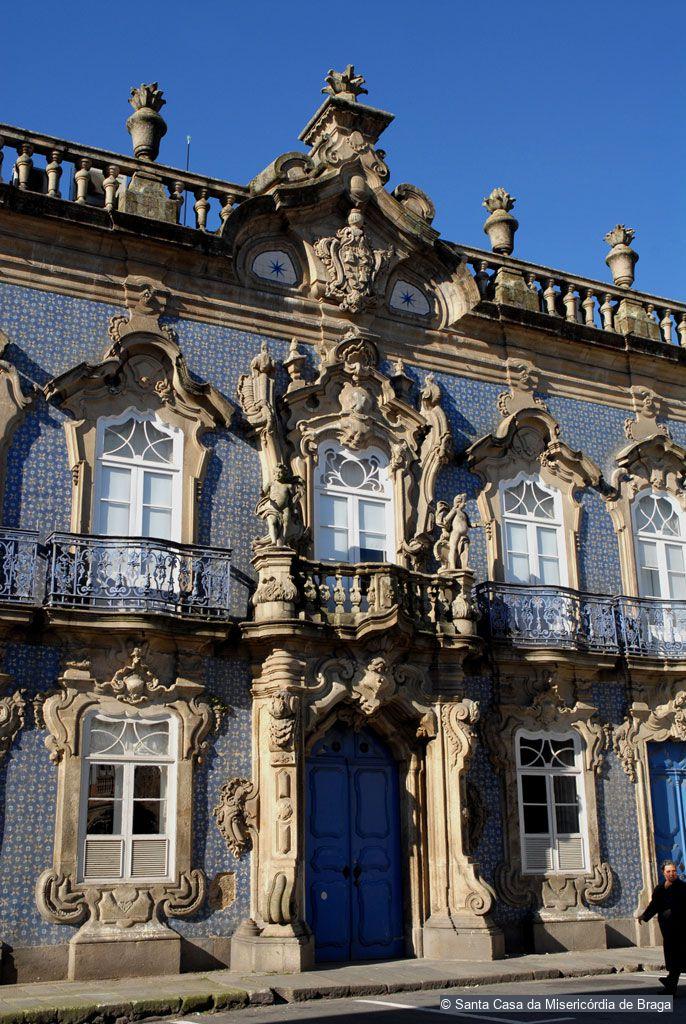
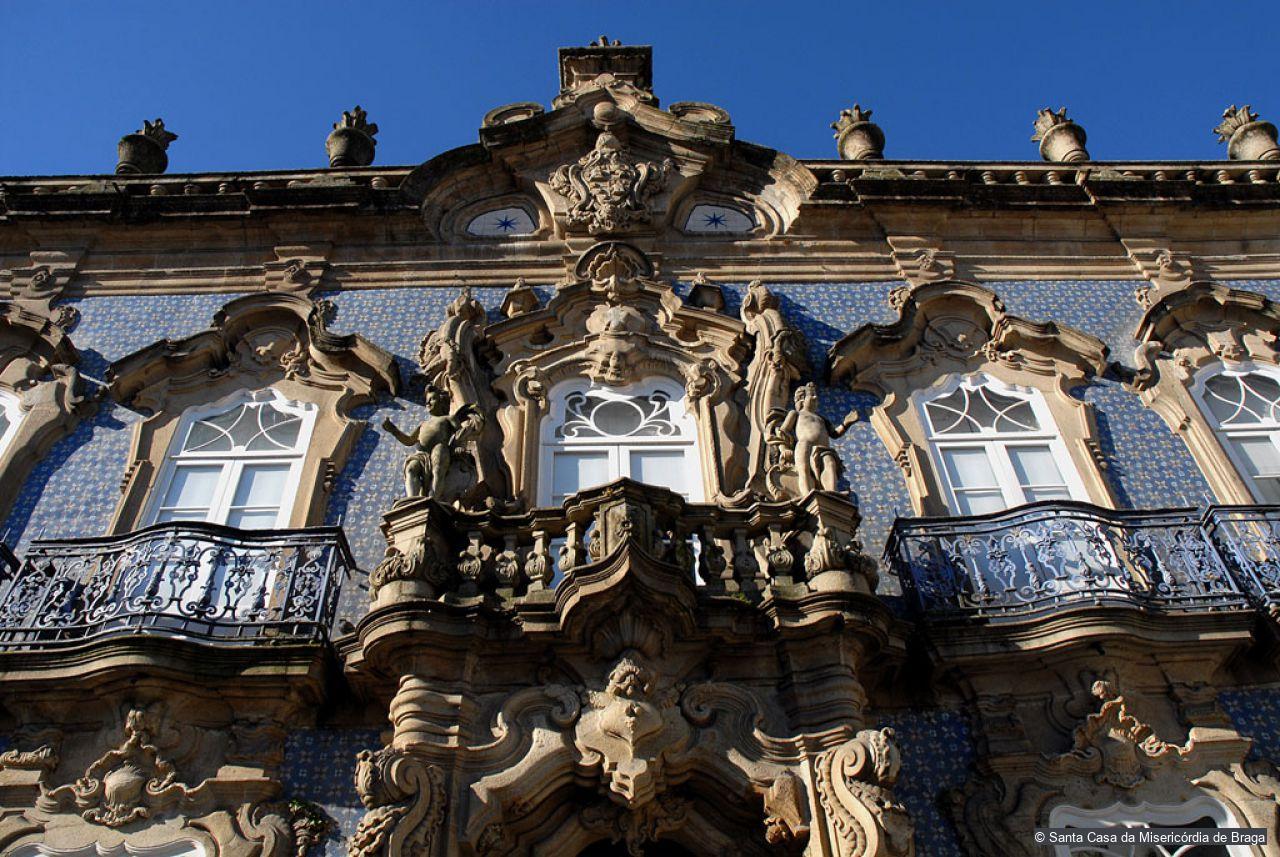
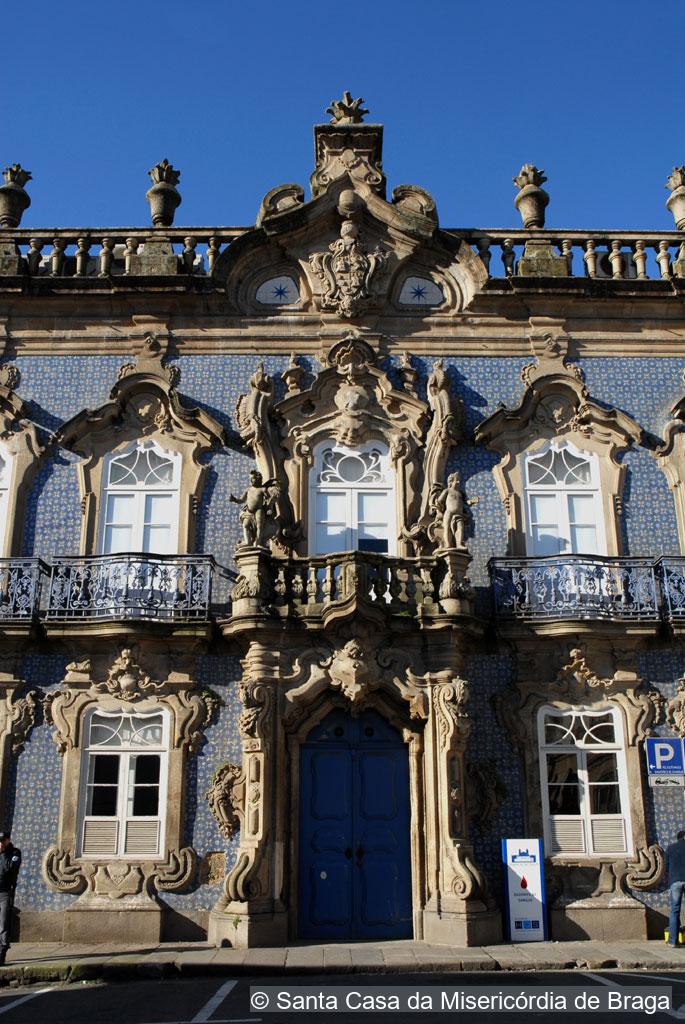
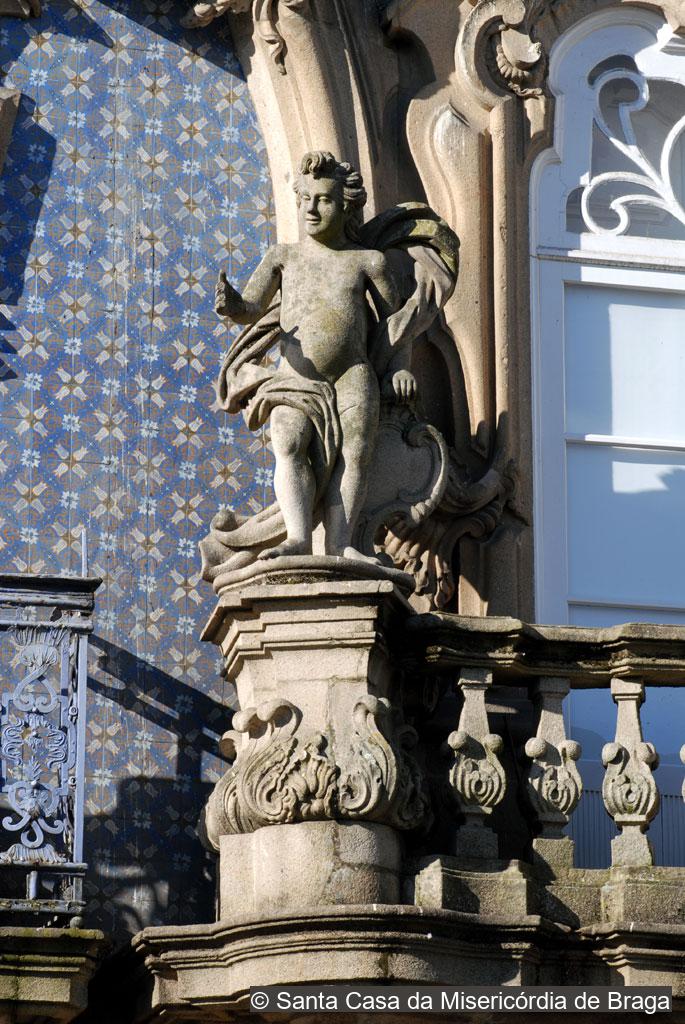
A two-storey palace with an irregular quadrangular plan; an internal staircase leads to what is known as the “noble” floor, the main ceremonial floor and where guests were accommodated and the owner slept. There is also an attic. The façade is covered with plain blue azulejos (tile panels). The main façade is predominantly horizontal; four windows alternate with three doors at ground level. On the first floor there are six windows and a bay window in the centre, which defines the axis, and has a balcony. On each side of the bay there are two exotic figures.
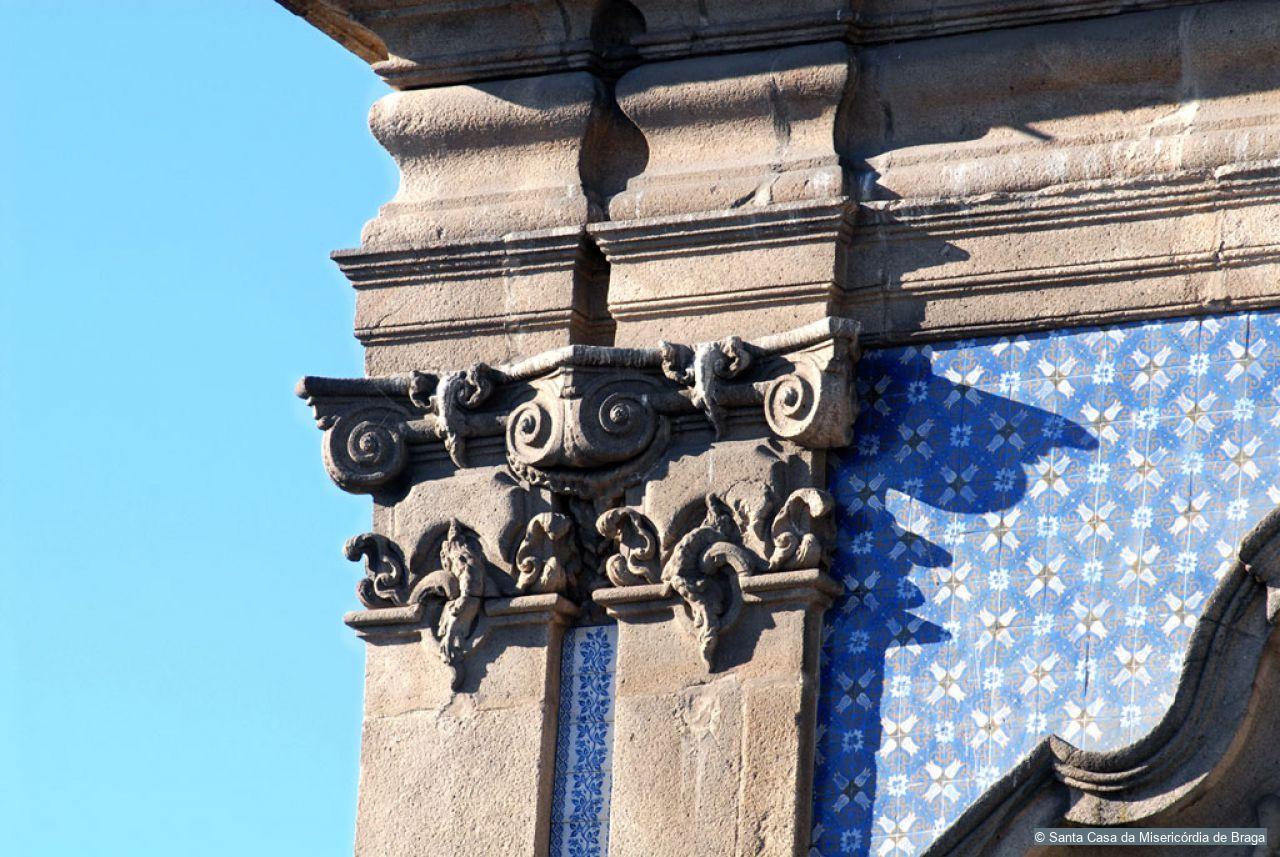
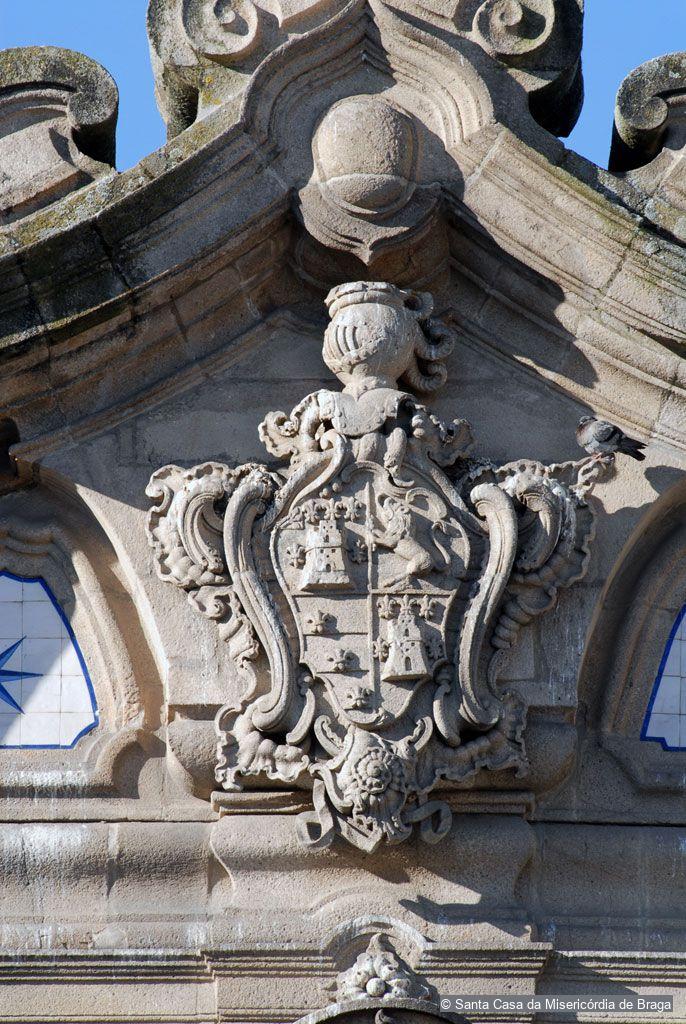
The ornamentation on the window frames extends to the main door on the ground floor. Ornamentation of the lintels and door posts, as well as on the curved gables, is typical of André Soares's work.
The theme is further developed in the façade axis, the ground-floor door having two console motifs, one on each side. The wood carvings and the furniture mirror the console motif.
The building was part of the program for urban improvement in Braga carried out during the reign of João V in 1760.
Worth mentioning in the context of Raio Palace, is another work by André Soares that shows the same transitional language between the Baroque and the Rocaille, the Malheiros Reimão House.
Urban palace with a trapezoidal plan, two floors and a magnificent Rococo façade.
How Monument was dated:
Historical evidence and stylistic analysis
Special features
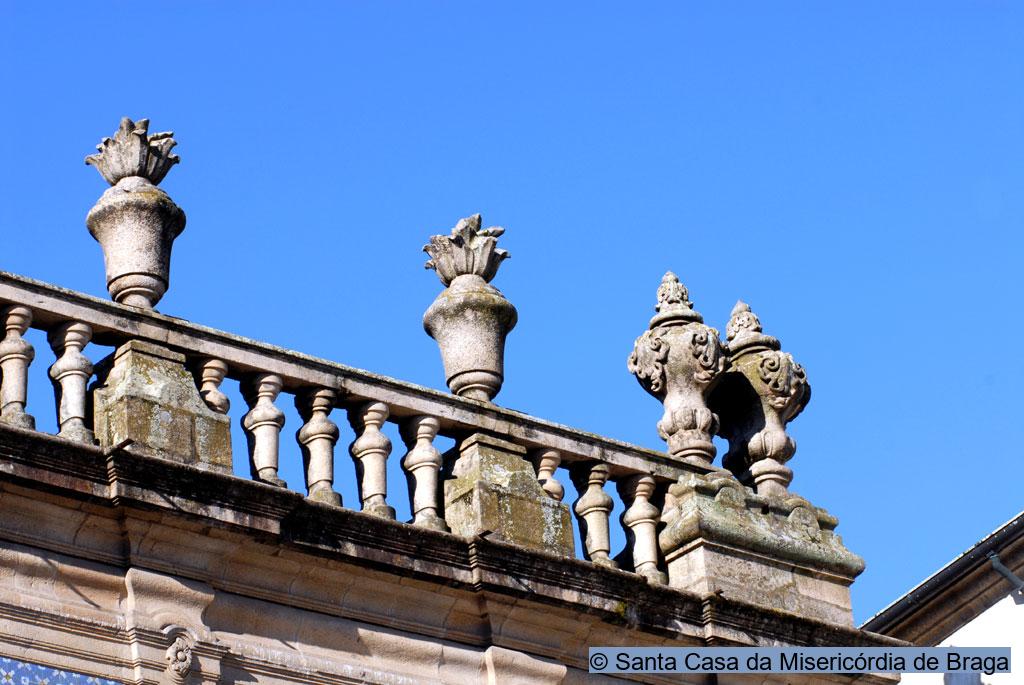
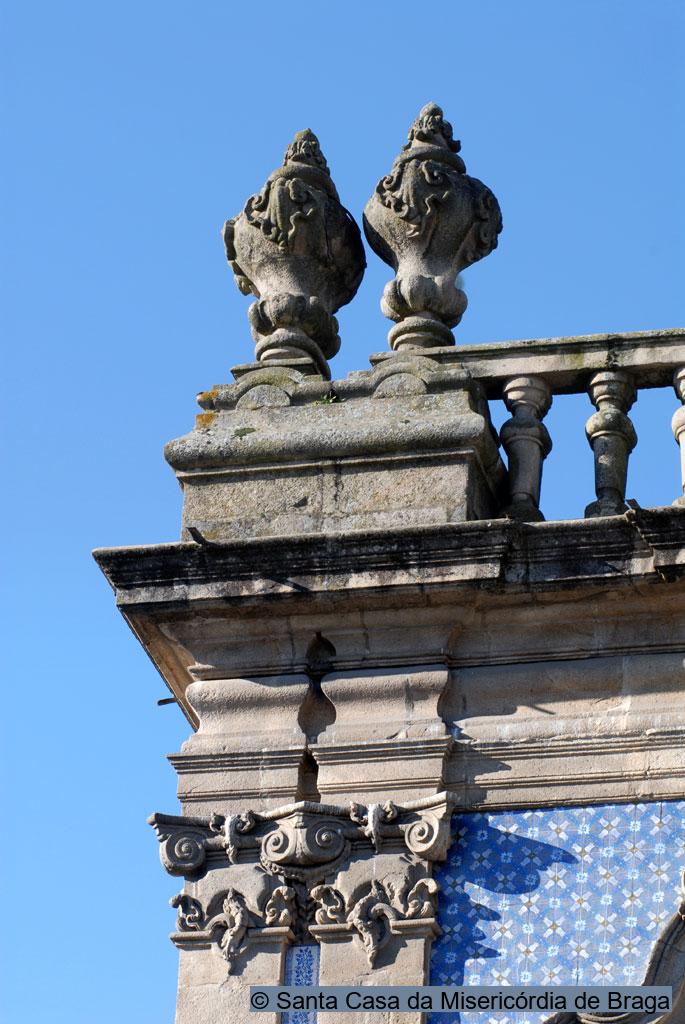
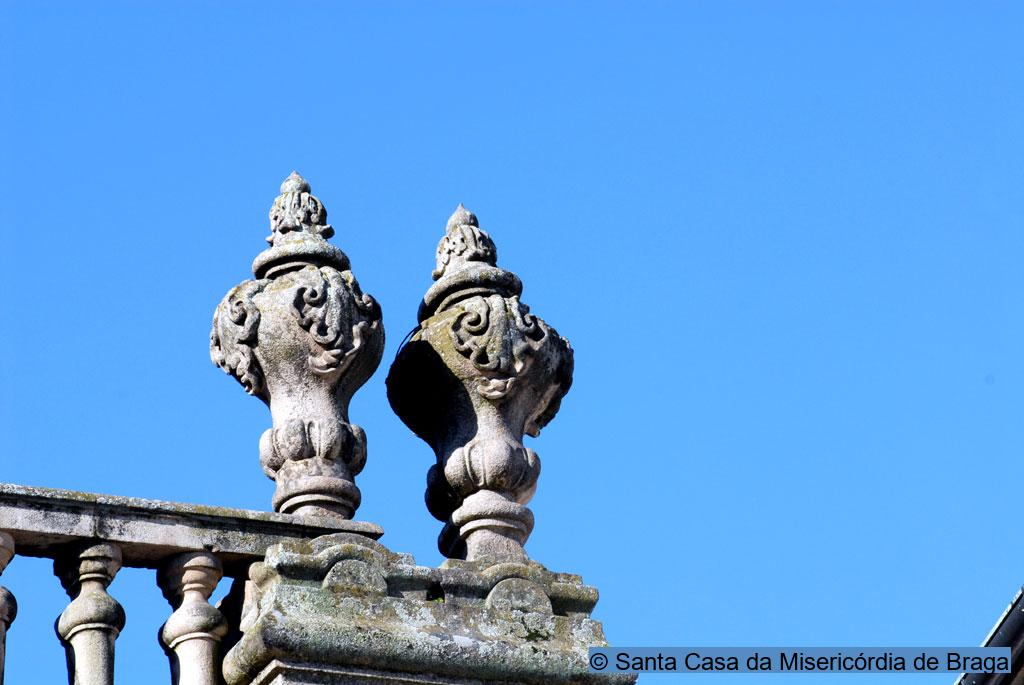
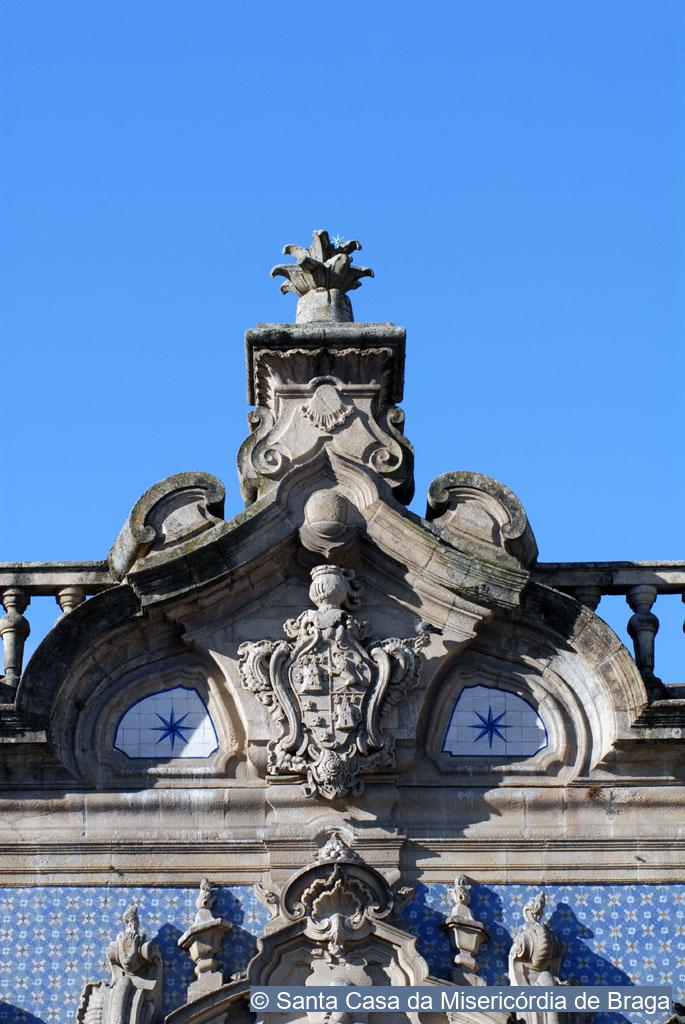
Balustrade
Exterior
1754–1755
Architect: André Soares (1720–1769), possibly in association with the decorative artist, Bartolomeu Antunes (1688–1753)
Rocaille style balustrade on the façade.
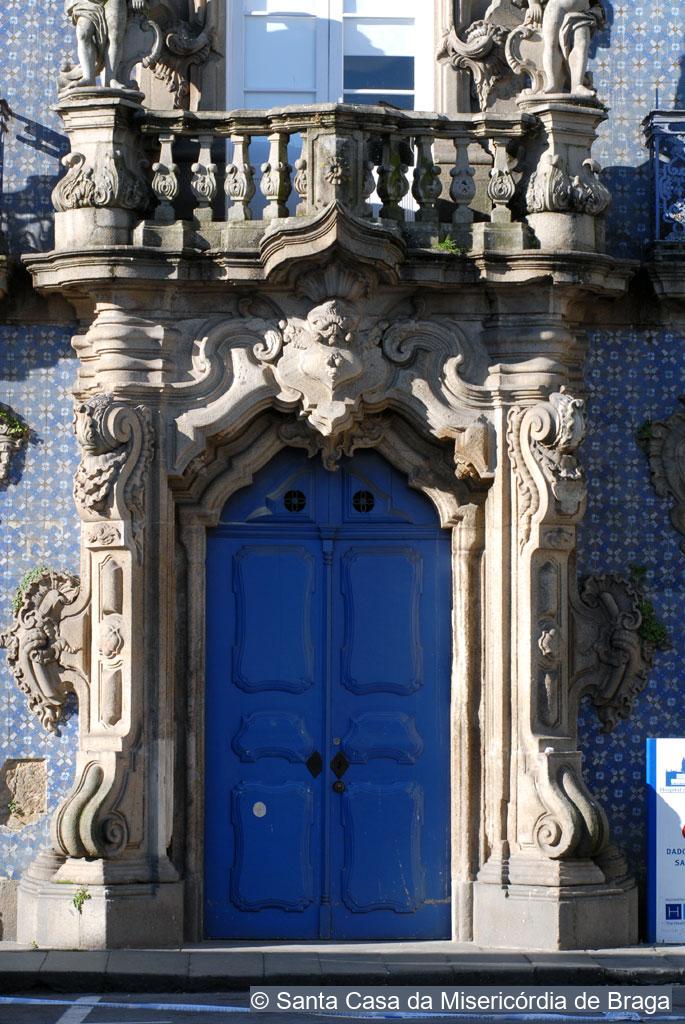
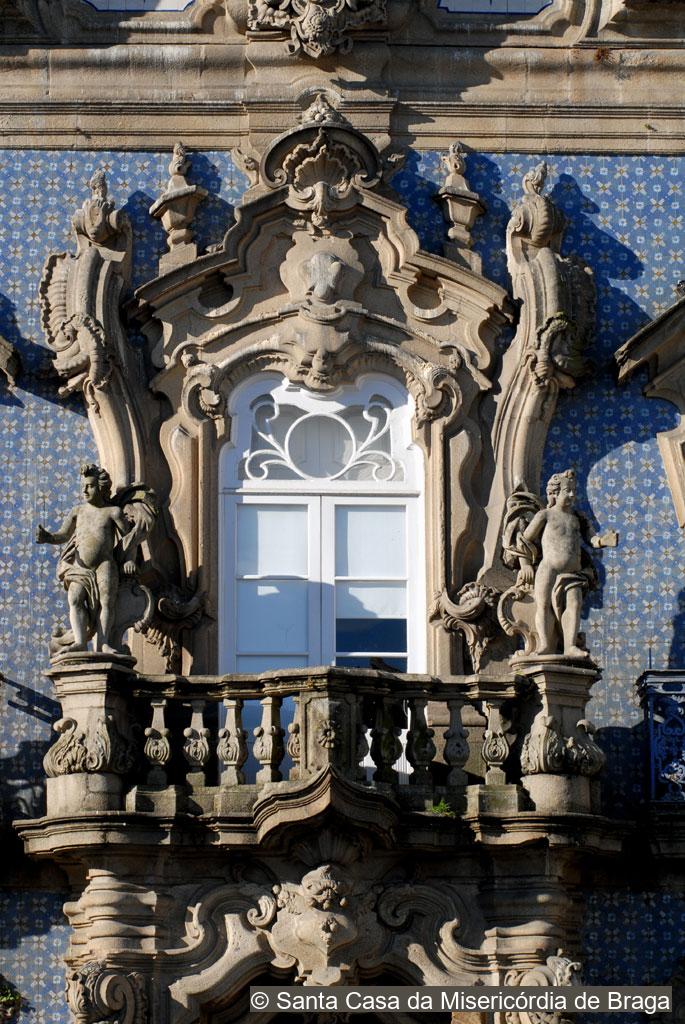
Main Door and Bay Window
Exterior
1754–1755
Architect André Soares (1720–1769), possibly in association with the decorative artist, Bartolomeu Antunes (1688–1753)
Central axis of the building decorated with Rocaille motifs.
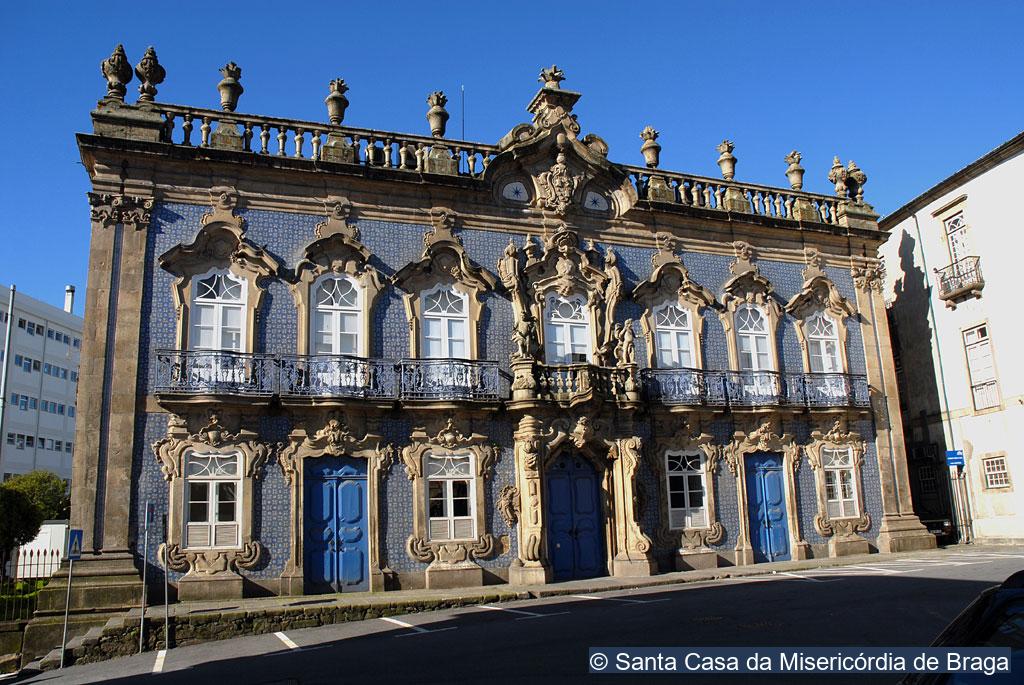
Ground-floor Windows
Exterior
1754–1755
Architect: André Soares (1720–1769), possibly in association with the decorative artist, Bartolomeu Antunes (1688–1753)
Ground-floor windows with Rocaille motifs.
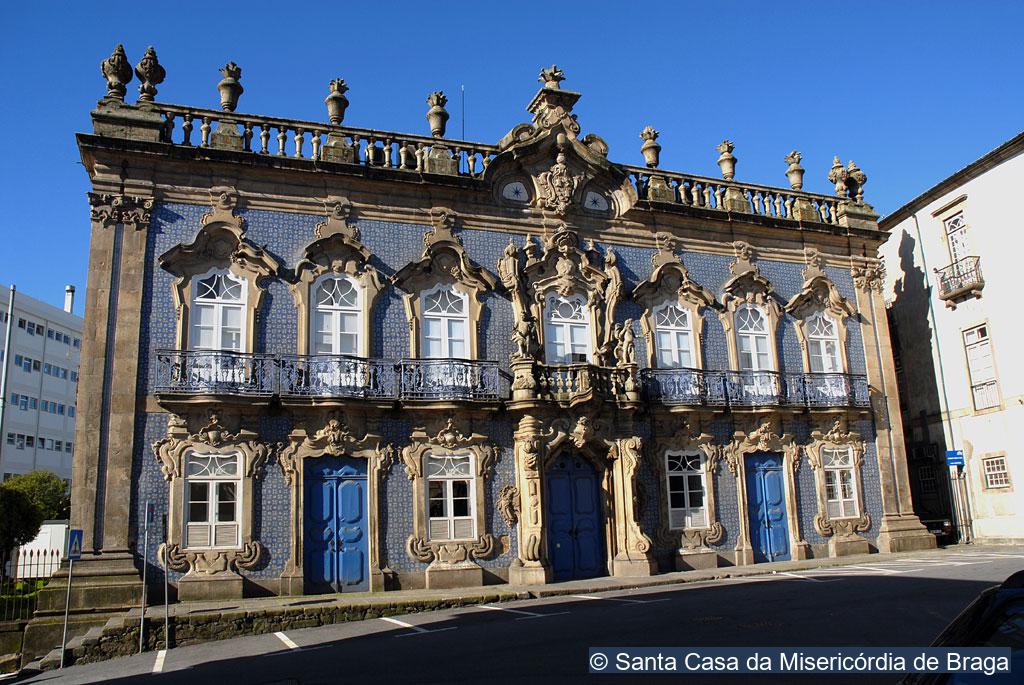
“Noble” or first-floor windows
Exterior
1754–1755
Architect: André Soares (1720–1769), possibly in association with the decorative artist, Bartolomeu Antunes (1688–1753)
First-floor windows with Rocaille motifs.
Selected bibliography:
Smith, R., André Soares, Um arquitecto do Minho, Lisbon, 1976.
Vitor, S., O Barroco, Lisbon, 2003.
Citation of this web page:
Paulo Pereira "Raio Palace" in "Discover Baroque Art", Museum With No Frontiers, 2026.
https://baroqueart.museumwnf.org/database_item.php?id=monument;BAR;pt;Mon11;30;en
Prepared by: Paulo PereiraPaulo Pereira
SURNAME: Pereira
NAME: Paulo
AFFILIATION Faculty of Architecture, Technical University of Lisbon
TITLE: University Lecturer
CV:
Paulo Pereira holds an MA in Cultural Studies and has been a speaker at numerous seminars and congresses in Portugal, Spain, France, Italy, the United States and Brazil. Paulo has co-ordinated and published books about Portuguese art and history, some of which are award winning. He is curator of several exhibitions held in Portugal, Ghent, Brussels and Berlin and been a contributing author for several exhibition catalogues. He has exercised managerial roles within the Town Hall of Lisbon, was Vice President of the Portuguese Heritage Institute (IGESPAR) and is a lecturer at the Technical University of Lisbon (Faculty of Architecture).
Translation by: Vanda Meneses , Manuela Alcobia
Translation copyedited by: Mandi GomezMandi Gomez
Amanda Gomez is a freelance copy-editor and proofreader working in London. She studied Art History and Literature at Essex University (1986–89) and received her MA (Area Studies Africa: Art, Literature, African Thought) from SOAS in 1990. She worked as an editorial assistant for the independent publisher Bellew Publishing (1991–94) and studied at Bookhouse and the London College of Printing on day release. She was publications officer at the Museum of London until 2000 and then took a role at Art Books International, where she worked on projects for independent publishers and arts institutions that included MWNF’s English-language editions of the books series Islamic Art in the Mediterranean. She was part of the editorial team for further MWNF iterations: Discover Islamic Art in the Mediterranean Virtual Museum and the illustrated volume Discover Islamic Art in the Mediterranean.
True to its ethos of connecting people through the arts, MWNF has provided Amanda with valuable opportunities for discovery and learning, increased her editorial experience, and connected her with publishers and institutions all over the world. More recently, the projects she has worked on include MWNF’s Sharing History Virtual Museum and Exhibition series, Vitra Design Museum’s Victor Papanek and Objects of Desire, and Haus der Kulturen der Welt’s online publication 2 or 3 Tigers and its volume Race, Nation, Class.
MWNF Working Number: PT 30