

 Back
Back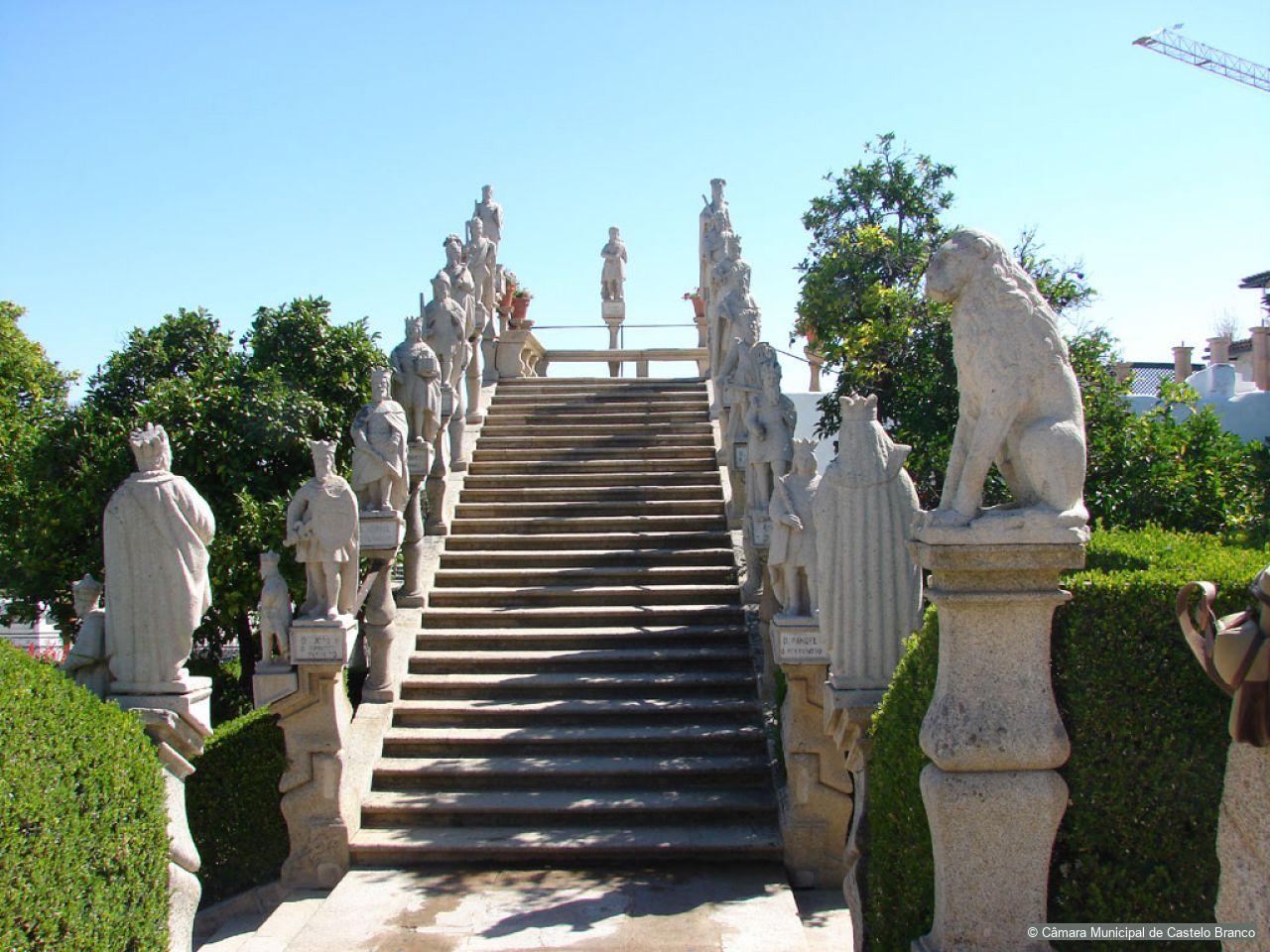
 Add to My Collection
Name of Monument:
Garden of the Bishop’s Palace
Location:
Castelo Branco, Castelo Branco, Portugal
Câmara Municipal de Castelo Branco
Praça do Município
6000 Castelo Branco
T : +351 272 330 330
F : +351 272 330 324
E : cultura.cmcb@gmail.com
City Council of Castelo Branco (Responsible Institution)
Date:
18th century
Artists:
Unknown
Denomination / Type of monument:
Garden
Patron(s):
Bishop João de Mendonça
History:
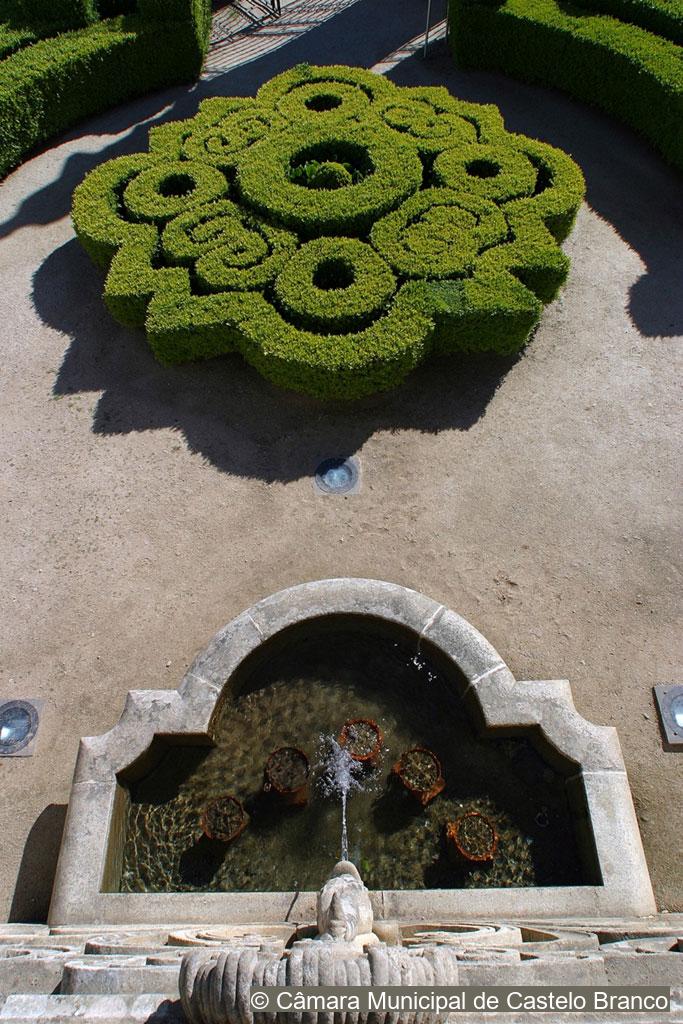
The Garden of the Bishops of Castelo Branco was conceived in the first quarter of the 18th century by the Bishop of Guarda, João de Mendonça (1711–1736), who built it close to the Winter Palace which he used to avoid the freezing temperatures of winter in Guarda. In 1771, the Diocese of Castelo Branco was created, and the former Winter Palace became the Bishop's official residence. The Garden was completed at the end of the 18th century under the direction of D. Vicente Ferrer da Rocha, second Bishop of Castelo Branco, assisted by Fr. Daniel Joaquim do Rosário. At the beginning of the 20th century, a new level at the entrance of the main terrace was installed. It is decorated with flower beds surrounded by hedges and azulejos depicting the Bishops of Castelo Branco.
Description:
Gardens held a central place in 17th- and 18th- century European art. The Baroque garden sought to represent the universe, symbolically blending aesthetic values with philosophical ideals. Sometimes large in scale, usually complex, and rich in terms of decoration, they combined nature with ornamental elements such as in Portuguese statues and azulejos (tile panels), reflecting the social status and the customs of their patrons. The ecclesiastical garden was an excellent vehicle for the diversion, spiritual exaltation and social projection of both the resident and his visitors.
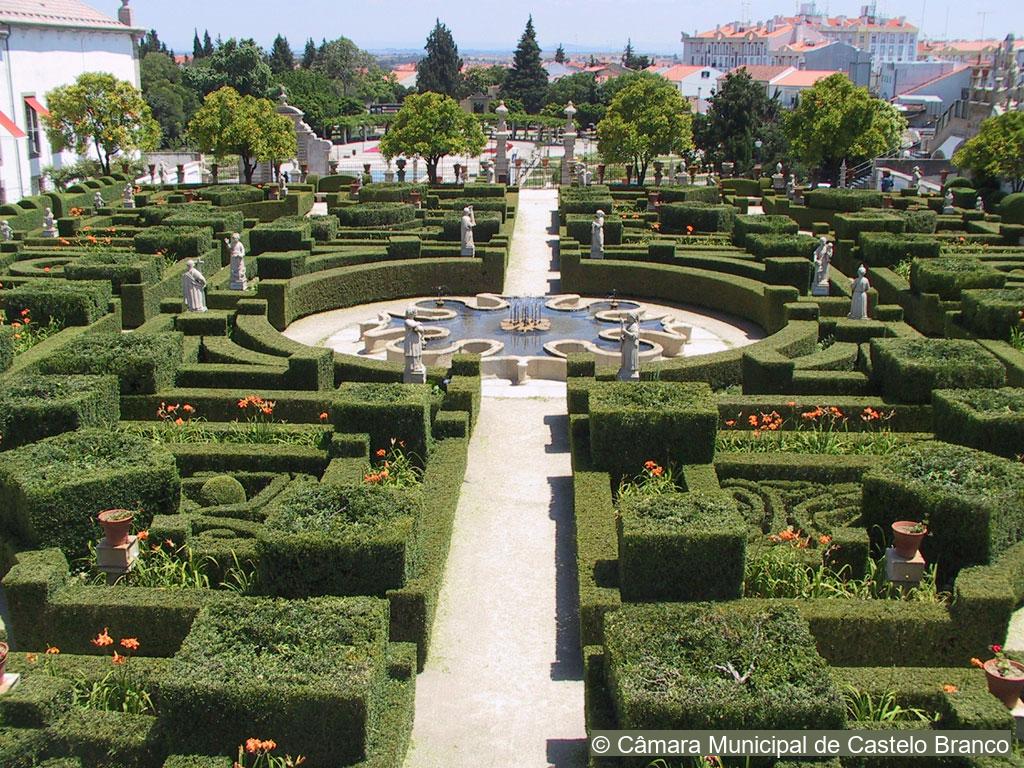
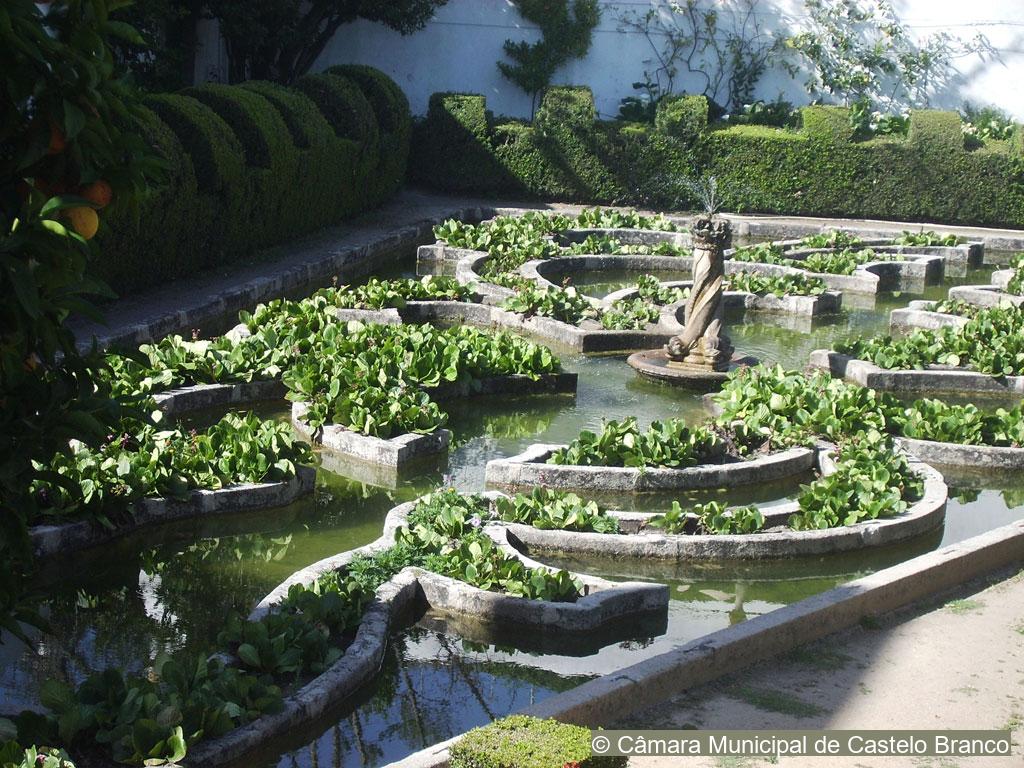
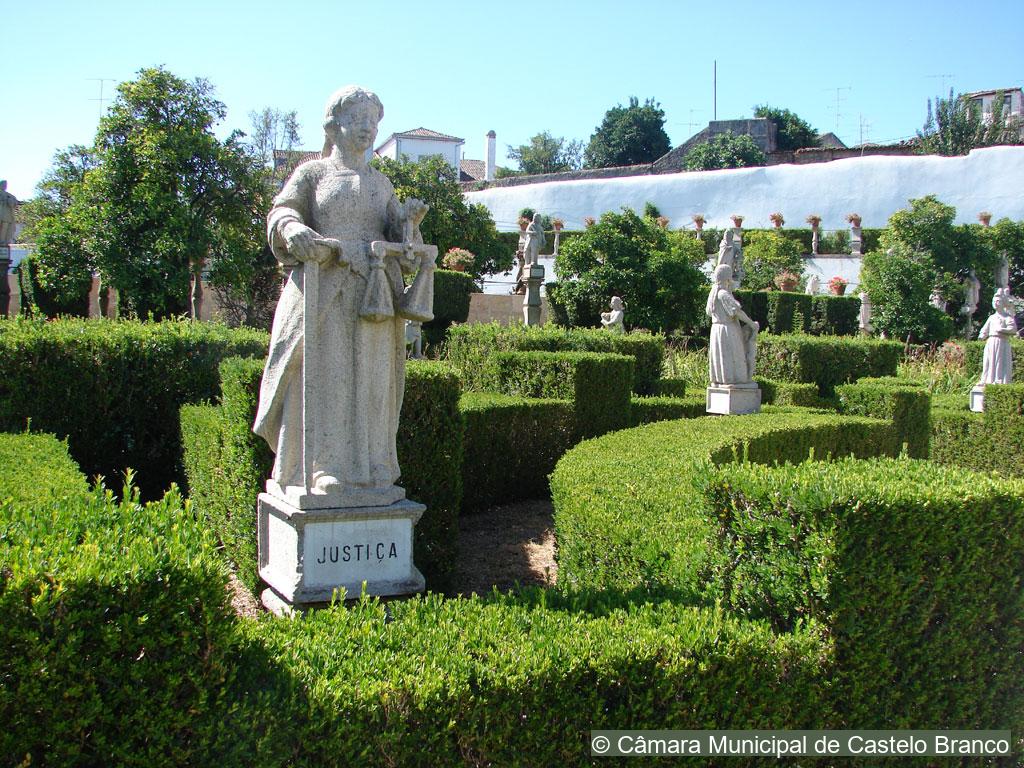
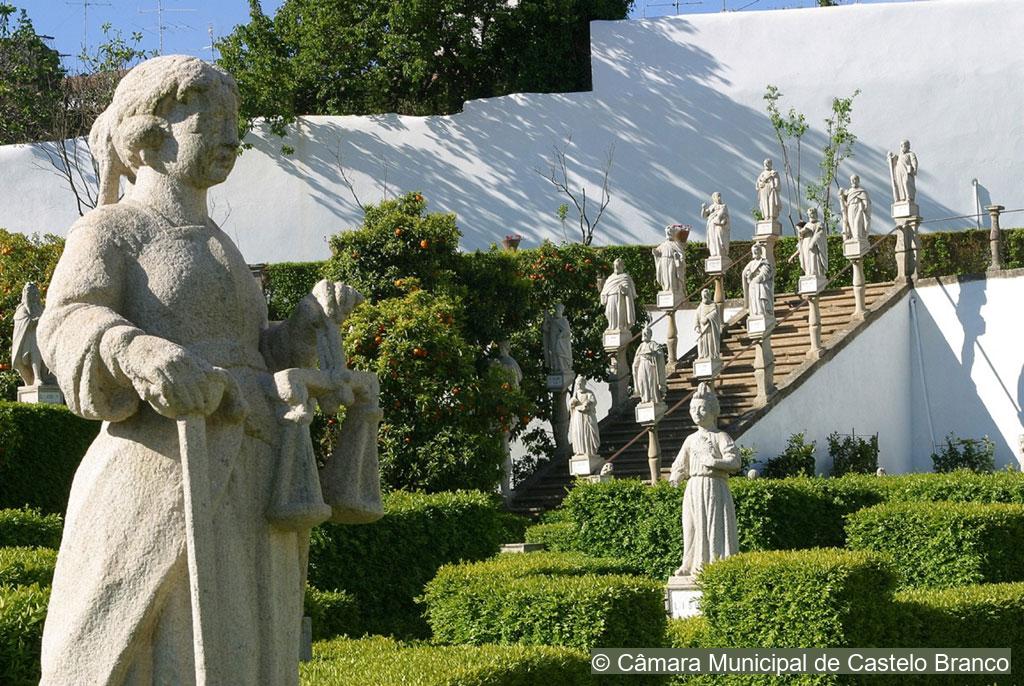
The Garden of the Bishop's Palace was probably conceived as a space for the celebration of God through the allegories and examples of virtue it expounded. In the intermediate rectangular terrace divided into three longitudinal axes with a central lake and four others at the corners, granite sculptures depict the spiritual world (representing the Four Cardinal and Three Theological Virtues as well as the Apostles in the monumental Apostles' Stairway), the material world (signs of the Zodiac, the Four Continents, Seasons and Four Elements) and lastly the national reality (a monumental Kings' Stairway with images of the Portuguese kings). The several different levels of the garden are connected by stairways.
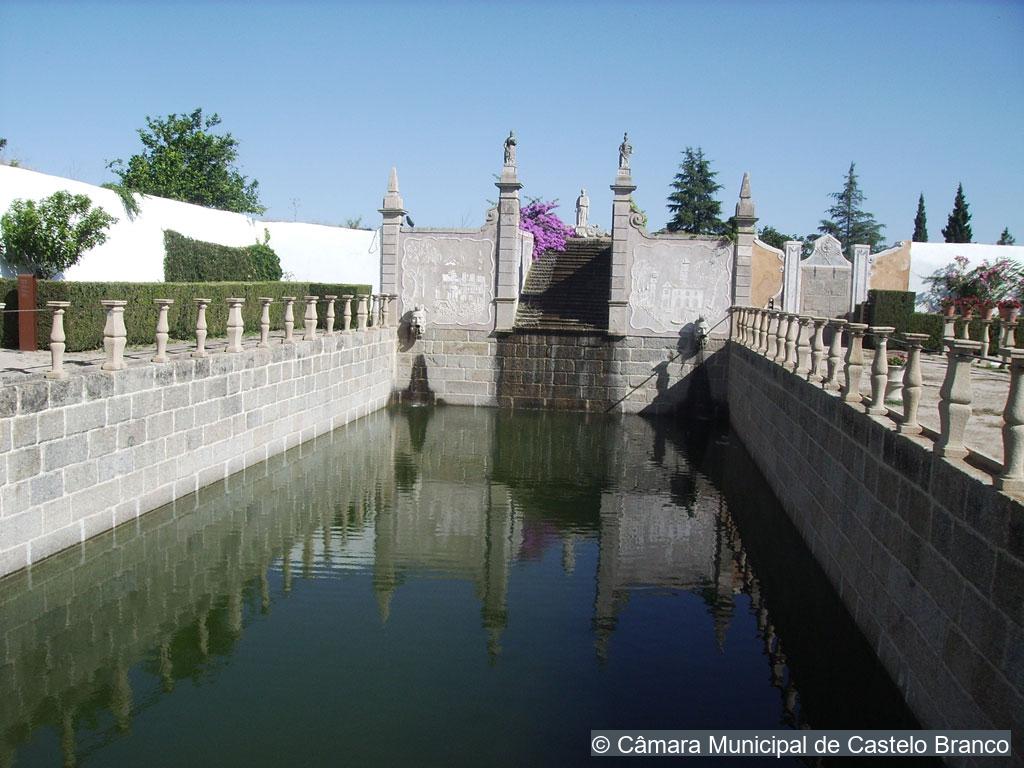
The Lake of the Crowns and a curious overflow garden named Jardim Alagado occupy the same level, from which two monumental stairways lead to the upper level where the Water Tank and the Moses Cascade, a purely a decorative feature, are situated.
The Garden of the Bishop’s palace combines lakes, fountains, flowerbeds and stone sculptures representing religious themes, pagan personalities and the kings of Portugal.
How Monument was dated:
Historical evidence
Special features
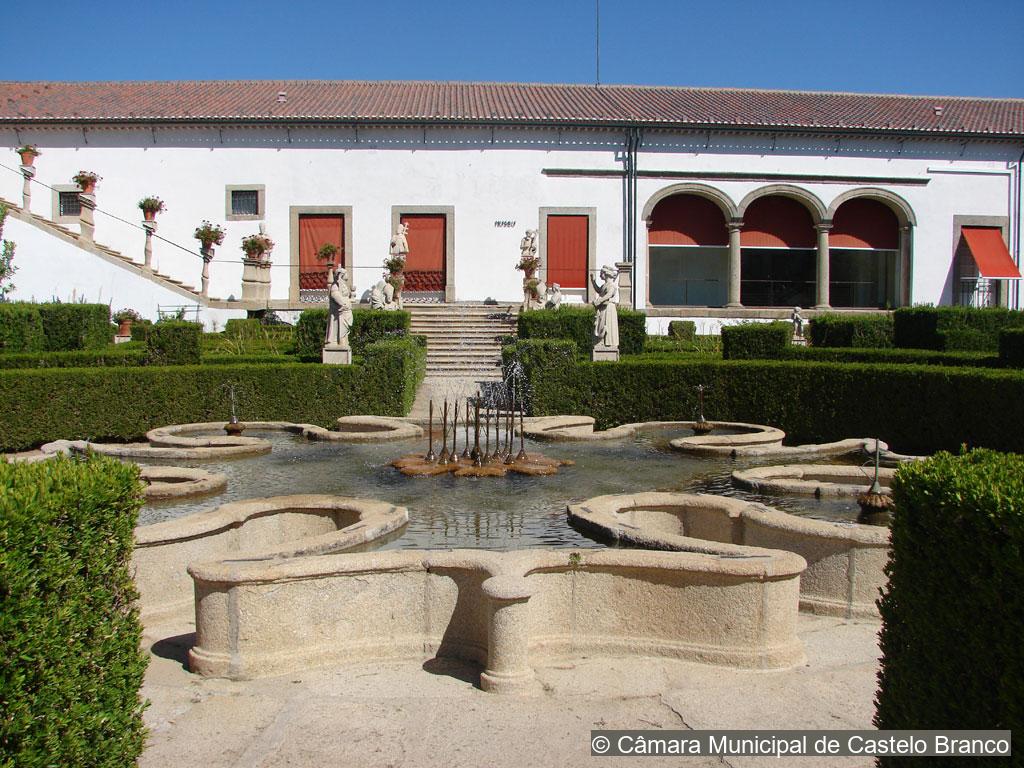
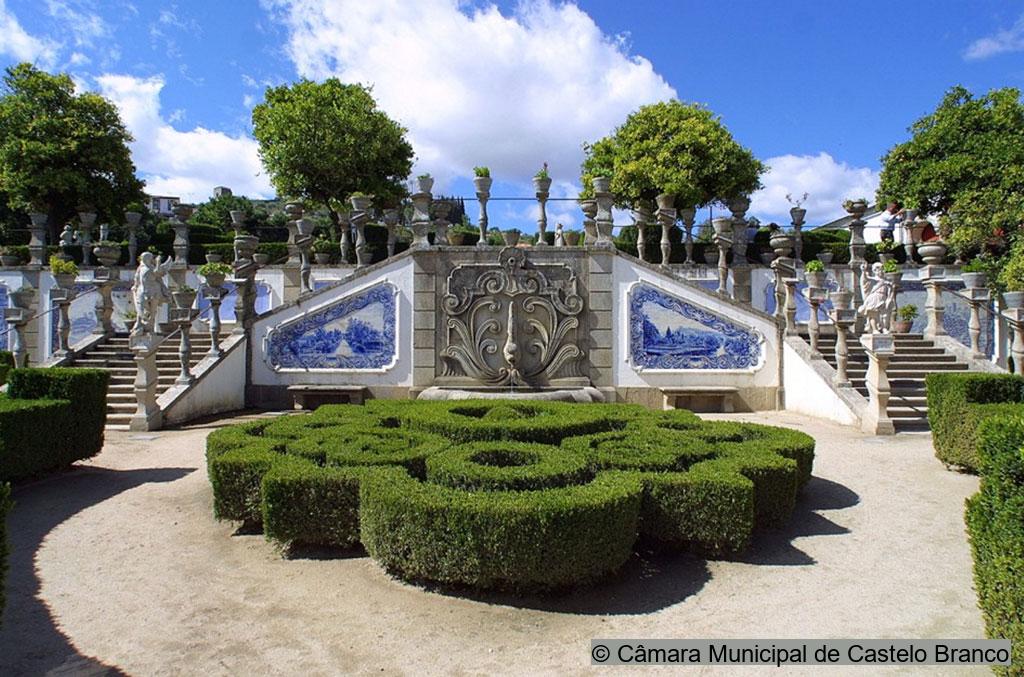
Garden: central level (images 1, 2 and 3) and a 20th-century addition (4)
18th and 20th centuries
Unknown
In the intermediate rectangular terrace divided into three longitudinal axes with a central lake and four others at the corners, granite sculptures represent the Four Seasons, the Four Continents, the Four Elements, signs of the Zodiac, and the Three Theological Virtues. The 20th-century level is furnished with azulejos depicting the Bishops of Castelo Branco.
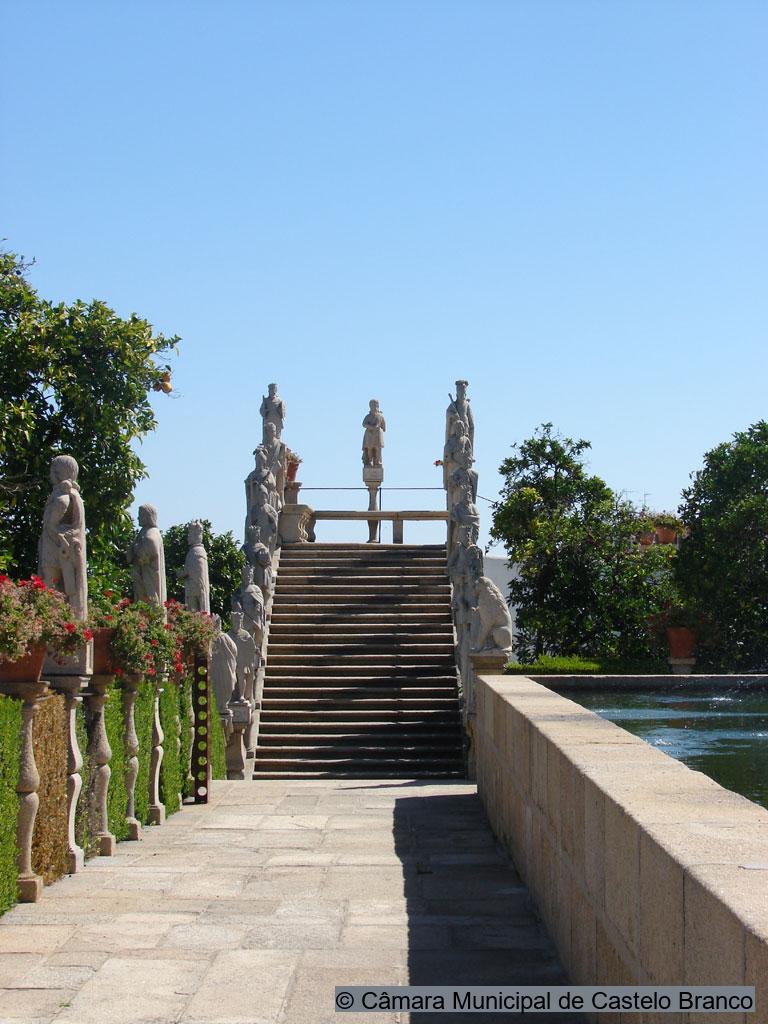
Kings’ Stairway
Intermediate and upper levels
18th century
Unknown
The Kings' stairway is furnished with balusters and statues of the Portuguese kings organised chronologically: Count Henrique of Burgundy is followed by his son, the first King of Portugal Afonso Henriques. He is followed by his grandson, the second King Sancho I and, finally, King José I. The kings of the Spanish Habsburg dynasty are represented in slightly smaller dimensions. The effigies were inspired by 17th-century examples owned by Bishop João de Mendonça.
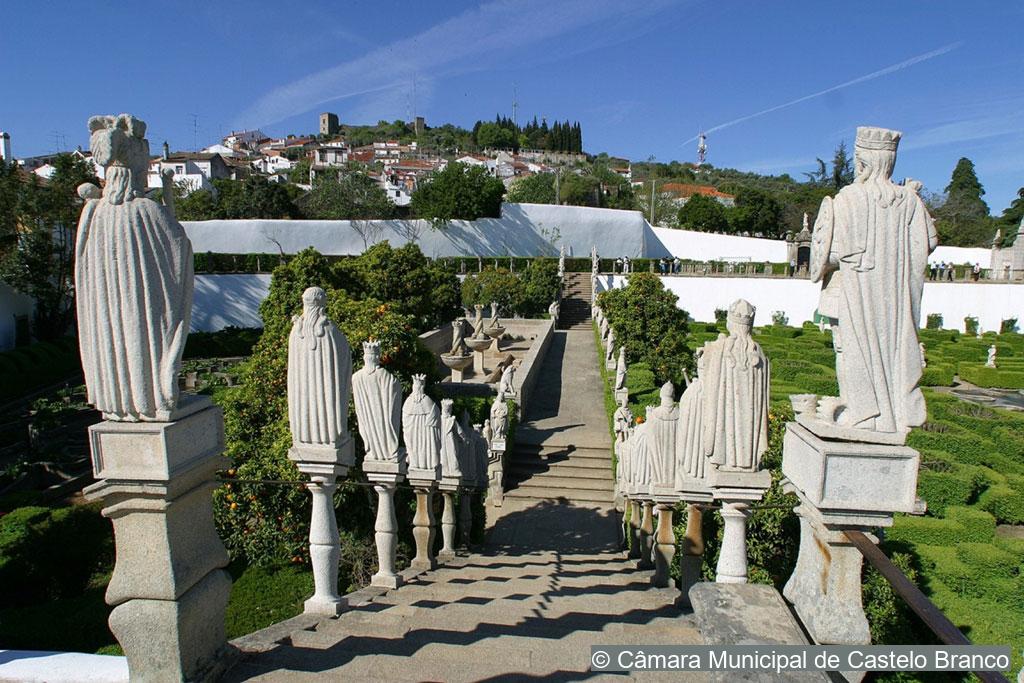
Lake of the Crowns and Overflow Garden (Jardim Alagado)
Intermediate level
18th century
Unknown
The Lake of the Crowns is built on a rectangular plan with three fountains topped by crowns. In this level there are several trapezoidal lakes integrated with flowerbeds and a central fountain, amongst which is the Jardim Alagado, (3rd image) which acted as an overflow garden.
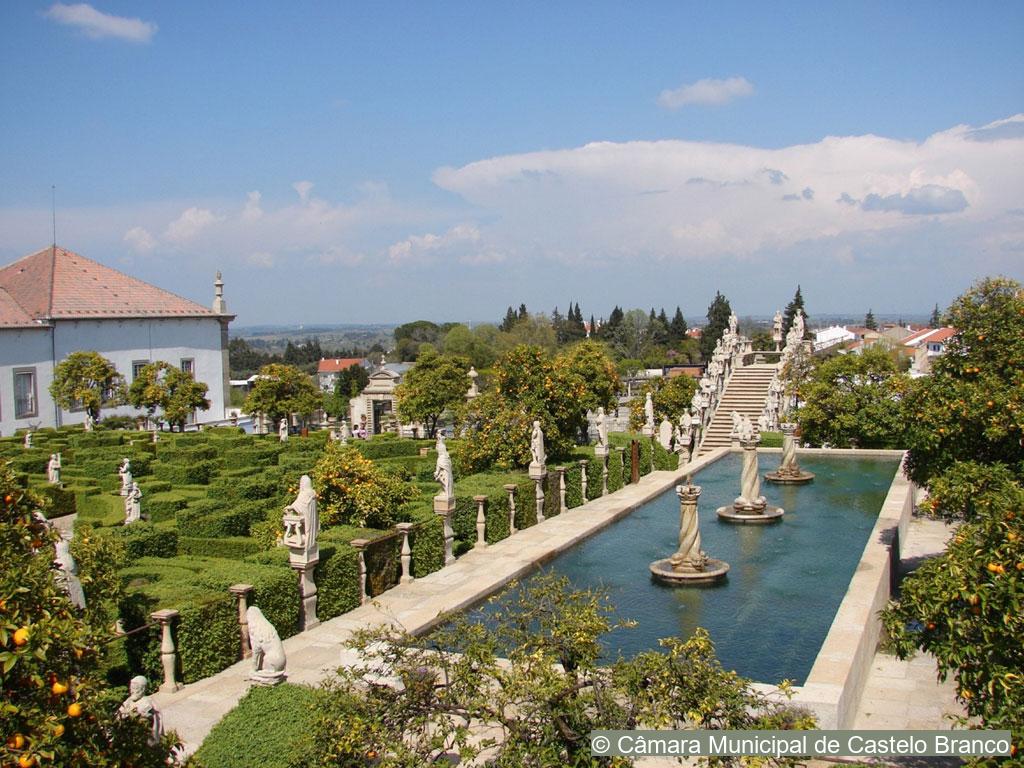

Allegorical Sculptures
Intermediate terrace
18th century
Unknown
Along the intermediate terrace are allegorical sculptures identified with captions. Around the main lake are the Three Theological Virtues: Hope, Faith and Charity, and the Four Cardinal Virtues: Justice, Fortitude, Temperance and Prudence.
Water Tank and the Moses Cascade
Upper level
18th century
Unknown
At the upper level are the Water Tank and the Moses Cascade, which is a purely decorative feature.
Selected bibliography:
Silva, J. A. Porfírio da, Memorial Cronológico e Descritivo da Cidade de Castelo Branco, Lisbon, 1853.
Carita, H., Cardoso, A. H., Tratado da Grandeza dos Jardins em Portugal, s.l., 1990.
Castel-Branco, M. Cristina Ataíde, O lugar e o significado, os jardins dos vice-reis, Dissertação de Mestrado, Instituto Superior de Agronomia, Lisbon, 1992.
Pereira, P., (ed.) “A arte dos Jardins - O Jardim Barroco” in História de Arte Portuguesa, vol. 3, 1995, pp. 213–231.
Silva, P., Rego da, Jardim do Paço – novos contributos para o estudo dos recreios episcopais de Castelo Branco, Castelo Branco, 2001.
Citation of this web page:
Rui Oliveira Lopes, Cristina Correia, Sílvia Robalo "Garden of the Bishop’s Palace" in "Discover Baroque Art", Museum With No Frontiers, 2026.
https://baroqueart.museumwnf.org/database_item.php?id=monument;BAR;pt;Mon11;32;en
Prepared by: Rui Oliveira Lopes, Cristina CorreiaCristina Correia
SURNAME: Correia
NAME: Cristina
AFFILIATION: Eça de Queirós Public High School, Lisbon and MWNF
TITLE: Senior Teacher, Local Co-ordinator and Vice-President of MWNF
CV:
Cristina Correia is a History graduate and, since 1985, a Senior Teacher of History at the Eça de Queirós Public High School, Lisbon where she also lectures in Portuguese Language and Culture for non-native speakers. From 1987 to 1998 she was involved with youth affairs, primary prevention and the Camões Institute. She is Vice-President and Local Co-ordinator (Portugal) for MWNF., Sílvia Robalo
Translation by: Lili Cavalheiro, Cristina CorreiaCristina Correia
SURNAME: Correia
NAME: Cristina
AFFILIATION: Eça de Queirós Public High School, Lisbon and MWNF
TITLE: Senior Teacher, Local Co-ordinator and Vice-President of MWNF
CV:
Cristina Correia is a History graduate and, since 1985, a Senior Teacher of History at the Eça de Queirós Public High School, Lisbon where she also lectures in Portuguese Language and Culture for non-native speakers. From 1987 to 1998 she was involved with youth affairs, primary prevention and the Camões Institute. She is Vice-President and Local Co-ordinator (Portugal) for MWNF.
Translation copyedited by: Mandi GomezMandi Gomez
Amanda Gomez is a freelance copy-editor and proofreader working in London. She studied Art History and Literature at Essex University (1986–89) and received her MA (Area Studies Africa: Art, Literature, African Thought) from SOAS in 1990. She worked as an editorial assistant for the independent publisher Bellew Publishing (1991–94) and studied at Bookhouse and the London College of Printing on day release. She was publications officer at the Museum of London until 2000 and then took a role at Art Books International, where she worked on projects for independent publishers and arts institutions that included MWNF’s English-language editions of the books series Islamic Art in the Mediterranean. She was part of the editorial team for further MWNF iterations: Discover Islamic Art in the Mediterranean Virtual Museum and the illustrated volume Discover Islamic Art in the Mediterranean.
True to its ethos of connecting people through the arts, MWNF has provided Amanda with valuable opportunities for discovery and learning, increased her editorial experience, and connected her with publishers and institutions all over the world. More recently, the projects she has worked on include MWNF’s Sharing History Virtual Museum and Exhibition series, Vitra Design Museum’s Victor Papanek and Objects of Desire, and Haus der Kulturen der Welt’s online publication 2 or 3 Tigers and its volume Race, Nation, Class.
MWNF Working Number: PT 32