

 Back
Back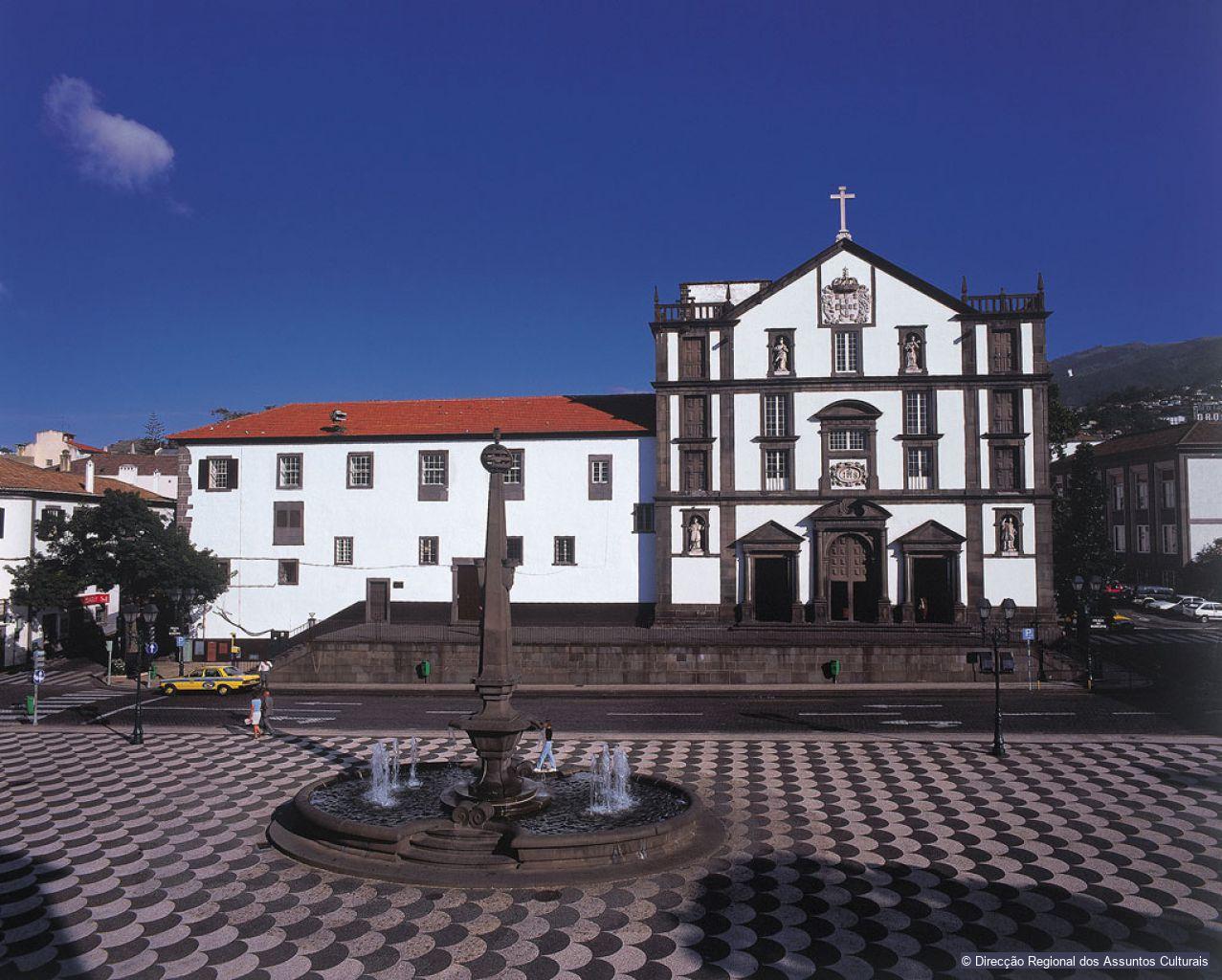
 Add to My Collection
Name of Monument:
Church of São João Evangelista
Also known as:
Igreja do Colégio
Location:
Funchal, Madeira-Região, Portugal
Largo do Município and Rua dos Ferreiros
9000 Funchal
T : +351 291 233 534
F : +351 291 233 534
E : gabineteinfo@diocesedofunchal.pt; igrejadocolegio@sapo.pt
Bishropic of Funchal (Responsible Institution)
Date:
Construction: 1629–1647; decoration: 1647–1750
Artists:
Author of the initial project, master of the royal works: Mateus Fernandes (active 1575–1595); master stonemason Brás Fernandes (active 1629–1635); master engravers Manuel Pereira (active 1648–1660), Manuel Pereira de Almeida (active 1690–1700) painting workshop of Bento Coelho da Silveira (1648–1708)
Denomination / Type of monument:
Religious, church
Patron(s):
Society of Jesus
History:
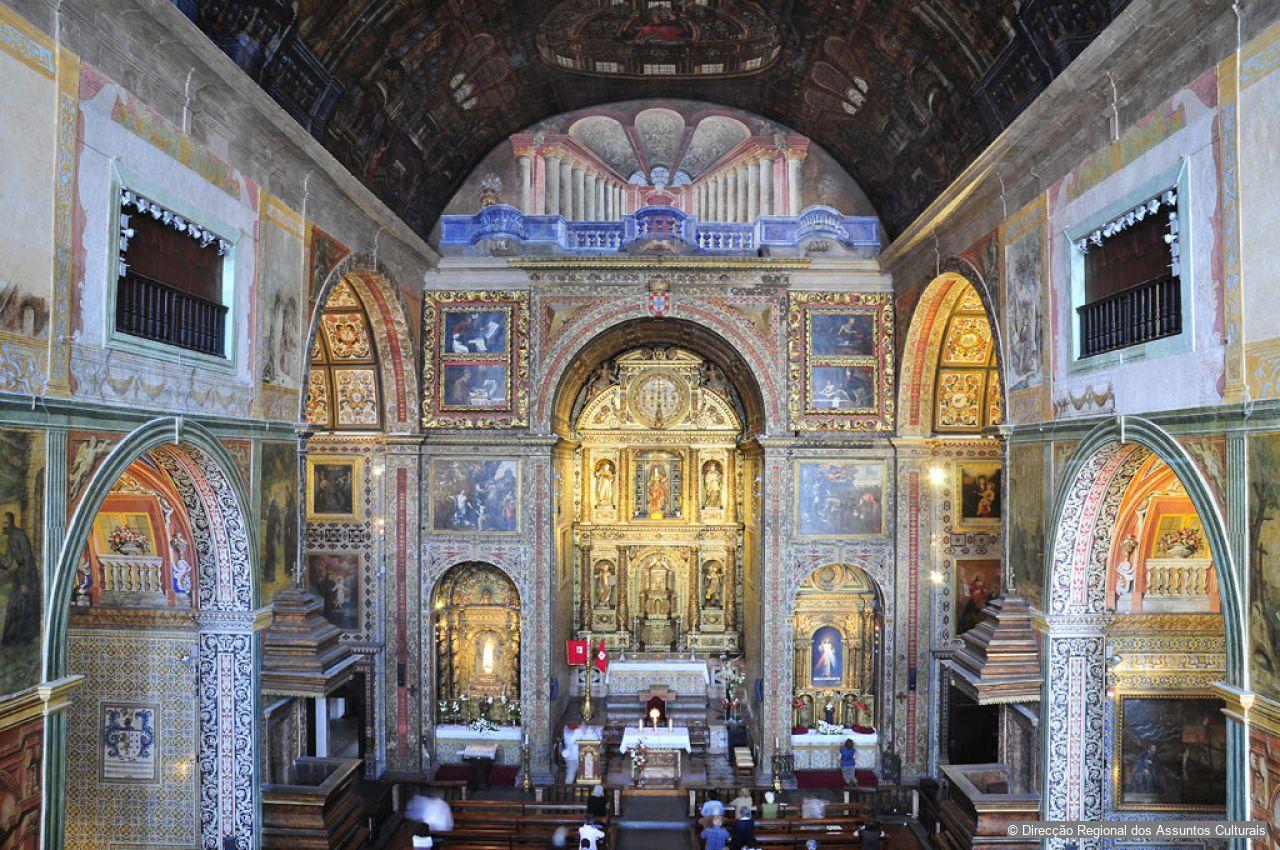
The church of São João Evangelista with its mannerist outline was built in 1629 by the Jesuits who established themselves in Madeira some time after 1570. The church was already built by 1647, but due to its monumental character and exuberance, works continued until the beginning of the 18th century. In fact, the Baroque style took over from the original Mannerist composition, and in meeting with the ideas of the Counter-Reformation, it called Christians to glorious salvation and elevated them in its artistic glory.
With the expulsion of the Jesuits in 1760 the church was closed until 1846 at which time, aware of the monument's valuable heritage, the Civil Governor, José Silvestre Ribeiro, undertook important renovation works and returned the church to the Bishropic thereby making it once again available for religious services.
Description:
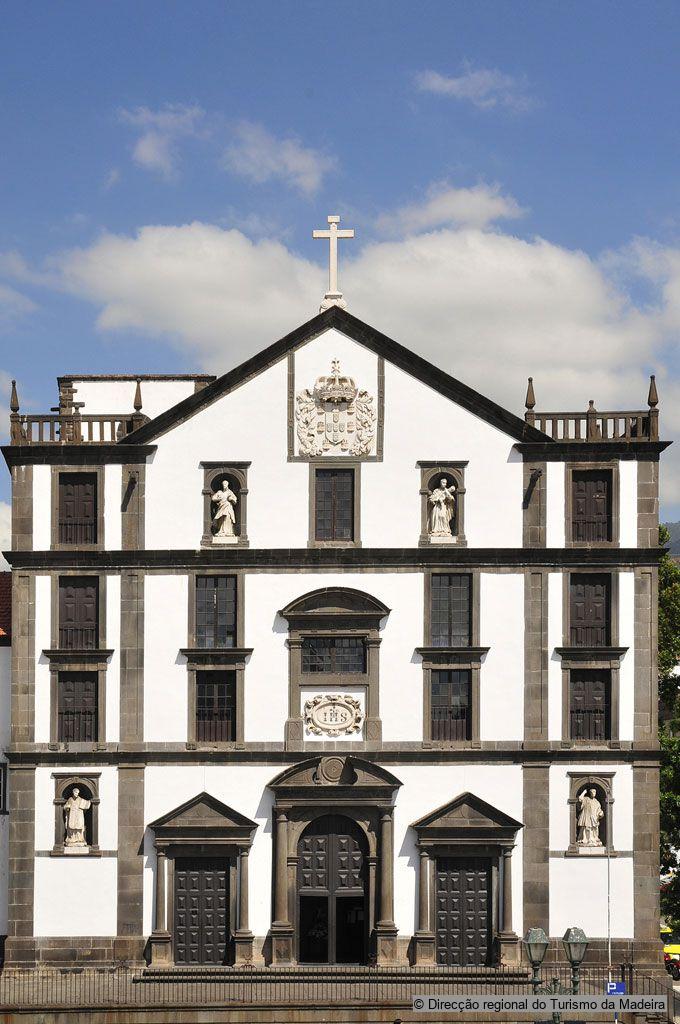
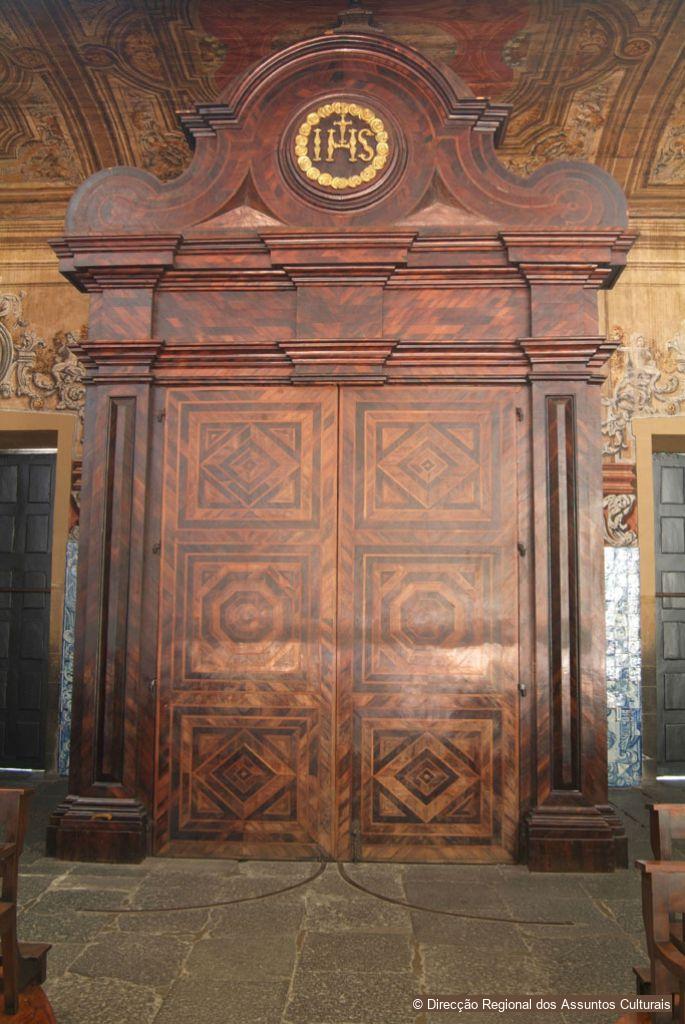
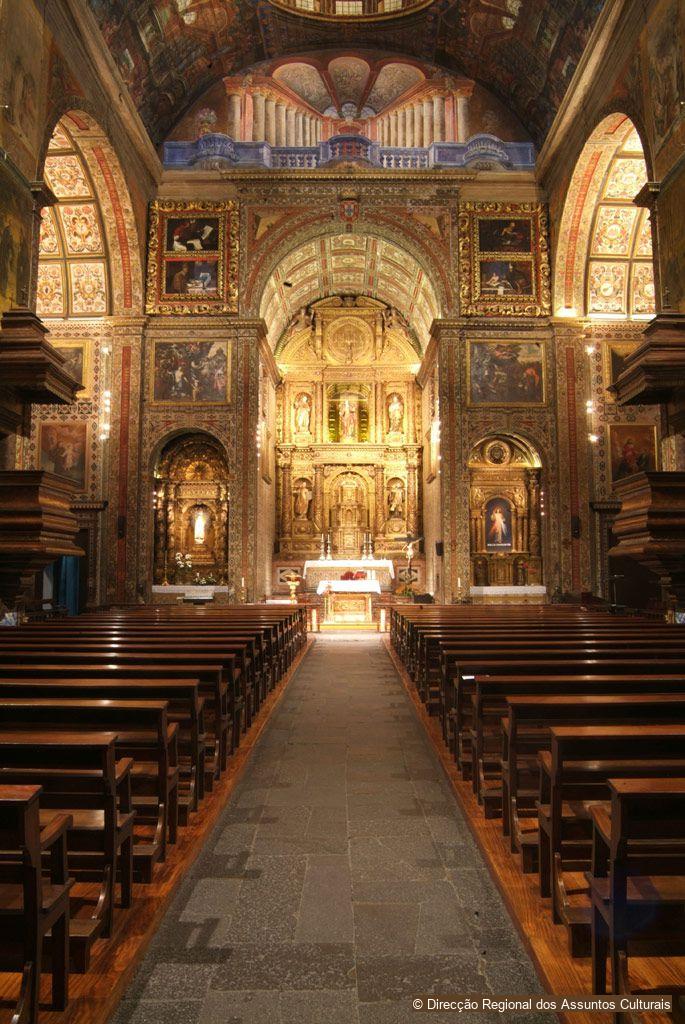
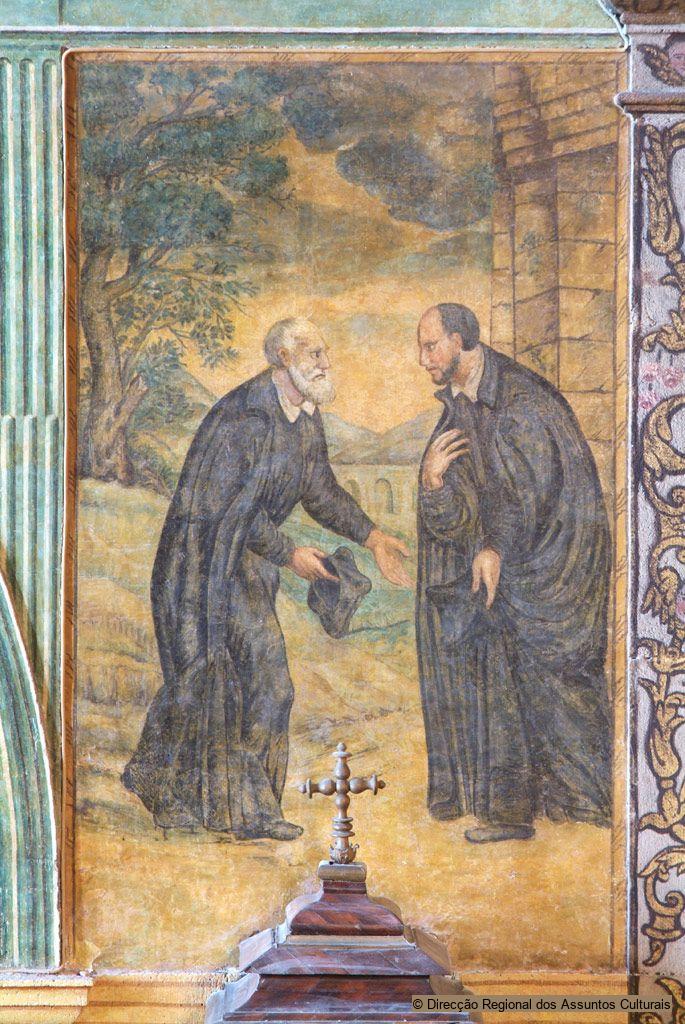
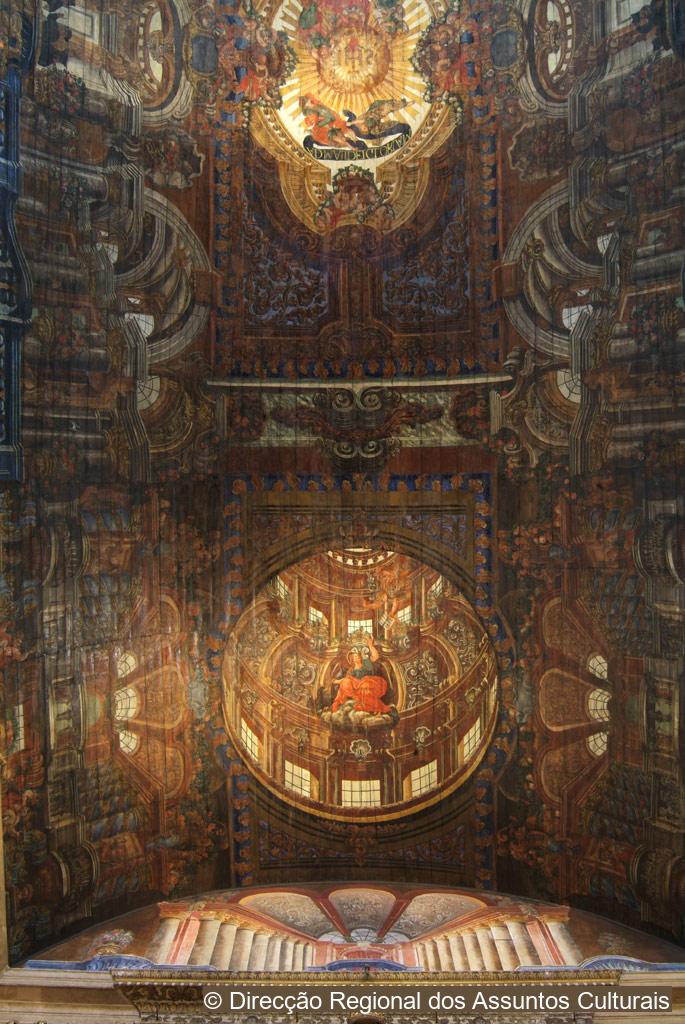
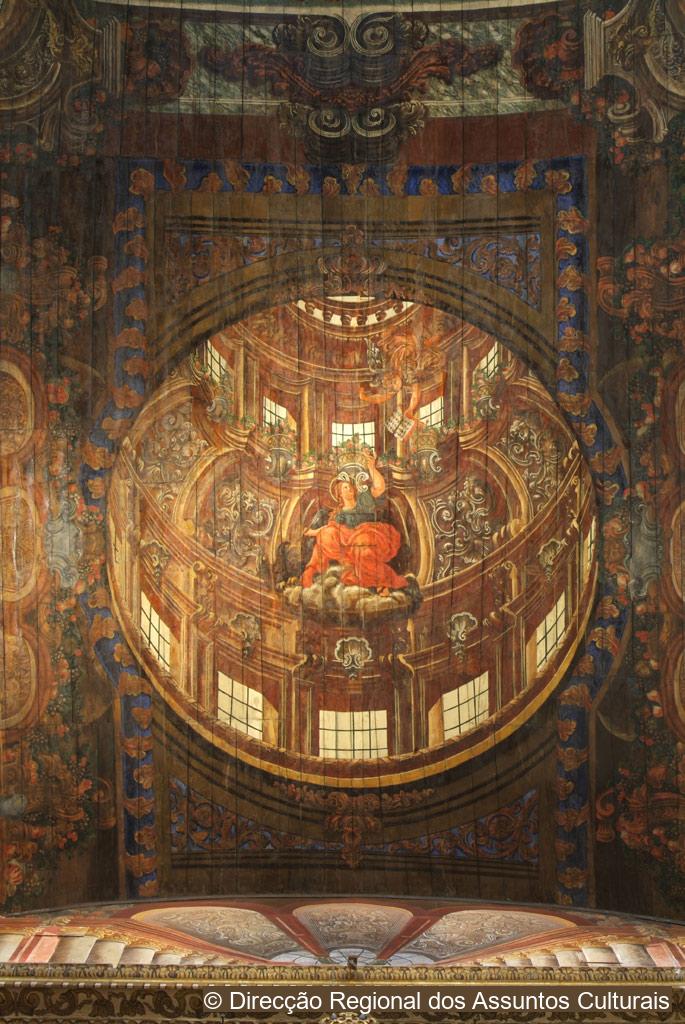
The Church of São João Evangelista has a Mannerist façade that is typical of Iberian models of the Jesuit Order. Sculptures of St. Ignatius of Loyola, St. Francis Xavier, St. Stanislas and St. Francis of Borja decorate the façade. The interior is dominated by a large nave with eight lateral open-vaulted chapels, an illusionary transept and a main chapel, all of which accord with the Jesuit model. On the walls of the nave, frescoes represent the Evangelists, scenes from the lives of several Jesuits and architectural and vegetal motifs. The wooden ceiling, with a trompe l'oeil vault and foliate paintings, is framed by two domes with allegories and quadratura compositions that align with the central axe. In the centre there is a panel with the Jesuit insignia “IHS”. The simplicity of the Mannerist architectural outline is combined with the richness of Baroque ornamentation, in line with the principles of the Counter-Reformation.
View Short DescriptionThe Church of São João Evangelista is one of the best examples in Madeira of the integration of the Baroque with the Mannerist style. Decorated after 1647, the interior combines gilded wood carved retables, patterned and figurative azulejos, trompe l´oeil ceiling painting and frescoes on the walls of the nave and sacristy.
How Monument was dated:
Historical evidence and stylistic analysis
Special features
Interior, general view
Interior
Construction: 1629–1647; decoration 1648–1750
Mateus Fernandes (active 1575–1595) and others
General view of the interior.
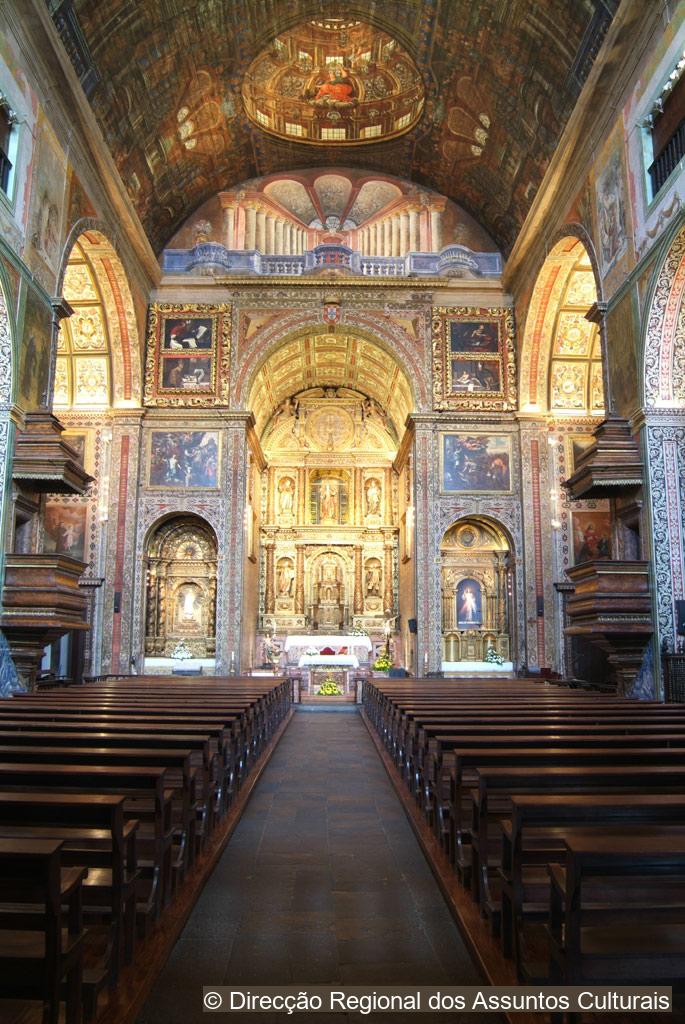
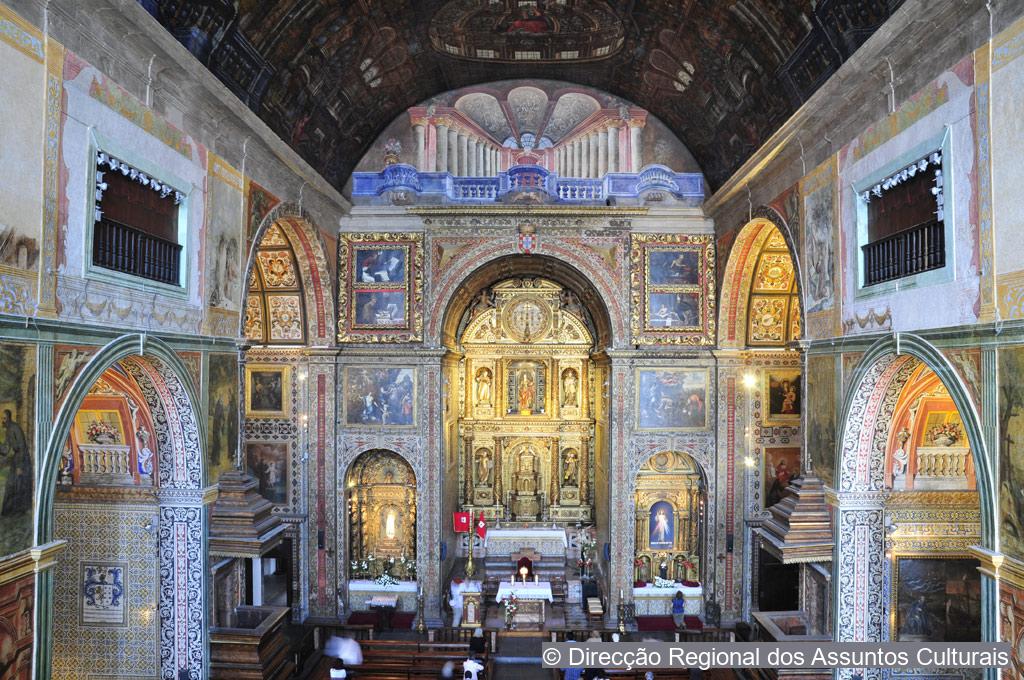
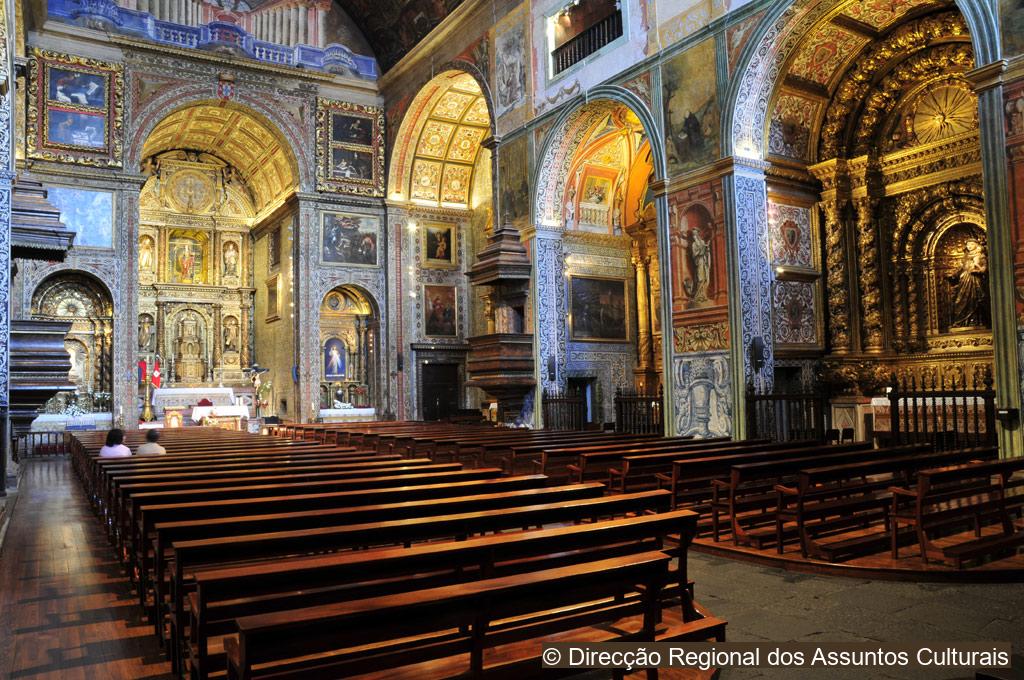
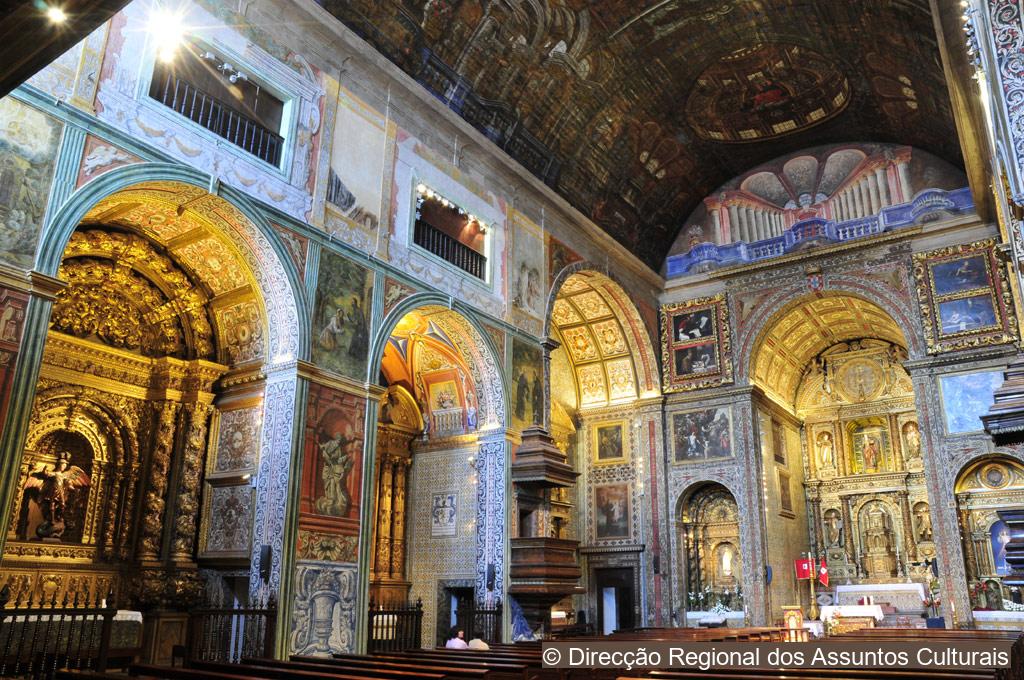
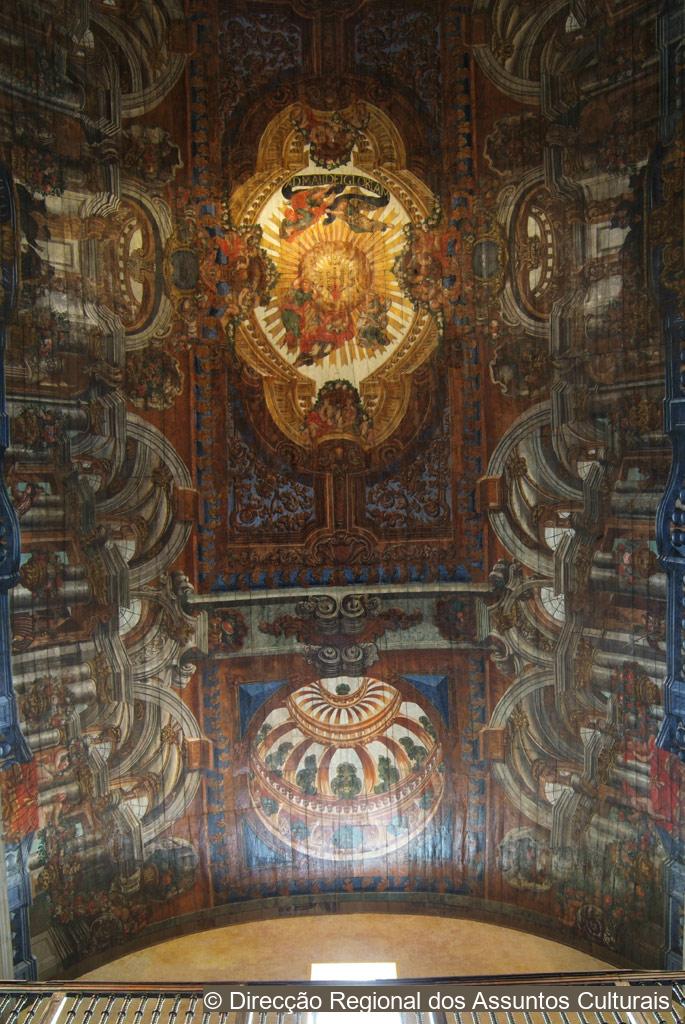
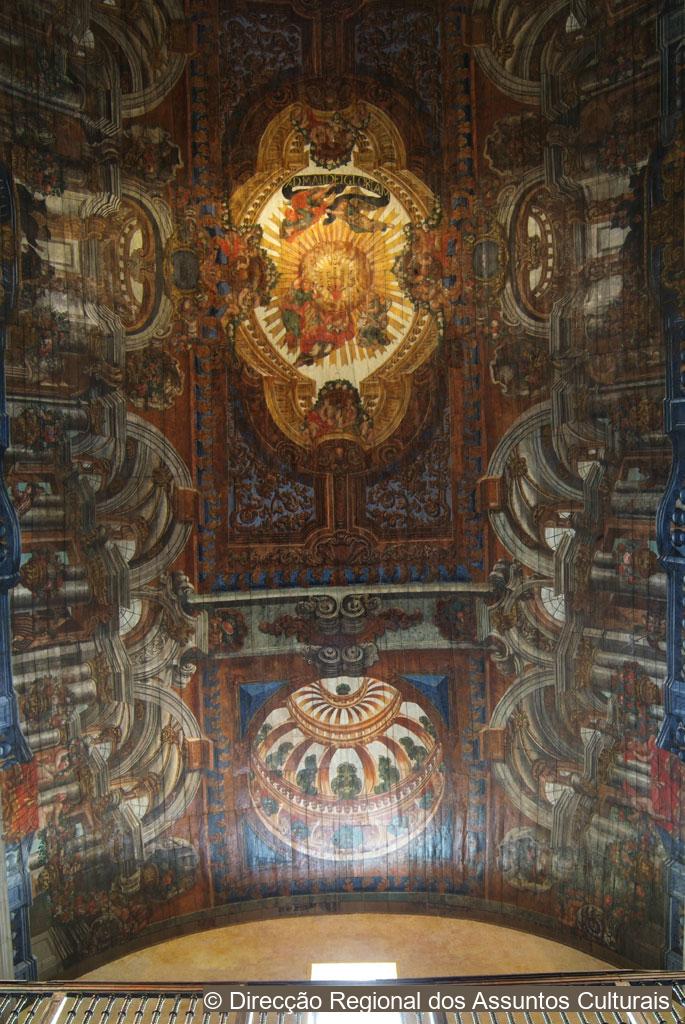
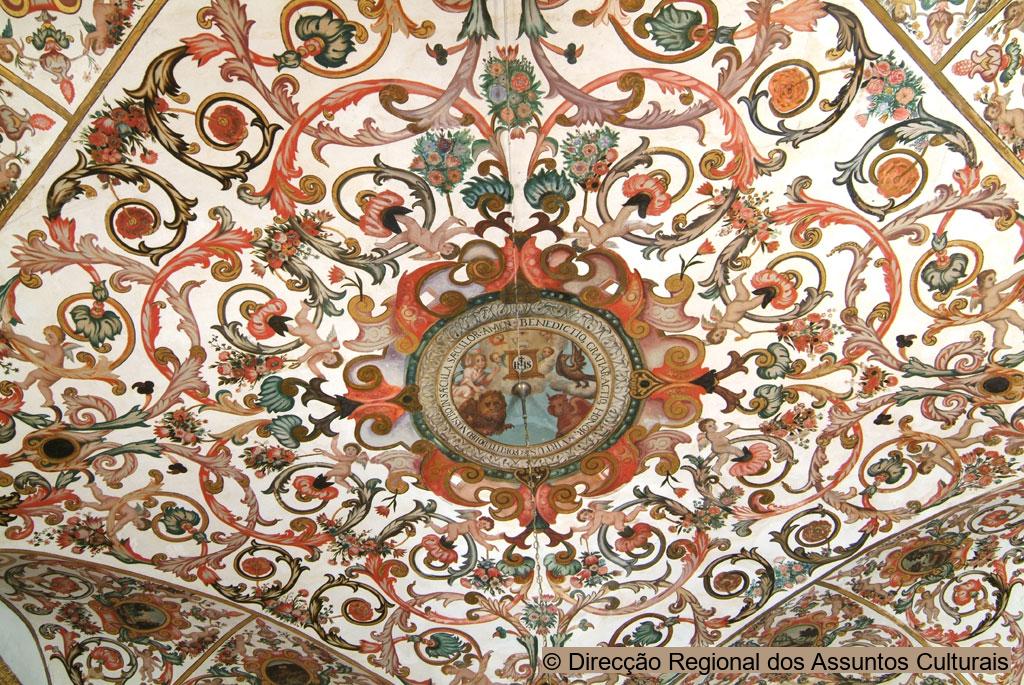
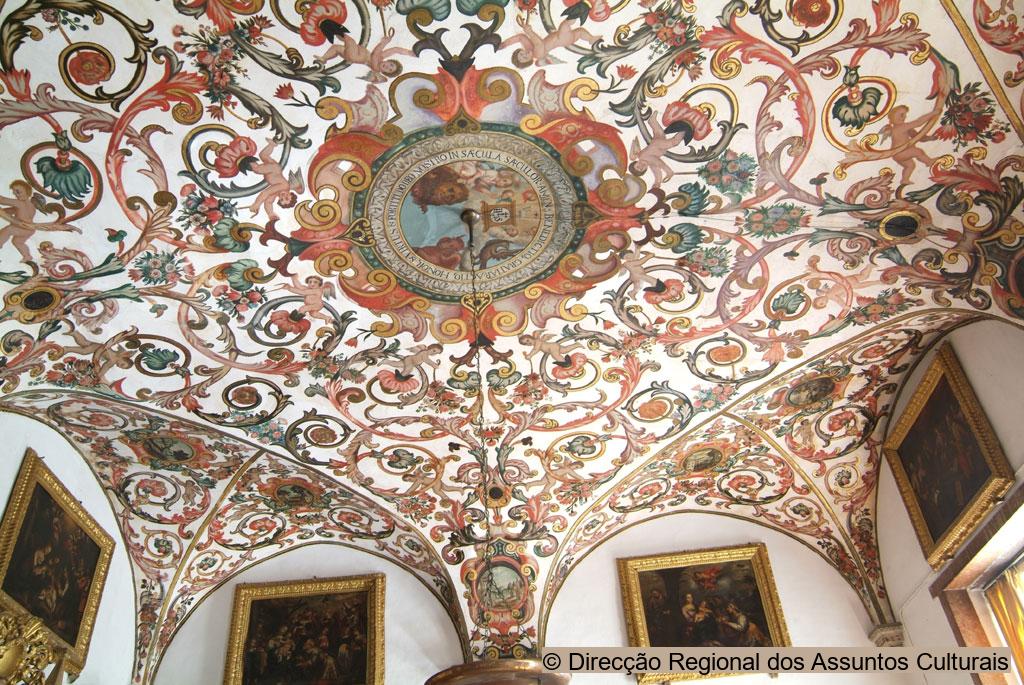
Detail of ceiling
Nave
Beginning of the 18th century
Unknown
Wooden ceiling with a trompe l´oeil vault.
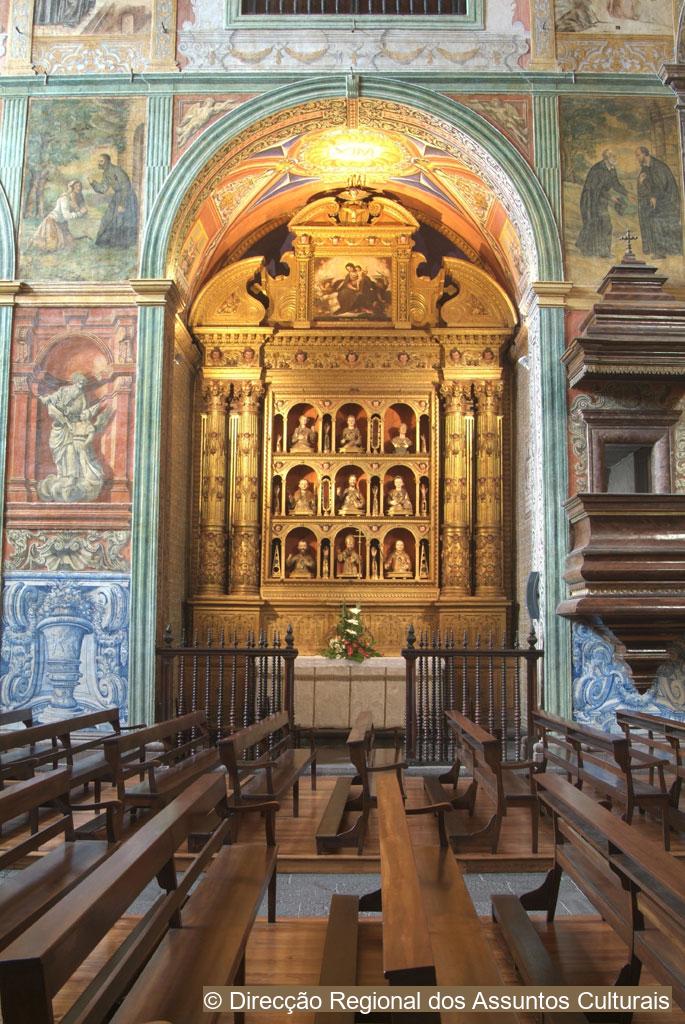
Altar of the Eleven Thousand Virgins
Interior, Gospel side
Dated 1653
Unknown
This gilt wood retable with three levels of round-arch niches containing busts and relics is surmounted by a frieze with cherubs. Above it is a painting of the Virgin Mary by Martim Conrado.
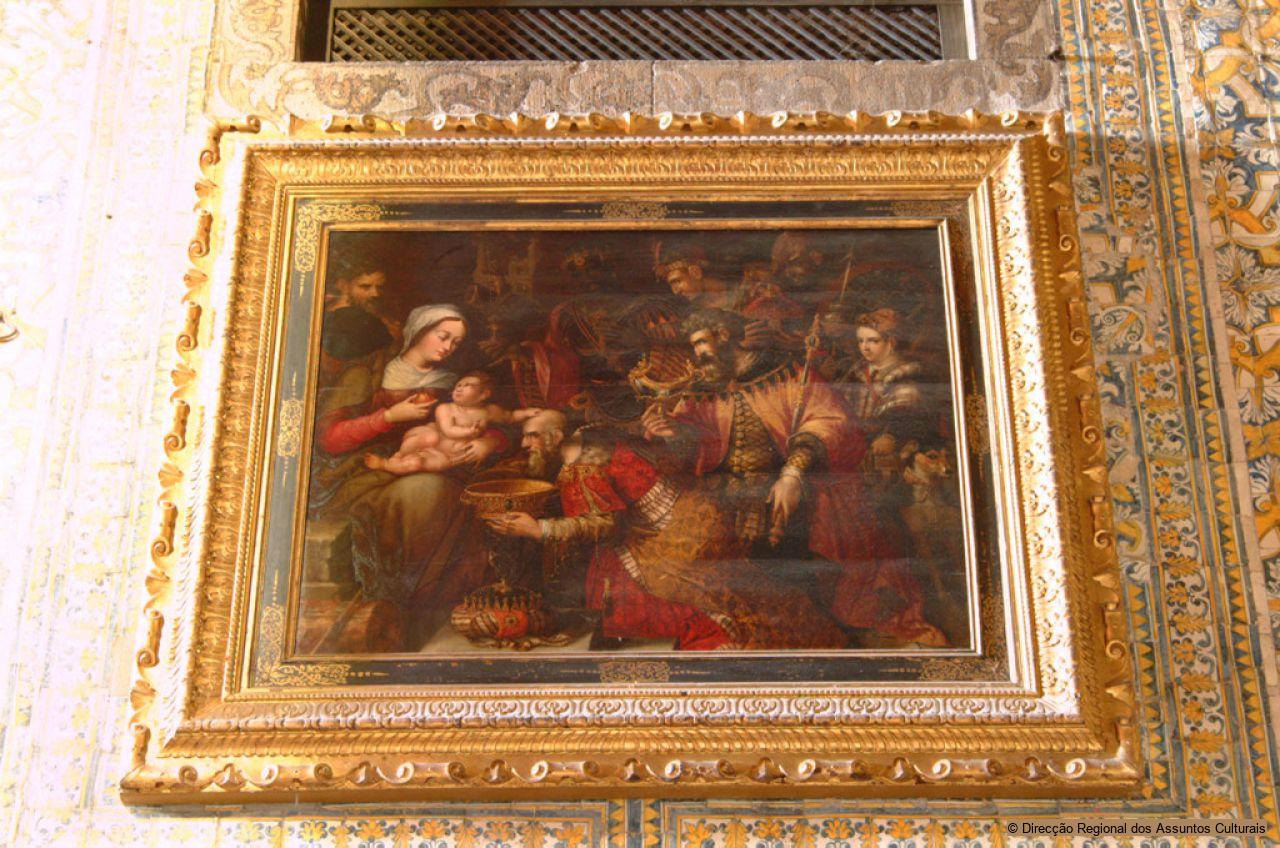
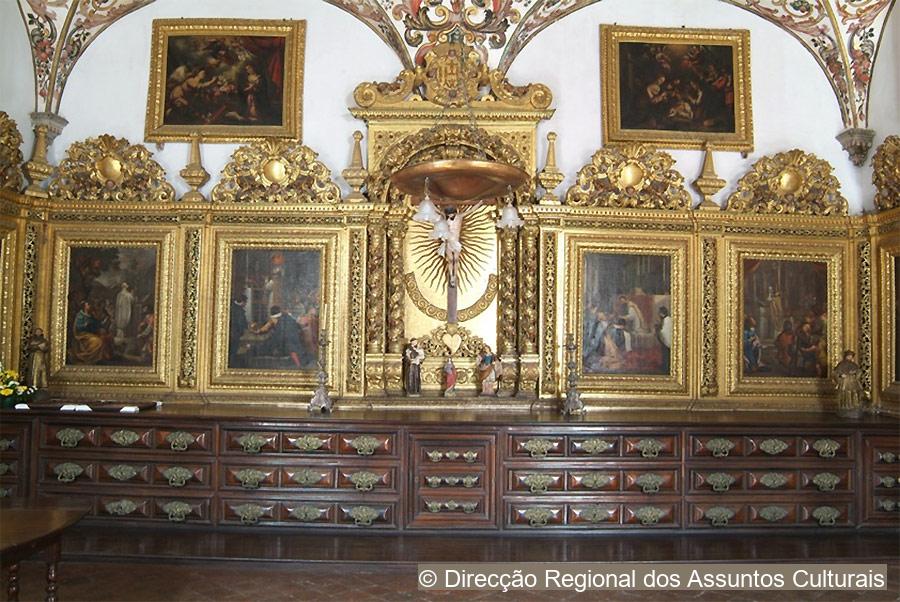
Paintings from the Life of the Virgin Mary
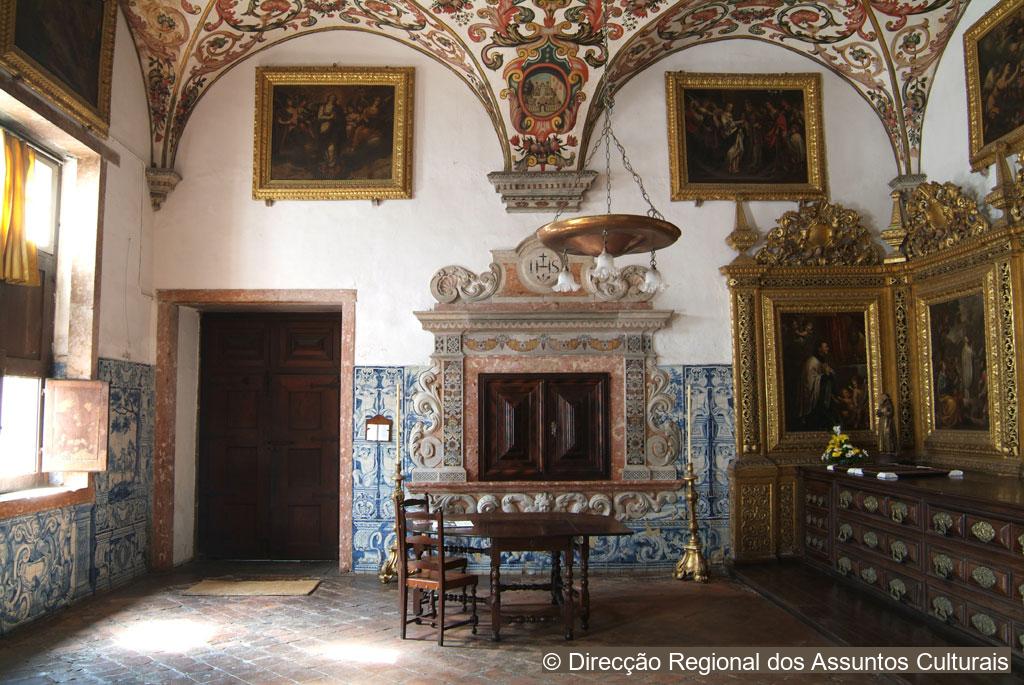
Sacristy
Late 17th century/beginning of the 18th century
Attributed to the workshop of Bento Coelho da Silveira (1648–1708)
On the wall are a series of paintings depicting scenes from the Life of the Virgin Mary, probably by the workshop of Bento Coelho da Silveira. Directly below, the chest of drawers has a gilded and carved back with panels representing scenes from the Life of St. Ignatius. The ceiling is decorated with acanthus, putti and Marian symbolism.
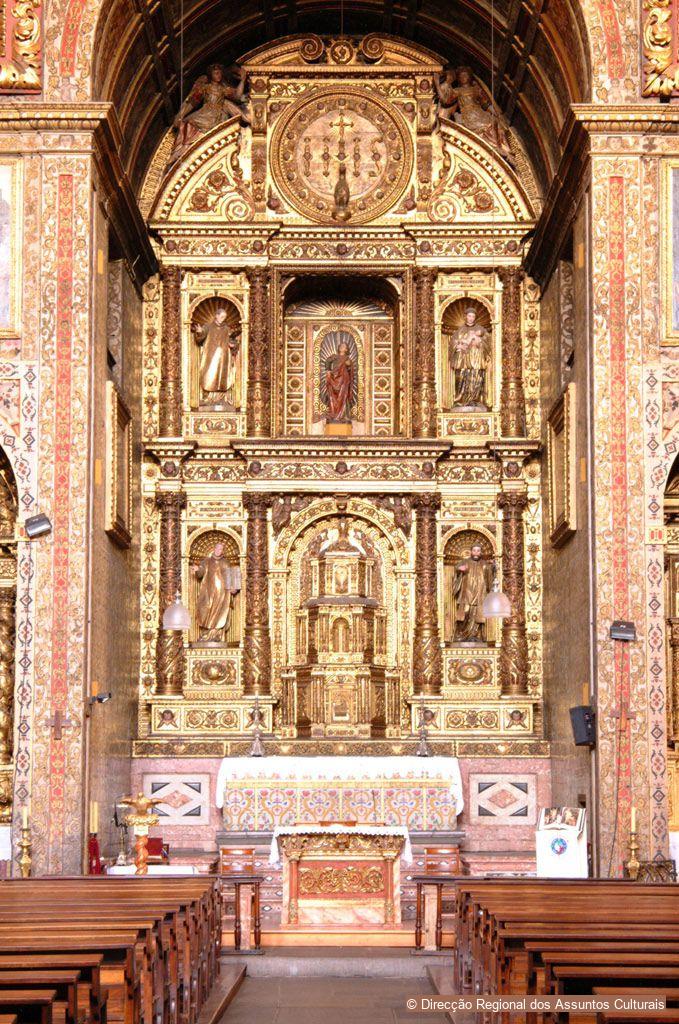
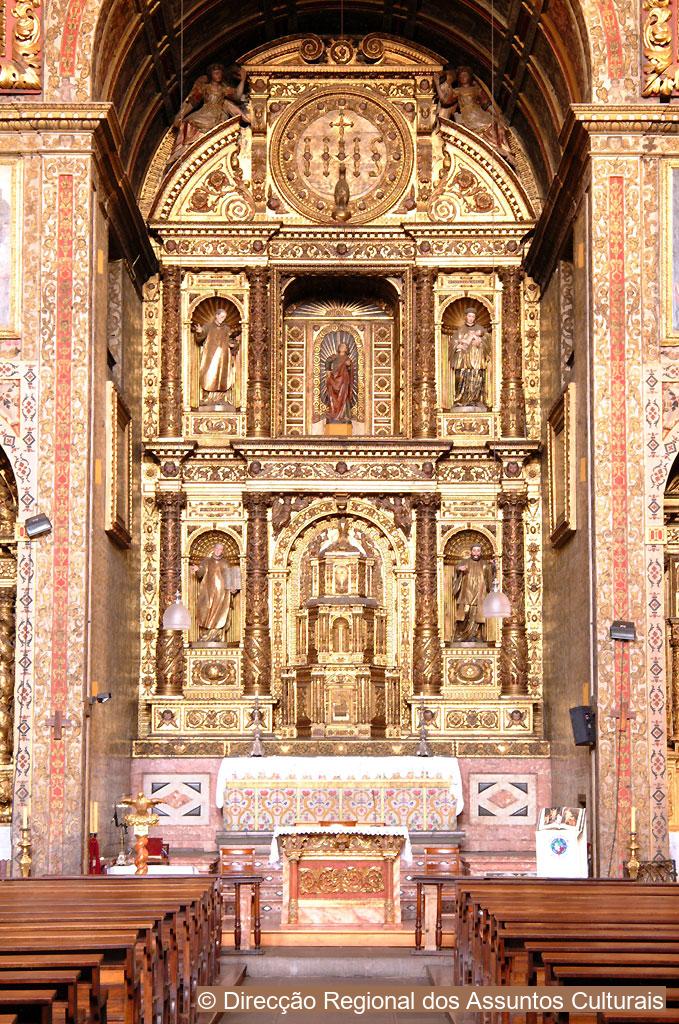
Gilded wood, carved retable
Chancel
1660
Attributed to the workshop of Manuel Pereira (active 1648–1660)
This 17th-century retable is considered to be one of the most remarkable Jesuit examples in Portugal.
Selected bibliography:
Igreja de São João Evangelista see: www.monumentos.pt
Silva, F. A. da, Colégio e Igreja de S. João Evangelista do Funchal, Breve Monografia Histórica, Funchal, 1947.
Smith, R., A Talha em Portugal, Lisbon, 1962.
Aragão, A., “Para a História da Cidade do Funchal”, Revista e Aumentada, second edition, Funchal, 1987, pp. 173–222.
Carita, R., Colégio dos Jesuítas do Funchal, 2 vols, Funchal, 1987.
Clode, L., Adragão, J. V., Colégio dos Jesuítas in Madeira, Lisbon, 1989, pp. 72–73.
Citation of this web page:
Alda Pereira e Cora Teixeira: Direcção de Serviços do Património Cultural (Direcção Regional dos Assuntos Culturais) "Church of São João Evangelista" in "Discover Baroque Art", Museum With No Frontiers, 2026.
https://baroqueart.museumwnf.org/database_item.php?id=monument;BAR;pt;Mon11;6;en
Prepared by: Alda Pereira e Cora Teixeira: Direcção de Serviços do Património Cultural (Direcção Regional dos Assuntos Culturais)
Translation by: Cora Teixeira , Cristina CorreiaCristina Correia
SURNAME: Correia
NAME: Cristina
AFFILIATION: Eça de Queirós Public High School, Lisbon and MWNF
TITLE: Senior Teacher, Local Co-ordinator and Vice-President of MWNF
CV:
Cristina Correia is a History graduate and, since 1985, a Senior Teacher of History at the Eça de Queirós Public High School, Lisbon where she also lectures in Portuguese Language and Culture for non-native speakers. From 1987 to 1998 she was involved with youth affairs, primary prevention and the Camões Institute. She is Vice-President and Local Co-ordinator (Portugal) for MWNF.
Translation copyedited by: Mandi GomezMandi Gomez
Amanda Gomez is a freelance copy-editor and proofreader working in London. She studied Art History and Literature at Essex University (1986–89) and received her MA (Area Studies Africa: Art, Literature, African Thought) from SOAS in 1990. She worked as an editorial assistant for the independent publisher Bellew Publishing (1991–94) and studied at Bookhouse and the London College of Printing on day release. She was publications officer at the Museum of London until 2000 and then took a role at Art Books International, where she worked on projects for independent publishers and arts institutions that included MWNF’s English-language editions of the books series Islamic Art in the Mediterranean. She was part of the editorial team for further MWNF iterations: Discover Islamic Art in the Mediterranean Virtual Museum and the illustrated volume Discover Islamic Art in the Mediterranean.
True to its ethos of connecting people through the arts, MWNF has provided Amanda with valuable opportunities for discovery and learning, increased her editorial experience, and connected her with publishers and institutions all over the world. More recently, the projects she has worked on include MWNF’s Sharing History Virtual Museum and Exhibition series, Vitra Design Museum’s Victor Papanek and Objects of Desire, and Haus der Kulturen der Welt’s online publication 2 or 3 Tigers and its volume Race, Nation, Class.
MWNF Working Number: PT 06