

 Back
Back
 Add to My Collection
Name of Monument:
Church of St. Lourenço de Almancil
Location:
Faro, Parish of Almancil , Portugal
Igreja de St. Lourenço
S. Lourenço
8135-027 Almancil
T : +351 289 395 451
Parish of Almancil (Responsible Institution)
Date:
1730
Artists:
Architect unknown; tile painter: Policarpo de Oliveira Bernardes (? 1695–1778); tile sales agents in Lisbon: António Borges, Manuel Borges; wood carver: Manuel Martins, whose dates are unknown.
Denomination / Type of monument:
Religious, pilgrimage church
Patron(s):
Reverend Doctor Manuel de Sousa Teixeira
History:
In the 18th century, the Algarve Bishops felt it necessary to increase the religious faith of the locals of Almancil. When water was discovered near a pilgrimage chapel dedicated to St. Laurence, it was seen as a miracle and a sign to rebuild the chapel. The patron of the church was the General Vicar of the Algarve Bishopric District, who also had responsibility for the Brotherhood of St. Lourenço dos Matos, his name and date (1730) are inscribed on the cupola tiles.
Description:
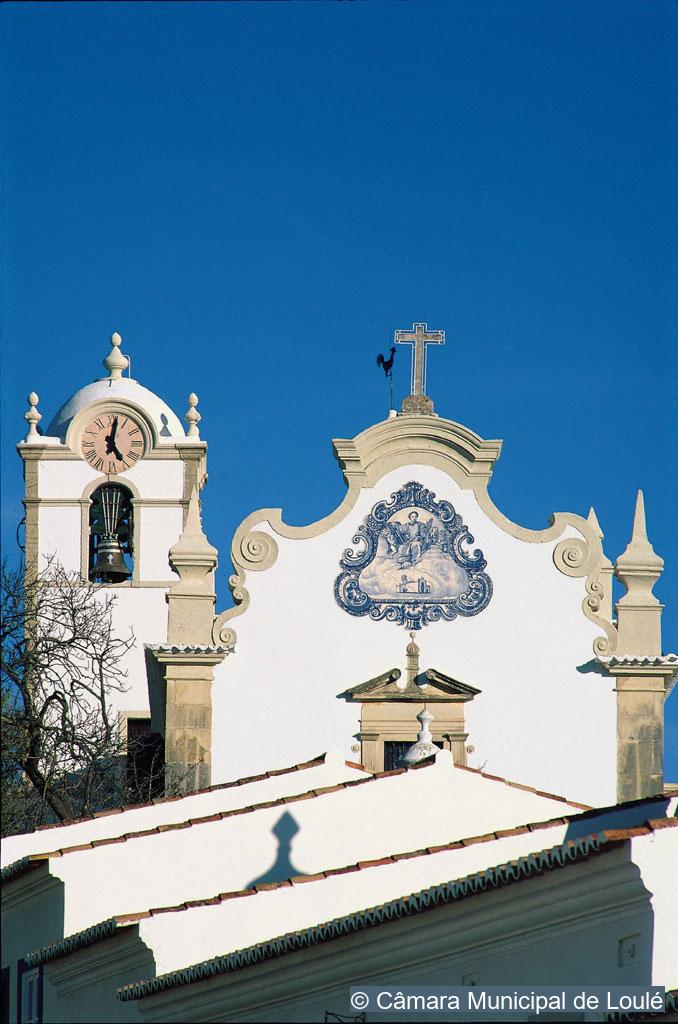
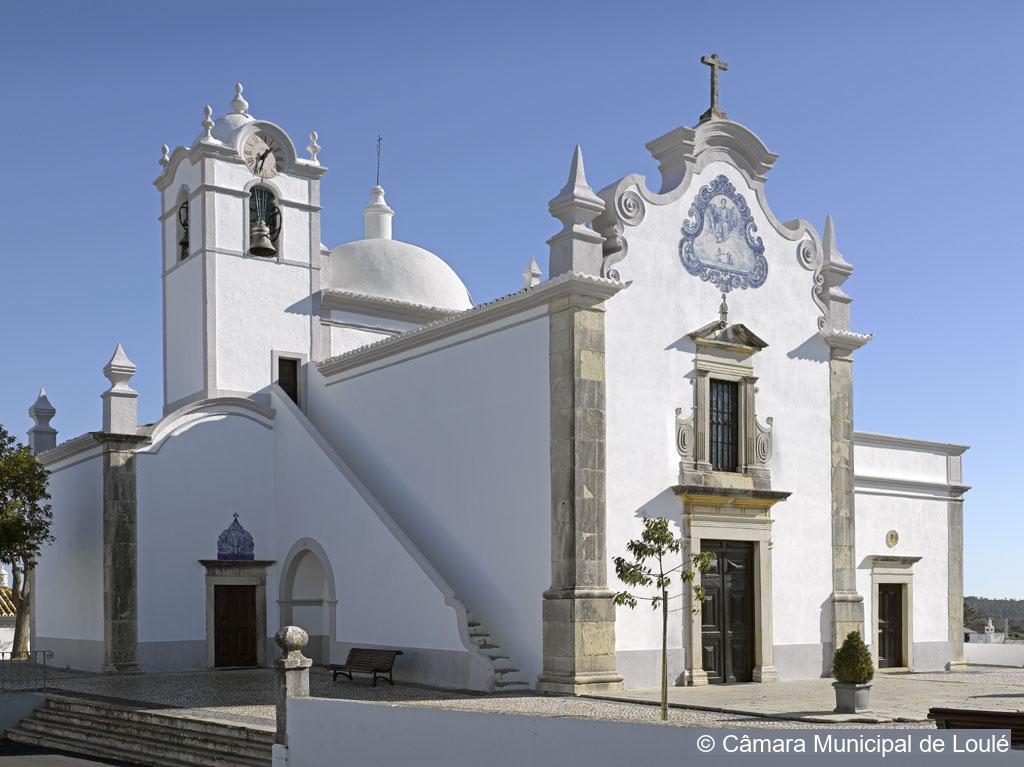
The Pilgrimage Church of St. Lourenço de Almancil is built on pure geometric volumes. Its sober façades with simple, shaped openings are bordered with local limestone. The roof is covered with clay tiles. The exterior, like the cupola, is painted white, influenced by Arab models. There are some cobalt-blue azulejos on the exterior walls. The baroque design of the churchyard and doorway are surprisingly elaborate.
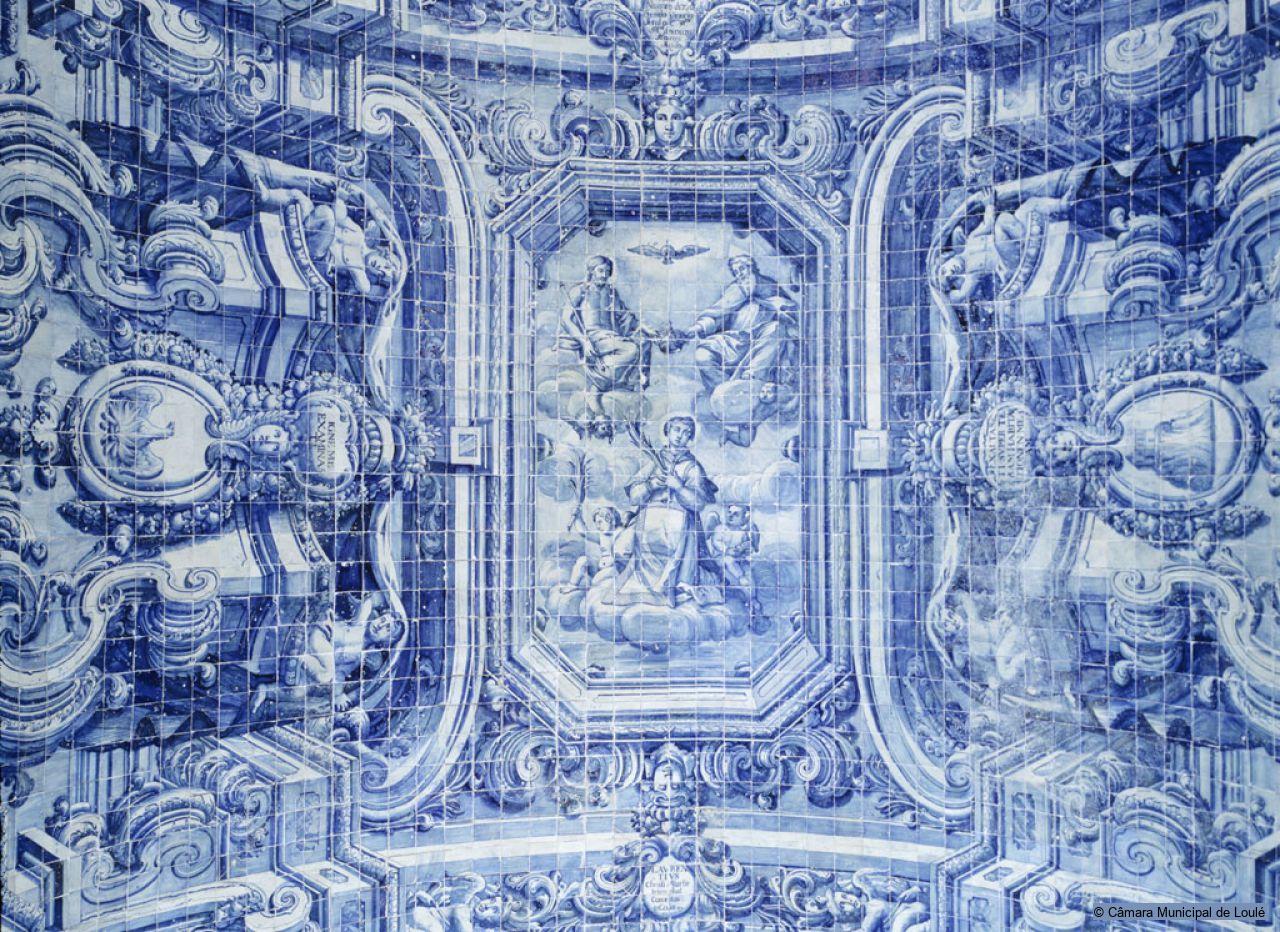
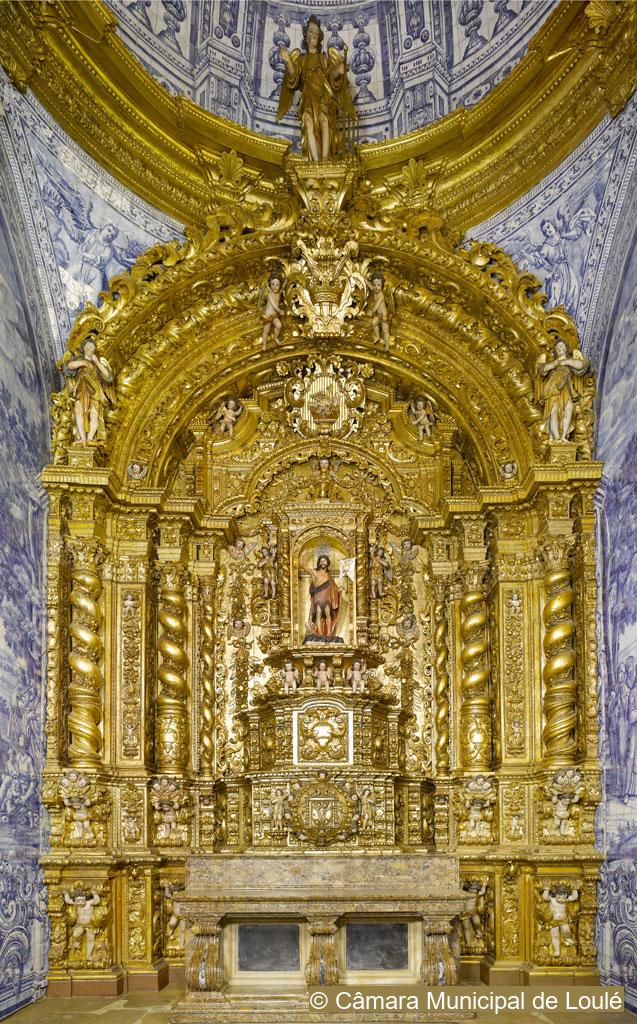
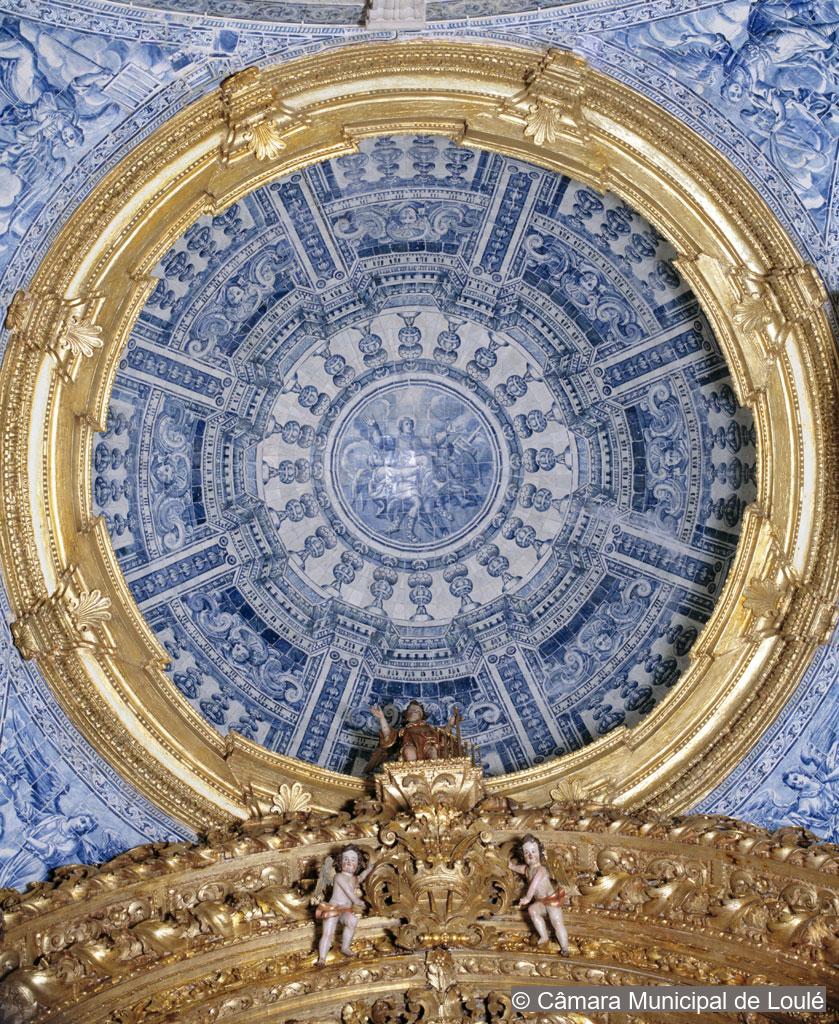
Inside, the gilt, carved wood altar structure of the retable, with its characteristic Solomon temple columns, was built by Manuel Martins, who also carved the arch of the sacristy. Cobalt-blue tiles cover the interior walls, ceiling and cupola, submerging the visitor immediately in their ambiance on entering the church.
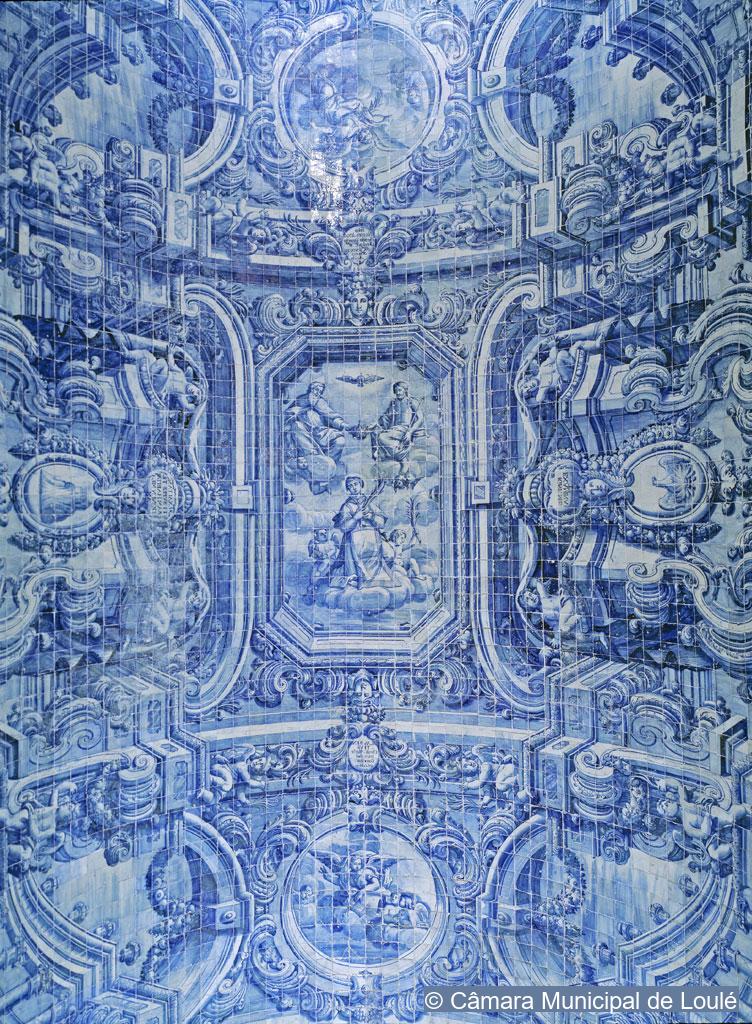
It is probable that Policarpo de Oliveira Bernardes of Lisbon signed the tile panels, indicating his pride in this unique work. Bernardes belonged to a family of painters that specialised in perspective paintings on walls and ceilings. Rather than fresco, tile painting techniques are used here, the designs taken from Andrea Pozzo's book of perspective designs. The architectural trompe l'œil was intended to create a fantastic spectacle of Italianate buildings and landscapes which allowed the viewer to forget the earthly space they were in.
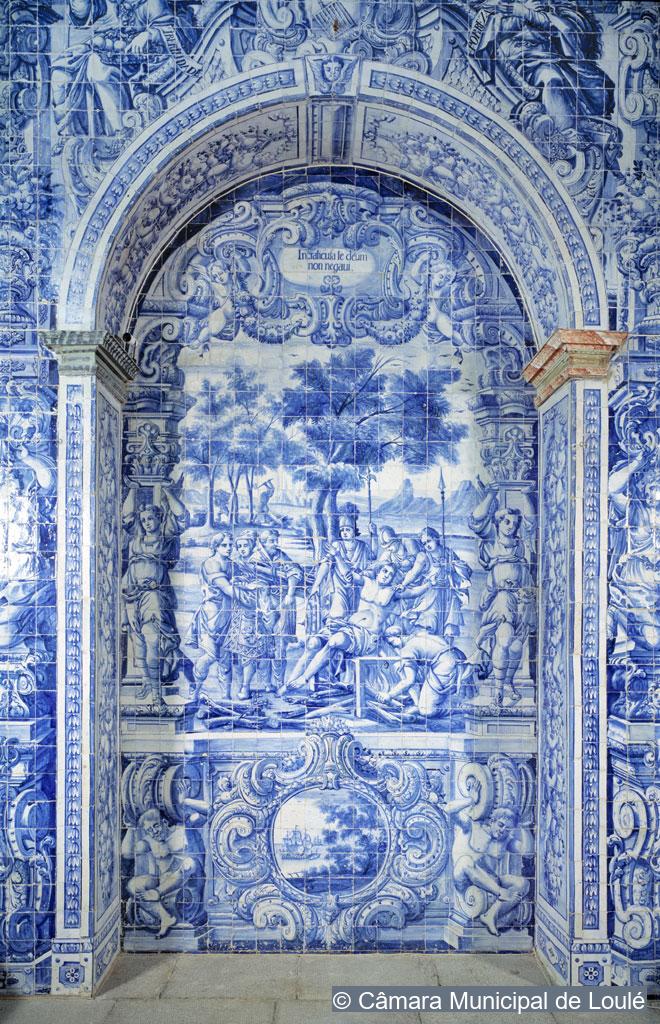
The subject of the tile painting is the Life, Death and Coronation of St. Laurence. Born in Spain, St. Laurence was a martyr in Rome.
Cobalt blue on a white background shows the European taste in Chinese porcelain at the time. It was first traded in Europe by the Portuguese, and influenced the colours of Portuguese Baroque tile work known as azulejos.
The Church of St. Lourenço (Laurence) of Almancil is an example of Portuguese vernacular architecture. Inside, the walls, ceiling and cupola are covered with cobalt-blue painted and glazed tiles. The walls are adorned with azulejos depicting the story of the Life and Death of St. Laurence. The ceiling and cupola are decorated with azulejos with Italianate architectural themes in perspective. The carved, gilt- wood high altar retable, in the shape of a pyramidal throne, has massive columns decorated with putti, angels, foliage and birds.
How Monument was dated:
Historical evidence
Special features
Churchyard and doorway
Exterior
1730
Architect unknown
The churchyard and stone doorway follow a precise architectural design, which is significant in the architectural context of this Church. By using an elegant Baroque design, the anonymous architect added a special status to a vernacular building.
St. Laurence
Interior
14th century (?)
Unknown local workshop
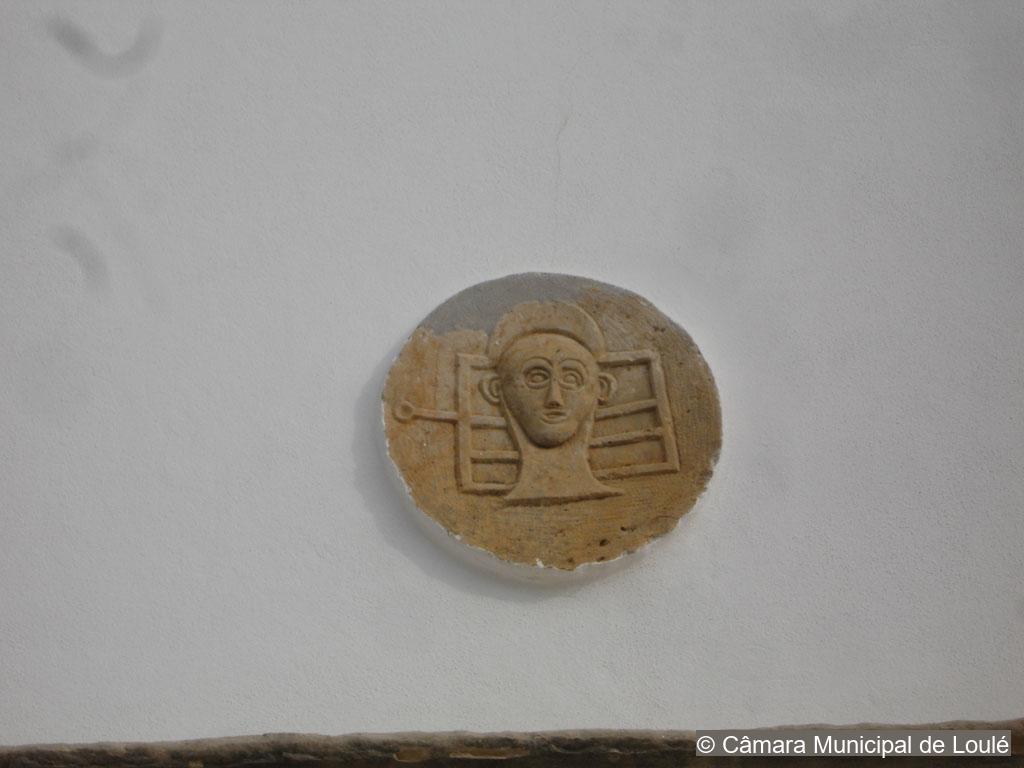
Stone medallion from the medieval period that ornaments the outside sacristy door and is a vestige from the old chapel.
The martyrdom of St. Laurence
Interior
1730
Policarpo de Oliveira Bernardes (?1695–1778)
Cobalt-blue on white painted and glazed tiles, azulejos. The Italianate Baroque style of the painting is due to the interpretation of Italian prints by the artist.
The Glory of St. Laurence
Interior
1730
Policarpo de Oliveira Bernardes (?1695–1778)
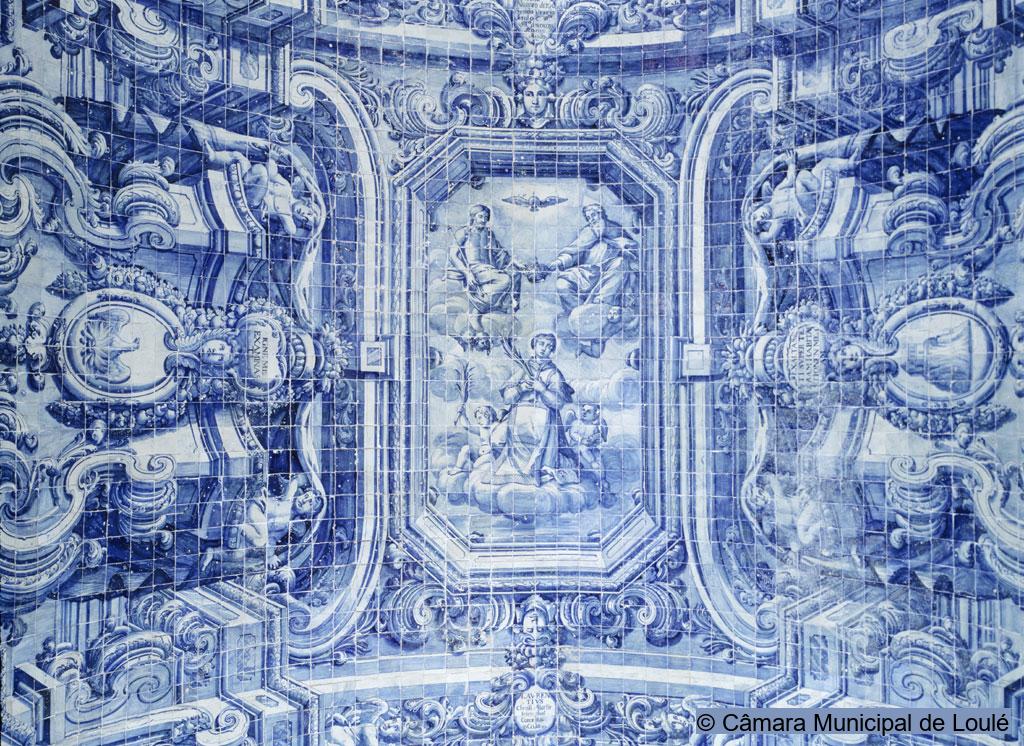
Cobalt-blue on white azulejos decorate the vault. The quadratura setting shows an architectural perspective, di sotto in sù (“above from below”) at the centre of which is the image of St. Laurence being carried by angels to Heaven.
Carved Wood and Gilded Retable (High Altar)
Interior
1730
Manuel Martins [n.d.]
Surmounted by a cupola covered with tiles, the carved wood and gilded retable or high altar was designed as an architectural structure and, in order to make the most of the available space is concave. The elevation, with Solomon Temple columns and a pyramidal throne, has steps to accommodate the image of St. Laurence. In the arched attic are two archivolts decorated with scrolls and angels. The topmost angel holds a grill, symbol of the saint's martyrdom.
Selected bibliography:
Smith, R., "The Portuguese Wood-Carved Retable 1600–1750", Belas-Artes, No. 2, Lisbon, 1950.
Bazin, G., "Morphologie du Retable Portugais", Belas-Artes, No. 5, 1953.
Simões, J. M., Azulejaria em Portugal no século XVIII, Lisbon, 1979.
Arruda, L., "Almancil, S. Lourenço de", Dicionário da Arte Barroca em Portugal, Lisbon, 1989.
Lameira, F., A talha no Algarve, Faro, 2000.
Additional Copyright Information:
Copyright images: Divisão da Cultura e História Local da Câmara Municipal de Loulé.
Citation of this web page:
Luisa Arruda "Church of St. Lourenço de Almancil" in "Discover Baroque Art", Museum With No Frontiers, 2026.
https://baroqueart.museumwnf.org/database_item.php?id=monument;BAR;pt;Mon11;9;en
Prepared by: Luisa ArrudaLuisa Arruda
SURNAME: Arruda
NAME: Luisa
AFFILIATION: Faculty of Fine Arts, Lisbon University
TITLE: Associate Professor and Researcher
CV:
Luisa Arruda is an Associate Professor and Researcher at Lisbon University (Faculty of Fine Arts). Both a Painter and an Art Historian, her research and publications focus on Portuguese art, architecture, drawing and decorative arts.
Translation by: Luisa ArrudaLuisa Arruda
SURNAME: Arruda
NAME: Luisa
AFFILIATION: Faculty of Fine Arts, Lisbon University
TITLE: Associate Professor and Researcher
CV:
Luisa Arruda is an Associate Professor and Researcher at Lisbon University (Faculty of Fine Arts). Both a Painter and an Art Historian, her research and publications focus on Portuguese art, architecture, drawing and decorative arts.
Translation copyedited by: Mandi GomezMandi Gomez
Amanda Gomez is a freelance copy-editor and proofreader working in London. She studied Art History and Literature at Essex University (1986–89) and received her MA (Area Studies Africa: Art, Literature, African Thought) from SOAS in 1990. She worked as an editorial assistant for the independent publisher Bellew Publishing (1991–94) and studied at Bookhouse and the London College of Printing on day release. She was publications officer at the Museum of London until 2000 and then took a role at Art Books International, where she worked on projects for independent publishers and arts institutions that included MWNF’s English-language editions of the books series Islamic Art in the Mediterranean. She was part of the editorial team for further MWNF iterations: Discover Islamic Art in the Mediterranean Virtual Museum and the illustrated volume Discover Islamic Art in the Mediterranean.
True to its ethos of connecting people through the arts, MWNF has provided Amanda with valuable opportunities for discovery and learning, increased her editorial experience, and connected her with publishers and institutions all over the world. More recently, the projects she has worked on include MWNF’s Sharing History Virtual Museum and Exhibition series, Vitra Design Museum’s Victor Papanek and Objects of Desire, and Haus der Kulturen der Welt’s online publication 2 or 3 Tigers and its volume Race, Nation, Class.
MWNF Working Number: PT 09
RELATED CONTENT
On display in
Exhibition(s)
The Use of Colours in Art
Primary Colours and Emotions | Primary Colours in Architectural MonumentsDownload
As PDF (including images) As Word (text only)