

 Back
Back





 Add to My Collection
Name of Monument:
Liechtenstein Residence, Valtice
Location:
Valtice, Moravia, Czech Republic
Valtice, near the Austrian border, 13 km south-east of Mikulov, 10 km west of Břeclav
T : + 420 519 352 423
F : + 420 519 352 680
E : valtice@brno.npu.cz
Valtice State Chateau – Institute of National Heritage, Brno (Responsible Institution)
Date:
1612–1643; 1685–1689; 1713–1720; 1724–1729; 1745
Artists:
Giovanni Maria Filippi (after 1560–c. 1630), Giovanni Battista Carlone I (before 1590–1645), Giovanni Giacomo Tencalla (c. 1600–c. 1650), Giovanni Tencalla, Giovanni Pietro Tencalla (1629 Bissone? – 1702 Vienna?) Baldassare Fontana (1661–1733, Chiasso), Ondřej Erna, Jan Krtitel Erna, Domenico Egidio Rossi (1659 Fano – 1715 Fano), Frans de Neve (1606 Antverp – around 1690 Salzburg?), Giovanni Battista Ghidoni (? Cremona – po 1650 Vienna?), Pietro da Cremona, Domenico Martinelli (1650 Lucca – 1718 Lucca), Pietro Giulietti, Anton Josef Ospel (1677–1756), Franz Biener (1682–1742), Antonio Maria Nicolao Beduzzi (1675 Bologna – 1735 Vienna), Anton Erhard Martinelli (1684 Vienna – 1747 Vienna), Giovanni Giuliani (1633 Venice – 1744 Heiligenkreuz), Ignaz Lengelacher (1698 Unter Paissenberg – 1780 Baden)
Denomination / Type of monument:
Secular – aristocratic residence
Patron(s):
Counts of Liechtenstein: Karel (1569–1627), Maxmilián (1578–1643), Karel Eusebius (1611–1684), Johann Adam (1662–1712), Anton Florian (1656–1721), Josef Johann Adam (1690–1732)
History:
Valtice is among the oldest settlements in the country. The castle dating from 1193 belonged to the Bishop of Passau. The Liechtensteins acquired the property in 1395. Karel of Liechtenstein converted to Catholicism before the Battle of White Mountain and became the governor of the Czech kingdom, securing important positions for his descendants. The family property equalled the property of the Church and amounted to some 20 per cent of the country’s gross national product. In the early 18th century, the Schellenberg and Vaduz demesnes were affiliated to the Moravian property; since 1945 Vaduz has been the home of the Liechtenstein family, with its roots reaching back to the 12th century. Its network of residences throughout Moravia, Austria and Liechtenstein included buildings of different types and functions, manifesting the family status. The town is a centre of Moravian viticulture: the Cellar of the Cross (1640) is one of the largest in the Czech lands.
Description:
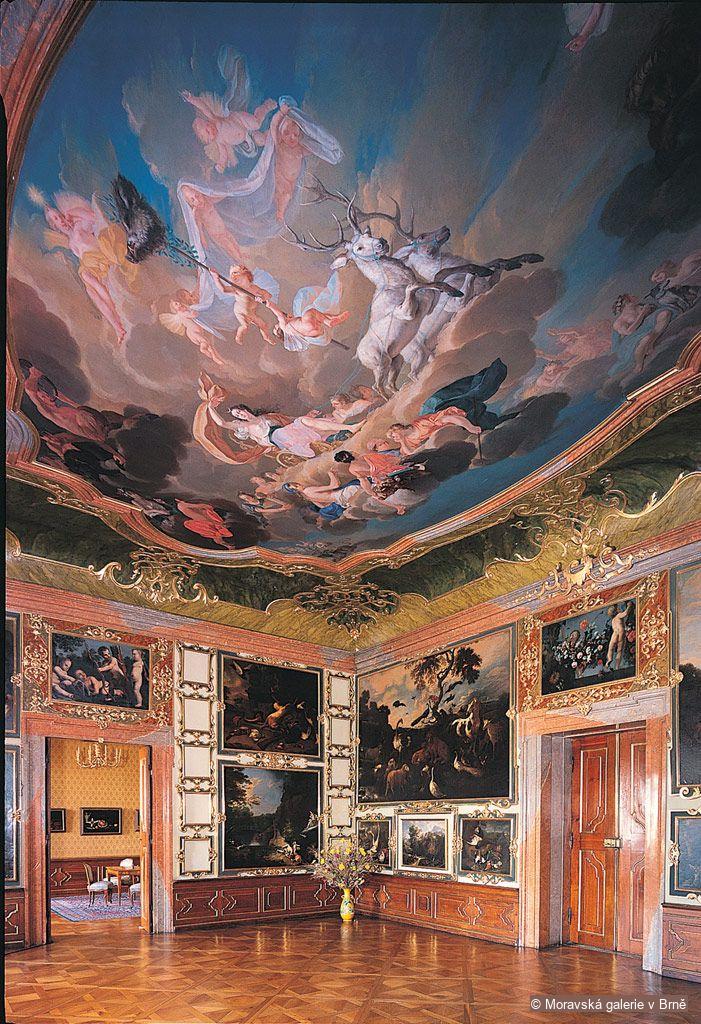
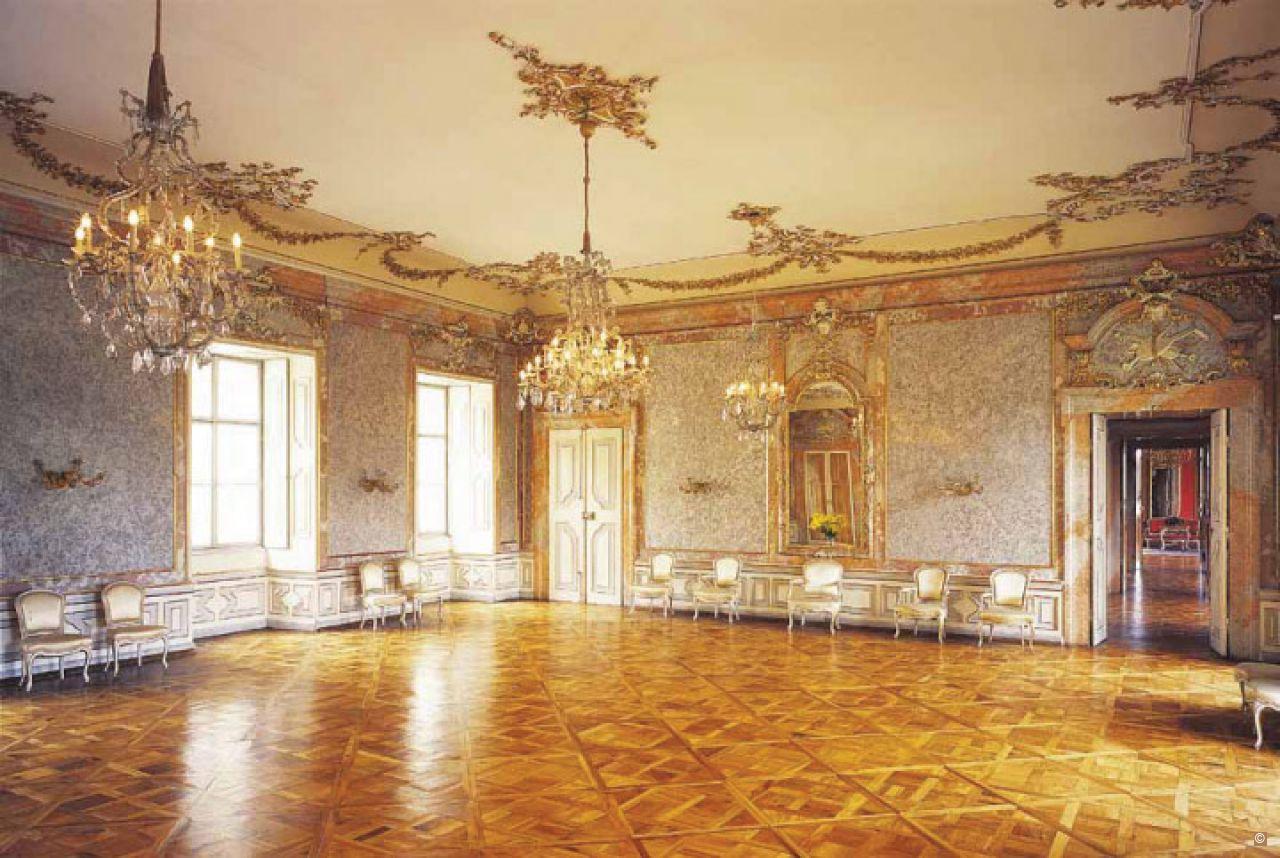
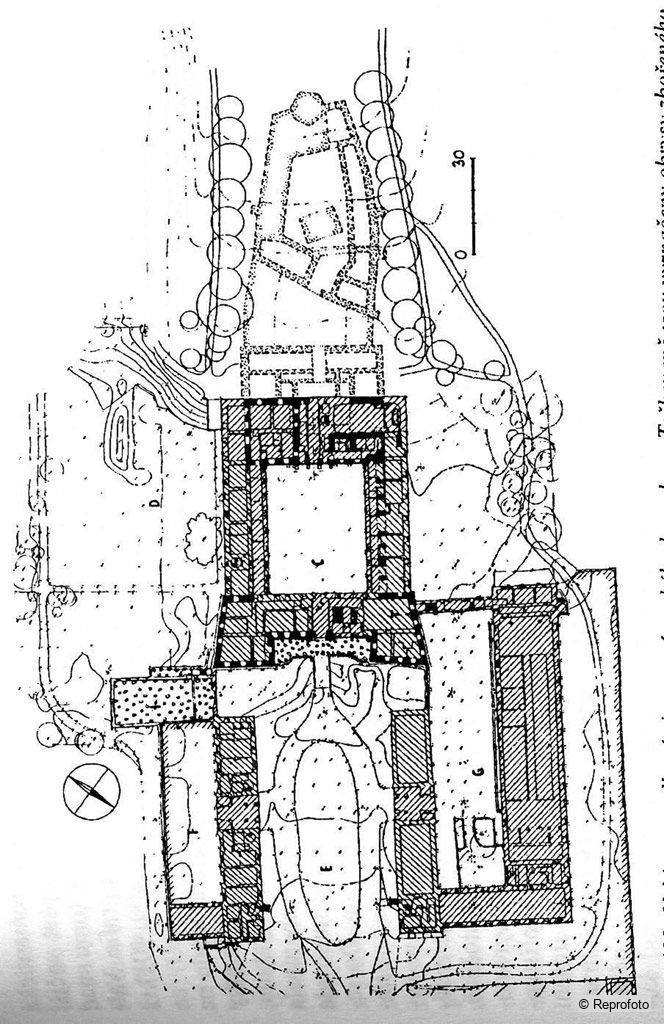
The original seat, a medieval castle, became part of a new palace in the 17th century, fulfilling a memorial function by demonstrating the ancient nature of the family. The “heart“ of the residence, the studiolo, a room for contemplation with exempla and patterns of debates, housed a ducal crown with a diamond, an allusion to the family name, literally “stone of light”. The demolition of this section in around 1744, and a reconstruction by A. E. Martinelli, completed the restoration of the chateau.
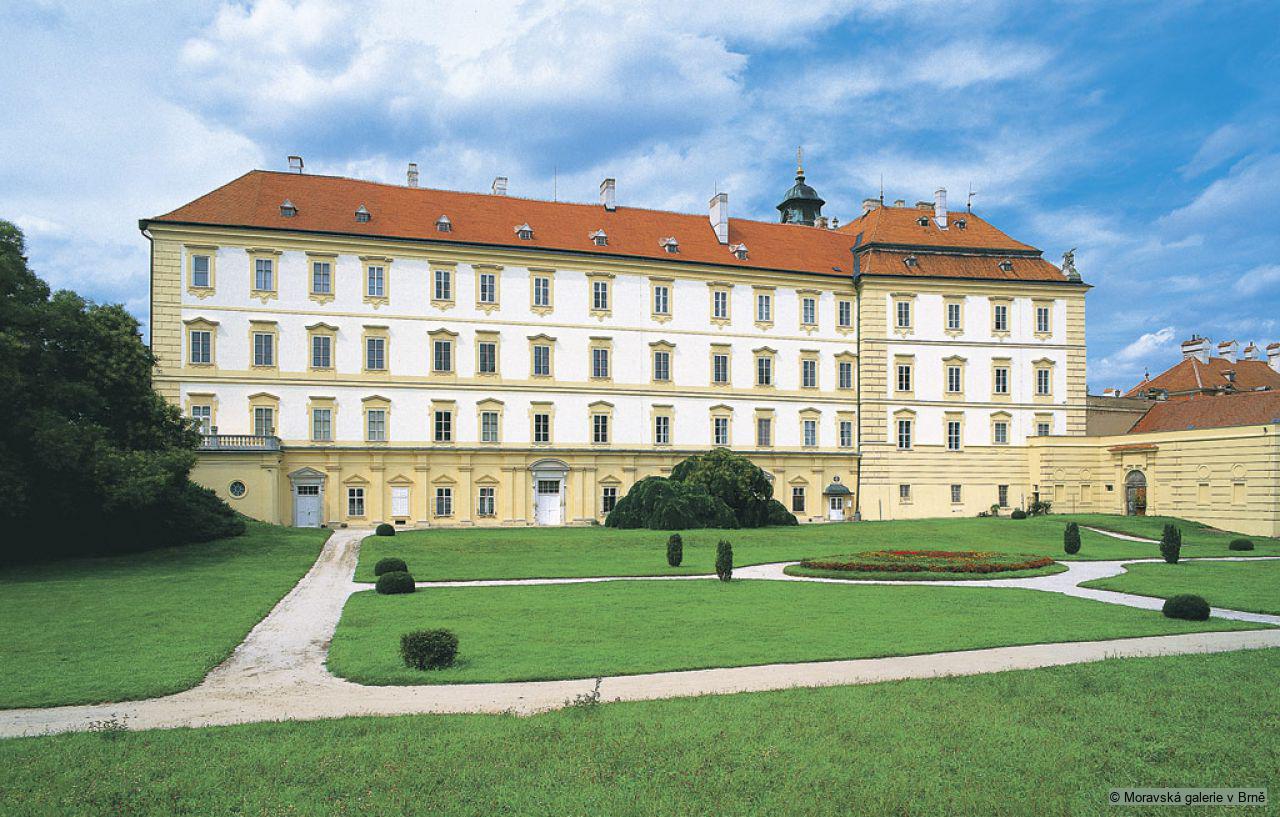
View Short DescriptionThe chateau, outbuildings and park, once the seat of the most powerful aristocratic family in Moravia, make up monument listed as a UNESCO World Cultural Heritage site. The count’s residence was the centre of culture and economic administration for a large demesne in Valtice. The early Baroque was first introduced to Central Europe by Italian artists, with masters from Vienna taking part in later phases. The design of the residence follows a “triumphal path” schema. The chateau, the church and the town with a monastery hospital, make up a single whole, demonstrating the history, glory and power of the Liechtenstein family.
How Monument was dated:
Records in accounts and contracts for individual commissions for the construction of the residence have been preserved. On the basis of these, and with the help of old pictures of the chateau, it is possible to trace, at least partially, its original state. Beduzzi’s architectural drawings are held in the Moravian Gallery in Brno.
Special features
Frontage
Valtice State Chateau, Liechtenstein Residence
1724–1729
Antonio Maria Nicolao Beduzzi (1675 Bologna – 1735 Vienna)
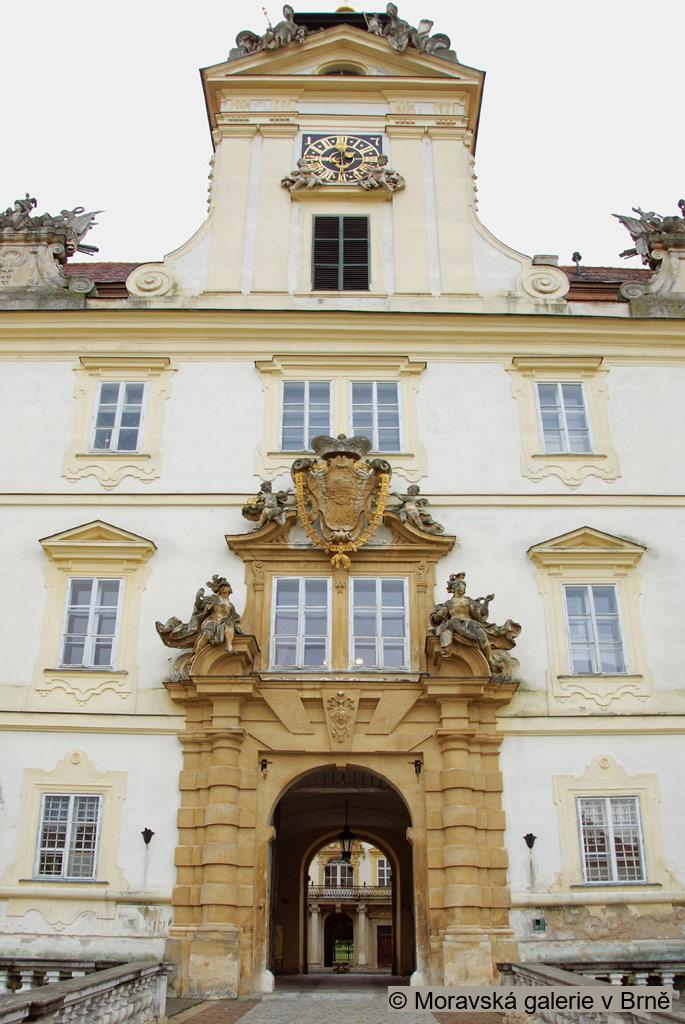
The portal to the third courtyard of the residence lends emphasis to the central section: the main hall, chapel and the count’s quarters, the oldest part of the complex. The count would greet his subjects from the balcony. Beduzzi’s decoration of the frontage was part of the second phase of the reconstruction; he was also responsible for some of the iconography of the residence. Beduzzi designed the sculpted decoration of the chateau and chapel interiors.

Ceremonial courtyard
Liechtenstein Residence
1643; 1713–1719
Ondřej Erna, Jan Křtitel Erna, Anton Josef Ospel (1677–1756)
The completion of the residence was chiefly an urban logistical task. The outbuildings were already standing in the 17th century, as well as a riding hall on the right and a theatre on the left. The style of the Viennese engineer and decorator A. J. Ospel, followed in the footsteps of F. Borromini and F. G. Galli-Bibiena. The contrast between simple shapes and impressive stonemasonry detail is typical of the artist. The majority of Ospel’s works for the chateau interiors have not survived (for example, an elaborate ceramic stove). The space opens with telamons by G. Giuliani.

Gate
Liechtenstein Residence
1724, altered in the 19th century
Anton Josef Ospel (1677–1756)
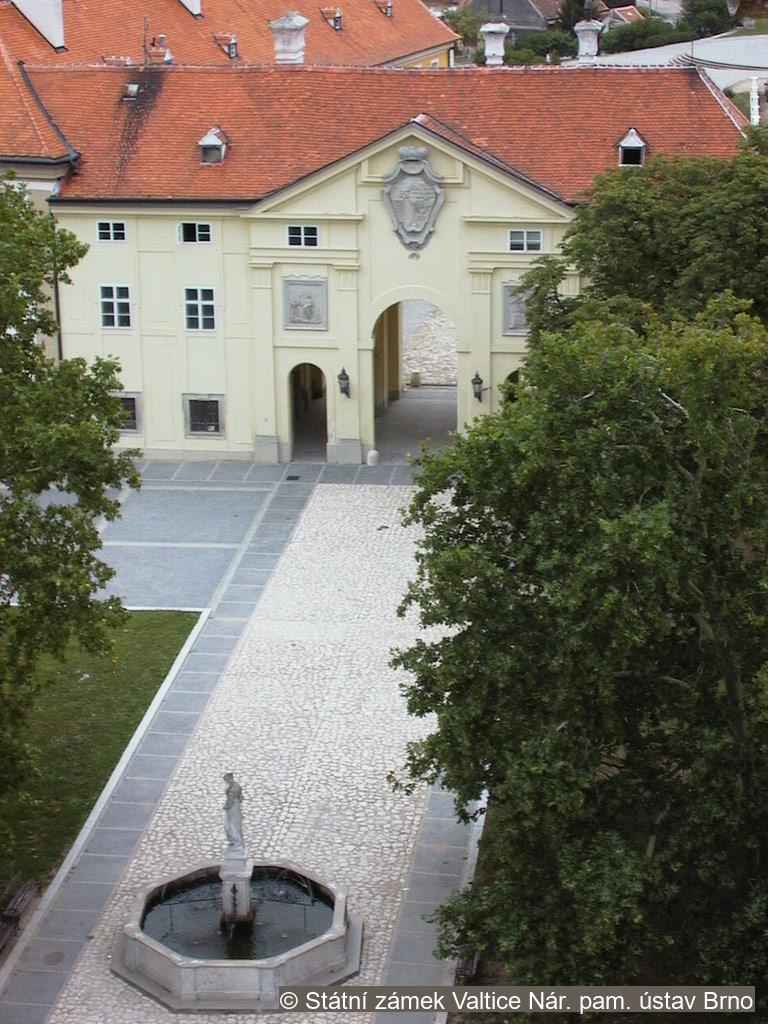
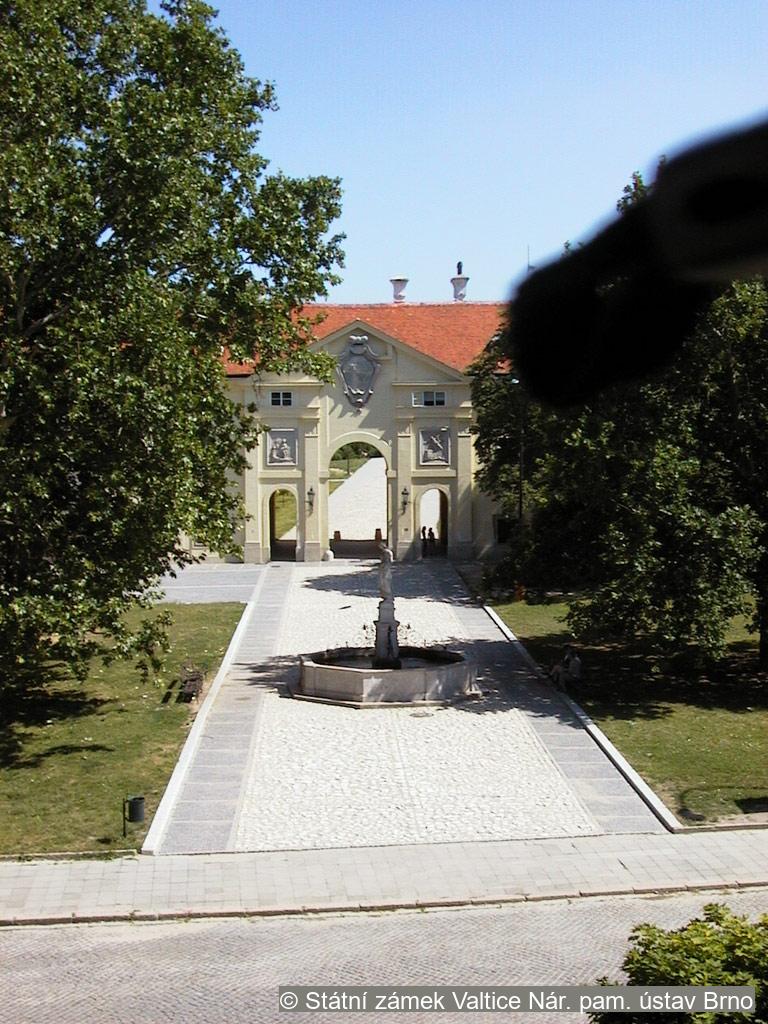
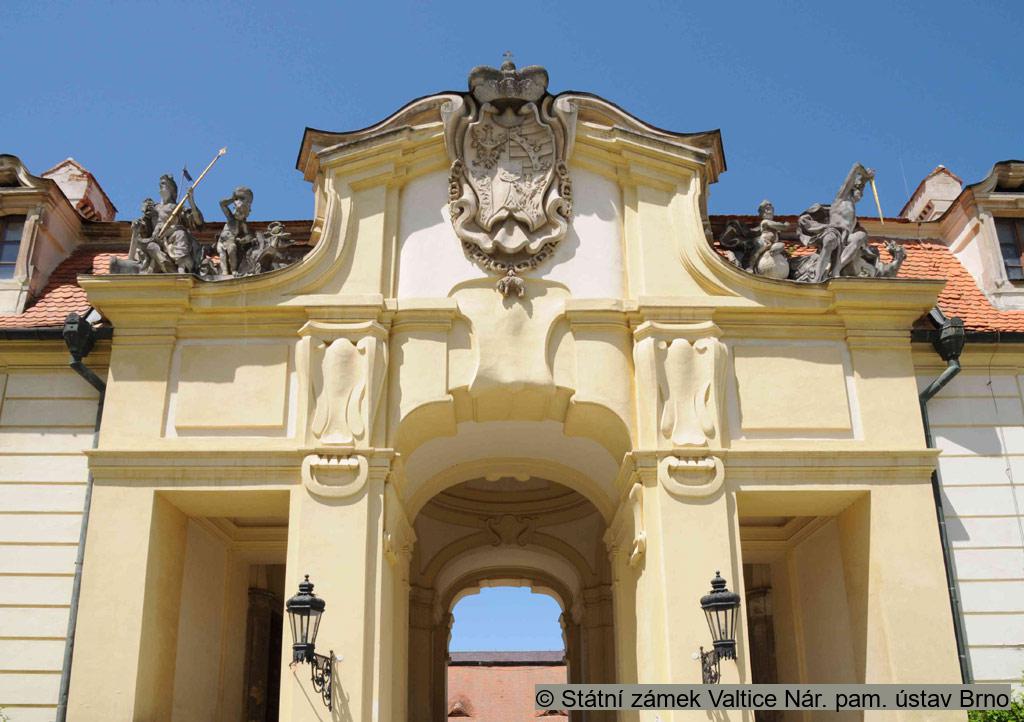
The triumphal arch with a triangular gable separates the chateau from the town. The original connection by means of the triumphal path was broken and emphasis placed on vistas. The family’s coat of arms is surrounded by the mottos “Kindness is not forgotten” and “the lustre of faith outlasts even a rock”.
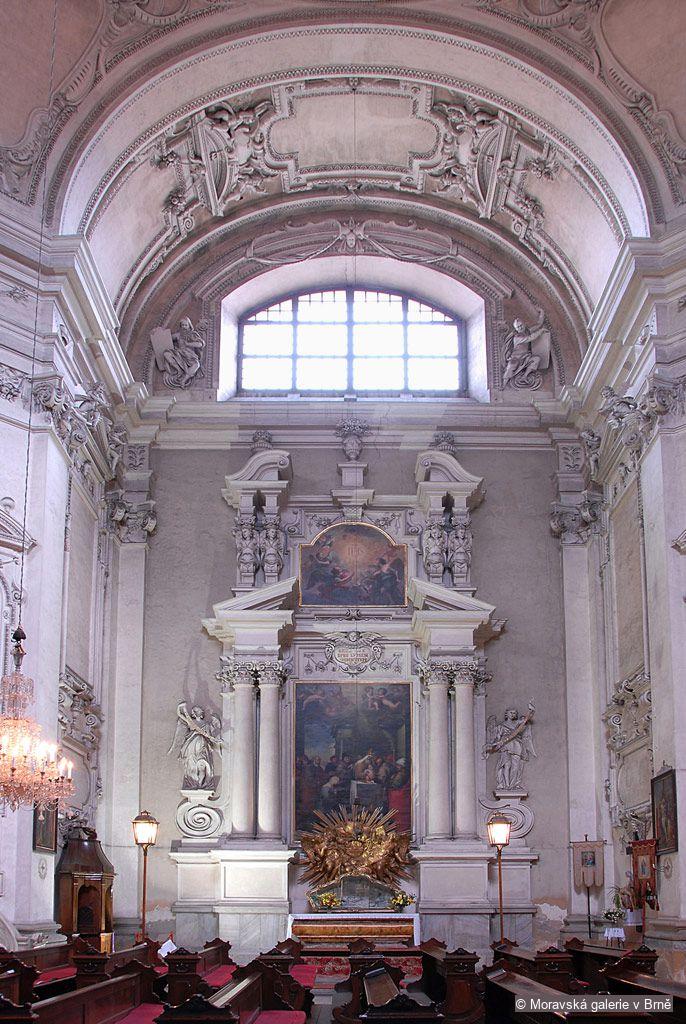
Church of the Assumption of the Virgin Mary
1631–1671
Giovanni Battista Carlone I (before 1590–1645), Giovanni Giacomo Tencalla (c. 1600–c. 1650), Giovanni Tencalla, Giovanni Pietro Tencalla (1629 Bissone? – 1702 Vienna?)
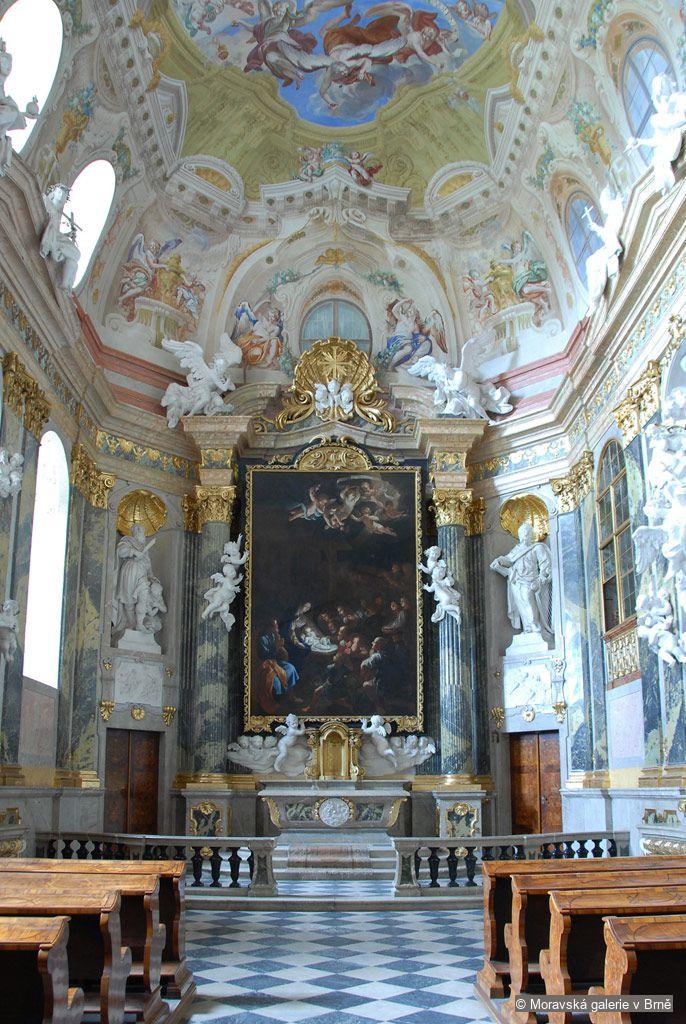
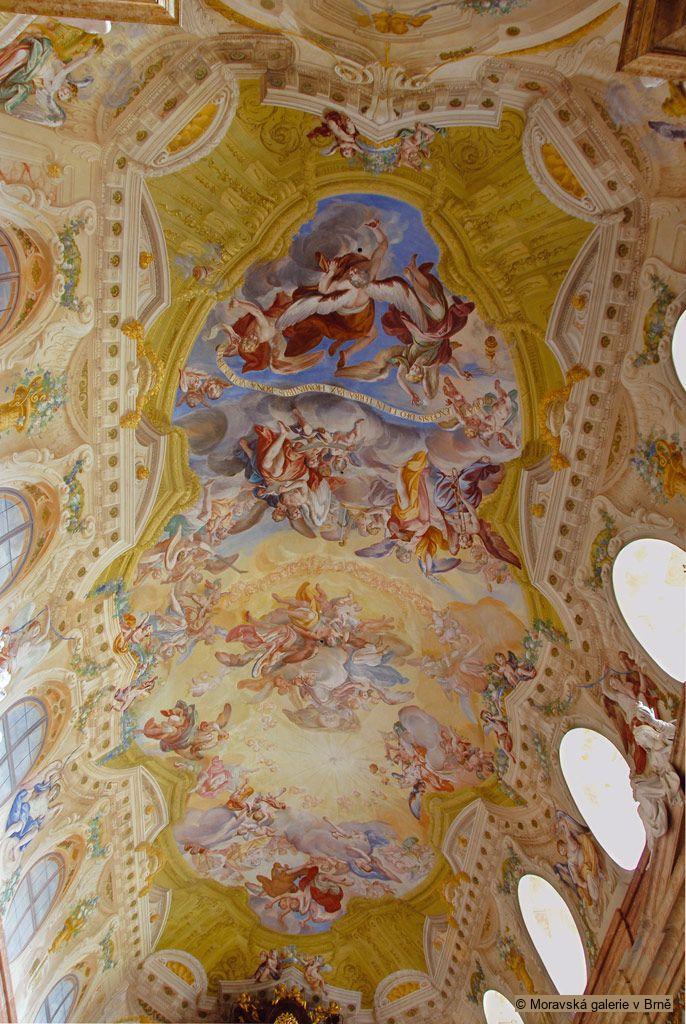
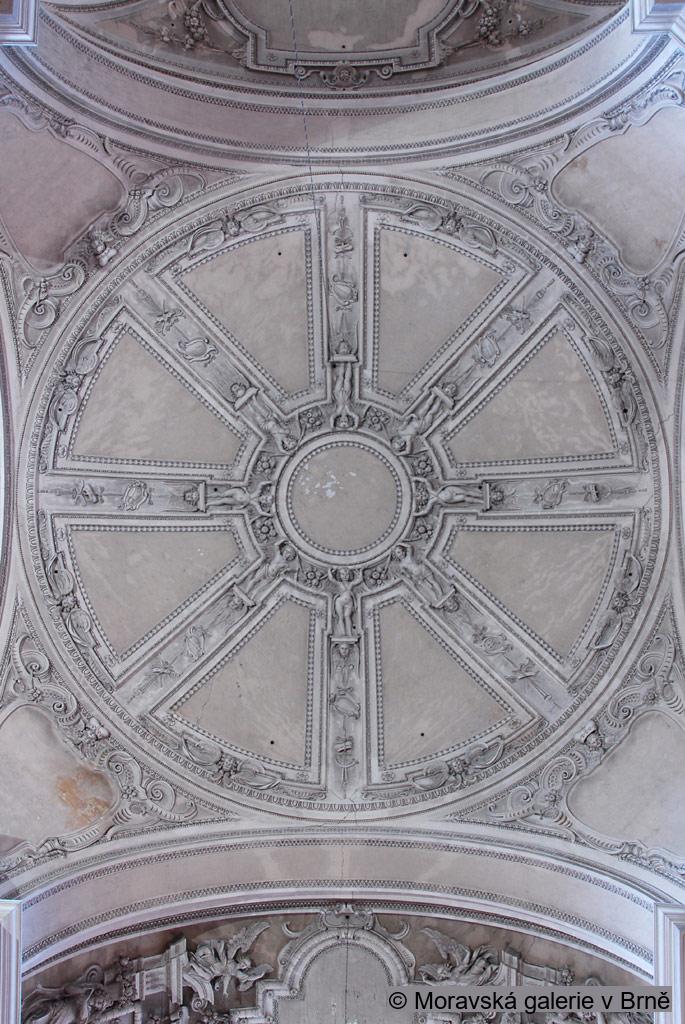
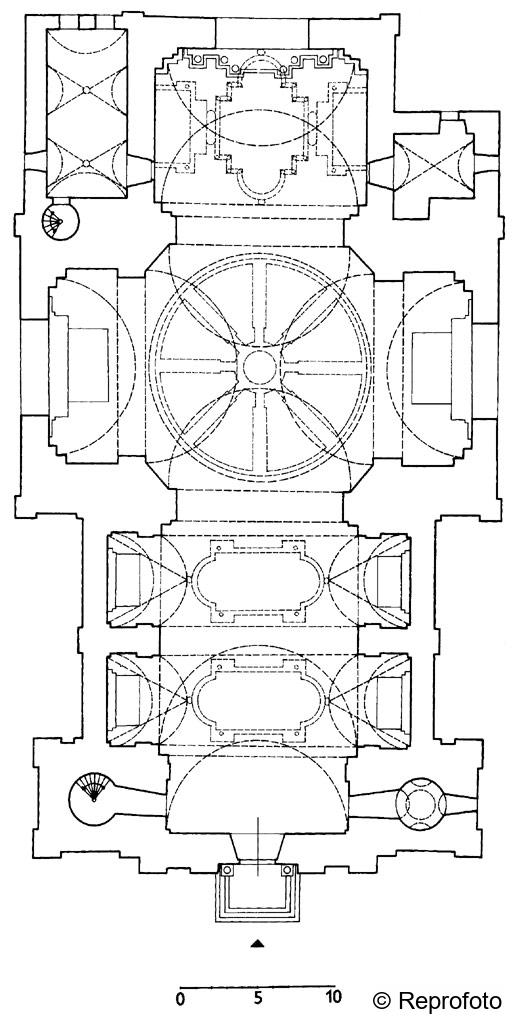
Italian architects and stucco artists came to Moravia from royal service in Poland. In Valtice they created the first buildings in the early Baroque style. The original cupola on a drum, the first of its kind in Central Europe, was pulled down shortly after its completion due to its instability. Statues of saints were inserted into the church frontage, while the sculpted interior decoration gained importance dominated by heavy stuccowork. Artists participating in the decoration included G. da Cremona from Italy, the Flemish artist F. de Neve, I. Lengelacher and others.



Plague Column
1680
M. I. Gunst
The column, crowned by the Virgin Mary vanquisher of evil, was erected in gratitude to the end of the plague epidemic. It was among the first columns of its kind in Moravia.


Selected bibliography:
Hellmut Lorenz, Nicht Brachtigeres kan gemacher werden als die vornehmen Gebeude. Bemerkungen zur Bautätigkeit der Fürsten von Liechtenstein in der Barockzeit, in E. Oberhammer (ed), Der ganzen Welt ein Lob und Spiegel, Wien, 1990, pp. 138–154.
Emil Kordiovský (ed), Město Valtice, Valtice, 2001.
Jiří Kroupa, Palazzo in villa, memoria a bellaria. Poznámky k sémantice architektonické úlohy v baroku, in Jiří Kroupa (ed), Ars naturam adiuvans. Sborník k poctě prof. PhDr. Miloše Stehlíka, Brno, 2003, pp. 117–132.
Jiří Kroupa, Umělci, objednavatelé a styl, Studie z dějin umění, Brno, 2006, pp. 77–136.
Luigi A. Ronzoni, Giovanni Giuliani, Johann Kräftner (ed), Munich, 2005, I, pp. 105–108.
Additional Copyright Information:
Copyright images "Státní zámek Valtice Nár. pam. ústav Brno": Státní zámek Valtice Národní památkový ústav – územní odborné pracoviště v Brně.
Citation of this web page:
Zora Wörgötter "Liechtenstein Residence, Valtice" in "Discover Baroque Art", Museum With No Frontiers, 2026.
https://baroqueart.museumwnf.org/database_item.php?id=monument;bar;cz;mon11_h;28;en
Prepared by: Zora WörgötterZora Wörgötter
SURNAME: Wörgötter
NAME: Zora
AFFILIATION: Moravian Gallery in Brno
TITLE: Museum Curator and Local Co-ordinator
CV:
Zora Wörgötter studied Applied Painting at the Secondary School of Applied Arts, Video Art (Faculty of Fine Arts) at the University of Technology in Brno and Art History and Ethnology (Faculty of Arts) at Masaryk University, Brno. She has worked at the Moravian Gallery since 1997 and was curator of the Ancient Art Collection up until 2008. Specialising in Dutch and Central European painting of the 17th and 18th centuries, she has participated in the preparation of several exhibitions, catalogues and research projects in the Czech Republic and abroad, and published in the Moravian Gallery Bulletin, Opuscula historiae artium, and other journals. She is co-ordinator of the Art History Database www.ahice.net for the Czech Republic.
Copyedited by: Jiří KroupaJiří Kroupa
SURNAME: Kroupa
NAME: Jiří
AFFILIATION: Department of the History of Art (Faculty of Arts) Masaryk
University, Brno
TITLE: Professor
CV:
Professor Jiří Kroupa studied Art History, History and Sociology Masaryk University, Brno. He was a curator at the Kroměříž Museum and the Moravian Gallery in Brno before joining the staff at Masaryk University in 1988 (Head of the Department 1992–2002; Professor 1999 to present). His particular fields of interest are in the history of architecture, 18th-century cultural history and the methodology of art history. His long list of publications includes an edition on the architect Franz Anton Grimm and an essay “The alchemy of happiness: the Enlightenment in the Moravian context”. He was contributing editor for the volume Dans le miroir des ombres. Moravie a la age baroque. 1670–1790 (2002).
Translation by: Irma Charvátová
Translation copyedited by: Mandi GomezMandi Gomez
Amanda Gomez is a freelance copy-editor and proofreader working in London. She studied Art History and Literature at Essex University (1986–89) and received her MA (Area Studies Africa: Art, Literature, African Thought) from SOAS in 1990. She worked as an editorial assistant for the independent publisher Bellew Publishing (1991–94) and studied at Bookhouse and the London College of Printing on day release. She was publications officer at the Museum of London until 2000 and then took a role at Art Books International, where she worked on projects for independent publishers and arts institutions that included MWNF’s English-language editions of the books series Islamic Art in the Mediterranean. She was part of the editorial team for further MWNF iterations: Discover Islamic Art in the Mediterranean Virtual Museum and the illustrated volume Discover Islamic Art in the Mediterranean.
True to its ethos of connecting people through the arts, MWNF has provided Amanda with valuable opportunities for discovery and learning, increased her editorial experience, and connected her with publishers and institutions all over the world. More recently, the projects she has worked on include MWNF’s Sharing History Virtual Museum and Exhibition series, Vitra Design Museum’s Victor Papanek and Objects of Desire, and Haus der Kulturen der Welt’s online publication 2 or 3 Tigers and its volume Race, Nation, Class.
MWNF Working Number: CZ 28