

 Back
Back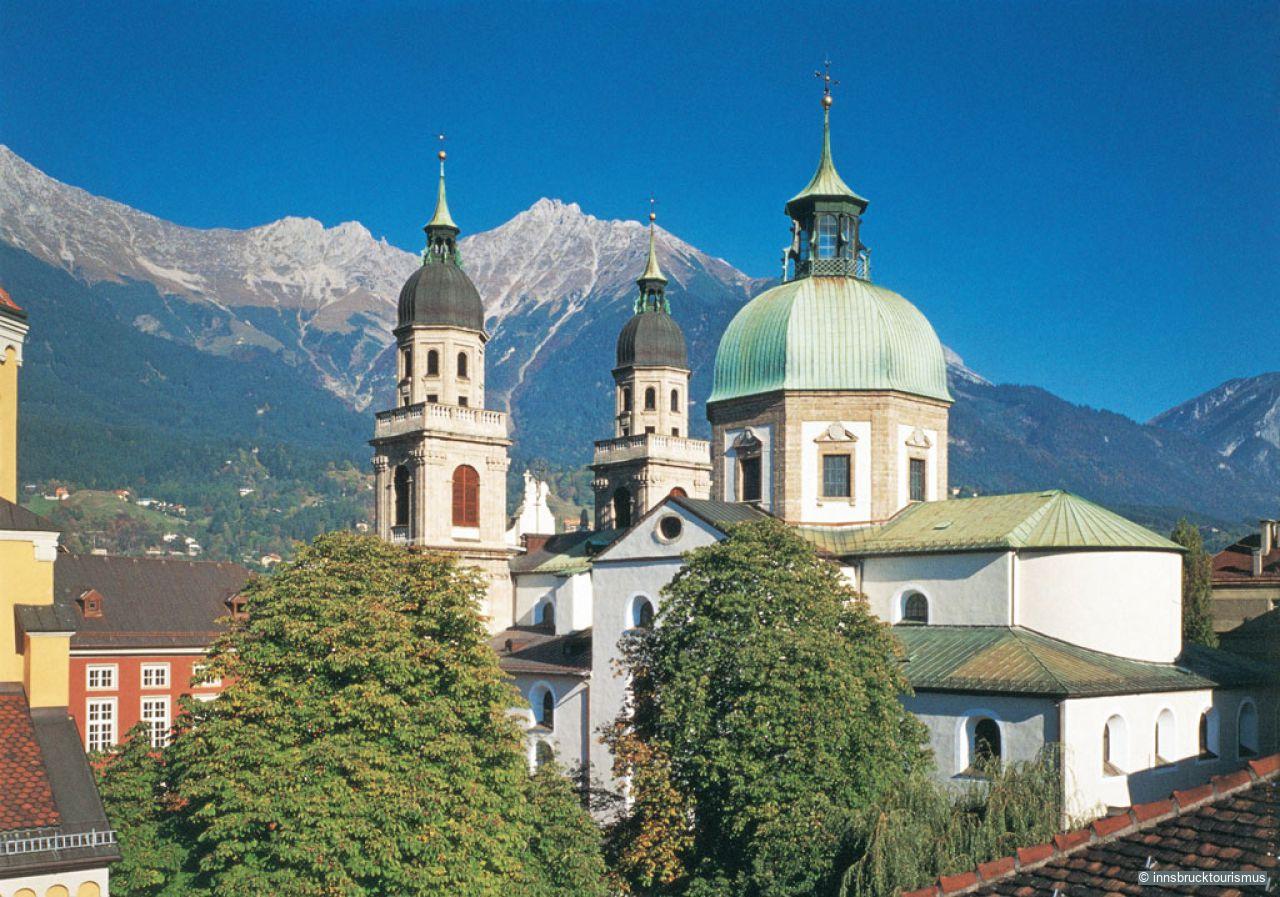
 Add to My Collection
Name of Monument:
Jesuit Church Innsbruck
Also known as:
University Church/Holy Trinity Church
Location:
Innsbruck, Tyrol, Austria
Universitätsstraße/Karl-Rahner-Platz
A-6020 Innsbruck
http://www.jesuitenkirche-innsbruck.at
T : +43 512 534 60
F : +43 512 534 699
E : p.fritzer@jesuitenkirche-innsbruck.at
Jesuit College Innsbruck, Church Rector Peter Fritzer SJ, Sillgasse 6, A-6020 Innsbruck (Responsible Institution)
Date:
1619–1622/1627–1640 (Early Baroque building and interior work phases)
Artists:
Architecture, 1st building phase, planning: Matthias Kager (1575–1634); master mason: Hans Alberthal(er) (c. 1575–1675);Architecture, 2nd building phase, planning: Santino Solari (1576–1646), Karl Fontaner [n.d.], Hans Schor (1585–1674), Christoph Gumpp the younger (1600–1672); master mason: Adrian Pfefferle [n.d.]; stuccowork: Georg Braun [n.d.], Hans Schor (1585–1674), Florian Nut [n.d.], Frair Oswald Kaiser [n.d.]; altarpiece: Antonio Balestra (1666–1740)
Denomination / Type of monument:
Ecclesiastical architecture (monastery church)
Patron(s):
Jesuit College Innsbruck
History:
The Jesuit College Innsbruck was founded in 1561. A Gothic chapel initially served as a church. A new building was constructed between 1619 and 1622 by the master mason Johan Alberthaler from Dillingen according to the plans of Matthias Karger, however, this collapsed in 1626. For the new construction executed between 1627 and 1640, the master builder Santino Solari, who was responsible for the Salzburg Dome, was appointed advisor. Up until 1635 the construction was supervised by the Jesuit priest Karl Fontaner. Christoph Gumpp was also involved in the planning. Consecrated in 1646, the façade was completed in 1900/01. The building was then reconstructed between 1946 and 1953 following severe bomb damage.
Description:
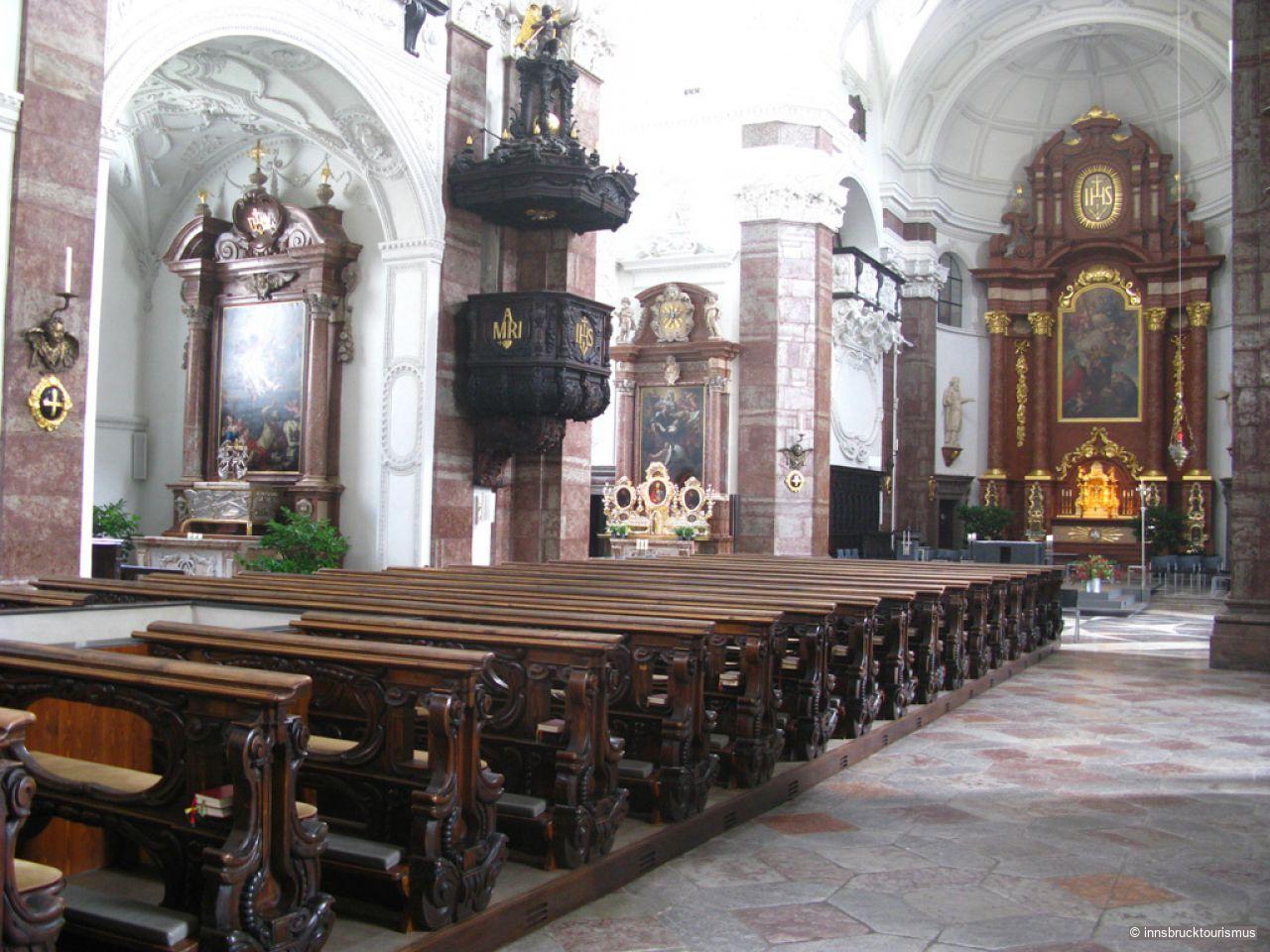
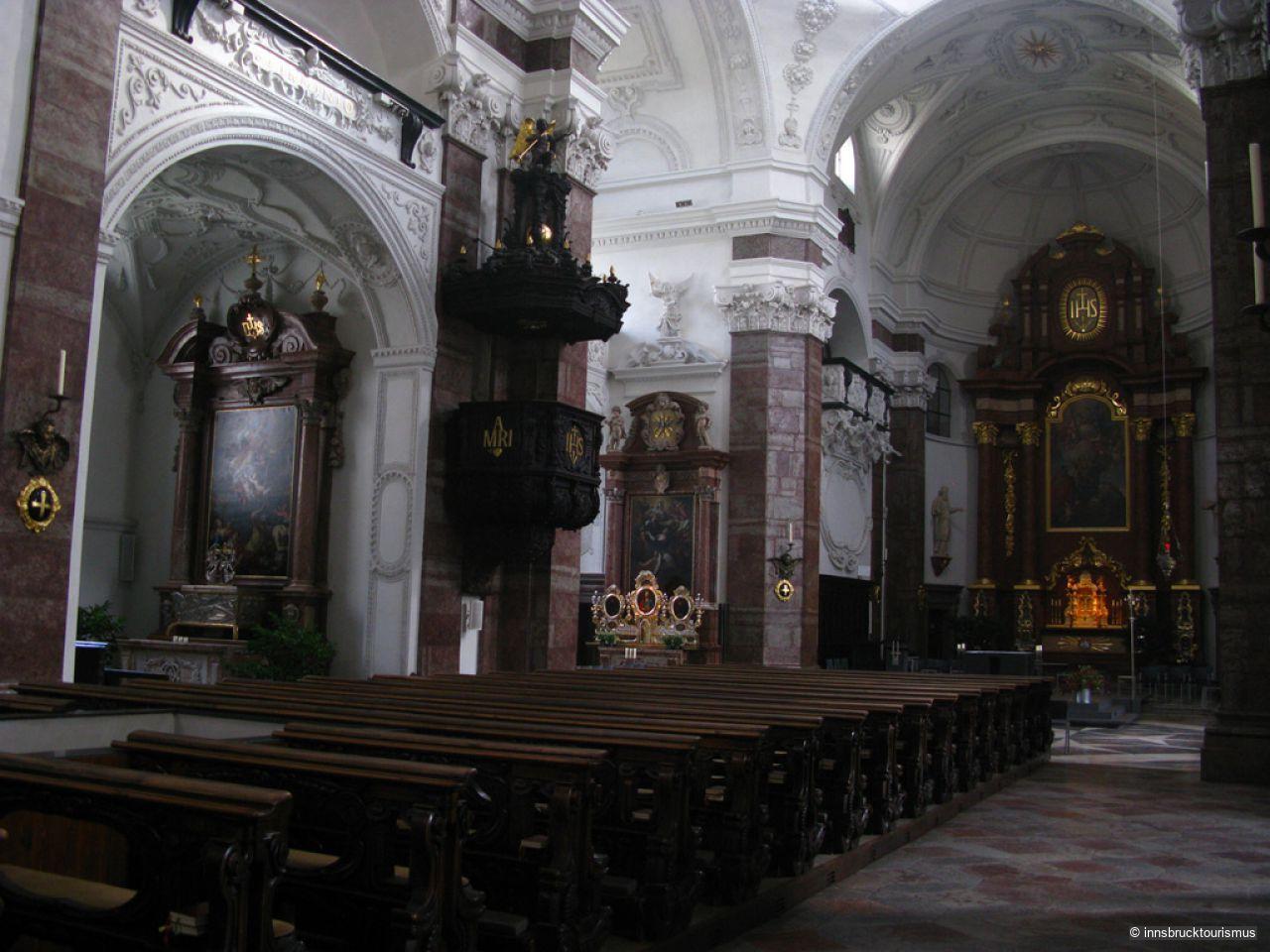
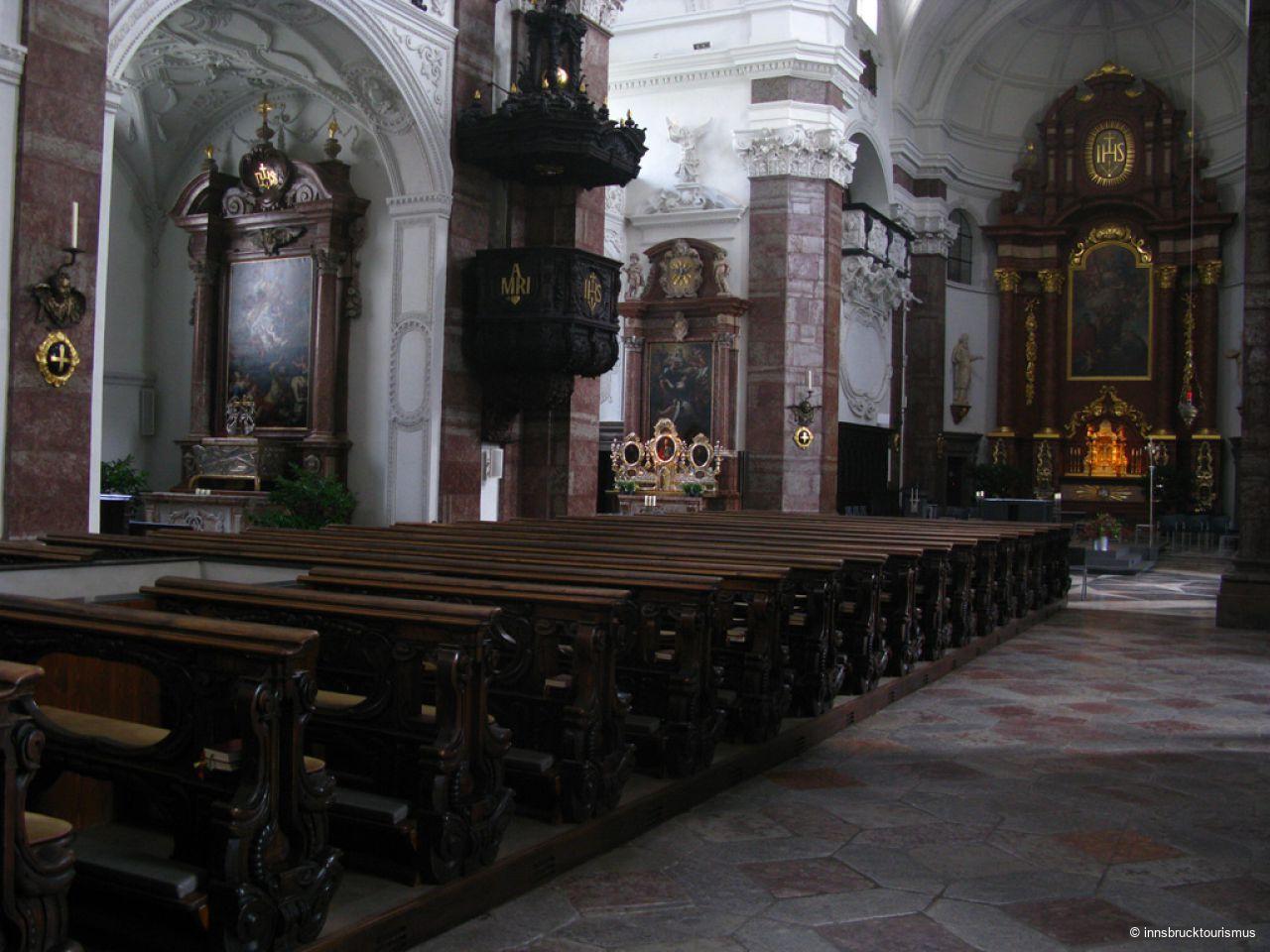
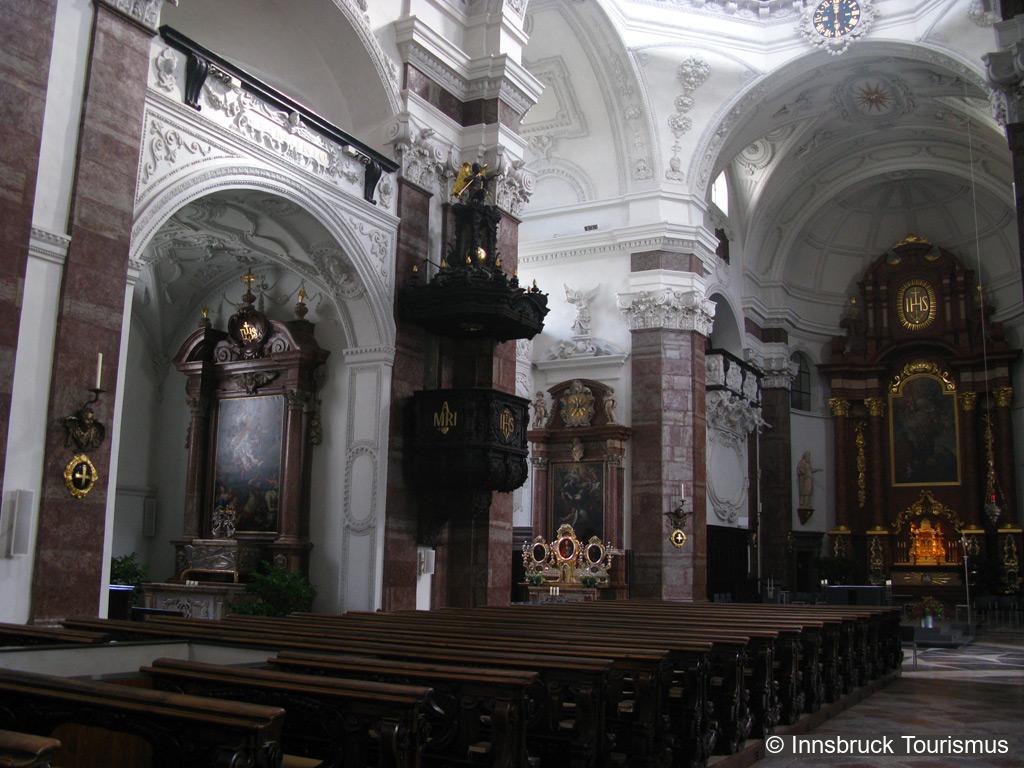
The Innsbruck Jesuit College was built with reference to the Salzburg Dome, to which it displays certain similarities. The two-bay nave is a hall with side aisles and galleries structured by double pilasters. In the centre there is a crossing with cross-arms extending into the nave aisles, vaulted by an octagonal dome resting on a drum. The choir terminates in a semi-circular apse. Some ungainly forms indicate that the main parts probably originate from the Jesuit priest Fontaner.
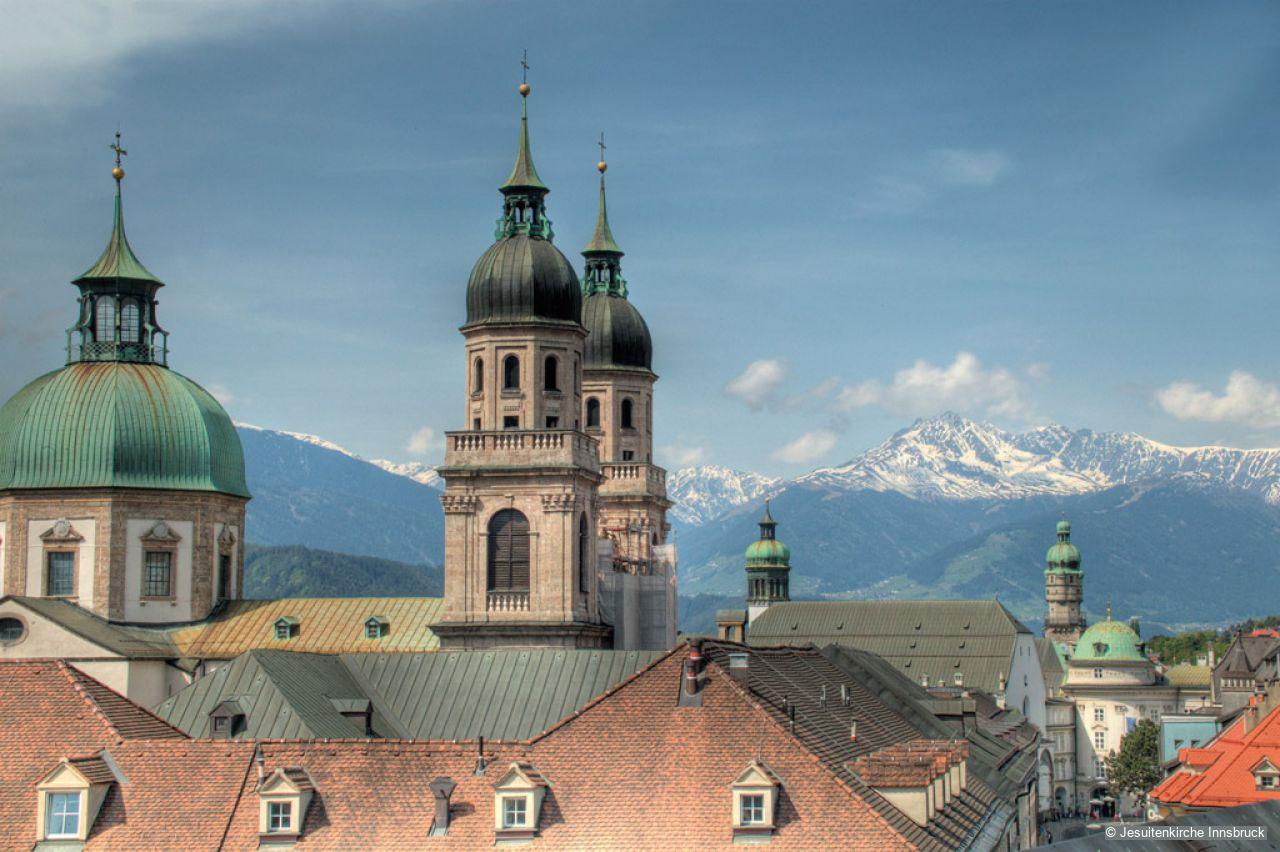
View Short DescriptionThe Holy Trinity Church in Innsbruck, one of the few large ecclesiastical buildings constructed during the Thirty Years’ War, illustrates the high standing which the Jesuit order attained within state and society following its summons to Tyrol by Emperor Ferdinand I. The monumental construction with its double-tower façade and crossing dome were built under the patronage of Archduke Leopold V and his wife Claudia de’ Medici as the college’s spiritual centrepiece.
How Monument was dated:
Archives
Special features
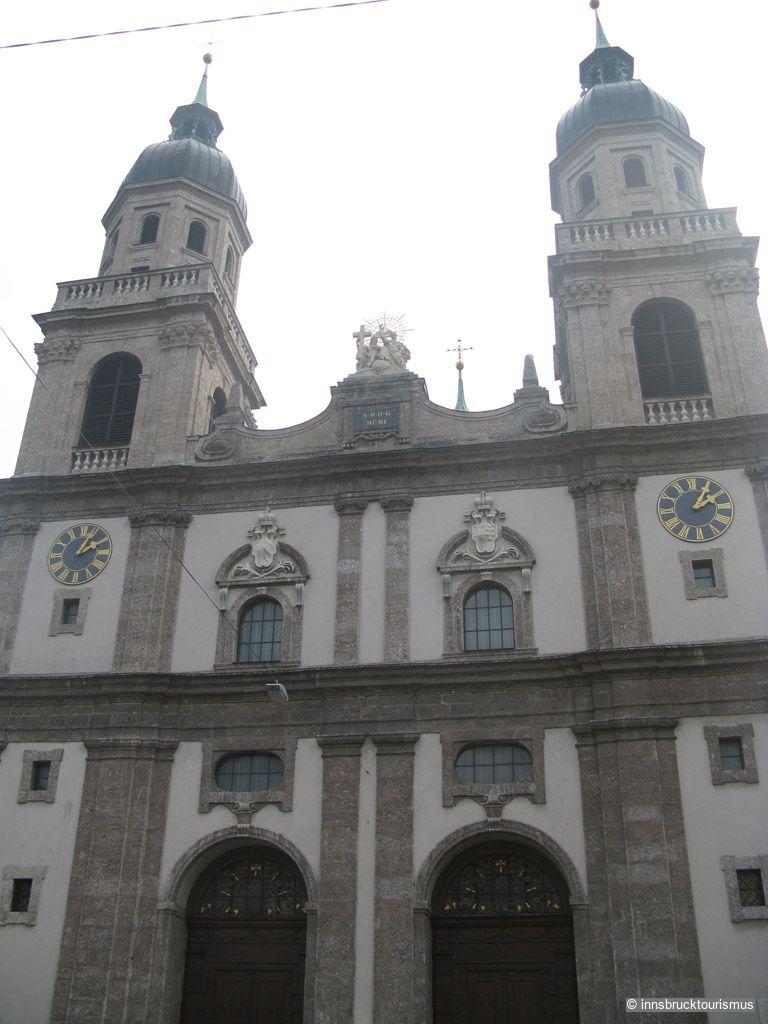
Façade
Exterior, north side
1627–1640 and 1900–1901
Christoph Gumpp the younger (1600–72)
The façade, whose towers, gables and escutcheons were first completed in 1900, i.e. supplemented, most clearly show the influence of the Salzburg Dome. The exterior is maintained in the strict arrangement typical of South German Early Baroque. The towers and the centre of the façade form a unit. The two portal arches, separated by double pilasters (cf. St. Michael’s Church, Munich) already anticipate the configuration of the interior nave walls.


Choir and crossing
Interior facing south
1627–1640 and 1757
Antonio Balestra (1666–1740)
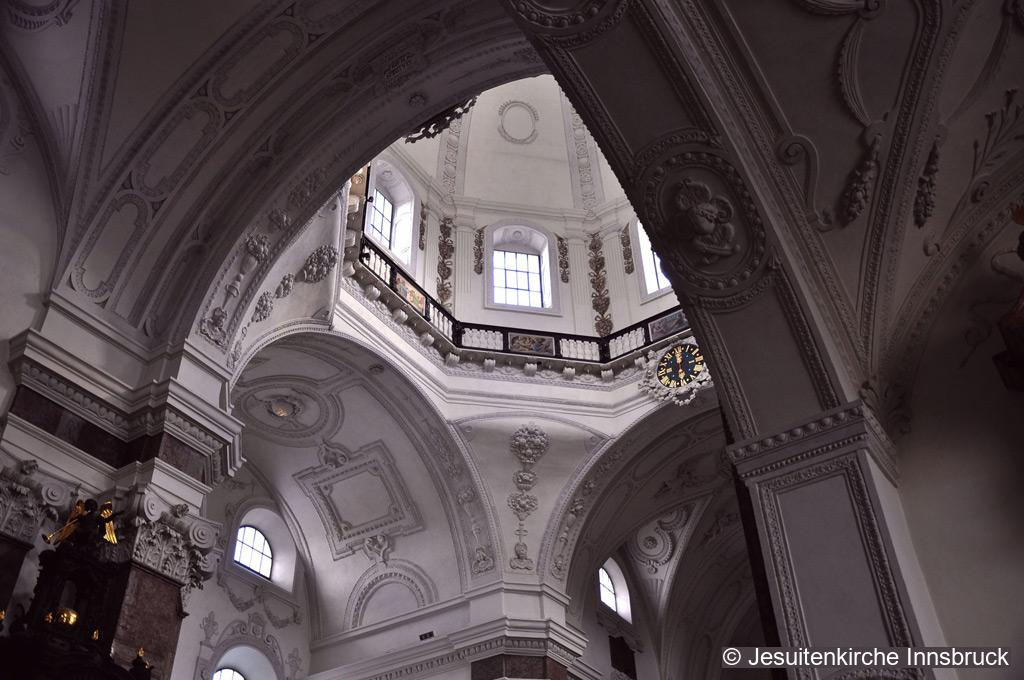
Located at the centre of the building is the crossing, above which rises an octagonal cupola. A special feature is formed by the transitional pendentives, which here are filled in as opposed to being concavely arched. The tambour, studded with large windows, has an eight-sided cloister vault above it. The choir, considerably lower than the cross-arms due to its apse, has been under reconstruction since 2004 as part of the work on the high altar (from 1757) which was destroyed in 1943. The original altarpiece has been replaced by a work from Antonio Balestra from the story of St. Jacob. The straight-sided choir is flanked by two choir lofts, supported by stucco angels.
Stucco
Choir vault
1634–c. 1650
Georg Braun [n.d.], Hans Schor (1585–1674), Florian Nut [n.d.], Frair Oswald Kaiser [n.d.]
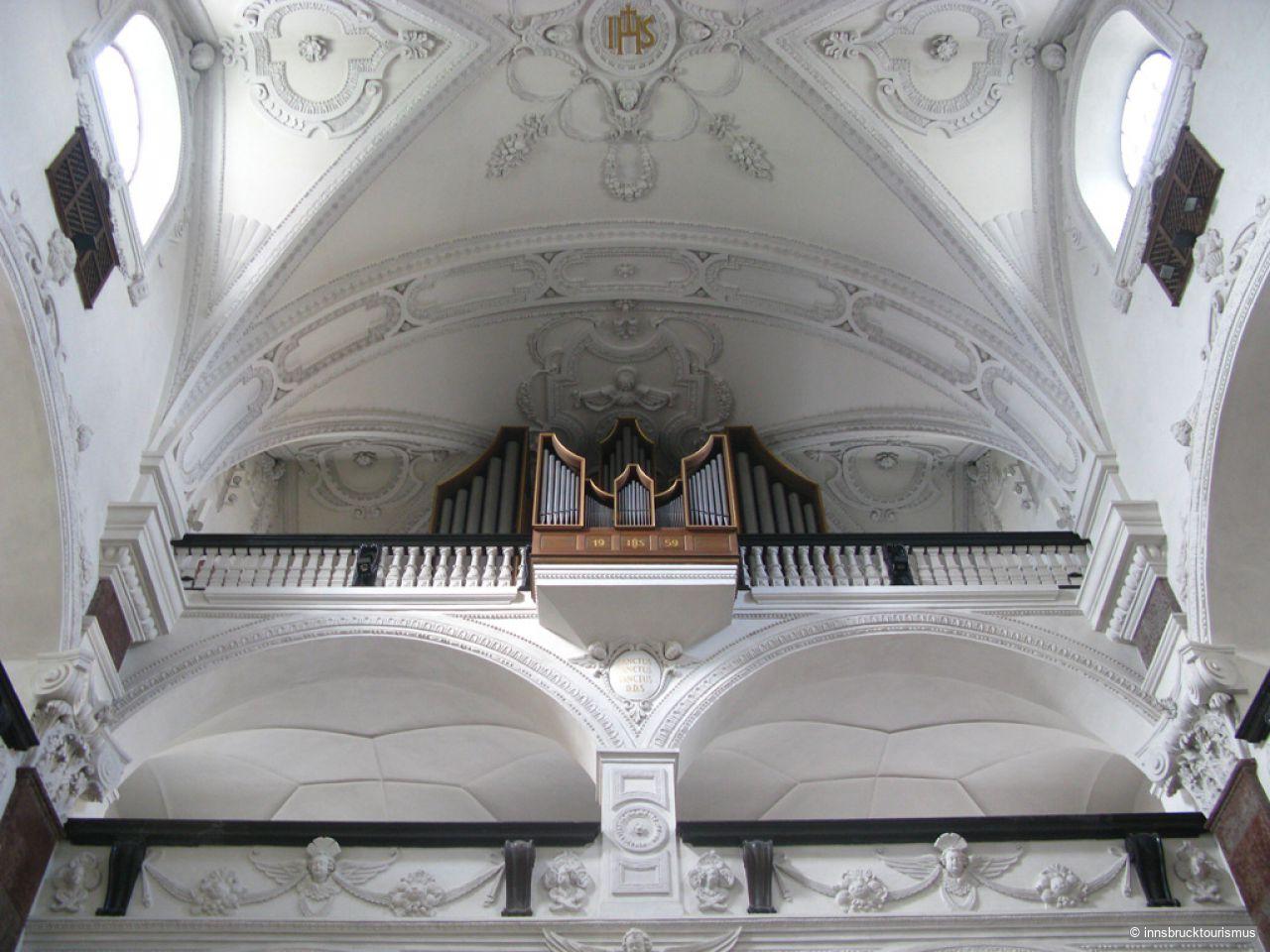
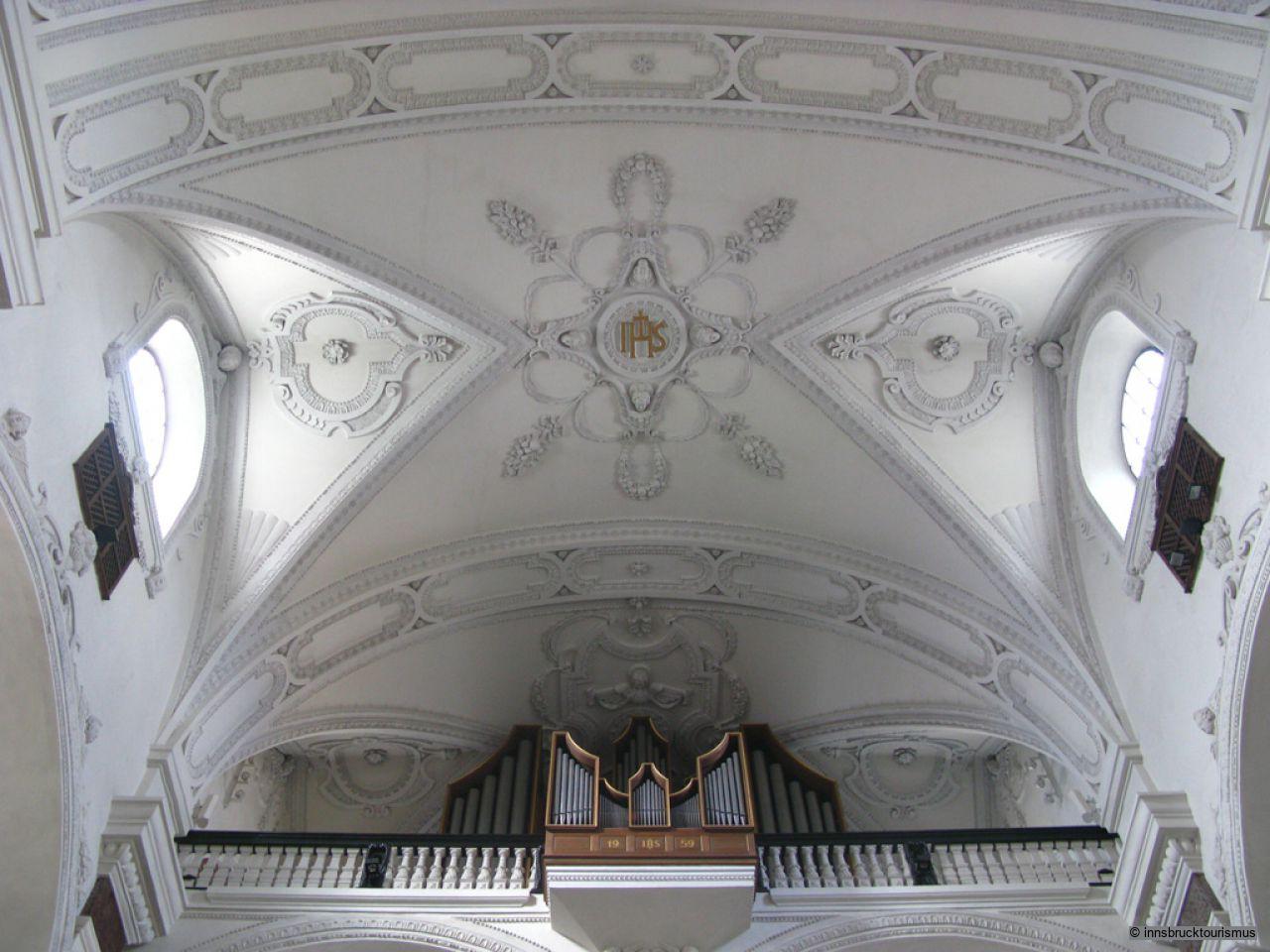
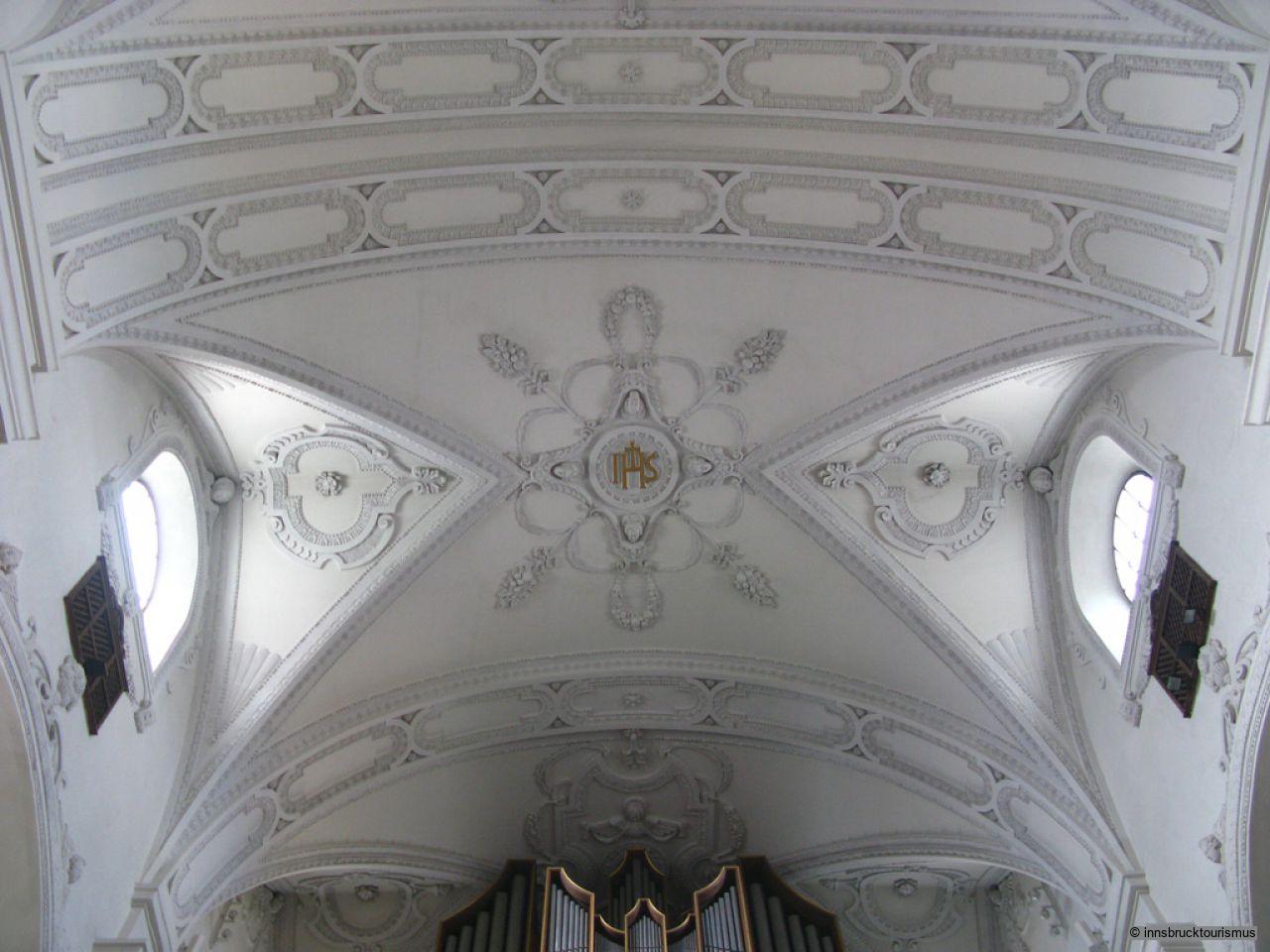
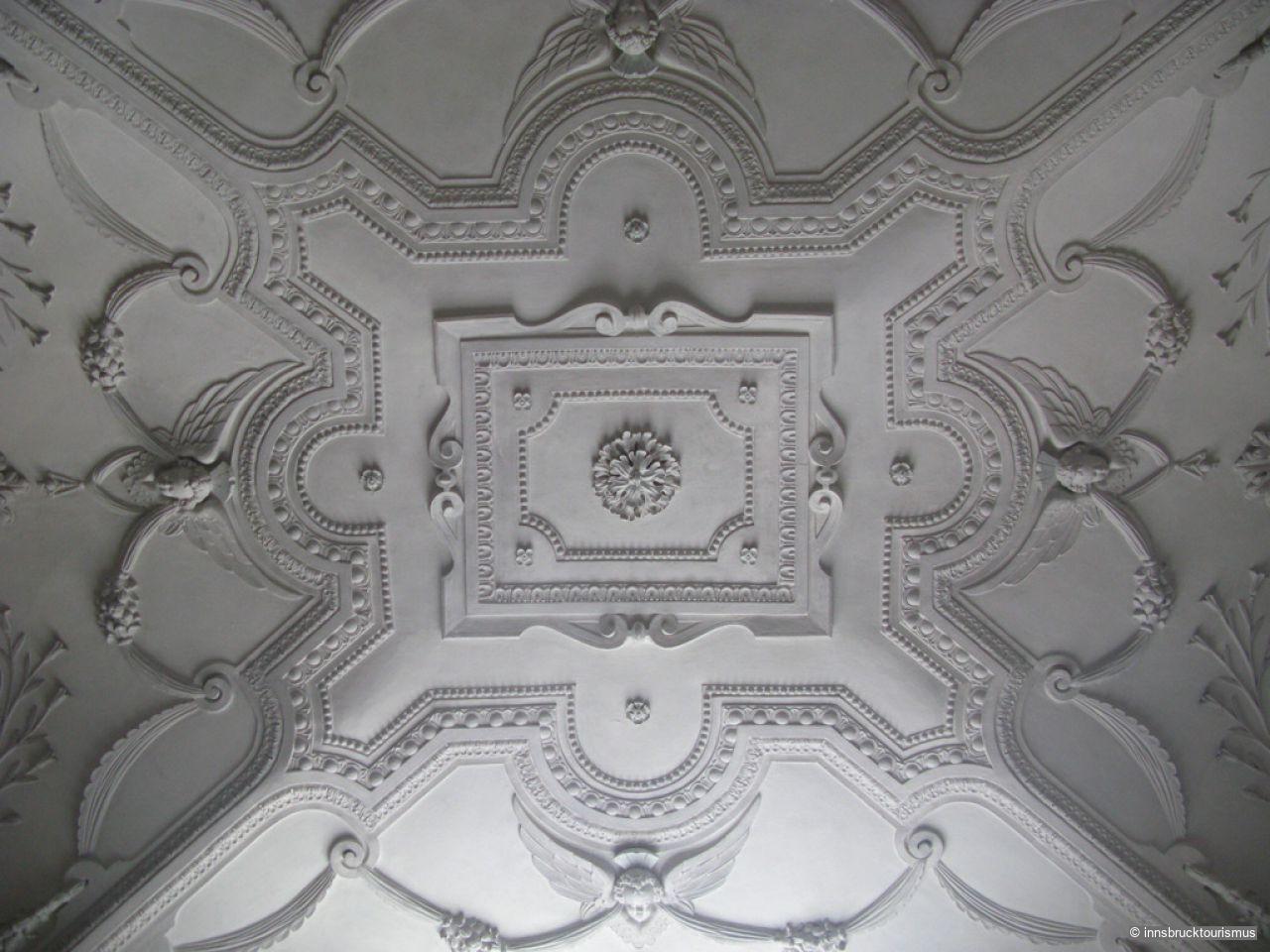
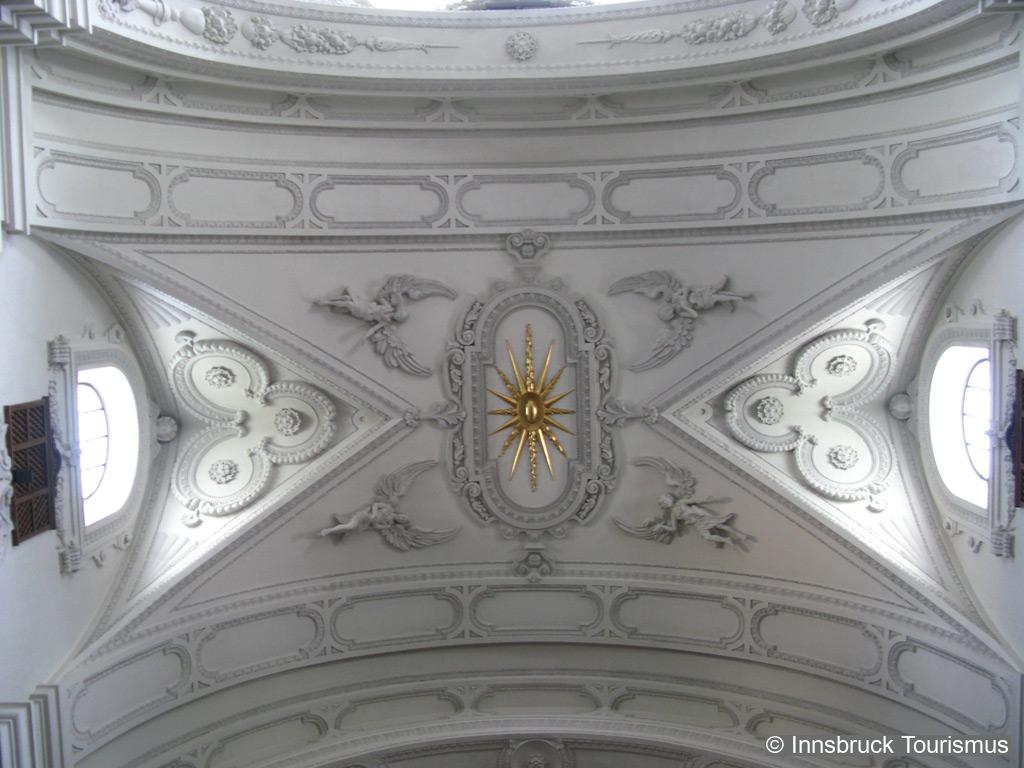
The stuccowork, executed during 1634–7, is the work of Georg Braun of the Wessobrun school according to designs from Hans Schor and Florian Nut. Panels, vases, festoons, and draperies, framed by rod motifs, underscore the structural elements in emulation of the austere panelled stucco of the South German (Munich) style. The transept and choir also contain ornaments in the emerging scrollwork style, designed c. 1640/50 by Oswald Kaiser.
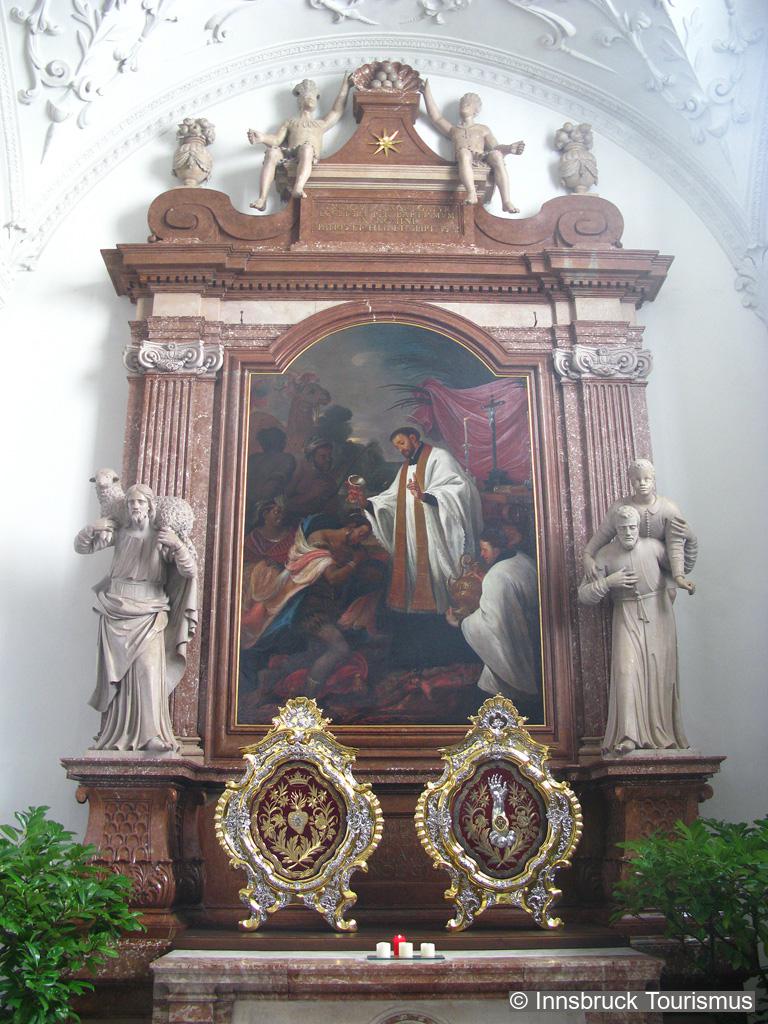
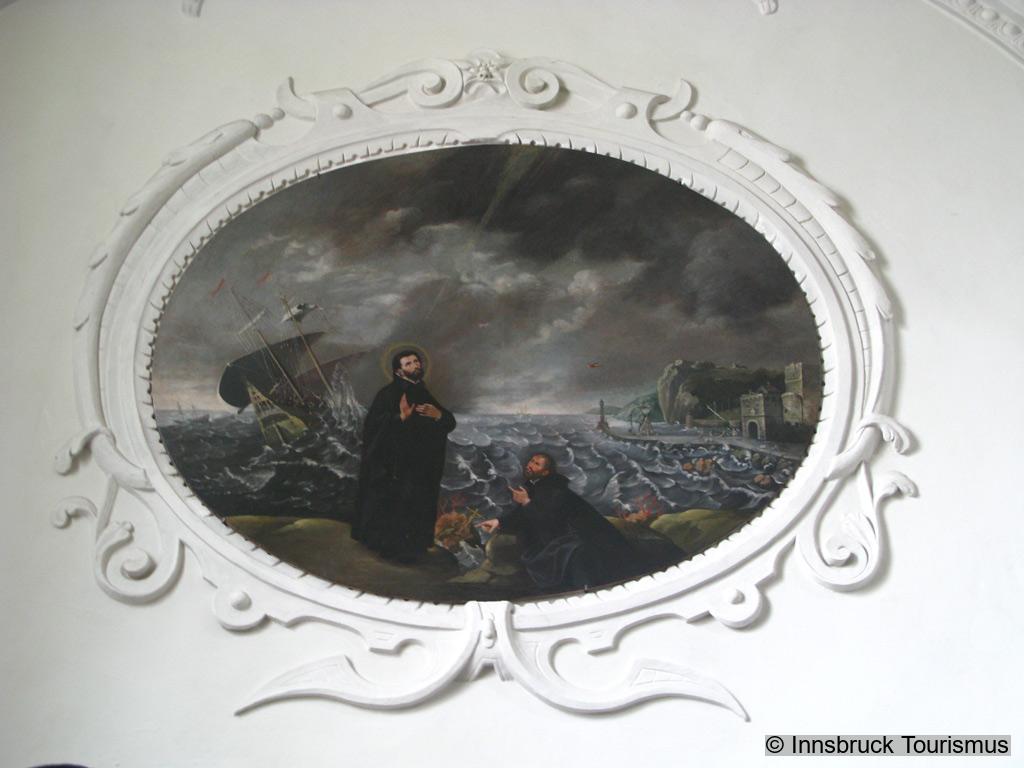
Altarpiece: Baptism of the Indian Nobleman and St. Francis Xavier’s Miracle of the Crab
First right-hand side chapel, Jesuit Church Innsbruck
c. 1670
Johann Heinrich Schönfeld (1609–1684)
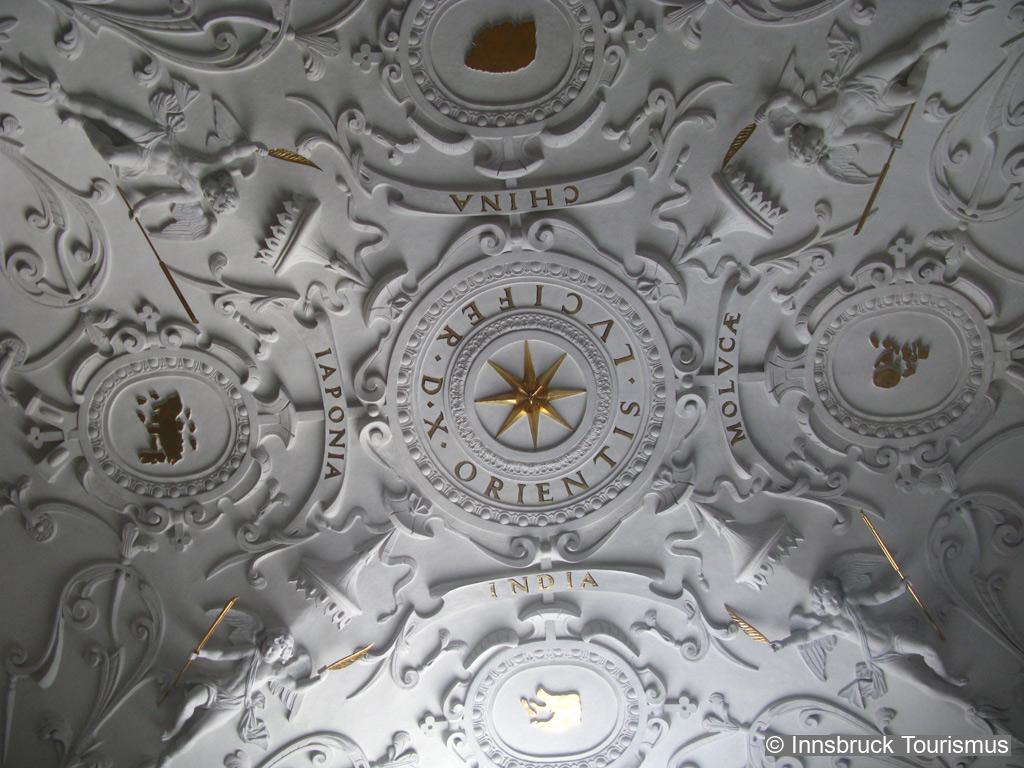
The altarpieces of the side chapel dedicated to St. Francis Xavier, glorify him as the most important missionary of the Jesuit order, who, like Ignatius, was conferred sainthood in 1622. The painting depicting the baptism of the Indian nobleman is attributed to Johann Heinrich Schönfeld, together with the scene on the rear wall of the miracle of the crab in which Francis Xavier received his crucifix back from the sea. The images refer to the Jesuit order as the main bearer of the missionary counter-reformation.
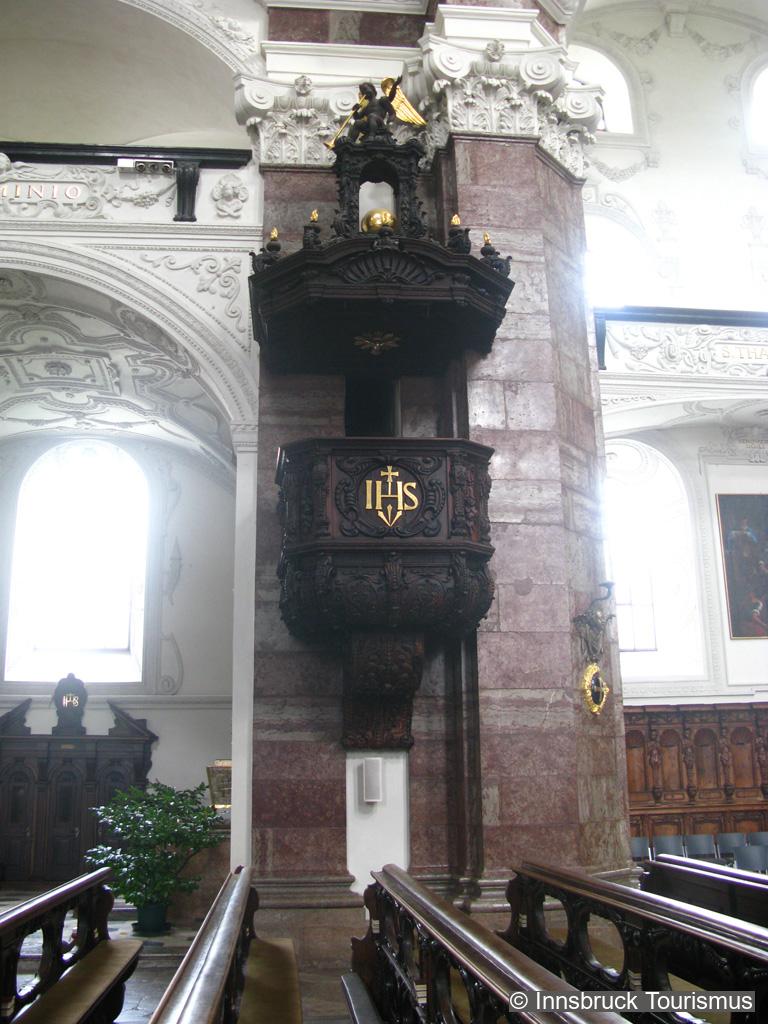
Pulpit
Northeastern nave pillar
c. 1640
Friar Oswald Kaiser [n.d.]
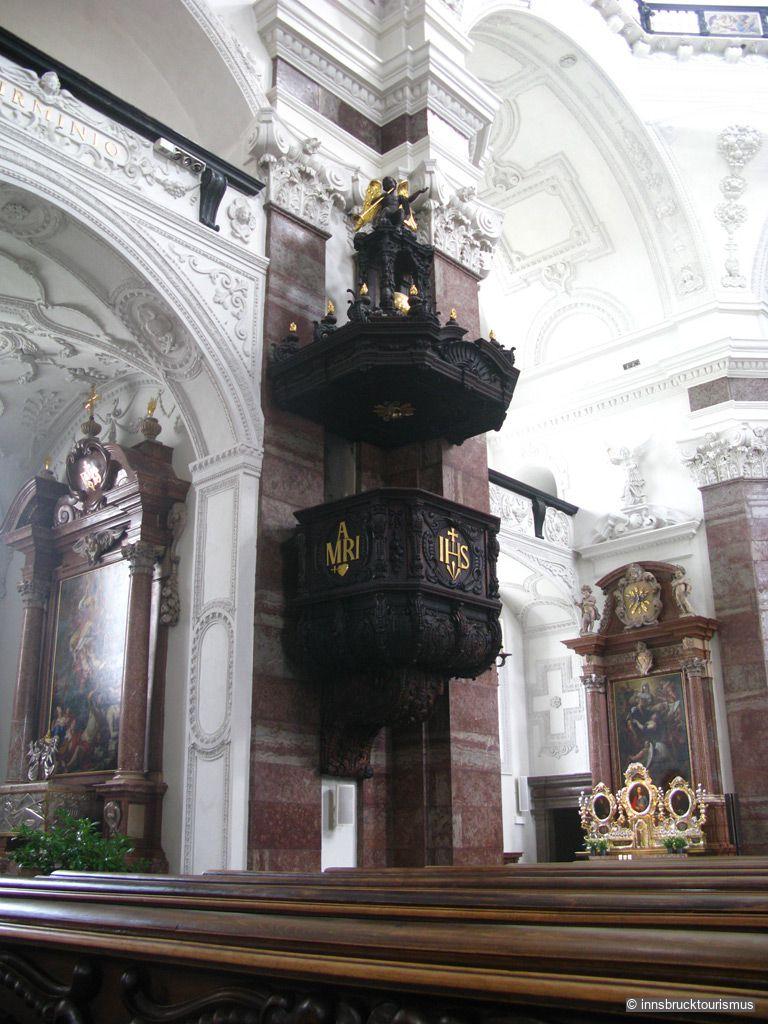
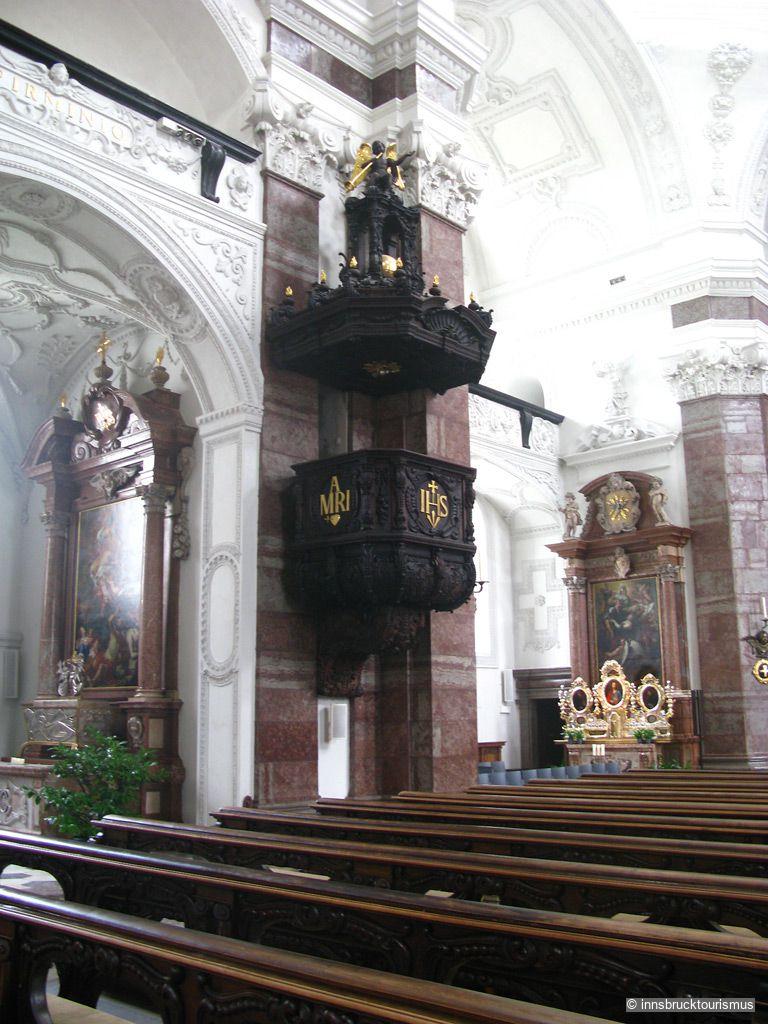
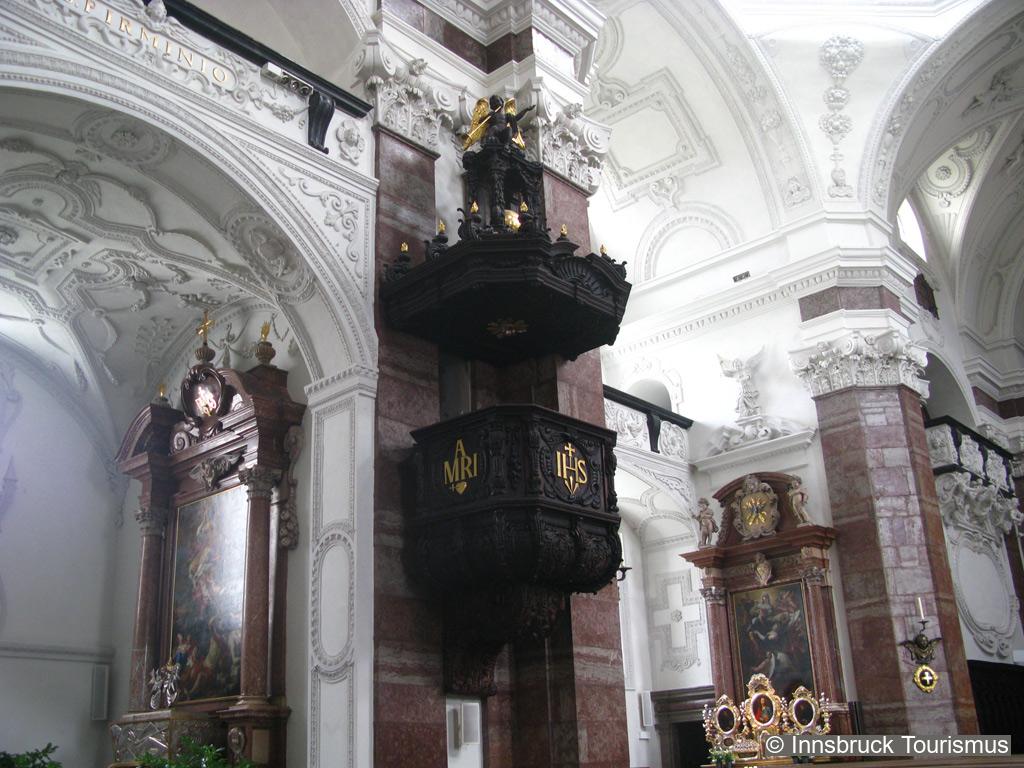
The richly decorated pulpit in the scrollwork style, donated by Claudia de’ Medici c. 1640 (monogram “C” with crown), is attributed to the Jesuit Friar Oswald Kaiser.
Selected bibliography:
Braun, J., Die Kirchenbauten der deutschen Jesuiten, Vol. 2, Freiburg i. Br. 1910, p. 11ff and p. 162ff.
Keßler, D., Der Dillinger Baumeister Hans Alberthal, Dillingen 1949, pp. 99–106.
Frodl-Kraft, E., Tiroler Barockkirchen, Innsbruck 1955, p. 32f.
Skalecki, G., Deutsche Architektur zur Zeit des Dreißigjährigen Krieges, Regensburg 1989, p. 75f and p. 116f.
Schnell, H., Schedler, U., Lexikon der Wessobrunner, Munich, Zurich 1988, p. 63.
Citation of this web page:
Frank Purrmann "Jesuit Church Innsbruck" in "Discover Baroque Art", Museum With No Frontiers, 2026.
https://baroqueart.museumwnf.org/database_item.php?id=monument;BAR;at;Mon11;1;en
MWNF Working Number: AT 01