

 Back
Back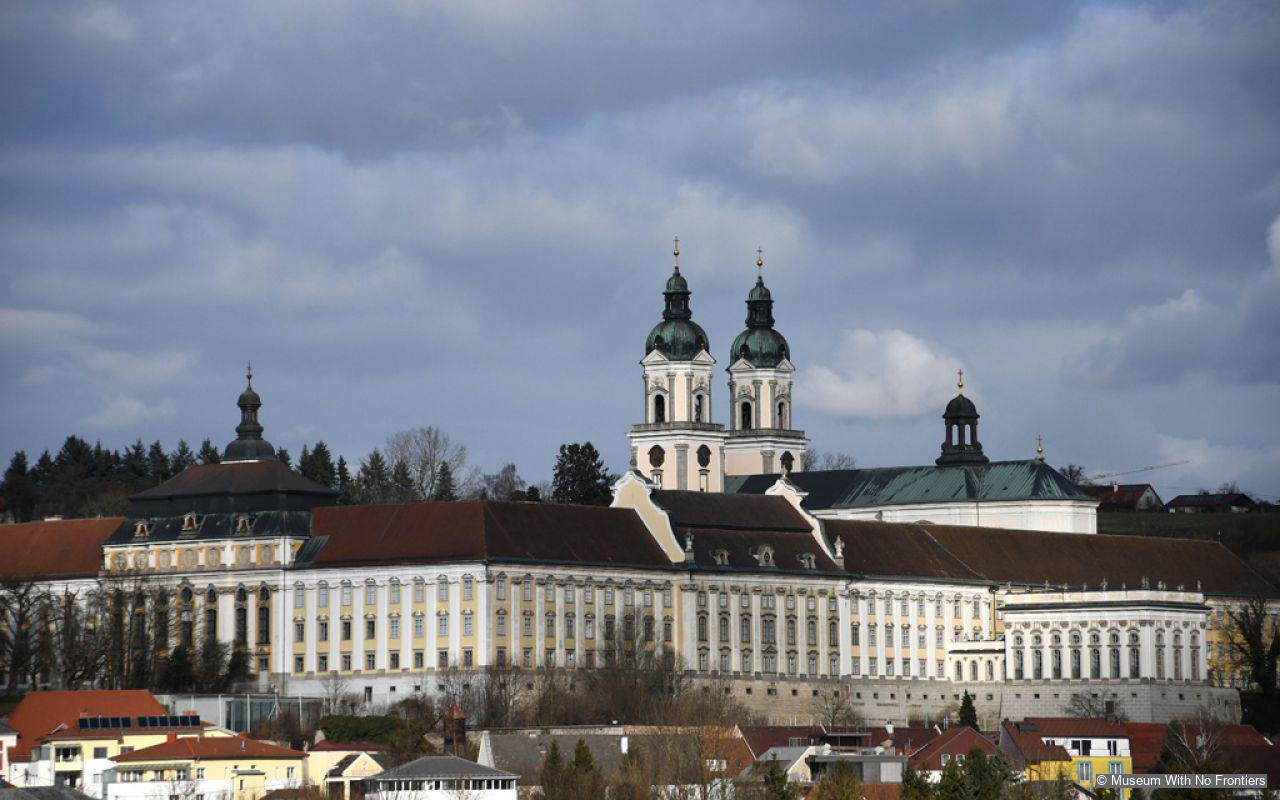

 Add to My Collection
Name of Monument:
St. Florian Abbey and Abbey Basilica
Also known as:
Augustinian Canons´ Abbey and Abbey Basilica in St. Florian
Location:
St. Florian, district Linz-Land, Upper Austria, Austria
Stiftstraße 1
4490 St. Florian
T : +43722489020
F : +437224890223
E : info@stift-st-florian.at
Augustinian Canons from St. Florian Abbey (Roman Catholic order) (Responsible Institution)
Date:
1674–76/77 Meierhof
1686–1708 construction (church)
1690–95 fresco paintings (church)
1695–1708 west wing
1706–14 staircase west wing
1713 portal west wing
1706–31 paintings, stucco, stoves, fittings guest rooms
1718–24 south wing Marble Hall
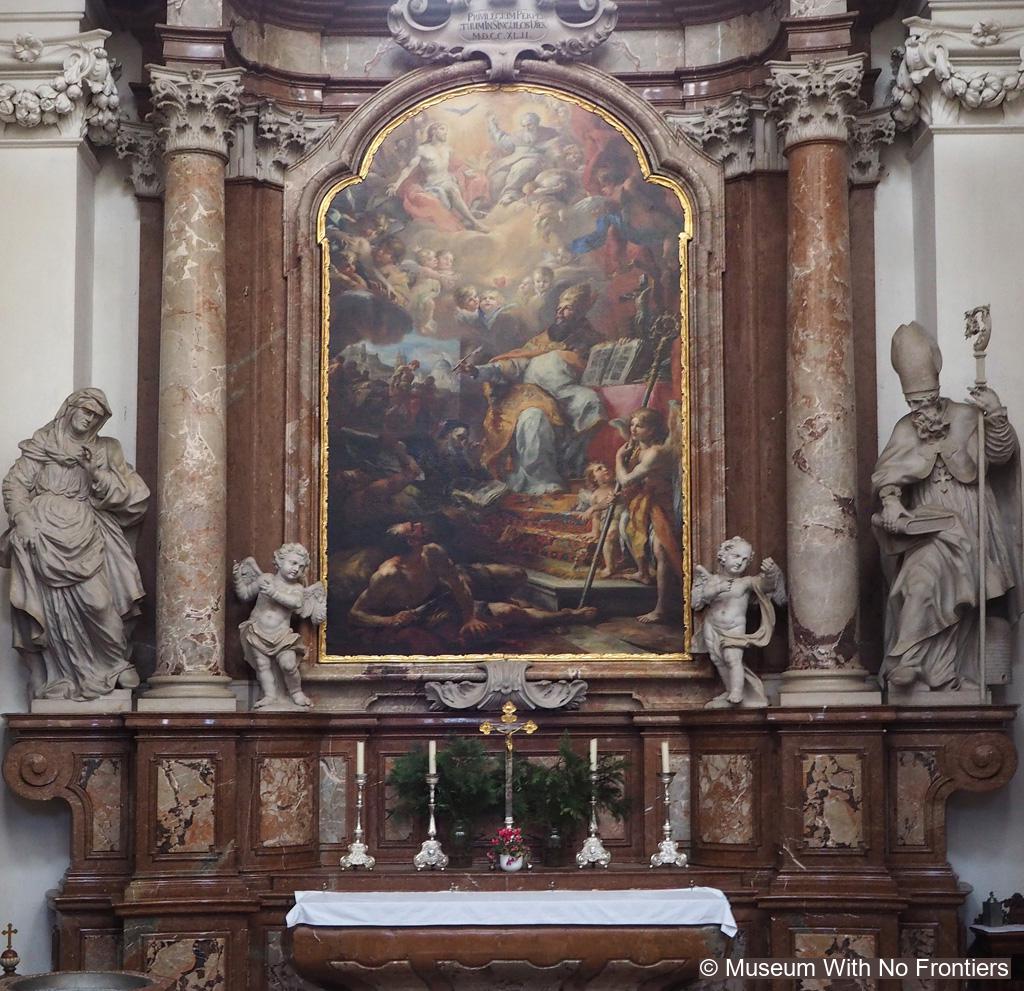
1719 painting Augustinus altar (church)
1724/25–30 summer refectory
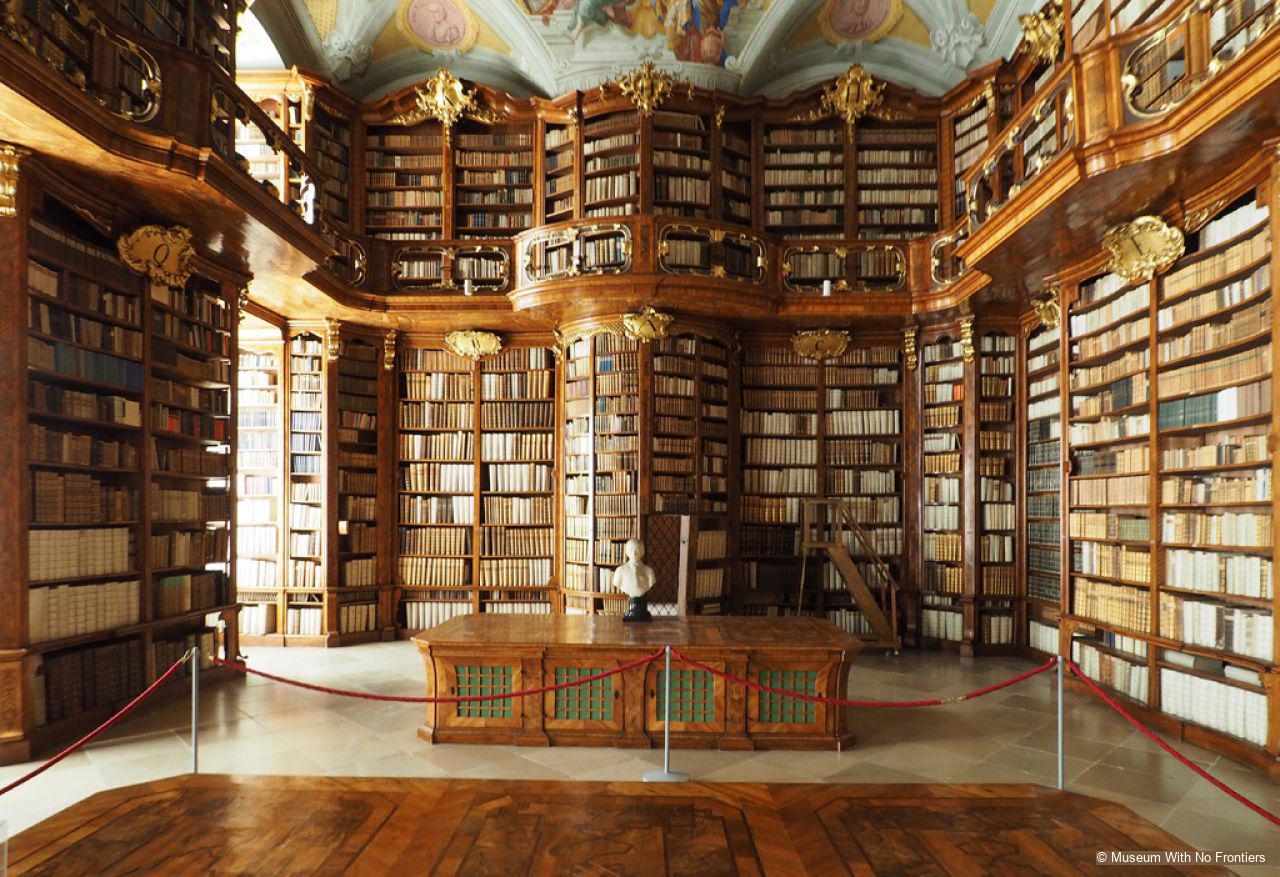
1744–50 east wing library
1750 fresco painting church (choir)
Artists:
Architecture (church): Carlo Antonio Carlone (c. 1635–1708); stucco: Bartolomeo Carlone (c. 1650–1724); fresco paintings: Johann Anton Gumpp (1654–1719) and Johann Melchior Steidl (1657–1727); fresco painting (choir): Domenico Francia (1702–58); statues (Floriani and Augustinus altar): Leonhard Sattler (1676–1744); altar painting (Augustinus altar): Johann Michael Rottmayr (1654–1730) Architecture (abbey buildings): Carlo Antonio Carlone (c. 1635–1708); Jakob Prandtauer (1660–1726); Gotthard Hayberger (1695–1764); statues, furniture, decoration: Leonhard Sattler (1676–1744); stucco: Bartolomeo Carlone (c. 1650–1724), Giovanni Manfredo Maderno/Maderni (1670–after 1700), Diego Francesco Carlone (1674–1750), Paolo d´Allio (1655–1729); oil and fresco paintings (Marble Hall): Bartolomeo Altomonte (1694–1783); architecture, Meierhof (stables, granary, agricultural administration): Carlo Antonio Carlone (c. 1635–1708)
Period / Dynasty:
Baroque (various eras)
Denomination / Type of monument:
Ecclesiastical architecture
Patron(s):
The founder(s)/donator(s) is/are unknown.
History:
Under Roman rule, (the later saint) Florian(us) confessed being Christian, and was therefore tortured and thrown bound into the river Enns where he died. He was probably buried somewhere under the abbey church; for that reason St. Florian soon became known as “place above the saint´s grave”.
The monastery was probably founded by nearby residents and not like many other abbeys by a prince or by a nobleman. Nevertheless, the Augustinian Canons acquired property and made profits over the centuries and erected new buildings during the Baroque era. Under Emperor Joseph II they had to put up with expropriation and loss. Anyway, St. Florian has economically recovered and is still known for its magnificent Baroque architecture.
Description:
After the end of the Wars Against the Ottoman Empire the Augustinian Canons commissioned an architect to erect a new church on the place of an earlier one. Next, the enormously long west wing was built. Another architect who slightly changed and finished the representative staircase added the magnificent portal extending over the three floors.
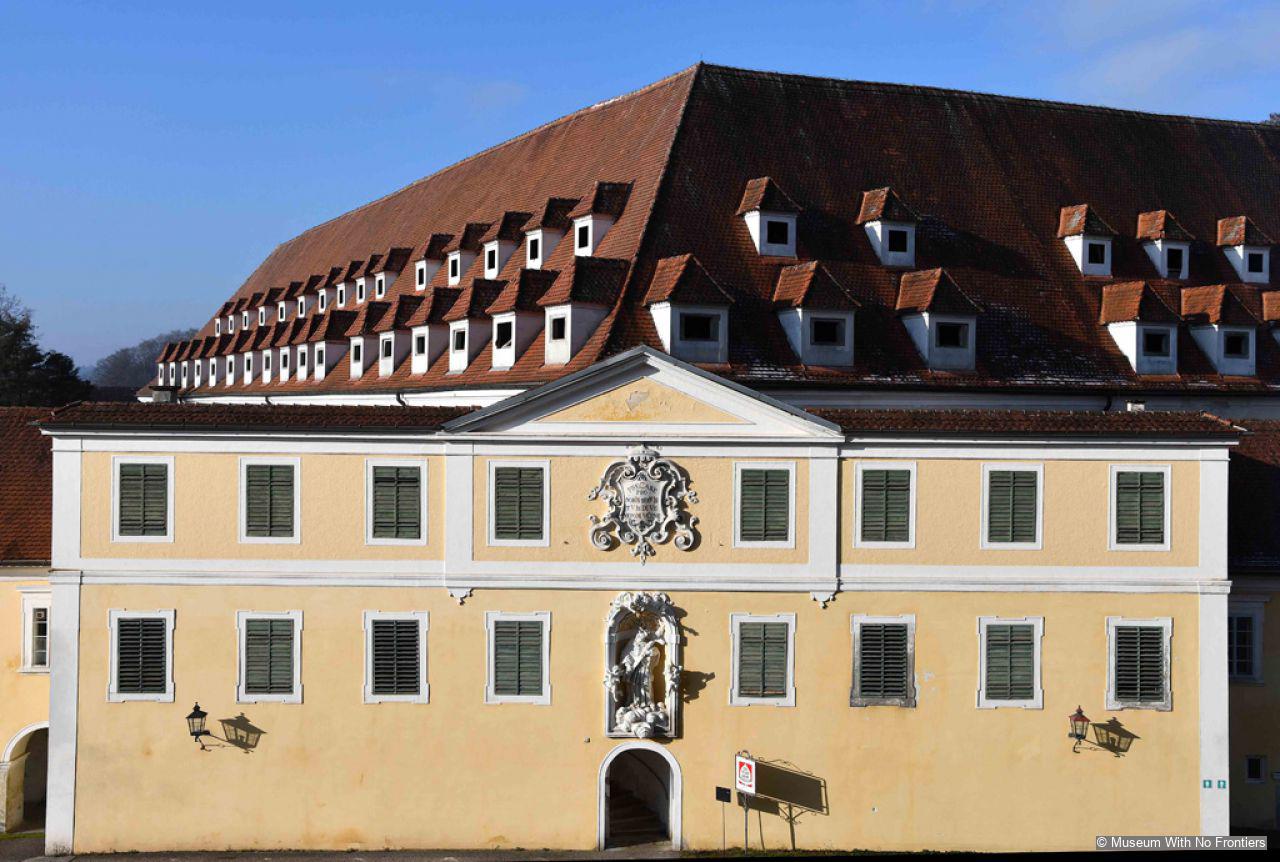
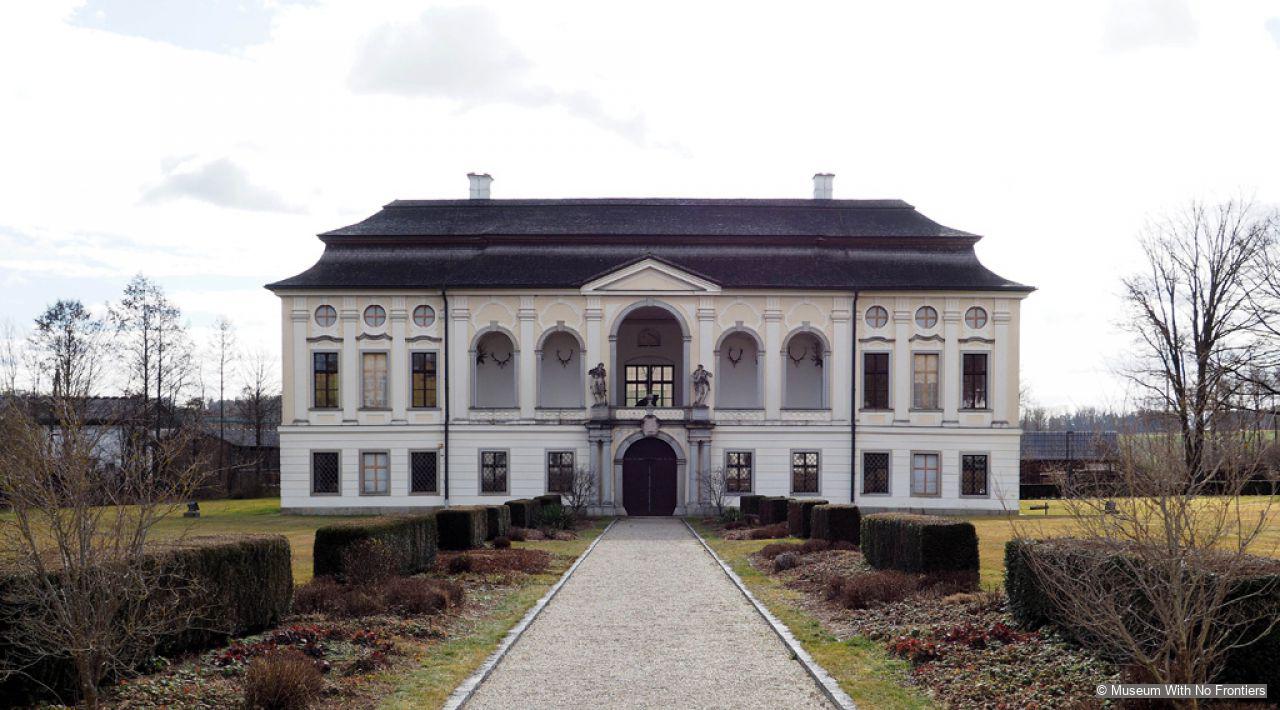
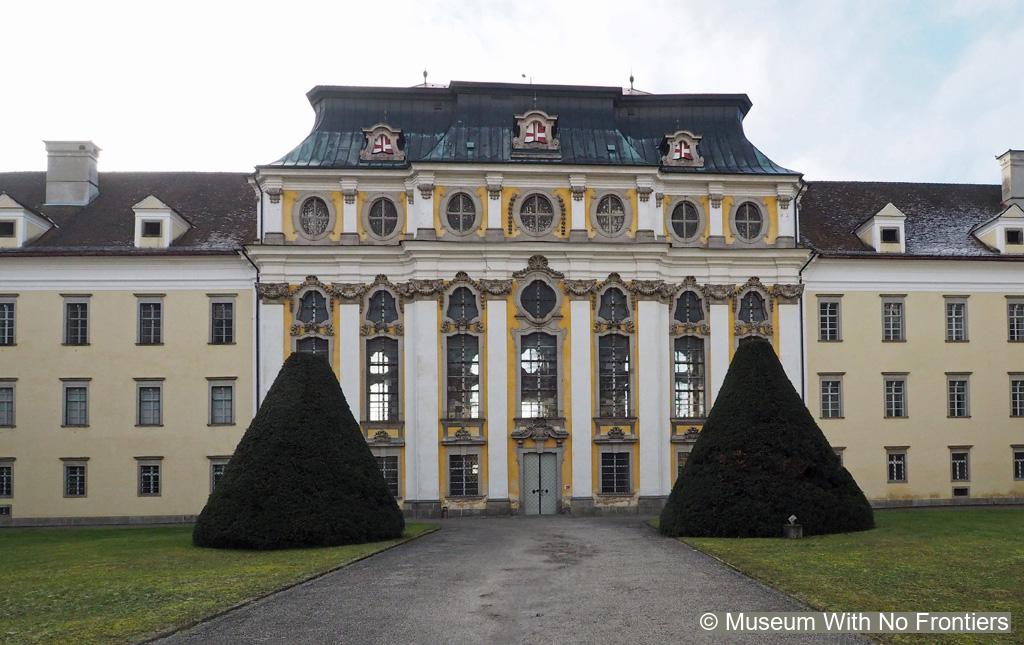
The south wing with the pavilionlike Marble Hall became St. Florian´s landmark. The court was completed by adding the east wing with the Library in its centre. There is another, almost unseen wing, protruding from the abbey building in the Northeast, the Summer Refectory. It bespeaks an unexecuted scenic project that would have been completed with a twin building opposite (a theatre) and a spacious connecting French garden.
Like most people of this era, the five Baroque prelates and provosts loved building. They started to erect a new church in 1686, re-using Romanesque and Gothic walls from an earlier building, and new monastery wings at the beginning of the 18th century. It took 65 years and three architects to complete the ensemble. So St. Florian abbey has become a very good example to understand how Baroque art and architecture developed within two thirds of a century.
How Monument was dated:
Historical documents
Special features
Church´s architecture
In the Northwest of the monastery (on Romanesque/Gothic floorplan, incorporating parts of the old architecture)
1686–1708
Architecture: Carlo Antonio Carlone; stucco: Bartolomeo Carlone; fresco paintings: Johann Anton Gumpp and Johann Melchior Steidl
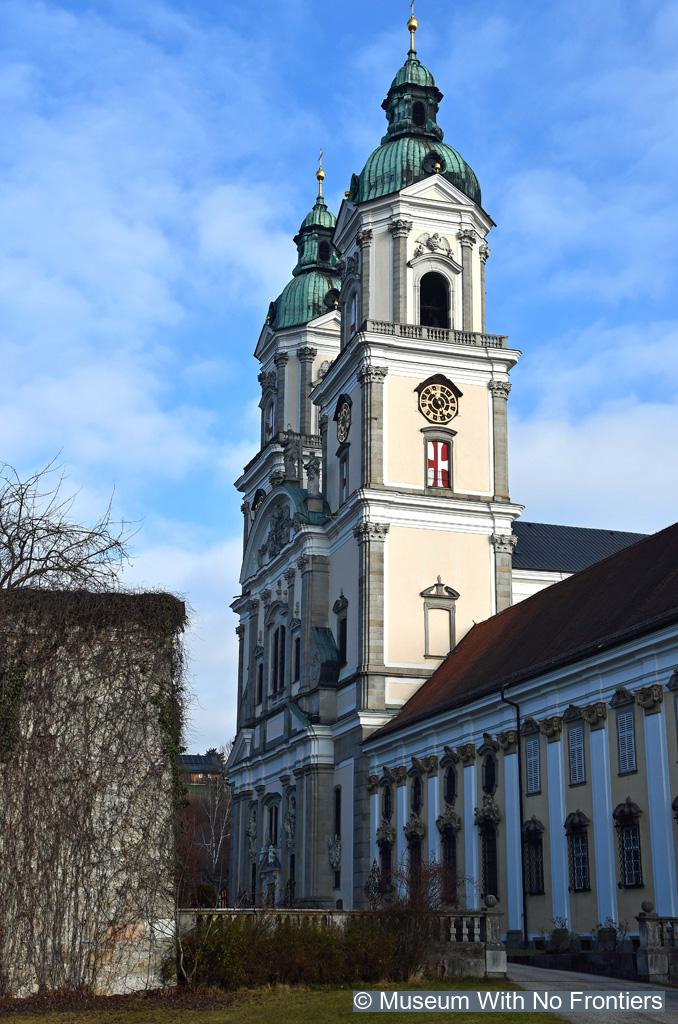
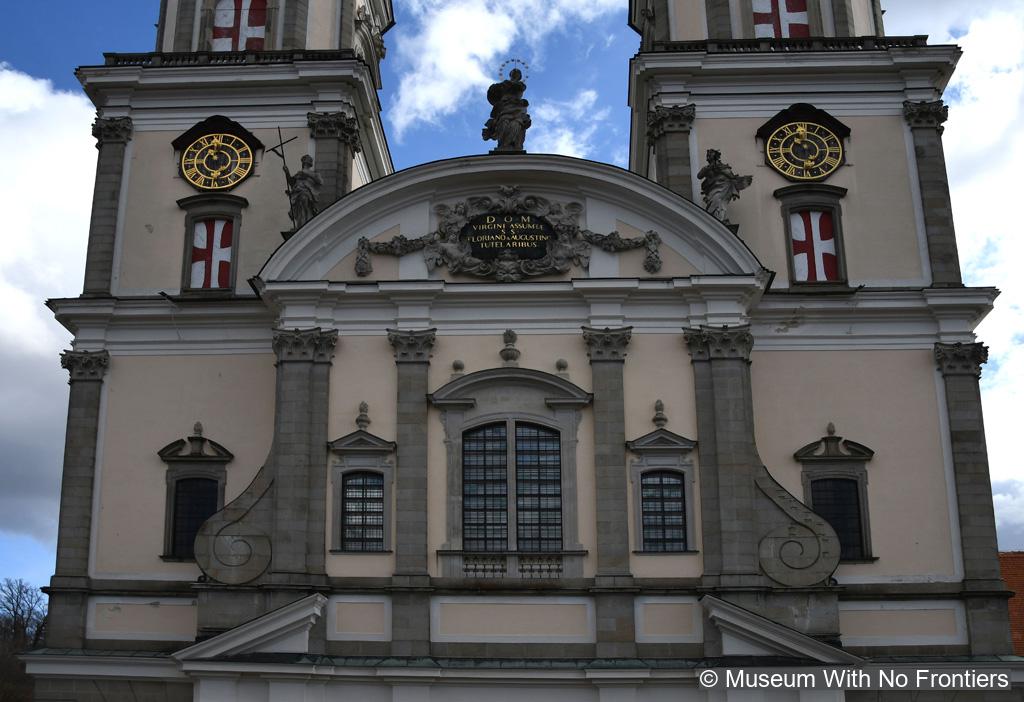
Curiously enough for a basilica of that dimension – with three storey-façade, two 80 m high towers crowned with domes and lanterns –, one cannot get a full view of its main façade. A near wall opposite forces the spectator to stand close to it (even on the terrace) so that one can only perceive a small part of the architecture with the eye.
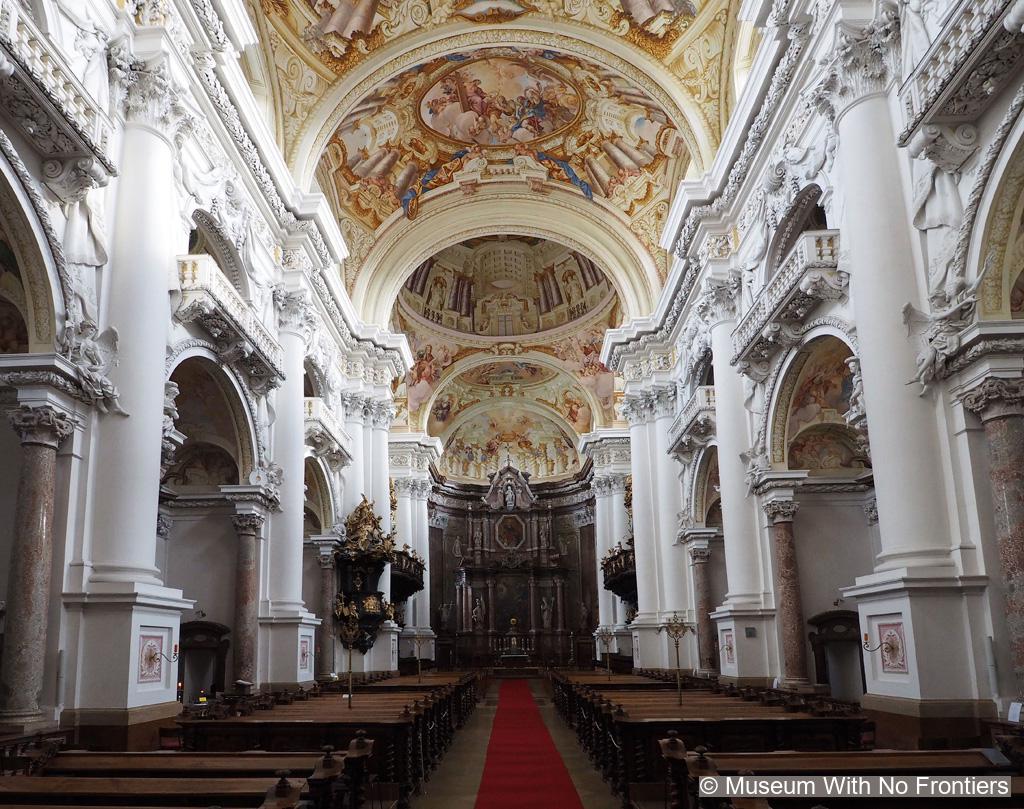
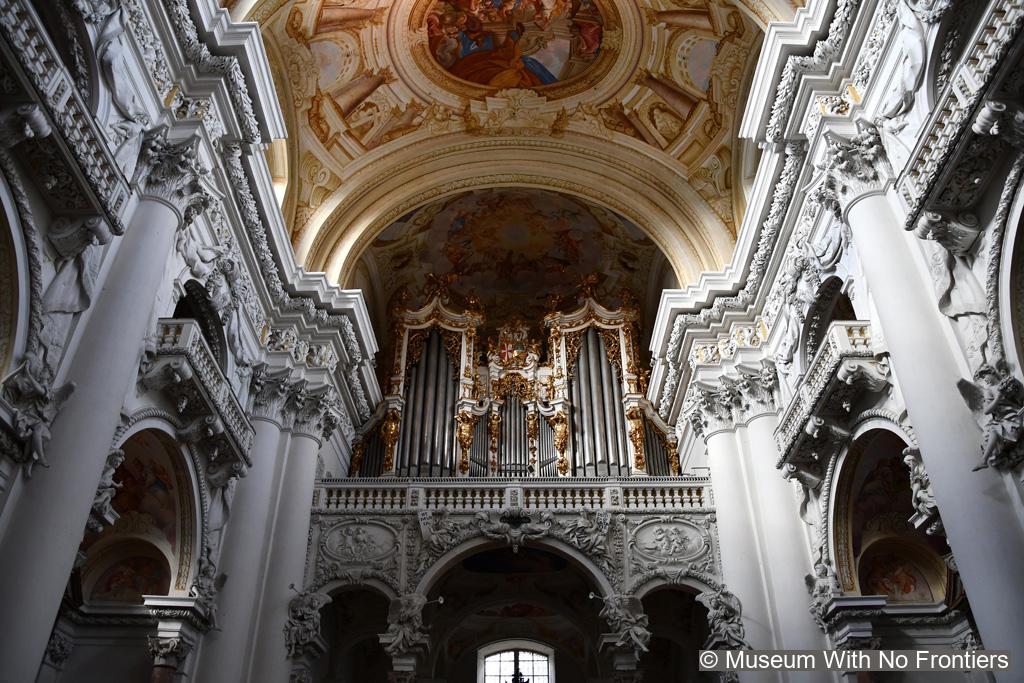
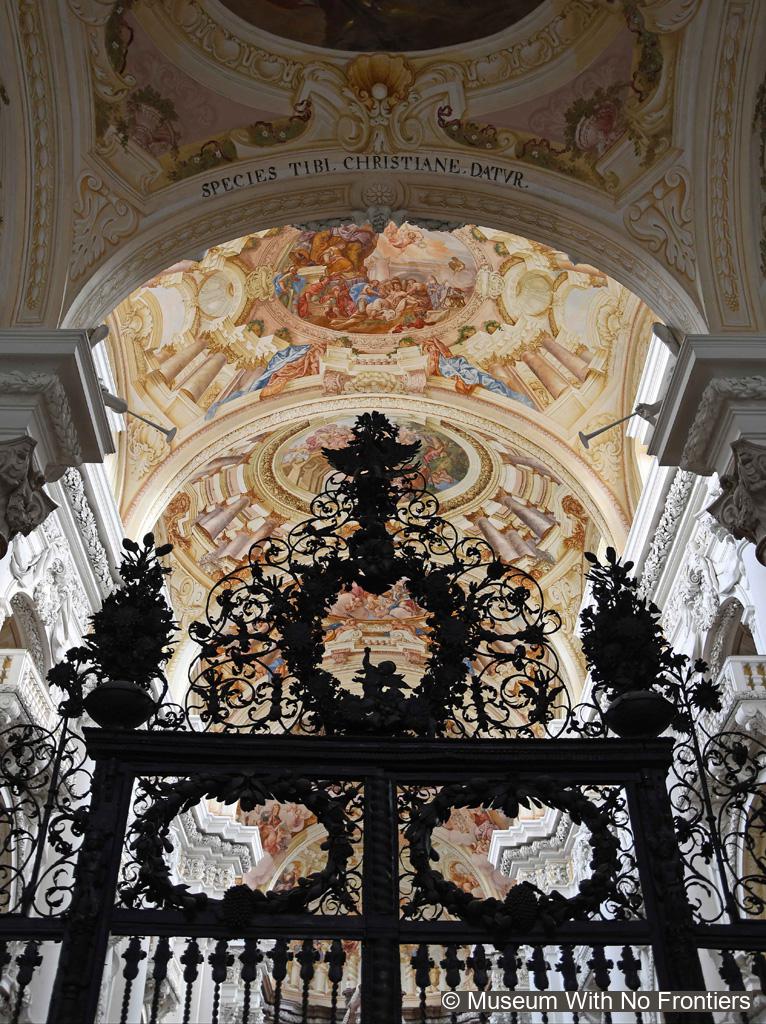
The church´s interior with its gigantic white half-pedestals and winding entablature appears mighty, festive and noble. The cornice with rich stucco work dominates the room so that the slightly prominent choir organs appear almost insignificant. In contrast to the architecture are the unpretentious fresco paintings in the vaulting, in some places illusionistically continuing the interior´s main motif of the columns.
Marble Hall and Staircase
South Wing and West Wing
1706–14 west wing/staircase and portal, 1718–24 south wing/Marble Hall
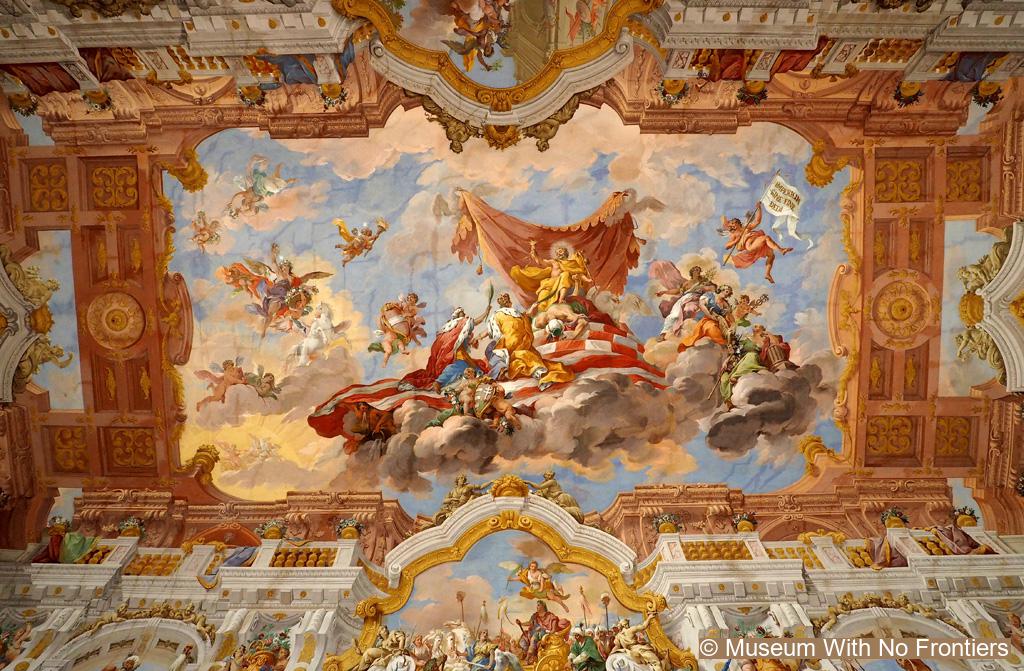
Architecture, staircase: Carlo Antonio Carlone and Jakob Prandtauer; architecture, Marble Hall: Jakob Prandtauer; oil and fresco paintings: Bartolome Altomonte
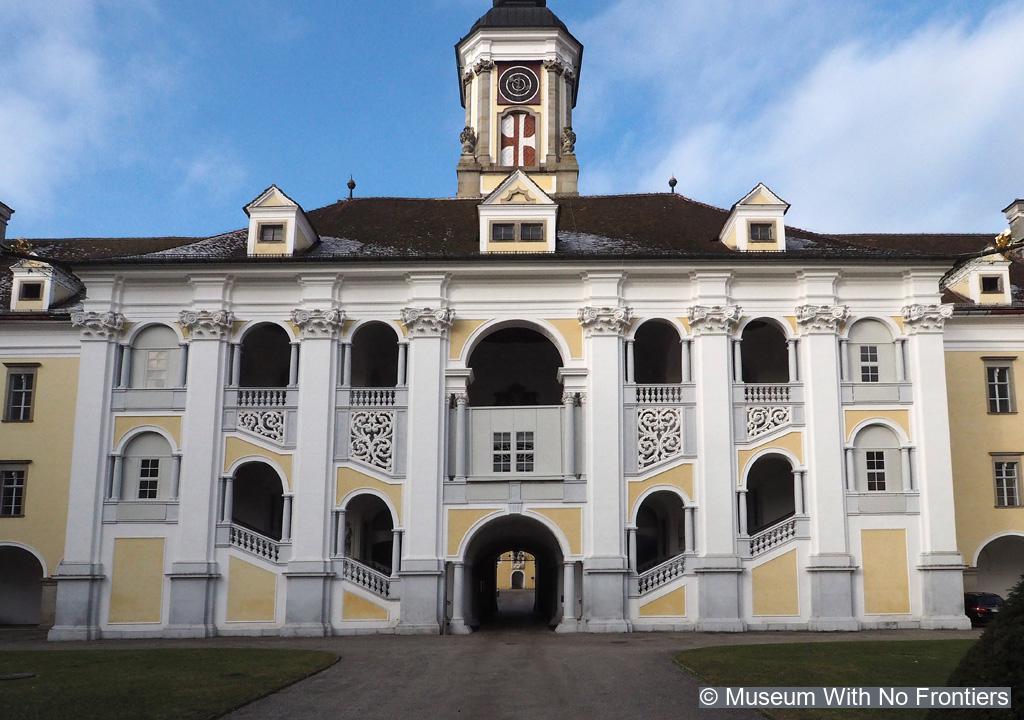
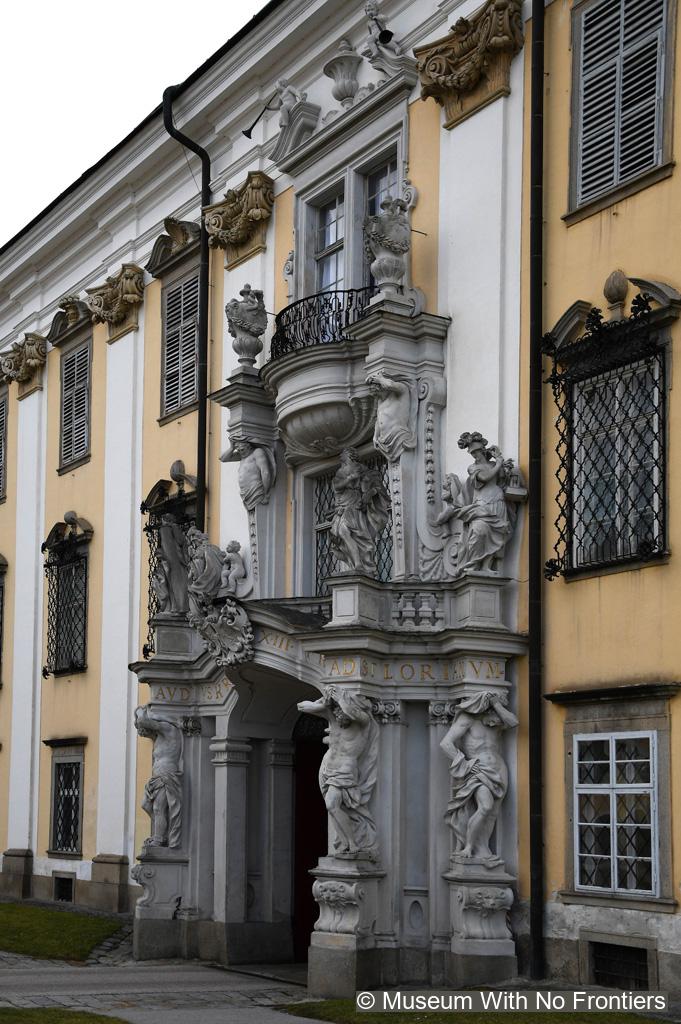
After the death of Carlo Antonio Carlone, who had been commissioned to (re)build the church and the abbey buildings, Jakob Prandtauer assumed the construction works. He was a well-known architect and conferred of course his personal character. He added an emphasizing, three storey portal to the infinite-seeming west wing, reworked the staircase and its façade and accentuated the south wing with a prominent middle part, the Marble Hall.
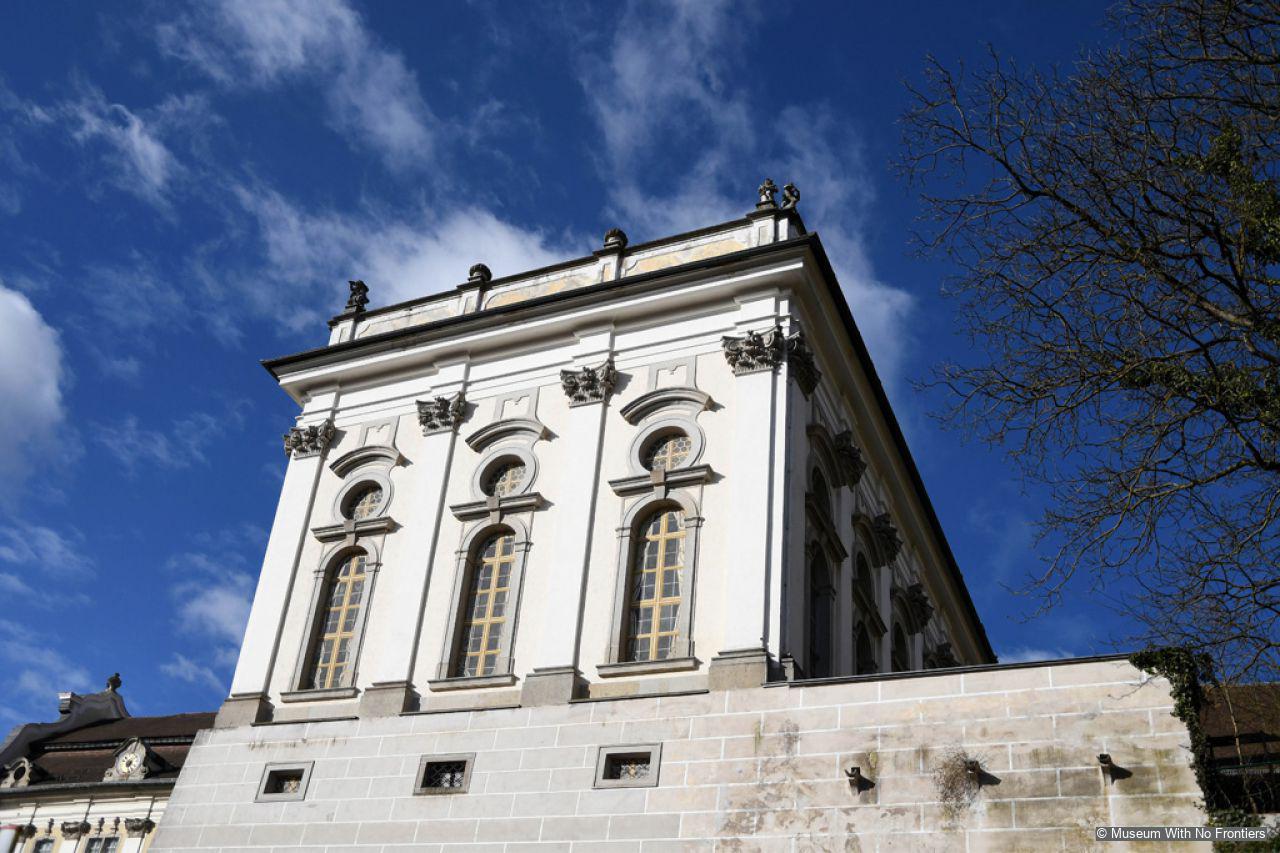
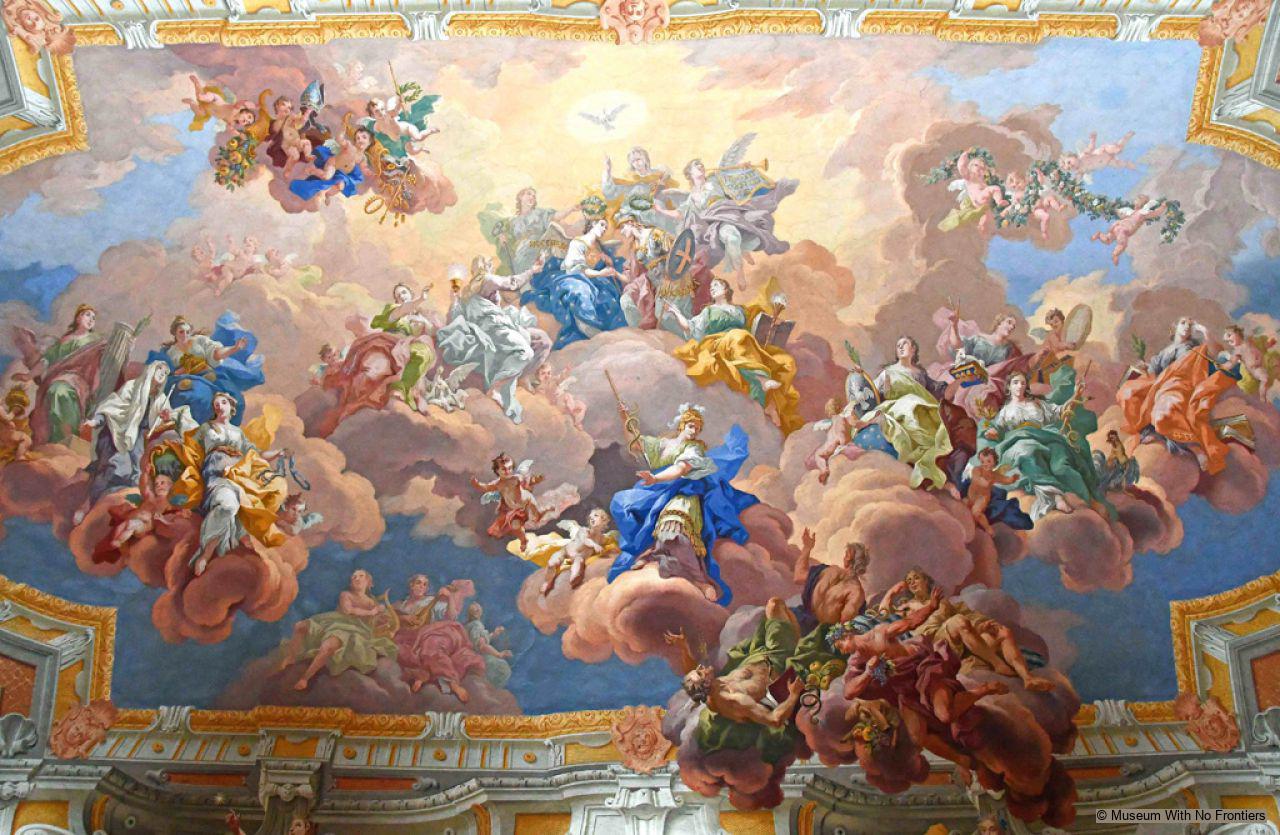
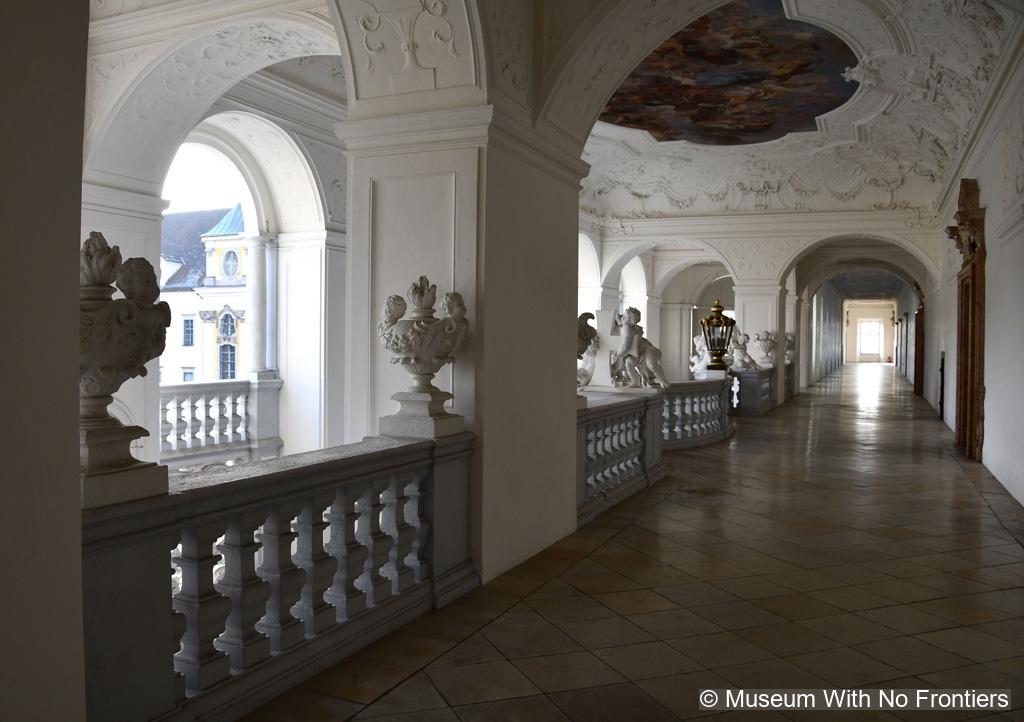
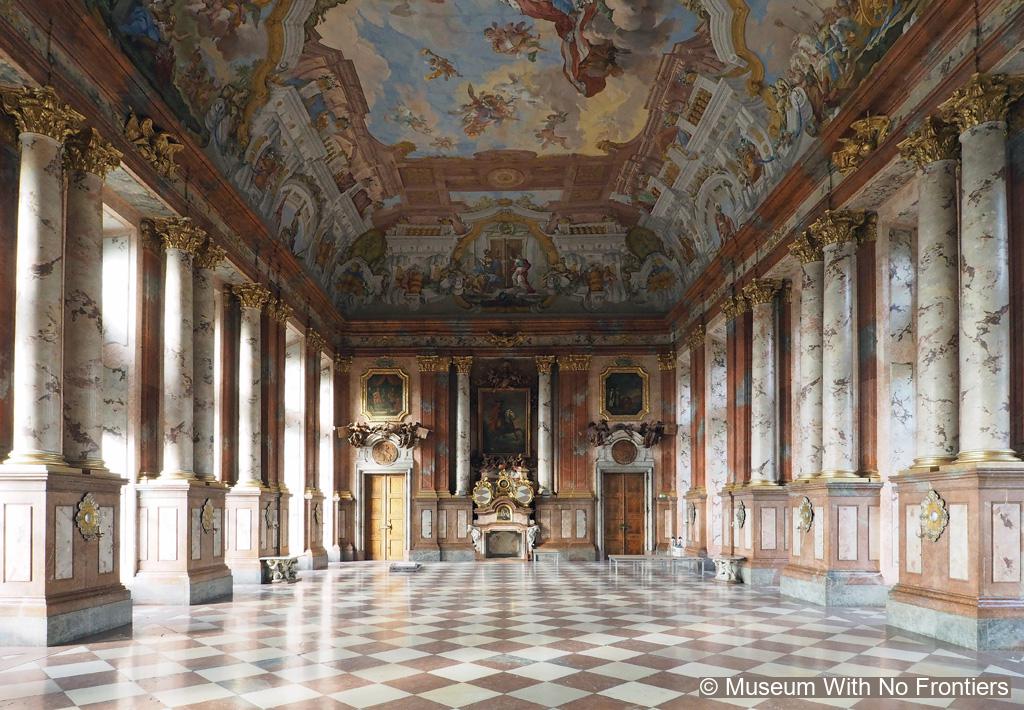
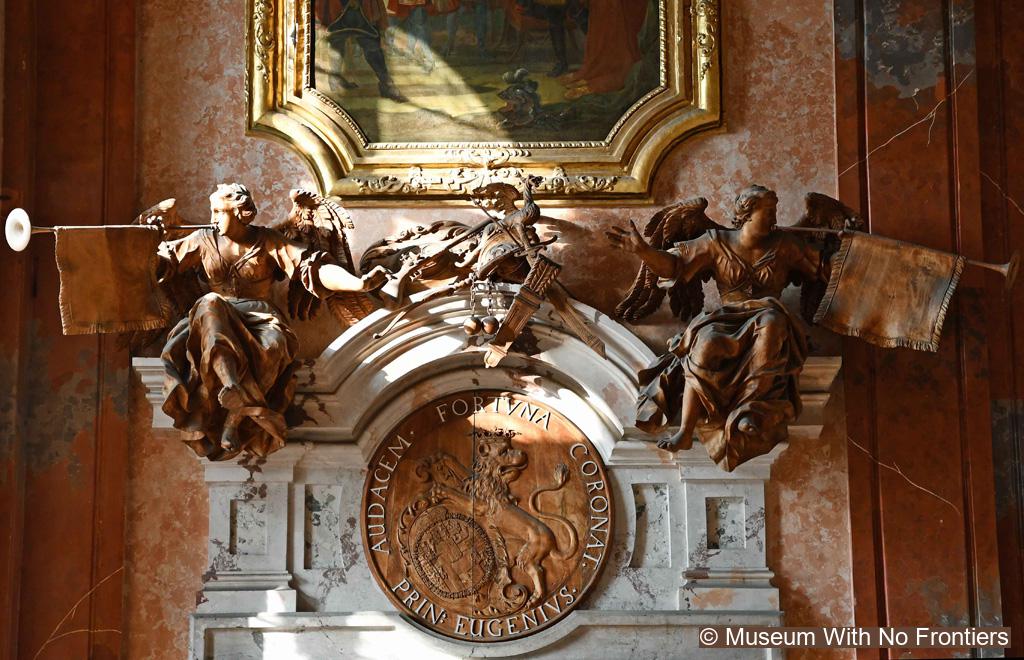
Going up the staircase – a typical Baroque construction – one passes through different parts with different views to the courtyard. It culminates in a set back terrace in the second floor, a kind of imperial loggia with a magnificent view. Provost Johann III Födermayr had built it. He loved palace-like architecture, such as the prominent Marble Hall also erected under him. The façade is characterized by very large windows and pilaster arrangements (over three storeys) and a mansard roof, mostly used for palaces (the same provost had built a small castle nearby with another mansard roof). The Marble Hall´s richly decorated interior with oil and fresco paintings is praising Prince Eugene of Savoy who won the war against the Ottomans and secured therewith peace in the Holy Roman Empire for a very long time.
Imperial Apartment and guest rooms
West Wing second floor
1706–14
Leonhard Sattler and members of the Sattler family, members of the family Jegg
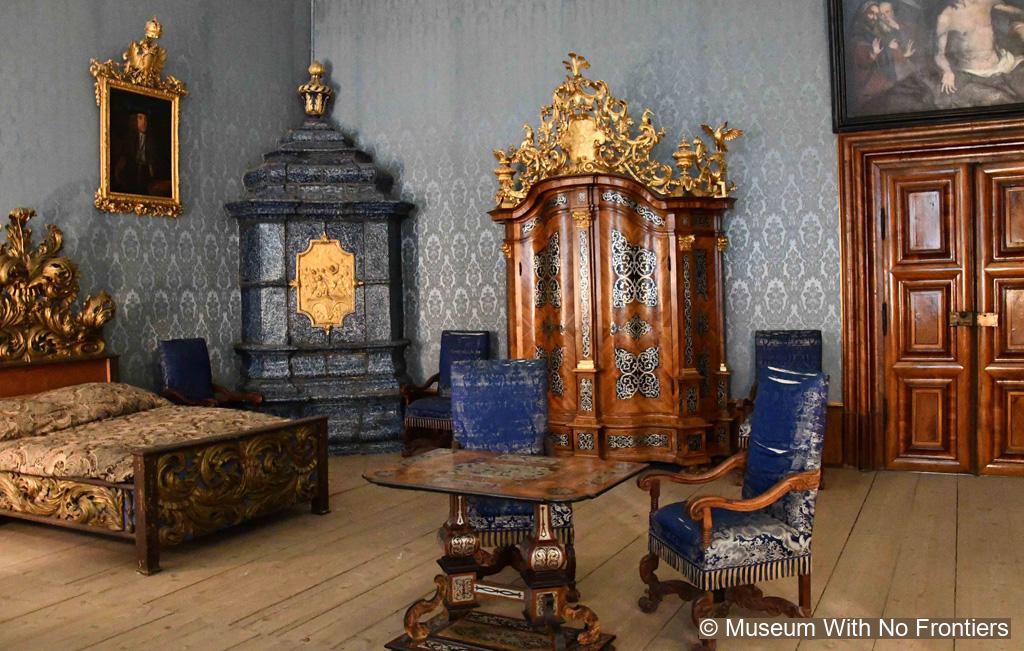
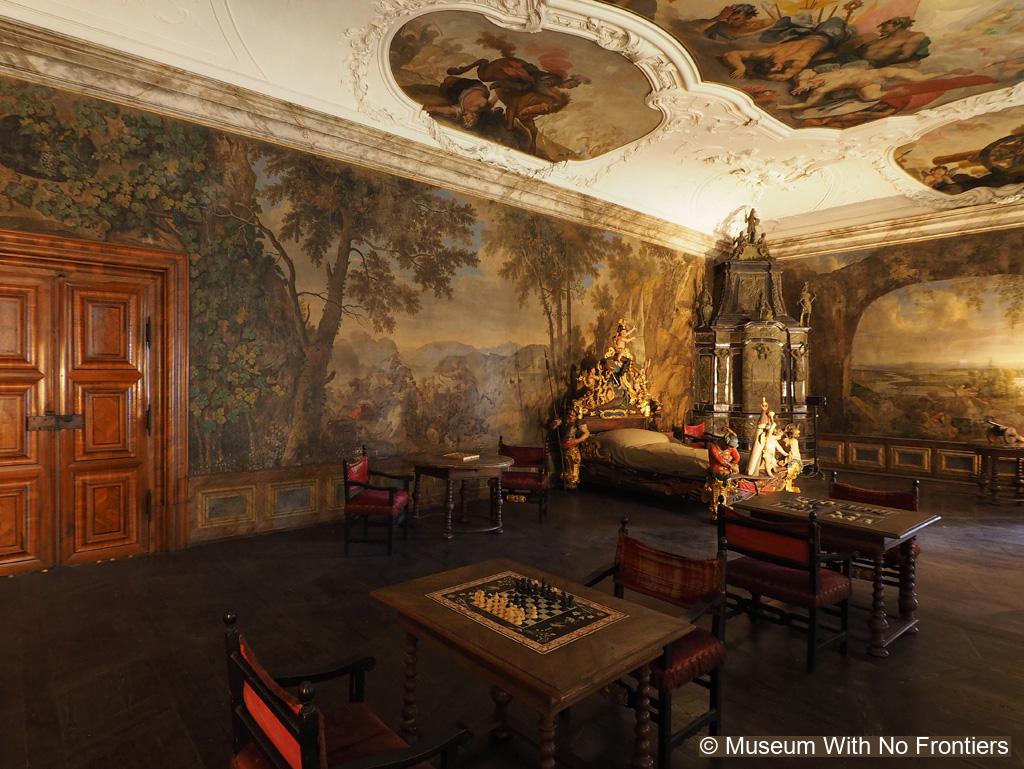
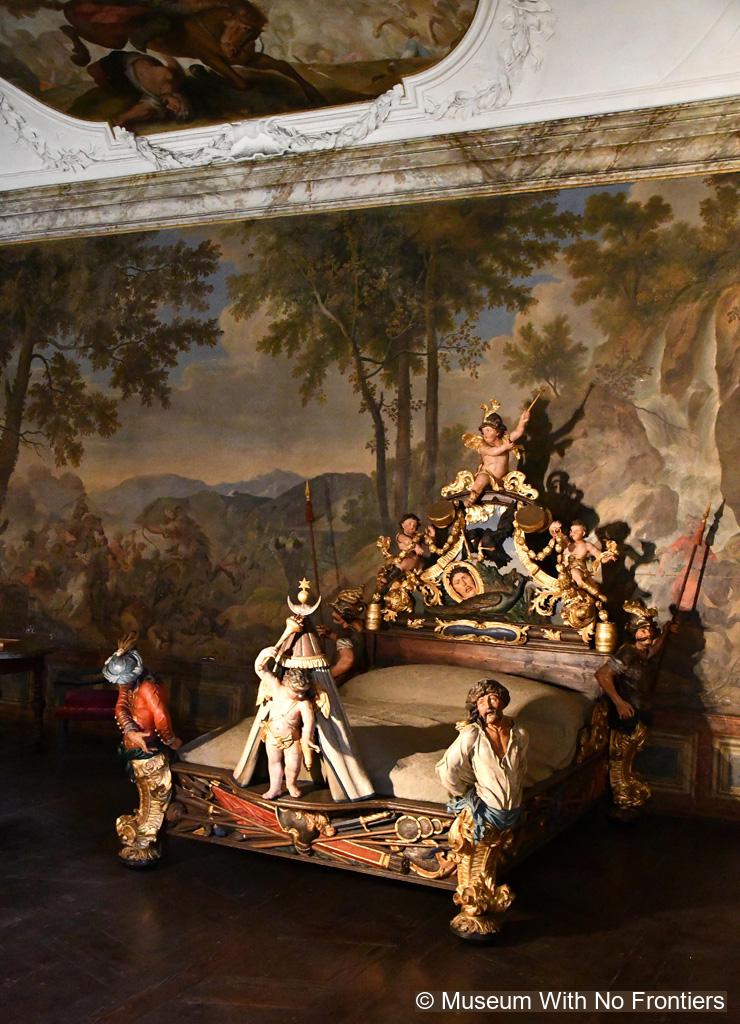
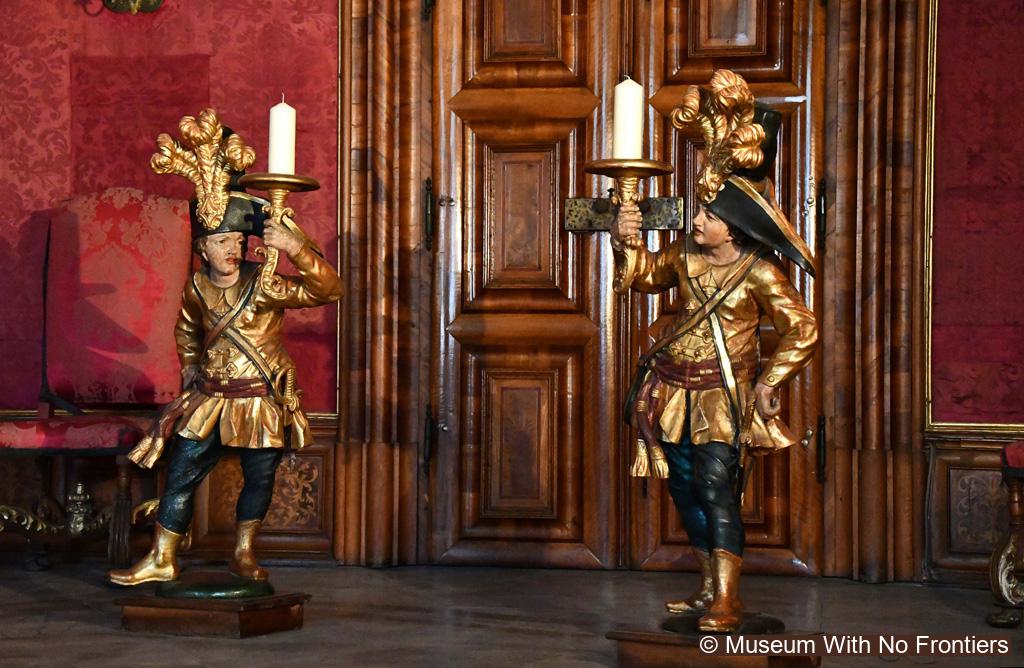
Like almost every monastery, Stift St. Florian provided representative rooms for the Imperial Family when they were traveling. This was a useful facility in times where there were only few hotels/hostels, most of them dirty and unsafe. The 16 guest rooms are still equipped with the original 18th century furniture and fittings, all manufactured by Upper Austrian craftsmen. The sculptures over the doors are remarkable as well as the light carriers and the bed posts in the so-called Prince Eugene room. Sculptures and wall paintings recall his victory over the Ottomans. Statues, furniture, doors and floors in all guestrooms were done by the members of two families, Sattler and Jegg. The most gifted artist-craftsman under them was Leonhard Sattler who made furniture, decoration, all wooden sculptures in the guest rooms, as well as the stone figures and ornaments on the portal.
Selected bibliography:
Holzinger, Johann and Buchmayr, Friedrich (eds), Augustinian Collegiate Foundation St. Florian, Regensburg: Verlagsgruppe Schnell and Steiner, 2014.
Korth, Thomas, Stift St. Florian: Die Entstehungsgeschichte der barocken Klosteranlage. Nürnberg: Verlag Hans Carl, 1975.
Luger, Walter, Stifte in Oberösterreich und in den angrenzenden Gebieten. Linz: Oberösterreichischer Landesverlag Linz, 1969: 90–106.
Wagner, Christoph and Rehberger, Karl, Augustinerchorherrenstift St. Florian, Vienna: Christian Brandstätter Verlag, 1986.
Weigl, Huberta, Jakob Prandtauer (1660–1726): Baumeister des Barock, vol. 1, Petersberg: Michael Imhof Verlag, 2021: 241–295.
Citation of this web page:
Gabriele Liechtenstein "St. Florian Abbey and Abbey Basilica" in "Discover Baroque Art", Museum With No Frontiers, 2026.
https://baroqueart.museumwnf.org/database_item.php?id=monument;BAR;at;Mon11;40;en
MWNF Working Number: AT 40