

 Back
Back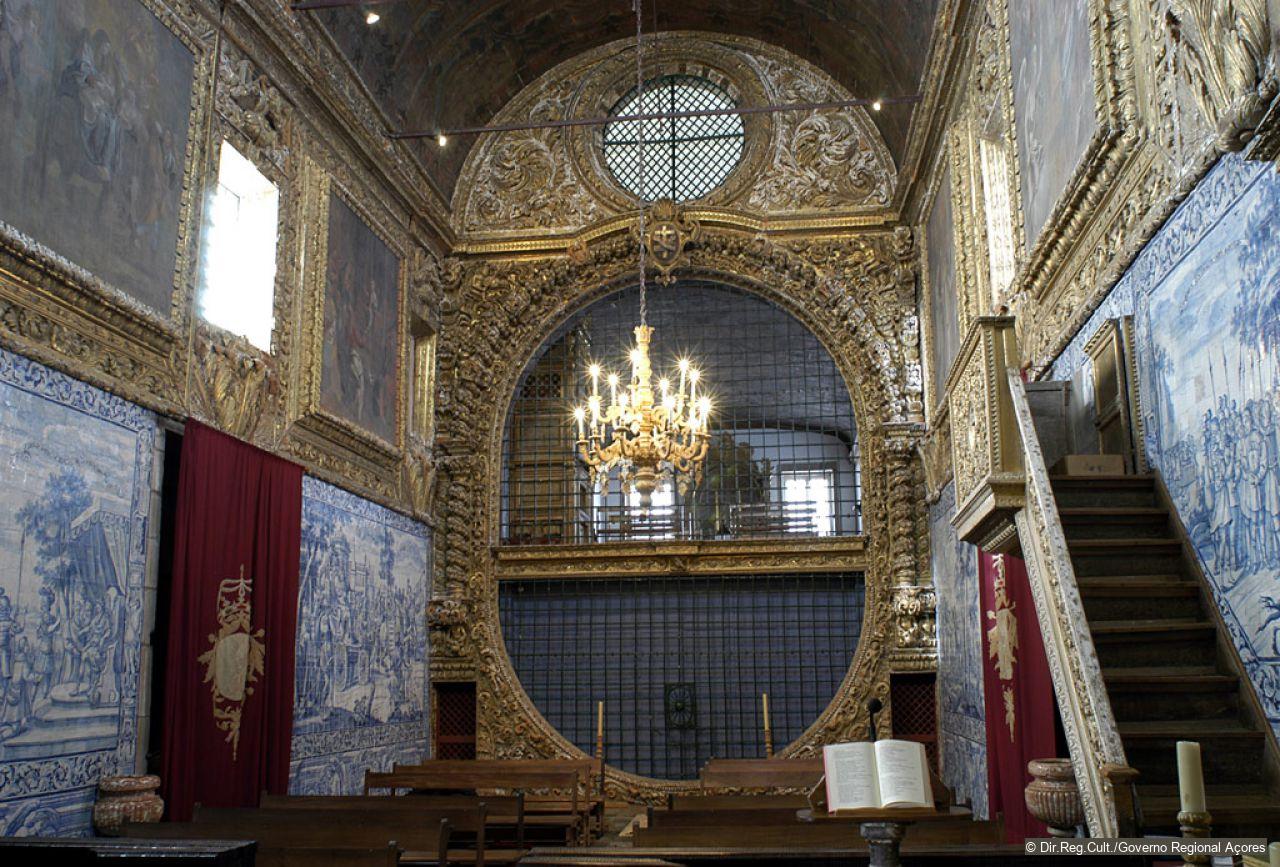
 Add to My Collection
Name of Monument:
Church and Convent of S. Gonçalo
Also known as:
Recolhimento de S. Gonçalo
Location:
Angra do Heroísmo, Azores, Portugal
Rua da Rosa
9700–171 Angra do Heroísmo
T : +351 295 212 511
F : +351 295 212 512
E : rec.sao.goncalo@sapo.pt
Recolhimento de S. Gonçalo, Instituição Particular de Solidariedade Social (Responsible Institution)
Date:
17th and 18th centuries
Artists:
Architects and carvers: local unknown masters; azulejos attributed to Teotónio dos Santos [n.d.]; painting attributed to the workshop of Bento Coelho da Silveira (1648–1708)
Denomination / Type of monument:
Religious architecture
Patron(s):
Brás Pires do Canto
History:
In 1542 the Patron, Brás Pires do Canto, obtained authorisation from Pope Paul III for the foundation of a convent belonging to the Order of Saint Claire. Three years later, his two daughters were admitted as founders. By the end of the 16th century the convent had grown to occupy a large area, and the nuns of the Order of St. Claire became known for their singing, jam-making, confectionery and other skills in the arts. This was the only convent preserved on Terceira Island following the Decree of Extinction of the Religious Orders in Azores (Dec. nº 25, May 17th 1832), and housed nuns from other convents. Its extinction occurred only in 1885 upon the death of the last nun. Nowadays the buildings accommodate a kindergarten and act as a shelter, administered by the Congregation of the Reparadoras of the Sacred Heart of Jesus.
Description:
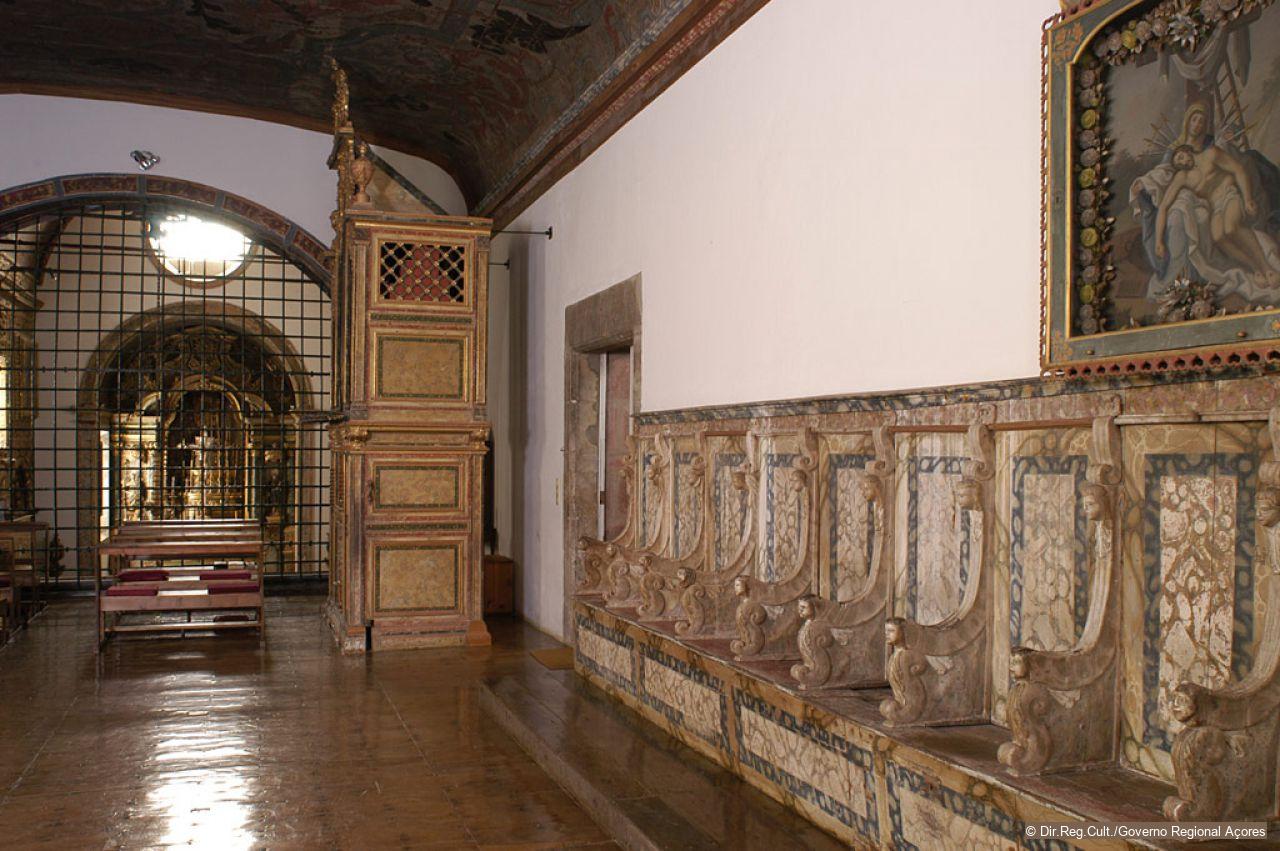
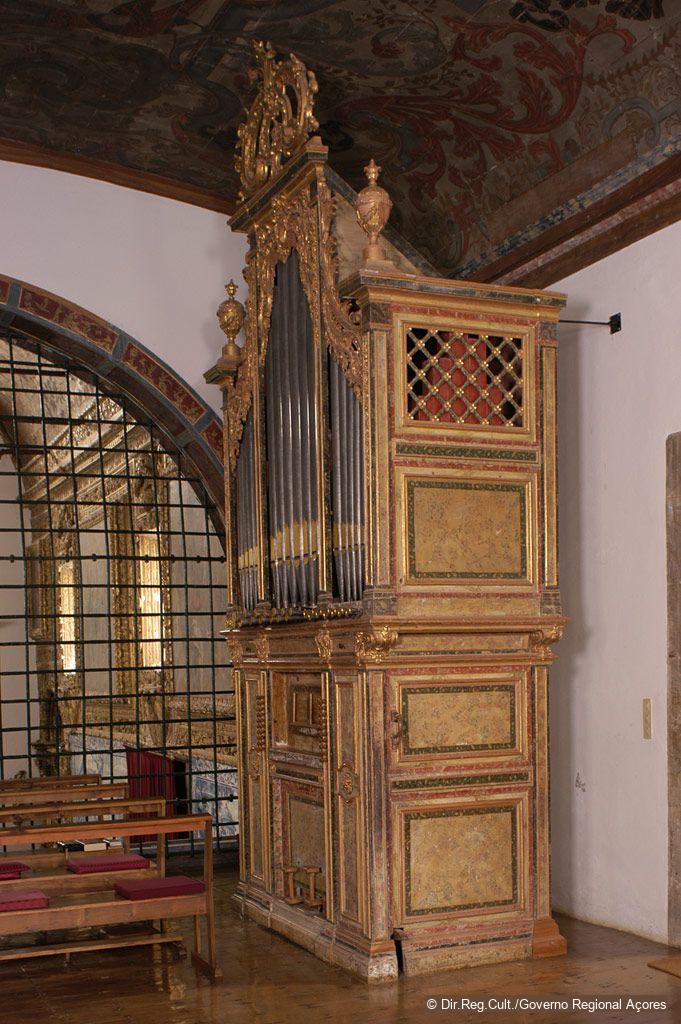
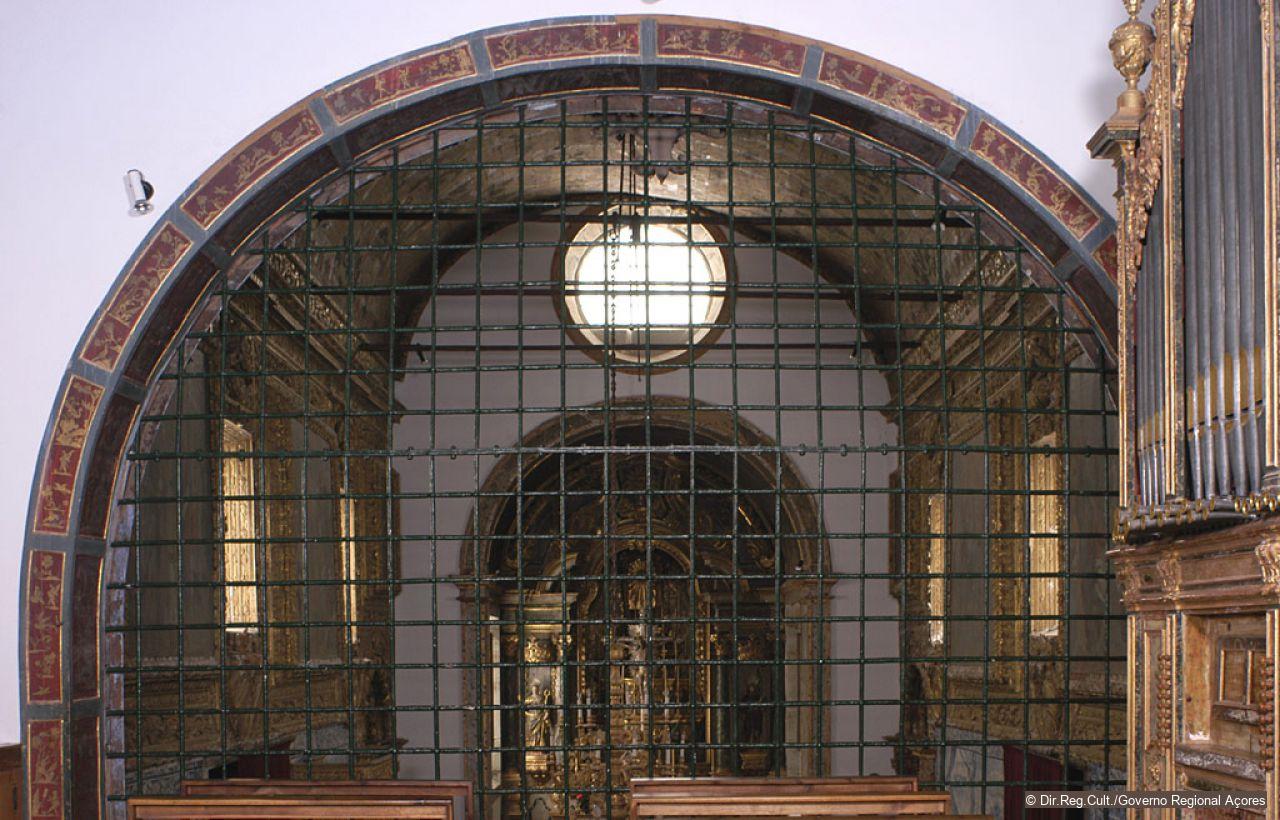
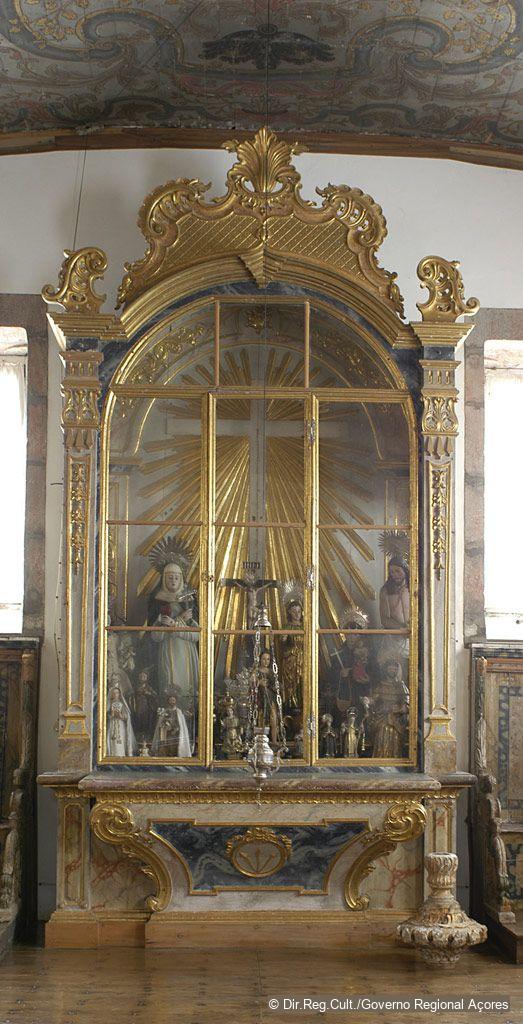
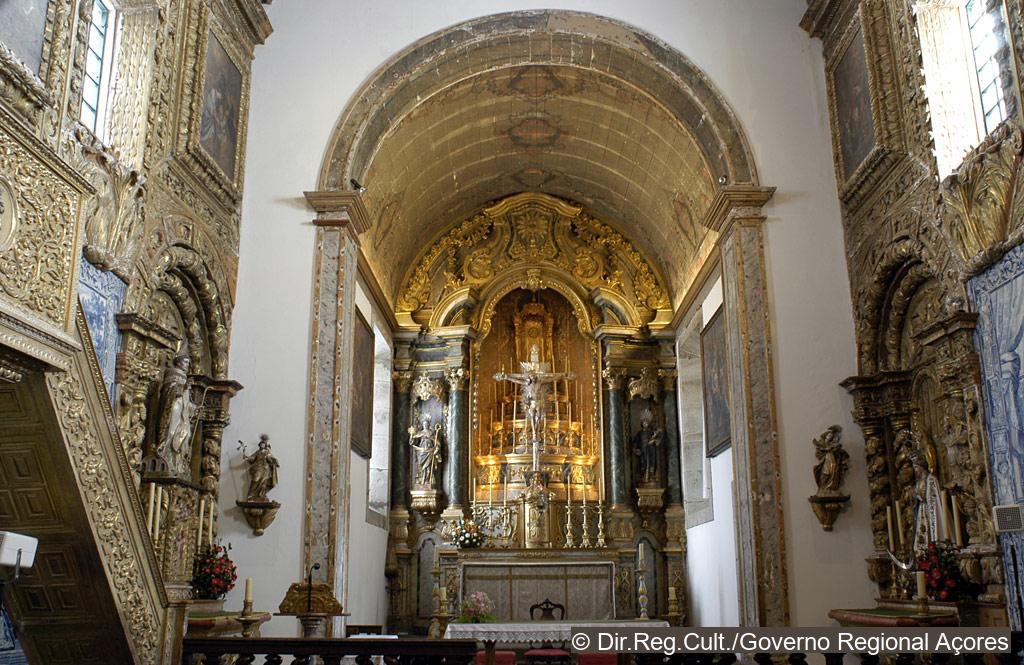
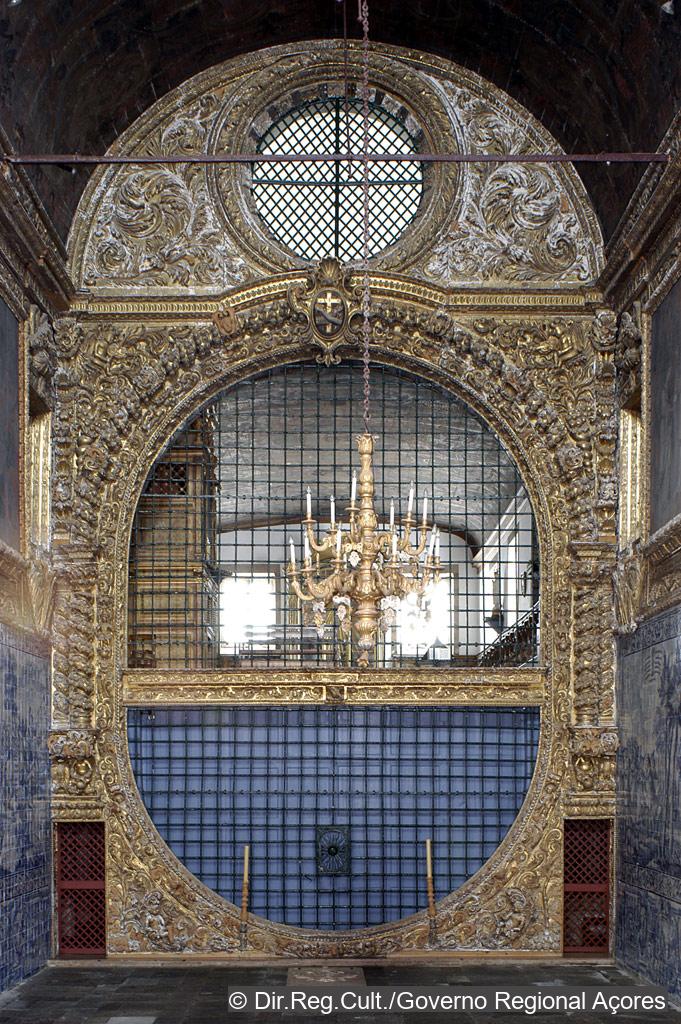
Of all the religious houses on Terceira Island, only S. Gonçalo retains features of the old convent, although it has undergone several alterations over time. This vast building includes two cloisters, one of which dates to the 16th century and the other built the following century. The cloisters retain cells, kitchens and dining rooms in the upper storey, as well as primitive ovens and several stores on the ground floor. The single nave church has two overlapping choirs, separated from the church by an oval frame, which is beautifully outlined with Baroque gilded wood carvings in the “National” style. Large azulejos and oil paintings from the late 17th and early 18th centuries furnish the interior where ornamental unity is completed with an altarpiece for the high altar, a more recent work from the Rococo period.
View Short DescriptionThe single nave church has two overlapping choirs, separated from the church by an oval frame, which is beautifully outlined with Baroque gilded wood carvings in the “National” style. Corresponding to the so-called Golden Church model, the decorative scheme is completed with azulejos and oil paintings from the late 17th and early 18th centuries. The main altarpiece belongs to the Rococo period. The convent includes two cloisters, the southern one dating from the 16th century and the northern one built in the following century.
How Monument was dated:
Historical evidence and stylistic analysis
Special features
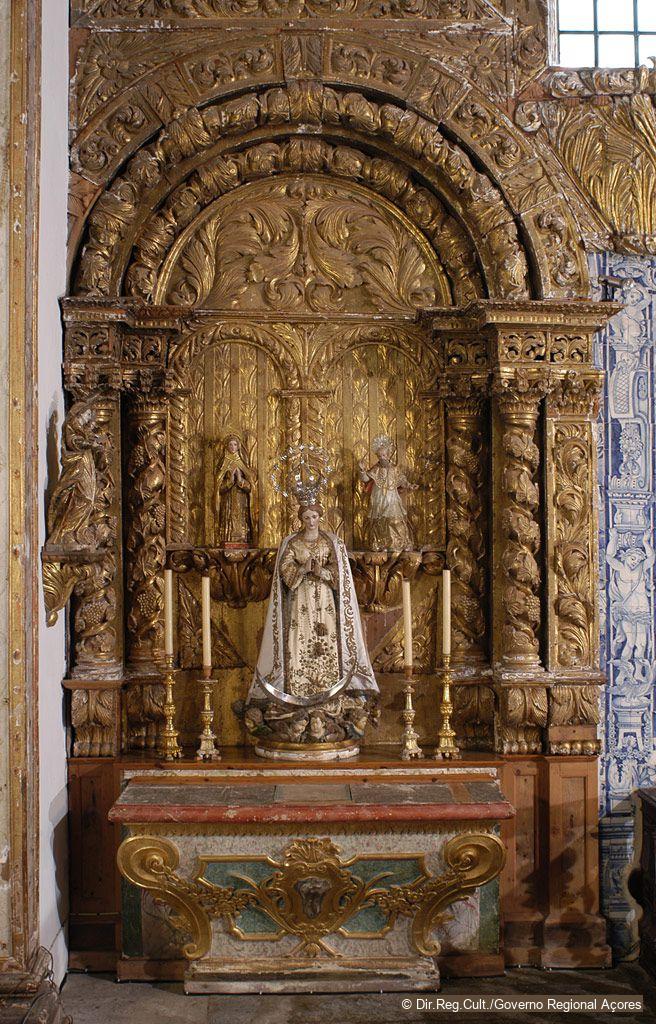
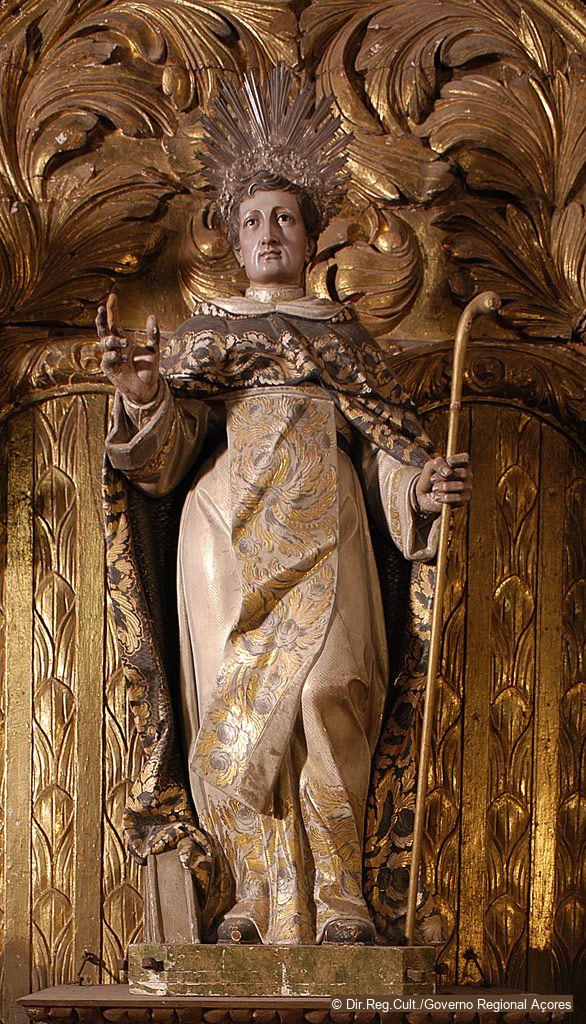
Gilded carvings
Church interior
1675-1725 (National Style)
Unknown local wood carvers
Vine leaves, bunches of grapes, plumage-shaped acanthus leaves and phoenixes, combined with seraphs and musician angels, frame not only the exuberant oval frame of the High and Low Choir but also the six oil on canvas paintings and the two large windows placed each side of the nave.
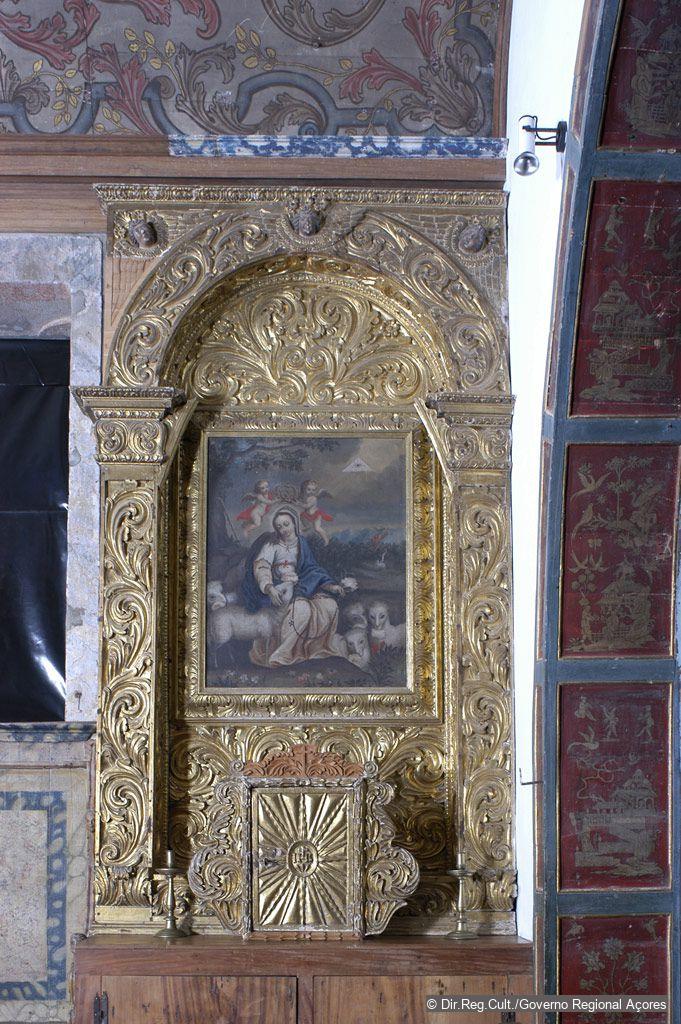
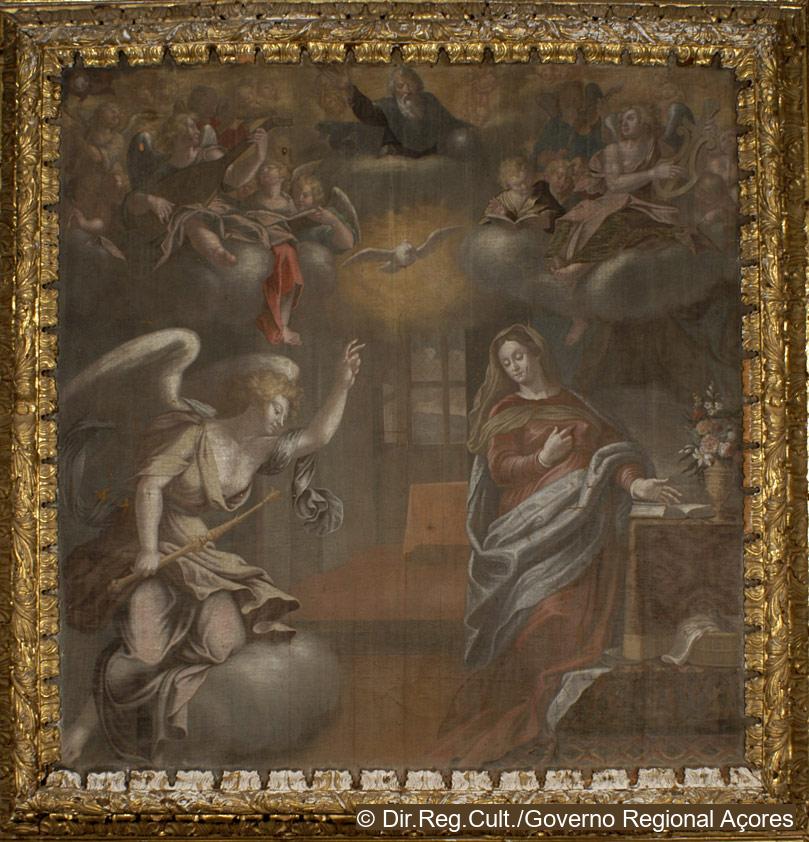
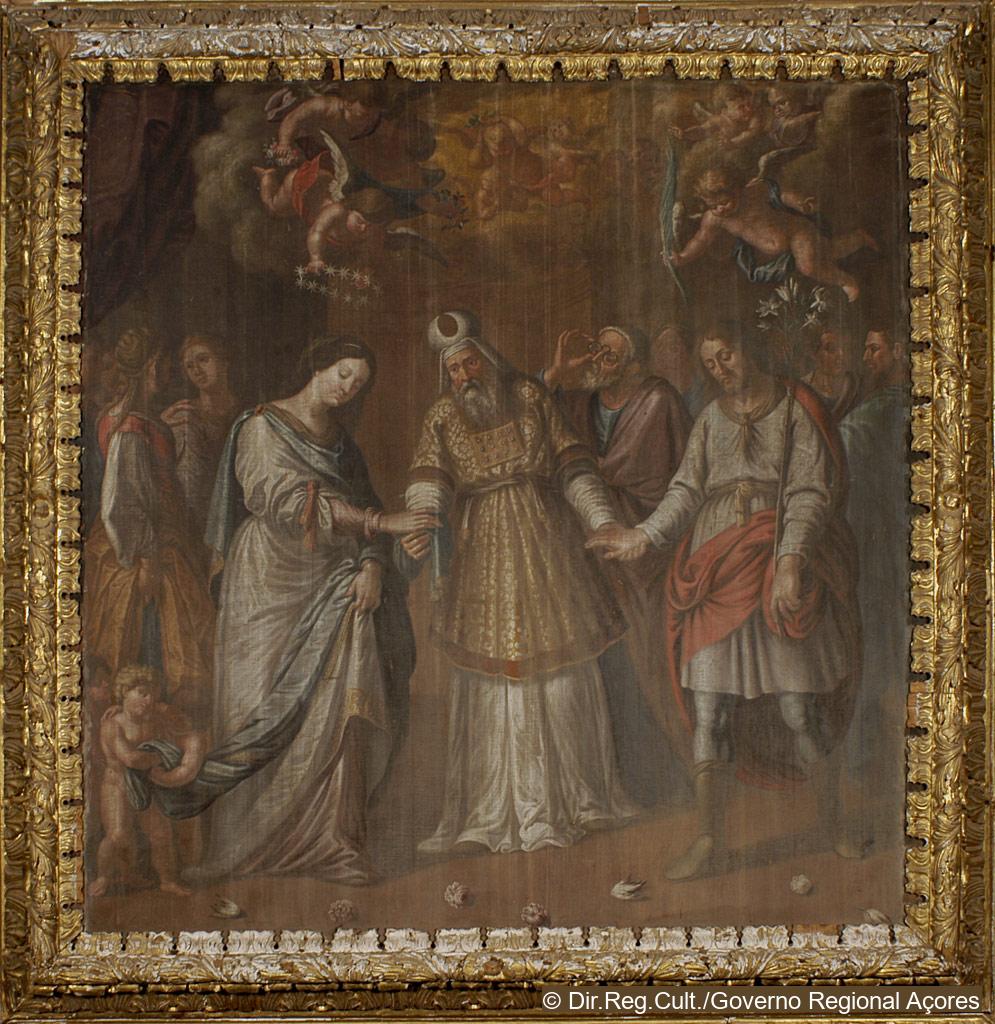
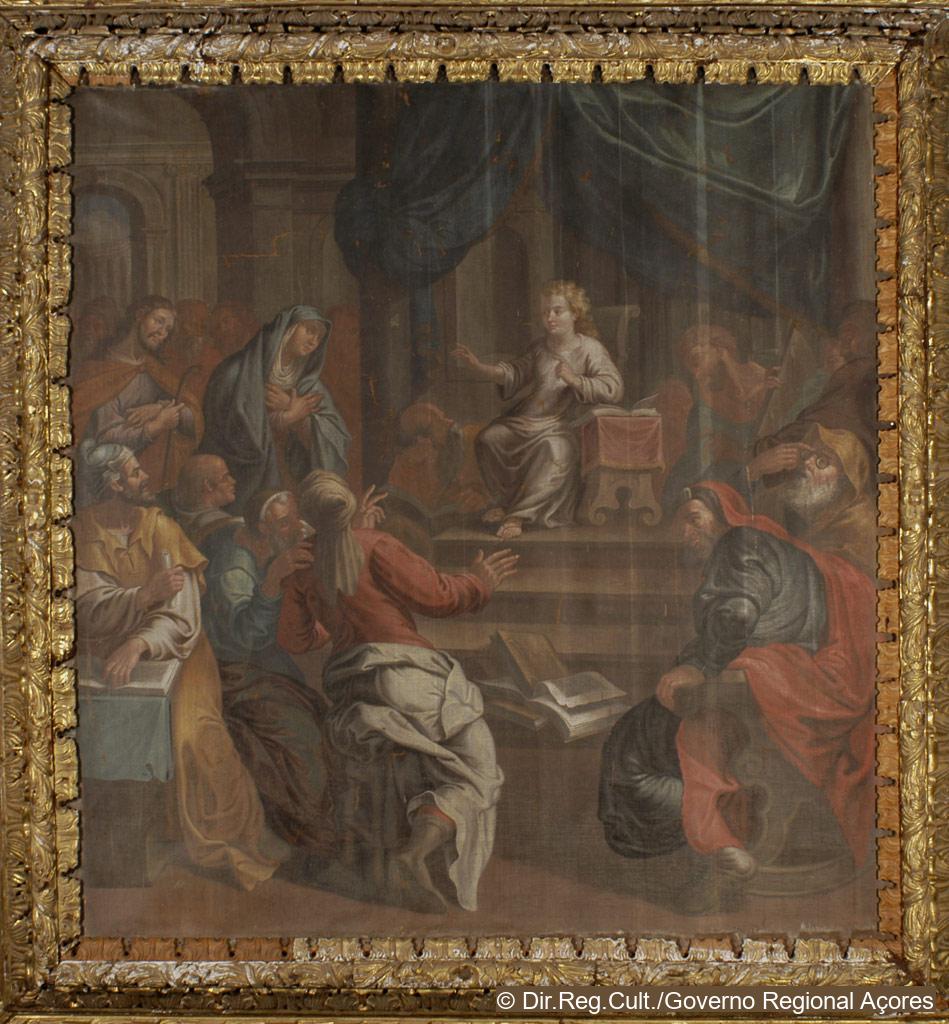
Oil paintings
Nave
Late 17th century, early 18th century
Attributed to Bento Coelho da Silveira's workshop, Lisbon (1648–1708)
Three examples of the six oil paintings that make up the Cycle of the Life of the Virgin and the Childhood of Jesus.
Azulejos
Four Azulejos panels (two per side) line the lower register of the church walls, interrupted by the pulpit and stairs.
c. 1700–1725
Attributed to Teotónio dos Santos [n.d.], Lisbon tile production
Azulejos illustrating the story of Joseph in Egypt captioned in Latin. At the bottom of each panel the Miracles of S. Gonçalo of Amarante are represented.
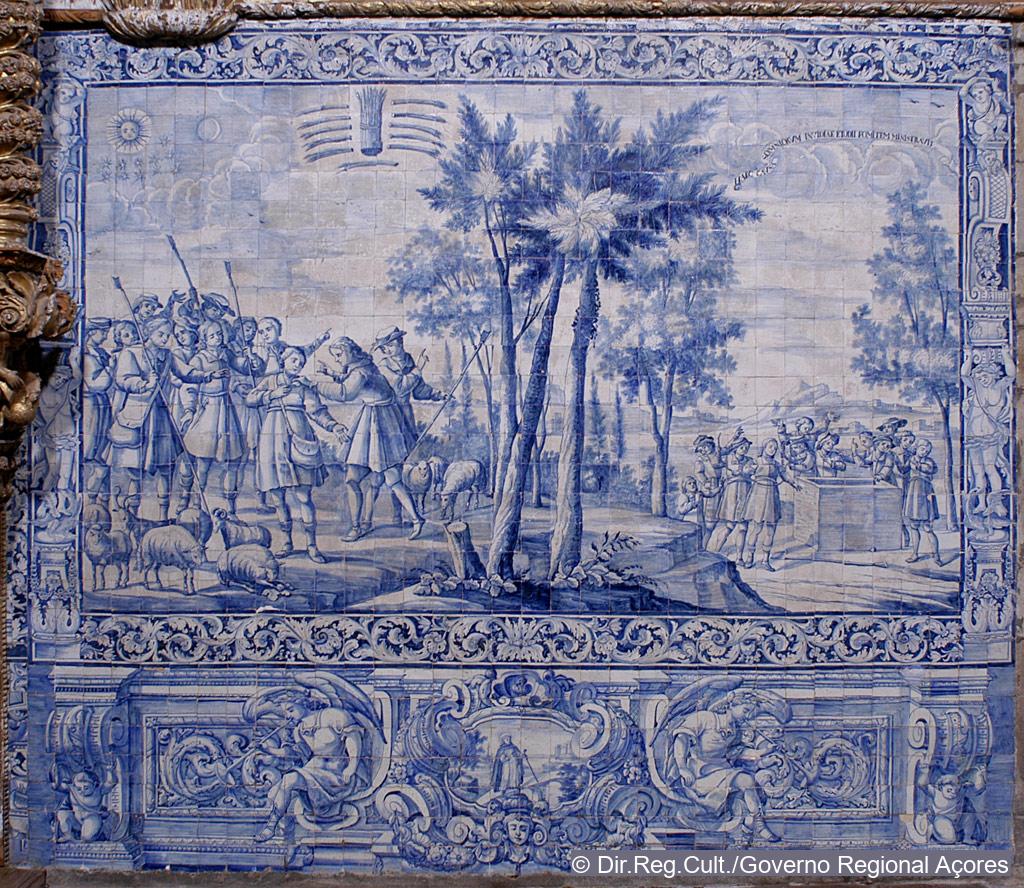
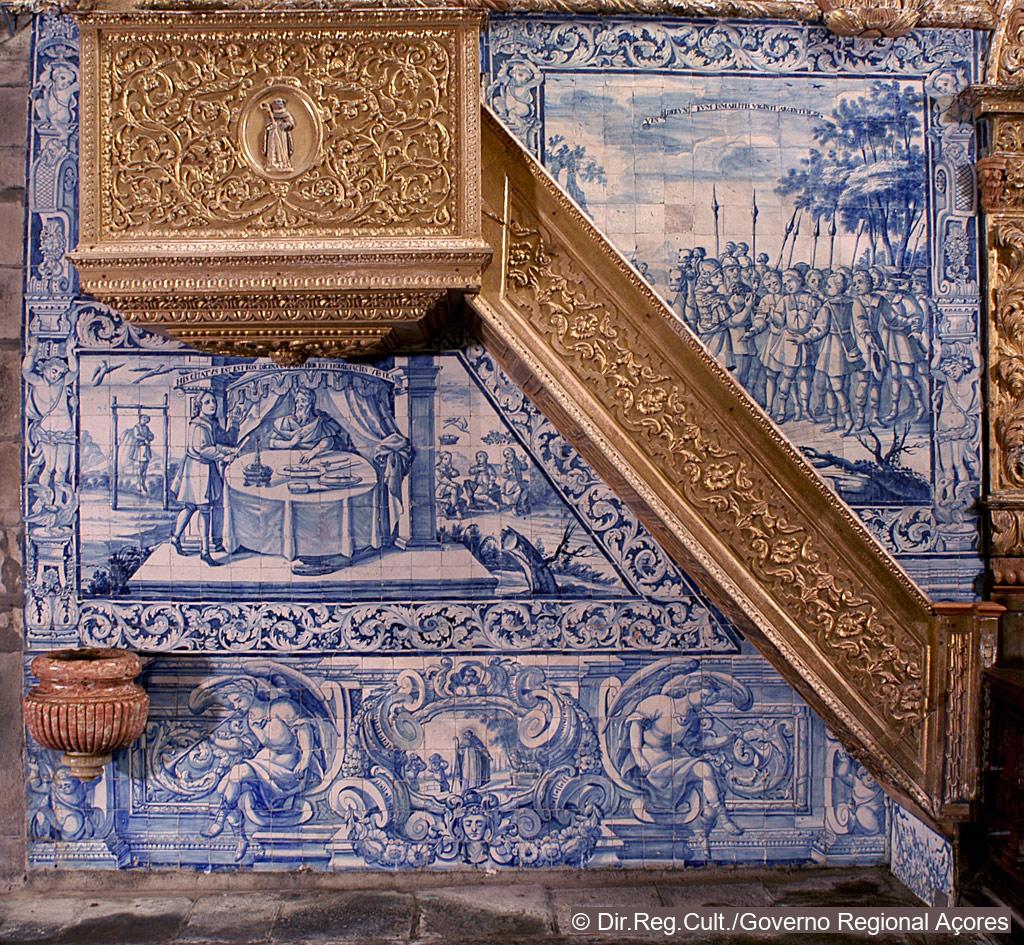
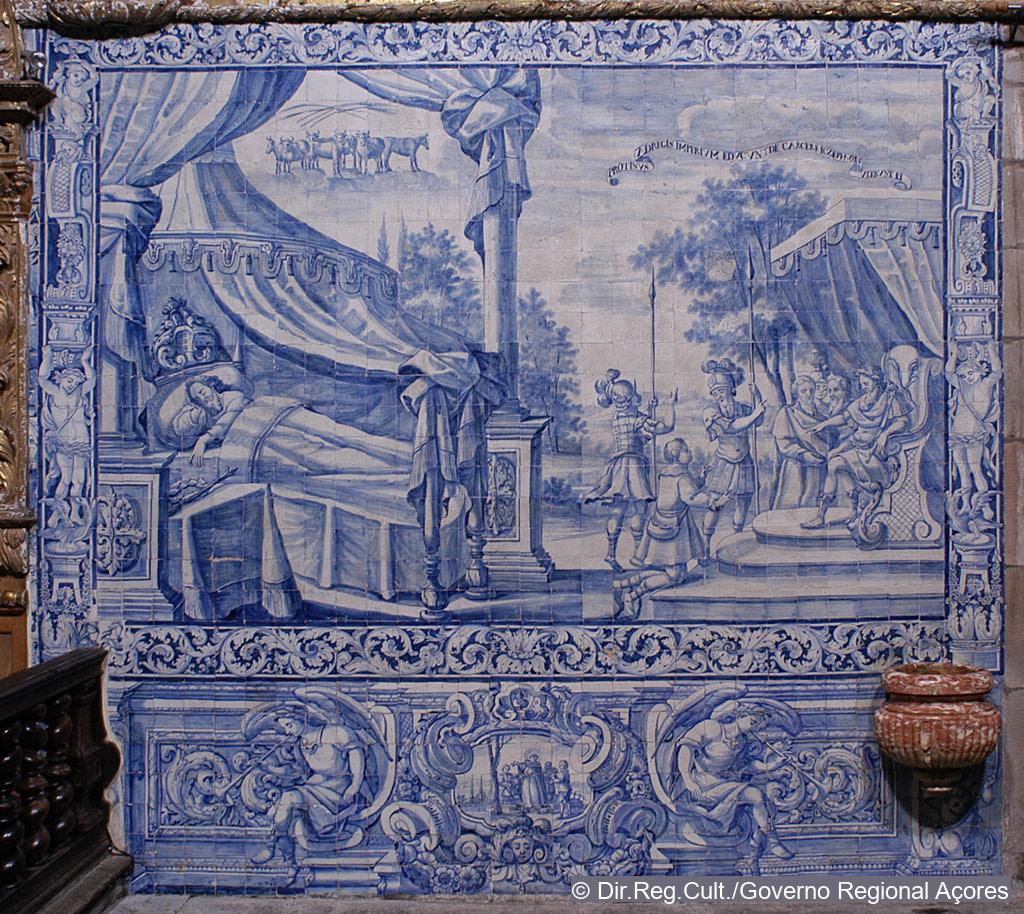
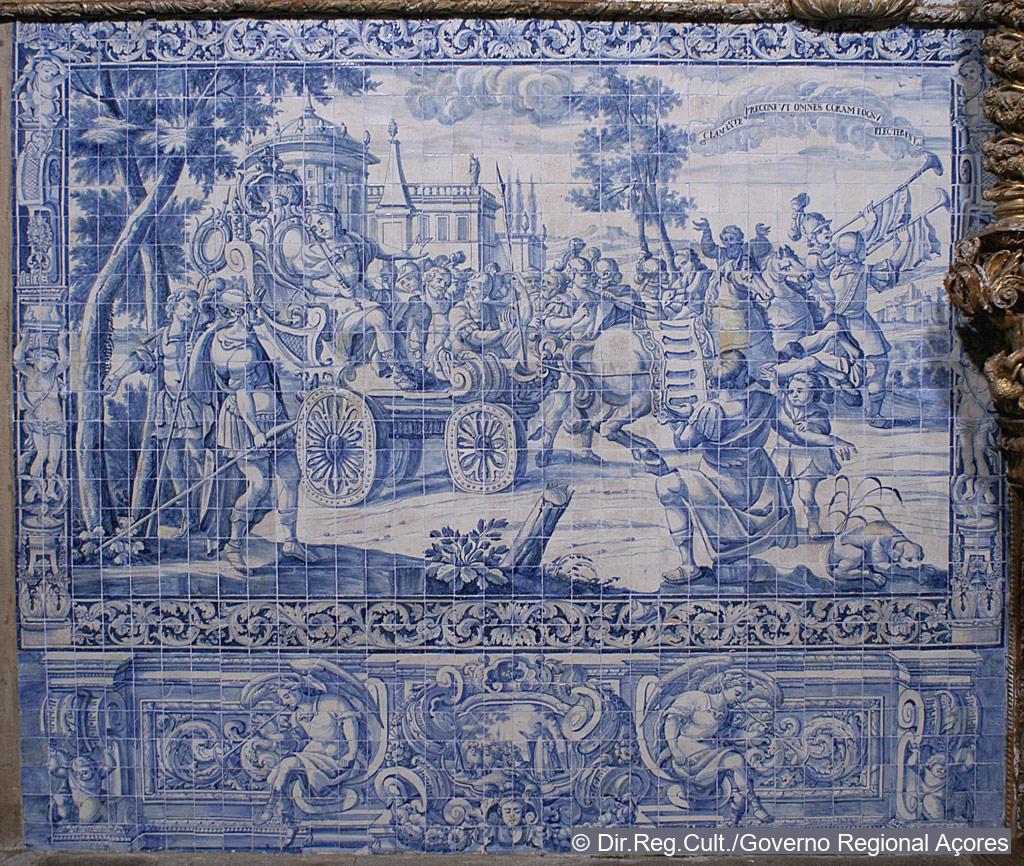
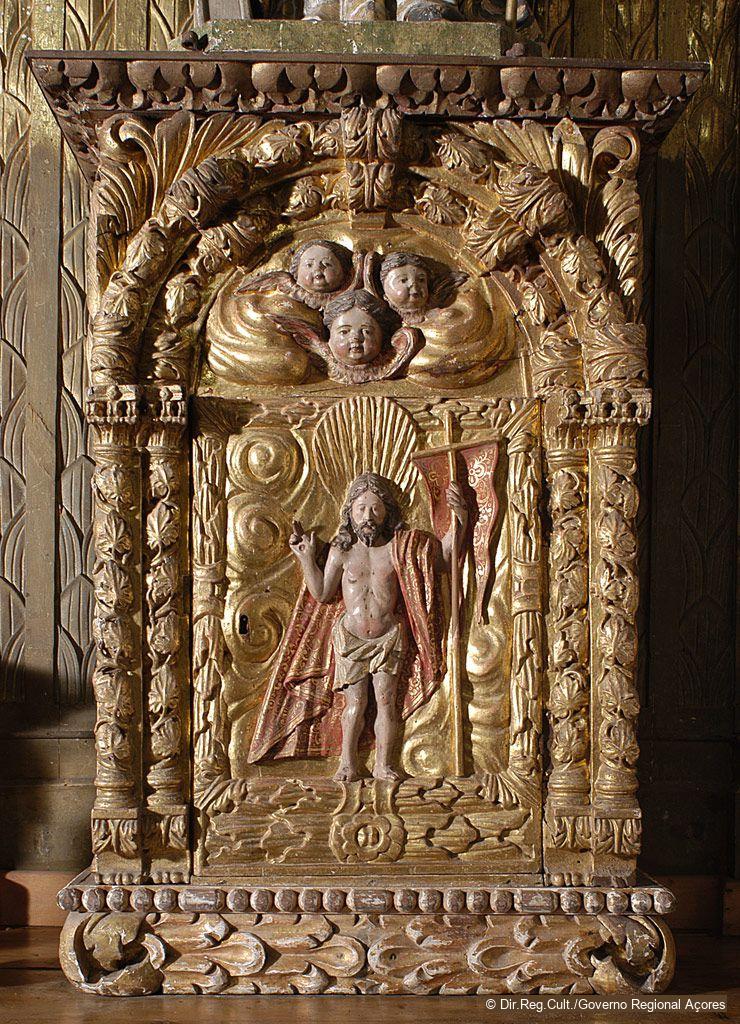
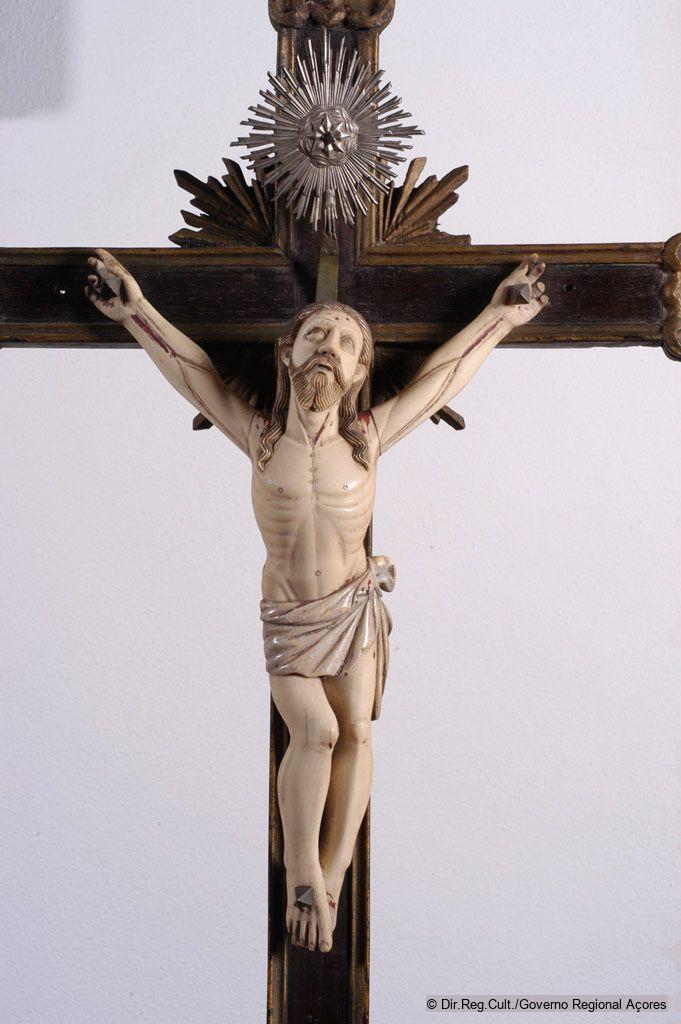
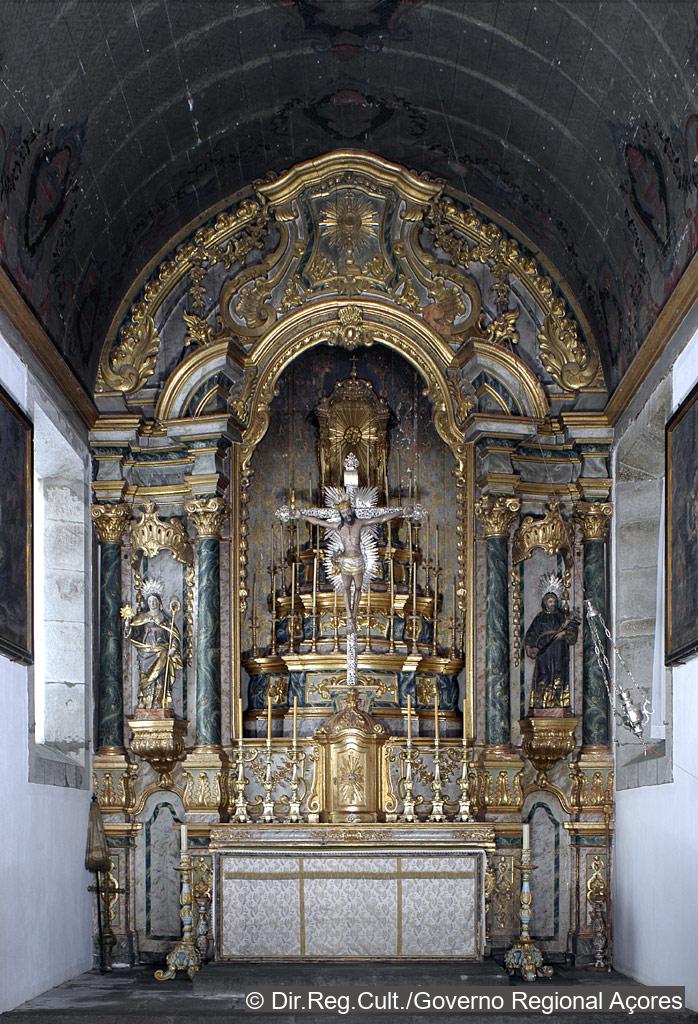
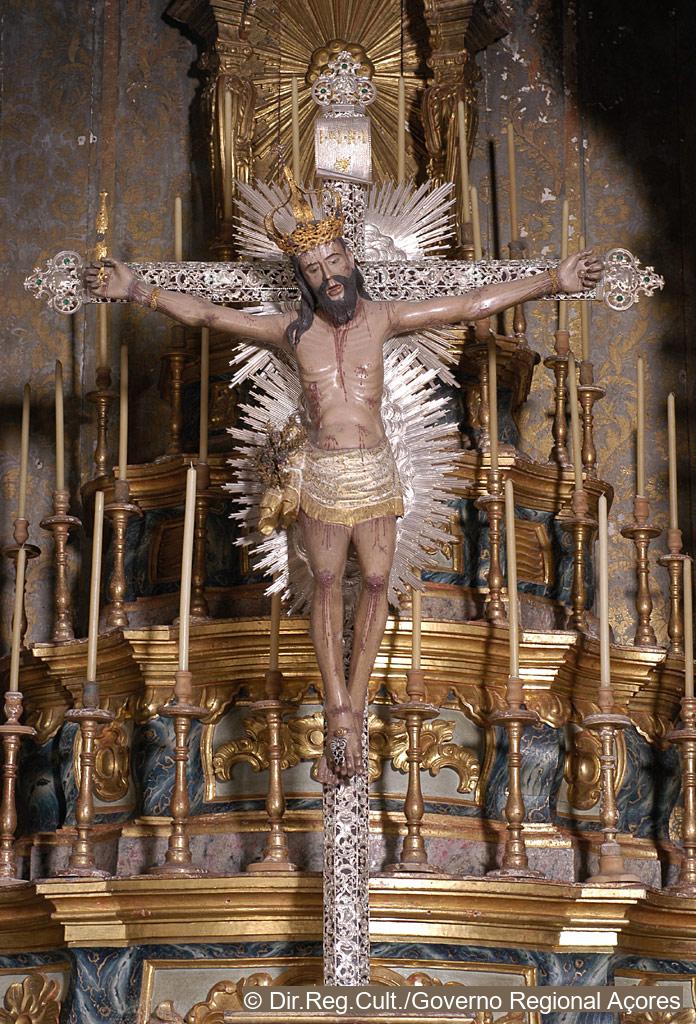
Figure of the Divine Emperor
Main Altar
17th century
Unknown
A harmonious sculpture representing Christ Crucified, of which the anchor and sceptre are of filigree silver.
Oratories
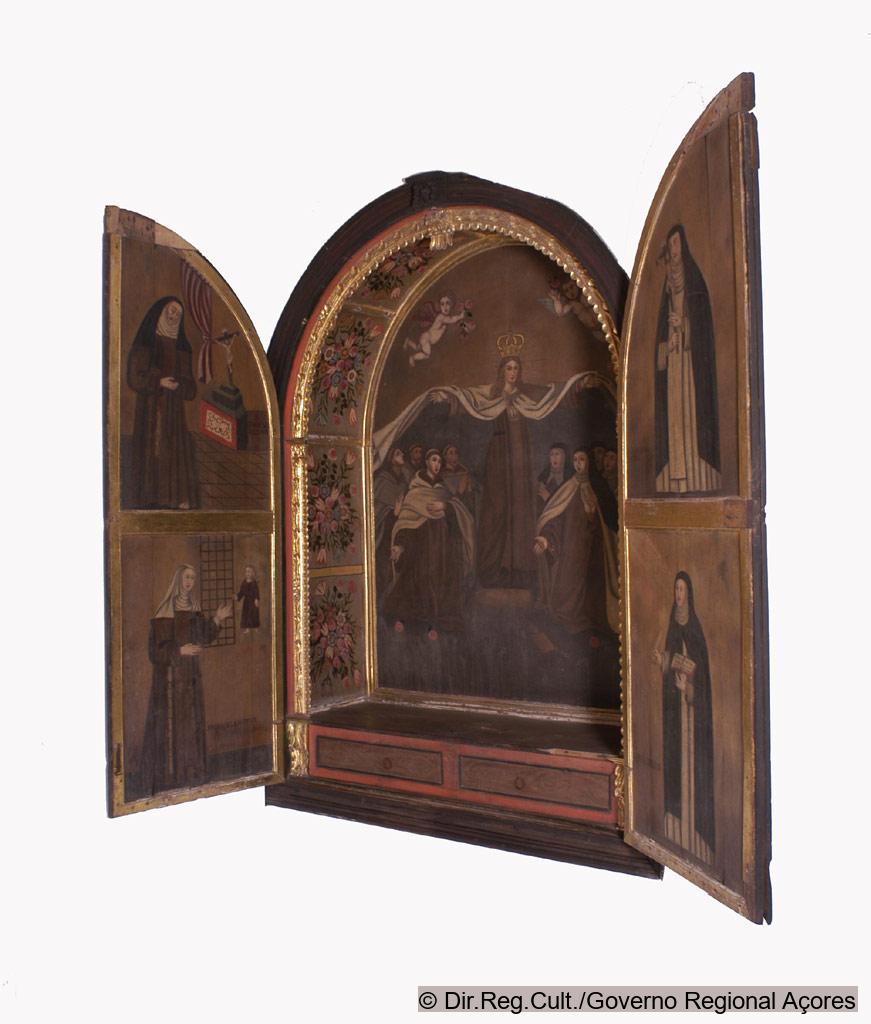
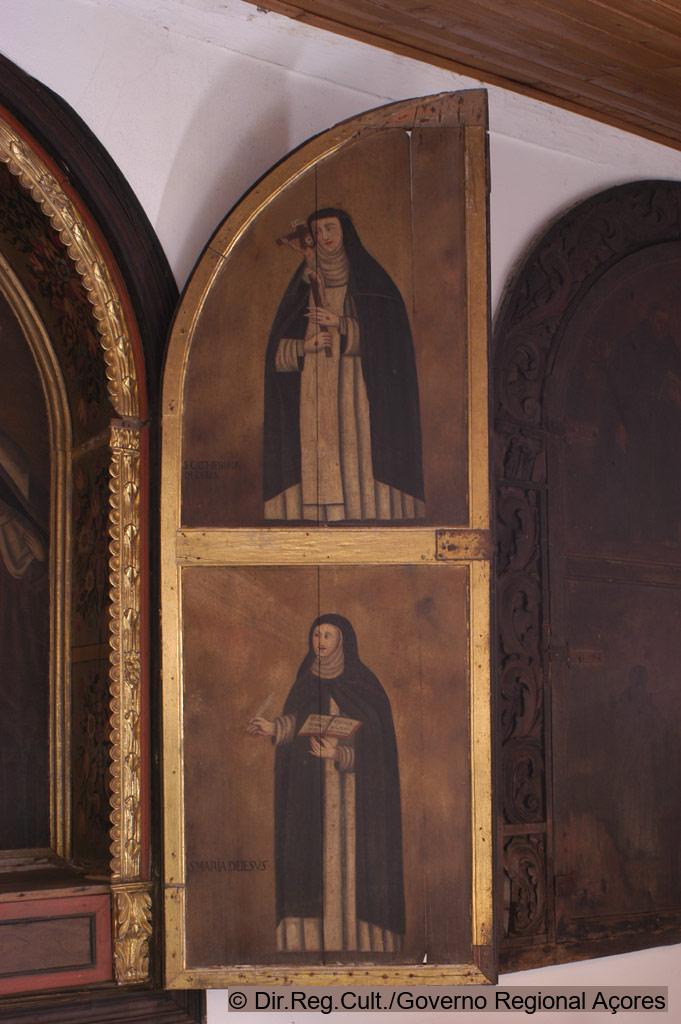
In the superior cloister
16th, 17th and 18th centuries
Local unknown artists
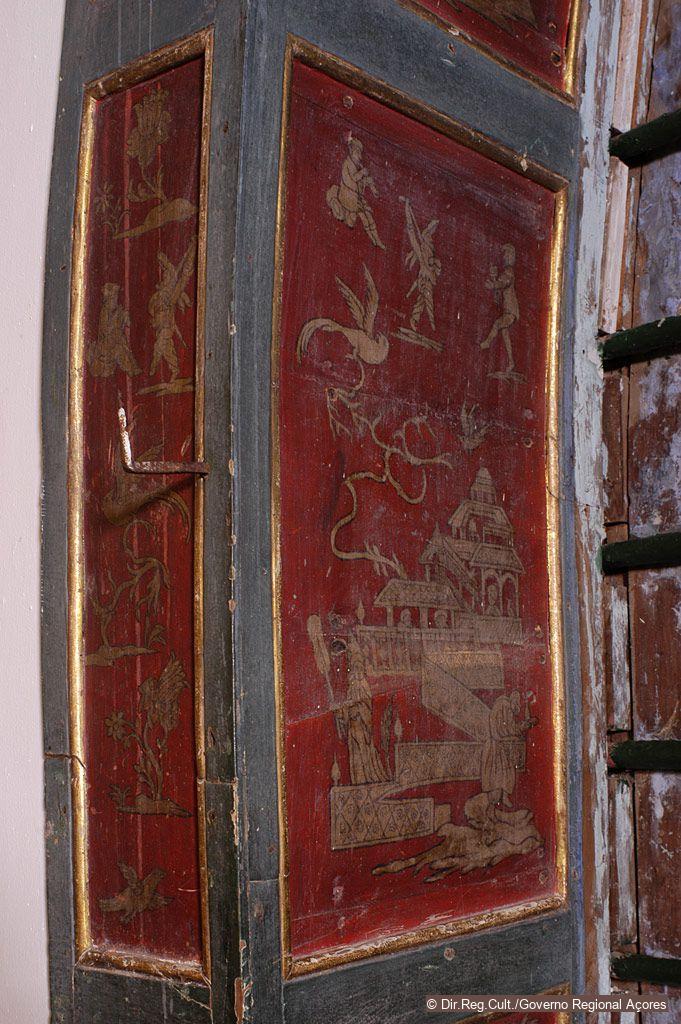
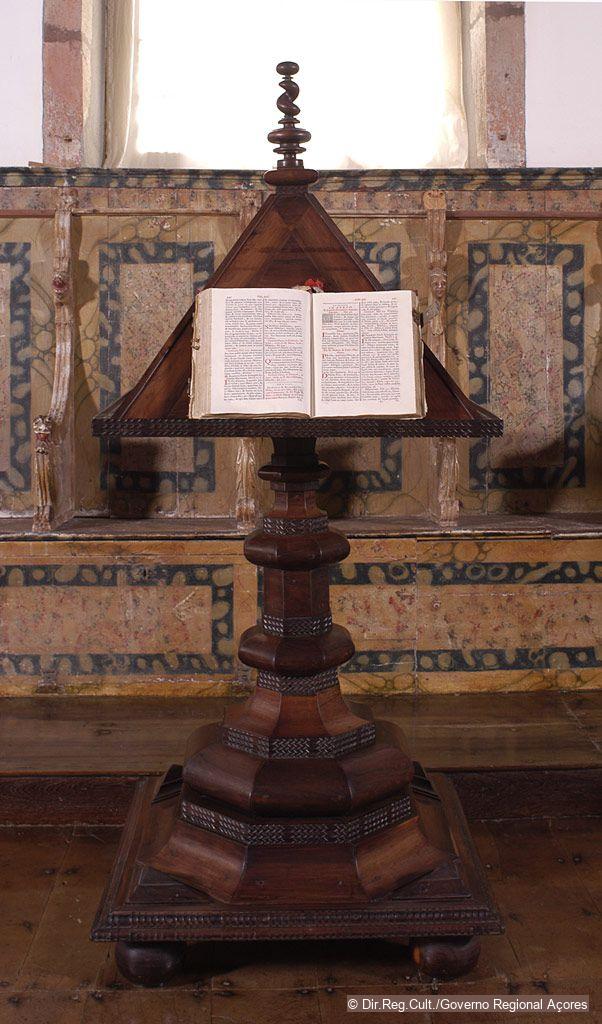
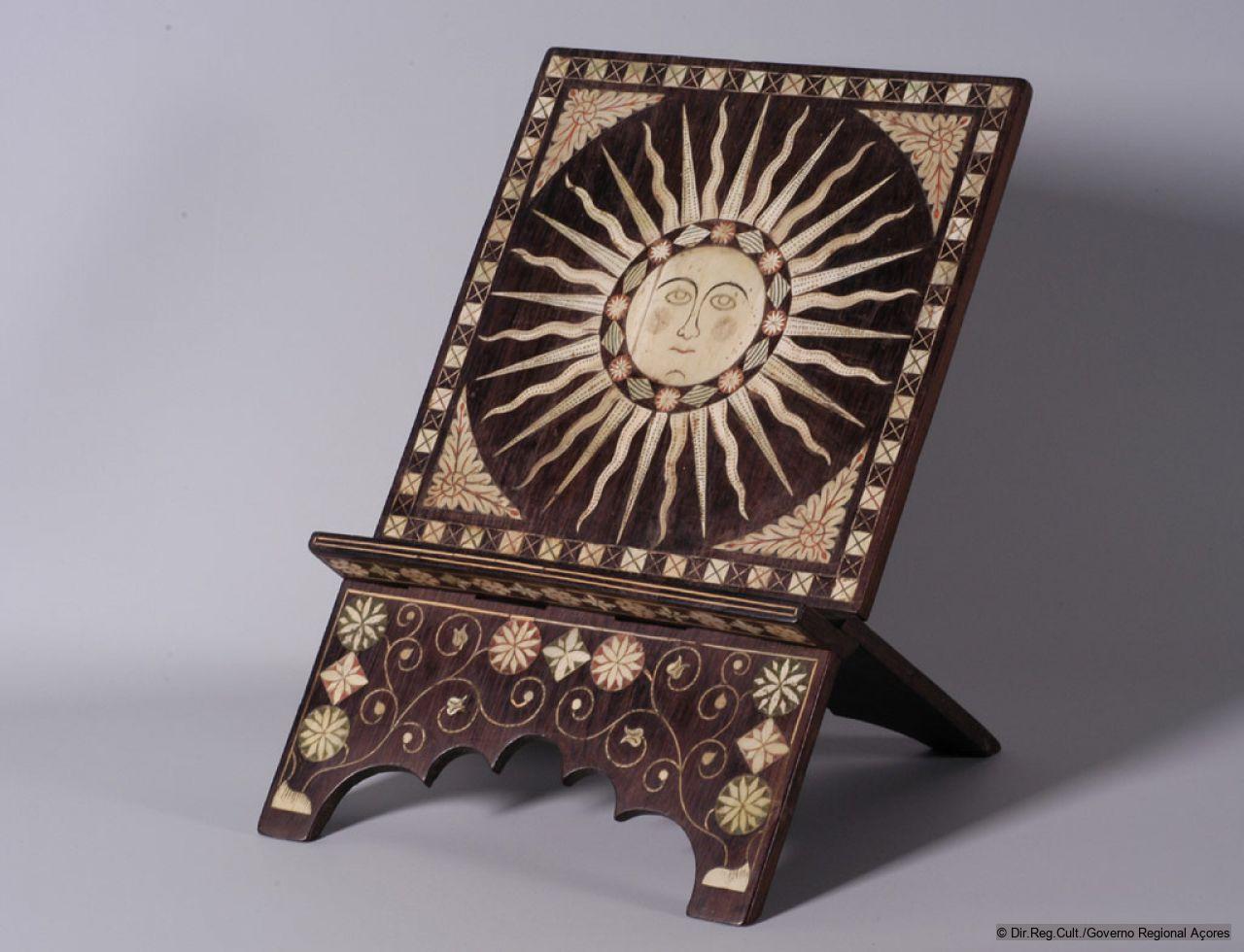
Oratory of Our Lady of the Rosary constructed from wood and canvas. There are others dedicated to Our Lady of Mount Carmel, St. Matthew, and St. John the Baptist. With the exception of the Oratory of St. John the Baptist, the outside wings are adorned with paintings.



Selected bibliography:
Merelim, P., As Dezoito Paróquias de Angra, Angra do Heroísmo, 1974.
Bottineau, Y., “A Arquitectura nos Açores do Manuelino ao Barroco” in Martins, F. E. O., Arquitectura nos Açores: subsídios para o seu estudo, Horta, ed. SRTT / DRT, 1983, pp. 103–108.
Rosa, M. T., O Convento de S. Gonçalo em Angra do Heroísmo: Contributos para o Estudo da Arte Religiosa Açoriana, MA Thesis, Lisbon, 1998.
Gonçalves, M. C., A Pintura no Convento de S. Gonçalo de Angra., pr. in Workshop “Arte, Património e Identidade dos Açores”, University of the Azores, 2003.
Additional Copyright Information:
Copyright images: Direcção Regional da Cultura/Governo Regional dos Açores.
Citation of this web page:
Maria Cristina Gonçalves "Church and Convent of S. Gonçalo" in "Discover Baroque Art", Museum With No Frontiers, 2026.
https://baroqueart.museumwnf.org/database_item.php?id=monument;BAR;pt;Mon11;5;en
Prepared by: Maria Cristina GonçalvesMaria Cristina Gonçalves
SURNAME: Gonçalves
NAME: Maria Cristina
AFFILIATION: Museums’ Division, Cascais Municipality
TITLE: Museums’ Manager
CV:
Maria Cristina Gonçalves is a History graduate with a post-graduate degree in Museology and Cultural Heritage. She became a Museums’ Officer in 1990. Her main areas of expertise are in museums’ management and territory. She is currently Museums’ Manager for the Museums’ Division of the Cascais Municipality.
Translation by: Lili Cavalheiro, Cristina CorreiaCristina Correia
SURNAME: Correia
NAME: Cristina
AFFILIATION: Eça de Queirós Public High School, Lisbon and MWNF
TITLE: Senior Teacher, Local Co-ordinator and Vice-President of MWNF
CV:
Cristina Correia is a History graduate and, since 1985, a Senior Teacher of History at the Eça de Queirós Public High School, Lisbon where she also lectures in Portuguese Language and Culture for non-native speakers. From 1987 to 1998 she was involved with youth affairs, primary prevention and the Camões Institute. She is Vice-President and Local Co-ordinator (Portugal) for MWNF.
Translation copyedited by: Mandi GomezMandi Gomez
Amanda Gomez is a freelance copy-editor and proofreader working in London. She studied Art History and Literature at Essex University (1986–89) and received her MA (Area Studies Africa: Art, Literature, African Thought) from SOAS in 1990. She worked as an editorial assistant for the independent publisher Bellew Publishing (1991–94) and studied at Bookhouse and the London College of Printing on day release. She was publications officer at the Museum of London until 2000 and then took a role at Art Books International, where she worked on projects for independent publishers and arts institutions that included MWNF’s English-language editions of the books series Islamic Art in the Mediterranean. She was part of the editorial team for further MWNF iterations: Discover Islamic Art in the Mediterranean Virtual Museum and the illustrated volume Discover Islamic Art in the Mediterranean.
True to its ethos of connecting people through the arts, MWNF has provided Amanda with valuable opportunities for discovery and learning, increased her editorial experience, and connected her with publishers and institutions all over the world. More recently, the projects she has worked on include MWNF’s Sharing History Virtual Museum and Exhibition series, Vitra Design Museum’s Victor Papanek and Objects of Desire, and Haus der Kulturen der Welt’s online publication 2 or 3 Tigers and its volume Race, Nation, Class.
MWNF Working Number: PT 05